

Gretsch Identification Guide
Gretsch Bridges, Bigsbys And Tailpieces
Identify the bridge and tailpiece separately. They can come from different periods, and both are common replacement parts.
Back To The Gretsch Serial LookupThe Bridge Supports The Strings; The Tailpiece Anchors Them
The bridge is the part the strings pass over near the lower end of the body. The tailpiece anchors their ends farther back. A Bigsby is a vibrato tailpiece, not a bridge. Describing both parts separately avoids confusing a replacement bridge with a different vibrato assembly.
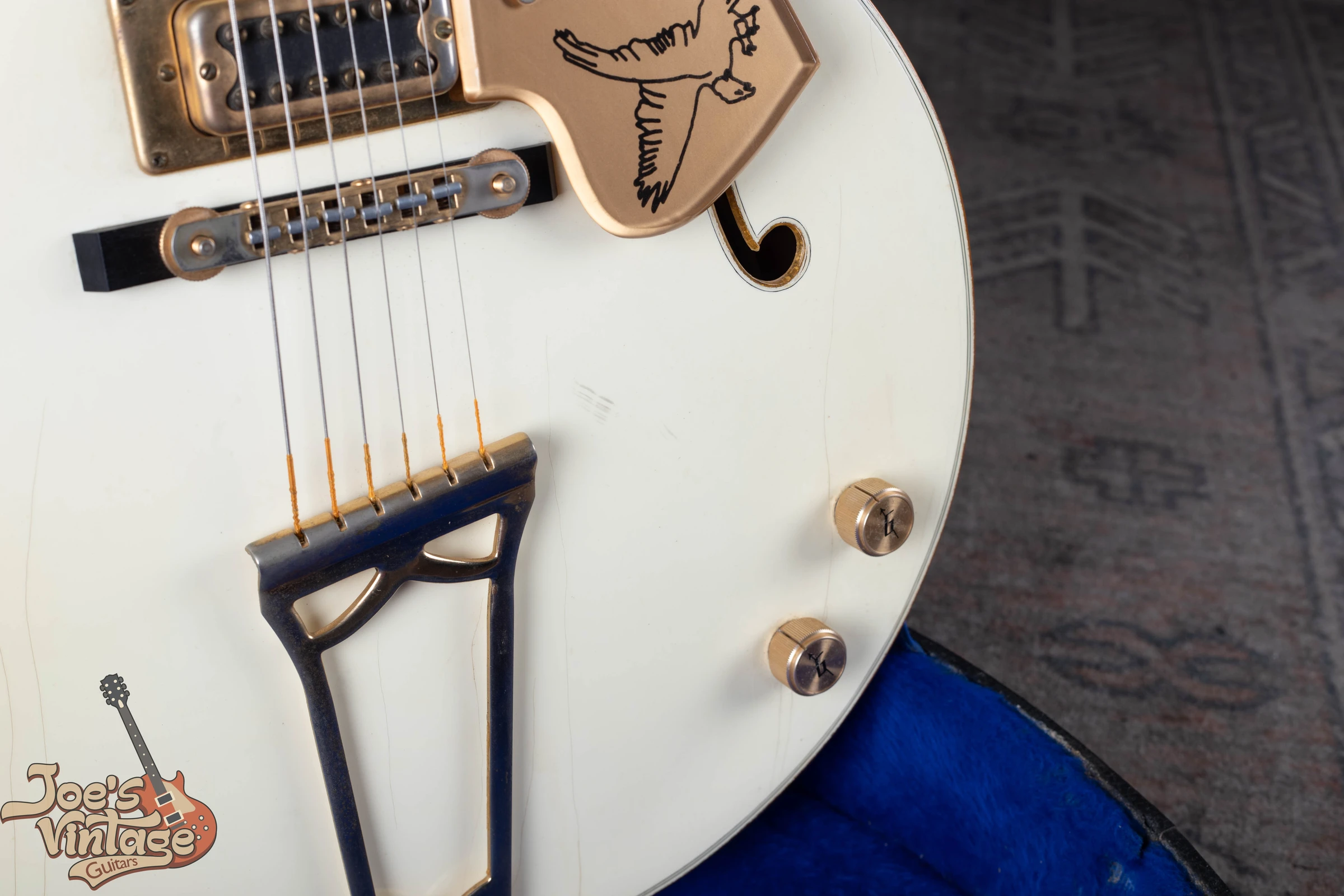
Begin with an overhead photograph that includes the bridge base, tailpiece hinge, control knobs and lower body edge. Then take a side view. Those frames show the mounting footprint, string path and any holes that the current hardware doesn't use. The body guide explains why the same general hardware can appear on very different Gretsch constructions.
A bridge resting on a wooden base can be changed without leaving the obvious holes associated with a tailpiece swap. That makes “no extra holes” a limited observation. It doesn’t prove the bridge is the one fitted at the factory.
Melita, Space Control And Bar Bridges
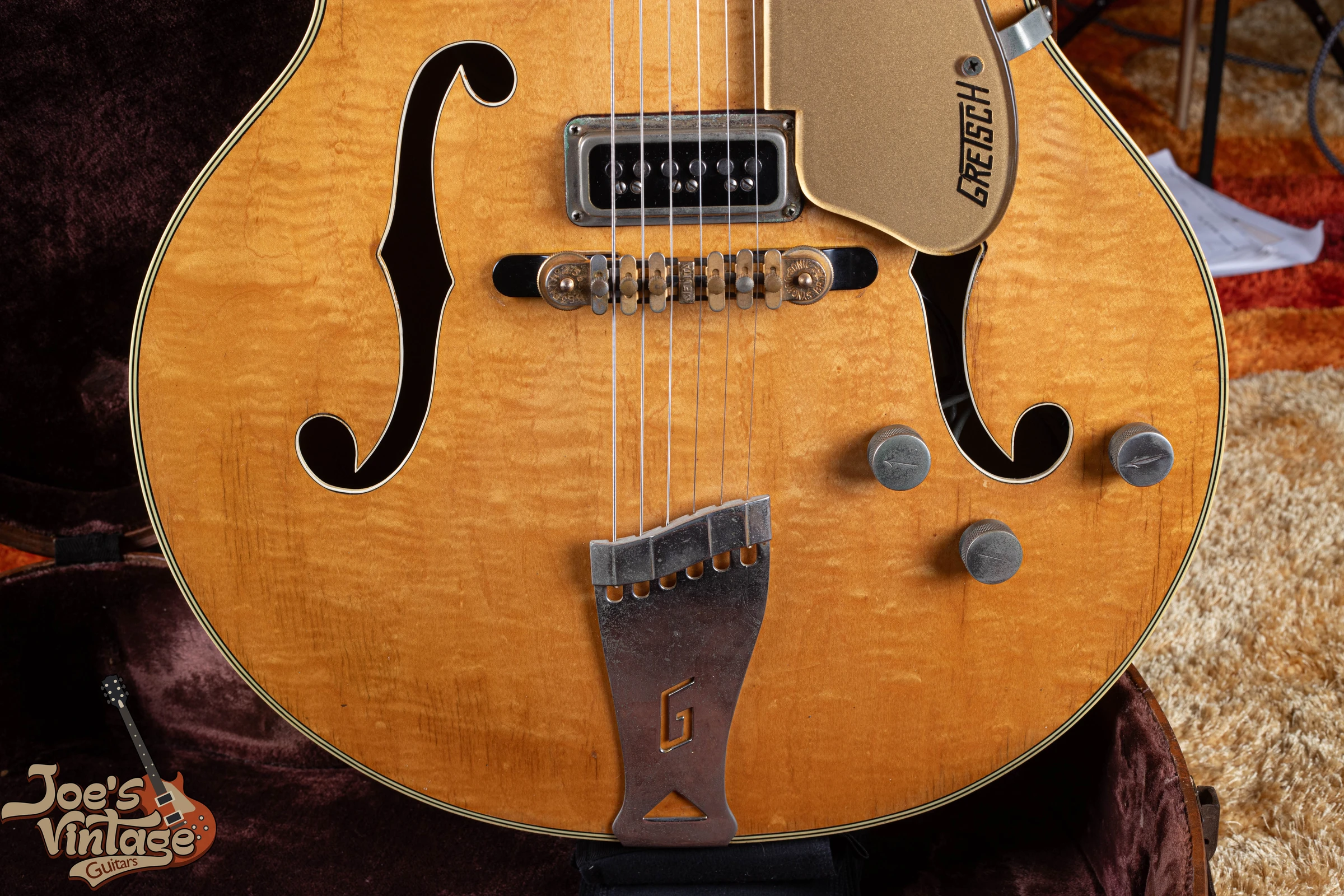
The Melita Synchro-Sonic uses separate adjustable saddles with prominent hardware. A Space Control bridge uses six wheel-shaped saddles along a threaded bar; their sideways movement changes string spacing. A plain or rocking bar presents a continuous metal surface. These shapes can usually be distinguished without removing anything.
Gretsch’s bridge history dates the Synchro-Sonic to 1951, describes the mid-1950s development of the rocking bar and places the Space Control design in 1957. All have later counterparts. Use the dates to understand the designs, then check the individual guitar rather than declaring a bridge to be a certain year from its name.
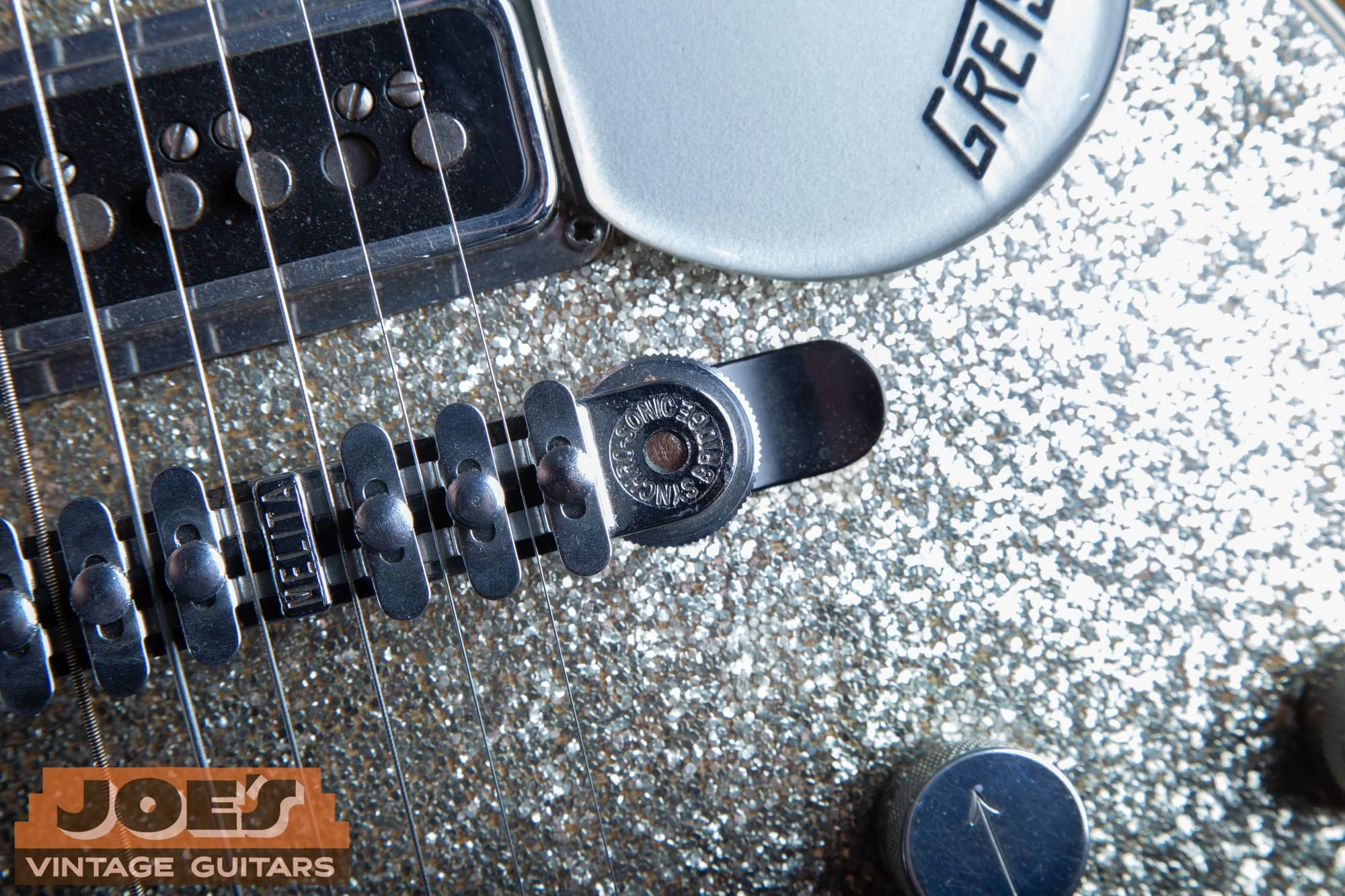
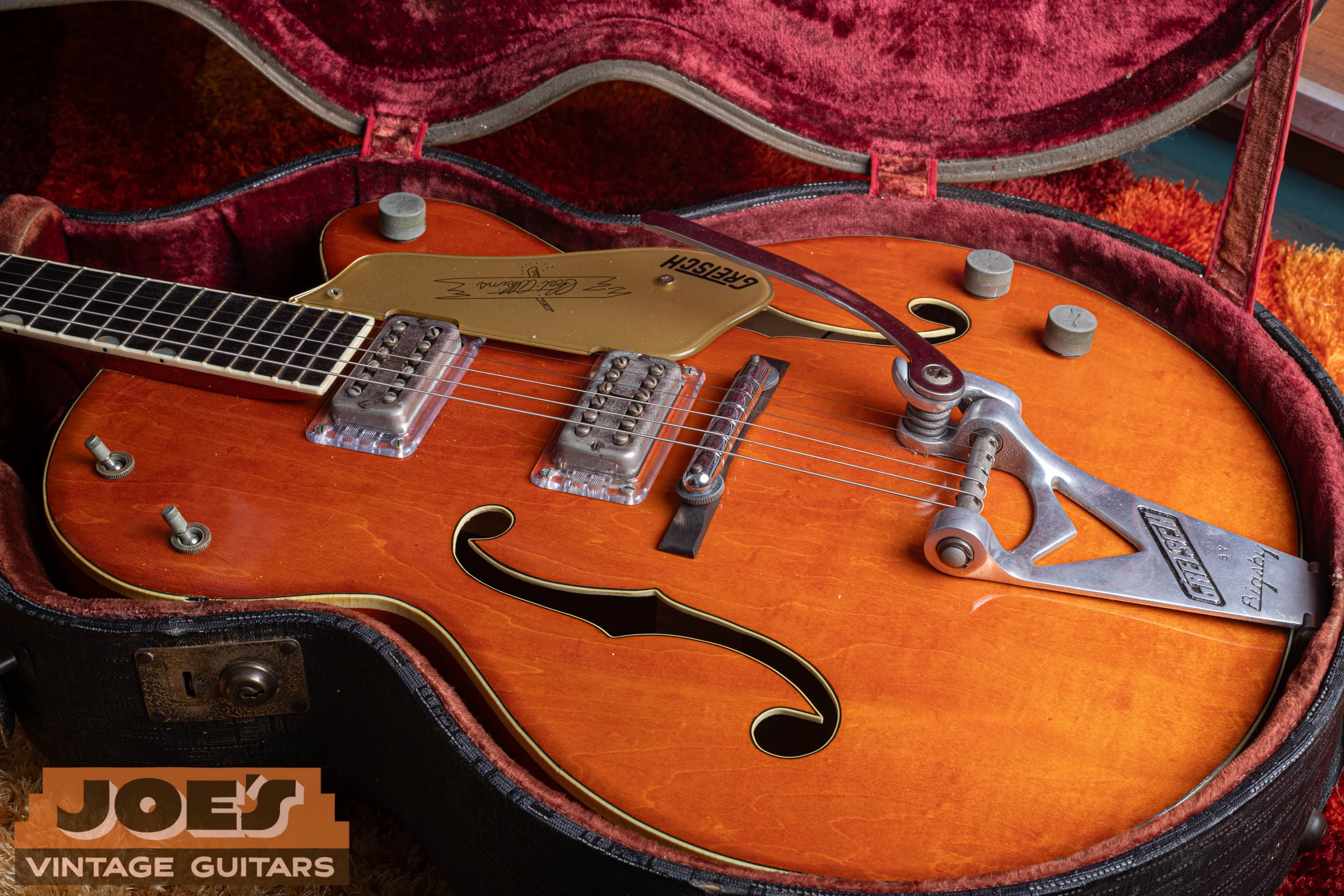
The Jet close-up shows the Melita's adjustment hardware. On the orange 6120, compare the simpler bar with the broader tailpiece behind it. A catalog photo can help identify the intended arrangement, but an owner's setup choices may explain a different bridge on an otherwise period-consistent guitar. See the Duo Jet guide for the Jet's wider model history.
Bigsby Frames, Arms And Mounting Marks
Record the casting, logo, finish, hinge and arm as separate features. A gold finish can occur on both old and new hardware. A straight arm, bent-wire arm or changed handle doesn’t necessarily mean the complete Bigsby was replaced. Parts can be exchanged individually.
The V-cut Gretsch frame has an open V-shaped area in its casting. The frame and the arm are separate components. Compare the opening in the frame with the actual handle in the photograph. If you are matching hardware to a catalog, make sure the reference shows the same assembly and view.
Look for an exposed screw hole, a different outline in the finish, or a hinge plate that covers an earlier footprint. A fixed tailpiece may have been replaced by a Bigsby, or the reverse. Wear under a part can help explain the sequence of changes, but don’t loosen old screws solely to expose a mark for a web lookup.
Gretsch's later G6120T-59 specification is an example of a new instrument built around earlier styling. A familiar Bigsby shape should send you back to the serial and model checks, not end the identification.
Adjustable Saddle Bridges On Older Guitars
The Adjustamatic appeared in the early 1970s; the current Gretsch name is Adjusto-Matic. Its individual saddles offer a different form of adjustment from the Space Control wheels. Similar Tune-o-matic-style bridges are also fitted as replacements, so the outline alone doesn't establish who made a particular part.
Joe's 1964 6120 is a practical example. Its original Reverb description identifies a replacement Tune-o-matic bridge and newer Bigsby, as well as replacement tuners. The guitar's 1964 date and the age of those installed parts are separate questions. Calling it a later guitar solely because of the bridge would erase that repair history.
When appraising a changed guitar, keep a written list of installed replacements and any older parts supplied with it. Don't assume the loose bridge in a case is original without checking its fit and history. Use the tuner comparison to document the rest of this example's hardware changes.
Burns Vibratos, Mutes And Unusual Assemblies
Some early-1960s double-cutaway Jets used Burns vibratos. That association is useful within the Jet family; it isn’t a rule for every Gretsch with a flat metal arm. Check the casting and mounting arrangement. The Duo Jet model guide provides the body context that a hardware close-up lacks.
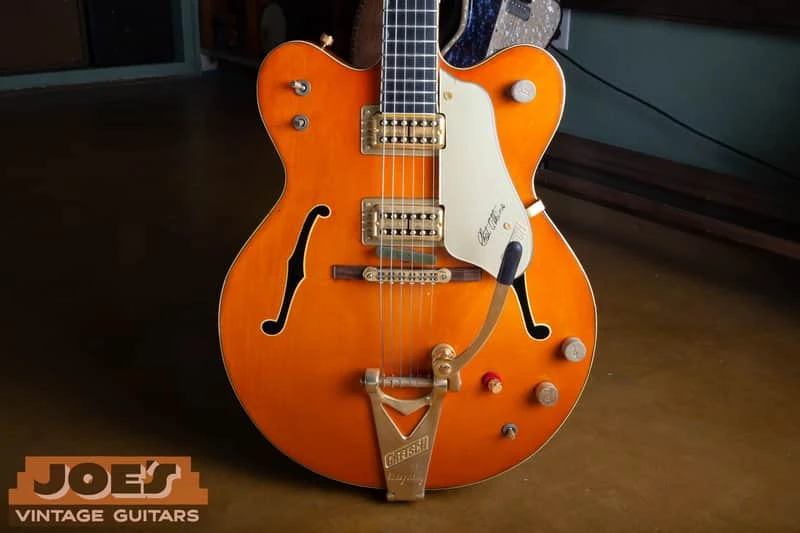
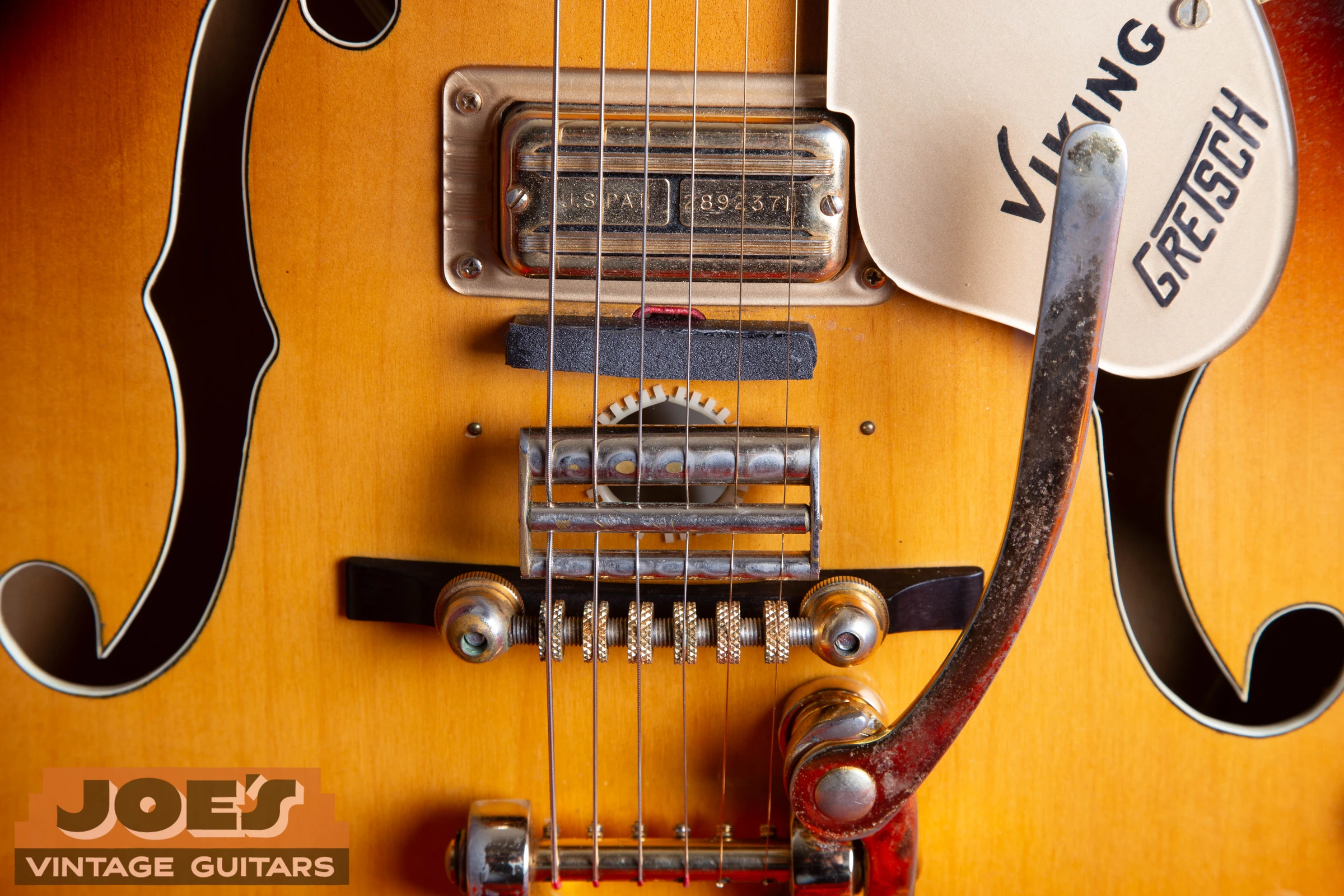
Vikings and Falcons can have more elaborate equipment around the bridge, including mute mechanisms and model-specific hardware. Photograph the entire assembly before assigning a name to one small piece. The Viking below has visible hardware between the bridge and vibrato, and its extra controls need to be read alongside that equipment.
A missing mute pad, altered arm or replacement bridge can change how the guitar plays without changing its serial date. Describe the missing or changed part specifically. If you are deciding whether to repair it or sell it as it stands, send those details with a Gretsch appraisal request before buying replacement hardware.
Manufacturer References
- Gretsch Bridge Designs
Read the manufacturer’s explanation of each adjustment system.
- Gretsch Control Guide
Separate electrical switches from other model-specific controls.
- Gretsch Catalog Archive
Compare factory-listed bridge and tailpiece combinations.
Get Help Identifying Your Gretsch
Send the serial, a full front and back view, and close-ups of the feature you want checked. Include any known repairs or replacement parts.
Get A Free Gretsch AppraisalReturn to the Gretsch serial lookup and dating library to compare the rest of the instrument.