

Gretsch Identification Guide
Gretsch Body Shapes, Binding And Inlays
Body construction and fingerboard details help test a serial date. Use the model’s history, because Gretsch did not change every guitar at the same time.
Back To The Gretsch Serial LookupSingle And Double Cutaways By Model
A cutaway count is useful only after you identify the model. A 6120, a Country Gentleman and a Duo Jet followed different development paths, and later instruments returned to earlier shapes. The front outline narrows the comparison; it doesn’t supply a year by itself.
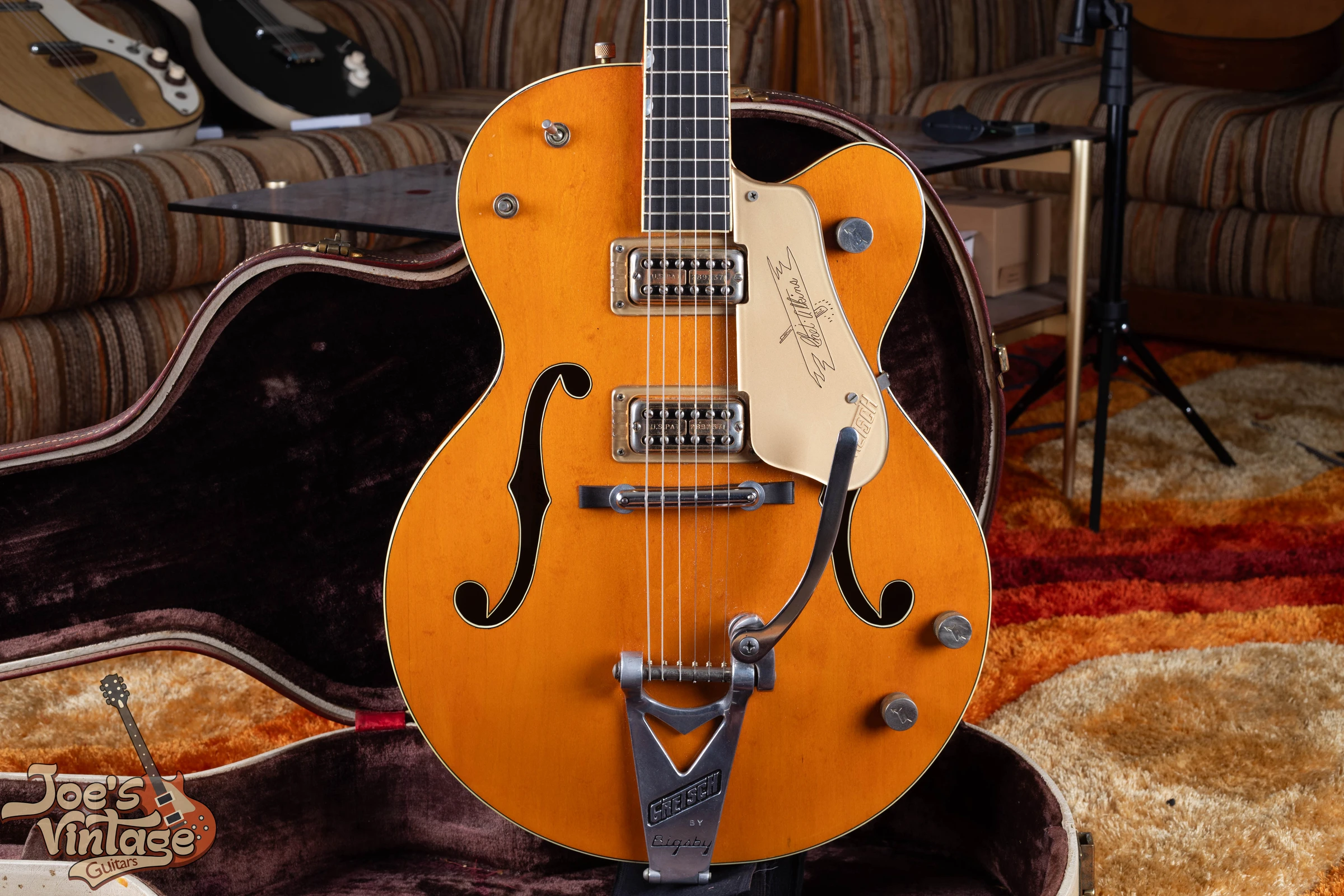
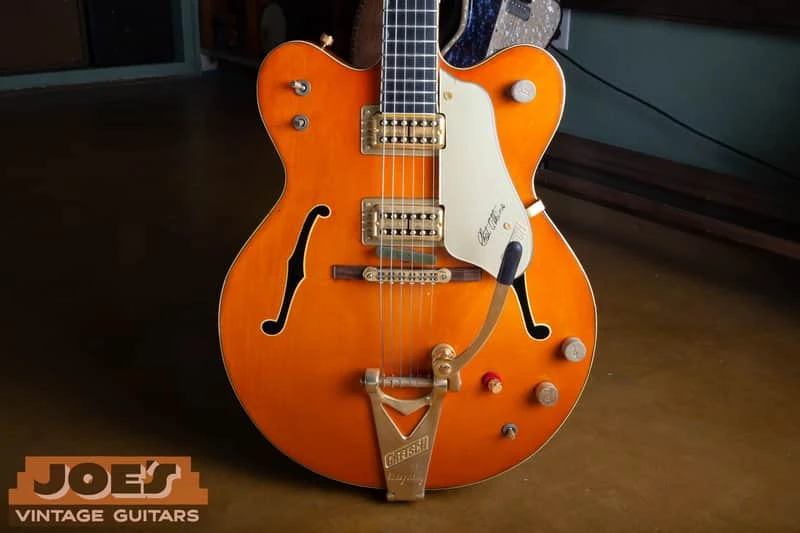
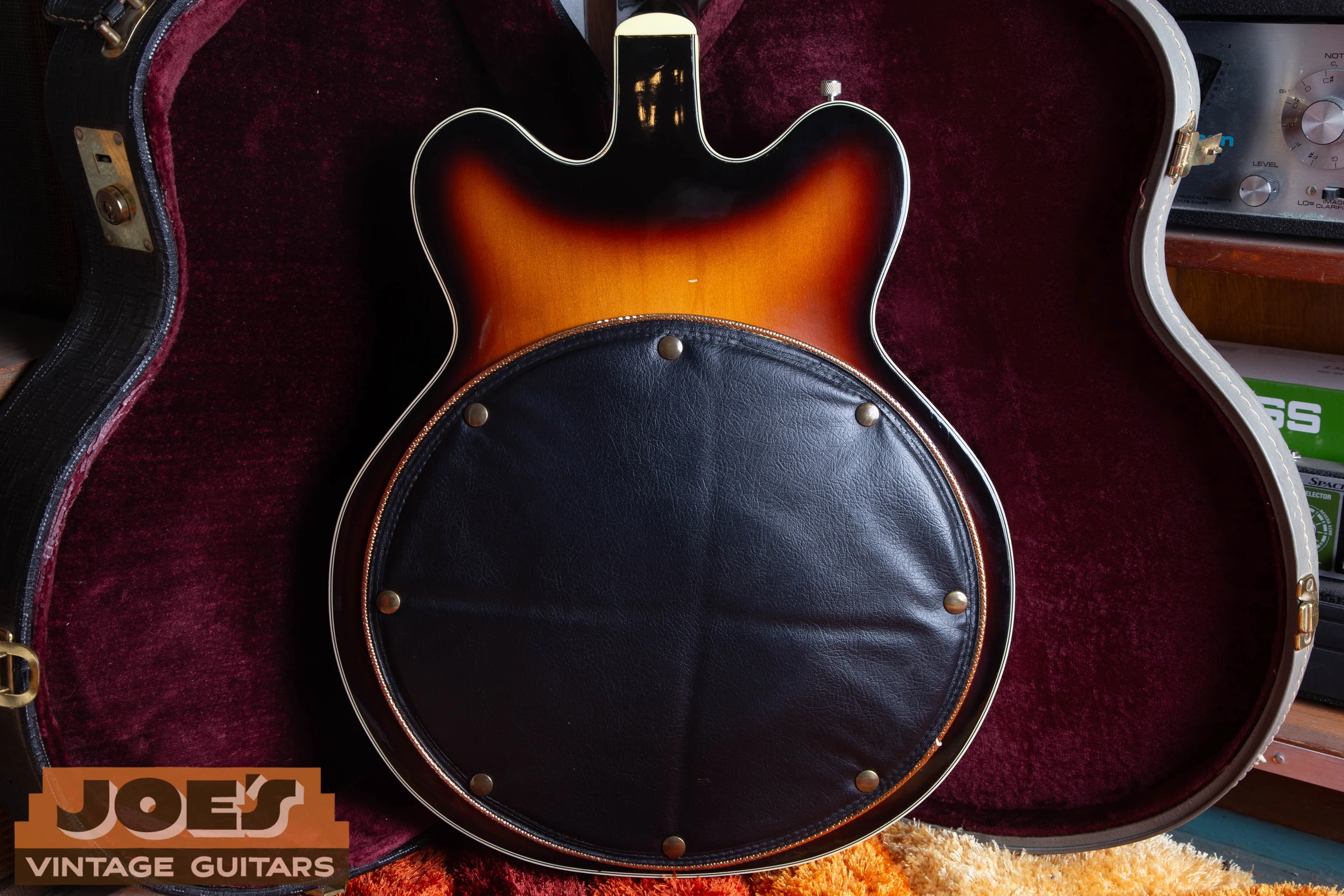
The 6120 moved from its single-cutaway form into the double-cutaway Electrotone design around the 1961 to 1962 transition. The body became shallower through the late single-cutaway period. Early double-cutaway examples can have simulated f-holes, a padded back and a mute. Later Nashville and Baldwin versions changed the equipment again. Use the 6120 history and value guide for the model's sequence.
The Country Gentleman also changed to a double-cutaway form around that transition, but its larger body and its own appointments need a separate comparison. The Jet family adopted double-cutaway designs in the early 1960s. Jets are chambered instruments despite frequently being described as solidbodies; compare their construction in the Duo Jet model guide.
Body And Equipment Differences Between Models
Measure body width across the widest lower bout and depth at the rim, without including the bridge or back pad. Those measurements help distinguish a smaller Jet from a larger hollowbody. They also help identify a guitar whose pickguard or model plate has been changed. Measurements vary across revisions, so record the actual dimensions rather than rounding them to the nearest familiar model.
6120 And Country Gentleman
The vintage 6120 generally belongs to the 16-inch hollowbody family. A Country Gentleman is usually the larger 17-inch comparison, with a relatively shallow body. Both passed through single- and double-cutaway designs, but their equipment did not change in lockstep. Country Gentleman examples can have different mute and switching arrangements from a visually similar 6120. Compare the control positions and the complete model designation.
Duo Jet, Silver Jet And Jet Firebird
The original Jet family uses a smaller body, about 13¼ inches wide, with internal chambers in its mahogany construction. Black Duo Jet, sparkle-top Silver Jet and red Jet Firebird versions share a family resemblance, but finish and hardware alone don't resolve every model or year. Early single-cutaway and later double-cutaway bodies need separate comparisons. The Jet family history covers those related models in more detail.
White Falcon And White Penguin
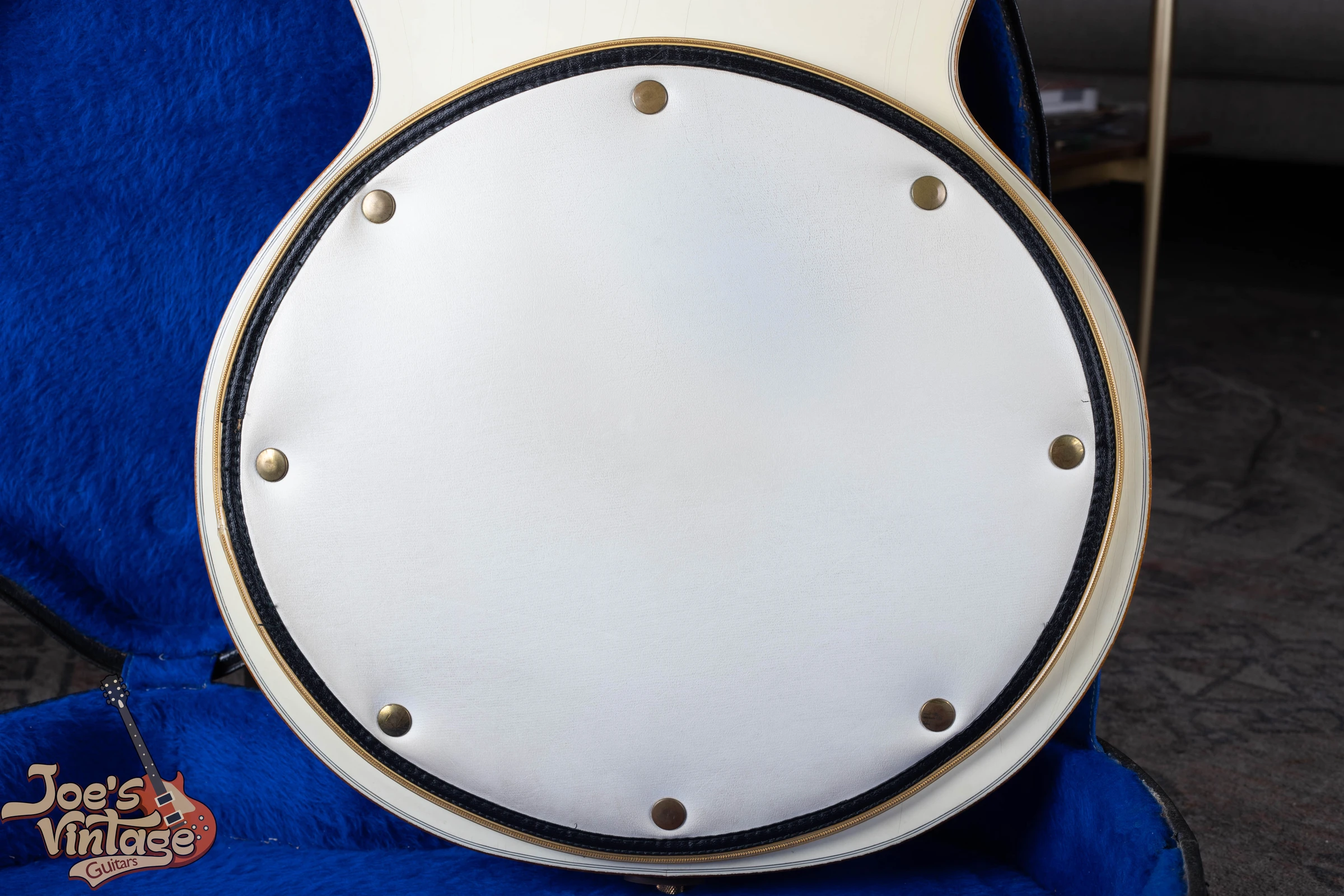
A Falcon's large hollow body and a Penguin's compact chambered body are different constructions, even when both carry a white finish, gold appointments and bird-themed decoration. Look at the full body before identifying either from a cropped headstock. Falcon variations can include single or double cutaways, pads, mutes and different bridges. Those features need to agree with a specific version, not a generic “White Falcon” description.
Viking And Anniversary
The Viking is a distinct large double-cutaway model with its own hardware and electronics. The Super’Tron-equipped example in this guide should be compared with other Vikings before applying a Falcon specification. The model nameplate, T-Zone fingerboard and complete bridge area are useful details to photograph together.
The Anniversary family includes single- and double-pickup versions. Original model numbers include 6124 and 6125 for single-pickup instruments, and 6117 and 6118 for double-pickup versions. Sunburst and two-tone green examples can look quite different despite their shared body family. Later Anniversary models reused familiar names and styling, which makes the full label and serial particularly useful.
Use a period catalog for the closest model and year, then record any mismatch. A larger body dimension is a different kind of evidence from a changed bridge: one concerns the instrument's construction, while the other may reflect a removable part. Keep that distinction when weighing the evidence.
Block, Hump-Block And Thumbnail Inlays
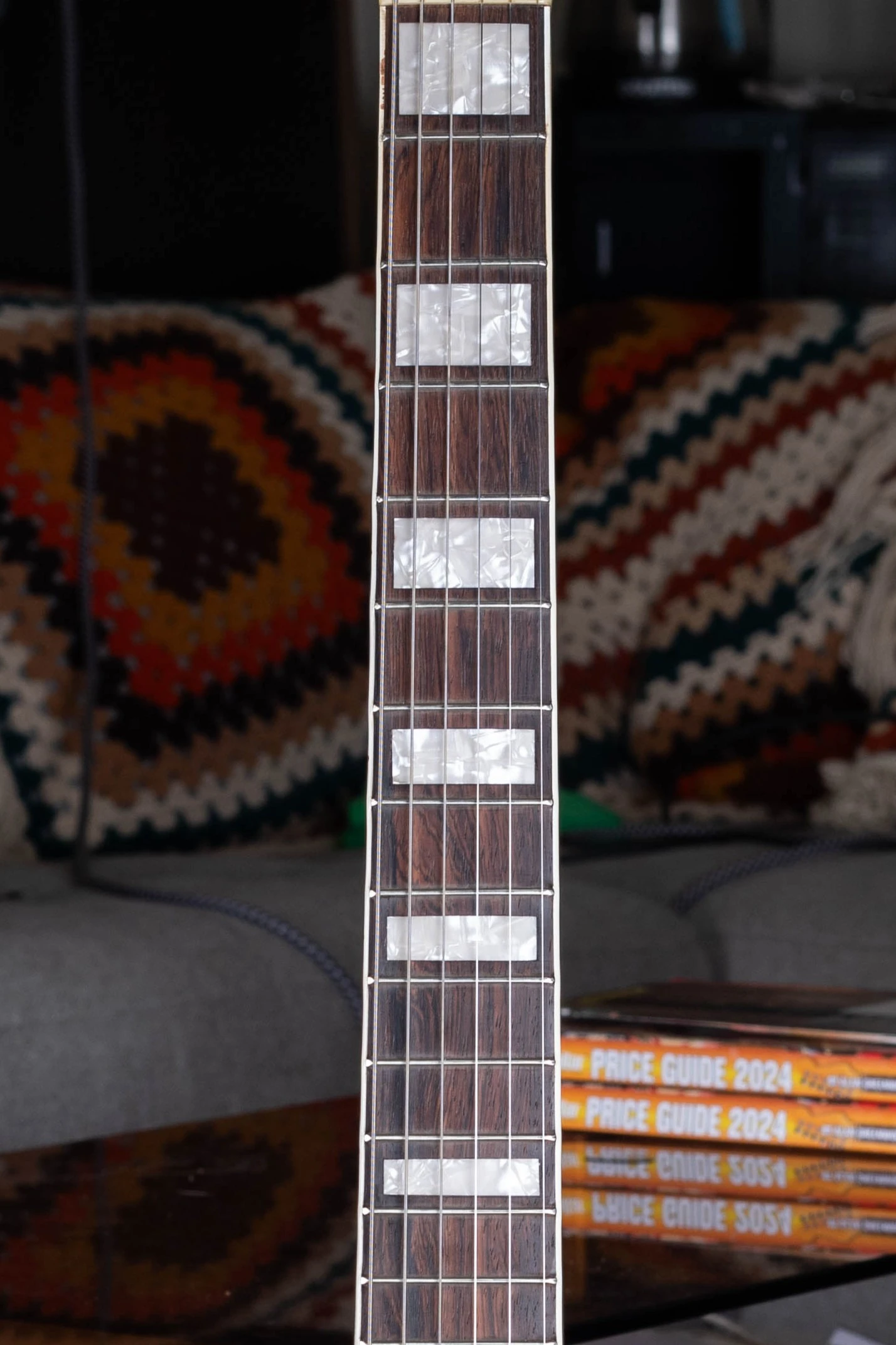
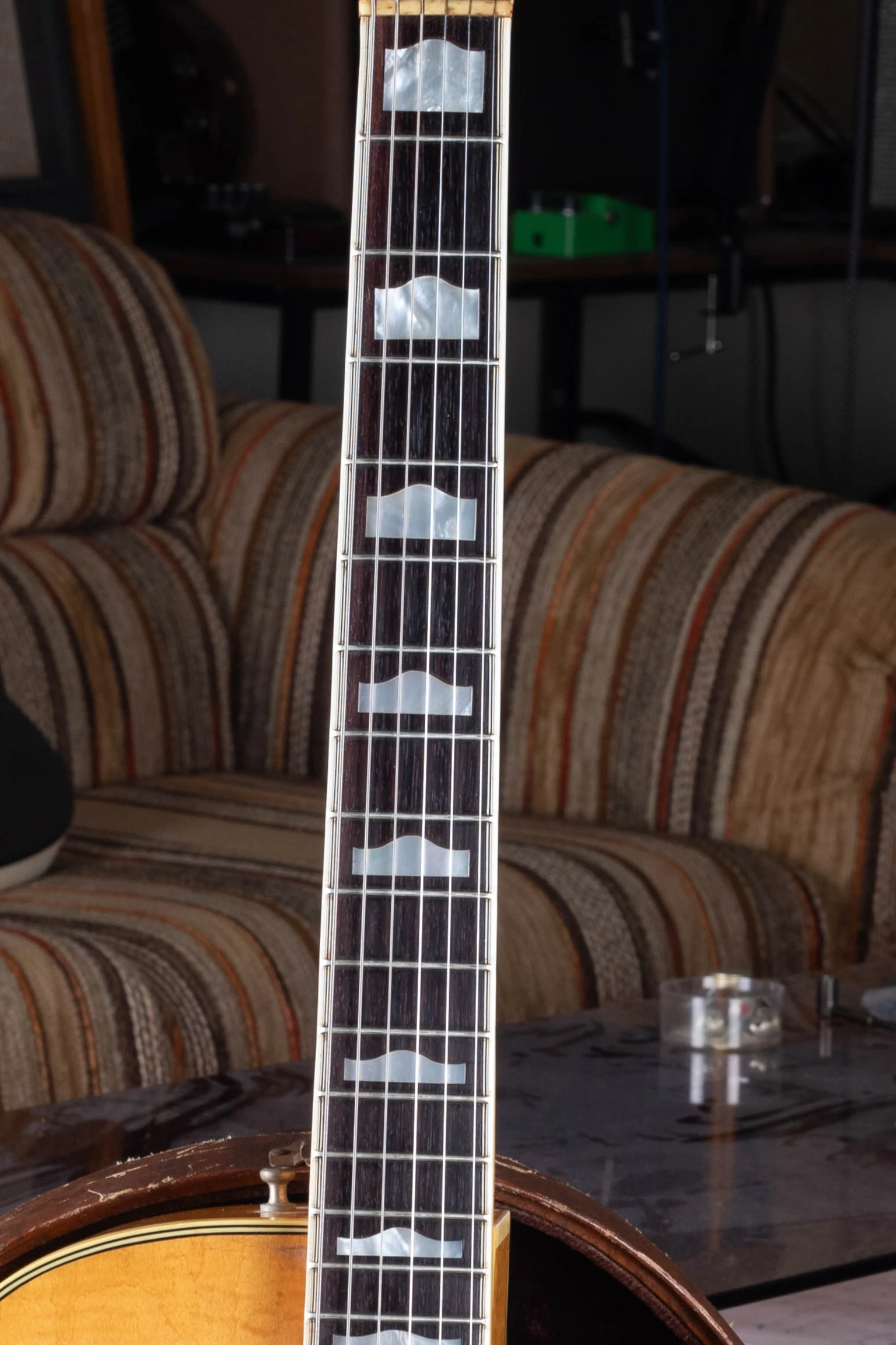
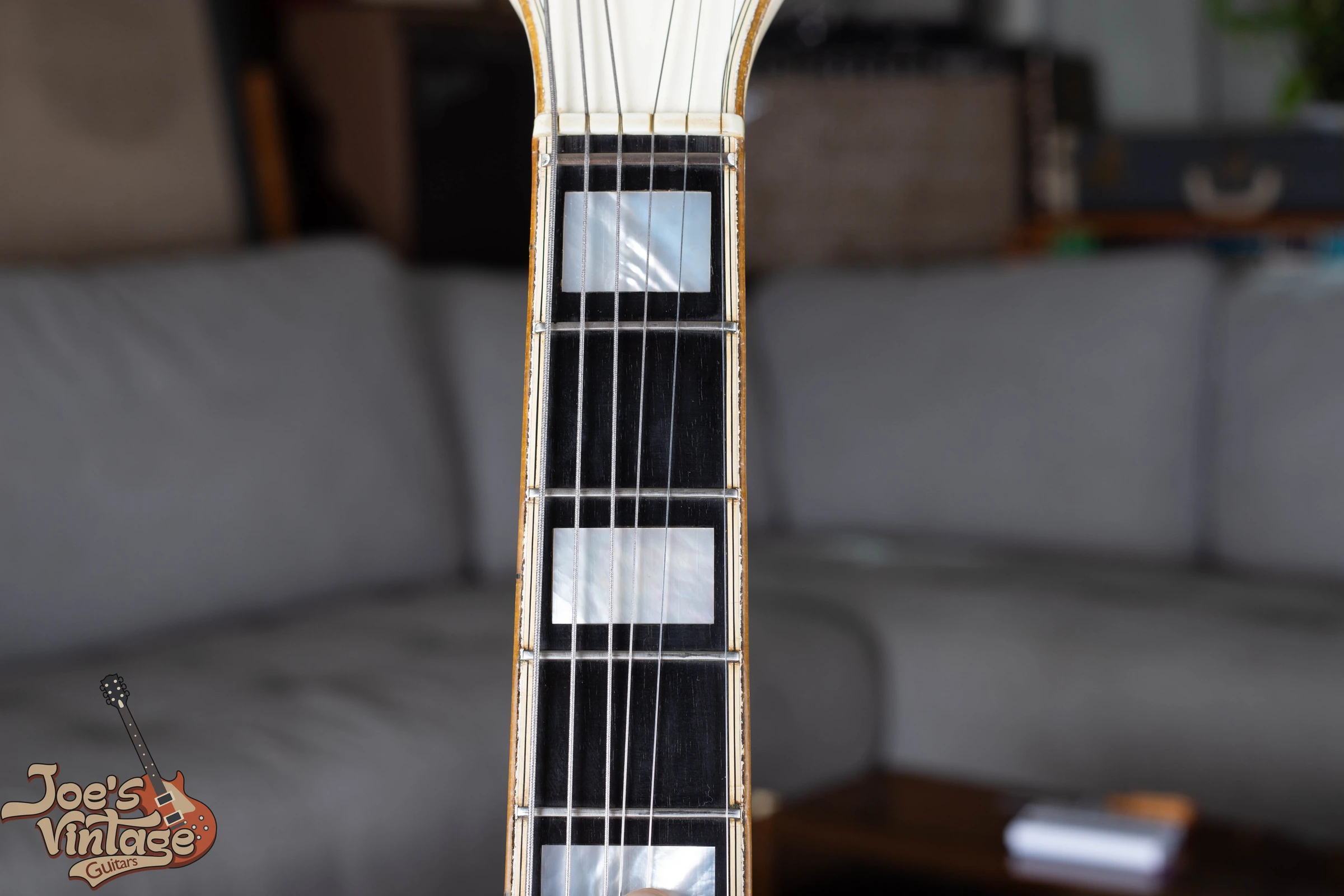
Plain blocks, engraved Western blocks, hump-blocks and small edge-set thumbnails are different marker shapes. Photograph several frets together so you can see both the shape and placement. Surface reflections can make pearloid look flat in one frame and strongly patterned in another, so a photograph alone may not identify the material.
Gretsch’s inlay history documents hump-blocks on high-end models before 1957, wider use around 1957, some 1958 examples and later production. The old “1957 only” rule is therefore too narrow. Western motifs also returned on modern guitars. The material and engraving need to be compared with the exact model, not a blanket rule about all Gretsches.
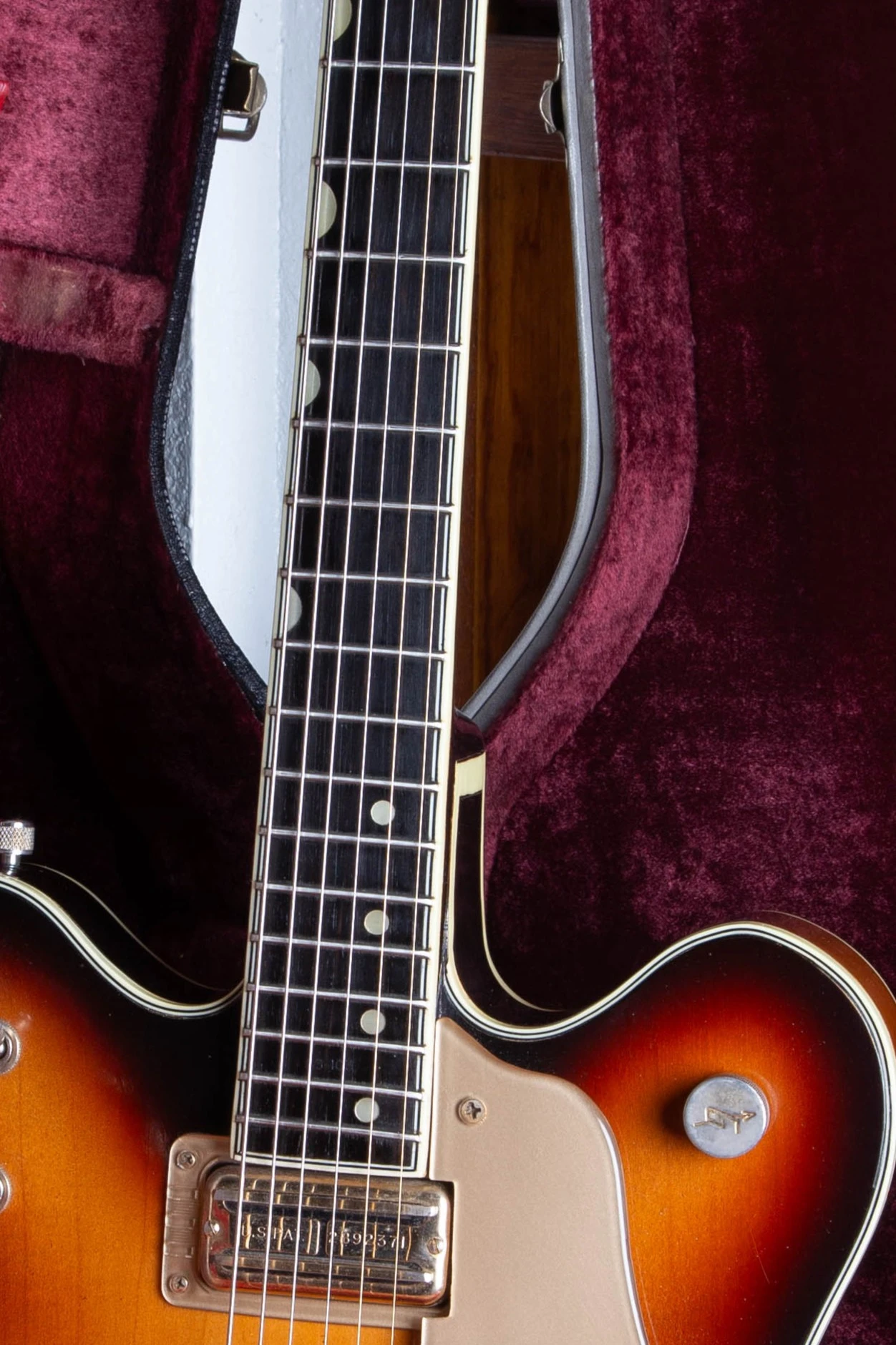
Thumbnail or Neo-Classic markers sit along the bass side of many fingerboards. They became common in the late 1950s and continued well beyond the mid 1960s. A refret replaces frets; it doesn’t normally move inlays. An unusual marker pattern should prompt a model or fingerboard comparison rather than an automatic claim of a refret.
T-Zone Markers And The Zero Fret
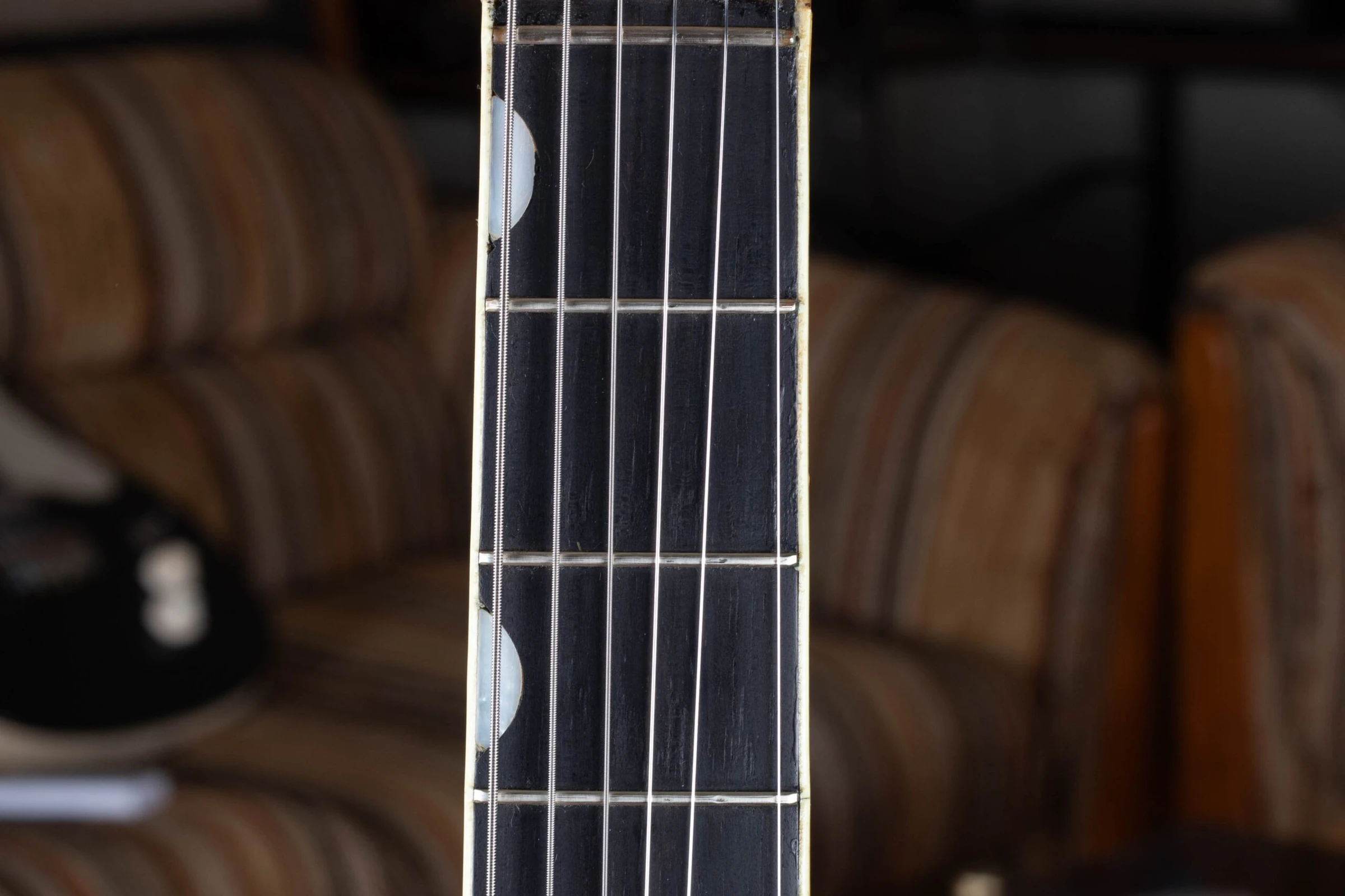
The T-Zone arrangement combines the familiar lower-position markers with small dots toward the treble side of the high frets. Photograph the full fingerboard to show where the pattern changes. A close crop of one dot can be mistaken for an ordinary marker or a reflection. This feature belongs in a late-1960s-era model comparison, but it can’t override a contradictory serial or establish an exact year.
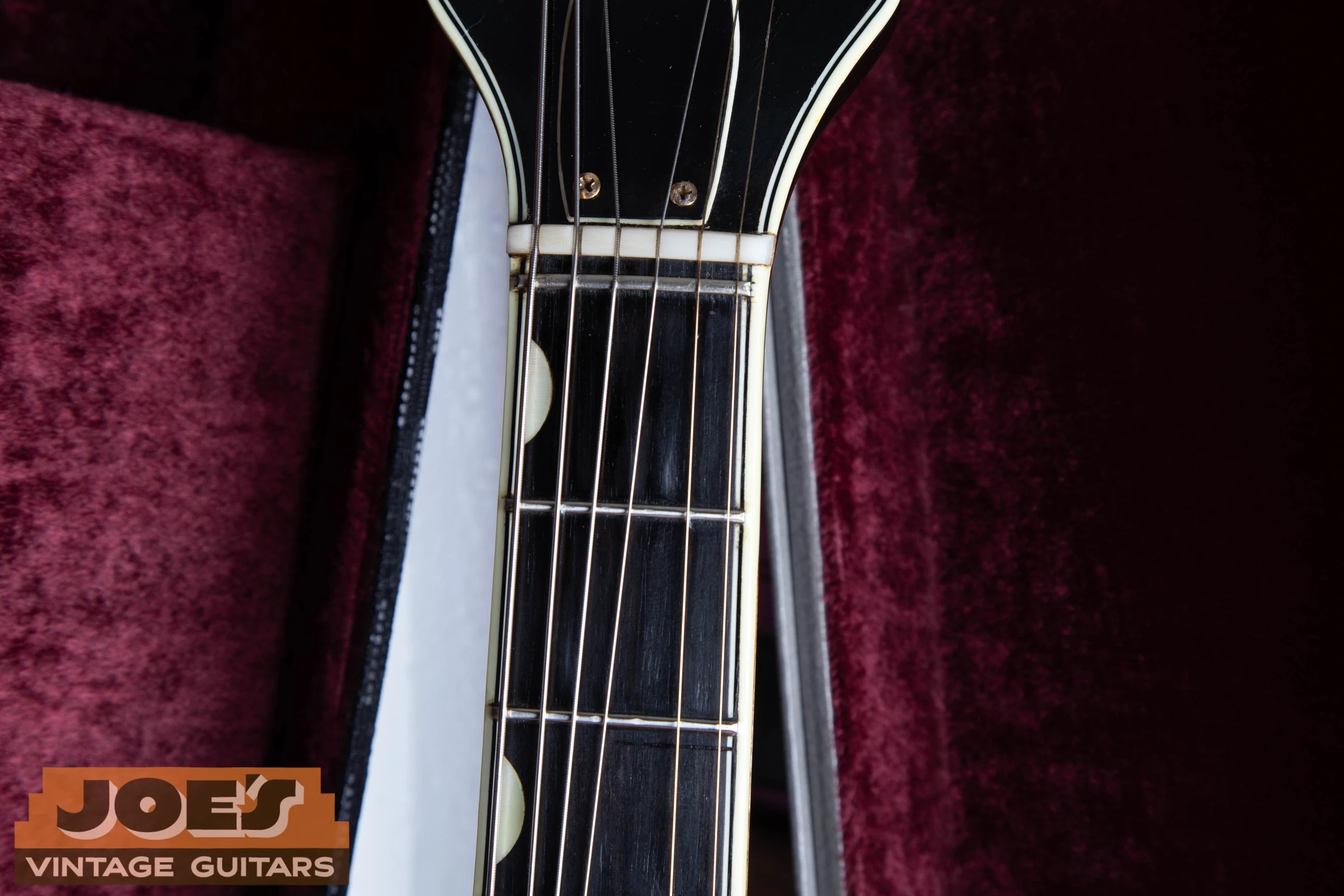
A zero fret is the metal fret immediately in front of the nut. The strings bear on it, while the nut guides their spacing. The Viking close-up shows the distinction clearly. Zero frets occur on vintage and later Gretsches, so their presence is another model feature rather than a universal year boundary.
For a guitar with a replaced fingerboard or neck work, record what survives and what changed. A matching serial, body style and untouched headstock may still establish a useful period even if the fingerboard can no longer supply original evidence. Compare the neck-end and headstock details as part of that assessment.
Binding Condition And Neck-Joint Evidence
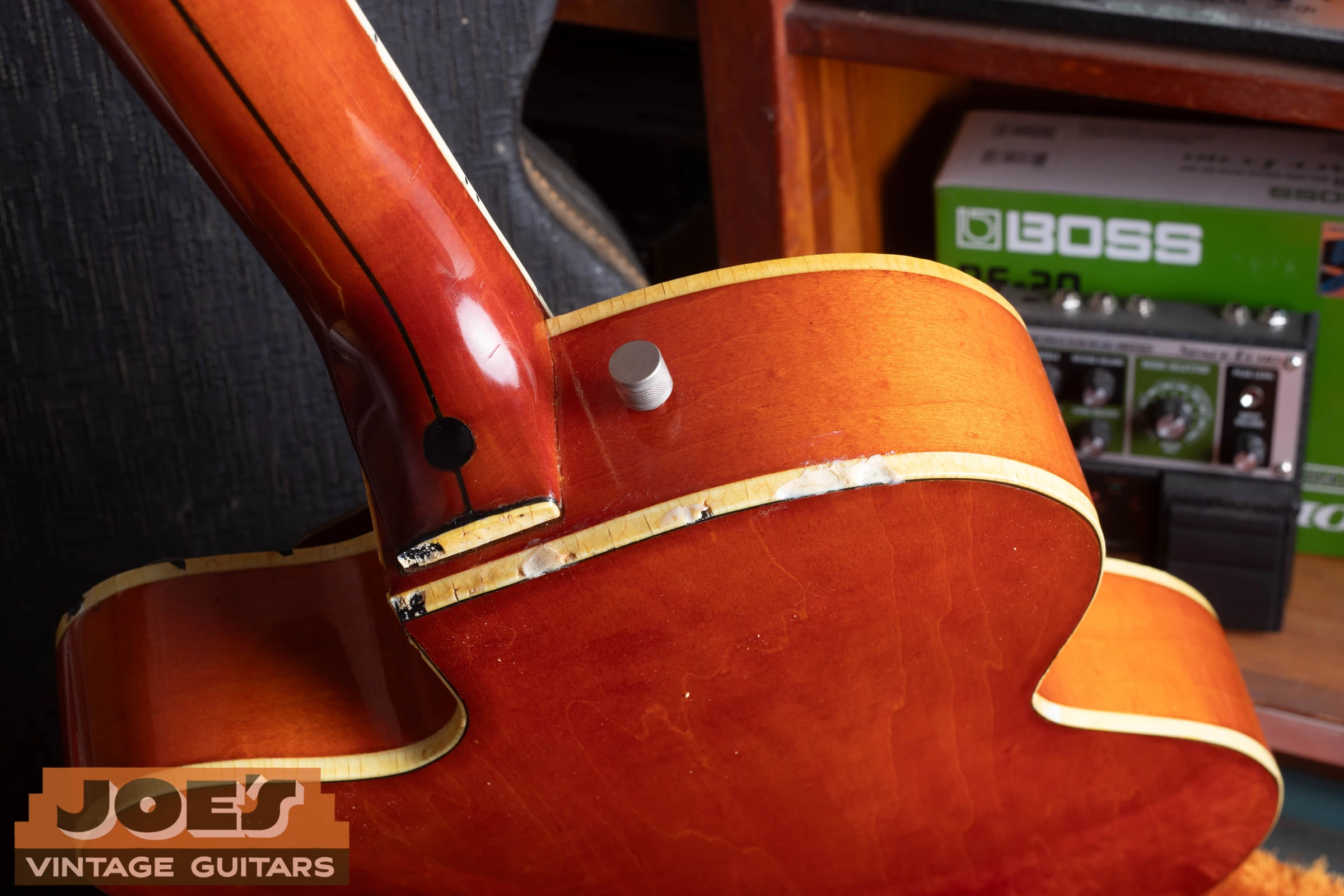
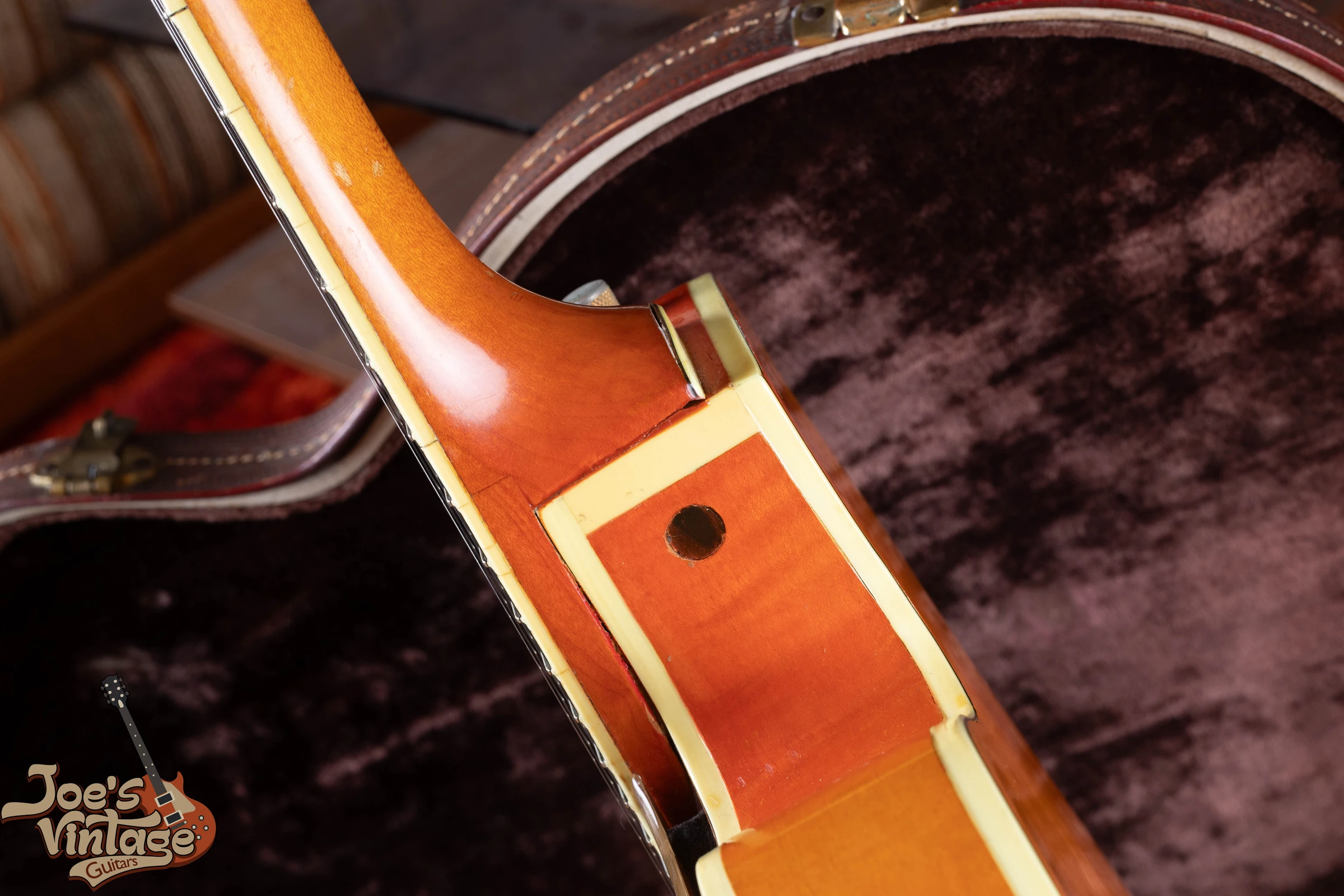
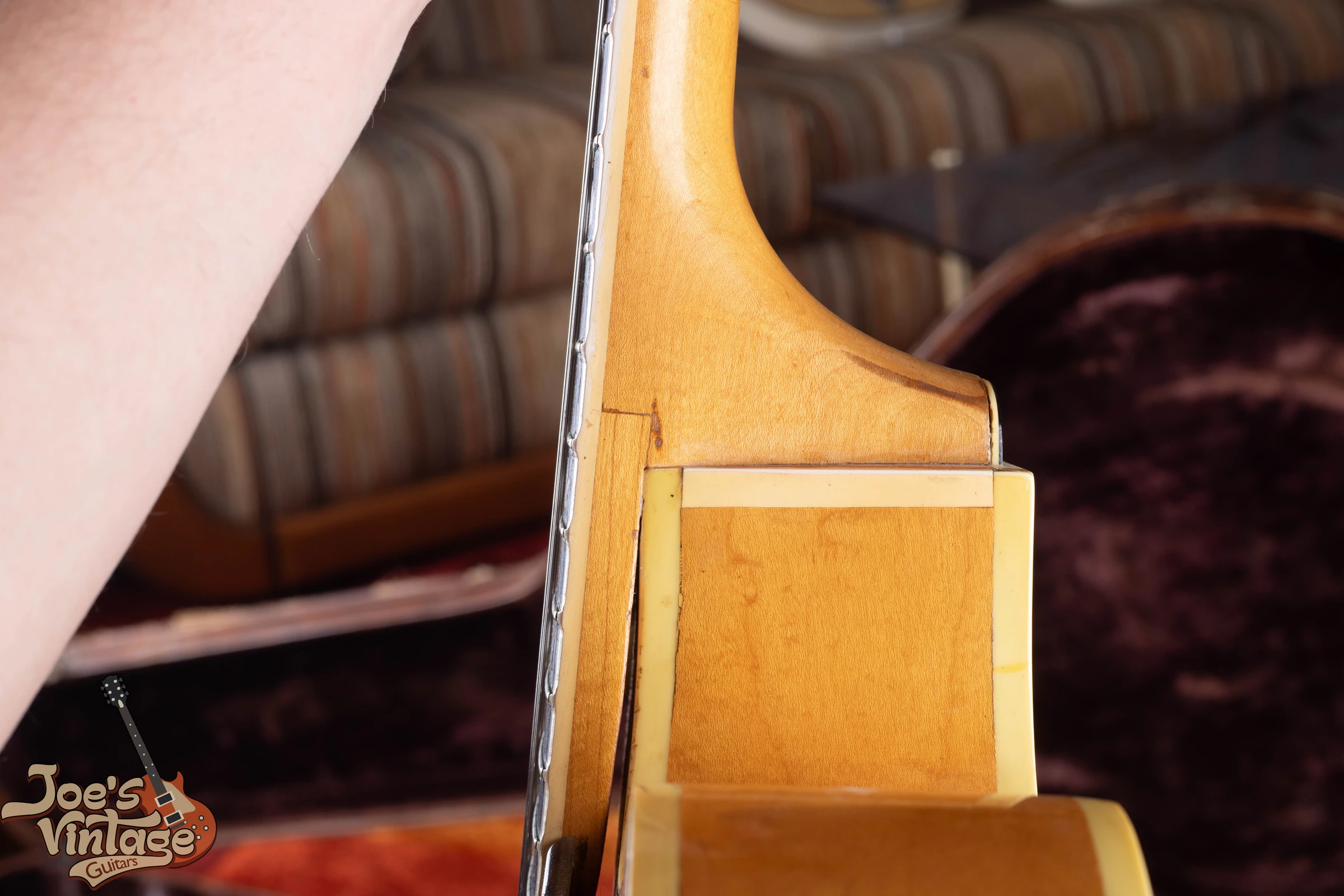
Look along the body edge, cutaways, heel, fingerboard and headstock. Binding can shrink, crack or separate. Missing pieces and loose sections affect condition and repair planning; they don’t provide a calendar date. A guitar with clean binding isn’t necessarily newer, and a damaged binding strip doesn’t prove the rest of the instrument is original.
Use side lighting to show gaps without pressing on the material. Photograph a damaged area close up and again with the surrounding body visible. That gives an appraiser both the condition detail and its location. A bright replacement strip beside older binding should be described as a repair if its history is known, rather than presented as uniform factory material.
At the neck heel, record any gap, finish line or prior repair. Don’t turn a visible line into a diagnosis from a photograph alone. The heel and adjacent binding need inspection together. Joe's 1964 6120 listing describes binding deterioration alongside its other changes; this is a condition issue separate from the serial date.
F-Holes, Internal Bracing And Back Pads
Some Gretsches have open f-holes; others use simulated openings on a closed top. Check a side angle before describing a black f-hole shape as an actual opening. A sealed body also changes where you can reasonably expect to find an interior label.
Trestle bracing, parallel braces and later bracing systems concern the structure inside the body. Their names aren’t interchangeable. Gretsch's bracing explanation describes how the systems support the top and connect different parts of the body. Modern guitars also use earlier bracing concepts, so “trestle braced” isn’t sufficient proof of 1950s production.
Back pads appear on several models and can cover access panels. The pad itself may have been replaced, while the body beneath is older. Record the pad's outline, fasteners and surrounding finish without removing brittle material. The Viking and White Falcon photos show two distinct back arrangements.
The Falcon, Penguin, Viking, Country Club and Anniversary should not be reduced to variants of the 6120. Falcons and Penguins can share decorative themes across very different body sizes; the Viking has its own electronics and hardware; the Anniversary name appears across generations. Finish the comparison with the model and serial evidence and the reissue checks.
Manufacturer References
- Gretsch Inlay History
Check the manufacturer’s examples of blocks, hump-blocks, thumbnails and dots.
- Gretsch Bracing Designs
Compare internal construction terms and diagrams.
- Vintage Select Specifications
Identify earlier body and fingerboard designs used on later instruments.
Get Help Identifying Your Gretsch
Send the serial, a full front and back view, and close-ups of the feature you want checked. Include any known repairs or replacement parts.
Get A Free Gretsch AppraisalReturn to the Gretsch serial lookup and dating library to compare the rest of the instrument.