

Gretsch Identification Guide
Vintage Gretsch Or Reissue? How To Tell
Read the guitar’s own serial before treating a model name, historical year or vintage-style part as evidence of age.
Back To The Gretsch Serial LookupA Model’s Historical Year Is Not Its Build Year
A Gretsch model name can include a year such as ’55, ’59 or ’62 because the instrument recreates a design from that period. That number isn’t the year the individual guitar was made. The full model designation and the serial answer different questions.
Gretsch’s Vintage Select range makes this distinction explicit through its model-year-inspired specifications. A G6120T-59 can use earlier-style appointments while carrying a modern factory-prefixed serial. The same principle applies to later Falcons, Penguins, Jets, Country Clubs and Country Gentlemen.
Begin with the serial lookup. If the number is missing or partly hidden, use the label and serial-location photographs before choosing a period. A plausible-looking serial still needs to agree with the complete instrument; the lookup is an aid to identification, not a certificate of originality.
The Black Falcon With A 2020 Serial
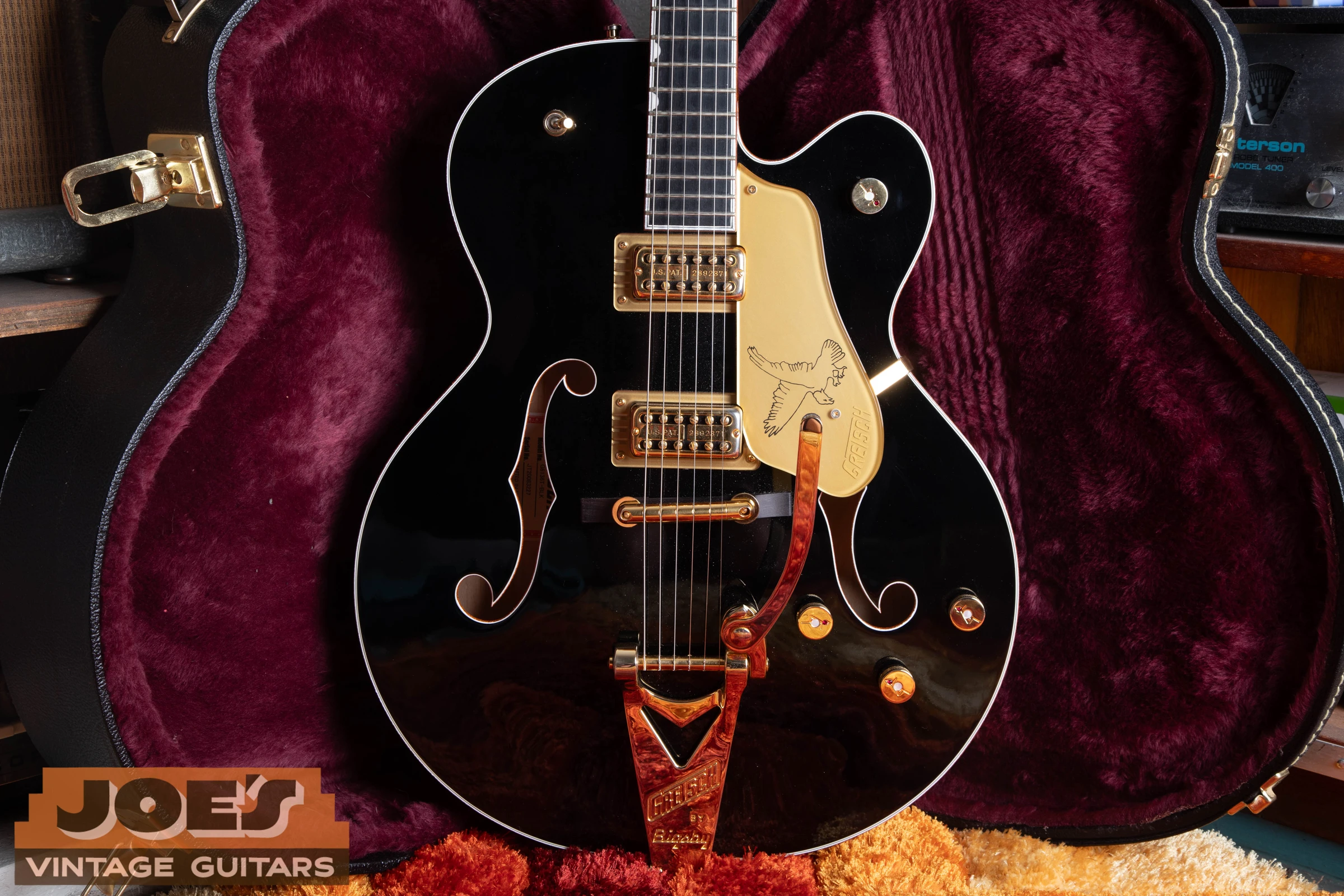
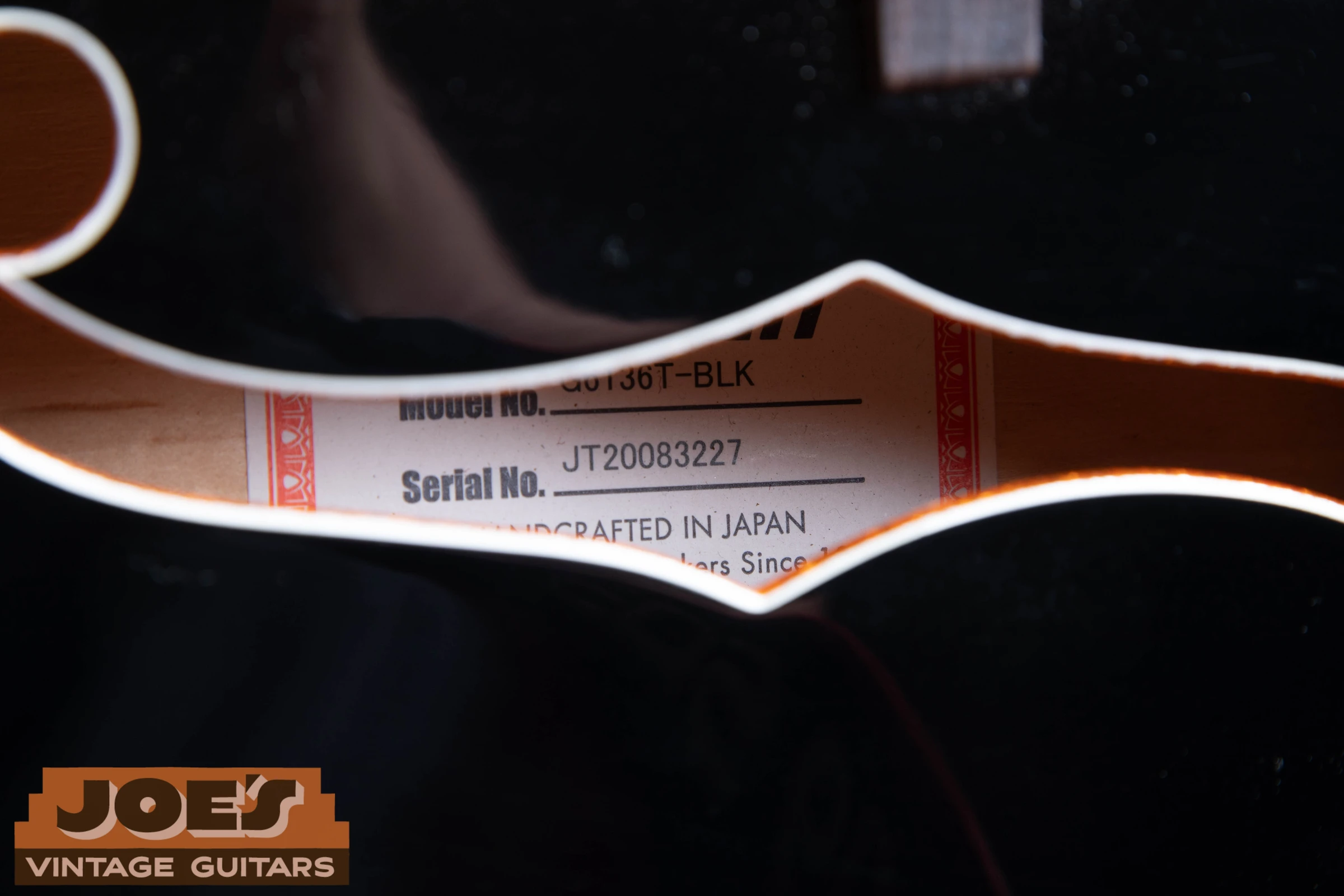
The Black Falcon below combines a large single-cutaway body, gold hardware and an ornate vertical headstock logo. Those visual cues recall earlier Gretsch instruments. Its label, however, reads JT20083227: a modern format indicating August 2020 at the Terada factory in Japan.
The digits after the month are a production sequence. They don’t mean the guitar is a particular 1950s model, nor do they count only Black Falcons. Gretsch’s modern serial explanation describes the factory/year system. Keep the serial photograph with the front view so anyone reading the description can follow the identification.
This is also why aging, gold plating and elaborate inlays can’t carry the date on their own. Compare the headstock details and finish examples as supporting observations. The serial and model together establish the production context.
The 1997 Anniversary Before Factory Prefixes
Later production did not begin with the JT-prefixed system. The Japanese revival period used different serial arrangements before the modern format arrived in 2003. That means a guitar without a two-letter prefix isn’t automatically a 1950s or 1960s instrument.
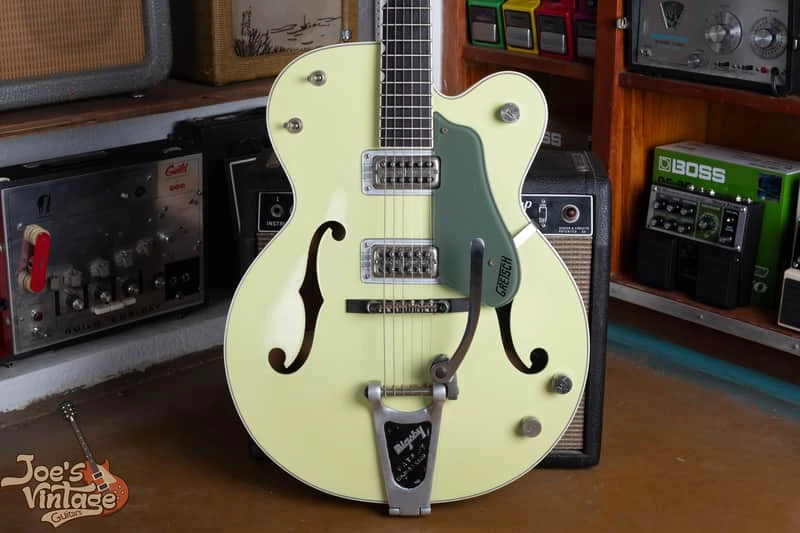
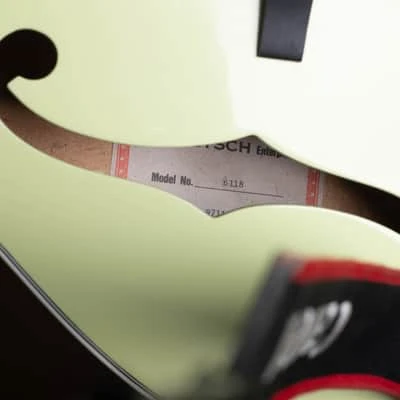
Joe’s 1997 Double Anniversary listing shows the issue clearly. The Smoke Green finish, thumbnail markers and Gretsch control arrangement are familiar from older designs. Its listing and label context place this example in Japanese revival production. The label photo shown here partly hides the serial, so a fresh photograph would be needed to decode every digit independently.
On common pre-2003 Japanese formats, year and month digits are followed by model-related digits and a unit sequence, sometimes separated by a hyphen. This is a different pattern from the short Baldwin month-year code. Don’t remove the punctuation and run every number through the same chart. The revival-era section explains the distinction and the limits for Korean sticker formats.
Features That Reappear On Later Guitars
Hump-block and thumbnail inlays, zero frets, rocking bar bridges, G-arrow knobs and vintage-style pickups all appear beyond their original production periods. Using several of them together is helpful only if you also allow for a model designed to reproduce that combination.
For example, Gretsch’s G6122T-62 Country Gentleman specification includes a zero fret, thumbnail inlays, string mutes and a standby switch. Those are documented features of a later model based on an earlier design. A feature checklist that simply declares each one “1962” would misidentify it.
The body and inlay guide, pickup comparisons and control guide distinguish what the photographs show from what must be checked against a model record. Read the complete specification rather than counting how many old-looking details are present.
Even bracing descriptions can recur. A later guitar advertised with 1959-style trestle bracing is describing a construction approach, not claiming to have been built in 1959. Record the exact model suffix before comparing internal construction.
A Vintage Guitar Can Have Later Parts
The reverse situation is just as common: a vintage guitar has been kept playable with newer hardware. Joe’s 1964 6120 listing describes a refret, replacement gold Kluson tuners, a replacement Tune-o-matic bridge and a newer Bigsby. Those disclosed changes explain why a part-by-part inspection doesn’t reproduce a factory catalog photo.
Separate the instrument's identity, installed parts and condition. A replacement bridge doesn’t change the body's manufacture date. It does change an originality description and can affect how the guitar should be compared with other examples. A refret is different from a replaced fingerboard, and binding repair is different from a complete refinish.
Use the bridge and Bigsby photographs to describe what is installed. Keep removed parts with the instrument, but avoid calling them original solely because they came in the case. Receipts, old photographs and a documented repair history may help establish the sequence of changes.
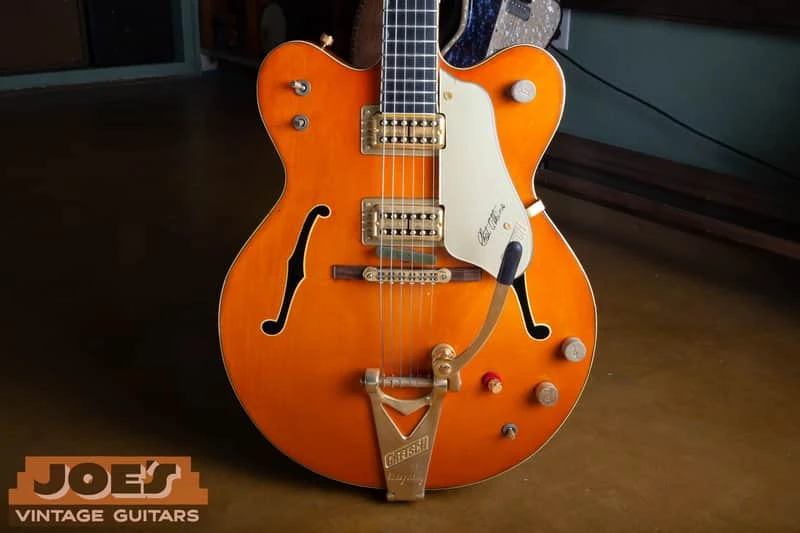
When The Serial And Features Disagree
First check the transcription. A faint 8, a hidden prefix or an omitted separator can change the reading. Next check the serial system and location. The same five-digit number can fit an early sequence or a later date code, and some later orange labels use sequences that don’t produce an exact year.
Then consider documented production exceptions. Gretsch's early serial history discusses misplaced 1957 labels used in the mid 1960s. A mismatch is a reason to examine the body and model, not immediate proof of a counterfeit. Conversely, a believable serial isn’t proof that every installed part is factory original.
For an assessment, send complete front and back views, both sides of the headstock, the full label and close-ups of disputed parts. State what you know about repairs and ownership, and mark uncertain digits rather than guessing. A free Gretsch appraisal can consider those details together. If you plan to sell the guitar, a clear record of changes is more useful than a sweeping “all original” label.
Manufacturer References
- Vintage Select Model Guide
Compare the historical design years used in later model names.
- Modern Serial Number System
Decode the actual manufacture date and factory prefix.
- Early Serial Number Exceptions
Read the manufacturer’s discussion of reused labels and model years.
Get Help Identifying Your Gretsch
Send the serial, a full front and back view, and close-ups of the feature you want checked. Include any known repairs or replacement parts.
Get A Free Gretsch AppraisalReturn to the Gretsch serial lookup and dating library to compare the rest of the instrument.