

Gretsch Identification Guide
Gretsch Labels And Serial Number Locations
Check the complete label and the whole headstock before you enter a number. Gretsch used several serial locations, sometimes during the same period.
Back To The Gretsch Serial LookupWhere To Find Your Gretsch Serial Number
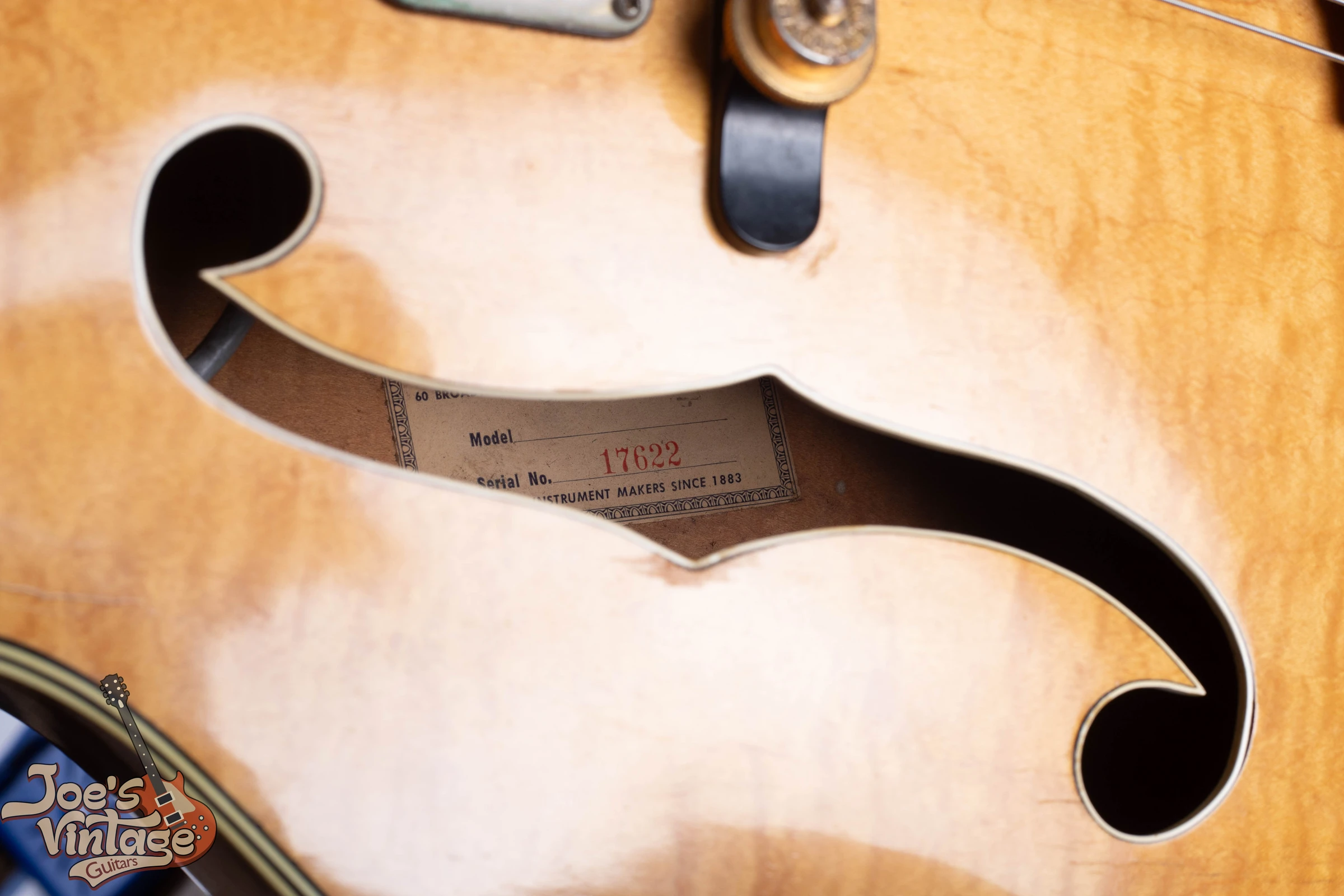
On a hollowbody Gretsch, start at the bass-side f-hole with a flashlight held outside the body. Photograph the entire label if you can, including its border, wording, model line and serial line. A close crop of five digits leaves out the information that tells you which chart applies. If there is no label, inspect the back and top edge of the headstock and any metal nameplate on its face.
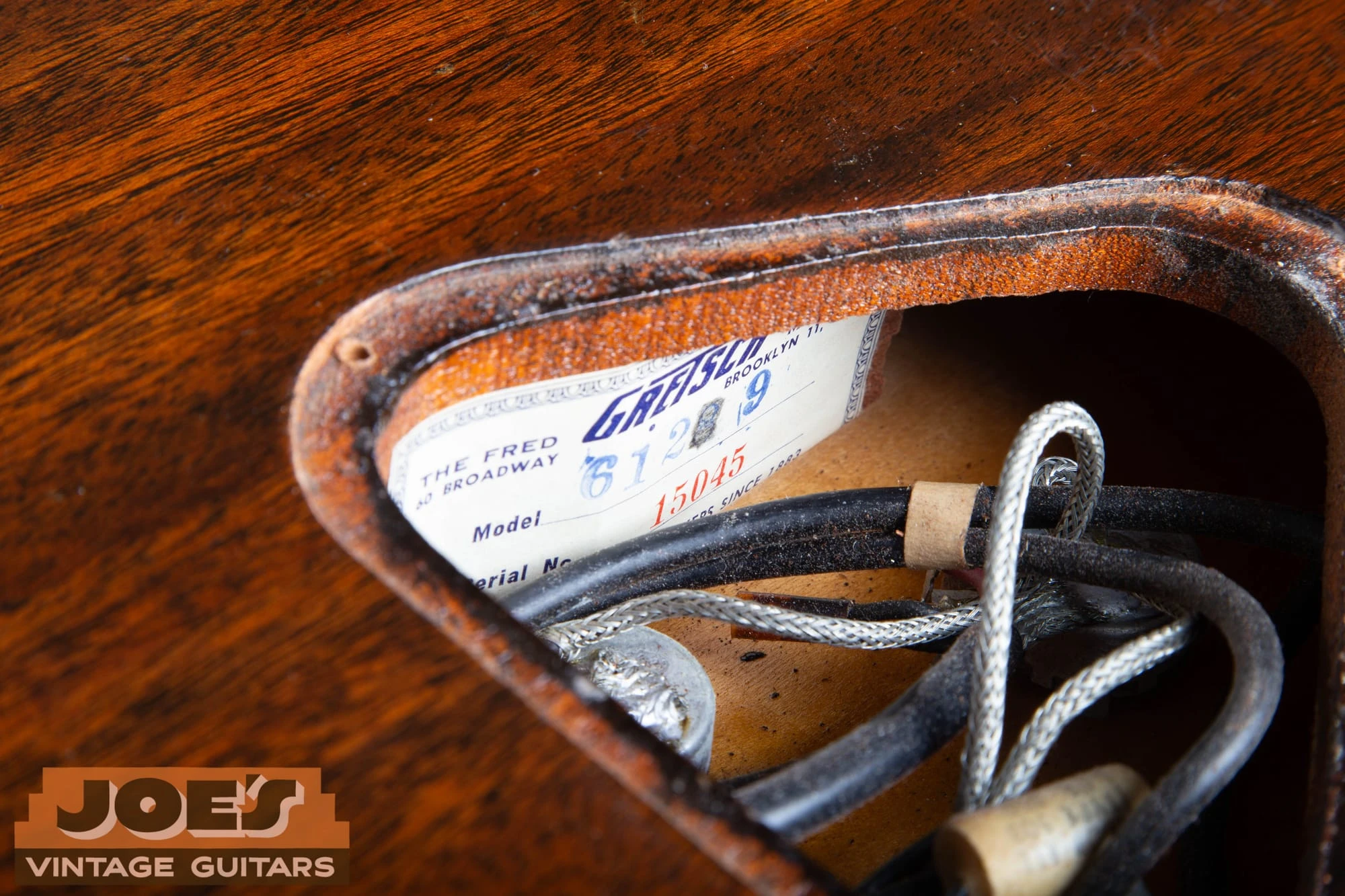
On a Jet, a label may be inside the control cavity. Don't remove a tight or fragile cover just to get a number; a repair shop can help if the screws or finish look vulnerable. Early acoustic instruments may have pencil markings inside the body. Gretsch’s early serial-number history describes those location changes. Use the serial lookup once you have the full marking.
A model number answers which instrument it is. A serial number helps identify an individual instrument and its production period. The 6120, 6118 or 6136 printed above a serial line isn’t itself a year code. On a modern label, copy the G-prefix model and its suffixes separately so you can distinguish closely related versions.
Brooklyn Labels And The Orange Oval
The rectangular Brooklyn label is a useful starting point for a 1950s instrument. Its company address and border distinguish it from the later orange design. Read the printed number without treating the paper's color as a calendar: lighting, aging and varnish can make cream paper look yellow or brown.
Gretsch’s product-dating reference places the orange oval change at serial 25001 in 1957. Both the label type and the guitar still need to agree. Leftover parts, reused labels and production transitions can cross a simple chart boundary. A label also identifies the guitar it was originally attached to, which matters if there is evidence it has been moved.
Look at the paper edges, glue area and surrounding wood in a clear photograph. Torn corners or old glue aren’t automatic evidence of a problem. A recently attached label, an obscured model line or a number that contradicts the body is a reason to ask for more detail. Compare the body and fingerboard features before accepting or rejecting the date.
Headstock Stamps And Metal Nameplates
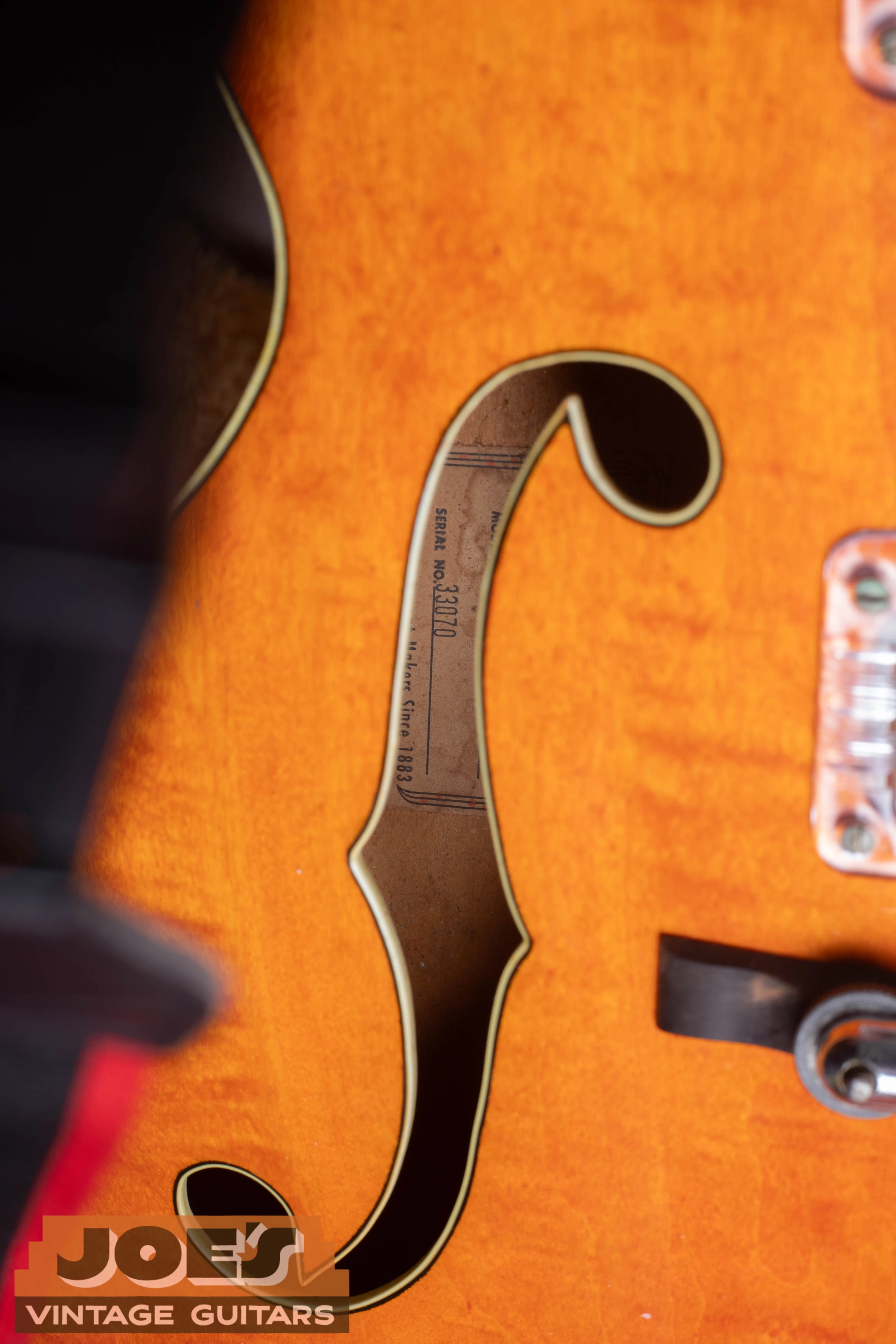
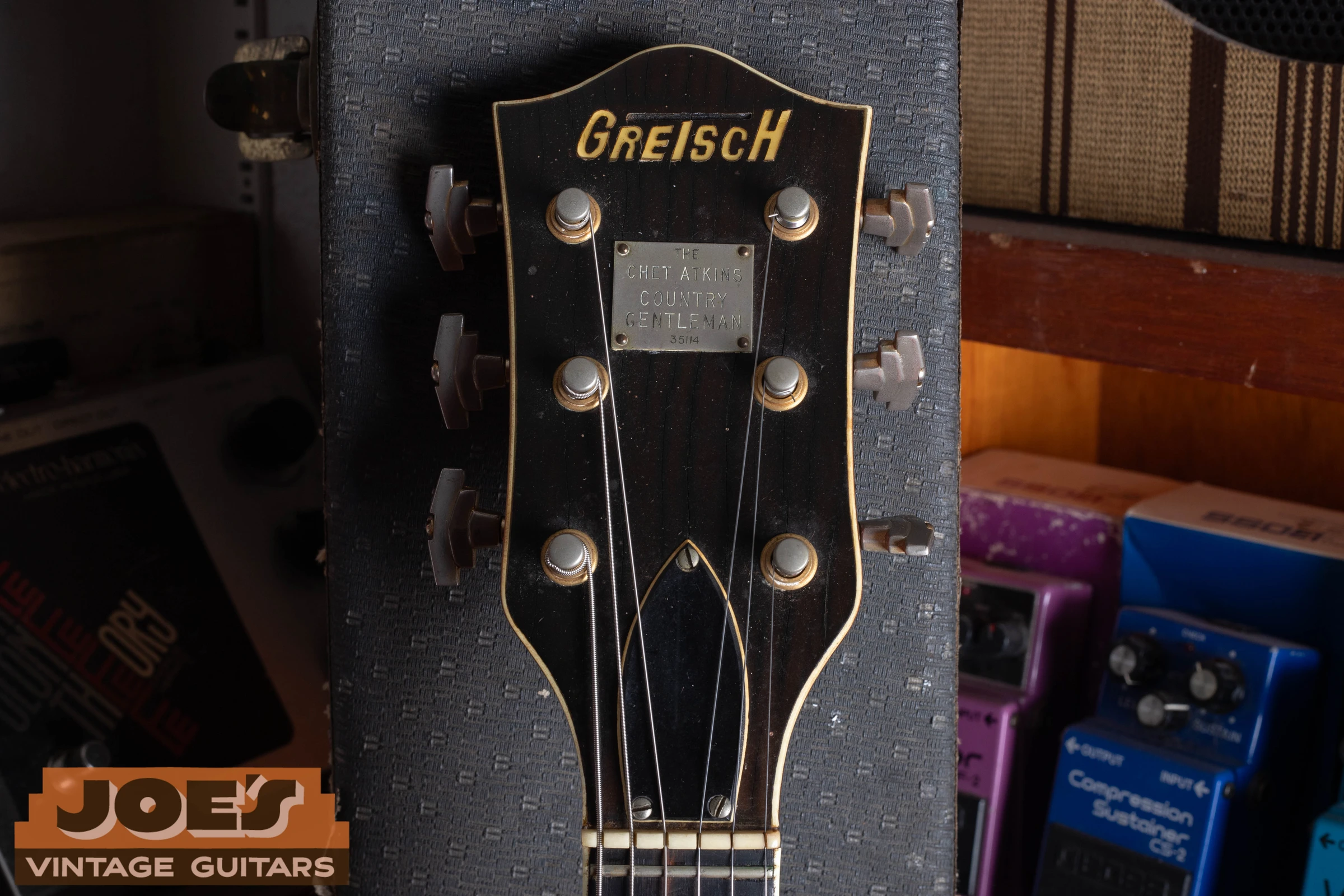
Some Gretsches carry their serial on the headstock edge, others on the back, and some use the metal model plate on the face. A missing interior label is therefore not enough to conclude that a guitar has lost its identification. Examine these locations before describing it as “no serial.”
The Viking below shows why location changes the interpretation. Its 27127 is on the rear of the headstock. In the date-code system, 2 can indicate February, 7 indicates 1967 and 127 is the unit sequence. Reading the same digits against a 1950s sequential chart would lead elsewhere. The Viking's body and equipment support the later context.
For shallow stamps, try side lighting and take several photographs. Avoid chalk, graphite, sanding or rubbing that could stain the finish. The headstock and tuner guide shows the surrounding details to include: logo, plate, truss rod cover, tuner backs and unused screw holes.
Later Orange Labels And Baldwin Rectangles
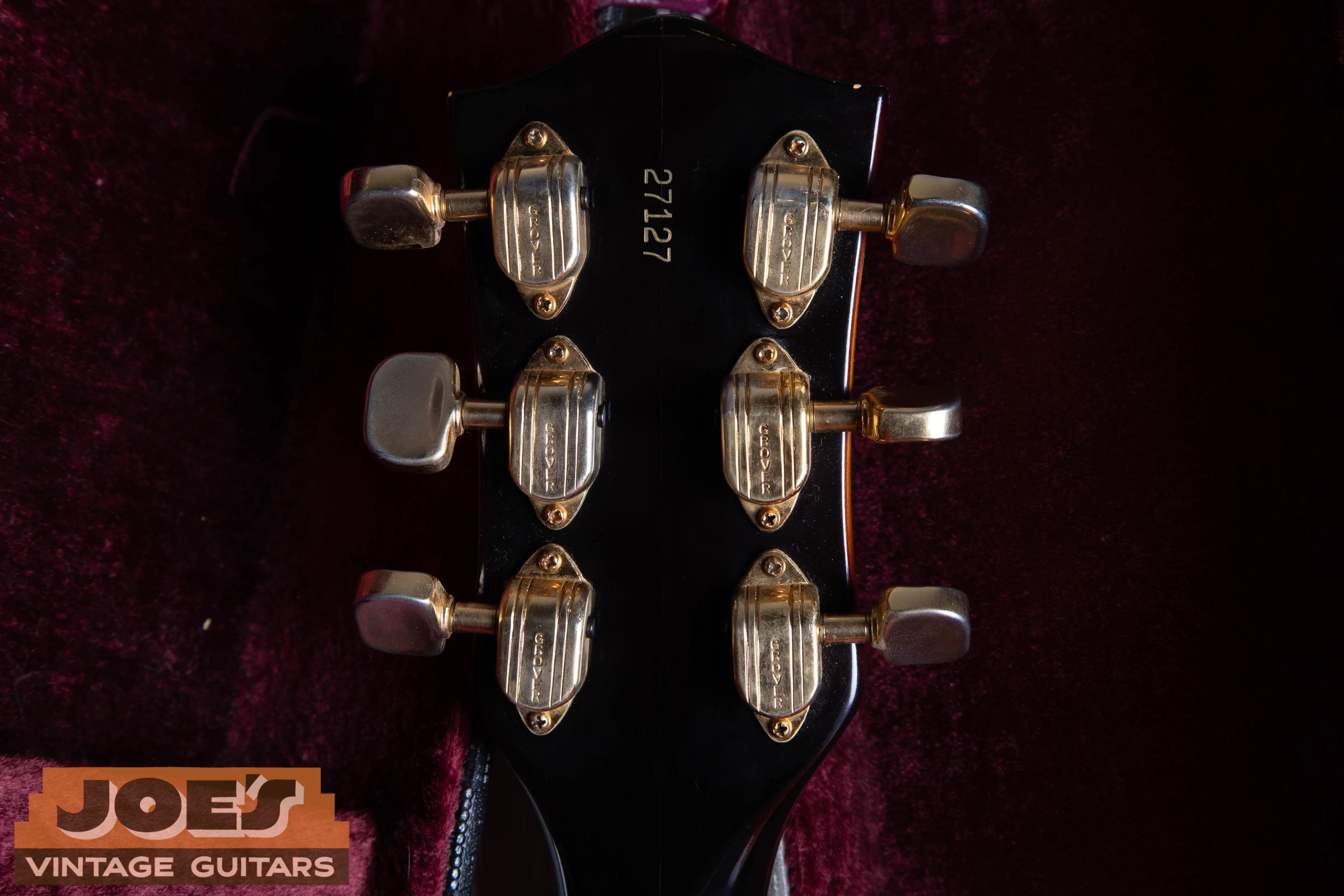
A later orange and gray label can resemble an earlier one at a glance. Read the wording along its bottom edge. The version with “That Great Gretsch Sound” used a separate five-digit sequence beginning with 1 or 2 on some instruments. You can’t reliably turn that sequence into a month and year.
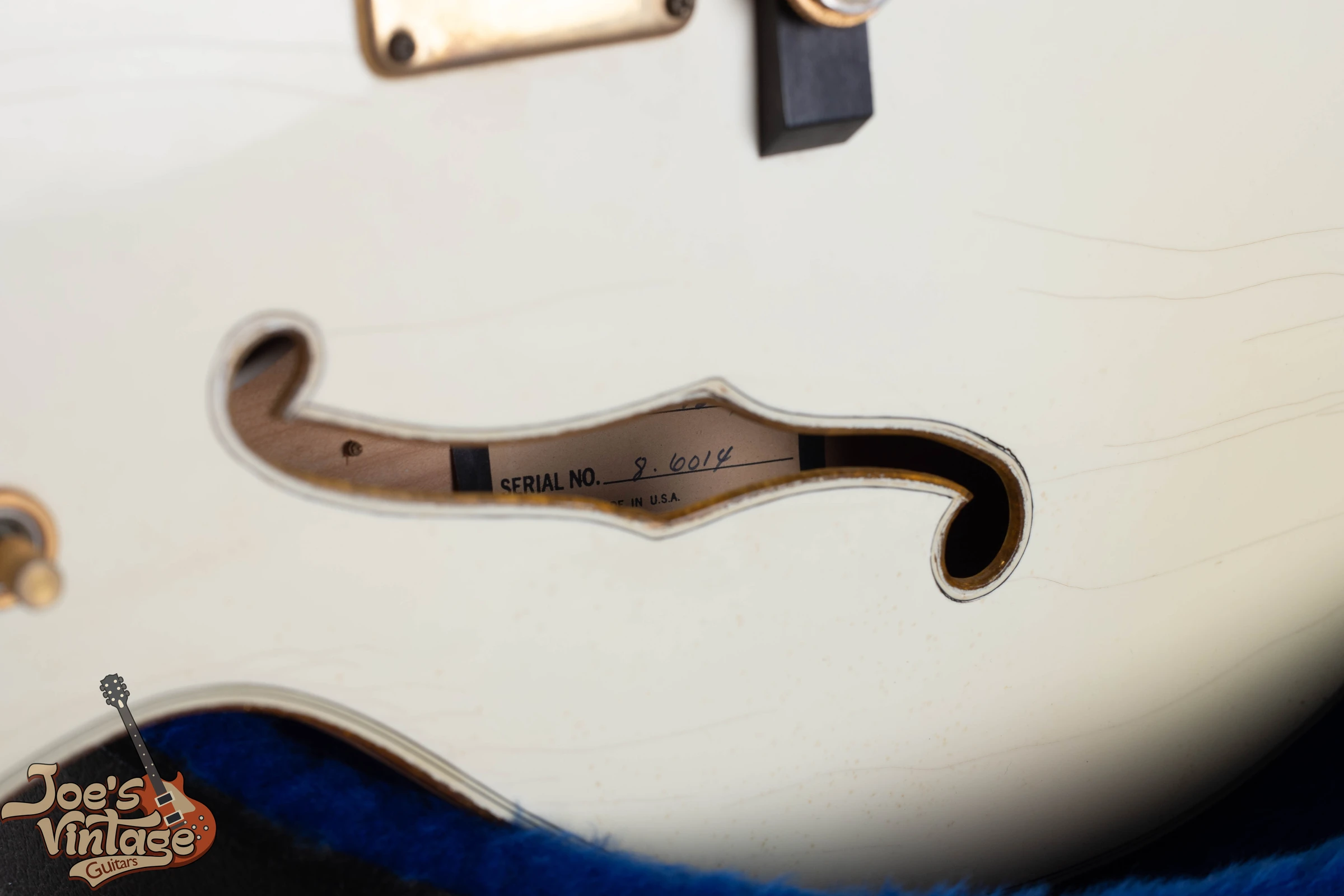
Black and white rectangular Baldwin labels carry a different arrangement of model and serial fields. Photograph the punctuation as well as the digits. A faint dash or handwritten separator may clarify where the month ends. The White Falcon label shown here reads 8.6014; with its 1970s context, that supports an August 1976 reading. The photograph preserves the actual dot rather than silently replacing it with a hyphen.
Use the Baldwin date-code examples for the parsing method. If the headstock and label disagree, record both. A conflicting number is evidence to investigate, not permission to choose the more desirable date.
Japanese Revival And Modern Factory Codes
The orange-bordered label returned on later instruments, so its general appearance can’t prove a guitar is vintage. Joe's 1997 Double Anniversary listing supplies a useful comparison: an older-looking body and appointments with a later Japanese label. The model line is visible here, but the f-hole partly covers the serial. A complete transcription needs another view.
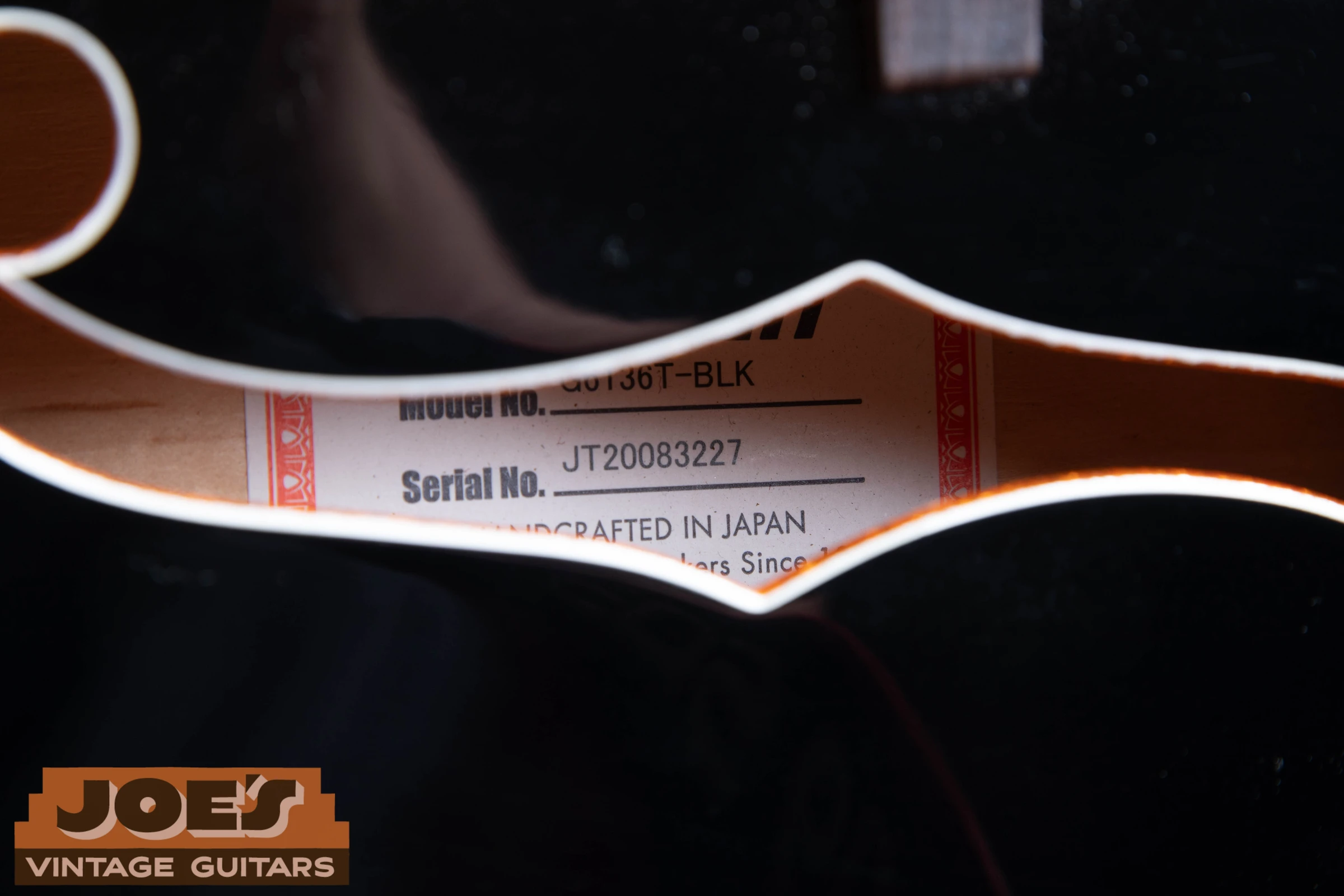
The Black Falcon label is easier to read: JT20083227. JT identifies Terada in Japan, 20 is 2020 and 08 is August. The four remaining digits are a sequence, not a model designation. Compare that label with the back of the same guitar's headstock, then follow the vintage versus reissue guide if its styling appears much older.
For an appraisal, send a complete front view, both sides of the headstock and the best label photograph. Include the original typed serial in your message so compression doesn't turn a 3 into an 8. If a character is unreadable, mark it as uncertain. You can request a Gretsch appraisal from those photos without taking the instrument apart.
Manufacturer References
- Gretsch Product Dating
Compare the manufacturer’s label descriptions and serial systems.
- Early Serial Number History
Read Gretsch’s explanation of pencil marks, cavity labels and reused numbers.
- Modern Serial Number Format
Check the country/factory prefix and year/month positions.
Get Help Identifying Your Gretsch
Send the serial, a full front and back view, and close-ups of the feature you want checked. Include any known repairs or replacement parts.
Get A Free Gretsch AppraisalReturn to the Gretsch serial lookup and dating library to compare the rest of the instrument.