

Gretsch Identification Guide
Gretsch Headstocks, Logos And Tuners
Take front, back and edge photos of the headstock. The logo, serial location, tuner footprint and model plate should be read together.
Back To The Gretsch Serial LookupThe Headstock Views That Help Identify A Gretsch
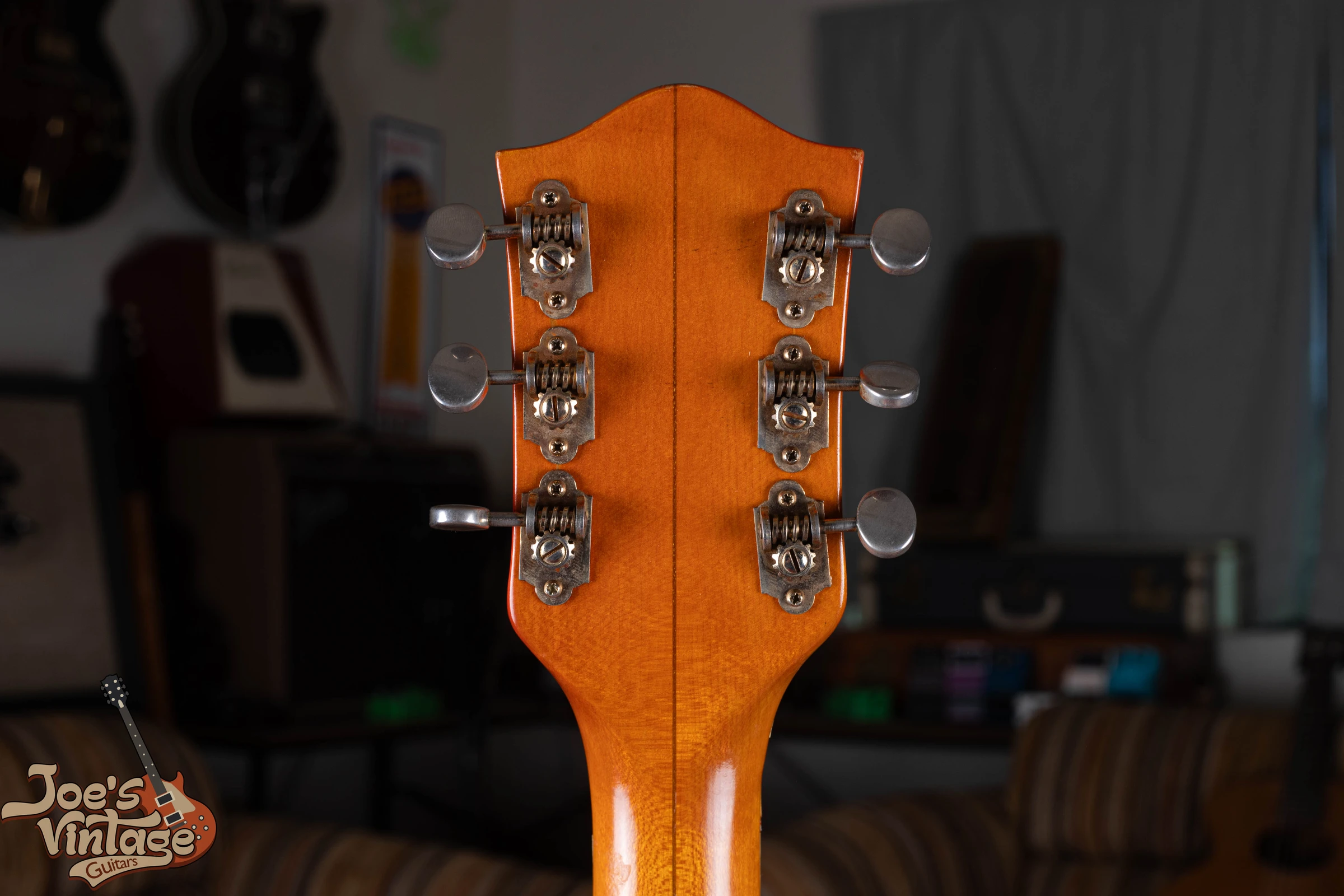
A straight-on front photo shows the outline, logo, decorative inlay and truss rod cover. A rear photo shows tuners and any serial marking. An edge view can reveal a serial impressed into the end of the headstock. Keep all three views with a front photo of the complete guitar.
Before assigning a period to the logo, identify the model. Falcon headstocks, Jet headstocks and early acoustic outlines can’t be treated as one continuous timeline. The headstock also belongs to a neck that may have seen repairs or replacement parts, so include any known repair history with the photographs.
Read the serial-location guide if a number is missing from the back. A blank rear face isn’t enough to conclude that the guitar has no serial. A paper label or metal model plate may carry the information you need.
Script Logos, The T-Roof Logo And Model Plates
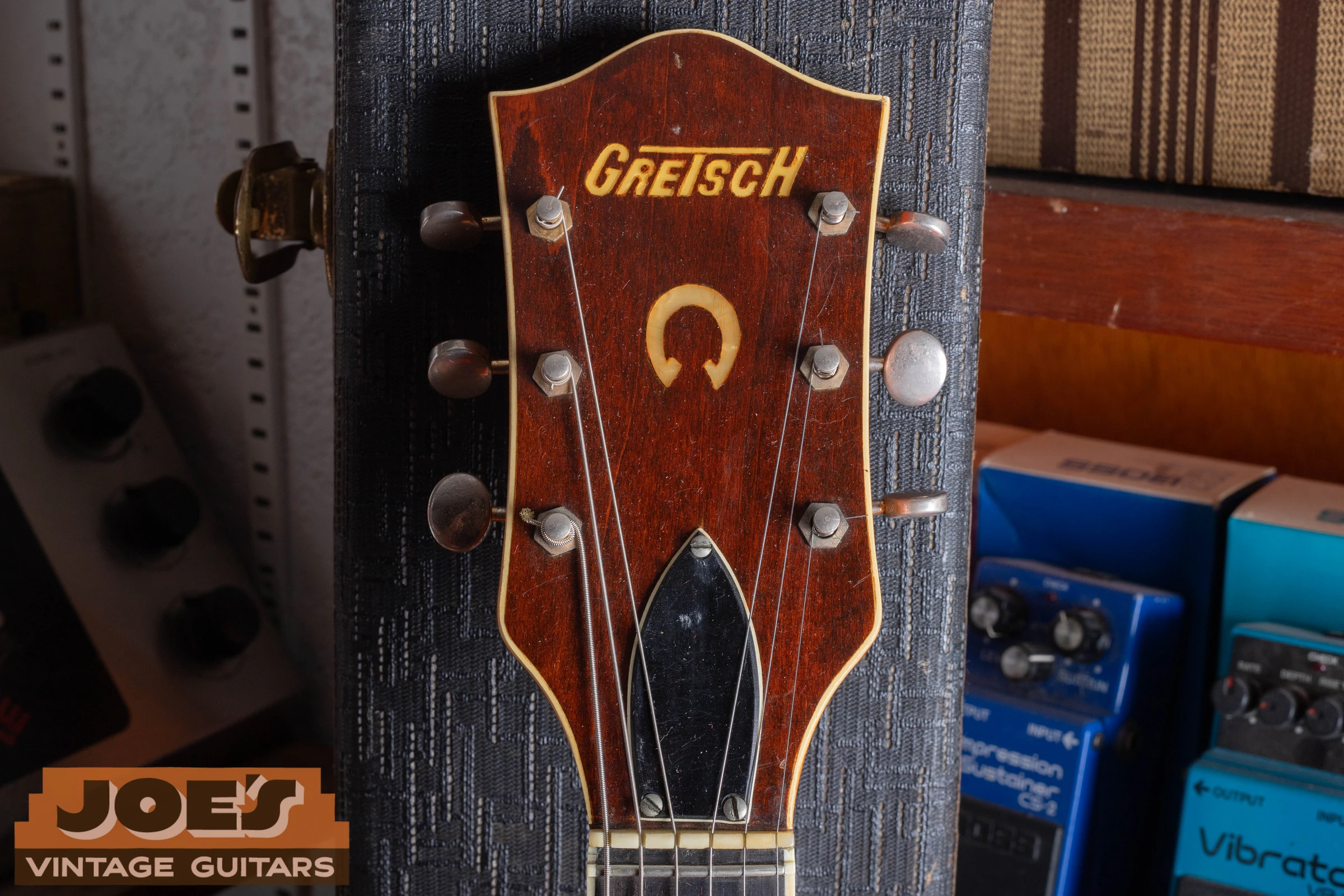
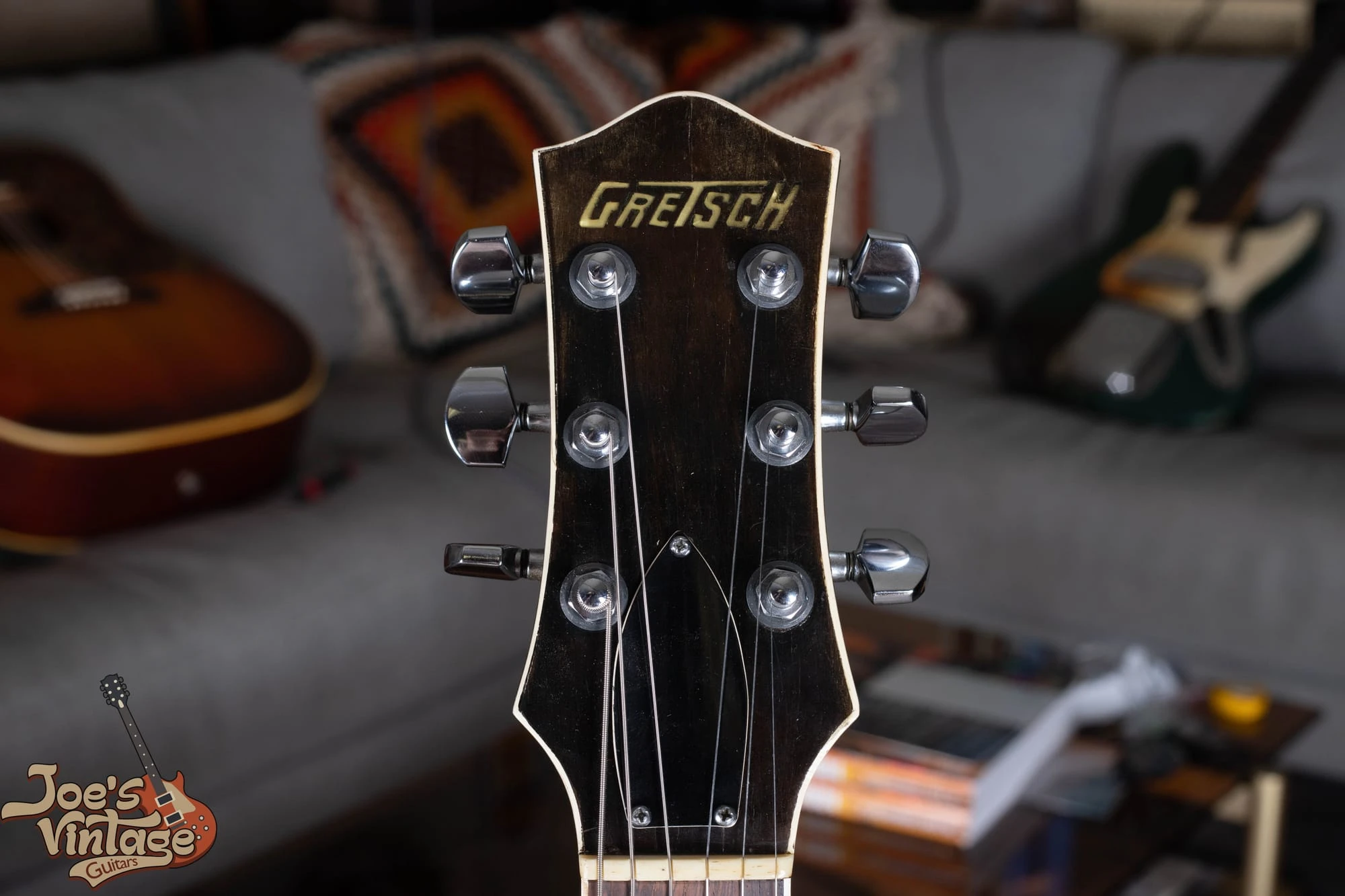
Gretsch used different logo styles, including early script lettering and the familiar block logo with an extended top on the T. A logo style can support a period estimate after the model is established, but it isn’t a serial decoder. Later instruments deliberately repeat earlier graphics.
The Jet example shows the T-roof lettering clearly. Compare its position and proportions with a documented example of the same model. Paint, pearl, overlays and decals have different appearances, and lighting can obscure their edges. A single small marketplace image is rarely enough to decide that a logo has been replaced.
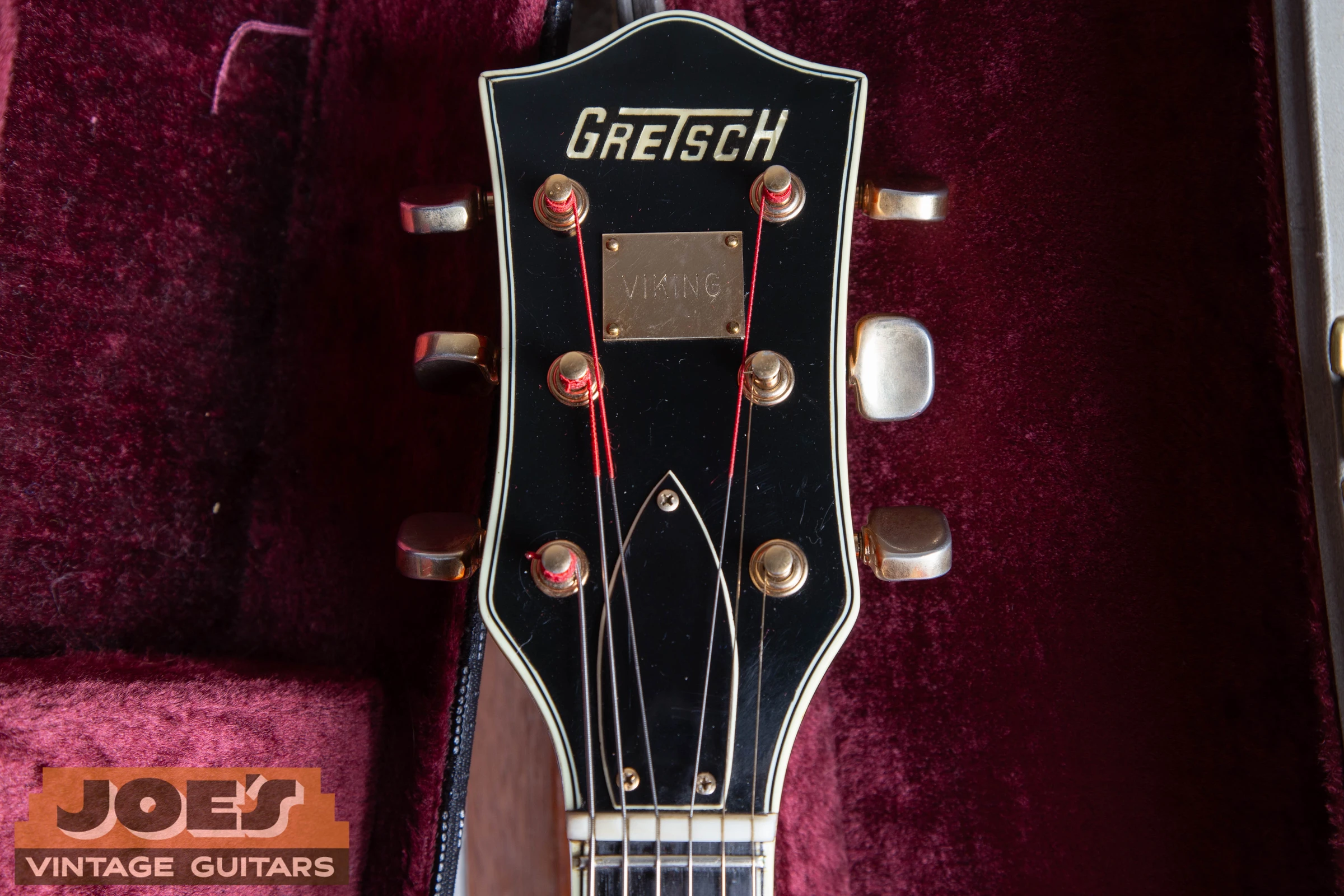
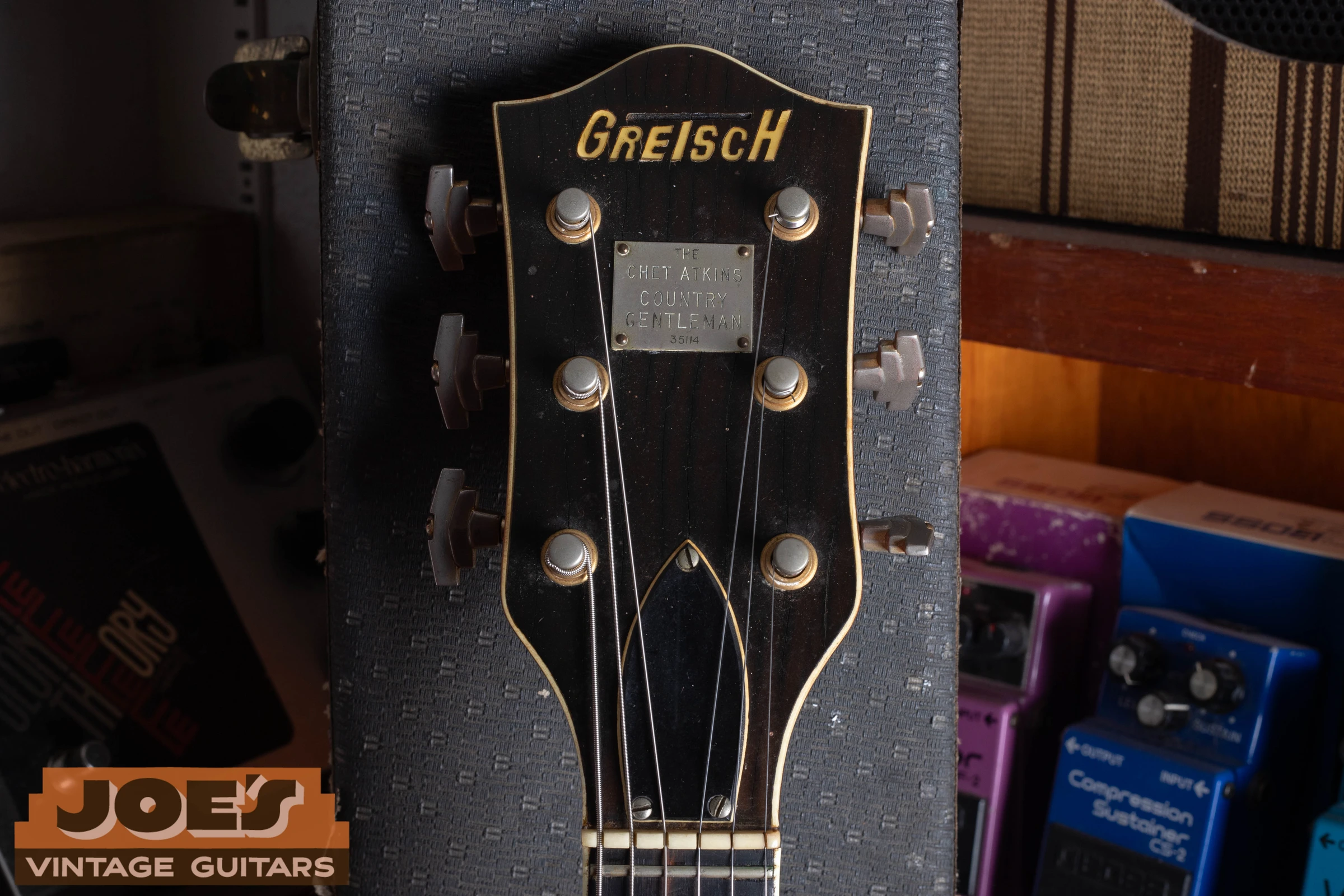
Metal plates can identify a model and, on some vintage instruments, carry a serial. The Country Gentleman and Viking plates below serve different models. Photograph any stamped number at an angle that makes it legible without glare. Don’t assume that the plate and the guitar have always been together simply because the names match.
Gretsch’s dating reference describes several historical serial locations. Compare its location guidance with the hub’s era table before deciding whether a five-digit number is sequential or date coded.
Falcon Decoration And Reissued Headstocks
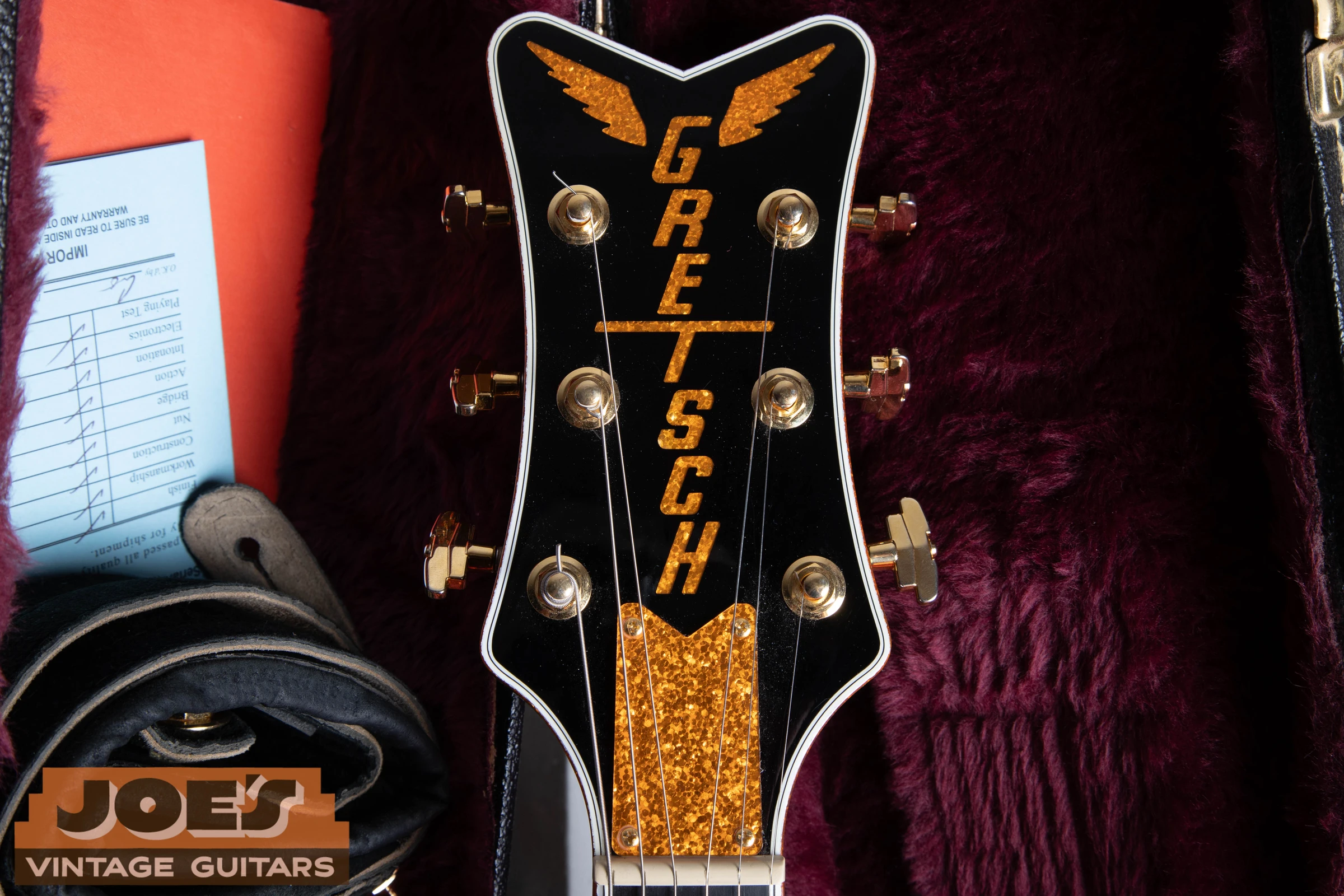
The Falcon family uses elaborate headstock decoration, including the vertical winged logo on familiar versions. Horizontal lettering, model plates and other appointments appear on different Falcon periods and variants. A vertical logo is therefore a feature to compare, not proof of an early White Falcon.
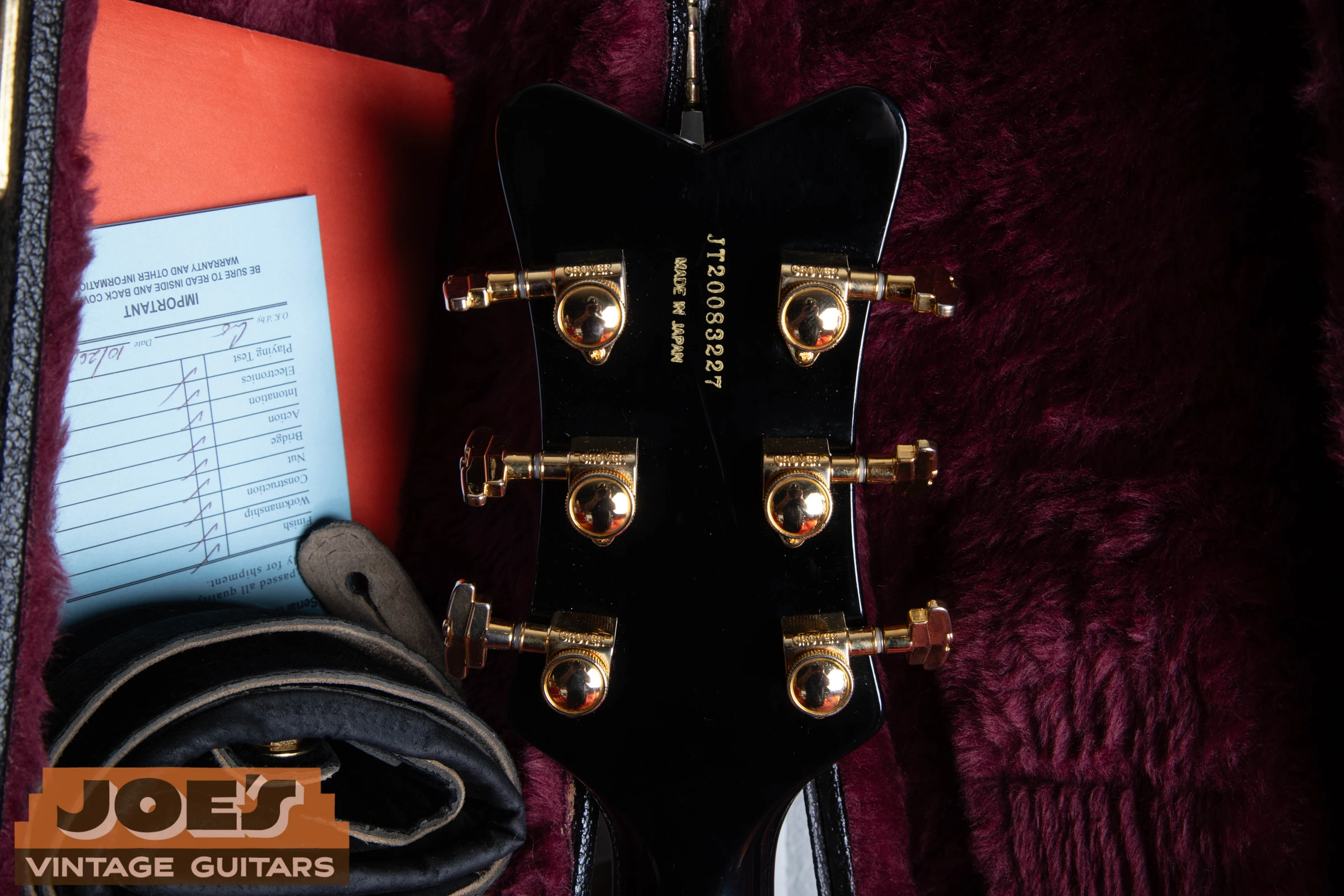
The Black Falcon shown here has a modern serial that dates it to August 2020. Its elaborate front is intentionally reminiscent of earlier Gretsch styling. This single guitar demonstrates why an ornate headstock and gold hardware can’t establish vintage age.
Gretsch's Vintage Select lineup lists model-year-inspired instruments. The historical year in a product name tells you which design is being recreated. Use the guitar's own serial for its actual build period and compare the vintage versus reissue examples before describing it for sale.
Tuner Housings, Buttons And Screw Holes
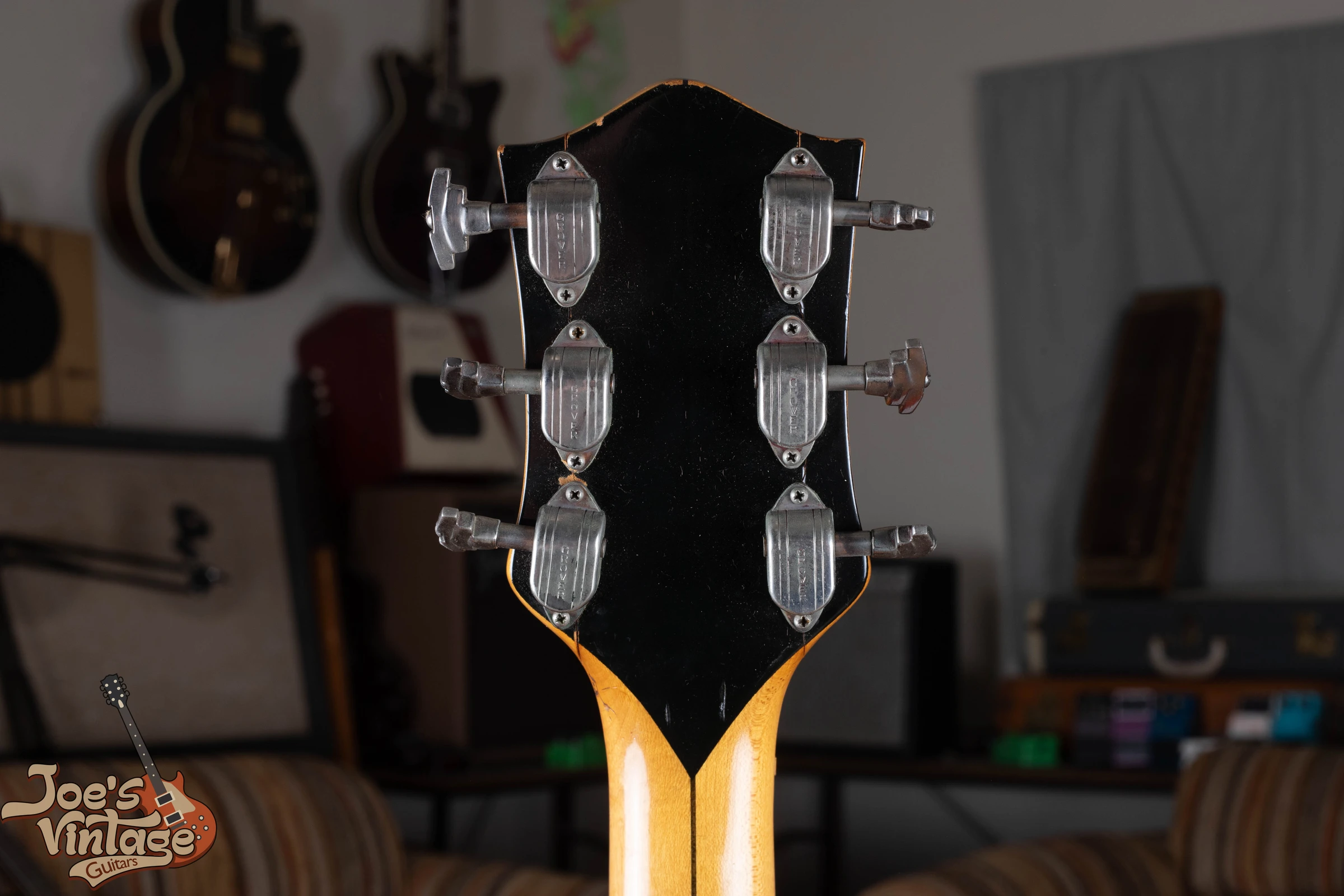
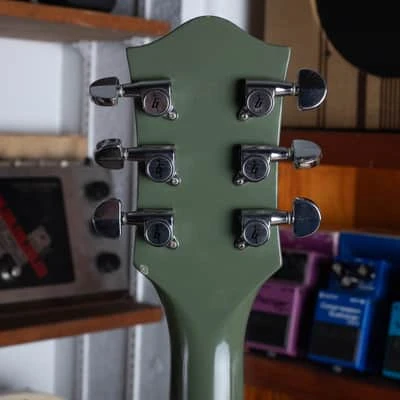
Identify the complete tuner from its housing, button and mounting pattern. Record whether the mechanism is open or enclosed, the maker's stamp, the housing outline, the number and placement of screws, and the bushings visible from the front. A familiar button shape can appear on more than one mechanism.
The Country Club photo shows enclosed Grover housings. Compare those with the open-back machines on the 6120 above and the later Anniversary machines below. These are examples of different hardware arrangements, not a universal progression that every model followed.
Look for unused holes, plugged holes, impressions outside the present housing or bushings that sit differently from the others. They may indicate a tuner change. An absence of extra holes doesn’t prove originality, because a replacement can use the same footprint. The finish inspection guide describes other evidence to photograph around altered hardware.
Replacement Tuners And Conflicting Dates
Joe’s 1964 6120 listing explicitly records replacement gold Kluson tuners. That is useful provenance: the tuners can’t be used as factory evidence for the instrument's 1964 specification. Their presence also doesn’t make the body a later production guitar.
The same logic applies to a changed truss rod cover, nut or model plate. Identify the part you can see, then state what is known about its installation. If a neck repair is suspected, photograph the side and rear in diffuse light. Don't force a tuner or loosen a damaged screw to improve the photo.
For a Gretsch appraisal, send the full instrument, label, headstock views and any repair records. Keep the old parts if they are available. A record saying “replacement tuners installed; earlier set included” gives a more useful basis for evaluation than an unsupported claim that all parts are original.
Finally, compare the headstock evidence with the body, binding and inlays. If several independent features agree and one removable part differs, investigate that part's history before discarding the whole date estimate.
Manufacturer References
- Gretsch Serial Locations
Check the documented headstock, label and plate locations.
- Modern Factory Prefixes
Read the manufacturer’s explanation of letters and date digits.
- Gretsch Catalog Archive
Compare headstock and tuner specifications for later models.
Get Help Identifying Your Gretsch
Send the serial, a full front and back view, and close-ups of the feature you want checked. Include any known repairs or replacement parts.
Get A Free Gretsch AppraisalReturn to the Gretsch serial lookup and dating library to compare the rest of the instrument.