

Gretsch Identification Guide
Gretsch Pickup Identification And Dating
Identify the pickup family from the face, then compare it with the model and serial. Covers and complete pickups can both be replaced.
Back To The Gretsch Serial LookupStart With The Pole Pieces And Cover
Count what you can see before trying to assign a year. A Filter’Tron has two rows of six adjustable screw poles. A Super’Tron uses blades. A HiLo’Tron has a different exposed face, with a single row of poles. A DynaSonic has large individual pole pieces and its own adjustment arrangement. These distinctions are more useful than the pickup's color in a distant photograph.
Now compare both pickups on the same guitar. A neck and bridge pair need not look identical on every Gretsch model, so a mismatch isn't automatically a modification. The model's original specification matters. Start with the Gretsch serial charts, then use a catalog or documented example for that model and period.
Gretsch’s pickup history places DynaSonics in the late 1940s, the Filter’Tron introduction in 1957 and Super’Trons around 1964. Those are family introductions. They don’t date every guitar wearing the design today. Later reissues and replacement pickups repeat the same visible features.
DynaSonic And DeArmond Pickups
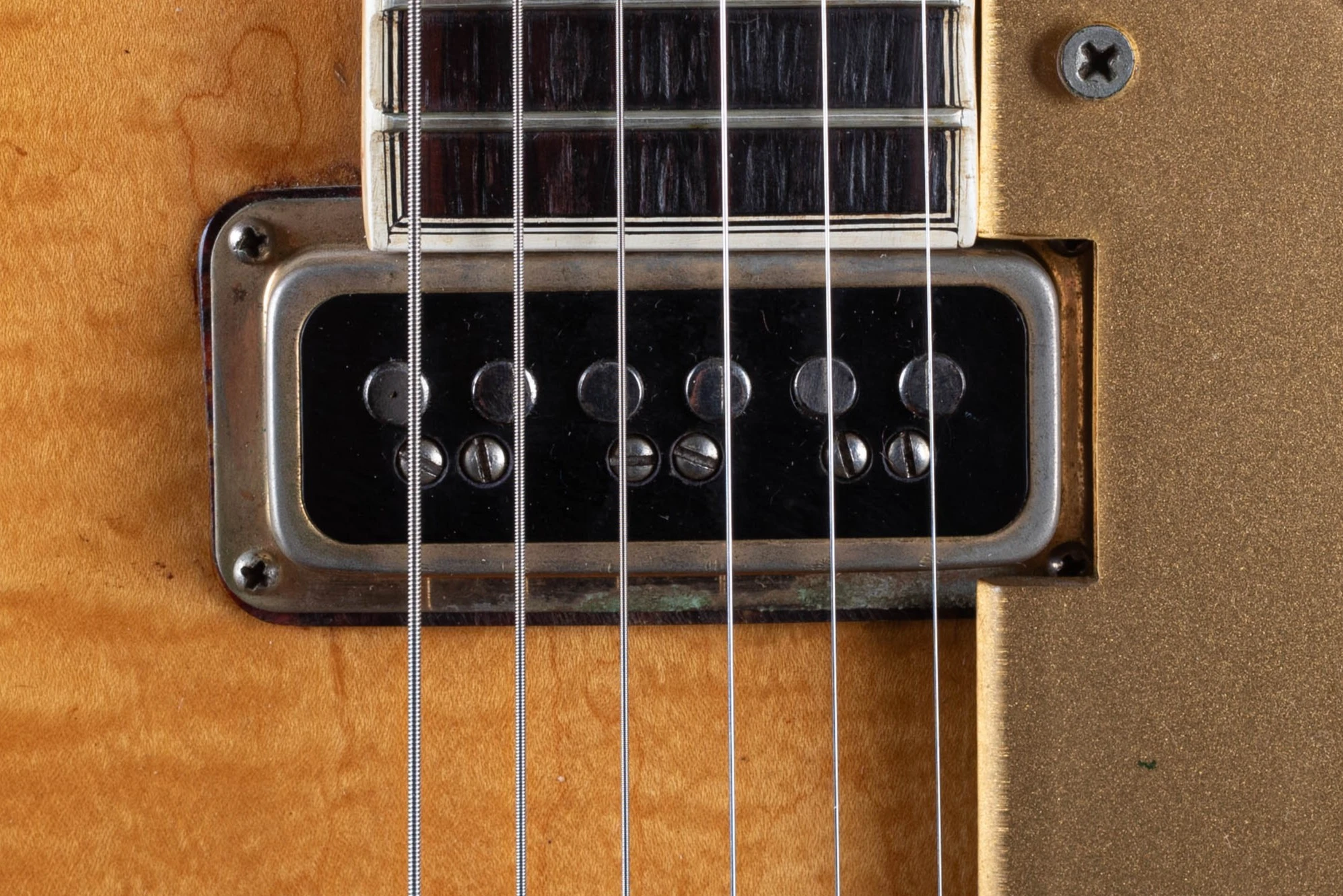
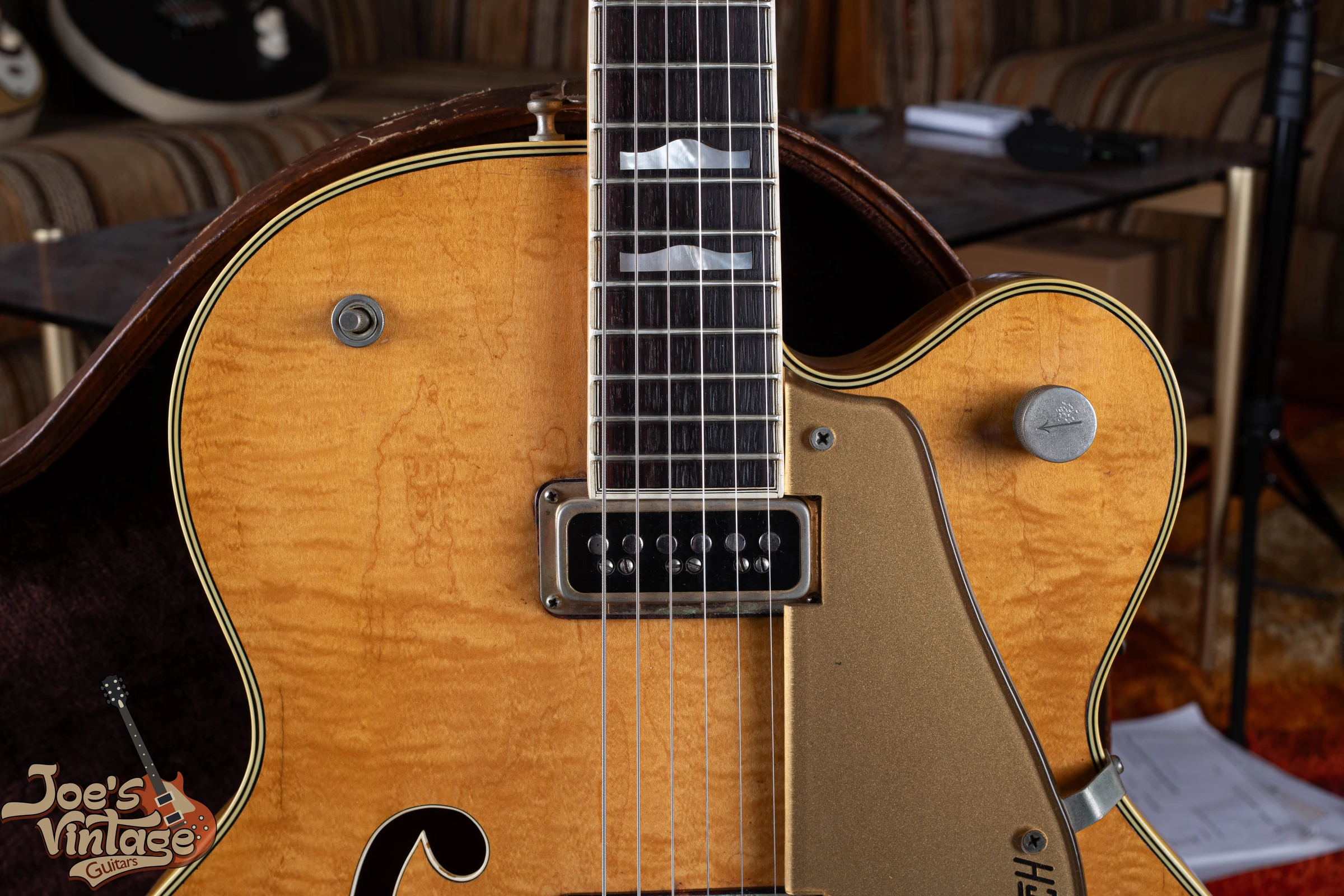
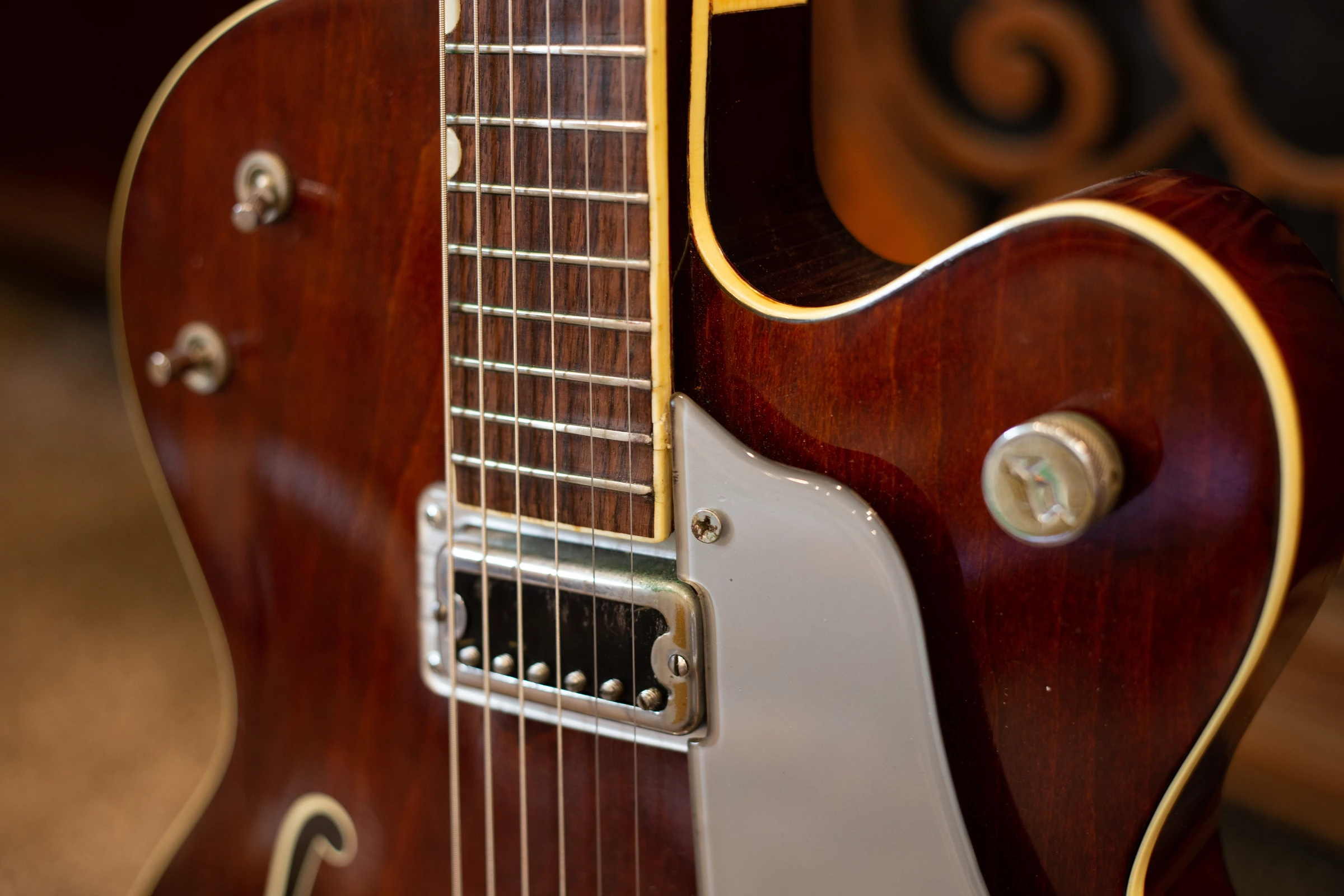
The DynaSonic is a single-coil design despite its busy, two-row appearance. The large pole pieces and adjustment screws are useful identifiers. On this Country Club, the black pickup faces contrast with the metal surrounds. Get a straight-on photograph so the strings don't hide the poles.
Don’t use pickup height as an originality test. Owners adjust height and pole positions to balance output, string response and their playing style. A bridge pickup sitting higher than the neck pickup may simply reflect the setup. Equal pickup heights don't prove that either part was replaced.
DynaSonic-style pickups also appear on modern instruments. Gretsch’s G6120T-55 specification, for example, identifies TV Jones T-Armond pickups. That gives you a manufacturer-documented reason to check the serial instead of dating a guitar from the black pickup face. The reissue comparisons show other features that can repeat.
Filter’Tron Covers And Patent Markings
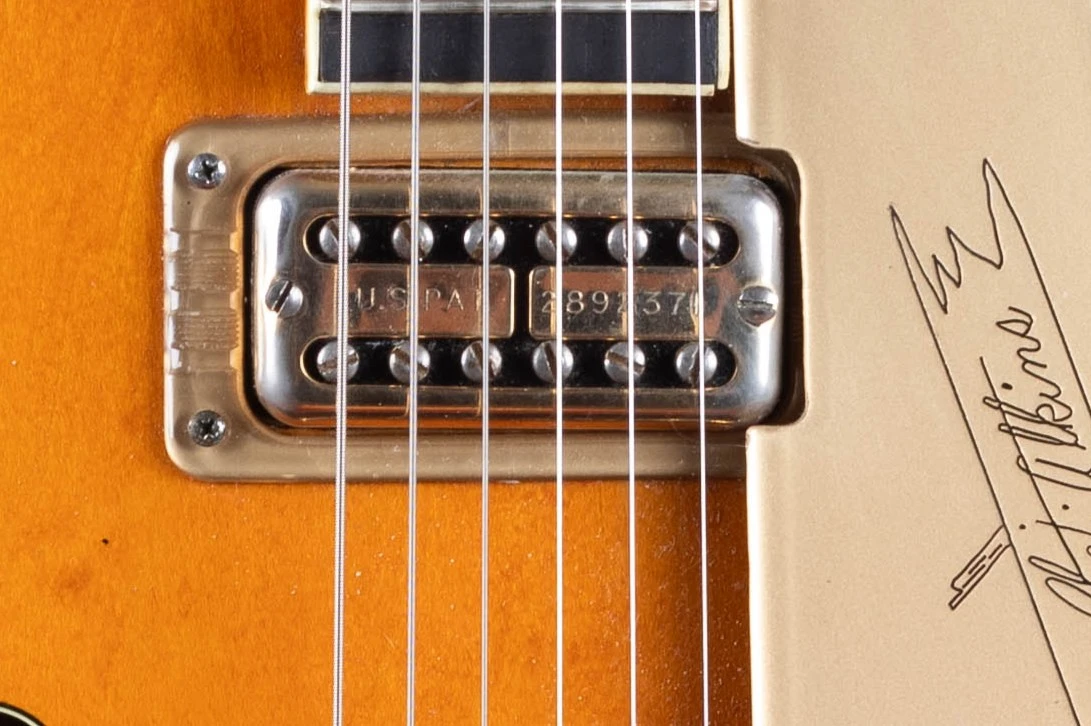
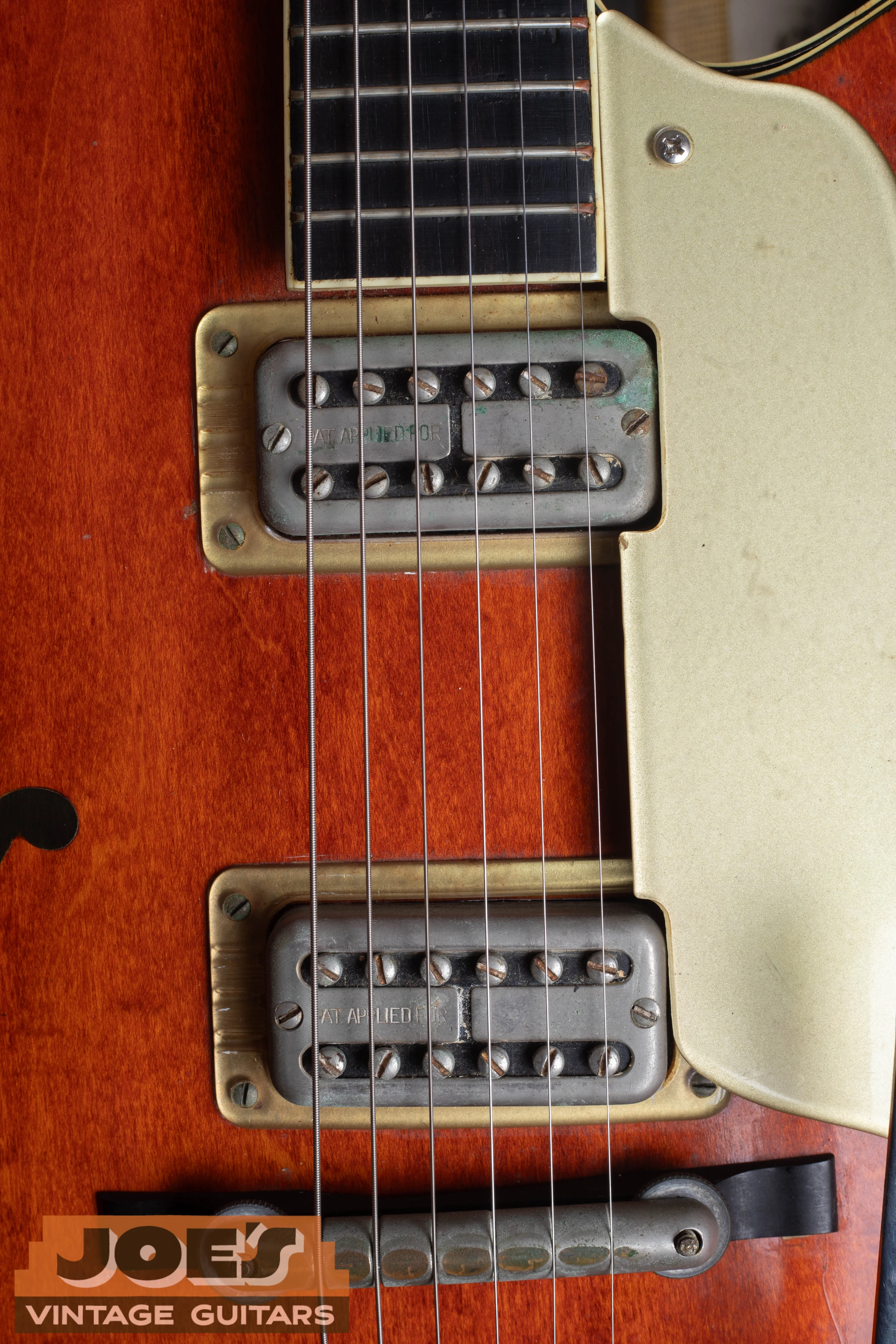
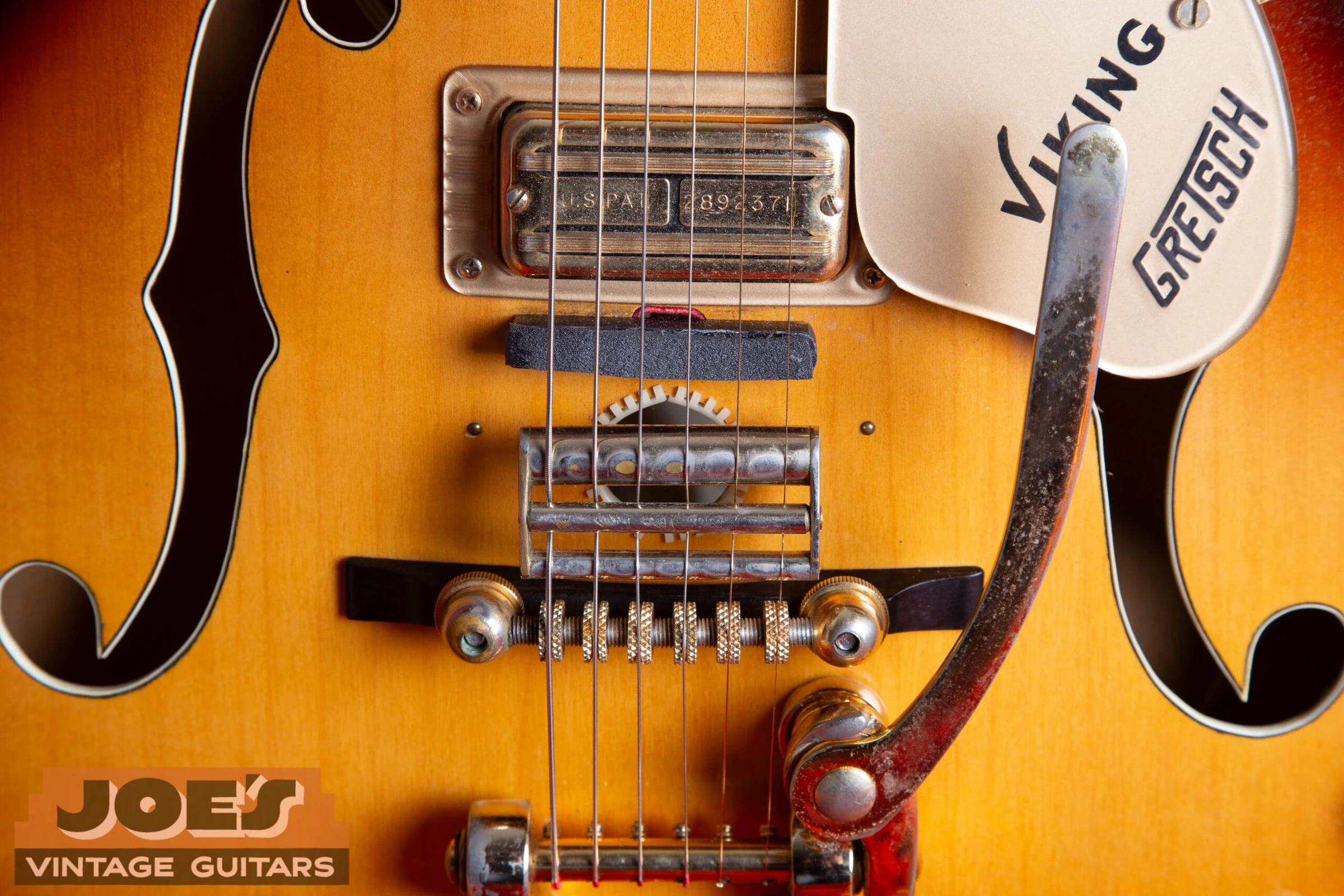
A Filter’Tron's two rows of screw poles are visible through its narrow metal cover. On early examples, collectors distinguish smooth “no-line” covers, patent-applied-for markings and later patent-number covers. Record exactly what is stamped and photograph the surrounding ring. A cover is a removable part, so its marking can’t establish the age of the coils underneath.
Use these cover stages as comparisons within an already established model period. A later cover can fit an earlier assembly, and a replacement pickup can fit a vintage guitar. Wear that matches the neighboring hardware may be consistent with age, but matching patina doesn’t prove an untouched installation.
In the Country Gentleman photo, both pickup faces and their surrounds are visible together. Look for unused holes, an unusually large opening, extra adapter plates or different screw patterns. None should be hidden under an “all original” description. The 6120 model guide and Duo Jet history help separate changes specific to those families.
HiLo’Tron Faces And Super’Tron Blades
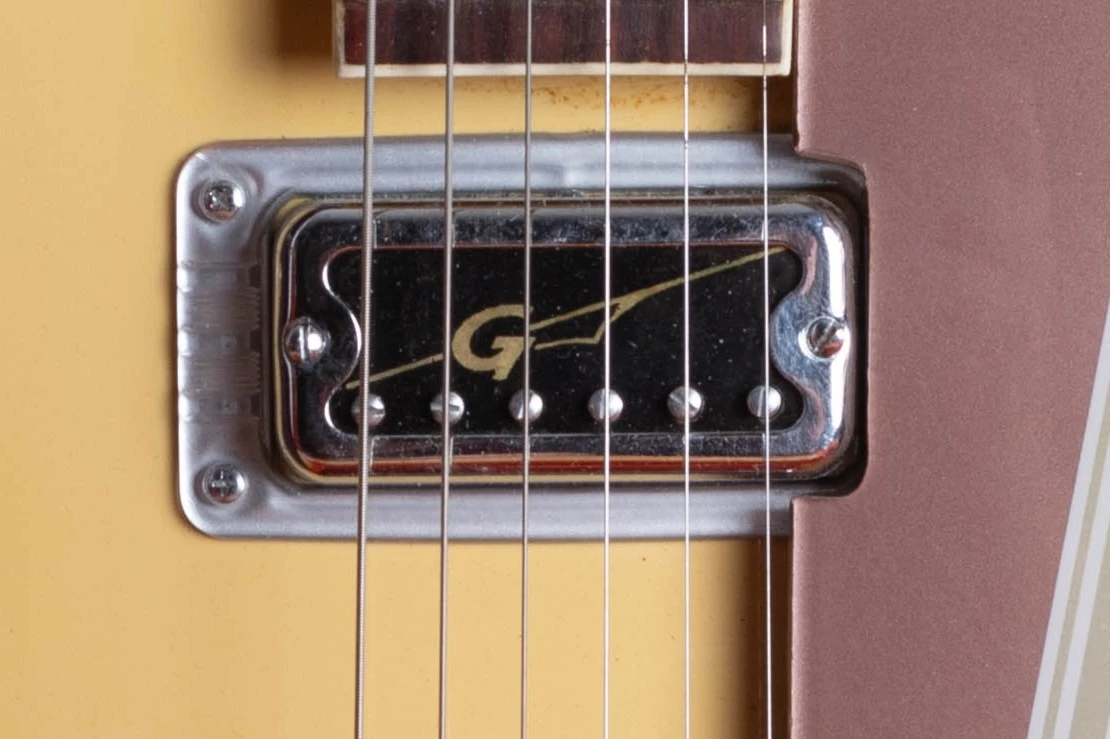
The HiLo’Tron is a single coil. Its visible face differs from a Filter’Tron, even though photographs taken at an angle can make the housings seem similar. The Tennessean close-up below shows the single row of poles and dark face clearly. Gretsch's pickup history dates the family earlier than the strict “1960 or later” rule repeated in some charts. Confirm the particular model's changeover rather than applying one start year to everything.
Super’Tron blade poles are easier to recognize in a close photograph. The blades run across the strings instead of presenting six separate screw heads in each row. A photo can identify that construction, but it can’t establish magnet type, winding or electrical health. Don’t assume a pickup is functioning correctly because the cover looks right.
Before removing a pickup to look underneath, ask whether the answer is necessary. A clear face photograph and a model comparison may be enough for a preliminary identification. Pulling an old hollowbody harness or disturbing a brittle surround creates work that a dating question may not require. For a suspected replacement, include the surrounding top and control layout in the same photo set.
Blacktops, Modern Pickups And Replacement Evidence
Blacktop pickups are associated with some Baldwin-era Gretsches, but the name also appears in later production. A black pickup face doesn’t put a guitar in the 1970s. Compare the complete housing, pole layout, mounting method and model designation. The Billy Duffy Falcon specification documents modern Black Top Filter’Trons alongside other deliberately period-styled details.
When a serial and a pickup seem to disagree, consider both possibilities: the pickup may have changed, or the serial may have been interpreted using the wrong system. Check the label and serial location before deciding. A functioning replacement can make a guitar useful to a player while still affecting an originality-based appraisal.
Keep removed pickups, screws and surrounds with the guitar. For a Gretsch appraisal, describe which parts are installed and which are in the case. “Original pickups included” describes a different situation from “original pickups installed,” and photographs should make that distinction clear.
Manufacturer References
- Gretsch Pickup History
Compare the manufacturer’s descriptions of the main pickup families.
- Gretsch Control Diagrams
Identify the circuit layout around the pickups.
- Gretsch Catalog Archive
Check the exact equipment listed for later production models.
Get Help Identifying Your Gretsch
Send the serial, a full front and back view, and close-ups of the feature you want checked. Include any known repairs or replacement parts.
Get A Free Gretsch AppraisalReturn to the Gretsch serial lookup and dating library to compare the rest of the instrument.