

Guitars · Capri, Standard And Export Thinlines
Rickenbacker 330 And 340Authentication Guide
A vintage 330 or 340 should be identified by its body, neck, pickup count and original hardware configuration before a value is assigned. These standard thinlines share parts with deluxe Rickenbackers, but a 360’s binding and triangle inlays should not become the checklist for a 330. Early Capri instruments, later 1960s guitars and 1970s production also need separate comparisons.
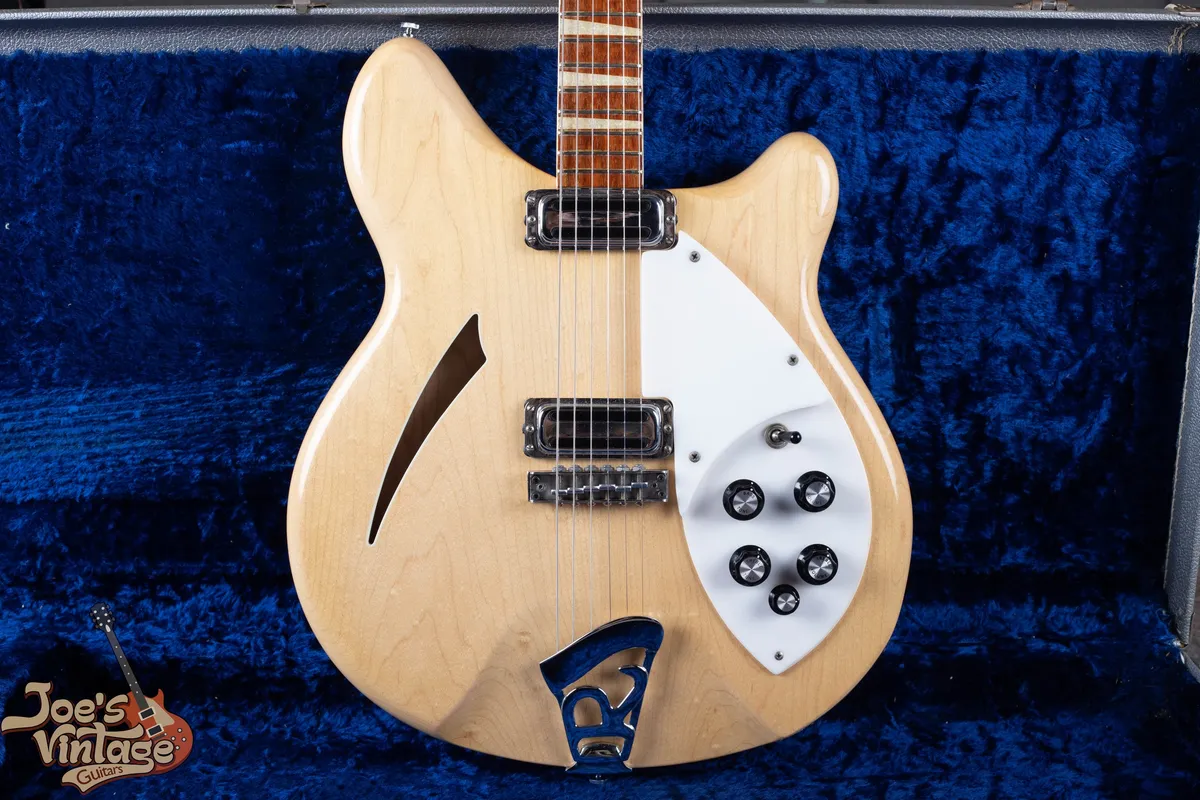
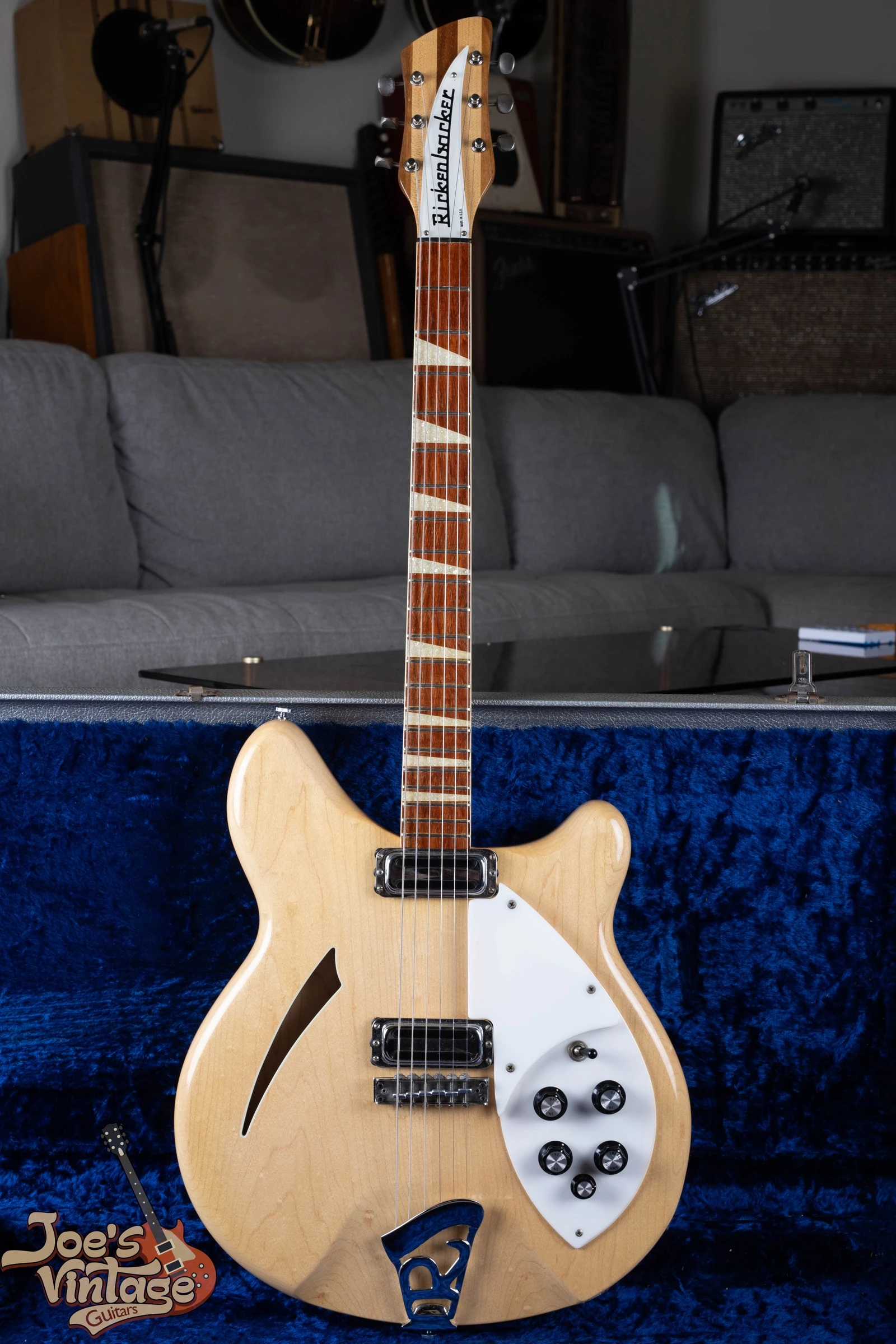
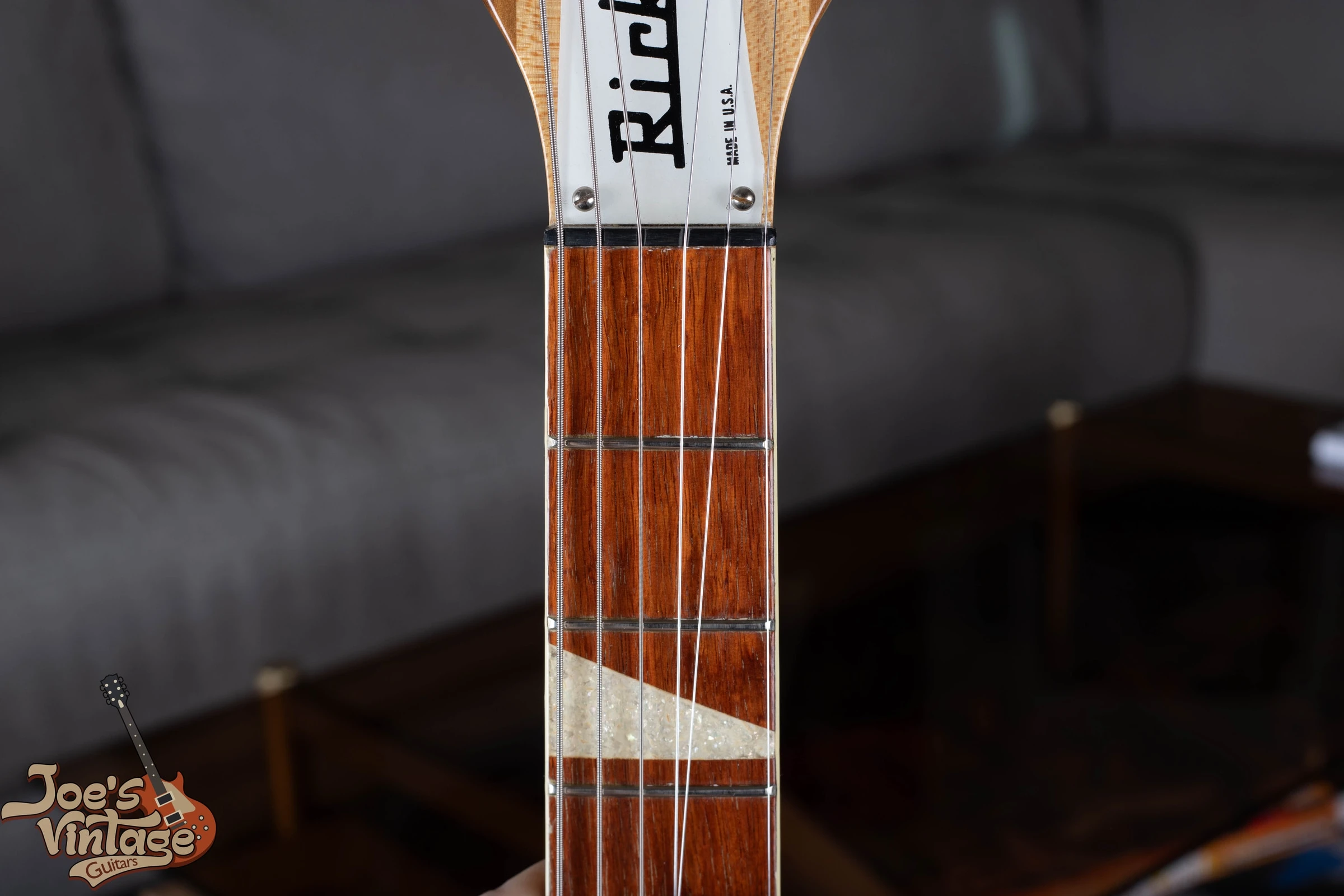
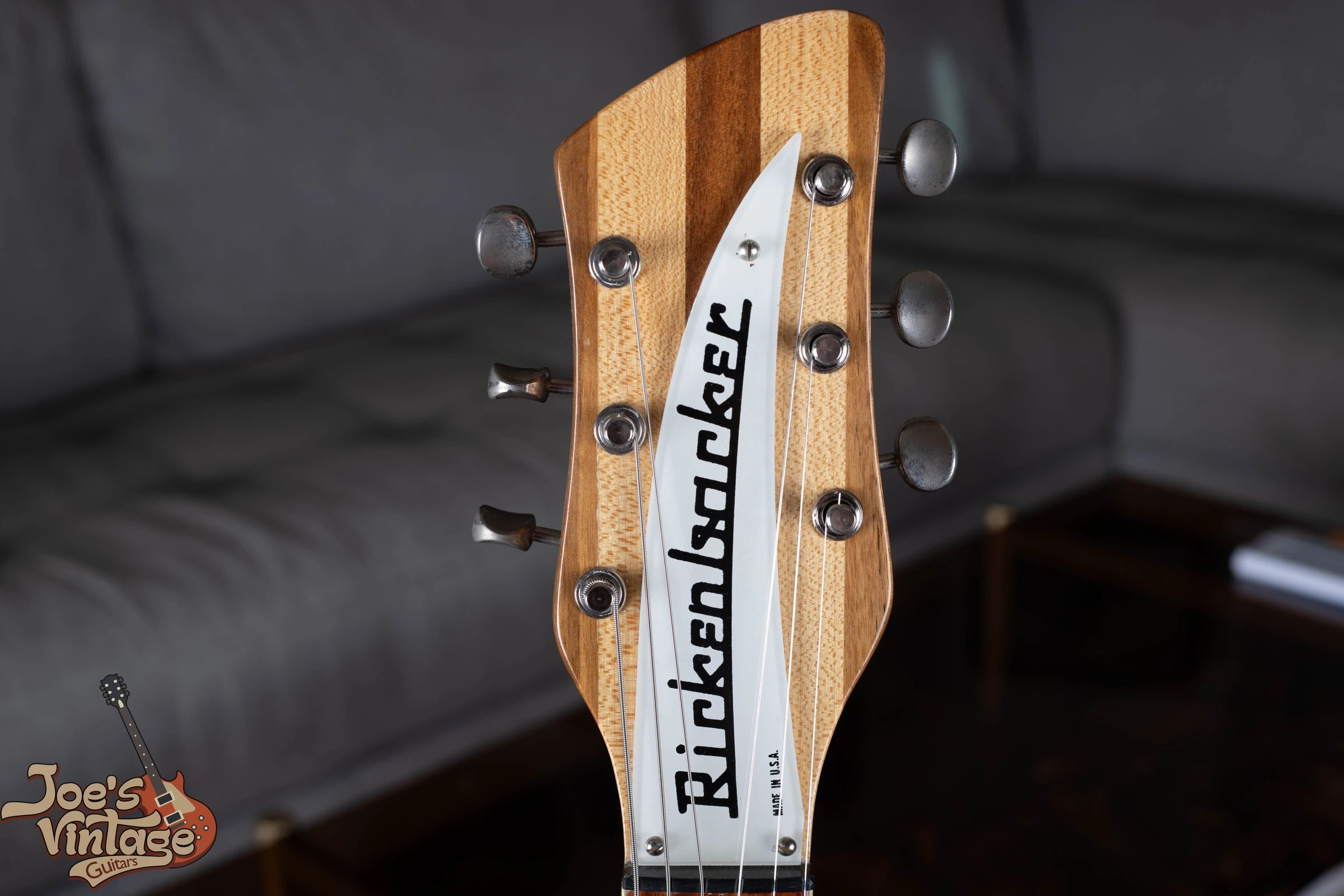
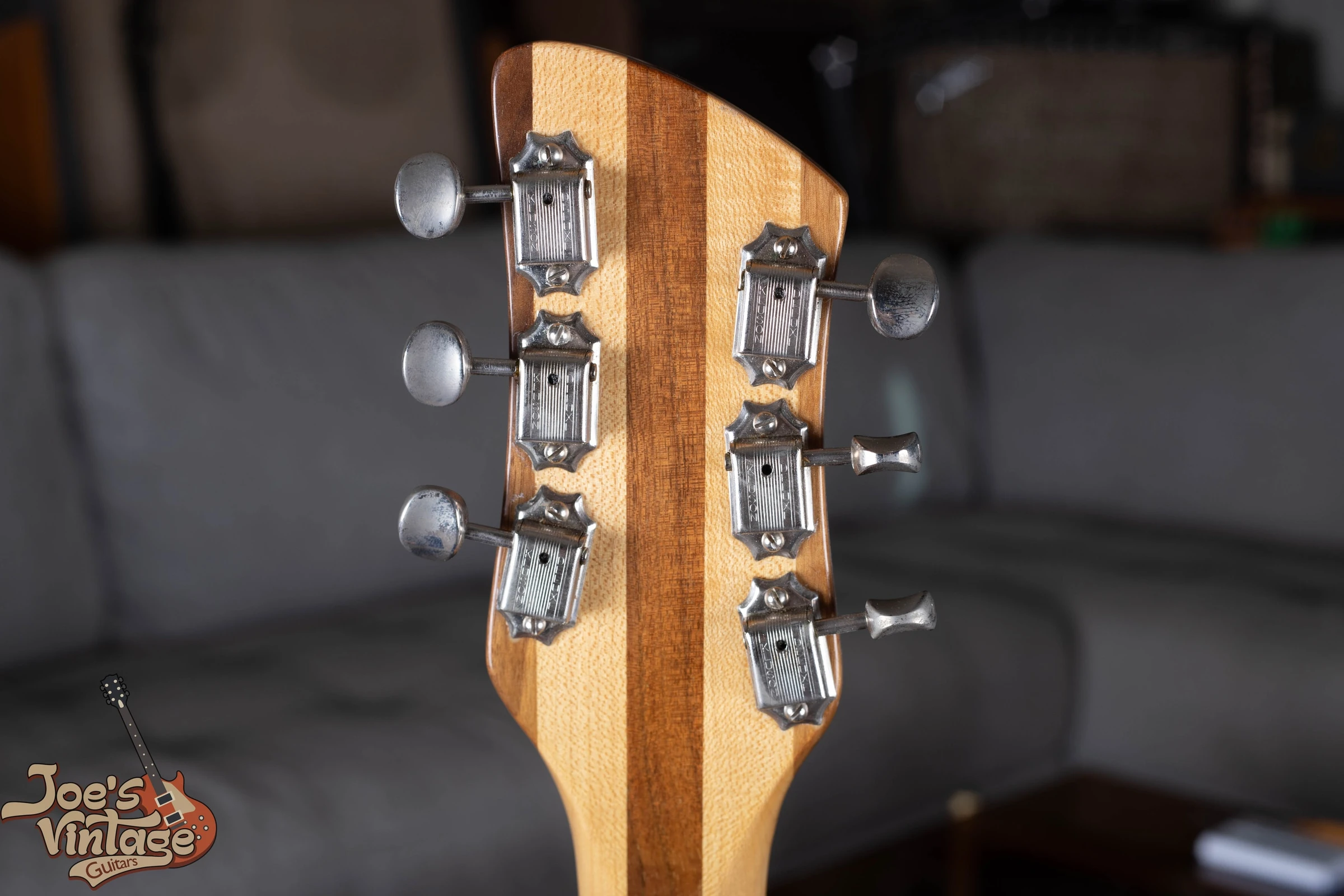
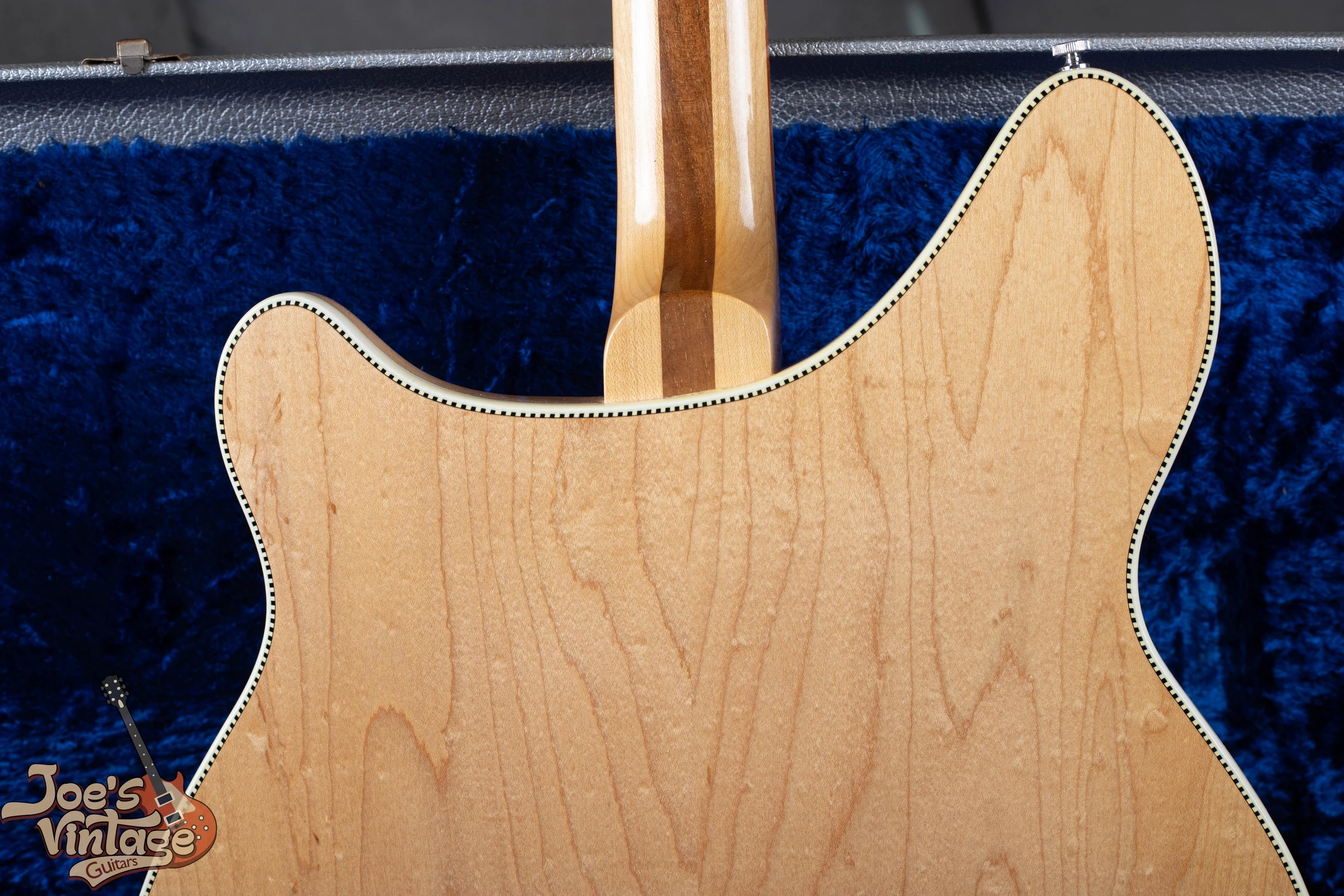
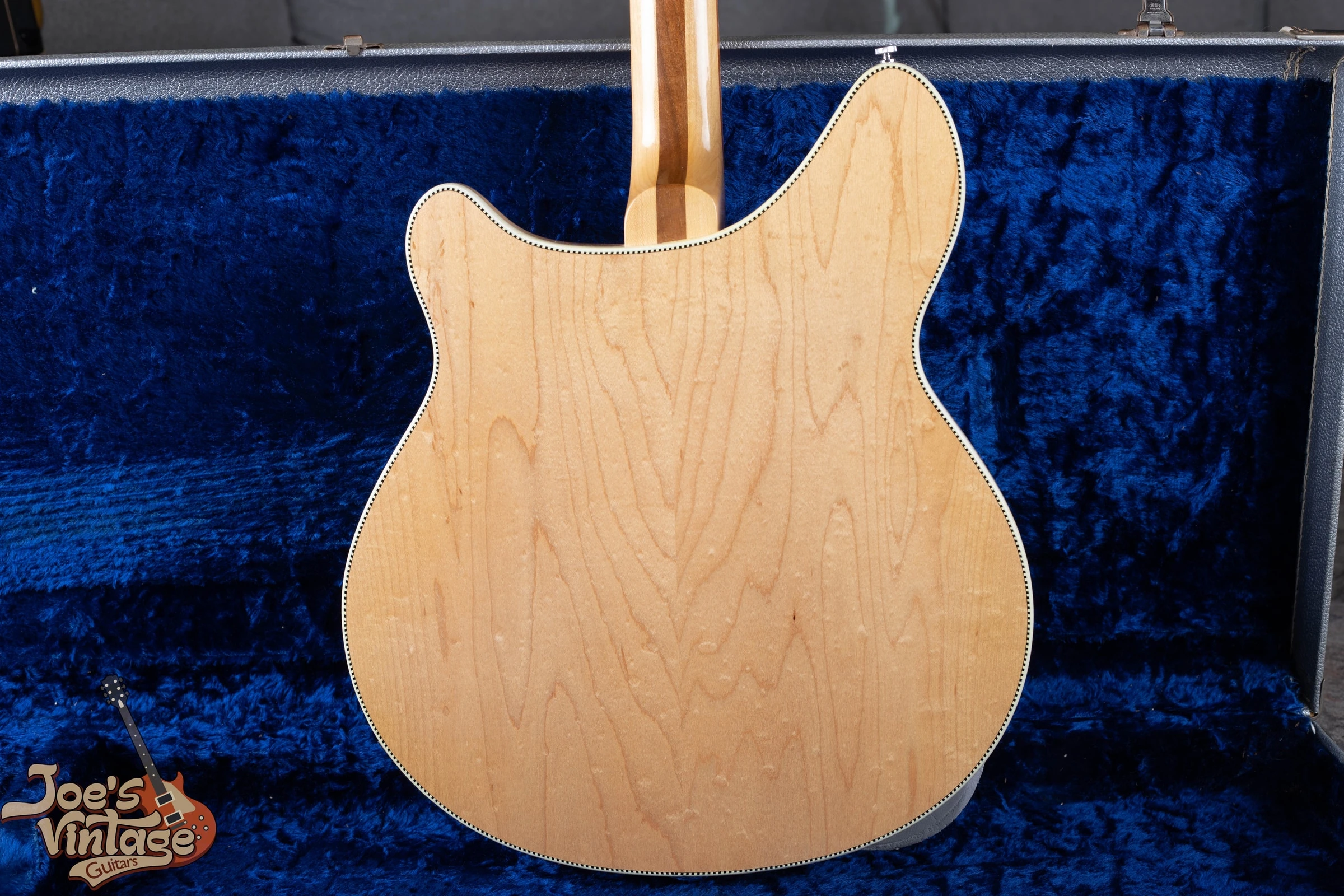
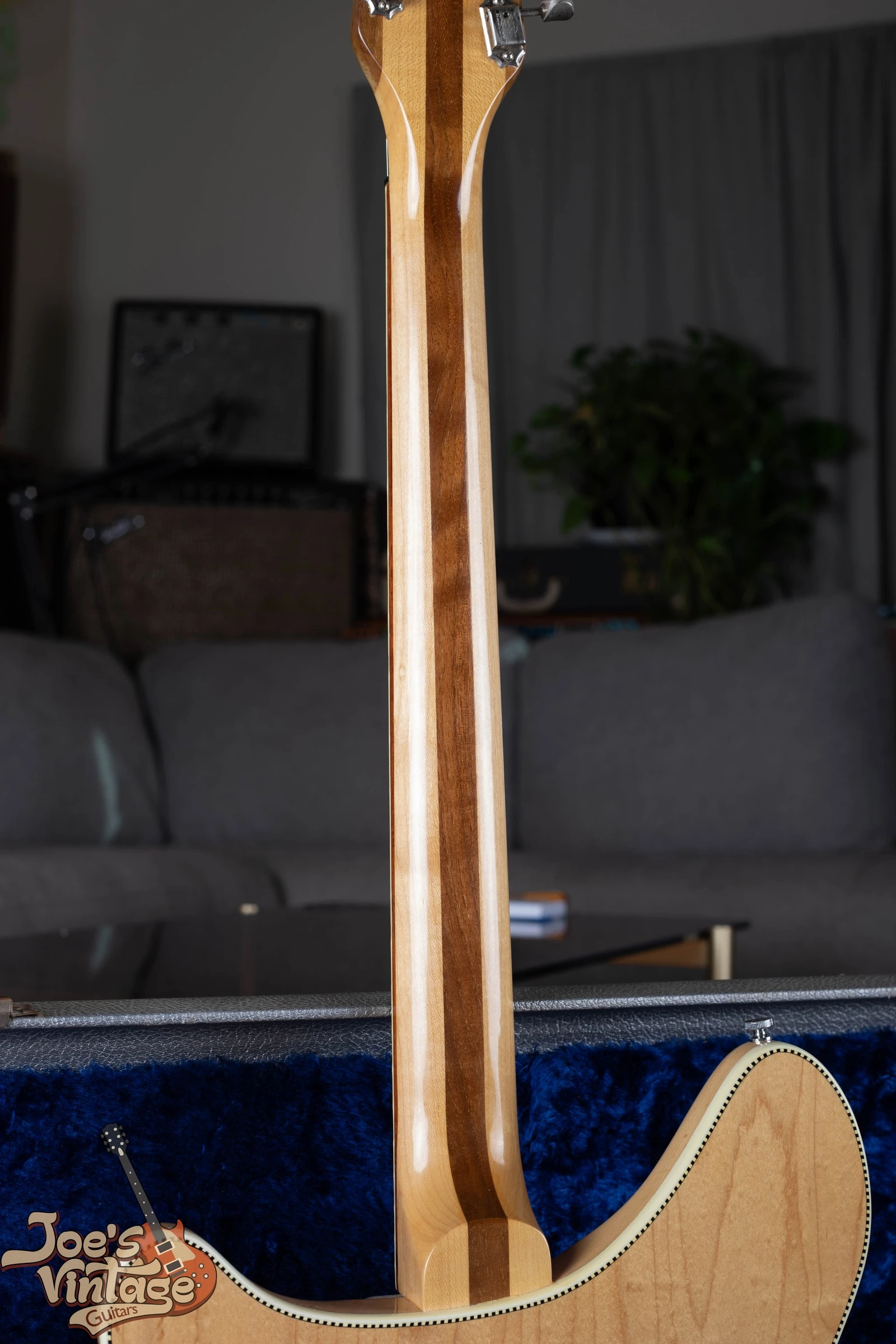
About These PhotosThe photographs show our 1960s 360, a related deluxe model. Its triangle inlays and binding are comparison details, not standard 330 specifications. Click a detail photograph to enlarge it.
Identify Before You Compare
Models And Variants
- 330 / 335
- Two-pickup family; check fixed-tailpiece versus vibrato specification.
- 340 / 345
- Three-pickup relatives; added middle pickups can imitate this layout.
- Rose Morris 1997 / 1998
- Export model numbers, not dates. Check the f-hole, configuration and supporting history.
- 330/12 / 340/12
- Twelve-string versions need the separate twelve-string inspection and value guide.
Start With The Standard-Model Features
Record the fretboard markers, body edge treatment, number of pickups and output jack arrangement. Dot markers and a plainer body distinguish the standard family from many deluxe 360/370 versions. Our 360 photographs intentionally show that contrast. An unbound guitar is not automatically a cheaper modified 360, and a triangular-inlay neck is not normal evidence for a standard 330.
Photograph both cutaways, the heel and the entire back. Early Capri construction differs from later examples, so compare a claimed early guitar with the correct period rather than a current production specification sheet.
Check Two Pickups Against Three
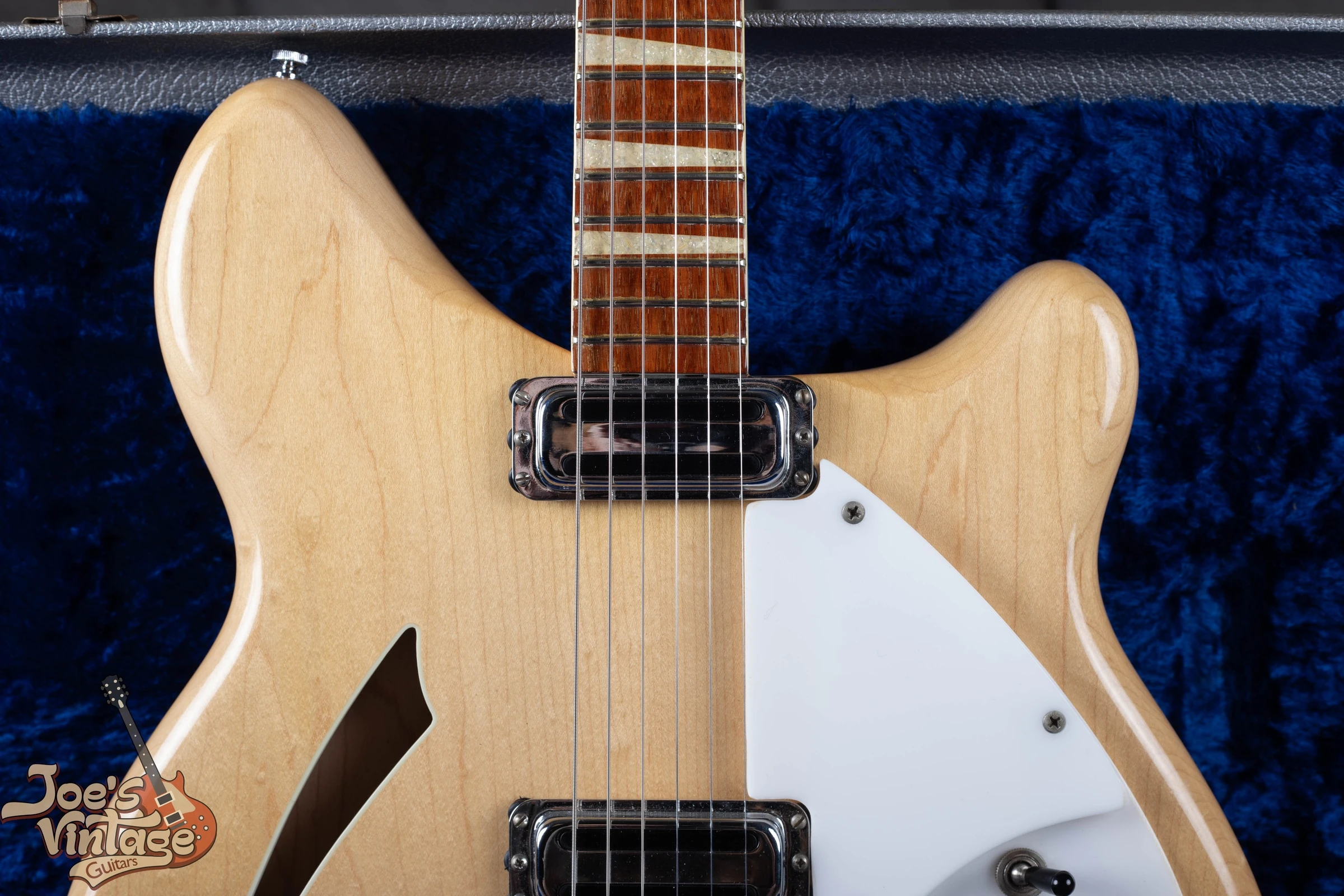
A third pickup does not by itself establish a factory 340. Look at pickup spacing, guard edges, unused screw holes and the finish around each opening. If the middle pickup was added, the routing and wiring can matter more than whether the pickup itself is a real Rickenbacker part. Document the work rather than relabeling the guitar from its present appearance.
Use the serial date to choose the right pickup comparison. Toaster-style and Hi-Gain designs occur in different periods, and a later replacement can fit neatly. A technician can inspect pickup leads, solder joints and cavity edges if those details affect an originality claim.
Distinguish Exports And Vibrato Conversions
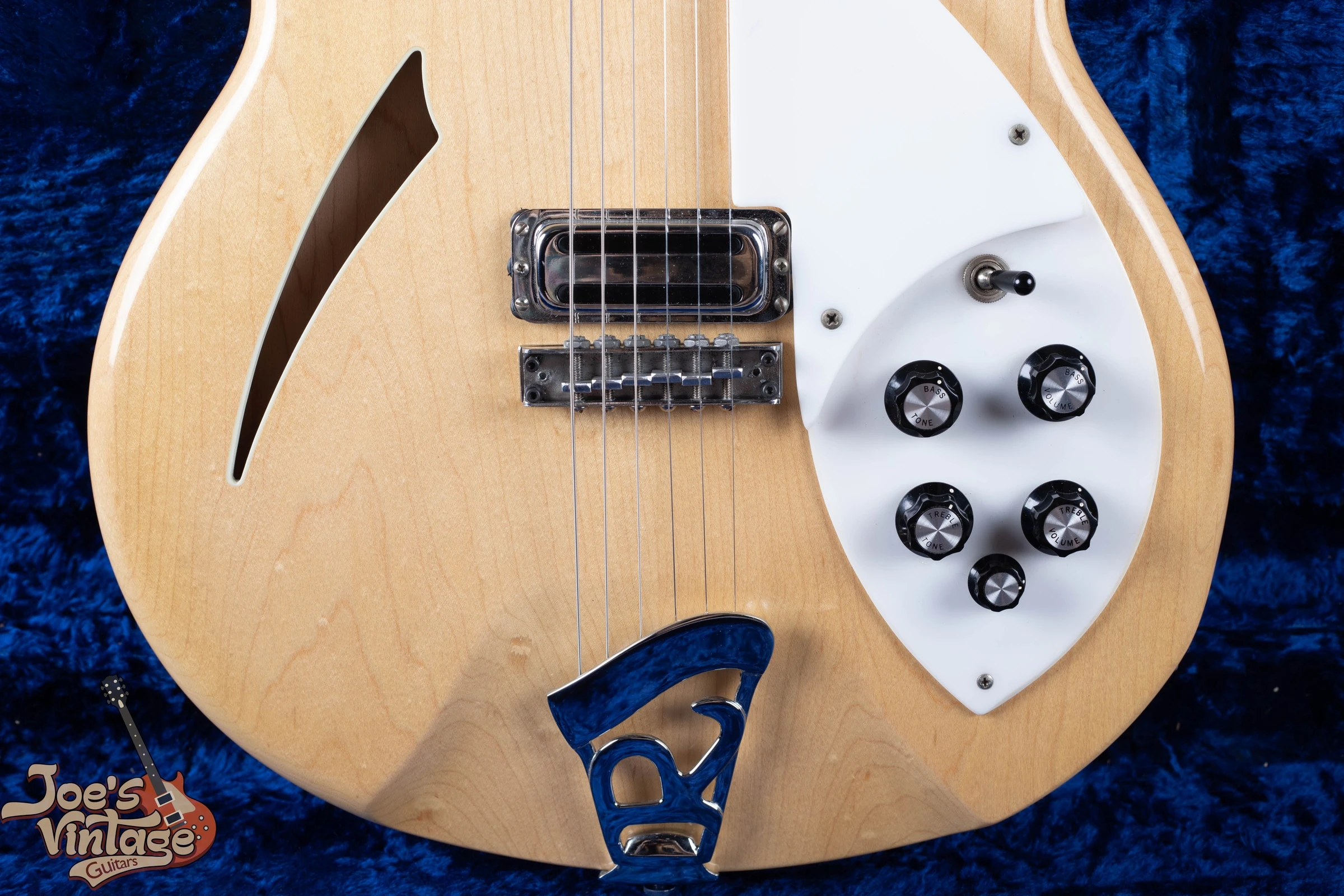
A traditional f-hole is useful evidence for an export-style instrument, but it does not prove a particular export model or original market. Record the complete configuration and any dealer paperwork. The numbers 1997 and 1998 can appear in model names; they must not be entered as manufacturing years without reading the serial.
For 335 and 345 claims, check the original vibrato mounting and any missing arm or attachment hardware. A replacement R tailpiece can hide part of a conversion. Conversely, an added vibrato does not turn a factory 330 into an original 335.
Inspect The Neck Angle And Body Edges
Sight along both sides of the neck and check the action with the guitar tuned. Photograph the bridge from the side. If the bridge is already at its lowest useful setting and the strings remain high, a routine saddle adjustment may not solve the problem. Look for heel movement, old glue, refinished seams or a documented neck reset.
Check the soundhole edge, jack area and strap-button holes for cracks or repairs. Compare exposed finish with protected areas when professionally inspected. A darker patch or lighter area can come from wear or fading; a refinishing conclusion needs several clues together.
Authentication Checklist
Keep four questions separate: is it a Rickenbacker, is the model correctly identified, is the date supported, and which parts or finishes remain original? A positive answer to one does not settle the others.
- Record the identity. Save the complete serial photograph, model claim, measurements and any dated paperwork. Use the serial lookup only for the formats it covers.
- Compare independent details. Check body construction, neck, pickups, tuners and controls against the same model and period. One replaced part may explain a mismatch; several unexplained conflicts need closer inspection.
- Describe condition precisely. Separate wear, refret, replacement nut, repaired breaks, routing, touch-up, overspray and refinishing. See our photo guide to refinishing clues.
- Inspect internally when justified. Have a qualified repairer document hidden routes, wiring and component dates if a disputed claim affects the purchase. Do not force old screws, fragile guards or an unfamiliar neck adjustment.
- Keep uncertainty visible. “Consistent with this period” is different from a proven exact date or a claim that every solder joint is untouched. Photos can guide an appraisal; some findings require an in-person examination.
Photos For An Appraisal
Take unfiltered photographs in even light. Include the full front and back, both headstock faces, the entire serial or other markings, pickups, controls, bridge, neck joint and any damage. Add the measurements or model-specific views described above. Photograph the case, paperwork and removed parts separately.
You do not need to take the instrument apart for an initial review. If a detail cannot be seen, say so. A clear statement of known repairs and unknown history is more useful than an unsupported claim of complete originality.
Have A Rickenbacker To Identify Or Sell?
Send Joe your photos and any known history. We can help identify the instrument, discuss its condition and make an offer if you are ready to sell.
Sources And Further Reading
Factory documents establish period model descriptions. Instrument-specific references help compare construction; their originality claims are not independent certifications.
- Rickenbacker June 1976 Factory Price ListPeriod model descriptions distinguish pickup counts and vibrato variants.
- Rickenbacker Guitar SchematicsSeparate factory circuits are provided for the two-pickup and three-pickup families.
Photo Credits And Scope
Photographs are from Joe’s Vintage Guitars’ instrument archive. Captions identify the actual instrument shown, including related-model and later-production comparisons. Full frames and existing watermarks are retained. A photograph of another model is not evidence of the correct construction for yours.