Dates below describe common production periods. Parts overlap between models, and reissues or replacements can resemble earlier hardware. Use several details before deciding that a part conflicts with the serial.
Pickups
Start with the Rickenbacker serial number lookup, then compare the pickup family with the model and period. Horseshoe, Toaster and Hi-Gain pickups overlap at their transitions, and later instruments may recreate an earlier design.
Horseshoe Pickup: 1932 To 1971
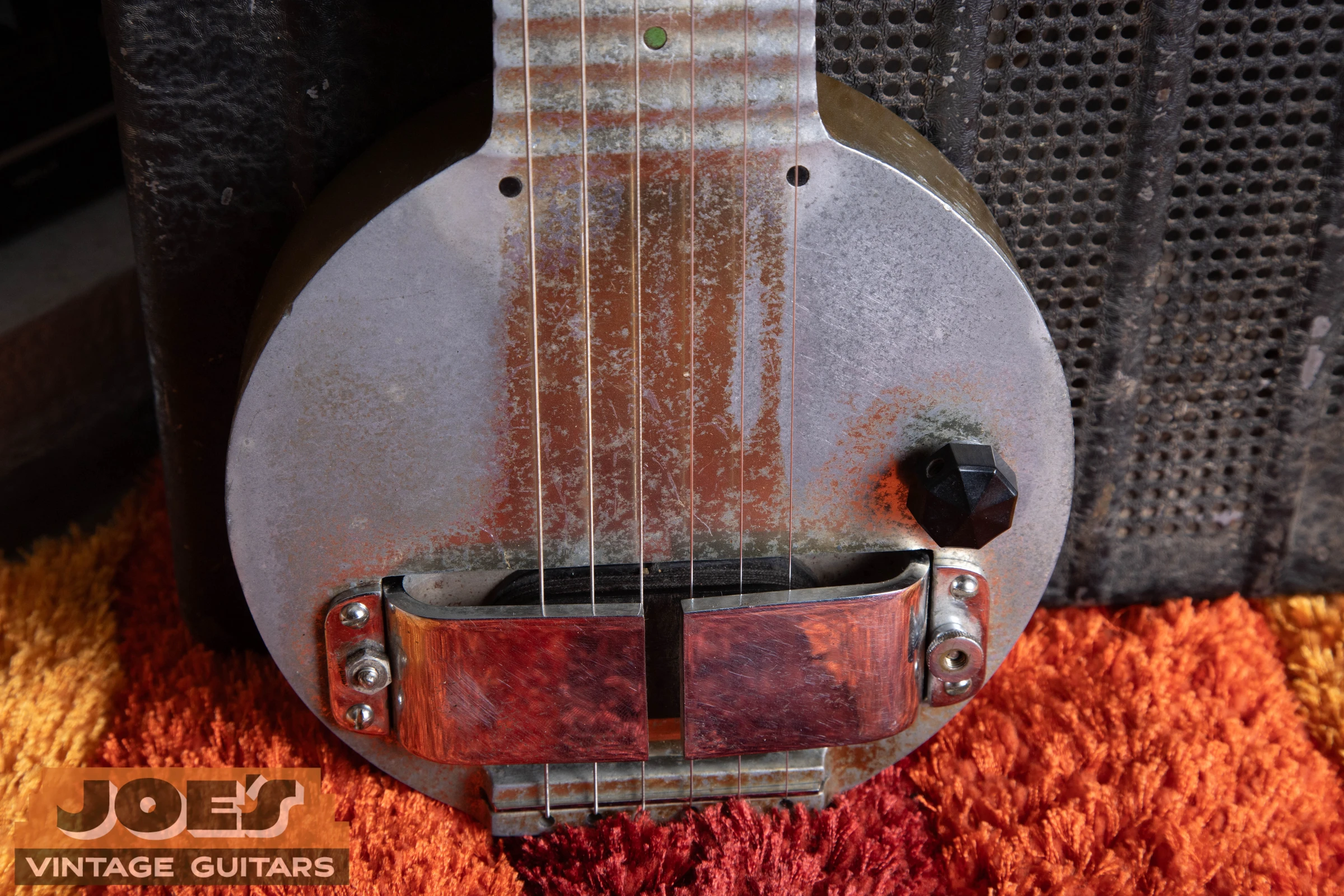
The horseshoe magnets pass over the strings on this early Frying Pan lap steel. Compare that shape with the toaster’s slotted cover and the Hi-Gain’s visible polepieces.
1932 to 1943Wide-magnet version: 1½″ wide horseshoe magnet wraps over the strings. Found on all early lap steels and pre-war electric Spanish models.
1946 to 1971Narrow-magnet version: Magnet narrows to 1¼″. Used on post-war lap steels and early Spanish models. Discontinued on most guitar models in 1957 when replaced by the Toaster, but remained on some lap steels until 1971.
1957 to 1969Transition era: Combo 600 and 800 continued with horseshoe variants through 1959 (single horseshoe treble + bar neck on the 800 from 1958). The 4000 series basses also used horseshoes in the bridge position until late 1968.
Toaster Pickup: 1957 To 1974
The Toaster is the defining Rickenbacker sound: clear, jangly, and chimey. Its name comes from its visual resemblance to the top of a bread toaster. It is familiar on Capri hollowbodies and several Combo models.
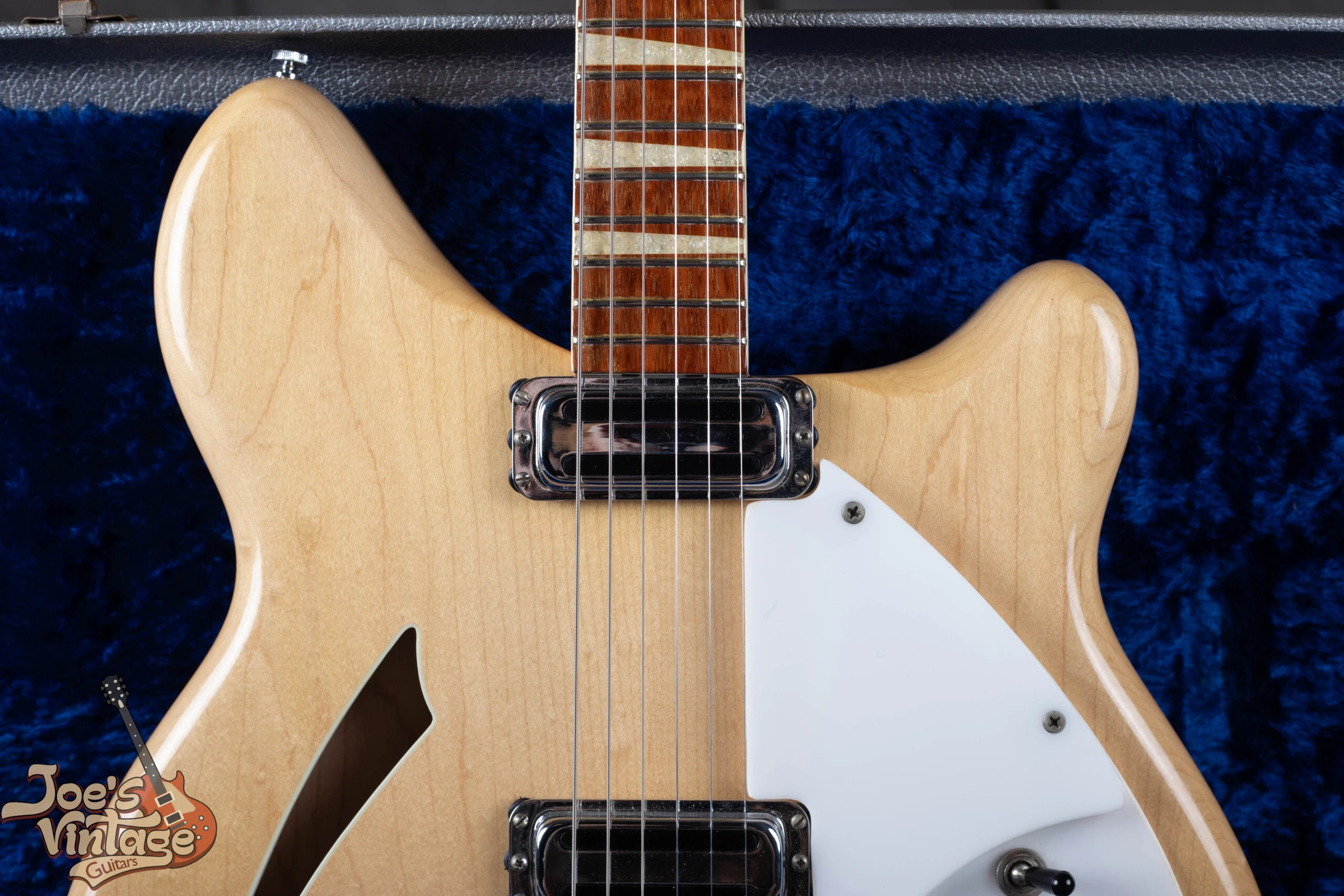
The toaster’s chrome cover has two long dark slots. This style also appears on later vintage-style models.
1957Introduced in the late 1950s and used on Combo and later Capri models. Characterized by chrome covers, no adjustable polepieces.
~1963Molding marks (“dimples”) begin appearing on the covers, a very early version present on 1963 and earlier examples. This detail is replicated on modern reissue pickups from 2003 onward.
1970 to 1974Gradual phase-out as Hi-Gain pickups take over. The 420/450/460 series held out the longest, with toasters present on some examples through early 1974. A toaster on a later instrument may be a factory specification, a reissue feature or a replacement. Check the model and the solder work. The knobs and control layout offer another comparison when a guitar has vintage-style pickups.
Hi-Gain Pickup: 1968 To Present
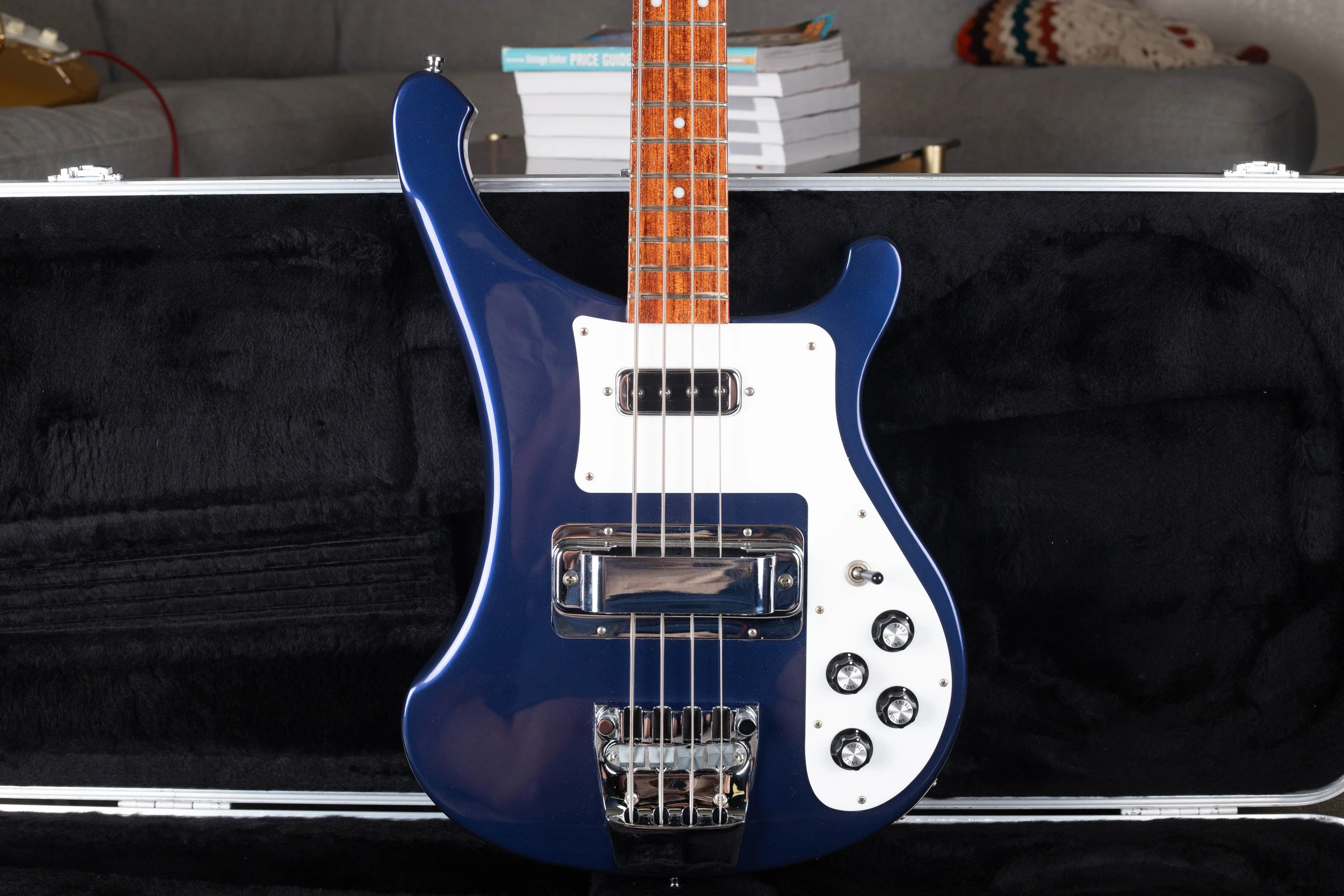
Look at the neck pickup beside the end of the fingerboard: its black top has four visible button polepieces. The large chrome cover over the bridge pickup is a separate part; a cover alone does not identify a horseshoe pickup.
The Hi-Gain uses a rubberized magnet mounted beneath the pickup body rather than pole magnets, a fundamentally different design from both the Horseshoe and Toaster. Bobbin material and polepiece style help distinguish versions. Allow for model overlap, replacement parts and later reissues.
Late 1968 (bass only)First-gen bass Hi-Gain: “Fiberboard” bobbin (G-10 mil-spec glass-filled epoxy PCB material), may be unpainted (pale green) or painted black. Slotted polepieces, not designed to be adjusted. Bridge position of 4000-series basses only. Also called “green bobbins.”
Early 1969 (guitars)First-gen guitar Hi-Gain: Same painted fiberboard bobbin, but threaded polepieces (not slotted) to eliminate adjustment damage risk. First appears on the 381. Often called “transitional” Hi-Gains. These are actually less hot than the toasters they replaced.
1970 to 1974General transition of all models from Toaster to first-gen Hi-Gain. Not a clean cutover: many 1970 to 1972 guitars show mixed examples of toasters and first-gen Hi-Gains. The 480 series (1972) launched Hi-Gain-only from the start.
March to May 1973“Button top” Hi-Gain introduced: Basses first (March/April), guitars follow (April/May). Painted fiberboard bobbin, but threaded polepieces replaced by painted black button-top drive screws. Wound hotter than first-gen. This is the Hi-Gain sound most people think of. A neck-position Hi-Gain also appears on the 4001 bass from September 1973.
~Late 1985 to Early 1986Unpainted bobbin version: Both bobbin and button-top polepieces change to naturally black material, eliminating the need to paint them. The “fiberboard” texture pattern is more visible. Exact transition date is difficult to pin down precisely.
August 1991Dual-use plastic bobbin: Fiberboard replaced by a molded black plastic bobbin with raised “toaster” slots, a design shared with the simultaneously updated toaster pickup cases. Polepieces remain unpainted button tops.
March 2003Dimples added: Dimples matching the early toaster molding marks appear on Hi-Gain covers to complement the dimpled toasters introduced for the new C-series vintage reissues.
May 2005 to PresentAdjustable button tops: For the first time in the Hi-Gain’s history, the button-top polepieces become fully adjustable. This remains the current version.
Mounting note: Compare the pickup mounting with the same model and period. Changed foam, grommets or screws can reflect service work and do not establish when the pickup itself was made. Compare signs of work around the bridge and tailpiece as well.
Variant
Approx. Dates
Bobbin
Polepieces
Bass first-gen
Late 1968 to Apr 1973
Fiberboard, painted or unpainted
Slotted (do not adjust)
Guitar first-gen (“transitional”)
Early 1969 to Apr/May 1973
Painted fiberboard
Threaded rod (no heads)
Button top
Mar/May 1973 to 1986ish
Painted fiberboard
Painted black button tops
Unpainted button top
1986ish to Aug 1991
Unpainted fiberboard
Unpainted black button tops
Dual-use plastic, no dimples
Aug 1991 to Mar 2003
Molded plastic w/ toaster slots
Unpainted button tops
Dual-use plastic, dimpled
Mar 2003 to May 2005
Dimpled molded plastic
Unpainted button tops
Current (adjustable)
May 2005 to Present
Dimpled molded plastic
Adjustable button tops
Get Help Identifying Your Rickenbacker
Send photos of the complete instrument, serial plate and the detail you want checked. Include any known repair or replacement history.