
Rickenbacker Identification Guide
Rickenbacker Tuner Dating Guide
Identify Kluson, Grover and Schaller tuners by their housings, buttons and mounting patterns. Guitar and bass timelines differ.
Back To The Rickenbacker Serial LookupDates below describe common production periods. Parts overlap between models, and reissues or replacements can resemble earlier hardware. Use several details before deciding that a part conflicts with the serial.
Tuning Machines
Rickenbacker’s tuner history involves three main suppliers, Grover, Kluson, and Schaller, used at different times on different models. The transitions are model-specific and do not always happen simultaneously across the line. Use the serial lookup to establish a likely period before comparing the installed tuners.
Grover Sta-Tite: 1956 To 1959/1960
Open-back tuners with cloverleaf buttons, pre-war in design but reliable and affordable. Used on entry-level and some student models: Combo 400 (1956 launch), Combo 450 (1957), and all short-scale Capris (310 to 325) through most of 1959. Full-scale Capri prototypes briefly had them; production standardized on Klusons by end of 1958. The 450 transitioned to Klusons in early 1959; the short-scale Capris held out until the very last guitars made in 1960.
Kluson Deluxe: 1954 To 1982
The dominant Rickenbacker guitar tuner for nearly three decades. Closed-back, the first of their type when introduced in 1947. Present on Combo 600 and 800 from 1954 onward. White plastic or nickel “bean” buttons in different periods.
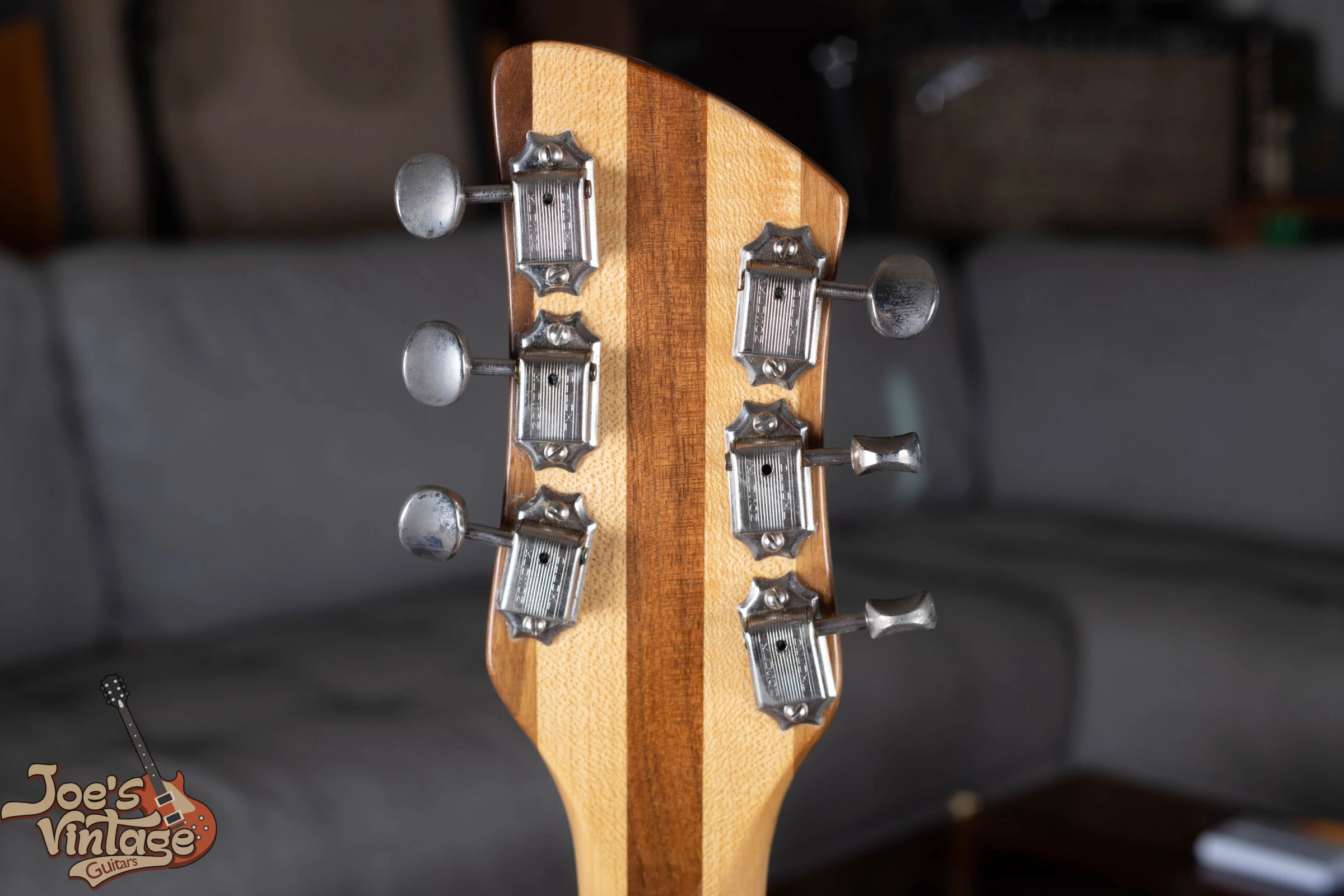
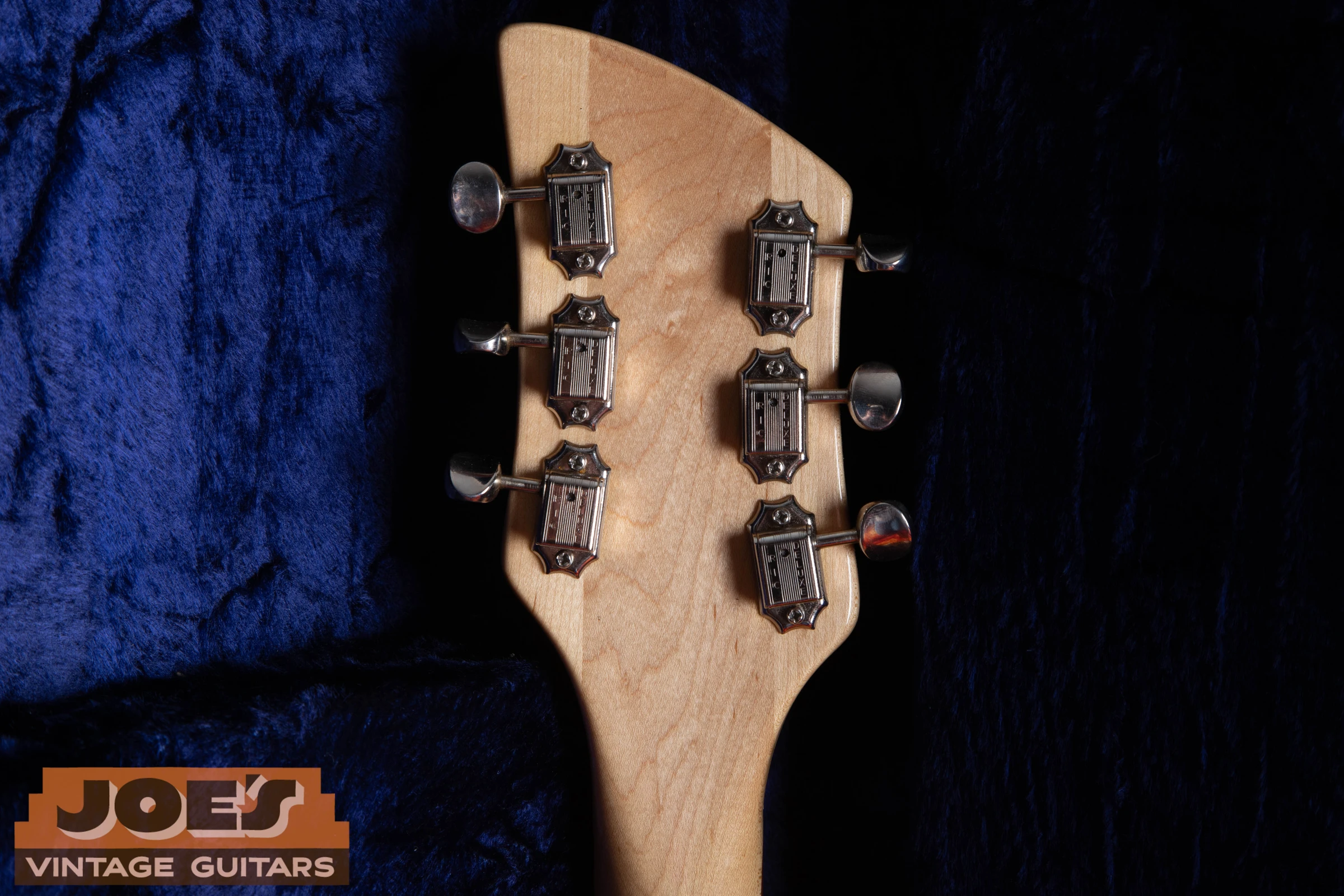
- Kluson 548 (very large footprint) on 4000 bass, 1957 to 1961
- Kluson 536 (smaller) on 4000/4001 bass from 1963
- Standard Kluson Deluxe on all non-Grover guitars 1960 to 1982
- Kluson closed entirely in late 1981 after the death of John Kluson, forcing Rickenbacker to find alternatives
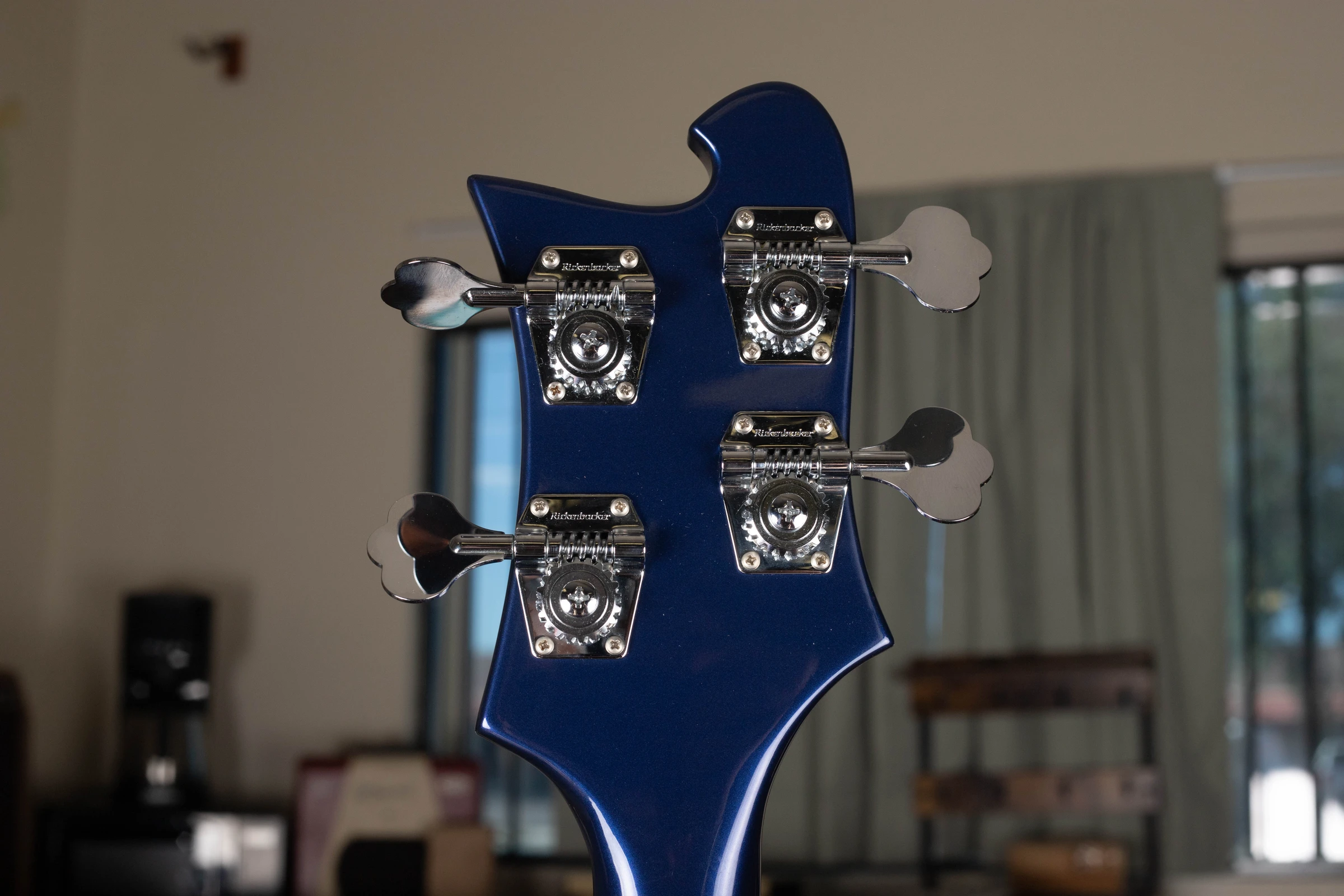
Grover Slimline (Bass): 1969 To 1974 And 1982 To 1983
Two-piece pressure-fit sealed back tuners with small footprint. Replaced Kluson on all 4000-series basses in May 1969. Flat cloverleaf keys from 1969 to June/July 1972; “wavy” or S-shaped keys from mid-1972 to July 1974 when Klusons returned. After Kluson’s closure, returned to 4001/4003 basses in mid-to-late 1982 until Schaller BM tuners replaced them in August 1983. The “wavy Grover” on a bass is a reliable indicator for 1972 to 1974.
Grover Rotomatic (360 Guitar): September 1971 To Early 1985
Sealed full-size tuners introduced on the 360 six-string in September 1971 as part of the early-1970s 360 upgrades. The Rotomatic’s large bushings required a redesigned headstock, giving rise to the wider “Gumby” headstock on transitional-era 360s. The specific version Rickenbacker used was a two-piece pressure-fit unit, unlike the more common one-piece Rotomatic found on Gibson and other guitars.
- Two-piece Rotomatic: September 1971 to early 1984
- One-piece (standard) Rotomatic: early 1984 onward, when the two-piece version appears to have been discontinued
- Also fitted to the 481 and the six-string neck of the 362/12 (both from 1974)
- After Kluson’s closure in 1982, all six-string guitars including those previously on Klusons received Grover Slimline guitar tuners (mid-1982)
- When Slimlines were discontinued (late 1983), all six-string guitars moved to Rotomatics through late 1984
Schaller M6 / Mini M6: 1985 Onward
The new “paddle headstock” introduced on all non-reissue six-string guitars in late 1984 was designed to accommodate the Schaller M6’s bushings (same diameter as the Rotomatic). Schallers replaced Grovers in early 1985. Black hardware/black trim (BH/BT) guitars held onto black Rotomatic tuners until Schaller produced black M6 variants, which arrived in approximately March/April 1996, ending Grover’s relationship with Rickenbacker. BH/BT non-reissue six-strings with black Rotomatics date between roughly 1985 and early 1996. The finish-color guide explains why Jetglo describes the body color rather than the tuner finish.
Open-Back Bass Tuners
Compare bass machines separately from guitar tuners. Check the gear housing, button shape, screw pattern and any maker’s stamp before assigning a type. Compare these details with the fingerboard inlays when checking the model and period.
| Tuner | Instrument Type | Dates |
|---|---|---|
| Grover Sta-Tite | Combo 400, 450; short-scale Capris | 1956 to 1959/60 |
| Kluson Deluxe | Most guitars | 1954 to 1982 |
| Kluson 548 | 4000 bass | 1957 to 1961 |
| Kluson 536 | 4001 bass | 1963 to 1969 |
| Grover Slimline (flat key, bass) | 4000/4001 bass | May 1969 to mid 1972 |
| Grover Slimline (wavy key, bass) | 4000/4001 bass | Mid 1972 to July 1974 |
| Grover Rotomatic (2-piece) | 360 six-string, 481, 362/12 (six-string neck) | Sep 1971 to early 1984 |
| Grover Slimline (guitar) | All six-string guitars (ex-Kluson models) | Mid 1982 to late 1983 |
| Grover Rotomatic (1-piece) | All six-string guitars | Late 1983 to early 1985 |
| Schaller Mini M6 | All non-reissue six-string guitars | Early 1985 to present |
| Black Rotomatic | BH/BT guitars | 1985 to early 1996 |
| Black Schaller M6 | BH/BT guitars | Early 1996 to present |
| Schaller BM (Kluson-copy) | 4003 bass | Aug 1983 to present |
Get Help Identifying Your Rickenbacker
Send photos of the complete instrument, serial plate and the detail you want checked. Include any known repair or replacement history.
Get A Free Rickenbacker Appraisal
Continue with Rickenbacker body, binding and inlay details or return to the serial lookup and dating charts.

Talk With
Joe Today
Have a vintage guitar to sell or a question? I’m here to help.