
Rickenbacker Identification Guide
Rickenbacker Bridges And Tailpieces
Compare trapeze, Kauffman, Accent and R tailpieces. Look at the mounting pattern and the rest of the guitar before assigning a period.
Back To The Rickenbacker Serial LookupDates below describe common production periods. Parts overlap between models, and reissues or replacements can resemble earlier hardware. Use several details before deciding that a part conflicts with the serial.
Tailpieces
Begin with the Rickenbacker serial lookup and body style, then compare the installed tailpiece with the examples below.
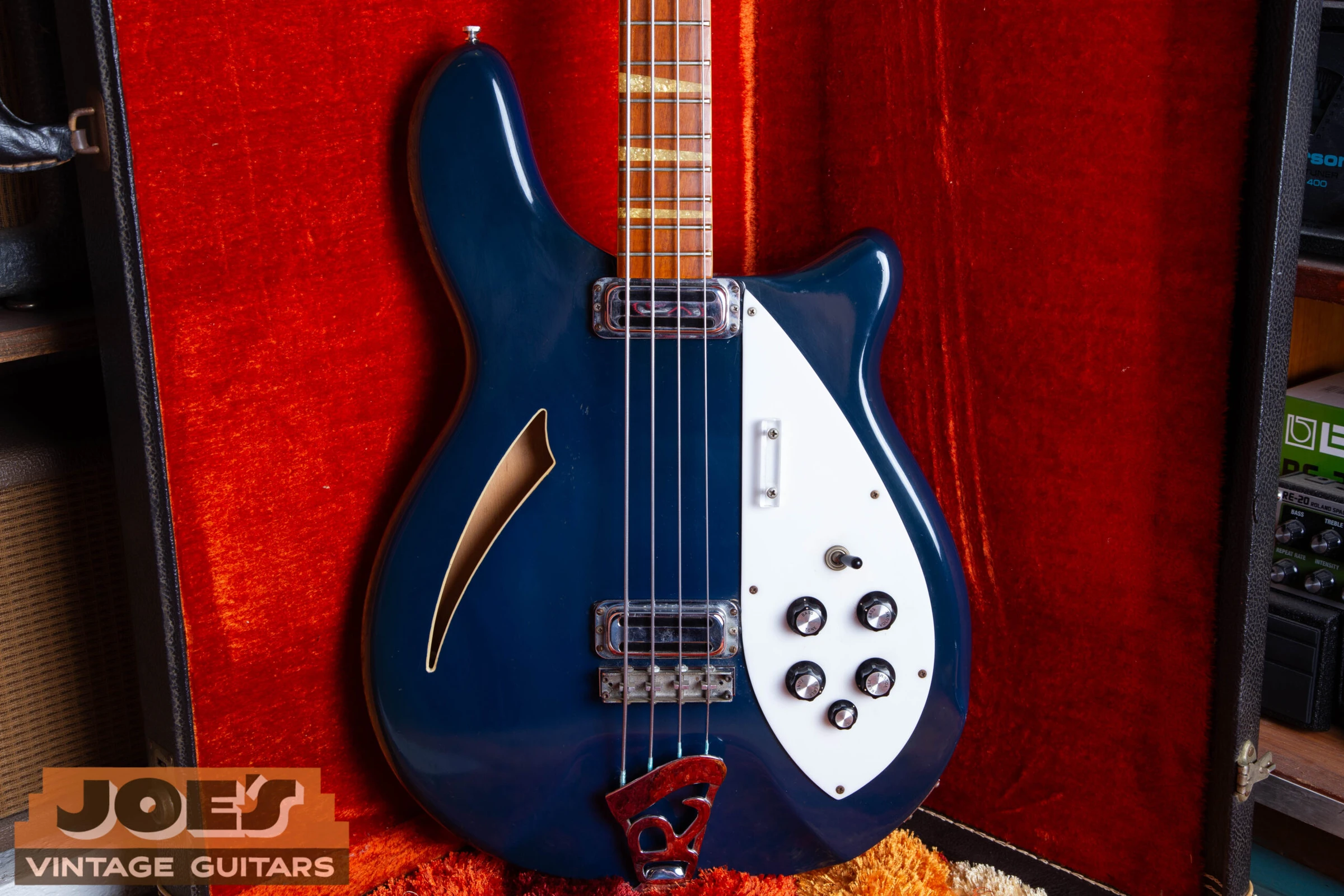
Trapeze Tailpiece: 1958 To 1965
All Capri and F-series models from their 1958 introduction used a simple trapeze tailpiece (non-vibrato models) or vibrola (vibrato models). The early Capri T/V/R serial codes describe the tailpiece or output configuration. The R tailpiece became common during the mid-1960s. Trapeze tailpieces also appear on later vintage-style models.
Kauffman Vibrola: 1958 To ~1961
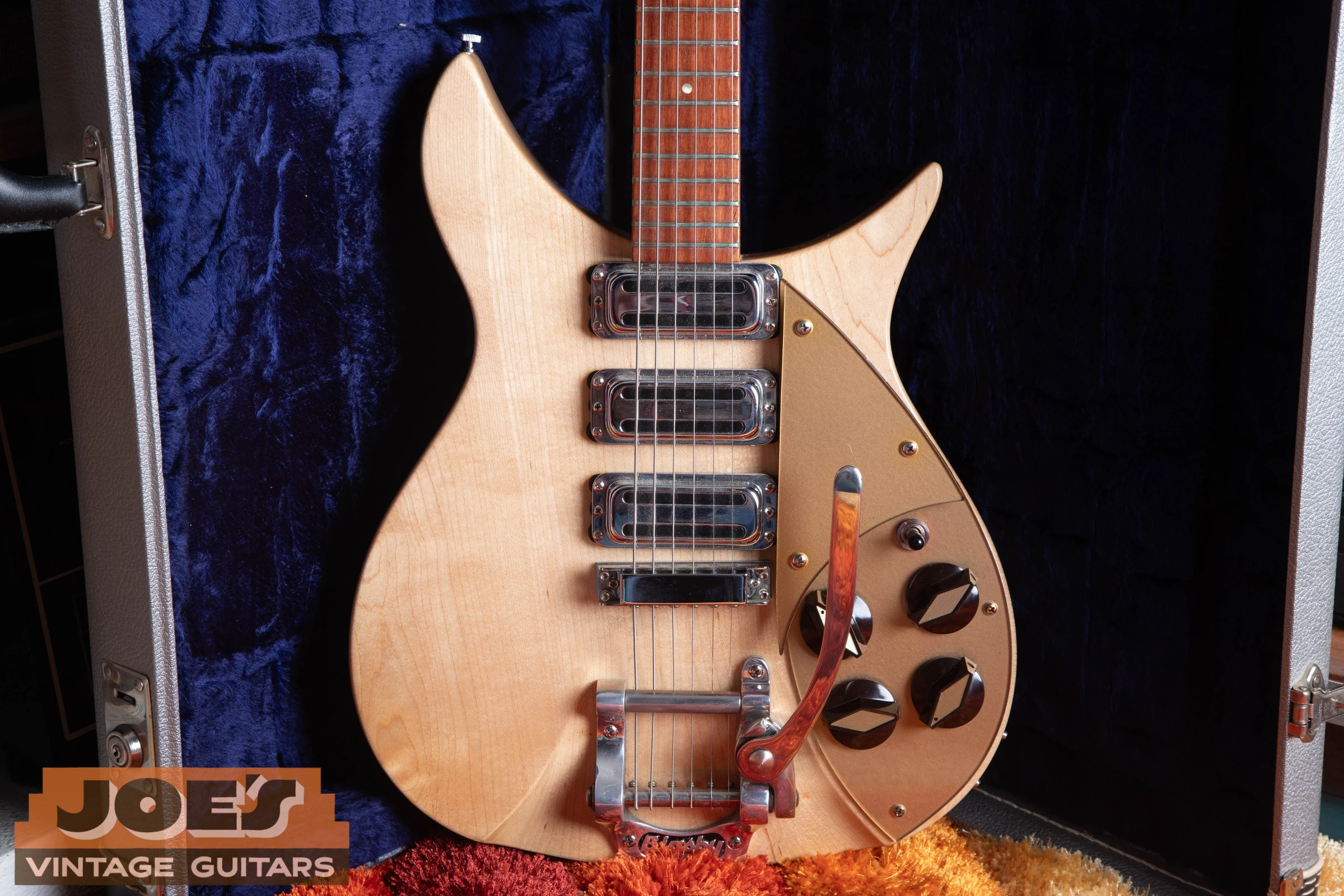
The original vibrato unit on 1958 to 1961 Capri models. Replaced by the Accent vibrato. The “V” in Capri-era serial numbers originally referred to this unit.
Accent Vibrato: ~1961 Onward
Replaced the Kauffman as Rickenbacker’s vibrato of choice on Capri and other hollowbody models. The “V” in the serial number carried over to continue indicating vibrato, now meaning the Accent.
"R" Tailpiece: October 1964 To Present
One of the most iconic pieces of hardware in guitar history, named for the stylized “R” shape (also described as a “baby dinosaur”). Introduced on the October 1964 production of New Style 360/12s, then rapidly becoming standard on all non-vibrato semi-hollow models and the 4005 bass. Compare the knobs and controls as another check on the instrument’s specification.
Distinguishing brass from zinc without removal: Measure the mounting screw spacing. Brass units: approximately 7/8″ on center. Zinc units: approximately 11/16″ on center. If you can remove the tailpiece, brass backs are rough-textured; zinc backs show smooth round mold marks. All 12 slots on a brass tailpiece are hand-cut and equal; zinc tailpieces have casting-integrated slots in the correct count for the model.
Recognizing A Different Vibrato
Bridges And Replacement Evidence
The bridge carries the saddles; the tailpiece anchors the strings. Date them separately. An original-looking R tailpiece does not establish that the bridge, saddles or mounting hardware are original.
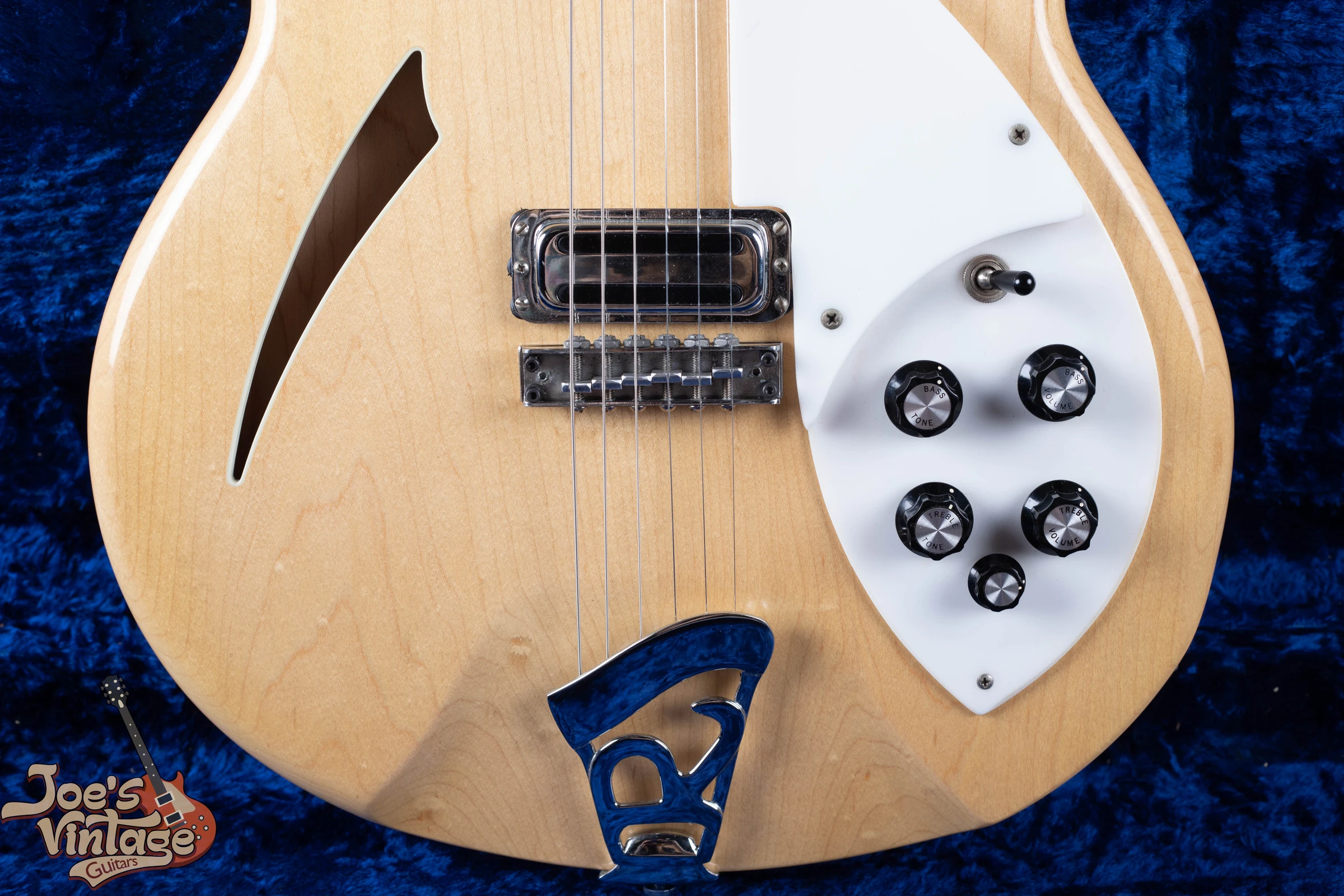
Compare saddle count with the model and string count. Some twelve-string guitars have six saddles, with each string pair sharing one; a twelve-saddle replacement is a separate originality question. Look for new screw holes, altered mounting footprints and a bridge that does not match the surrounding wear. The finish-originality checks explain other visible signs of work around hardware.
Older solidbody instruments may have their serial stamped on the bridge plate. If that plate has been replaced, the number may date the part rather than the guitar. Return to the serial-location photographs and compare the complete instrument.
Get Help Identifying Your Rickenbacker
Send photos of the complete instrument, serial plate and the detail you want checked. Include any known repair or replacement history.
Get A Free Rickenbacker Appraisal
Continue with Rickenbacker body styles, binding and inlays or return to the serial lookup and dating charts.

Talk With
Joe Today
Have a vintage guitar to sell or a question? I’m here to help.