

The White Falcon · 1955 Through Original U.S. Production
Gretsch White Falcon Authentication Guide
Identify the body, circuit and production period before deciding which appointments belong on a White Falcon.
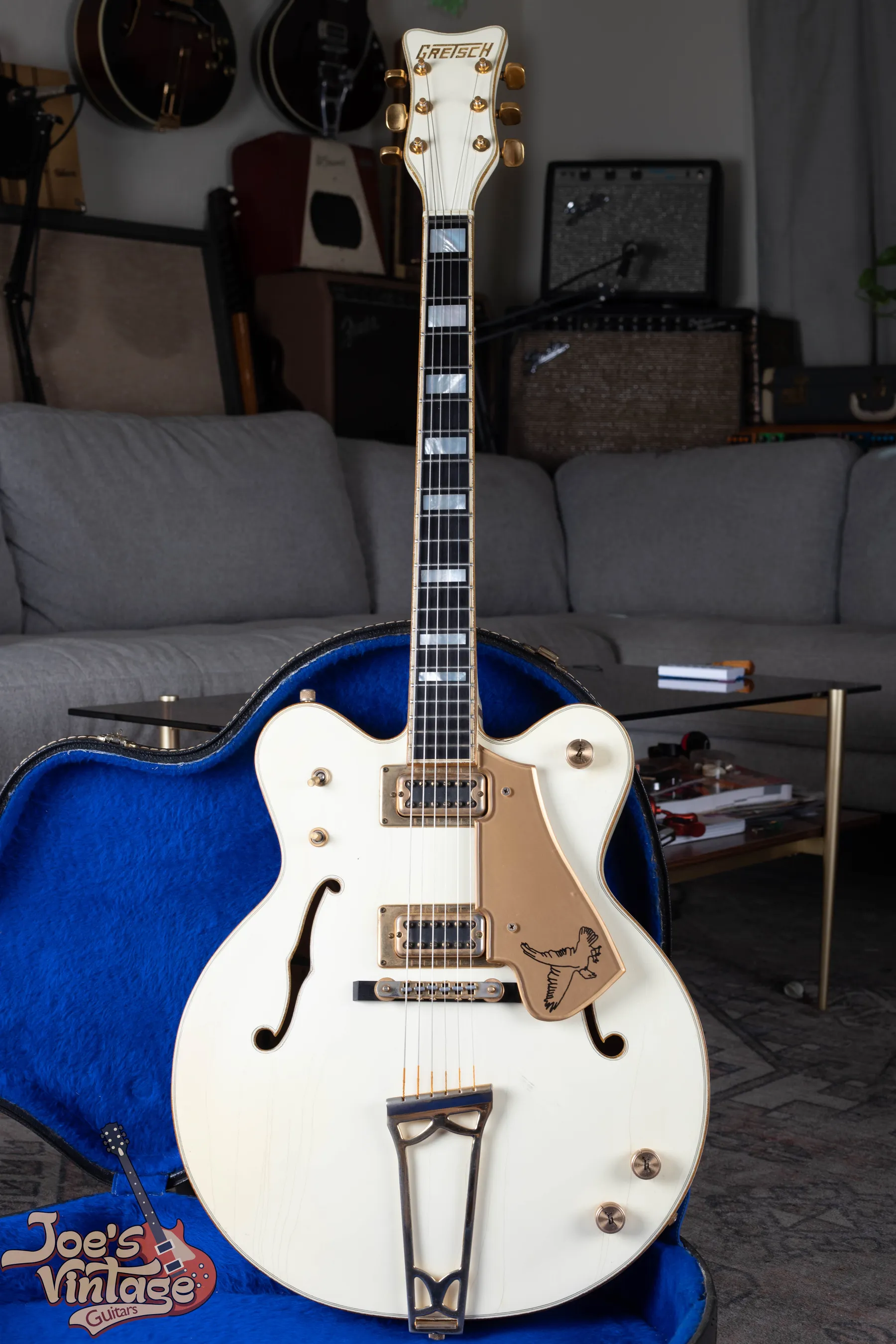
A vintage White Falcon is identified by a combination of construction, model number, serial system and equipment. Its white finish and gold appointments give you a starting point, but later Gretsches recreate those details. A single-cutaway outline or an elaborate winged headstock logo can't establish a 1950s build. This guide covers original American mono and stereo Falcons, including the double-cutaway and Baldwin periods. Later Japanese instruments appear only to explain exclusions. For prices after you've established the version, use the separate White Falcon value guide. Keep identity, parts originality and condition as separate findings when you describe a guitar.
Authenticity And Originality Are Assessed From The Information Provided. A Hands-On Inspection Can Change The Conclusion.
Falcon, Penguin Or Another Gretsch
Identify The Large Hollowbody First
| Feature | Original-Era Comparison |
|---|---|
| Body | Large hollowbody, with single- and double-cutaway versions |
| Early Model Numbers | 6136 mono; 6137 stereo |
| 1978 Single Cutaway | 7593: 17-inch width, 2¾-inch depth, 25½-inch scale |
| 1978 Double Cutaways | 7594 mono and 7595 stereo: 17-inch width, 2-inch depth |
| Fingerboard In The 1978 Catalog | Ebony with block markers |
| Neck Joins In The 1978 Catalog | 7593 at fret 14; 7594 and 7595 at fret 18 |
Dimensions are period catalog specifications, not a blanket specification for every Falcon.
Begin with a full front and rear view. The Falcon belongs to Gretsch's large hollowbody family. The similarly decorated White Penguin belongs to the smaller chambered Jet family. A tight picture of gold hardware or a white headstock can hide that difference. Body width, depth and the neck joint are harder to exchange than a pickguard carrying a model name.
Measure the lower bout at its widest point and the rim without including the bridge or padded back. Record those measurements rather than forcing a guitar into a remembered specification. Then count the cutaways and inspect the f-hole shapes from an angle. Some black shapes represent simulated openings on a sealed top; they aren't necessarily holes into the body.
Compare those observations with Joe’s body, binding and inlay guide. A Falcon, Country Club and Viking can share a large body or elaborate equipment without being the same model. A removed or replaced nameplate increases the need to examine construction. Don't let a loose plate in the case settle the identification.
The Early Design And Its Successors
Webster’s Showpiece Becomes A Model Family
The White And Gold Beginning
Jimmie Webster’s show guitar brought the large white body, gold appointments and elaborate headstock together before the production model appeared. Its 1954 presentation and 1955 catalog-line introduction explain why both years recur in Falcon histories. A photograph of the prototype isn't a specification sheet for every production guitar.
A Name Across Different Bodies
By the 1978 catalog, the Falcon name covered a deep single cutaway and thinner double cutaways. The 7593 joined the body at fret 14; the 7594 and 7595 joined at fret 18. That changes the neck-to-body relationship visible in a full photograph. Compare those proportions before focusing on removable trim.
Production Landmarks
From Show Guitar To Several Falcon Designs
The Design Reaches Production
Gretsch’s company history credits Jimmie Webster with the White Falcon shown at the 1954 NAMM show and added to the 1955 lineup. A design’s public debut and an individual guitar’s production year are separate dates.
Mono And Project-O-Sonic
The mono 6136 and stereo 6137 require separate comparisons. Gretsch dates Webster’s Project-O-Sonic introduction to 1958. A stereo claim needs the appropriate pickup and control system, not just two output paths added later.
The Double-Cutaway Form
Falcons joined the move toward thinner twin-cutaway instruments. Compare the complete body, back arrangement and controls with the period specification. A generic cutaway rule taken from another Gretsch model isn't sufficient.
Baldwin Model Designations
The 1978 catalog lists the 7593 single cutaway, 7594 double-cutaway mono and 7595 double-cutaway stereo. These are model designations. Their four digits do not encode a manufacture date.
Use these landmarks to choose a comparison period, then investigate the individual instrument. Production transitions don't necessarily happen at a clean January boundary. The early Filter’Tron family introduction also shouldn't be copied into a claim that every Gretsch model used it that same year. Joe’s 6120 history and Duo Jet guide retain their own model-specific timing.
Pickup And Control Evidence
Separate Mono, Stereo And Changed Wiring
| Comparison Period | Pickup And Trim Evidence |
|---|---|
| Earlier Mono Falcons | DeArmond single coils, engraved hump-block markers, vertical headstock logo and Melita bridge |
| 1958 Mono Comparison | Filter’Tron humbuckers, thumbnail markers, horizontal headstock logo and Space Control bridge |
| 1958 And 1959 Controls | Gretsch’s retrospective describes both a tone knob and tone switch in the 1958 comparison, then a tone switch alone in 1959 |
| Project-O-Sonic, Introduced In 1958 | Split pickup system and stereo routing; inspect separately from the mono arrangement |
The firsthand study of a 1958 Falcon records its combination of changed parts. Compare the complete instrument; transitional examples and later replacements can mix features.
The Mono Comparison
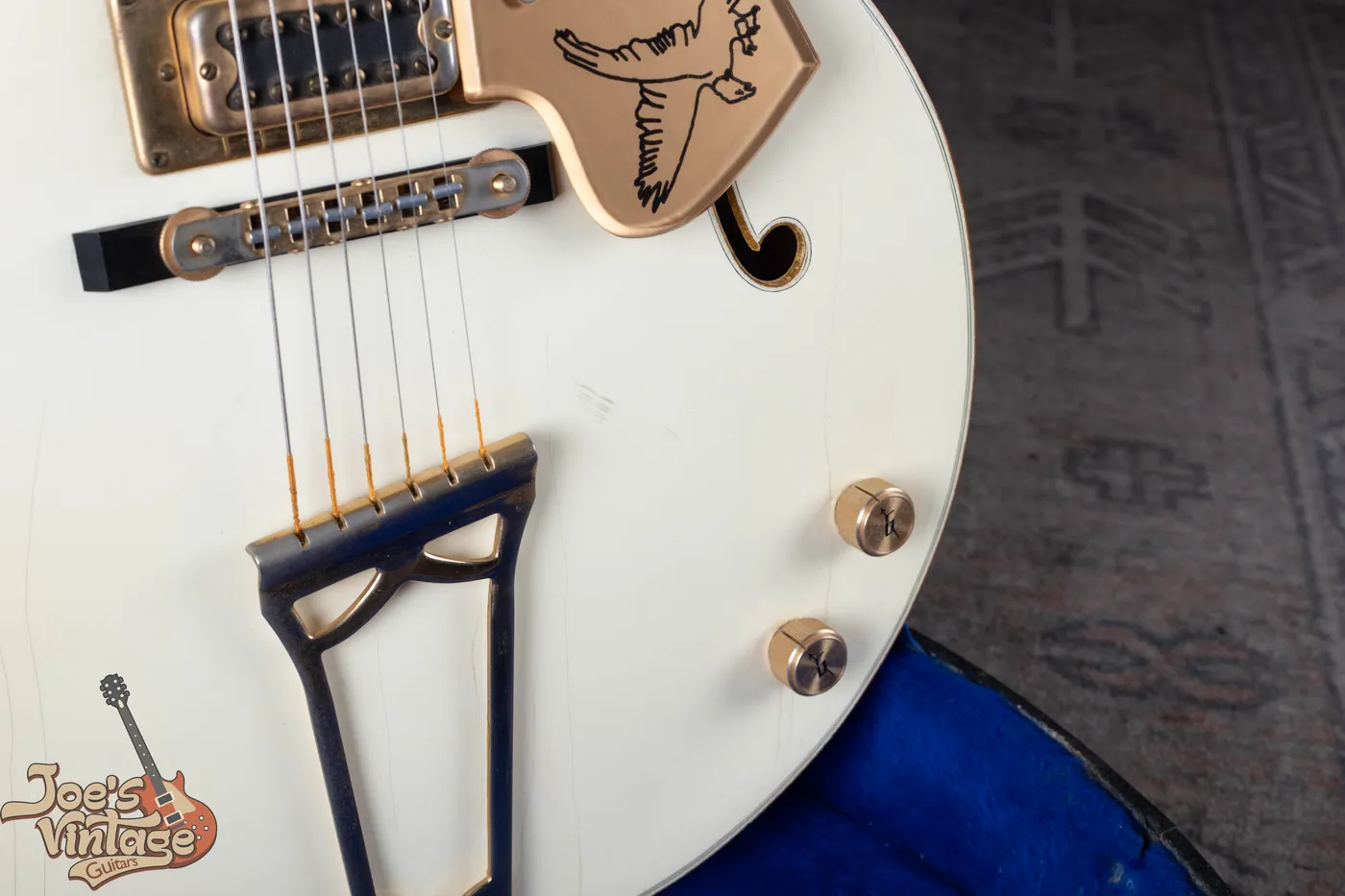
Photograph each pickup straight on and include its surround. Identify the visible pickup family before deciding whether it's appropriate to the period. DynaSonic single coils, Filter’Tron screw-pole humbuckers and Super’Tron blade designs need different descriptions. A metal cover alone doesn't reveal what is underneath.
For Joe’s later mono example, keep the whole control layout beside the label photograph. The installed bridge is adjustable and the tailpiece has a G cutout. A Falcon description that automatically calls every tailpiece a Bigsby would misdescribe this instrument.
The Stereo Comparison
Project-O-Sonic used split pickup arrangements and routing intended for separate amplification. Establish the actual model, controls and jack arrangement before testing a suspected stereo Falcon. A regular mono lead can give an incomplete impression of how a stereo circuit behaves.
If the wiring has been changed, record what each switch and output currently does. Don't call a silent channel a missing pickup without checking the correct connection. A repairer can investigate inaccessible wiring when necessary; a first identification doesn't require pulling an old harness out of a hollowbody.
Joe’s pickup comparisons show the visible families, and the control guide separates electrical switches from mechanical mutes. Count and photograph the controls before attaching names to them. A knob near the bridge can be associated with equipment that doesn't alter the electrical signal at all.
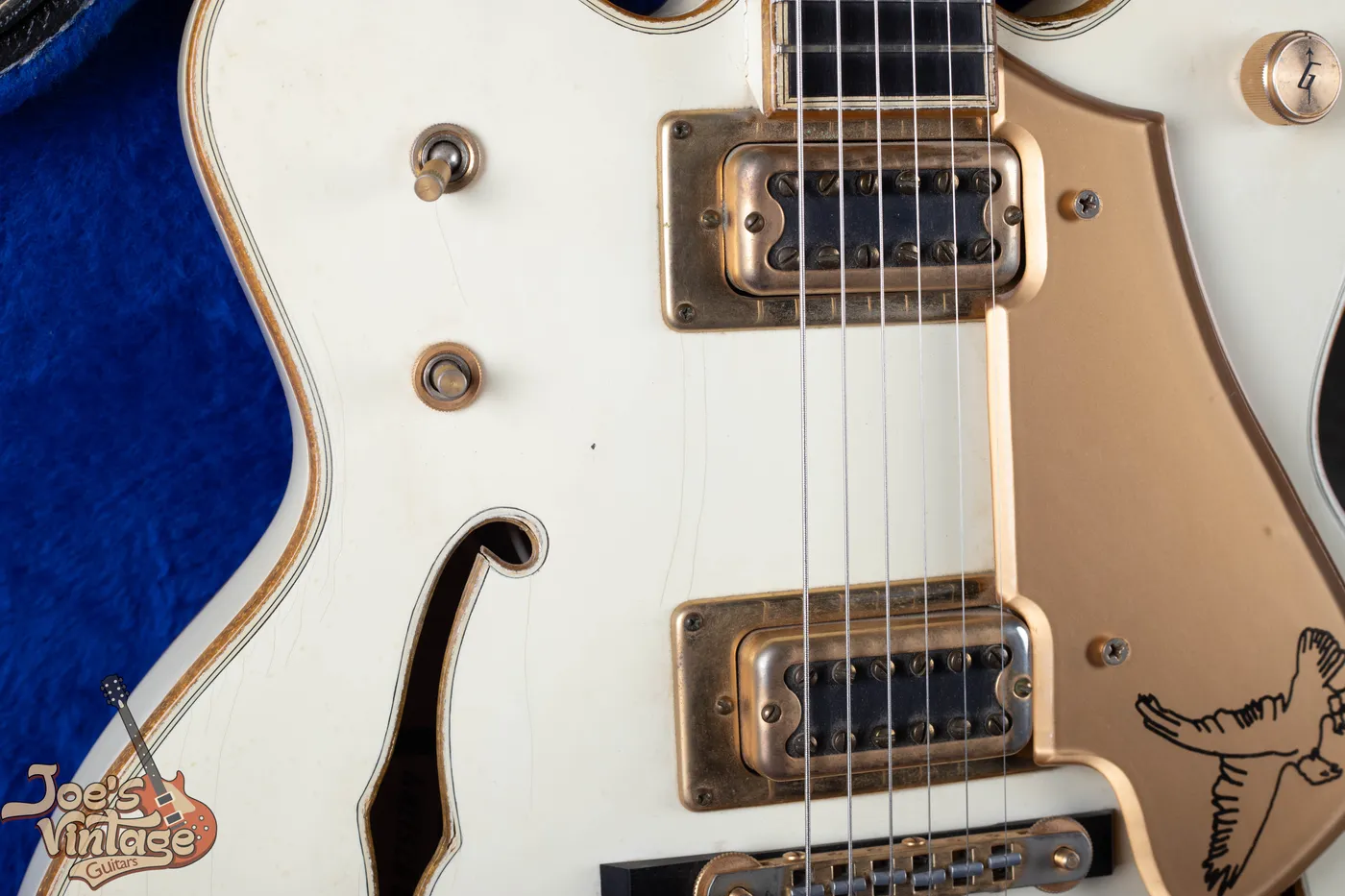
The pickup face, surrounding mount and complete control layout belong in the same inspection record.
Model And Circuit
The Falcon Versions To Keep Separate
6136 And 6137
The earlier mono and stereo designations identify different electrical arrangements. Read the number with the pickup configuration and full control layout.
7593 Single Cutaway
The 1978 single-cutaway Falcon retains a deeper 2¾-inch body and a fret-14 neck join. Its outline should not be compared with the thinner twin-cutaway specification.
7594 And 7595
Both are later double-cutaway Falcons. The catalog distinguishes the mono 7594 from the 7595 stereo system with separate bass and treble pickup sections.
One Instrument, Several Views
A Later Mono Falcon In The Photo Archive
1976 · American Mono
Body, Headstock And Binding
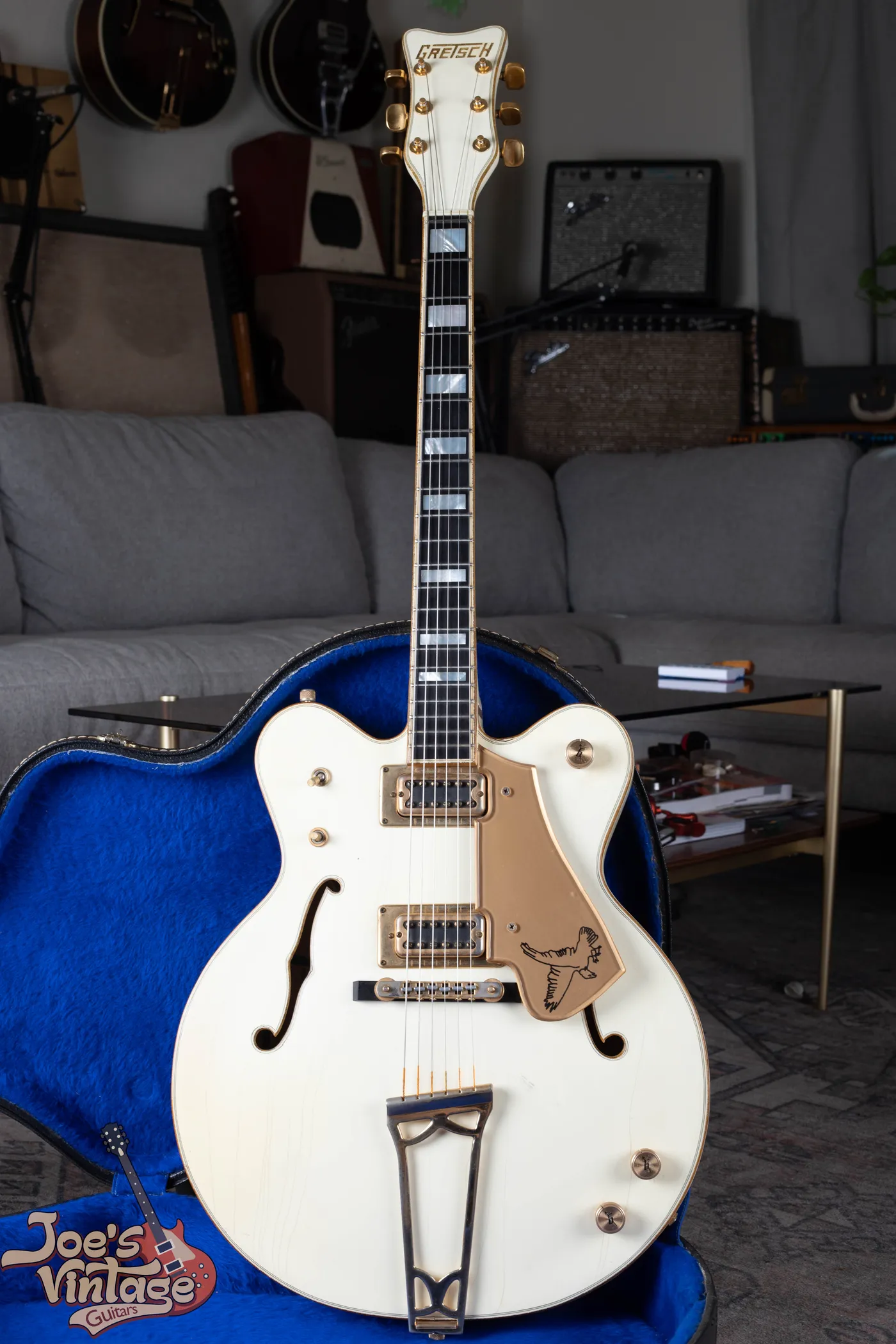
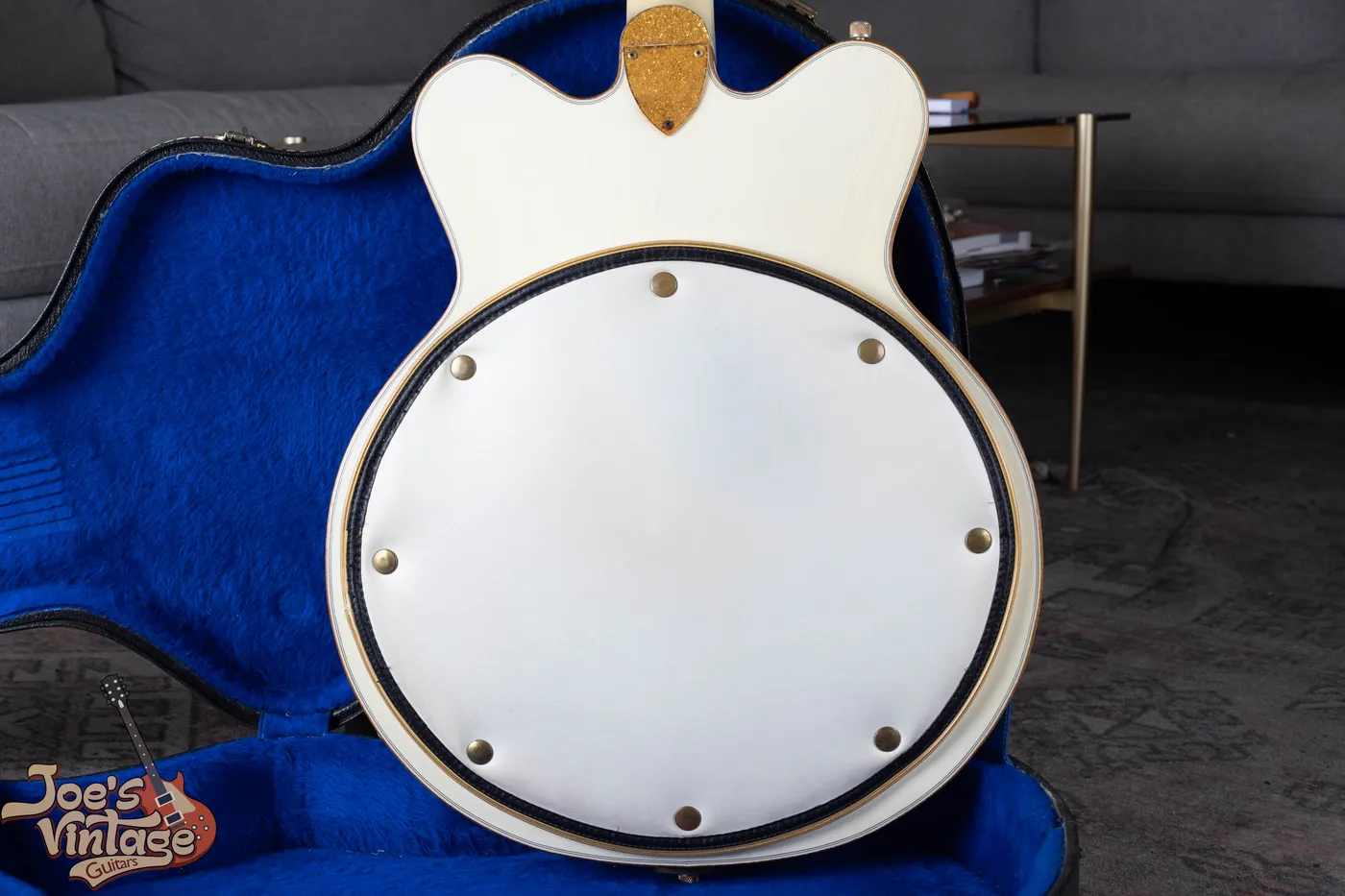
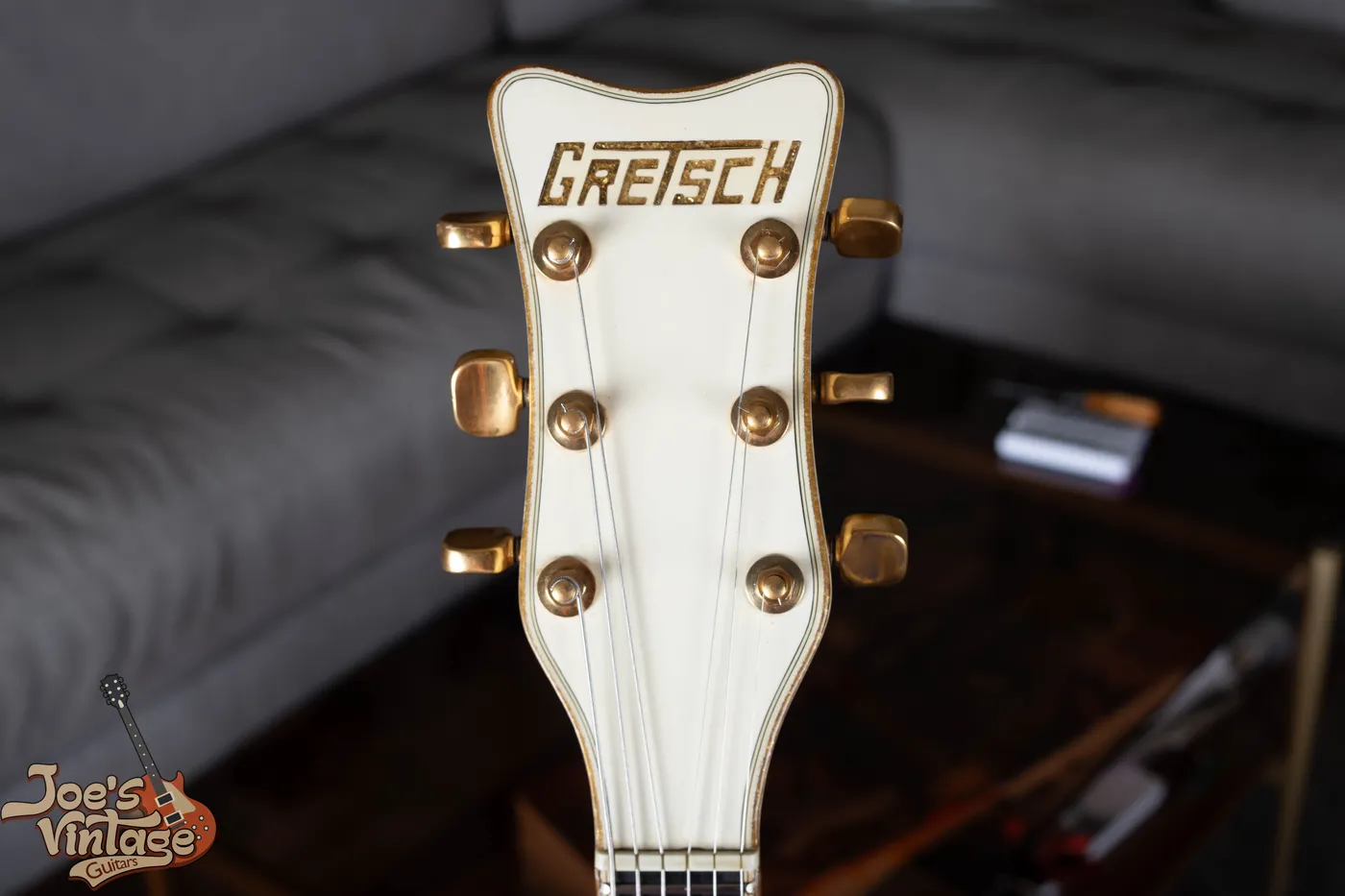
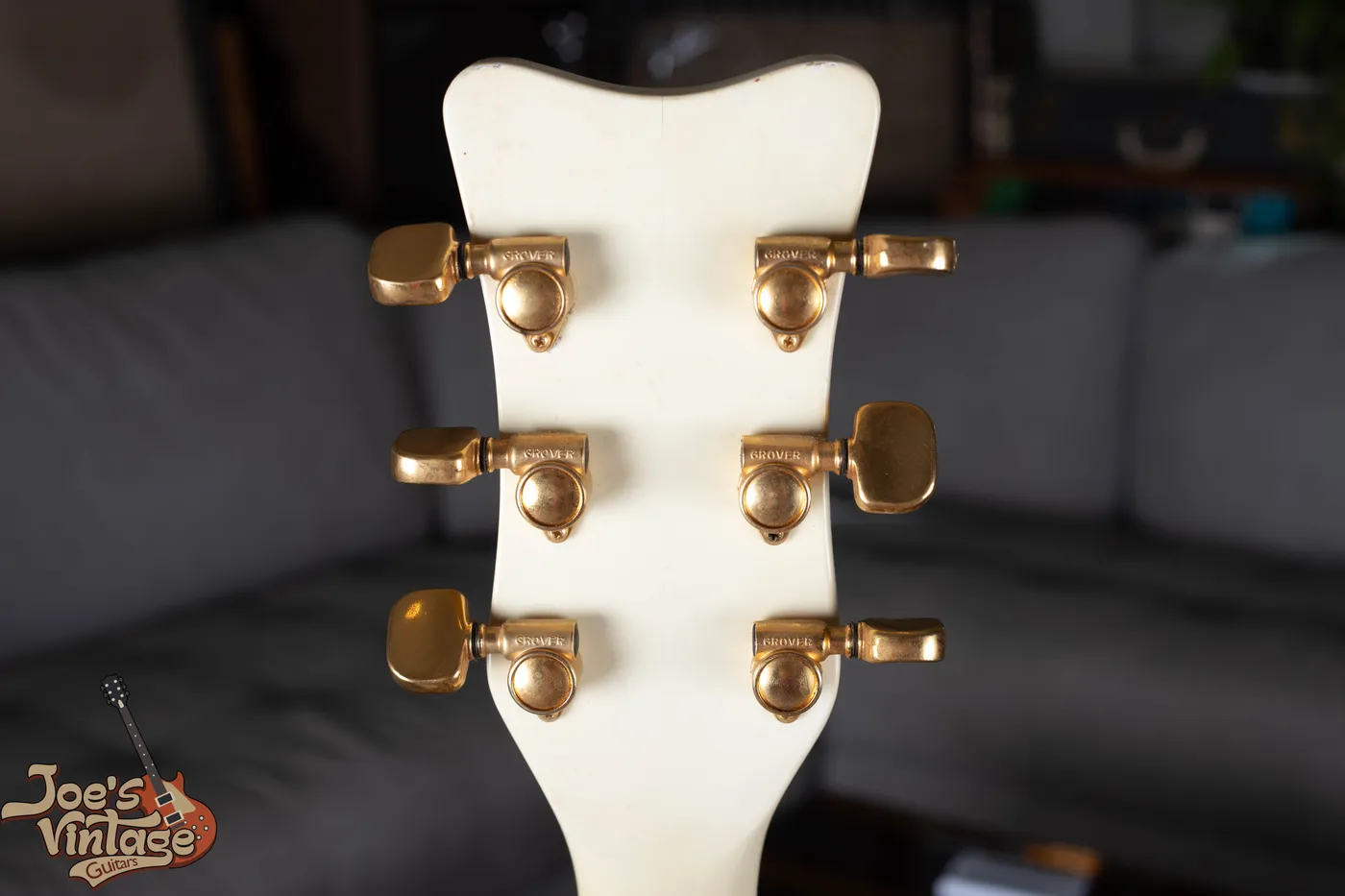
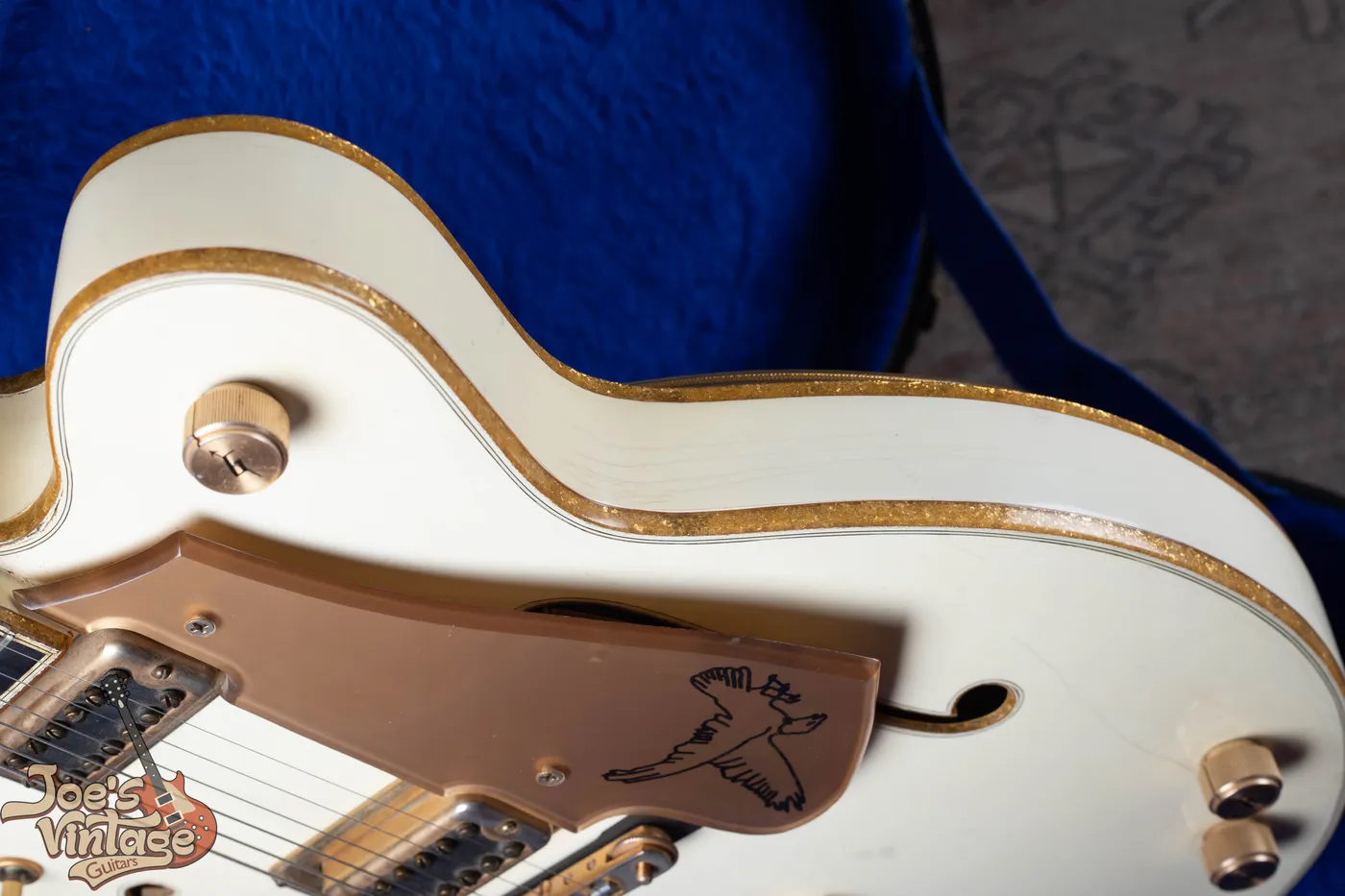
These views belong to one instrument from Joe’s archive. The headstock decoration, tuners, back pad and body-edge binding can be compared without borrowing details from another Falcon. Keep the views grouped when you use them to describe the example.
The photographs show what is installed and visible. They don't reveal hidden solder joints, establish the age of every screw or confirm the condition beneath the pad. Those limits matter when moving from model identification to an “all original” description. If your guitar differs, photograph the difference rather than treating the archive guitar as a parts checklist for every production year.
A Real Label, Not A Sample Code
Read The Number In Its Production Context
Joe’s 1976 Mono White Falcon
The archive photograph visibly reads 8.6014, including a dot. With the documented 1976 instrument and its later features, this supports August 1976, sequence 014, in the month/year system. The year digit alone repeats by decade. The date comes from the format and the guitar together.
Keep the full rectangular label in the record. A cropped string of digits loses the model line and label design that help establish context. The Gretsch label guide uses this same example and preserves the printed punctuation.
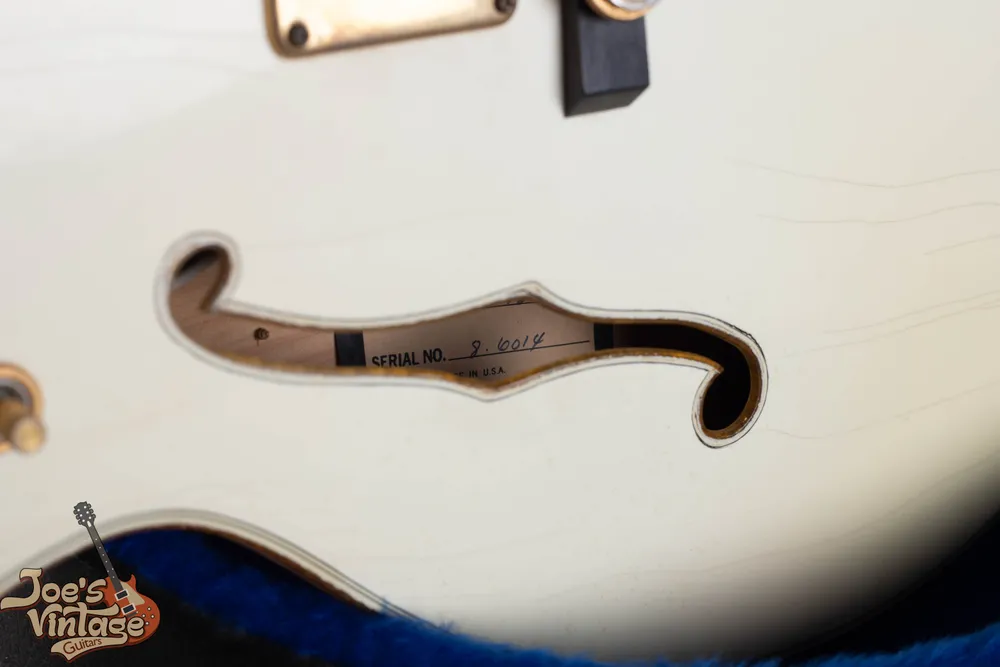
Earlier Falcons can use a sequential number and a different location, including a headstock model plate. Inspect the entire headstock, its top edge and any accessible interior label before reporting that a number is missing. A five-digit marking should not automatically be parsed as a Baldwin month and year.
Gretsch’s early serial history also records misplaced 1957 labels used later. Joe’s existing Jet guide treats those reused numbers as a reason to check the physical features. Don't create an exact 1957 date from a label when the instrument's construction belongs to a different period. Retain both observations and seek a model-specific assessment.
Use the Gretsch serial lookup as a comparison tool. When its result conflicts with the guitar, recheck the transcription first. Side lighting may separate an 8 from a 3 or reveal punctuation that disappeared in a phone screenshot. Don't add chalk, ink or abrasives to make a faint stamp easier to read.
Historical Styling Returns
Exclude Later Japanese Falcons
A modern Falcon may intentionally repeat a single-cutaway body, vertical logo, gold trim and earlier-style pickups. The historical year in a Vintage Select model name describes the design being recreated. It isn't the manufacture date of that individual guitar. Read the complete model suffix and country information with its own serial.
Gretsch’s modern system uses factory letters followed by year and month digits. JT identifies Terada in Japan in that system. Earlier revival-era Japanese guitars used other formats, so the absence of JT doesn't establish American vintage production. Compare the full marking with the correct period in Joe’s vintage and reissue guide.
Don't use an aged white finish as a shortcut. A recently made guitar can have a deliberately warm color, and an older one can remain pale. Hardware can also move between instruments. If a vintage-looking body carries a later serial format, investigate the actual model before explaining away the number. If an old body has replacement pickups, document the replacements without calling the whole instrument a reissue.
Originality And Condition
Check The Parts That The Number Cannot Date
Follow The Body Edges
Inspect the binding around both cutaways, the neck and the headstock. Record missing sections, visible replacement strips and finish disturbance. Shrinkage is a condition observation; it doesn't establish a build year.
Inspect The Neck And Heel
Take a side view showing the strings, bridge height and neck joint. A gap, finish line or unusually low bridge is a reason for closer inspection. A photograph alone shouldn't be turned into a definite structural diagnosis.
Compare Bridge And Tailpiece Footprints
Look for unused holes and exposed outlines around the hinge or base. Movable bridge assemblies may be replaced without obvious new holes. The absence of a hole doesn't certify that a part has never changed.
Keep The Tuner Views Clear
Photograph housing marks, buttons, screws and bushings. An older button can sit on a different mechanism. Document mismatched or plugged mounting holes without removing hardware solely for an online identification.
Once the model and period are reasonably established, use the Falcon value chart with a separate condition description. Don't treat a serial result as proof that the guitar meets an excellent-condition price row. An inspection can confirm or revise an assessment made from photographs.
Send The Evidence
Have Joe Review Your Falcon
Include the full front and back, serial location, controls and any disputed part. Tell Joe what you know about repairs and what remains uncertain. Unanswered questions are useful information when deciding which views or inspection are needed next.
Sources For The Identification Details
Falcon References And Comparison Guides
- Gretsch’s White Falcon History
Webster, the 1954 presentation, 1955 lineup, stereo introduction and Electrotone development.
- Gretsch 1978 Catalog
PDF pages 3 and 4: 7593, 7594 and 7595 dimensions, neck joins and equipment.
- Gretsch’s Early Serial History
Sequential systems, serial locations and reused labels.
- Gretsch’s Modern Serial Format
Factory prefixes and year/month fields on later instruments.
- Joe’s Gretsch Pickup Guide
Pickup-family identification and model-specific timing cautions.
- Joe’s White Falcon Label Example
The photographed 8.6014 label and its documented 1970s context.
- Firsthand Study Of A 1958 White Falcon
The instrument’s caretakers document the pickup, logo, fingerboard-inlay and bridge changes visible on their 1958 example.
- Gretsch’s 1958 Design Retrospective
Manufacturer explanation of the Falcon’s transitional tone-knob and tone-switch arrangement, presented with later recreations of the design.
Questions AboutGretsch Identification
Is Every White Falcon A Hollowbody?
Can A Falcon Serial Appear On A Metal Nameplate?
Does A G-Cutout Tailpiece Make A Falcon Incorrect?
Does A 1950s Model Name Prove A Vintage Build?
The Last Word
Keep The Evidence Together
Build the description from the body outward: model, circuit, serial context, then installed parts. Keep a disagreement visible until evidence resolves it. A clear set of photographs and a candid repair history will help Joe assess a Falcon far more than an unsupported claim that every detail is original. For the matching price ranges, see the Gretsch White Falcon value guide.
Authenticity And Originality Are Assessed From The Information Provided. A Hands-On Inspection Can Change The Conclusion.