

White And Gold · Original American Production
Gretsch White Falcon Value Guide
What an original White Falcon is worth, from the first single-cutaway guitars to the later Baldwin models.
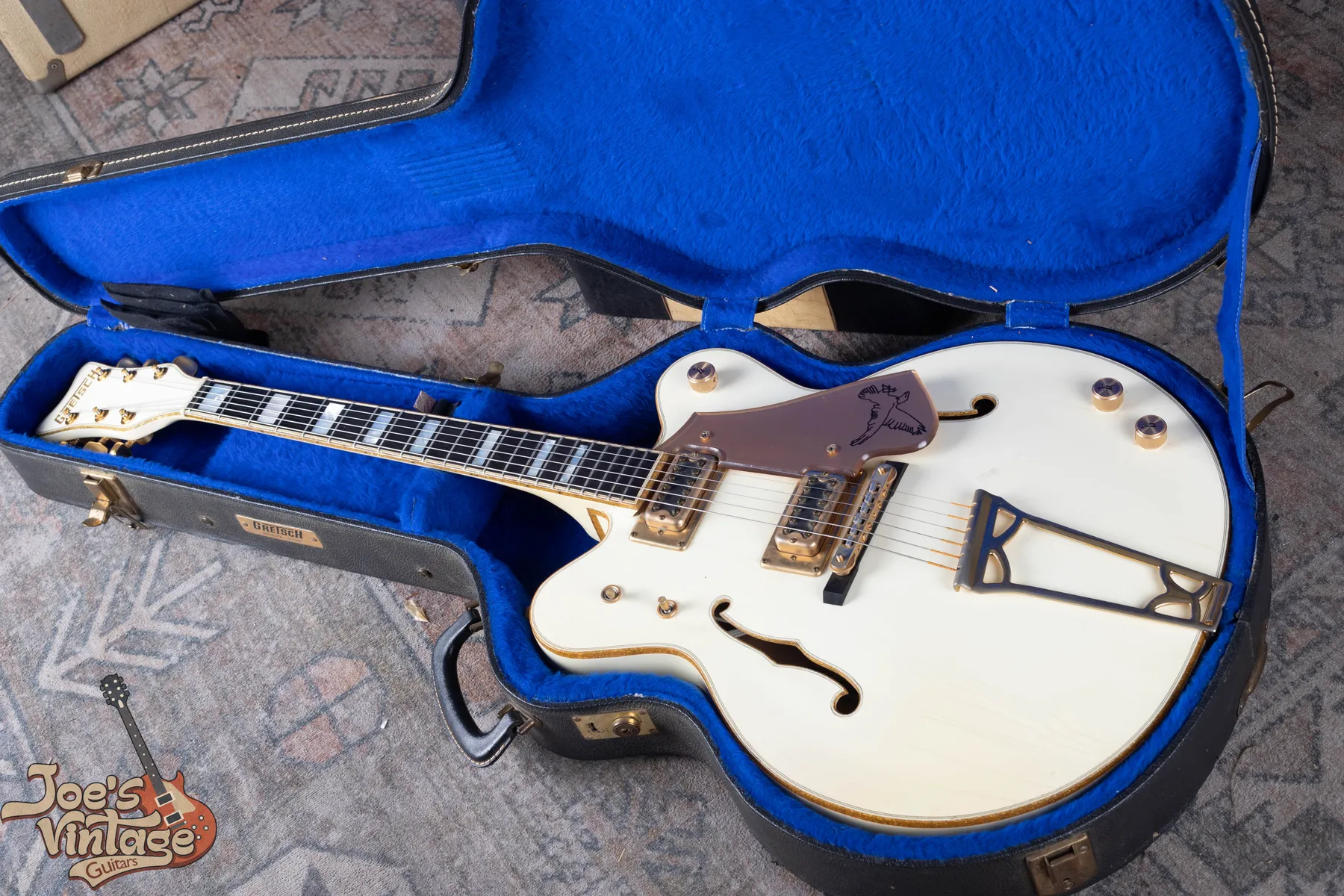
An original Gretsch White Falcon can be worth from the mid-thousands to more than fifty thousand dollars, depending on its period and configuration. Joe’s estimates for a 1973 to 1981 mono example are $6,250 to $8,000 in excellent, original condition with its case; a 1955 mono is $44,000 to $57,200. Those describe different versions of the model, not the low and high end of one interchangeable guitar. Start with the White Falcon authentication guide if you're uncertain about the build period, pickup system or body shape. Once those details are settled, the chart below gives a starting range. A guitar with major repairs needs its own assessment before that range becomes useful.
This Is An Estimate Of Market Value, Not An Offer To Buy And Not A Guarantee. Market Values Fluctuate; Have Your Specific Item Appraised.
Start With The Correct Version
White Falcon Values By Era
| Model | Years | Configuration | Estimated Value |
|---|---|---|---|
| 6136 White Falcon Mono | 1955 | Single-cutaway, gold-leaf trim | $44,000 to $57,200 |
| 6136 White Falcon Mono | 1956 to 1961 | Single-cutaway, sparkle binding | $40,050 to $48,950 |
| 6136 White Falcon Mono | 1962 to 1964 | Double-cutaway | $22,250 to $26,700 |
| 6136 White Falcon Mono | 1965 to 1969 | Double-cutaway | $13,050 to $17,400 |
| 6136 White Falcon Mono | 1970 | Double-cutaway | $8,600 to $10,750 |
| 7594 White Falcon Mono | 1971 to 1972 | Later US production | $6,550 to $8,700 |
| 7594 White Falcon Mono | 1973 to 1981 | Later US production | $6,250 to $8,000 |
| 6137 White Falcon Stereo | 1958 to 1961 | Single-cutaway | $39,600 to $52,800 |
| 6137 White Falcon Stereo | 1962 to 1964 | Double-cutaway | $21,500 to $25,800 |
U.S. dollars. These are estimated values, not purchase offers. Repairs, replaced parts, finish work and market changes require an individual assessment.
Choose the mono or stereo model before matching a year. A stereo guitar that's been rewired for ordinary mono use still needs to be described by its original configuration and present changes. Don't price it as an untouched mono because it now works with one amplifier. The same caution applies to a replaced neck, a refinished body or a guitar assembled from parts of different Falcons.
The chart intentionally leaves some periods without a separate figure. In particular, later stereo Falcons need an individual appraisal here. A gap isn't a zero value, and it isn't a reason to borrow the neighboring mono range. Send the label and a full view of the controls so the right version can be identified.
Date And Construction
Why Early Falcons Sit Apart
The First Single-Cutaway Guitars
The 1955 mono row sits above the later mono ranges. For an owner, that makes a defensible date and an honest originality record especially useful. A familiar white finish and gold hardware don't establish that first-year identity. The body, headstock, pickups and serial evidence need to agree.
If family paperwork calls a guitar a 1955, retain that paperwork and photograph the instrument as it stands. Don't replace a part merely to make it resemble an early picture. An earlier photograph showing the actual guitar can help explain a change that a current close-up can't.
Double Cutaways And Baldwin Models
The later rows have their own price levels. A clean double-cutaway Falcon should be compared with the matching construction and period, rather than judged against the first single-cutaway instruments. The 1976 mono photographed here belongs in that later conversation.
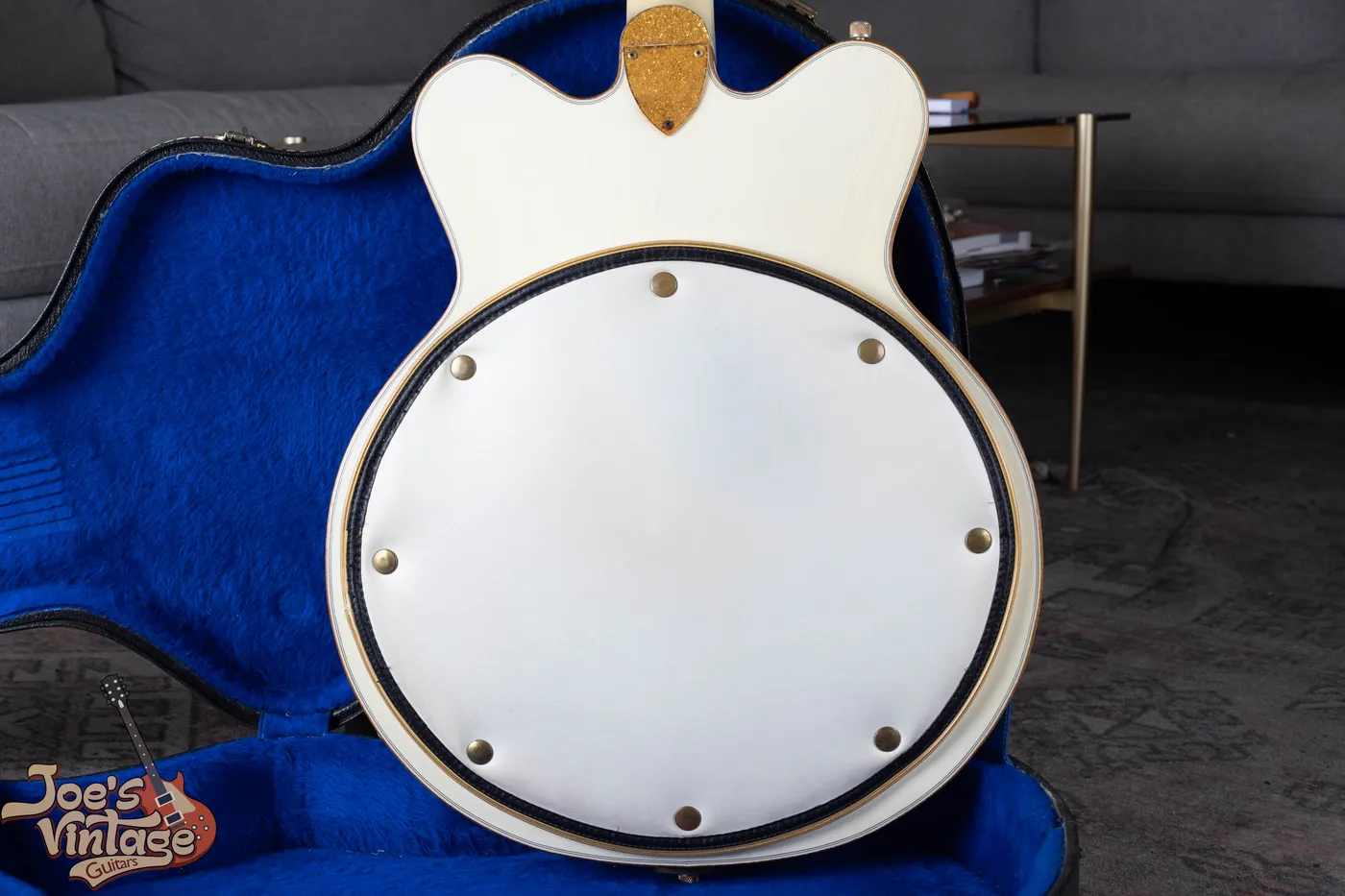
Its padded back, rectangular label, adjustable bridge and fixed G-cutout tailpiece give you specific details to document. Each has a condition and originality question of its own. Calling the entire guitar “seventies” doesn't tell an appraiser whether the binding survives, the neck angle is usable or the pickup system works.
There isn't a useful flat premium for the word stereo. The earlier stereo rows have their own estimates, and a complete working circuit is a different proposition from a partly disconnected one. Include any original cable, instructions or removed controls with the appraisal photos. Those accessories help explain the configuration, though they don't turn an altered instrument into an untouched example.
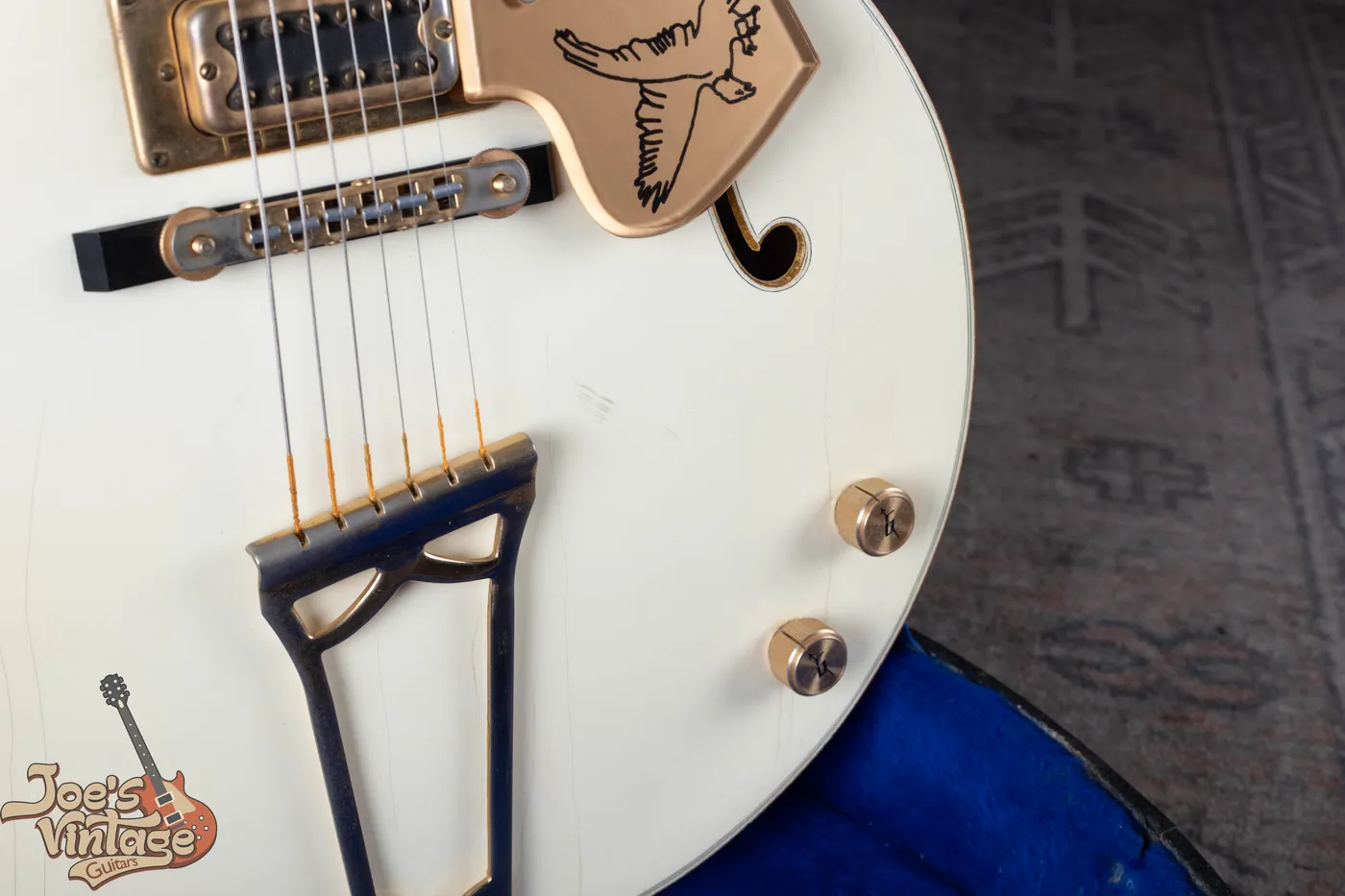
Describe the bridge, tailpiece and padded back separately. One clean front photograph leaves too much unrecorded.
Where The Estimate Changes
Binding, Finish And Playing Condition
White finishes make a Falcon easy to recognize, but they can also make condition difficult to judge in photographs. Direct flash may hide checking and small repairs; warm indoor light can make a pale finish look deeply yellow. Photograph the guitar in diffuse daylight, then add a second angle that shows reflections across the surface. Don't use the shade of white as a percentage adjustment.
Binding deserves close views around the entire body, the cutaways, neck and headstock. A small stable crack, a missing strip and widespread crumbling describe different repair needs. If someone has already repaired the binding, include the invoice or a description of what was done. A front-only image can conceal much of this work.
Complete And Well Preserved
Original finish, period-consistent parts, sound binding and a playable neck support comparison with the chart’s condition basis. Normal evidence of use still needs to be described. An excellent guitar doesn’t have to look freshly manufactured.
Playable With Disclosed Changes
A refret, replacement bridge or repaired binding should be named individually. Keep older parts with the guitar. Their presence may help explain its history, but loose hardware isn't automatically proven original.
Structural Or Extensive Finish Work
A neck repair, uncertain neck angle, broad refinishing or severe binding loss calls for a separate assessment. Photographs help establish the next inspection step; they don't supply a reliable repair bill on their own.
Use Joe’s appraisal and condition guidance to describe the whole instrument. Sound quality and collectibility are related questions, but a replacement pickup can work well while changing the originality assessment. Similarly, polished hardware may look bright while concealing how much plating remains. Avoid cleaning or replating before an appraisal. Preserve the condition you're asking Joe to evaluate.
For a Falcon with changed paint or electronics, read Joe’s notes on condition and originality, refinishing, replacement pickups, and restoration before selling. Describe work already done and ask about proposed repairs before spending money to prepare the guitar for sale.
Photo Timeline
A 1976 Mono From Joe’s Archive
1976 · Mono
The Later Falcon In Detail
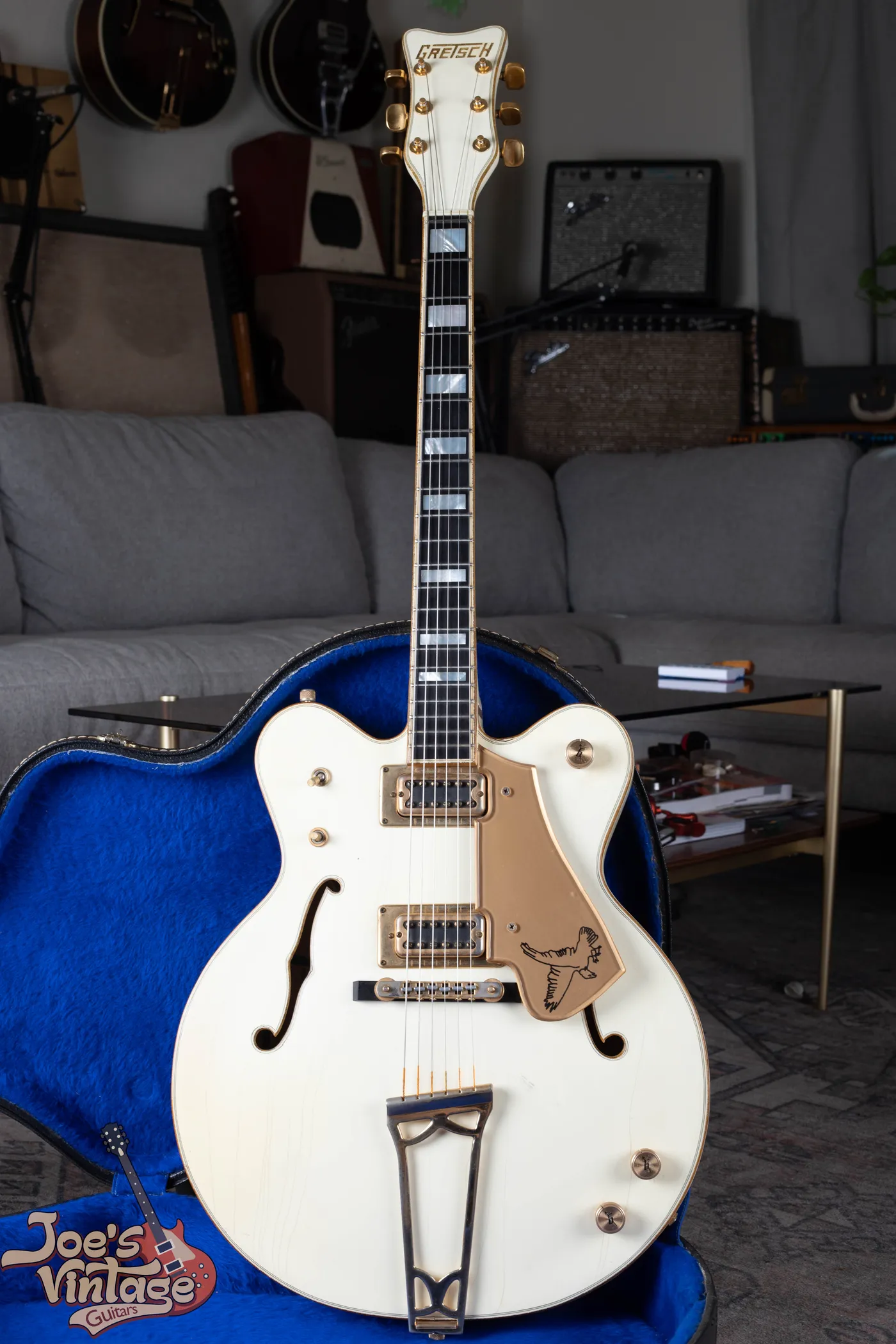
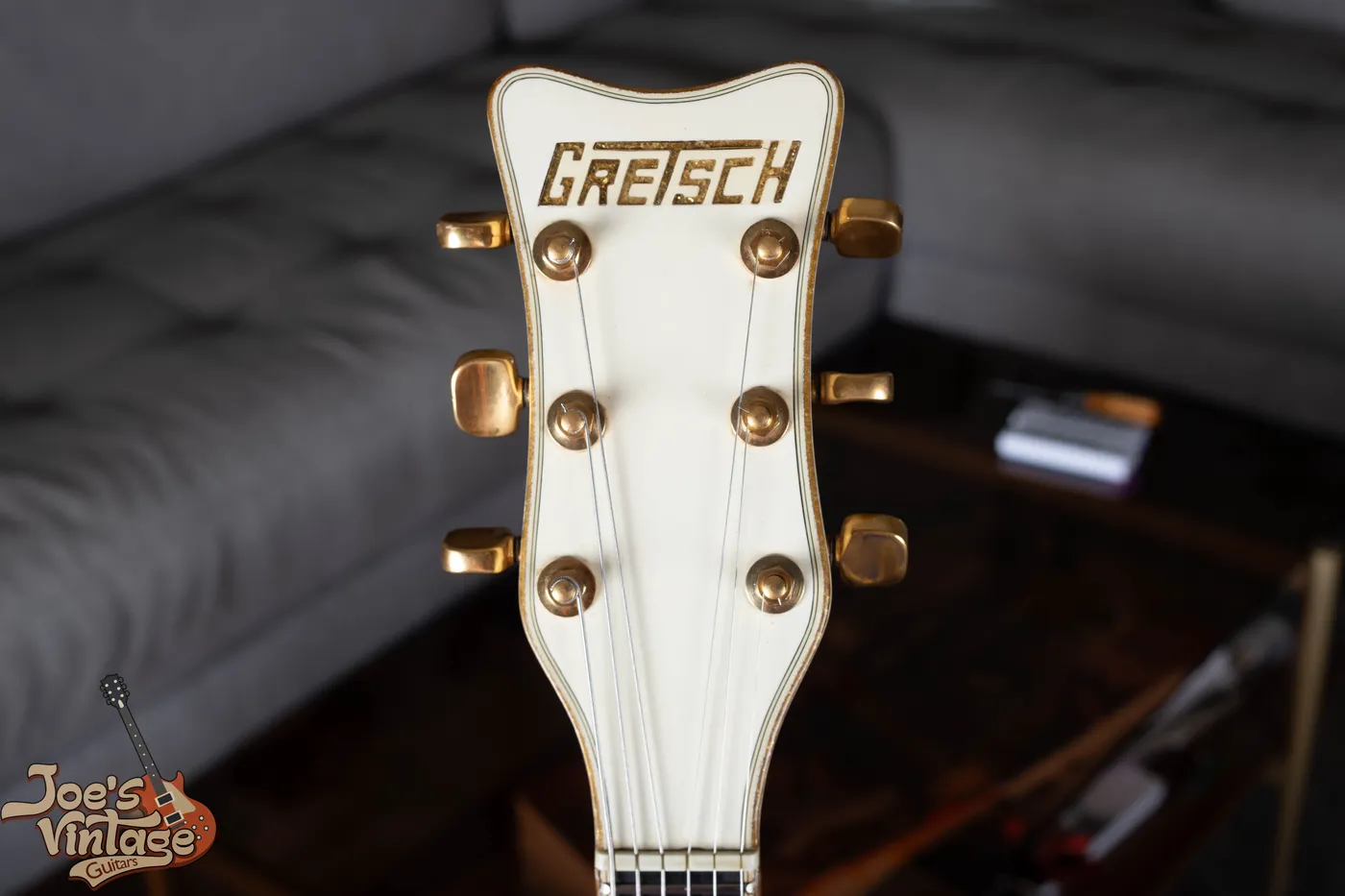
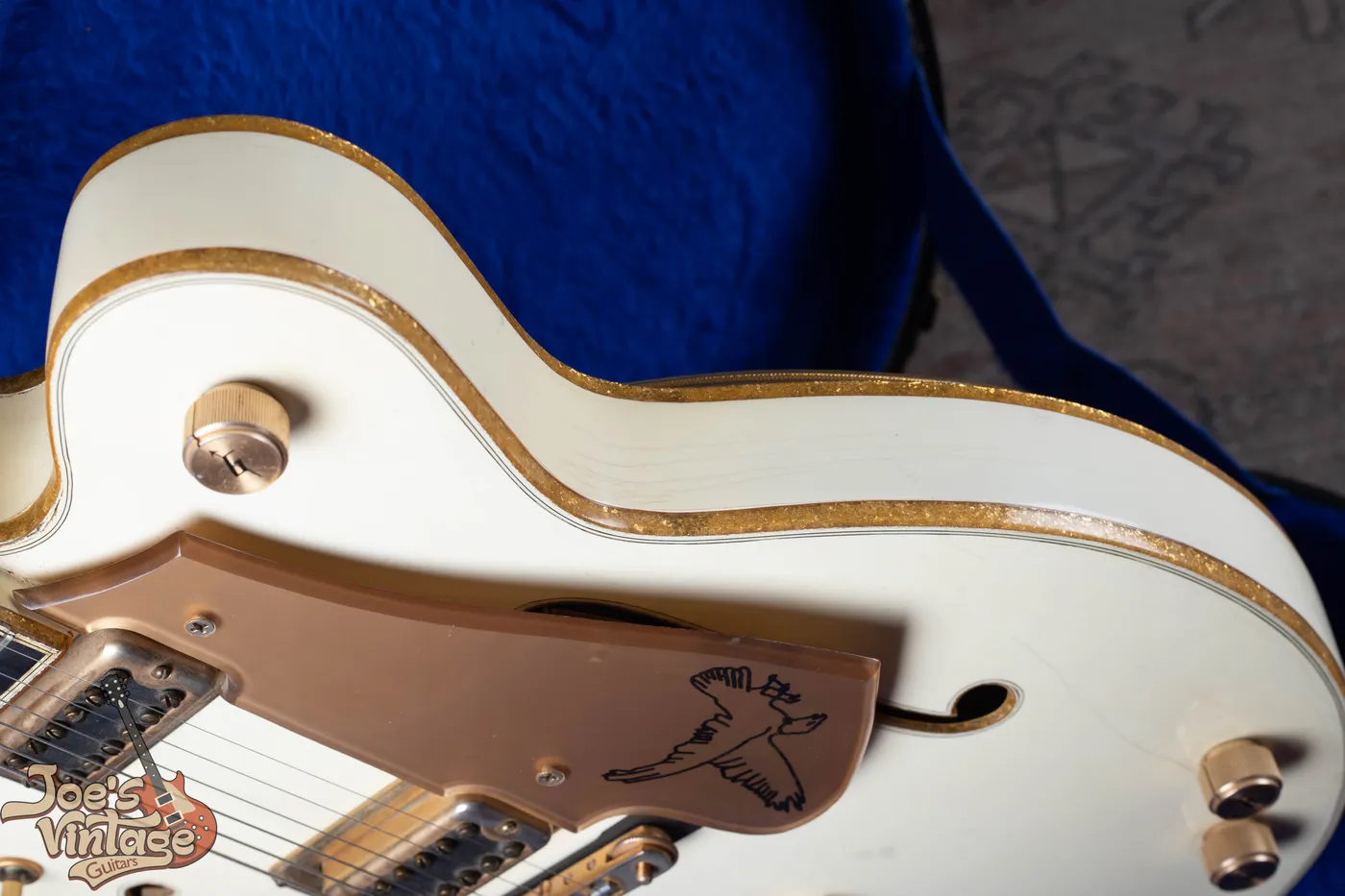
This is the mono White Falcon identified as 1976 in Joe’s archive. Its handwritten label reads 8.6014. The pictured bridge and G-cutout tailpiece should stay in the description together; this example isn't wearing a Bigsby. The photographs document this guitar's present equipment, rather than promising that every part was installed on the day it left the factory.
The back view records the pad and surrounding finish, while the headstock and pickup views show areas where replacements can be missed in an overall photograph. A valuation set should preserve that combination of context and detail. These are archive photographs, not a current offer or an asking-price comparison.
Originality Before A Number
Choose Comparisons That Fit Your Falcon
Match The Production Group
Keep early mono, early stereo and later mono examples in their own rows. A model name covers too much variation to support a useful estimate by itself. Use the actual guitar’s date evidence rather than a year written on its case.
Match The Repair History
Compare an unrepaired neck with other unrepaired examples. A documented repair may make a guitar dependable, but its market description should still acknowledge that work. “Professionally repaired” doesn't mean the repair disappears from the valuation.
Match What Comes With It
Photograph the case, loose parts and paperwork. A period case that's damaged or doesn't fit is different from the sound, correct case assumed by the chart. Describe accessories without assigning them an unsupported premium.
If you've inherited the guitar, write down what you actually know about its ownership before sorting through the case. Keep dates from receipts separate from remembered purchase dates. A purchase made several years after production doesn't change the guitar's build year. You can send uncertain details as questions; there's no need to solve every feature before asking for help.
Photos And Known History
Prepare Your Falcon For An Appraisal
Show The Full Instrument
Photograph the front, back, both sides and case. Keep the complete neck visible in at least one frame.Record The Model And Serial
Include the whole label or nameplate, plus front and rear headstock views. Type the number as it appears, including punctuation.Show The Expensive Unknowns
Add binding, heel, bridge, pickup and control close-ups. Mention a nonworking switch, high action or a known repair.
Send The Evidence
Get A Value For Your White Falcon
Send Joe the photographs and whatever ownership or repair history you've kept. If you're considering a sale, explain whether older parts and the case are included. That gives him a basis for discussing the instrument you own, instead of assuming it matches an excellent-condition chart row.
Questions AboutGretsch Values
Does Stereo Always Mean A Higher White Falcon Value?
Does Yellowed White Paint Increase The Value?
Should I Replace Damaged Binding Before Selling?
Are The Chart Figures Purchase Offers?
The Last Word
A Value For Your Guitar
A White Falcon's value starts with the right version, then changes with what survives. Keep the model, date evidence and repairs together. If the chart doesn't describe your guitar well, send the details for a free appraisal before choosing a number from another period. For model and date checks, see the Gretsch White Falcon authentication guide.
This Is An Estimate Of Market Value, Not An Offer To Buy And Not A Guarantee. Market Values Fluctuate; Have Your Specific Item Appraised.