

Anniversary Family · Singles, Doubles And Stereo
Gretsch Anniversary Authentication Guide
Sort the original Anniversary model numbers, inspect pickup changes and read a real label without confusing a later recreation with a vintage guitar.
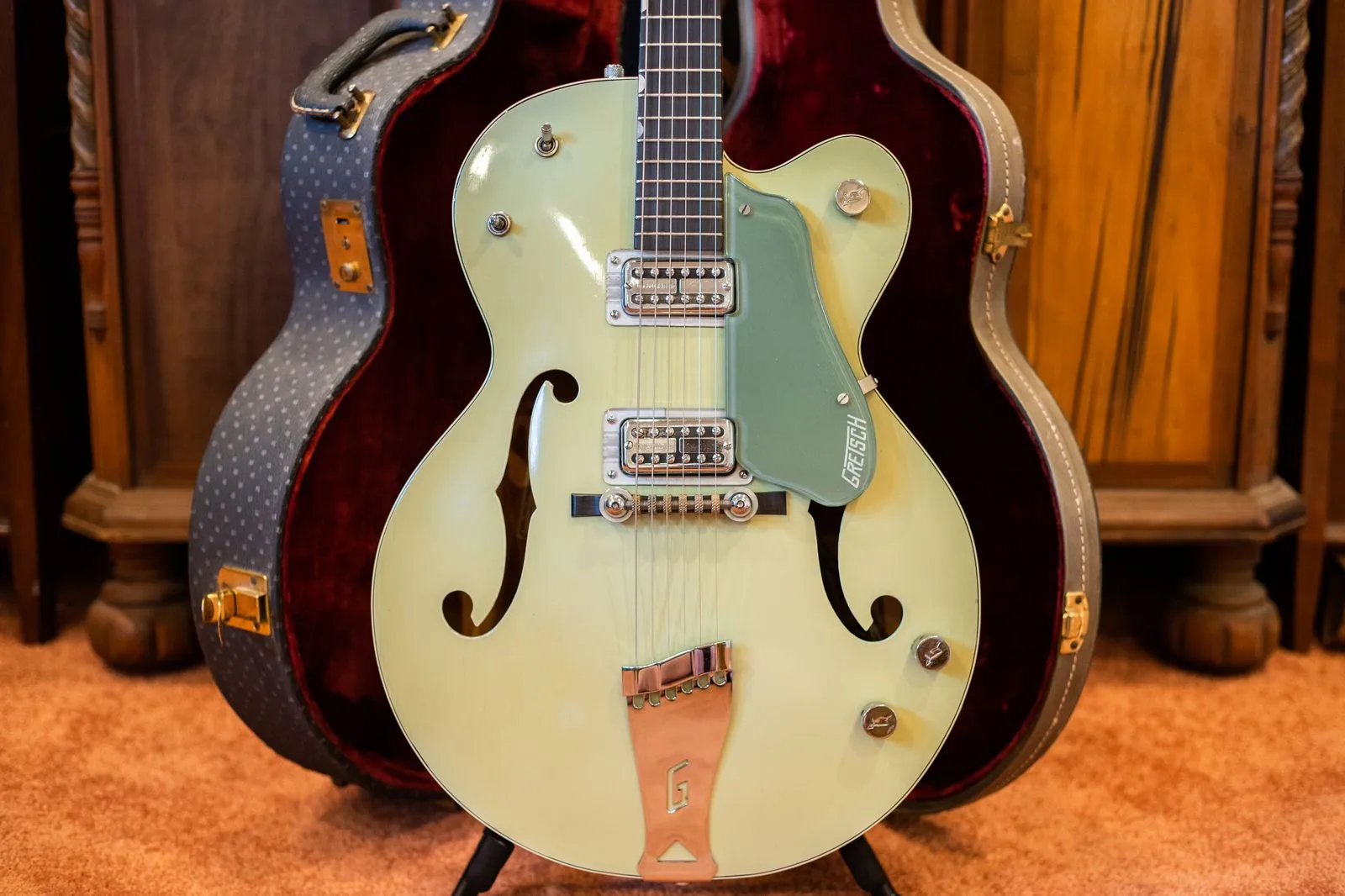
The original Gretsch Anniversary family includes single-pickup and double-pickup guitars, sunburst and two-tone finishes, and a separate stereo branch. “Double” describes the pickups, not a double cutaway. A green guitar with two pickups needs its model and production period checked before it can be called an original 6118. The 1958 anniversary design continued beyond its commemorative year and returned in later production. This guide follows the original American versions and uses later examples only to explain the boundary. After identification, the Anniversary value chart separates the relevant period and finish comparisons.
Authenticity And Originality Are Assessed From The Information Provided. A Hands-On Inspection Can Change The Conclusion.
Pickup Count And Finish
The Original Anniversary Model Map
| Model | Configuration | Finish Or Distinction |
|---|---|---|
| 6124 | Single Anniversary | Sunburst; a tenor version also appears in period model records |
| 6125 | Single Anniversary | Two-tone Smoke Green |
| 6117 | Double Anniversary mono | Sunburst |
| 6118 | Double Anniversary mono | Two-tone Smoke Green |
| 6111 | Double Anniversary stereo | Sunburst |
| 6112 | Double Anniversary stereo | Two-tone green |
| 7560 | Later Double Anniversary | Sunburst; compare its Baldwin-era equipment |
| Feature | Period Comparison |
|---|---|
| Body | 16 inches wide and 2½ inches deep in the 1968 catalog |
| 1960 Single Example | Laminated maple body and maple neck; measured 24½-inch scale |
| 1958 To 1959 Comparison | Filter’Tron pickups and ebony fingerboard |
| Around 1960 And Later | HiLo’Tron pickups and rosewood fingerboard; one pickup on a Single, two on a Double |
The 1960 instrument study records an unbound rosewood board with thumbnail markers. Read pickup type, board, label and construction together when checking a transition-period guitar.
The 1968 Gretsch catalog explicitly pairs 6124 with the sunburst Single and 6125 with the two-tone Single; 6117 and 6118 are the corresponding Doubles. That mapping helps when a model field is absent or obscured, but it doesn't prove an original finish. Repainting and pickup conversions can imitate another row.
Keep a four-string instrument separate from a six-string model with missing hardware. Count the tuner positions, inspect the neck and read any model notation. Likewise, a stereo identification requires the correct circuit evidence. A second output jack added by an owner isn't enough to establish the factory stereo version.
The later 7560 belongs in the original American story as well. Georgia Southern’s Gretsch collection documents a 1970s 7560. Its appointments should be compared with that later period rather than forcing the guitar into a 1958 specification because the Anniversary name remained familiar.
Introduction And Later Production
The Anniversary As An Accessible Hollowbody
The 1958 Anniversary Family
The Single and Double designations separated pickup configurations within a shared hollowbody family. Sunburst and two-tone green had different model numbers. Read those identifiers together: the color alone cannot tell you whether a guitar left the factory with one pickup or two.
The HiLo’Tron Catalog Years
The 1968 manufacturer catalog shows the family with HiLo’Tron pickups and a Space Control bridge. Joe’s 1960 archive example also has a visible HiLo’Tron and wheel-saddle bridge. Those observations prevent an early Filter’Tron specification from being applied across the entire Anniversary run.
Changes Through The American Run
The Anniversary Outlasted Its Birthday
The Commemorative Family
Gretsch’s manufacturer catalog history identifies the Anniversary’s 1958 introduction for the company’s 75th birthday. Early instruments used Filter’Tron pickups; the model-specific change to HiLo’Trons belongs in a later comparison.
The HiLo’Tron Period
The 1960 Single Anniversary shows a HiLo’Tron-style face with one row of adjustable poles. Compare that observation with its complete serial and body details. The date a pickup family was announced doesn't establish a universal changeover for every Gretsch model.
Stereo Joins The Family
The 6111 and 6112 designations identify the stereo Double Anniversary branch. Preserve those numbers when recording a converted or partly disconnected instrument; its present mono function doesn't erase its original model identity.
Continuing Models And Later Numbers
The 1968 catalog still shows the familiar Single and Double versions with HiLo’Tron pickups. Later Baldwin instruments include the 7560 designation. Check the actual label, controls and appointments rather than extending one early spec across the whole run.
The Anniversary's long production life makes a short description such as “a sixties Gretsch” too broad for close identification. First establish the model branch and an approximate period. Then assess features that may have changed during that period. You can leave an exact year unresolved while still accurately describing a two-tone Single with a particular pickup and tailpiece.
Read The Top Before The Guard
One Pickup, Two Pickups And A Possible Conversion
On the pictured Single, the neck pickup, upper-bout switch and volume control near the cutaway form a relatively simple layout. The Double adds a bridge pickup and additional controls. Photograph all of them together before concentrating on the pickup covers. A close crop can conceal a switch or filled opening that changes the interpretation.
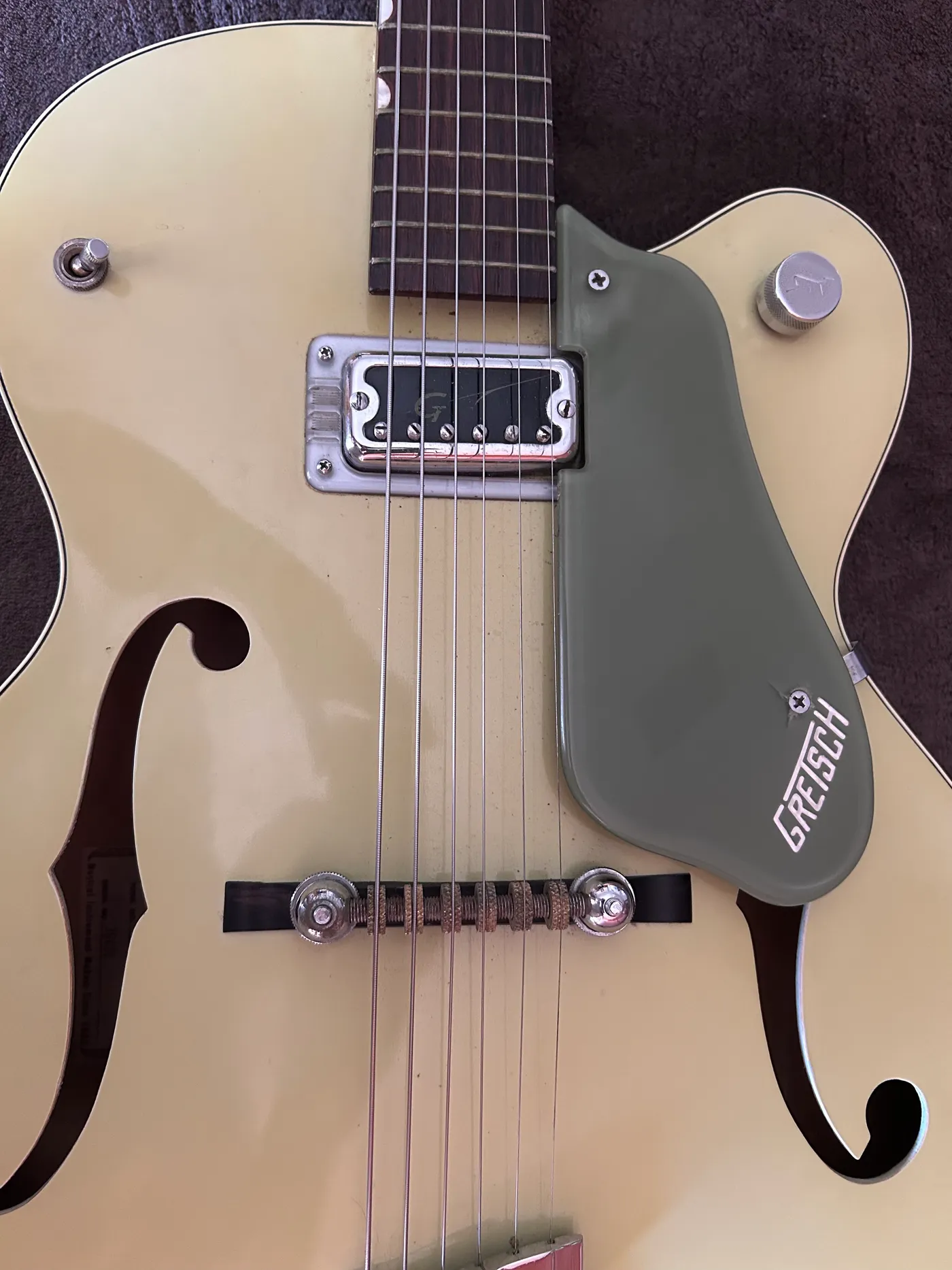
The visible HiLo’Tron face has one row of pole screws and a dark center. A Filter’Tron presents two rows of six screw poles. Reflections and strings can obscure the difference, so take a straight-on view with even light. The housing’s outer shine is less useful than the pole arrangement.
Inspect An Added Pickup
If the label identifies a Single but two pickups are fitted, examine the bridge pickup's surround, nearby finish and control layout. Ask about installation history. A professional-looking job may still include new routing, and a replacement pickguard can cover evidence of earlier work.
Don't remove a pickup simply because a photograph leaves the opening unclear. Existing repair photos may answer the question. If internal inspection is needed, have a repairer document the route and wiring while protecting the surrounding finish.
Investigate A Stereo Claim
Record the model line, jack arrangement and what each control does with the appropriate connection. Don't infer factory stereo equipment from one extra socket. A changed harness or an incomplete circuit requires a description of its current state as well as its claimed history.
The stereo Anniversary should be compared with its own documentation, not with a Falcon's more elaborate Project-O-Sonic arrangement. Sharing the word stereo doesn't mean every Gretsch divided or controlled the signal in the same way.
Joe’s pickup identification page and control-layout reference show the surrounding checks. The Duo Jet identification guide also preserves model-specific Filter’Tron timing and plain arrow-knob distinctions. Don't transfer a Jet’s year boundary wholesale to an Anniversary.
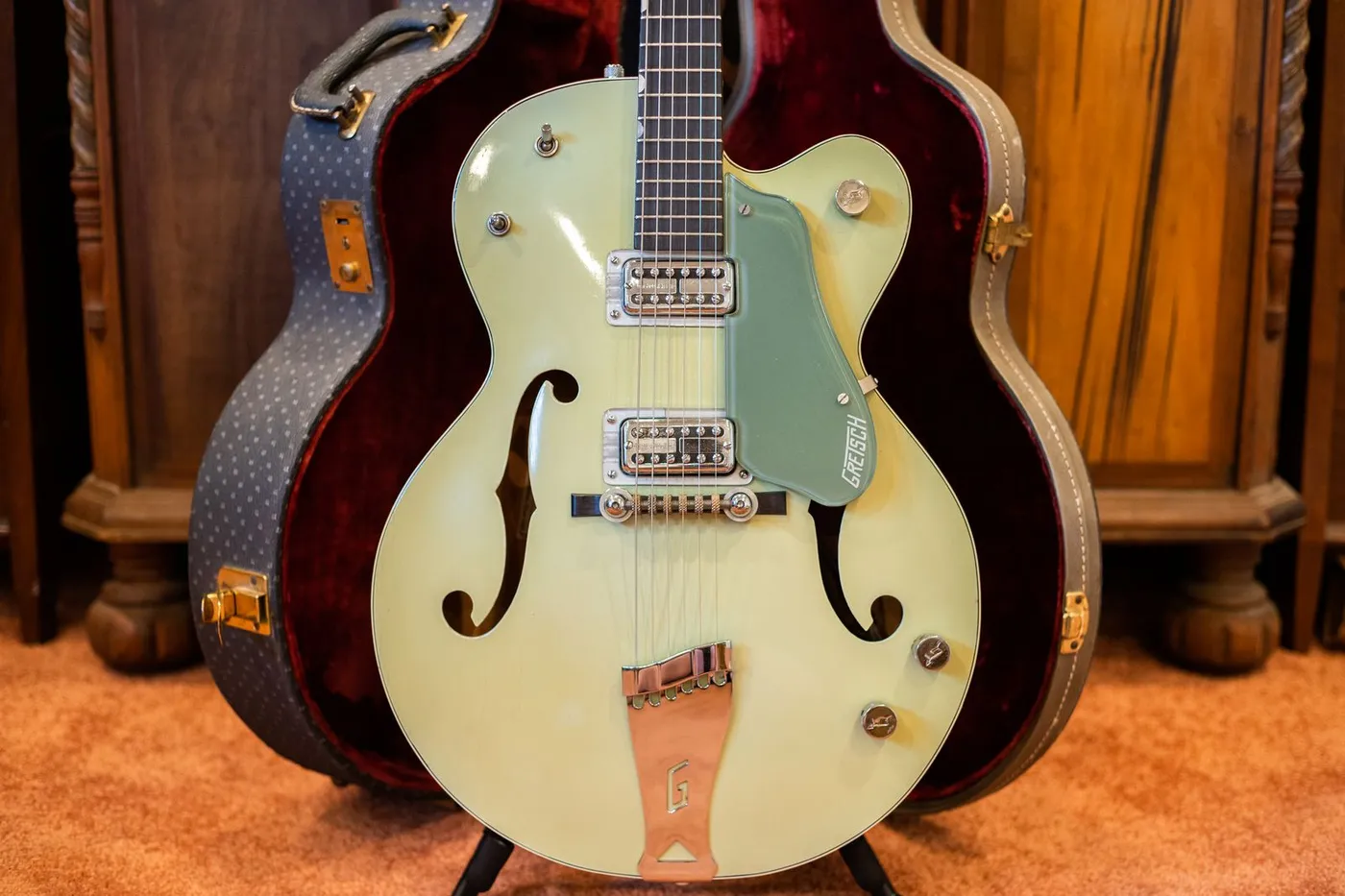
Two Filter’Trons identify the pickup layout of this 1959 Double. The 1960 Single beside it shows the later HiLo’Tron design.
Separate Factory Configurations
Single, Double And Stereo Anniversaries
6124 And 6125 Singles
The 6124 identifies sunburst and the 6125 two-tone green in the original Single family. Confirm the pickup opening and controls when a second pickup has been added.
6117 And 6118 Doubles
The corresponding Double numbers are 6117 for sunburst and 6118 for two-tone green. Two installed pickups need compatible routing and wiring evidence before they establish a factory Double.
6111, 6112 And Later Numbers
The stereo Anniversary versions require their own circuit comparison. Later numbering also includes the 7560 Double. A modern model that reuses a familiar number needs its own production-date check.
Photo Timeline
A 1959 Double And A 1960 Single In The Archive
1959 Gretsch 6118 Double Anniversary
Filter’Tron Pickups On An Early Double
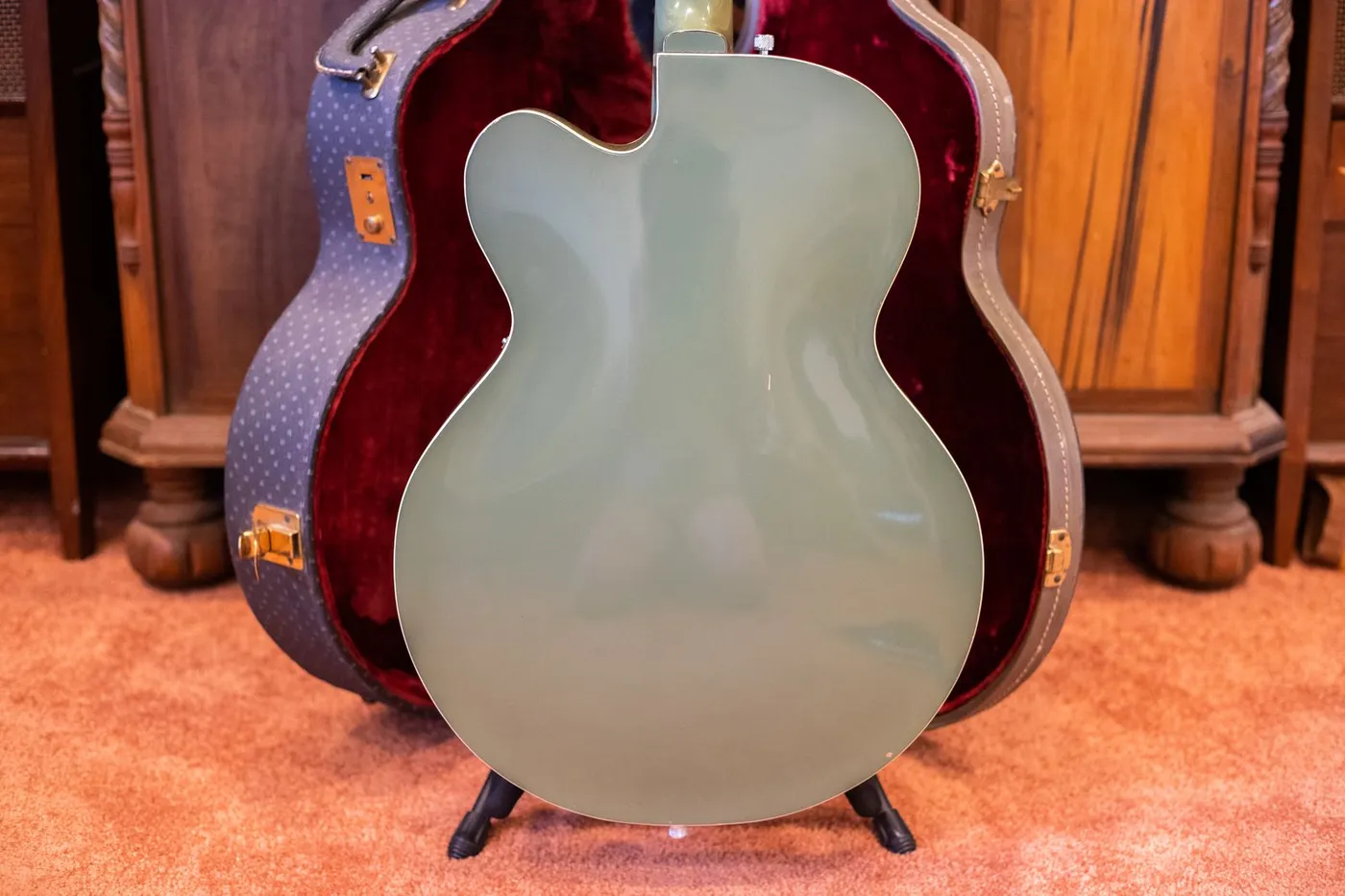
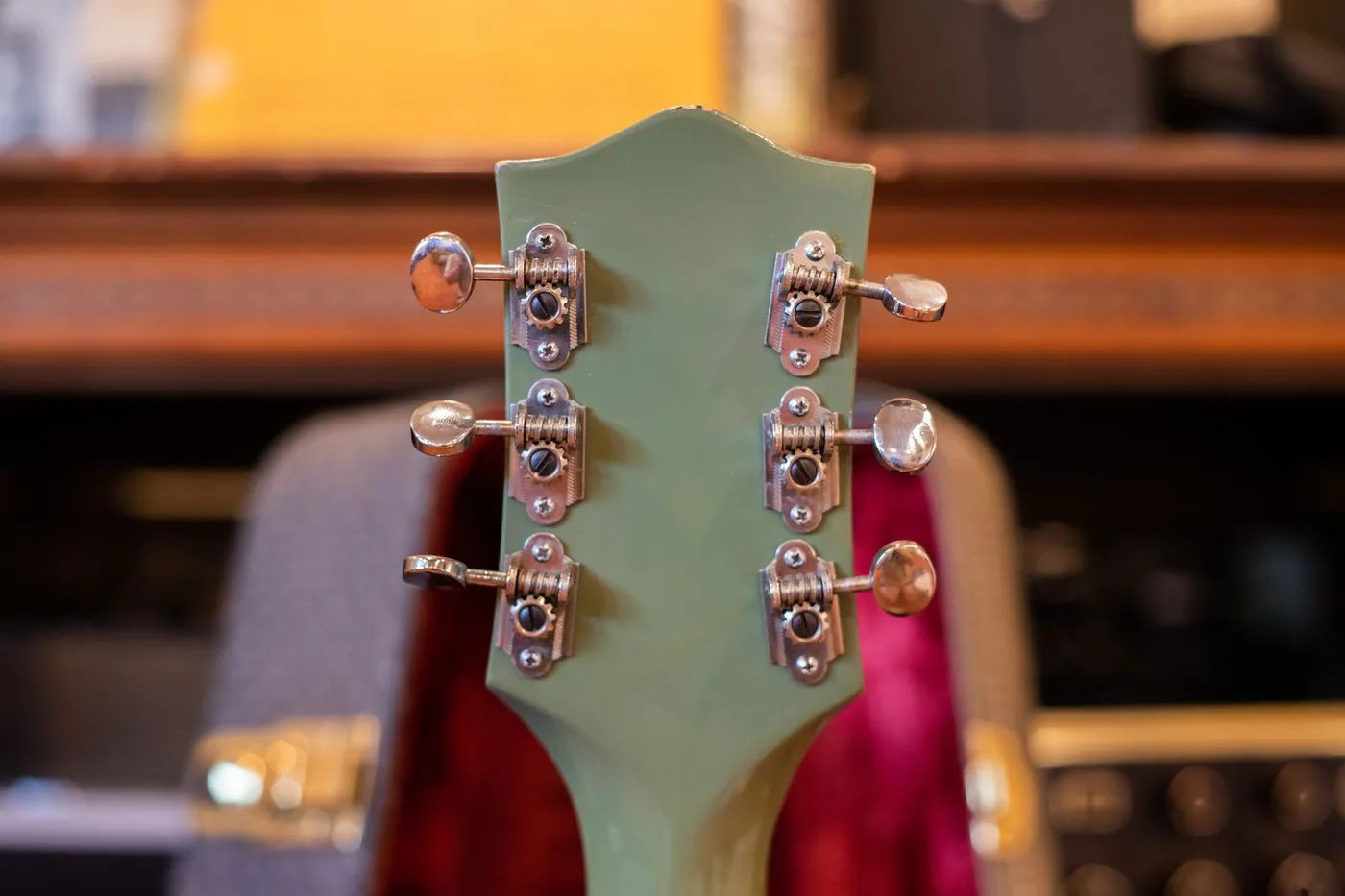
Joe’s 1959 6118 Double Anniversary has two Filter’Tron pickups with two rows of pole screws on each pickup face. The front view also shows the Space Control bridge, fixed G-cutout tailpiece and two-tone Smoke Green finish. The headstock photograph records the Anniversary badge; the rear view shows the open-gear tuners.
These photographs come from Joe’s ended Reverb listing for this guitar. Compare its pickup faces with the single HiLo’Tron on the 1960 6125 below. Both instruments have an Anniversary badge and a green finish, but the pickup designs and factory configurations differ. No serial reading is assigned to the 1959 guitar because this photo set does not include a readable label.
1960 Gretsch 6125 Single Anniversary
Front, Back And Headstock Of One Guitar
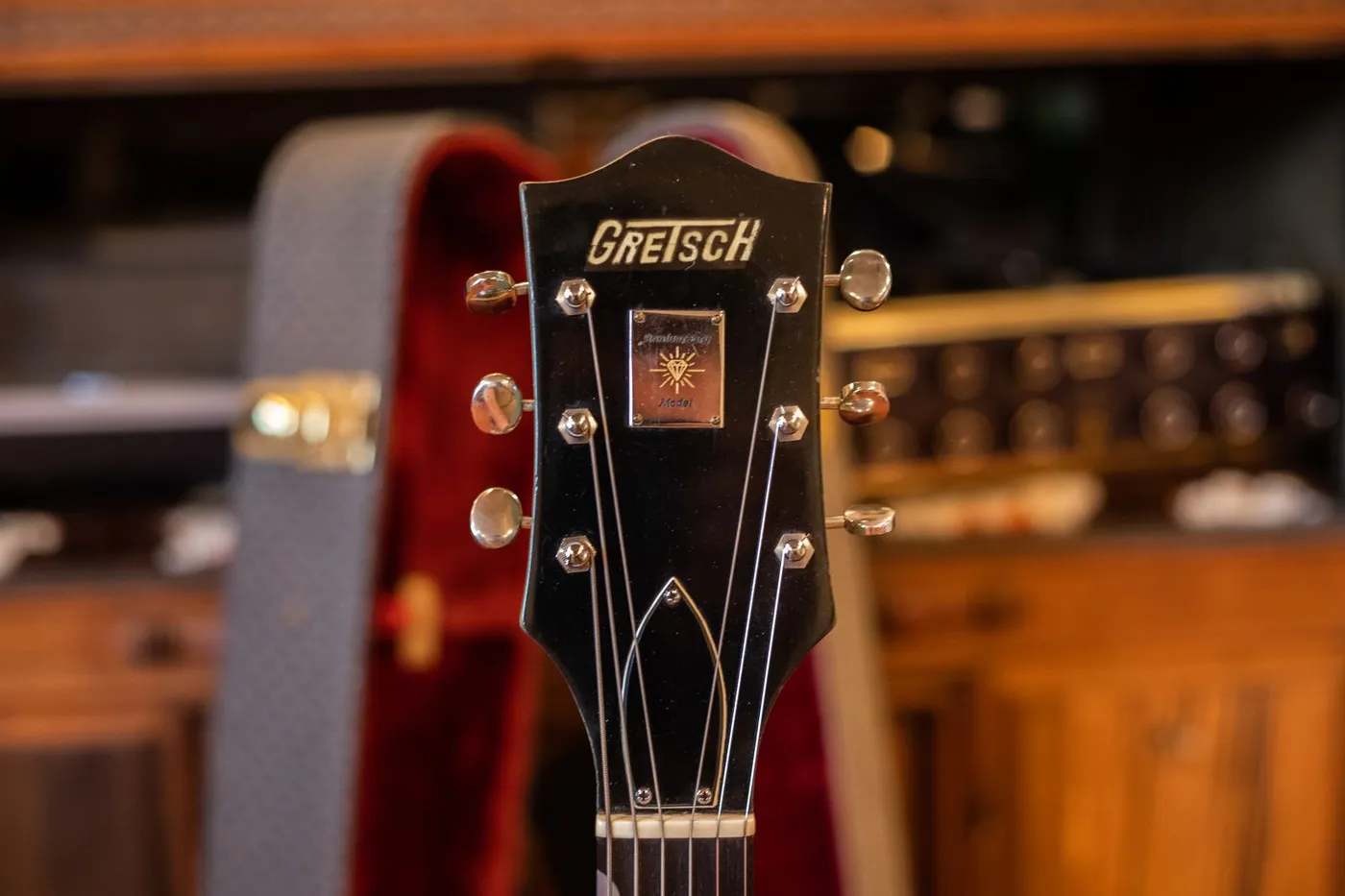
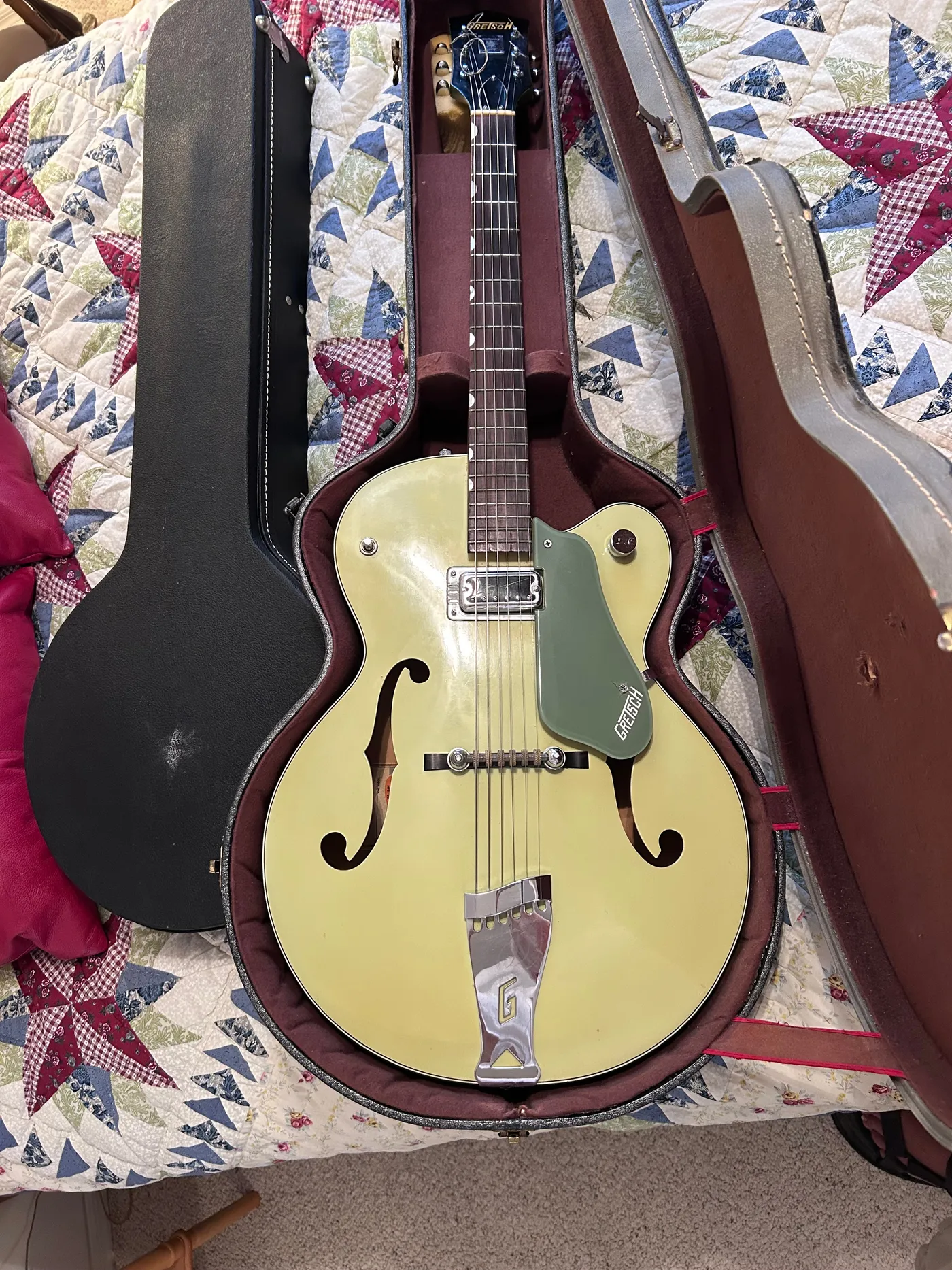
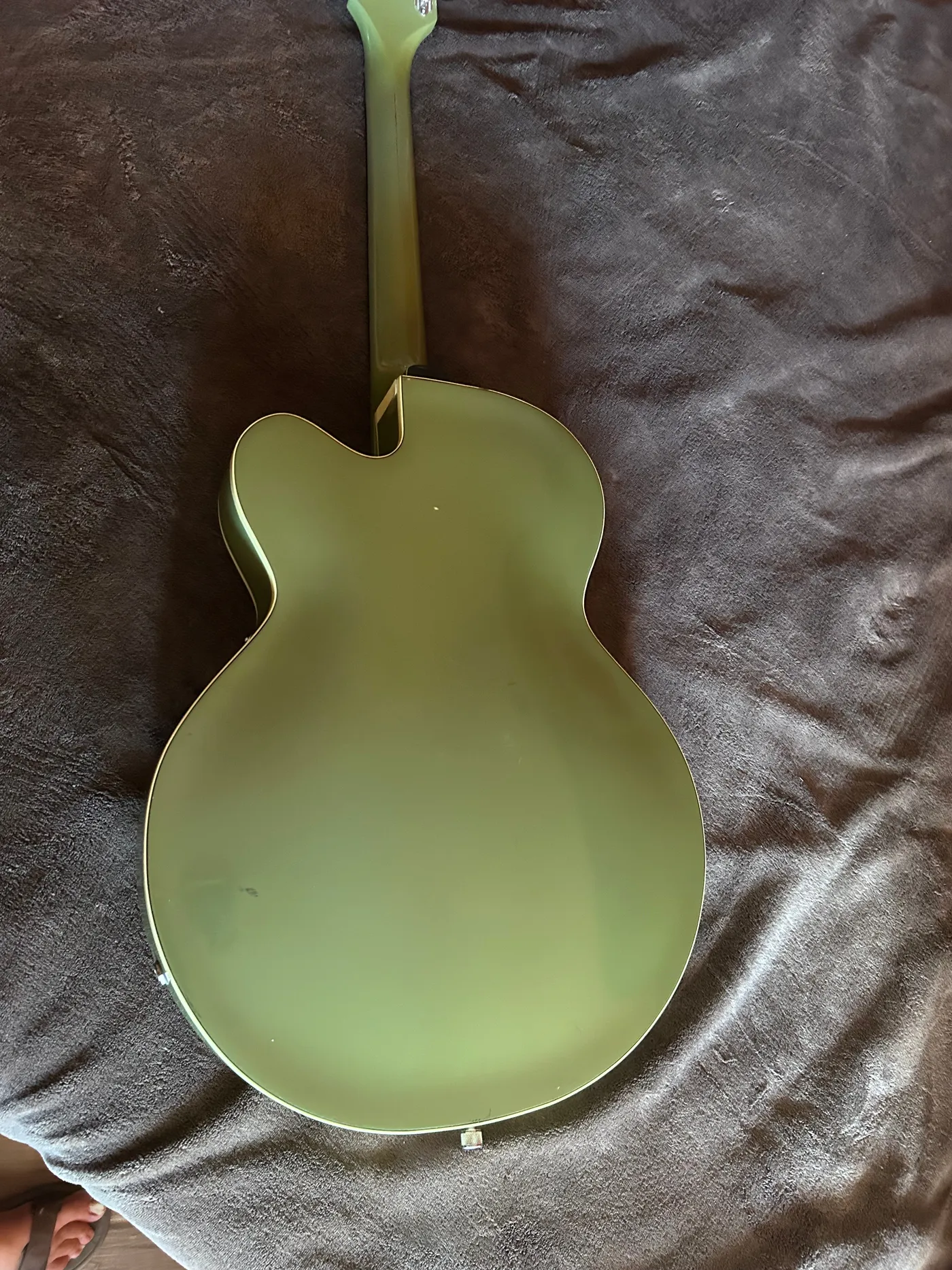
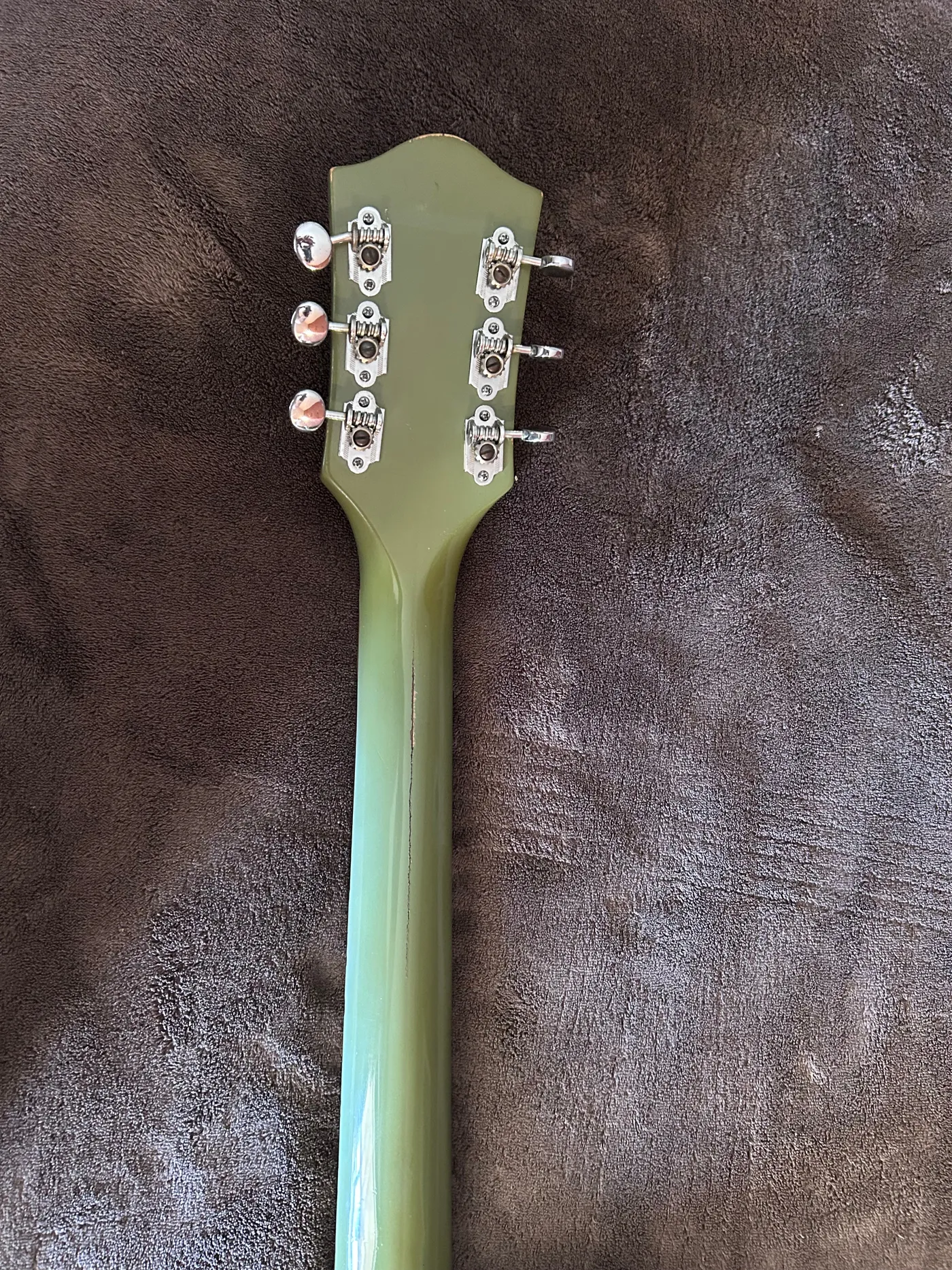
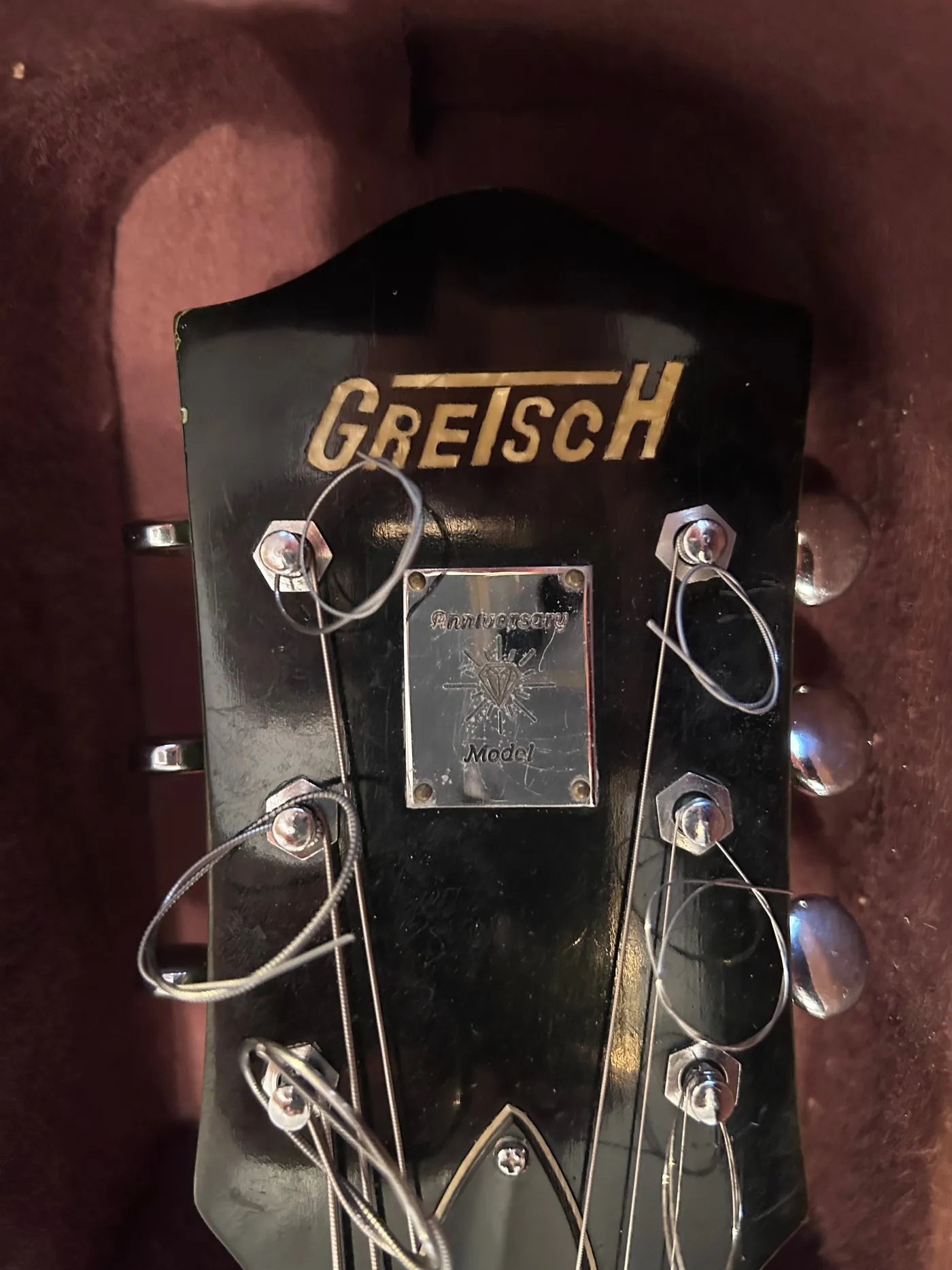
The photographs show the same 1960 Gretsch 6125 Single Anniversary. Its light top contrasts with the darker green back, while the headstock carries the Anniversary badge. The face photograph shows the pickup and bridge without requiring disassembly. The photographs show this Single Anniversary’s one-pickup body and controls.
Take the same views of your instrument before drawing a conclusion about color. Phone white balance can turn pale green into cream, and glare can hide a sunburst transition. The guard's color should also be described separately from the painted body. A different guard shade doesn't by itself establish a refinish.
The Digits Actually Visible
Read The 1960 Single’s Label
A Blank Model Field Beside A Readable Number
The interior label in this 1960 Gretsch 6125 Single Anniversary reads 36439. The model line is blank. Its one-pickup, two-tone green configuration identifies the Single Anniversary version. Read the complete serial alongside the body, pickup and hardware details.
The photograph shows a rectangular Brooklyn label with an oval Gretsch emblem. The orange and gray paper, oval emblem and readable serial can be recorded without filling in the empty model field.
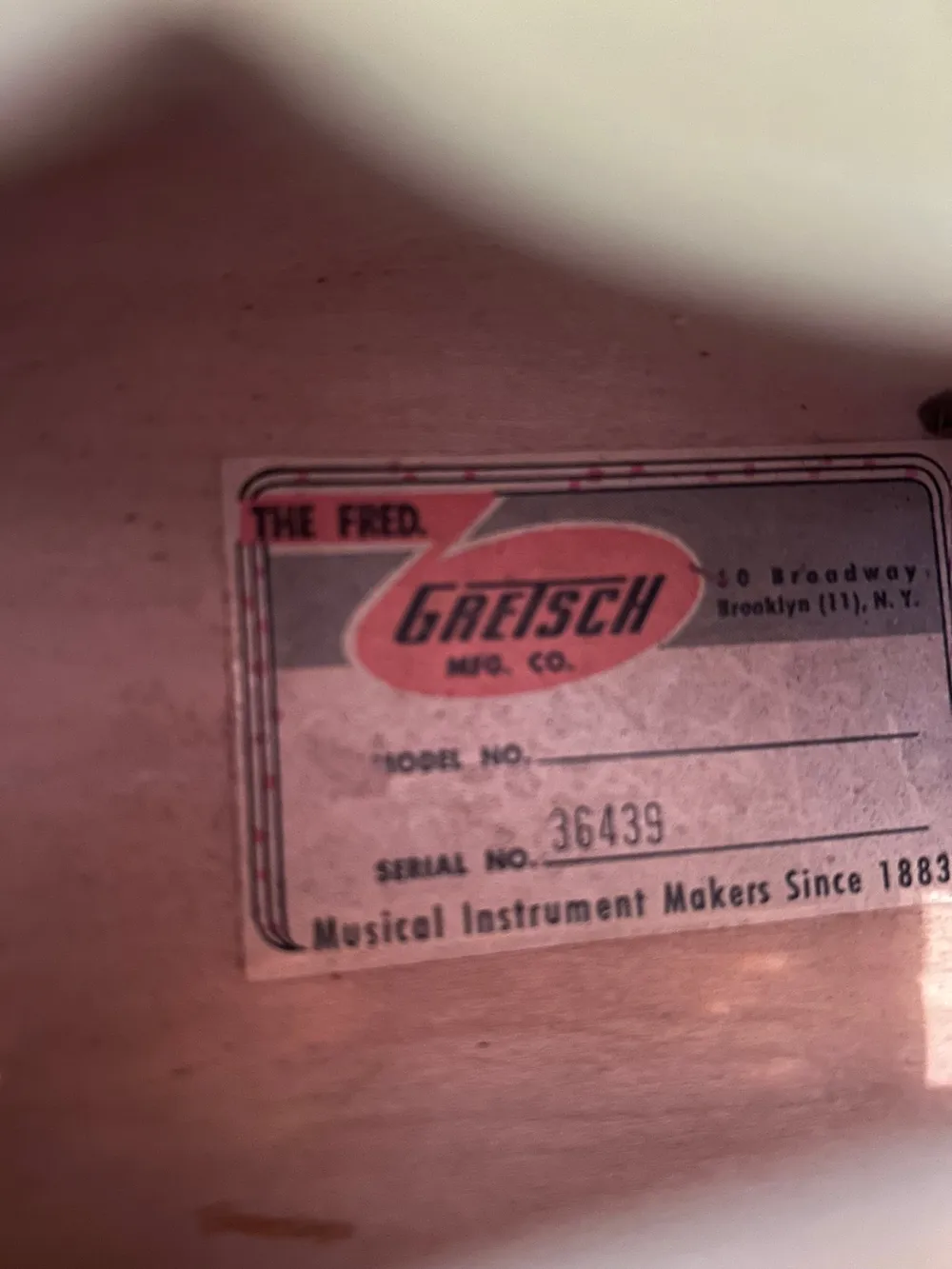
Gretsch’s published sequential chart places serial 36439 in 1960. A chart match still doesn't prove that a label has never moved or that every installed part is factory original. Compare the complete guitar when assessing originality. A model field left blank shouldn't be filled from what an owner hopes the guitar is.
Use the Gretsch label examples and serial lookup together. Later orange labels can carry a different sequence, and Baldwin month/year codes require their own interpretation. A number’s length is not enough to choose between systems.
The reused 1957-label batch discussed in Joe’s Gretsch guides is another warning against a serial-only verdict. If a number points to a period before the Anniversary's introduction, examine the format, label and body rather than declaring a previously unknown early Anniversary. Keep an unresolved mismatch visible until further evidence explains it.
Parts That Can Outlast A Setup
Bridge, Tailpiece And Construction Checks
The archive Single carries a Space Control bridge with wheel-shaped saddles along a threaded bar and a fixed G-cutout tailpiece. These are separate parts: the bridge supports the strings, while the tailpiece anchors them. Record both. A new bridge can sit on the old wooden base without leaving the holes associated with a vibrato installation.
Compare the hinge and lower body edge if a Bigsby has been fitted. Unused holes, outlines in the finish or hardware supplied in the case can help explain a change. An absence of visible extra holes doesn't certify originality. Joe’s bridge and tailpiece guide explains these different mounting situations.
Inspect the neck heel and binding around the rim. A refret replaces the metal frets; it doesn't normally move the thumbnail inlays. A replaced fingerboard is a different category of work. On a Double, compare its fingerboard binding and trim with the relevant period rather than assuming every Anniversary shares the Single's exact appointments.
Record The Whole Finish Scheme
Include the top, rear, sides and neck. Identify known overspray or refinishing, and leave uncertain color names open until the complete view and model record agree.
Show Every Control Position
Keep the pickup surrounds, guard and switches visible together. Note holes or plugs that the current layout doesn't use.
Preserve The Neck Evidence
Photograph the heel, rear headstock, tuners and fingerboard. Explain any documented neck repair or replacement rather than relying on a matching surface color.
Separate Observation From Conclusion
A stamp can be read, a hole can be photographed and a control can be tested. A claim of untouched factory condition needs those observations plus a supported model comparison.
Where Original-Era Identification Stops
Later Anniversary Guitars Repeat The Look
Gretsch continued to use Anniversary names, badges, two-tone finishes and earlier-style pickups on later Japanese production. The 2006 manufacturer catalog describes contemporary Anniversary models while explaining the design's 1958 origin. That is direct evidence that the historical name and styling can appear on a much later instrument.
Read the country marking and full serial before applying a vintage chart. Some Japanese revival instruments predate the current factory-letter format. The absence of a JT prefix therefore doesn't establish a 1960s guitar. Joe’s later-production comparisons include a 1997 Double Anniversary whose model and period must remain separate from the original-era family.
A later guitar should be described by its own build date, even when a model name includes an older year. This page doesn't price those exclusions. Once the original American model and its condition are established, use the Single and Double Anniversary values for the matching version.
Model, Date And Changes
Have The Anniversary Evidence Reviewed
Send The Evidence
Send Joe Your Anniversary Photos
Include the serial and model fields, the entire front and rear, and the pickup or finish detail that prompted your question. Let Joe know which information came from the guitar and which came from a previous owner. Further inspection can refine a preliminary photo identification.
Period Catalogs And Photographed Evidence
Anniversary Identification References
- Gretsch 1968 Catalog
Printed page 26: model-to-finish mapping, Single and Double equipment, HiLo’Trons and Space Control bridges.
- Gretsch 2006 Catalog
The 1958 commemorative origin and manufacturer-documented later Anniversary models.
- Georgia Southern’s Gretsch Collection
The collection’s later American 7560 Anniversary example.
- Gretsch Product Dating
Sequential chart placement and changes in label and date-code systems.
- Joe’s Pickup Reference
Visible HiLo’Tron and Filter’Tron differences and limits of cover identification.
- Joe’s Gretsch Body Guide
Anniversary branches, inlays and binding inspection context.
- Gretsch Early Serial History
The need to retain serial-location context and reused-label exceptions.
- Firsthand Examination Of A 1960 Single Anniversary
Measured body and scale, rosewood board, HiLo’Tron equipment, and the earlier ebony/Filter’Tron comparison.
Questions AboutGretsch Identification
Does Double Anniversary Mean A Double Cutaway?
Which Numbers Identify The Original Two-Tone Models?
Can A Blank Model Line Still Allow Identification?
Does A Green Finish And Anniversary Badge Prove A 1958 Build?
The Last Word
Keep The Evidence Together
An Anniversary description should tell the reader which model branch the evidence supports and which features may have changed. Keep the full label, pickup layout and both finish colors together. That makes the next inspection or appraisal more useful without guessing at a missing field. For the matching price ranges, see the Gretsch Anniversary value guide.
Authenticity And Originality Are Assessed From The Information Provided. A Hands-On Inspection Can Change The Conclusion.