

Single And Double Anniversary · Original U.S. Models
Gretsch Anniversary Value Guide
Compare single-pickup, double-pickup and stereo Anniversary guitars without pricing an altered Single as a factory Double.
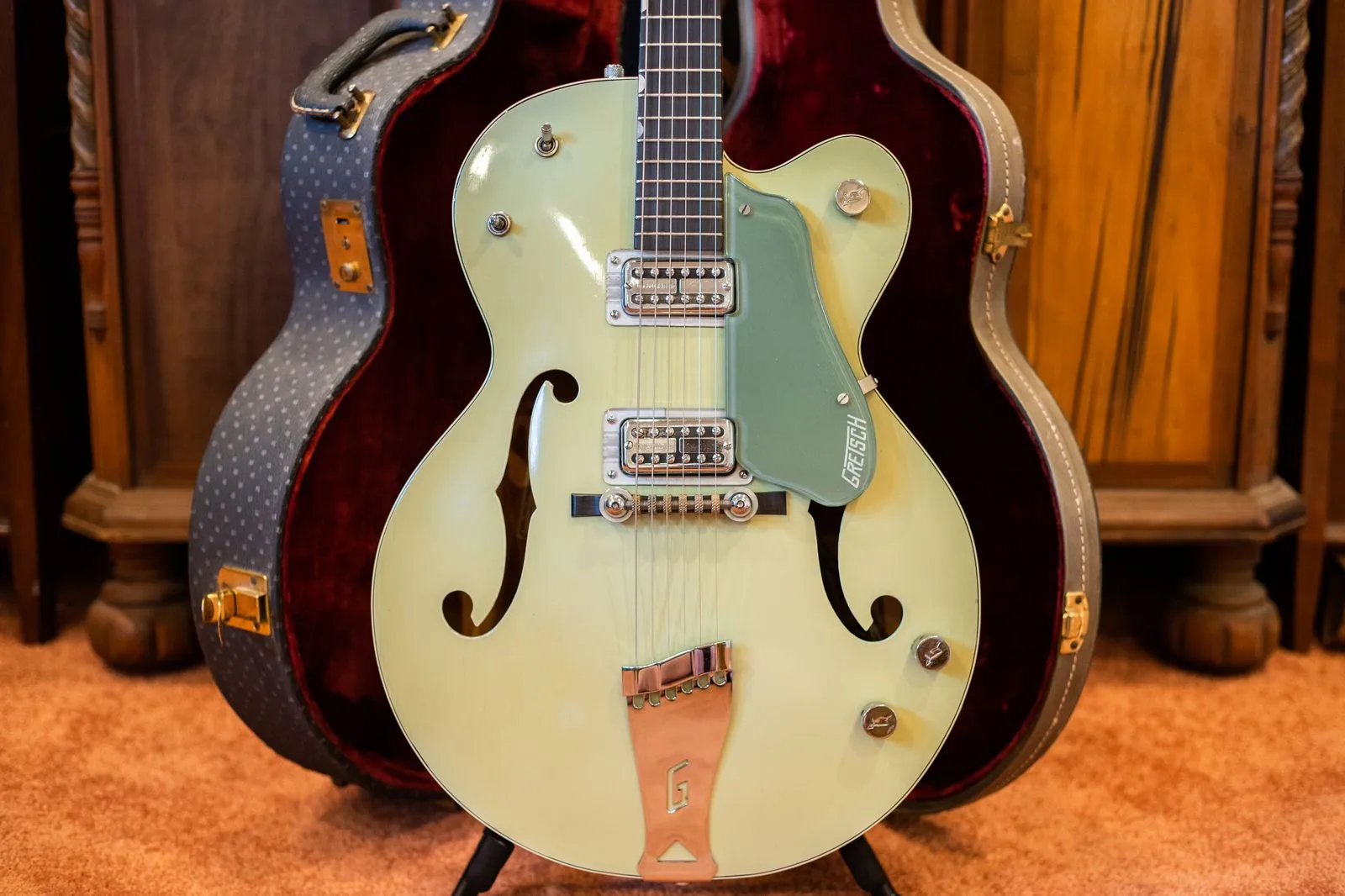
An original Gretsch Anniversary can be worth roughly $1,200 to $6,000 in the groups covered here, in excellent, original condition with a case. Early Double Anniversary guitars occupy the higher rows, while later Single and Double examples have lower ranges. The finish, production period and factory pickup configuration determine which comparison applies. A second pickup added to a Single doesn't automatically give it the value of an original Double. If the model line, wiring or year is unclear, use the Anniversary authentication guide first. The price chart separates the versions so a familiar green finish doesn't become the only basis for an estimate.
This Is An Estimate Of Market Value, Not An Offer To Buy And Not A Guarantee. Market Values Fluctuate; Have Your Specific Item Appraised.
The Configuration Comes First
Single And Double Anniversary Values
| Model | Years | Configuration | Estimated Value |
|---|---|---|---|
| 6124/6125 Single Anniversary | 1958 to 1959 | Two-tone green | $2,600 to $4,300 |
| 6124/6125 Single Anniversary | 1958 to 1959 | Sunburst | $2,650 to $4,450 |
| 6124/6125 Single Anniversary | 1960 to 1961 | Two-tone green or tan | $2,600 to $3,000 |
| 6124/6125 Single Anniversary | 1960 to 1961 | Sunburst | $2,650 to $3,100 |
| 6124/6125 Single Anniversary | 1962 to 1964 | Two-tone green or tan | $2,200 to $3,050 |
| 6124/6125 Single Anniversary | 1962 to 1964 | Sunburst | $2,200 to $3,100 |
| 6124/6125 Single Anniversary | 1965 to 1966 | Various colors | $1,500 to $1,950 |
| 6124/6125 Single Anniversary | 1967 to 1969 | Various colors | $1,300 to $1,700 |
| 6124/6125 Single Anniversary | 1970 to 1972 | Various colors | $1,200 to $1,550 |
| 6124 Anniversary Tenor | 1958 to 1971 | Four-string tenor | $1,350 to $1,800 |
| 6117/6118 Double Anniversary Mono | 1958 to 1959 | Two-tone green | $4,250 to $5,950 |
| 6117/6118 Double Anniversary Mono | 1958 to 1959 | Sunburst | $4,300 to $6,000 |
| 6117/6118 Double Anniversary Mono | 1960 to 1961 | Two-tone green | $3,500 to $4,400 |
| 6117/6118 Double Anniversary Mono | 1960 to 1961 | Sunburst | $3,500 to $4,400 |
| 6117/6118 Double Anniversary Mono | 1962 to 1964 | Two-tone green or tan | $2,650 to $3,500 |
| 6117/6118 Double Anniversary Mono | 1962 to 1964 | Sunburst | $2,150 to $2,800 |
| 6117/6118 Double Anniversary Mono | 1965 to 1966 | Various colors | $1,550 to $2,000 |
| 6117/6118 Double Anniversary Mono | 1967 to 1969 | Various colors | $1,300 to $1,700 |
| 6117/6118 Double Anniversary Mono | 1970 to 1976 | Various colors | $1,200 to $1,550 |
| 6111/6112 Double Anniversary Stereo | 1961 to 1963 | Green | $2,600 to $3,500 |
| 6111/6112 Double Anniversary Stereo | 1961 to 1963 | Sunburst | $2,200 to $3,100 |
U.S. dollars. These are estimated values, not purchase offers. Repairs, replaced parts, finish work and market changes require an individual assessment.
The dollar figures are estimates, not offers to buy. A 1958 to 1959 sunburst Double is shown at $4,300 to $6,000; a sunburst Single of that period is $2,650 to $4,450. That difference should not be treated as the profit available from adding a pickup. A modification changes the originality assessment and may leave permanent alterations.
The tenor and stereo rows are separate comparisons. A four-string tenor isn't simply a six-string missing two tuners, and a stereo guitar with altered wiring isn't an untouched mono Double. If your guitar doesn't fit a listed configuration, send its details rather than borrowing a figure from the nearest name.
Color In Context
Green, Sunburst And The Correct Row
Read Both Colors On A Two-Tone Guitar
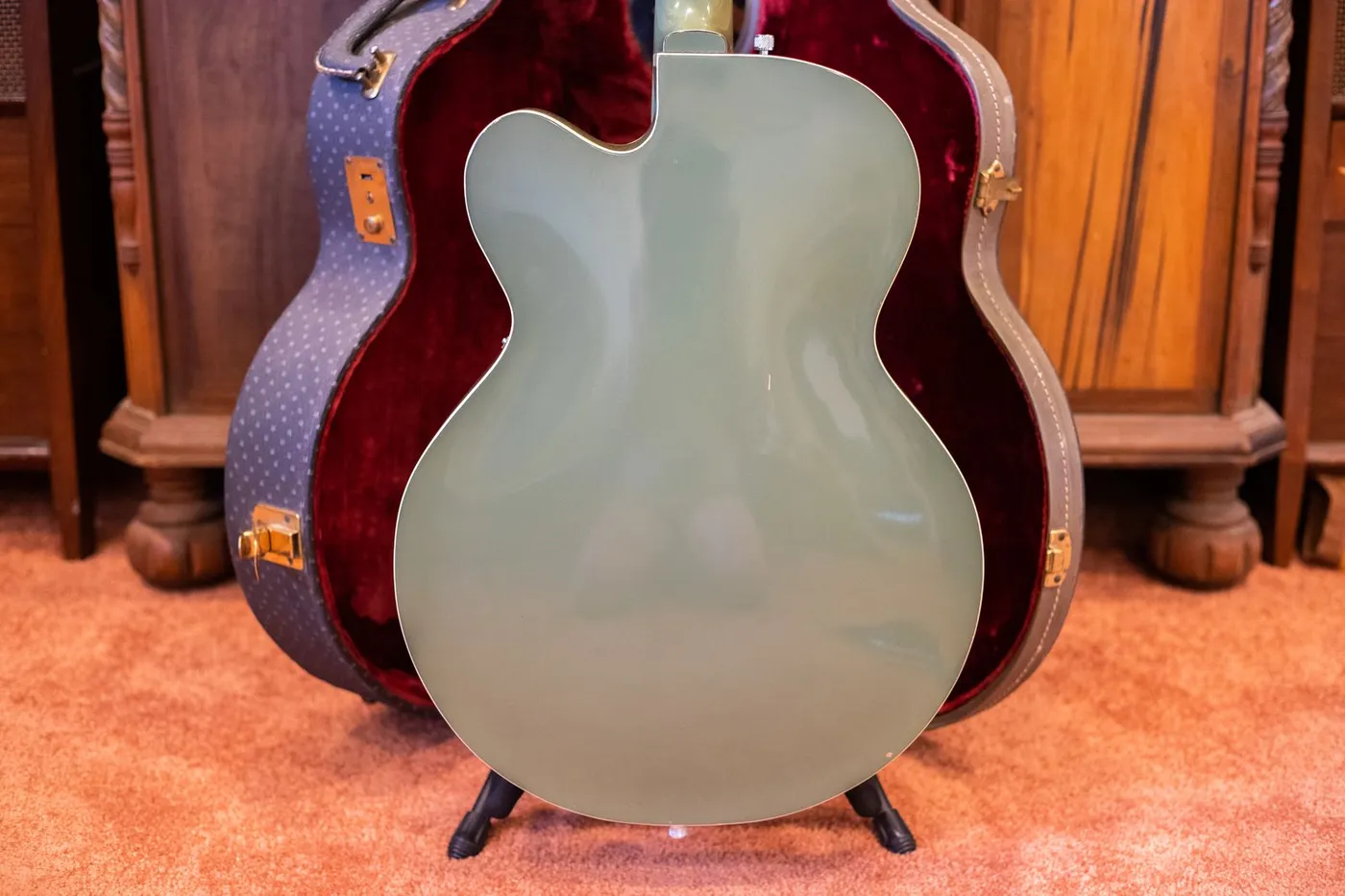
The front and rear can be quite different colors. On the Single photographed here, the light top and darker green back belong in the same appraisal set. A warm photograph can make the top appear cream or tan, so don't select a rare-color description from one image.
Use the model identification and actual finish evidence together. Photograph the sides and neck as well as the top, and mention any known repainting. A close color match after restoration doesn't restore an original finish history.
Keep Sunburst Condition Visible
Sunburst edges can hide binding work or local touch-up. Shoot the full face squarely, then show the rim and heel from the side. Reflections should help reveal the surface rather than wash it out.
The chart separates colors where a verified price row does. It doesn't supply a universal green-over-sunburst premium. Follow the specific period and configuration, then consider condition. Applying one color adjustment to every Anniversary would produce unsupported figures.
For an inherited instrument, retain older snapshots even if they aren't sharp enough for a serial reading. A picture taken before a pickup addition or finish repair may explain a current mismatch. A note saying who owned it and when can be useful history, but it should stay separate from a claim about its manufacture date.
Originality And Playing Use
When A Second Pickup Changes The Question
An Anniversary may have been modified because its owner wanted a bridge pickup, a vibrato or different controls. Those changes can make sense for the player who commissioned them. For valuation, document what was changed and how. Extra routing and drilled holes remain part of the guitar's history even if period-style parts were used.
Start with the label, then compare the body and control pattern. A replacement guard can cover an opening, and an added switch can look tidy from the front. If you know the work was done, state it plainly. Don't rely on an appraiser to infer a conversion from a distant image.
Factory Configuration Retained
The correct pickup count, supported finish and sound structure give the chart a closer basis. Wear still needs to be described, and each installed component should be assessed rather than assumed original from the model number.
Reversible Parts Replaced
A changed bridge or tuner set may be easier to address than an enlarged pickup cavity. Include the older parts if they survive, along with any receipt identifying the work. Don't assign them a fixed dollar credit without inspection.
Body Or Finish Altered
Added pickup routes, a refinish or structural repairs need a separate estimate. A carefully done modification can remain useful to a musician while putting the instrument outside an original-condition comparison.
Ask about the current playing condition as well as the history. A single pickup that cuts out, a high bridge setting or a heel gap can change the work needed before the guitar is ready for regular use. Joe’s condition and appraisal guidance helps put those observations into a fuller description.
A changed Anniversary needs a repair-by-repair description. Read about condition and originality, refinishing, replacement pickups, and restoration before selling. Describe work already done and ask about proposed repairs before spending money to prepare the guitar for sale.
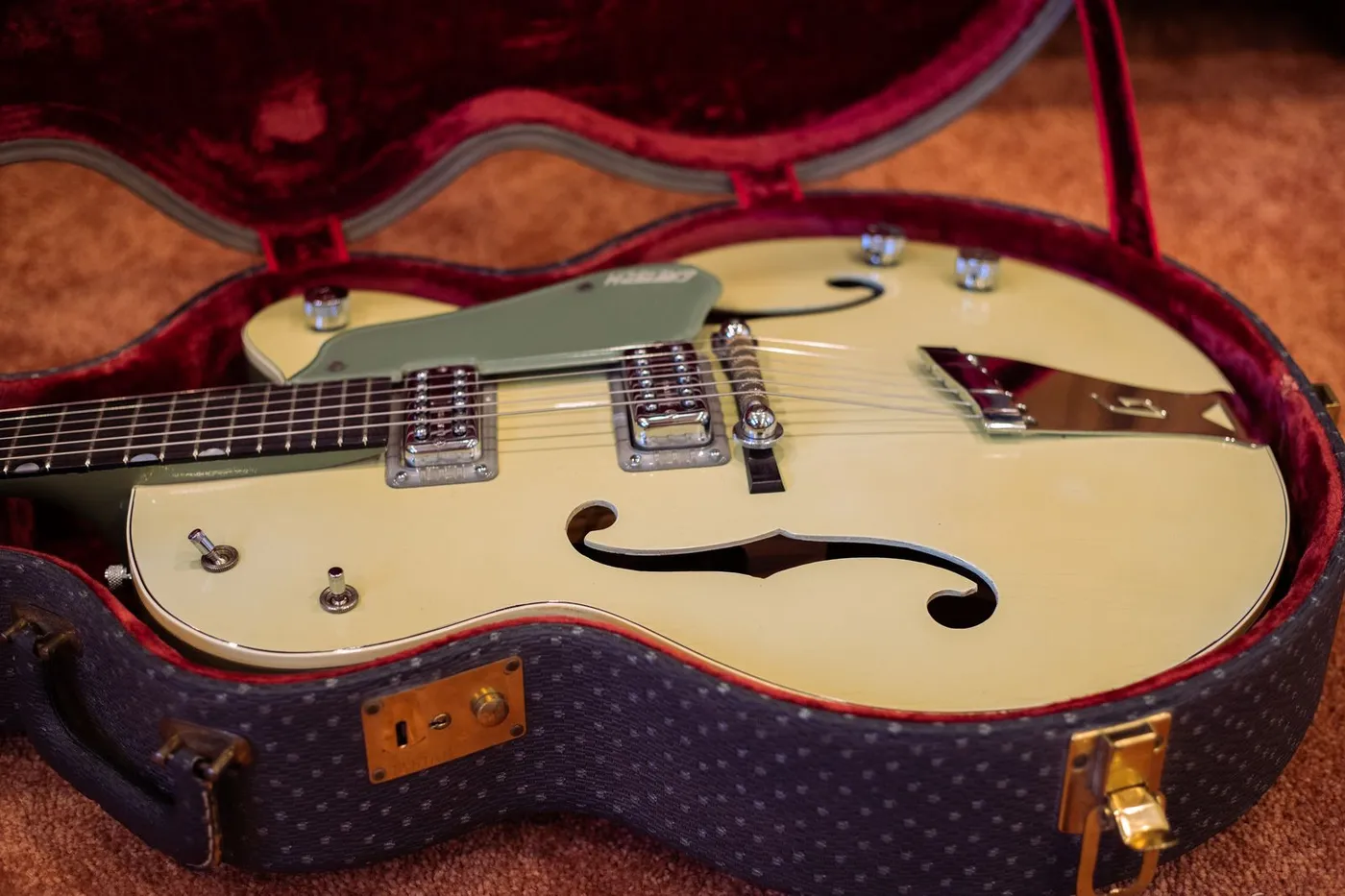
The 1959 Double has two Filter’Trons. The 1960 Single has one HiLo’Tron. Compare each with its own period and configuration.
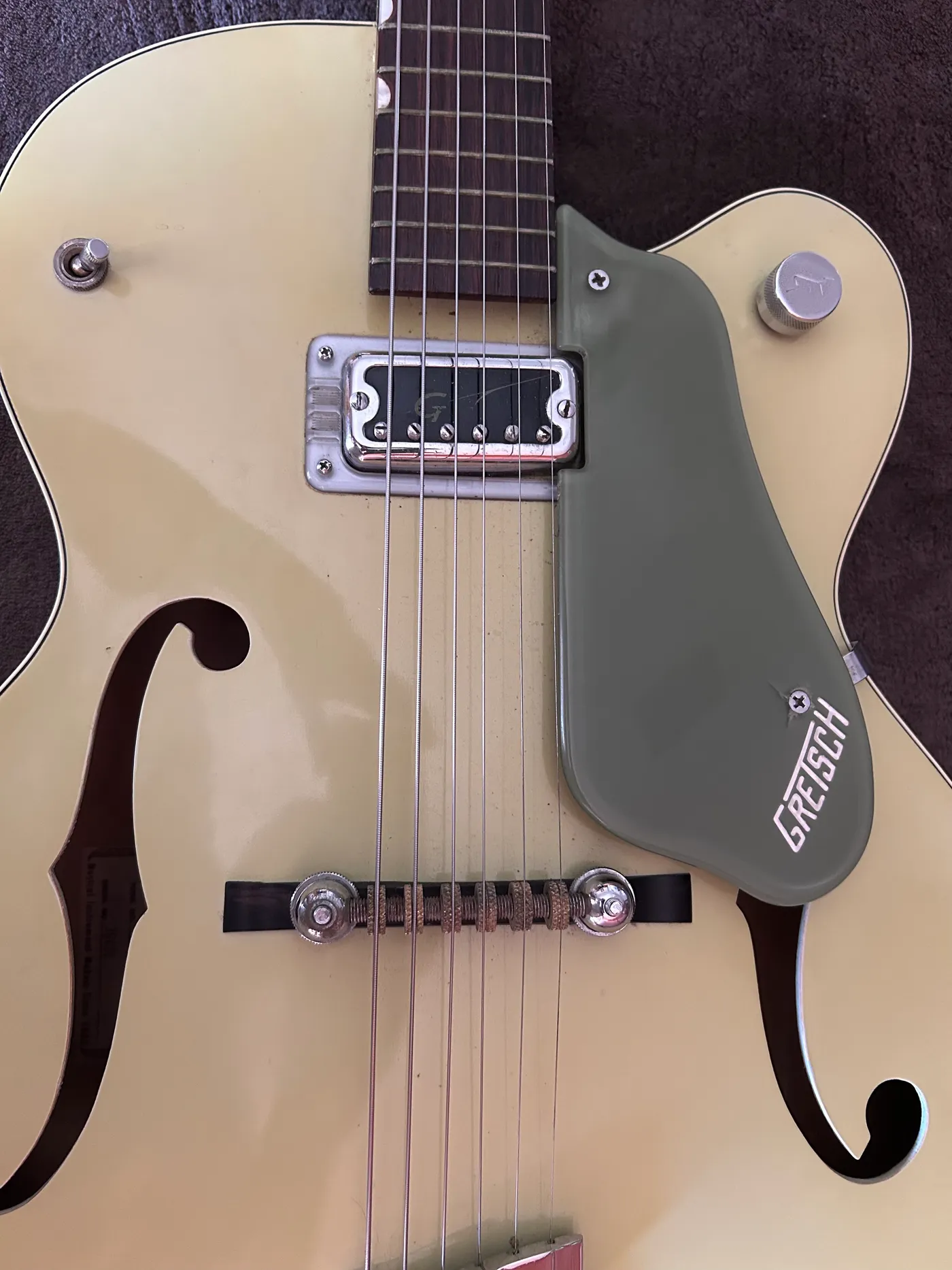
Photo Timeline
Single And Double Anniversaries In Joe’s Archive
1959 · Model 6118
Two Filter’Trons And A Two-Tone Finish
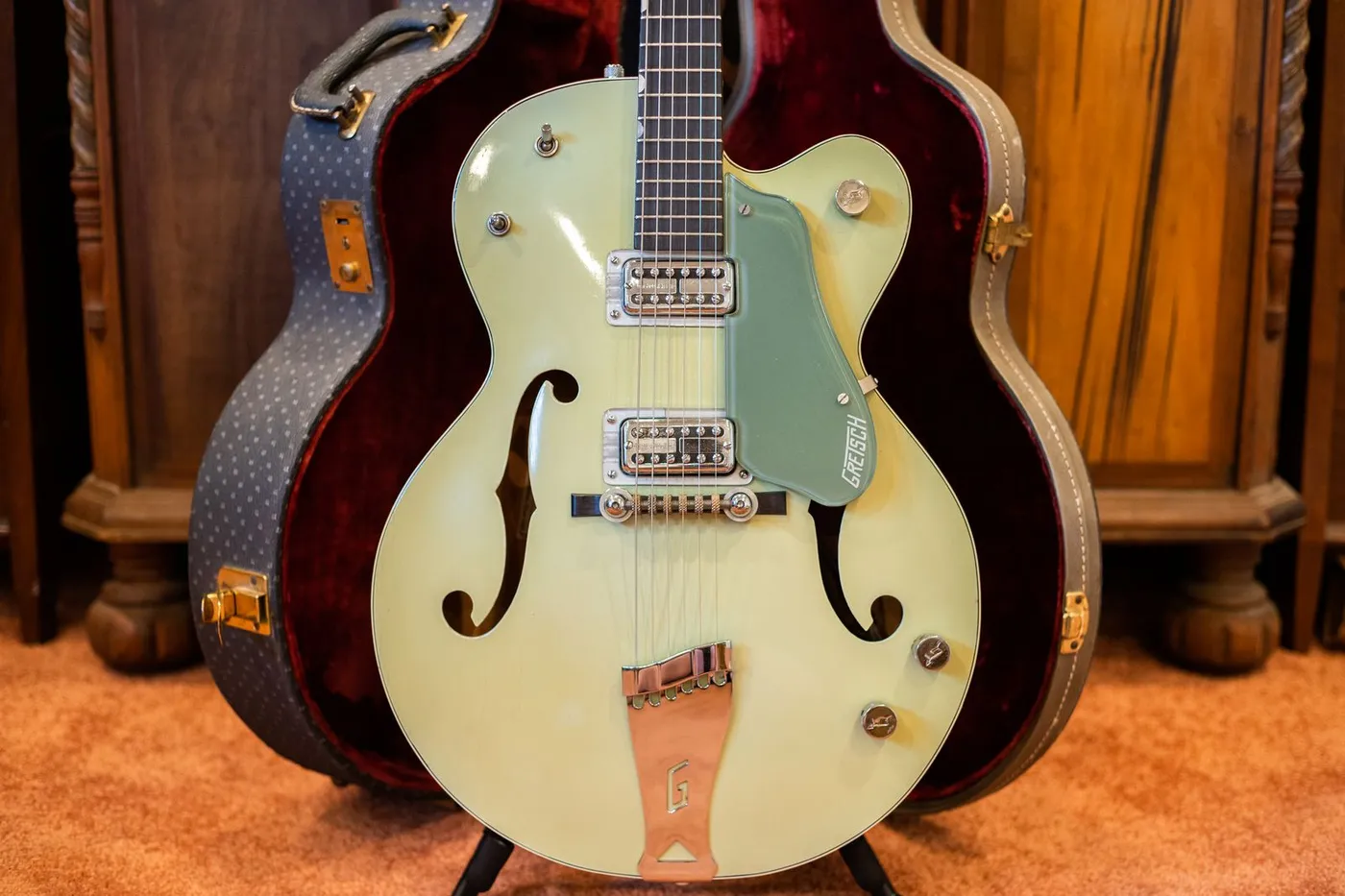
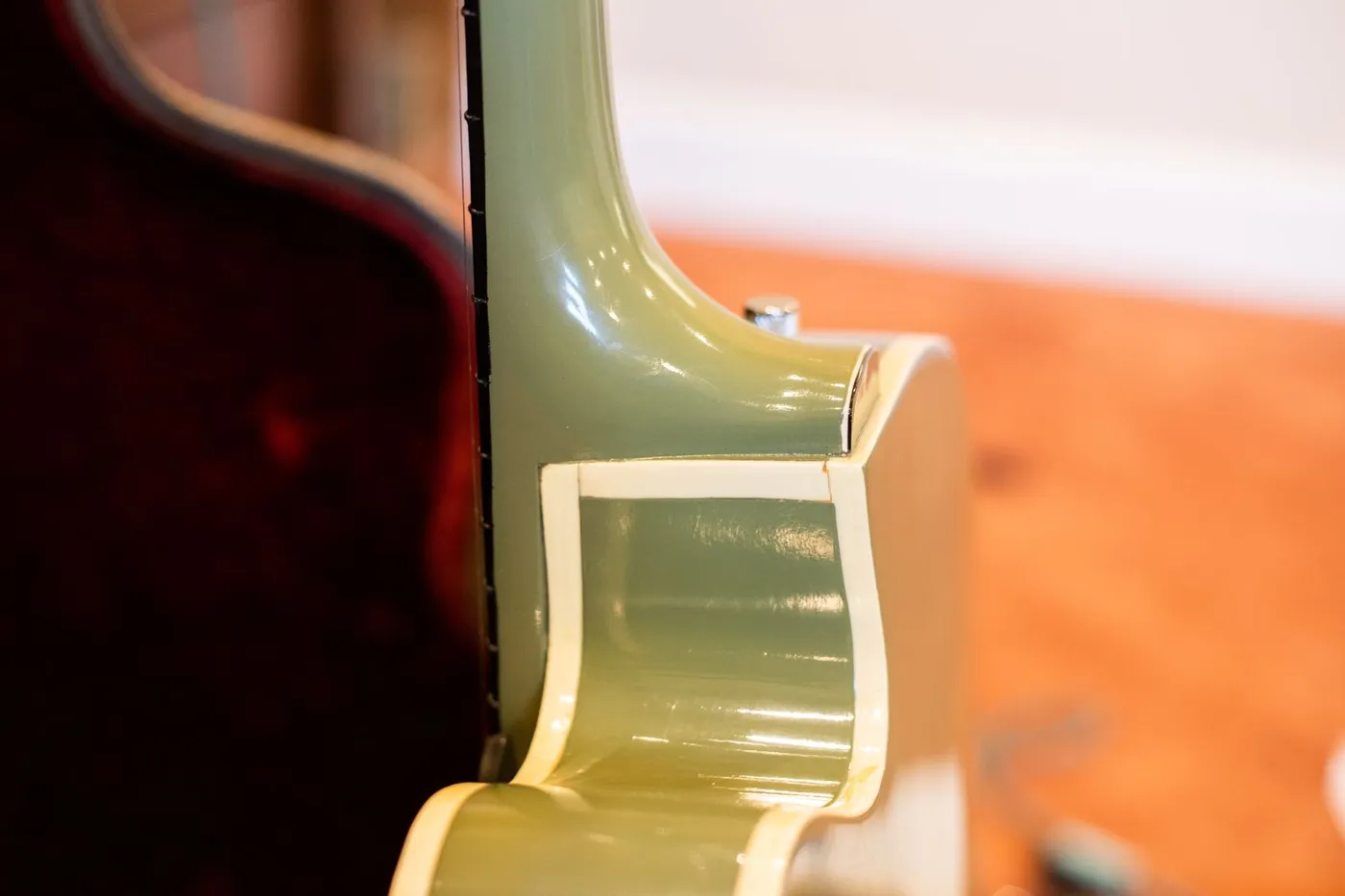
This 1959 Gretsch 6118 Double Anniversary comes from Joe’s ended Reverb listing. Its front view shows two Filter’Tron pickups, a Space Control bridge and a fixed G-cutout tailpiece. The back photograph records the darker green finish. These details place it with the early two-tone Double Anniversary examples in the chart.
The close view of the heel records the binding and the edge of the heel cap. Include this view in a value request so the condition of that area can be assessed alongside the full guitar. The photographs illustrate the model and its condition; the ended listing is not a verified sale price.
1960 · Model 6125
Two-Tone Finish And One Pickup
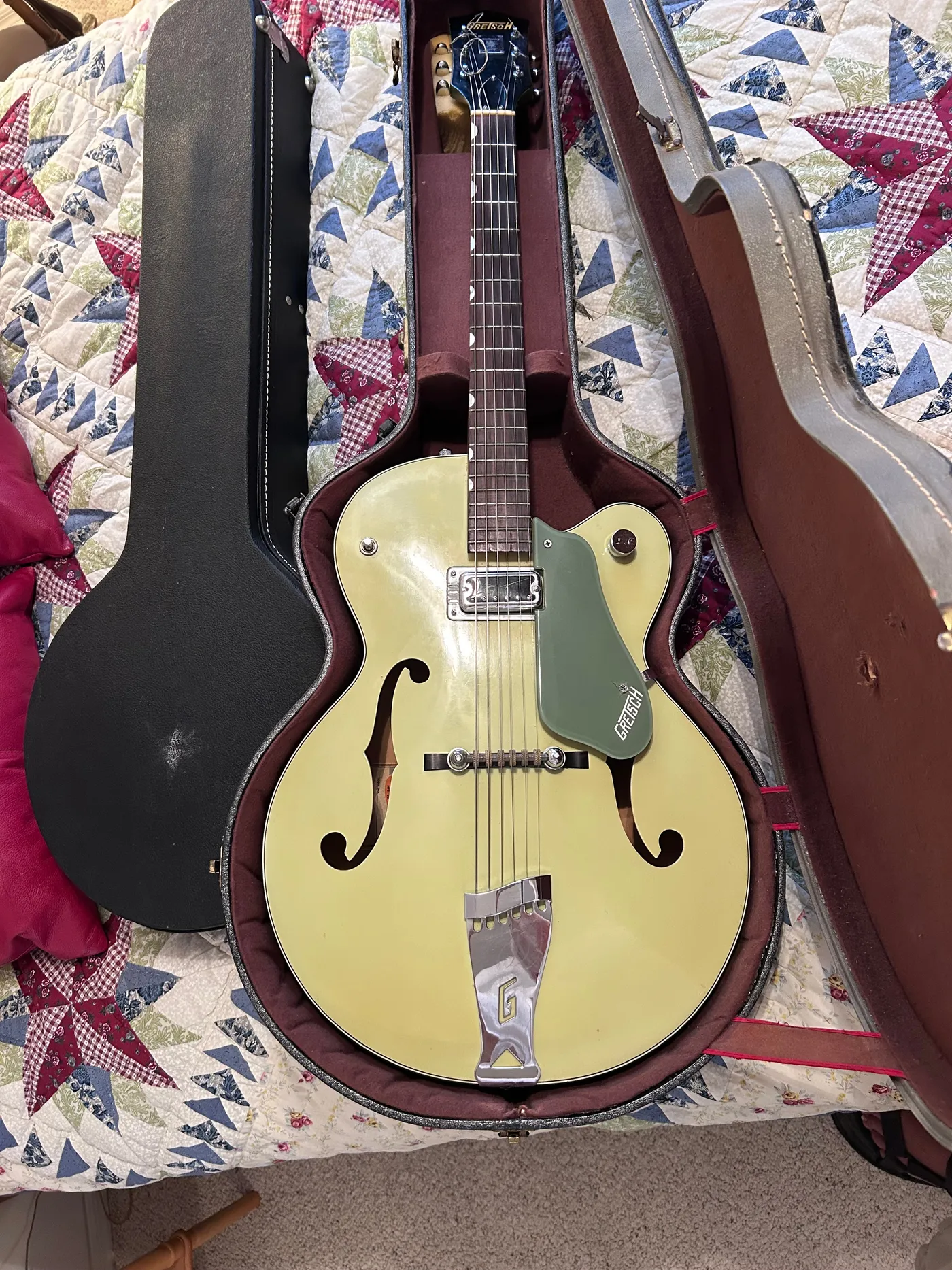
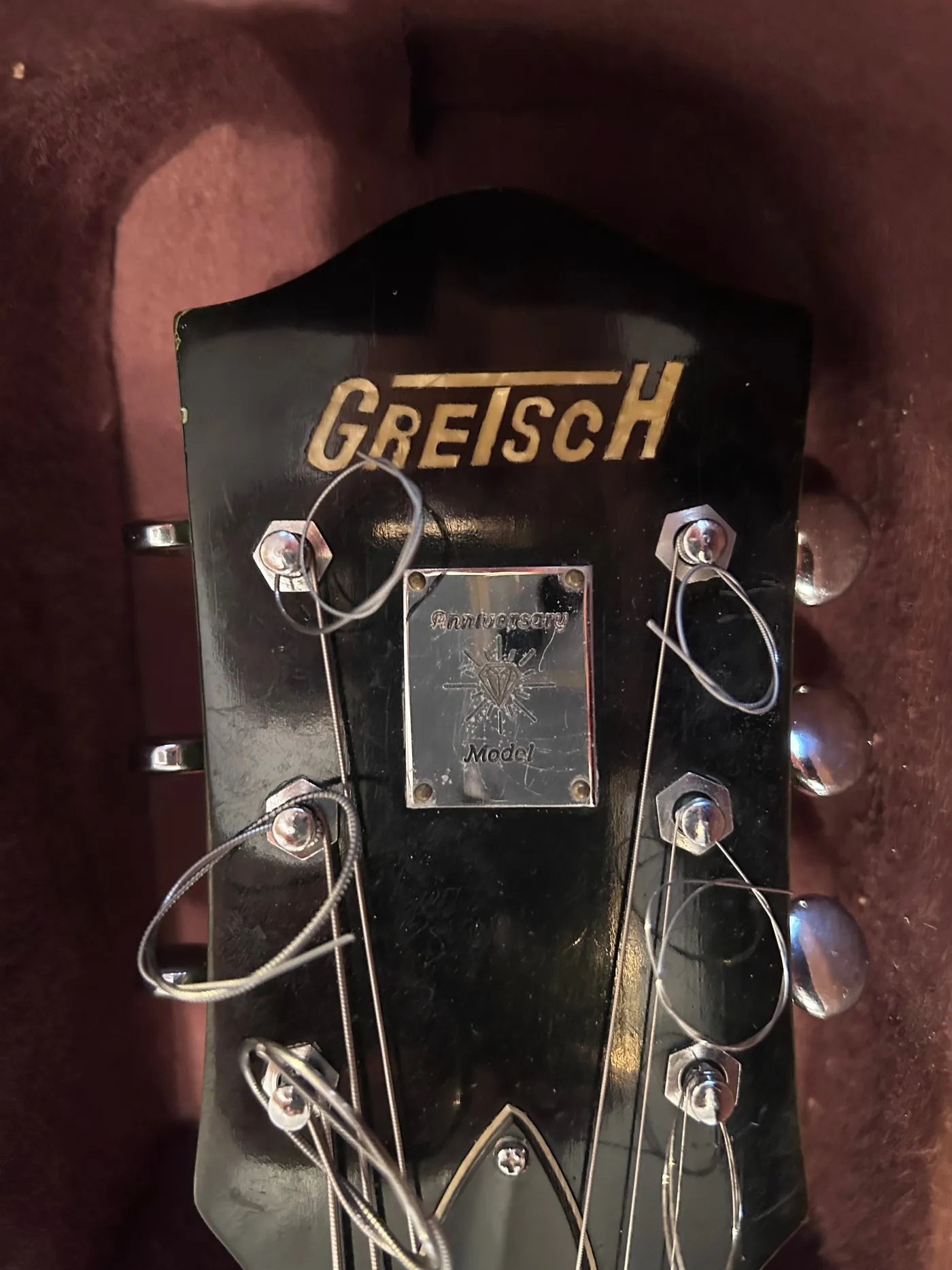
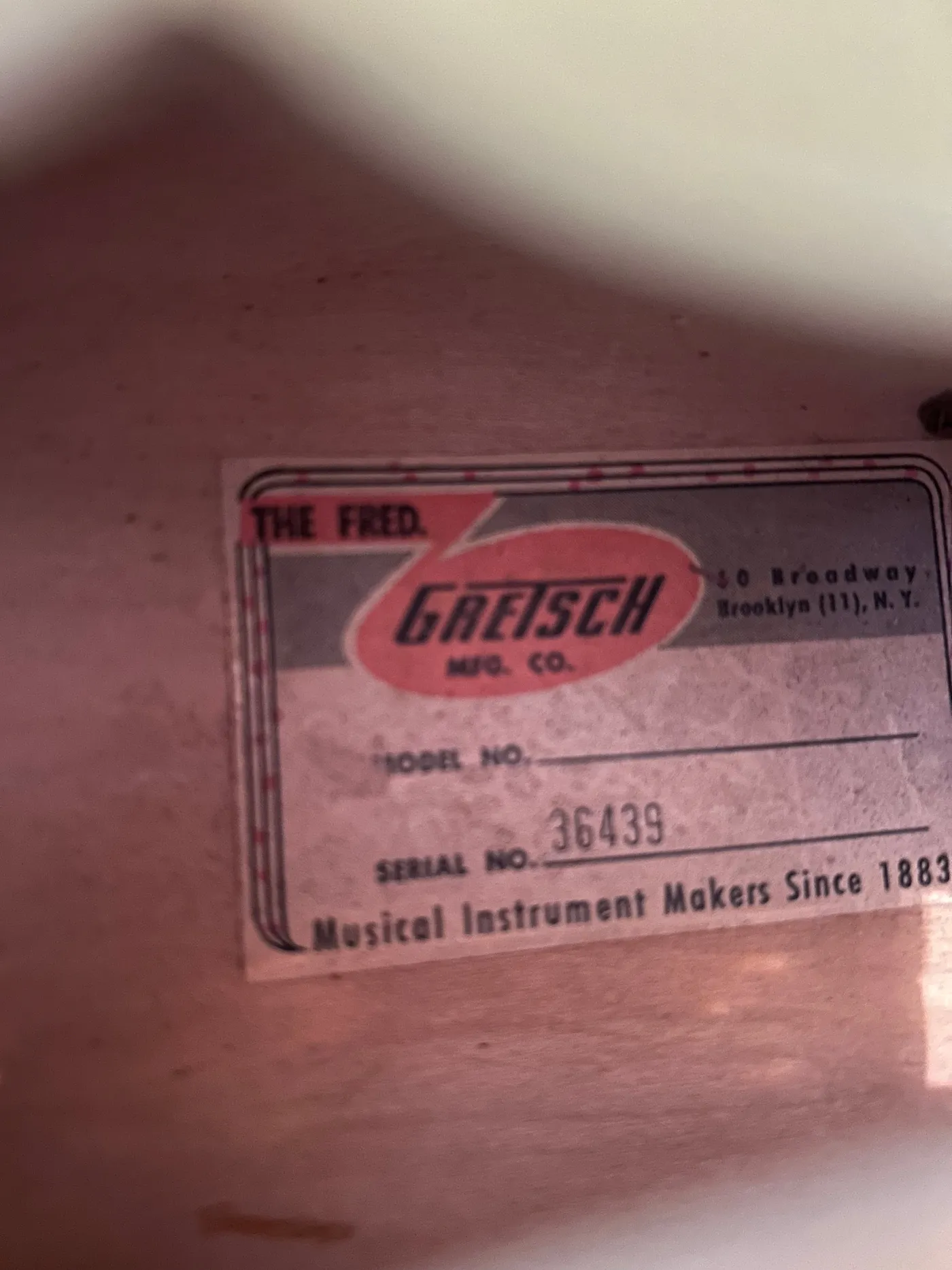
This 1960 Gretsch 6125 Single Anniversary comes from Joe’s customer-photo archive. Its readable serial is 36439, and the photographs show a single HiLo’Tron-style pickup, Space Control bridge and G-cutout tailpiece. The model field in the pictured label is blank, while the one-pickup, two-tone configuration identifies the 6125 Single Anniversary.
It illustrates the views that help with an estimate, not a current sale or an example of an untouched guitar at a stated price. The rear view records the darker finish; the front shows the controls and hardware. A description that only says “green Anniversary” would omit several of those useful distinctions.
A Practical Ranking
Decide Which Condition Comparison Fits
A Supported Original Example
Use a matching chart row when the model, period and finish are reasonably established, repairs are disclosed and the case assumption fits. Keep any uncertainty about a part visible instead of stretching an “all original” description.
A Maintained Player
Refrets, replacement bridges and serviced electronics can keep a guitar working. Their quality and extent matter more than a single label such as “restored.” List the actual work and show the areas affected.
A Project With Missing Evidence
Missing parts, an unreadable label or extensive binding deterioration may require further inspection. Photograph what survives and keep removed pieces together. An unresolved detail isn't a reason to invent the most valuable configuration.
Binding repairs can be easy to underestimate on a lower-priced model. Show the entire perimeter so Joe can distinguish a small missing piece from widespread deterioration. Before commissioning restoration, compare the proposed work with the guitar's current condition and intended use. An appraisal can help with that decision without assuming every repair cost will be recovered in a sale.
A correct case protects the instrument and is part of the chart basis, but an old case doesn't independently prove the guitar's year. Include its fit and condition. Loose bridges, guards and paperwork should be photographed separately so they aren't mistaken for installed equipment.
Make The Estimate Specific
Show Joe Your Anniversary’s Details
Document The Version
Send a complete front view, the model and serial label, both headstock faces and the back. Include every visible pickup and control.Show Repairs Without Hiding Them
Add close-ups of the heel, body edges, changed parts and any unused holes. Explain known refinishing, routing or electronics work.Include What Comes With The Guitar
Photograph the case, removed hardware and dated paperwork. Distinguish installed parts from items supplied loose.
Send The Evidence
Get An Anniversary Value Opinion
Tell Joe whether you want an estimate, help identifying the model or a purchase discussion. You don't have to decide on a repair or a sale before sharing the photographs. Clear information about the instrument's present state gives the conversation a useful starting point.
Questions AboutGretsch Values
Is A Double Anniversary Always Worth Twice A Single?
Will Adding A Bridge Pickup Increase My Single’s Value?
Is Every Green Anniversary The Same Finish?
Can A Later Original Anniversary Still Have Value?
The Last Word
A Value For Your Guitar
Price an Anniversary by the version that was built, then account for the guitar it has become. The original pickup configuration, finish and repair history keep the estimate tied to evidence. If those details remain open, a photo appraisal is the next useful step. For model and date checks, see the Gretsch Anniversary authentication guide.
This Is An Estimate Of Market Value, Not An Offer To Buy And Not A Guarantee. Market Values Fluctuate; Have Your Specific Item Appraised.