

Gibson L-50 Prices · 1932 To 1971
Gibson L-50 Value Guide
Choose the correct body generation, then account for finish, acoustic condition and the parts still with the guitar.
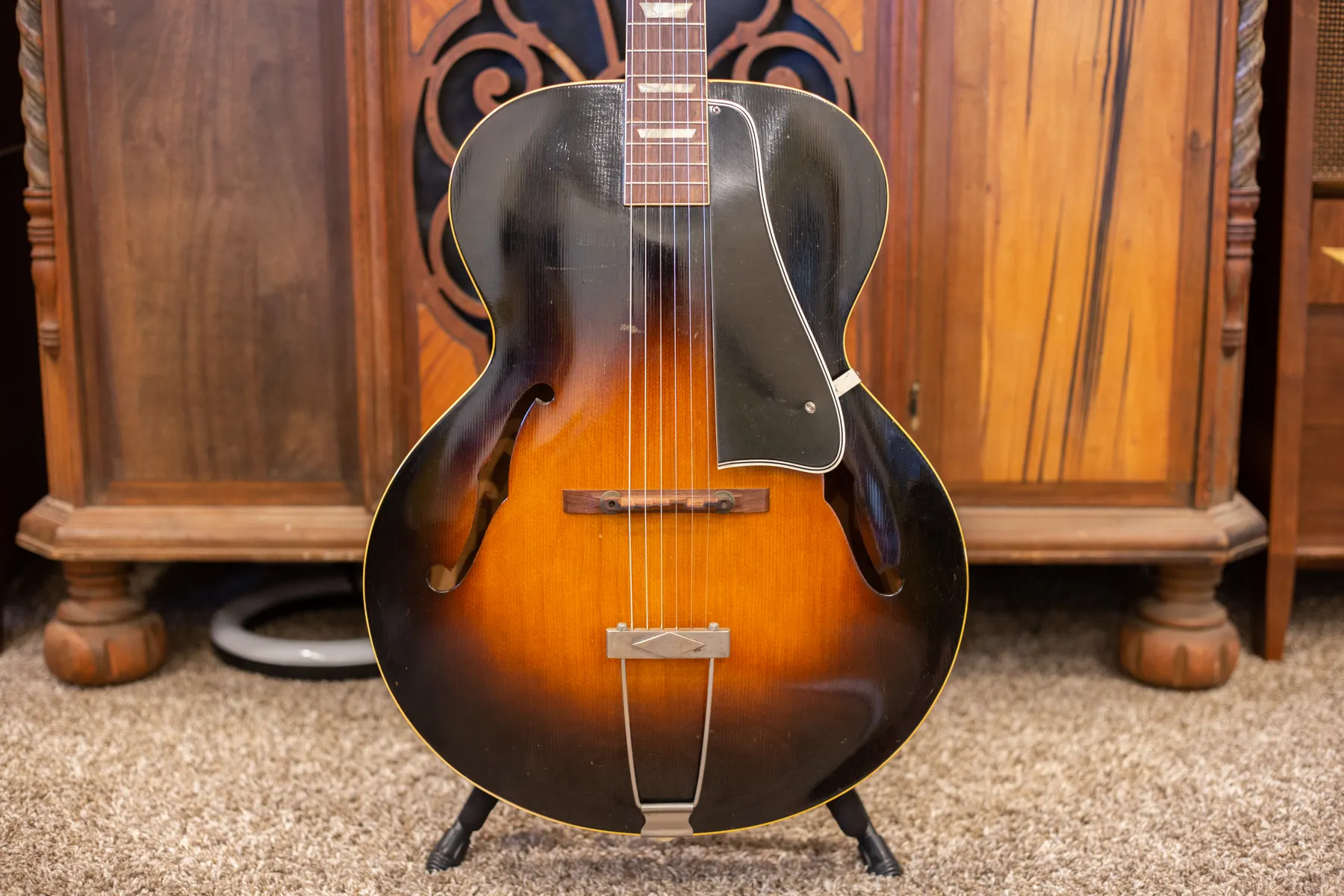
A vintage Gibson L-50 is estimated at $2,450 to $3,300 for an early 14¾-inch example and $1,950 to $2,500 for the 1950 to 1959 group, assuming excellent, original condition and the original case where applicable. Later guitars have their own rows below. Use the L-50 authentication guide to confirm which body generation you own before choosing a range.
This Is An Estimate Of Market Value, Not An Offer To Buy And Not A Guarantee. Market Values Fluctuate; Have Your Specific Item Appraised.
Excellent Original Examples
Gibson L-50 Values By Production Group
| Model | Pricing Year Group | Configuration | Estimated Value |
|---|---|---|---|
| L-50 | 1932 to 1934 | 14.75-inch body | $2,450 to $3,300 |
| L-50 | 1934 to 1943 | 16-inch body | $2,400 to $3,250 |
| L-50 | 1946 to 1949 | 16-inch body; trapezoid inlays | $2,400 to $3,100 |
| L-50 | 1950 to 1959 | Sunburst acoustic archtop | $1,950 to $2,500 |
| L-50 | 1960 to 1964 | Sunburst acoustic archtop | $1,700 to $2,250 |
| L-50 | 1965 | Sunburst acoustic archtop | $1,500 to $1,950 |
| L-50 | 1966 to 1969 | Sunburst acoustic archtop | $1,350 to $1,800 |
| L-50 | 1970 to 1971 | Sunburst acoustic archtop | $1,300 to $1,750 |
U.S. dollars. These November 2026 retail market estimates assume excellent, original condition and the original case where applicable. An individual sale can fall outside the range; these figures are not purchase offers. Repairs, changed parts and market conditions require an individual appraisal.
Match the year group and the listed body configuration together. The early small-body group needs to be separated from the larger f-hole versions. A family purchase date, an old case or a replacement tuner set should not decide the row on its own.
The chart provides a starting point for a complete original example. A missing case, changed bridge, refinished surface or structural repair requires an individual assessment. If the guitar’s identity is uncertain, send its pictures before using a higher-priced group. These estimates can change with the market and aren’t an offer to buy your instrument.
Body Generation And Age
How The L-50 Price Groups Differ
Small-Body L-50s
The 1932 to 1934 small-body estimate is $2,450 to $3,300. Establish the small-body identity and describe the original bridge and guard arrangement before comparing condition. An unusual appearance alone doesn’t establish that a guitar belongs to this first group.
For an inherited example, include any older photograph that shows the guitar before repairs. A dated family photograph may document an earlier configuration even when it can’t establish the manufacturing year. Keep that evidence separate from the date assigned to the instrument.
Check The Correct Size And Period
The 1934 to 1943 larger-body estimate is $2,400 to $3,250. This group overlaps the ending year of the small-body group, so the body configuration matters. Compare like configurations and avoid treating every prewar L-50 as one interchangeable item.
Original finish, intact wood and retained acoustic hardware all matter when deciding how closely a guitar resembles the chart’s excellent example. A prewar date doesn’t cancel the effect of a replaced top or an extensive structural repair.
Assess The Guitar’s Current Usability
The 1950 to 1959 group is $1,950 to $2,500, while the 1970 to 1971 group is $1,300 to $1,750. These are separate periods within the later L-50 family. Verify the date before assigning either range.
A buyer will also need to understand the neck angle, fret condition and bridge adjustment. A photograph with the strings removed can’t answer how the guitar behaves under playing tension. Tell Joe if it has been stored unstrung or has not been played recently.
Acoustic Repair Questions
How Neck Angle And Top Condition Affect An L-50
Bridge Height And String Clearance
Show a side view of the bridge and the strings above the fingerboard. A bridge lowered to its limit deserves explanation. The appraisal needs to distinguish a setup issue from a neck-angle or top problem before a repair allowance can be discussed.
Cracks And Open Seams
Photograph the whole panel and then the repair close-up. A stable repaired crack, an open crack and a loose body seam require different descriptions. Include the repairer’s invoice if available so the scope of the work can be understood.
Heel And Headstock Repairs
Keep a repaired break visible in the photo set. Describe what was repaired and whether additional reinforcement was used, if you know. Avoid assigning a dollar deduction from a photograph alone; repair quality and the surrounding condition need review.
The vintage guitar condition guide explains why several defects should be assessed together. A low bridge and a neck reset may describe the same underlying problem, so separate guessed deductions can count it twice. The useful information is what the instrument needs and how much original material remains.
Don’t arrange a neck reset simply because the bridge appears low in one picture. A repairer should examine the setup and geometry. If selling is your next step, a documented appraisal before work can help you decide what to address and what to leave for the next owner.
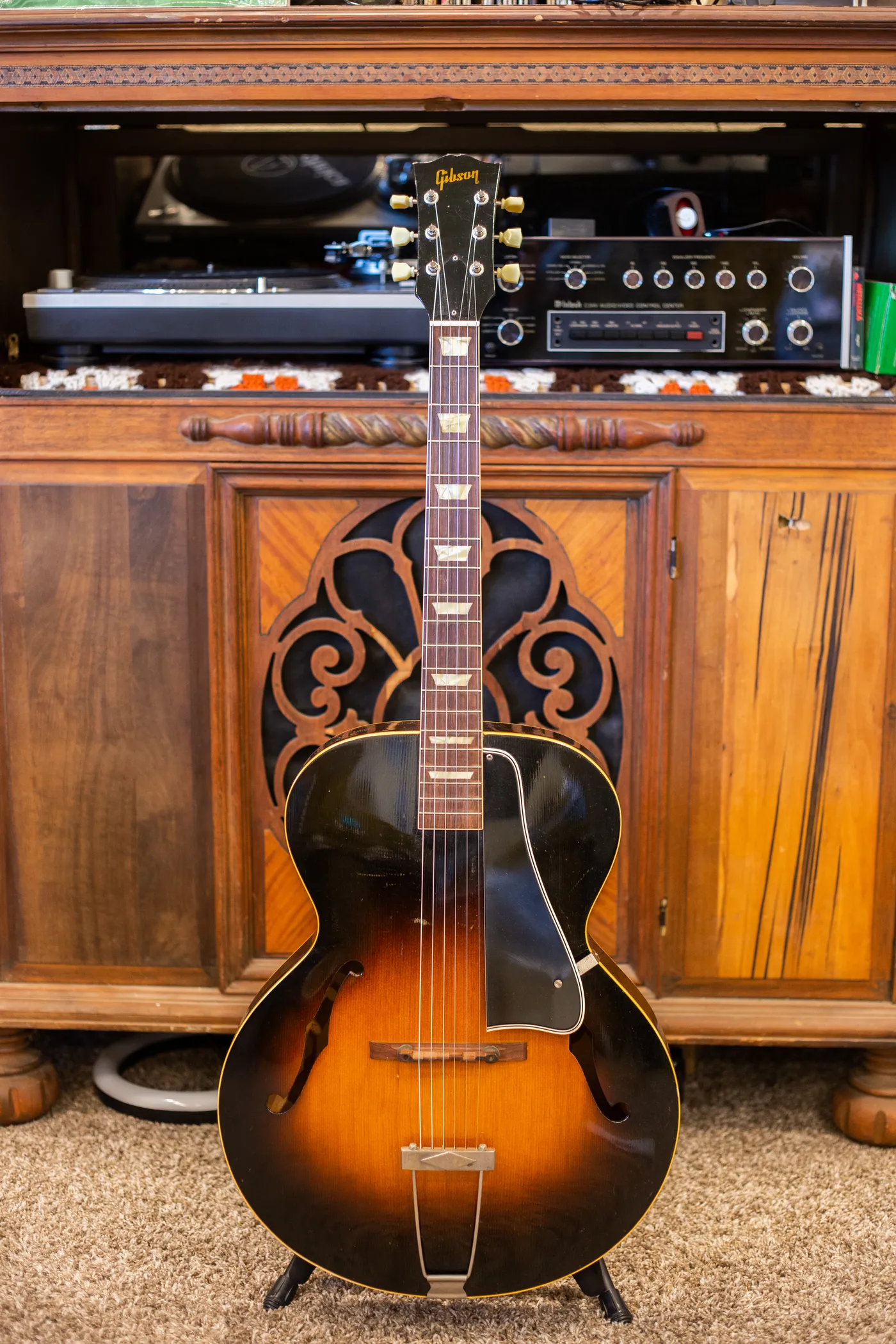
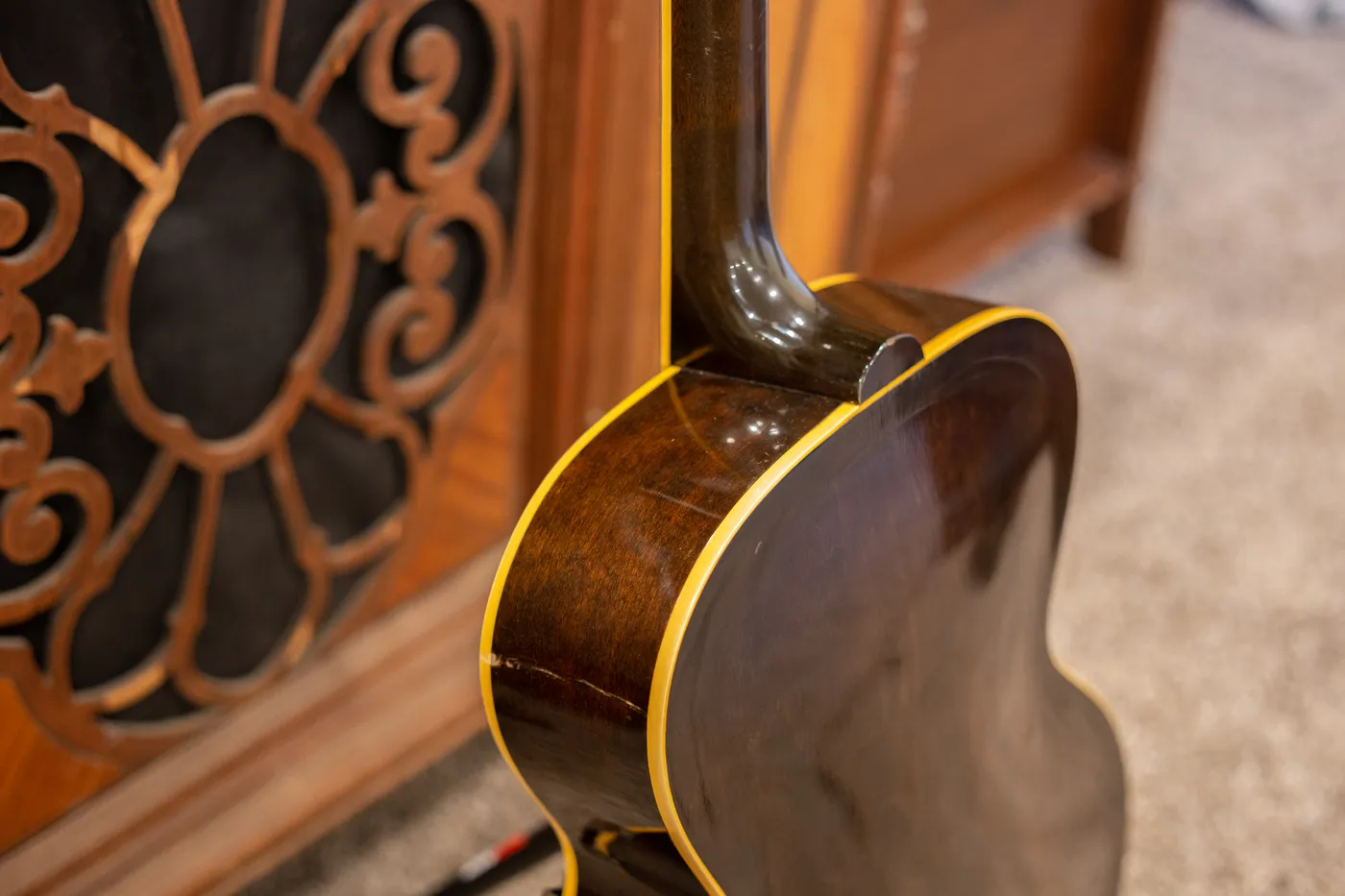
A full front view identifies the L-50. A heel and bridge view helps explain the condition being valued.
Describe The Surface Work
Original Sunburst, Overspray And Refinish
Original finish and a later finish are different condition comparisons even if both look attractive. Photograph the L-50 in soft, even light, then include close views of worn edges, the heel, headstock and back. Reflections from a bright window can conceal texture and make a touched-up area difficult to judge.
Use the refinish value guide when the surface has been changed. Explain whether the work covered the whole instrument, the top alone or a repaired area. If you don’t know, say that the finish history is unknown and send clear pictures. Don’t present a stripped sunburst as a factory natural guitar.
Wear itself doesn’t establish originality. An old replacement finish can show checking and handling marks. Conversely, a well-preserved surface can remain quite clean. Joe needs the whole finish pattern and any documented work before deciding how the instrument compares with the table.
Bridge, Tailpiece, Tuners And Pickup Additions
Price The L-50 With Its Actual Hardware
List the parts that have been changed, including parts replaced for practical reasons. A newer bridge may improve setup while changing the original-parts assessment. Keep the removed bridge or tailpiece and send a photograph of it beside the guitar. Loose pieces still need to be identified; their age alone doesn’t establish that they came with this instrument.
A floating pickup installation and a pickup routed into the soundboard deserve different treatment. Photograph the mounting and any new controls or output jack. Electrical additions should be described as modifications to the acoustic guitar unless there is evidence supporting another factory model. Read how pickup changes affect value for the distinction between replaceable equipment and altered wood.
The original case is part of the chart’s stated condition where applicable. Show its exterior, lining, handle and latches. A period case that fits poorly should not be assumed to be the guitar’s original case. Tell Joe if the guitar has a replacement case or no case so transport can be discussed with the appraisal.
A Complete Condition Record
What To Send For An L-50 Appraisal
Photograph The Complete Instrument
Include the body front and back, both neck sides and the entire headstock. Keep the pictures sharp enough to enlarge. A close-up of the label alone can’t show the guitar’s condition or identify every body generation.
Show The Acoustic Setup
Take a low side view across the bridge and a view along the fingerboard. Report high action, buzzing or other playing concerns in plain terms. You don’t need to diagnose their cause before asking for an appraisal.
Include The Interior Mark And Repair History
Photograph the visible FON without disturbing it. Add repair receipts and explain any work you remember. If the guitar belonged to a relative, separate what you personally know from what was passed down in the family.
Gather The Case And Removed Parts
Show the case open and closed, plus any bridge, guard, tuners or pickup kept separately. Keep personal information out of paperwork photographs. A complete inventory helps prevent an original part from being discarded during a move or estate cleanout.
Before paying for polishing, refinishing or new hardware, read whether restoration makes sense before a sale. The first appraisal can be based on the guitar as it is. That gives you a useful starting point before any work changes the evidence or adds an expense.
For broader family comparisons, the Gibson acoustic value guide places other models alongside the L-50. Keep each model’s price range separate. A carved top or an old Gibson logo doesn’t transfer an L-5 valuation to an L-50.
Send The Evidence
Get An Individual L-50 Appraisal
Send Joe the photographs and known history for a free appraisal. Include your location and whether you’re considering selling, so the next steps can fit the guitar and your plans.
Questions AboutGibson Values
What Is A 1950s Gibson L-50 Worth?
Does An Added Pickup Increase L-50 Value?
Should I Replace A Worn L-50 Bridge Before Selling?
The Last Word
A Value For Your Guitar
The useful L-50 estimate is the one that matches the body, date and documented condition. Revisit the L-50 identification guide if the model remains uncertain, then send Joe the complete photo set.
This Is An Estimate Of Market Value, Not An Offer To Buy And Not A Guarantee. Market Values Fluctuate; Have Your Specific Item Appraised.