

Acoustic Archtops · Small Bodies Through Postwar L-50s
Gibson L-50 Authentication Guide
Identify the body generation first, then compare the top, fingerboard, factory markings and hardware with that period.
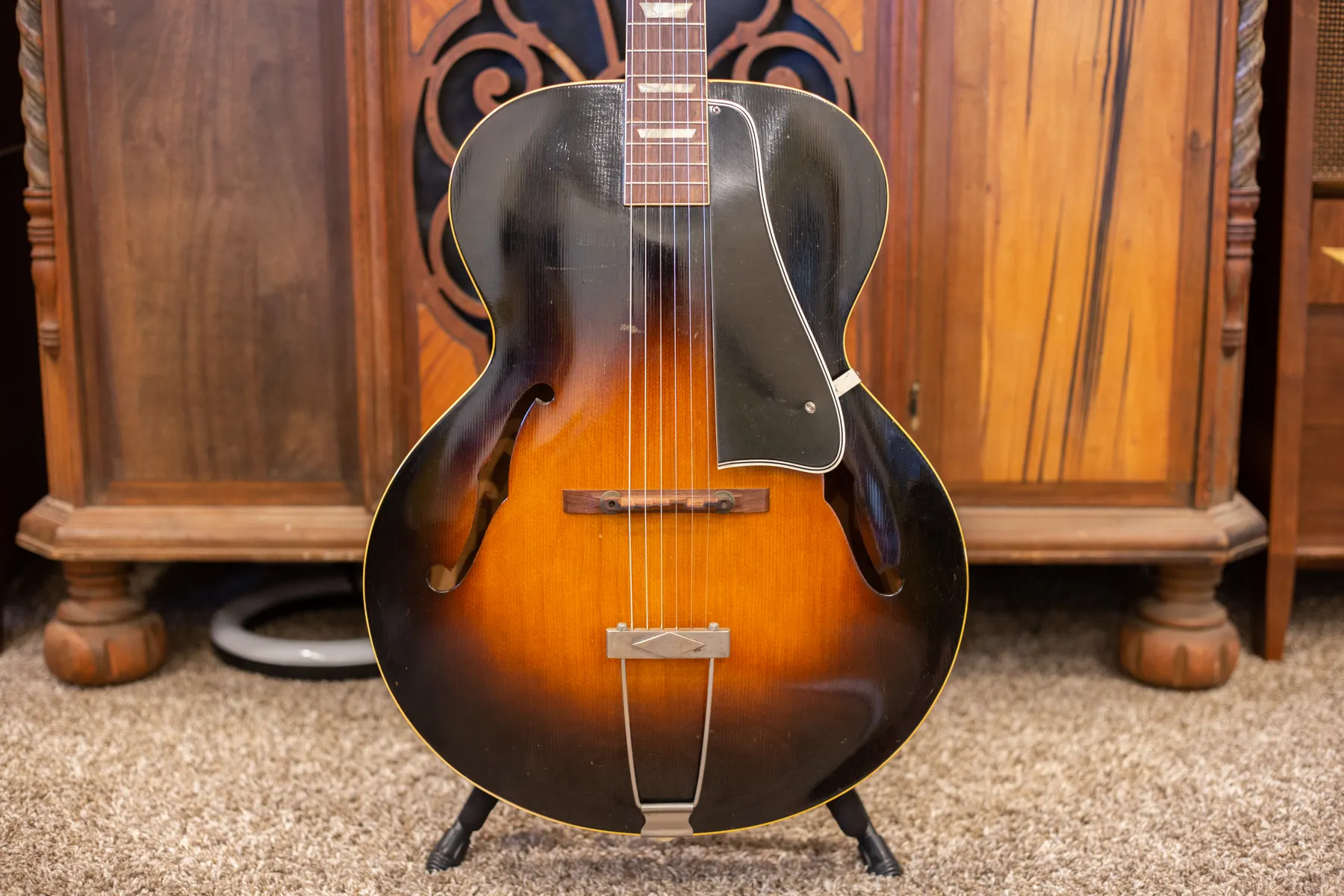
A Gibson L-50 is an acoustic archtop whose body and appointments changed during a long production run. A small early example needs a different comparison from the familiar later 16¼-inch guitar. This guide uses catalog specifications and Joe’s photographed 1952 L-50 to explain that distinction. For prices after identification, use the Gibson L-50 value guide.
Start with a straight-on photograph and a lower-bout measurement. Then record the soundhole arrangement, fingerboard markers and any interior number. A missing paper label is a reason to look for a factory order number. It doesn’t, by itself, make an acoustic Gibson suspicious.
Authenticity And Originality Are Assessed From The Information Provided. A Hands-On Inspection Can Change The Conclusion.
Construction And Appointments
Which Features Identify A Gibson L-50?
| Feature | 1934 Catalog W | 1962 Catalog |
|---|---|---|
| Body width | 14¾ inches | 16¼ inches |
| Sound openings | Two f-holes | Two f-holes |
| Top | Spruce | Hand-graduated carved spruce |
| Back and rims | Maple | Arched maple back and maple rims |
| Neck and fingerboard | Mahogany; rosewood, dot markers | Mahogany; rosewood, shaped inlays |
| Bridge | Adjustable acoustic bridge | Adjustable rosewood bridge |
These columns describe two cataloged versions. They aren’t a claim that every specification changed at once. Measure across the widest part of the lower bout without including the rim’s thickness twice, and photograph the measurement. A soft tape following the top’s arch overstates the straight-line width.
The 1962 catalog lists a 24¾-inch scale, 20 frets and a 3⅜-inch body depth for the L-50. Those measurements help place a later guitar among Gibson’s acoustic archtops. An L-7 is a different model with a larger body and a longer cataloged scale; a similar sunburst finish doesn’t make the two equivalent.
Inspect the top separately from the back. “Archtop” describes the body form and doesn’t establish that every plate is carved from solid wood. Gibson specifically described the L-50’s spruce top as carved. Use a competent interior inspection if the construction is obscured by finish or earlier repairs.
Early And Later Acoustic Designs
How The L-50 Body Changed
The Small Early L-50
The earliest L-50 belongs to the small-body period at the beginning of the 1930s. Early examples include round-soundhole guitars as well as the f-hole form that followed. A round opening therefore needs an early-model comparison before anyone calls it a modification. Photograph the complete outline, bridge and guard together.
The 1934 catalog shows a 14¾-inch-wide f-hole L-50 with a 19¼-inch body length. Its simpler fingerboard and smaller dimensions distinguish it from the later guitar pictured here. The shape should lead the identification; a modern replacement bridge can otherwise distract from the older body underneath it.
The Larger F-Hole L-50
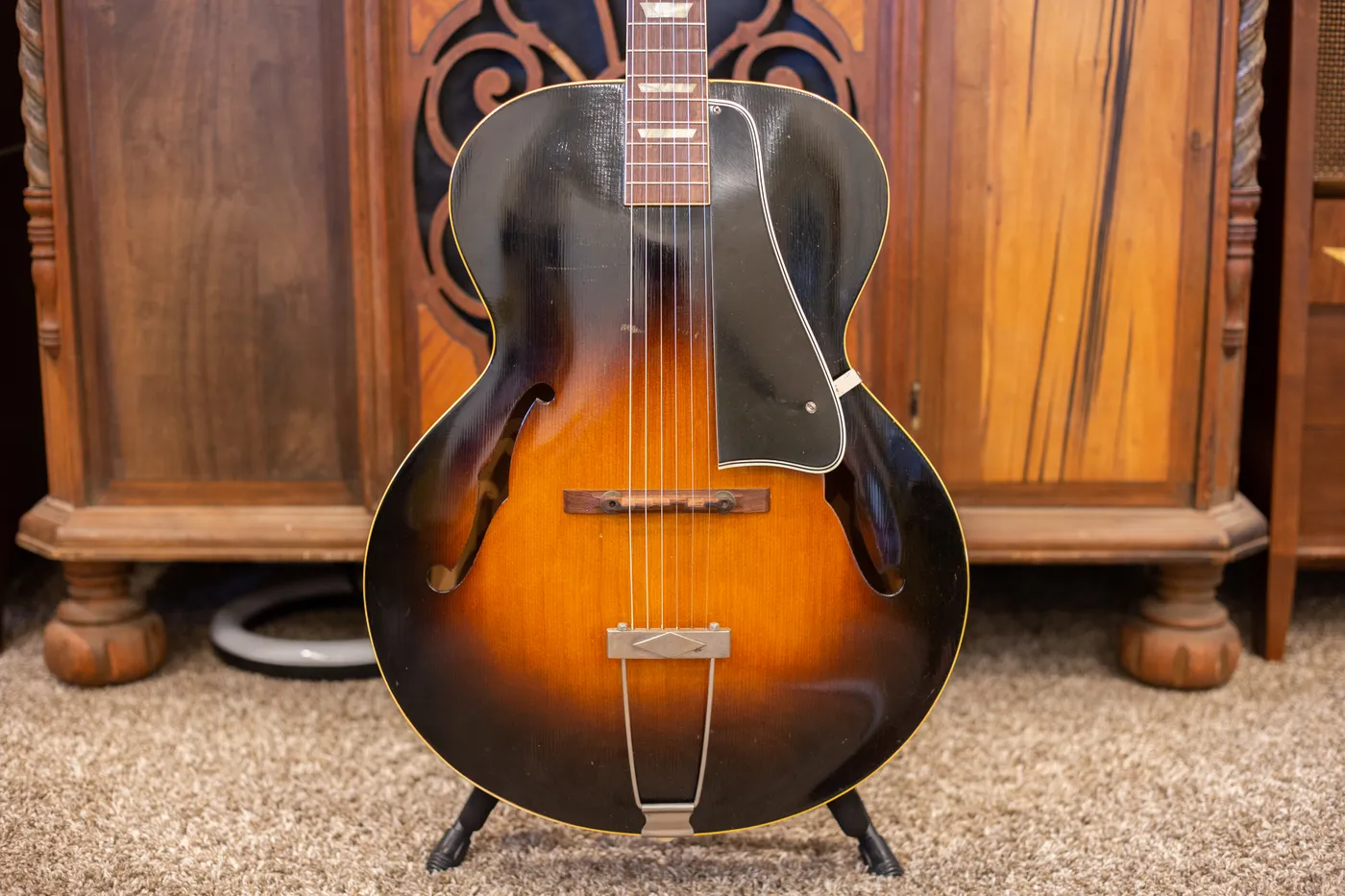
By the 1937 catalog, the L-50 was illustrated with a 16¼-inch body and a 20¼-inch body length. The larger format continued into the postwar period, with changes in fingerboard appointments and headstock presentation. Joe’s 1952 example shows the familiar sunburst top, trapeze tailpiece and shaped fingerboard markers.
That continuity can make different decades look close in a photograph. A complete identification should explain both the lasting construction and the details that changed. A late guitar should not be assigned a prewar date just because its sunburst has darkened or its metal parts have aged.
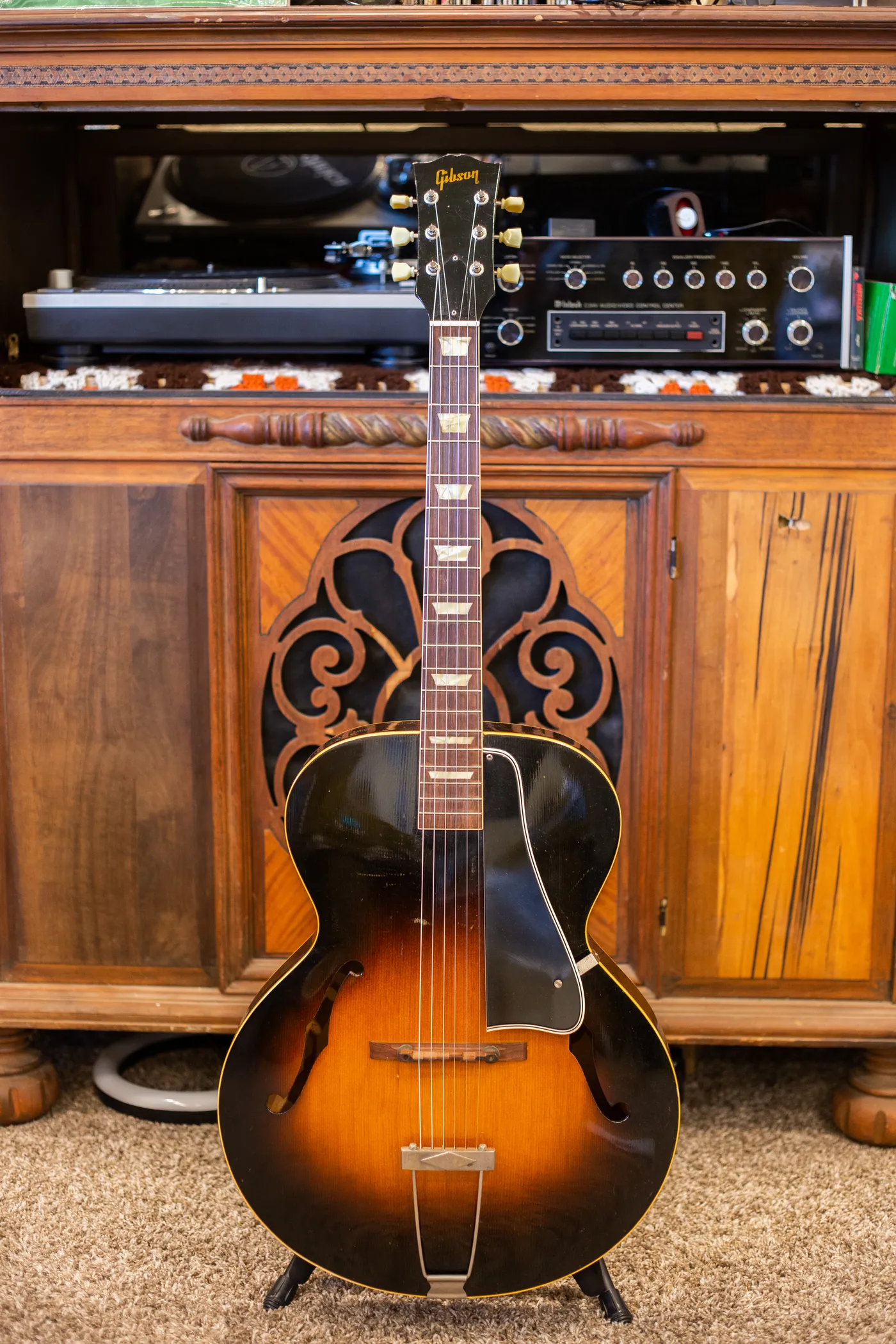
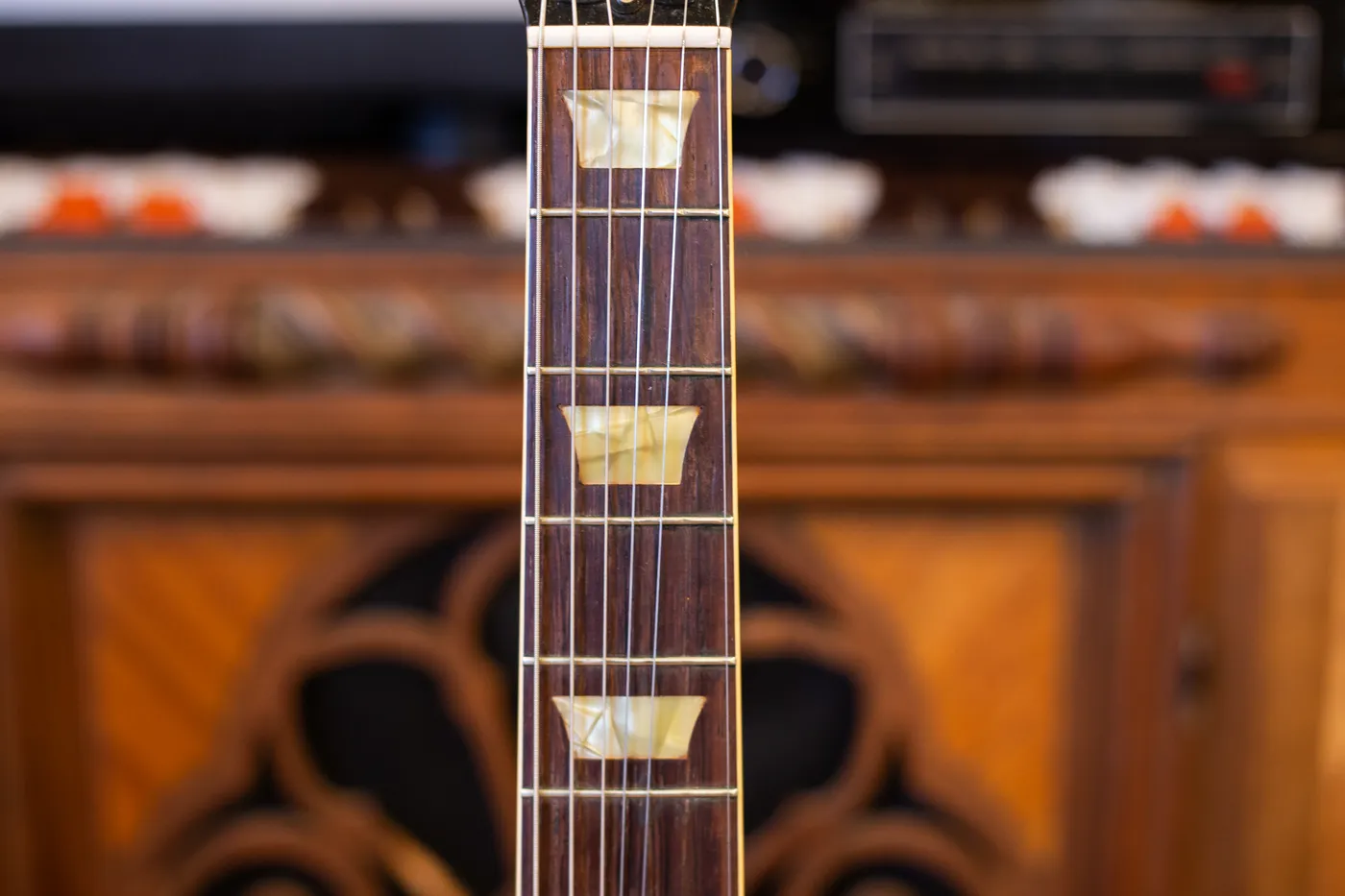
The 1952 L-50 combines the larger f-hole body with trapezoid fingerboard inlays. Read those features together.
A Practical Dating Sequence
L-50 Production Groups To Compare
Early Round-Soundhole Examples
Begin with the small body and central soundhole. Treat the original bridge, guard and top construction as a group. The early format needs its own reference photographs and should not be judged against the later f-hole guitar’s silhouette.
Small And Larger F-Hole Bodies
The 1934 and 1937 catalog illustrations establish different body sizes. Record the actual measurement before using a prewar date range. Dot markers on a student-model Gibson are celluloid; don’t turn a generic catalog inlay description into a pearl claim.
Wartime And Postwar Appointments
Use the Gibson logo chronology for script, banner and block-logo comparisons. Wartime features varied by model, and a banner alone can’t establish the guitar’s exact year. Repairs can also replace the very part being used as evidence.
Later L-50 Construction
Compare the larger body, shaped inlays, headstock and adjustable acoustic bridge with period references. The 1962 catalog is a useful construction snapshot. Interior factory markings and the model’s complete feature set must settle the date within this broad later period.
L-50 Versus L-48
Check The Carved Top And Acoustic Hardware
The L-50 and L-48 can share a similar outline, but the 1962 catalog distinguishes their tops: carved spruce for the L-50 and laminated mahogany for the L-48. The L-48 also has a dot-marker fingerboard in that catalog. If those clues disagree with a claimed model, photograph the instrument’s interior and appointments before deciding that one part is wrong.
A pickup clipped to the fingerboard or attached to a guard requires a separate description. Determine how it’s mounted and where its wiring exits. An added pickup can leave the top intact, while a routed pickup opening or a drilled control hole changes the wood. Photograph those alterations without removing hardware merely for a better view.
The bridge rests on the arched top and adjusts in height. Examine the contact between its feet and the soundboard, its remaining adjustment and any signs that the base has been shaved. A low bridge can be part of a larger neck-angle problem. It takes an in-hand assessment to distinguish bridge fitting from changes in the top or neck joint.
At the tailpiece, show the rim attachment, hinge and string bar. Extra screw holes, a plugged endpin opening or a changed tailpiece footprint can document earlier equipment. Keep loose original parts with the guitar. Their presence is useful evidence even if they are no longer suitable for playing.
Body, Neck And Interior Marking
Joe’s 1952 L-50 In Photographs
1952 Archive Example
A Sunburst L-50 With Z-Prefix FON
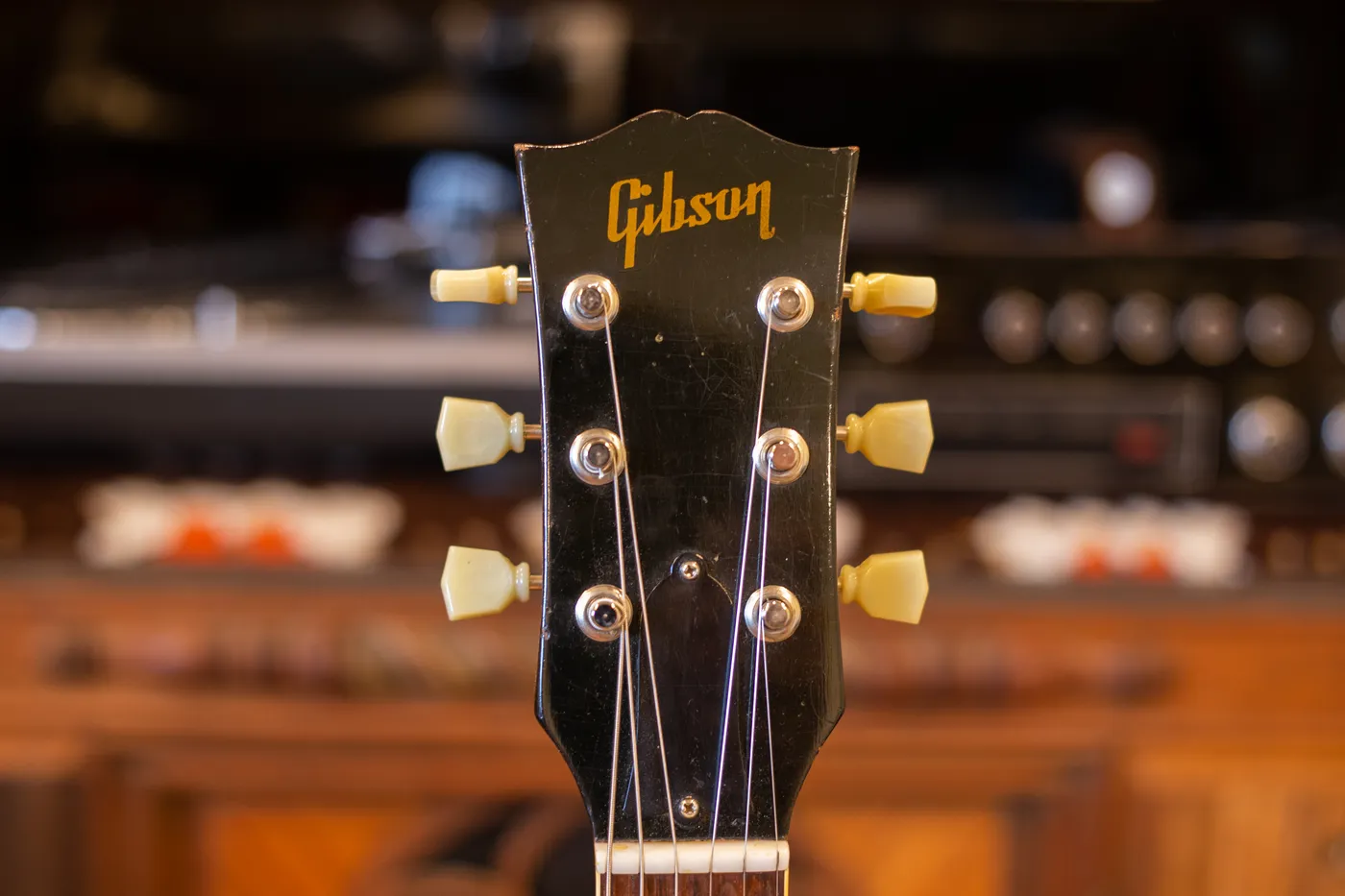
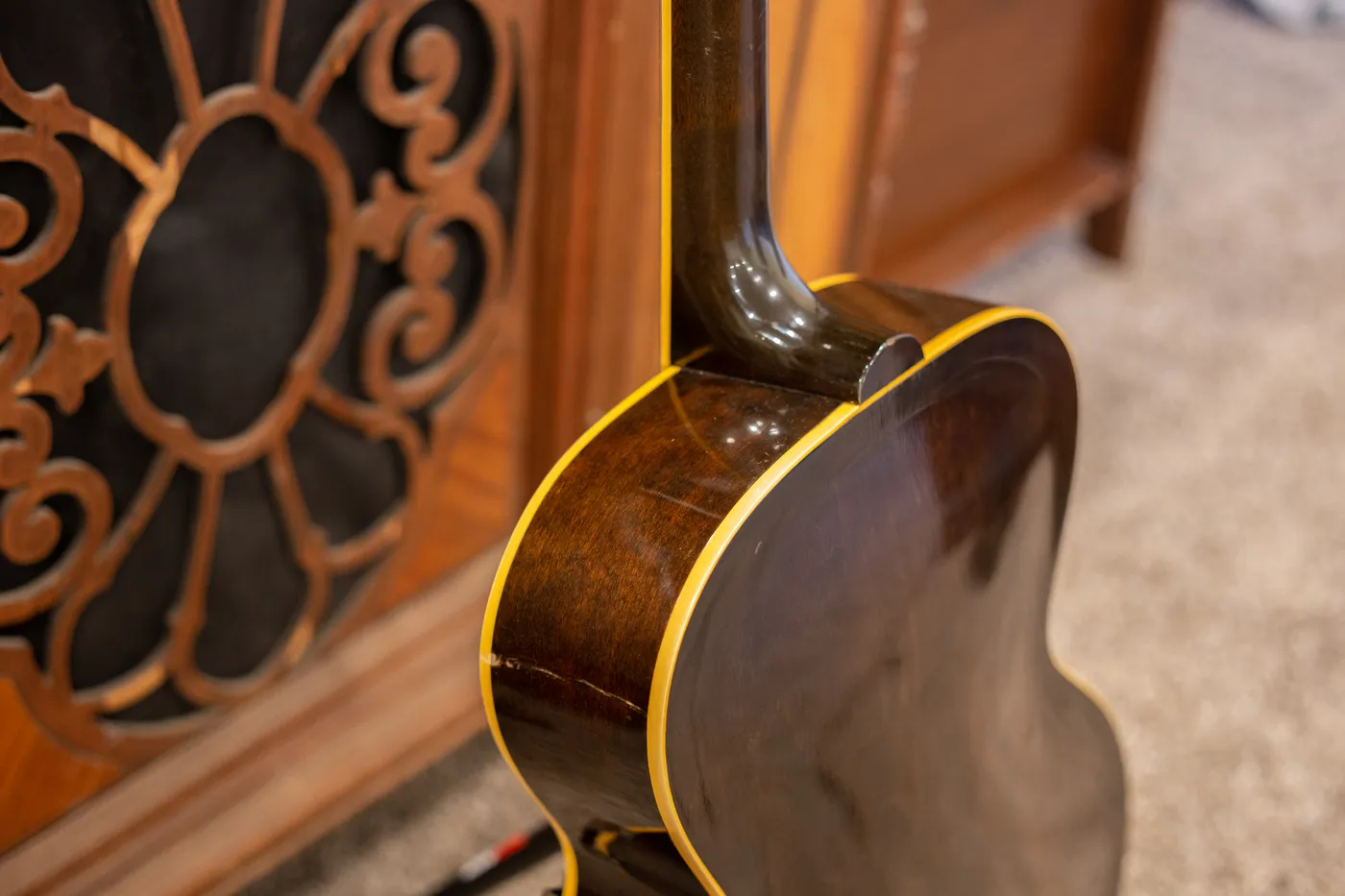
This guitar provides a consistent set of views: body, headstock, fingerboard, heel and interior factory stamp. The photographs show an acoustic instrument with no pickup installed in the top. They also show why a full-guitar view is useful alongside the close-ups. The headstock and fingerboard can be compared directly with the body they belong to.
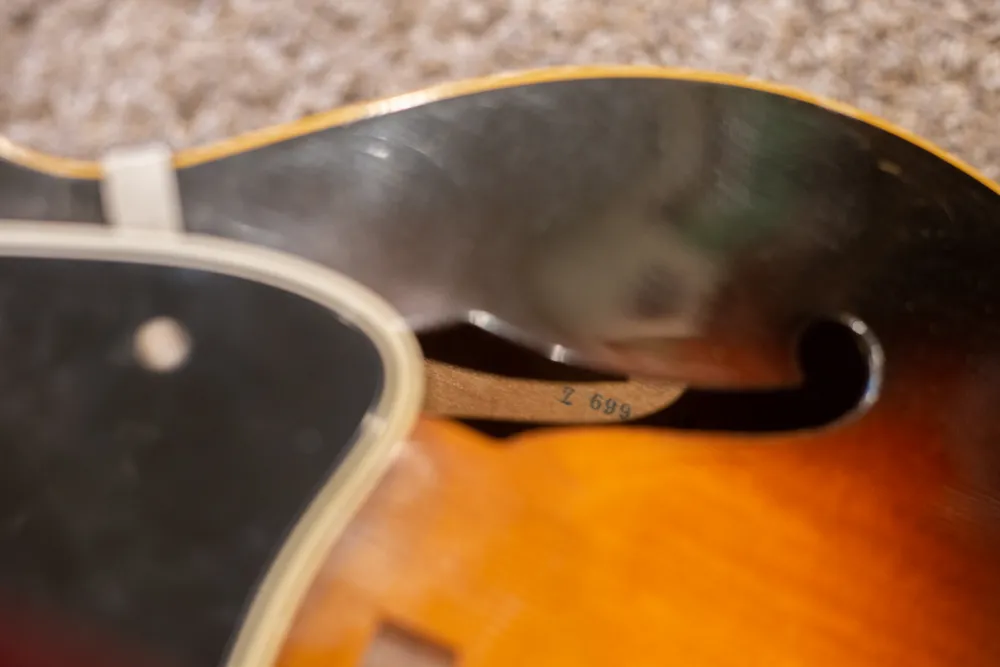
The archive date is supported by the visible Z prefix, which belongs to the 1952 FON sequence. That is a date clue for the production batch. The photographs don’t establish that every component or finish surface is untouched; those questions require their own inspection.
Keep The Prefix With The Digits
Read The L-50 Factory Order Number
1952 L-50 Factory Order Number
The photograph clearly shows Z 699 on the interior wood. Z identifies the 1952 batch-year system. Preserve the space and prefix in your notes, and don’t add a missing suffix. The visible number is a factory order marking rather than an individual paper-label serial.
The Gibson serial and FON guide explains the different numbering systems. A letter prefix has meaning only within the correct system. Don’t take a letter from a later reissue number and decode it as a 1950s factory order number.
Use a light from outside the f-hole and take several photographs with slightly different angles. Avoid rubbing, wetting or scraping the stamped area. If the number is faint, record only the characters you can read. A partial record paired with clear construction photographs is more useful than a guessed complete number.
Headstock logos and tuners can support the FON reading. The tuner guide explains overlapping Kluson changes and replacement clues. A changed set should be documented as such rather than used to override a legible factory marking.
A Noninvasive Checklist
Inspect An L-50 Before Calling It Original
Record The Body And Soundholes
Take full front and back pictures, plus the lower-bout measurement. Include the entire soundhole shape and top edge. This establishes which body generation deserves comparison before hardware details are considered.
Follow The Neck Into The Heel
Show both sides of the heel and the back of the headstock. Look for a visible repair line, finish change or binding disturbance. Describe what you see without assuming that every line is a break.
Photograph The Bridge Under String Tension
A side view should show string clearance, bridge height and the top around the feet. Leave adjustment to a repairer if the bridge is stuck or fragile. A photograph should preserve the instrument’s current condition.
Document Tuners And Tailpiece
Include screw positions, unused holes and any loose parts. Replacement buttons and a complete replacement machine are different changes. Record both accurately instead of labeling the whole guitar restored.
Preserve The Factory Markings
Copy the FON or serial exactly and include the original image. Pair it with the headstock logo and body photographs. If two clues disagree, send both for review rather than choosing the more attractive date.
What An Appraisal Still Needs
Separate L-50 Identity From Repair Condition
A guitar can be correctly identified as an L-50 and still have a replaced bridge, repaired crack or refinished body. Those findings answer different questions. An identification should state the supported model and era; the condition report should then describe each known change and any remaining uncertainty.
Look closely at the top around both f-holes and the bridge, where shadows can conceal separations. Back and rim seams deserve their own photographs. An interior repair may be visible only through an f-hole, so include repair invoices or older photographs if you have them. A repairer can assess whether a crack is stable without relying on its appearance alone.
The condition guide helps organize those findings. Before arranging cosmetic work, read whether to restore a guitar before selling. Keep original hardware and document the guitar as it sits. Use the L-50 price guide only after the correct version has been established.
Send The Evidence
Send Joe Your L-50 Photographs
Send the complete guitar, bridge height, heel, headstock and visible factory number. Include any known repairs and the case. Joe can review the evidence and explain what still needs an in-hand inspection.
Three Model Questions To Resolve
Compare An L-50 With The Correct Body Generation
A small f-hole L-50 should be compared with the early catalog dimensions before its inlays are judged. The 1934 reference has dot markers, while the photographed 1952 guitar has trapezoids. That difference is expected between the two references. It would be misleading to reject the small guitar simply because it lacks the later instrument’s fingerboard pattern.
A larger sunburst archtop with dots presents a different question. Compare the top construction with the L-48 specification, then examine the rest of the guitar. A changed fingerboard can complicate this distinction. The soundboard, interior evidence and neck work need to be considered before the inlay pattern is treated as a model verdict.
For a central-soundhole guitar, establish whether the body is arched and how the bridge and tailpiece are arranged. A round hole appears on many flat-top Gibsons as well. The L-50 name should follow a complete construction comparison rather than the combination of an old logo and a small body. Include an oblique side photograph that makes the top profile visible.
Record the guard separately from the body. A large replacement guard may cover a repaired area or an added pickup opening. Its outline can also make the guitar appear to have different proportions. Earlier photographs are useful when the guard has changed, because they can show which features were visible before the current equipment was fitted.
Keep a simple identification note with three fields: the proposed L-50 generation, the evidence supporting it and the details still unresolved. For Joe’s archive example, the larger f-hole body, trapezoid board and Z-prefix FON support the 1952 description. A different instrument may have fewer readable clues. That should produce a broader provisional date rather than a more confident guess.
Catalogs And Dating Records
L-50 Technical References
- Gibson Catalog W And Catalog X Illustrations
Original 1934 and 1937 L-50 catalog scans reproduced on the linked page establish the two body sizes and listed construction.
- Gibson 1962 Catalog, Page 41
L-50, L-48 and L-4C construction and dimensions for this catalog year.
- Gibson Serial Numbers And Factory Order Numbers
Z-prefix dating, serial systems and the need to verify physical features.
- Gibson Physical Features And Hardware
Neck, bridge, tailpiece, case and repair inspection principles.
Questions AboutGibson Identification
Is Every Gibson L-50 The Same Size?
Does A Z Prefix Date An L-50 To 1952?
Can An L-50 Have An Added Pickup?
Can Photos Prove That My L-50 Is All Original?
The Last Word
Keep The Evidence Together
Match the L-50’s body generation, factory marking and appointments, then document its repair history. Continue to the L-50 value guide for the appropriate price comparison or send Joe the photographs for an individual assessment.
Authenticity And Originality Are Assessed From The Information Provided. A Hands-On Inspection Can Change The Conclusion.