

Lap Steels · Early Cast-Aluminum Electric Steels
Rickenbacker Frying Pan A-22 And A-25Authentication Guide
An early Rickenbacher Frying Pan should be identified from its cast body, scale, pickup construction and surviving markings. Its round shape is recognizable, but later recreations and modified instruments can look similar at first glance. The condition of the casting and horseshoe pickup matters far more than a modern guitar serial-number decoder can tell you.
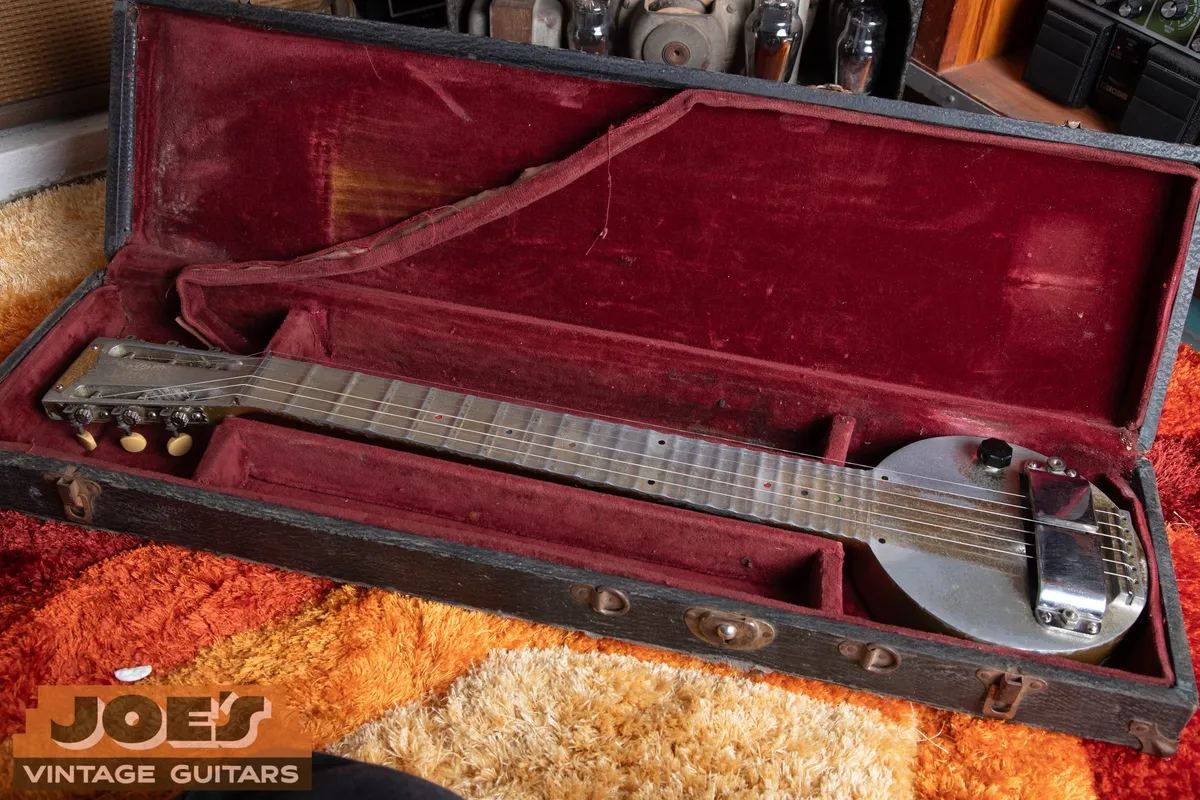
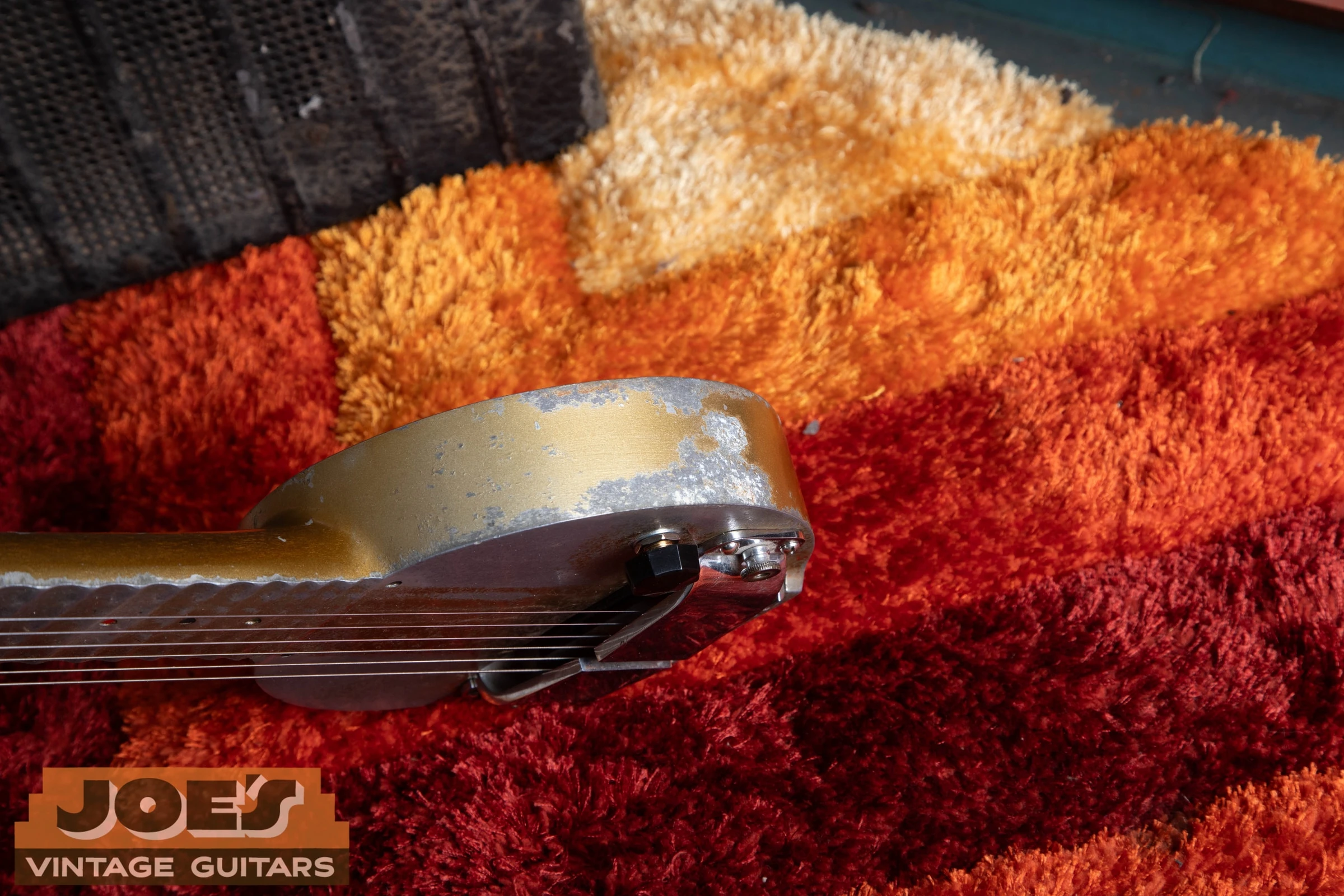
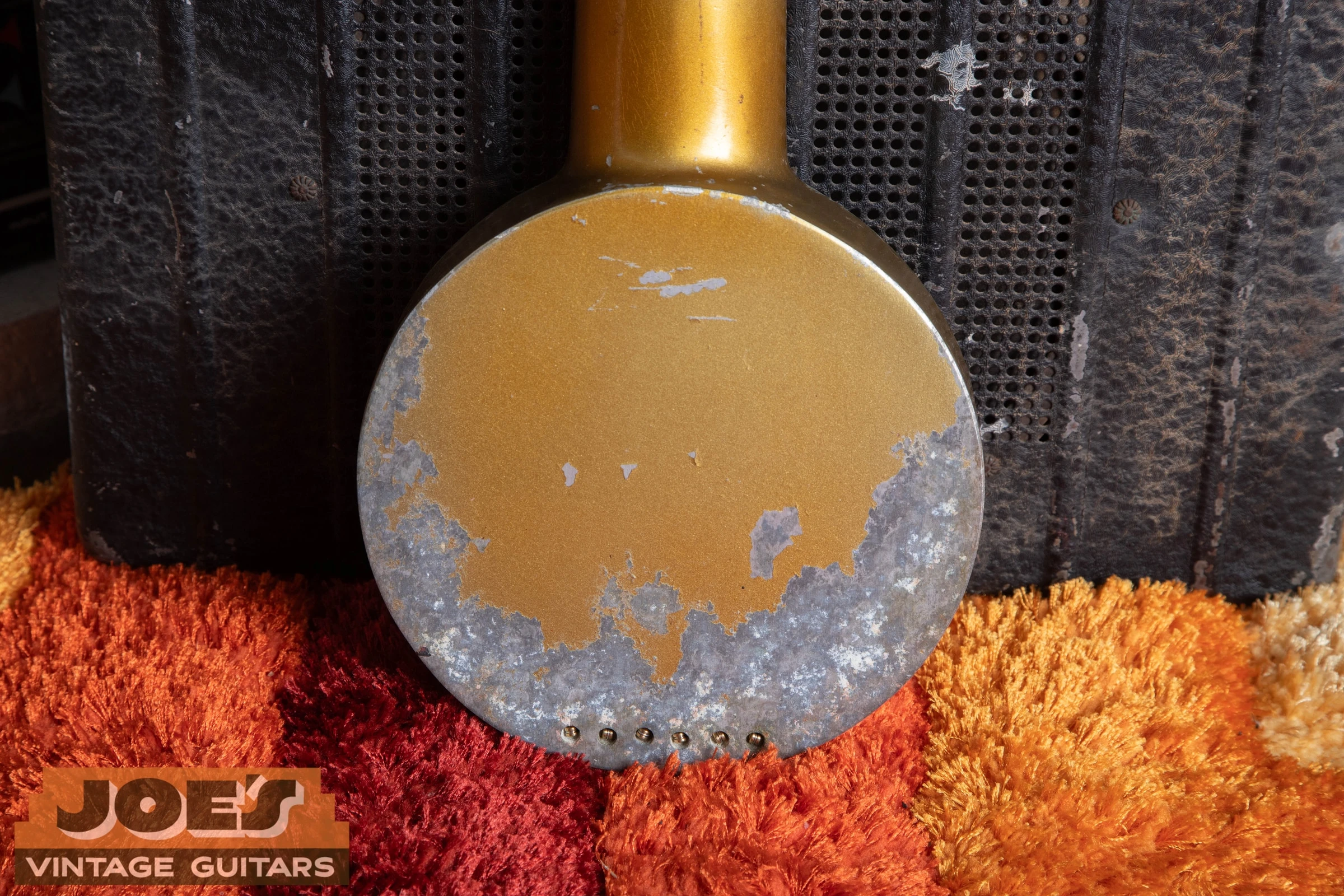
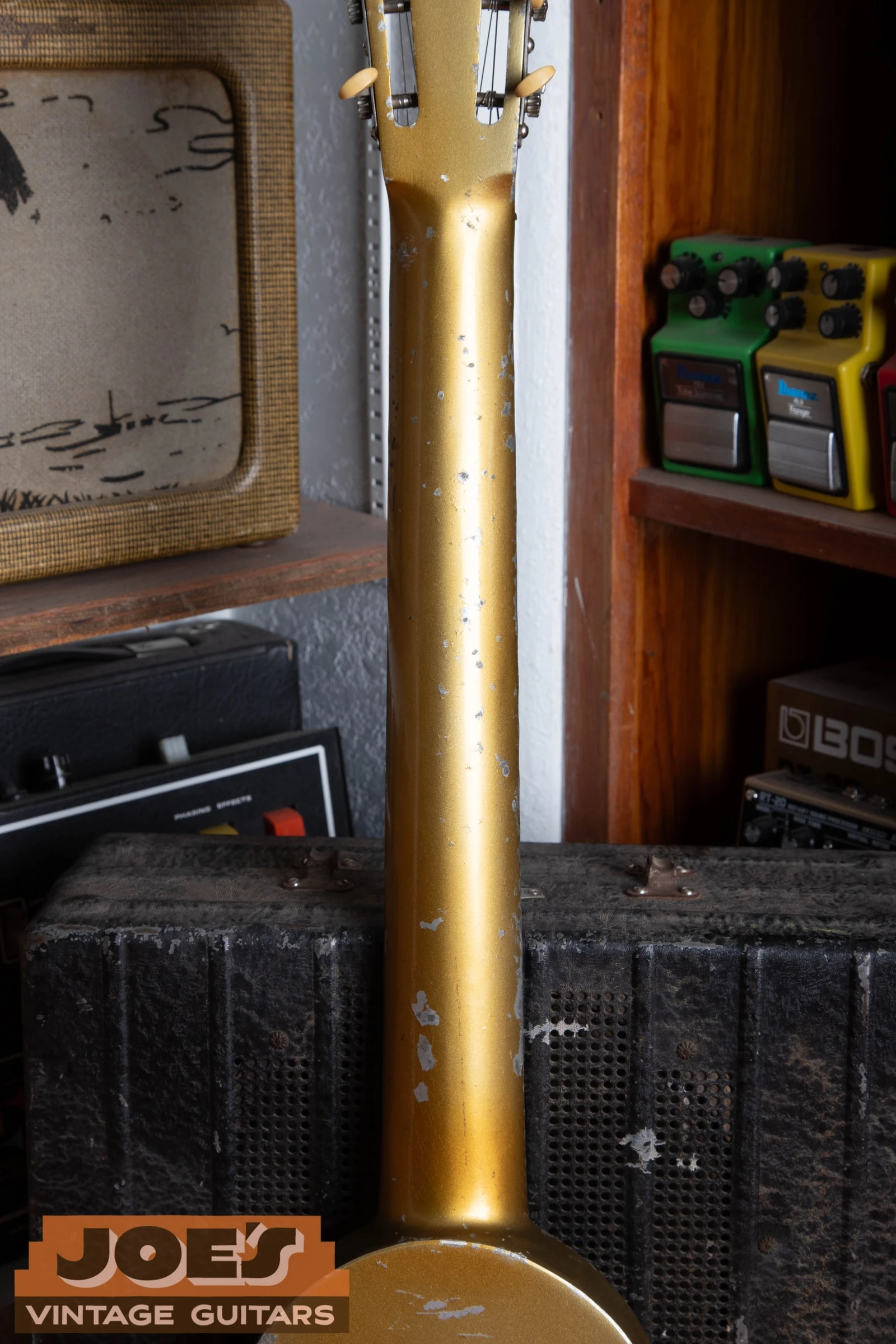
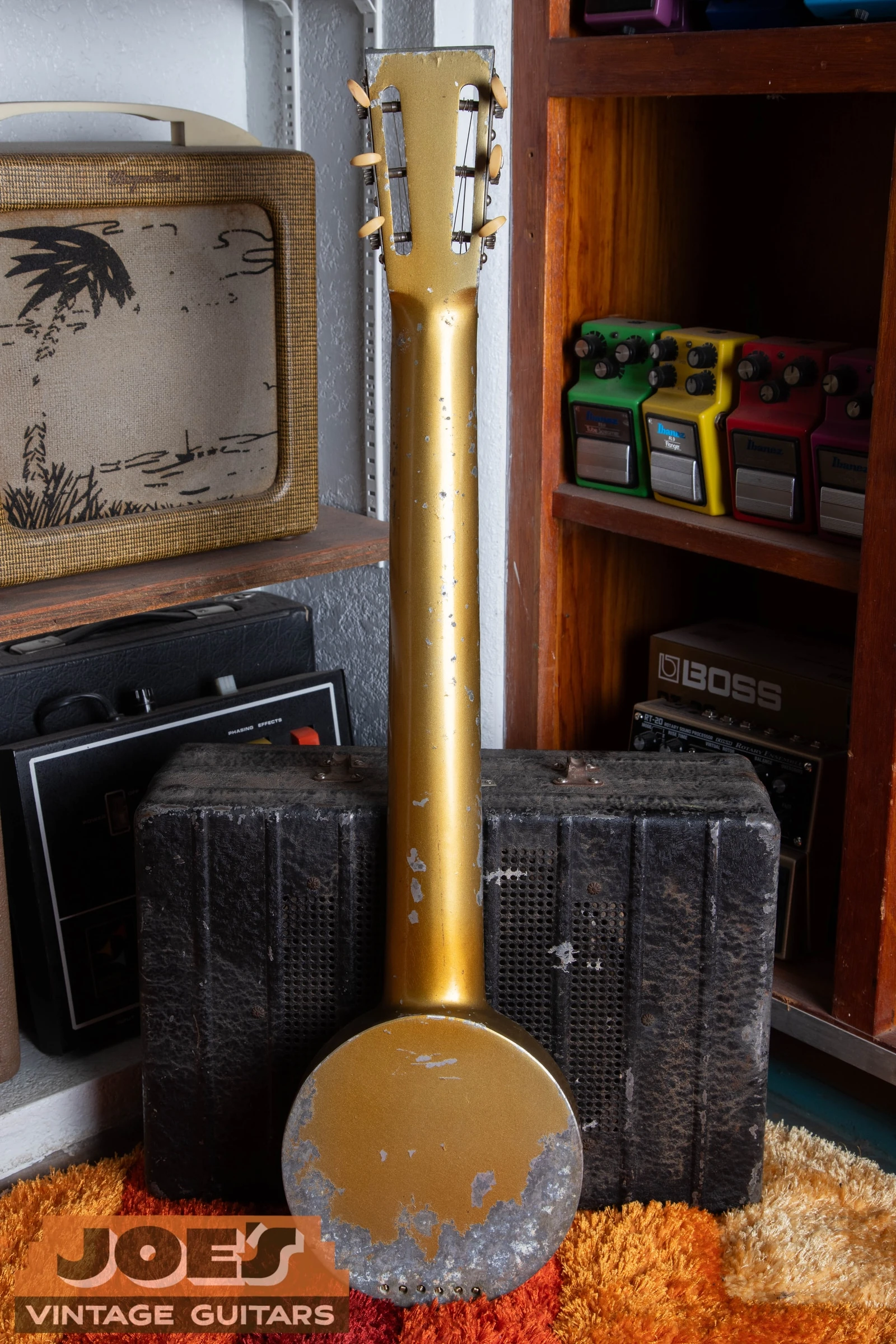
About These PhotosThe photographs show the A-22 filed in Joe’s archive as a 1930s instrument. They document its casting, pickup, badge and wear; they do not independently establish an exact year or original coating. Click a detail photograph to enlarge it.
Identify Before You Compare
Models And Variants
- A-22
- Shorter-scale cast-aluminum Frying Pan family.
- A-25
- Longer-scale version; measure the instrument rather than trusting the listing title.
- Six- And Seven-String Examples
- Count original tuner positions and inspect evidence of later conversions.
- Later Recreations
- Similar instruments from later makers are not original Rickenbacher production.
Measure The Scale And Inspect The Casting
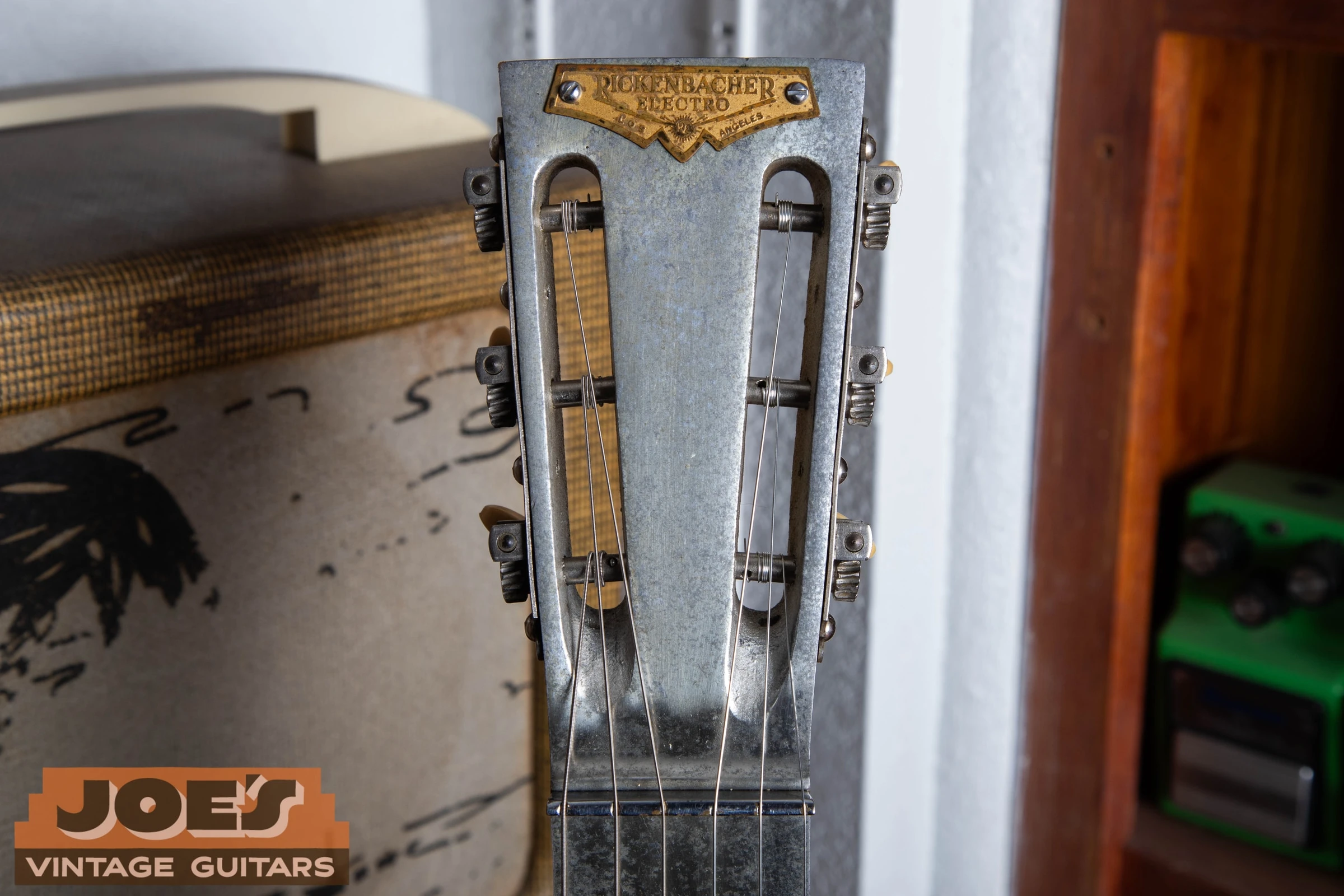
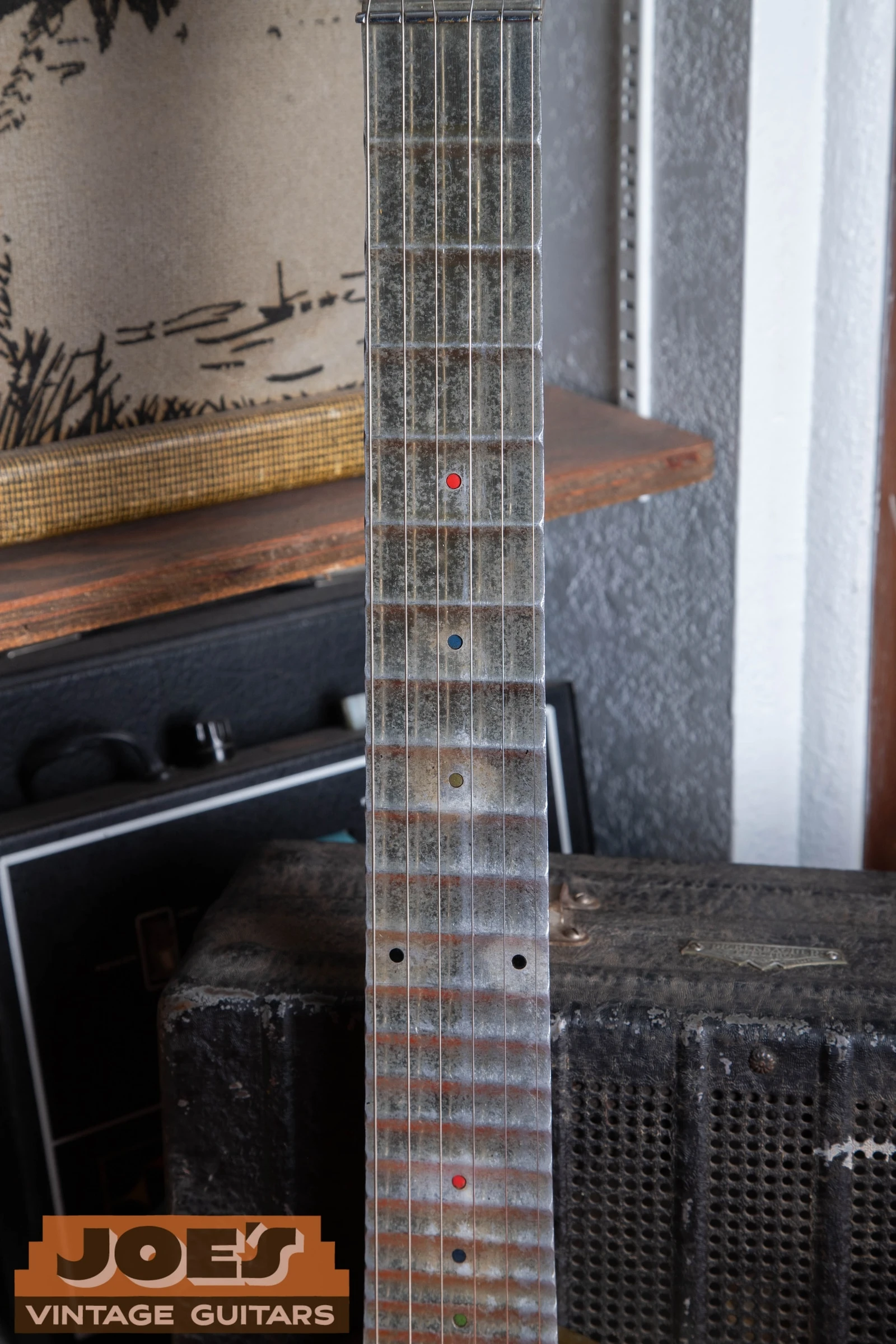
Measure from the nut to the bridge contact point and record the result. The original A-22 and A-25 families are associated with roughly 22.5-inch and 25-inch scales. A listing title can be wrong, especially on converted instruments. Photograph the entire front and back so the casting and neck proportions are visible.
Look for cracks, welding, ground surfaces or drilled holes in the aluminum. Our archive views show wear on the round body and rear neck. Wear itself does not date a casting, and a polished or repainted surface should not automatically be described as original.
Document The Horseshoe Assembly
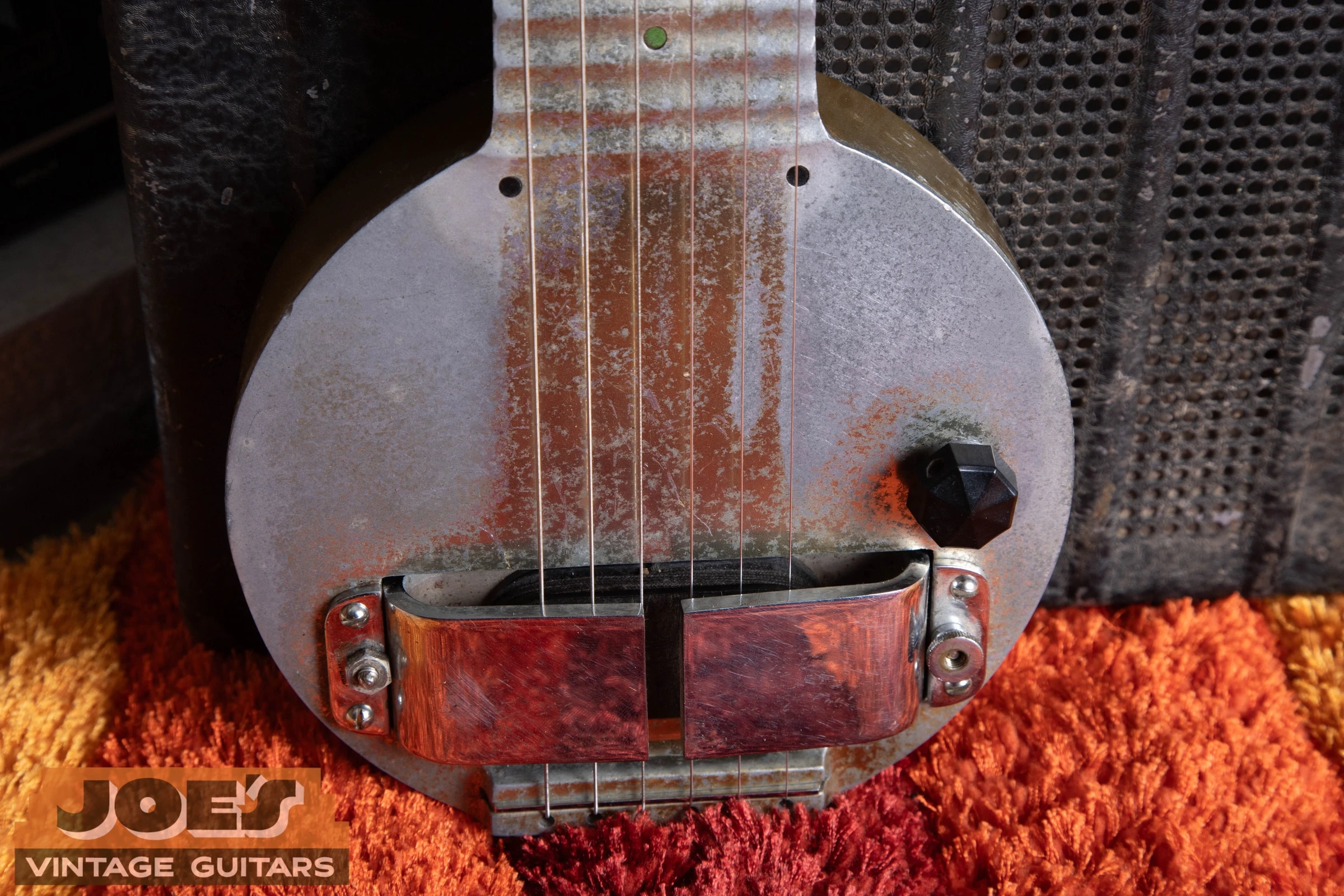
Photograph the pickup from above, from the side and around its mounting. On an original horseshoe design the magnetic structure is part of the pickup system. Do not treat it as an optional decorative cover or remove it casually. Have weak output assessed before deciding a pickup must be replaced.
Record visible patent markings, mounting details and any evidence of rewinding or repaired leads. A later replacement can resemble the original externally. Electrical resistance alone cannot prove a pickup’s age or originality; it must be considered with construction and service history.
Read Badges And Numbers In Context
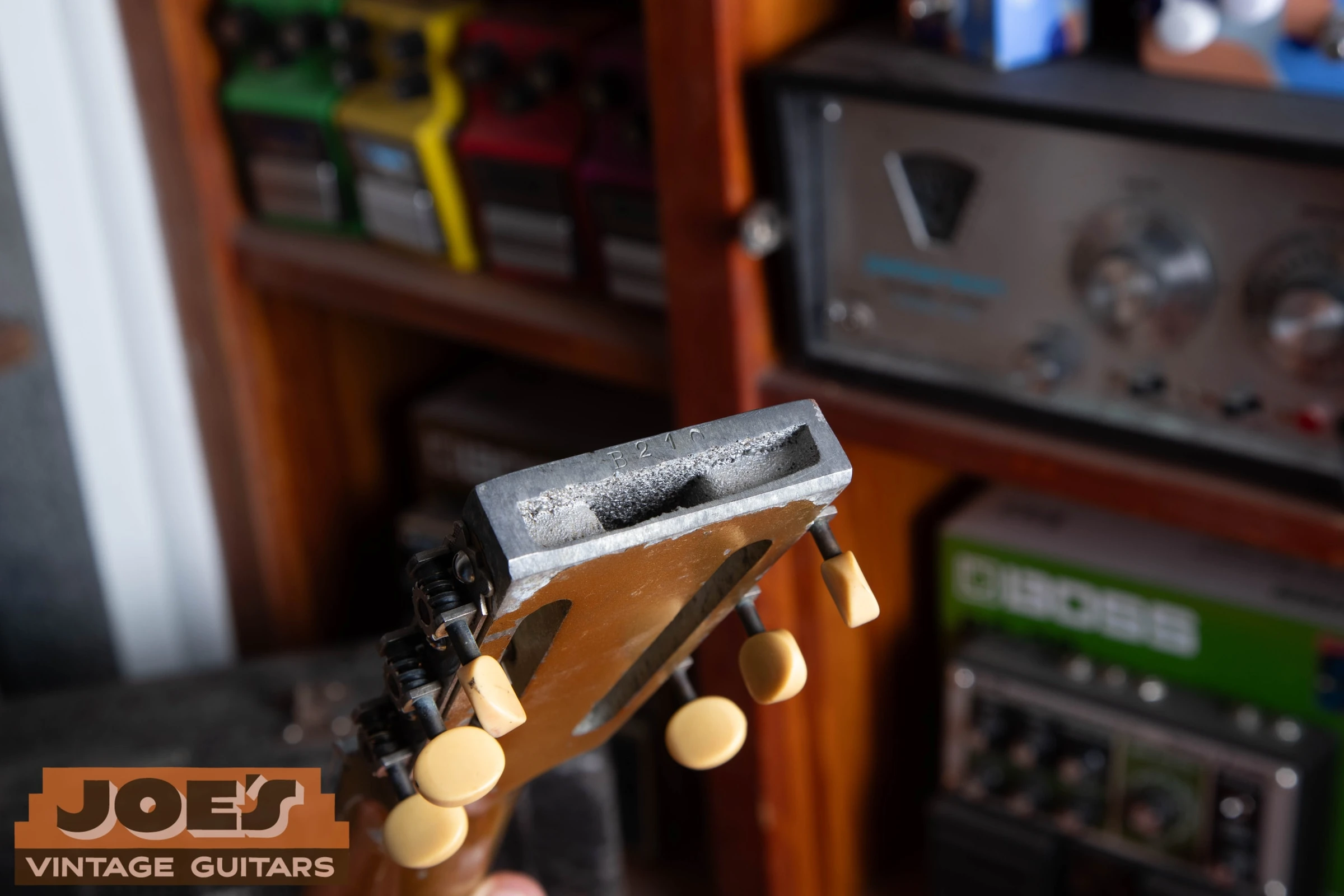
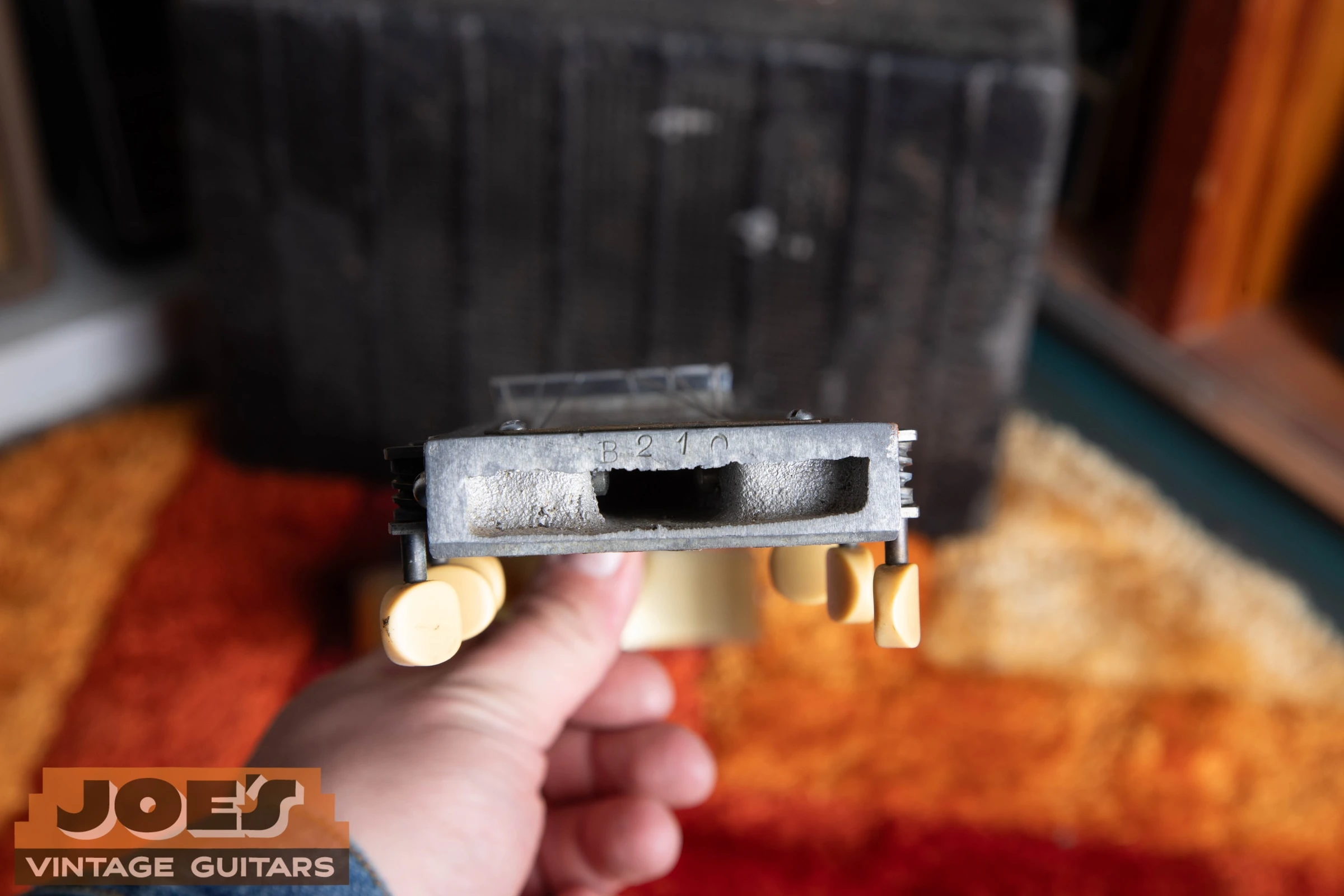
Early Rickenbacher spelling and Electro branding belong to the company’s history. Photograph the badge, headstock end and any stamped numbers. Do not feed an early steel’s marks into a later guitar decoder and present its output as a manufacturing date.
Use a combination of construction, pickup details, controls and period documentation to narrow the era. A removable badge or changed tuner set may be older or newer than the instrument. An exact-year claim should be supported by more than a familiar nameplate.
Inspect Controls, Tuners And Conversions
Count original tuner holes and inspect the nut and bridge for added string positions. Extra tuners, drilled metal or a new nut can reveal a six-to-eight or other conversion. Such an instrument may still be playable, but it needs a modified description.
Check jack mounting, control holes and solder work. An added tone control changes originality even if it is useful. Inspect the case and any matching amplifier separately; a case or amplifier found with the steel does not by itself establish that they were sold together.
Authentication Checklist
Keep four questions separate: is it a Rickenbacker, is the model correctly identified, is the date supported, and which parts or finishes remain original? A positive answer to one does not settle the others.
- Record the identity. Save the complete serial photograph, model claim, measurements and any dated paperwork. Use the serial lookup only for the formats it covers.
- Compare independent details. Check body construction, neck, pickups, tuners and controls against the same model and period. One replaced part may explain a mismatch; several unexplained conflicts need closer inspection.
- Describe condition precisely. Separate wear, refret, replacement nut, repaired breaks, routing, touch-up, overspray and refinishing. See our photo guide to refinishing clues.
- Inspect internally when justified. Have a qualified repairer document hidden routes, wiring and component dates if a disputed claim affects the purchase. Do not force old screws, fragile guards or an unfamiliar neck adjustment.
- Keep uncertainty visible. “Consistent with this period” is different from a proven exact date or a claim that every solder joint is untouched. Photos can guide an appraisal; some findings require an in-person examination.
Photos For An Appraisal
Take unfiltered photographs in even light. Include the full front and back, both headstock faces, the entire serial or other markings, pickups, controls, bridge, neck joint and any damage. Add the measurements or model-specific views described above. Photograph the case, paperwork and removed parts separately.
You do not need to take the instrument apart for an initial review. If a detail cannot be seen, say so. A clear statement of known repairs and unknown history is more useful than an unsupported claim of complete originality.
Have A Rickenbacker To Identify Or Sell?
Send Joe your photos and any known history. We can help identify the instrument, discuss its condition and make an offer if you are ready to sell.
Sources And Further Reading
Factory documents establish period model descriptions. Instrument-specific references help compare construction; their originality claims are not independent certifications.
- Rickenbacker Company History: Early Electric InstrumentsManufacturer history describes cast-aluminum Frying Pans, scale options and early steel designs.
Photo Credits And Scope
Photographs are from Joe’s Vintage Guitars’ instrument archive. Captions identify the actual instrument shown, including related-model and later-production comparisons. Full frames and existing watermarks are retained. A photograph of another model is not evidence of the correct construction for yours.