

Basses · Original Basses, S Models And Export Variants
Rickenbacker 4000 And 4001Authentication Guide
A vintage 4001 needs more than a recognizable body and jackplate date. Early and later production can differ in pickups, inlays, binding and neck details. The one-pickup 4000, plainer S variants, export instruments and later vintage-style recreations also need to be separated before an originality claim or price makes sense.
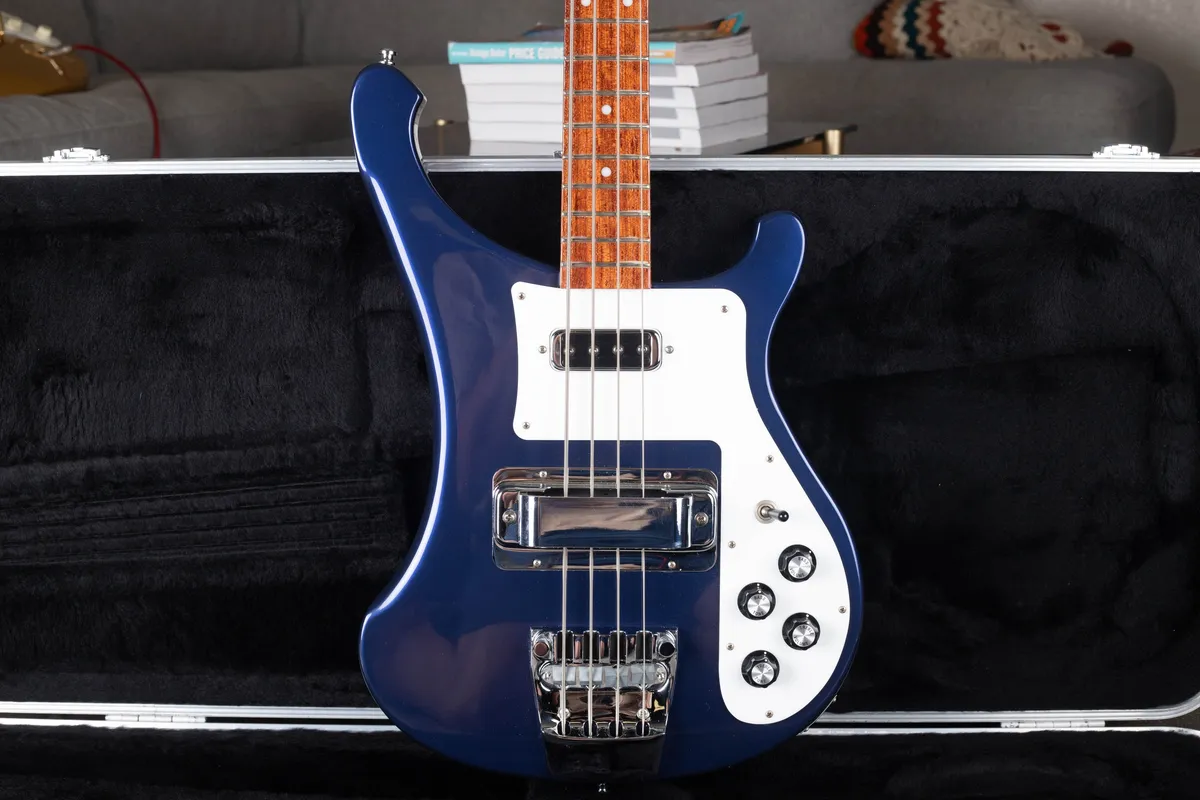
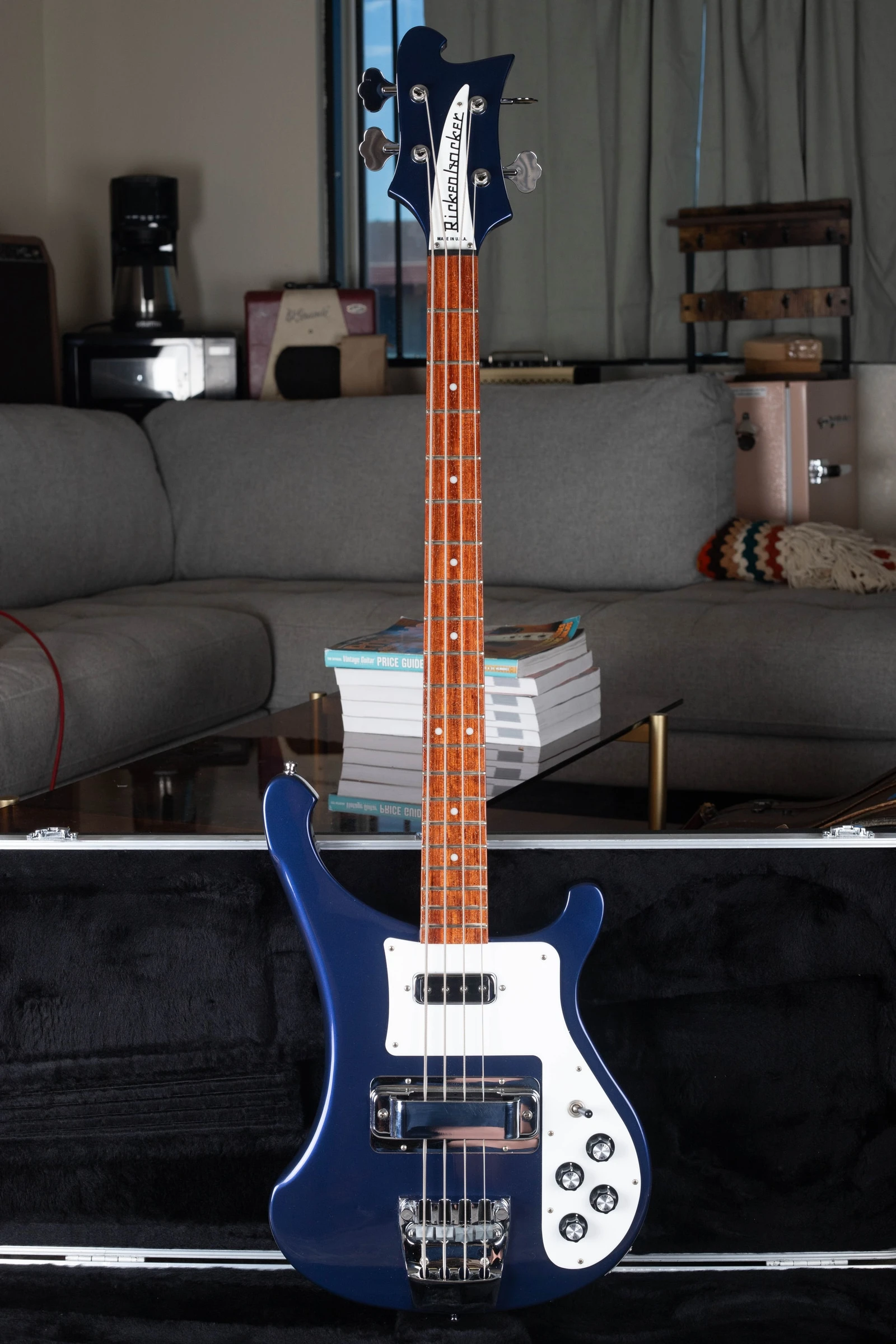
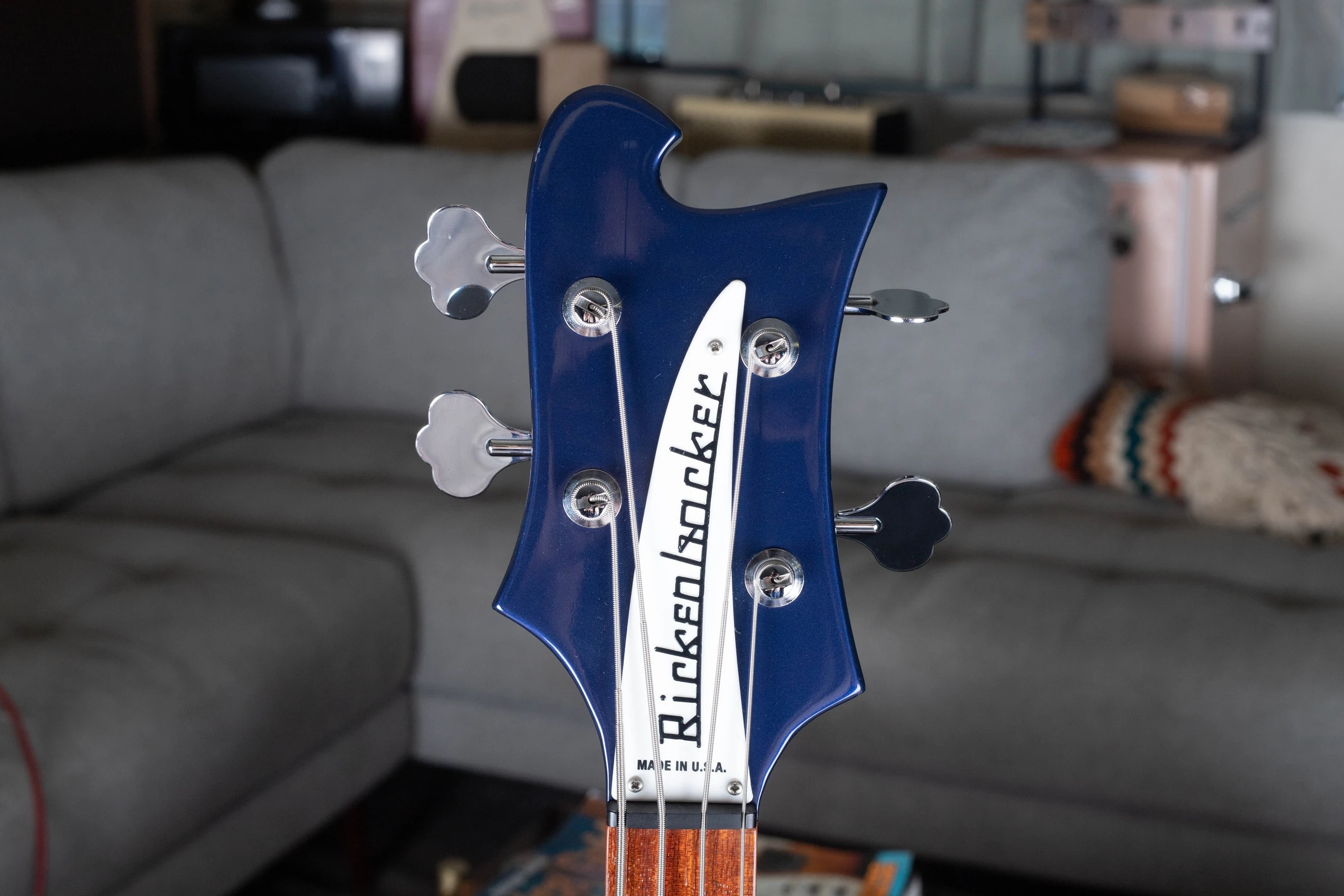
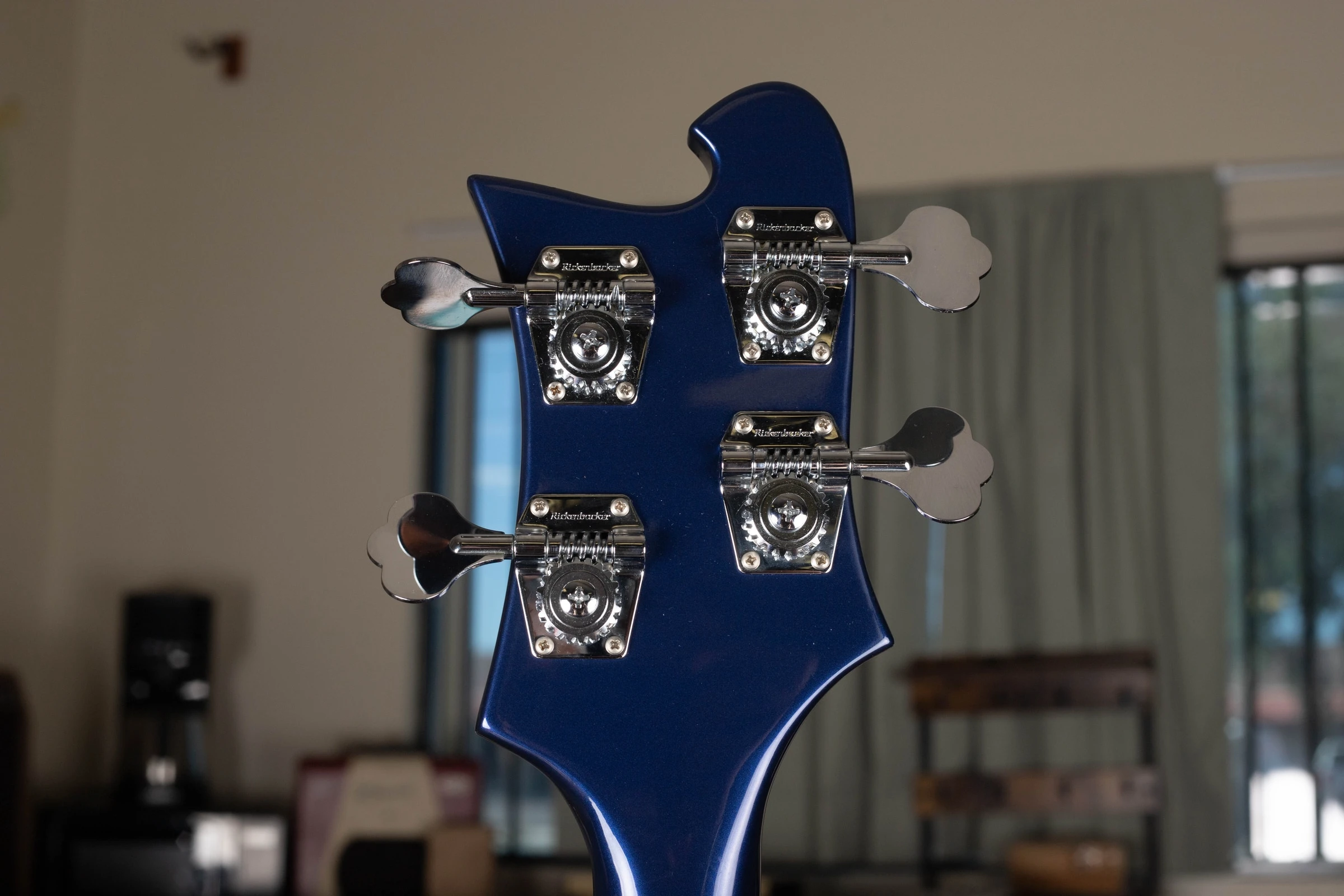
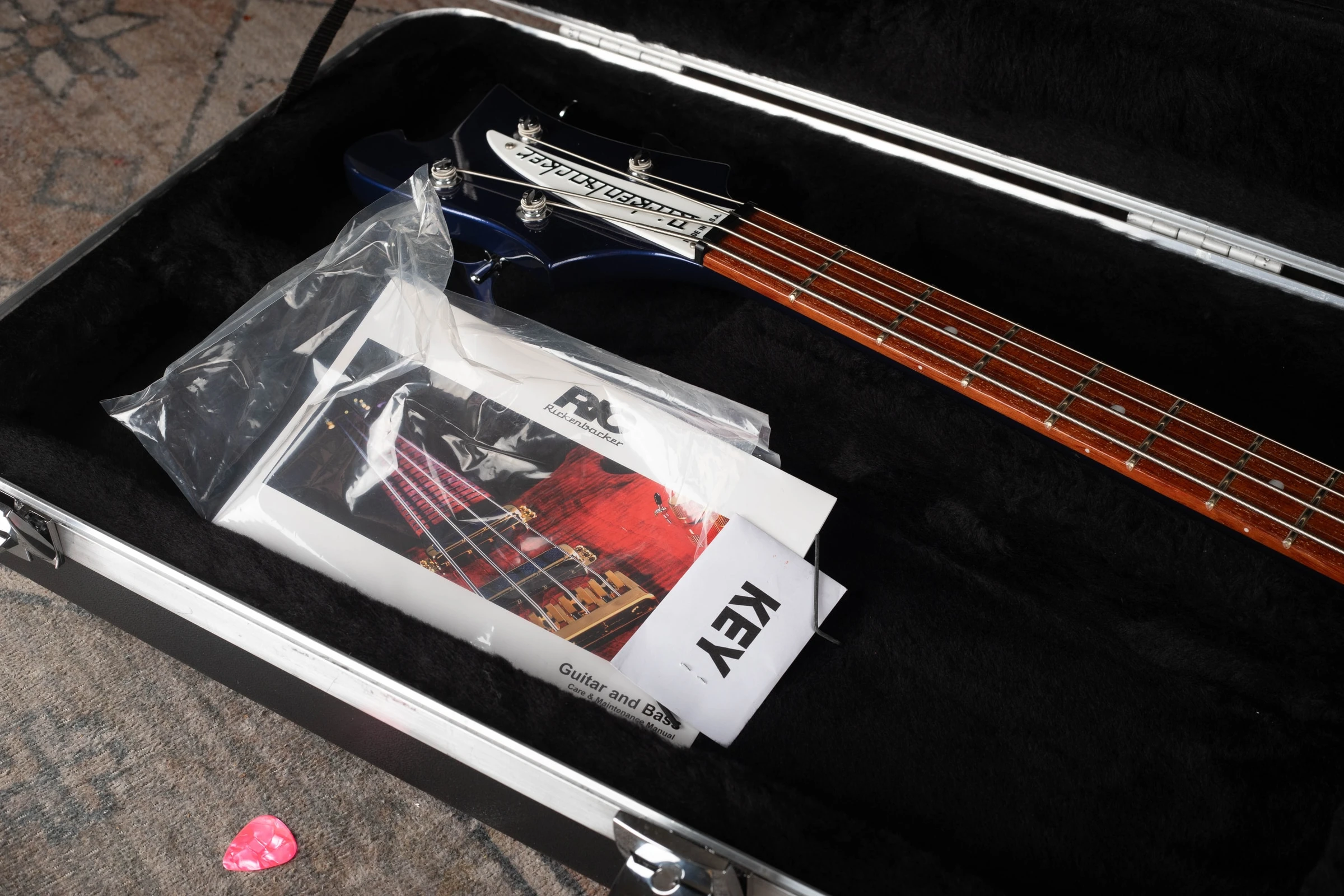
About These PhotosThe photos show our 1989 4003, a later related bass. They illustrate inspection points and differences; they do not demonstrate original 1960s 4001 or horseshoe-pickup specifications. Click a detail photograph to enlarge it.
Identify Before You Compare
Models And Variants
- 4000
- One-pickup bass; an added neck pickup can imitate a different model.
- 4001
- Two-pickup family with period-dependent construction and appointments.
- 4001S / Rose Morris 1999
- Plainer and export variants; verify dots, binding, output and period details together.
- 4001FL / 4008
- Fretless and eight-string variants need their own construction checks.
- 4001V63 / C64 / C64S
- Later recreations; vintage-style hardware does not make them original 1960s basses.
Establish The Original Model Configuration
Photograph the body, full fingerboard, outputs and both sides of the headstock. Determine whether the bass began as a one-pickup 4000 or a two-pickup model. Added neck pickups may require routing and a replacement guard, so the present pickup count alone cannot settle that question.
Compare plain and deluxe appointments as a group. Dots, triangle inlays, binding and mono or stereo wiring should fit the claimed version. A bass lacking deluxe trim is not automatically a stripped 4001; it may belong to an S or export specification.
Identify The Pickup Beneath The Cover
A chrome arch over a bridge pickup is not proof of an original horseshoe assembly. Our later 4003 has a cover over its bridge pickup, but that visual resemblance does not make it an early magnetic horseshoe. Inspect the actual pickup construction with appropriate help if its originality affects the price.
Neck pickup types and positions also need period comparison. Changes occurred across production, and older-looking replacement pickups are available. Avoid assigning an exact year from a toaster cover, binding pattern or inlay alone; check the serial and several independent construction details.
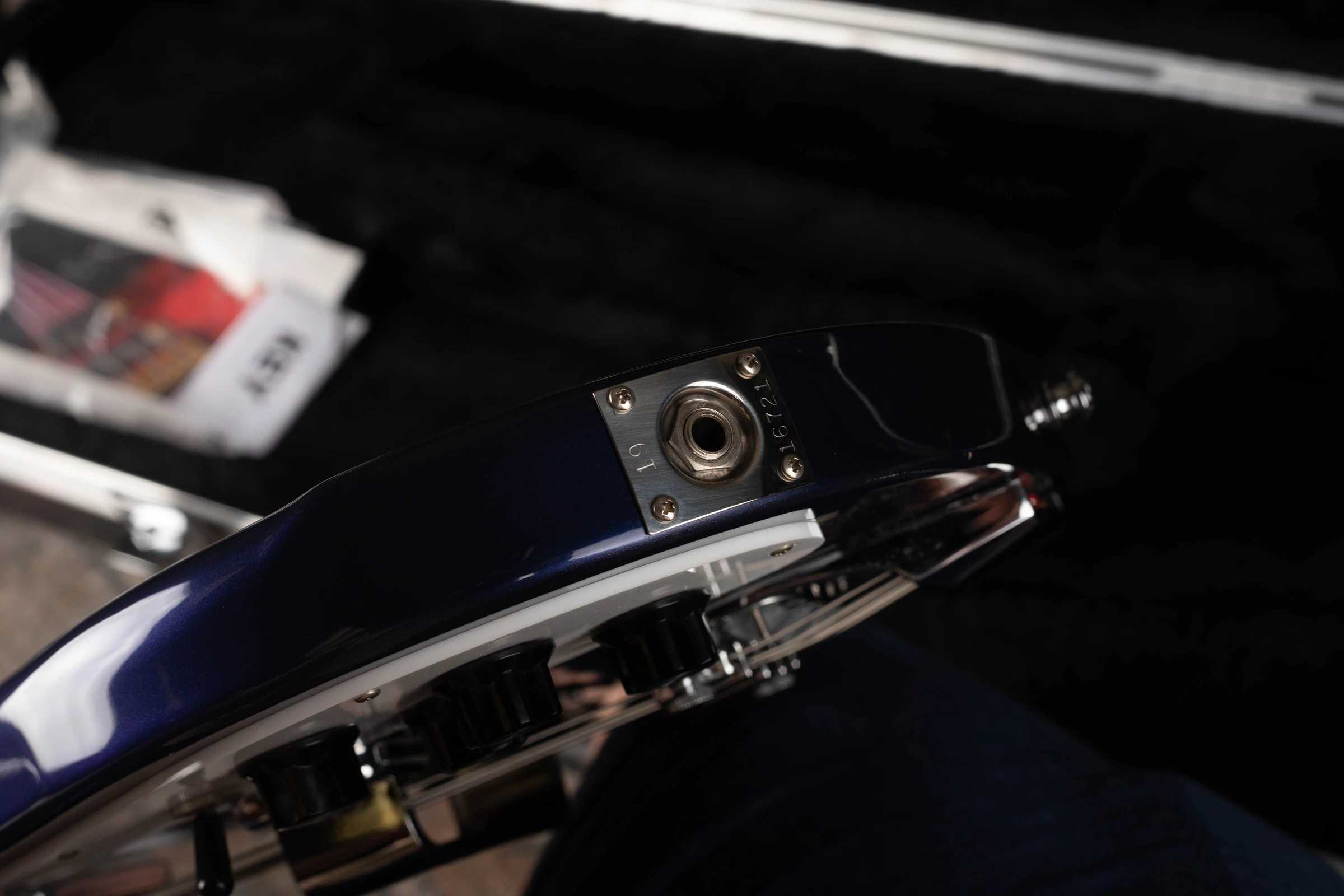
Inspect The Neck Before Adjusting Anything
Check relief on both sides, action at normal tension and the condition of the fingerboard-to-neck joint. Ask about previous rod work, fingerboard lifting or neck repairs. Different Rickenbacker rod systems require different handling, so an unidentified older bass should not be adjusted by trial and error.
Photograph the bridge and tailpiece from the side. Look for lifting, extra mounting screws, replacement footprints and changed saddle travel. A newer bridge may improve adjustment but can also involve additional holes. Record the actual work rather than calling every replacement a reversible upgrade.
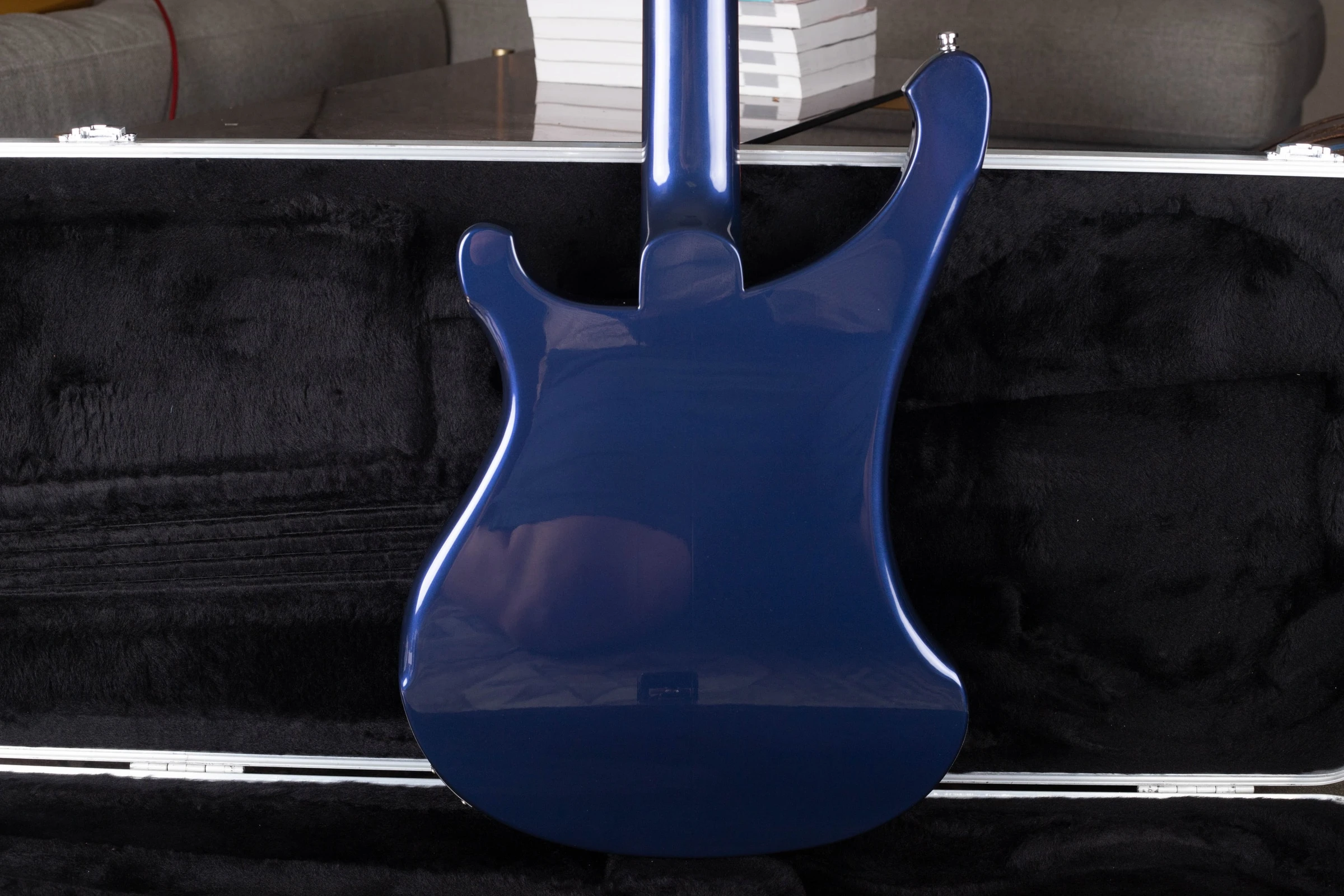
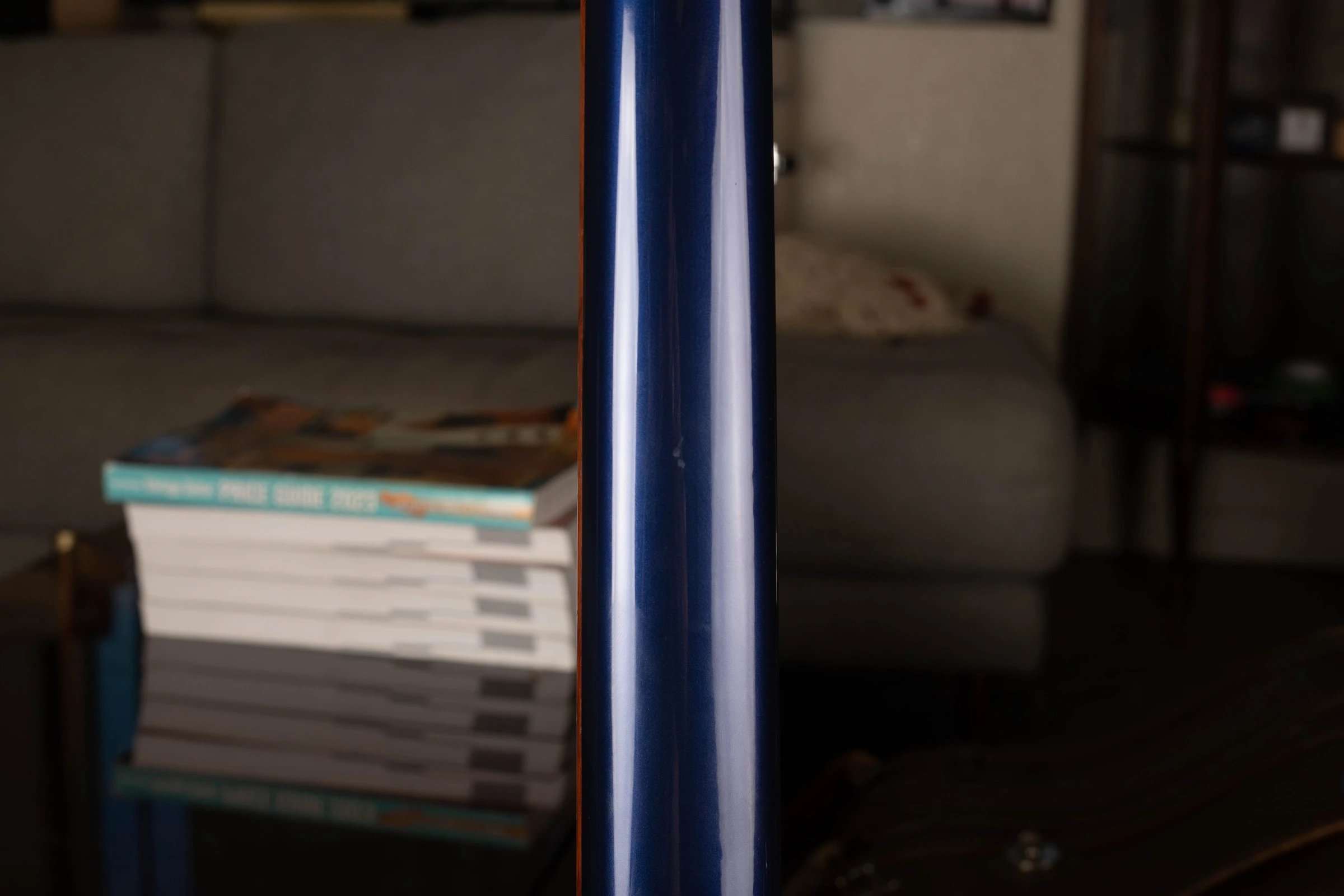
Check Fretless, Eight-String And Reissue Claims
A factory fretless bass should be distinguished from a defretted one by the fingerboard, marker layout and evidence of filled slots. A conversion can play well but belongs in a different description. Eight-string conversions also require checking the headstock, nut and bridge construction.
For a V63 or C-series bass, use the manufacturing serial and model suffix together. Period-looking pickups or a reversed headstock can be deliberate reissue features. Keep documented export provenance separate from resemblance to an artist’s instrument.
Authentication Checklist
Keep four questions separate: is it a Rickenbacker, is the model correctly identified, is the date supported, and which parts or finishes remain original? A positive answer to one does not settle the others.
- Record the identity. Save the complete serial photograph, model claim, measurements and any dated paperwork. Use the serial lookup only for the formats it covers.
- Compare independent details. Check body construction, neck, pickups, tuners and controls against the same model and period. One replaced part may explain a mismatch; several unexplained conflicts need closer inspection.
- Describe condition precisely. Separate wear, refret, replacement nut, repaired breaks, routing, touch-up, overspray and refinishing. See our photo guide to refinishing clues.
- Inspect internally when justified. Have a qualified repairer document hidden routes, wiring and component dates if a disputed claim affects the purchase. Do not force old screws, fragile guards or an unfamiliar neck adjustment.
- Keep uncertainty visible. “Consistent with this period” is different from a proven exact date or a claim that every solder joint is untouched. Photos can guide an appraisal; some findings require an in-person examination.
Photos For An Appraisal
Take unfiltered photographs in even light. Include the full front and back, both headstock faces, the entire serial or other markings, pickups, controls, bridge, neck joint and any damage. Add the measurements or model-specific views described above. Photograph the case, paperwork and removed parts separately.
You do not need to take the instrument apart for an initial review. If a detail cannot be seen, say so. A clear statement of known repairs and unknown history is more useful than an unsupported claim of complete originality.
Have A Rickenbacker To Identify Or Sell?
Send Joe your photos and any known history. We can help identify the instrument, discuss its condition and make an offer if you are ready to sell.
Sources And Further Reading
Factory documents establish period model descriptions. Instrument-specific references help compare construction; their originality claims are not independent certifications.
- Rickenbacker January 1977 Factory Price ListPeriod reference for 4000, 4001, fretless and multi-string variants.
- Rickenbacker Factory FAQExplains differences between original horseshoe pickups, covers and later recreations.
- Rickenbacker June 1988 Factory Price ListLists the later 4001V63 separately from contemporary standard basses.
Photo Credits And Scope
Photographs are from Joe’s Vintage Guitars’ instrument archive. Captions identify the actual instrument shown, including related-model and later-production comparisons. Full frames and existing watermarks are retained. A photograph of another model is not evidence of the correct construction for yours.