

Guitars · Original Short-Scale Guitars And Later Reissues
Rickenbacker 310, 315, 320 And 325Authentication Guide
A small body, three toaster pickups and a black finish can make a Rickenbacker look like a familiar Beatles guitar. Authentication starts further back: which short-scale model is it, when was it built, and which features belong to that version? A later 325 can be a desirable guitar in its own right, but its value needs a different comparison group from an original Capri.
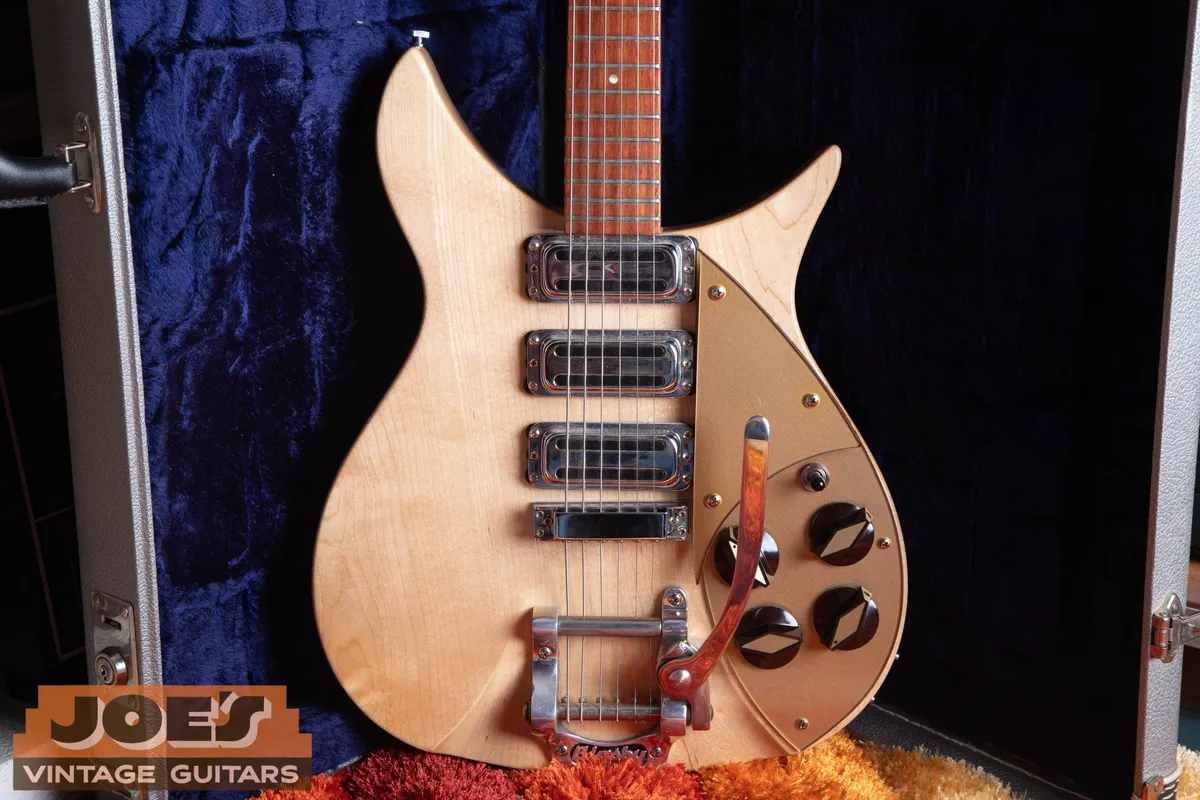
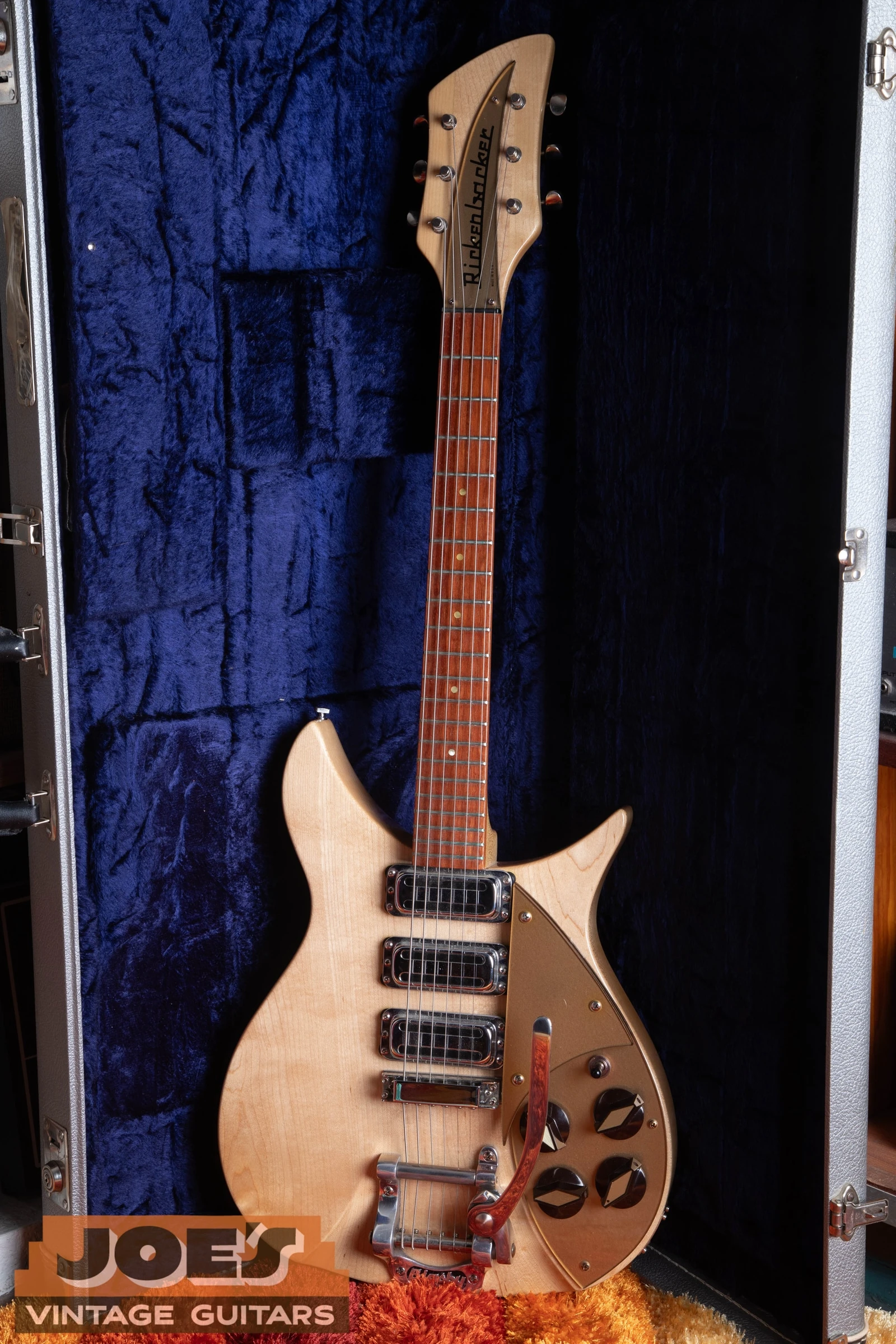
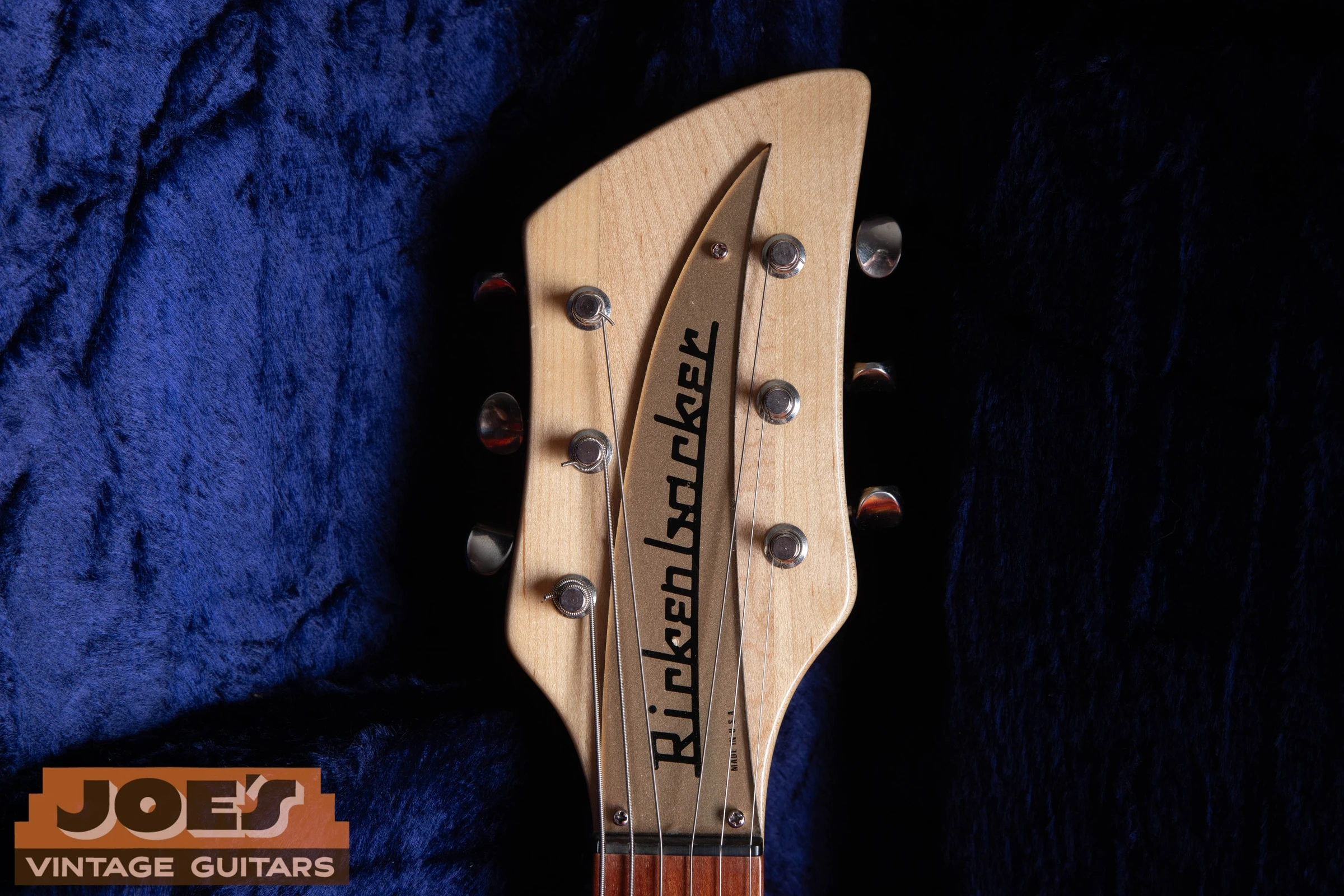
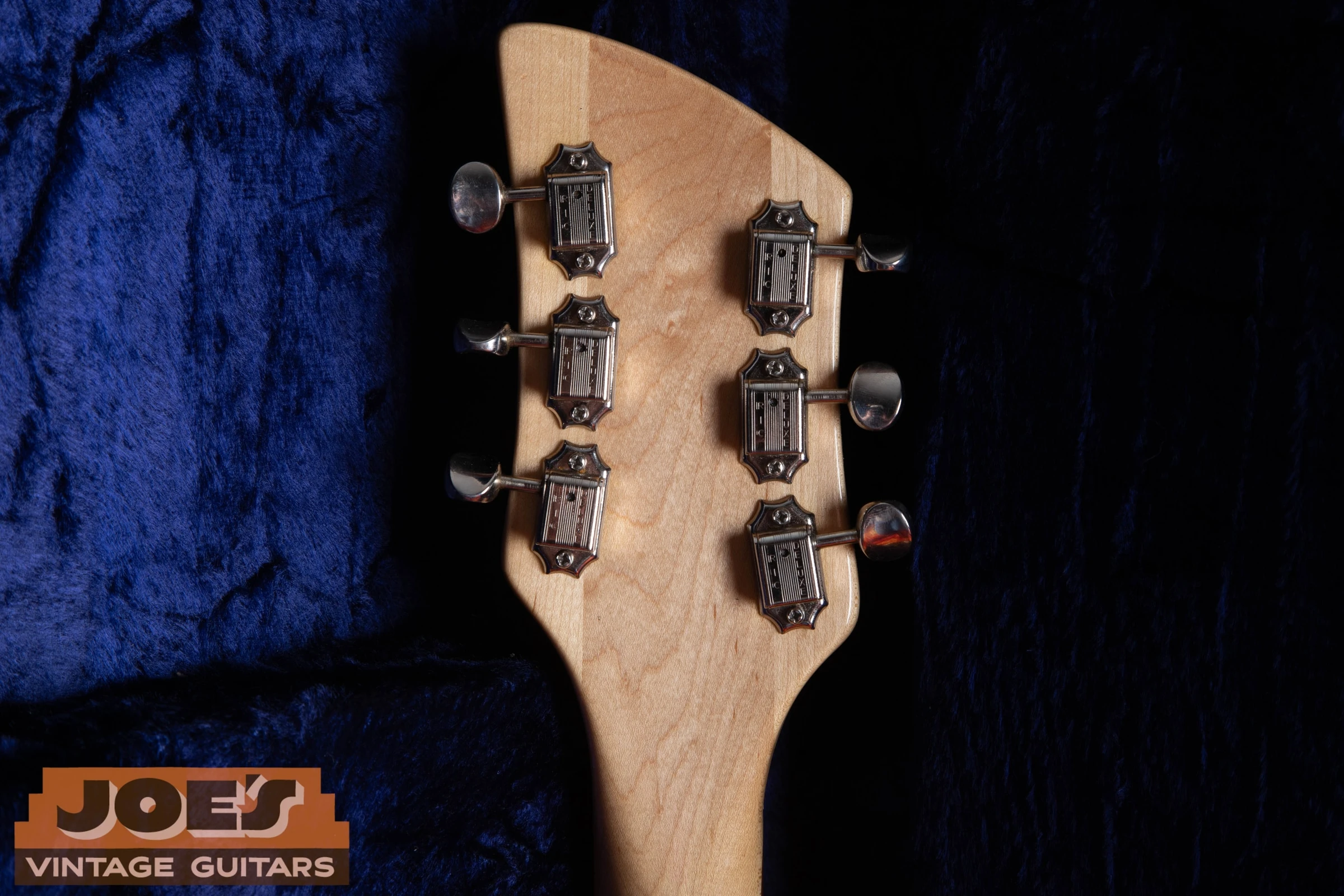
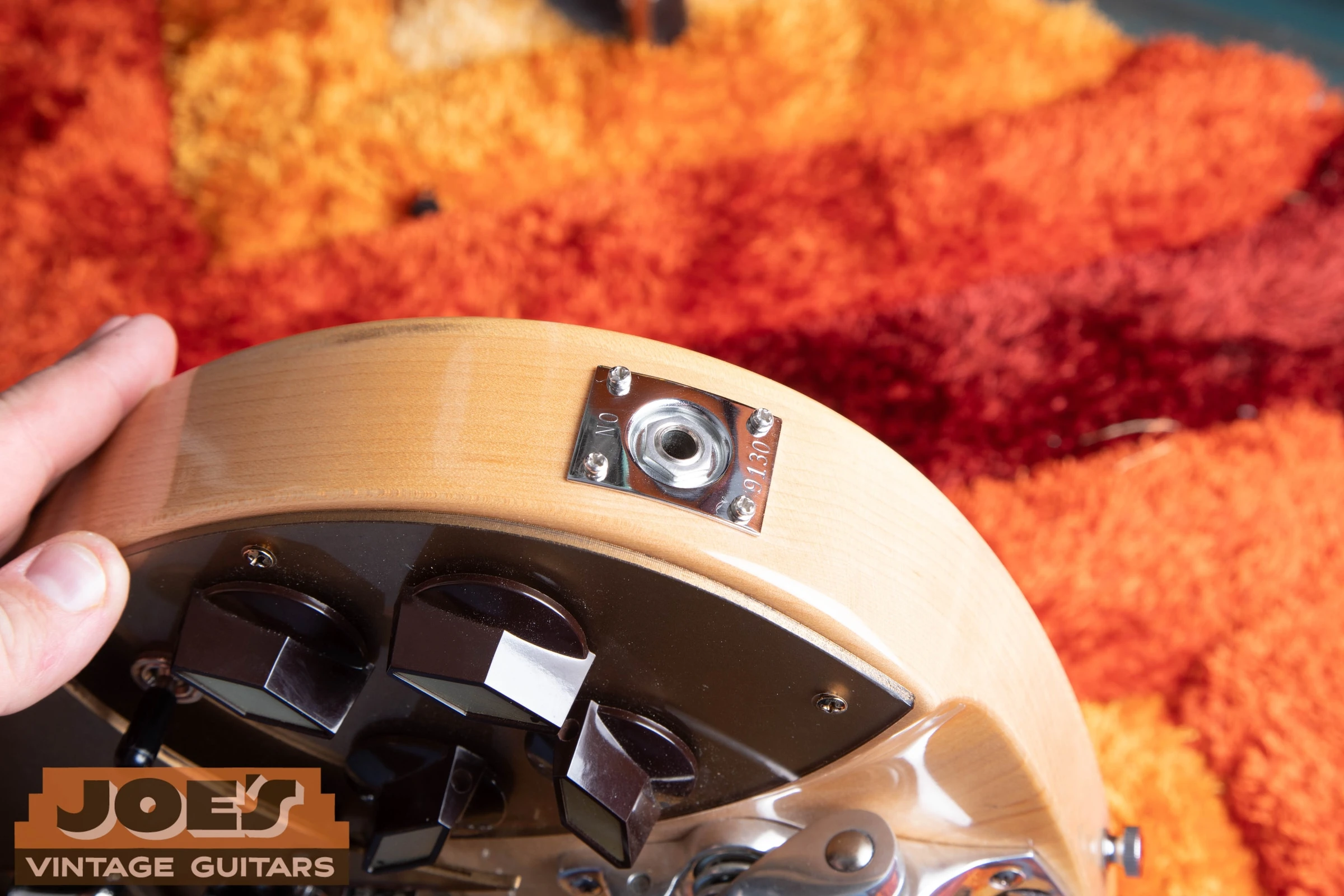
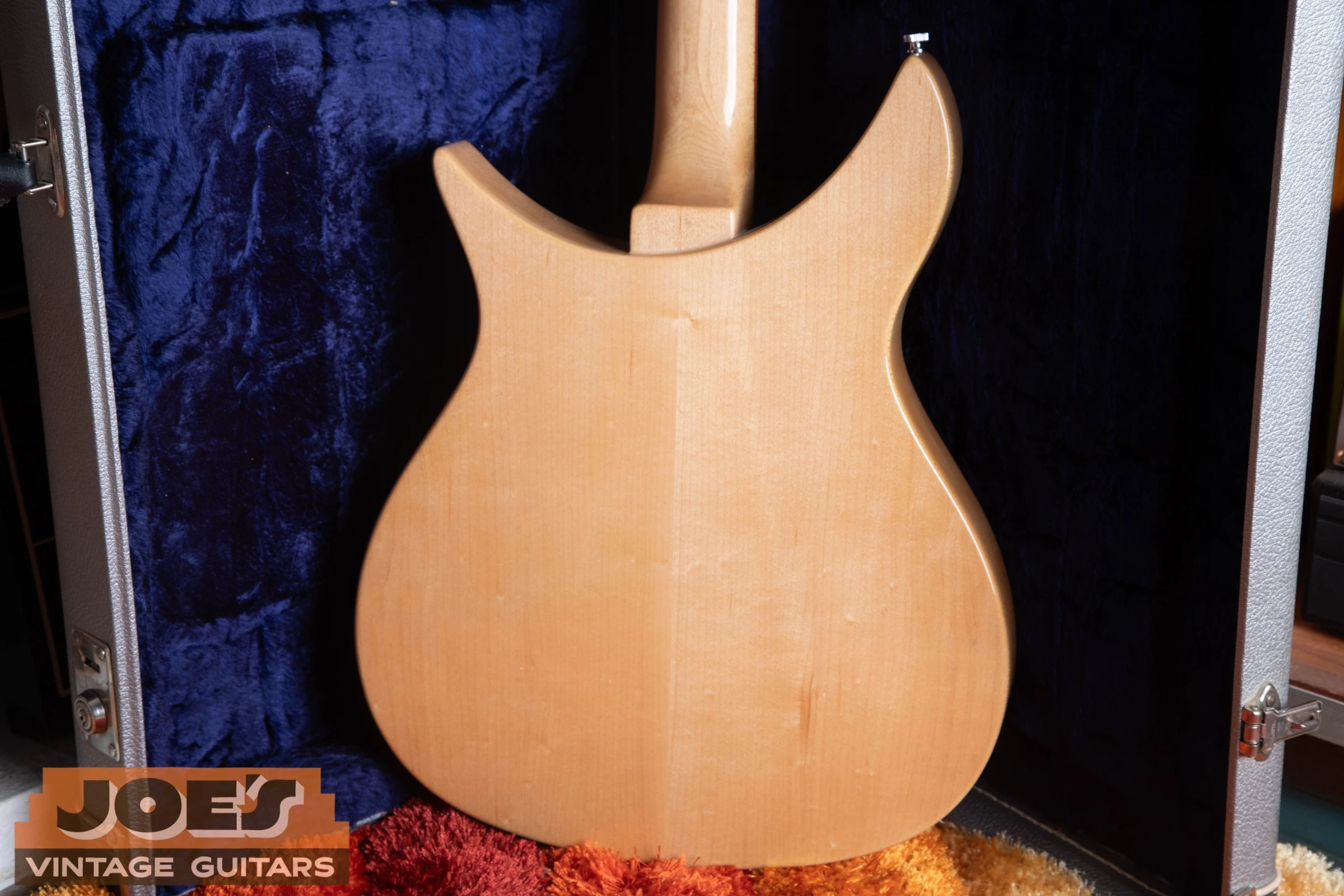
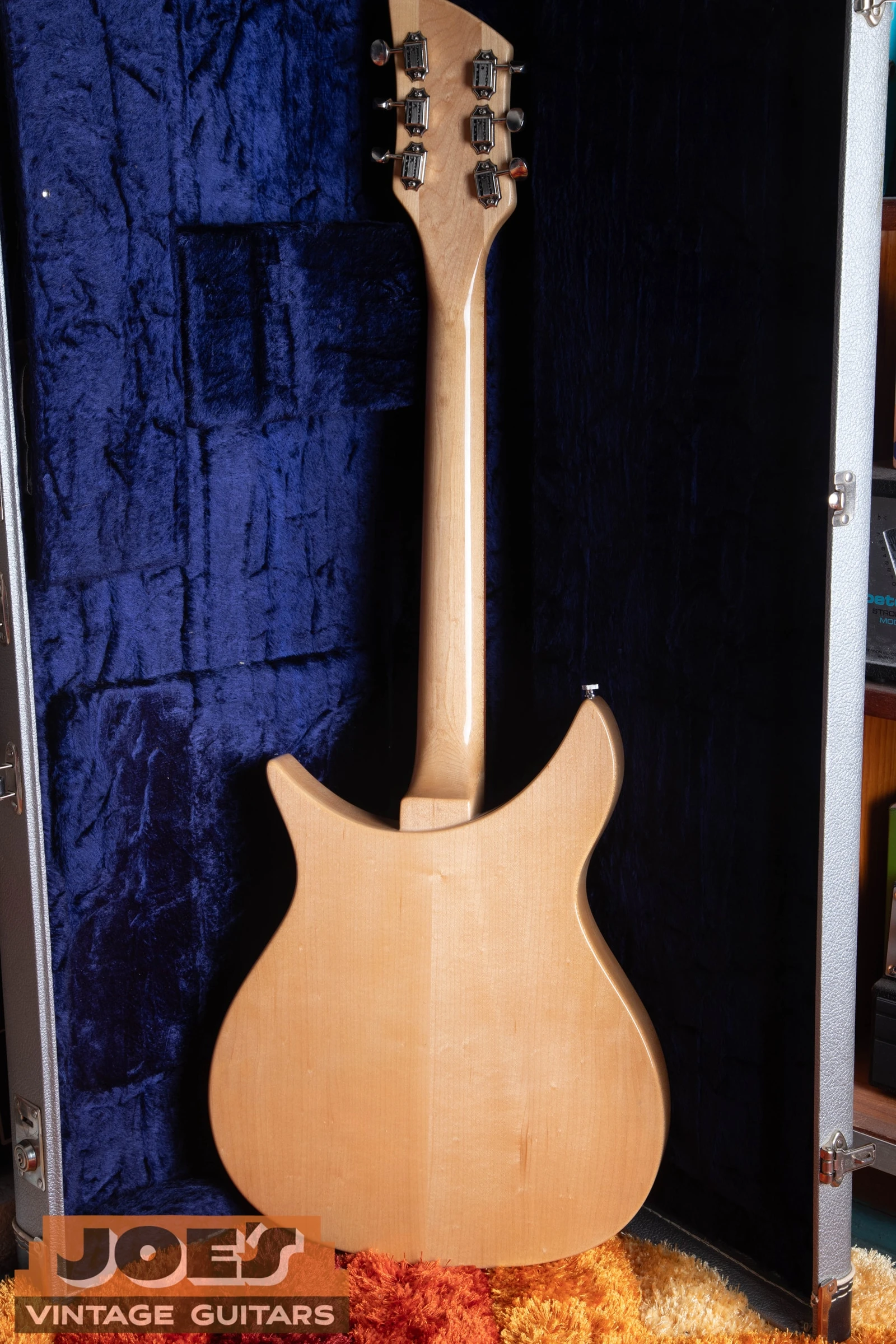
About These PhotosThe photos show a 1997 325 from our archive. This later instrument illustrates reissue features; it is not a 1958 or 1964 original. Click a detail photograph to enlarge it.
Identify Before You Compare
Models And Variants
- 310 / 315
- Short-scale, two-pickup relatives; verify the original tailpiece or vibrato configuration.
- 320 / 325
- Three-pickup short-scale family, with fixed-tailpiece and vibrato configurations.
- Rose Morris 1996
- Export designation associated with the short-scale three-pickup guitar. Do not read 1996 as its year.
- V59, V63, C58 And C64
- Later recreations with different period features. The suffix describes the inspiration, not the manufacturing date.
- 350 / 350V63
- Full-scale relative; a similar silhouette does not make it a 325.
Measure The Scale Before Naming The Model
Photograph the whole guitar beside a ruler, then measure from the nut to the twelfth fret and double that distance. This separates the short-scale family from a similar-looking full-scale 350. Count the pickups and photograph the tailpiece attachment. A removed vibrato can leave a guitar looking like a fixed-tailpiece version, so the current hardware alone cannot settle the original model.
Do not identify a guitar as a 1958 Capri because it has a thick-looking body or gold plastics. Record body depth, neck joint, soundhole or closed top, fret count and headstock shape together. Those observations give an appraiser something more useful than a seller’s nickname.
Separate Original Production From Reissues
Our 1997 example has three toaster-style covers, gold plastics and a Bigsby. Those details establish its appearance, not a 1950s date. Photograph the complete jackplate serial, including the letters above the digits, and compare that date with the construction. The factory’s later price lists explicitly describe V59 and V63 versions as vintage-series models.
Look for a consistent instrument beneath the styling: tuner footprints, neck finish, pickup leads and mounting holes should make sense together. A modern replacement nameplate can carry an old-looking logo. An authentic older jackplate can also be transferred to another guitar. Neither part is enough on its own.
Inspect The Vibrato And Control Layout
Different 325 versions use different vibratos, guards and control arrangements. Compare the specific version before calling a four-knob or five-knob layout incorrect. Examine the body around the vibrato hinge, strap button and bridge for abandoned holes, filled screw marks or a footprint from a previous unit. A Lennon-inspired modification may be intentional owner work.
Test each pickup selection through a clean amplifier and note what each control actually changes. Photograph any loose original arm, bridge or knobs separately. A tidy-looking guard can conceal routing or changed wiring, so an internal inspection may be needed if an expensive original-era claim depends on untouched electronics.
Check Short-Scale Playability And Repairs
Play every fret at normal tuning and inspect the neck from both sides. Record action at the twelfth fret, remaining fret height and bridge adjustment room. A small guitar with high action is not automatically normal because it is short scale. Check for separation at the neck joint and finish lines that continue into the wood.
Inspect the headstock behind the nut and around the tuner screws. Changed tuners may leave extra holes; a repaired headstock may have localized overspray. Keep those findings separate from ordinary finish checking. Ask for repair invoices and before-and-after photos when a seller describes major work as only a setup.
Authentication Checklist
Keep four questions separate: is it a Rickenbacker, is the model correctly identified, is the date supported, and which parts or finishes remain original? A positive answer to one does not settle the others.
- Record the identity. Save the complete serial photograph, model claim, measurements and any dated paperwork. Use the serial lookup only for the formats it covers.
- Compare independent details. Check body construction, neck, pickups, tuners and controls against the same model and period. One replaced part may explain a mismatch; several unexplained conflicts need closer inspection.
- Describe condition precisely. Separate wear, refret, replacement nut, repaired breaks, routing, touch-up, overspray and refinishing. See our photo guide to refinishing clues.
- Inspect internally when justified. Have a qualified repairer document hidden routes, wiring and component dates if a disputed claim affects the purchase. Do not force old screws, fragile guards or an unfamiliar neck adjustment.
- Keep uncertainty visible. “Consistent with this period” is different from a proven exact date or a claim that every solder joint is untouched. Photos can guide an appraisal; some findings require an in-person examination.
Photos For An Appraisal
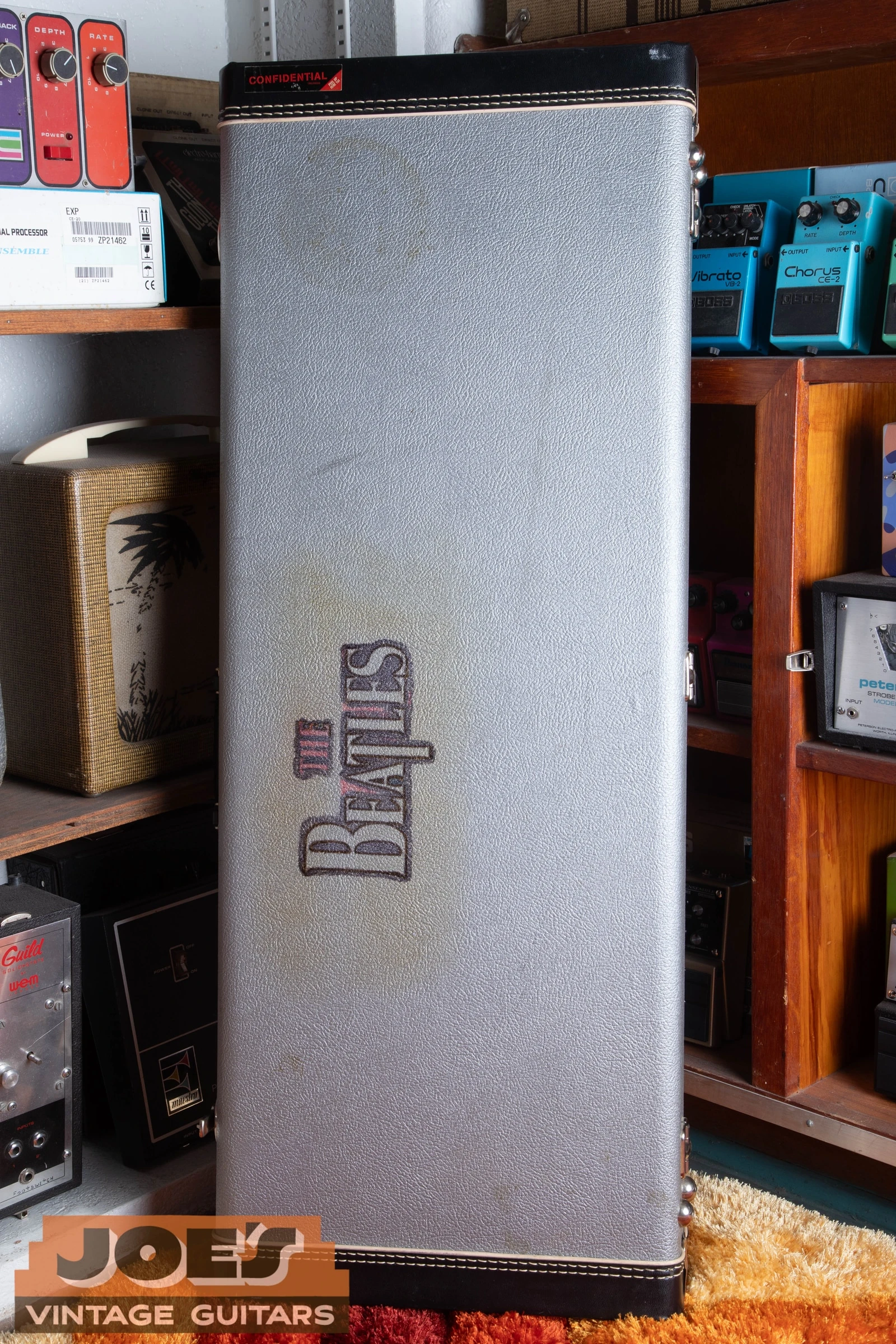
Take unfiltered photographs in even light. Include the full front and back, both headstock faces, the entire serial or other markings, pickups, controls, bridge, neck joint and any damage. Add the measurements or model-specific views described above. Photograph the case, paperwork and removed parts separately.
You do not need to take the instrument apart for an initial review. If a detail cannot be seen, say so. A clear statement of known repairs and unknown history is more useful than an unsupported claim of complete originality.
Have A Rickenbacker To Identify Or Sell?
Send Joe your photos and any known history. We can help identify the instrument, discuss its condition and make an offer if you are ready to sell.
Sources And Further Reading
Factory documents establish period model descriptions. Instrument-specific references help compare construction; their originality claims are not independent certifications.
- Rickenbacker June 1988 Factory Price ListLists the V59 and V63 configurations as later vintage-series offerings.
- Rickenbacker Legacy ModelsManufacturer descriptions distinguish C-series recreations from the originals they reference.
Photo Credits And Scope
Photographs are from Joe’s Vintage Guitars’ instrument archive. Captions identify the actual instrument shown, including related-model and later-production comparisons. Full frames and existing watermarks are retained. A photograph of another model is not evidence of the correct construction for yours.