

Chet Atkins Country Gentleman · Original U.S. Era
Gretsch Country Gentleman Authentication Guide
Follow the 6122 and later 7670 through changes in cutaways, f-holes, pickups and controls, using the whole instrument as evidence.
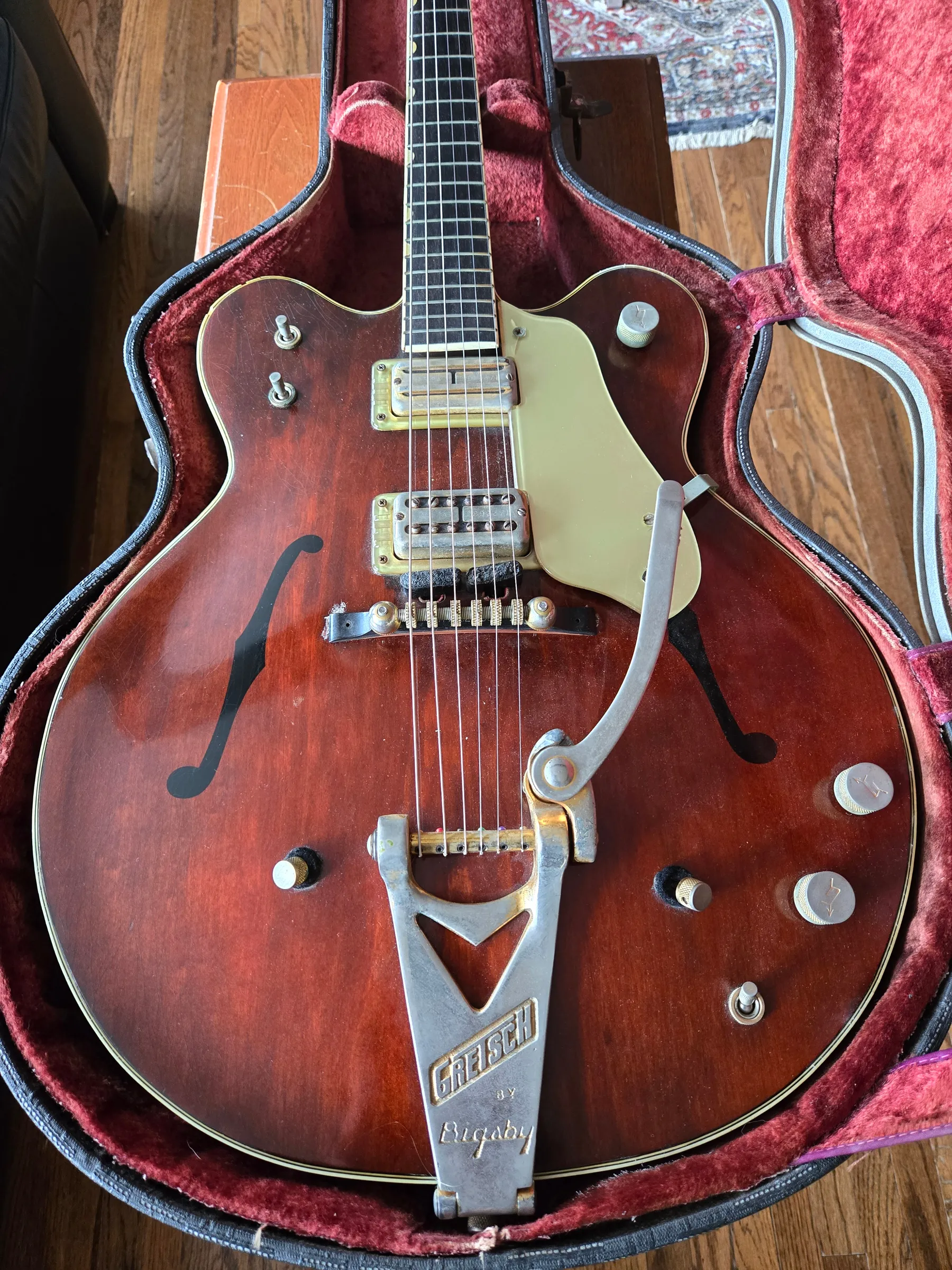
A Country Gentleman is identified by its own sequence of body and equipment changes. The walnut finish, gold hardware and Chet Atkins association aren't enough to date it. Start with the cutaway shape and complete model designation, then compare the f-holes, fingerboard, pickups and controls with the serial evidence. The American 6122 and later 7670 are the subjects here. Japanese recreations are considered only as exclusions from that original production. The companion Country Gentleman value page separates the price groups. This page explains how to establish which group deserves consideration, and where an identification remains uncertain.
Authenticity And Originality Are Assessed From The Information Provided. A Hands-On Inspection Can Change The Conclusion.
Start With Construction
The Body Separates The Main Versions
| Feature | 1968 Model 6122 | 1978 Model 7670 |
|---|---|---|
| Body Width And Depth | 17 inches by 2 inches | 17 inches by 2 inches |
| Body Form | Double-cutaway Electrotone | Double cutaway with open bound f-holes |
| Fingerboard Markers | Neo-Classic thumbnail | Neo-Classic thumbnail |
| Scale In The 1978 Catalog | Check the particular earlier version | 25½ inches |
| Vibrato | Bigsby | Bigsby |
| Standby Switch | Included in the 1968 description | Specifically omitted in 1978 |
These two catalog snapshots do not describe the earlier single-cutaway instrument.
Place the complete instrument in view before concentrating on its headstock. The Country Gentleman is generally the larger, roughly 17-inch comparison to the 16-inch 6120 family. Both models passed through single- and double-cutaway forms, so one cutaway count doesn't identify the model. Measure the rim depth as well as the lower-bout width.
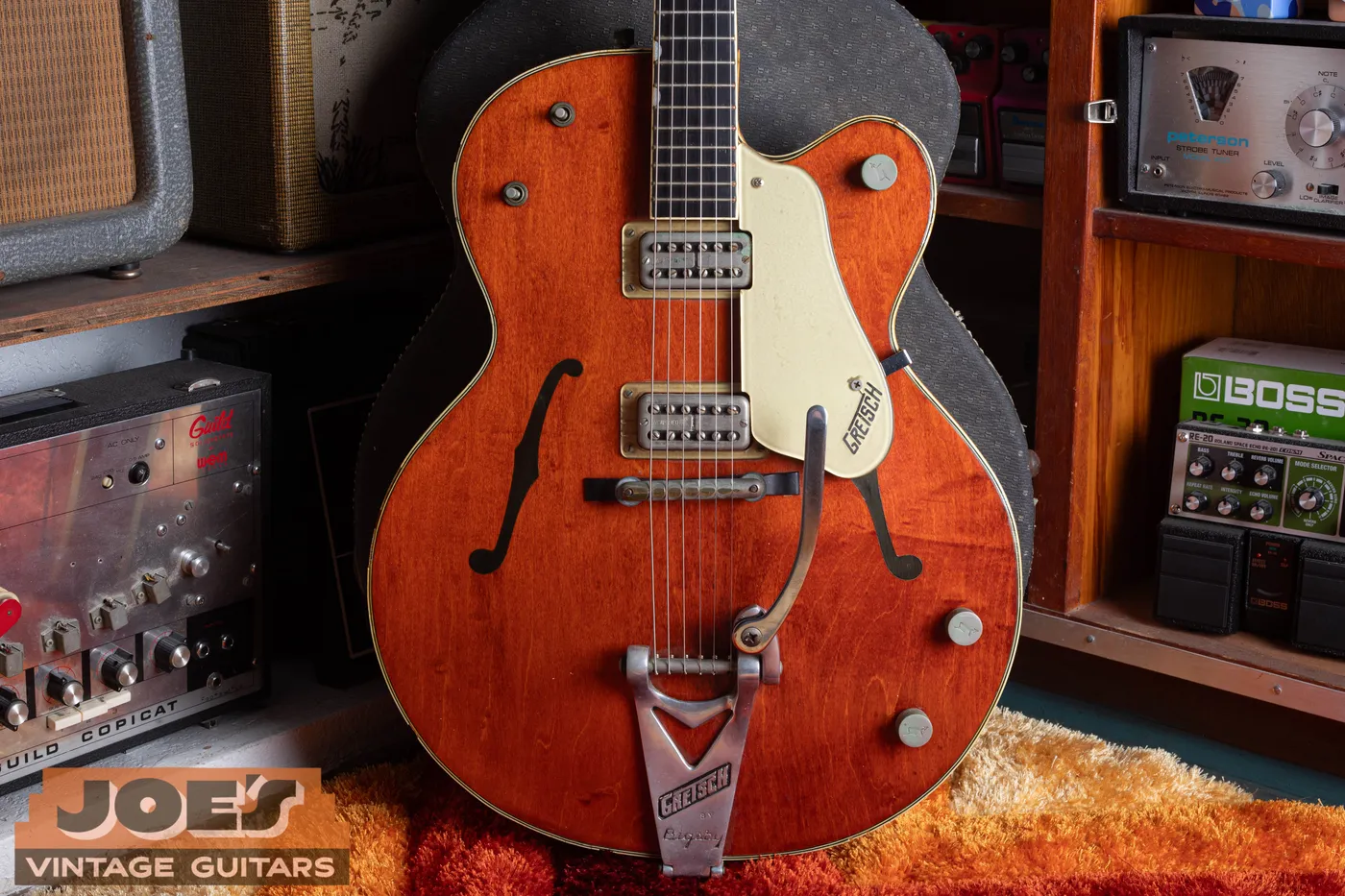
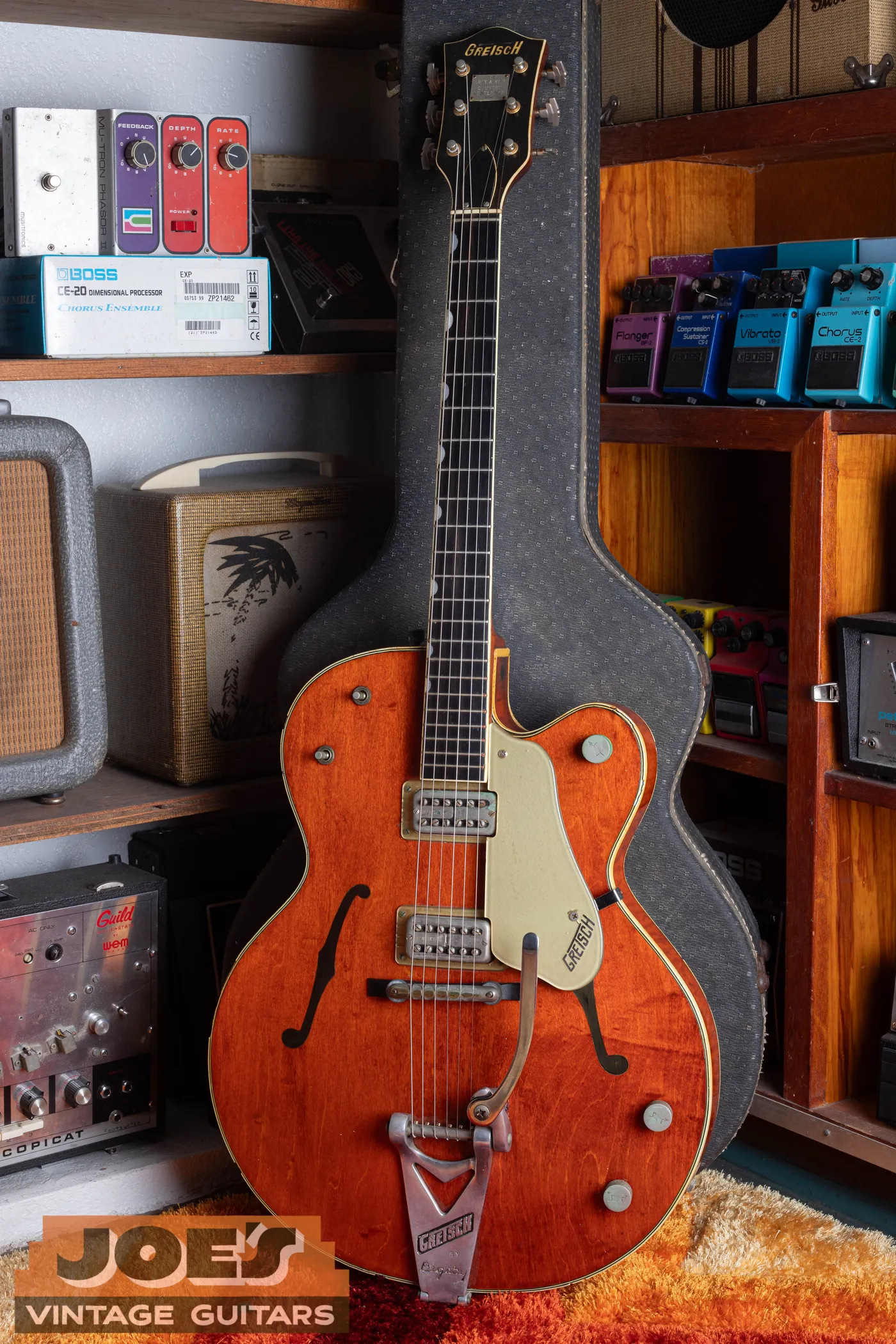
Joe’s walnut archive example has a single cutaway. Its front shows the pickup pair, model-named guard and control positions in relation to the large body. That combination is more informative than a close-up of a gold-colored knob. A pickguard or model plate can be exchanged, so neither should override conflicting construction.
The f-holes require an angled view. A dark shape on a closed top may be simulated. Later Country Gentlemen also used actual openings, as the 1978 manufacturer catalog specifies for the 7670. The rule “a Country Gentleman always has painted f-holes” would therefore reject a documented later specification. Match the production period before making that judgment.
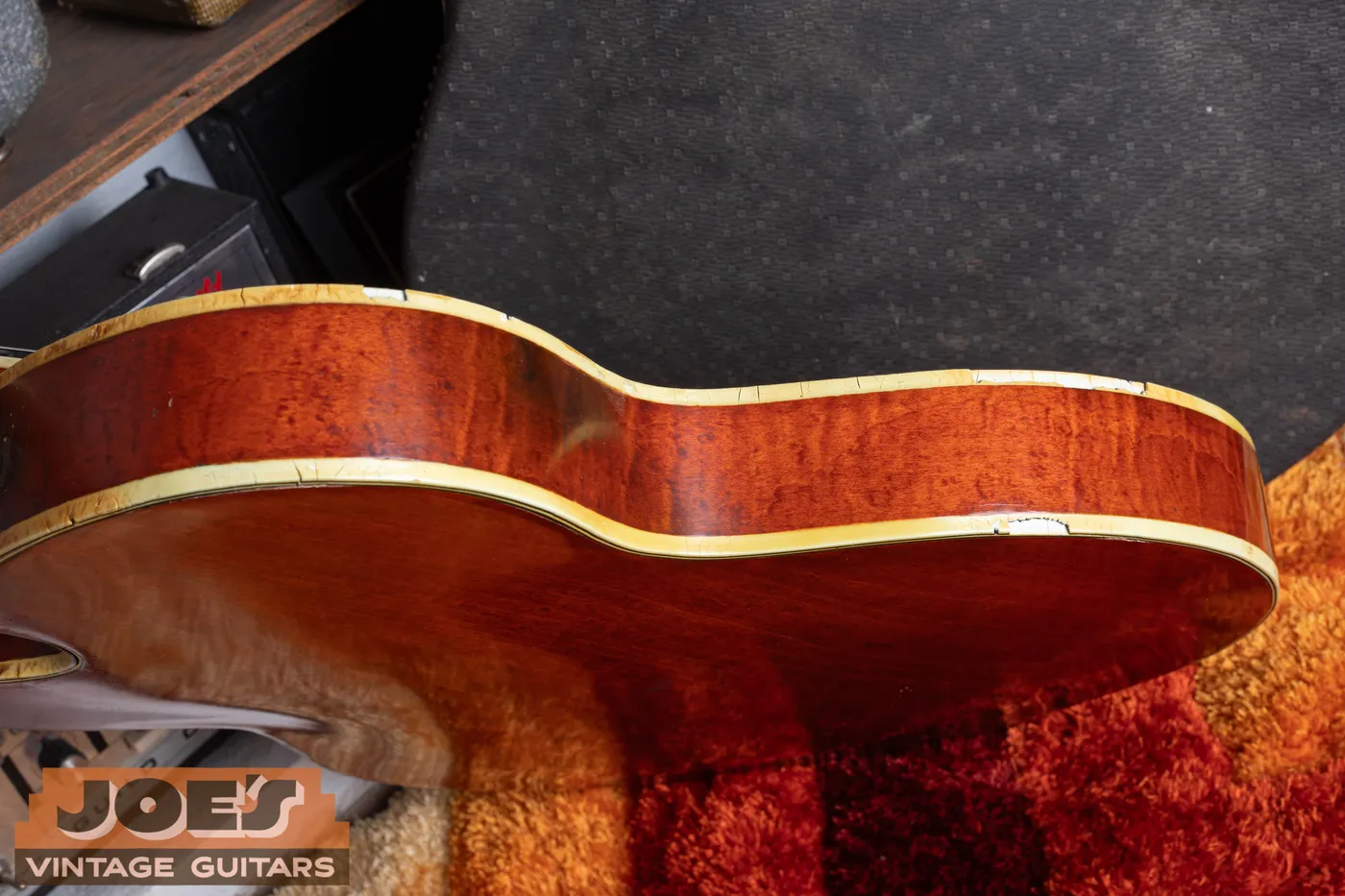
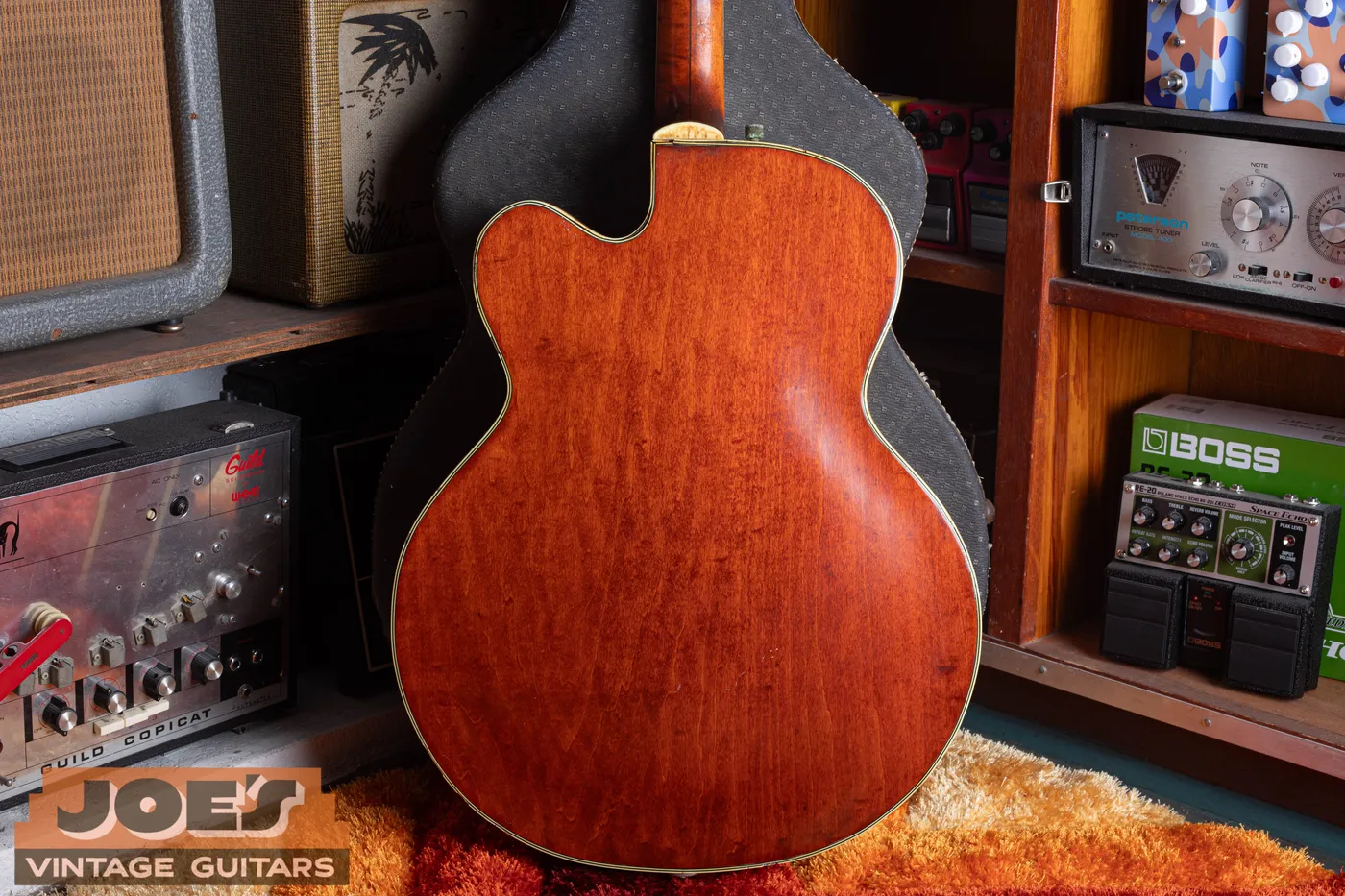
Use the Gretsch construction guide if you're comparing a Country Gentleman with a Nashville, Country Club or Viking. A photograph of the back may reveal a pad or access arrangement that the front hides. Record it without pulling off old material simply to satisfy an online checklist.
The Model’s American Development
From Atkins Collaboration To The 7670
The Original Single Cutaway
Gretsch introduced the Country Gentleman in 1957 as part of its Chet Atkins relationship. The walnut single-cutaway design in Joe’s archive belongs to the earlier body family. Its exact year remains under review, but the single cutaway can be recorded without resolving that date.
The Twin-Cutaway Catalog Years
The later 6122 description uses Gretsch’s Electrotone name and specifies a thin, large body. By 1978 the 7670 catalog shows open bound f-holes and lists the standby switch as omitted. These documented differences are more useful than assuming that the Country Gentleman specification stayed fixed throughout American production.
Model Landmarks
How The Country Gentleman Changed
The Country Gentleman Debut
Gretsch’s company timeline places the Country Gentleman’s presentation at the summer NAMM show in 1957. That introduction date should not be used as a substitute for dating an individual guitar.
Single-Cutaway Construction
The early 6122 uses the single-cutaway form. Joe’s archive supplies a walnut example for examining the body, pickup mounts and model plate, with its exact year left open where the serial and archive description differ.
The Double-Cutaway Transition
Country Gentlemen moved into the thinner double-cutaway Electrotone family. Mutes, standby controls and padded backs belong in the period comparison, but the equipment should be checked as a complete configuration.
The 7670 Specification
The 1978 catalog lists a 17-inch, 2-inch-deep double-cutaway 7670 with open bound sound holes, walnut finish, adjustable bridge and Bigsby. It expressly omits the standby switch. These later details differ from earlier Electrotone equipment.
A catalog records the specification offered at a particular time; it isn't a promise that every surviving example is unchanged. A mismatch can reflect a transition, a special order or later work. Note it and examine the surrounding evidence rather than deleting the detail from the description. An early-looking part on a later body doesn't move the entire guitar backward in time.
Names For What You Can See
Read The Pickup Pair And The Controls
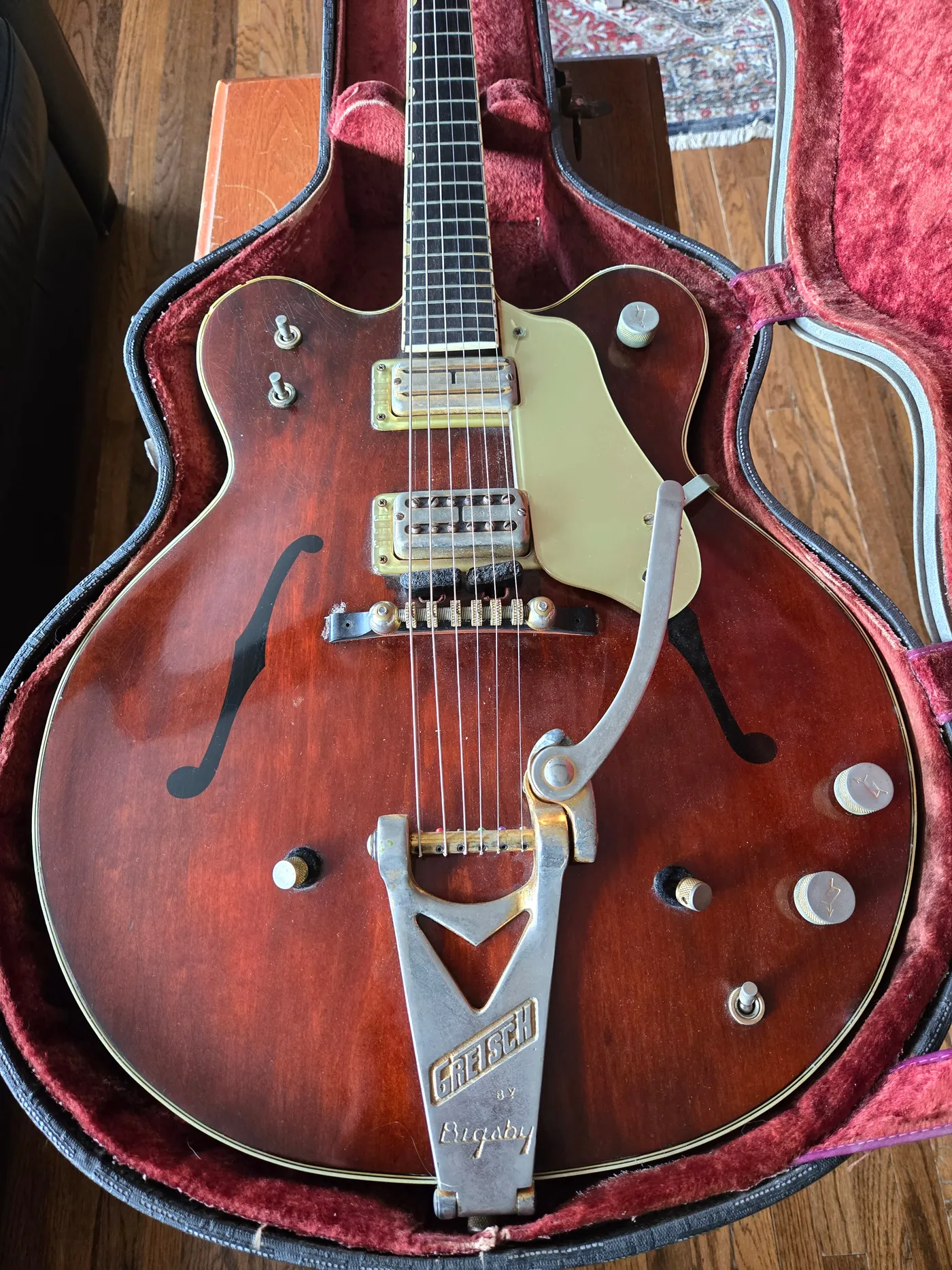
The single-cutaway archive guitar shows Filter’Tron-style metal covers with two rows of adjustable screw poles. The photographed 1965 double cutaway pairs a blade-style Super’Tron neck pickup with a screw-pole Filter’Tron bridge pickup. A neck pickup with blades and a bridge pickup with screws shouldn't automatically be called a mismatched replacement pair; some Country Gentleman configurations used different pickup types. Establish the exact period specification and inspect the installation.
Look at the mounting rings and the edges of the openings. Added adapters, enlarged cuts or unused screw holes can explain why a pickup differs from the catalog. A cover’s patent wording is also separate from the age of the coils beneath it. Photograph the wording, but don't let it date the guitar on its own.
Electrical Controls
Map the selector, tone control and volume controls by their positions. Then record their observed functions. A switch that cuts the output may be a standby control; a tone switch changes the circuit differently from a continuously variable tone pot.
If a control doesn't respond, say what happened during the test. “No sound in this position” is a useful observation. It doesn't prove a missing factory component or a particular repair without examining the circuit.
Mechanical Mutes
Mute hardware acts on the strings. It shouldn't be described as another pickup selector just because its actuator resembles a control. Photograph the bridge area from above and from the side, keeping the mechanism and string path visible together.
Missing foam or a changed operating part can affect function while leaving the instrument's model and period intact. Record which pieces are present. Don't press a stiff mechanism or disturb fragile material just to demonstrate it in a video.
Joe’s pickup guide distinguishes the visible families, while the switch and control guide explains their functions. The 6120 and Duo Jet identification guides date their Filter’Tron changeovers around 1958. That model-specific timing should remain separate from Gretsch's earlier announcement of the pickup design.
| Comparison Group | Details To Photograph |
|---|---|
| Earliest Double-Cutaway Examples | Large screw-operated mute knobs; lower controls nearly in a line |
| Mid-1960s Transition | Flip-up double mutes; some instruments pair a blade Super’Tron neck pickup with a Filter’Tron bridge pickup |
| Around 1965 To 1966 | Single-lever mutes phased in; compare the full control arrangement |
The Scotty Moore archive’s instrument study describes approximate transitions. It also records disagreement about the featured guitar’s exact year, so these features do not establish a precise cutoff.
The single-cutaway example has two screw-pole pickups. The 1965 double cutaway shows blades at the neck and screw poles at the bridge.
Bodies And Later Names
Country Gentleman Versions In Context
Single-Cutaway 6122
Record its body profile, model plate and pickup layout as a group. A date dispute does not turn a visibly single-cutaway body into the later twin-cutaway version.
Double-Cutaway 6122
Document the simulated openings, mute mechanism and controls appropriate to the comparison period. Changed mute parts should be described alongside the remaining mounts.
Later 7670
Use the later catalog specification, including open bound sound holes. The model number and the serial are separate markings with different jobs.
Photo Timeline
Single And Double-Cutaway Country Gentlemen
Late 1950s Or 1960 Boundary Under Review
Walnut Body, Gold Hardware And A Readable Plate
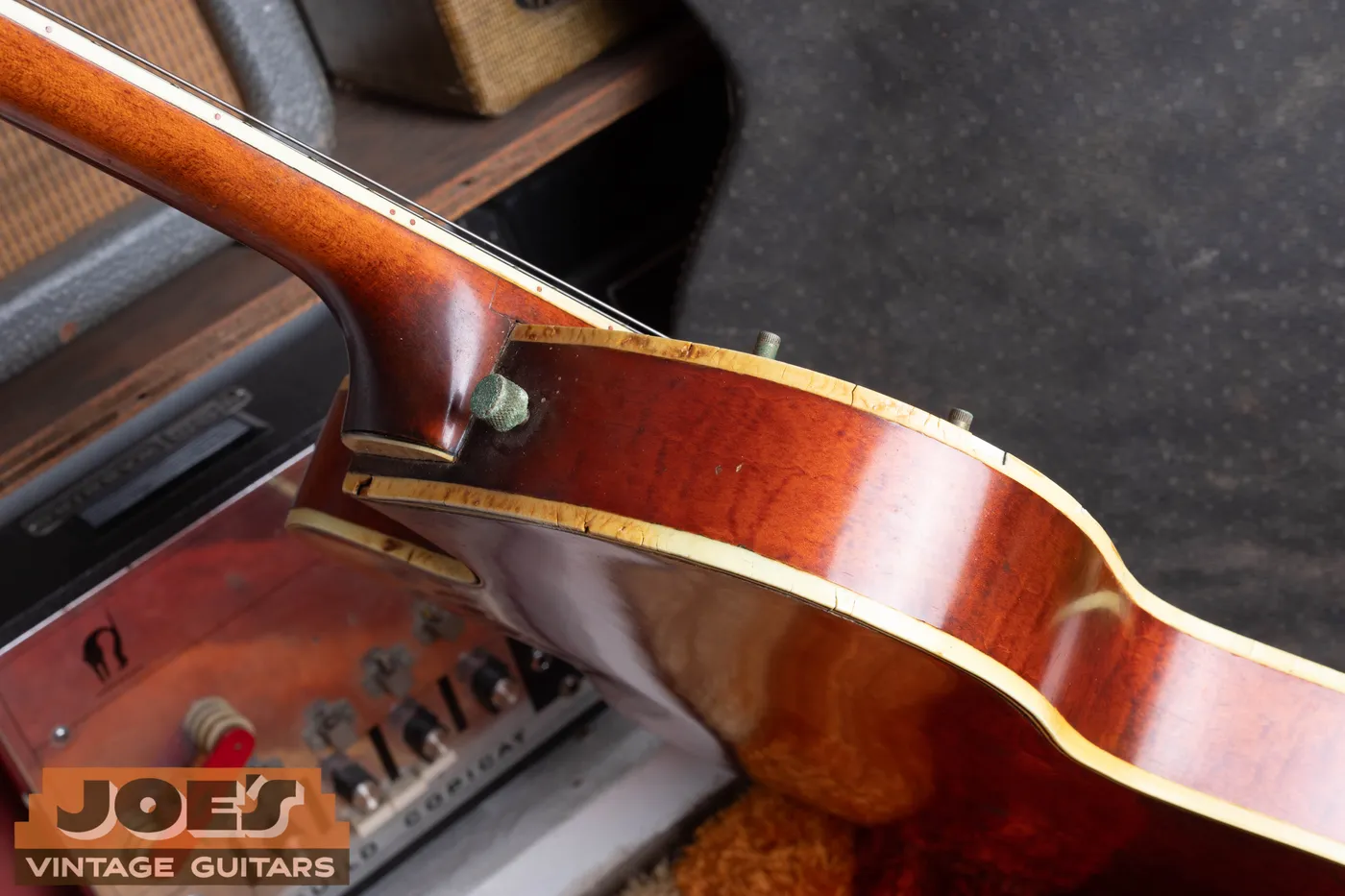
The archive set presents the full single-cutaway guitar and its neck joint. In the rear view, the finish and body edge can be examined separately from the hardware on the front. The heel photograph documents a local area; it doesn't by itself establish whether the neck has ever been removed.
Use these pictures to plan an evidence set for your own instrument. A body view should connect each detail to the same guitar. If you send only a close-up of a model plate or pickup, Joe can't tell whether the surrounding construction agrees with the part. Full-resolution files preserve lettering and small mounting details that message previews can hide.
1965 Gretsch Country Gentleman
A Double Cutaway With Two Pickup Designs
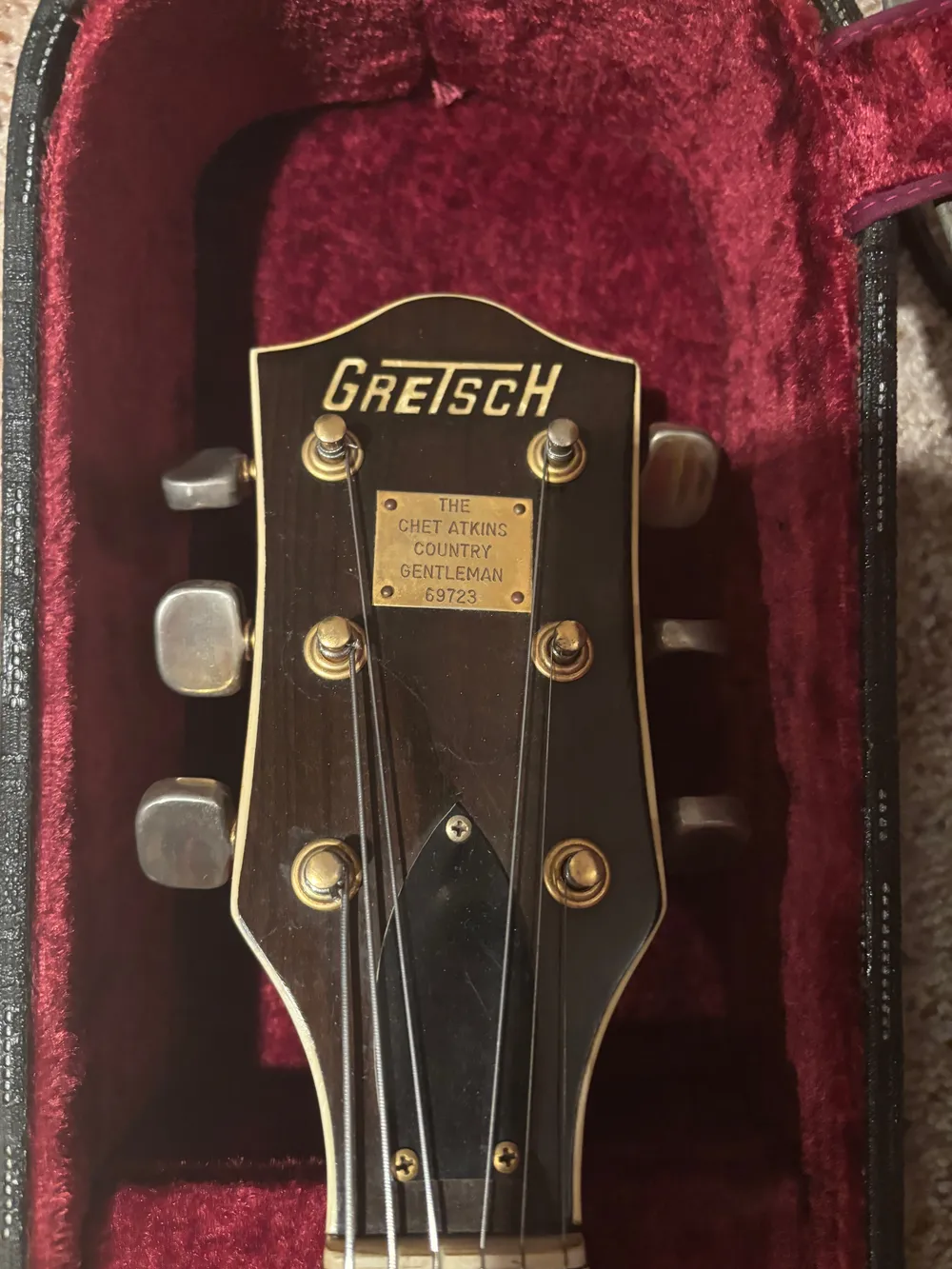
The 1965 guitar has a double-cutaway body and simulated f-holes. The close body photograph shows the blade neck pickup, screw-pole bridge pickup, mute hardware, controls and Bigsby together. It provides a direct comparison with the earlier single-cutaway guitar above.
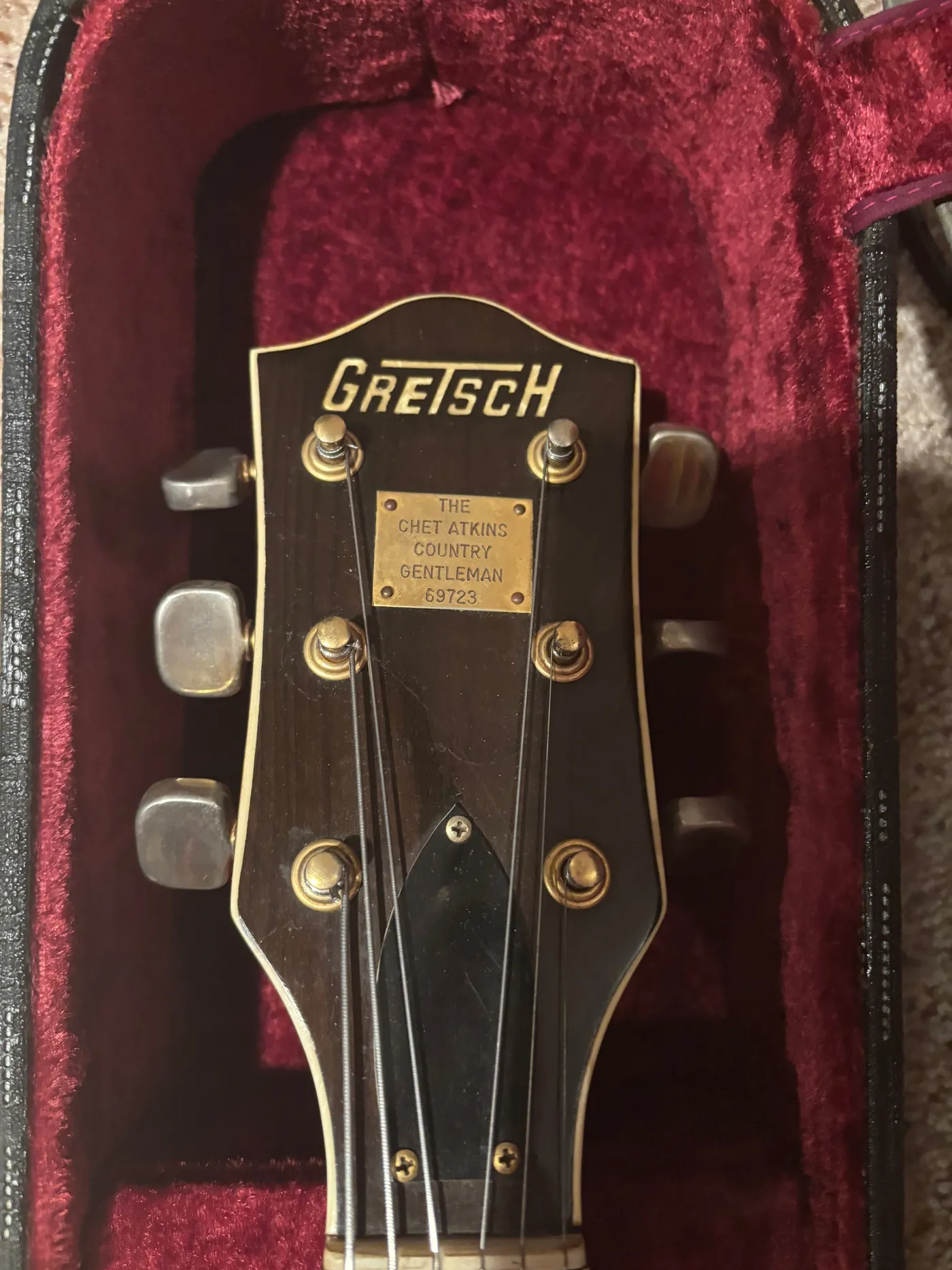
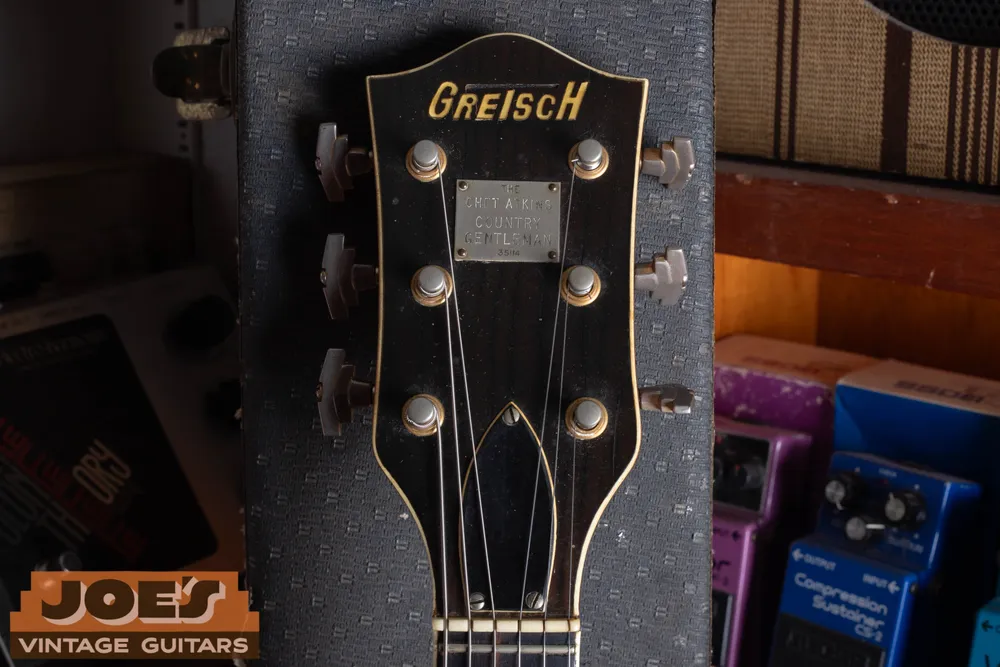
The headstock plate names the Country Gentleman and reads 69723. Keep that number with this double-cutaway guitar when comparing the archive examples. It is a separate instrument from the single cutaway with plate 35114.
Two Photographed Serial Numbers
Read Each Guitar’s Nameplate
Walnut Single Cutaway Archived As 1959
The digits 35114 are visible at the bottom of the metal Country Gentleman nameplate. Joe’s archive calls the guitar a 1959. Gretsch’s published product-dating table places the 35,000s with 1960, creating a disagreement that this guide leaves unresolved.
The photograph establishes the transcription; it leaves the exact build year unresolved. Keep the full headstock, body and plate views together for further review. The nameplate itself is a part whose history can also need investigation.
1965 Double-Cutaway Country Gentleman
The close-up clearly shows 69723 beneath “The Chet Atkins Country Gentleman.” All five digits are visible on the metal plate. The body photograph belongs with this headstock view and shows the double-cutaway configuration.
For other examples, find every accessible serial location before choosing a chart. Earlier sequential numbers, later month/year codes and modern formats don't follow one arithmetic rule. Copy the model field separately. Neither 6122 nor 7670 is a complete manufacture-date code.
Gretsch’s early history documents reused 1957 labels in later production, and Joe’s Jet guide retains that exception. It doesn't mean every inconsistent number is explained by a reused label. First check whether you have read the number correctly, whether the serial location fits the system and whether the model existed in the proposed period.
The Gretsch dating library keeps overlapping ranges and format limits visible. Use it with the label and nameplate examples. If a black f-hole shape turns out to be simulated, don't assume you can find a label through it; the construction changes which locations are accessible.
A Date Is Not An Originality Certificate
Inspect The Woodwork And Removable Equipment
Binding And Finish Edges
Look along the body, neck and headstock for gaps, replacement sections and local touch-up. Photograph an affected area with the surrounding surface visible. Don't scrape the finish to decide what lies beneath it.
Neck Angle And Earlier Repairs
Record string height, bridge adjustment and any repair paperwork. A low bridge and high action justify a closer look, but diagnosis should account for the complete instrument. Keep the assessment separate from the serial date.
Bridge, Bigsby And Mounting Marks
Include the base, hinge, arm and nearby finish in the photograph. These pieces can have different replacement histories. A branded Bigsby doesn't certify an undisturbed factory installation.
Headstock And Tuner Installation
Show rear housings and front bushings. Unused or plugged screw holes, differing footprints and finish disturbance should remain visible in a sale description. A familiar tuner button is less specific than its complete mounting arrangement.
Explain what you know and what you infer. “The bridge was replaced in a documented repair” is a stronger statement than “the bridge looks newer.” If you have no history, retain the observation and leave the conclusion open. The value guide can then be used with an accurate list of limitations rather than an unsupported all-original label.
Exclusions From Original American Production
Recognize A Later Country Gentleman
Japanese-made Country Gentlemen can closely resemble earlier American designs. Historical model-year names, walnut finishes, thumbnail markers and mutes may all be deliberate recreations. Read the instrument's own serial and country marking before using those appointments to assign a vintage year.
The common post-2003 Gretsch format starts with factory letters and uses year and month fields. Pre-2003 Japanese revival instruments need their earlier system, so a serial without those letters doesn't automatically become an old American number. Keep the complete string, including punctuation, and compare it with the appropriate section of the reissue guide.
A later instrument isn't misrepresented simply because it celebrates an earlier design. The problem arises when its design year is presented as its manufacture year. Conversely, replacement parts don't erase an older body's identity. Identify the production period first, then state which installed parts still need an originality check.
Send The Evidence Together
Resolve A Country Gentleman Identification
Send The Evidence
Ask Joe To Review The Details
Send overall views, the complete serial marking and close-ups of the feature that seems inconsistent. Include any archive description, receipt or known repair. A photo assessment may establish a useful period or show why an in-person inspection is needed before a firm conclusion.
Manufacturer Records And Identification Guides
Country Gentleman Source Notes
- Gretsch Company Timeline
The 1957 Country Gentleman presentation.
- Gretsch 1968 Catalog
Printed page 5: 6122 Electrotone body, pickup and mute equipment.
- Gretsch 1978 Catalog
PDF page 6: 7670 construction, open sound holes and omitted standby switch.
- Gretsch Product Dating
Published chart placement of 35,000-series numbers; conflict retained for Joe’s review.
- Joe’s Body And Inlay Guide
Model proportions, cutaway changes and limits of individual features.
- Joe’s Pickup And Control References
Filter’Tron, Super’Tron and removable-cover distinctions.
- Gretsch Early Numbering History
Number locations and reused-label exceptions.
- Scotty Moore Archive: Country Gentleman Study
Photographed instrument and technical notes on mixed pickups, screw and flip-up mutes, and approximate mid-1960s transitions.
Questions AboutGretsch Identification
Must A Country Gentleman Have Simulated F-Holes?
Can The Serial Be On The Country Gentleman Plate?
Does A Super’Tron And Filter’Tron Pair Prove Modification?
Why Is The Archive Guitar’s Year Left Unresolved?
The Last Word
Keep The Evidence Together
A useful Country Gentleman identification explains the body version and why the number fits, or why it still needs work. Preserve the distinction between the date of the instrument and the age of its hardware. That leaves an honest record for an appraisal, a repair decision or a future sale. For the matching price ranges, see the Gretsch Country Gentleman value guide.
Authenticity And Originality Are Assessed From The Information Provided. A Hands-On Inspection Can Change The Conclusion.