

Country Gentleman · Original American Models
Gretsch Country Gentleman Value Guide
Prices for the single-cutaway 6122, early double cutaways and later 7670, with the condition details an appraisal needs.
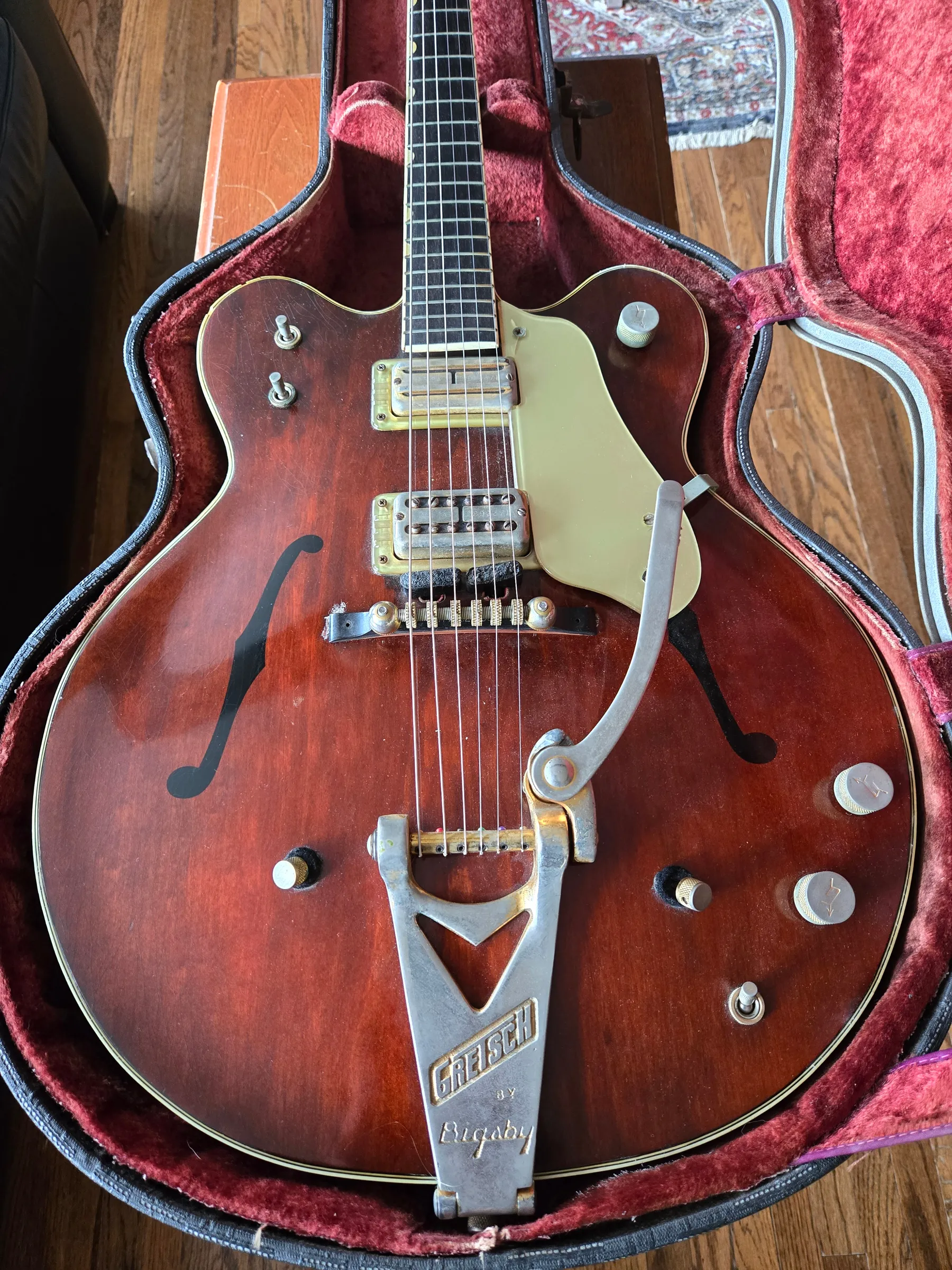
A vintage Gretsch Country Gentleman is worth about $2,400 to $8,500 across the original-era groups priced here, assuming excellent, original condition with a case. The early single-cutaway 1958 to 1959 guitars sit at $6,400 to $8,500; the later 7670 has a lower range. A repaired or modified instrument needs a closer comparison than the model name alone can provide. If your guitar's year is uncertain, read the Country Gentleman authentication guide before picking a row. It explains the body changes and why a serial or archive date can need further checking. This page concentrates on the price differences after the instrument has been identified.
This Is An Estimate Of Market Value, Not An Offer To Buy And Not A Guarantee. Market Values Fluctuate; Have Your Specific Item Appraised.
Joe’s Estimated Values
Country Gentleman Prices By Period
| Model | Years | Configuration | Estimated Value |
|---|---|---|---|
| 6122 Country Gentleman | 1958 to 1959 | Original single-cutaway | $6,400 to $8,500 |
| 6122 Country Gentleman | 1960 | Single-cutaway | $5,800 to $8,000 |
| 6122 Country Gentleman | 1961 | Single-cutaway | $5,800 to $8,000 |
| 6122 Country Gentleman | 1962 to 1963 | George Harrison specifications | $5,800 to $8,000 |
| 6122 Country Gentleman | 1964 | Double-cutaway | $2,900 to $3,550 |
| 6122 Country Gentleman | 1965 to 1967 | Double-cutaway | $2,850 to $3,500 |
| 6122 Country Gentleman | 1968 to 1970 | Double-cutaway | $2,450 to $3,100 |
| 7670 Country Gentleman | 1971 to 1981 | Later US production | $2,400 to $3,050 |
U.S. dollars. These are estimated values, not purchase offers. Repairs, replaced parts, finish work and market changes require an individual assessment.
These ranges apply to the configurations named in the chart. They aren't purchase offers or a promise of a particular selling price. If a guitar has replacement pickups, a repaired neck or extensive binding work, its estimate should account for those details rather than simply choosing the lowest number in an excellent-condition row.
The 1962 to 1963 entry describes the period specification associated with George Harrison. It doesn't attach celebrity provenance to an ordinary guitar. A model's association with a famous player and evidence that the player owned a particular instrument are very different things. Don't add a celebrity premium without documentation of the actual guitar.
Early, Middle And Later Production
What Separates The Price Groups
Single-Cutaway 6122
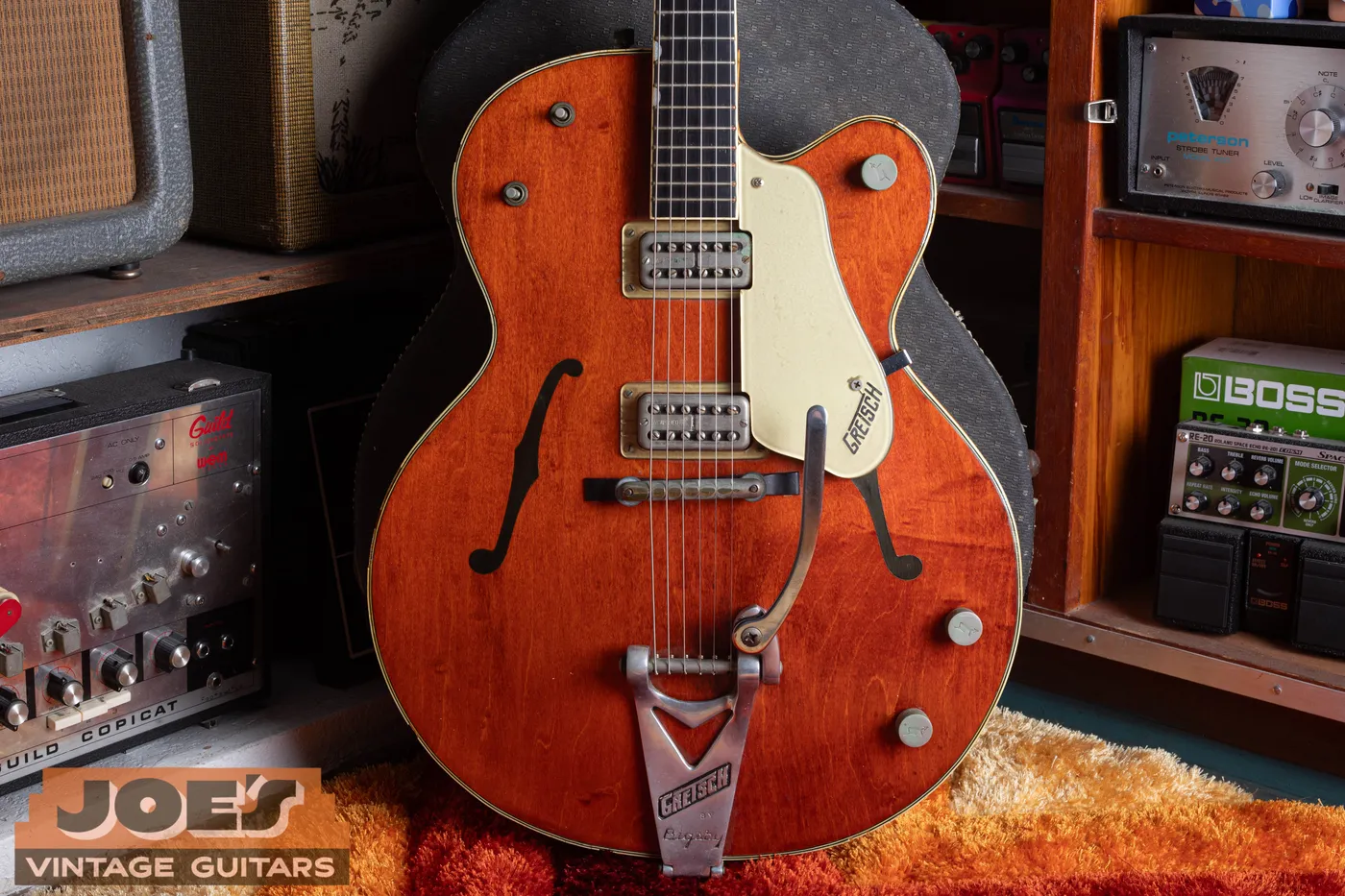
The early configuration has its own comparison group. A walnut-colored single cutaway should be evaluated for its date evidence, installed pickups and neck condition before receiving an early-period estimate. Its brown finish may conceal an old repair in a distant photograph.
Early Double Cutaways
The 1962 to 1963 row is distinct from 1964 and later examples. Check the actual period and equipment rather than assuming any double-cutaway Country Gentleman belongs to the same range. The chart does not price all double cutaways equally.
Later American 7670
The 7670 row covers later original American production. An instrument in that group can still be complete, attractive and useful to a player. Evaluate it on its own condition instead of using an early single-cutaway figure as a starting point.
A reported year deserves particular attention when the surrounding rows differ. Old receipts and family recollections can help, but a receipt records a sale date, which may be later than manufacture. A secondhand purchase date doesn't establish the production year. Keep those records with the guitar and tell Joe which dates come from documents and which are remembered.
Some instruments sit near a transition that cannot be settled from one picture. In that situation, a range tied to an unresolved identity is provisional. Supply another view of the nameplate, serial or construction instead of rounding the date toward the more valuable group. A clear explanation of uncertainty is more useful than a confident guess.
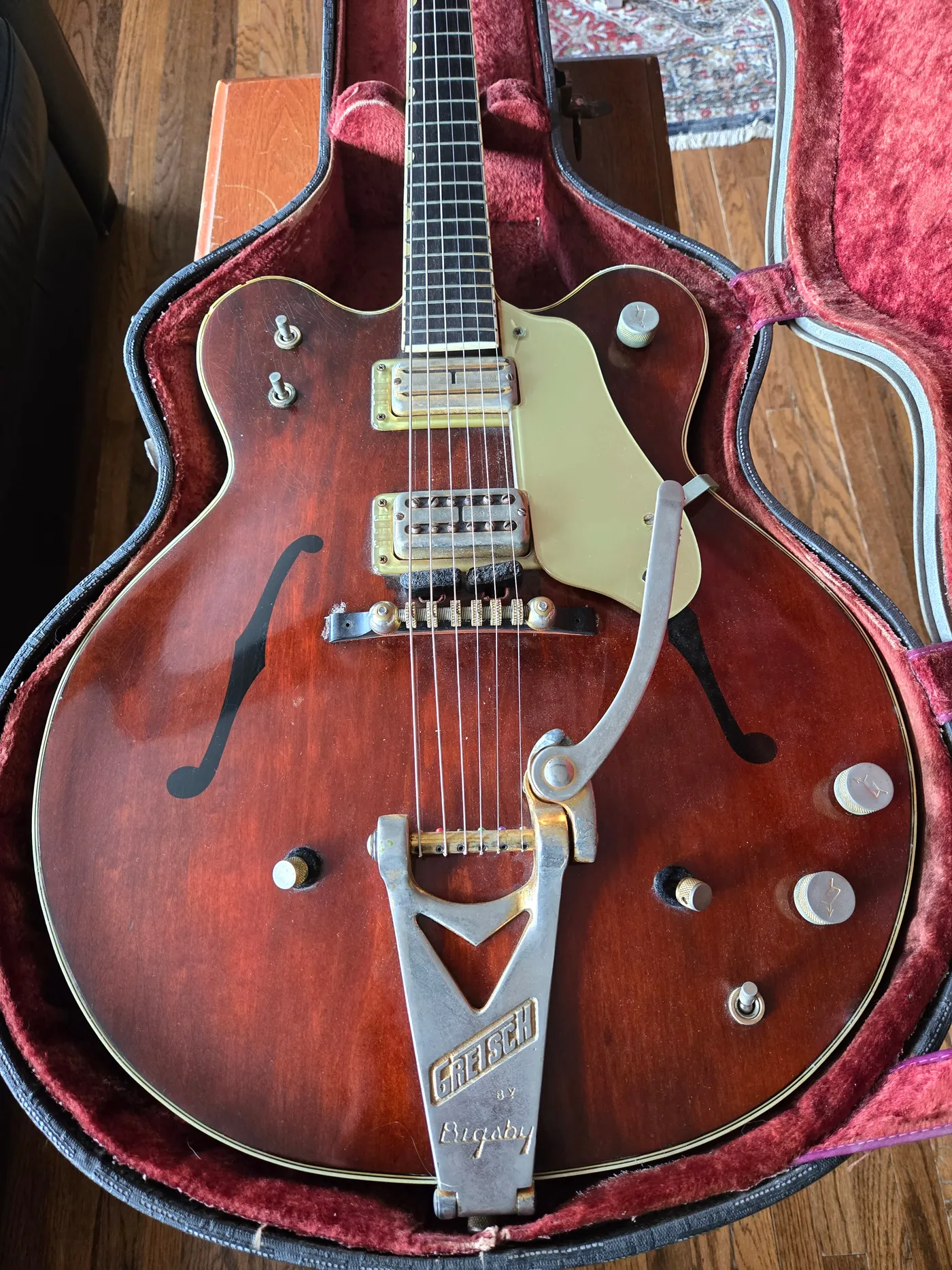
The early single cutaway and the 1965 double cutaway belong in different price groups. Compare the body and equipment before selecting a chart row.
Repairs And Replacements
Where A Country Gentleman Loses Its Comparison
The binding, neck angle and installed electronics should be documented before discussing the upper end of a range. A guitar that photographs cleanly from the front can have deteriorated binding along the back or a heel repair hidden in shadow. Turn it around. Show the lower rim, cutaway edges and neck joint in ordinary light.
Don't diagnose a neck reset from the age of the guitar alone. Record the action, bridge position and any known neck work. If you're already using a repairer's estimate, send it with the photographs. A written scope of work is more useful than the phrase “needs a setup,” which can conceal very different jobs.
Parts That Can Be Changed
Bridges, vibrato parts, tuners, guards and pickups can all be replaced. A good replacement may improve playability, but it changes how closely the instrument matches the original-condition chart. Name the installed part and say whether the earlier part survives.
Don't buy period-looking hardware just to improve a selling description. You may spend money without recovering an original installation. Extra holes, altered pickup openings and changed wiring still need disclosure even after a more familiar-looking part is fitted.
Finish And Structural Work
Walnut stain can make local touch-up difficult to see. Photograph the heel, headstock and binding in more than one lighting angle. If the guitar was refinished, describe the extent of the work rather than treating a close color match as proof of an untouched finish.
A repaired break and a routine refret also deserve separate descriptions. Their effects aren't interchangeable, so this page doesn't assign a single percentage for “repairs.” Joe’s condition assessment can consider the work actually done.
Before commissioning work on a Country Gentleman, compare the effects of condition and originality, refinishing, replacement pickups, and restoration before selling. Describe work already done and ask about proposed repairs before spending money to prepare the guitar for sale.
Photo Timeline
Single And Double Cutaways In Joe’s Archive
Archived As 1959 · Date Review Needed
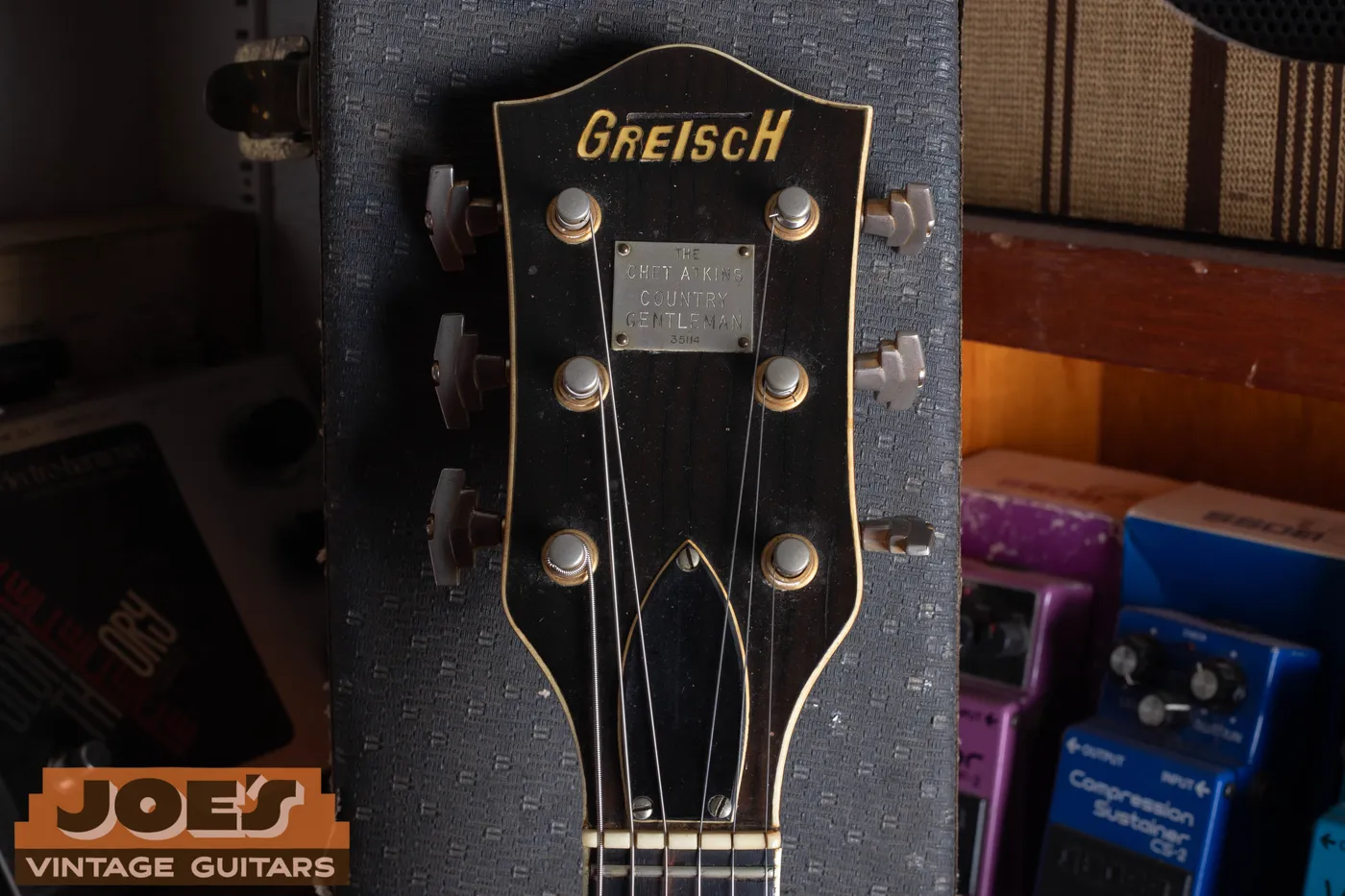
Single Cutaway With Nameplate 35114
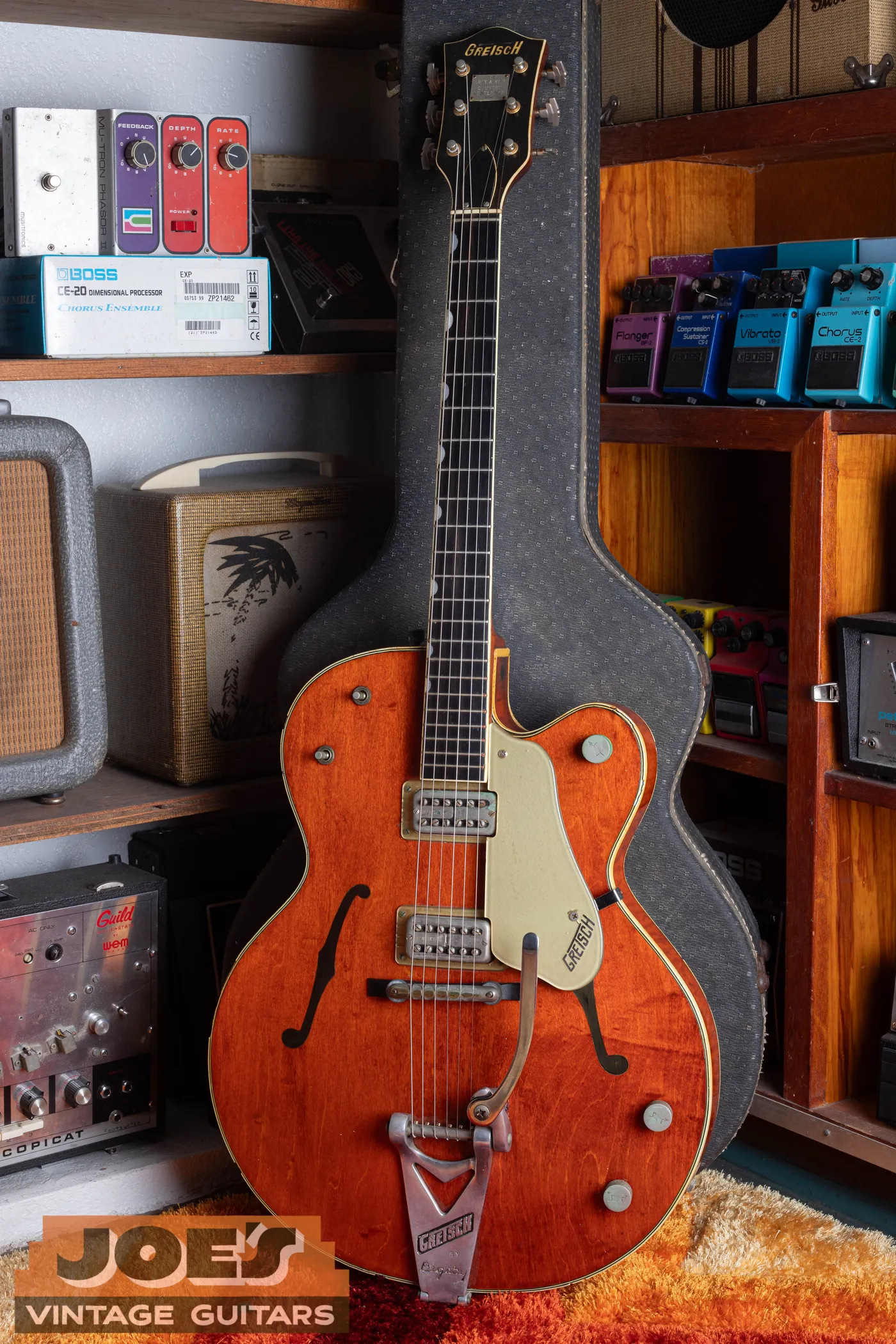
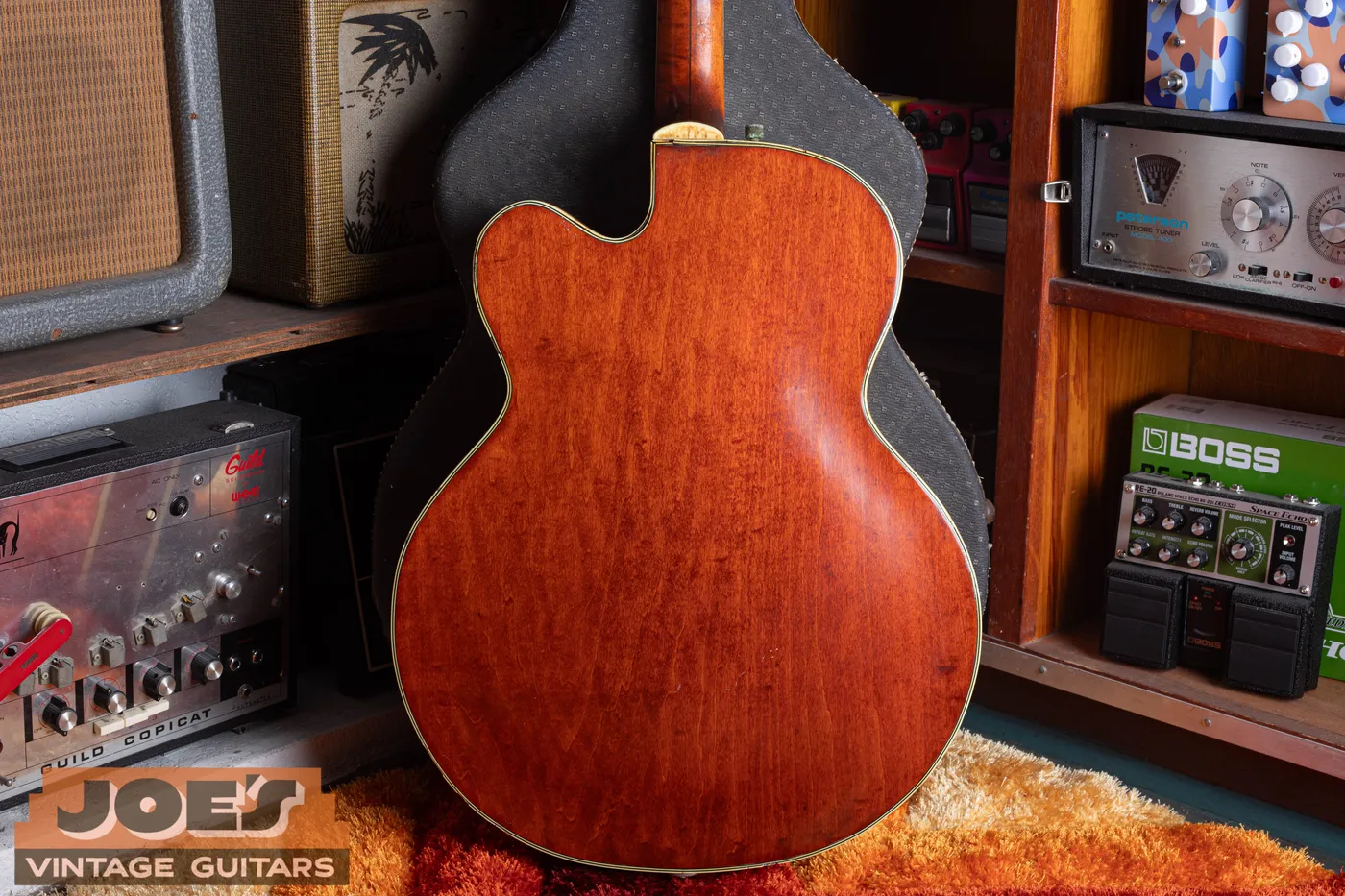
Joe’s archive identifies this walnut Country Gentleman as 1959. The nameplate photograph reads 35114, a number whose placement in published serial charts raises a date question. The authentication page preserves both pieces of evidence. That unresolved date should be checked before choosing a price row.
Its complete front, back and hardware details still make it useful for showing what to send for an appraisal. The body proportions and pickup arrangement remain visible even while the exact year is unresolved. Keeping that distinction prevents a good reference photograph from making a stronger claim than its documentation supports.
1965 · Double-Cutaway Country Gentleman
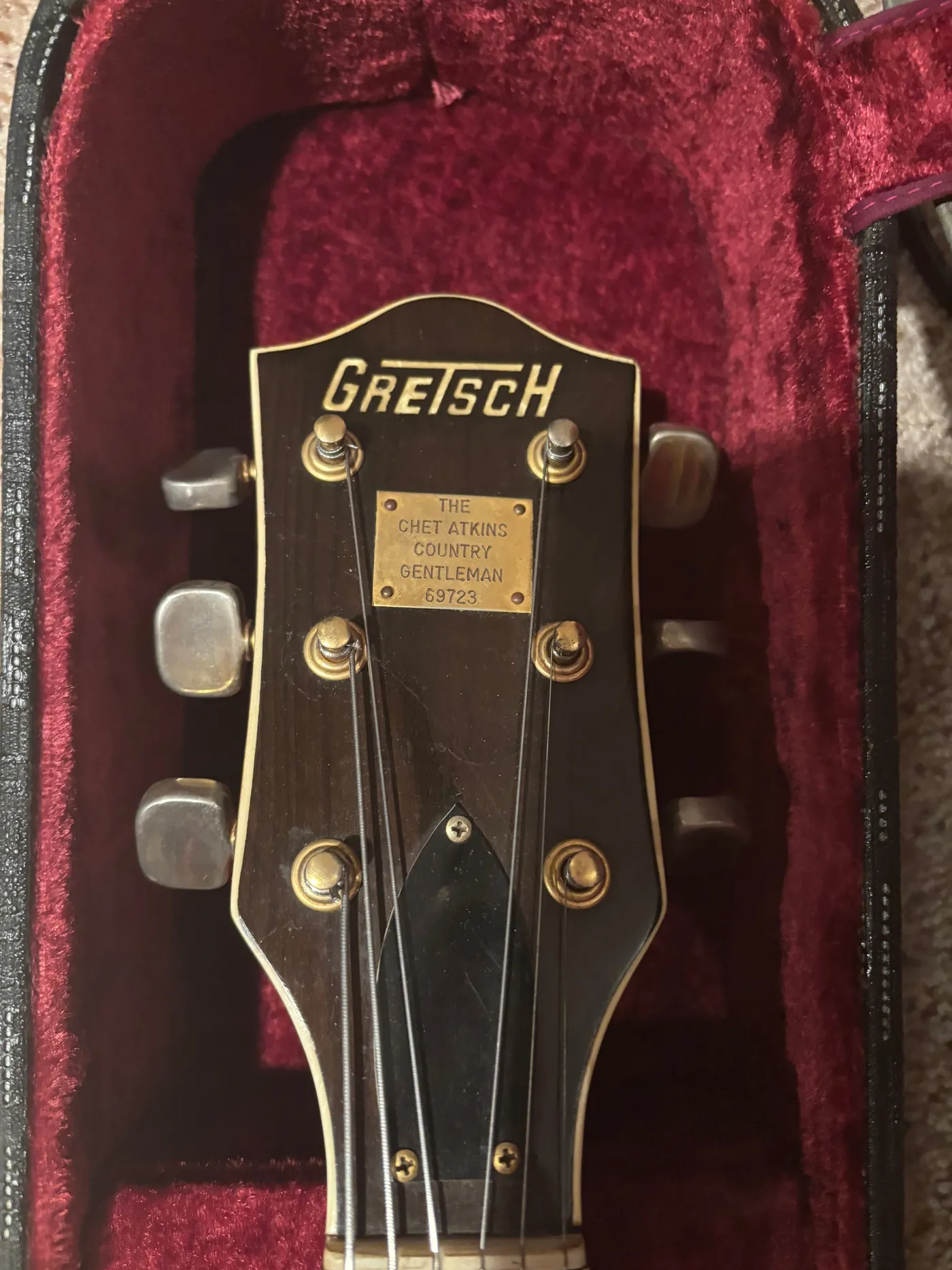
Body Details And Nameplate 69723
This 1965 Country Gentleman shows the double-cutaway body, walnut finish, simulated f-holes and Gretsch-branded Bigsby. Its neck pickup has blades, while the bridge pickup has two rows of screw poles. The separate headstock photograph reads “The Chet Atkins Country Gentleman” and shows serial 69723.
Use the body view to record the installed pickups, bridge, mute hardware and controls. The headstock view connects the model name and serial with this guitar. An estimate also needs the back, binding, neck joint and any repair history; these two photographs do not establish every part’s originality.
Compare Like With Like
A Useful Condition Ranking
Original And Complete
Use the chart as a starting point when the production group is established, the finish and equipment are supported, the structure is sound and the correct case is present. The upper figure still isn't an automatic entitlement for a clean-looking guitar.
Maintained For Playing
A refretted guitar with a changed bridge can be a practical instrument. Describe the work and assess its quality. Avoid presenting a well-maintained player as untouched just because its modifications are tidy.
Incomplete Or Awaiting Repair
Missing hardware, a nonworking pickup or extensive binding damage requires its own evaluation. Keep every loose part and photograph the affected area. Don't treat an incomplete guitar as worthless because it falls outside the chart’s condition basis.
The case belongs in that record too. Show its exterior, interior and fit around the instrument. An old case can be associated with a guitar for decades without being its original case. Hardware or paperwork found inside can add context, but should be described as accompanying the instrument until its connection is established.
If you have more than one Gretsch, label each photo set with the guitar's serial rather than mixing the pictures. Similar walnut bodies, loose guards or cases can make it easy to attach one instrument's documentation to another. A separate folder for each guitar saves that confusion before an appraisal or sale.
Prepare For A Specific Estimate
Send A Country Gentleman Photo Set
Begin With Front And Back
Show the whole instrument, including the headstock, then both side profiles. Include any back pad and surrounding finish.Capture The Identification
Photograph the model plate, all visible serial markings and the case. Keep the original image files so small lettering stays readable.Document Use And Repairs
Show frets, heel, binding, pickups and the complete bridge and vibrato assembly. Explain any high action, intermittent controls or disclosed work.
Send The Evidence
Ask Joe About Your Country Gentleman
You can request an estimate before deciding to sell. Send the model details, condition photographs and known history, including any uncertainty about the year. If a sale is the goal, mention which case, documents and removed parts will accompany the guitar.
Questions AboutGretsch Values
Is A 1964 Country Gentleman Priced Like A 1962?
Does George Harrison’s Connection Add Value To Every Example?
Can A Country Gentleman With Replaced Parts Still Be Sold?
Why Is There No Separate 1957 Figure?
The Last Word
A Value For Your Guitar
The right period narrows a Country Gentleman’s value; the condition record makes the estimate useful. Keep repairs, original parts and uncertain dates visible. Joe can work from that evidence when you request an appraisal or discuss a sale. For model and date checks, see the Gretsch Country Gentleman authentication guide.
This Is An Estimate Of Market Value, Not An Offer To Buy And Not A Guarantee. Market Values Fluctuate; Have Your Specific Item Appraised.