

Gibson Trini Lopez Identification · Standard And Deluxe
Gibson Trini Lopez Authentication Guide
Begin with body depth and horn shape to identify Standard or Deluxe. The Trini Lopez name covers both; nut width, plating and serial details help date each guitar.
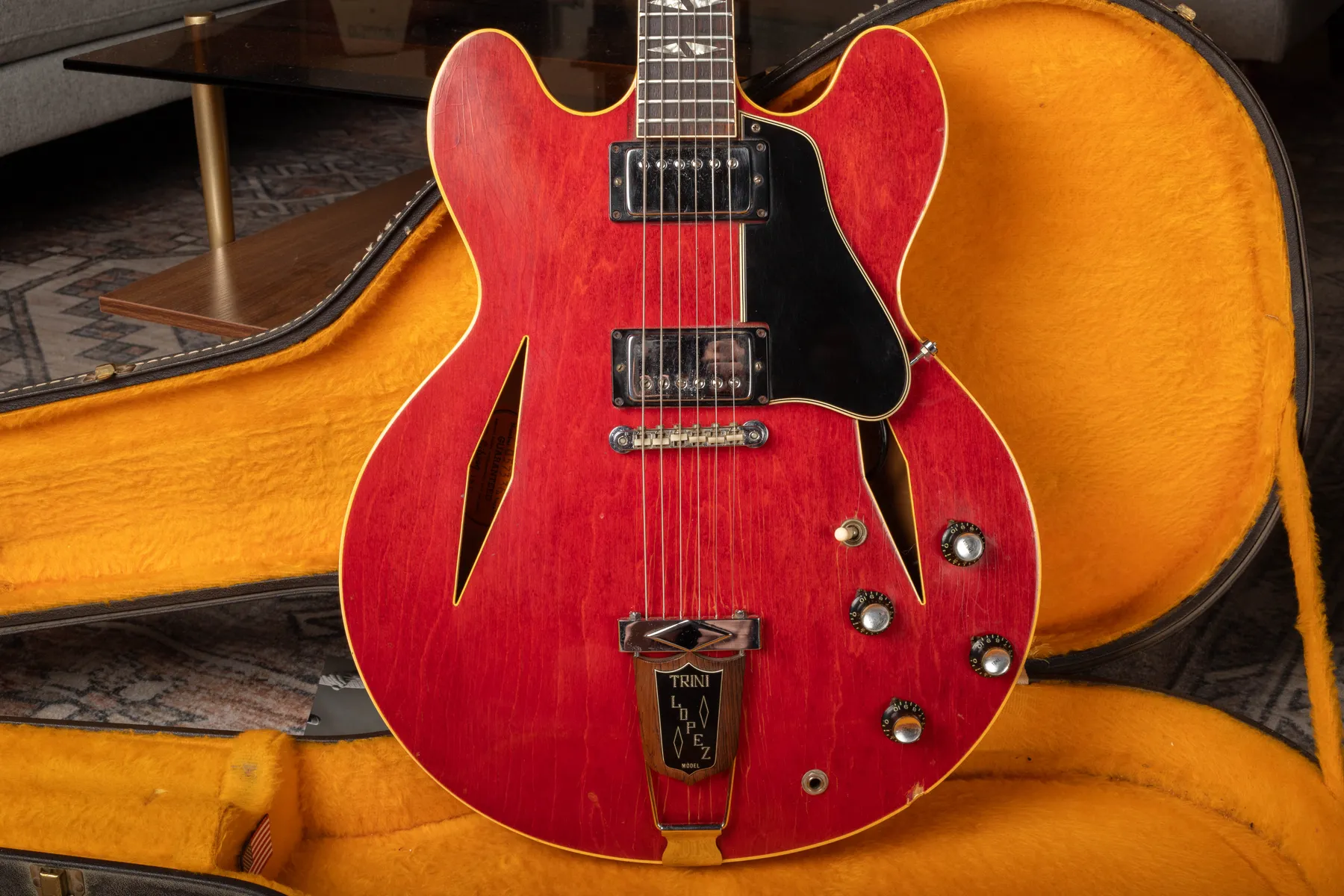
Bound diamond soundholes, split-diamond markers and six tuners along one side of the headstock identify the 1960s design. Choose Standard for a thin ES-335-style body with rounded horns, or Deluxe for a full-depth 17-inch body with pointed horns. The initial small shipments left in late 1964, with original production ending around 1970. Joe’s cherry Standard below is an original 1967 example retaining its factory equipment. After settling model and finish, consult the Trini Lopez price reference.
Authenticity And Originality Are Assessed From The Information Provided. A Hands-On Inspection Can Change The Conclusion.
Two Bodies, One Name
Standard Or Deluxe?
| Feature | Standard | Deluxe |
|---|---|---|
| Body | 16 inches wide, about 1¾ inches deep, maple center block | 17 inches wide, about 3 inches deep, fully hollow |
| Cutaways | Two rounded horns, ES-335 outline | Two pointed Florentine horns, Barney Kessel outline |
| Fingerboard | Rosewood | Ebony in the catalog |
| Controls | Standard Gibson layout | Selector moved to the treble horn, plus a standby switch on the bass horn |
| Catalog finish | Cherry | Cherry sunburst |
| Shipments, 1964 to 1970 | 1,966 | 302 |
You’ll see the body-depth difference clearly from the side: the Standard has a thin rim and the Deluxe a full-depth body. Confirm with the cutaways, whose horns are rounded on a Standard and pointed on a Deluxe.
Joe’s shipment-ledger page supplies the totals. Approximately six and a half Standards shipped per Deluxe, making a Deluxe much less common to encounter.
Holes, Headstock, Inlays And Tailpiece
Features Every 1960s Trini Lopez Shares
Diamond Soundholes
Binding borders the diamond openings on 1960s instruments. Inspect the full perimeter of both holes.
Six-On-A-Side Headstock
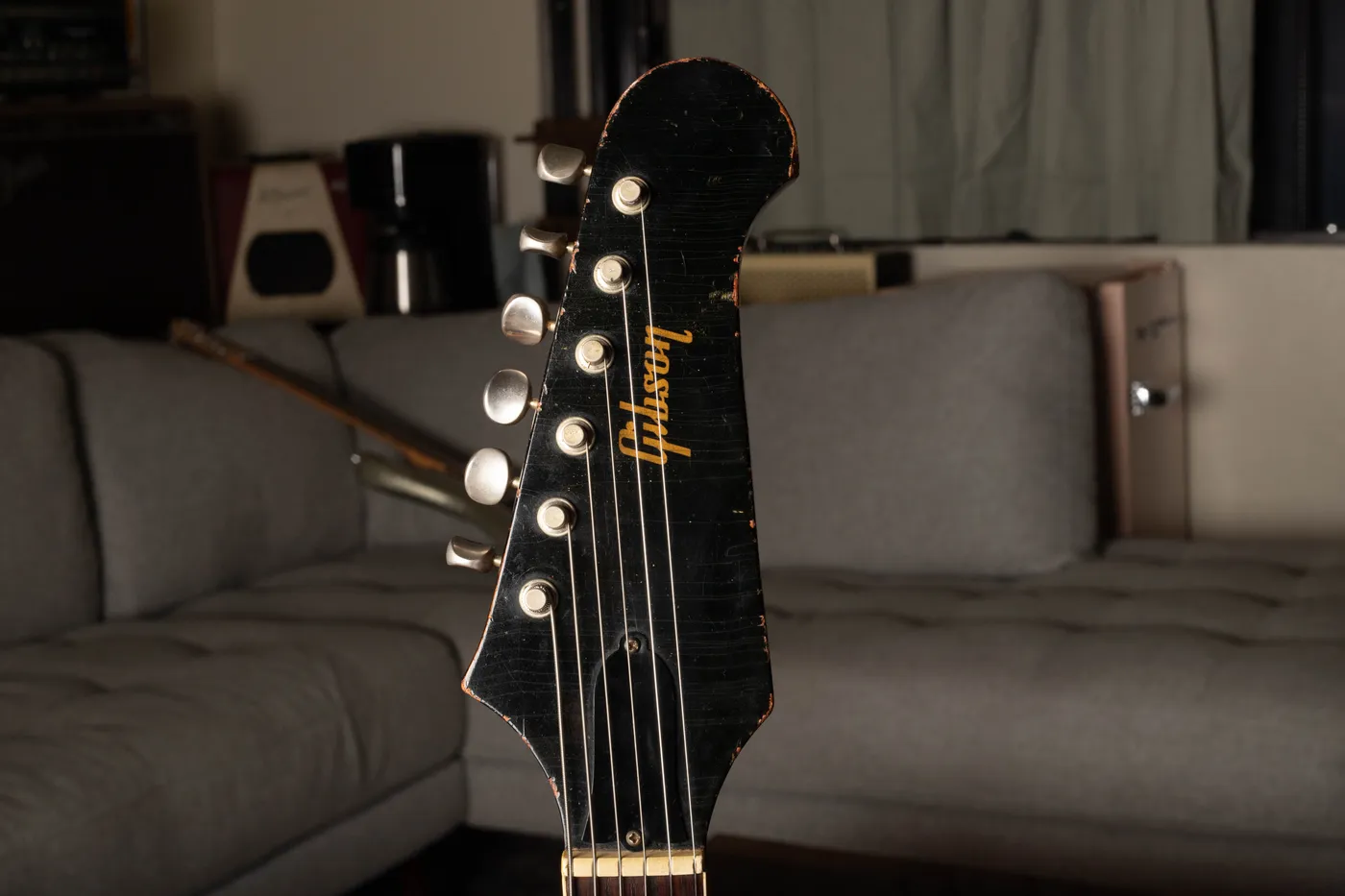
There’s a gold Gibson logo against the black headstock, with six tuning machines along the bass edge. An especially early Deluxe had the headstock facing the opposite direction; Gibson soon revised it.
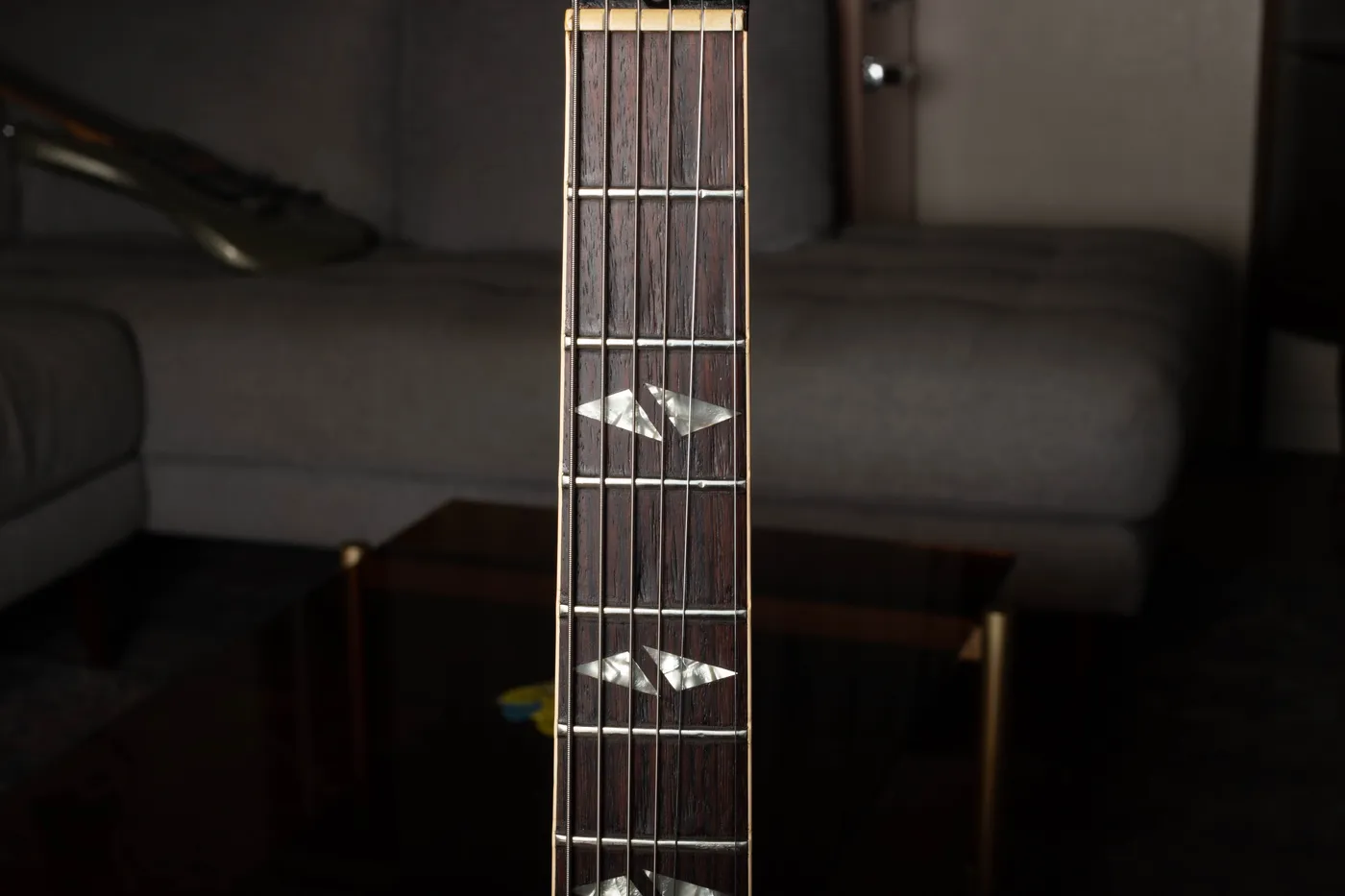
Split-Diamond Inlays
Split diamonds mark the fingerboard. On a Standard, you’ll find those markers in rosewood, with a 24¾-inch scale and 22 frets.
Trini Lopez Tailpiece
A rosewood insert carries the Trini Lopez nameplate within a trapeze decorated with raised diamonds. A Bigsby or an undecorated trapeze indicates a tailpiece replacement.
Both versions use paired humbuckers, with Patent Number units already fitted to early 1965 Standards. A Standard’s Tune-o-matic has nylon saddles. The Deluxe’s Tune-o-matic rests on a rosewood support.
An All-Original Cherry Standard
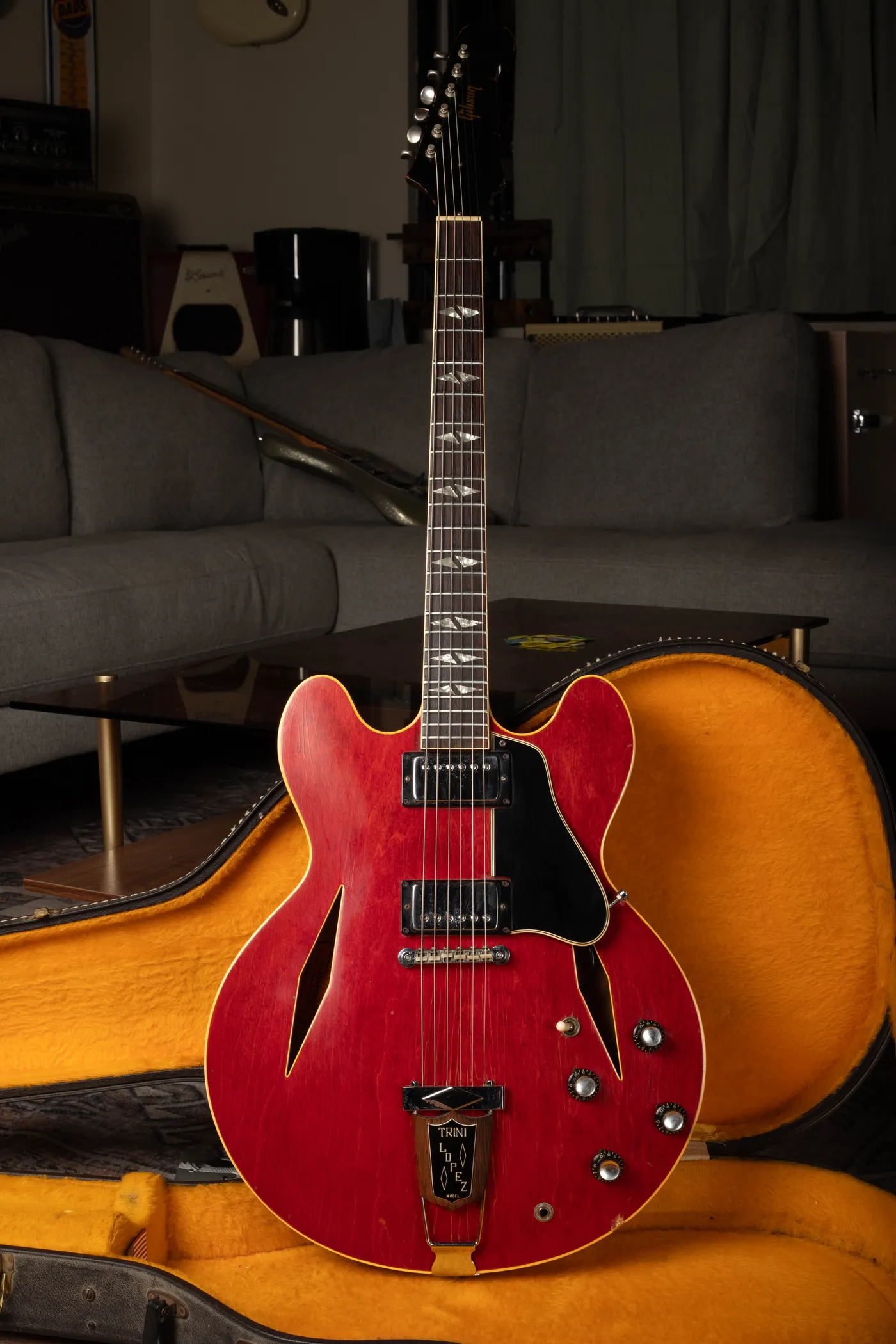
Joe’s 1967 Trini Lopez Standard
1967 Gibson Trini Lopez Standard
One Owner, Original Parts
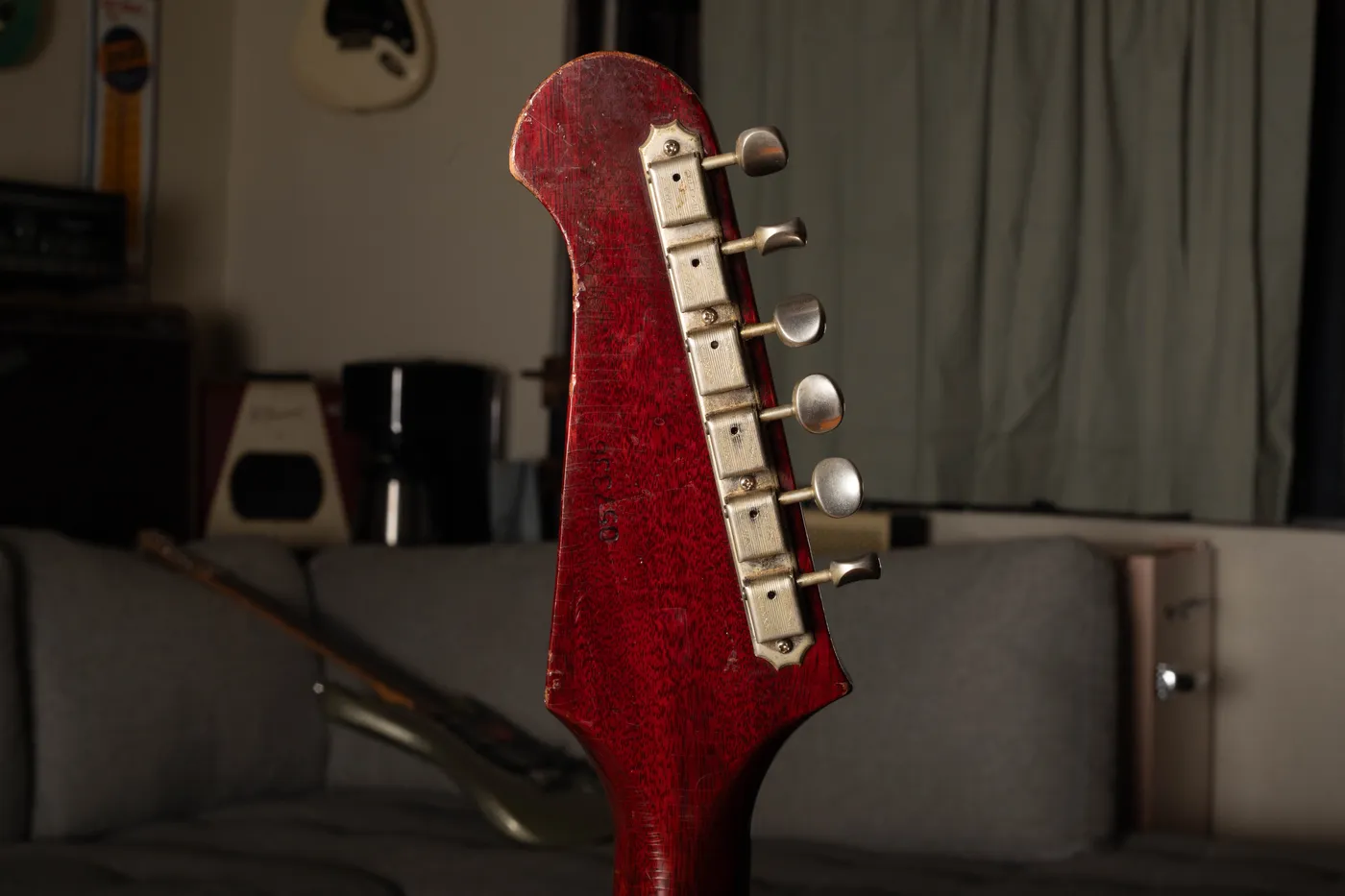
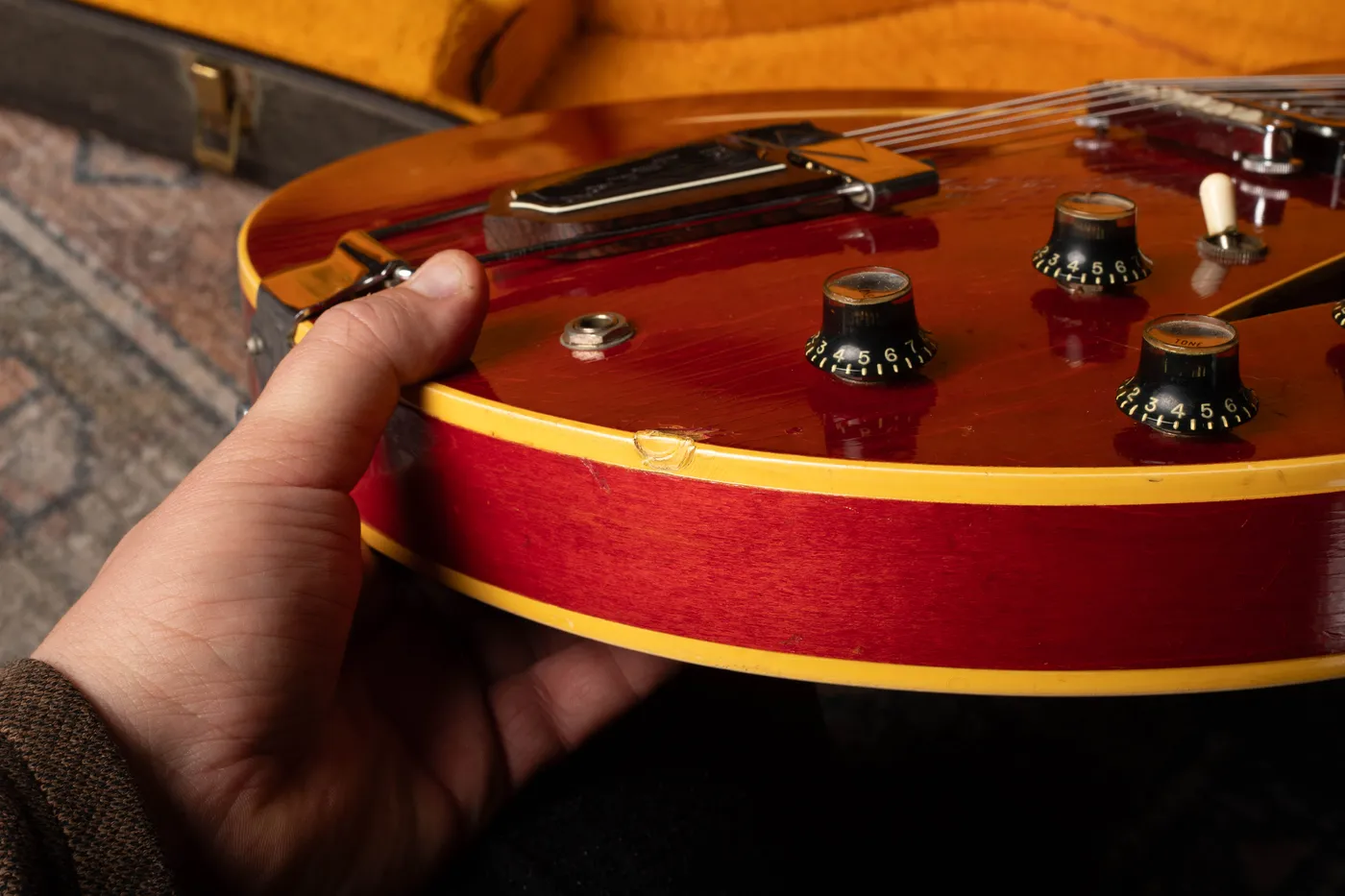
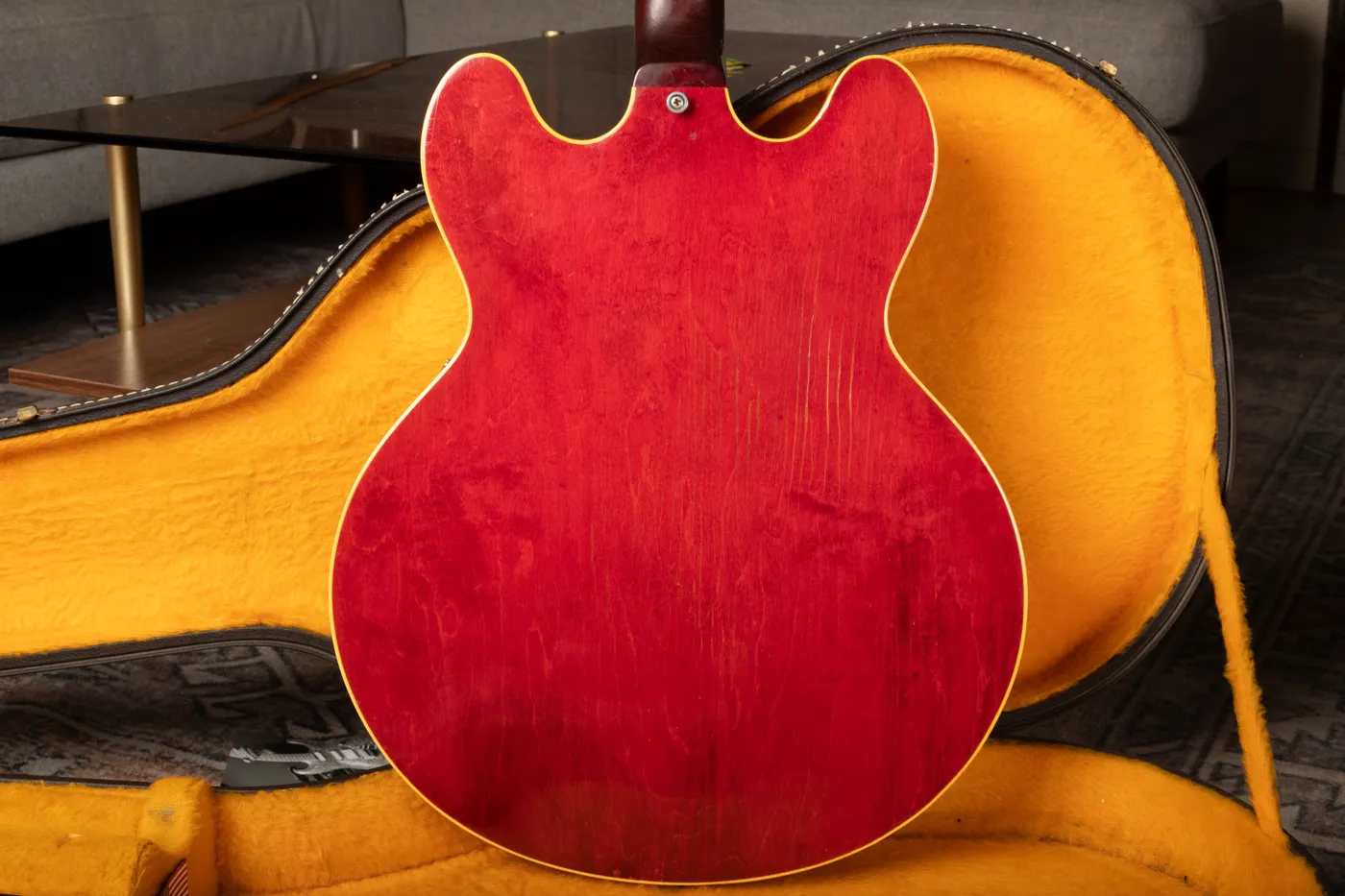
Joe acquired this 1967 directly from its original owner, and all equipment remains original. Cherry finish accompanies bound diamond openings, split-diamond board markers and a six-in-line headstock with one Kluson tuner strip. The neck’s pronounced taper becomes thick quickly.
The impressed rear-headstock number falls within a 1967 range in Joe’s Gibson dating reference. No MADE IN U.S.A. stamp appears underneath. Checking, mild wear and a lower-edge ding mark the finish, and the original hard case came with it.
Nut Width, Hardware, Knobs And Serial
Dating A Trini Lopez
The First Guitars Ship
The shipment counts were 2 Deluxes and 3 Standards. Nickel plating and a nut about 1 11/16 inches wide belong to these first guitars.
Full Production
Standard shipments reached 321, and both models appeared in the February 1965 price list. Nut narrowing and the shift from nickel to chrome occurred during that year, leaving either specification possible on a 1965.
Narrower Nut And Chrome
Chrome fittings and a nut narrowed to about 1 9/16 inches became the regular specification. In 1967, Standard shipments reached their high of 783.
Knob Change
The switch from reflector to witch-hat knobs took place around 1967. Reflectors remain on Joe’s 1967, illustrating a gradual change. Use knob design as a period clue.
MADE IN U.S.A. Stamp
Gibson began putting MADE IN U.S.A. beneath serial numbers in 1970. Its listings for these models ended around the same period.
Find candidate years with the Gibson number reference. Reused 1960s ranges mean a single Trini serial may fit multiple dates. Compare its knobs, nut measurement and plating to choose among them. If the pots are factory equipment, the control-pot dating guide provides another check.
Factory Color Comes Before Price
Checking A Cherry, Burgundy Or Pelham Blue Finish
The catalogs specify cherry for the Standard and cherry sunburst for the Deluxe. Standards also exist in Pelham Blue, Sparkling Burgundy and, in small numbers, black. References differ over whether these were catalog options or special orders. Their premiums depend on original finish.
Yellowing clearcoat shifts old Pelham Blue toward green, while sheltered patches such as the area beneath a guard remain bluer. Consistent bright blue across the body warrants closer inspection. Cherry also fades unevenly, often becoming orange or brown on the top while protected areas retain brighter color.
Examine the lower bout, peghead edges and neck back where playing naturally causes wear. Original worn finish exposes layers of color and wood. Overspray tends to cover existing wear and dings. The guide to refinishing and price explains the effect of changing color.
What To Question On A Trini Lopez
Reissues, Look-Alikes And Changed Parts
Custom Shop Reissues
The 1964 Standard recreations repeat the collectible colors of the originals. You’ll identify later manufacture through a modern numbering format and Custom Shop documents.
Unbound Diamond Holes
Diamond openings without binding are inconsistent with a 1960s Gibson, whose openings have bound edges.
Truss Rod Covers
A Custom-marked replacement cover sometimes appears on a Trini Lopez. Since covers swap easily, the wording can’t establish the model.
Tailpiece And Tuners
Inspect the tuner strip and the body’s tail end for additional holes. Changing the tailpiece removes the Trini Lopez nameplate.
Gibson’s records include factory seconds among these models. They can be perfectly good instruments. Record any second stamp so it’s considered in the appraisal.
Photos Joe Needs To Identify Yours
Build A Trini Lopez Identification Record
Front And Side Views
Use a side photograph to establish depth and a front photograph to show cutaways and soundholes.
Headstock Front And Back
Make the maker’s logo, tuner strip and number clear, including any stamps beside the serial.
Hardware
Capture the tailpiece nameplate, bridge and pickups, along with the knobs and switches.
Finish Close-Ups
Include close views where it’s worn or the color differs from surrounding areas.
Send The Evidence
Ask Joe To Identify Your Trini Lopez
Send the photos above. Joe can confirm the model, the likely year and whether the finish is original.
Where These Details Come From
Trini Lopez Identification Sources
- Vintage Guitar: The Gibson Trini Lopez
George Gruhn on the model’s history, first shipments and the Deluxe.
- Gibson Trini Lopez Standard Catalog Pages
Standard specifications.
- Gibson Trini Lopez Deluxe Catalog Pages
Deluxe specifications and shipments.
- Premier Guitar: 1968 Gibson Trini Lopez Deluxe
Deluxe controls and hardware.
- True Vintage Guitar: 1966 Pelham Blue Trini Lopez
Nut, hardware and knob changes, and Pelham Blue aging.
- Gibson Shipping Totals, 1948 To 1979
Standard and Deluxe ledger figures by year.
Questions AboutGibson Identification
How Do I Tell A Trini Lopez Standard From A Deluxe?
Are All Trini Lopez Guitars Cherry?
When Was The Gibson Trini Lopez Made?
What Does A Missing Trini Lopez Tailpiece Mean?
The Last Word
Keep The Evidence Together
Use the body to establish Standard or Deluxe, and the serial, hardware and nut to date it. After checking the finish, select the matching row in the Trini Lopez value chart.
Authenticity And Originality Are Assessed From The Information Provided. A Hands-On Inspection Can Change The Conclusion.