

Gibson Trini Lopez Prices · Standard And Deluxe
Gibson Trini Lopez Value Guide
Use separate rows for the full-depth Deluxe and thin-bodied Standard. For a Standard, its factory finish and year determine the starting price comparison.
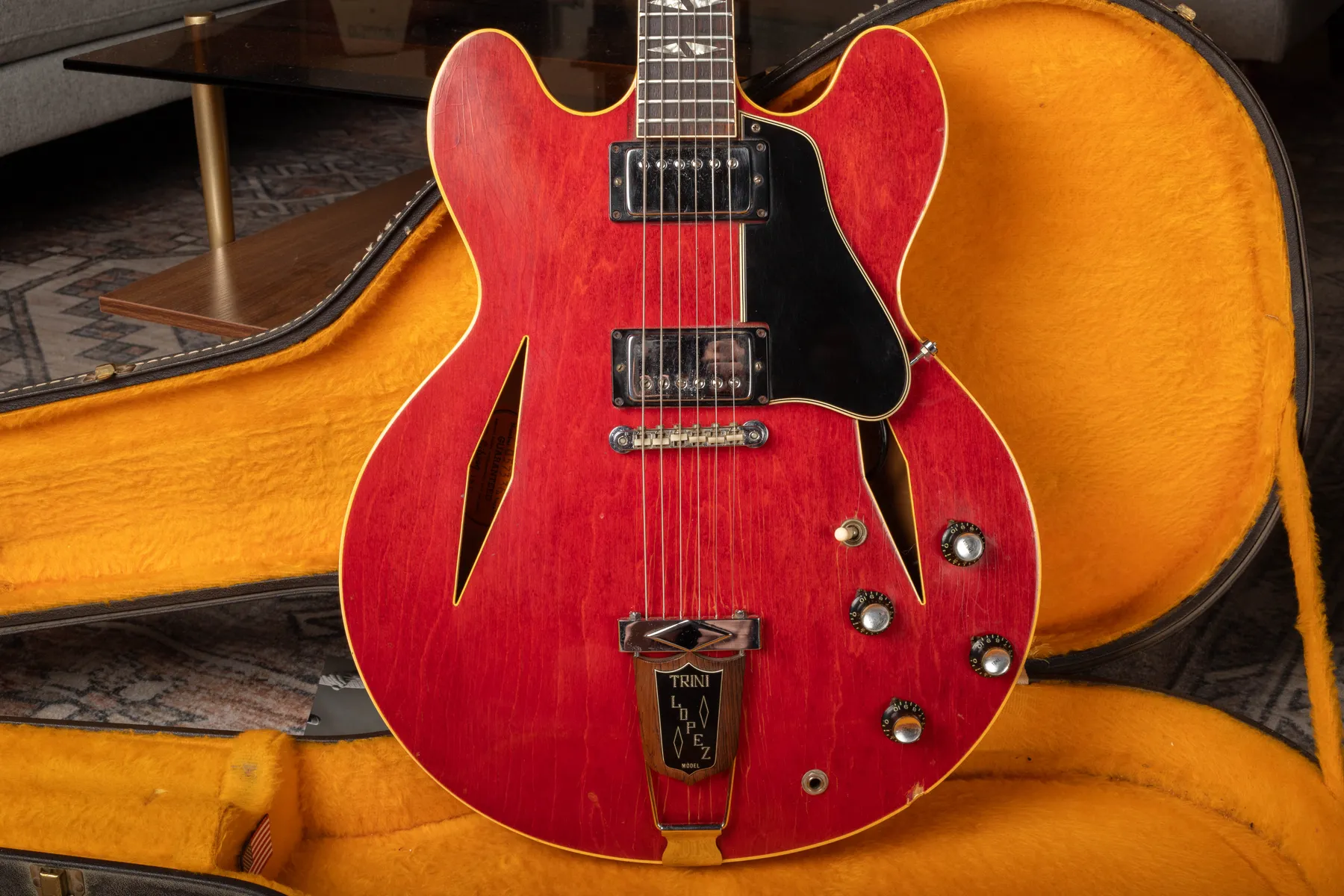
In excellent condition with factory equipment throughout and the original case, a cherry Standard from 1966 to 1970 is estimated at $6,850 to $8,950. A 1965 Standard retaining factory Pelham Blue is $11,600 to $15,500. Full-depth Deluxes have separate entries in the chart. Joe’s cherry 1967 below came from one owner and it’s all original. Establish the finish and model using the Trini Lopez identification reference before choosing your comparison row.
This Is An Estimate Of Market Value, Not An Offer To Buy And Not A Guarantee. Market Values Fluctuate; Have Your Specific Item Appraised.
Excellent Original Guitars With The Original Case
Trini Lopez Values By Model, Year And Finish
| Model | Pricing Year Group | Configuration | Estimated Value |
|---|---|---|---|
| Trini Lopez Standard | 1964 | Cherry | $8,600 to $11,200 |
| Trini Lopez Standard | 1965 | Cherry | $7,850 to $10,450 |
| Trini Lopez Standard | 1965 | Pelham Blue | $11,600 to $15,500 |
| Trini Lopez Standard | 1965 | Sparkling Burgundy | $8,600 to $11,200 |
| Trini Lopez Standard | 1966 | Pelham Blue | $9,450 to $12,450 |
| Trini Lopez Standard | 1966 to 1970 | Cherry | $6,850 to $8,950 |
| Trini Lopez Standard | 1966 to 1970 | Sparkling Burgundy | $7,050 to $9,250 |
| Trini Lopez Standard Custom Shop Reissue | 2010 to 2011 | Later Custom Shop reissue | $3,900 to $5,200 |
| Trini Lopez Deluxe | 1964 | Double pointed cutaways; triple-bound; sunburst | $6,650 to $8,550 |
| Trini Lopez Deluxe | 1965 | Double pointed cutaways; triple-bound; sunburst | $6,250 to $8,250 |
| Trini Lopez Deluxe | 1966 to 1970 | Double pointed cutaways; triple-bound; sunburst | $5,800 to $7,700 |
U.S. dollars. These November 2026 retail market estimates assume excellent, original condition and the original case where applicable. An individual sale can fall outside the range; these figures are not purchase offers. Repairs, changed parts and market conditions require an individual appraisal.
Match a Standard’s date and finish together. The 1965 estimates are $11,600 to $15,500 for Pelham Blue, $7,850 to $10,450 for cherry and $8,600 to $11,200 for Sparkling Burgundy. For 1966 onward, compare $7,050 to $9,250 for Burgundy with $6,850 to $8,950 for cherry. Pelham Blue has a separate 1966 entry at $9,450 to $12,450.
These figures estimate retail value in November 2026 for excellent instruments with original equipment and their original cases. A purchase offer is assessed separately. The $3,900 to $5,200 entry covers only the later Custom Shop reissue from 2010 to 2011.
How Many Were Made Shapes The Price
Trini Lopez Standard Prices By Year
A cherry 1964 Standard is estimated at $8,600 to $11,200. That figure includes the premium for the earliest production. Joe’s shipping-ledger reference records 3 Standards in 1964, then 321 for 1965 and 485 for 1966. The largest annual shipment was 783 in 1967.
That peak helps explain the prevalence of late-1960s cherry guitars for sale and the broad coverage of the 1966 to 1970 row. Total Standard shipments across 1964 to 1970 reached 1,966 in the ledger.
After establishing color and model, assess condition. Inspect the lower bout, headstock edges and neck back for finish wear. Normal wear remains part of an original cherry guitar; touch-ups and overspray require a different comparison.
Factory Color Changes The Row
Cherry, Sparkling Burgundy And Pelham Blue
Cherry
Most Standards are cherry. The estimates run $7,850 to $10,450 for 1965, $8,600 to $11,200 for 1964 and $6,850 to $8,950 for 1966 to 1970. Exposure to light can move cherry toward brown or orange, leaving often-brighter original color beneath the guard.
Sparkling Burgundy
At $8,600 to $11,200 for 1965 and $7,050 to $9,250 for 1966 to 1970, these are the guide’s Burgundy Standard estimates. Inspect the metallic finish for edge wear and checking consistent with the age of the rest of the guitar.
Pelham Blue
The highest Standard figures belong to Pelham Blue: $11,600 to $15,500 in 1965 and $9,450 to $12,450 in 1966. As its clearcoat yellows, original blue usually takes on a greener appearance than a new paint sample. Uniform, bright blue calls for further inspection.
Send views in ordinary room lighting as well as daylight. If the guard’s already removed, photograph the sheltered finish. Include visible color at f-hole edges or inside the control cavity where it’s visible without disassembly. The refinish pricing article explains why changed color requires a comparison outside these rows.
The Full-Depth Model
Trini Lopez Deluxe Values
Identify the Deluxe by its full-depth 17-inch body and pointed double cutaways, sharing the Kessel outline. The Standard instead follows the thin, rounded-horn ES-335 shape. The price guide specifies sunburst, triple binding and two humbuckers for the Deluxe. Estimates are $6,250 to $8,250 for 1965, $6,650 to $8,550 for 1964 and $5,800 to $7,700 for 1966 to 1970.
Despite lower production, the Deluxe’s guide price is lower in each corresponding year. Joe’s shipment totals for 1964 to 1970 list 302 Deluxes against 1,966 Standards. Reserve these rows for full-depth guitars with pointed horns. Compare the bodies in the Trini Lopez authentication guide.
An All-Original, One-Owner Cherry Standard
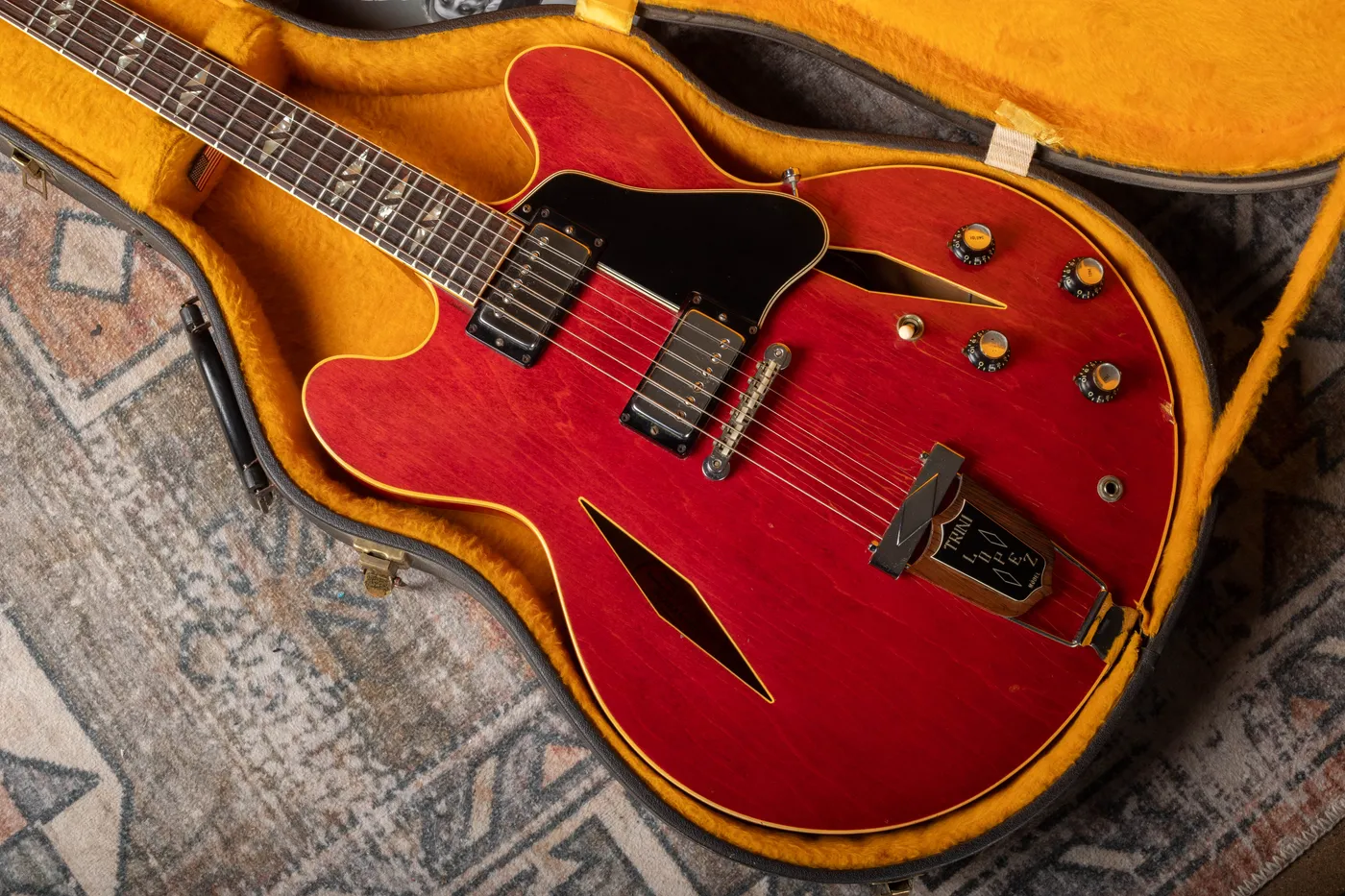
Joe’s 1967 Trini Lopez Standard
1967 Gibson Trini Lopez Standard
Cherry, Original And Played
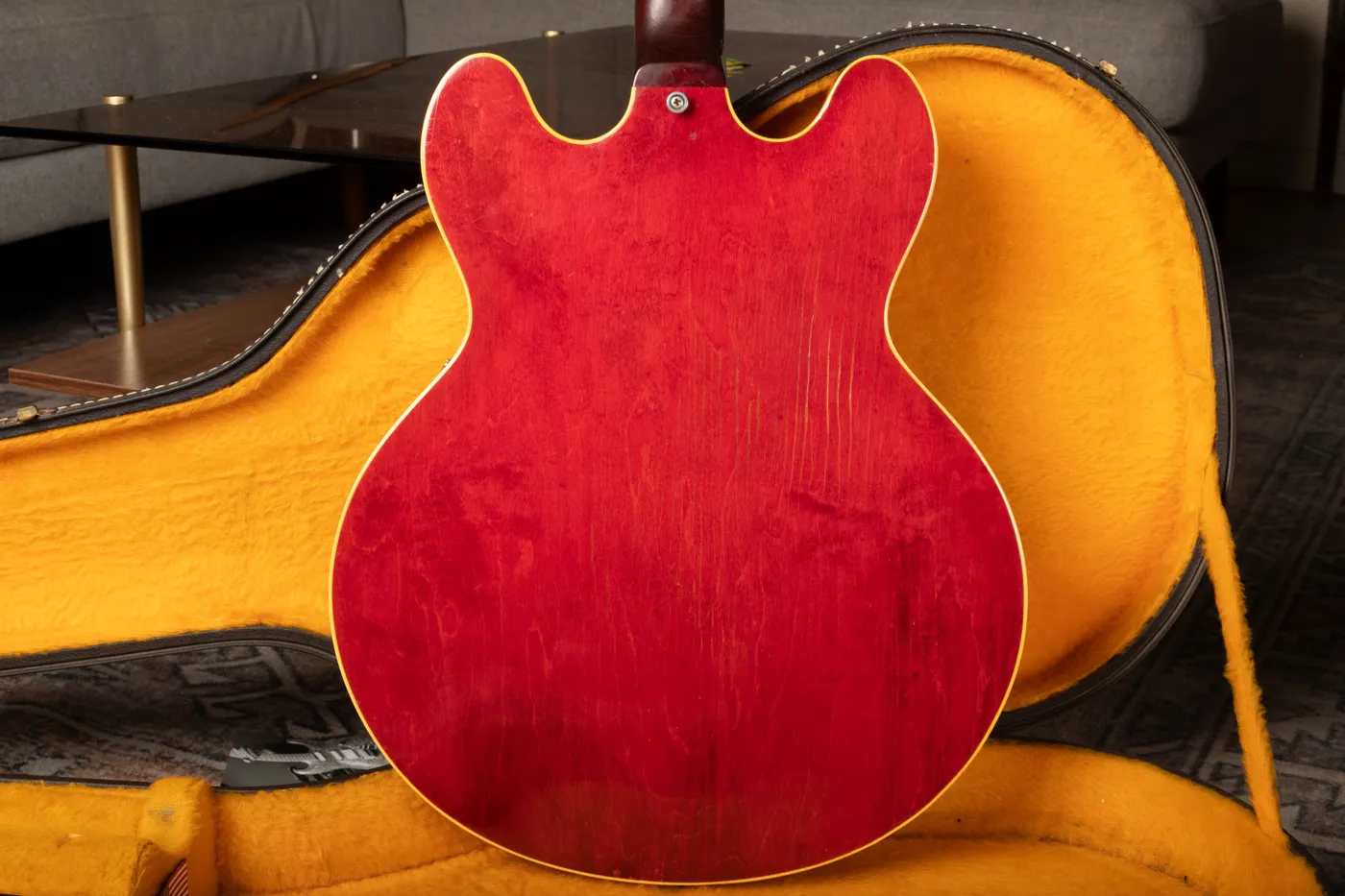
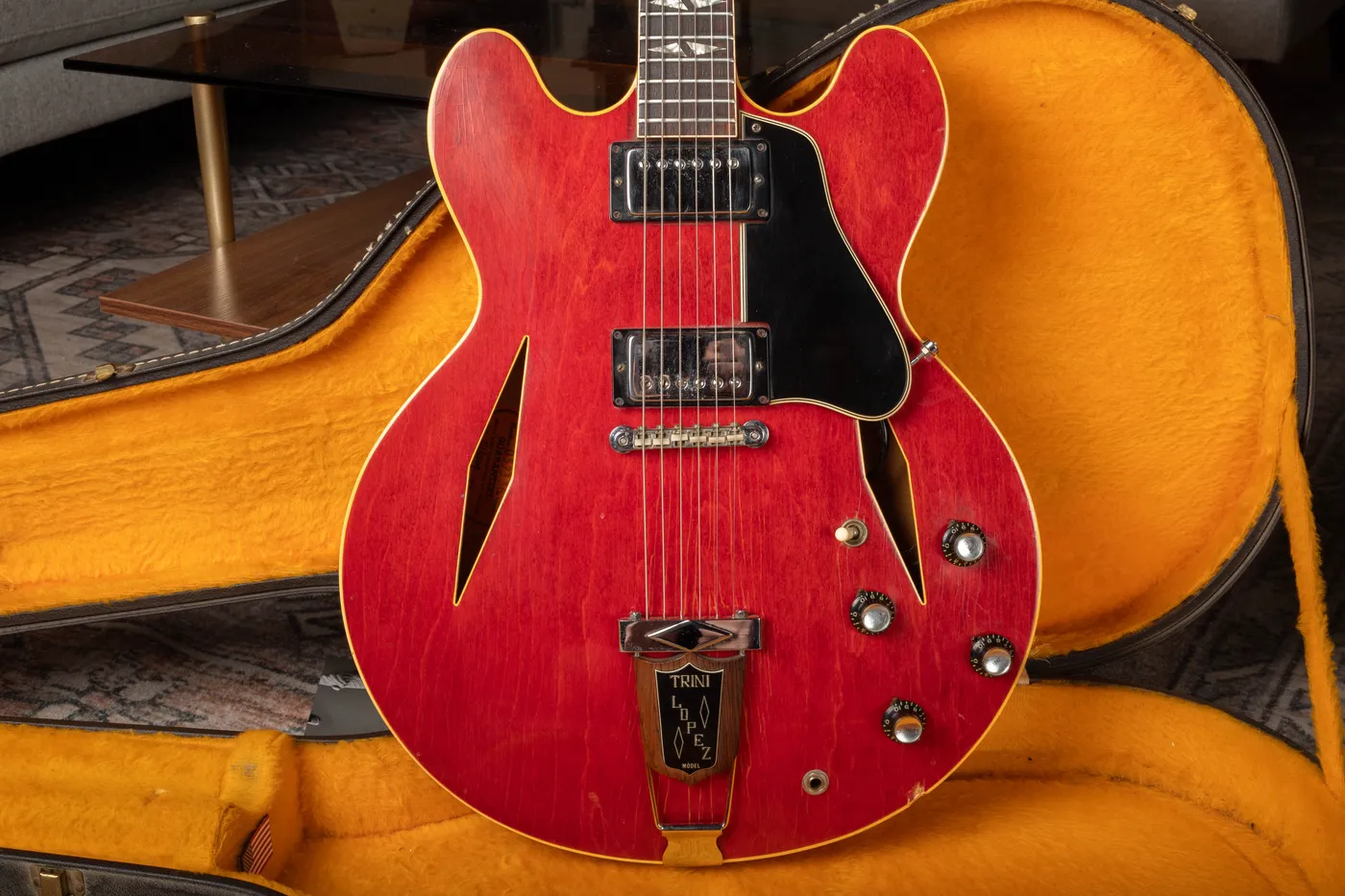
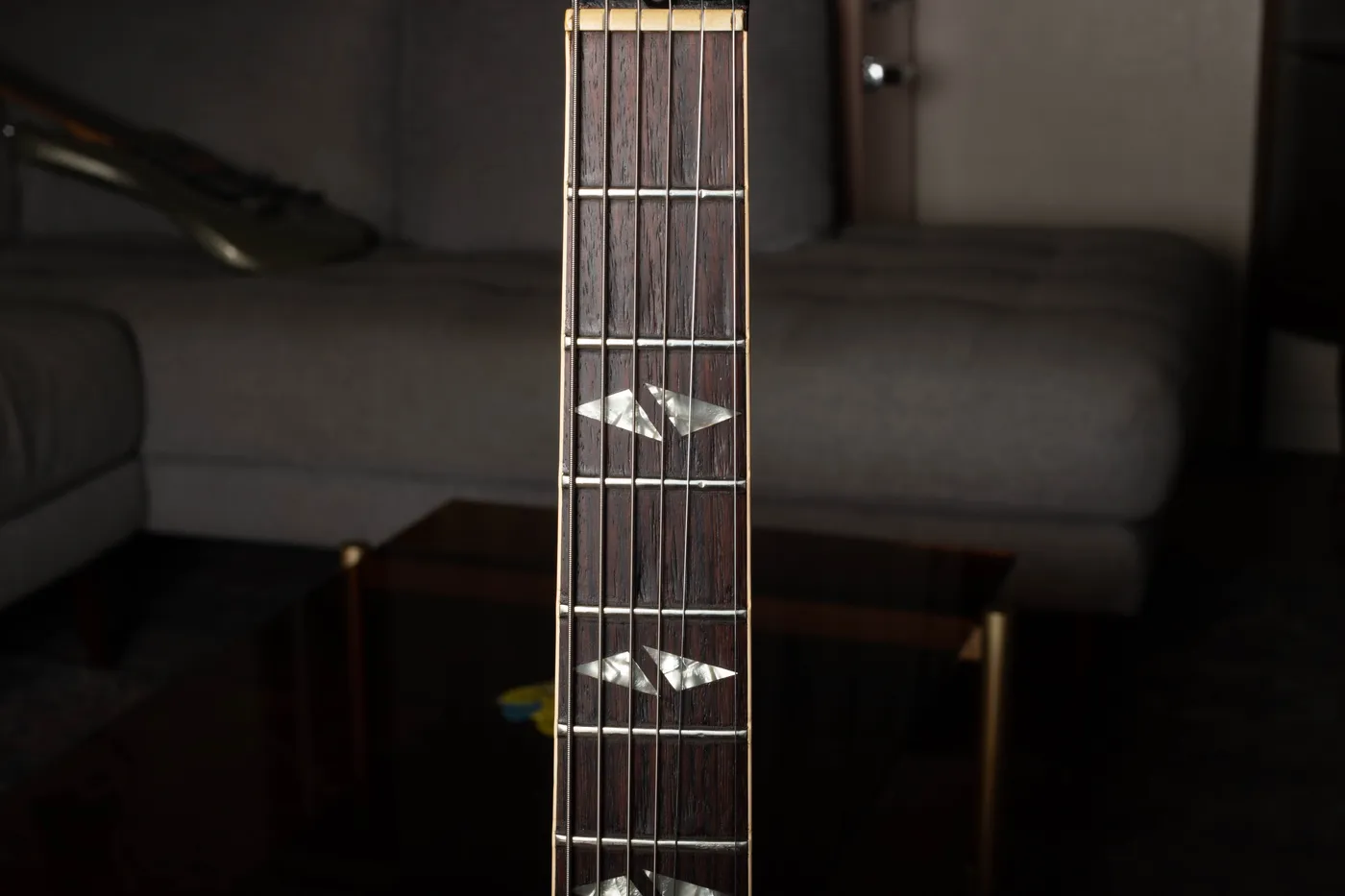
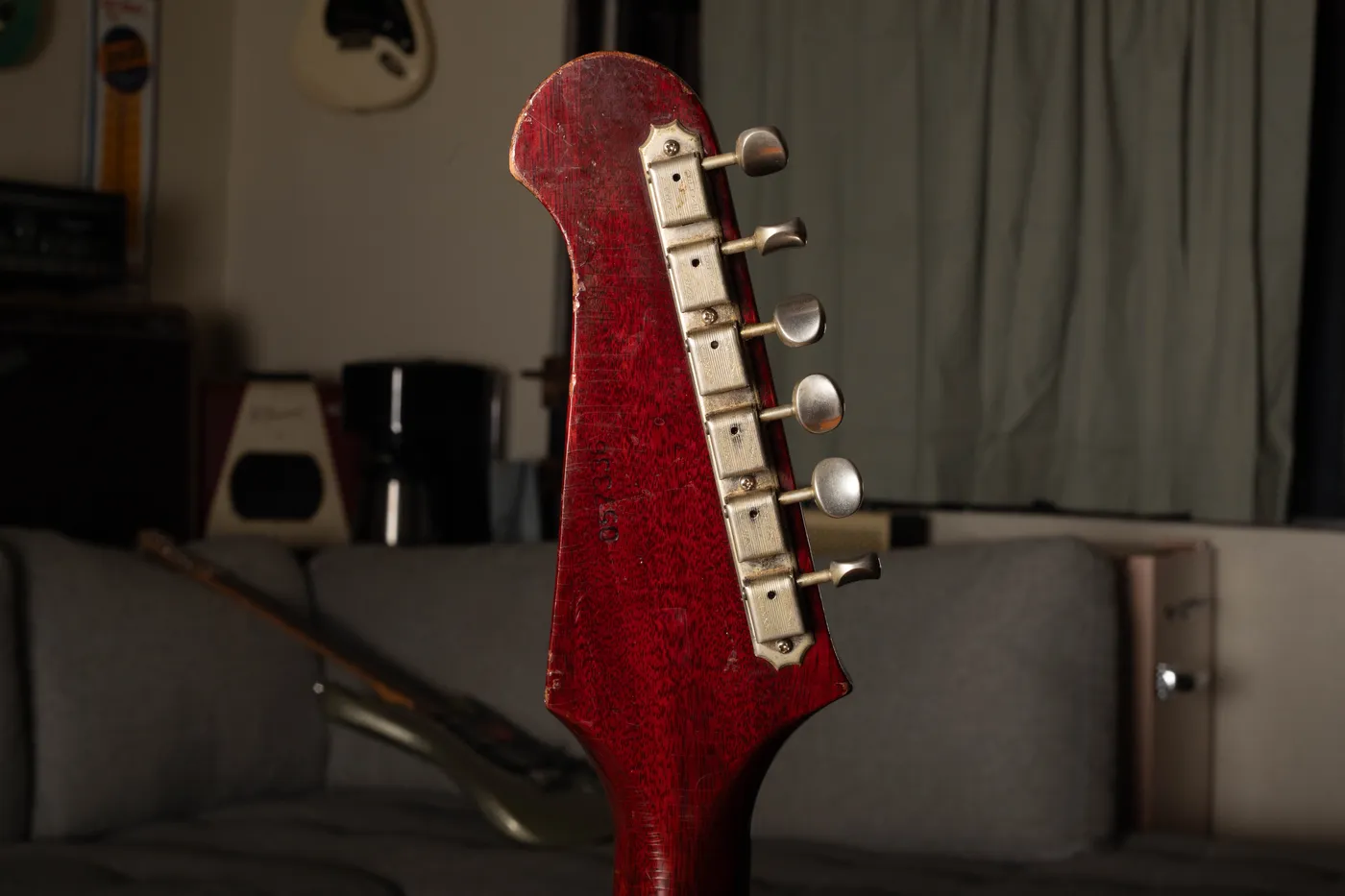
The original owner supplied Joe’s all-original 1967 Standard. Light wear and checking extend across it, with a ding along the lower edge. Its strongly tapered neck thickens quickly, stays dead straight and allows very low action. The factory hard case accompanied it.
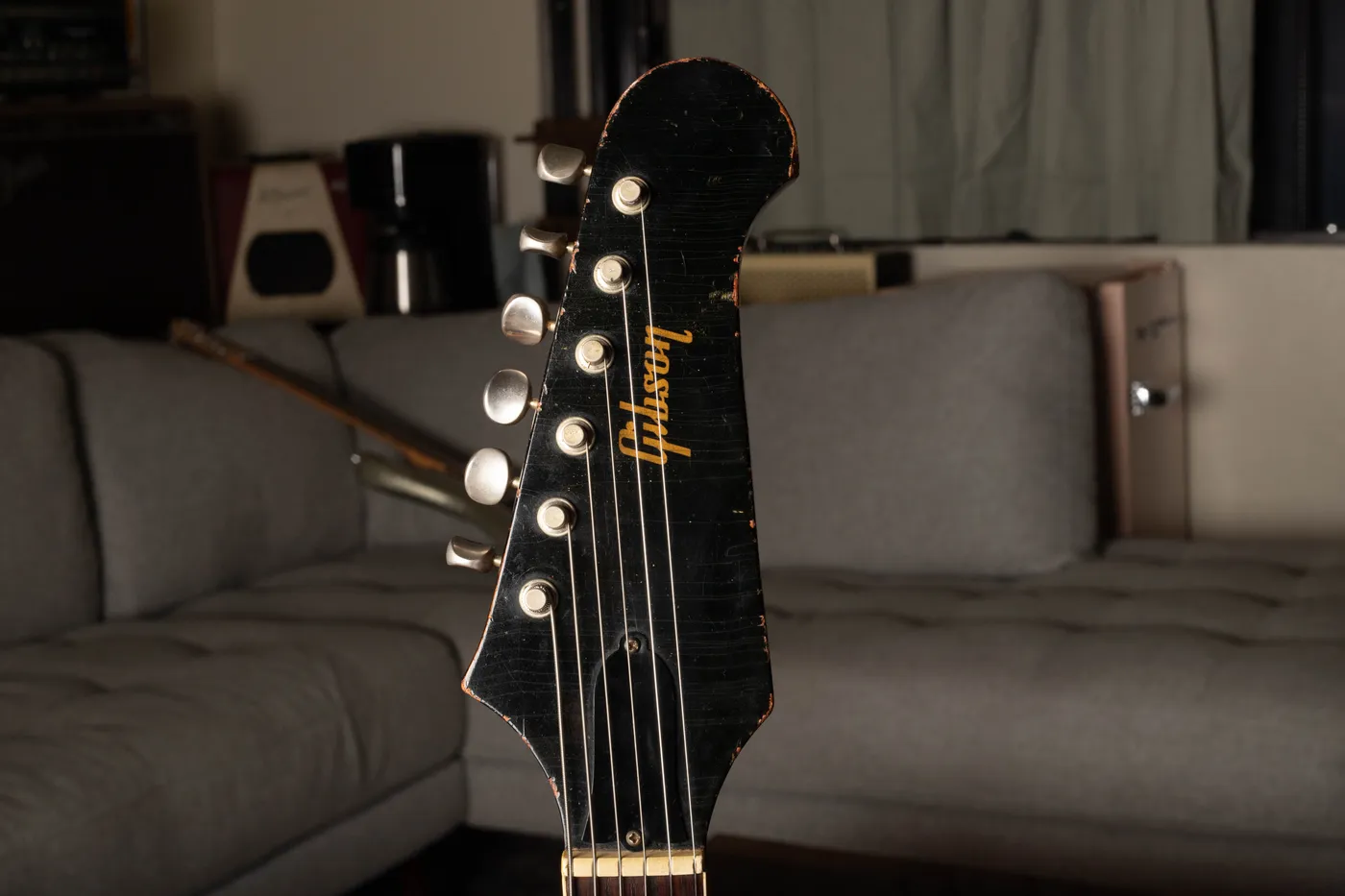
Behind the headstock, the number matches a range listed for 1967 in Joe’s Gibson serial reference. There’s no “Made in USA” marking, consistent with manufacture before 1970. The cherry finish has the sort of wear expected in its price row from an instrument played and stored in its case.
What Moves A Trini Lopez Out Of The Chart
Conversions, Refinishes And Replaced Parts
Headstock And Neck Repairs
A repaired headstock break requires a comparison outside the original-condition rows. Photograph the peghead edges and the neck just behind the nut.
Refinished Or Oversprayed Bodies
Say if it’s been repainted or a fresh clear layer covers the old finish. The chart assumes the finish applied at the factory.
Replaced Tailpiece Or Tuners
Capture the tailpiece insert and the tuner strip behind the headstock. Record additional holes, including any left by a past Bigsby installation.
Reissues And Look-Alikes
Custom Shop recreations of the 1964 Standard have appeared in Cherry, Ebony, Sparkling Burgundy and Pelham Blue. You’ll also find Trini-style instruments from other companies. Use the identification guide to distinguish those guitars from 1960s production.
Have the guitar appraised in its current state and retain any parts already removed. Before spending on repairs, consult the advice on restoration before selling.
Photos And Facts Joe Uses
What To Send For A Trini Lopez Appraisal
Whole Guitar In Daylight
Use daylight for full back and front views, adding one side view to establish depth alongside the finish color.
Headstock Front And Back
Make the serial readable and photograph the neck immediately behind the nut.
Hardware And Controls
Include the selector, knobs, pickups, tailpiece and bridge in clear views. Identify any changes you’re aware of.
Case And History
Show its case and pass along the ownership and repair history you know.
Send The Evidence
Get A Value For Your Trini Lopez
Send the photos and anything you know about the guitar. Joe can tell you which row it fits and how its condition changes the figure.
Questions AboutGibson Values
What Is A 1967 Gibson Trini Lopez Standard Worth?
Is A Pelham Blue Trini Lopez Worth More?
Is The Deluxe Worth More Than The Standard?
The Last Word
A Value For Your Guitar
Establish year, model and color, then assess whether the finish remains original. Resolve uncertain details with the guide to identifying a Trini Lopez.
This Is An Estimate Of Market Value, Not An Offer To Buy And Not A Guarantee. Market Values Fluctuate; Have Your Specific Item Appraised.