

Vintage Gibson Bass Identification · Through 1979
Gibson Thunderbird And EB Bass Authentication Guide
Separate the Thunderbird body generations from the EB families, then match pickup layout, scale and factory evidence to the proposed year.
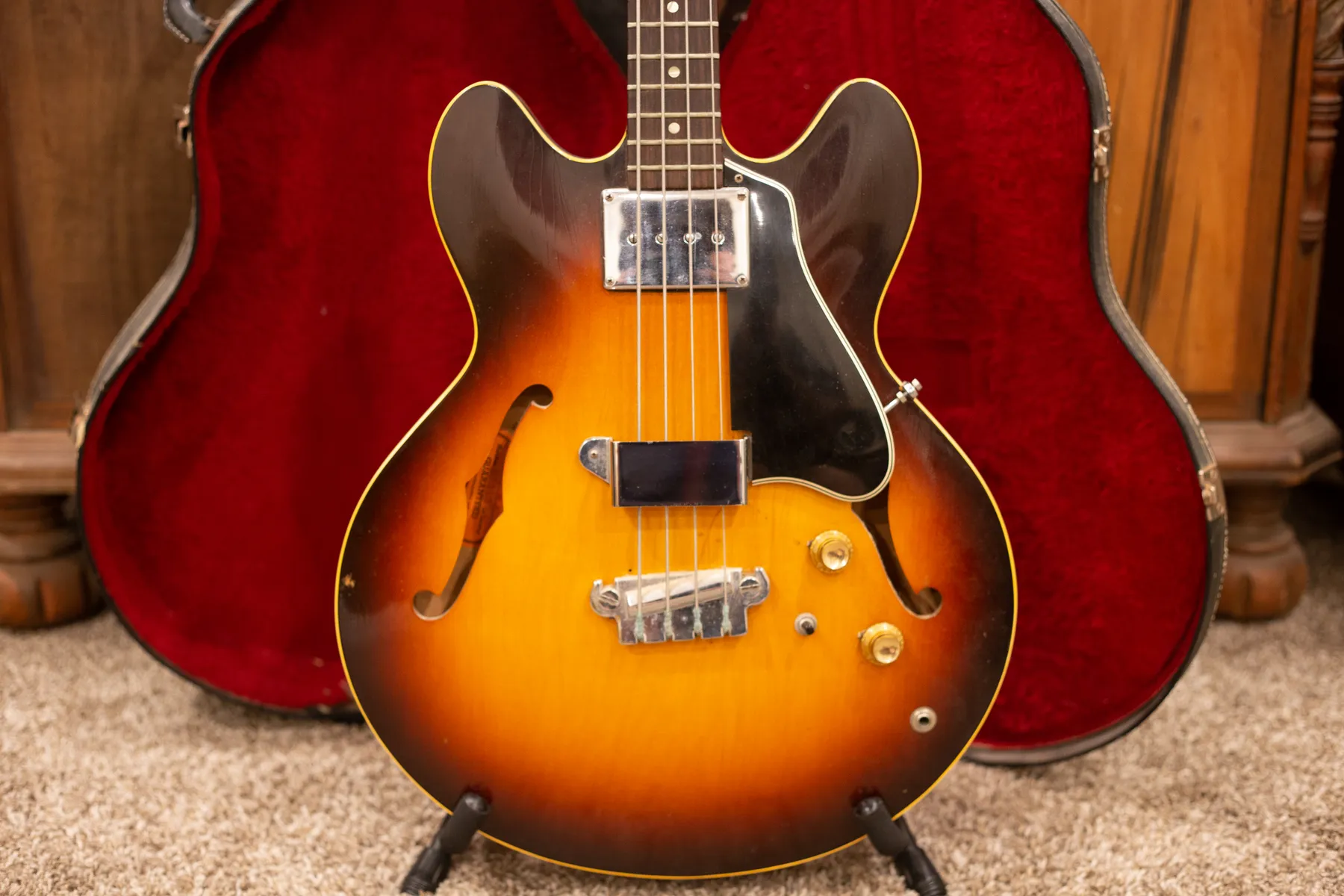
Identify a vintage Gibson bass by its body family, pickup arrangement and scale before decoding the serial. A Thunderbird, an SG-shaped EB-3 and a semi-hollow EB-2 need different construction checks. This guide covers Thunderbird, EB-0, EB-2, EB-3 and EB-4L families through 1979; the violin-shaped EB-1 is outside its scope. Joe’s 1967 EB-2 appears below as a single-pickup example. The Thunderbird and EB bass value guide has separate rows for the supported model, finish and production group.
Authenticity And Originality Are Assessed From The Information Provided. A Hands-On Inspection Can Change The Conclusion.
Body Shape And Electrical Layout
Identify The Gibson Bass Family First
Thunderbird
The asymmetrical body and elongated headstock distinguish this family. Establish reverse or non-reverse construction and count the pickups. The early II and IV designations identify one- and two-pickup versions, respectively. Later numbered models need their own dated reference.
EB-0 And EB-0 Variants
The early slab-body group differs from the later SG-shaped bass. The usual EB-0 has one large pickup, while the EB-0F and long-scale EB-0L require additional checks. Don’t identify a long-scale model solely from a photograph of its body.
EB-3 And EB-3L
The EB-3 adds a second pickup and a different control system to the SG-style bass family. A selector and four knobs help distinguish the layout. The long-scale L version must be measured and matched to its period.
EB-2 And EB-2D
The double-cutaway semi-hollow body has f-holes and a different construction from the solid EB models. The D version has two pickups. Joe’s sunburst EB-2 archive example shows a single pickup and the baritone-switch layout.
EB-4L
Gibson’s 1972 brochure documents this long-scale solidbody with a Super Humbucking pickup and three-position tone selector. The EB-4L is its own model, rather than an EB-3 with a missing pickup.
Photograph the entire instrument before concentrating on a serial. Include both body faces, the headstock and all controls. That allows the date evidence to be interpreted within the correct family and avoids applying a Thunderbird specification to an EB bass.
Compare The Appropriate Catalog Generation
Reverse And Non-Reverse Thunderbirds
| Feature | Reverse Generation | Non-Reverse Generation |
|---|---|---|
| Neck joint | Neck continues through the body; separate body wings | Glued-in set neck meeting a separate body |
| Body form | Offset reverse outline with raised center | Redesigned non-reverse outline |
| Identification view | Complete back and center-to-wing seams | Heel and neck-to-body joint |
Gibson’s own historical description distinguishes the original neck-through Thunderbird from the later non-reverse model’s glued-in neck. On a neck-through bass, the neck assembly continues through the body, with wings attached at the sides. On a set-neck bass, the neck joins a separate body. Photograph the back and heel to document which construction you have.
This is a comparison of the original 1960s generations. A current guitar can combine a reverse outline with a set neck, so the silhouette alone also can’t distinguish a vintage bass from a modern model. Match the joint, headstock, hardware and serial system together.
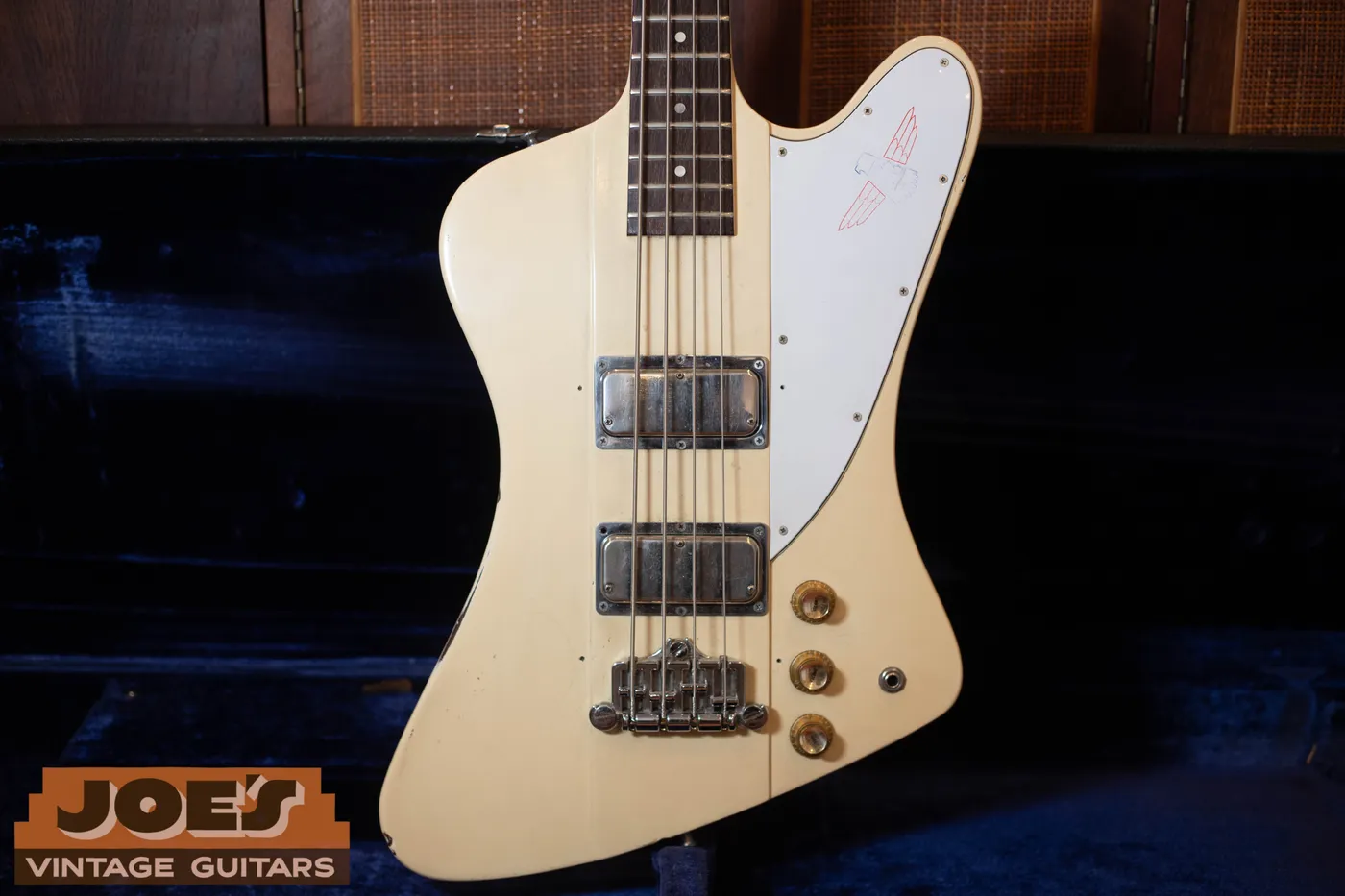
The 1964 catalog shows the original reverse-outline Thunderbird II and IV. The IV has two pickups, separate volume controls and a shared tone control. The II has one pickup with volume and tone. Both have a top-mounted output jack and a white guard in the catalog illustration.
The 1966 catalog depicts the redesigned non-reverse body. Its illustration provides a direct comparison for the changed outline, guard and control placement. A 1965 claim needs particular care because the price reference includes both reverse and non-reverse groups in that year.
Look at the complete back and the neck-to-body transition when reviewing construction. A body outline by itself isn’t enough to establish whether an instrument retains its original neck or has undergone extensive work. Repairs under opaque finish may need an in-hand examination.
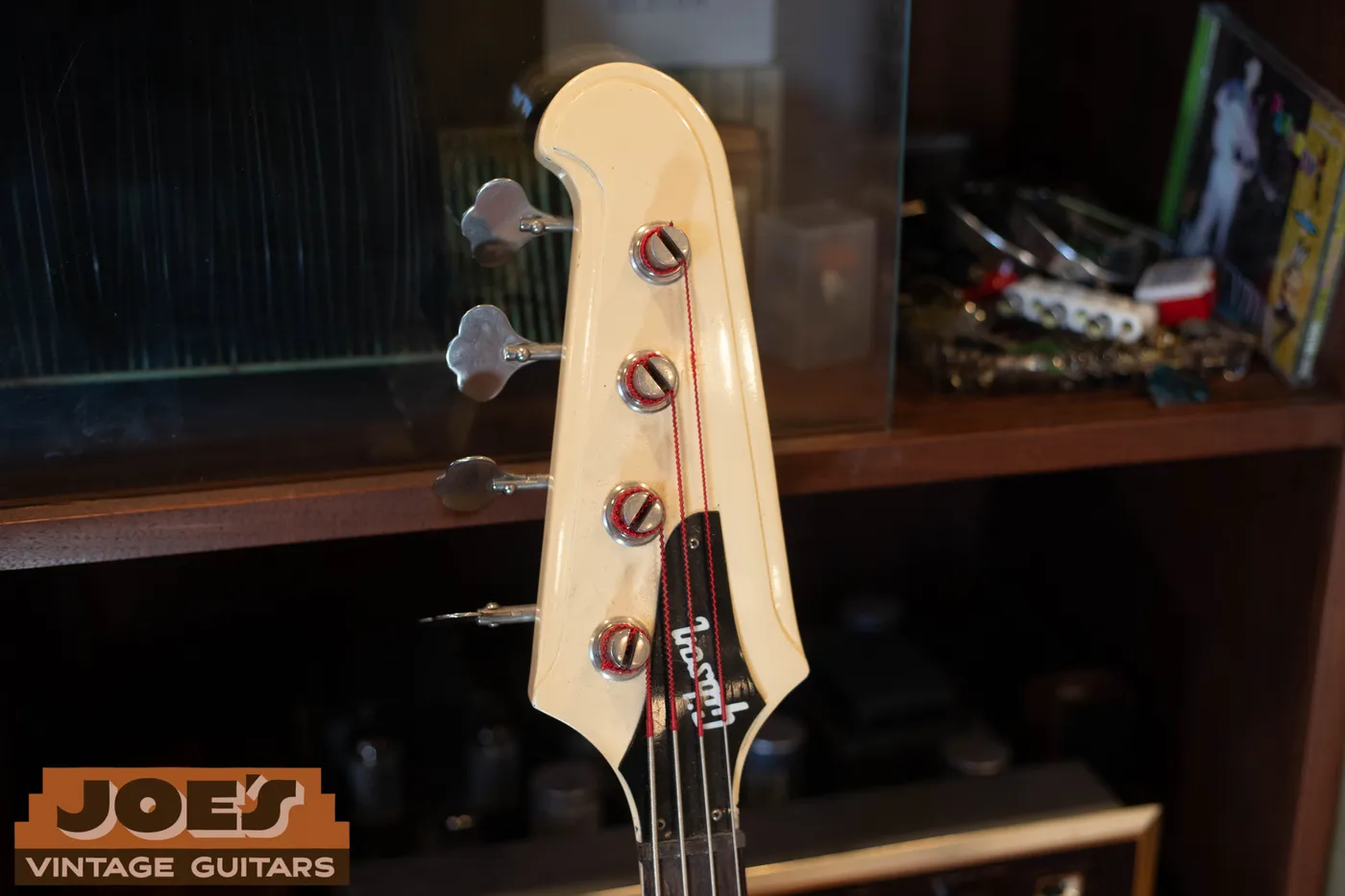
For the later 1970s Thunderbird groups, confirm the serial system and the specific version before calling an instrument a Bicentennial model. A decorated guard can be replaced. The pictured white Thunderbird is included as an archive comparison with its exact year left unconfirmed.
The Firebird history and authentication guide covers the related guitar family. Its model-specific pickup and tuner details should stay with the guitar references; the bass needs Thunderbird evidence for its own hardware.
Early SG Forms And The 1972 Redesign
EB-0 And EB-3 Construction Changes
The 1966 catalog presents the SG-shaped EB-0 with one pickup and two controls. The EB-3 has two pickups, two volume controls, two tone controls and a four-position selector. Its large neck pickup and smaller bridge pickup are visibly different components. A replaced cover should not be used to identify the unseen pickup by itself.
In that catalog, both short-scale models are listed at 30½ inches with 20 frets and mahogany necks. These are dated specifications. Later neck construction and pickup placement need a later reference rather than a rule that every EB bass must match the 1966 picture.
Gibson’s 1972 bass catalog shows solid headstocks, laminated maple necks and the large pickup moved farther toward the body center. It lists 21 frets on the EB-0 and EB-3. That provides a useful check against a later bass described as having an unchanged 1960s specification.
The 1972 catalog gives 30½ inches for the short-scale models and 34½ inches for EB-0L and EB-3L. Measure from the nut to the twelfth fret and double the distance. Don’t measure only to the bridge saddle, which includes intonation compensation.
Slotted headstocks occur within the earlier transition period, but a multi-year pricing group should not be interpreted as proof that every feature persisted throughout it. The 1972 factory illustration establishes that the later solid-headstock form needs to be recognized. Assess the bass in front of you and choose the matching dated reference.
Pickups, Switches And The Archive Example
The Semi-Hollow EB-2 Family
1967 Gibson EB-2
Sunburst, One Pickup And Baritone Switch
Joe’s example shows the f-hole body, large single pickup and compact control arrangement. The complete instrument photograph makes it easier to distinguish the semi-hollow EB-2 from the solid EB-0. The back-of-headstock photograph shows exposed tuner gears, cloverleaf buttons and rectangular mounting plates. That visible arrangement differs from the rear-facing banjo tuners on the earliest EB-2s. It supports a later hardware comparison, while originality of each tuner still needs its own inspection.
The 1966 catalog describes the EB-2 with maple body plates and rims, a mahogany neck and a 30½-inch scale. It gives a 16-inch body width and 1¾-inch depth. The two-pickup EB-2D belongs to the same body family but requires its own electrical assessment.
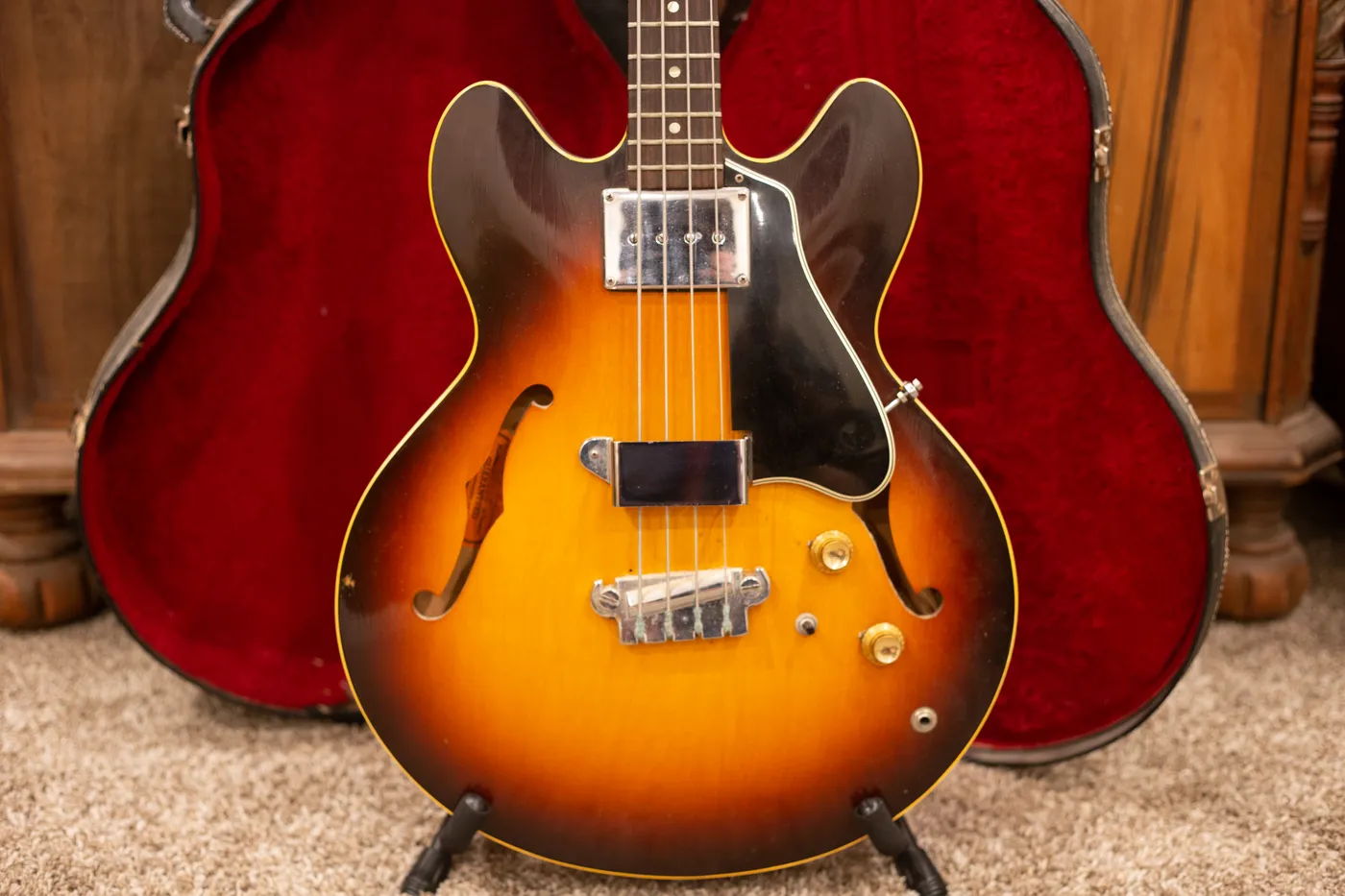
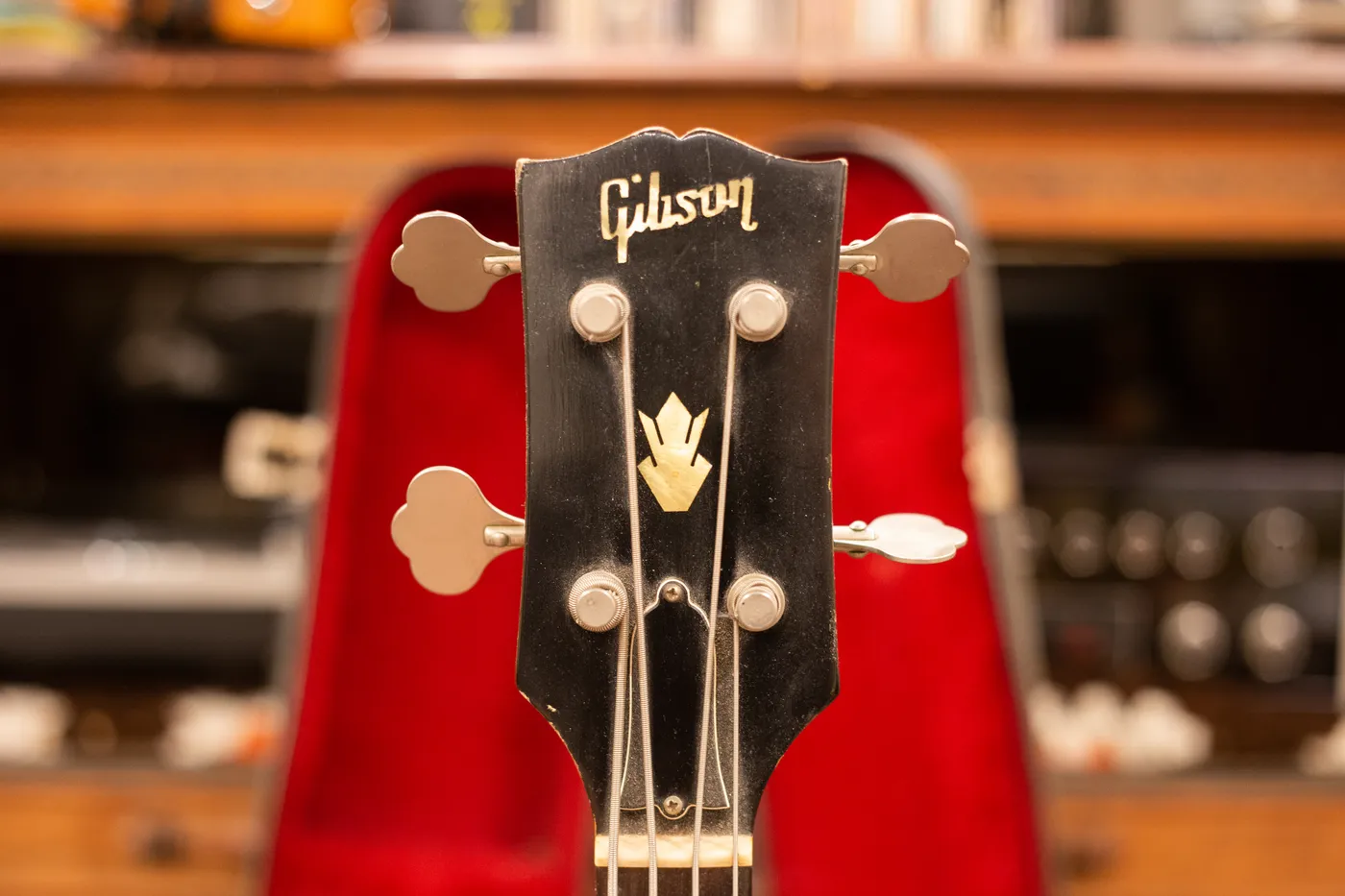
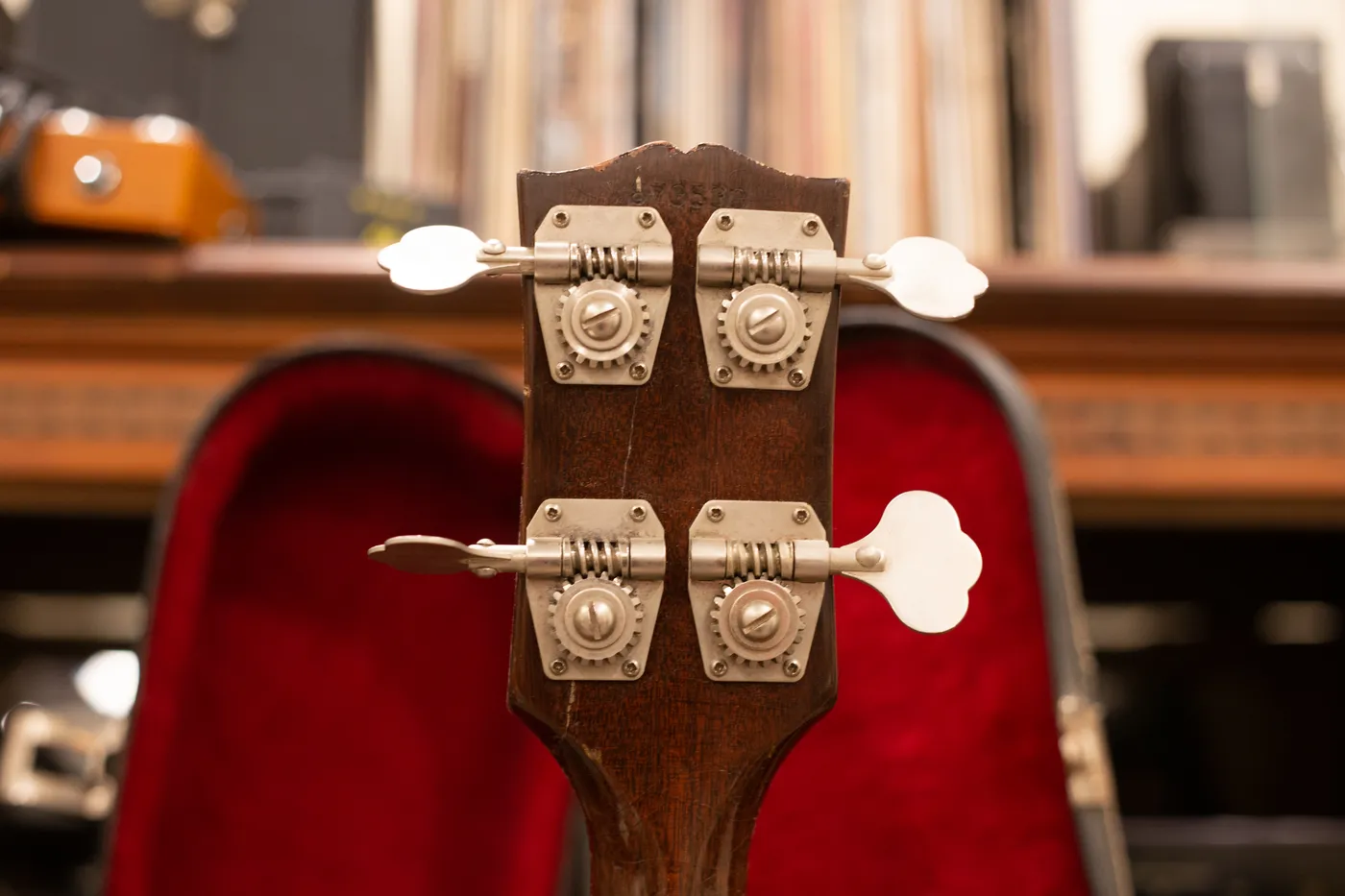
Test and describe the controls if the instrument can be played safely. A nonworking baritone switch, changed wiring or an added pickup should be included in the condition record. The sound of one switch position can’t authenticate the entire circuit or establish that every component is original.
For interior electrical evidence, use existing service photographs or a mirror view where accessible. Don’t pull a semi-hollow wiring harness through an f-hole solely to obtain a pot date. A repairer can document the assembly when service or a closer inspection is actually needed.
The 1972 Brochure Specification
What Identifies The EB-4L?
The EB-4L brochure identifies a solid mahogany body, three-piece laminated maple neck, rosewood fingerboard and dot markers. Its listed scale is 34½ inches. The distinctive single Super Humbucking pickup and three-position tone switch should be examined together when confirming the model.
The brochure describes a pickup system that treats the upper and lower string pairs separately. The external controls include volume and tone in addition to the selector. An unidentified replacement pickup installed in a similar opening needs its own description, even if the bass still plays well.
The supported reference here begins in 1972. A bass described as a 1971 EB-4L needs additional dated evidence before that year is accepted. Leave the discrepancy explicit and use factory markings, construction and original paperwork to investigate it.
Photograph the bridge, mute and headstock as well as the pickup. Missing covers or changed bridge equipment can make a familiar body look like a different variant. Record the pieces that remain and retain any removed hardware in the case.
Factory Numbers, Pots And Parts
Dating Gibson Basses With More Than A Serial
Use the Gibson serial-number guide for the correct format. Reused six-digit numbers can fit more than one year. The later decal and eight-digit systems should be decoded according to their own rules, then checked against the model’s documented production.
The pot-code reference can help interpret visible manufacturer and date markings. A component date sets an earliest possible assembly date only if that component belongs to the original installation. A replacement control can’t date the wood around it.
Compare the headstock mark with the logo chronology and inspect the tuner screw pattern. Extra holes and enlarged bushings can document a change. The age of the installed tuner is distinct from whether it was fitted when the bass left the factory.
For knobs and bridge changes, consult the Gibson knob guide and hardware reference. Keep model-specific exceptions in view. A small replaceable part should support a date already suggested by the body, neck and serial rather than deciding it alone.
Neck, Headstock And Electrical Modifications
Inspection Areas On A Vintage Gibson Bass
Photograph The Headstock From Several Angles
Include the back, both edges and the transition behind the nut. Describe any known break, reinforcement or finish work. A front photograph can leave a substantial repair completely out of view.
Record The Neck Joint And Body Back
Show seams, heel shape and any finish changes. A repaired joint and a replacement neck require different descriptions. Don’t infer either from a shadow or one grain line.
Show Pickup And Bridge Mounting
Include extra screw holes, covered routes and changed bridge posts when visible. Preserve earlier service pictures that explain alterations beneath the current hardware.
Measure Scale And Describe Function
Record nut-to-twelfth-fret distance, working controls and any playing problem. A claimed long-scale model should be supported by measurement rather than a case label.
Gather The Case And Loose Parts
Original covers, mutes and removed electrical components may help explain the instrument. Keep them labeled with the bass and show the case fit before discussing transport.
The Gibson bass value guide uses model, year and finish groups after identification. A photo assessment can narrow those questions, while repair stability and hidden modifications may still require an in-hand examination.
Send The Evidence
Ask Joe To Identify Your Gibson Bass
Send the complete bass, headstock, serial, pickup layout and scale measurement. Include any repair history and the case.
Three Configuration Checks
Resolve Ambiguous Gibson Bass Descriptions
A two-pickup Thunderbird should first be matched to the correct body generation and factory model evidence. A Thunderbird II can receive a second pickup, and a later model can resemble an earlier outline. Examine the controls and any documented body openings before accepting a number painted on a guard or copied from a previous listing.
For an SG-shaped bass, distinguish pickup count from pickup position. The later catalog moves the large pickup toward the center, so an instrument that differs from a 1966 photograph may belong to the documented redesign. Compare the headstock, neck construction, fret count and scale with the same later reference rather than borrowing one detail from each decade.
For an EB-2, the f-hole body and one- or two-pickup arrangement establish the first comparison. Then inspect the baritone-switch equipment and control function. An added second pickup or altered switching can produce a body that looks like a D version at first glance. Factory model evidence and installation history need to support that designation.
Scale measurement resolves another common ambiguity. Place the measuring tool at the nut’s fingerboard edge and read the distance to the twelfth-fret center. Double the result and include a clear photograph. A measurement to the compensated bridge saddle may differ slightly and should not be mistaken for evidence of a completely different scale family.
Keep unusual finish claims separate from the basic model identification. A Pelham Blue or other custom-color description requires finish evidence in addition to the serial. Photograph wear, edges and known repaired areas without removing hardware to hunt for hidden color. Existing service pictures can be reviewed if they already document those surfaces.
The final note should state which bass is supported and what remains unresolved: for example, a long-scale EB model with a replacement bridge, or a Thunderbird whose exact year still needs serial confirmation. That is more useful for the next inspection than an unsupported rare-model claim.
Original Catalogs And Factory-Number Guidance
Gibson Bass Identification References
- Documented EB-3 Production Changes
Photographed specimens compare control spacing and headstock generations.
- Gibson’s Thunderbird Construction History
Manufacturer’s historical account distinguishes early neck-through and later non-reverse set-neck construction; modern specifications are excluded from vintage identification.
- Gibson 1964 Catalog, Page 13
Original reverse Thunderbird II and IV layouts.
- Gibson 1966 Catalog
Non-reverse Thunderbirds and EB-0, EB-3 and EB-2 specifications, printed pages 12 through 15.
- Gibson 1972 Bass Catalog, Page 4
Redesigned EB-0 and EB-3, long-scale variants and solid headstocks.
- Gibson 1972 Bass Catalog, Page 2
EB-4L pickup, neck, scale and control specification.
- The Official Vintage Guitar Price Guide, 2026 Edition
Historical bass model groups through 1979, pages 416 through 419.
- Gibson Serial Numbers
Serial formats and the limits of isolated number matching.
Questions AboutGibson Identification
What Separates A Thunderbird II From A Thunderbird IV?
Is Every EB-3 Short Scale?
Does Every 1970s EB Bass Have A Slotted Headstock?
Can An EB-4L Have Only One Pickup?
The Last Word
Keep The Evidence Together
Establish the bass family, body generation and scale, then corroborate the date and electrical installation. Continue to the Thunderbird and EB price guide with that supported description.
Authenticity And Originality Are Assessed From The Information Provided. A Hands-On Inspection Can Change The Conclusion.