

Gibson Tal Farlow Identification · 1960s Originals And Reissues
Gibson Tal Farlow Authentication Guide
Crest markers, a cutaway scroll and brown sunburst establish the Tal Farlow design. The pickup type, tuning machines and serial system help distinguish original production from reissues.
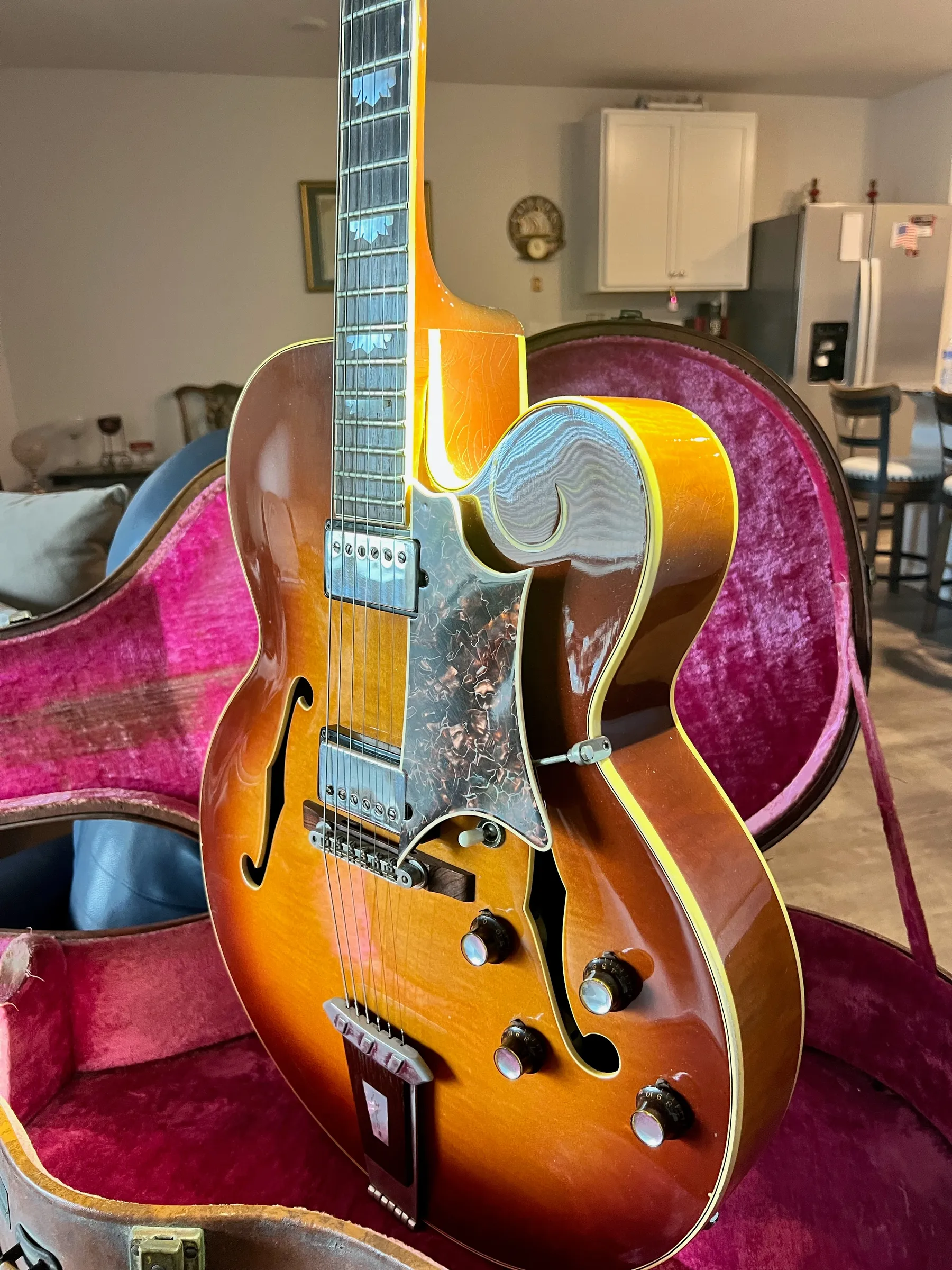
Gibson launched the Tal Farlow in October 1962 after making three prototypes during 1960. It’s a full-depth electric archtop, 17 inches across, with paired humbuckers, a rounded cutaway and binding curled into a scroll beside it. Joe’s ledger shipment page records 215 shipped through 1967. The model returned in 1993. Joe’s photographs below depict a 1962 example. Once you’ve established its production group, use the Tal Farlow pricing page for a range.
Authenticity And Originality Are Assessed From The Information Provided. A Hands-On Inspection Can Change The Conclusion.
Body, Scroll, Inlays And Finish
What Identifies A Gibson Tal Farlow
An ES-350 Body
The design begins with the ES-350 Farlow played during the 1950s. Its rounded-cutaway body measures 17 inches across and about 3 inches deep. Laminated maple forms the top, sides and back, with a pair of parallel braces supporting the top.
The Binding Scroll
Farlow proposed the scroll, which Gibson formed by curling binding into the body at the cutaway. Single binding surrounds the f-holes; triple binding borders the back and top.
Crest Inlays And Double-Crown Peghead
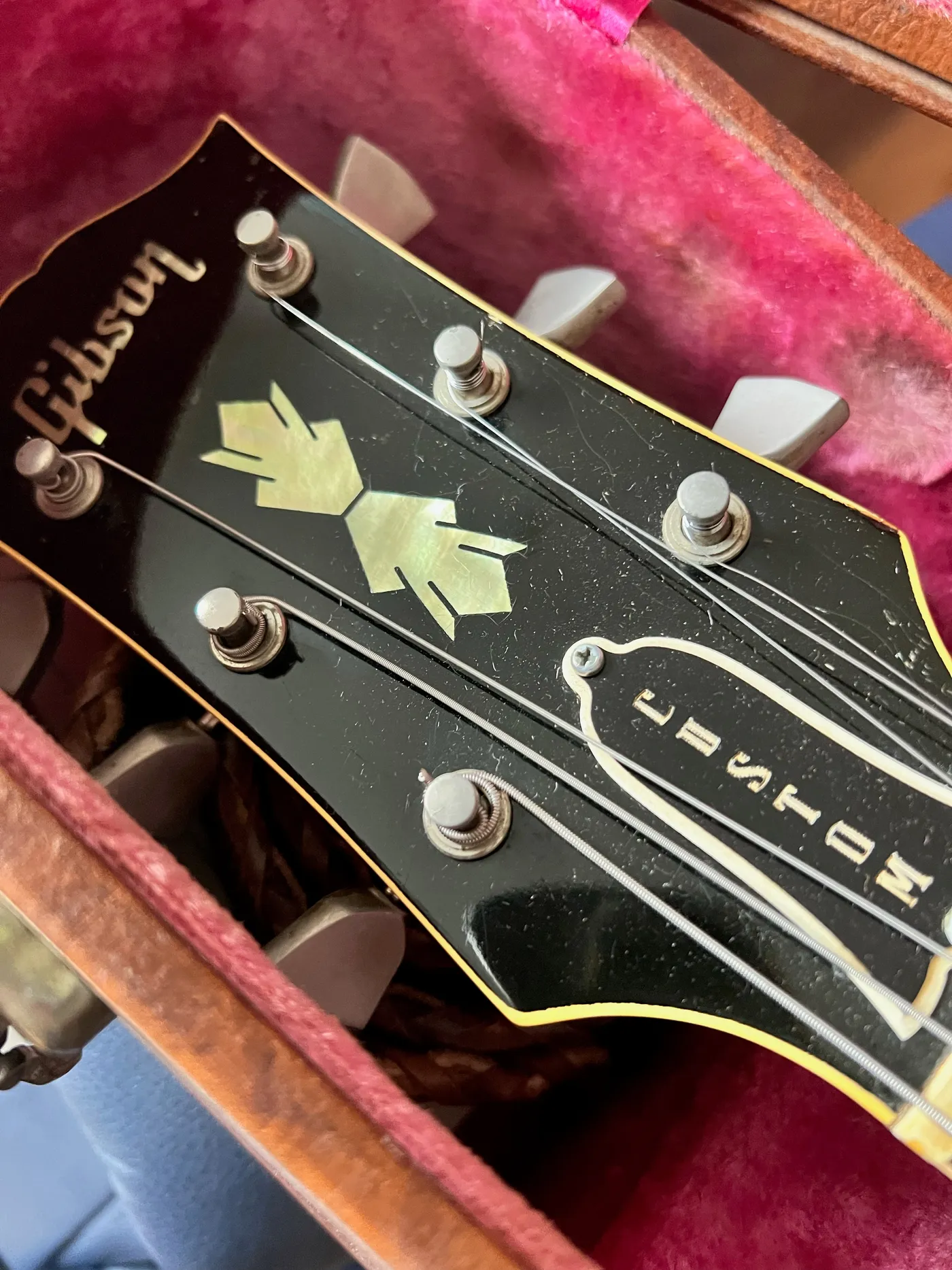
Pearl crests reverse the orientation of the J-200’s markers, and a double crown decorates the peghead. The rosewood board is bound, with 20 frets and a scale measuring 25½ inches.
Viceroy Brown And A Four-Point Guard
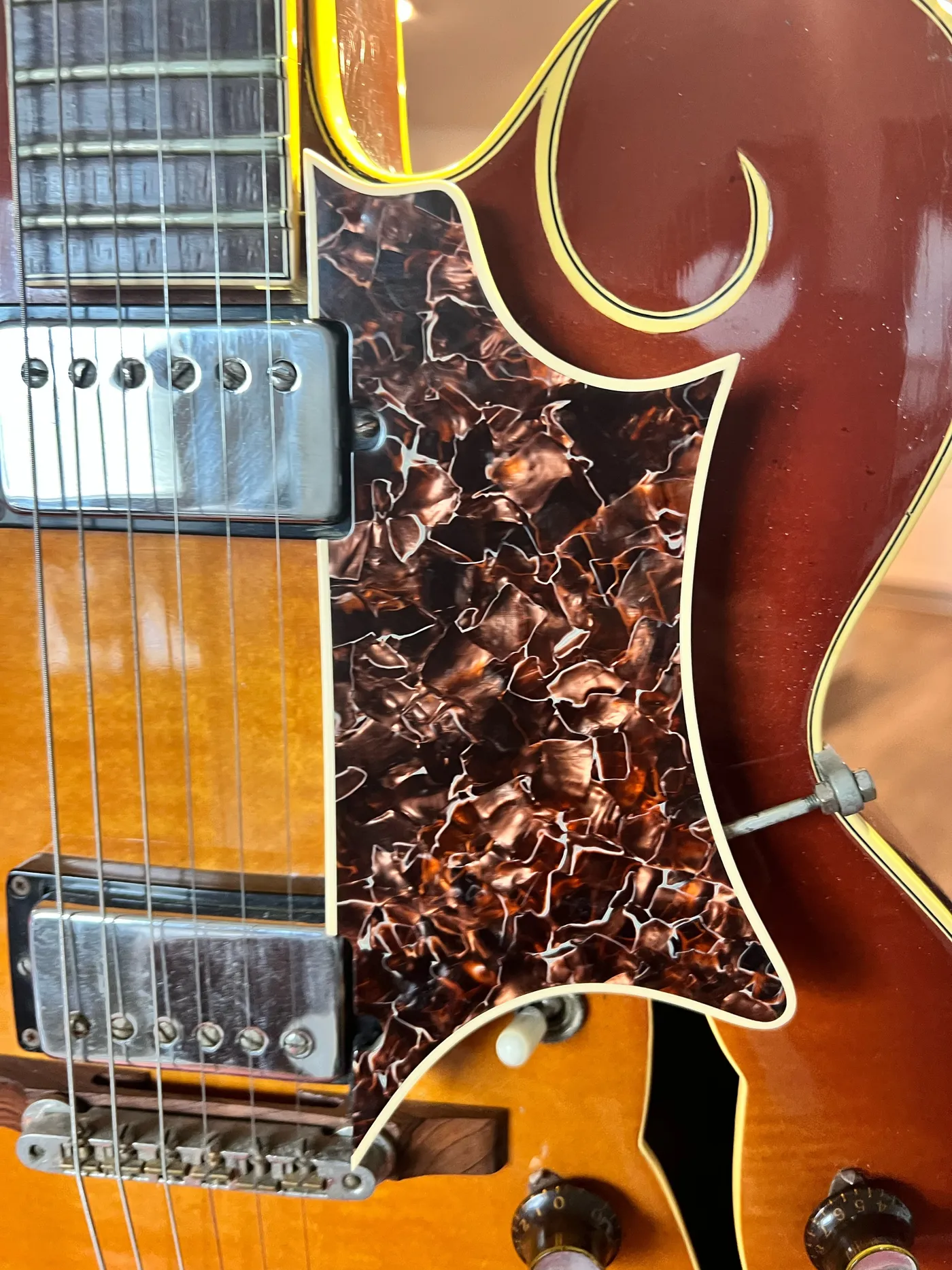
Gibson gave the model its own Viceroy Brown sunburst. You’ll also find a bound guard with a four-point outline made for this model.
Examine the inlays and scroll before matching the guard outline and finish. They’re difficult to reproduce convincingly and distinguish this model from similarly equipped ES-175s and ES-350s.
Maple and mahogany strips form the five-piece neck. Its nut is about 1 11/16 inches wide, and Gibson’s catalog locates the body joint at fret 14.
Scroll, Crowns And A Marbled Guard
Joe’s 1962 Tal Farlow
1962 Gibson Tal Farlow
An Early Tal Farlow In Brown Sunburst
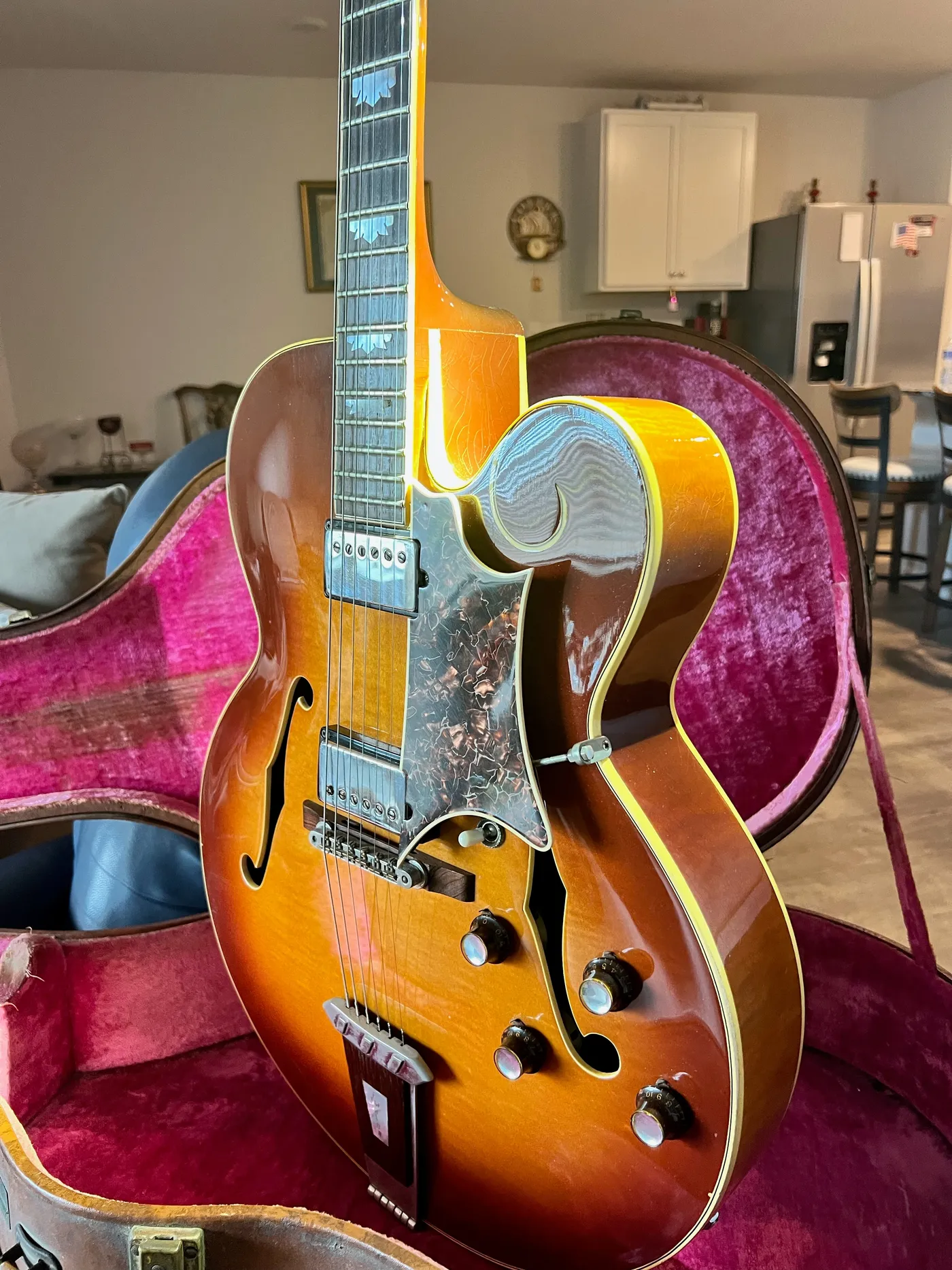
In Joe’s pictures, you’ll see a marbled, four-point guard between the humbuckers. The cutaway shows the binding scroll, the peghead has double crowns and the truss rod cover says Custom. Pink plush lines the case beneath the guitar.
Ledger shipments were only 2 in 1962, rising to 39 for 1963. Serial stamping happened during manufacture, while shipment could follow later. A number assigned in 1962 may therefore belong to a guitar shipped in 1963. Establish production dating and shipment dating separately.
Check The Original Equipment
Pickups, Bridge, Tailpiece And Tuners
Full-size humbuckers work with a three-way selector and individual volume and tone controls for each pickup. Early examples may retain PAFs; Patent Number pickups were being used by 1964. Consult the Gibson pickup identification reference to distinguish them.
A rosewood base carries the Tune-o-matic, though changed bridges turn up often. The trapeze holds a rosewood insert inlaid with Tal Farlow’s name in pearl. If you’re looking at an unmarked insert or a different tailpiece, it indicates replacement.
Published hardware accounts vary: nickel with Klusons in some, chrome or alternate tuner buttons in others. Factory special orders could include a Custom cover, chrome fittings, Grovers or a Super 400-style headstock. Investigate an unfamiliar part before deciding it was swapped.
Separating 1960s Guitars From 1993 And Later
Original Or Reissue?
| Feature | 1962 To 1967 Original | 1993 And Later Reissue |
|---|---|---|
| Finish | Viceroy Brown sunburst | Viceroy Brown and other colors, including natural, wine red and vintage sunburst |
| Pickups | PAF on early guitars, then Patent Number | ’57 Classic humbuckers |
| Tuners | Kluson on most published examples | Grover Super Rotomatic |
| Serial | Impressed 1960s number, often a reused range | Modern eight-digit format or a Custom Shop number |
| Documented shipments | 215 through 1967 | Separate production |
Begin with the numbering system. Behind the headstock, original 1960s Gibsons have impressed serials whose ranges often recur in different years. Standard eight-digit numbers on 1990s reissues encode the year with digits one and five. Custom Shop examples from the 2000s instead use a variant beginning with 2; consult their labels and Custom Shop records too. Both systems are covered in the Gibson serial reference.
Wine red or natural finish almost certainly indicates a reissue. For a brown guitar, assess tuners, pickups and the number together, because Viceroy Brown also appears on many reissues.
Shipments, Pickups And Serials
Dating An Original Tal Farlow
After a slow start, the shipment peak came in 1965 at 77. The final ledger year, 1967, records 17. Between 1963 and 1966, 196 of the total 215 guitars shipped.
Pickups offer the strongest dating help within that period. PAFs suggest the earliest production, while Patent Number units were standard by 1964. Repeated Gibson serial ranges throughout the 1960s leave several possible dates. Use the tuner design and original pot codes with the pickups to narrow them. The pot-code reference explains those date markings.
What To Question On A Tal Farlow
Repairs, Refinishes And Swapped Parts
Refinished Tops
Inspect a top whose color is redder or more uniform than the rest of the instrument. Compare it with the neck, back and sides.
Replaced Bridges
Changed bridges are frequent on Tal Farlows. Compare the thumbwheels and rosewood support with the guitar’s remaining hardware.
Truss Rod Covers
Identify the model through its body and inlays. A readily removable truss rod cover may have been changed.
Look-Alike Bodies
The body outline also appears on other 17-inch Gibson archtops. Adding a scroll requires rebinding work. Inspect the cutaway binding for interruptions, differing color or fresh finish.
Keep removed equipment with the guitar and describe repairs directly. The condition reference explains the assessment of repair work and replacement parts.
Photos Joe Needs To Identify Yours
Build A Tal Farlow Identification Record
Cutaway And Scroll
Use clear lighting for a close photograph of the scroll and its surrounding binding.
Headstock And Fingerboard
Capture the crest markers, headstock decoration and truss rod cover clearly in your photos.
Serial And Label
Provide a rear headstock view plus a photograph of the label visible inside the f-hole.
Pickups, Bridge And Tailpiece
Photograph the tailpiece, bridge and pickups individually, noting any known changes.
Send The Evidence
Ask Joe To Identify Your Tal Farlow
Send the photos above. Joe will check the scroll, inlays, serial and hardware and let you know what he finds.
Where These Details Come From
Tal Farlow Identification Sources
- Gibson Tal Farlow Catalog Pages
Catalog specifications, prototypes and launch date.
- Premier Guitar: Tal Farlow And His Gibson Model
History, inlays, finish and hardware.
- Fretted Americana: 1964 Gibson Tal Farlow
Construction details and special orders, quoting Duchossoir.
- Archtop.com: 1993 Gibson Tal Farlow
Reissue pickups, tuners and serial format.
- Gibson Shipping Totals, 1948 To 1979
Tal Farlow ledger figures by year.
Questions AboutGibson Identification
How Can I Tell An Original Tal Farlow From A Reissue?
Do All Original Tal Farlows Have The Scroll?
What Is Viceroy Brown?
When Was The Tal Farlow Made?
The Last Word
Keep The Evidence Together
Check the finish, inlays and scroll for model identity, then use pickups, serial and tuning machines to establish the production era. Both original and reissue estimates appear in the Tal Farlow value reference.
Authenticity And Originality Are Assessed From The Information Provided. A Hands-On Inspection Can Change The Conclusion.