

Gibson Tal Farlow Prices · 1960s Originals And Reissues
Gibson Tal Farlow Value Guide
Similar looks and the same Tal Farlow name can conceal a price difference of thousands of dollars. Establish whether yours is a 1960s original or a later reissue.
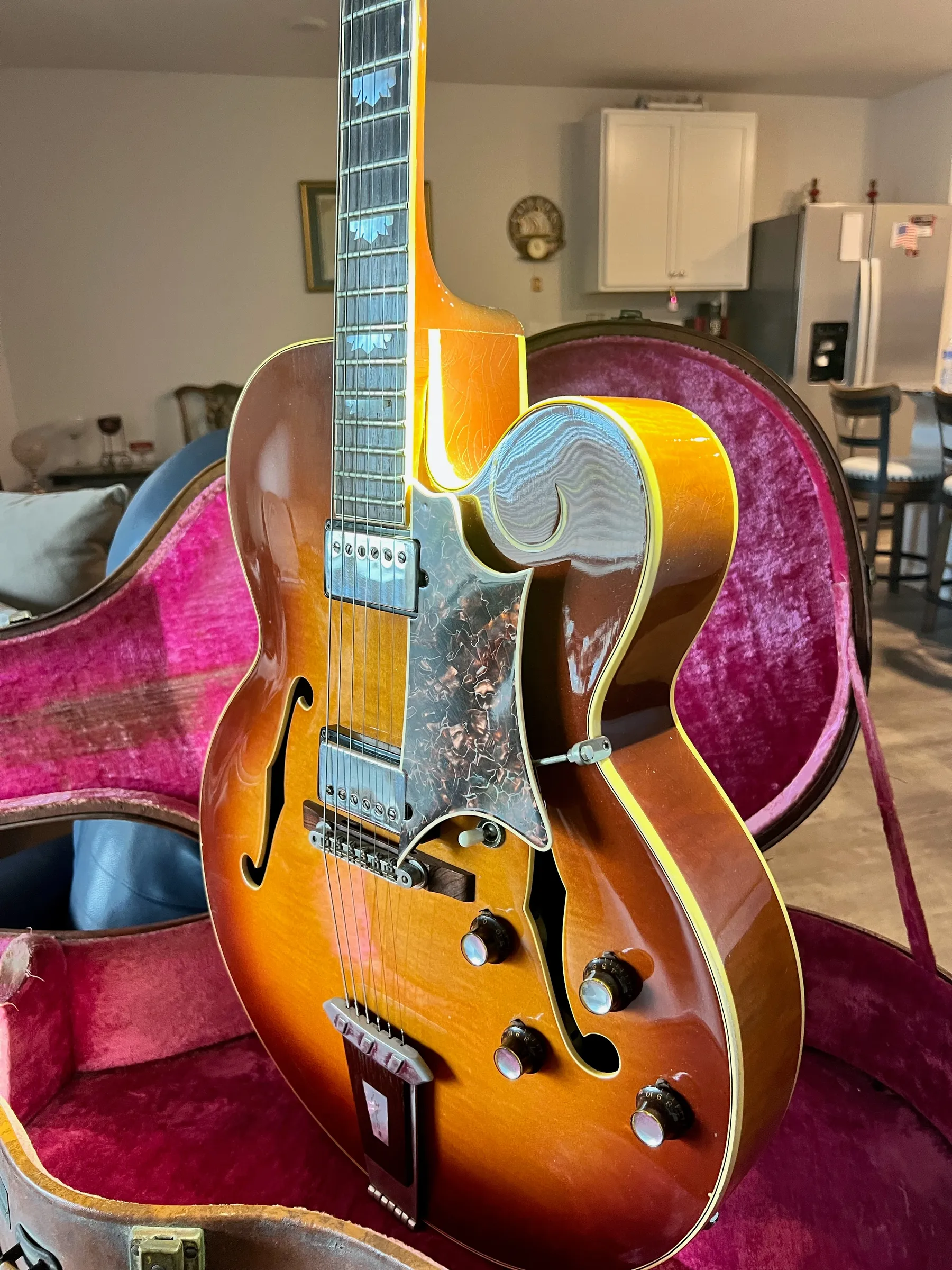
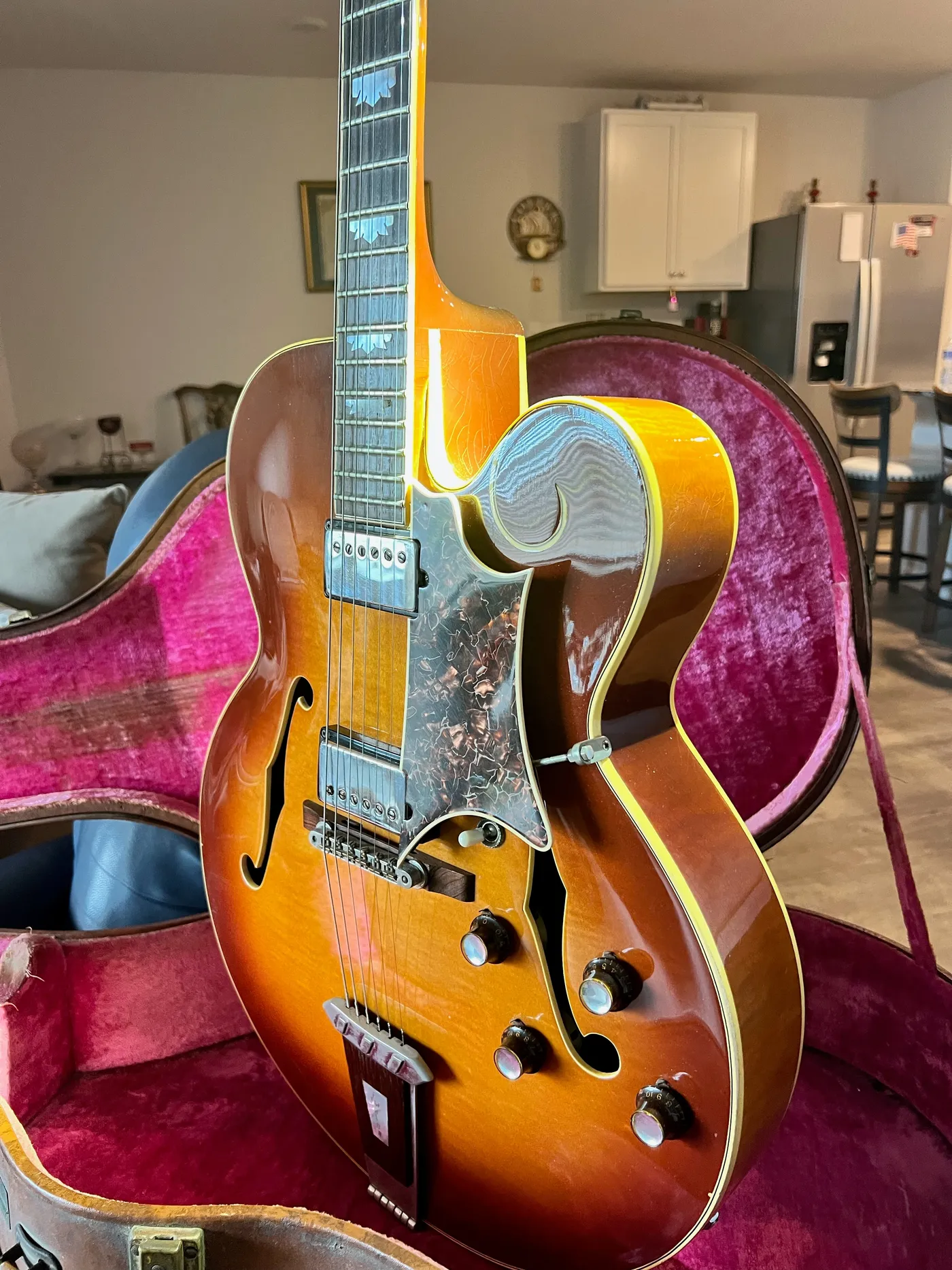
For an excellent, entirely original guitar with its original case, allow $6,950 to $10,450 for a 1962 to 1964 Tal Farlow retaining Viceroy Brown and $3,700 to $5,700 for the 1993 to 2018 reissue group. Gibson’s small original production makes proof of that early origin a large part of the value. Joe’s photos below show a 1962. Before choosing a range, consult the Tal Farlow identification reference to determine whether your guitar belongs to the original run or the reissues.
This Is An Estimate Of Market Value, Not An Offer To Buy And Not A Guarantee. Market Values Fluctuate; Have Your Specific Item Appraised.
Excellent Original Guitars With The Original Case
Tal Farlow Values By Production Group
| Model | Pricing Year Group | Configuration | Estimated Value |
|---|---|---|---|
| Tal Farlow | 1962 to 1964 | Viceroy Brown | $6,950 to $10,450 |
| Tal Farlow | 1965 | Viceroy Brown | $6,700 to $8,600 |
| Tal Farlow | 1966 to 1971 | Viceroy Brown | $6,350 to $8,350 |
| Tal Farlow | 1993 to 2018 | Various colors | $3,700 to $5,700 |
U.S. dollars. These November 2026 retail market estimates assume excellent, original condition and the original case where applicable. An individual sale can fall outside the range; these figures are not purchase offers. Repairs, changed parts and market conditions require an individual appraisal.
Viceroy Brown is the brown sunburst specified by the guide for 1960s Tal Farlows. It applies to the original-run rows at the top of the chart, including $6,700 to $8,600 for 1965 and $6,350 to $8,350 for 1966 to 1971. The final entry is for Historic Collection reissues from 1993 to 2018, offered in several colors.
These November 2026 figures estimate retail value for excellent guitars with factory parts throughout and their original cases. A purchase offer requires a separate assessment. Modifications, repairs or refinishing call for an individual estimate.
A Small Run Of 1960s Guitars
Why Original Tal Farlows Bring More
Joe’s shipment-ledger reference records 215 Tal Farlows over 1962 to 1967. Annual counts are 2 for 1962, 39 for 1963, 41 for 1964, 77 for 1965, 39 for 1966 and 17 for 1967. The price guide extends through 1971. The ledger establishes recorded shipments without ruling out later manufacture.
Scarcity makes the condition and original equipment particularly relevant. Within the $6,950 to $10,450 range for 1962 to 1964, several thousand dollars separate the endpoints. A clean neck, original finish and pickups, and the factory case support the upper end.
Use Joe’s PAF and Patent Number reference for the pickup periods that cover early examples. Record what’s fitted, but leave the hollowbody assembled instead of opening it to check a decal. Ask for pickup-back photographs from any previous servicing.
Historic Collection And Later Guitars
Pricing A 1993 To 2018 Reissue
At $3,700 to $5,700, the reissue row includes several finish colors. A color other than brown suggests later production unless other evidence establishes otherwise. Many reissues are Viceroy Brown as well, so brown finish alone won’t establish 1960s origins.
Read the label and number, and check for a certificate. Having the case and paperwork makes a reissue easier to value than an undocumented example. For distinguishing features, see the Tal Farlow authentication reference.
Factory Options Need Paperwork
Special Orders And Parts That Differ
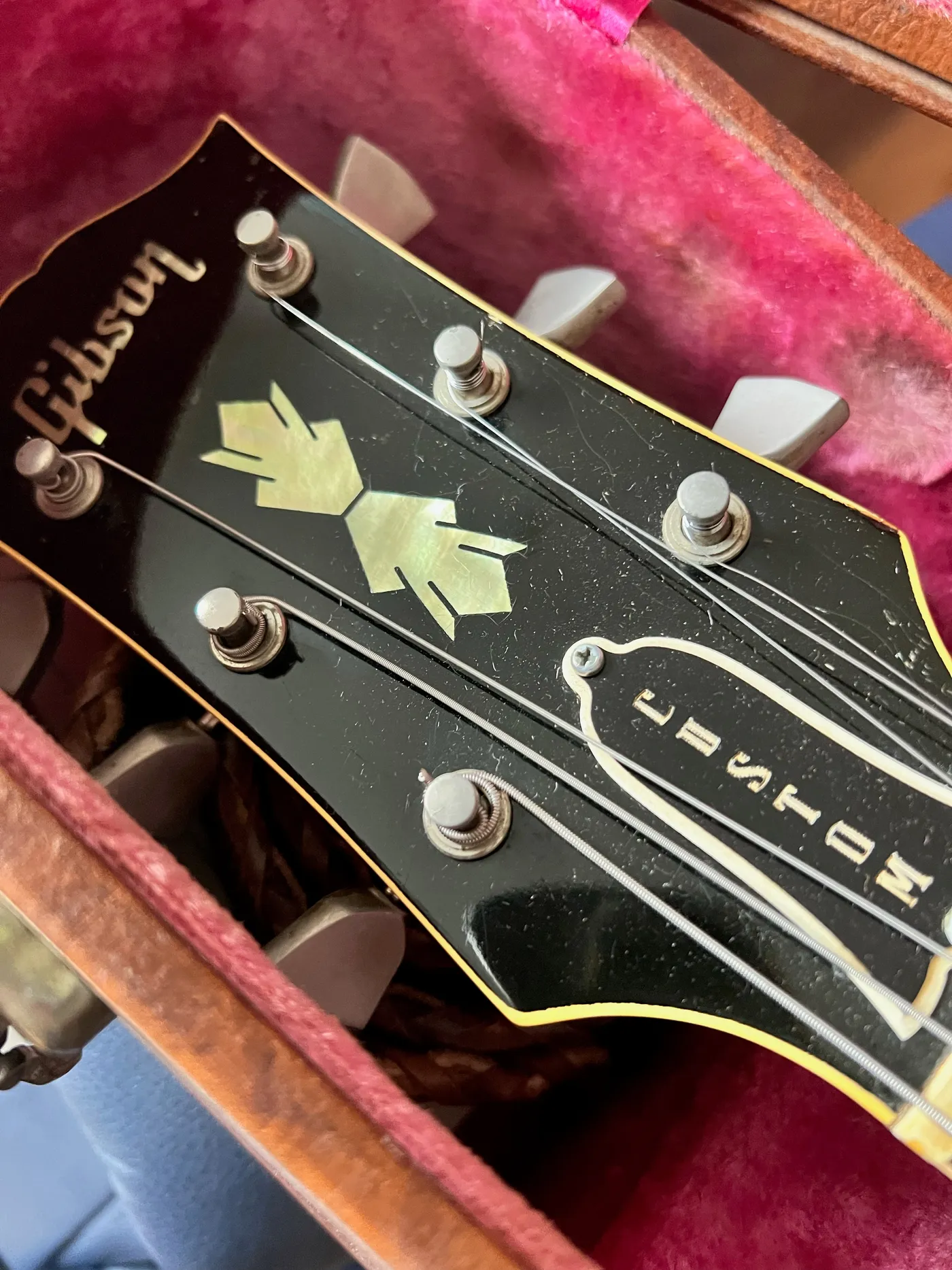
Some Tal Farlows were factory special orders. Documented options include chrome fittings, Grover machines, a Super 400 headstock shape and a cover marked Custom. Records establish such a feature as part of the factory specification; without records, it’s usually assessed as a later alteration. Collect the case, receipts, letters, first-owner photographs and any family history.
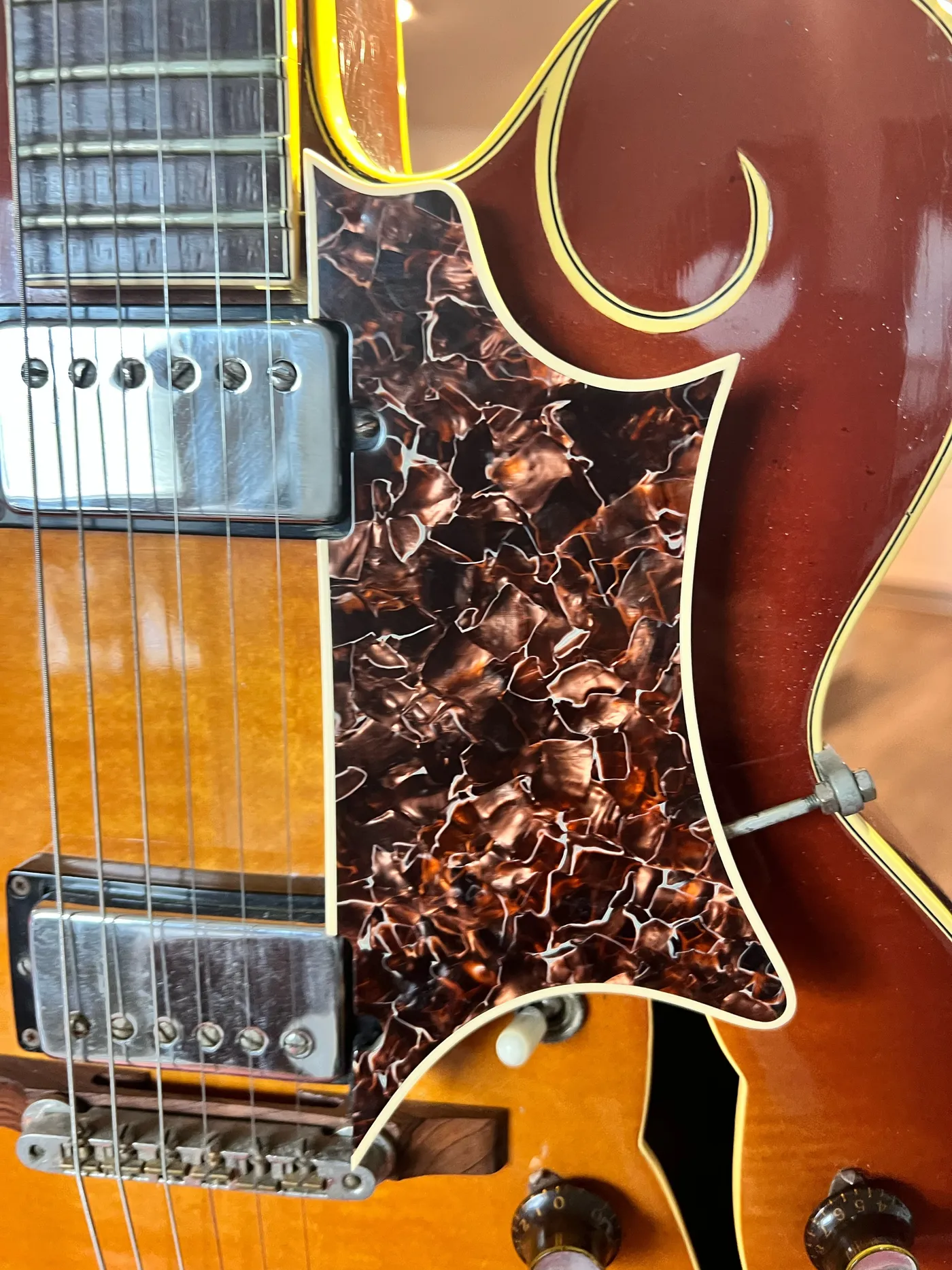
The 1962 in Joe’s photographs combines a Custom cover with a marbled four-point guard. A departure from catalog details can be a stock variation, a special order or a replacement. Examine nearby screw holes, solder and hardware wear alongside the rest of the instrument to judge which explanation fits.
Bridges are often replaced. That’s a smaller alteration than refinishing or repairing a broken headstock, but disclose it so the estimate uses an accurate description.
What Moves A Tal Farlow Out Of The Chart
Repairs, Refinishes And Replaced Parts
Finish
Normal playing wear on original Viceroy Brown is included in the chart’s comparison, along with the finish’s tendency to fade and check. Later overspray or refinishing requires a different assessment.
Pickups And Wiring
Photograph the switch, knobs and pickups. Report known electrical work and inspect for wiring or solder that appears more recent than surrounding parts.
Neck And Headstock
A repaired break affects the price comparison. Include clear views of the heel and the neck immediately behind the nut.
Guard And Tailpiece
Record the tailpiece and guard in photos. Disclose anything missing or replaced, even when a replacement resembles factory equipment.
Retain removed factory parts. Before buying repair work, read the guidance on restoring a guitar before sale. For redone finishes, consult the refinishing and value article.
Photos And Facts Joe Uses
What To Send For A Tal Farlow Appraisal
Whole Guitar, Front And Back
Light the guitar evenly and frame it so the cutaway’s scroll is visible in the full views.
Headstock, Serial And Label
Photograph both faces of the headstock, making the serial legible, and capture the interior label through an f-hole.
Pickups, Guard And Tailpiece
Give each part a clear photograph and identify replacements you already know about.
Case And Paperwork
Show the case with any certificate or receipts, including records of repair work.
Send The Evidence
Get A Value For Your Tal Farlow
Send the photos and the guitar’s history. Joe can tell you whether it’s an original or a reissue and where it fits in the chart.
Questions AboutGibson Values
What Is A 1960s Gibson Tal Farlow Worth?
What Is A Tal Farlow Reissue Worth?
How Many Original Tal Farlows Did Gibson Make?
The Last Word
A Value For Your Guitar
Identify the production run before assigning a year and assessing condition. Follow the checks in the Tal Farlow identification page.
This Is An Estimate Of Market Value, Not An Offer To Buy And Not A Guarantee. Market Values Fluctuate; Have Your Specific Item Appraised.