

Postwar Acoustic Archtop · Gibson L-48
Gibson L-48 Authentication Guide
The top construction and fingerboard appointments are better starting points than a generic sunburst-Gibson description.
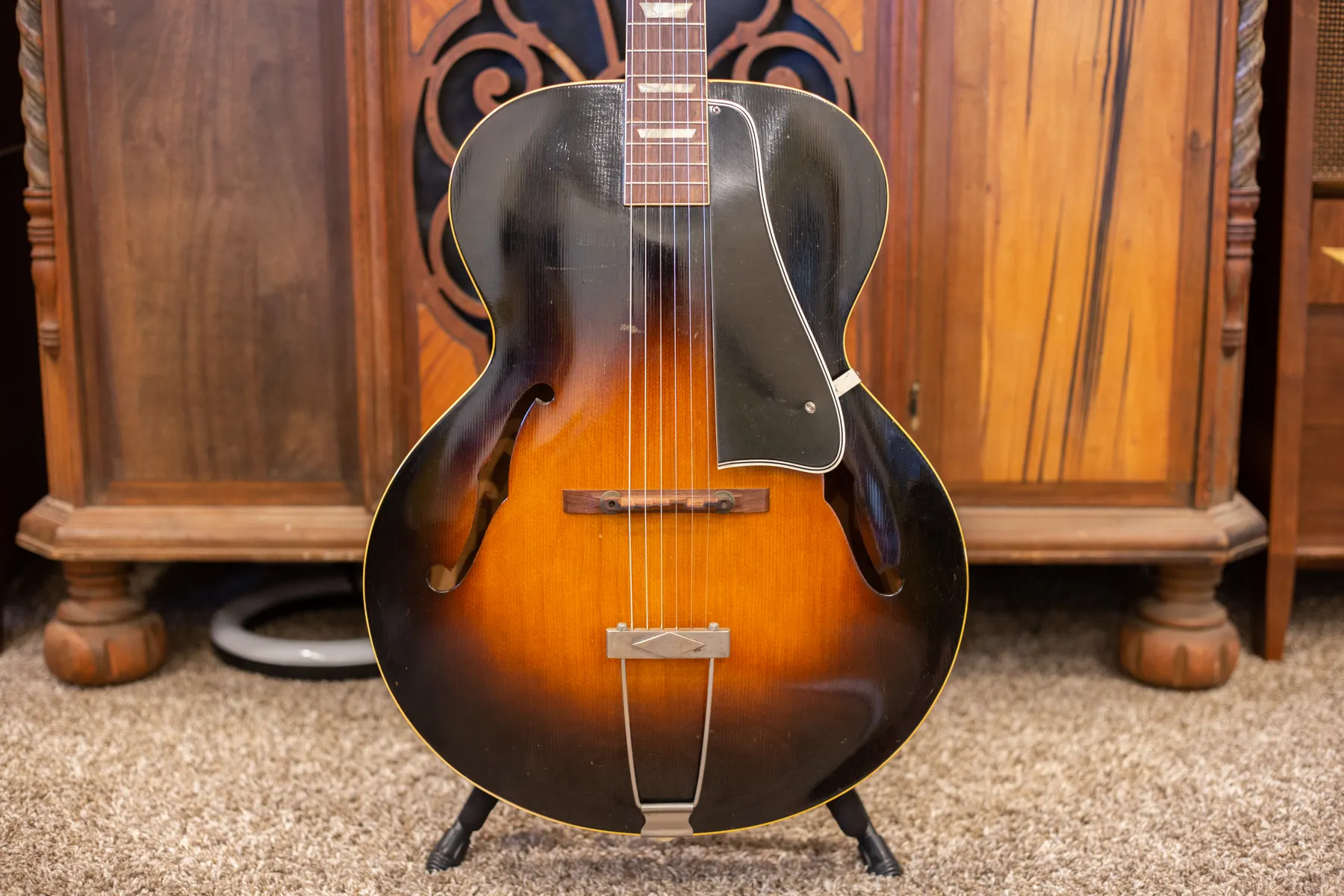
Identify a Gibson L-48 by matching its construction, plain dot-marker fingerboard and factory markings to the correct production period. The 1962 Gibson catalog provides a useful reference: a laminated mahogany top, laminated maple back and mahogany rims. Use the L-48 value guide after the model and condition have been established.
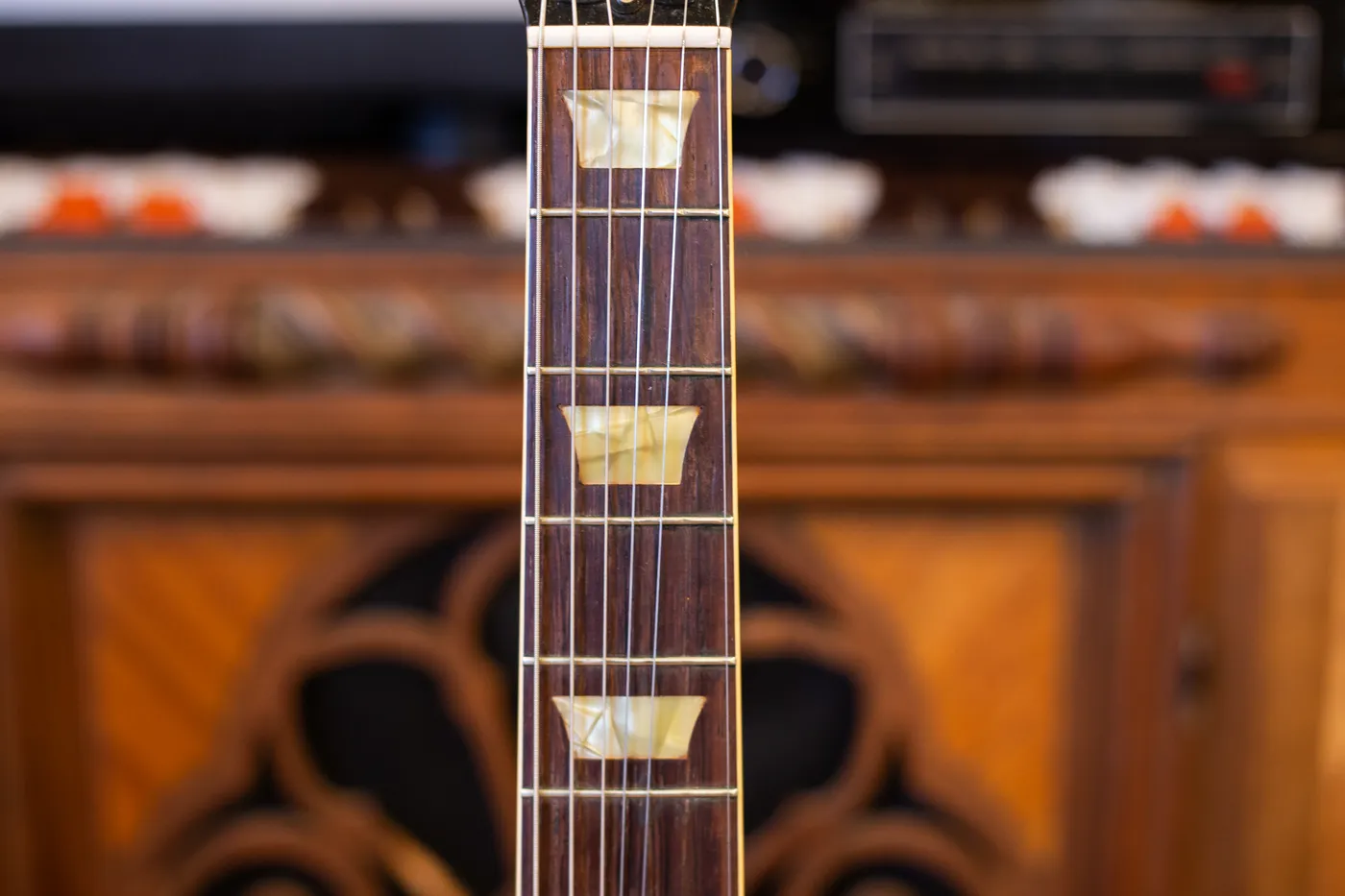
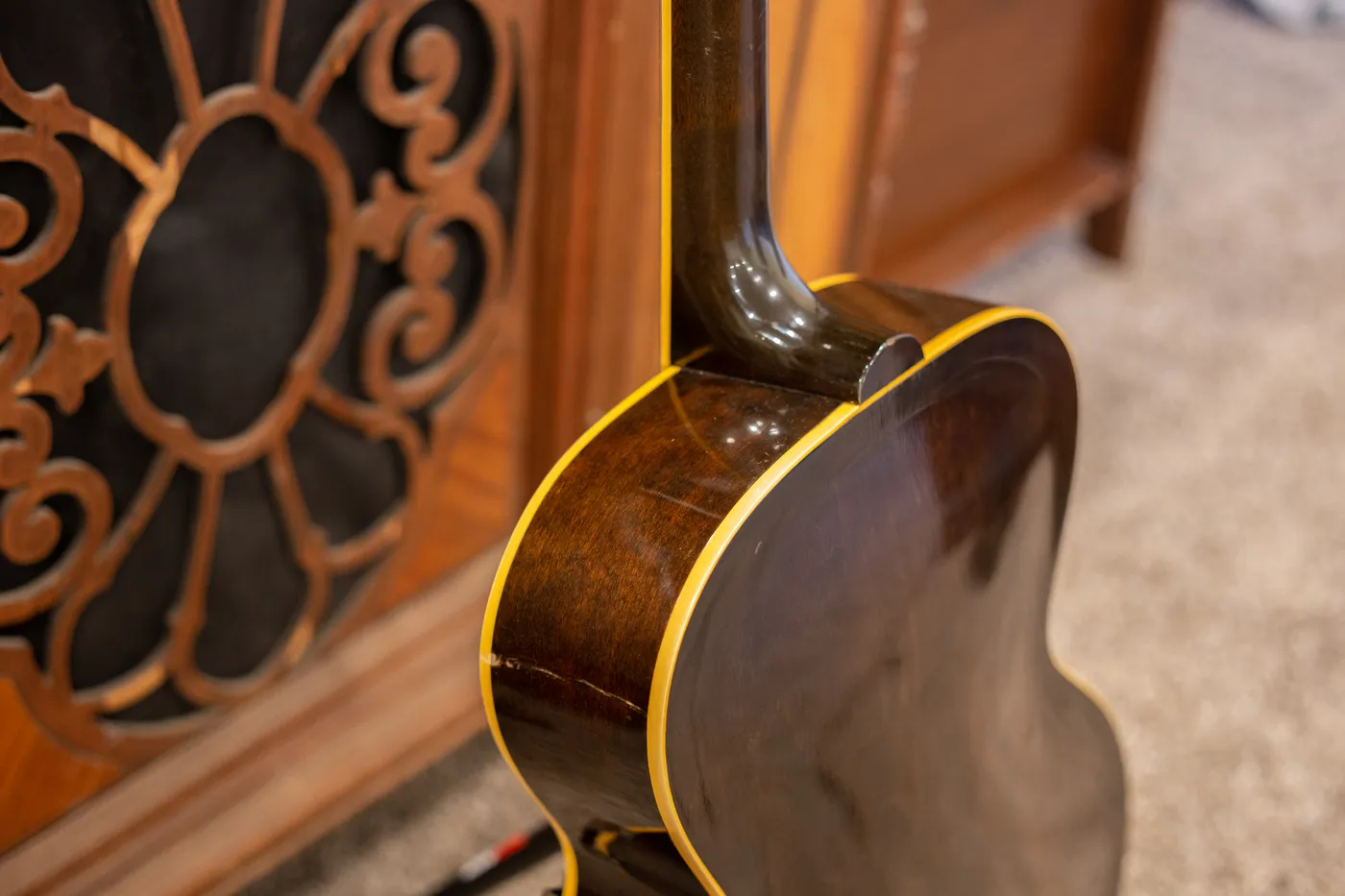
The photographs on this page show Joe’s 1952 L-50 as an explicitly labeled comparison. Its carved spruce top and trapezoid inlays differ from the cataloged L-48. The comparison helps locate inspection areas, but your guitar needs its own model evidence.
Authenticity And Originality Are Assessed From The Information Provided. A Hands-On Inspection Can Change The Conclusion.
A Dated Construction Reference
What Does The 1962 L-48 Catalog Specify?
| Part | Catalog Specification | Inspection Use |
|---|---|---|
| Top | Arched laminated mahogany | Separate wood species from solid or laminated construction |
| Back | Arched laminated maple | Don’t infer the back wood from the top |
| Rims | Mahogany | Compare the side grain with the body finish |
| Neck | One-piece mahogany with adjustable truss rod | Inspect the heel and headstock for later work |
| Fingerboard | Rosewood with dot markers | Student-model dots are celluloid |
| Dimensions | 16¼-inch width; 24¾-inch scale; 20 frets | Measure the actual guitar |
| Equipment | Rosewood bridge; raised guard; nickel hardware | Look for changed mounting patterns |
Those details are a snapshot of the model as advertised in 1962. They should not be stretched into a claim that every L-48 built since 1946 used the same construction. Earlier instruments need period-specific evidence, especially where the top differs from this catalog description. An apparent exception should be documented before it’s called a fake or a replacement top.
The catalog also lists a 20¼-inch body length and 3⅜-inch depth. Measurements are most useful when taken consistently. Measure the body across a straight line, and keep the tape clear of the bridge and arched surface. For scale length, measure from the nut to the twelfth fret and double that distance.
The familiar sunburst is only one visual clue. Other Gibson archtops can have a similar color and outline. Work through the wood, fingerboard, trim and hardware as a group, then compare the factory number with the resulting identification.
Top Construction And Fingerboard Trim
How To Separate An L-48 From An L-50
The Cataloged L-48
The 1962 L-48 is the plainer comparison, with dot markers and a laminated mahogany top. Its maple back and mahogany rims show why “all mahogany” is an incomplete description for this version. The catalog’s dimensions are close enough to the L-50 that size alone can’t separate them.
Begin with the fingerboard markers because they are easy to photograph, then verify the construction. If a fingerboard has been replaced, that shortcut loses value. The neck joint, binding and model documentation become more important when the visible appointments have been altered.
The Cataloged L-50
The L-50 on the same catalog page has a carved spruce top and shaped fingerboard inlays. Joe’s 1952 photographs show trapezoid markers and the larger f-hole acoustic body. Use the L-50 guide for that model’s own history and earlier body changes.
A replacement pickguard or bridge can make two instruments look more alike. Compare the parts that belong to the body before relying on removable fittings. Neither a decorative tailpiece nor a pickup added later upgrades the underlying guitar to another factory model.
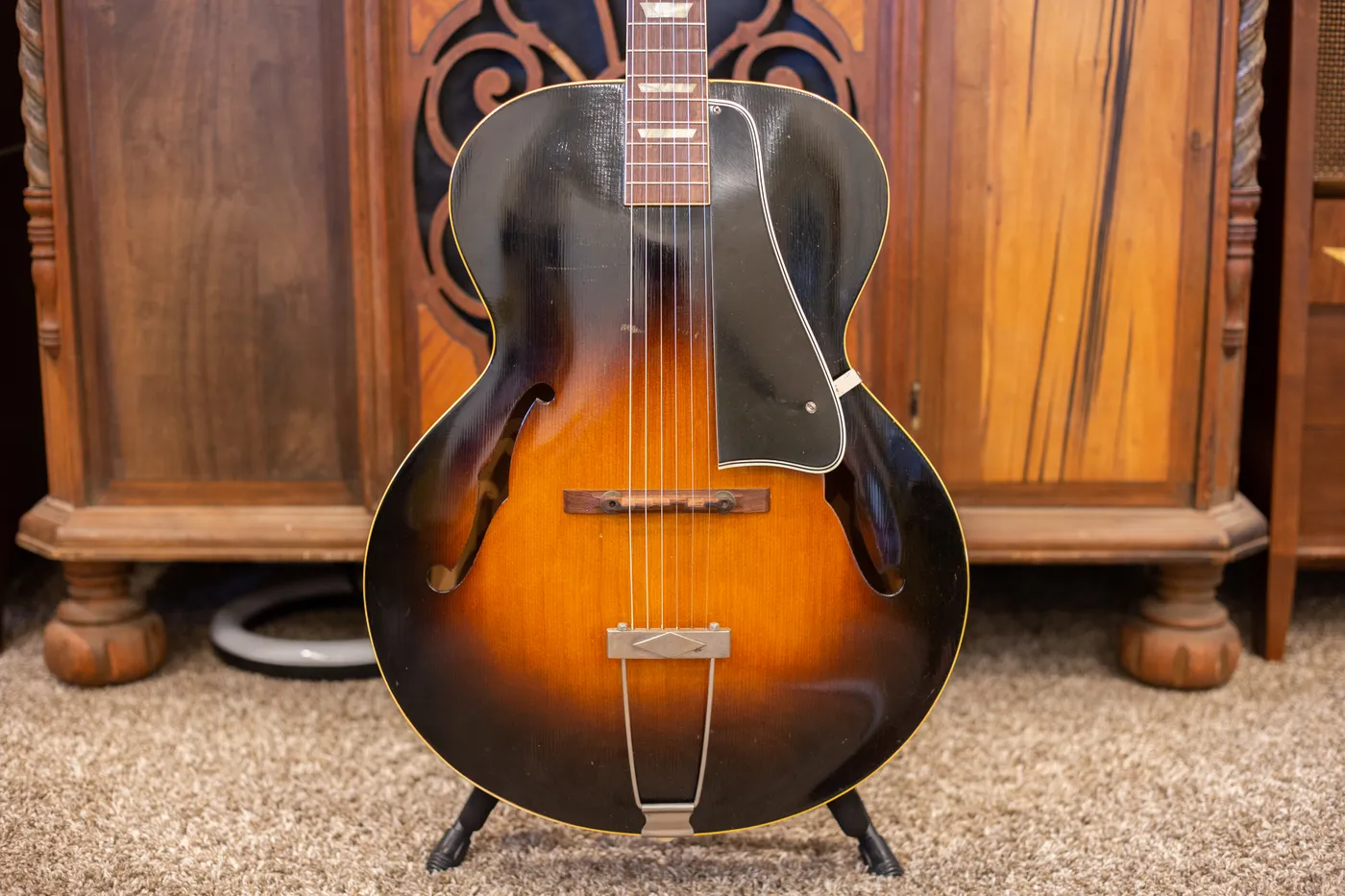
L-50 comparison photographs: similar acoustic layout, different top construction and fingerboard appointments.
Early Specimens And A Later Catalog
Compare Documented L-48 Construction
| Reference | Top | Back And Sides | What It Establishes |
|---|---|---|---|
| Inspected 1948 specimen | Carved spruce | Maple back; mahogany sides | A spruce top can occur on an early L-48 |
| Inspected 1952 specimen | Spruce | Mahogany listed by the inspecting dealer | Early-1950s construction needs specimen-specific checking |
| Gibson 1962 catalog | Laminated mahogany | Laminated maple back; mahogany sides | The later catalog specification, not a rule for every year |
The two early specimen descriptions and the factory catalog answer different questions. The dealer records describe individual guitars they examined; the catalog states what Gibson advertised for that year. The differing back woods are a reason to record the back separately instead of deducing it from the top. These examples establish variation, without assigning one construction to every guitar in a decade.
Dates Require Corroboration
Place An L-48 Within Postwar Gibson Production
Early Postwar L-48s
The L-48 price reference begins with the postwar 1946 group. Compare an early claim with the complete instrument, including the logo, tuners and interior markings. Surviving early L-48s include spruce-top instruments. The documented 1948 example linked below has a carved spruce top, maple back and mahogany sides. That construction differs from the later catalog snapshot.
Factory Order Numbers And Component Evidence
Spruce-top L-48s also occur in the early 1950s; the documented 1952 example in the references is one such instrument. A spruce top therefore can’t separate every L-48 from every L-50. Match the period, appointments and factory evidence together. The letter-prefixed FON sequence can provide a useful batch-year clue on a 1950s acoustic Gibson. The number has to be read in its proper system. A faint digit or a replacement tuner doesn’t justify forcing the guitar into a particular year.
A Detailed Published Specification
The original catalog explicitly identifies the top and back as laminated and names their different woods. It also documents the dot-marker fingerboard, adjustable bridge and acoustic hardware. This is a strong comparison for a guitar represented as that version.
Check The Individual Guitar
The later production groups still require an examination of the instrument. Reused Gibson serial ranges can produce more than one possible year. Keep the headstock, construction and any repair evidence together when selecting among those possibilities.
Grain, Edges And Interior Views
How To Inspect L-48 Wood Without Damaging It
Identify the visible wood and the way the plate was made separately. A mahogany face doesn’t prove a solid mahogany top, and an arched back doesn’t prove a carved back. Where the edge is visible through an f-hole, a repairer may be able to assess the construction without removing any finish.
Photograph the top grain in even daylight and include the back and rims. Don’t sand a hidden spot, scrape an f-hole edge or enlarge a damaged area to expose a layer. Such work removes evidence and can turn a straightforward inspection into a repair. A clear exterior set is enough to begin the discussion.
Dark sunburst edges and old touch-up can hide seams. Look at broad areas rather than one bright line in a close-up. A grain line, a finish check and a glue joint can resemble one another in a small image. If the photograph can’t resolve the feature, leave its interpretation open.
Interior photographs may also show a cleat, patch or glue residue from earlier work. Describe the visible repair and obtain any paperwork that goes with it. The presence of a repair doesn’t automatically invalidate the model identification, but it needs to remain part of the condition record.
The Photos Show A Different Model
Use Joe’s L-50 As An Inspection Comparison
Comparison Instrument
1952 Gibson L-50
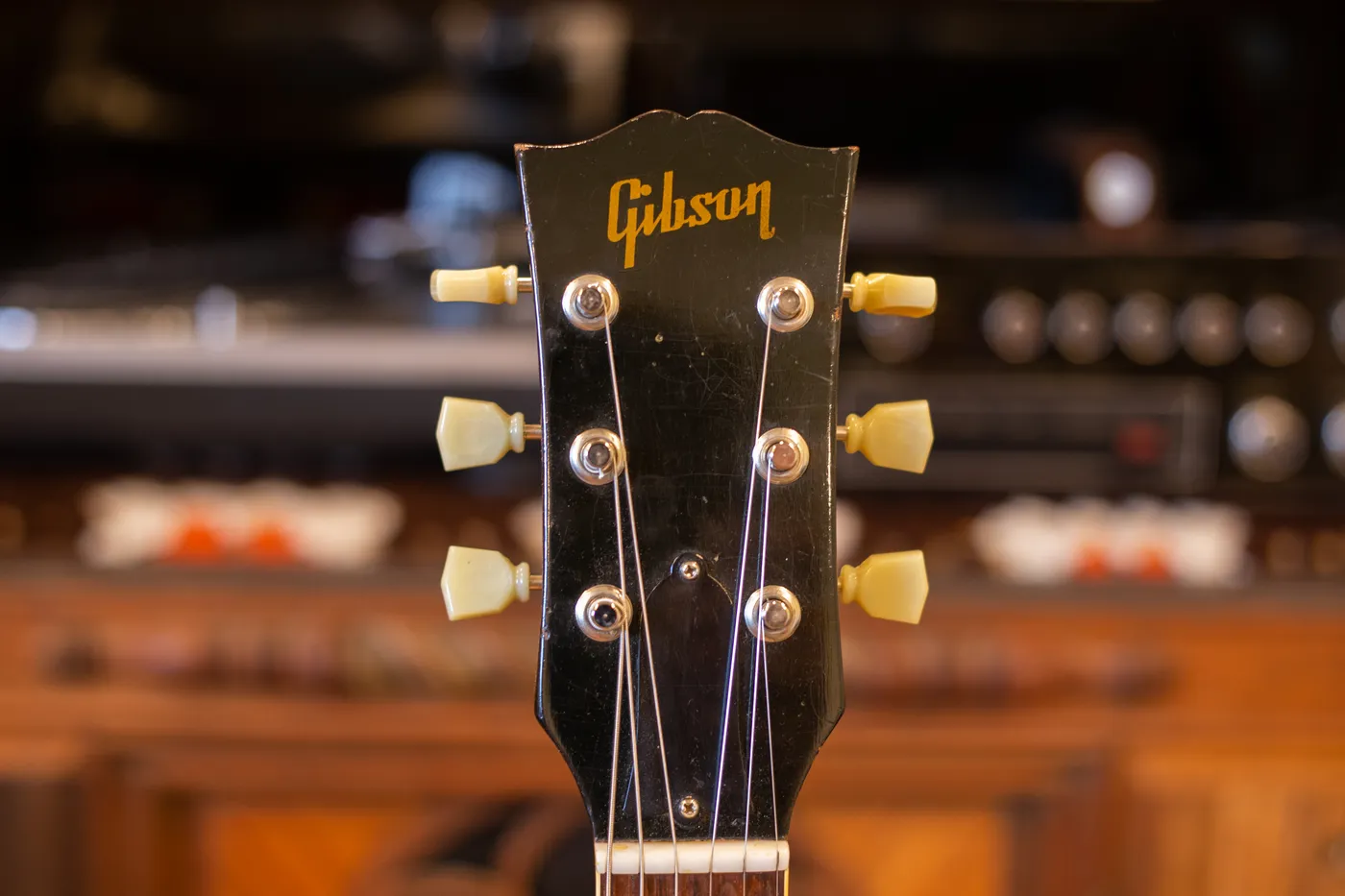
The photographs show where to look at a full-depth Gibson acoustic archtop: the bridge area, neck joint, headstock and interior factory stamp. They don’t supply a substitute L-48 label or proof of an L-48’s original components. Keep the distinction in mind when comparing your own instrument.
The L-50’s shaped markers are particularly useful as a visual contrast with the cataloged L-48’s celluloid dots. A body-only image can leave that distinction out, which is why Joe needs the whole fingerboard in an identification set.
Factory Markings And Replaceable Parts
Where To Look For L-48 Dating Evidence
An Example Of The 1952 FON System
This is the factory marking inside Joe’s L-50, shown to explain the numbering system. The visible Z prefix belongs to 1952. The digits don’t identify an L-48, and this photograph must not be used as a number from your guitar.
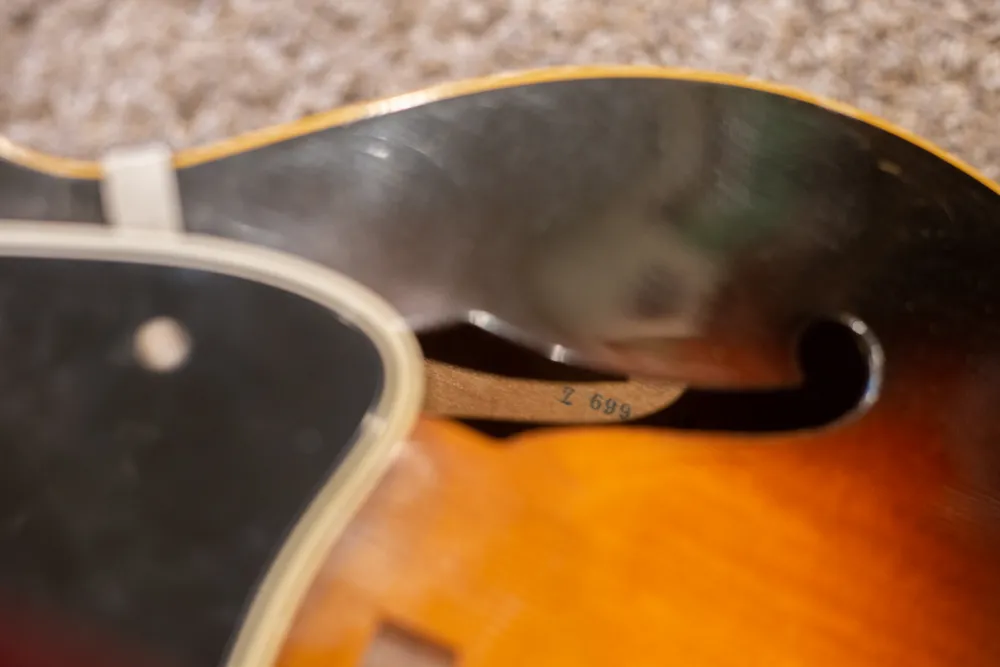
Look through both f-holes for a stamp or handwritten factory mark. Some acoustic Gibsons have a FON without the paper label a seller expects. Copy the full visible marking, including letters, spaces and suffixes, then use the Gibson serial-number guide to choose the correct system.
The logo chronology provides a second check. Postwar script and block logos overlap by model, and different logo materials don’t follow one identical letter-shape rule. Use the guide’s model qualifications rather than assigning a year from a single letter.
Original tuners can support a period, but replacements are common. Compare the housing, button style and mounting pattern with the Gibson tuner guide. A period tuner installed later remains a replacement; matching age and matching installation history are separate questions.
An added pickup’s pot code dates that electrical component. It doesn’t automatically date the acoustic L-48 underneath it. Record the instrument’s factory evidence first and the added electrical equipment separately, including anything known about when the installation was done.
Bridge, Guard And Tailpiece
Which L-48 Parts Need A Closer Look?
The Floating Bridge
Compare the base, saddle, adjustment wheels and fit to the top. A replacement can be visually convincing while differing in height or footprint. Photograph both sides and disclose a known replacement rather than relying on its darkened wood as proof of age.
The Raised Pickguard
Show the guard’s edge and bracket. Missing guards, altered guards and replaced brackets need different descriptions. Extra screw holes may relate to a pickup installation or an earlier guard, so photograph their position before attributing a cause.
The Trapeze Tailpiece
Include the body-rim mounting and the string attachment. A tailpiece can be swapped without changing the model, but its footprint may record the change. Keep any removed piece and avoid tightening an unstable attachment merely for a photo.
Use the physical-features guide to organize the inspection. Hardware is strongest as supporting evidence when its installation agrees with the surrounding finish and the rest of the guitar. Several old-looking parts assembled together still require a coherent history.
Photographs That Resolve The Model
Build An L-48 Identification Record
Show The Full Front With The Fingerboard
Include the soundholes, bridge, tailpiece and all the position markers. This prevents an L-50 or another archtop from being identified solely from a similar body outline.
Measure Width And Scale
Use straight-line measurements and include the measuring tool in the picture. Record what you measured rather than rounding it to the dimension you expect to see in a catalog.
Record The Back, Rims And Heel
These views help establish construction and reveal repair areas that a front photograph misses. Include close-ups of any separation or finish change without claiming a diagnosis you can’t verify.
Capture Every Readable Factory Character
A complete marking is better than a typed number copied from an earlier listing. Leave unreadable characters unresolved and keep the unedited original photograph available for enlargement.
List Electrical Additions And Repairs
Explain pickup mounts, new holes, replacement hardware and known finish work. Keep the supported model identification separate from the assessment of originality.
For condition and sale questions, continue to the L-48 value guide. A photo review can narrow the identity and identify the next questions. Final conclusions about hidden construction, repair stability or finish may change after an in-hand inspection.
Send The Evidence
Ask Joe To Identify Your L-48
Send the full instrument, fingerboard, top and back grain, headstock and interior marking. Tell Joe what you know about repairs or an added pickup, and include the case.
Apply The 1962 Specification Carefully
Distinguish An L-48 From A Similar Sunburst Archtop
Start with the combination of a plain dot-marker board and the top construction. The 1962 catalog makes the L-48’s laminated mahogany top a useful distinction from the L-50’s carved spruce top. Neither the body’s sunburst color nor its overall outline answers that construction question. Photograph grain in the lighter center of the top as well as any accessible edge.
Then inspect the back and rims independently. The cataloged L-48 uses laminated maple for the back and mahogany for the rims. Calling the whole instrument a mahogany guitar loses that distinction. A body repair can replace material in one area, so an unusual patch should be documented without assuming that it describes the original construction everywhere.
The shared catalog dimensions also explain why an L-48 and L-50 may fit a similar case. Case fit’s useful for packing, but it can’t settle the model. A label on a replacement case or a handwritten name in a case pocket may have followed the wrong instrument during a sale or an estate move.
A guitar with a replacement fingerboard presents a more difficult comparison. Dot markers can be added to a new board, and the original inlay pattern may no longer be available. Ask for repair records and examine the neck and board together. The model assessment then depends more heavily on the body construction and remaining factory evidence.
An added electrical assembly can obscure the original acoustic appointments. Document the guard, pickup support, controls and output connection before assigning an electric model name. A stock acoustic L-48 with a later pickup still needs to be described as that combination. Keep the construction findings in one note and the electrical changes in another so an appraiser can follow both histories.
If those checks remain inconclusive, send Joe the complete photo set with the proposed identification clearly marked as uncertain. A useful review can narrow the competing models and identify the one additional view or measurement that would resolve the distinction.
Use The Correct Model And Era
L-48 Construction And Dating Sources
- Documented 1948 Spruce-Top L-48
Firsthand instrument description and photographs; construction evidence only.
- Documented 1952 Spruce-Top L-48
Firsthand specimen specification; no price used.
- Gibson 1962 Catalog, Page 41
Primary L-48 and L-50 construction specifications, dimensions and appointments.
- Gibson Serial Numbers And FONs
Factory-number systems and physical corroboration.
- Gibson Logo Chronology
Postwar logo transitions and model-specific limits.
- Gibson Hardware Guide
Bridge, tailpiece, neck and repair checks.
Questions AboutGibson Identification
Is A Gibson L-48 Made Entirely Of Mahogany?
Are The L-48’s Dot Inlays Pearl?
Why Are There L-50 Photos On This Page?
Does A Missing Label Mean An L-48 Is Fake?
The Last Word
Keep The Evidence Together
An L-48 identification should explain the wood, appointments and dating evidence together. Once those points agree, use the L-48 value estimates and a separate condition review to assess your guitar.
Authenticity And Originality Are Assessed From The Information Provided. A Hands-On Inspection Can Change The Conclusion.