

Gibson L-4 Identification · Acoustic And Electric
Gibson L-4 Authentication Guide
Oval-hole, round-hole, f-hole, cutaway and electric L-4s require different references. Establish the version before decoding the date.
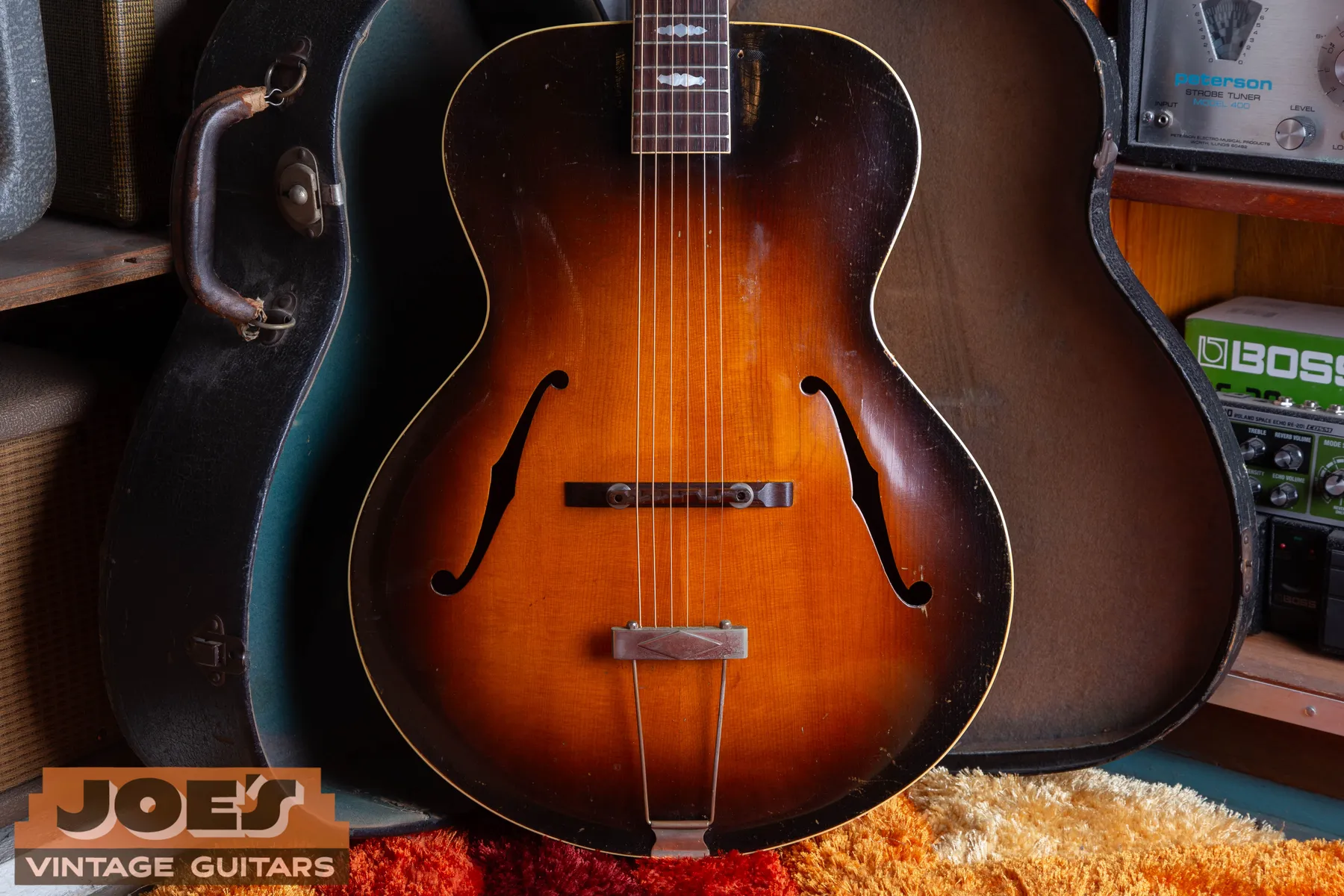
Identify a Gibson L-4 by its body generation first: early oval or round soundhole, later f-hole acoustic, cutaway L-4C, or electric L-4CES. Those instruments share a name but differ in construction and appointments. Joe’s photographed 1941 L-4 is a noncutaway f-hole example. After identifying your version, use the L-4 value guide for the corresponding condition and price group.
Authenticity And Originality Are Assessed From The Information Provided. A Hands-On Inspection Can Change The Conclusion.
Soundhole, Cutaway And Electrical Layout
Which Gibson L-4 Do You Have?
Early Oval-Hole And Round-Hole L-4
These instruments have a central soundhole and an arched soundboard. Record the hole shape, body width and the fret where the neck meets the body. An old Gibson with a round hole isn’t automatically an L-4; other early models need to be eliminated through measurements and factory markings.
F-Hole Acoustic L-4
The later noncutaway acoustic has two f-holes, a floating bridge and a tailpiece. Headstock ornaments and fingerboard inlays changed over its production. Compare the entire instrument with a reference for the appropriate period rather than relying on its sunburst outline.
L-4C And L-4CN
The C identifies the cutaway acoustic version; N identifies natural finish where included in the designation. The 1962 catalog illustrates the model with a pointed Florentine cutaway and an acoustic bridge and tailpiece. Its factory specification is separate from the electric CES.
L-4CES
The electric model requires a close look at pickups, controls and body construction. The historical and later production groups differ, including the woods used in the back. The suffix should be supported by factory evidence and the actual installation.
Begin with one full front photograph that includes the headstock and lower rim. A close-up of a Gibson logo leaves out the features needed to separate these versions. Then add a side view for depth and a back view for wood, binding and the neck joint.
Use The Catalog For Its Own Period
Reading A Prewar L-4
| Period | Starting Identification Clues |
|---|---|
| 1912 to 1927 | Oval soundhole; early acoustic body, including the separately described 1921 to 1924 Loar-era group |
| 1928 to 1934 | Round soundhole and 14-fret neck joint |
| 1935 to 1946 | F-holes and fleur-de-lis headstock ornament |
| 1947 to 1956 | Later noncutaway acoustic; crown ornament and double-parallelogram appointments in the postwar group |
| 1949 to 1971 | L-4C cutaway acoustic, overlapping the noncutaway model |
These reference periods narrow the comparison. The soundhole, neck joint and ornament should agree with one another, and transition or repaired examples still need individual review. A date range from a table should not overrule visible construction.
The early L-4 sequence includes oval-hole instruments and a later round-hole group. Gibson’s 1934 Catalog W gives a direct view of the round-hole model: a carved spruce top, carved maple back, maple rim, mahogany neck and rosewood fingerboard. The listed body is 16 inches wide and 20 inches long.
The catalog drawing shows the central soundhole, dot-marker fingerboard, raised guard and adjustable bridge. Those details are a dated comparison. They should not be imposed on the later f-hole L-4, whose appointments evolved. A prewar claim needs the correct catalog generation before small parts are judged.
The phrase “Loar-era L-4” describes a period association. It doesn’t, by itself, establish Lloyd Loar’s personal work on a particular instrument or prove a signature. Any specific attribution needs its own documentation. Keep a period description separate from a claim about who built, inspected or signed the guitar.
Check the neck-to-body relationship from the side and count the frets carefully. A shifted viewing angle can make the joint look closer to a different fret. Record the measurement and count in the photo set, then compare them with the other factory evidence instead of resolving an uncertain year from that feature alone.
An old replacement fingerboard or a changed bridge can alter the appearance substantially. Photograph any unusual fit at the extension, guard or bridge base. Repairs may explain a discrepancy, but a repair explanation should be supported by the instrument or records rather than assumed to protect a preferred date.
A Prewar Comparison From The Photo Archive
Joe’s 1941 F-Hole L-4
1941 Gibson L-4
The Body And Appointments Together
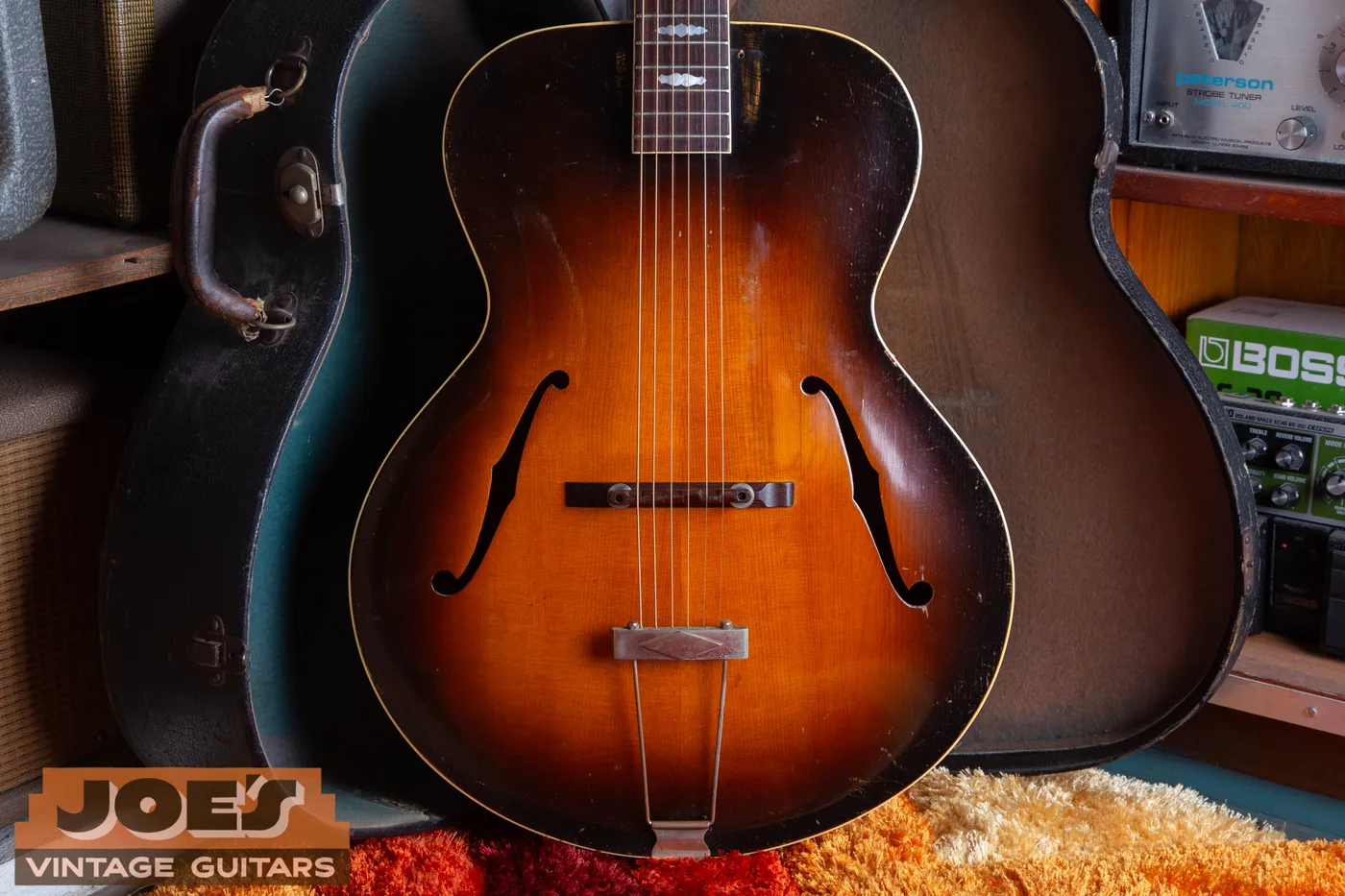
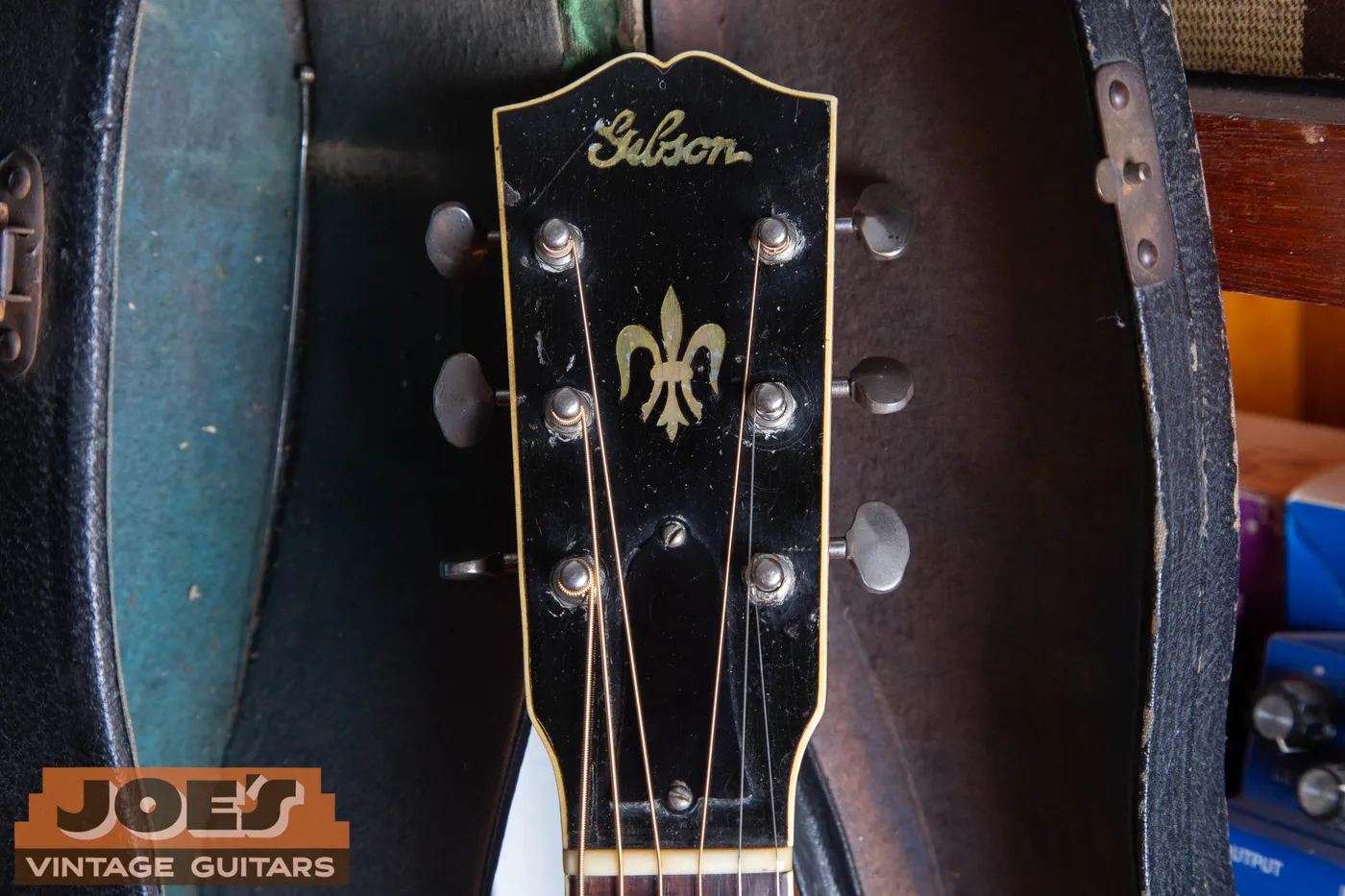
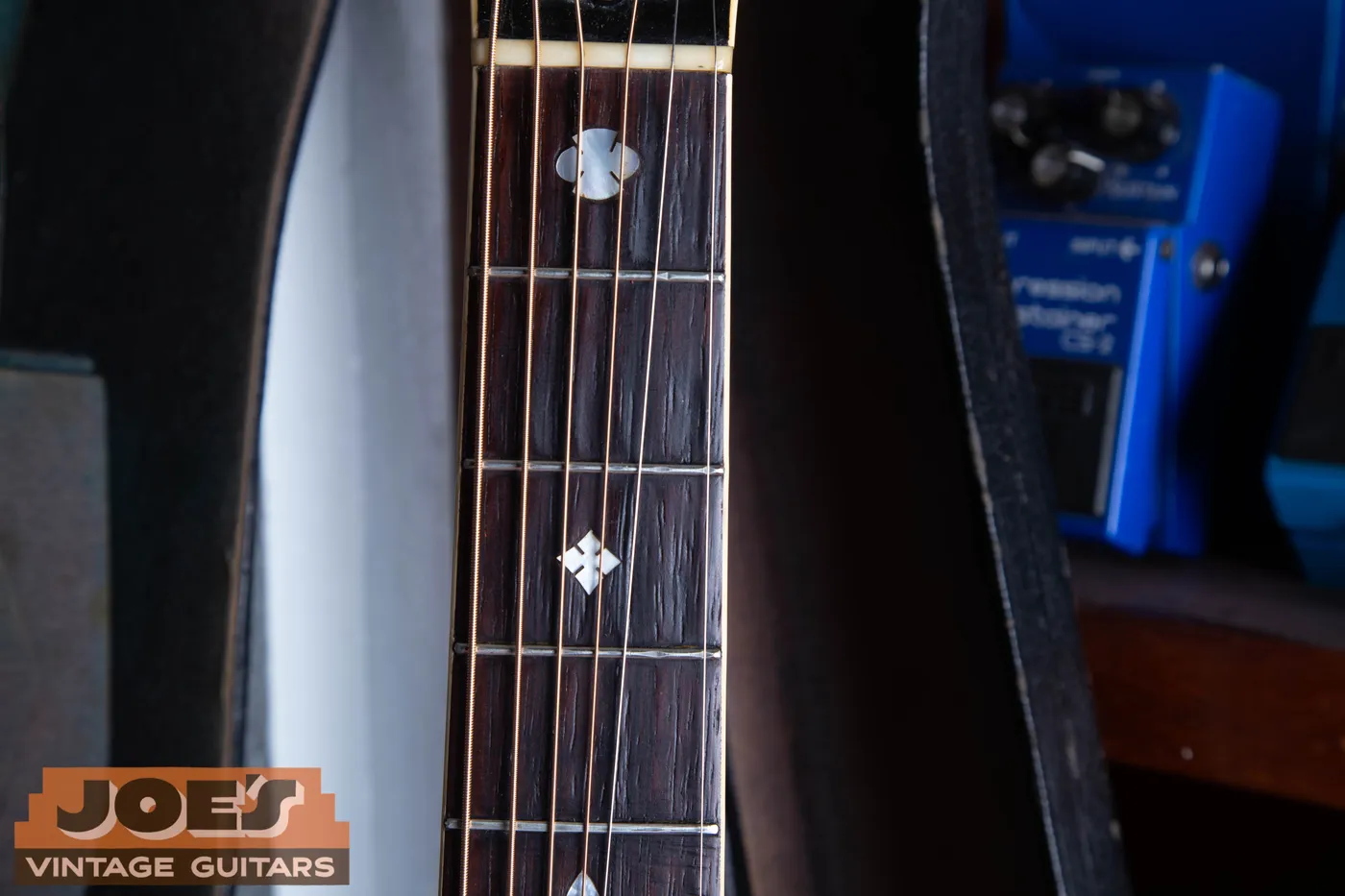
The archive example shows the noncutaway f-hole body, sunburst finish and raised fingerboard extension. The headstock and fingerboard photographs preserve the ornament and inlay pattern in enough detail for comparison. Keep those views together when assessing a similar guitar.
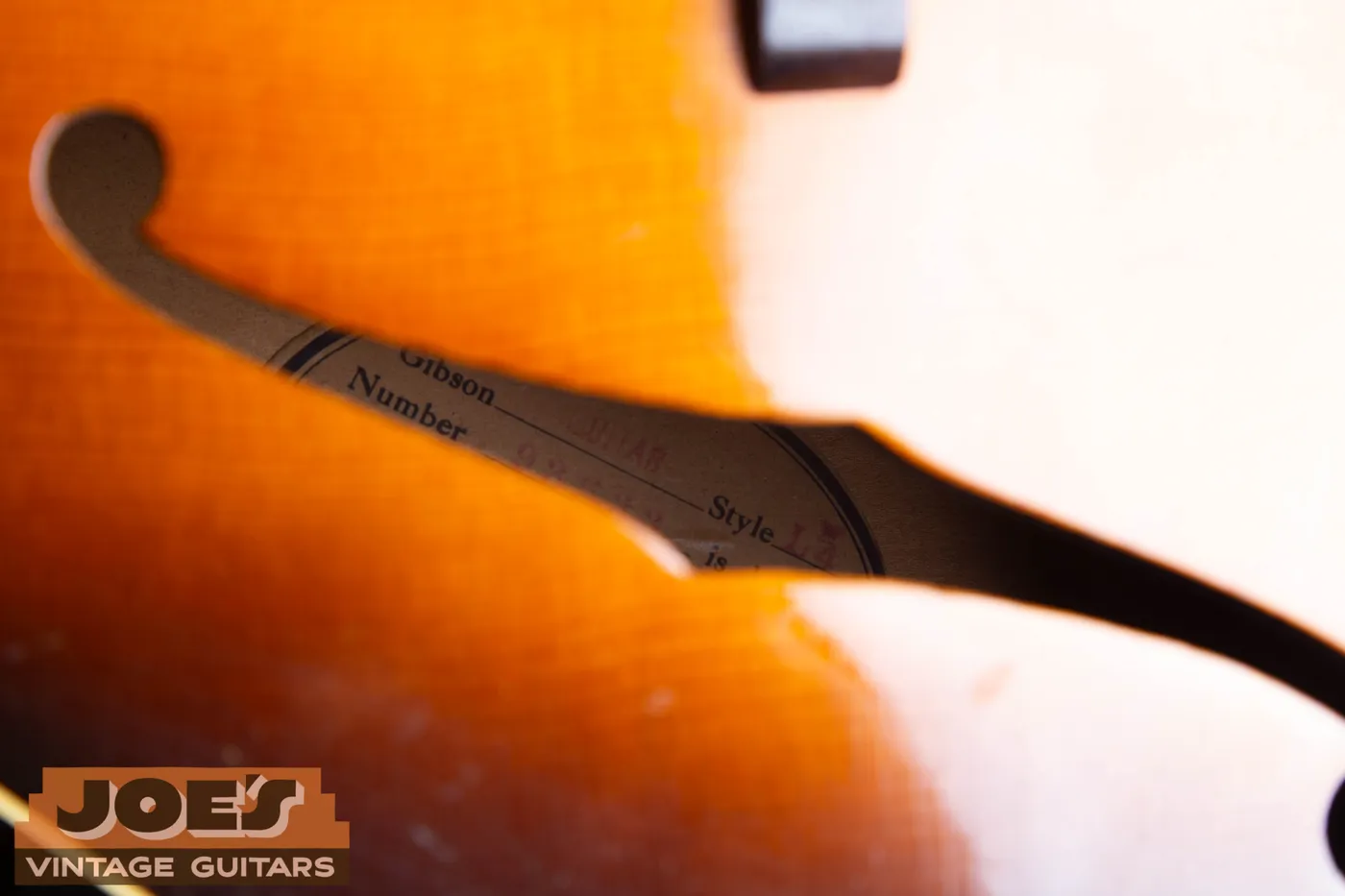
The label photograph records where factory identification can be found through the soundhole. Use a sharp image of your own label rather than copying a number from a prior advertisement. If a character is faint, preserve that uncertainty in the transcription.
A Documented Acoustic Specification
The L-4C In Gibson’s 1962 Catalog
The 1962 L-4C specification lists a carved spruce top with an arched maple back and maple rims. It describes a one-piece mahogany neck, rosewood fingerboard, shaped inlays, adjustable rosewood bridge and enclosed individual tuners. The listed scale is 24¾ inches, with 20 frets.
The catalog dimensions are 16¼ inches wide, 20¼ inches long and 3⅜ inches deep. Measure across the body in a straight line, then photograph the measuring tool in place. Don’t follow the arch of the top with a flexible tape and compare that curved distance with a catalog width.
The cutaway provides a direct visual distinction from the 1941 archive guitar. It also changes the guard and upper-body outline that need to be compared. A noncutaway instrument should retain the noncutaway designation even if an archive folder, case tag or family note calls it an L-4C.
A floating pickup may be attached to an acoustic cutaway without changing the original factory model. Show its mounting at the guard or fingerboard, any output jack and any added controls. The presence of a pickup alone can’t establish factory CES construction.
Back Construction And Pickup Installation
Authentication Questions For An L-4CES
The L-4CES spans distinct production groups. The value reference separates the historical 1958 and 1969 examples from later production beginning in 1986. The reference identifies laminated mahogany backs for 1986 to 1993, laminated maple for 1994 to 2003 and solid mahogany for 2004 to 2018. Establish the date and construction together before applying a specification from another decade.
A wood name in a listing may describe only the visible surface. Assess whether the plate is solid or laminated using appropriate construction evidence and, when needed, an in-hand inspection. A photograph of attractive grain alone can’t answer that question.
For an early electric claim, inspect the pickup and control installation, body openings and factory records. A carved-top acoustic converted with humbuckers needs a modification description. Don’t infer an unusual factory electric model simply because its current parts resemble a rare example.
Pickup authentication should account for the underside, cover, solder and lead history when that information is already available. Factory sanding on a PAF baseplate can be normal. It should not be treated as proof of tampering on its own, and a decal alone doesn’t authenticate an entire pickup.
Keep the L-4CES separate from an ES-175 with a similar body outline. Their construction histories differ. The ES-175 identification guide provides the comparison, while the label, top and body evidence establish which model is actually present.
Choose The Correct Gibson Numbering System
L-4 Labels, Serial Numbers And Hardware
The Gibson serial and FON guide separates prewar numbers, postwar A-prefix serials, reused six-digit ranges and later systems. Copy the number exactly, including its prefix. A printed model field, stamped batch number and serial number serve different purposes.
Photograph the label in place with part of the surrounding interior visible. That establishes where it sits and preserves its condition. Don’t clean, flatten or reglue a label to make it more readable before a review. Any repair to the label or interior should remain part of the instrument’s history.
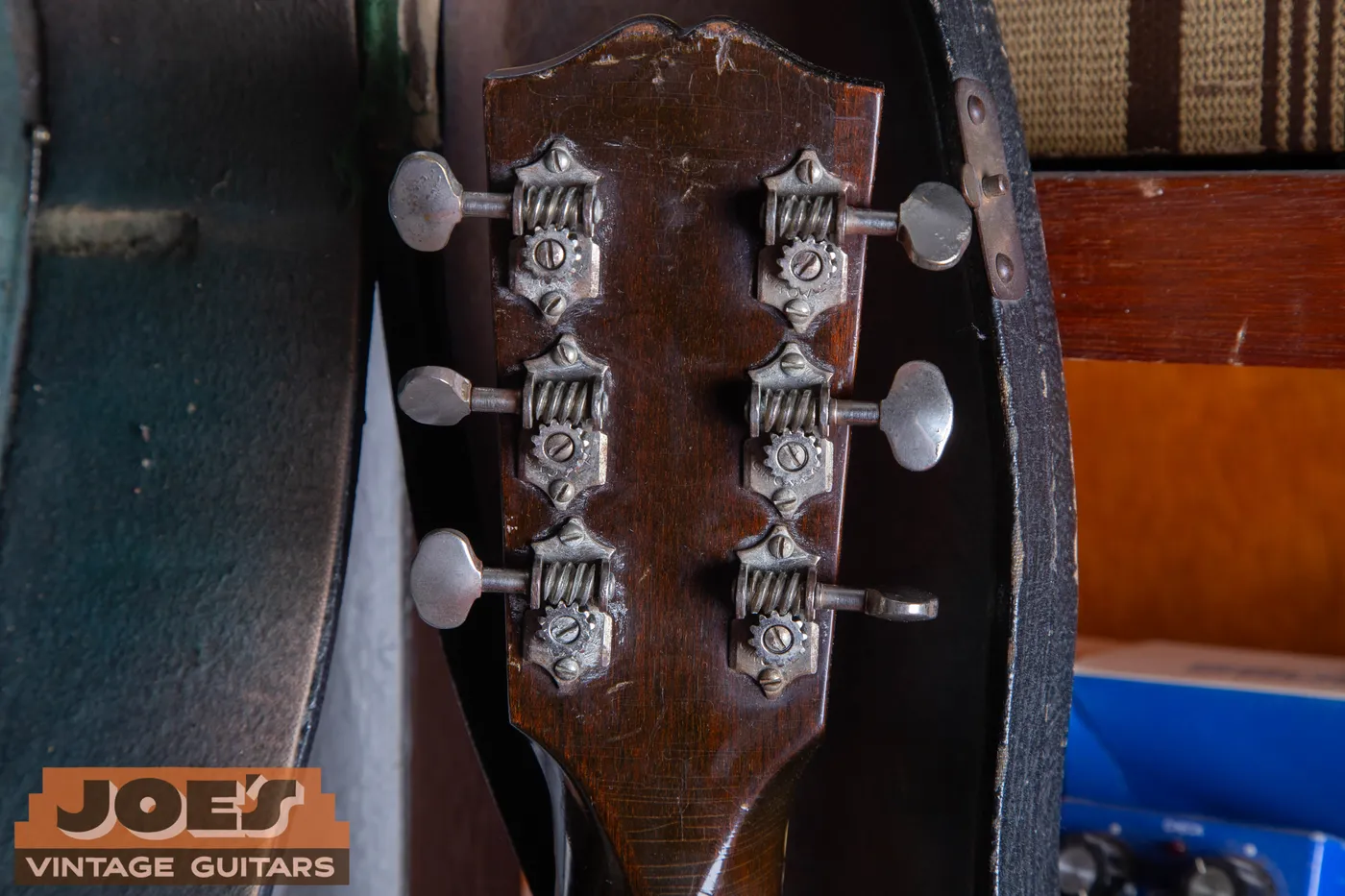
Use the logo chronology to check whether the headstock treatment fits the proposed period. The script-to-block transition and headstock ornaments should be compared by model. A logo outline by itself can’t establish an exact year or prove the neck was never replaced.
The tuner reference helps identify the installed machines. Include screw patterns, bushings and any unused holes in the photograph. An old tuner set can be a later substitution, so its age and its originality to the guitar remain separate questions.
Bridge, Heel And Body Seams
Inspect The Archtop Structure
Bridge And Neck Angle
A side view should show the bridge height, adjustment wheels and string clearance. A very low bridge may accompany a setup or structural issue. An in-hand examination is needed before diagnosing a neck reset from a single image.
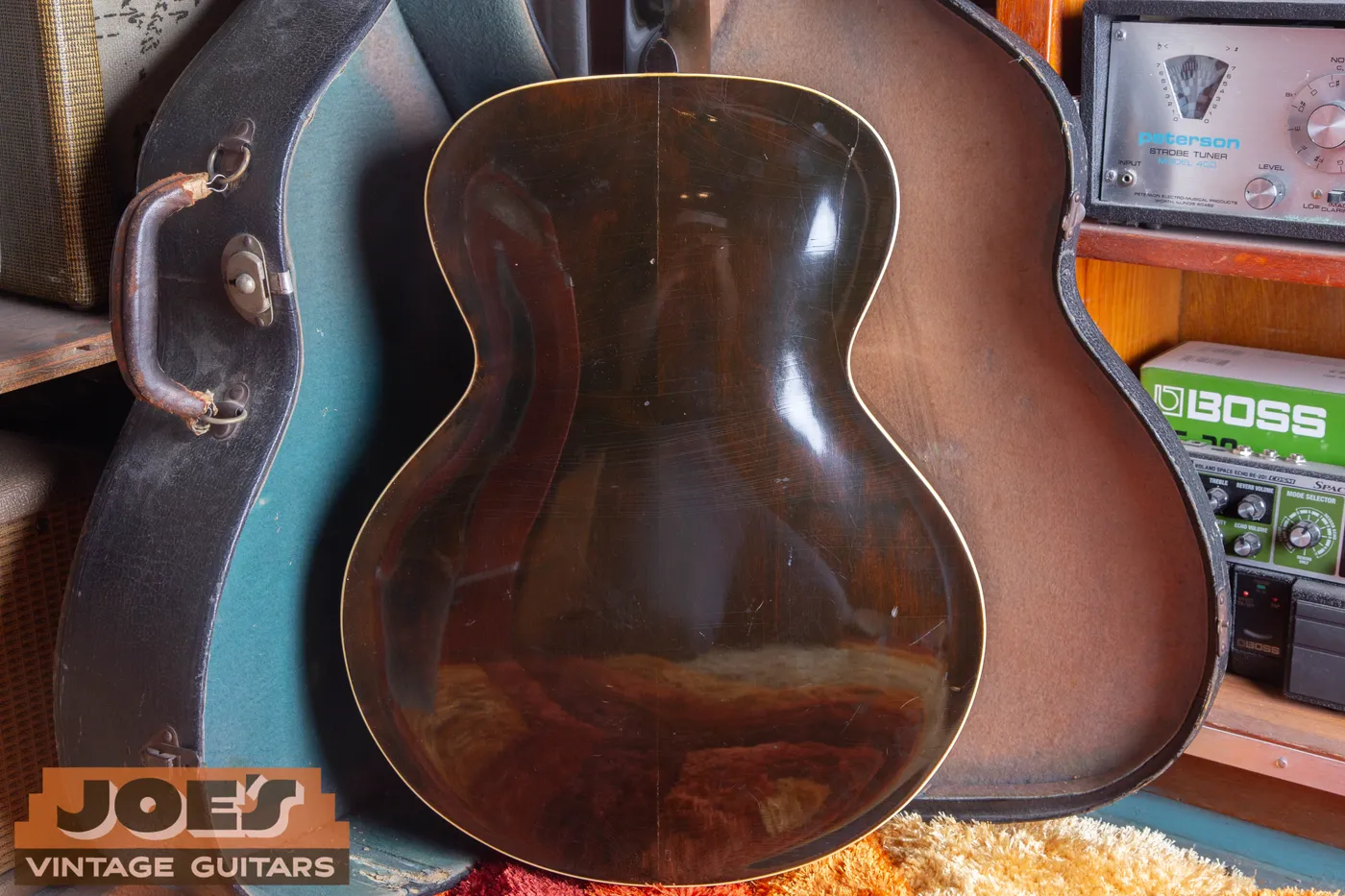
Top, Back And Rim Repairs
Include the entire repaired panel and then the close-up. Open seams, repaired cracks and changed binding need different descriptions. Interior cleats or patches should be recorded when visible without disturbing the instrument.
Pickup And Guard Additions
Show mounting holes and the path of added wiring. An attachment to a guard and a pickup routed through the top change different parts of the guitar. Keep removed hardware and any original guard with the instrument.
Photograph worn finish and suspected repairs before polishing. Uneven reflections can conceal a repair line, while a heavily edited image can erase the surface details needed for review. Keep the original files available even if you send smaller copies initially.
A supported L-4 identification doesn’t automatically establish excellent condition. The L-4 value guide explains how the correct model group and the condition record come together. Joe can advise which remaining questions need a repairer’s examination.
A Useful Starting Set For Joe
Build An L-4 Identification Record
Show The Soundhole And Body Generation
Include the entire front, the neck joint and a straight width measurement. State whether the guitar has an oval hole, round hole or f-holes and whether a cutaway is present.
Record The Factory Markings
Send the label and any visible factory stamp without altering them. Keep unclear characters unresolved and include more than one lighting angle when the paper or ink is faded.
Document Electrical Equipment
For a pickup-equipped guitar, show the controls, output jack and mounting. Include service records that explain whether the equipment was added or replaced.
Include Repairs And The Case
Photograph the heel, bridge, headstock and case. Tell Joe what is known firsthand and what came from an earlier owner, so the review can separate evidence from an inherited description.
Send The Evidence
Ask Joe To Identify Your Gibson L-4
Send the full guitar, label, neck joint and any electrical installation. Mention an uncertain model suffix or unusual construction so it can be checked directly.
How To Describe A Mixed Configuration
Separate L-4 Model Evidence From A Later Conversion
An oval-hole L-4 with a later floating pickup still begins with the early acoustic body. Its electrical equipment needs a separate history. The central soundhole, neck joint and factory markings are relevant to identifying the guitar, while the pickup mount and output connection explain what was added. These two sets of evidence can support a clear description without assuming a factory electric origin.
A cutaway L-4 with humbuckers installed through the top presents a more substantial question. Establish the label, period and top construction, then examine the openings and control installation. The presence of two familiar Gibson pickups doesn’t identify the work as factory CES production. An early service invoice or photograph may help determine when the change occurred.
For a later L-4CES, examine the back according to the appropriate production group. A laminated mahogany back and a solid mahogany back can both show mahogany on the outside. The visible species and the method of construction are different findings. Keep a listing’s wood description provisional when the available exterior image can’t resolve the layers.
A replaced label or neck can also complicate an otherwise plausible model description. Compare how the label sits in the body and whether the neck’s appointments agree with the body period. A repair may explain a mismatch, but it should be documented as a repair rather than used to erase the discrepancy from the record.
When several generations appear to fit, write down which feature would distinguish them. It may be a clearer model field, a body measurement or an interior construction view. Request that specific evidence rather than asking for a random collection of close-ups. The result should identify the supported version and retain any unresolved issue for an in-hand inspection.
Model-Specific Sources
L-4 Construction And Dating References
- Gibson 1934 Catalog W, Printed Page 14
Original round-hole L-4 illustration, woods and dimensions.
- Gibson 1962 Catalog, Page 41
Cutaway acoustic L-4C specification.
- The Official Vintage Guitar Price Guide, 2026 Edition
L-4 family chronology and separate L-4CES construction groups, pages 169 and 170.
- Gibson Factory Numbers
Numbering systems and physical corroboration.
Questions AboutGibson Identification
Does Loar-Era Mean Lloyd Loar Built My L-4?
What Is The Difference Between L-4C And L-4CES?
Is Every L-4CES Back Made The Same Way?
Can A Round-Hole Gibson Be An L-4?
The Last Word
Keep The Evidence Together
Establish the L-4 generation and suffix, then corroborate the date and record any alterations. Continue to the L-4 price guide with that complete description.
Authenticity And Originality Are Assessed From The Information Provided. A Hands-On Inspection Can Change The Conclusion.