

Gibson ES-175 Identification · P-90 And Humbucker Models
Gibson ES-175 Authentication Guide
A pointed cutaway identifies the family outline. The pickup openings, label, neck and hardware establish which version you actually have.
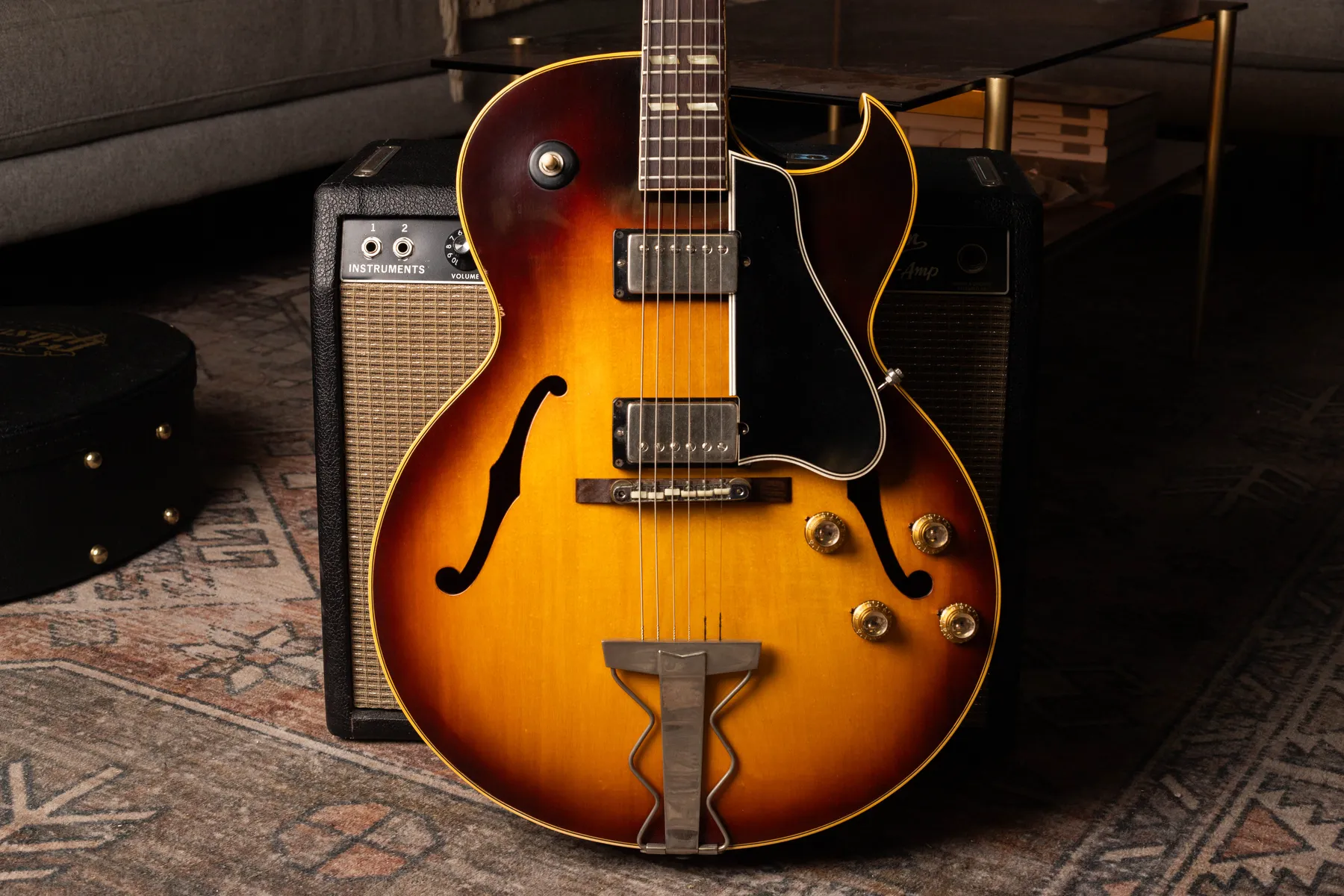
Authenticate a Gibson ES-175 by establishing its single- or double-pickup configuration, then checking the installation, factory markings and construction. Joe’s archive supplies an early single-P-90 example and a 1962 ES-175D with two humbuckers. The existing ES-175 history and specifications article covers the model’s development; this guide concentrates on examining a particular instrument. Use the ES-175 value guide after the configuration is supported.
Authenticity And Originality Are Assessed From The Information Provided. A Hands-On Inspection Can Change The Conclusion.
Start With The Whole Front
Single-Pickup ES-175 Or Two-Pickup ES-175D?
The original ES-175 family uses a pointed Florentine cutaway, f-holes and a full-depth laminated body. The usual single-pickup configuration places the pickup at the neck. The D configuration has neck and bridge pickups, additional controls and a selector. Show the entire body so these features can be assessed together.
A second pickup can be added to a single-pickup guitar. Conversely, a two-pickup instrument can lose a pickup or receive a covering plate. The number of installed covers is therefore an initial observation, not complete proof of the factory model. Look for the model field, control layout and any evidence of changed openings.
Natural finish commonly adds an N to the designation. The current color must still be examined for originality. A stripped sunburst can resemble a natural guitar in a small image, especially if only the center of the top is shown. Include the binding edges, rims, heel and headstock.
Keep the ES-175 separate from a thin-bodied ES-225 or a carved-top L-4CES. Their outlines can be similar. The ES-225 model guide and L-4 identification guide provide the related comparisons when a model label is missing or unclear.
Gibson’s 1966 Catalog
A Dated ES-175 Construction Reference
The 1966 catalog lists the ES-175D at 16¼ inches wide, 20¼ inches long and 3⅜ inches deep, with a 24¾-inch scale and 20 frets. It describes maple body plates and rims, a one-piece mahogany neck and a rosewood fingerboard with double-parallelogram inlays. The house history article identifies the family’s laminated construction.
For that catalog configuration, Gibson lists two humbuckers, individual volume and tone controls, a three-way selector and chrome-plated hardware. The adjustable rosewood bridge is a useful dated reference. Other bridge equipment occurs during the model’s long history, so the catalog should be applied to its own period.
Measure width directly across the lower bout and depth at the rim. A photograph made with a wide-angle lens can exaggerate the arch or flatten the apparent body depth. Include the measurement in a photograph if the identity is uncertain.
The raised fingerboard extension and floating bridge deserve close inspection. A bridge base can be changed without a permanent installation, while an added fixed bridge can involve holes in the top. Photograph the mounting method rather than identifying a bridge only from the saddle material.
Compare Configurations Without Assuming Originality
P-90 And Humbucker ES-175s From Joe’s Archive
Early-1950s Gibson ES-175
One Neck P-90
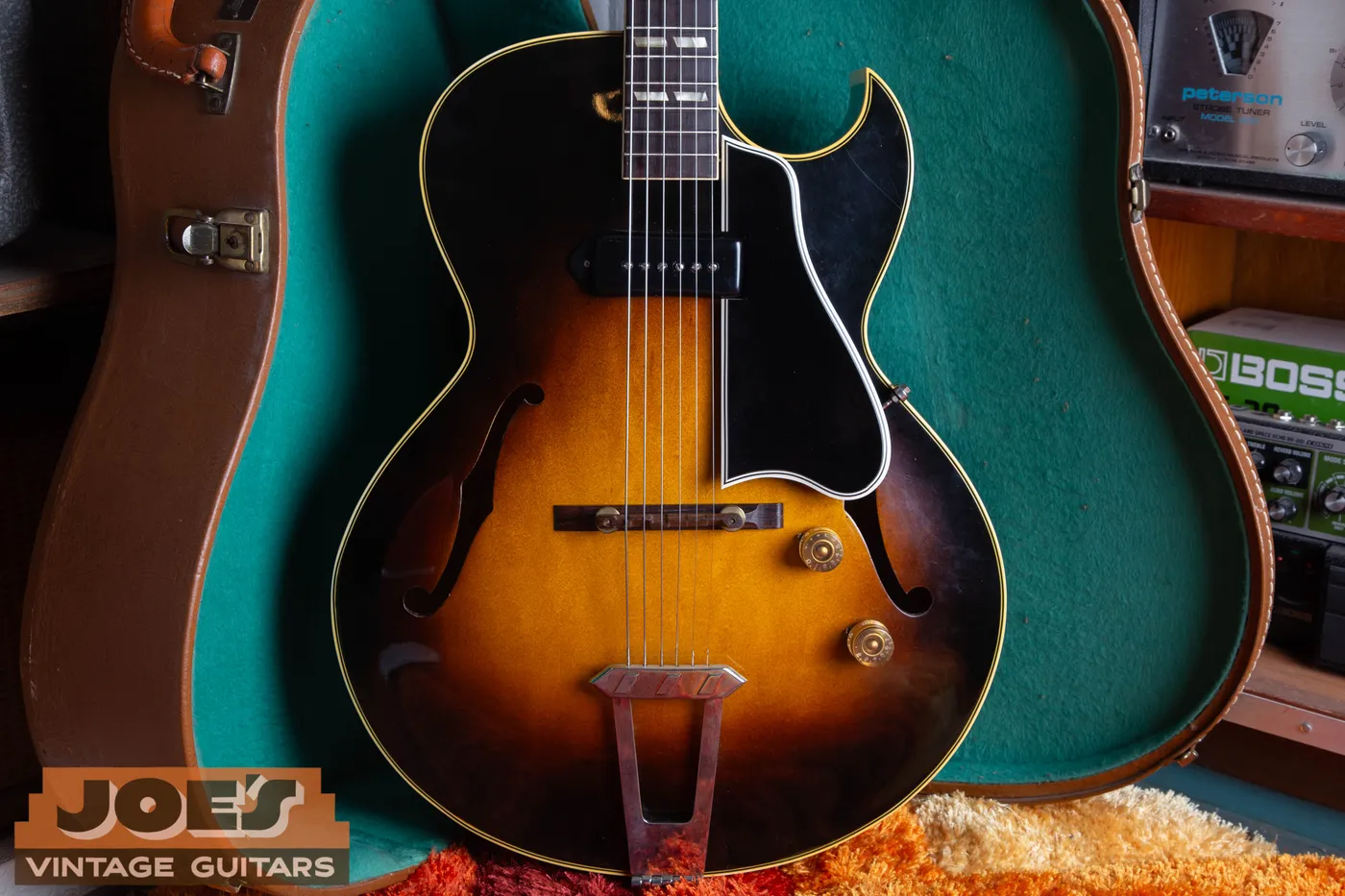
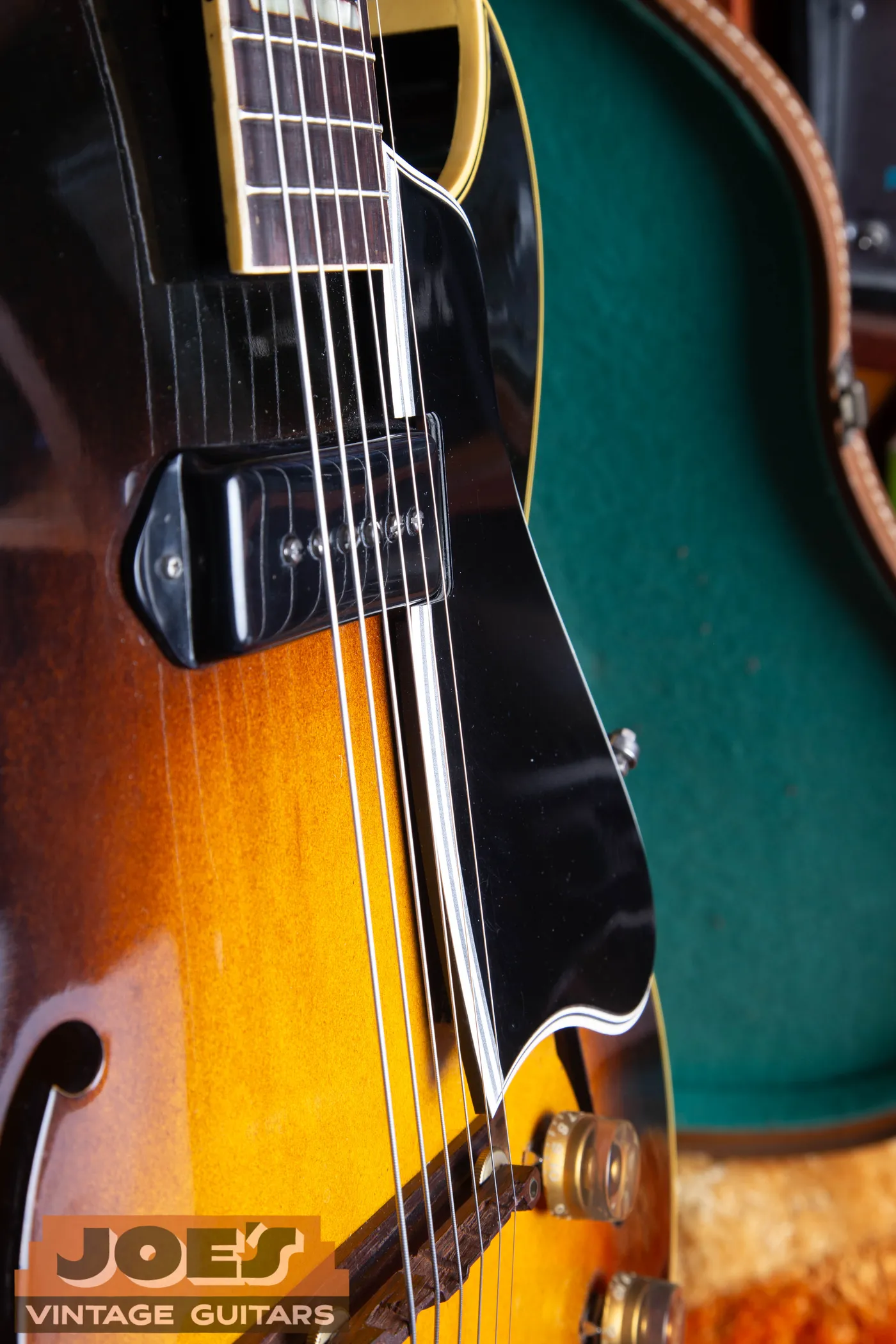
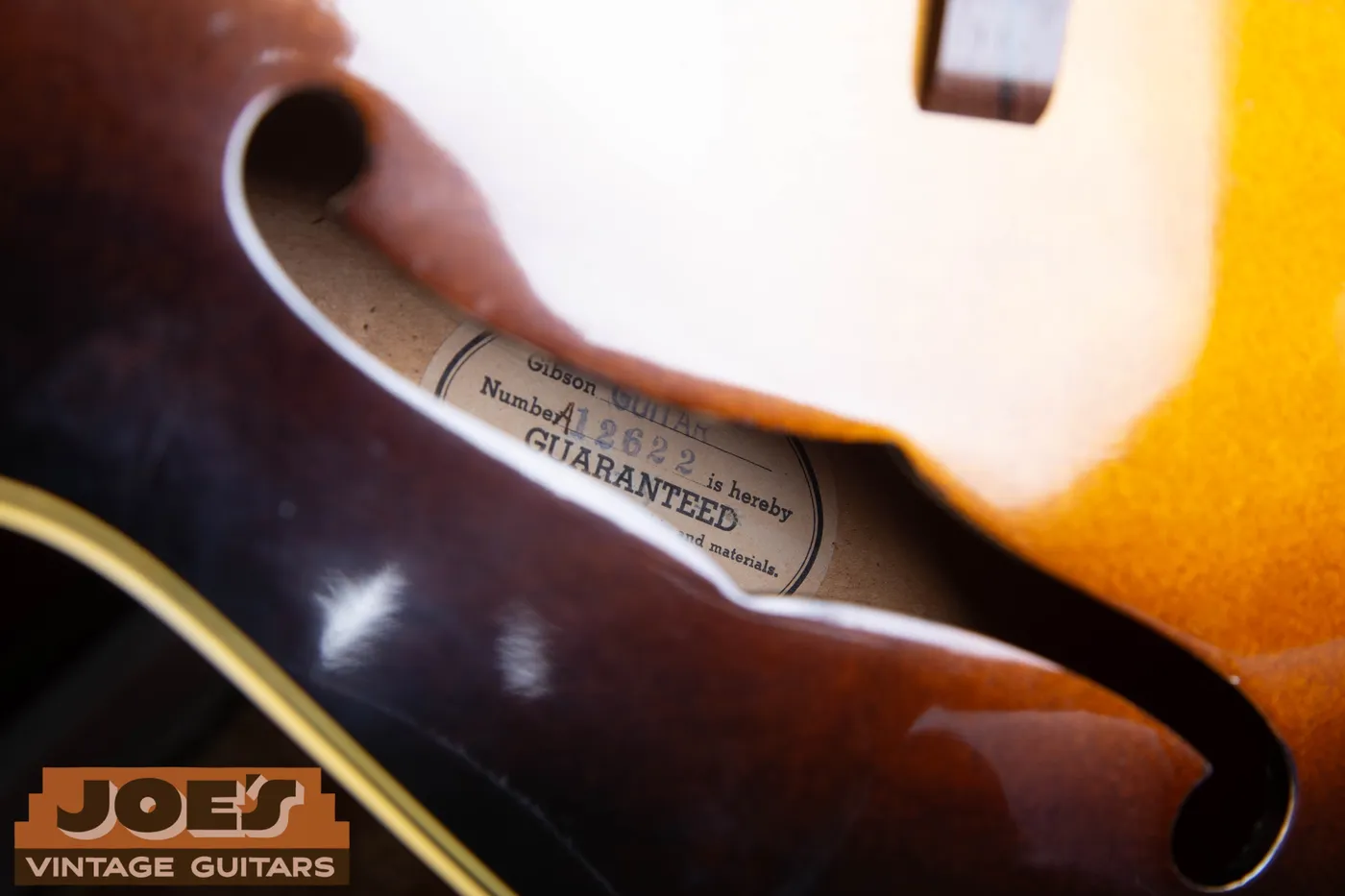
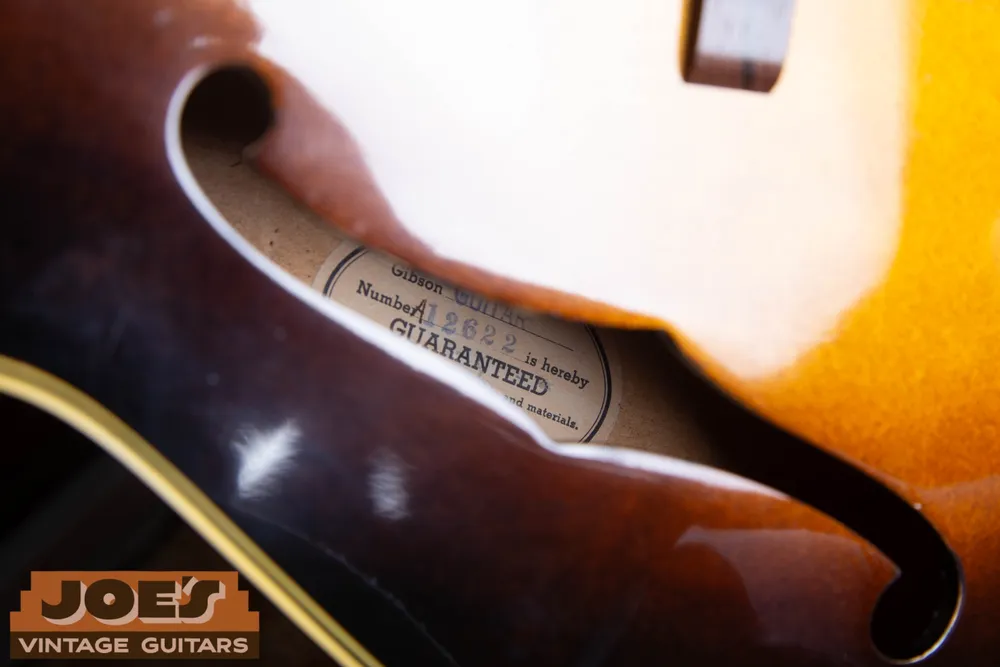
The early example shows a black dog-ear P-90, two controls and a floating acoustic-style bridge. The body and pickup photographs make the single-pickup arrangement visible. Its archive folder says 1952, while the readable A 12622 label falls in the house reference’s 1953 range. The photographs are therefore captioned early 1950s pending resolution of that date discrepancy.
1962 Gibson ES-175D
Two Humbuckers And A Selector
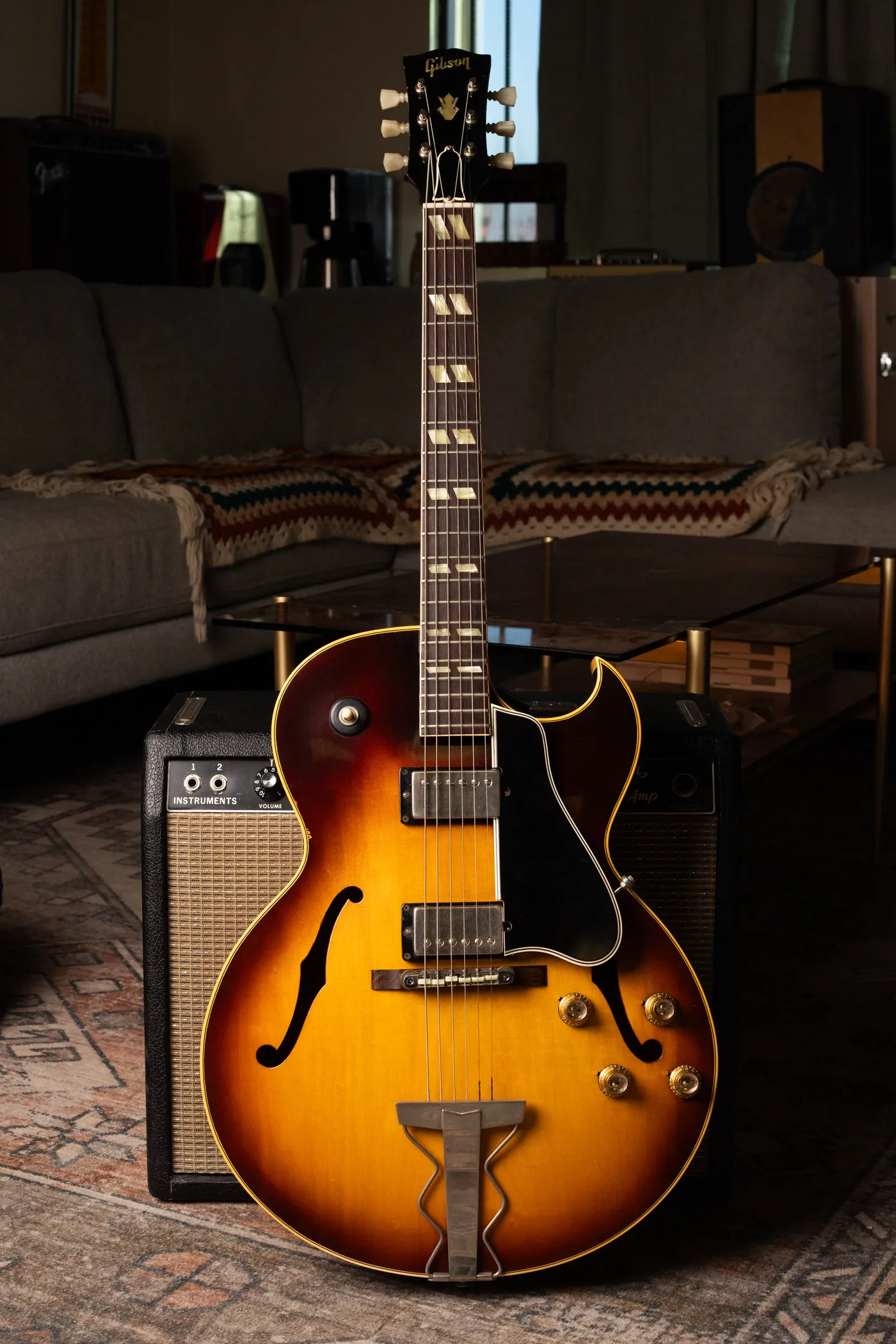
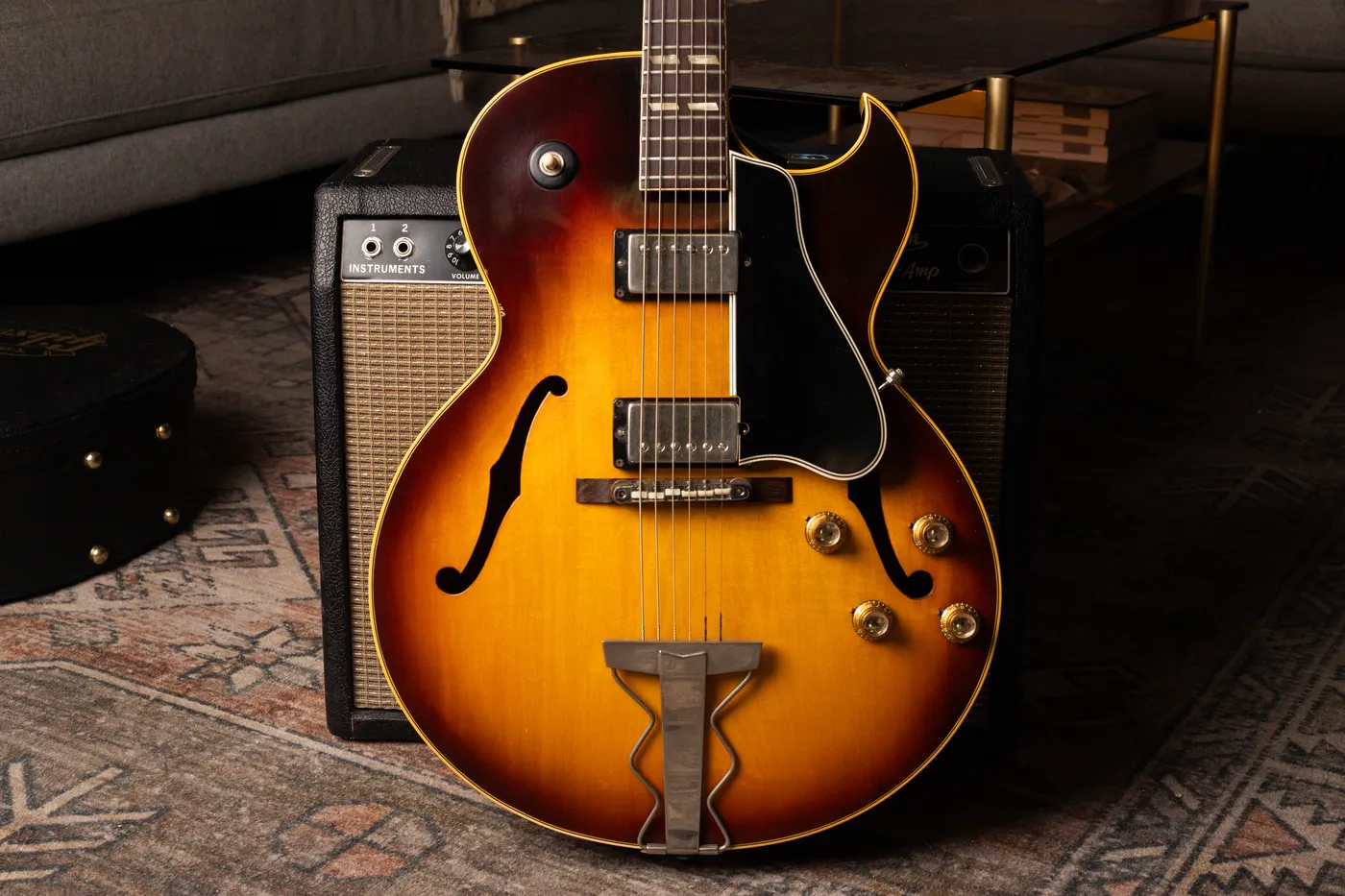
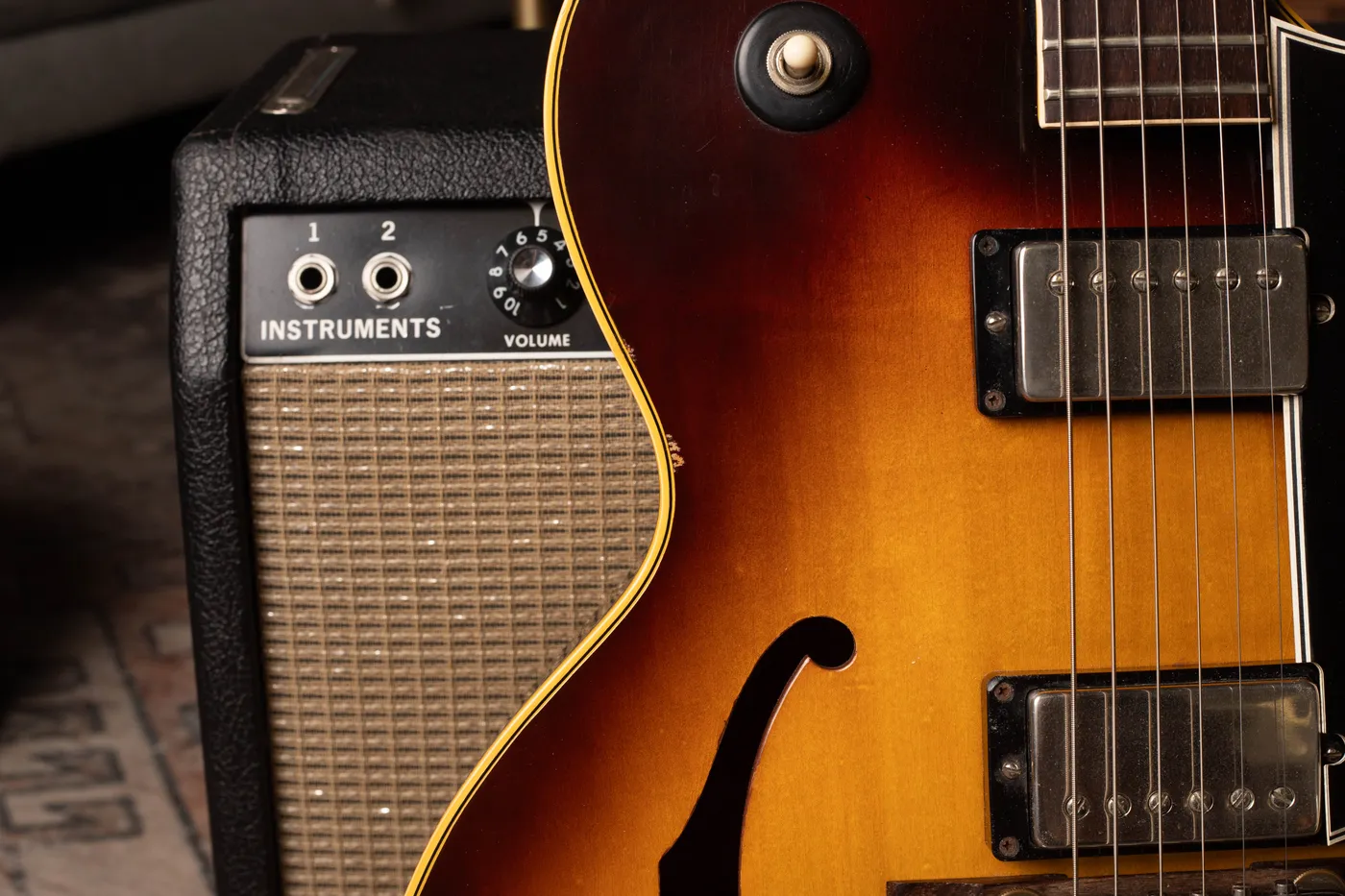
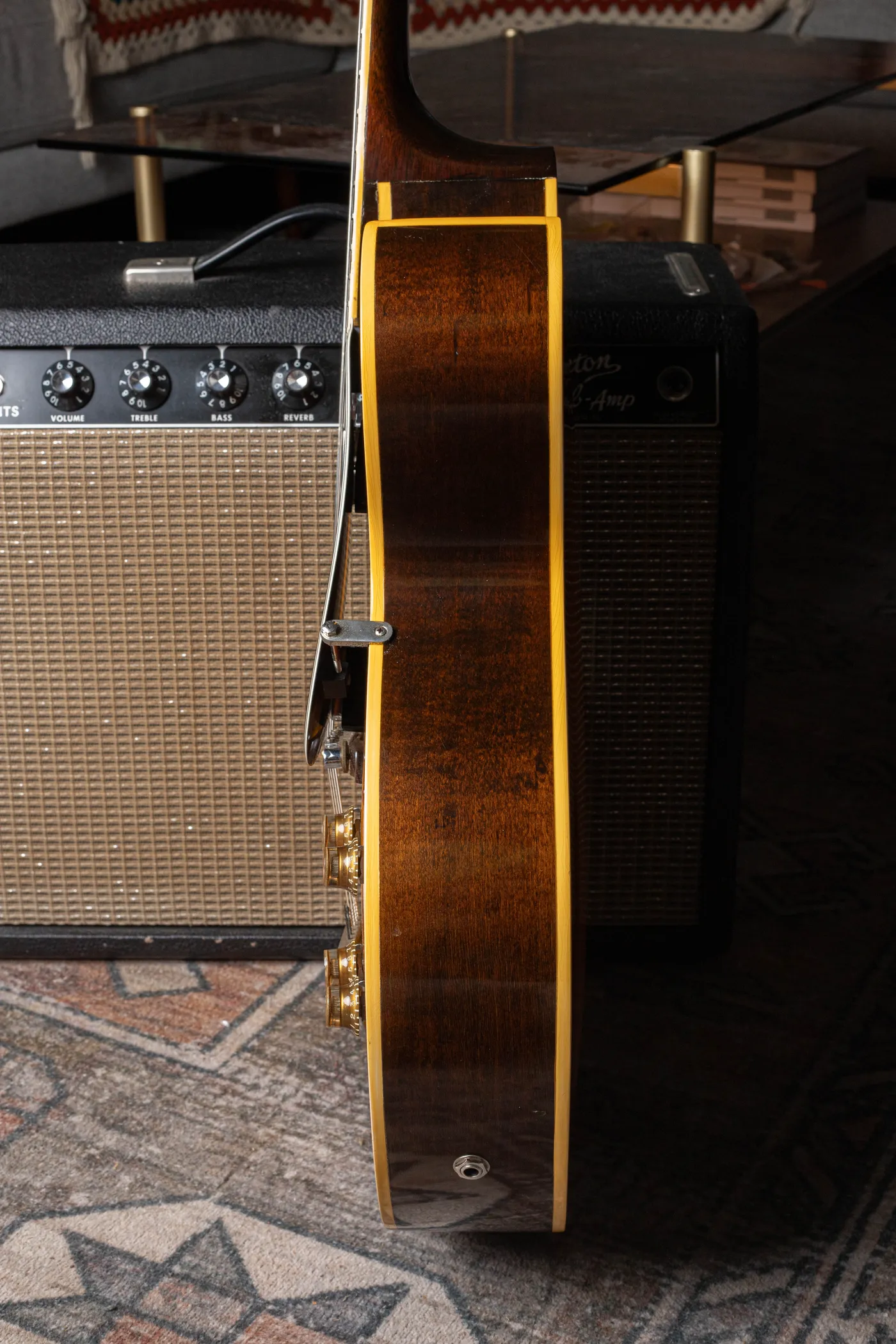
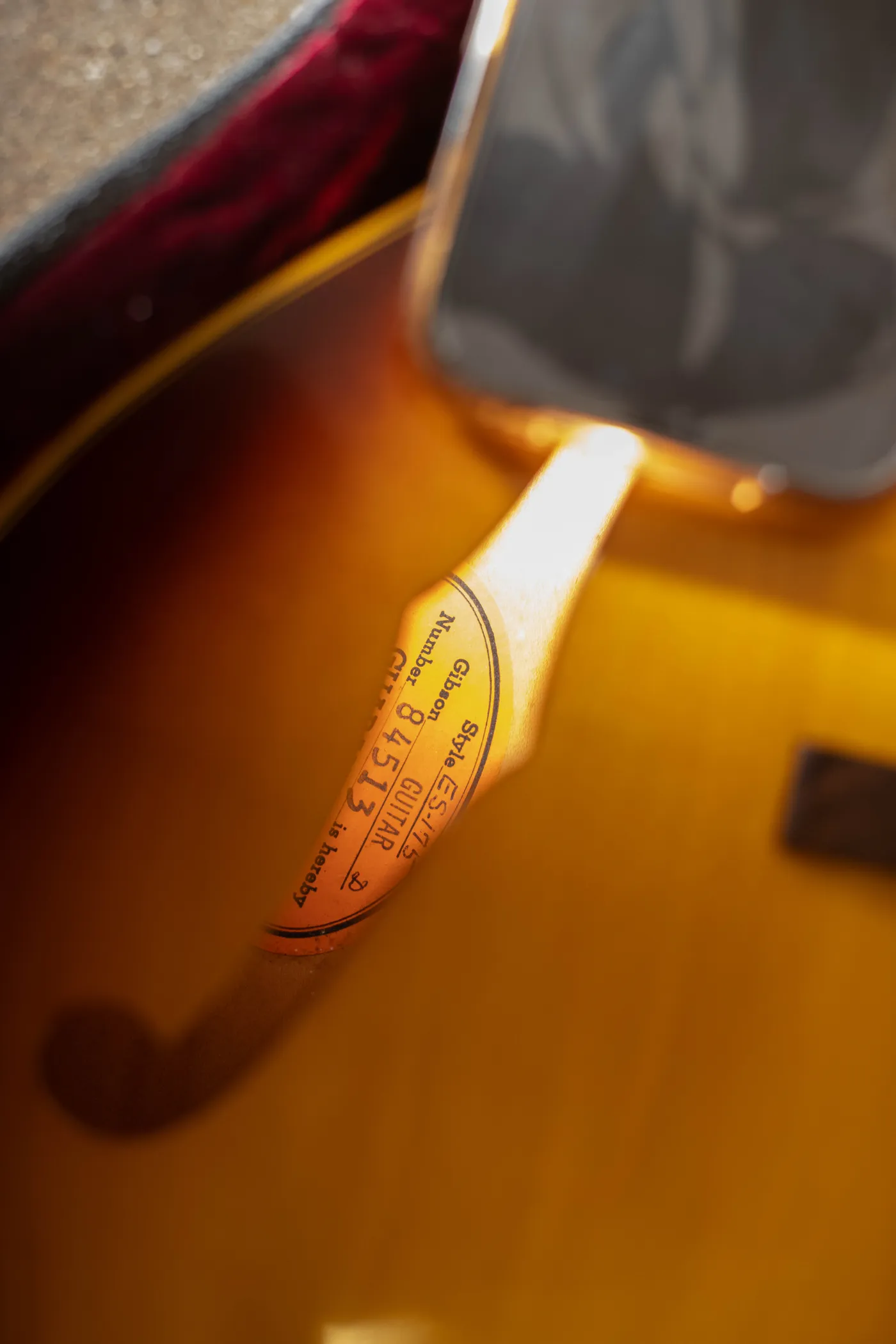
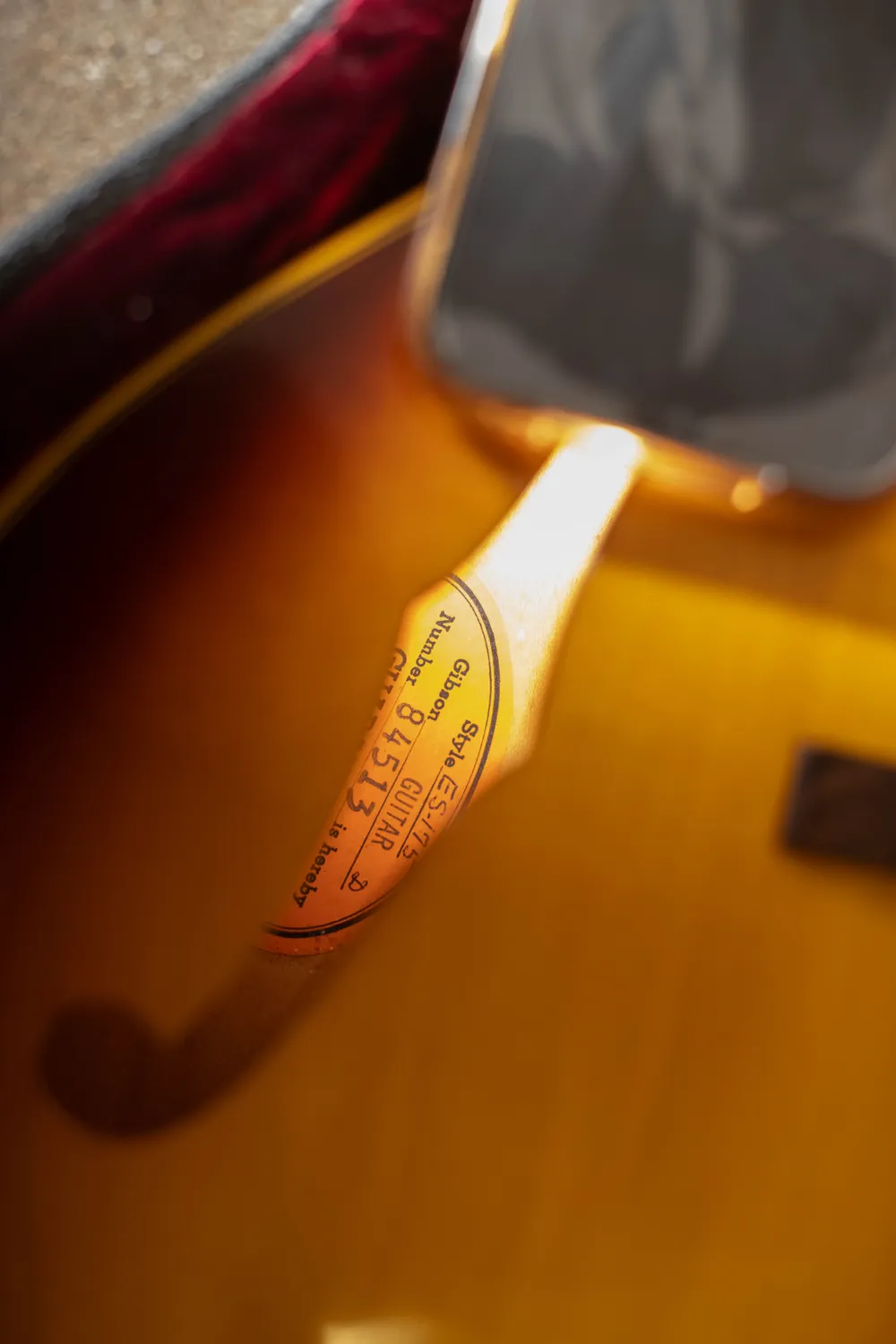
The second guitar shows two covered humbuckers, four knobs and the upper-body selector. Its orange label reads 84513 and identifies the ES-175D model. The side photograph records body depth and the neck joint, details that are lost in a tight front crop.
The visible covers establish the photographed layout. Authentication of the individual pickups also requires their construction and installation evidence; the front view alone can’t prove every hidden component is original.
Examine Parts And Installation Separately
P-90, PAF And Patent Number Pickup Checks
The family changed from P-90s to humbuckers during the 1950s. The house history guide places the humbucker transition in 1957. A transitional-year claim needs the actual pickup installation and factory evidence rather than a rule that a calendar date guarantees one exact component.
For a P-90 guitar, inspect the dog-ear mounting, cover fit and surrounding finish. A replacement pickup may occupy the original opening, while a humbucker conversion may have altered the wood. Existing service photographs can help distinguish the two without new disassembly.
For a claimed PAF or early Patent Number pickup, a sticker is only part of the evidence. Construction, leads, cover history and solder context need review. Factory sanding scuffs beneath a baseplate decal are normal production work and must not be treated as an independent sign of fraud.
A pickup’s resistance reading doesn’t prove its year. Temperature, coil condition and winding differences affect the measurement. Use electrical readings to help describe function and compare construction, rather than assigning authenticity from one number.
The early-1960s transition between pickup markings also requires caution. Don’t demand that every component changed on the first day of a model year. At the same time, a plausible overlap should not become a blanket explanation for any mismatch. Record the part, the evidence and the unresolved question.
Leave intact pickup covers and solder alone for an initial photo appraisal. If prior service photographs exist, send them. A specialist can decide whether closer inspection is necessary and document the work without casually erasing installation evidence.
Resolve Conflicting Descriptions With Evidence
ES-175 Labels And Serial Numbers
An Archive Date Conflict
This visible white-label number falls within the house serial guide’s 1953 range, A 12461 through A 17435. Because the folder was labeled 1952, the exact year remains unresolved.
The Orange Label On The 1962 ES-175D
The label photograph shows the full five-digit number and model field. Keep the original photograph with the written transcription so future readers can check the same evidence.
Use the Gibson serial-number guide to identify the numbering system before decoding the digits. A-prefix labels, later impressed numbers and newer formats require separate tables. A faded prefix can change which system applies.
Where label and headstock markings are both present, photograph both. Differences may require investigation, especially after a repair or replacement neck. Don’t erase, retrace or darken a faint number to make the records appear consistent.
Pot codes can add an earliest component date through the Gibson pot-code guide. The component may predate assembly, and a replacement pot may postdate the guitar by decades. Avoid pulling the harness through an f-hole for a routine photo request; use accessible views or existing repair records.
Measure The Instrument In Front Of You
Neck, Nut Width And Headstock Evidence
The existing ES-175 history article discusses the mid-1960s move toward narrower nuts. Measure the actual nut width rather than assigning a dimension from a year alone. A replacement nut, altered fingerboard edge or transitional example needs its own description.
Neck wood and lamination changes provide supporting evidence for later guitars. Compare the rear neck and heel with the physical-features guide, which explains why changes did not arrive identically on every Gibson model. Full-depth archtops should not be forced into a solidbody timetable for features such as a volute.
Use the logo guide and tuner reference to evaluate the headstock as a group. New tuner holes, enlarged bushings and finish outlines can document replacements even when the machines themselves are vintage.
Photograph any repaired headstock from the back and both edges. A repaired break and a factory neck lamination are different observations. The interpretation should follow the visible evidence and repair history, rather than a generic assumption about every line in the wood.
Confirm The Specific Variant
ES-175CC, ES-175T And Later Production
The ES-175CC and ES-175T have separate identities and price groups. The CC designation refers to the Charlie Christian-style pickup version; the T identifies the thinline variant. A pickup change or a thin-looking photograph doesn’t establish either model without supporting factory and construction evidence.
For a claimed thinline, measure the rim depth and show the instrument from the side. For a claimed CC, document the pickup mounting and model evidence. An ordinary ES-175 modified to resemble one of these versions should be described as a conversion.
Later mainline instruments, signature models and reissues also need their own references. The serial, labels and specifications should agree with the particular production version. A reproduction of an older pickup cover, guard or tailpiece doesn’t date the guitar to the era it resembles.
The history page remains available for the broader development of the model. This inspection process adds the evidence needed to describe an individual guitar accurately, including where the available photographs can’t settle originality.
A Complete Instrument Record
What To Send For ES-175 Authentication
Full Body And Side Views
Show the cutaway, pickup layout, all controls and rim depth. Include the complete neck so the model’s proportions can be assessed.
Factory Markings In Place
Photograph the label and headstock numbers without editing characters. If an old description conflicts with a visible number, include both and identify the conflict.
Hardware And Service History
Record bridge mounting, tailpiece, tuners and any known pickup or wiring changes. Keep original parts and earlier repair photographs with the instrument.
Structural And Playing Condition
Show the heel, bridge profile and any repaired area. Report high action, loose seams or electrical faults without trying to diagnose them from appearance alone.
For condition and sale questions, continue to the ES-175 price guide. Joe can begin with these photographs and explain which remaining issues require an in-hand inspection.
Send The Evidence
Ask Joe About Your ES-175
Send the body, label, pickup and neck photographs with known service history. Include the case and any removed original parts.
Keep The Model, Year And Parts Separate
Check An ES-175 With Mixed Dating Evidence
The early archive guitar shows how a date disagreement can arise without making the entire instrument unidentified. Its single-P-90 body configuration is visible, and the label can be read. The conflict concerns the exact year assigned by the folder. That question can remain open while the model and photographed arrangement are described accurately.
A different situation is a guitar labeled ES-175 with two pickups and four controls. The label may have been abbreviated, or the guitar may have been modified. Inspect the pickup openings, control installation and any earlier records before deciding which explanation fits. Neither the label nor the present pickup count should erase the other evidence.
For a natural-finish example with an uncertain surface history, record the color as an observation and leave factory originality to the finish assessment. A clear view of the binding and neck junction may reveal work omitted from a top-only photograph. An older picture showing sunburst would establish a prior appearance even if the exact date of refinishing remains unknown.
A guitar with a later bridge can still retain its original body and neck. Identify how the bridge mounts and whether holes or other wood changes were involved. This helps distinguish a removable setup change from a permanent alteration. The correct description can include both the supported manufacturing period and the later equipment.
When a pickup is claimed to be an original PAF, tie the component evidence to that particular instrument. A photograph of a loose baseplate from an unrelated guitar doesn’t authenticate the installed pair. Service records should show which pickup came from which position and preserve any known replacement history.
Use these findings to make a short, reviewable record: factory model evidence, date evidence, installed pickups, body changes and repair history. Joe can then address the unresolved point directly instead of repeating an identification process built around a prior seller’s conclusion.
Catalog Specifications And House Evidence
ES-175 Authentication References
- Gibson 1966 Catalog, Printed Pages 4 And 5
ES-175D body dimensions, neck, controls, scale and hardware.
- ES-175 History And Specifications
House history anchor for laminated construction and pickup development.
- Gibson Serial Numbers
A-prefix ranges and later serial systems.
- Gibson Physical Features And Hardware
Neck, volute and hardware transitions with model-specific qualifications.
- The Official Vintage Guitar Price Guide, 2026 Edition
Separate ES-175, ES-175D, CC and T reference groups, page 150.
Questions AboutGibson Identification
What Does The D Mean In ES-175D?
Can A PAF Be Authenticated From Its Sticker Alone?
Why Is The Early Archive Guitar Not Given One Exact Year?
Should I Remove The Wiring Harness To Find Pot Codes?
The Last Word
Keep The Evidence Together
A useful ES-175 description includes the supported model, date evidence, pickup installation and repair history. Take that record to the ES-175 value guide or send it to Joe for review.
Authenticity And Originality Are Assessed From The Information Provided. A Hands-On Inspection Can Change The Conclusion.