

Gibson Byrdland Prices · 1955 To 1992 Groups
Gibson Byrdland Value Guide
Factory finish, pickup type and production period establish the comparison. Repairs and missing model-specific hardware need an individual assessment.
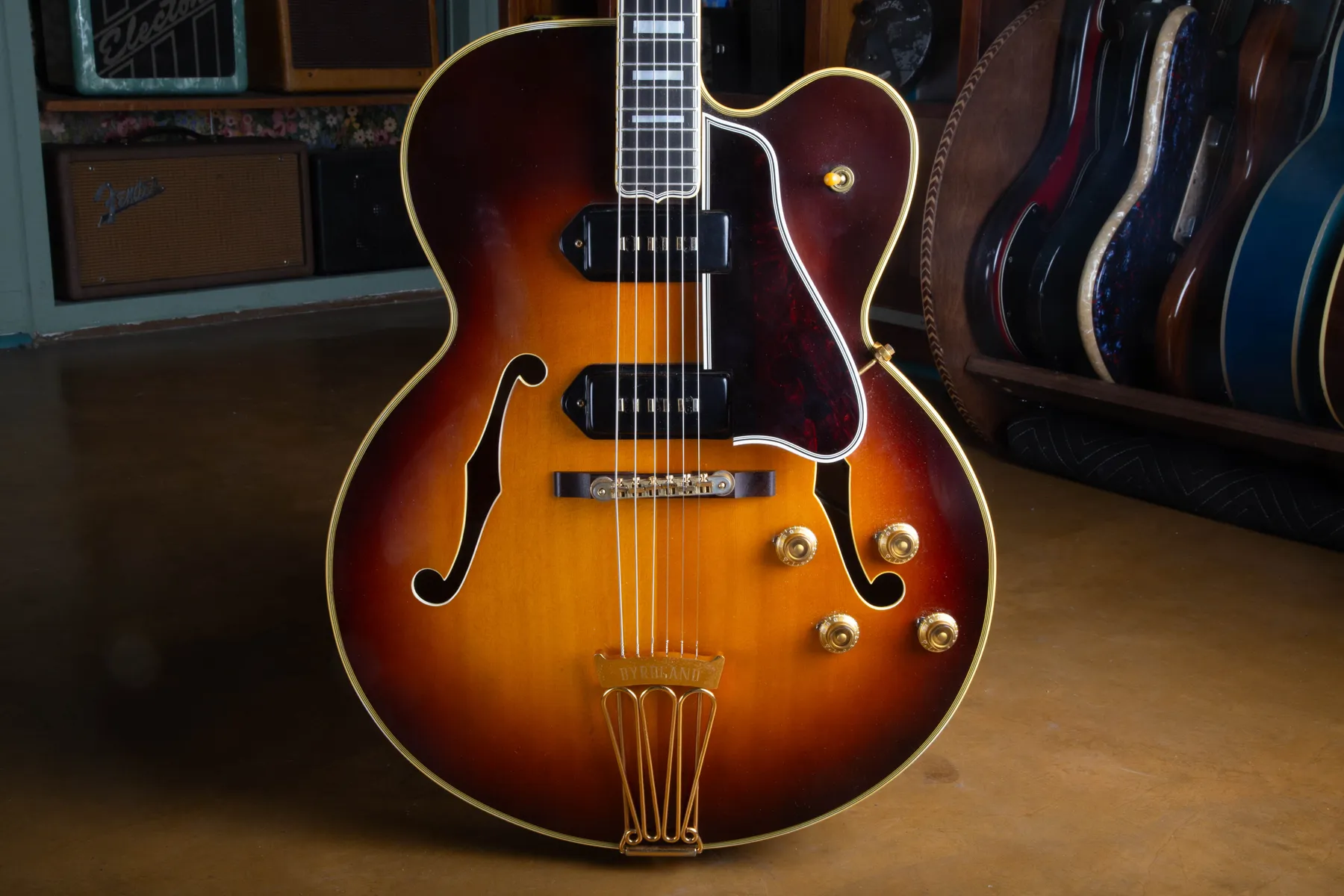
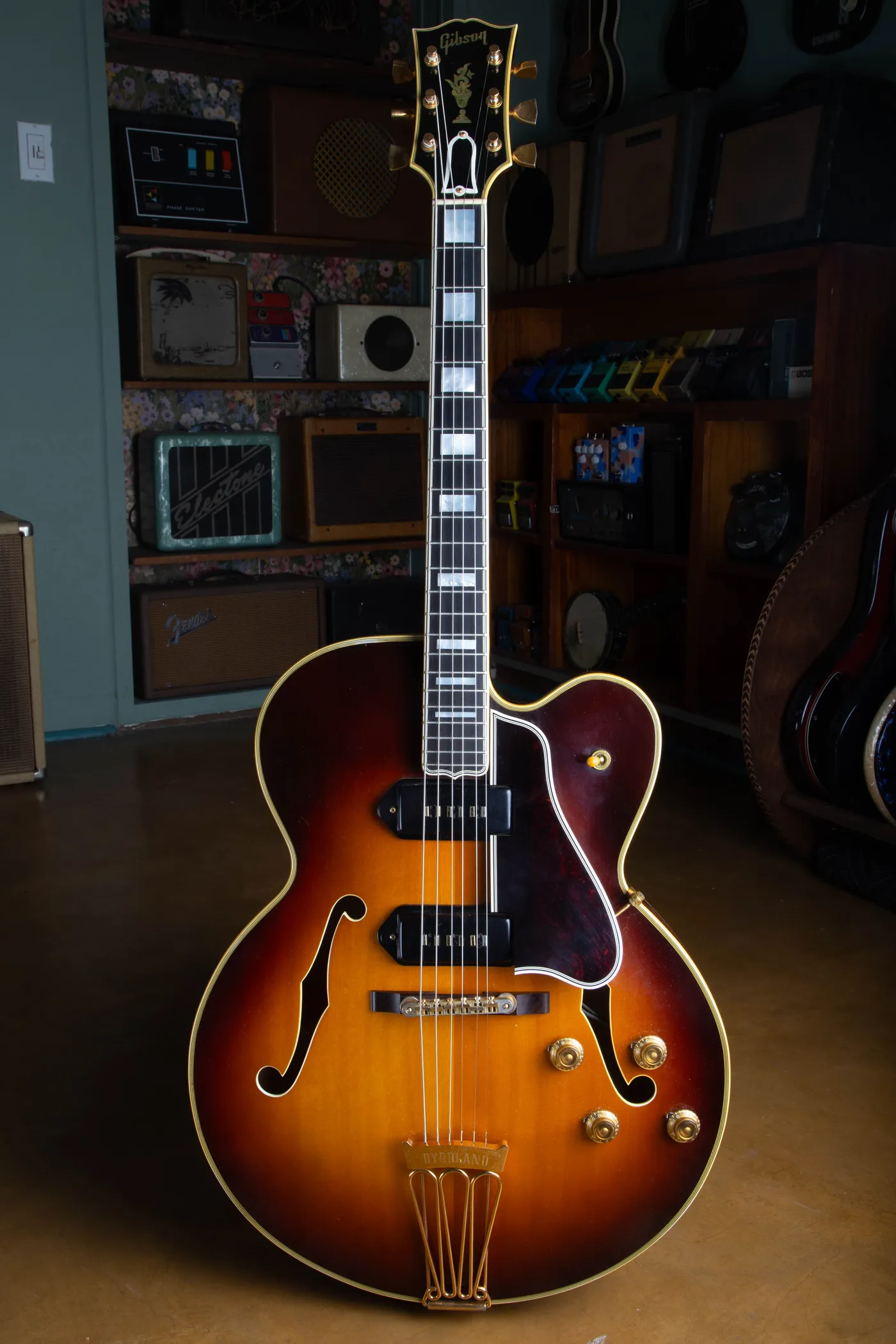
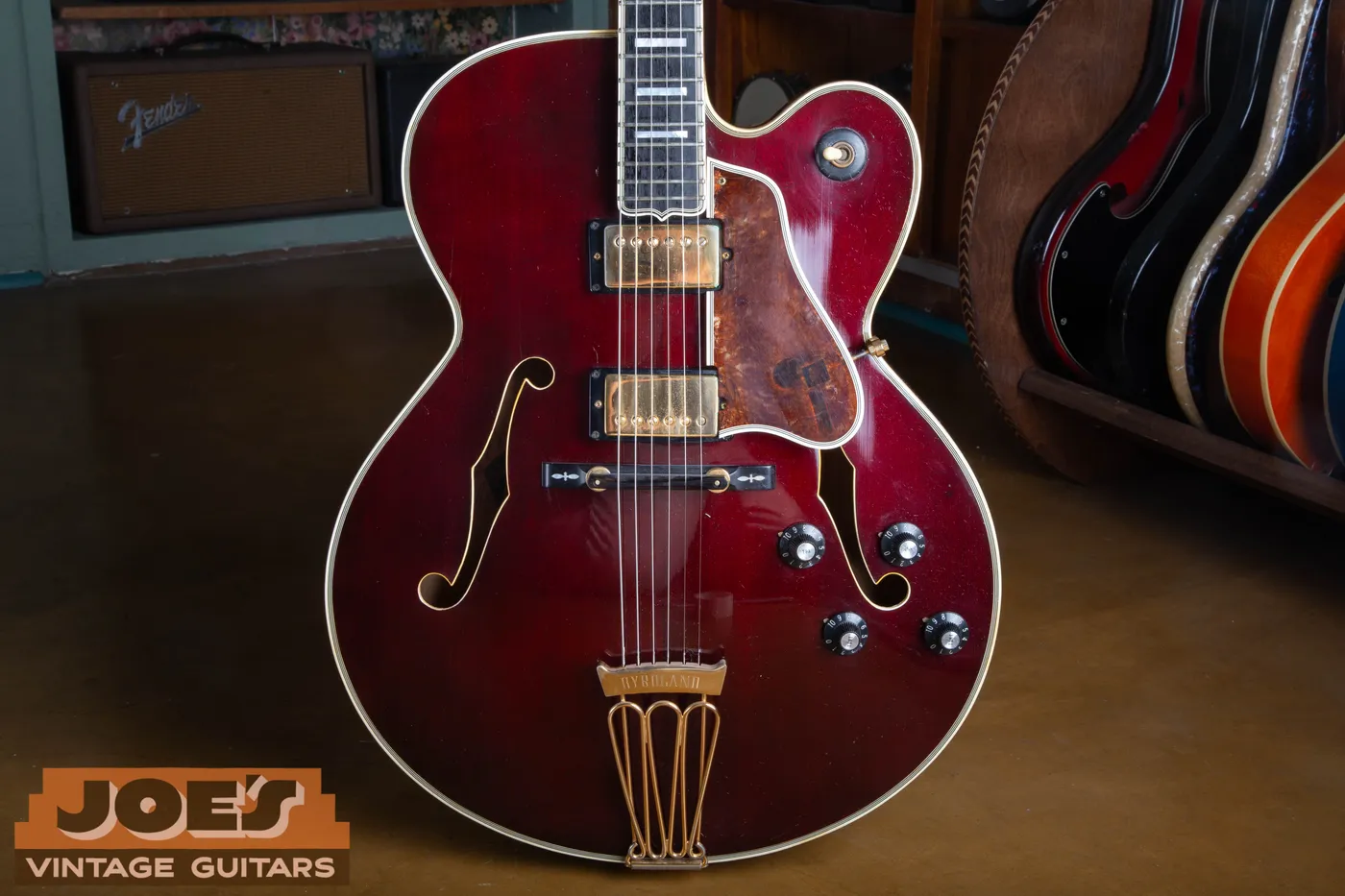
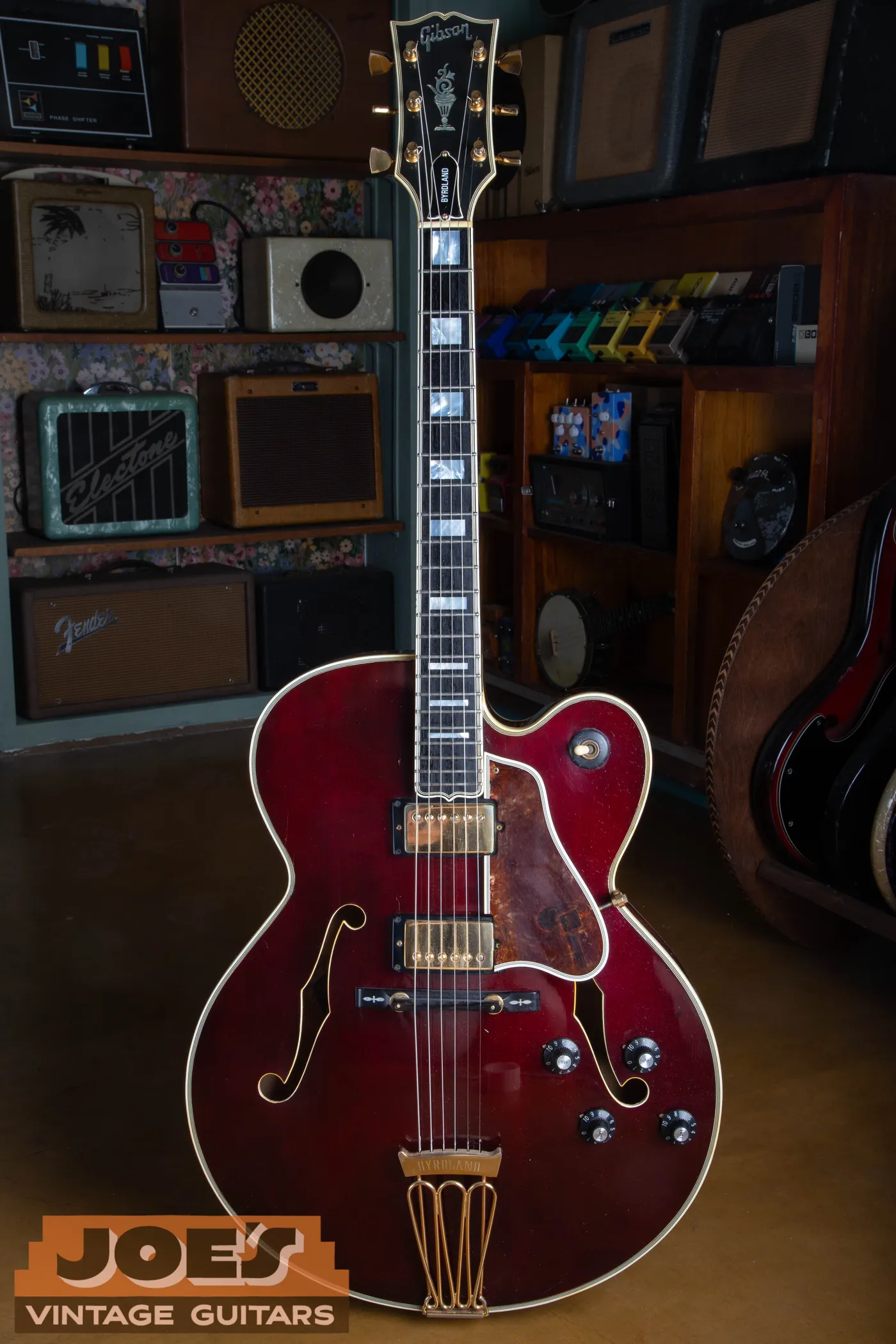
A natural-finish Gibson Byrdland in the 1958 to 1959 PAF group is estimated at $15,500 to $21,500. The later 1970 to 1992 various-finish group is $4,000 to $5,350 in excellent, original condition with its original case. The photographs below show Joe’s 1957, 1967 and 1970s Byrdlands, including the wine-red 1974 example. Use the Byrdland authentication guide to confirm the model, pickup configuration and date before choosing a range.
This Is An Estimate Of Market Value, Not An Offer To Buy And Not A Guarantee. Market Values Fluctuate; Have Your Specific Item Appraised.
Excellent Original Guitars With Original Cases
Gibson Byrdland Values By Era And Finish
| Model | Pricing Year Group | Configuration | Estimated Value |
|---|---|---|---|
| Byrdland | 1955 to 1957 | Natural; Alnico pickups | $10,300 to $13,350 |
| Byrdland | 1955 to 1957 | Sunburst; Alnico pickups | $8,800 to $11,450 |
| Byrdland | 1958 to 1959 | Natural; PAF pickups | $15,500 to $21,500 |
| Byrdland | 1958 to 1959 | Sunburst; PAF pickups | $13,200 to $17,600 |
| Byrdland | 1960 to 1962 | Natural; PAF pickups | $13,200 to $17,600 |
| Byrdland | 1960 to 1962 | Sunburst; PAF pickups | $10,900 to $15,650 |
| Byrdland | 1963 to 1964 | Natural; Patent Number pickups | $8,900 to $13,350 |
| Byrdland | 1963 to 1964 | Sunburst; Patent Number pickups | $7,850 to $10,450 |
| Byrdland | 1965 | Natural | $6,550 to $8,700 |
| Byrdland | 1965 | Sunburst | $6,150 to $8,350 |
| Byrdland | 1966 to 1969 | Natural | $5,100 to $6,800 |
| Byrdland | 1966 to 1969 | Sunburst | $5,300 to $7,050 |
| Byrdland | 1970 to 1992 | Various colors | $4,000 to $5,350 |
U.S. dollars. These November 2026 retail market estimates assume excellent, original condition and the original case where applicable. An individual sale can fall outside the range; these figures are not purchase offers. Repairs, changed parts and market conditions require an individual appraisal.
The table separates Alnico, PAF and later pickup groups, with natural and sunburst rows where listed. Match the configuration as well as the date. A transition-year instrument with a different supported pickup arrangement may require an individual estimate rather than a forced match to the nearest row.
These November 2026 estimates cover the listed historical production groups. Later Historic and Custom Shop versions need their own comparisons. The figures can change with market conditions and aren’t purchase offers. Refinishing, repaired breaks and replaced hardware require a review of the actual guitar.
Alnico And PAF Comparisons
Early Byrdland Values And Original Pickups
The 1955 to 1957 Alnico group is estimated at $10,300 to $13,350 for natural and $8,800 to $11,450 for sunburst. Confirm the pickup configuration before using those rows. A broad early-Byrdland description leaves out an essential part of the comparison.
The 1958 to 1959 PAF estimates are $15,500 to $21,500 for natural and $13,200 to $17,600 for sunburst. Original pickups, finish and the surrounding instrument all need support. A loose vintage pickup included in a case doesn’t prove that it was installed in this guitar at the factory.
The separate 1960 to 1962 PAF groups are $13,200 to $17,600 for natural and $10,900 to $15,650 for sunburst. Keep the actual production evidence with the photographs. Don’t select the highest early range from an overlapping serial lookup without resolving the year and configuration.
If pickups were replaced for playing, keep the removed parts and service records. Joe can assess the installed equipment, the retained pieces and any altered wood together. The pickup replacement guide explains why a parts swap and a routed body deserve different descriptions.
Finish And Condition Within The Period
1960s Byrdland Price Groups
1963 To 1964
The natural Patent Number group is $8,900 to $13,350, with sunburst at $7,850 to $10,450. Verify the installed pickups and their history. A correct-looking gold cover doesn’t establish what is underneath it.
1965
The natural estimate is $6,550 to $8,700, and sunburst is $6,150 to $8,350. The individual neck dimensions and condition should be recorded as part of the appraisal, especially when an owner has a strong preference about playing feel.
1966 To 1969
The natural group is $5,100 to $6,800 and sunburst is $5,300 to $7,050. These ranges reflect grouped comparisons. They don’t guarantee that every finish or every year will command a fixed premium over another.
Cutaway shape helps identify the Byrdland’s period, but it should be considered alongside serial evidence and hardware. The existing authentication guide explains the rounded and pointed forms. Once identified, the price still depends on how closely the guitar matches the chart’s original-condition assumptions.
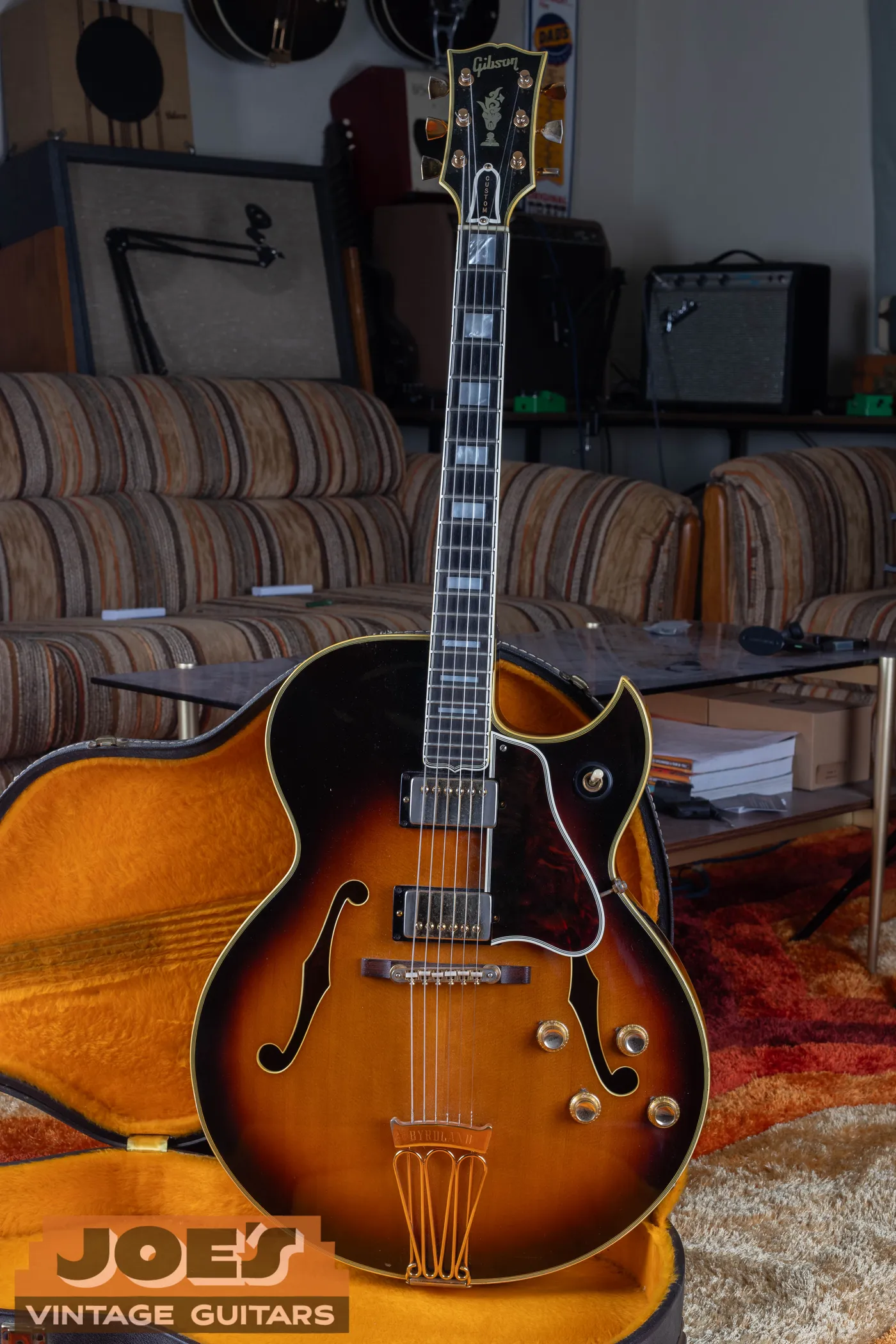
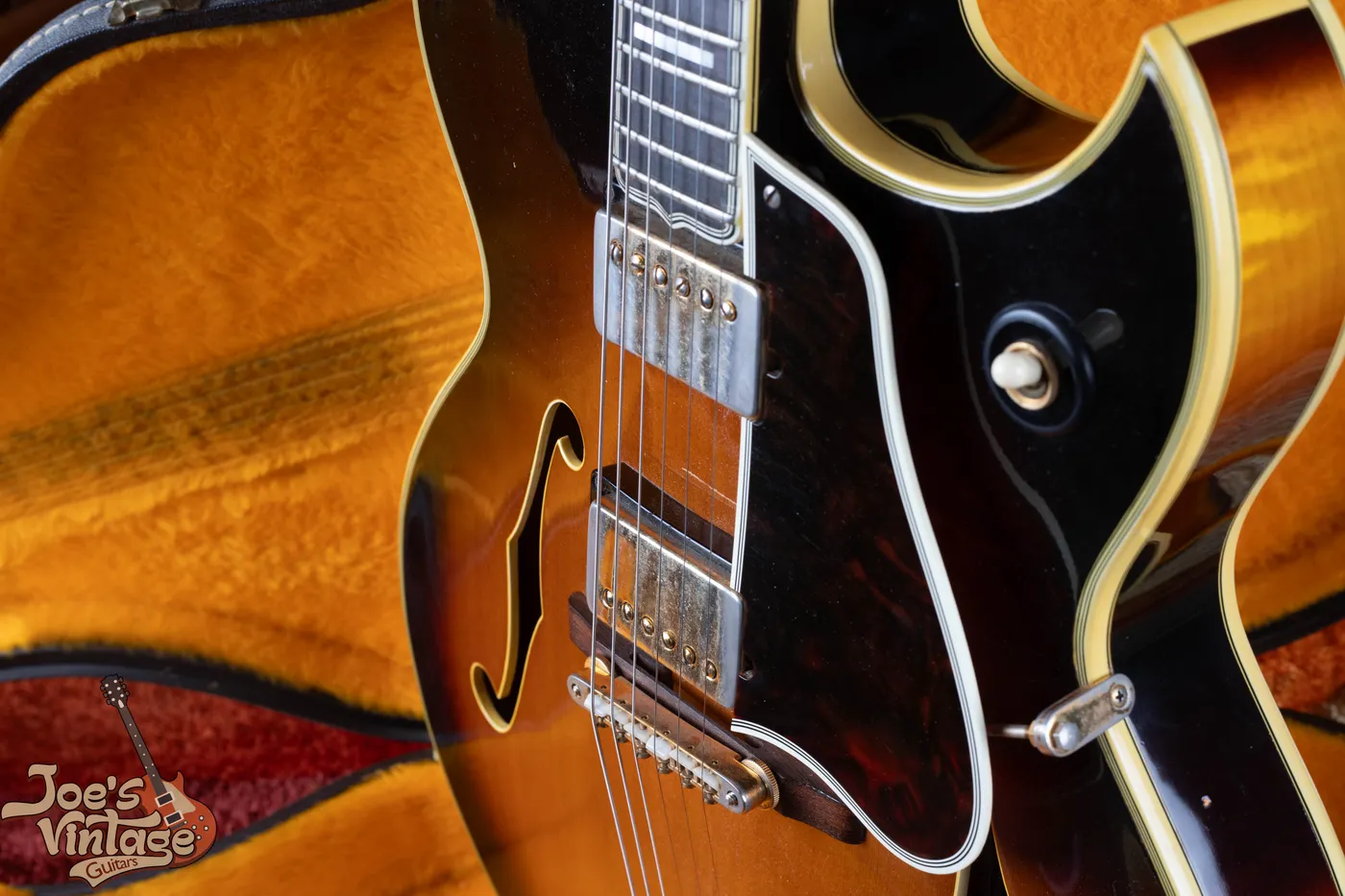
Later Production In Photographs
Later Byrdlands From Joe’s Archive
1970s Gibson Byrdland
Sunburst And A Rounded Cutaway
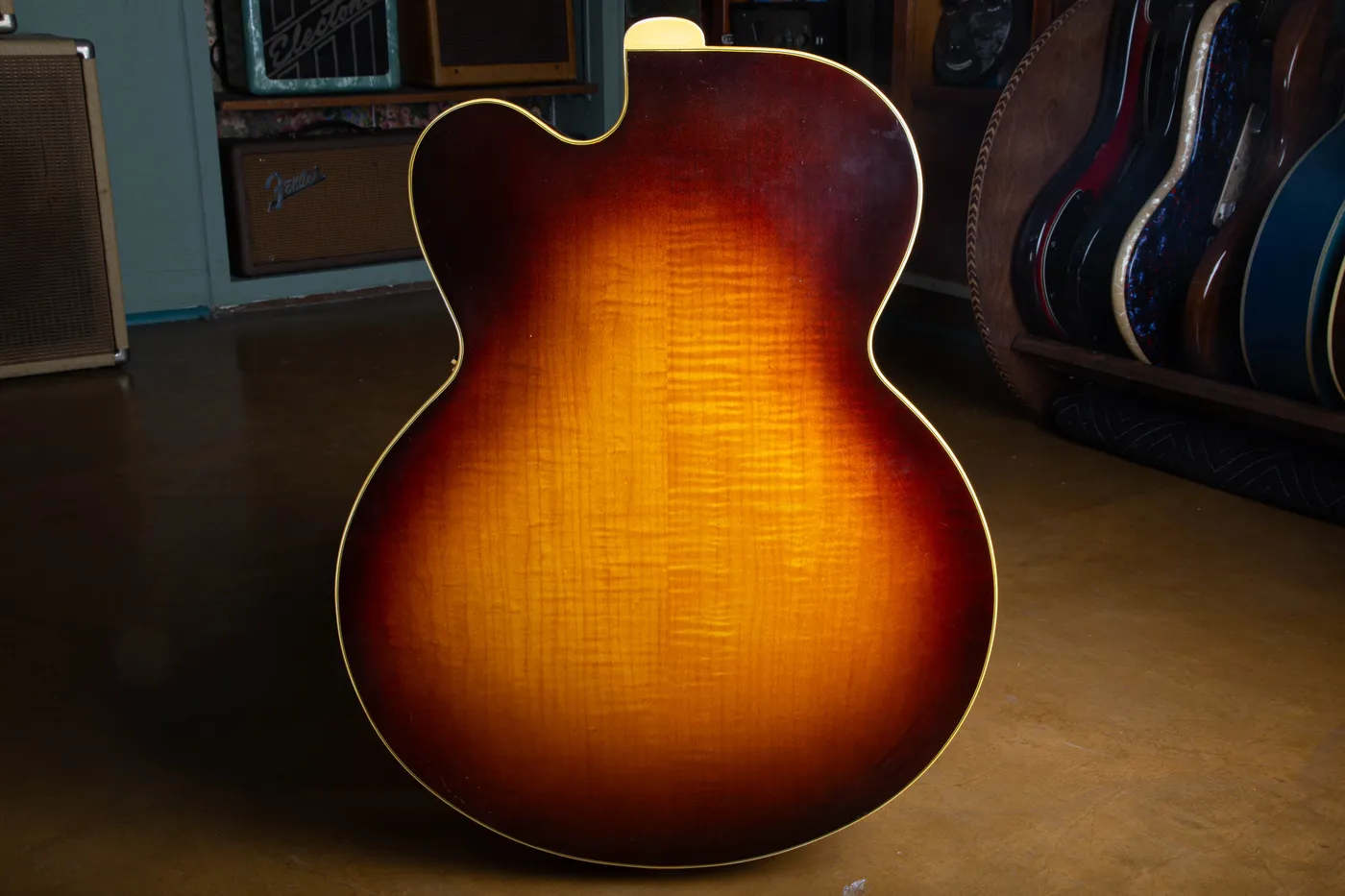
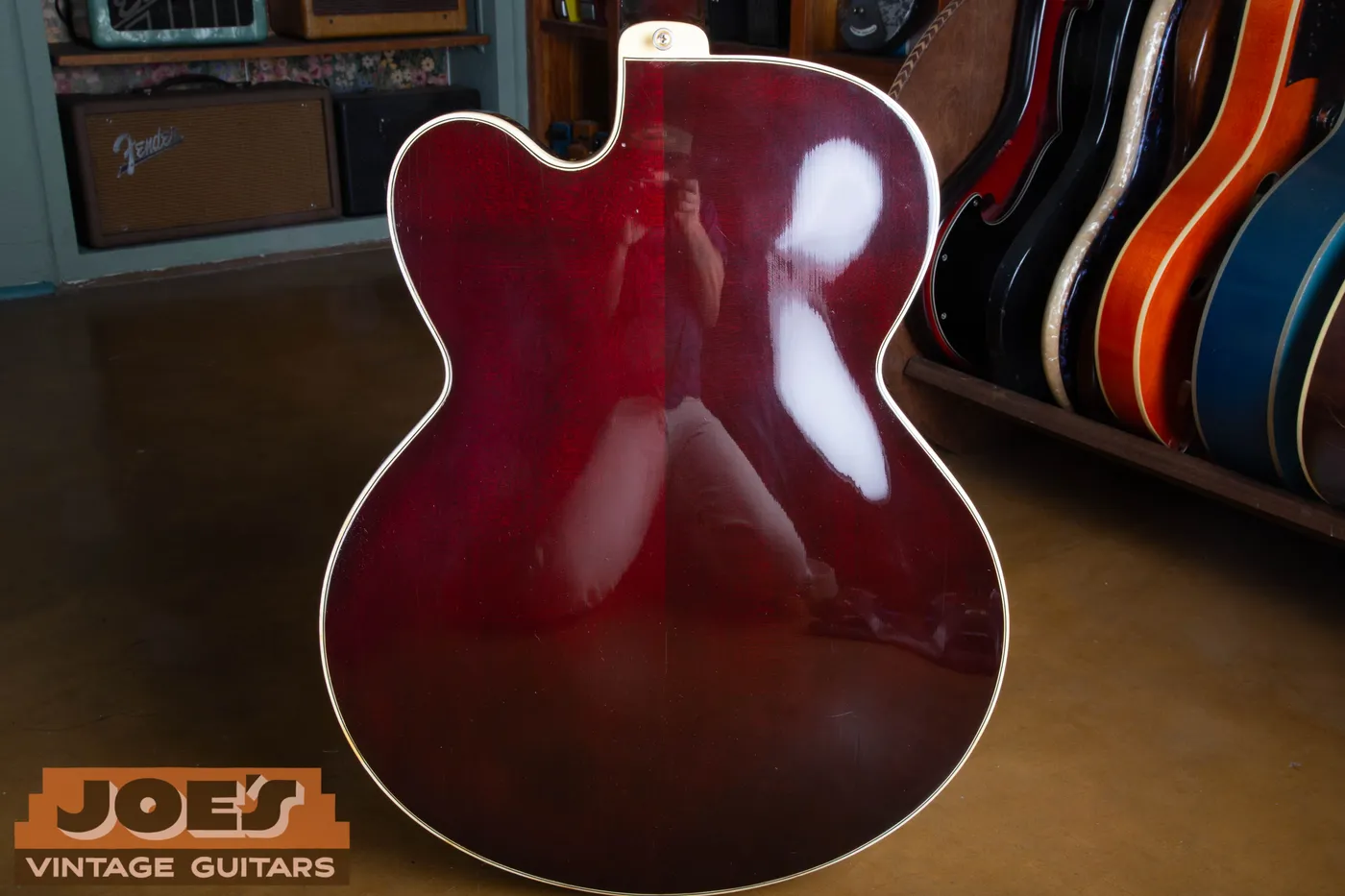
This sunburst Byrdland shows the rounded cutaway, covered pickups and gold hardware of Joe’s 1970s example. The back view records the finish and neck laminations. Its decade-level identification fits the broad later-production price group; an appraisal still needs the individual guitar’s date and condition.
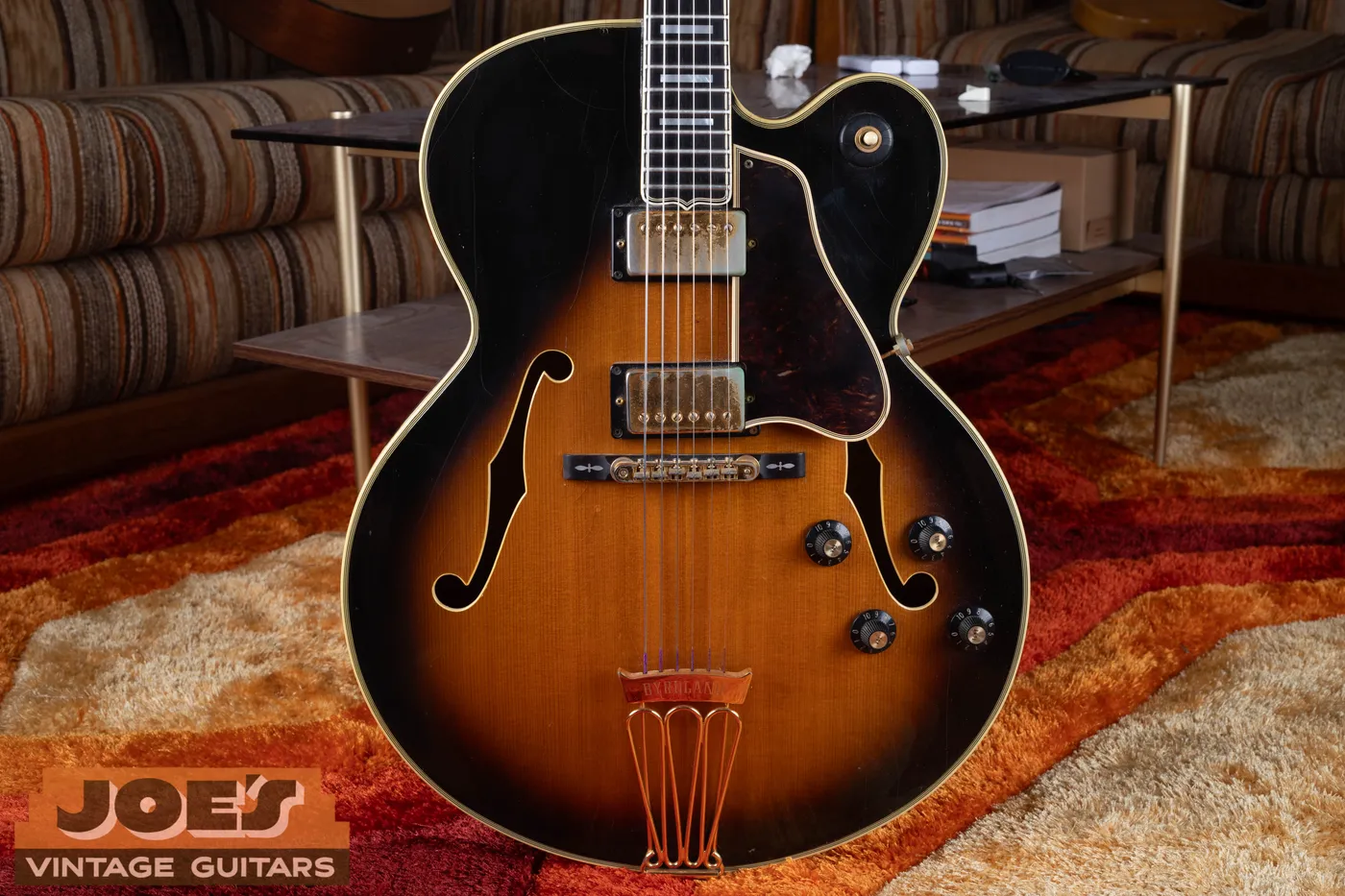
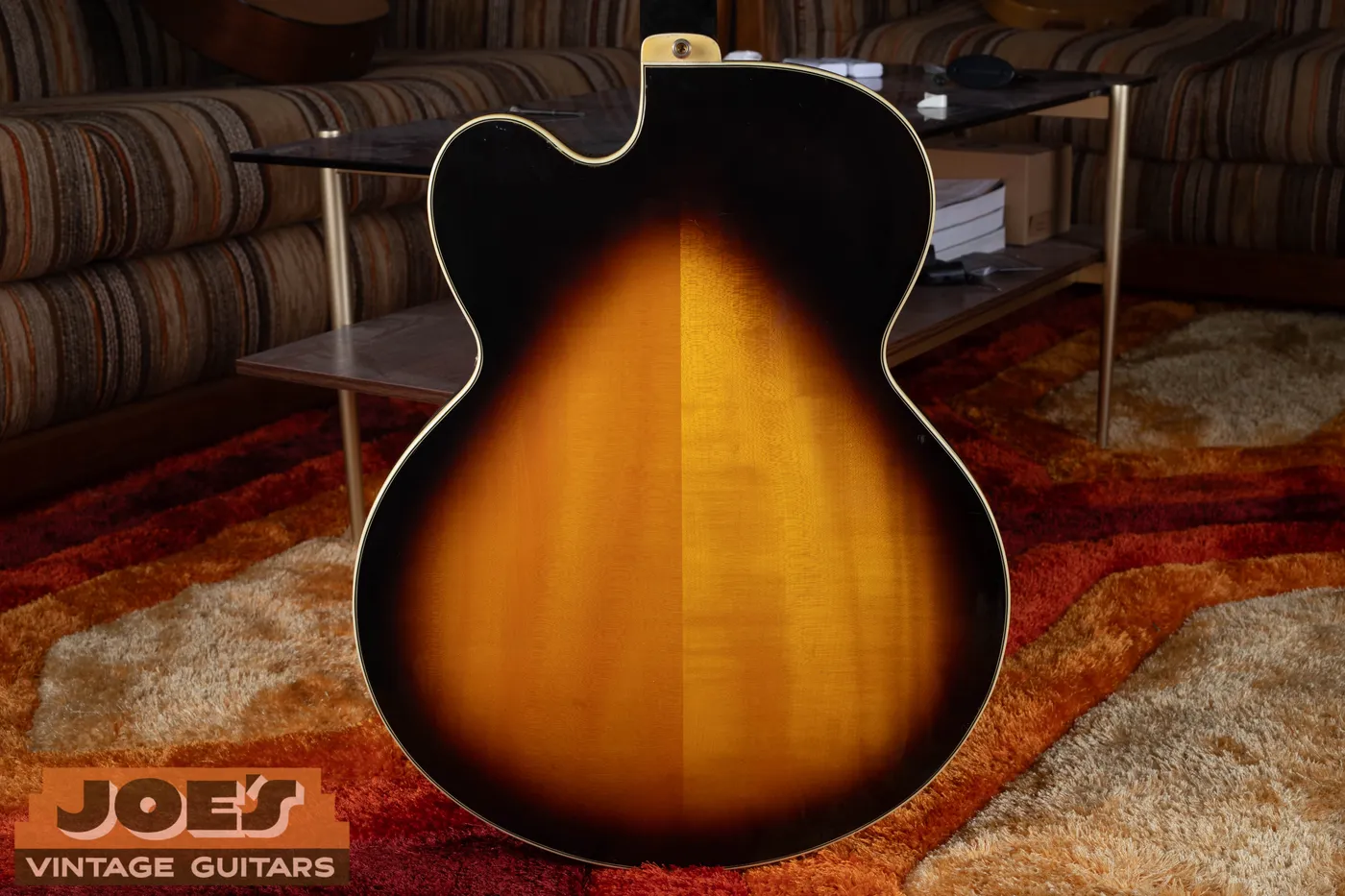
1974 Gibson Byrdland
Wine Red And Gold Hardware
The archive example has a wine-red finish, two covered pickups and gold hardware. The full front establishes the model’s outline, while the back photograph records the figured wood and binding. Its relevant broad later-production estimate is $4,000 to $5,350 before an individual condition assessment.
The photographs illustrate a configuration rather than a sale result. A similar color on another guitar doesn’t establish the same condition, originality or manufacturing date. Send the other instrument’s own pictures and history when requesting a value.
Describe What Remains With The Guitar
Original Byrdland Hardware And Completeness
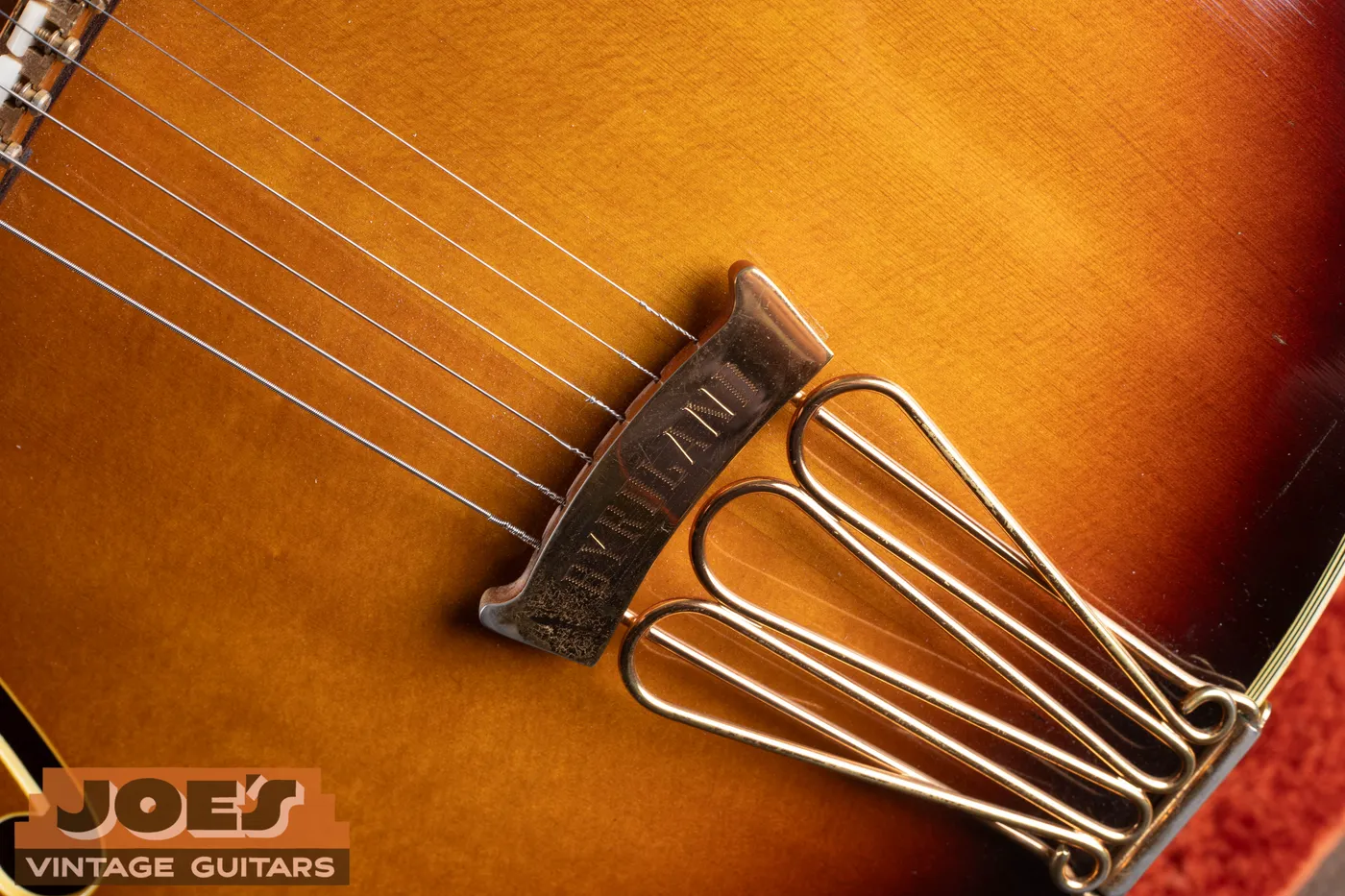
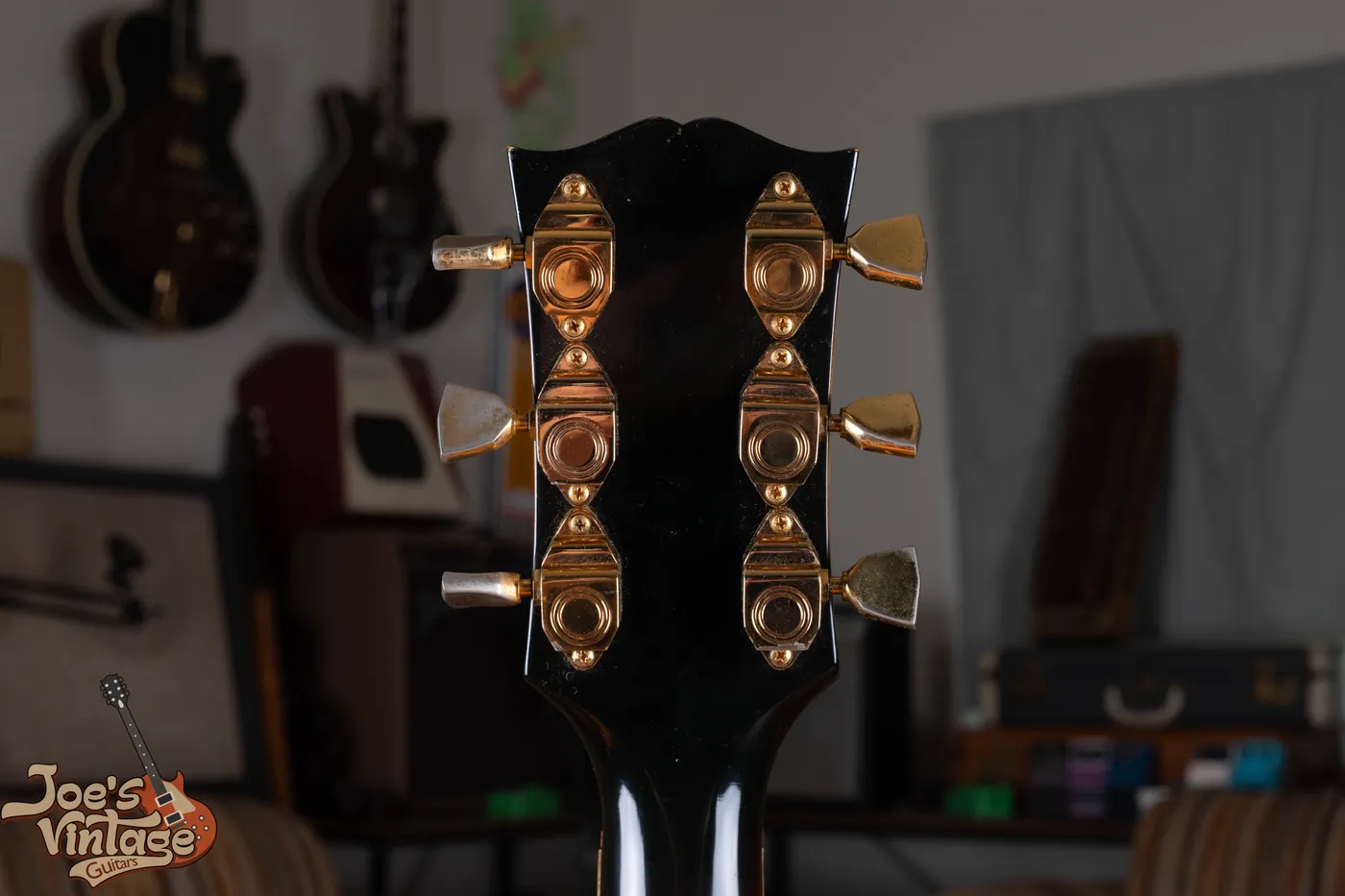
The engraved tailpiece, tuners, guard and bridge are part of the instrument’s completeness. Photograph them in place, then list any known replacements. A substitute may serve a player well while changing the collector comparison. Retain removed pieces and label them so they don’t become separated from the guitar.
Gold plating can show wear from handling. Wear alone should not be confused with replacement, and freshly plated hardware needs its own description. Avoid polishing or replating parts before an appraisal simply to make them appear newer in the photographs.
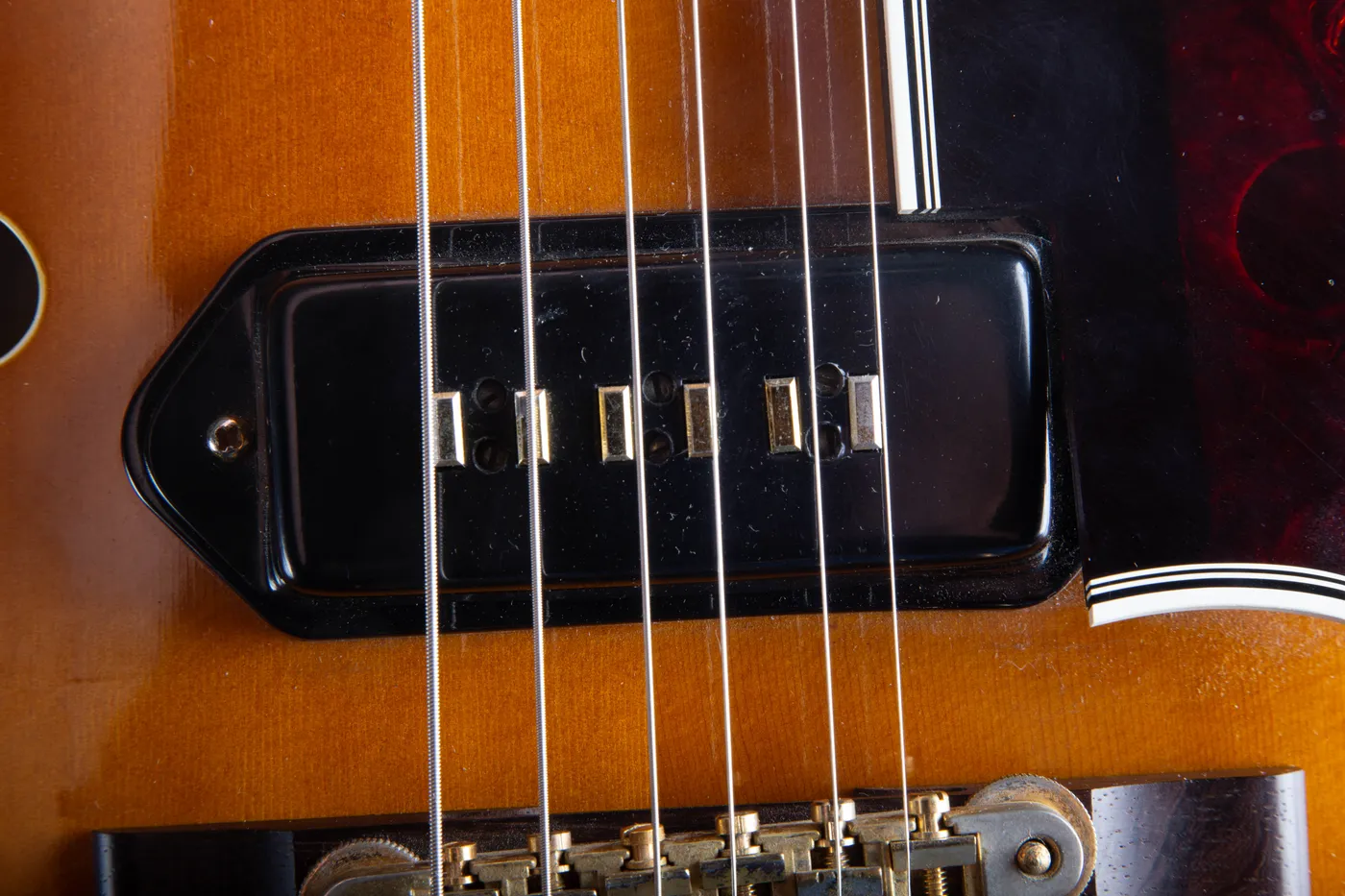
Model-specific pickup details also deserve attention. A replacement that physically fits may differ from the expected Byrdland component. Use the Byrdland identification reference to organize those questions, and supply existing service photographs when they show hidden construction.
Replacement cost isn’t the same as a guaranteed increase in resale value. Buying an expensive period tailpiece or pickup may not recover its full cost, especially if the guitar has other substantial alterations. Discuss the present instrument before investing in parts for a planned sale.
Assess Structural And Cosmetic Changes Together
How Repairs And Finish Work Affect A Byrdland
Headstock And Neck Repairs
Show the entire rear neck and closer views of the repair. Include any invoice explaining reinforcement and finish work. The quality of the repair and the condition elsewhere need individual assessment; one fixed deduction can’t describe every repaired Byrdland.
Top, Back And Binding
Photograph repaired cracks, open seams and binding work. A clean-looking front can leave back or rim repairs out of view. Include a wide view of each affected panel before the close-up.
Bridge Geometry And Frets
Record the bridge height, string clearance and fret wear. Report playing concerns plainly. An in-hand examination can determine whether the issue is a routine setup, fret work or a more substantial structural question.
For finish changes, consult the refinish value guide and describe the scope. A natural-finish row assumes a factory-natural guitar, rather than a sunburst stripped during restoration. Local touch-up, overspray and a full refinish need separate explanations.
The condition guide helps organize several issues without counting the same repair twice. A headstock repair and its associated touch-up are connected findings. The appraisal should describe the complete result and the work, if any, still needed.
Keep The Evidence And Case Together
Prepare A Byrdland For Joe’s Review
Begin with the full front and back, both headstock faces, label and serial. Add pickup, tailpiece, tuner and bridge photographs. If a number is faint, send more than one lighting angle rather than tracing it. Older photographs and repair records can explain changes that the current exterior can’t.
The case is part of the table’s stated condition. Photograph its interior fit, handle and latches, and say whether it’s original, later or unknown. A replacement case may still protect the guitar, but Joe needs to know the fit before discussing packing and shipment.
For an inherited Byrdland, keep purchase records and earlier photographs with the instrument. A family story can be useful context when its source is identified. A claimed artist connection or unusual factory order needs documentation before it changes the appraisal.
Read whether restoration makes sense before selling before ordering finish or hardware work. Joe can start with a free appraisal of the guitar as it stands and discuss a direct sale through the Gibson selling page.
Send The Evidence
Get A Gibson Byrdland Appraisal
Send the date evidence, pickup configuration, condition photographs and case details. Include your location and any known repairs.
Questions AboutGibson Values
What Is A 1974 Gibson Byrdland Worth?
Do Original PAFs Affect Byrdland Value?
Should I Replate Worn Gold Hardware Before Selling?
The Last Word
A Value For Your Guitar
Use the verified period, finish and pickup configuration to choose a Byrdland comparison. Return to the Byrdland authentication guide for unresolved details, then send Joe the complete condition record.
This Is An Estimate Of Market Value, Not An Offer To Buy And Not A Guarantee. Market Values Fluctuate; Have Your Specific Item Appraised.