

Gibson Barney Kessel Prices · Regular And Custom
Gibson Barney Kessel Value Guide
A Kessel’s trim determines the year row you’ll use. First-year guitars with PAFs bring a premium; repairs and evidence of a removed Bigsby change the clean-condition estimate.
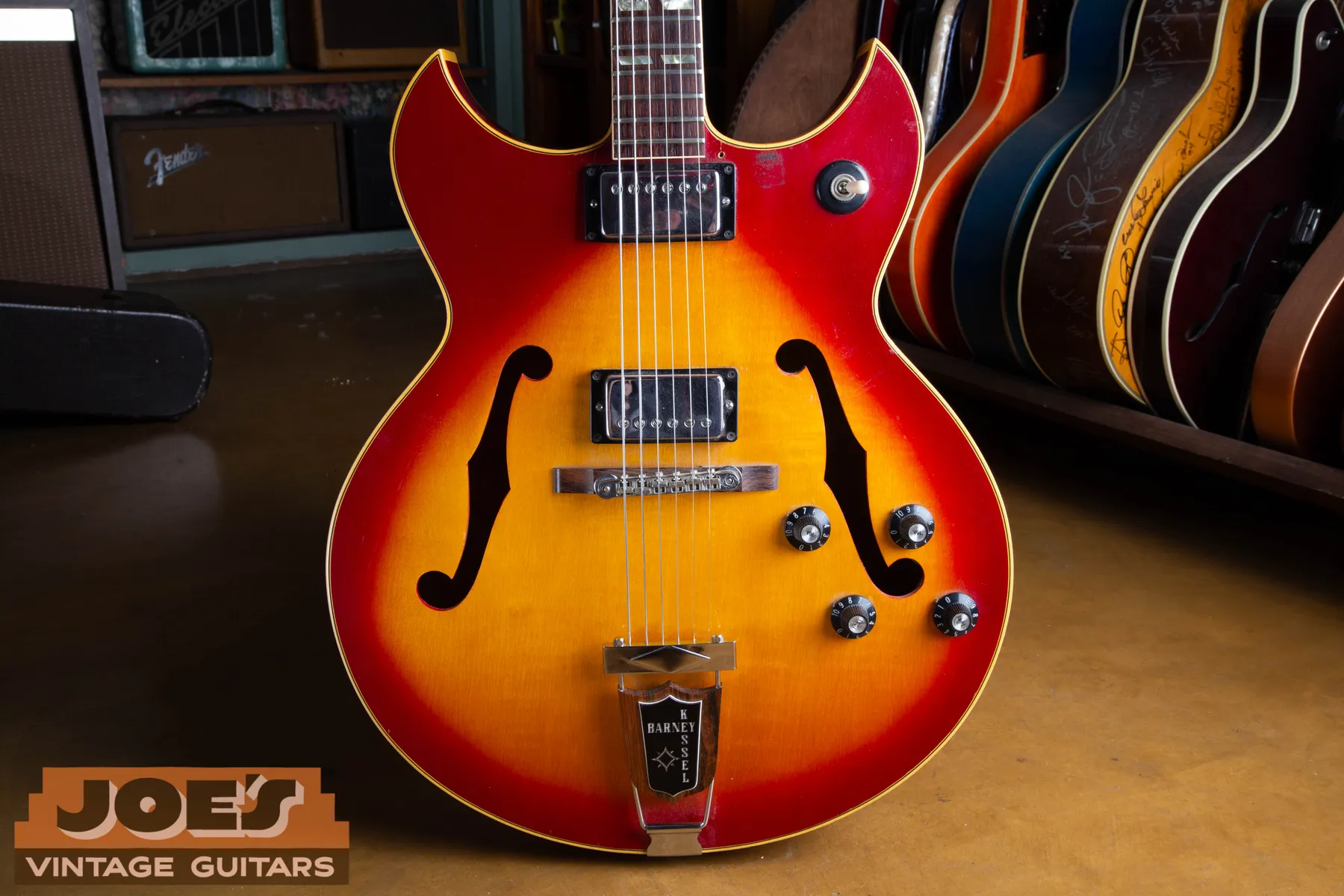
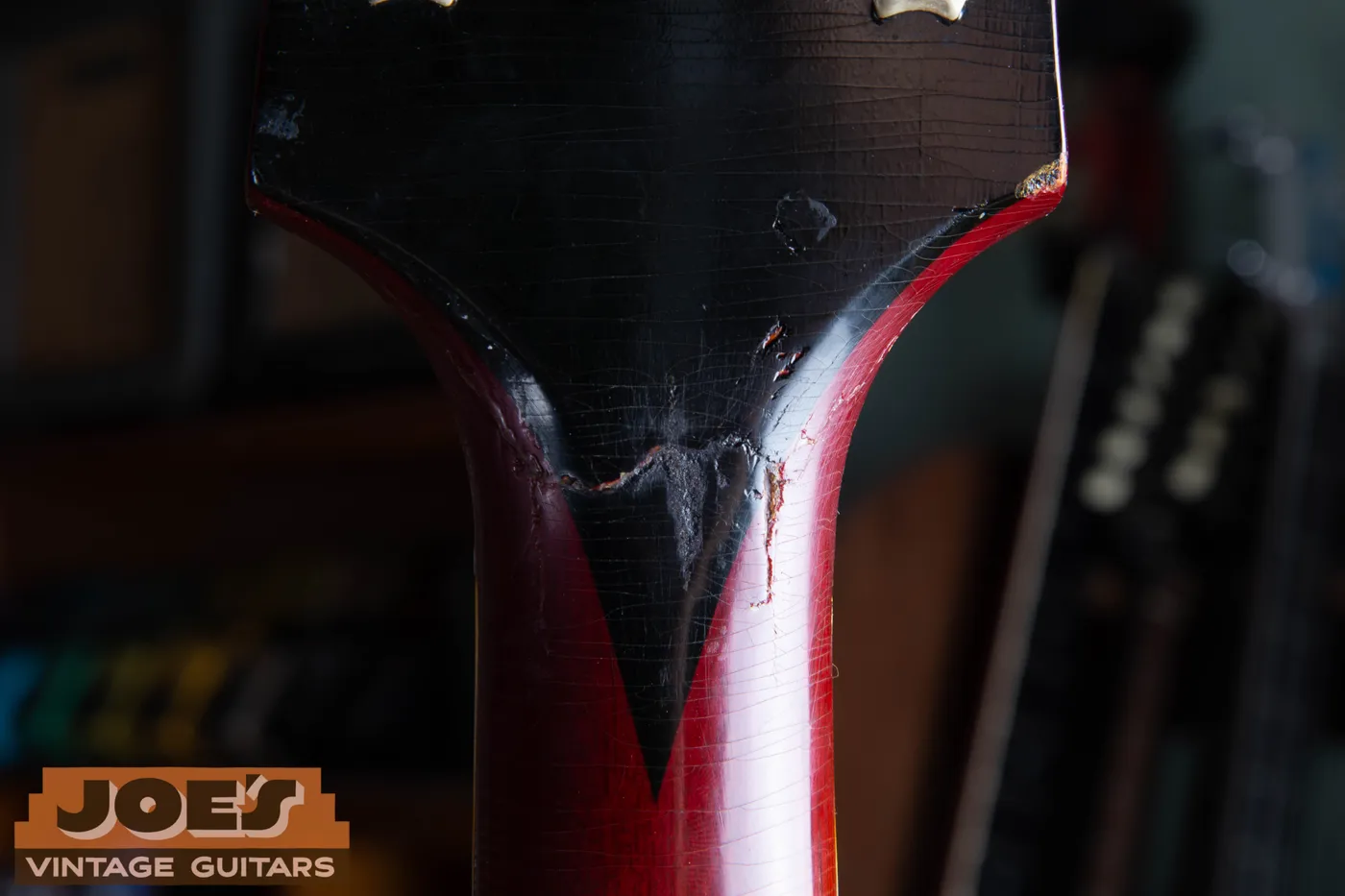
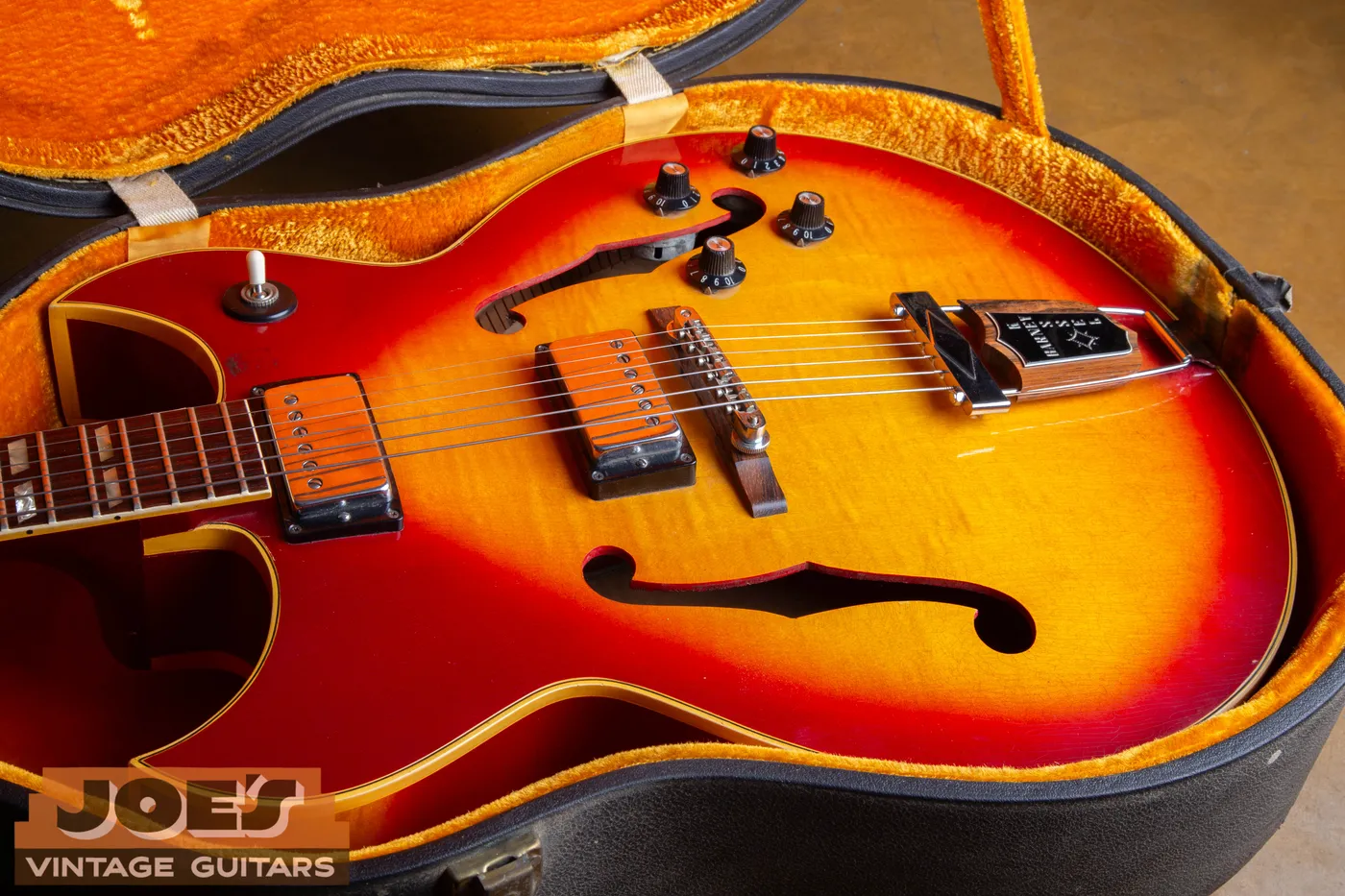
For an excellent, completely original Kessel with its original case, the estimates are $8,000 to $10,650 for a 1961 Custom carrying its factory PAF humbuckers and $3,550 to $4,600 for a Regular from 1966 to 1969. Gibson offered both trims starting in 1961 and continued into the early 1970s. Those first-year PAF examples command much more than later production. You can see a repaired example below: Joe’s 1967 retains its factory pickups and hardware despite an old headstock break. Establish your trim with the guide to identifying a Barney Kessel if you’re unsure.
This Is An Estimate Of Market Value, Not An Offer To Buy And Not A Guarantee. Market Values Fluctuate; Have Your Specific Item Appraised.
Excellent Original Guitars With The Original Case
Barney Kessel Values By Year And Trim
| Model | Pricing Year Group | Configuration | Estimated Value |
|---|---|---|---|
| Barney Kessel Custom | 1961 | PAF humbuckers; gold hardware | $8,000 to $10,650 |
| Barney Kessel Custom | 1962 | Patent Number humbuckers; gold hardware | $4,400 to $5,700 |
| Barney Kessel Custom | 1963 to 1964 | Gold hardware | $4,400 to $5,700 |
| Barney Kessel Custom | 1965 | Gold hardware | $4,000 to $5,300 |
| Barney Kessel Custom | 1966 to 1969 | Gold hardware | $3,750 to $4,800 |
| Barney Kessel Custom | 1970 to 1973 | Gold hardware | $2,750 to $3,600 |
| Barney Kessel Regular | 1961 | PAF humbuckers; nickel hardware | $7,300 to $9,450 |
| Barney Kessel Regular | 1962 | Patent Number humbuckers; nickel hardware | $4,200 to $5,700 |
| Barney Kessel Regular | 1963 to 1964 | Nickel hardware | $4,200 to $5,700 |
| Barney Kessel Regular | 1965 | Nickel or chrome hardware | $3,750 to $4,800 |
| Barney Kessel Regular | 1966 to 1969 | Nickel or chrome hardware | $3,550 to $4,600 |
| Barney Kessel Regular | 1970 to 1974 | Nickel or chrome hardware | $2,800 to $3,700 |
U.S. dollars. These November 2026 retail market estimates assume excellent, original condition and the original case where applicable. An individual sale can fall outside the range; these figures are not purchase offers. Repairs, changed parts and market conditions require an individual appraisal.
Choose Regular or Custom before looking up the year. Both have a row in each group, and the 2026 price guide specifies cherry sunburst for both. Its hardware descriptions are nickel plating for the Regular and gold plating for the Custom. For example, the 1963 to 1964 estimates are $4,200 to $5,700 for the Regular and $4,400 to $5,700 for the Custom.
The chart gives retail estimates as of November 2026, based on excellent condition, entirely original parts and the original case. An actual purchase offer requires a separate assessment. A past Bigsby fitting, replacement pickups, refinishing or a repaired break calls for an individual inspection.
PAF Pickups And A Short First Year
What Puts A 1961 Kessel In Its Own Price Group
The guide reserves its PAF designation for the 1961 rows. Compare a Custom’s $8,000 to $10,650 estimate for 1961 with $4,400 to $5,700 for 1962. For a Regular, the corresponding estimates are $7,300 to $9,450 and $4,200 to $5,700. The later year is lower in both trims.
Production was small at the start. Joe’s shipping-ledger page records 43 Regulars alongside 19 Customs in 1961. Across the complete run, the totals reach 1,117 Regulars and 740 Customs.
The pickup assumption accounts for most of the price difference. As the guide to Gibson PAF and Patent Number pickups explains, PAF decals span late 1957 through late 1962. Many guitars shipped with them during 1962, although the price rows for that year assume patent number pickups. Documented factory PAFs on a 1962 Kessel call for a separate valuation.
A 1961 date won’t recover the PAF premium after those pickups have been replaced. Establish the pickup type before relying on the year. If earlier servicing exposed their backs, use photographs from that work. Keep a vintage hollowbody assembled when the only reason to open it would be reading a decal.
Gold Hardware Against Nickel
How Much The Custom Trim Adds
1962 To 1965
Only a few hundred dollars separate the trims here. For 1962, compare the Regular’s $4,200 to $5,700 with the Custom’s $4,400 to $5,700. For 1965, those estimates are $3,750 to $4,800 and $4,000 to $5,300, respectively.
1966 To 1969
The Regular estimate is $3,550 to $4,600, against $3,750 to $4,800 for the Custom. Late-1960s examples account for most Kessels sellers bring in. Joe’s shipping-ledger page records the peak in 1968, when 361 Kessels shipped.
1970s Guitars
Prices have nearly converged by the 1970s. The Regular ends with a 1970 to 1974 group estimated at $2,800 to $3,700; the Custom’s final group covers 1970 to 1973 at $2,750 to $3,600.
Heavy playing can wear a Custom’s gold off its tailpiece, bridge and pickup covers. That wear remains part of the original instrument. Newer gold replacements change the valuation comparison, as does fitting gold hardware to a Regular. If original parts were removed, keep them with your Kessel.
Original Parts And An Old Headstock Repair
Joe’s 1967 Barney Kessel
1967 Gibson Barney Kessel
A Player-Grade Kessel With Its Original Hardware
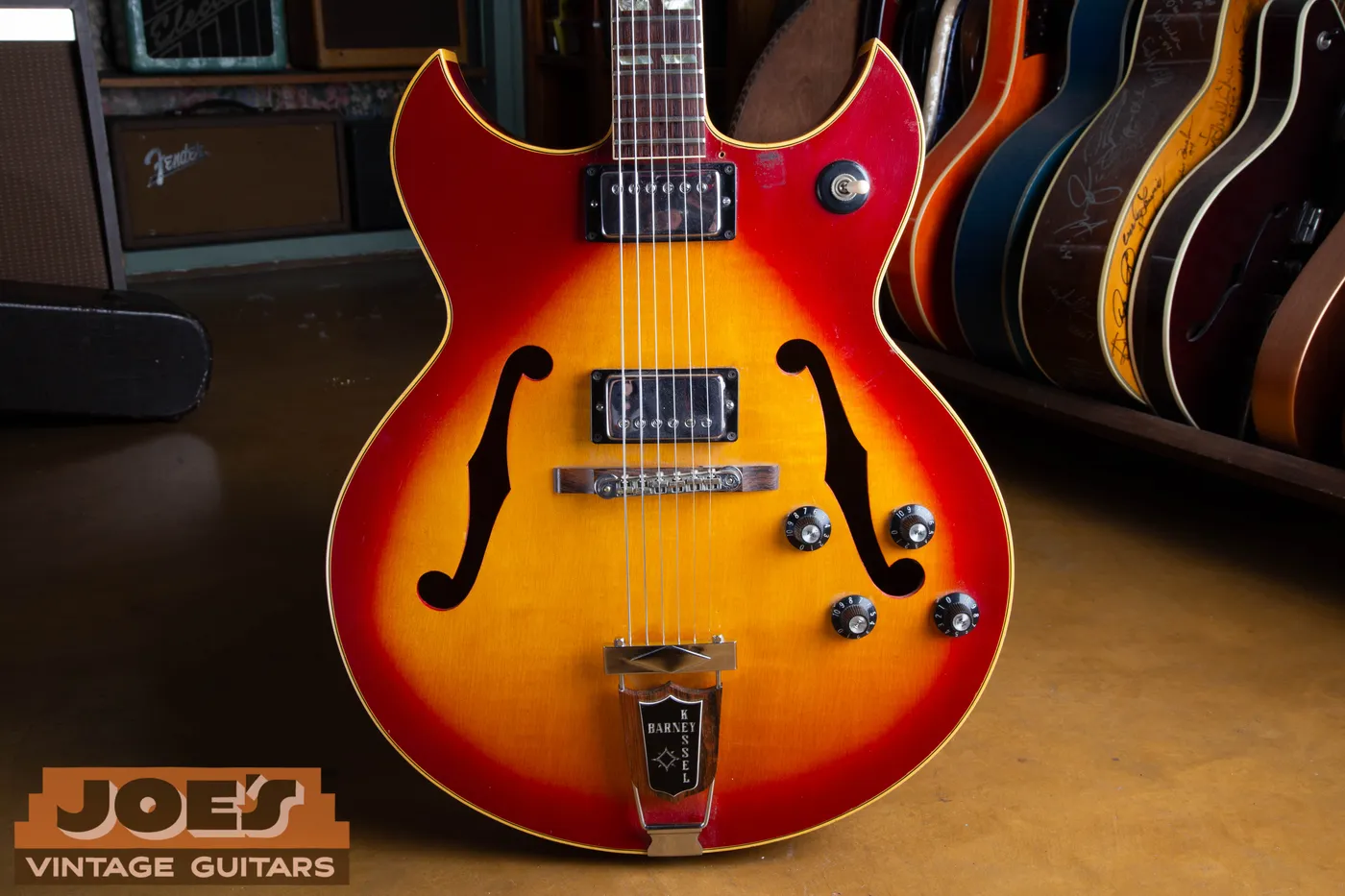
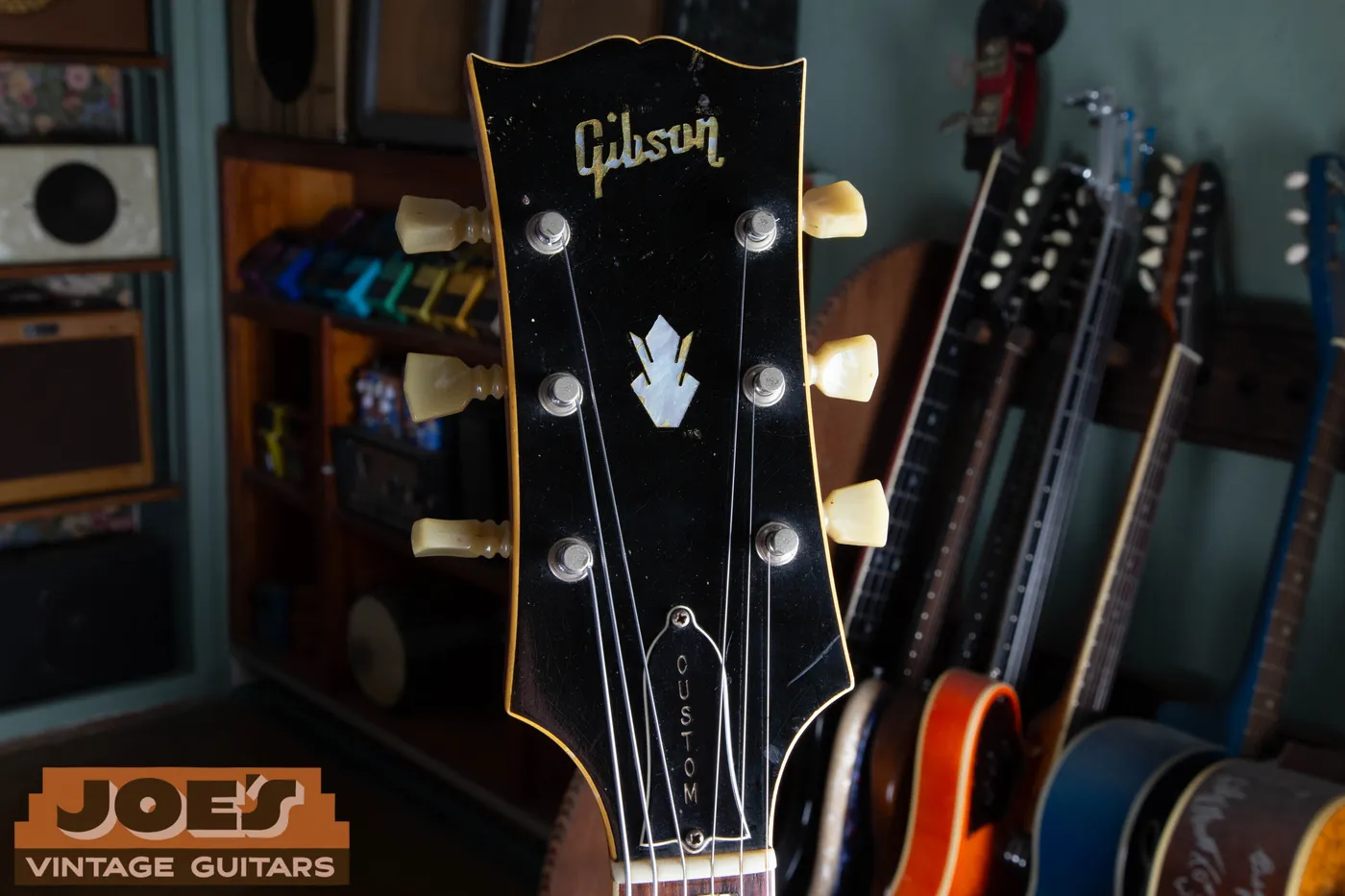
An old headstock repair makes Joe’s 1967 a useful example of a guitar you’d buy to play. It’s cosmetically rough, yet it’s held for years. The neck remains straight and the truss rod adjusts. Its electronics and pickups are original, as are the tuners, tailpiece and bridge. Near the tailpiece, an additional hole suggests an earlier Bigsby installation followed by refitting the stock unit. The guitar also retains the hard case it came with originally.
The repair places this Kessel below an excellent, original example in the chart. Its appearance and stability determine the size of that difference. With the repair documented, a player like this can be a good purchase for someone seeking a 1960s Kessel to play.
What Moves A Kessel Out Of The Chart
Repairs, Bigsby Holes And Replaced Parts
Headstock Breaks
A newly opened crack and a tidy repair that’s stayed stable call for quite different prices. Tell Joe whether the repair has shifted and whether the truss rod adjusts. Use clear lighting for photos behind the nut and along the headstock’s side.
Bigsby And Tailpiece Holes
Include the strap button and tailpiece area in a photograph of the body’s end. Report how many additional holes you find and whether you still have the Bigsby.
Pickups And Controls
List changed knobs, absent pickup rings and solder that appears newer than surrounding joints. Wood removed during a pickup swap affects the assessment differently from a reversible change, as the pickup replacement article explains.
Finish Work
The area sheltered by the guard often keeps a deeper color as cherry sunburst fades unevenly. Bright red that looks the same across the entire body may indicate overspray or refinishing. See the guide to pricing a refinished guitar for the effect on value.
Have the guitar assessed before filling gaps with replacement parts. Doing that work first can give a cared-for player the appearance of a parts guitar. Before spending money, read the advice on restoration before a sale.
Photos And Facts Joe Uses
What To Send For A Kessel Appraisal
Front, Back And Both Cutaways
Use even lighting for full views of the back and front, plus the body’s side. Add a clear headstock-face photo to help establish the trim.
Headstock And Neck Joint
A readable serial, a headstock-back view and a photograph just behind the nut will resolve most questions about dating and repairs. Send all of those views.
Hardware Close-Ups
Document any extra holes alongside close-ups of the knobs, pickups, tailpiece and bridge. Identify the parts you already know have been replaced.
Case And Paperwork
A case from the right period adds value to the estimate. Photograph yours and send any receipts you’ve kept.
Send The Evidence
Get A Value For Your Barney Kessel
Send the photos above and anything you know about the guitar’s history. Joe can tell you which row it fits and what its condition does to the number.
Questions AboutGibson Values
What Is A 1967 Gibson Barney Kessel Worth?
Why Is A 1961 Kessel Worth So Much More Than A 1962?
Is The Custom Always Worth More Than The Regular?
The Last Word
A Value For Your Guitar
Work through trim, pickup type and year in that order. For unresolved questions about appointments or parts, consult the Barney Kessel identification page.
This Is An Estimate Of Market Value, Not An Offer To Buy And Not A Guarantee. Market Values Fluctuate; Have Your Specific Item Appraised.