

Gibson Barney Kessel Identification · Regular And Custom
Gibson Barney Kessel Authentication Guide
Start with the fingerboard and peghead inlays, then compare tuners and plating to identify the trim. Nut width, pickups and the serial’s format help establish its date.
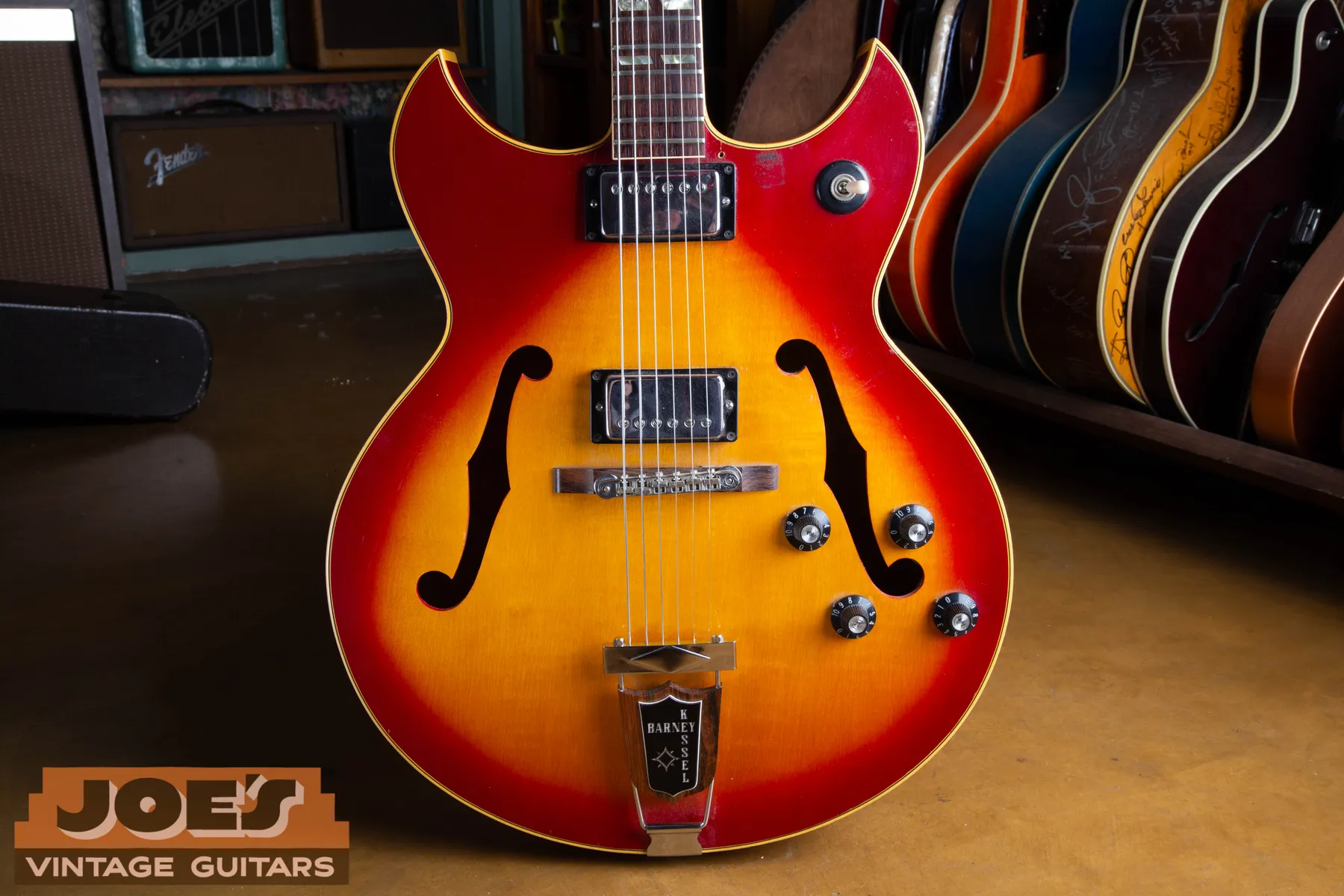
Gibson launched the Regular and Custom together in 1961, listing cherry sunburst as their catalog finish. Each Barney Kessel has a full-depth, 17-inch body, paired humbuckers and pointed Florentine horns at both cutaways. To distinguish the trims, compare their fingerboard inlays, headstock decoration, hardware plating and tuners. Joe’s 1967 example below carries Regular appointments. Once you’ve identified the trim, use the pickups, hardware and serial to establish a year. Those details let you choose a row in the Kessel price guide.
Authenticity And Originality Are Assessed From The Information Provided. A Hands-On Inspection Can Change The Conclusion.
Inlays, Ornament, Plating And Tuners
Regular Or Custom: The Trim Differences
| Feature | Regular | Custom |
|---|---|---|
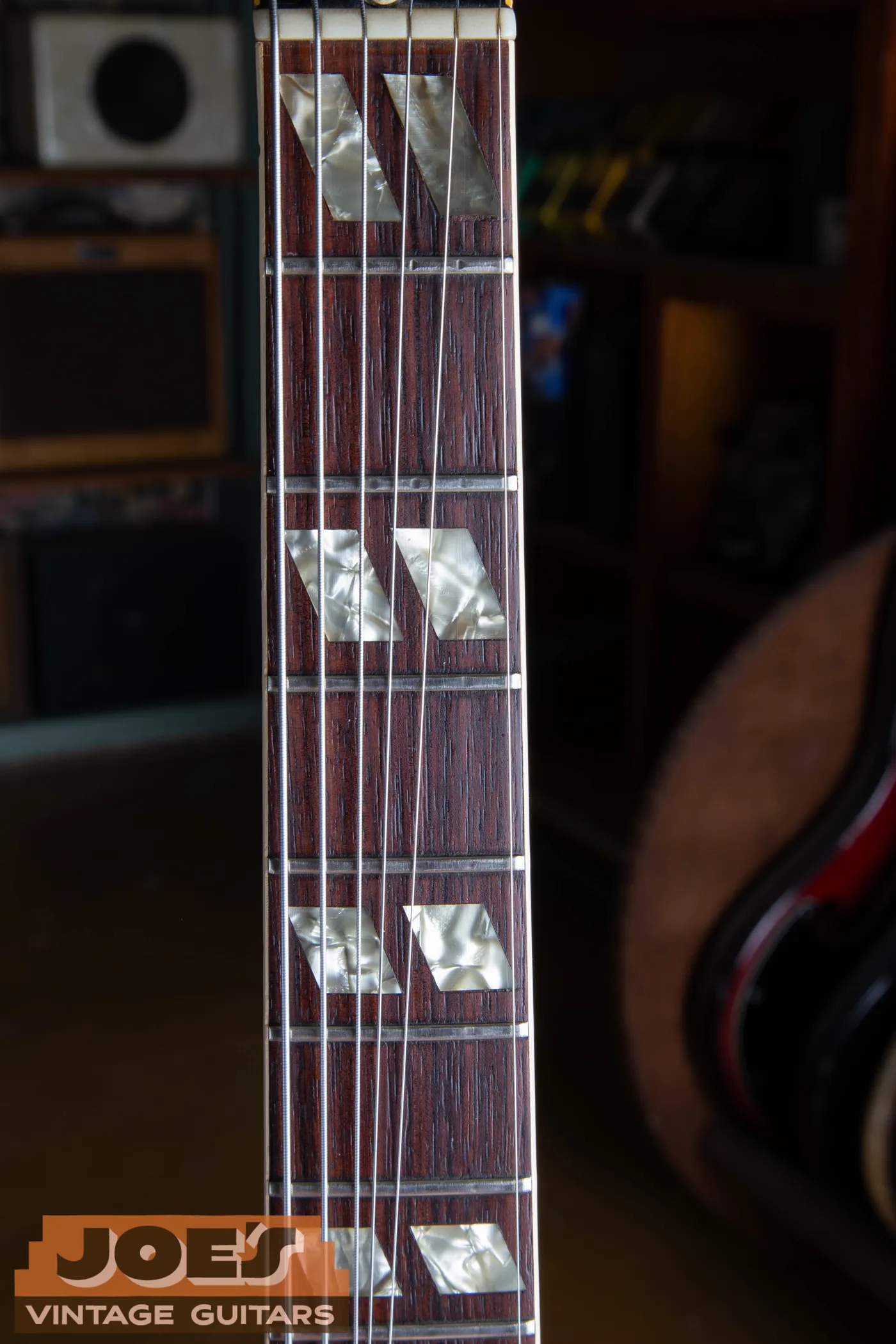
| Fingerboard inlays | Pearl double parallelograms | Pearl bowties |
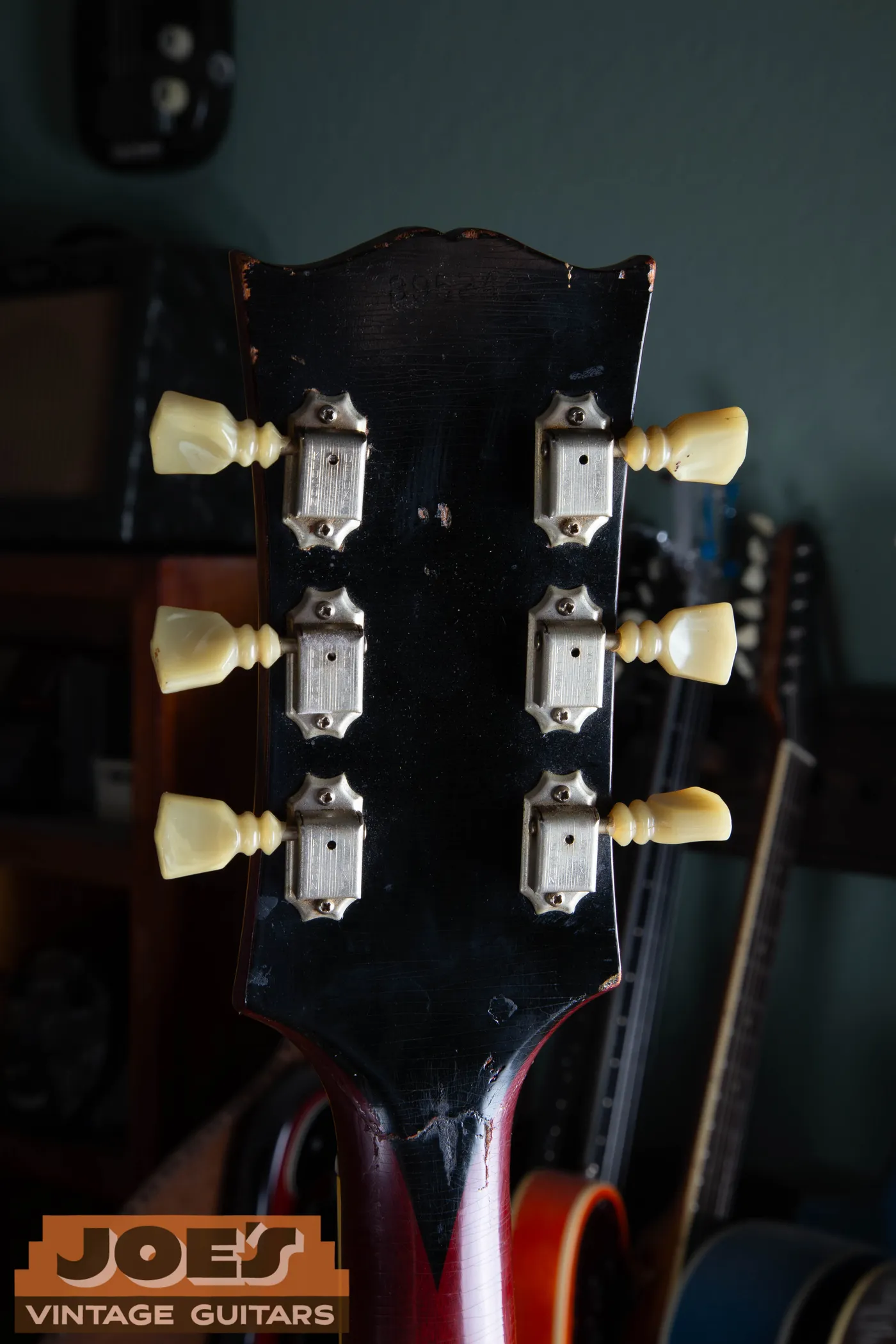
| Peghead inlay | Pearl crown (some dealers call it a thistle) | Pearl musical note |
| Hardware plating | Nickel; chrome on later guitars | Gold |
| Tuners | Kluson | Grover Rotomatic |
| Neck wood | Mahogany | Maple with mahogany strips |
| Truss rod cover | Not a reliable trim check | Marked Custom |
Changing the headstock ornament requires replacing the overlay; changing fingerboard inlays requires replacing the board. Both leave evidence, which makes these useful starting points for trim identification. Follow them with the plating and tuners. Over years of repair, a Custom may lose its gold fittings, while a Regular may gain them.
Sources describe the Regular bridge differently, with both an entirely rosewood version and a Tune-o-matic over a rosewood base reported. The latter is fitted to Joe’s 1967 Regular. A rosewood base also supports the Custom’s Tune-o-matic.
Factory special orders complicate a simple parts comparison. Paperwork documents a 1967 Custom ordered with a Bigsby, chrome fittings and further options. You’ll need comparable records to establish an odd feature as factory work. Inspect it before deciding it must be a later modification.
Width, Cutaways, Scale And Nut
The Body And Neck Both Trims Share
Body
Check the actual wood construction: most Kessels use laminates for the sides, back and top. Gibson’s 1970 catalog describes carved spruce on top, and reports identify solid tops on some examples from the mid-1960s. That catalog gives a triple-bound body measuring 21 inches long, 17 inches across and 3 inches deep.
Cutaways
Sharp points at both horns identify the Florentine cutaways. Often called Gibson’s first double-cutaway, full-depth archtop, the Kessel shares its pointed silhouette with the full-depth Trini Lopez Deluxe. The Standard version of the Trini Lopez has a thin body and rounded horns. Check body depth at the rim.
Neck And Headstock
A large headstock follows the Super 400 outline, while the bound rosewood board carries 20 frets over a 25½-inch scale. Early nuts measure about 1 11/16 inches. Width fell to about 1 9/16 inches during 1965, leaving either measurement possible for that year.
Set calipers across the nut’s top at its meeting point with the fingerboard, then take a photo with them in position. A claimed 1968 with the wide nut or a claimed 1962 with the narrow one needs its date or neck checked again.
Compare a side photograph of the heel as well. Early examples have a long heel; after about 1965 it became shorter. An isolated mismatch proves little. If two or three features conflict with the stated year, arrange an inspection in person.
A Regular With Its Original Hardware
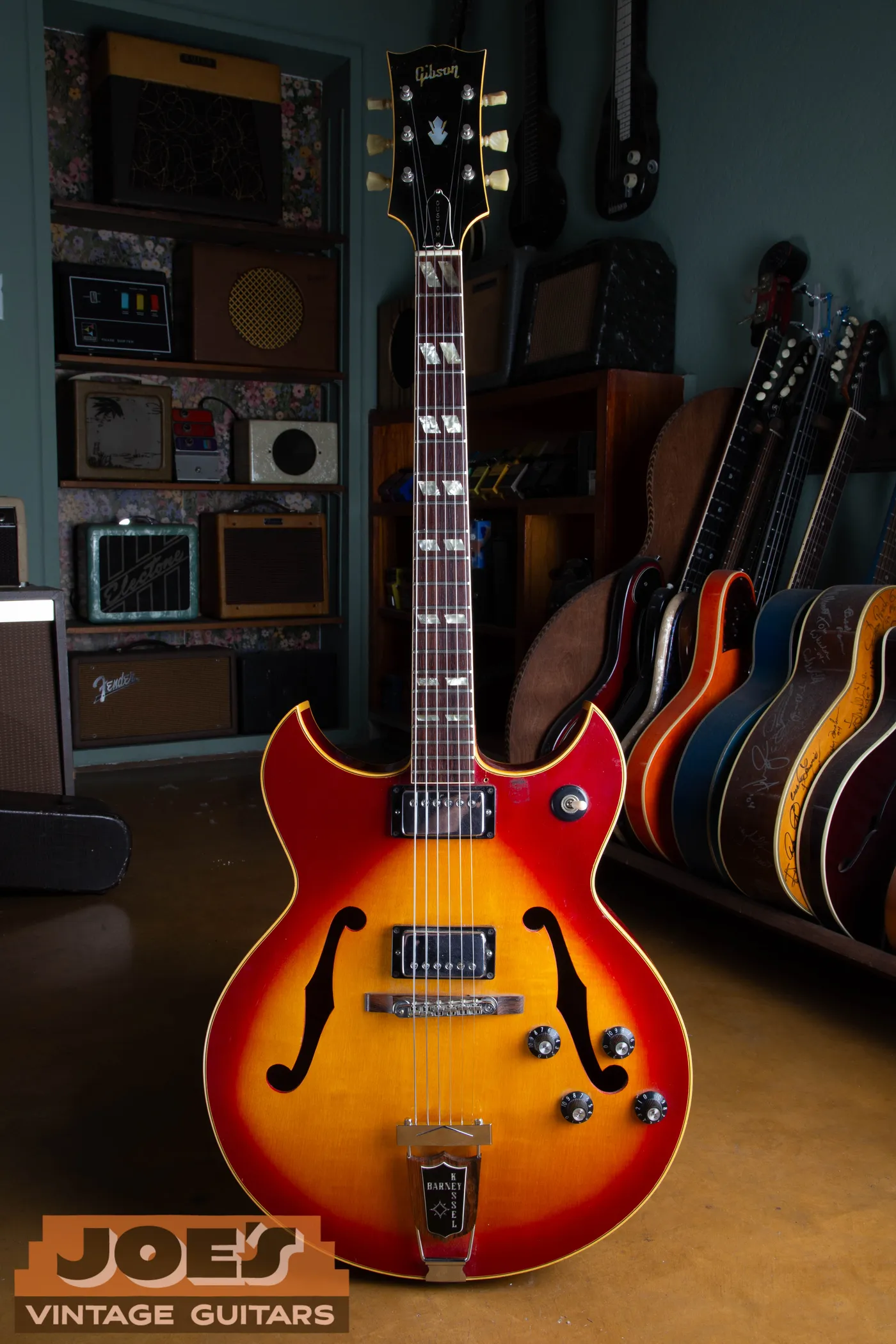
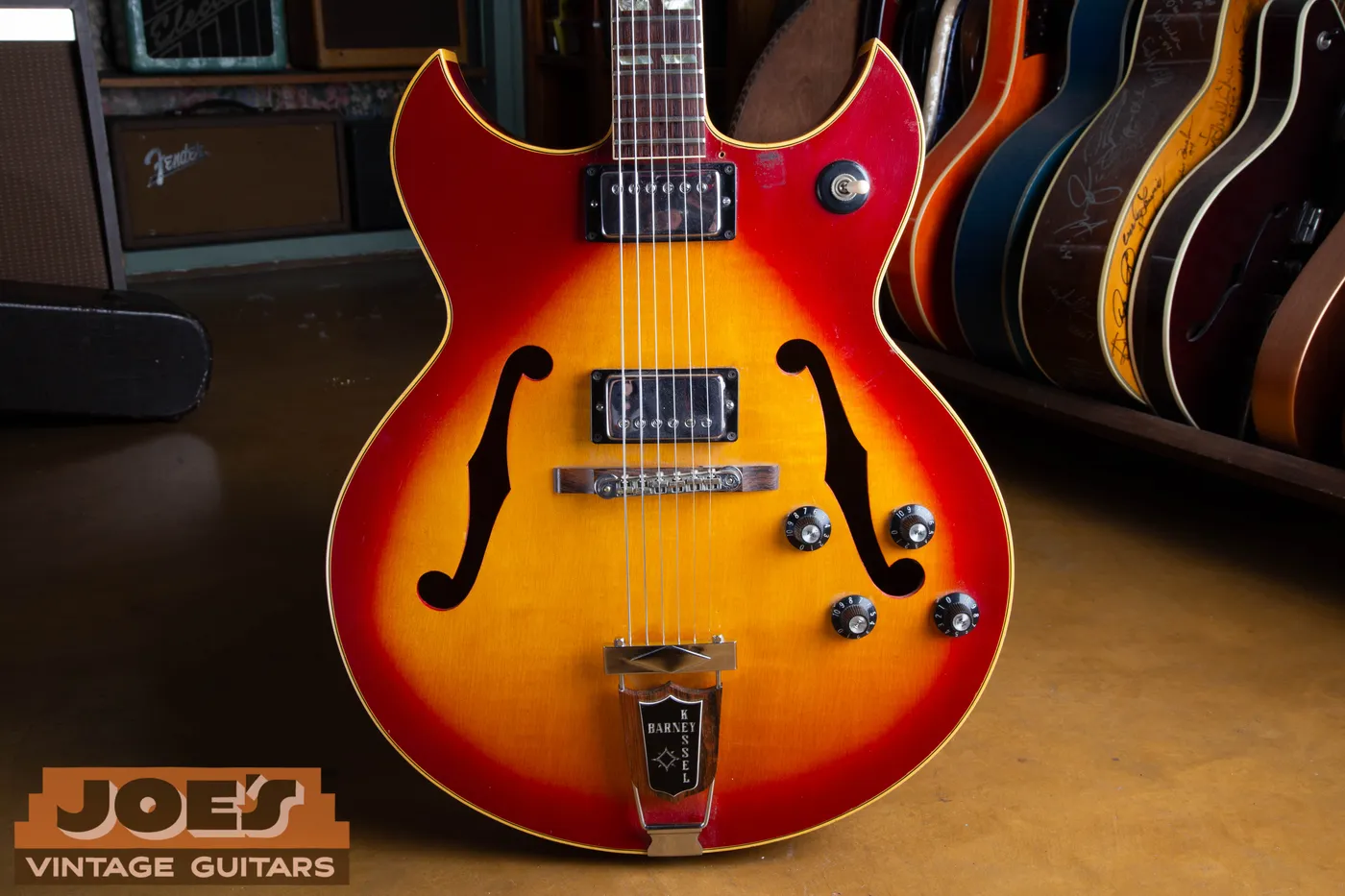
Joe’s 1967 Barney Kessel
1967 Gibson Barney Kessel
Regular Appointments Under A Custom Cover
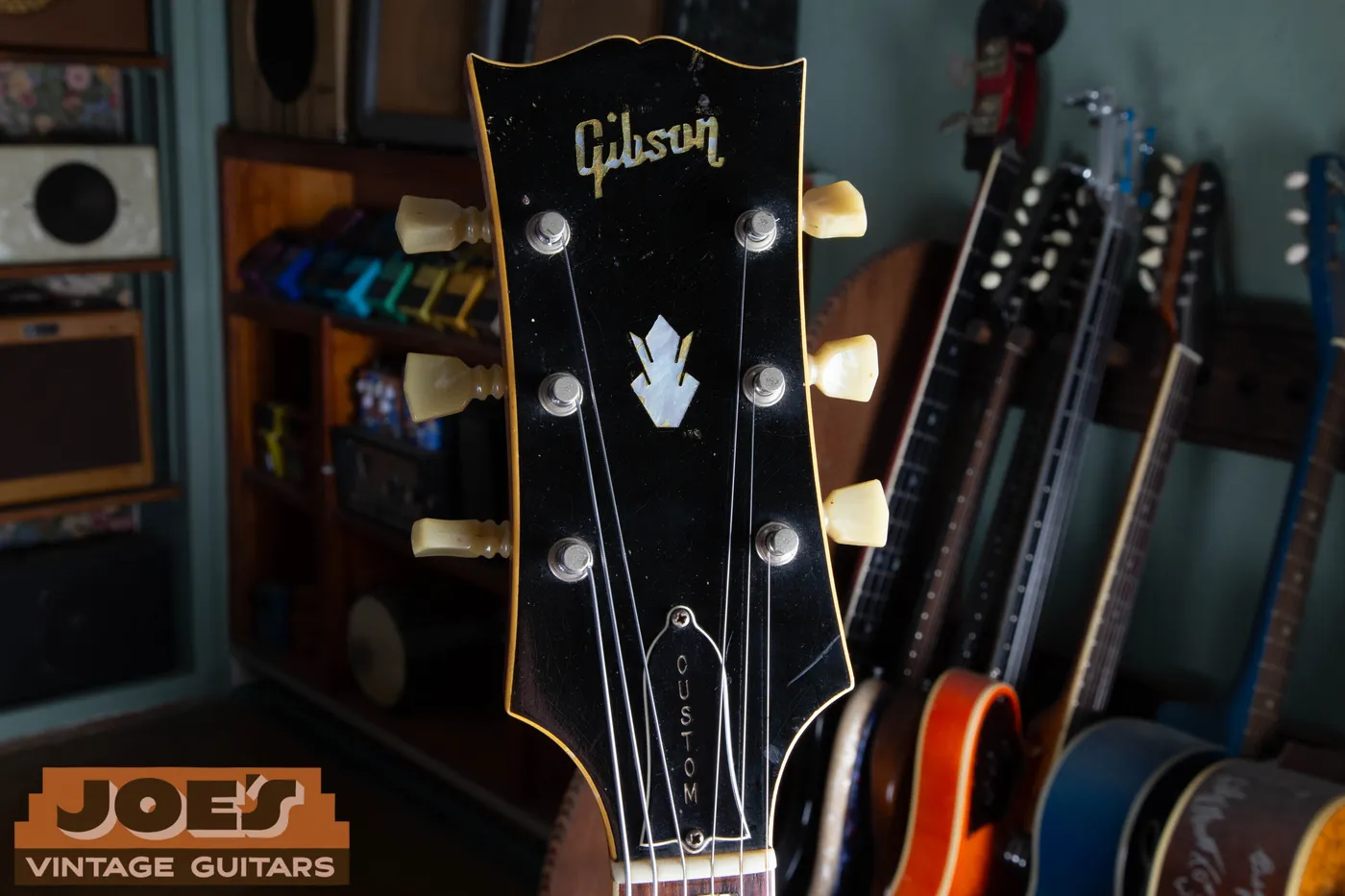
The Custom wording on Joe’s 1967 truss rod cover sits above Regular appointments: pearl double parallelograms, a pearl crown at the headstock and nickel fittings. A rosewood base supports its Tune-o-matic. The tailpiece, bridge and tuners remain factory parts, along with the pickups and electronics.
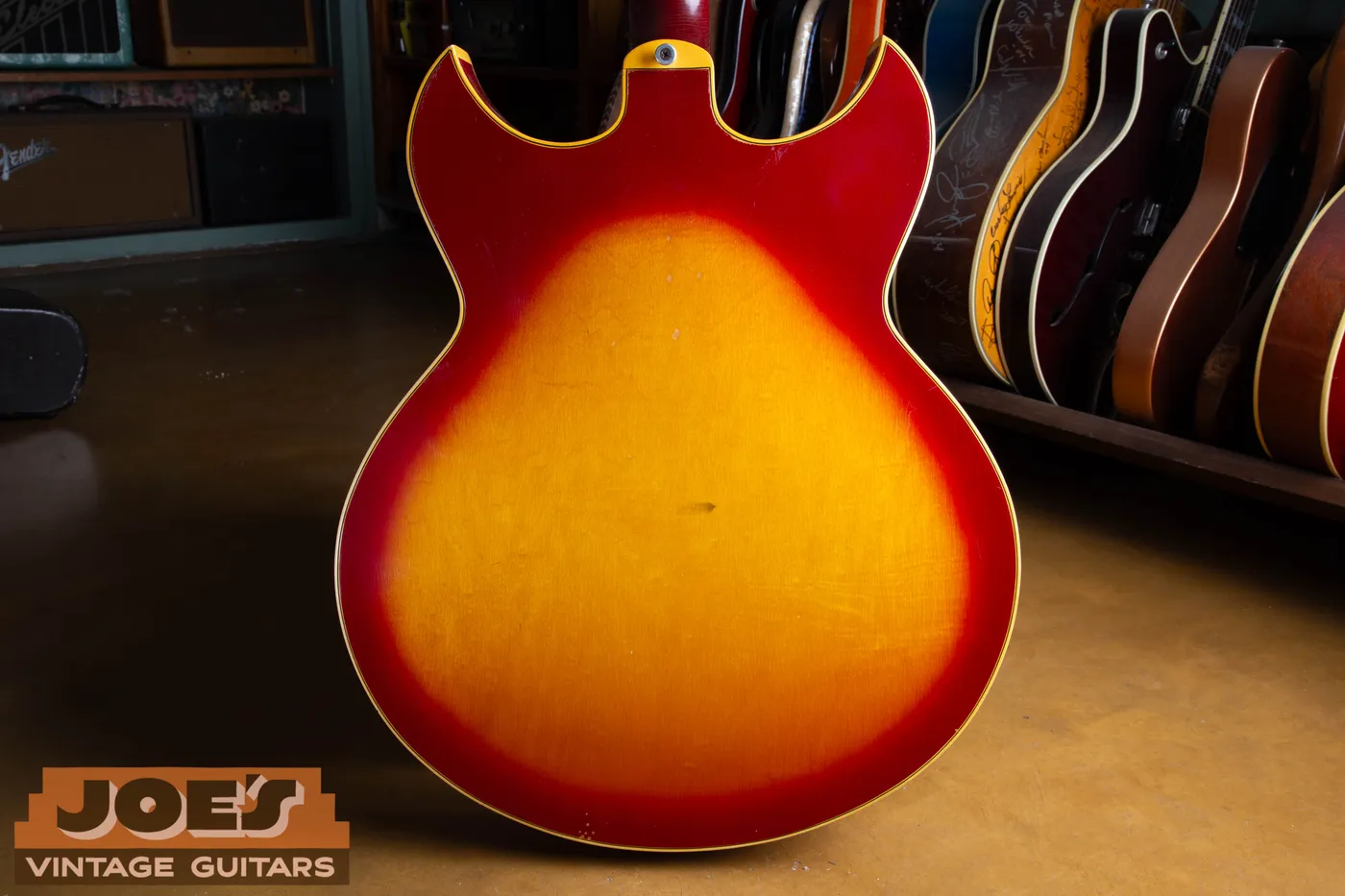
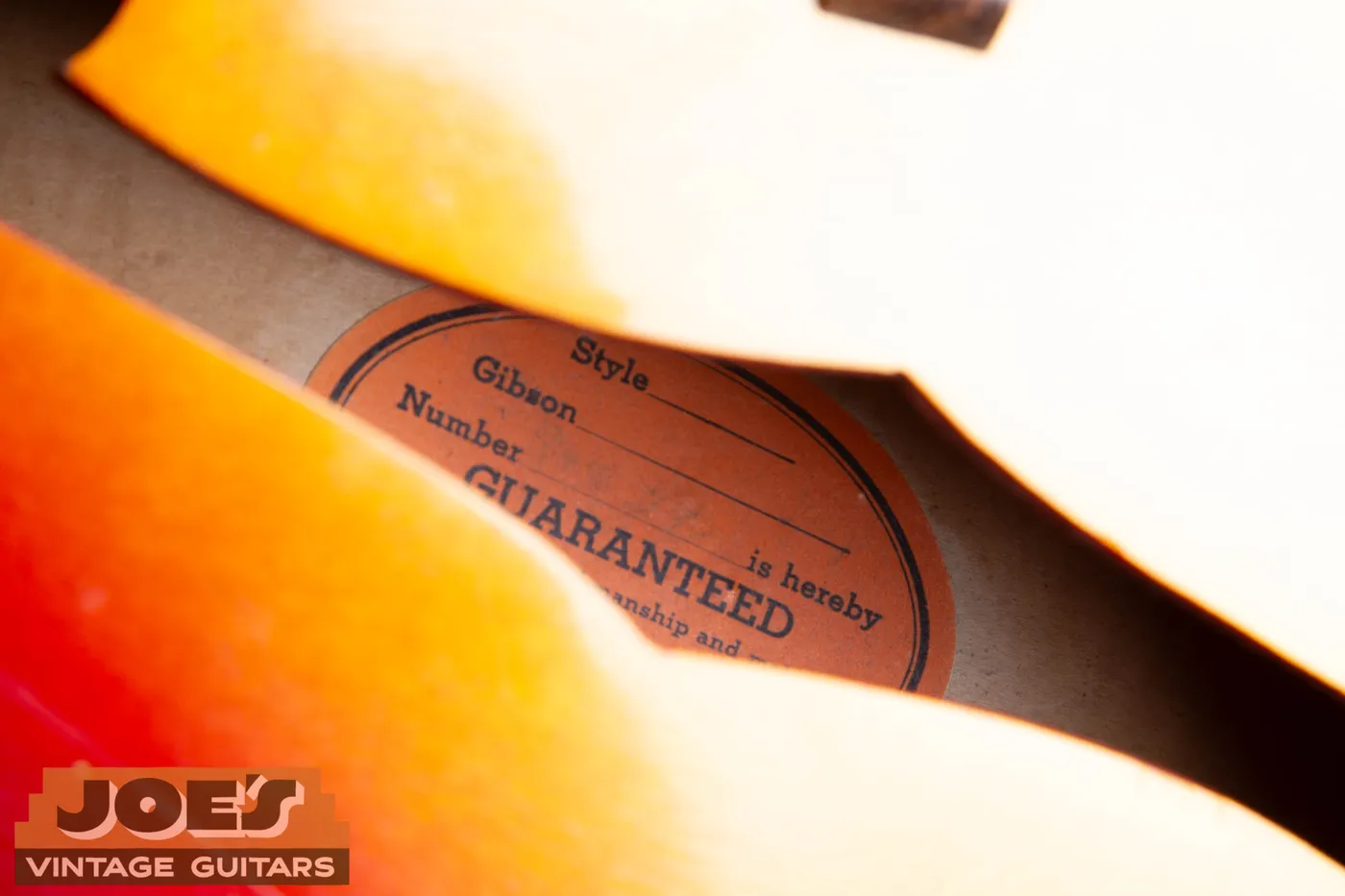
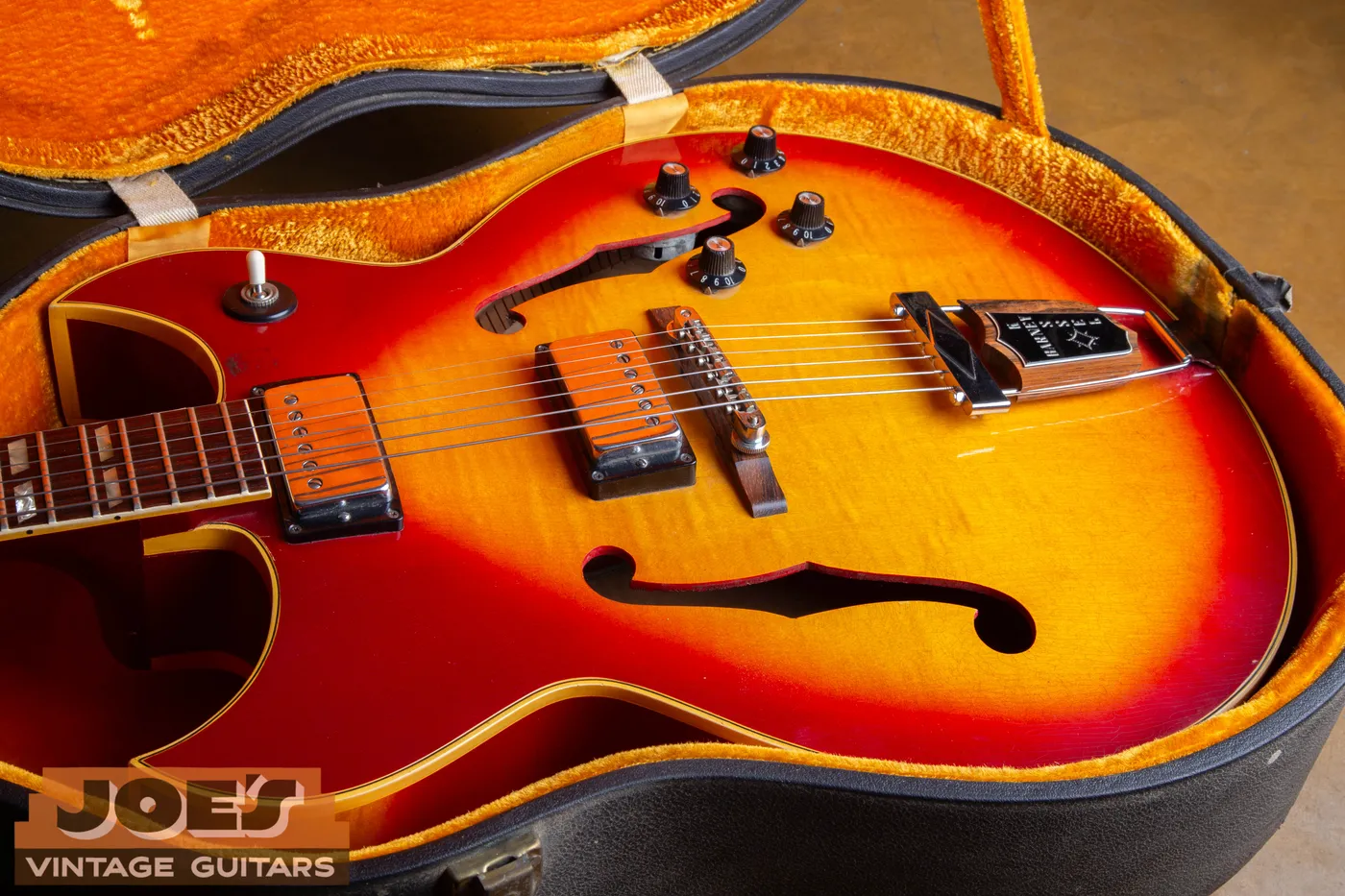
You can locate the old headstock repair by the dark finish behind the nut. At the body’s end, an additional hole suggests a Bigsby once occupied the space before the stock tailpiece was returned. Through an f-hole you can see the orange oval label. Its original hard case accompanied the guitar.
Check The Original Equipment
Pickups, Controls And The Tailpiece
A three-way selector works with separate volume and tone controls for each of the two humbuckers, on either trim. Pickup changes track Gibson’s wider production history. The PAF and Patent Number reference explains later variants and places the PAF decal period between late 1957 and late 1962. Either a 1961 or a 1962 Kessel may carry PAFs.
Look for a raised wooden name badge on the trapeze tailpiece. Replacement badges are available, so compare its fit and wear with the surrounding hardware. Additional screw holes at the body’s end are also worth recording: fitting and later removing a Bigsby is common on this model.
Gibson itself sanded pickup baseplates, so sanding alone doesn’t establish tampering. Assess the leads, solder and mounting against the guitar’s remaining equipment. A repair shop should handle removal from a hollowbody. Existing service photographs provide enough evidence to begin.
Serials Need Support From The Guitar
Dating A Kessel By Serial And Features
Start with the possible years in the Gibson serial reference, then compare the instrument’s features. On 1961 to 1969 Kessels, an impression behind the headstock is repeated on an internal orange oval label. Gibson’s duplicated and reused 1960s ranges can give two, three or four years for the same number.
Gibson began adding MADE IN U.S.A. beneath the number in 1970. Around 1969 to 1970, the neck also gained a volute where it meets the headstock. Six digits accompanied by that stamp usually suggest about 1970 to 1975. On a Kessel, the stamp establishes a 1970s instrument even if the number also matches an earlier range.
For a 1960s guitar, compare plating, pickups, nut width and color. Earlier cherry sunbursts tend darker; later red dye can fade amber or almost natural. If the controls and tuners are original, consult the pot dating reference and Gibson tuner guide to refine the date.
What To Question On A Kessel
Rebuilt Bodies, Swapped Parts And Repairs
Stripped And Rebuilt Guitars
Compare the periods of the hardware, pots and pickups. Premier Guitar describes many Kessels being stripped and some subsequently rebuilt around bare bodies. For years, an early example’s PAFs and gold fittings could be worth more than the complete instrument.
Headstock Repairs
Shine light across the neck behind the nut to inspect the finish. New finish in this spot usually indicates a previous break; the dark area on Joe’s 1967 illustrates the kind of evidence to check.
Refinished Or Oversprayed Tops
Amber can be the normal result of cherry sunburst fading. Consistent bright red across the instrument suggests a later finish. Check it against sheltered color beneath the guard and the finish inside the f-holes.
Added Gold Parts
Use the inlays to identify trim. When a crown peghead and parallelogram board accompany gold fittings, you’re looking at a Regular whose hardware has been changed.
Record the work and replacement parts when describing the guitar, since they affect its price too. Joe’s 1967 still sounds and plays great on its original equipment despite the repaired headstock and extra tailpiece hole. An appraisal can account for those details when they’re documented.
Photos Joe Needs To Identify Yours
Build A Kessel Identification Record
Headstock Face And Fingerboard
Photograph the fingerboard and headstock face clearly. Their inlay patterns establish whether you have Regular or Custom trim.
Headstock Back And Label
Make the number and any marking underneath it readable, and photograph the interior label through an f-hole.
Hardware And Tailpiece End
Include the tuners, bridge and tailpiece’s name badge in close-up views. Photograph the body’s end so additional holes are visible.
Neck Joint And Nut
Show the neck heel from the side and record the nut’s width with calipers in the photograph.
Send The Evidence
Ask Joe To Identify Your Barney Kessel
Send the photos above. Joe can confirm the trim, the likely year and which parts are original.
Where These Details Come From
Barney Kessel Identification Sources
- Gibson Barney Kessel Catalog Pages
Catalog dimensions, scale and production notes.
- Premier Guitar: 1968 Gibson Barney Kessel Custom
Custom inlays, neck construction and electronics.
- Premier Guitar: Gibson And Barney Kessel
Model history, the 1968 peak and stripped guitars.
- Guitarist: 1961 Gibson Barney Kessel
First-year construction, finish and heel changes.
- Guitar World: A 1967 Barney Kessel Custom Order
A documented factory special order.
- Gibson Shipping Totals, 1948 To 1979
Kessel ledger figures by year.
Questions AboutGibson Identification
How Do I Tell A Barney Kessel Regular From A Custom?
Does A Custom Truss Rod Cover Make My Kessel A Custom?
When Did Gibson Make The Barney Kessel?
Did Barney Kessel Play His Gibson Model?
The Last Word
Keep The Evidence Together
Use inlays to name the trim and the nut, serial and pickups to establish the period. Add a record of repairs before consulting the guide to Barney Kessel values.
Authenticity And Originality Are Assessed From The Information Provided. A Hands-On Inspection Can Change The Conclusion.