

Vintage Fender Amplifiers · 1948 To 1980
Tweed, Brownface, Blackface, Silverface: Fender Amp Eras
A visual guide to the four era names, the model-specific exceptions, and the evidence that can date an individual amp.
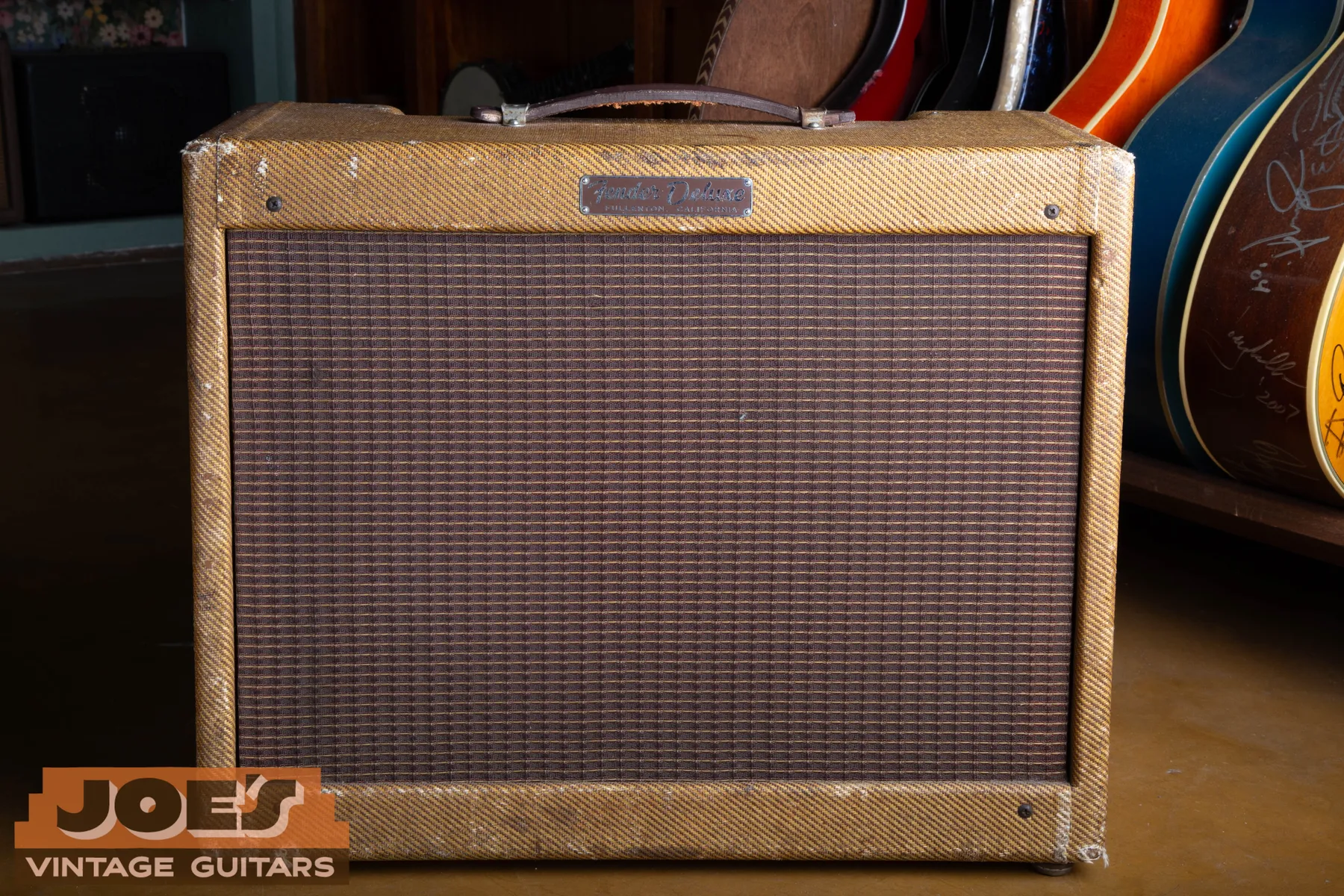
Fender amp era names describe a recognizable combination of covering, grille and control-panel appearance. Tweed, blonde and brownface, blackface, and silverface are useful first categories when you’re looking at an unfamiliar amplifier. Joe’s Fender amp dating reference uses the boundaries shown here. Individual models changed on their own schedules, and electrical revisions didn’t always coincide with a new faceplate. Start with the visible features, then check the model and date evidence.
These era descriptions help identify original Fender amplifiers. Reissues, replacement cabinets and changed cosmetic parts require additional checks.
Compare The Visible Features
Which Era Is Mine?
| Era | Years | Covering | Grille | Faceplate | Knobs | Example Models |
|---|---|---|---|---|---|---|
| Tweed | 1948 to 1959 | Woven tweed | Brown or oxblood variations | Usually chrome, top mounted | Chicken-head styles | Deluxe, Princeton, Twin, Bassman |
| Blonde And Brownface | 1959 to 1963 | Blonde or brown vinyl | Oxblood and wheat variations | Brown, front facing | Brown or white barrel styles | Twin, Deluxe, Princeton, Super |
| Blackface | 1963 to 1967 | Black vinyl | Silver cloth; transitional variations | Black with light lettering | Usually black skirted; transitional white barrels | Twin Reverb, Deluxe Reverb, Princeton Reverb |
| Silverface | 1967 to 1980 | Black vinyl | Silver/blue and later pattern changes | Silver with colored lettering | Black skirted styles | Twin Reverb, Deluxe Reverb, Princeton Reverb |
These are broad visual descriptions. Model-specific transitions, replaced parts and modern recreations can depart from the expected combination.
Read across a row instead of relying on a single feature. A black-covered cabinet can belong to a blackface or silverface amp, and both can carry a silver-looking grille. The faceplate provides a quick distinction, while its lettering and controls identify the model more precisely. A complete front photograph is usually the best first image to collect.
Photograph the rear next. It can show the speaker format, chassis arrangement and paper chart, as well as replacement parts that the front conceals. Keep uncertainty in the description when the cabinet and panel suggest different periods. A transitional production example and an amp assembled from mismatched parts require different explanations.
Woven Covering And Changing Cabinets
Tweed: 1948 To 1959
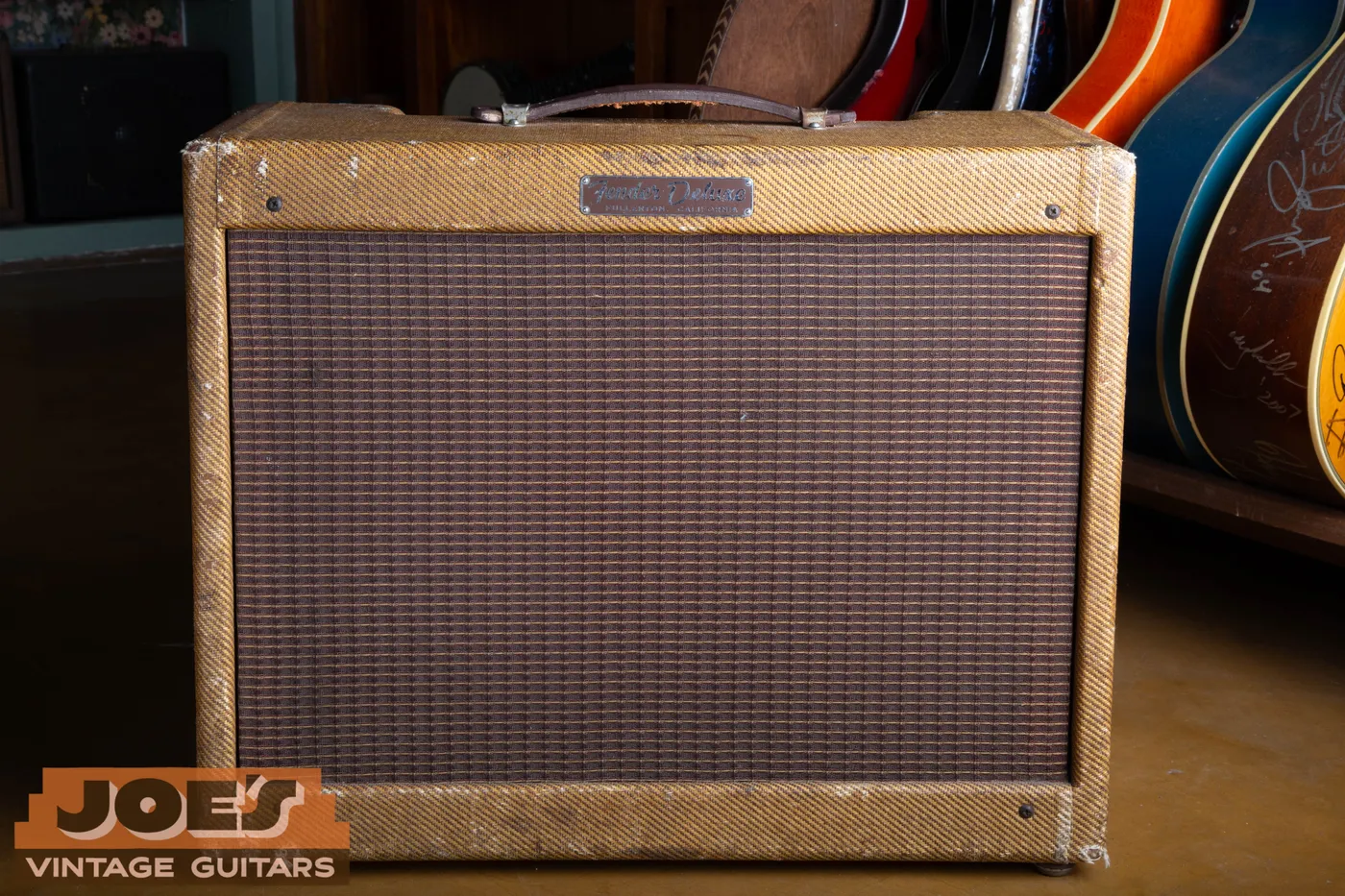
Tweed refers to the woven exterior material, with TV-front, wide-panel and narrow-panel cabinet forms inside the era. Those shapes provide more useful identification than the word tweed alone. Joe’s 1957 Deluxe example shows the narrow-panel form, top controls and dark grille. Its 5E3 circuit designation identifies a particular design within the wider Deluxe history.
The model names also cover very different sizes and electrical arrangements. A small tweed Princeton uses one output tube and an eight-inch speaker in its later narrow-panel form. The tweed Twin developed into a much larger two-speaker amplifier with several power revisions. Identifying both as tweed is accurate, but it leaves the model-level work undone.
A surviving tweed surface can be stained, worn or darkened. Reproduction covering can also be aged. Inspect the seams and cabinet evidence rather than assigning age from color. The Deluxe value guide separates the cabinet generations, while the Twin price chart distinguishes the earlier Twin versions. Their separate rows show why one general “tweed amp value” is too broad.
The era ends in 1959, while some individual models continued with tweed cosmetics beyond that boundary. The narrow-panel Deluxe is one documented example. Keep a model-specific continuation attached to that model instead of shifting the dates of the entire era.
Vinyl Covering And Front Controls
Blonde And Brownface: 1959 To 1963
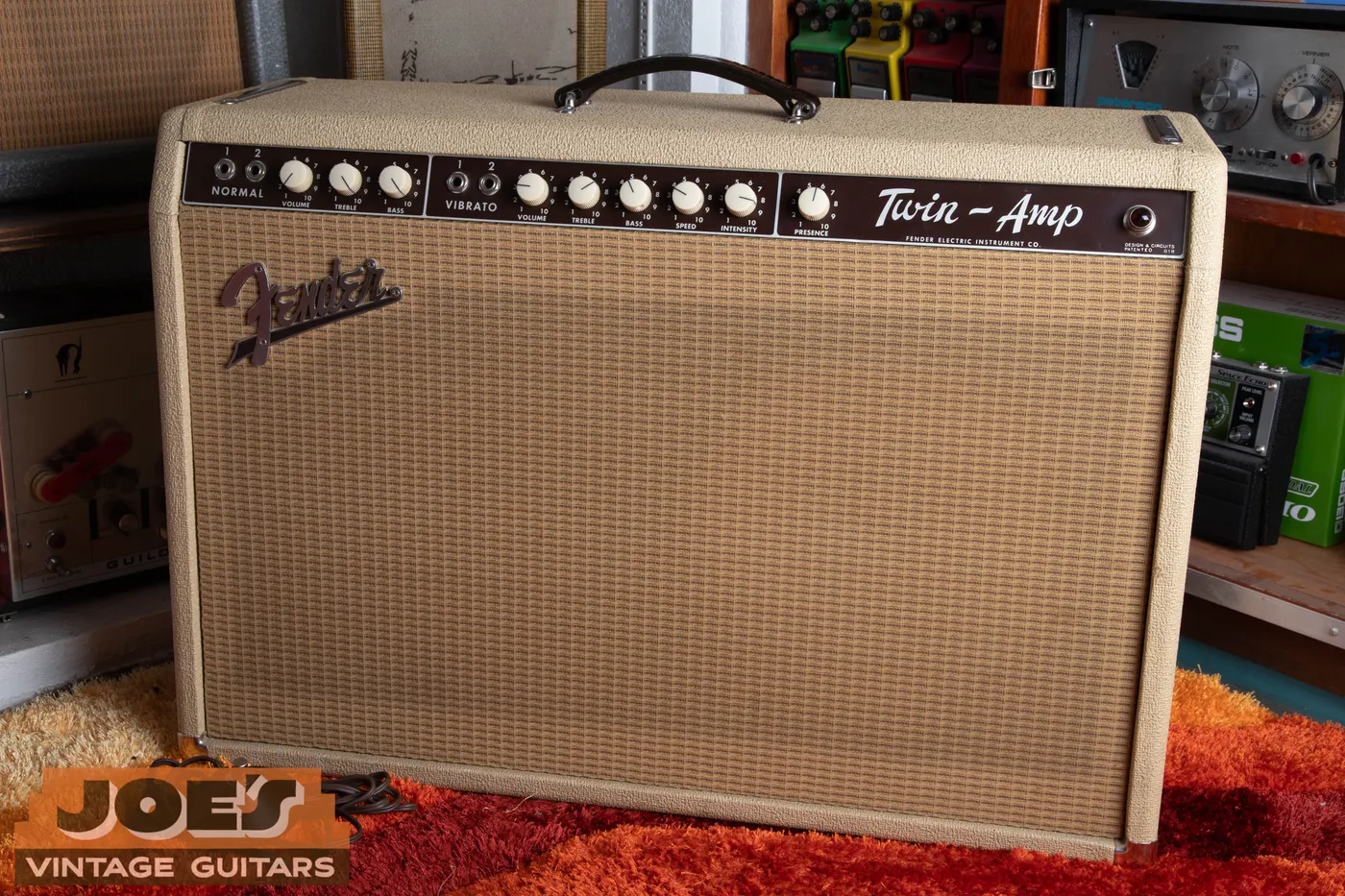
Brown and blonde coverings identify a period with substantial differences among models. The brown Princeton 6G2 has a small front panel with volume, tone, speed and intensity. Joe’s blonde Twin has a much broader panel and two speakers. The covering colors belong in the same broad era, but they don’t imply matching circuitry or output.
Look at the grille and knobs as well as the cabinet. Oxblood and wheat-colored cloth appear in this period, and barrel-style knobs distinguish many examples from the later skirted black knobs. Those details are useful comparisons when original. A replaced grille, handle or knob set must be identified before it is used as dating evidence.
The Twin identification guide follows the brown/blonde family into the Twin Reverb. Its photographed 1963 tube chart carries a readable date stamp. That kind of evidence can support a narrower description than the covering alone. Brownface and blonde amp values still depend on the model, with the Princeton chart separating its brown 6G2 from the small tweed versions.
These amps are sometimes discussed as a single transitional sound. A more useful listening comparison names the specific circuit and speaker arrangement. The controls and documented design tell you what is being compared; an era nickname leaves too much variation unresolved.
Black Panels And Reverb Models
Blackface: 1963 To 1967
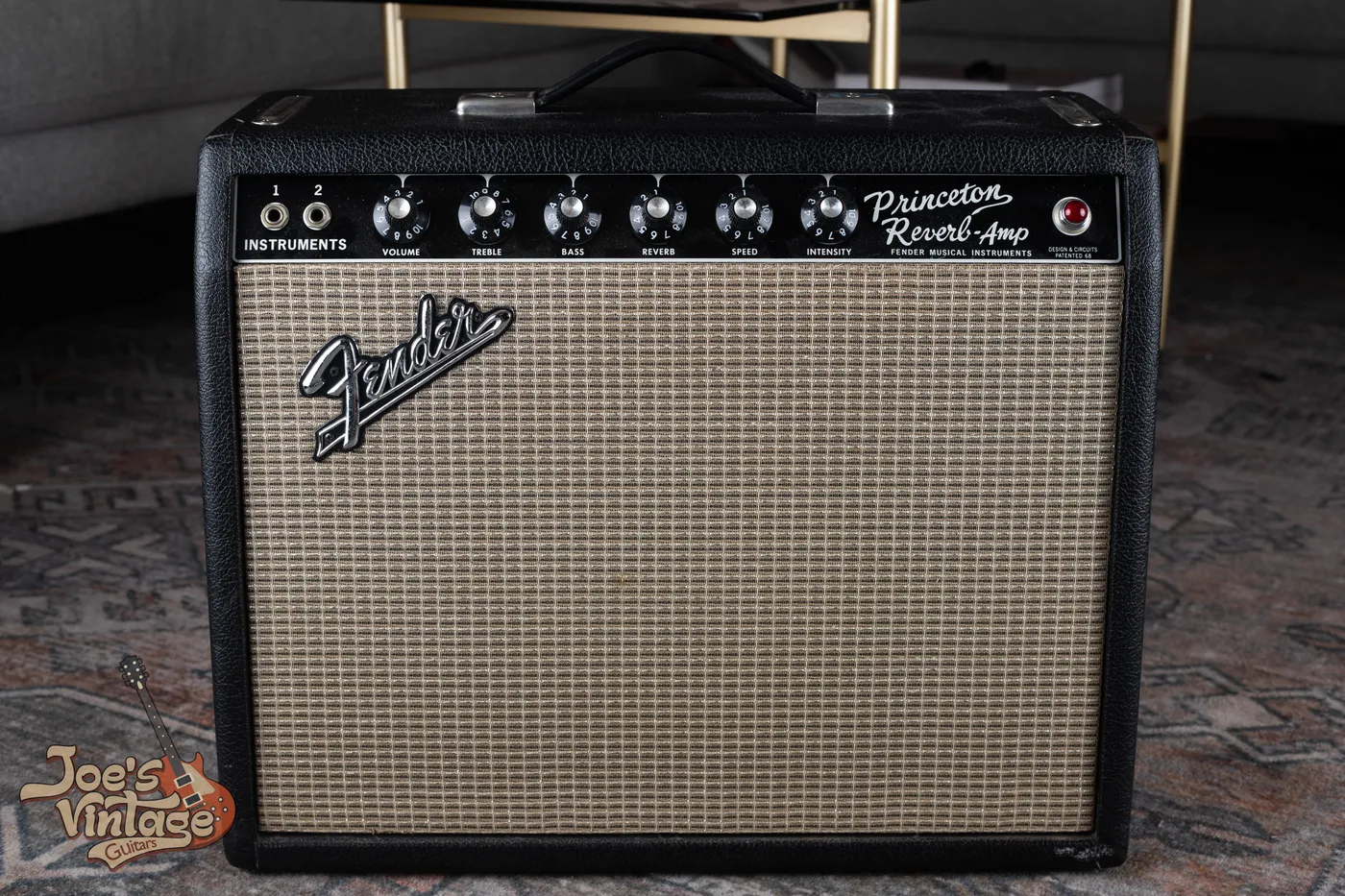
Blackface describes the dark control panel with light lettering. Black vinyl and a silver grille commonly accompany it. Read the complete model name because reverb and non-reverb versions can look closely related. The Deluxe and Deluxe Reverb are separate models, as are the Princeton and Princeton Reverb. The front controls help distinguish each pair.
Circuit designations such as AB763 identify a documented family, but the paper label doesn’t prove every part inside still follows that drawing. Replaced components and circuit modifications need inspection. Likewise, an original circuit in a replacement cabinet should be described as that combination, with both identities stated.
Joe’s blackface Princeton Reverb shows the six-control reverb arrangement and a dated chart. His 1967 Deluxe Reverb offers another scale of the same general appearance. The Princeton identification page explains its transitional non-reverb versions, including black-covered amps with earlier controls. Those exceptions are a reason to read the layout before assigning a specification.
CBS bought Fender in January 1965, during the blackface era. The ownership change and the silverface appearance therefore weren’t simultaneous. A blackface amp can be CBS-era, and its production features must be evaluated by model. Broad “before CBS” descriptions should be checked against the date evidence instead of inferred from panel color.
Trim, Grille And Circuit Revisions
Silverface: 1967 To 1980
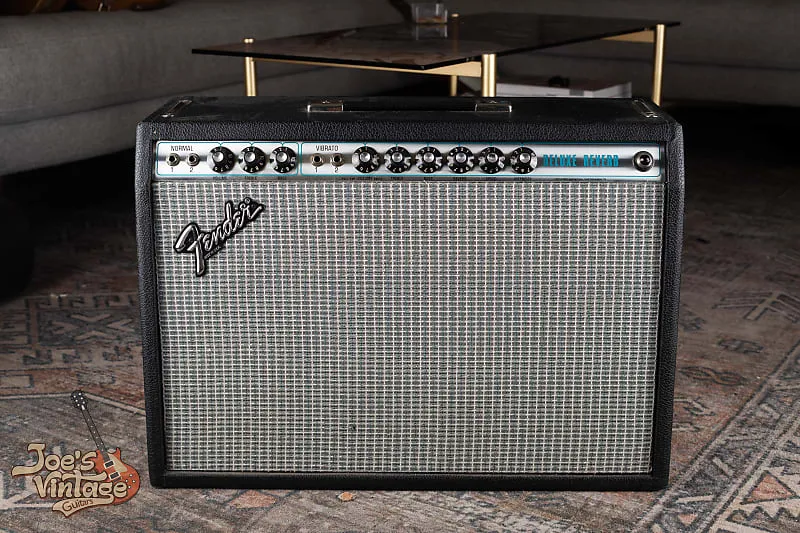
Silverface amplifiers combine a silver-colored control panel with model-dependent lettering and grille changes. Early examples often have aluminum trim around the grille, commonly called drip edge. Later amps lose that surround, and grille and logo details continue to change. A piece of trim can be replaced, so its presence supports a comparison rather than an exact date by itself.
The drip-edge transition is useful because cosmetic and electrical changes overlapped. Some early silverface amps retain earlier circuits. A seller’s claim that an amp has a blackface circuit needs evidence from the chassis; the aluminum surround alone doesn’t establish it. The reverse assumption is also too broad: silver appearance doesn’t describe one uniform circuit across every model.
The Twin Reverb received master-volume and later high-power revisions that don’t apply to the Deluxe Reverb or Princeton Reverb as a group. The Deluxe guide and Twin guide keep those histories separate. Joe’s 1979 Deluxe Reverb photograph shows a later silverface example without requiring the reader to infer a Twin specification from its panel color.
A return to black panel cosmetics near the end of this scope adds another identification trap. An original later amp can have a black panel without belonging to the 1963 to 1967 era. Read the component dates and control arrangement before labeling it an earlier blackface model.
Follow The Model Evidence
Turn An Era Identification Into A Date And Value
Use Joe’s tube-chart date decoder for a readable two-letter ink stamp. The system starts with A for 1951 and was used until about 1970. If the paper is missing, consult the transformer and speaker code section and the Fender pot-code guide. Fender amp serial numbers weren’t reliably sequential and aren’t useful for finding the year.
Value comparisons also need the model. Earlier tweed Twins occupy a different market level from many later Twin Reverbs, but that doesn’t create a universal ranking for every Fender amplifier. A clean, original example and a heavily altered one can require very different assessments within the same era. Condition and configuration belong in the comparison alongside the date.
The Deluxe estimates, Princeton estimates and Twin estimates provide model-specific starting ranges. For playing needs, the Princeton Reverb, Deluxe Reverb and Twin Reverb comparison considers headroom, speakers and carrying weight. Those practical differences can matter more to a player than owning a particular faceplate color.
Send The Evidence
Send Joe A Front And Rear View
Include the model lettering, chart and any known repairs. The era can usually be narrowed before a more detailed inspection is arranged.
Era Dates And Model Records
Sources For Fender Era Changes
- Joe’s Fender Amp Dating Reference
The four era boundaries and dating method.
- Fender’s Twin History
CBS timing and the distinction between cosmetic and electrical changes.
- Narrow-Panel Deluxe
Model-specific continuation beyond the broad tweed boundary.
- Blackface Princeton
Transitional 6G2 controls and cosmetics.
- Silverface Deluxe Reverb
Later panel, grille, control and cosmetic-return details.
Questions AboutFender Amp Eras
Can A Blackface Amp Be A CBS-Era Fender?
Does Drip Edge Identify A Specific Circuit?
Can Replaced Covering Hide The Original Era?
The Last Word
Use The Era To Choose The Next Check
Use the visible era to narrow the model search, then let the amplifier’s own evidence refine the identification. The date decoder and model guides provide the next checks. For an amp you’re considering selling, send Joe its photographs and history before changing parts or cosmetic material.
These era descriptions help identify original Fender amplifiers. Reissues, replacement cabinets and changed cosmetic parts require additional checks.