

Tweed Twin To Silverface Twin Reverb
Vintage Fender Twin And Twin Reverb Values
Estimated values for original Twins, with separate rows for the versions that collectors and players need to distinguish.
A vintage blackface Fender Twin Reverb is estimated at $2,250 to $3,100 in excellent, original condition. The earlier Twin family reaches a different price level: the 1958 to 1959 tweed version is $16,000 to $22,250. Find the correct model before comparing those figures. The Twin identification guide separates the tweed and blonde Twin from the later Twin Reverb and its silverface revisions. Speakers, transformers, cabinet condition and service history then determine how closely your amp fits its row.
This Is An Estimate Of Market Value, Not An Offer To Buy And Not A Guarantee. Market Values Fluctuate; Have Your Specific Item Appraised.
Excellent, Original Examples
Twin Prices By Version
| Model | Years | Version | Estimated Value |
|---|---|---|---|
| Twin | 1952 to 1954 | Tweed, wide panel | $7,250 to $9,350 |
| Twin | 1955 to 1957 | Tweed, 50 watts | $10,650 to $14,450 |
| Twin | 1958 to 1959 | Tweed, 80 watts | $16,000 to $22,250 |
| Twin | 1960 | Brown covering, 80 watts | $11,750 to $15,650 |
| Twin | 1960 to 1962 | Rough white covering, oxblood grille | $6,450 to $8,150 |
| Twin | 1963 | Smooth white covering, gold grille | $5,650 to $7,400 |
| Twin Reverb | 1963 to 1967 | Blackface | $2,250 to $3,100 |
| Twin Reverb | 1968 | Silverface, no master volume | $1,100 to $1,550 |
| Twin Reverb | 1969 to 1970 | Silverface, no master volume | $1,000 to $1,300 |
| Twin Reverb | 1971 to 1972 | Silverface, no master volume | $750 to $1,050 |
| Twin Reverb | 1973 to 1975 | Silverface, master volume | $750 to $1,000 |
| Twin Reverb | 1976 to 1980 | Silverface, push/pull | $750 to $950 |
U.S. dollars. Original cover where applicable. These estimates are starting points for an individual appraisal; condition, changed parts and required service affect the assessment. Overlapping year groups describe separate guide entries.
These estimates cover original vintage amps only; modern reissues and Tone Master models require separate appraisals. Fender introduced a factory master volume in 1972, while the chart’s master-volume group begins in 1973. A factory 1972 master-volume example needs an individual assessment rather than being forced into the no-master-volume row. A factory control that has been disconnected still forms part of the amp’s history. Photograph the panel and explain any modification before assigning a range.
The black-panel return around 1980 needs its own appraisal. Send identifying photographs of an amp from that transition, including its panel, chart and component stamps. A missing chart row doesn’t mean your amp has no value.
Earlier Cabinets And Circuits
Why Tweed And Blonde Twins Need Separate Appraisals
Tweed Twin Condition
The early Twin rows cover visibly different cabinet generations and output versions. A narrow-panel cabinet alone doesn’t establish which electrical version it contains. The high-power tweed entry deserves close documentation of the chassis, transformer set and cabinet before its range is applied. Save any repair invoices or photographs taken before servicing. They can explain why an old amp contains newer parts without requiring an appraiser to guess what happened.
Blonde Twin Completeness
The blonde Twin has its own market position. Look closely at the light covering, grille, handle and hardware as a group. Fresh white material can make a cabinet look attractive while changing its appeal to an originality-focused buyer. The same applies to a replaced grille that happens to resemble the correct pattern. A clear photograph of a worn original surface is more useful than a description such as “restored to mint.”
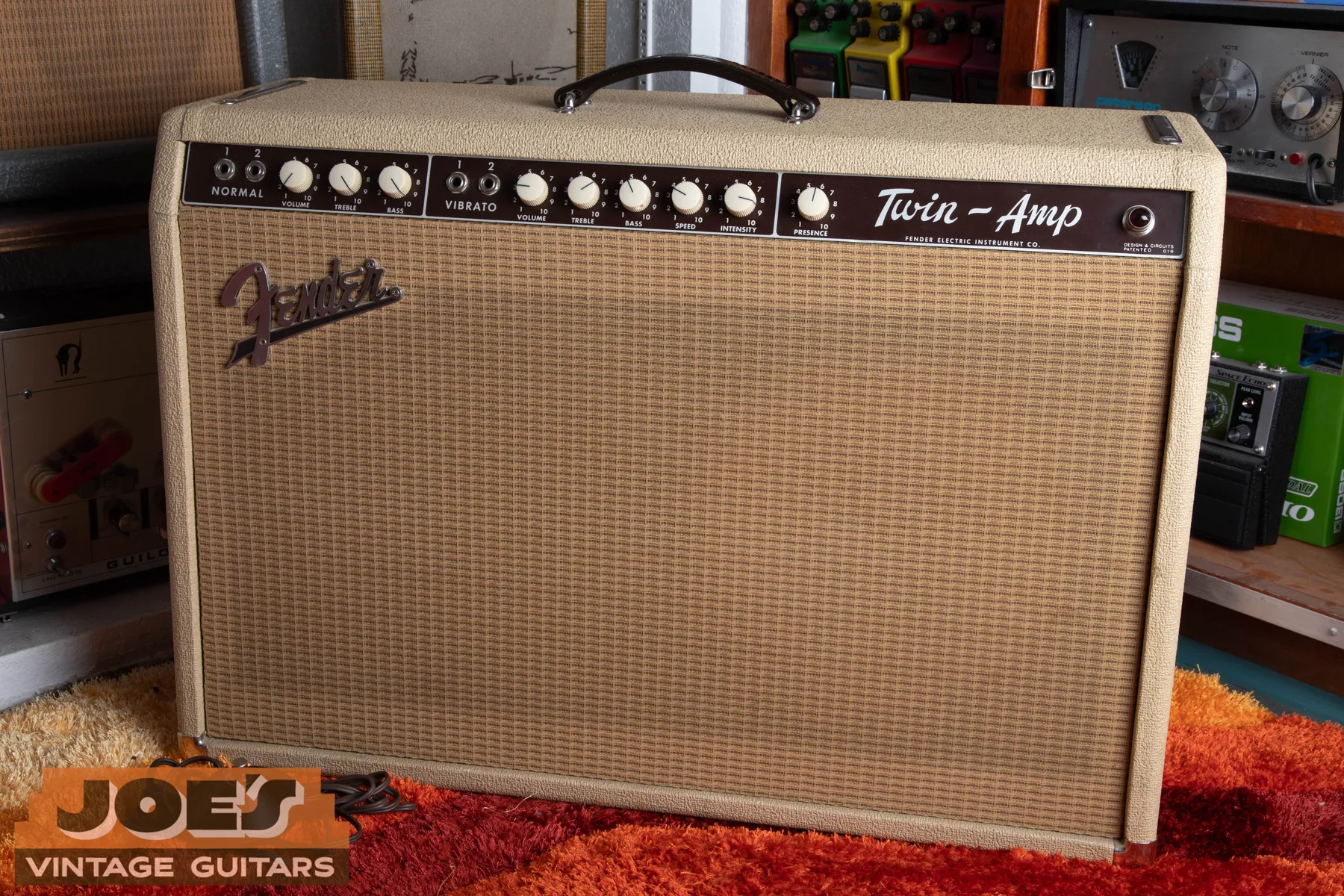
Joe’s 1963 Twin photographs show the front, back and tube chart of one amp. They give an owner useful views to reproduce when requesting an appraisal. They don’t establish that every part in another blonde Twin is original. Each amp needs its own record, especially when an owner inherited it without service paperwork.
Keep the cover with the amplifier if it survives. Photograph its material, stitching, logo and damage separately. A newly purchased reproduction cover may protect the cabinet, but it should be described as a later accessory. The same disclosure applies to replacement tilt-back hardware or a handle fitted to make carrying the amp easier.
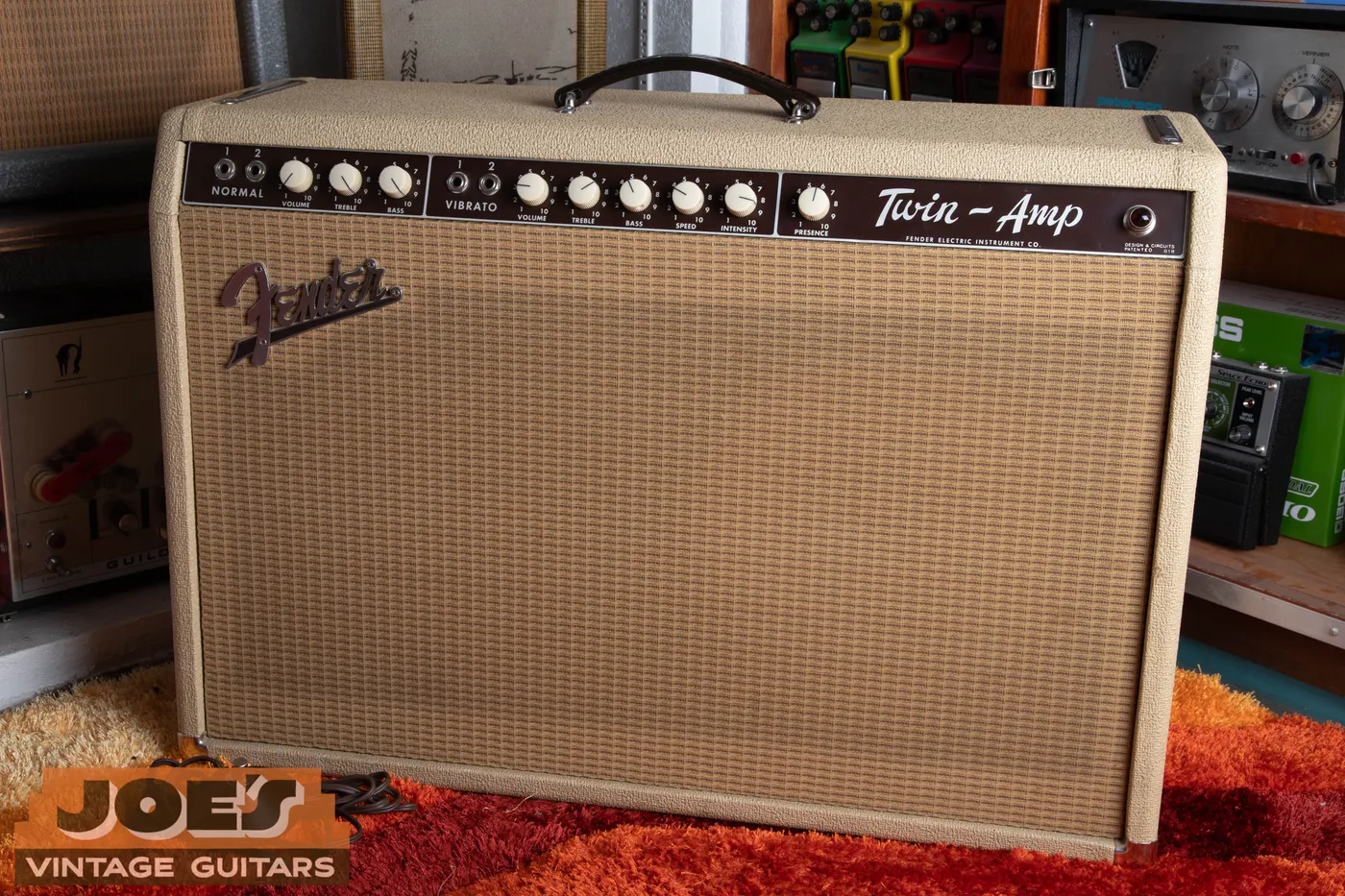
1963 Fender Twin And 1966 Fender Twin Reverb
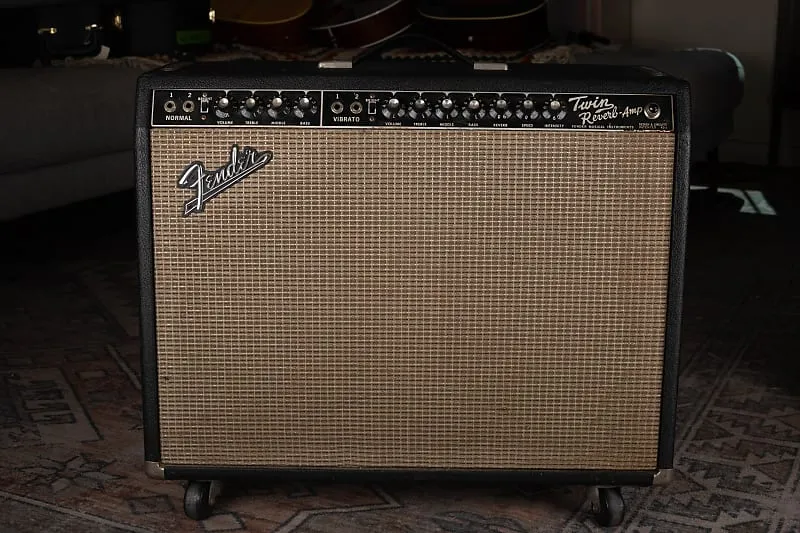
Match The Control Panel
Blackface And Silverface Value Differences
The blackface Twin Reverb estimate is $2,250 to $3,100. Silverface examples occupy their own rows, including early versions without a master volume and later versions with additional controls. These groups give you a more useful comparison than a single price for all silverface amps. The Fender amp eras article explains the appearance changes, while the identification page deals with the circuitry and date evidence.
An early silverface grille surround can attract attention, but aluminum trim alone can’t establish the circuit or an exact year. A correct appraisal considers the chassis and its components alongside the outside appearance. If the cabinet and chassis came from different amps, disclose that before comparing your amplifier with an excellent original example.
Later high-power Twins also deserve an accurate description. Their intended use, controls and specifications differ from an earlier blackface amp. Calling one “basically the same” removes information that a player or collector needs. Describe the amp you have, including the rear-panel markings, instead of using the most desirable earlier version as the pricing reference.
What Changes The Assessment
Speakers, Transformers And Cabinet Work
Both Speakers Need Documentation
A Twin has two speaker positions to account for. Photograph both baskets, labels and readable stamps, even when they appear to match. One original speaker and one replacement is a different condition report from a complete original pair. A period speaker installed later also needs that qualification. If a speaker was reconed, retain the invoice and identify which one received the work. A matching label doesn’t establish the condition of the cone.
Transformer Replacements Need Context
A replaced output or power transformer affects how an originality-focused buyer evaluates the amp. The replacement’s brand, specification and installation should be recorded. A correct working replacement may make the amplifier useful to a player, but it doesn’t recreate the missing factory component. Keep a removed transformer if you still have it and describe why it was taken out. Its presence in a box doesn’t mean it remains usable.
Cabinet work requires its own photographs. Recovering, a replacement baffle, added casters and repaired joints can be easy to miss in a straight-on view. Show the bottom, corners and inside surfaces where they’re safely accessible. Avoid assigning a fixed deduction to every alteration. Several changes can interact, and the starting version of the Twin still matters.
Reverb equipment is another part of the inventory. Include the tank, its bag, cables and footswitch on a Twin Reverb. If the tank was replaced, show the present label and any retained original. A working reverb control tells you something about operation; it doesn’t identify every component in the system. A non-reverb Twin shouldn’t be marked incomplete for lacking equipment it never had.
Record The Work
How Service History Fits The Value
Old filter capacitors, worn tubes and a damaged power cord are service questions. An appraiser should know what was replaced, who did the work and whether the amp was checked afterward. An invoice that identifies the actual repair is more useful than “recently serviced.” It also keeps necessary maintenance from being confused with a wholesale rebuild.
Don’t postpone necessary safety work merely to preserve an “untouched” description. Have a qualified amp technician evaluate an amplifier with an unknown electrical history. If you’re selling an untested amp, describe it as untested rather than powering it up to produce a video. Inspection photographs can be supplied by the technician when chassis access is needed.
A service bill and an increase in resale value aren’t interchangeable figures. Some work restores normal operation, while other work changes the circuit to suit a particular player. Tell Joe which category applies and include before-and-after records if you have them. Avoid replacing speakers or recovering the cabinet solely to improve its appearance before asking for an appraisal.
Show The Whole Amplifier
Photos For A Twin Appraisal
Front And Control Panel
Send a square view showing the full grille, cabinet edges, model name and every control. Include a closer picture of any master-volume or boost marking so the version can be matched accurately.
Rear View And Back Panels
Show both speakers, the rear controls and the complete back opening. Add photographs of missing panels, added hardware or cabinet damage rather than cropping those areas out.
Chassis And Tube Chart
Photograph the paper chart where it remains attached. Ask a qualified technician for chassis photographs; opening an amplifier can expose dangerous stored voltage even after it has been unplugged.
Transformer Markings
Provide readable views of the power transformer, output transformer and choke. Retain the full stamped line and its location in the photograph so a part number isn’t mistaken for a date.
Both Speaker Labels
Include each label, frame stamp and visible cone marking. State whether either speaker has been replaced or reconed, and attach repair paperwork if it survives.
Reverb Tank And Accessories
For a Twin Reverb, add the tank label and footswitch. Show the cover, removed parts and documents separately, noting which accessories came with the amp and which were purchased later.
Use the tube-chart decoder when a clear date stamp survives. If it doesn’t, the transformer and speaker dating section explains the next evidence to collect. The pot-code guide can help with readable control markings. Fender amp serial numbers don’t provide a reliable year, so a serial alone won’t settle the value group.
Send The Evidence
Send Your Twin Photos To Joe
Include what you know about ownership and repairs, even if the history is incomplete. Joe can review the photographs and discuss the amp’s present condition.
Questions AboutVintage Amp Values
Are Tweed Twins Priced Like Twin Reverbs?
Does A Replaced Speaker Make A Twin Worthless?
Can I Use These Ranges For A Reissue?
The Last Word
Get Your Amp Appraised
Start with the version, then document what remains and what has changed. Return to the Twin and Twin Reverb identification page if the controls or cabinet leave the model uncertain. For a playing comparison, the Princeton, Deluxe and Twin article explains the differences in size and output. You can request a free appraisal with the photos you already have.
This Is An Estimate Of Market Value, Not An Offer To Buy And Not A Guarantee. Market Values Fluctuate; Have Your Specific Item Appraised.