

Deluxe Family · Tweed Through 1980
Identify A Vintage Fender Deluxe Or Deluxe Reverb
The Deluxe name spans several circuits. Start with the controls, then compare the cabinet, tube chart and installed components.
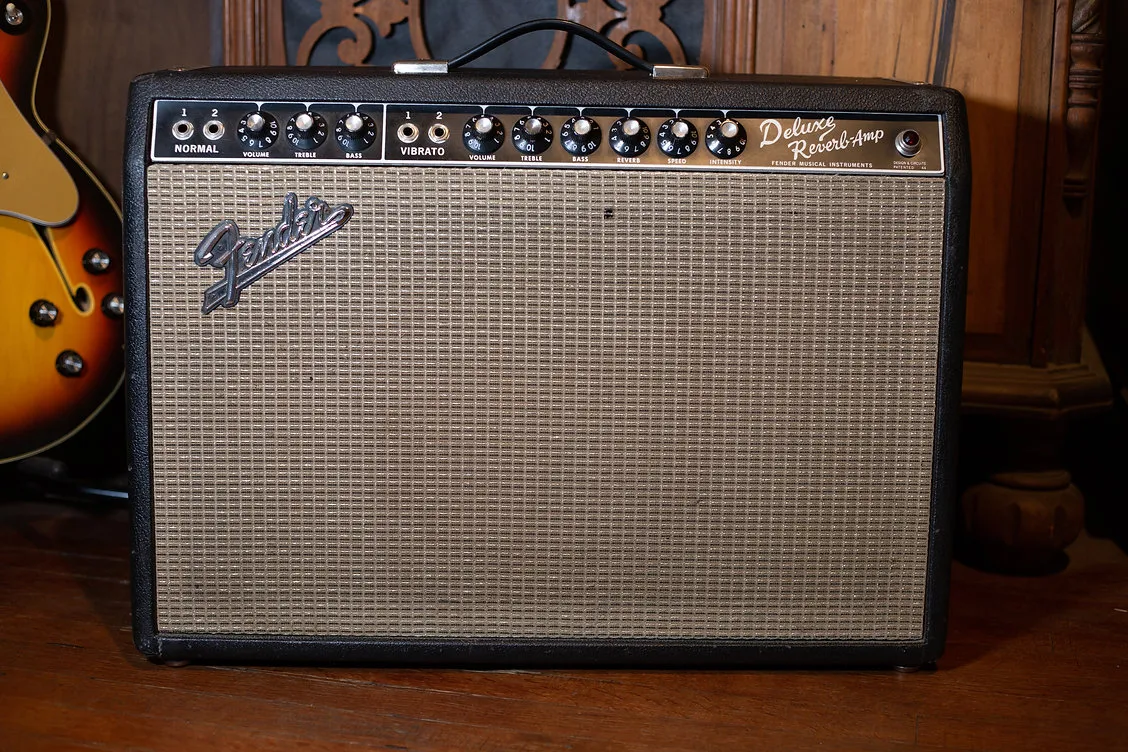
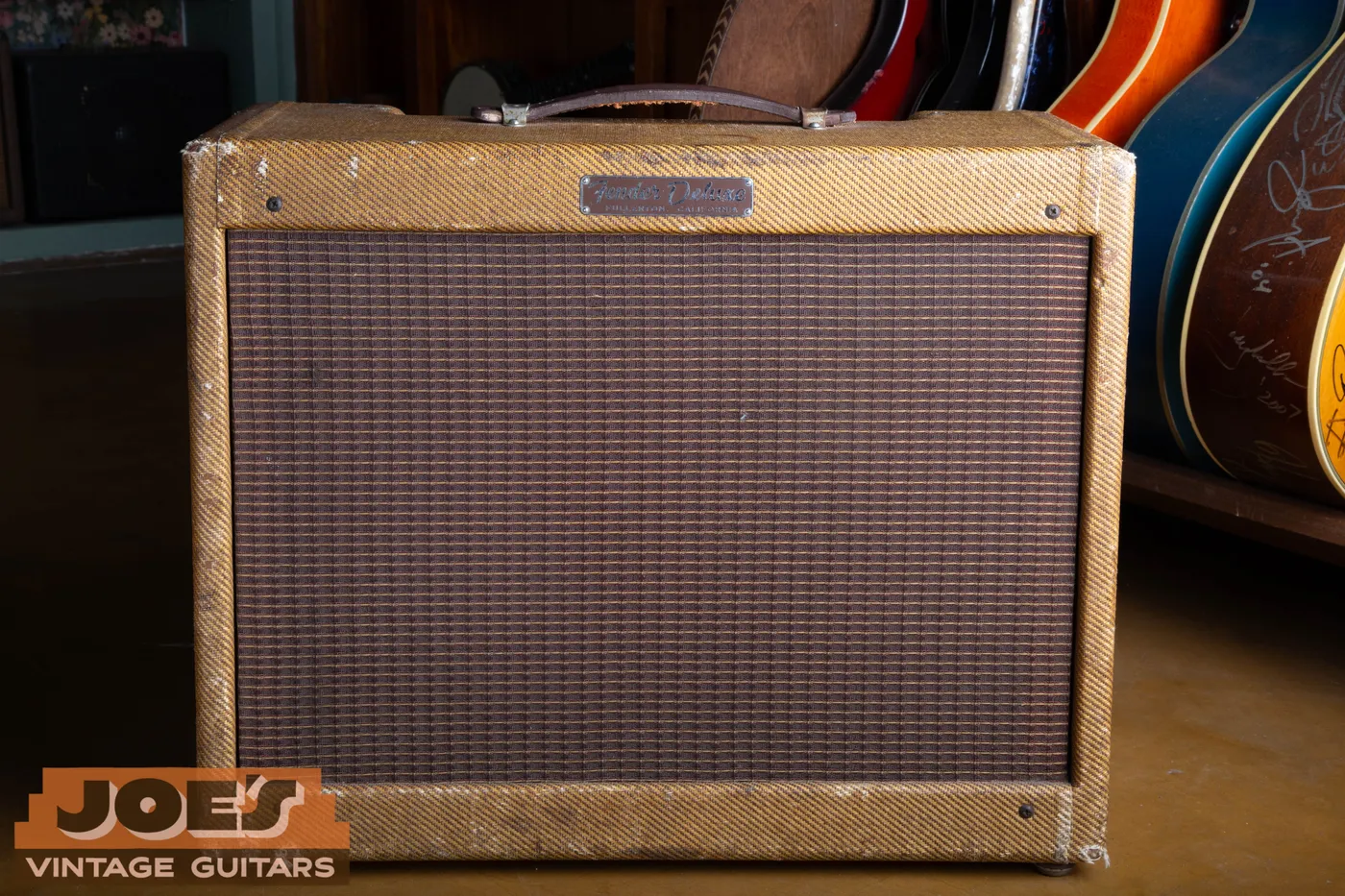
A vintage Deluxe identification begins with one question: which Deluxe circuit is in the cabinet? The tweed 5E3, brown 6G3, blackface Deluxe and Deluxe Reverb differ in controls and electrical design. Their estimates appear in the Deluxe value guide. This page works through the evidence behind that choice. Joe’s 1957 Deluxe, 1967 Deluxe Reverb and 1979 silverface example show the tweed, blackface and later silverface designs.
Authenticity And Originality Are Assessed From The Information Provided. A Hands-On Inspection Can Change The Conclusion.
Modern Deluxe Families
Original Or Reissue? Check Construction And Labels
’65 And ’68 Reverb Reissues
Fender’s ’65 Deluxe Reverb service documentation identifies printed-circuit-board assemblies. A technician can distinguish that construction from the original eyelet-board layout. The ’68 Custom uses Custom and Vintage channel labels and a Celestion G12V-70 speaker in its standard specification. Read those labels and the rear identification before dating an amp by a silver panel or aluminum trim.
Handwired Recreations And Tone Master
The ’57 Custom Deluxe is a modern handwired tweed model, while the ’64 Custom Deluxe Reverb has handwired circuitry and effects on both channels. The ’64’s Normal and Bright channel names help distinguish that version. Tone Master Deluxe Reverbs use digital electronics and have modern rear connections, including USB and XLR. None of those families belongs in an original-era value row.
The newer ’62 Deluxe also recreates a brownface appearance. Fender identifies that model as a 20-watt design with a twelve-inch Celestion speaker. Compare the full product identification and present parts with the original 6G3 specification. A brown panel and a vintage-style handle by themselves don’t establish 1960s production.
A modern speaker alone doesn’t prove the entire amplifier is a reissue: it may be a replacement in an old chassis. Conversely, a period speaker doesn’t authenticate the cabinet around it. Check the evidence as a group. For internal board inspection, use a qualified amp technician; dangerous charge can remain inside an unplugged amplifier.
Cabinets And Circuit Families
Deluxe Model Changes In Sequence
The Tweed Era
Tweed is the broad era label here for 1948 to 1959. Within the Deluxe family, TV-front and wide-panel cabinets preceded the narrow-panel 5E3. Model-specific records carry narrow-panel Deluxe production into 1960. That continuation is an exception within the model history, rather than a different boundary for the overall Fender era.
Brown Deluxe 6G3
The brown Deluxe introduced a front-facing control panel and tremolo. Its two channels each have volume and tone controls, with speed and intensity for the effect. Brown covering, a brown panel and barrel knobs give the version a different visible identity from the preceding tweed cabinet.
Blackface Deluxe And Deluxe Reverb
The blackface era includes both the Deluxe without reverb and the Deluxe Reverb. The AB763 Deluxe Reverb adds the reverb system and associated controls. Identify the model lettering before using the number of knobs or the cabinet’s appearance to make further comparisons.
Silverface Deluxe Reverb
The silverface era brought a silver control panel and, early in the transition, aluminum grille trim. Later Deluxe Reverbs received a pull-boost feature. The model remained a two-6V6, single-twelve-inch combo; the Twin’s ultralinear power changes shouldn’t be assigned to the Deluxe. A black-panel return at the end of this period needs careful dating.
Output, Tubes And Cosmetics
Deluxe Specifications By Circuit
| Version / Circuit | Output And Tubes | Rectifier / Speakers | Controls | Cabinet Details |
|---|---|---|---|---|
| Tweed / 5E3 | About 12 to 15 W in published ratings; two 6V6GT; one 12AY7 and one 12AX7 | 5Y3GT; one 12-inch Jensen P12R/P12Q among documented speakers | Instrument volume, microphone volume, shared tone | Narrow tweed panels; brown/oxblood grille; chrome top panel; small script badge; chicken-head knobs; leather handle |
| Brown / 6G3 | About 15 W; two 6V6GT; one 7025 and two 12AX7 | GZ34; one 12-inch speaker, including Oxford 12K5 | Two volume/tone channels; speed and intensity | Brown covering and faceplate; wheat grille; raised script logo; brown barrel knobs; leather strap |
| Blackface Deluxe / AA763, AB763 | 22 W; two 6V6GT; three 12AX7/7025 and one 12AT7 | GZ34; one 12-inch speaker | Normal and Vibrato channels; volume, treble, bass; speed and intensity | Black covering and panel; silver grille; skirted black knobs; logo details require model inspection; black strap |
| Blackface Deluxe Reverb / AB763 | 22 W; two 6V6GT; four 12AX7/7025 and two 12AT7 | GZ34; one 12-inch speaker, including Oxford 12K5 | Normal volume/treble/bass; Vibrato channel adds reverb, speed, intensity | Black covering; silver grille; black panel and skirted knobs; raised Fender logo; black strap |
| Silverface Deluxe Reverb / AA1270, AA1172 | 22 W; two 6V6GT; four 12AX7/7025 and two 12AT7 | 5U4GB on later examples; GZ34 on earlier versions; one 12-inch speaker | Reverb and tremolo layout; later pull boost | Black covering; silver/blue and later grille variations; silver panel; black skirted knobs; logo and trim changes |
Ratings are nominal and depend on the documented version. 7025 is the low-noise 12AX7 family designation used on many original charts. Supply parts and transitional features require inspection of the individual amp.
The 5E3 is the narrow-panel circuit designation most owners encounter, but it doesn’t describe every tweed Deluxe ever built. Earlier Deluxes require their own schematic comparison. Treat a chart or seller’s circuit claim as a starting identification, then have the installed wiring checked if originality is uncertain.
Tube brands can change through ordinary service. The useful first check is the documented tube function and complement for that circuit, followed by the installed parts and repair record. This table isn’t an instruction to substitute rectifiers or output tubes. A technician should decide whether the present circuit and operating conditions are appropriate for the components fitted.
The Panel And Chassis Together
Identify A 5E3 Without Relying On Tweed
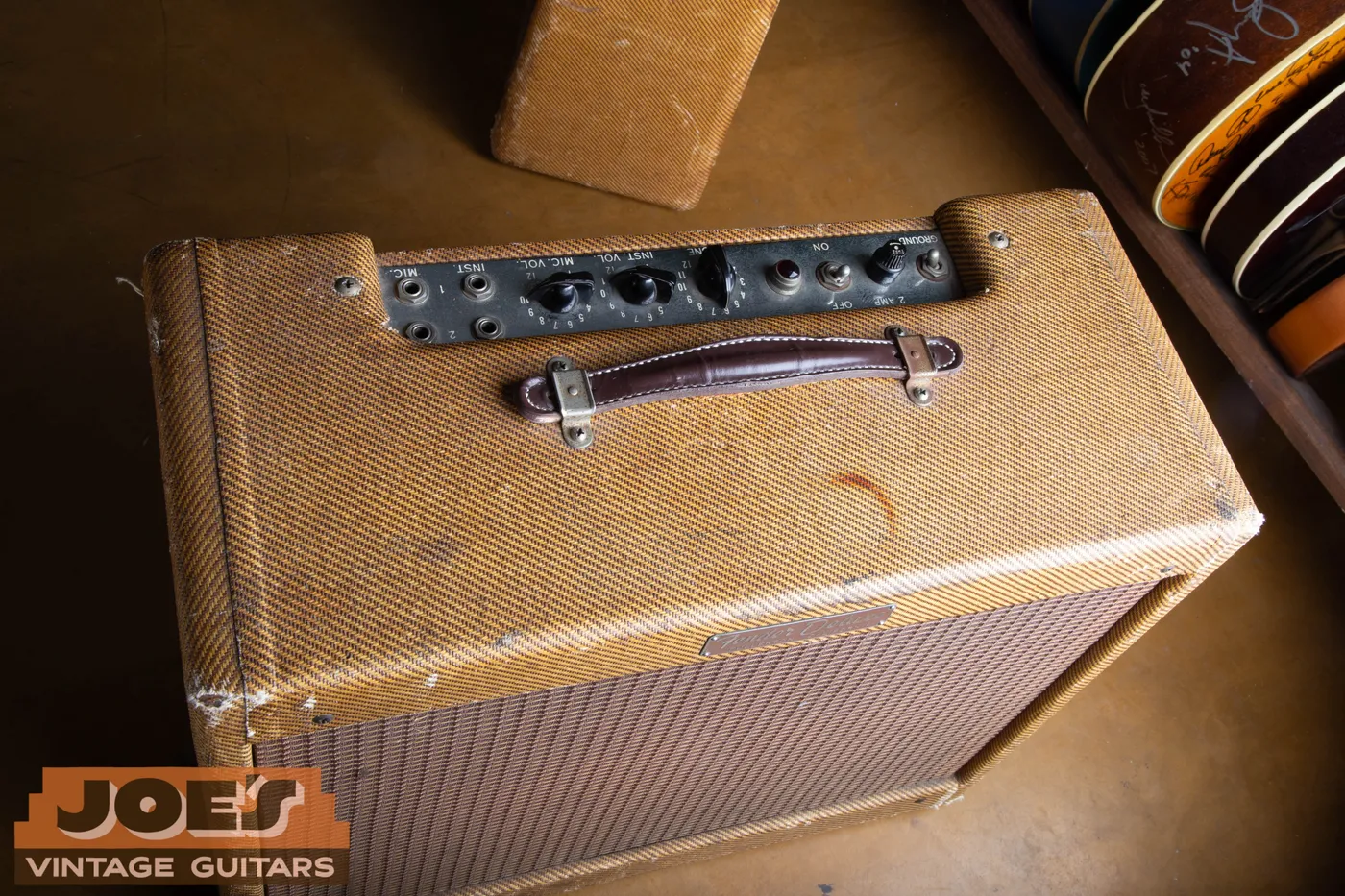
A 5E3 presents a compact top control panel with two volume controls and one tone control. It has separate instrument and microphone input groups and no built-in reverb or tremolo. Those visible features narrow the family, but modern kits can reproduce them. A convincing identification requires the cabinet, chassis, board construction and dated components to agree.
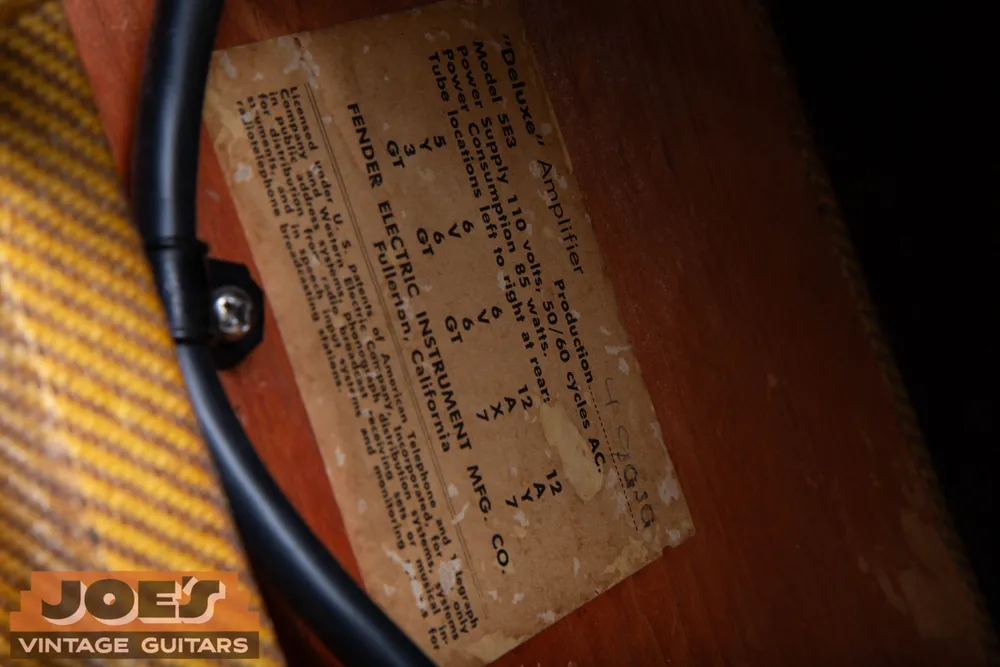
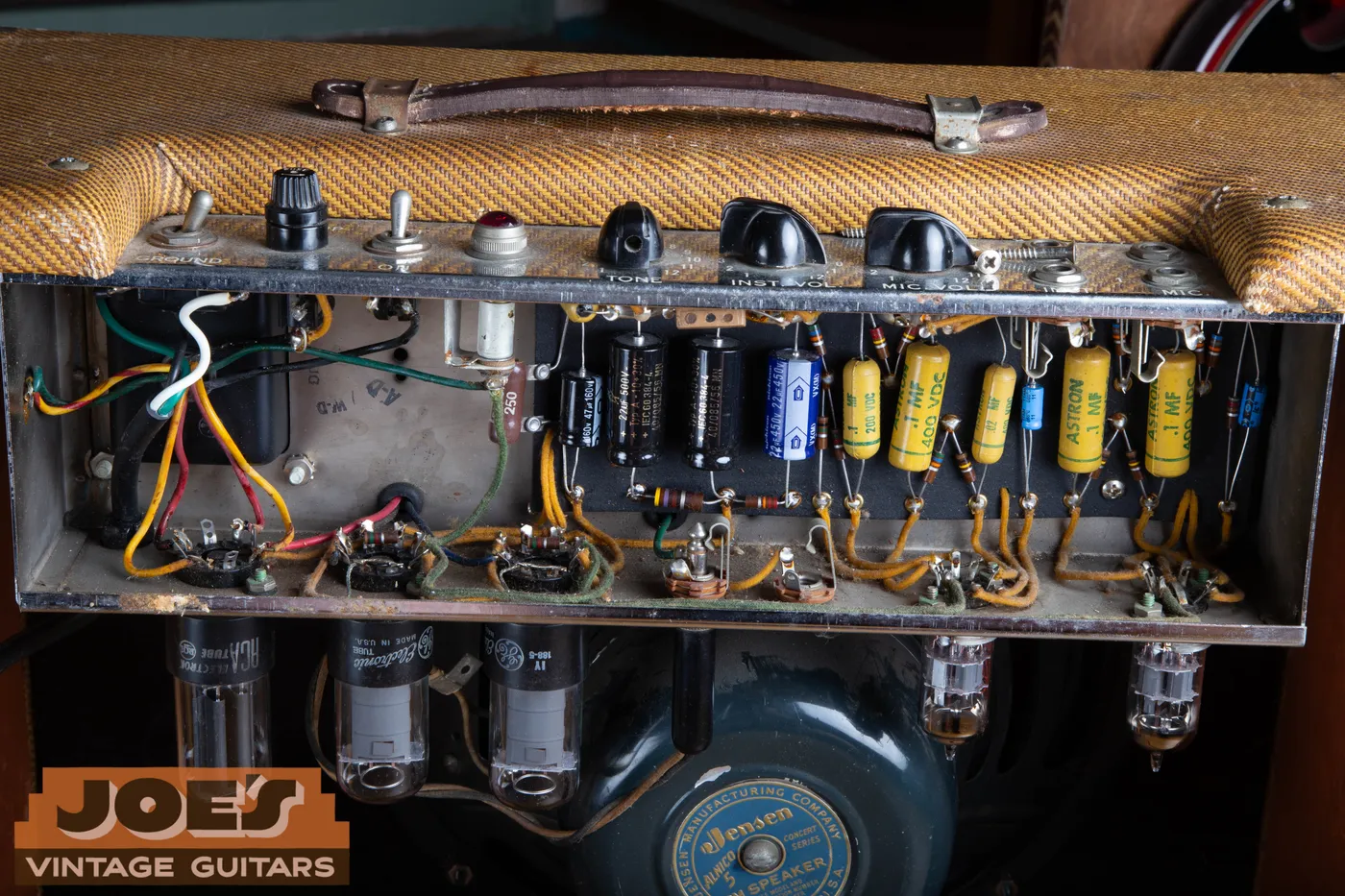
Joe’s 1957 example retains a printed 5E3 chart. The photograph establishes that printed marking clearly. It doesn’t supply a readable two-letter production-date stamp, so this guide doesn’t decode one from that image. Keeping that limitation explicit is more useful than assigning a month from a blurred pencil mark.
The interior photograph also shows why “all original” needs a detailed inspection. Service parts are visible on the board. A technician’s report can establish what was changed and whether the wiring still follows the intended circuit. The name 5E3 describes a design; it doesn’t certify the age or originality of every component attached to it.
A Circuit Code, With No Date Inferred
This printed designation is legible on Joe’s Deluxe tube chart. The photograph doesn’t support a complete date-stamp reading. The archive identifies the amp as a 1957 Deluxe, and that archive year is kept separate from what can be read from this label.
Charts, Transformers And Speakers
Find The Date Evidence On A Deluxe
A legible ink stamp on the original tube chart can be checked with Joe’s amp date decoder. That two-letter system begins with A for 1951 and was used until about 1970. The printed 5E3 or AB763 circuit designation and any handwritten production number are different kinds of marks. Keep them separate when sending photographs.
For a missing or damaged chart, follow the transformer and speaker source-date guidance. Look for agreement among components that appear original, with allowance for parts made before final assembly. The pot-code page explains control markings. Fender amp serial numbers aren’t a useful year-finding system, even when a chassis number is clearly stamped.
A cabinet and chassis assembled from different amplifiers can produce conflicting dates. Document the conflict rather than averaging the numbers into a guessed year. Original mounting holes, chart placement, transformer installation and repair records can help a technician decide which evidence belongs together. Ask for additional photographs if a seller supplies only a serial close-up.
Inspect The Model You Have
Deluxe Originality Checklist
Transformers And Any Circuit-Specific Choke
Identify the power and output transformers, plus the choke when that circuit uses one. Photograph stamps and mounting changes. Don’t mark a 5E3 incomplete for lacking a component that isn’t part of its original circuit.
Speaker Frame And Cone
Compare the speaker with the documented model and period. Record reconing separately from replacement of the complete speaker. The label, frame and cone each provide evidence, and they may have different histories.
Capacitors, Resistors And Wiring
Have the circuit inspected for maintenance and modifications. Identify replaced filter capacitors, changed signal components and altered wiring in the report. The condition of old electrolytics is an electrical service question.
Tube Chart And Printed Model
Read the entire chart and photograph its edges. Check that its model designation agrees with the chassis. A new label or a transplanted chassis requires a different explanation from a worn original chart.
Cabinet, Baffle And Covering
Look inside accessible openings for repairs, additional speaker holes and replaced wood. Show recovered areas and seams. An original chassis in a new cabinet should be described with both facts included.
Grille Pattern, Trim And Badge
Note replaced cloth, loose aluminum trim and a changed logo. These visible parts can be renewed without changing the chassis, so they can’t independently settle the amp’s age.
Faceplate And Control Knobs
Check lettering, knob style and the actual functions. A Deluxe Reverb has a different control arrangement from the non-reverb Deluxe. Added switches or a mismatched faceplate deserve closer chassis inspection.
Handle And Its Mounts
Inspect the strap and the cabinet around each bracket. A later handle is a replacement to disclose; enlarged holes or repairs beneath it may also affect the cabinet assessment.
Tank, Cables And Footswitch
For a Deluxe Reverb, photograph the tank identification and the effect-switching accessories. Earlier Deluxes lack built-in reverb. Judge completeness against the correct model’s equipment.
Rear Wood Panels
Confirm whether both expected panels survive and whether their material and wear match the cabinet. A replacement panel is easy to overlook if all photographs concentrate on the front grille.
Cover And Retained Paperwork
Keep the cover, manual and repair records with the amplifier. Identify reproduction accessories as such. Earlier ownership photographs may show the amp before a cosmetic or electrical change.
Three Amps From Joe’s Archive
Deluxe Photo Timeline
Narrow-Panel Tweed
1957 Fender Deluxe
The compact top panel, tweed cabinet and paper 5E3 chart show this version’s visible identity. The board photograph is included as condition evidence, with visible service parts, rather than as a claim that the circuit remains untouched.
Blackface Reverb
1967 Fender Deluxe Reverb
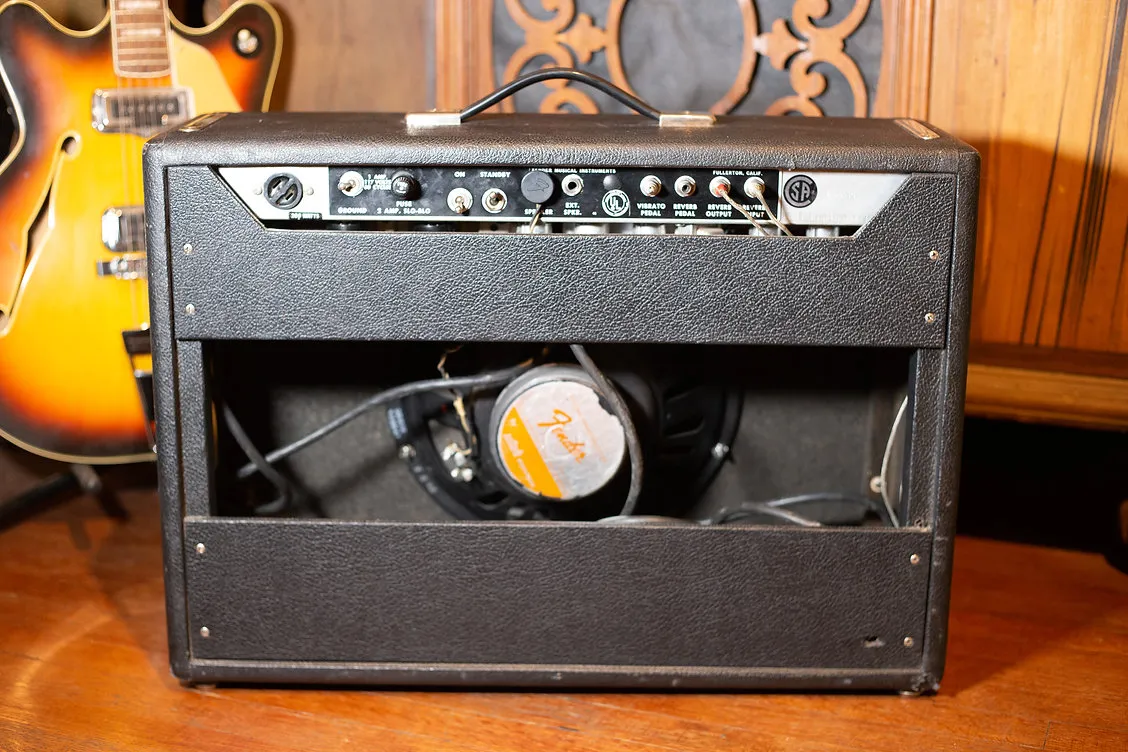
The black control panel names the reverb model. Its rear view shows a single speaker and the cabinet opening. Compare the full control layout before assigning a similar-looking non-reverb Deluxe to this family.
Later Silverface
1979 Fender Deluxe Reverb
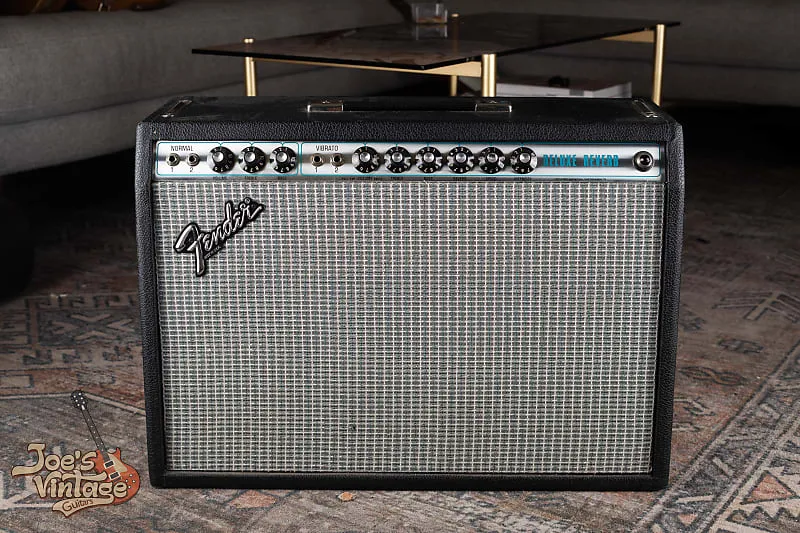
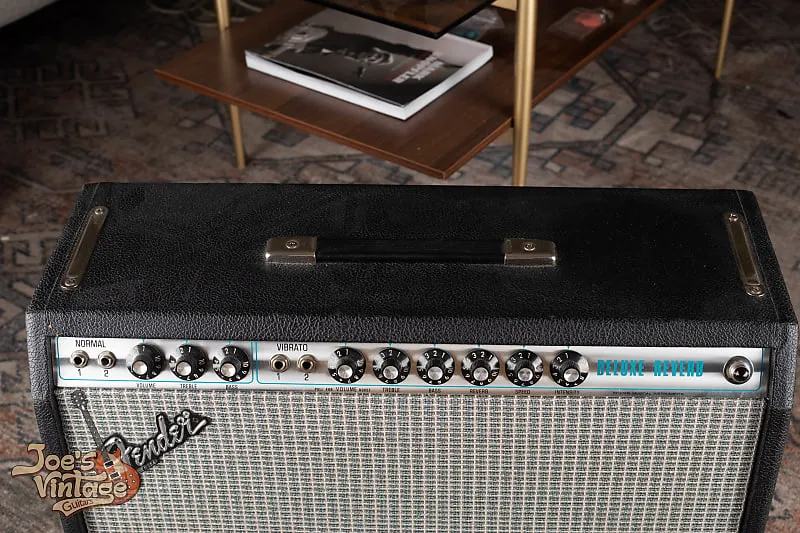
The silver panel, blue model lettering and later cosmetic details can be compared with the blackface example above. These archive photographs identify the amp and its appearance; hidden component originality needs its own inspection.
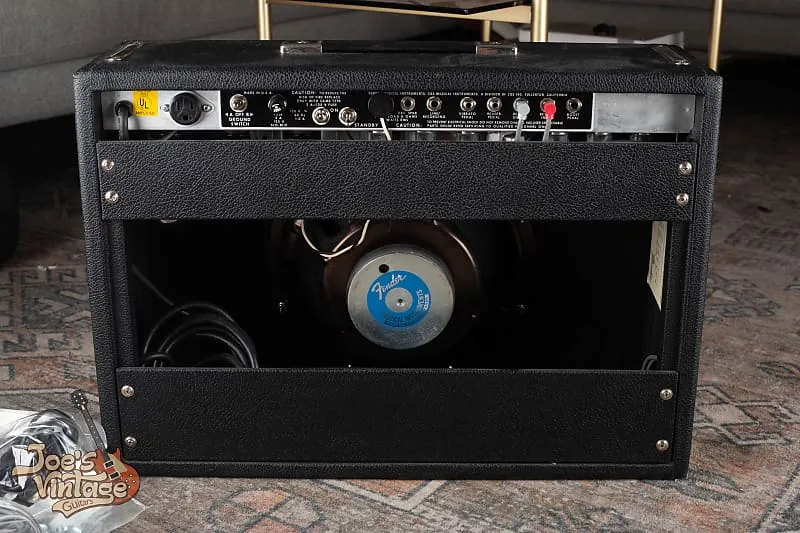
Keep The Inspection Useful
Record Service And Value-Changing Replacements
Routine work can include filters, worn tubes and electrical safety repairs. Keep those repairs distinct from a changed transformer, replacement speaker, altered cabinet or recovering. The Deluxe value page addresses how condition enters an appraisal. No fixed deduction here can replace inspection of the particular version.
Ask for a written list of changes when an amp is serviced. A vague claim that it was “gone through” leaves the next owner unsure whether the work involved a few worn components or a different circuit. Preserve removed parts and photographs when practical, while keeping unsafe parts out of operation.
Send The Evidence
Send The Deluxe Evidence For Review
Include the full amp, chart, speaker and transformer photographs. Tell Joe what has been repaired and what is still uncertain.
Technical References
Deluxe Sources And Factory Documents
- Narrow-Panel Deluxe
5E3 controls, speaker family, cosmetics and schematic link.
- Brown Deluxe
6G3 specifications and cabinet features.
- Blackface Deluxe
Non-reverb configuration and tube layout.
- Blackface Deluxe Reverb
AB763 output, controls and hardware.
- Silverface Deluxe Reverb
Rectifier, pull-boost and cosmetic revisions.
- Fender ’65 Deluxe Reverb Service Manual
Factory printed-circuit-board documentation for reissue identification.
- Fender ’57 Custom Deluxe
Modern handwired tweed construction.
- Fender ’64 Custom Deluxe Reverb
Modern handwired model, channel names and effects on both channels.
- Fender ’68 Custom Series Announcement
Custom/Vintage channels and Celestion speaker specification.
- Fender’s 2026 Model Announcement
The modern ’62 Deluxe and its stated output and speaker.
- Tone Master Deluxe Reverb
Digital model and rear-panel features.
Questions AboutFender Amp Identification
Does 5E3 Give The Year My Deluxe Was Built?
Did Fender Make A Blackface Deluxe Without Reverb?
Does A Silver Panel Mean The Deluxe Has The Twin’s High-Power Circuit?
Are New Filter Capacitors Evidence Of A Fake Amp?
The Last Word
Identify The Amp Before Pricing It
Match the Deluxe’s circuit family and controls, then reconcile the dates and repairs. The Deluxe price guide provides the corresponding estimates. Read the Fender era article for cosmetic context or the Princeton, Deluxe and Twin comparison for a practical size and output comparison.
Authenticity And Originality Are Assessed From The Information Provided. A Hands-On Inspection Can Change The Conclusion.