

Tweed Deluxe, Brownface And Reverb Models
Vintage Fender Deluxe And Deluxe Reverb Values
Values for the Deluxe family, with the 5E3, brownface, non-reverb blackface and Deluxe Reverb kept in their own groups.
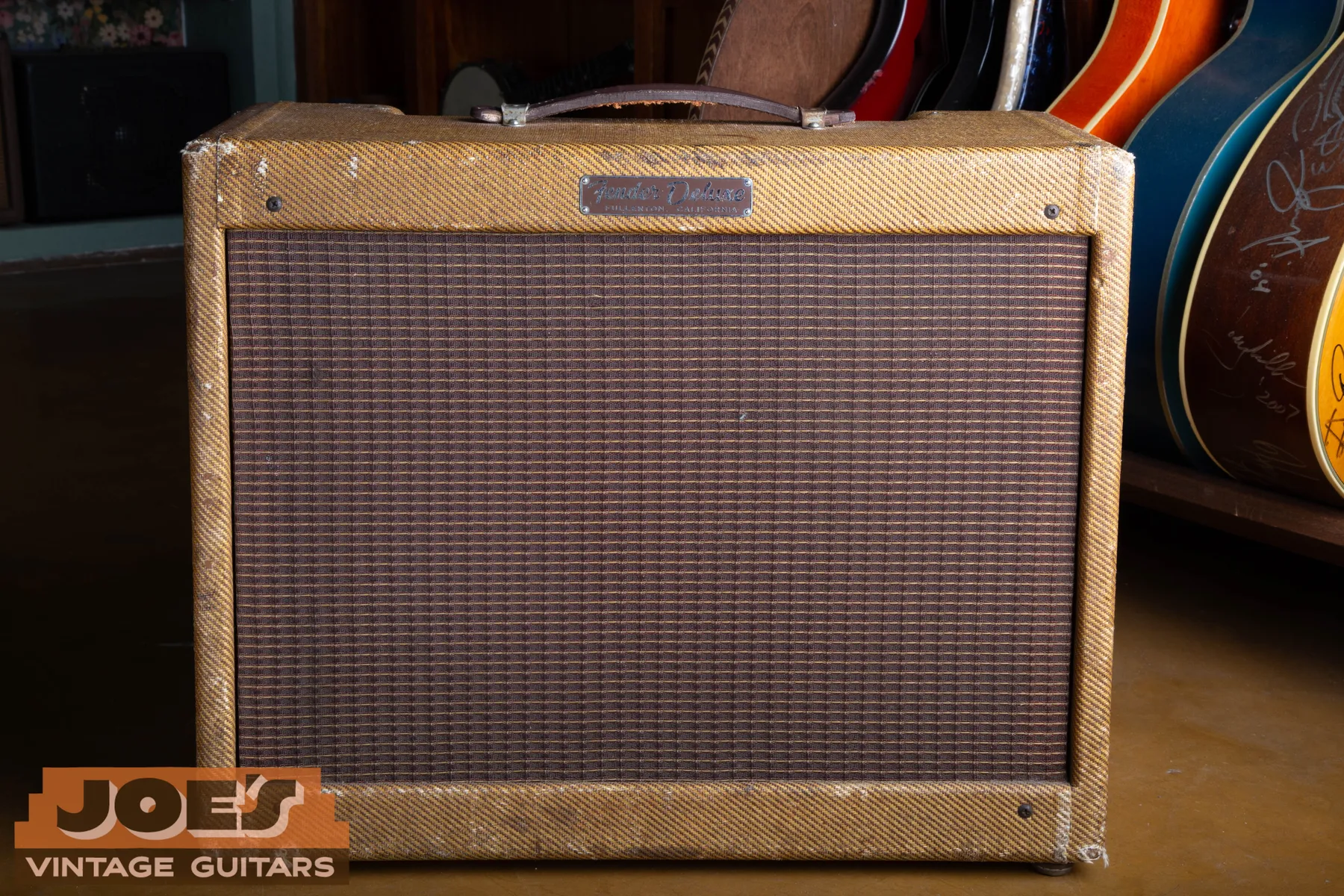
A blackface Fender Deluxe Reverb is estimated at $3,450 to $4,300 in excellent, original condition. Tweed, brownface and non-reverb Deluxes have separate entries below. The Deluxe identification guide helps establish which version you own before its condition is priced. A Deluxe nameplate or a single twelve-inch speaker doesn’t distinguish all these amps. The cabinet, controls and dated components need to support the description.
This Is An Estimate Of Market Value, Not An Offer To Buy And Not A Guarantee. Market Values Fluctuate; Have Your Specific Item Appraised.
Original Vintage Amplifiers
Deluxe Values From Tweed To Silverface
| Model | Years | Version | Estimated Value |
|---|---|---|---|
| Deluxe | 1948 to 1952 | Tweed, TV front | $3,650 to $4,750 |
| Deluxe | 1953 to 1954 | Tweed, wide panel | $3,750 to $4,850 |
| Deluxe | 1955 | Narrow panel, small cabinet | $6,300 to $7,850 |
| Deluxe | 1956 to 1960 | Narrow panel, large cabinet | $6,400 to $7,900 |
| Deluxe | 1961 to 1963 | Brown covering | $3,400 to $4,250 |
| Deluxe | 1964 to 1966 | Black covering, no reverb | $3,500 to $4,350 |
| Deluxe Reverb | 1963 to 1967 | Blackface | $3,450 to $4,300 |
| Deluxe Reverb | 1967 to 1968 | Silverface | $1,850 to $2,200 |
| Deluxe Reverb | 1969 to 1970 | Silverface | $1,550 to $2,000 |
| Deluxe Reverb | 1971 to 1980 | Silverface | $1,100 to $1,550 |
U.S. dollars. Original cover where applicable. These estimates are starting points for an individual appraisal; condition, changed parts and required service affect the assessment. Overlapping year groups describe separate guide entries.
The chart separates the early cabinet styles and distinguishes the non-reverb Deluxe from the Deluxe Reverb. Read across the entire row, including its configuration. A year shared by two entries doesn’t make those amps interchangeable. If a cabinet has been replaced, the chassis may need a closer inspection before the original version can be established.
No estimate here covers a modern 5E3 kit or Fender reissue. A handwired circuit and aged tweed covering can resemble a vintage amp without providing vintage provenance. Likewise, a later black-panel reissue shouldn’t be placed in the original blackface row. Ask for identification help first if the seller’s description and the rear label disagree.
Cabinet, Speaker And Circuit
Pricing A Tweed Deluxe With Its History Intact
The narrow-panel tweed Deluxe needs more than a tidy exterior to support an excellent-original estimate. Show the cabinet joints, covering seams, grille and rear panels as well as the control panel. A re-covered cabinet can retain its old chassis and still require a different condition assessment. Describe which parts were restored instead of applying the word “restored” to the entire amplifier.
Speaker condition deserves equal attention. An original frame with a replacement cone should be identified that way. A modern speaker installed for regular playing is another situation. If the older speaker survives, photograph it separately and state whether it worked when removed. The appraisal can then account for the amp’s current configuration and the parts accompanying it.
Joe’s 1957 Deluxe photographs include the paper 5E3 chart and an interior view showing service components. Those images illustrate the questions an appraiser needs to ask. An archive date doesn’t certify every capacitor, transformer or speaker in the amp. Use the same distinction when describing your own Deluxe: production identity and current originality are related but separate findings.
An earlier TV-front or wide-panel Deluxe must be matched with its corresponding entry. Borrowing a later narrow-panel value because both amps wear tweed overlooks the cabinet generation the chart is pricing. If family notes give only an approximate decade, send the front and control panel before trying to narrow the year yourself.
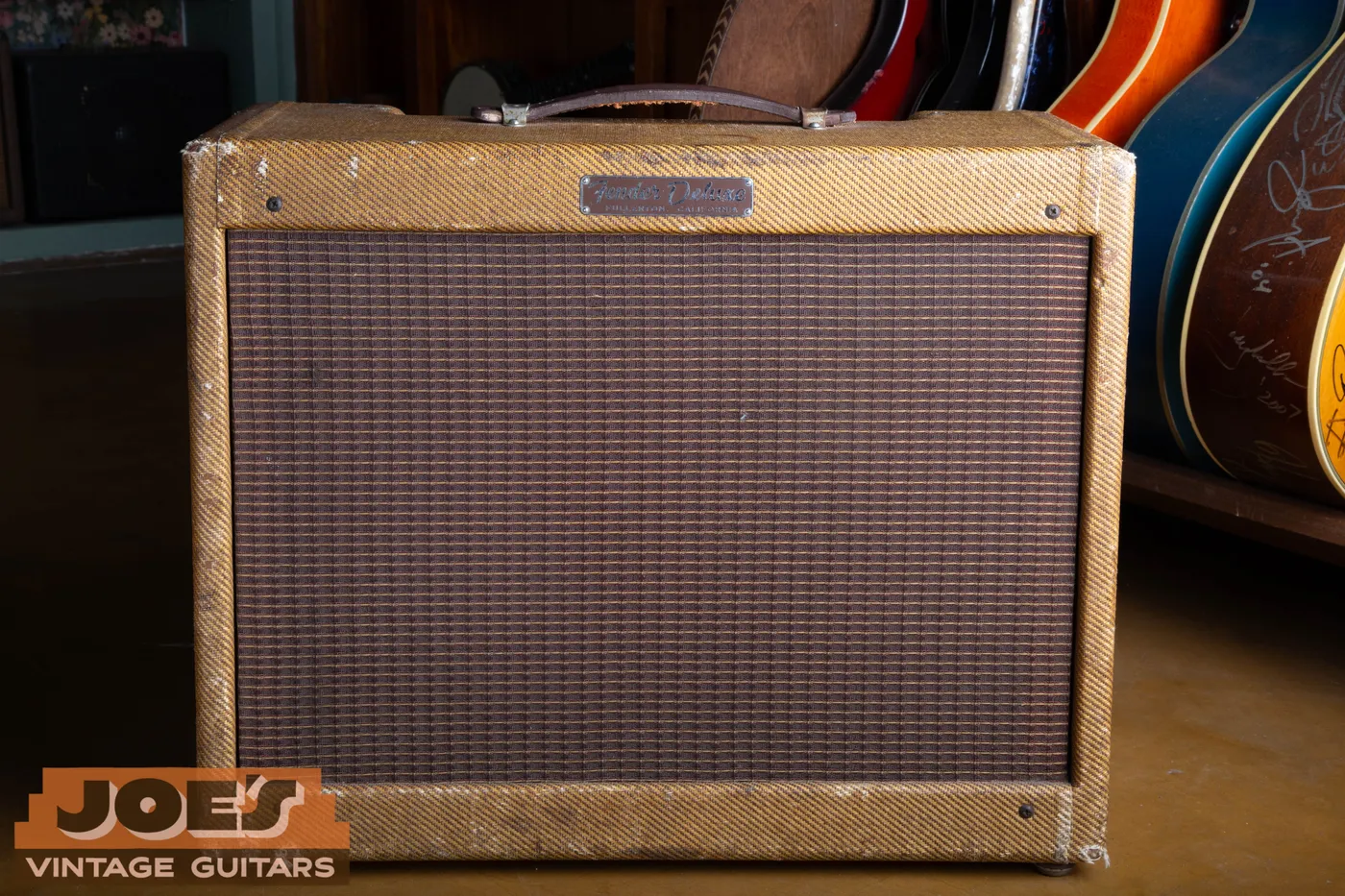
1957 Fender Deluxe And 1967 Fender Deluxe Reverb
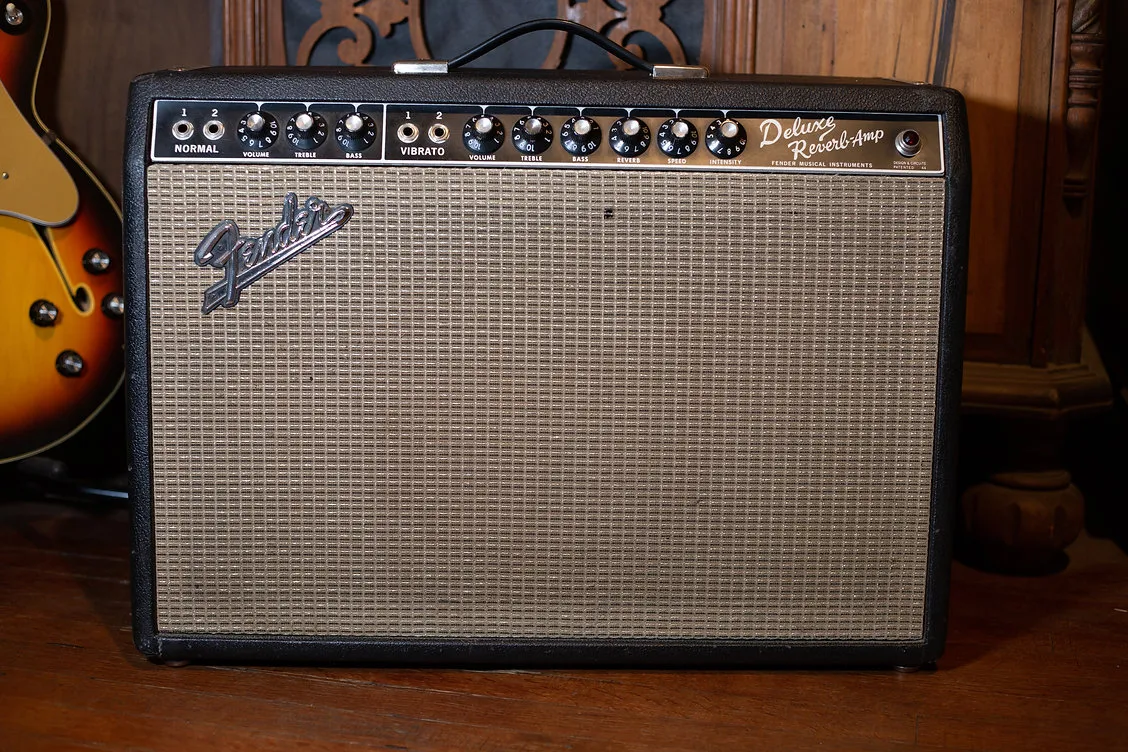
Model Changes Before Condition
Brownface, Blackface And Silverface Price Groups
Brownface And Non-Reverb Deluxe
The brownface Deluxe has its own row, as does the later blackface Deluxe without reverb. A buyer looking for one of those versions may care about details that don’t apply to a Deluxe Reverb. Photograph the exact model lettering and controls. Don’t describe the absence of a reverb tank as a missing part until the model itself has been established.
Deluxe Reverb Through 1980
Original blackface and silverface Deluxe Reverbs are divided into their listed groups. An early silverface appearance needs date and circuit evidence before a narrower description is justified. Later control changes also belong in the condition record. A boost function that was disconnected during servicing should be disclosed even if the amp now sounds the way its owner prefers.
The Fender eras comparison can help identify the broad visual period. For a purchase based on playing needs, read the Princeton Reverb versus Deluxe Reverb versus Twin Reverb comparison. Neither the era nickname nor the wattage supplies a condition grade. Those details establish what you’re comparing; the inspection determines how well the individual amp fits its estimate.
Some price references group the black-panel return with years beyond this page’s 1980 cutoff. This chart leaves those mixed-period entries out instead of splitting their figures. An original 1980 amp with that appearance can still be appraised individually. Send its rear markings, chart and dated parts, and avoid assigning it an earlier blackface identity from color alone.
Parts And Repairs
What Moves A Deluxe Away From Its Chart Range
The Transformer Set
Document the power transformer, output transformer and any choke appropriate to the circuit. Their markings and installation help distinguish a retained factory part from a replacement. A technician’s invoice may explain a replacement made after a failure. Keep that explanation with the amp; an unsupported claim that every transformer is original can create a problem at inspection.
The Cabinet And Grille
A Deluxe’s compact cabinet can hide substantial work in an attractive front photograph. Show replacement panels, repaired corners, a changed baffle or holes left by added hardware. Photograph the covering in natural light without a filter. The condition report should describe wear, repairs and replacement material clearly enough for a buyer to understand what survives.
Small parts still belong in the inventory. A replacement handle, missing footswitch or later cover should be mentioned even when it isn’t the largest issue. On a Deluxe Reverb, identify the tank and its cables as well. Completeness helps explain the estimate, but there’s no useful universal deduction for every missing accessory across every Deluxe version.
Separate service from redesign. Filter capacitors and worn tubes can require attention during normal upkeep; altered circuitry, changed transformers or a replacement cabinet raise additional originality questions. List both kinds of work in plain terms. An amplifier can be serviced and well documented without being described as untouched. It can also be clean on the outside while needing electrical evaluation.
Keep any removed original parts with a note describing their condition. Don’t reinstall a failed part just to improve a sales description. A qualified technician should decide what’s safe to operate. If the amp hasn’t been inspected recently, an appraisal can begin with photographs and an accurate statement of what is known, without a power-on demonstration.
Preserve The Evidence
Prepare The Deluxe Before Asking For A Value
Gather the amp, cover, footswitch, repair receipts and any photographs from earlier ownership. Make a short list of changes you know about and mark uncertain items as uncertain. That’s more useful than guessing a year from the appearance of the tubes or relying on a seller’s old advertisement. Components can be changed many years after the cabinet was built.
Cleaning should preserve identifying marks. Don’t scrub a speaker stamp, tube-chart ink or transformer lettering to improve a photograph. Take several pictures in diffuse light and keep the originals at full resolution. If a mark is still unreadable, leave it unreadable in the description. A partial code is a reason for further inspection, not a reason to fill in the missing characters.
An asking price from another amp won’t show whether it sold or whether its parts match yours. Use the chart as a starting estimate and then document the individual differences. The purchase offer, if you choose to sell, follows an assessment of the actual amplifier and its present needs. Required work can affect that discussion even when the cosmetic condition looks strong.
Views That Support An Appraisal
Send These Deluxe Photographs
The Full Front
Include all four cabinet edges and the complete faceplate. A close-up of the model lettering helps distinguish a Deluxe from a Deluxe Reverb without relying on a caption.
The Back Opening
Show the speaker, back panels and rear chassis markings together. If a panel is absent, send the amp as it stands and mention any loose panel you still have.
The Tube Chart And Chassis
Capture the chart in place and retain faint markings in the original image. Internal chassis pictures should come from a qualified technician because stored electrical charge can remain after unplugging.
The Transformer Stamps
Include the full numbers on each accessible transformer and the mounting area. Ask the technician to photograph concealed markings during an inspection rather than opening the chassis yourself.
The Speaker’s Identification
Show the label, basket code and any visible cone marks. Add a note about reconing or speaker substitution so the pictures and the repair history can be read together.
Reverb Equipment And Cover
For the reverb model, include the tank label and footswitch. Lay out the cover and retained parts separately, with enough detail to see wear and later replacements.
Date evidence belongs with those pictures. Joe’s amp date-code decoder handles readable tube-chart stamps, and his Fender pot-code guide addresses control codes. The chassis serial is a useful identifying record, but Fender amp serial numbers aren’t reliable for finding the year.
Send The Evidence
Ask Joe About Your Deluxe
Send the photos and a short repair history. Include any uncertainty about the model or date so it can be resolved before a value is assigned.
Questions AboutVintage Amp Values
Is A 5E3 Clone Included In This Chart?
Should I Recover My Deluxe Before Selling?
Does A Service Invoice Add Its Full Cost To The Value?
The Last Word
Get Your Amp Appraised
A useful Deluxe estimate starts with the right version and a clear account of its components. Check the Deluxe and Deluxe Reverb identification guide for the physical details, then send Joe your appraisal photographs. If you’re ready to sell, the amplifier buying page explains the next step.
This Is An Estimate Of Market Value, Not An Offer To Buy And Not A Guarantee. Market Values Fluctuate; Have Your Specific Item Appraised.