

Tweed Princeton To Silverface · Through 1980
Fender Princeton And Princeton Reverb Identification
A small tweed Princeton, a brown 6G2 and a Princeton Reverb need different identification checks. Follow the actual model and its date evidence.
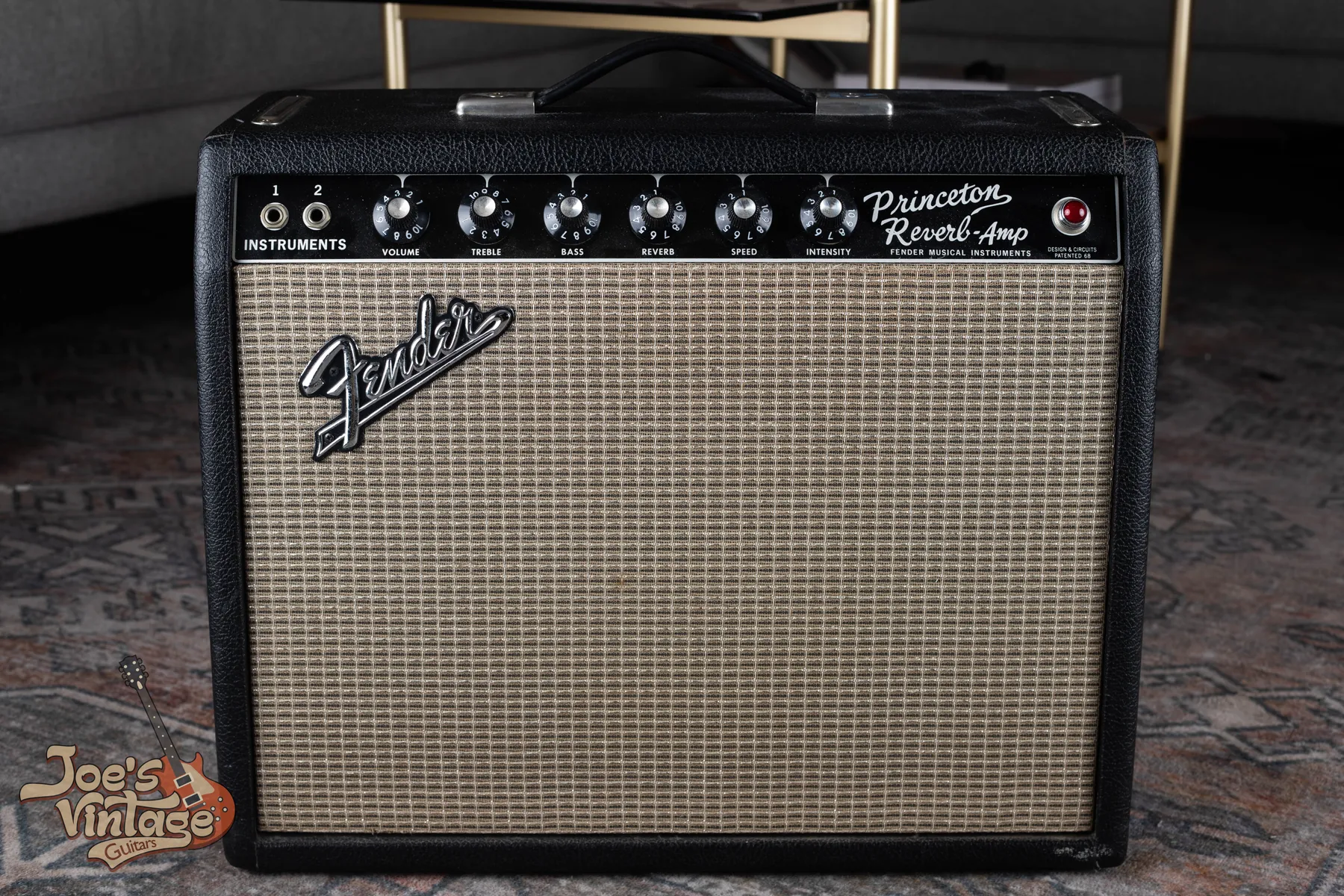
The vintage Princeton family includes a small single-output-tube tweed amp, a larger brownface design with tremolo, and separate Princeton and Princeton Reverb models. Identify those differences before applying the Princeton value ranges. The front controls supply a quick first distinction; the chart, chassis and component dates refine it. Joe’s brown 1963 Princeton and blackface 1966 Princeton Reverb provide photographed examples, including readable tube-chart stamps from both amplifiers.
Authenticity And Originality Are Assessed From The Information Provided. A Hands-On Inspection Can Change The Conclusion.
Look Beyond The Black Or Brown Covering
Original Or Reissue? Princeton Checks
The ’65 Princeton Reverb reissue uses a printed circuit board documented in Fender’s service drawing. A qualified technician can compare it with an original eyelet-board layout. Rear model identification and modern component dates provide additional evidence. A replaced modern speaker in an older amp must be distinguished from a complete modern reissue.
The ’68 Custom Princeton Reverb recreates early silverface styling, including the bright aluminum surround. Its standard Celestion TEN 30 speaker and modern model identification belong to that reissue specification. The surround alone doesn’t establish an original 1968 amplifier. Ask for the rear labels before making an age claim from a front photograph.
The ’64 Custom Princeton Reverb is a modern handwired model, so hand wiring by itself can’t prove 1960s manufacture. Fender’s ’62 Princeton Chris Stapleton Edition is another modern handwired recreation, with a twelve-inch Eminence speaker instead of the original brown Princeton’s ten-inch format. Those are useful physical distinctions, checked together with the complete model labeling.
Tone Master Princeton Reverbs are digital models with a rear USB port, XLR output and selectable power settings. The connections provide quick exclusion evidence for an original tube amp. Post-1980 Princeton redesigns also sit outside this guide. Keep those later products separate from the vintage circuits below, even when the Princeton name appears on both.
Tweed, Brown And Reverb Circuits
How The Princeton Family Developed
The Tweed Era And Small Princeton
The tweed era covers 1948 to 1959. The Princeton passed through TV-front, wide-panel and narrow-panel cabinets, with a single output tube and a small speaker. The narrow-panel 5F2-A is a distinct circuit with volume and tone controls. Model-specific price records include later tweed examples, so the broad era dates aren’t a substitute for individual identification.
Brownface 6G2 Princeton
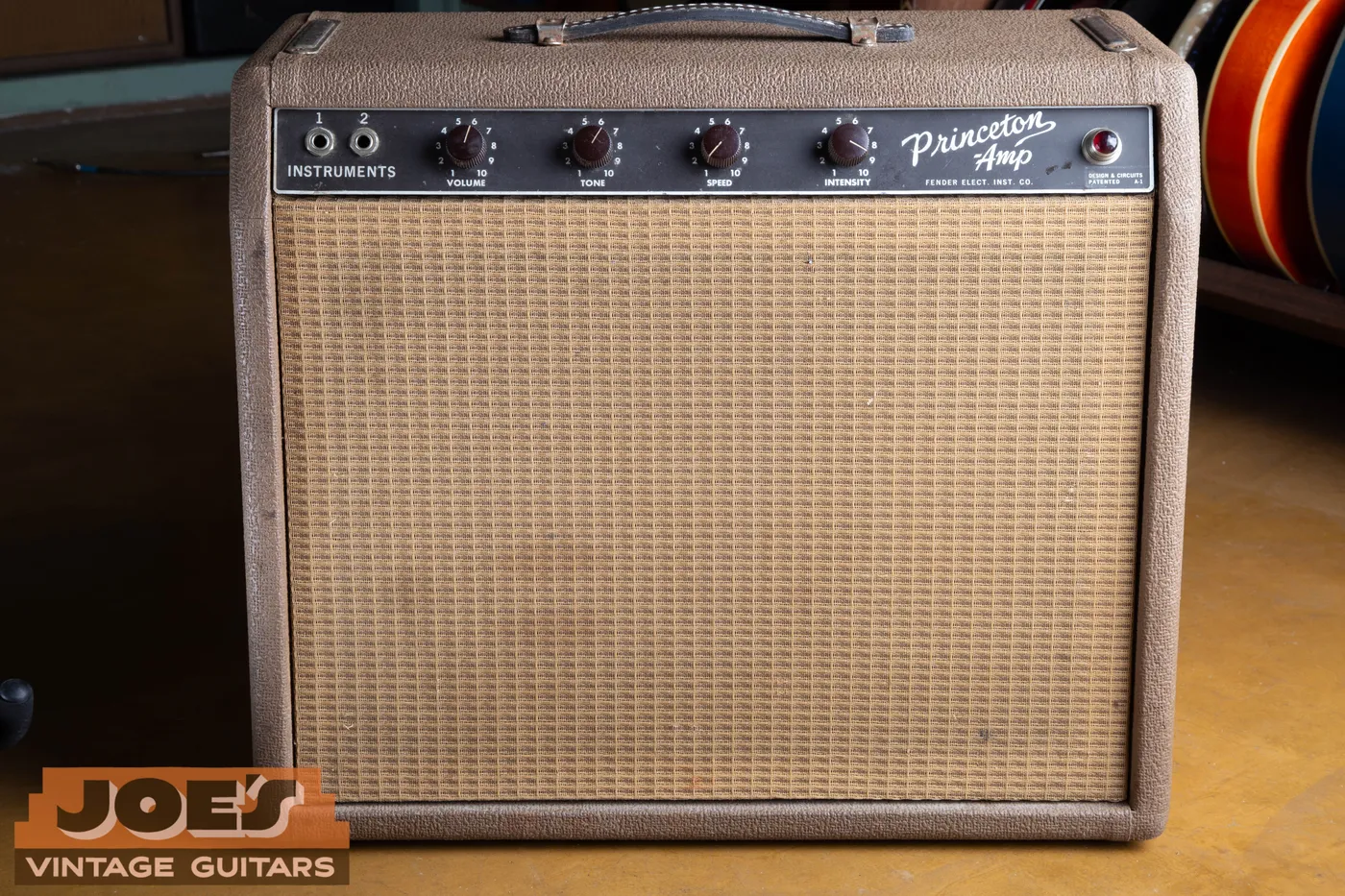
The brown 6G2 uses a pair of 6V6 output tubes, a ten-inch speaker and tremolo. Its four controls are volume, tone, speed and intensity. Joe’s brown Princeton shows that arrangement and the later date evidence discussed below. The larger circuit is a substantial change from the small tweed design.
Transitional Black 6G2
Early black-covered Princetons can retain the 6G2 circuit and white barrel knobs. This transitional appearance is often called tuxedo styling. A black cabinet therefore doesn’t automatically establish the later treble-and-bass-control circuit. Read the controls and chart together.
AA964 Princeton And Princeton Reverb
The later non-reverb Princeton has separate treble and bass controls. The Princeton Reverb adds reverb and uses its own expanded tube complement. The AA1164 schematic is a reference for that reverb circuit; printed tube-chart designations can differ, as Joe’s AA764-labeled example demonstrates.
Silverface Appearance And Later Controls
Within the silverface era, the Princeton families adopted silver panels and early aluminum grille trim. Trim, grille and logo details changed over time. Later versions added a pull-boost function, and a black-panel return appears near the end of this scope. Reverb and non-reverb variants still need separate identification.
Small Amps With Different Circuits
Princeton Specifications By Version
| Version / Circuit | Output And Tubes | Rectifier / Speakers | Controls | Cabinet Details |
|---|---|---|---|---|
| Narrow Tweed / 5E2, 5F2, 5F2-A | About 4 W; one 6V6GT; one 12AX7 | 5Y3GT; one 8-inch speaker | Volume and tone; switch layout varies | Tweed; oxblood/gold grille; chrome top panel; script badge; black chicken-head knobs; leather handle |
| Brown / 6G2 | About 12 W; two 6V6GT; one 7025 and one 12AX7 | 5Y3GT; one 10-inch speaker | Volume, tone, speed and intensity | Brown covering and panel; wheat grille; brown barrel knobs; script logo; leather strap |
| Transitional Black / 6G2 | About 12 W; two 6V6GT; two 12AX7/7025-family small tubes | 5Y3GT; one 10-inch speaker | Volume and tone; tremolo speed and intensity | Black covering and panel; light grille; white barrel knobs; transitional trim |
| Blackface Princeton / AA964 | About 12 W; two 6V6GT; two 12AX7/7025-family small tubes | GZ34; one 10-inch speaker | Volume, treble, bass, speed and intensity | Black covering; silver grille; black skirted knobs; early examples without grille logo; later raised logo |
| Blackface Princeton Reverb / AA1164 Reference | 12 W; two 6V6GT; three 12AX7/7025 and one 12AT7 | GZ34; one 10-inch speaker | Volume, treble, bass, reverb, speed and intensity | Black covering and faceplate; silver grille; raised logo; black skirted knobs and strap |
| Silverface Princeton Without Reverb / AA964 And Later Revisions | 12 W; two 6V6GT; two 12AX7/7025-family small tubes | Early GZ34 or later 5U4GB; one 10-inch speaker | Volume, treble, bass, speed and intensity; later pull boost | Black covering; silver panel; blue/silver grille; early aluminum surround; black skirted knobs and strap |
| Silverface Princeton Reverb | 12 W; two 6V6GT; three 12AX7/7025 and one 12AT7 | Earlier GZ34, later 5U4GB; one 10-inch speaker | Six-control reverb layout; later pull boost | Black covering; silver panel; blue/silver grille and later variants; early aluminum trim; black knobs and strap |
Ratings are nominal and depend on the documented version. 7025 is the low-noise 12AX7 family designation used on many original charts. Supply parts and transitional features require inspection of the individual amp.
Early TV-front and wide-panel Princetons predate the narrow-panel circuit shown here. Identify their specific chassis before using a later schematic as a reference. The small speaker and single output tube distinguish the broad tweed family from the later push-pull designs, but they don’t settle every circuit revision.
A twelve-inch speaker in a vintage Princeton cabinet needs an explanation. It can indicate a conversion involving the baffle, while a modern signature model can use that size by design. Photograph the cabinet opening and speaker mount. Don’t infer a rare factory version from speaker diameter without supporting records.
Two Photographed Date Examples
Read The Chart Stamp Separately From The Circuit
The Fender amp tube-chart decoder uses the two-letter ink stamp, with A representing 1951 in the year position. That system continued until about 1970 in Joe’s dating reference. Read the month letter carefully and preserve a full-resolution image. A printed circuit number and a handwritten production count should be recorded separately.
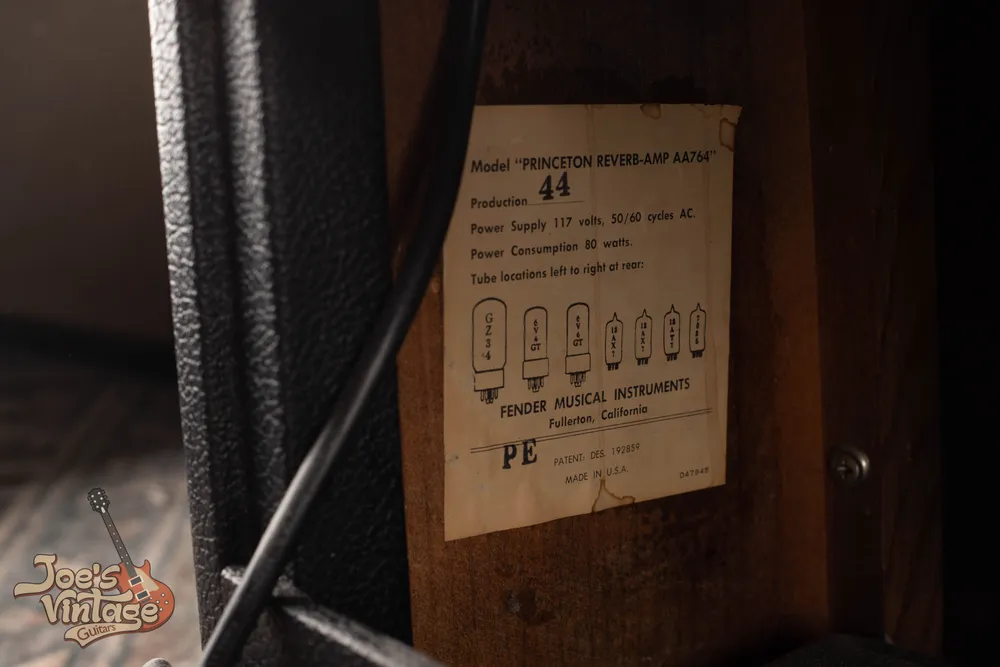
The chart in Joe’s blackface Princeton Reverb is particularly useful because it contains both kinds of evidence. PE is the date stamp; AA764 is printed as the model designation. The printed designation doesn’t change the meaning of the ink stamp. A circuit inspection can compare the actual wiring with the appropriate schematic rather than assuming the paper gives a complete electrical description.
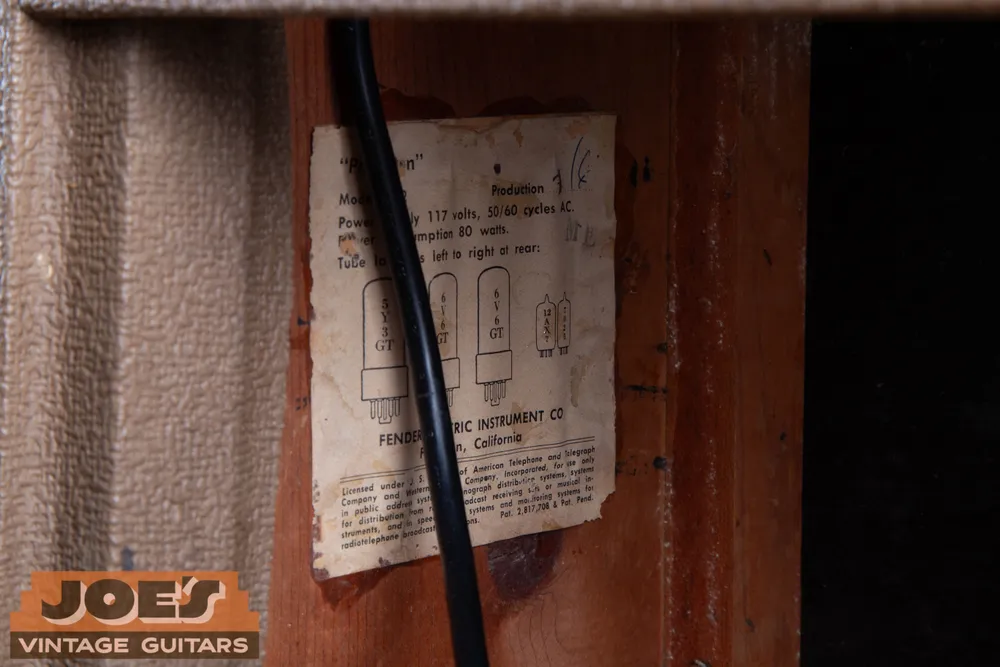
December 1963 On The Brown Princeton
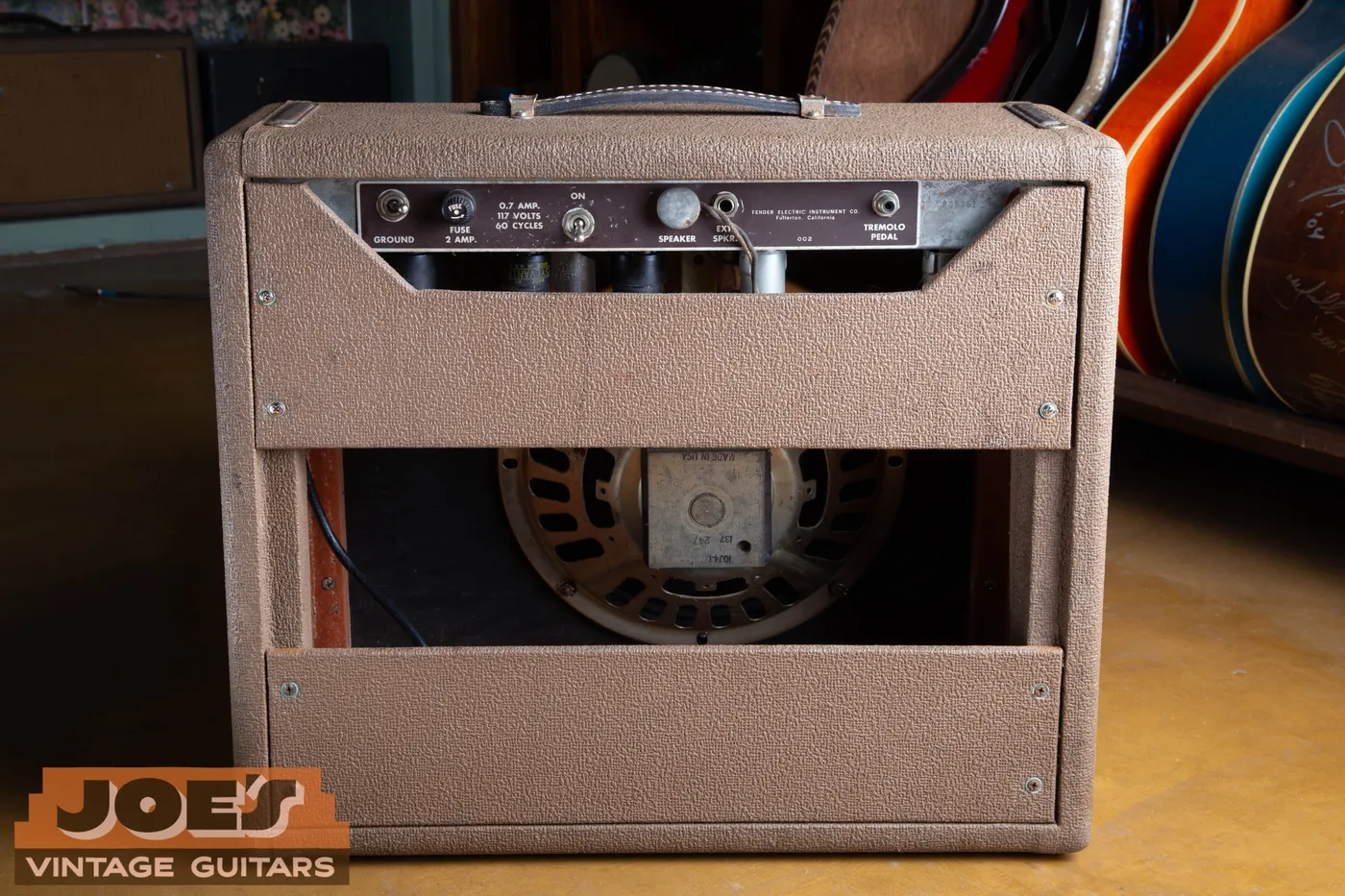
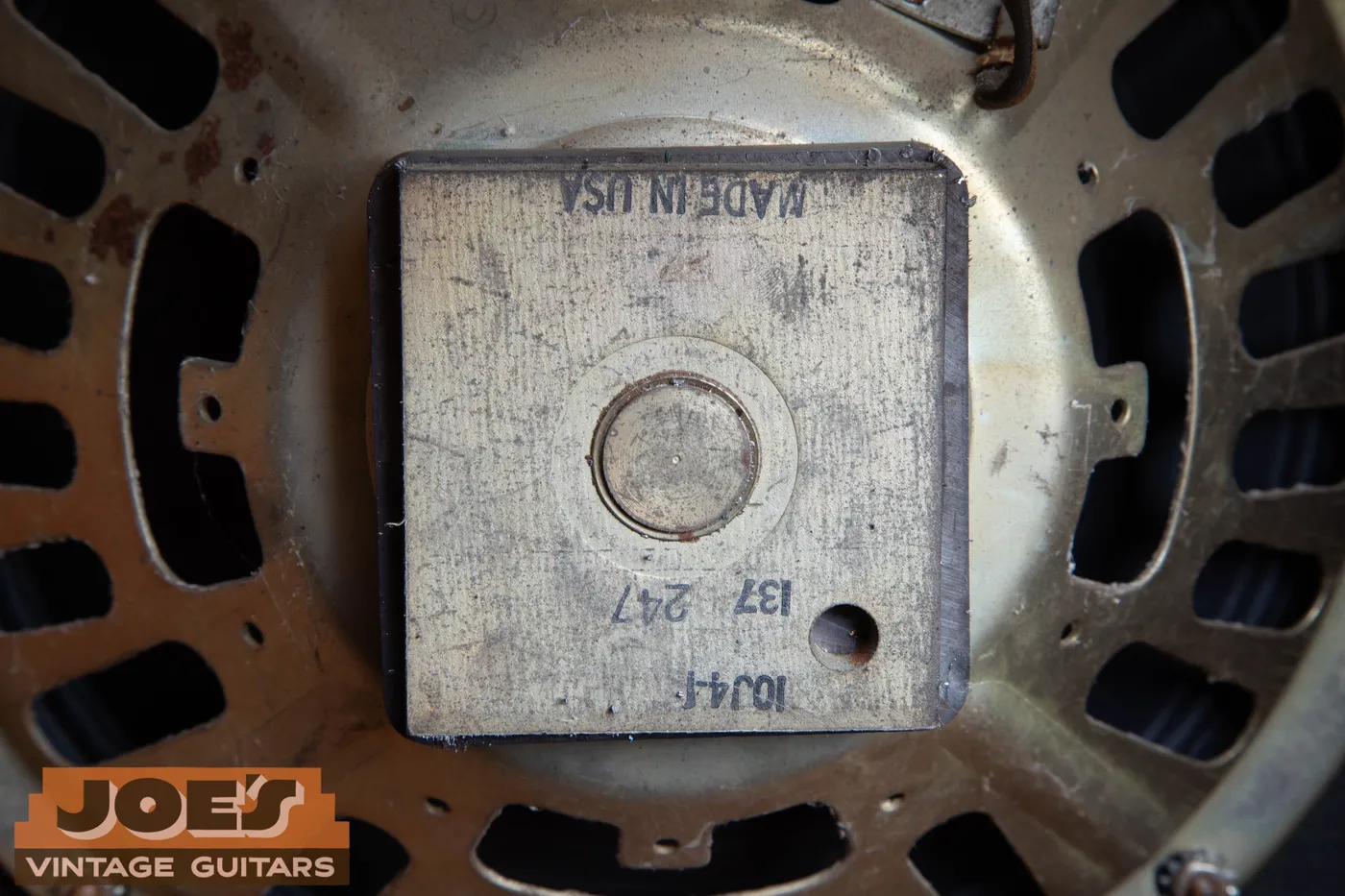
The two-letter ink stamp reads ML on this chart. M is 1963 and L is December in the decoder. The production notation higher on the label is kept separate. The surrounding cabinet and components still need to support the date.
May 1966 On The Princeton Reverb
P identifies 1966 and E identifies May. The chart also prints AA764 and a power-consumption figure. Neither of those is the date stamp, and wall-power consumption isn’t the amp’s audio output rating.
Cross-Check Original Components
Dating A Princeton With Missing Paperwork
A missing chart shifts the investigation to the components and physical model. Joe’s transformer and speaker source-date reference explains those markings. Use the pot-code guide for control codes where a technician can access them. Fender amp serial numbers aren’t dependable year indicators and shouldn’t override contradictory evidence from original parts.
Take the latest credible original component date into account while allowing for stock that was made earlier and fitted later. A replacement speaker may be newer than the amplifier; an old spare installed later may be older. Identify originality before treating either code as a build boundary. This is why a collection of sharp photographs is more useful than one isolated stamp.
If the cabinet’s chart and the chassis evidence disagree, preserve the discrepancy. A chassis swap, replacement part or misread letter may explain it. A month should remain uncertain when the available ink is unclear. Don’t retouch a photograph or reconstruct a missing letter to make the date fit the preferred model year.
Document Each Area
Princeton Parts And Cabinet Checklist
Power And Output Transformers, Plus Any Choke
Match the transformer set to the specific circuit. The 5F2-A omits the choke used in preceding narrow-panel versions, and the later Princeton circuits have their own layouts. Record actual parts and mounting evidence before calling anything missing.
Speaker Type, Size And Cone
Photograph the complete speaker and its stamps. Check for reconing and baffle changes, particularly a conversion to a larger speaker. A vintage frame doesn’t by itself establish an untouched cone or original installation.
Filter Capacitors And Signal Components
Ask the technician to list replaced parts and circuit alterations. A new capacitor can be necessary upkeep, while a changed circuit requires an additional description. Keep that record with the amplifier.
Tube Chart And Its Attachment
Capture the model printing and ink stamp in separate close views, with one wider photograph showing the chart in place. Record missing paper or unclear letters without attempting to complete the code from expectation.
Cabinet Wood And Covering
Examine repairs, seams and safely visible inner surfaces. Replacement cabinets and recovered originals need distinct descriptions. Photograph any added speaker cutout or altered baffle even when the front grille hides it.
Grille, Trim And Logo
Check the material pattern, aluminum surround where present and grille-logo arrangement. Some non-reverb blackface Princetons had no grille logo. Compare the correct version before treating an empty grille as a missing part.
Control Panel And Knobs
Count the controls and read their labels. The brown and transitional 6G2 use a single tone control; later versions have treble and bass. Added holes and mismatched knobs deserve a closer look.
Handle And Brackets
Inspect the carrying strap and mounting points. A newer handle may be a practical replacement, but the installation and any repaired wood should be disclosed. Don’t judge cabinet condition solely from the grille view.
Reverb Tank And Switching
The Princeton Reverb should be assessed with its tank, leads and footswitch. A non-reverb Princeton has a different equipment list. Identify replacement reverb parts and any operating fault separately.
Back Panels And Screws
Document the complete rear enclosure. A replaced panel or missing section can affect both appearance and completeness. Compare material and wear without assuming that every old-looking screw is factory installed.
Cover And Accompanying Records
Photograph a surviving cover, purchase paperwork and service receipts. Mark later accessories clearly. Documents are most useful when their identifying details can be connected to the amplifier being examined.
Brownface And Blackface Examples
Princeton Photo Timeline
Brown 6G2 Family
1963 Fender Princeton
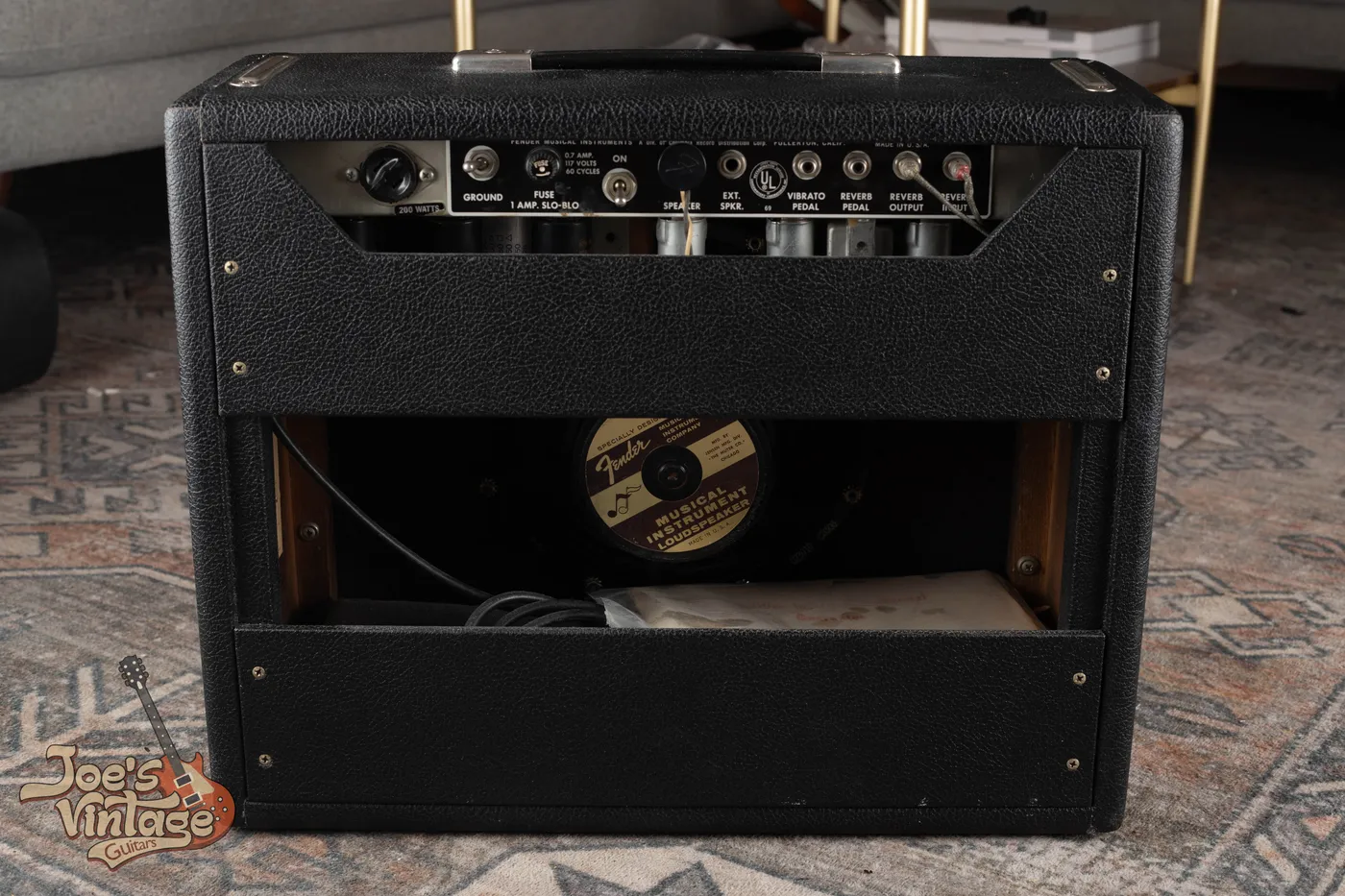
The front photograph shows the brown cosmetics and four-control layout. The rear view supplies the speaker and cabinet context for the chart photographed above. This is a non-reverb Princeton, so it should be compared with that model’s specification.
Blackface With Reverb
1966 Fender Princeton Reverb
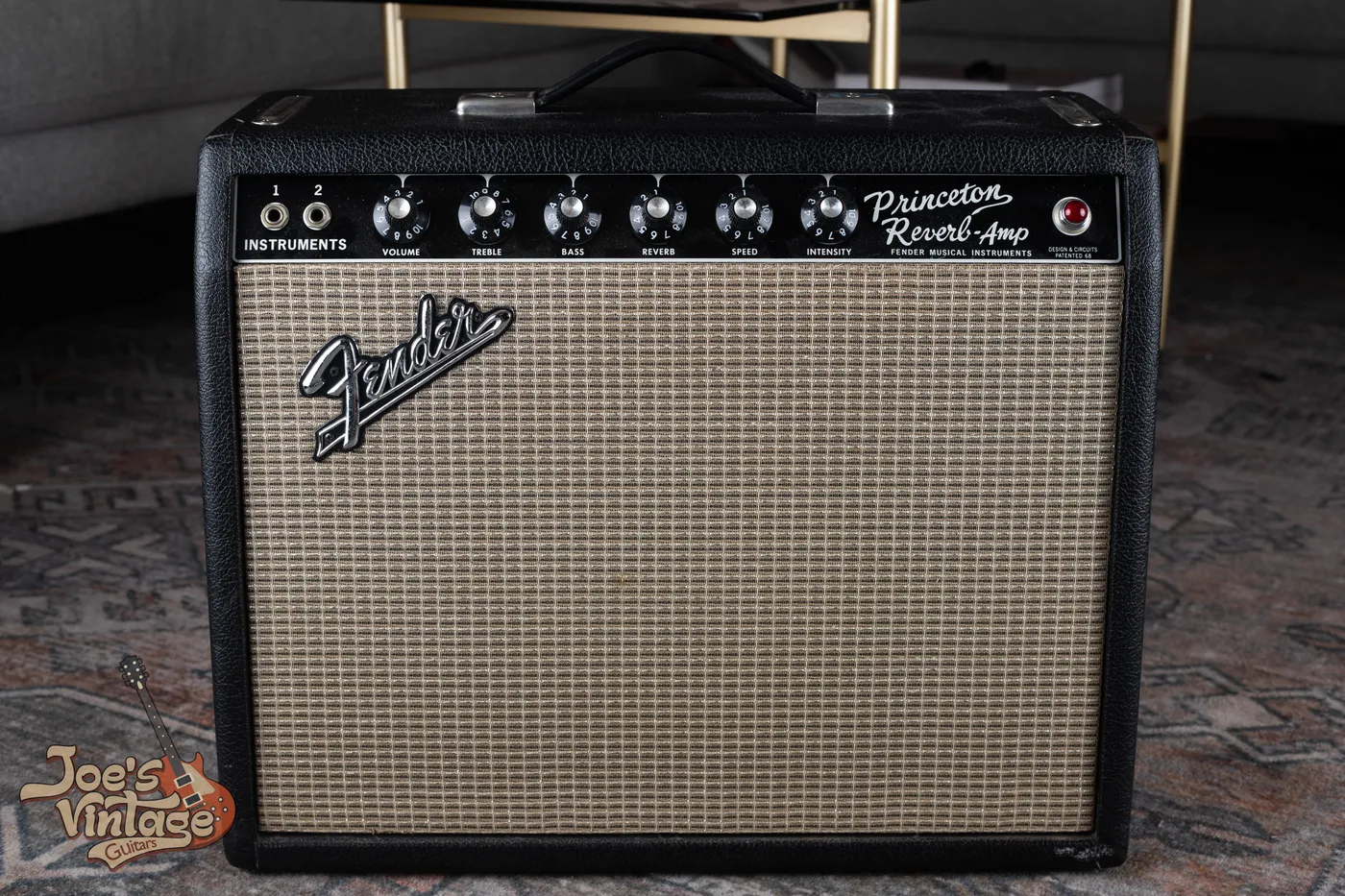
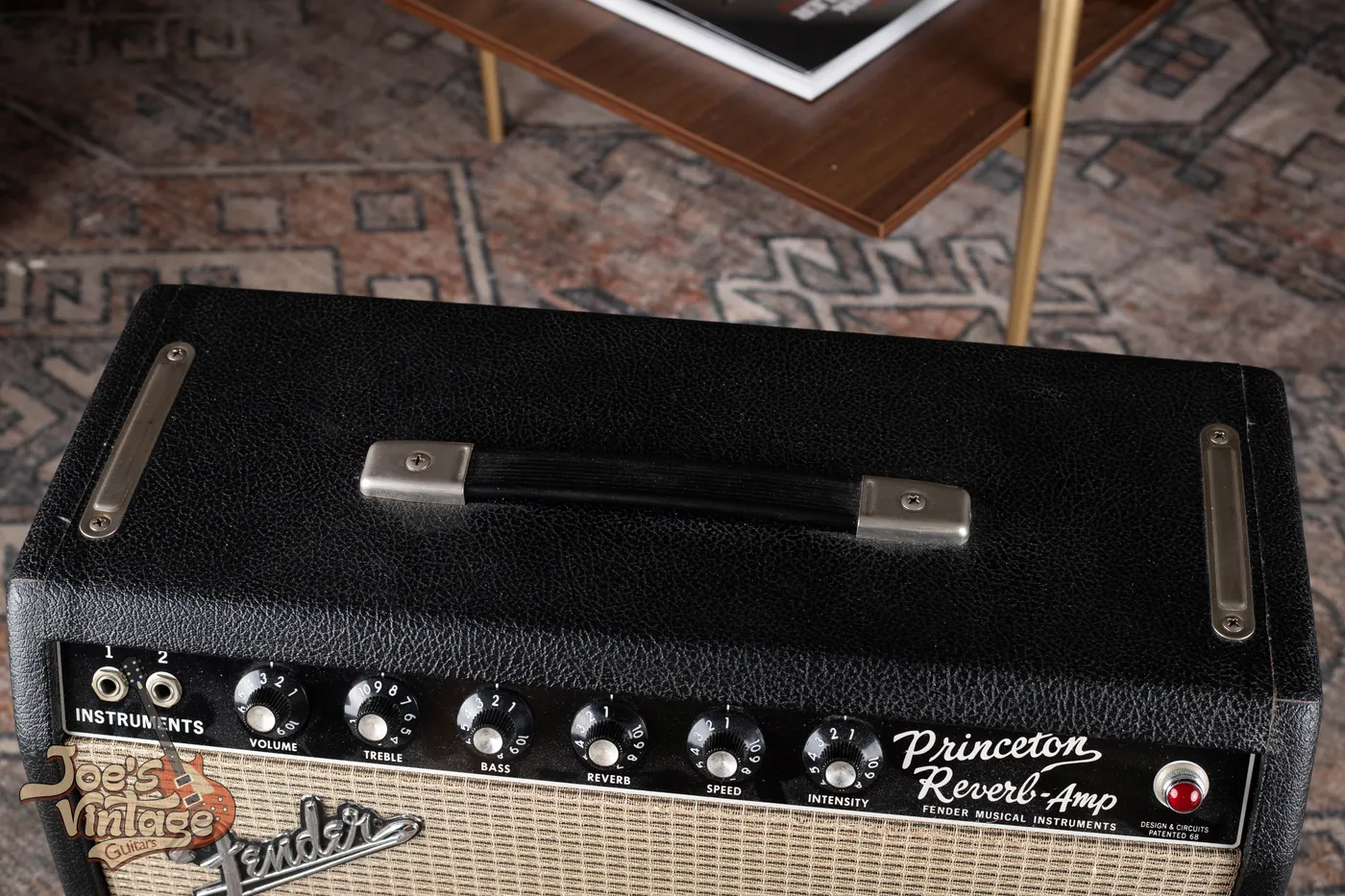
The six front controls include reverb, and the rear view shows the single-speaker format. Its paper chart carries the readable PE stamp. These views show the cabinet, controls and chart; internal originality requires chassis photographs.
Maintenance And Originality
Preserve The Princeton’s Service History
A serviced amplifier can still retain much of its original construction. Document filter replacement, tubes and power-cord work, then separately identify changes to transformers, speakers, baffles or covering. The Princeton value guide explains the condition questions behind an estimate. Keep the repair history specific enough that another person can understand the present configuration.
Don’t open the chassis to obtain a code photograph without appropriate training. A qualified amp technician can make it safe and supply the necessary interior views. If the amp is untested, say so. Exterior photographs can begin the identification while electrical condition remains an open question.
Send The Evidence
Ask Joe To Review Your Princeton
Send the model view, tube chart and component photographs together. Include the history of any speaker, cabinet or circuit changes.
Documented Models And Reissues
Princeton Identification References
- Narrow-Panel Princeton
5E2, 5F2 and 5F2-A specifications and choke differences.
- Brownface Princeton
6G2 tubes, controls, speaker and cosmetics.
- Blackface Princeton
Transitional 6G2, AA964 and grille-logo differences.
- Blackface Princeton Reverb
Original reverb configuration.
- Silverface Princeton Without Reverb
Non-reverb controls, speaker, tubes and cosmetic revisions.
- Silverface Princeton Reverb
Later rectifier, control and cosmetic changes.
- Original Princeton Schematics
Factory circuit drawings, including 6G2 and AA1164.
- Fender ’65 Princeton Reverb Service Drawing
Factory PCB assembly drawing for the reissue.
- Fender ’68 Custom Series
Modern Princeton specification and Celestion TEN 30 speaker.
- Inside The ’64 Custom Princeton Reverb
Modern handwired recreation.
- Fender Chris Stapleton Princeton
Modern twelve-inch Eminence speaker contrasted with the original ten-inch format.
- Tone Master Princeton Reverb Manual
Digital model, USB, XLR and power selector.
Questions AboutFender Amp Identification
Why Does A Black Princeton Have White Knobs And One Tone Control?
Is AA764 The Date On A Princeton Reverb Chart?
Did Every Blackface Princeton Have A Grille Logo?
Can A Handwired Princeton Be Modern?
The Last Word
Identify The Amp Before Pricing It
The correct model, a readable date record and a clear parts inventory make the Princeton value chart useful. The Fender eras article places the cosmetics in context, while the Princeton, Deluxe and Twin comparison addresses choosing an amp for playing.
Authenticity And Originality Are Assessed From The Information Provided. A Hands-On Inspection Can Change The Conclusion.