

Tweed Princeton Through Silverface Reverb
Vintage Fender Princeton And Princeton Reverb Values
Separate estimates for the small tweed Princeton, the brownface and blackface non-reverb models, and the Princeton Reverb.
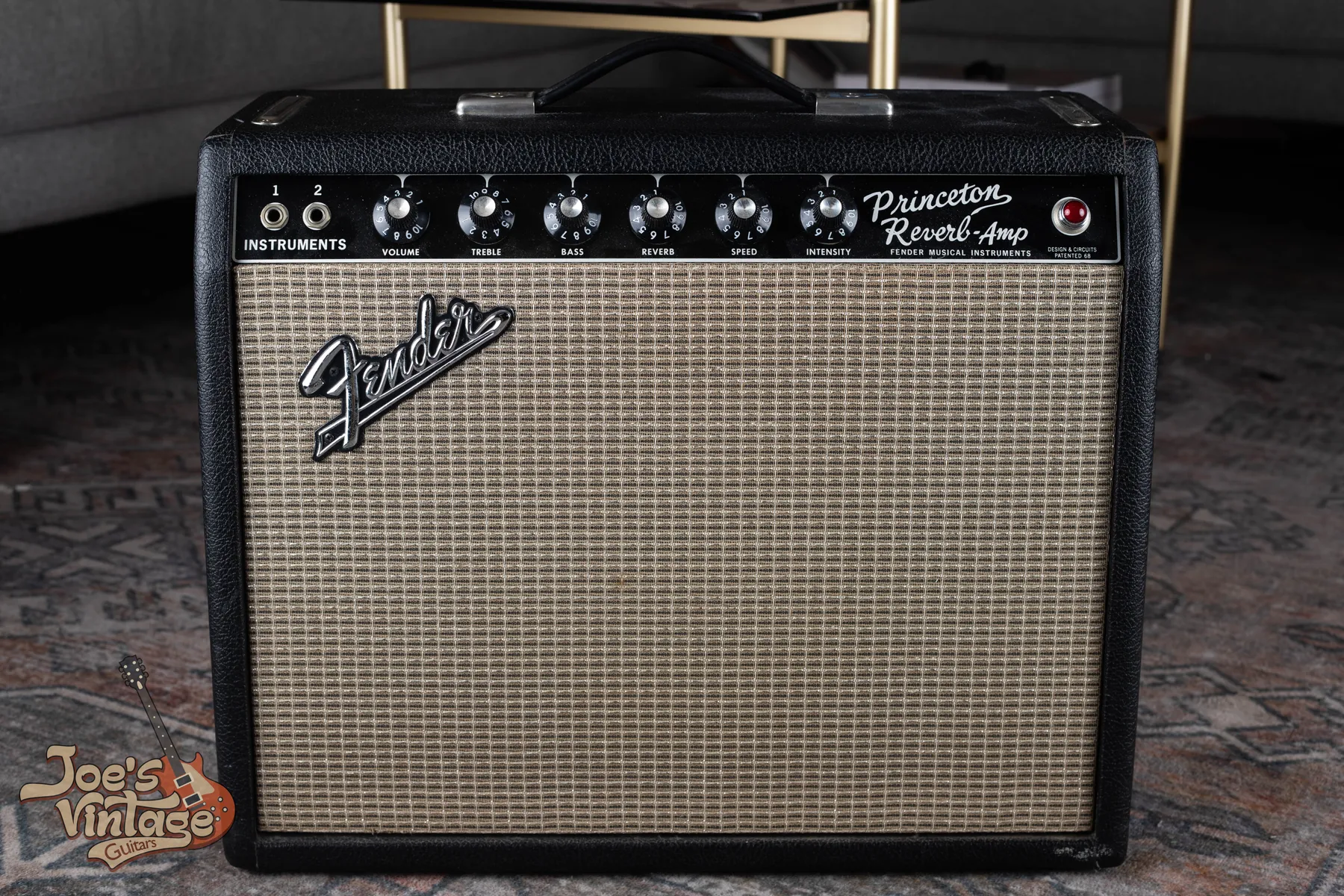
A vintage blackface Princeton Reverb is estimated at $2,650 to $3,550 in excellent, original condition. Earlier Princetons and the non-reverb versions use different rows. Read the Princeton identification guide if the controls, cabinet or model lettering leave you unsure which amp you own. The name remained in use through substantial design changes, so an estimate needs the version as well as an approximate year. The chart below supplies that starting point.
This Is An Estimate Of Market Value, Not An Offer To Buy And Not A Guarantee. Market Values Fluctuate; Have Your Specific Item Appraised.
Find The Matching Row
Princeton Values By Model And Period
| Model | Years | Version | Estimated Value |
|---|---|---|---|
| Princeton | 1948 | Tweed, TV front | $2,750 to $3,500 |
| Princeton | 1949 to 1953 | Tweed, TV front | $2,350 to $3,000 |
| Princeton | 1953 to 1954 | Wide panel | $2,350 to $2,850 |
| Princeton | 1955 to 1956 | Narrow panel, small cabinet | $4,350 to $5,450 |
| Princeton | 1956 to 1961 | Narrow panel, large cabinet | $4,300 to $5,400 |
| Princeton | 1961 to 1963 | Brown, 6G2 | $2,700 to $3,450 |
| Princeton | 1963 to 1964 | Black, 6G2 | $2,200 to $2,850 |
| Princeton | 1964 to 1966 | Black, AA964, no grille logo | $1,950 to $2,400 |
| Princeton | 1966 to 1967 | Black, AA964, raised grille logo | $1,550 to $2,000 |
| Princeton | 1968 to 1969 | Silverface, aluminum grille trim | $1,100 to $1,300 |
| Princeton | 1969 to 1970 | Silverface, no grille trim | $850 to $1,100 |
| Princeton | 1971 to 1979 | Silverface, AB1270 | $800 to $1,050 |
| Princeton | 1973 to 1975 | Fender logo with tail | $850 to $1,100 |
| Princeton | 1975 to 1978 | Fender logo without tail | $800 to $1,100 |
| Princeton | 1978 to 1979 | With boost pull knob | $800 to $1,100 |
| Princeton Reverb | 1964 to 1967 | Blackface | $2,650 to $3,550 |
| Princeton Reverb | 1968 to 1972 | Silverface, Fender logo with tail | $1,950 to $2,600 |
| Princeton Reverb | 1973 to 1979 | Silverface, no Fender logo tail | $1,500 to $1,950 |
U.S. dollars. Original cover where applicable. These estimates are starting points for an individual appraisal; condition, changed parts and required service affect the assessment. Overlapping year groups describe separate guide entries.
Some non-reverb Princeton entries describe overlapping circuit and cosmetic groups. A 1974 amp with the listed AB1270 circuit and a tailed logo can match more than one entry. The chart preserves those source rows, so it doesn’t establish one unique estimate in that situation. Send Joe the specific amp for assessment instead of choosing whichever range is highest.
The chart ends with price groups that fit the vintage scope through 1980. A later black-panel return grouped with post-1980 production isn’t divided into invented single-year figures. Unlisted versions remain individual appraisal questions. Modern Princeton reissues, signature models and digital Tone Master amplifiers aren’t covered by these original-era estimates.
Identify The Earlier Family
Tweed And Brownface Princeton Values
The Small Tweed Princeton
The earliest rows distinguish TV-front, wide-panel and narrow-panel cabinets. The narrow-panel entries also separate cabinet sizes. Those descriptions need to agree with the actual cabinet and chassis. A small tweed amplifier that looks like a Princeton in a photograph may need additional identification before any of these ranges applies. Send the panel lettering and a full rear view along with the front.
The Brownface Princeton
A brownface Princeton has its own group in the table. Its covering, grille and controls should be documented together, particularly if an old repair changed its appearance. Joe’s 1963 Princeton provides a photographed example of that family. An owner’s description such as “brown Fender practice amp” is a useful starting clue, but it leaves the originality and exact identity unresolved.
Cabinet condition can be especially easy to underdescribe on a small amp. Show both side panels, the handle mounting area and the bottom. A replacement back panel or baffle may be unobtrusive in a front photograph. If the cabinet has been re-covered, say so and include any older images that show it before the work.
Don’t assume a newer component makes the whole amp newer. A speaker or transformer can be replaced during service while the cabinet and chassis retain their vintage identity. The appraisal needs to distinguish those parts. The reverse also applies: an old speaker placed in a new cabinet doesn’t establish that the complete amplifier is an original Princeton.
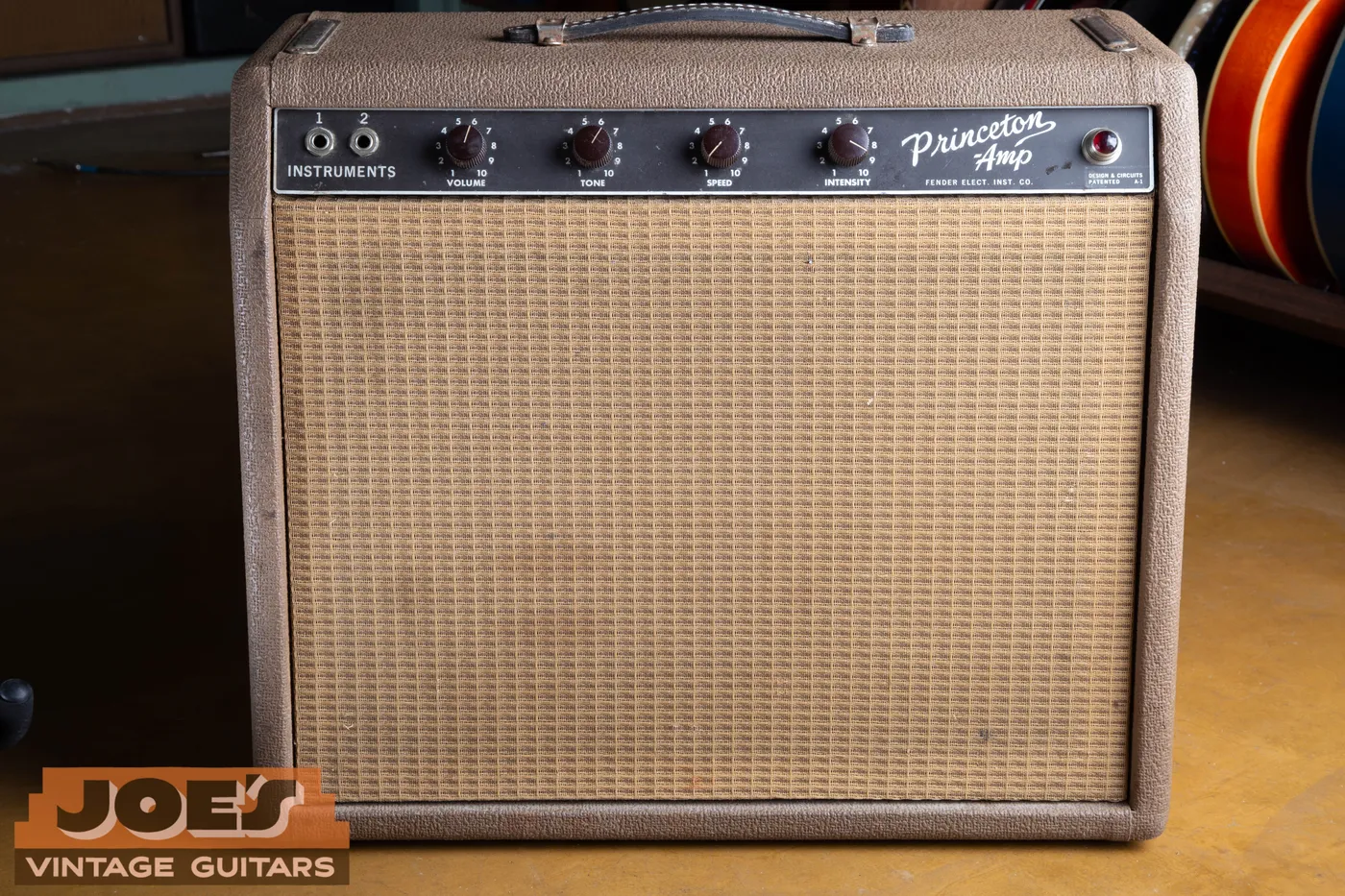
1963 Fender Princeton And 1966 Fender Princeton Reverb
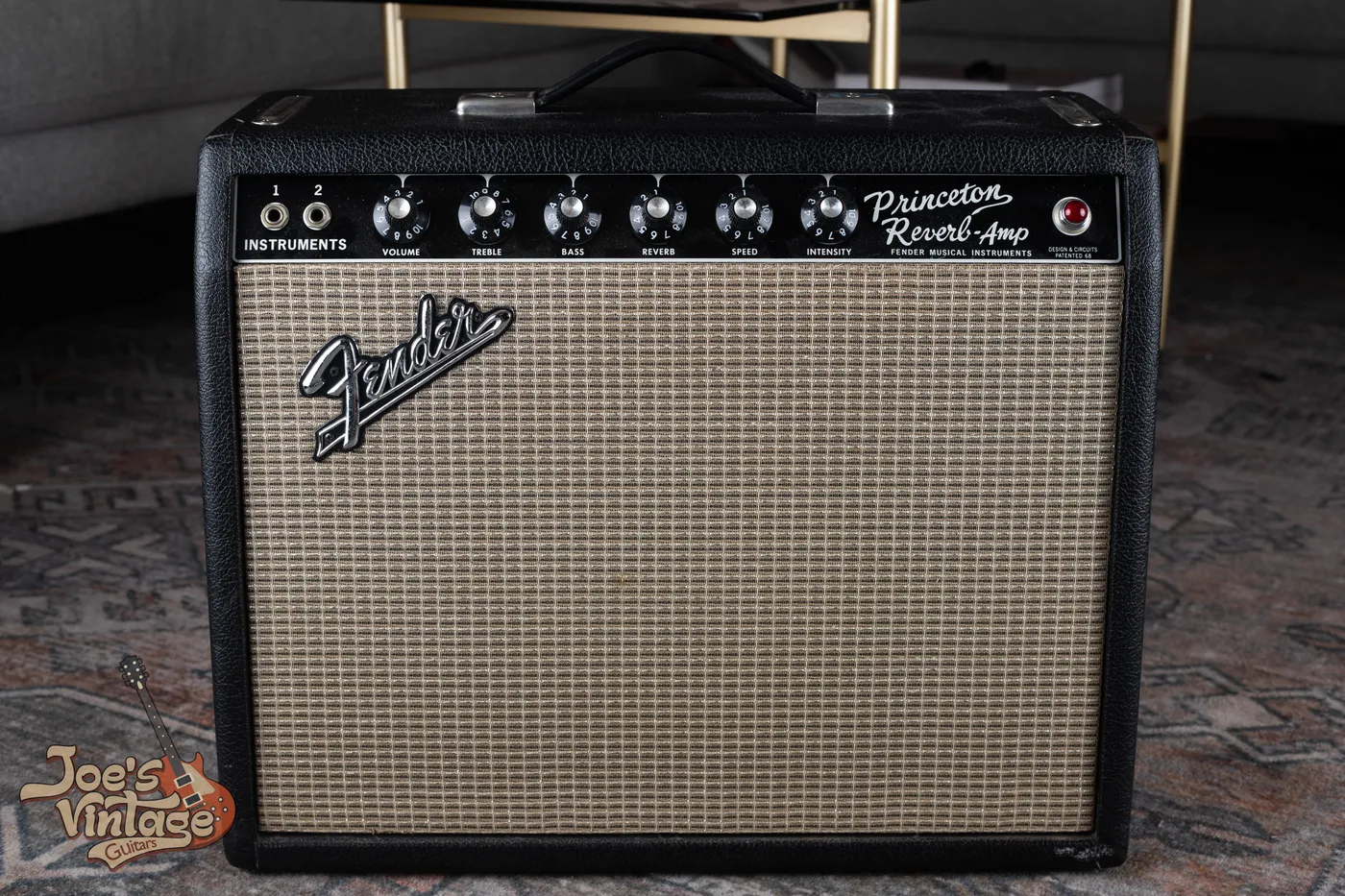
Controls And Completeness
How The Reverb Model Changes The Comparison
The blackface Princeton Reverb row is $2,650 to $3,550. That range shouldn’t be applied to a blackface non-reverb Princeton just because the cabinets look related. Confirm the model name, control layout and reverb equipment. If the front panel has been changed, a technician’s inspection may be needed to establish what chassis is underneath it.
Silverface Princeton Reverbs have their own entries, including the listed logo distinctions. Describe the existing logo and grille, but remember that both can be replaced. Date evidence from the chart and components should support a narrower period claim. An attractive reproduction logo doesn’t restore the originality of an amp that lost its factory one.
A working reverb system needs a separate condition description from the speaker and power section. Photograph the tank label, cables and footswitch where present. If reverb is intermittent or absent, include that information before seeking an offer. A repair estimate can then be discussed as part of the actual condition rather than appearing after the amplifier arrives.
The non-reverb Princeton’s value shouldn’t be presented as a defective Princeton Reverb value. It’s a separate model with its own features. For a player choosing between models, the absence of built-in reverb may be a preference question. For an appraisal, it first determines which original configuration and chart entry are being assessed.
What To Document
Original Parts In A Compact Amp
The Speaker And Baffle
A larger replacement speaker or a cut baffle changes the condition record. Show the mounting arrangement and any new screw holes. If the original baffle or speaker was retained, include those parts in separate photos. A reversible alteration still needs disclosure while it remains installed, and the ability to restore an amp should be evaluated rather than assumed.
Transformers And Wiring
Record the transformer markings and known repairs. A modern replacement may have been selected to keep the amp in service, but a collector will still want to know what changed. Avoid treating all electrical work as one category. Replacing exhausted filter capacitors and replacing the output transformer raise different questions about originality and present operation.
The paper tube chart can help tie the cabinet’s evidence to the model description. Photograph the whole label and its mounting surface. A torn or missing chart limits that evidence, though other component dates may still help. Don’t attach a reproduction label before requesting an appraisal; the original state is the useful record.
Cosmetic wear should be shown directly. Grille tears, stained covering, rust, missing feet and a replacement handle can all be documented without guessing a percentage deduction. A uniform discount applied to every worn Princeton ignores differences between versions and the extent of the damage. Joe needs to see what is actually affected.
Accessories complete the description. Include a surviving cover, manual, receipt or footswitch, while noting anything acquired later. Paperwork can connect an amplifier with earlier ownership, but it should be photographed alongside the amp’s own identifying details. A receipt for a Princeton doesn’t automatically establish that every component in the present cabinet dates from that purchase.
Operation And History
Describe Repairs Before Discussing A Sale
Write down what happens when the amplifier is used, if it is already known to be safe and working. Hum, a noisy control or a weak effect should be reported in ordinary language. You don’t need to diagnose the failed component yourself. An accurate symptom description is more useful than a confident but unsupported repair claim.
An amp that has sat unused should be evaluated by a qualified technician before it’s powered. For an initial appraisal, send exterior photographs and state that it hasn’t been tested. The technician can provide interior pictures as part of an inspection. Stored voltage makes chassis access unsuitable as a casual photography task.
Keep the distinction between a value estimate and a buying offer clear. The chart assumes a stated condition and configuration; an offer follows review of your amp. A clean exterior, a repair receipt and a working demonstration each supply different evidence. Together they help reduce uncertainty, but none replaces the rest of the inspection.
Before paying for cosmetic restoration, ask how the present condition affects the estimate. Cleaning away original markings or replacing an aged grille can remove information an appraiser needs. Collect the photographs first and preserve removed parts where practical. That leaves a better record for the next owner even when necessary service is carried out.
Cabinet, Codes And Reverb Equipment
Princeton Appraisal Photo Checklist
Front View With Model Name
Frame the entire amp and take another photograph close enough to read the faceplate. Include every knob so the reverb and non-reverb layouts can be distinguished.
Rear Panel And Speaker Opening
Show the back as a whole, including the speaker mount and any absent wood panels. Explain cabinet alterations that aren’t obvious from the front view.
Paper Chart And Chassis Evidence
Send a legible image of the attached tube chart. Have internal chassis views taken by an amp technician, with the amplifier made safe for inspection.
Transformer Identification
Keep the stamped characters sharp and include the surrounding component. A close-up without context can leave uncertainty about which transformer was photographed.
Speaker Label And Frame Code
Capture both the label and the stamped frame markings. Note a recone, replacement speaker or changed baffle if any of those repairs is known.
Tank Label, Footswitch And Cover
On a Princeton Reverb, include the reverb tank’s identification and associated accessories. Photograph a surviving cover and any old paperwork in the same submission.
For a readable two-letter chart stamp, use the Fender amp date decoder. Missing charts call for transformer and speaker evidence; readable control markings can be checked with the pot-code reference. These details support the date more usefully than a chassis serial, which isn’t a dependable year lookup.
Send The Evidence
Get A Value For Your Princeton
Send Joe the model photographs and the repairs you know about. An uncertain date or missing label can be addressed during the review.
Questions AboutVintage Amp Values
Does A Princeton Reverb Have The Same Value As A Princeton?
What If My Princeton Has A Twelve-Inch Speaker?
Can A Missing Tube Chart Be Worked Around?
The Last Word
Get Your Amp Appraised
The Princeton and Princeton Reverb identification page covers the changes behind these value groups. The vintage Princeton, Deluxe and Twin comparison can help if you’re also deciding which size suits your playing. For the amp in front of you, send Joe a free appraisal request with clear photographs and the history you know.
This Is An Estimate Of Market Value, Not An Offer To Buy And Not A Guarantee. Market Values Fluctuate; Have Your Specific Item Appraised.