

Howard Roberts Identification · Epiphone And Gibson
Gibson Howard Roberts Authentication Guide
The label, top wood, board and plating distinguish Gibson’s Custom and Artist from the earlier Kalamazoo Epiphones. Those Epiphones began the model’s production history.
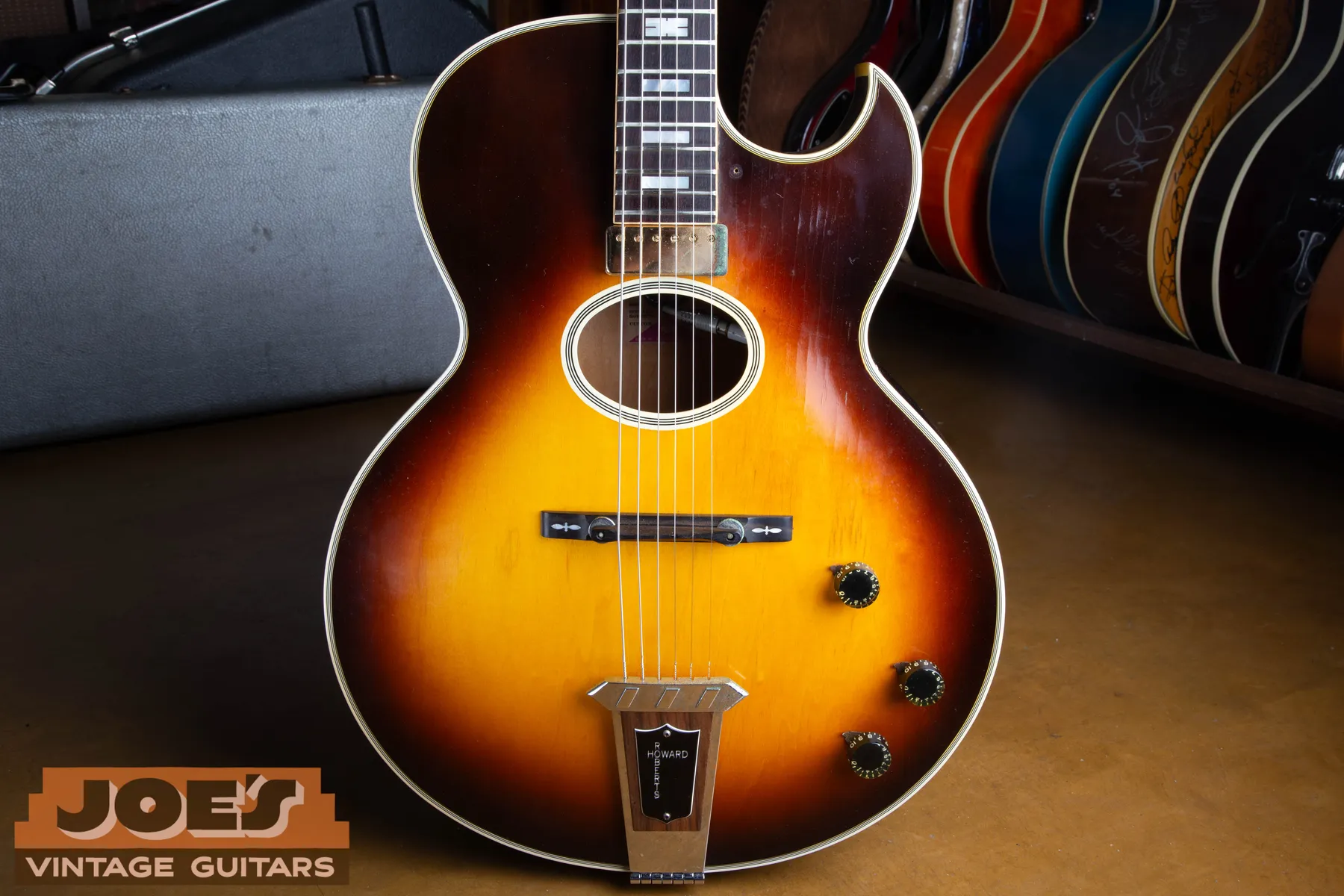
The signature model for Los Angeles session and jazz guitarist Howard Roberts began as an Epiphone in 1964. Gibson’s Kalamazoo factory built it with a single cutaway and an oval opening in place of f-holes. Epiphone’s U.S. manufacturing ended in 1970; the design later returned under Gibson’s name. Custom production spanned 1974 to 1981, while the gold-appointed Artist ran from 1976 to 1980. Below are Joe’s 1974 Custom and his 1977 example. For estimates, see the Howard Roberts pricing page.
Authenticity And Originality Are Assessed From The Information Provided. A Hands-On Inspection Can Change The Conclusion.
Maker, Years And Trim
Which Howard Roberts Do You Have?
| Model | Years | Top | Fingerboard | Hardware |
|---|---|---|---|---|
| Epiphone Howard Roberts Standard | 1964 to 1970 | Carved spruce | Rosewood, block inlays | Nickel |
| Epiphone Howard Roberts Custom | 1965 to 1970 | Carved spruce | Ebony | Tune-o-matic bridge |
| Gibson Howard Roberts Custom | 1974 to 1981 | Laminated maple | Rosewood, split-block inlays | Chrome |
| Gibson Howard Roberts Artist | 1976 to 1980 | Laminated maple | Ebony | Gold |
| Gibson Artist Double Pickup | 1979 to 1980 | Laminated maple | Ebony | Gold, two pickups |
The interior label identifies the maker and version, so begin there. Confirm construction next: Gibson used laminated maple with seven-ply binding, while Kalamazoo Epiphones have carved spruce tops. Among the Gibsons, rosewood and chrome identify a Custom; ebony and gold identify an Artist.
Published start dates aren’t unanimous. Some references give 1973 for the Gibson Custom and 1974 for the Artist. Joe’s guitar dates to 1974 and has a label explicitly naming it Howard Roberts Custom.
Standard And Custom
Kalamazoo Epiphone Howard Roberts Details
Body And Top
A carved spruce top surrounds the oval opening. At about 16¼ inches across, the body resembles an L-4C, with a pointed Florentine cutaway.
Standard Neck
On the Standard, a vertical oval decorates the peghead. Block markers sit in a rosewood board over a mahogany neck.
Custom Neck
Look for the Custom’s vine peghead ornament and ebony board, together with its Tune-o-matic bridge.
Floating Mini-Humbucker
The mini-humbucker floats above the guitar, while tone and volume controls sit in the top. A Custom has one of each control.
Three raised parallelograms decorate the nickel trapeze tailpiece. On a Standard it sits beyond a rosewood bridge. Kalamazoo Epiphones built from 1961 to 1970 have impressed numbers behind the headstock, with substantial duplication. Consult the serial-number reference and compare the remaining features when dating one.
Japan built the 1990s Howard Roberts reissues first, followed by Korea. Both use laminated tops, and Korean examples have a bigger soundhole. A label from the 1970s or later is insufficient evidence of Kalamazoo manufacture.
Body, Neck, Pickup And Hardware
Gibson Howard Roberts Custom And Artist Details
Body
Seven-ply binding outlines the 16-inch laminated-maple body. It has one cutaway and an oval opening.
Neck
Split-block markers run along the fingerboard of a three-piece maple neck. Scale length is 25½ inches, with a nut about 1 11/16 inches wide. A vine ornament sits below the Gibson headstock logo.
A Pickup Made For The Model
Gibson developed the full-size floating humbucker for this guitar. Its controls comprise a master volume plus individual bass and treble tone adjustments.
Bridge, Tailpiece And Tuners
Look for pearl in the base of the adjustable ebony bridge and engraving on the trapeze tailpiece. The Artist adds an engraved ebony tailpiece insert. Grover Rotomatics belong to earlier production, followed by tuners made by Schaller.
In 1975 Gibson added wine red. Custom choices included that color, cherry and sunburst; Artist choices were wine red, sunburst and natural. A mounting ring holds the Artist Double’s bridge pickup. These guitars are seldom encountered, so inspect a claimed Double closely.
A 1974 Custom And A 1977 Example
Joe’s Howard Roberts Guitars
1974 Gibson Howard Roberts Custom
Chrome Hardware, Rosewood And A Replaced Pickup
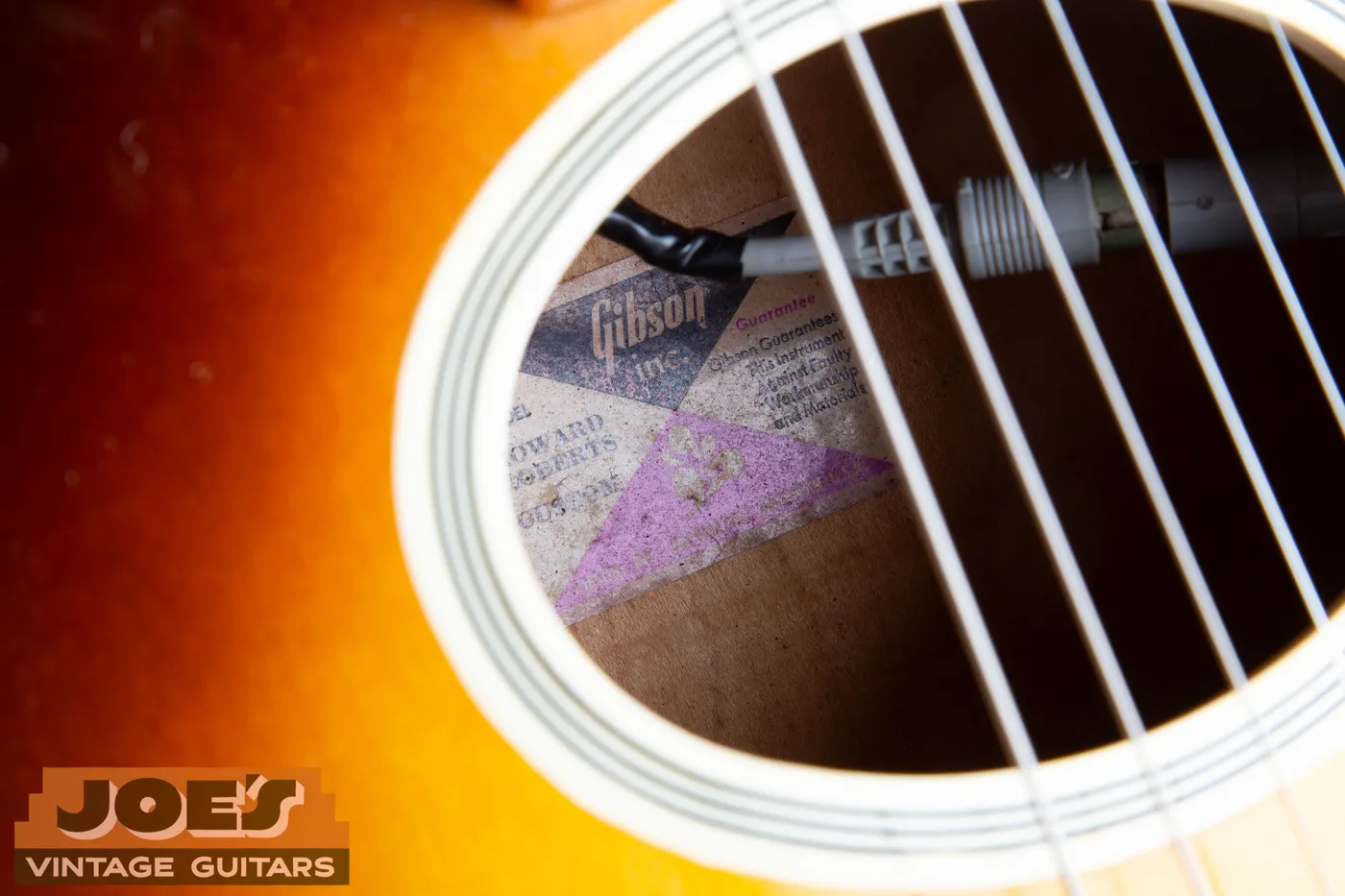
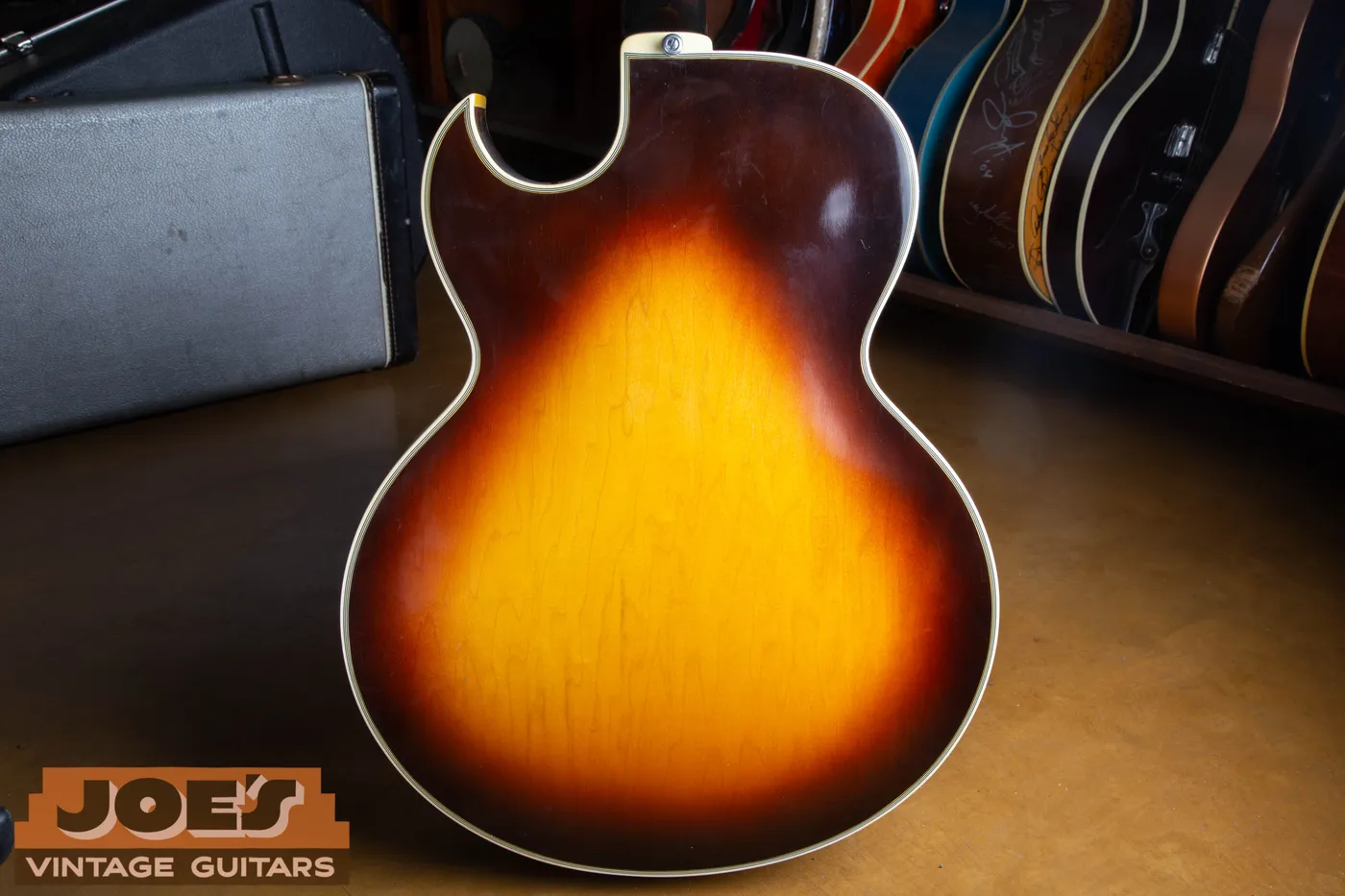
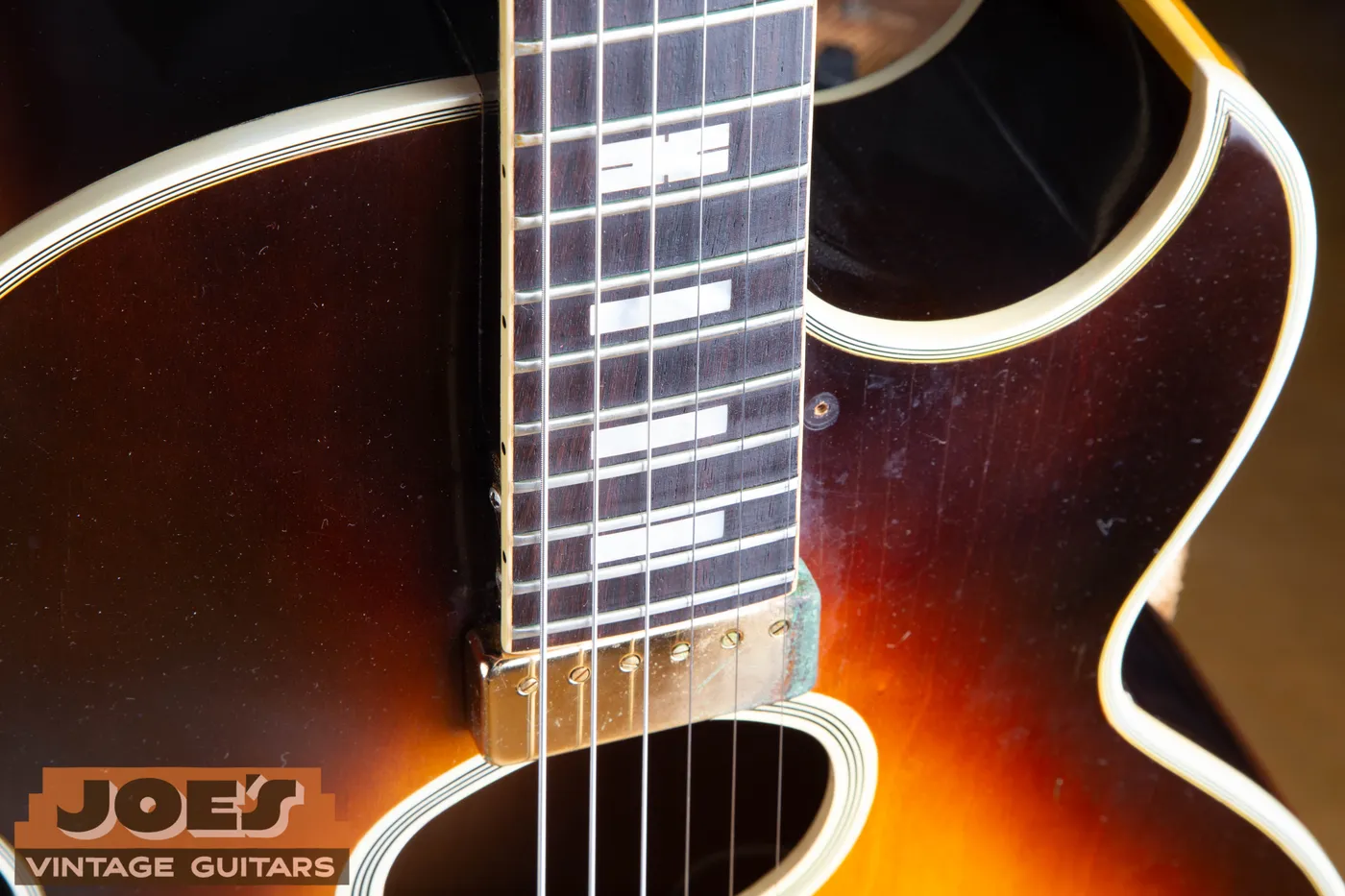
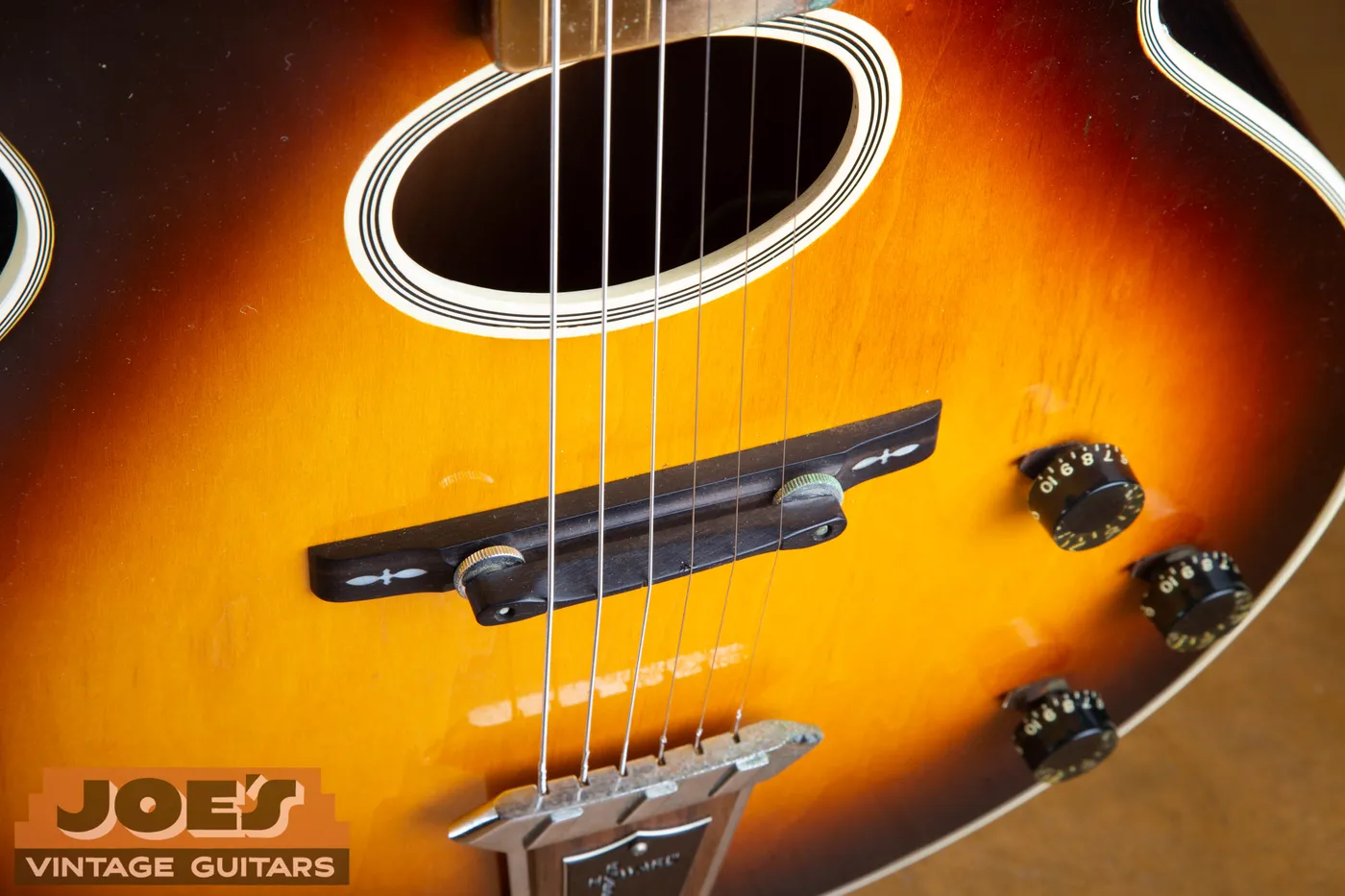
A Gibson label identifies Joe’s 1974 as a Howard Roberts Custom. Its split-block rosewood board, chrome fittings, decorated bridge base and three controls match that model. Apart from an absent pickguard and an Ibanez Super 70 replacing the pickup, it remains original. The guard’s former position has more pronounced finish checking.
1977 Gibson Howard Roberts
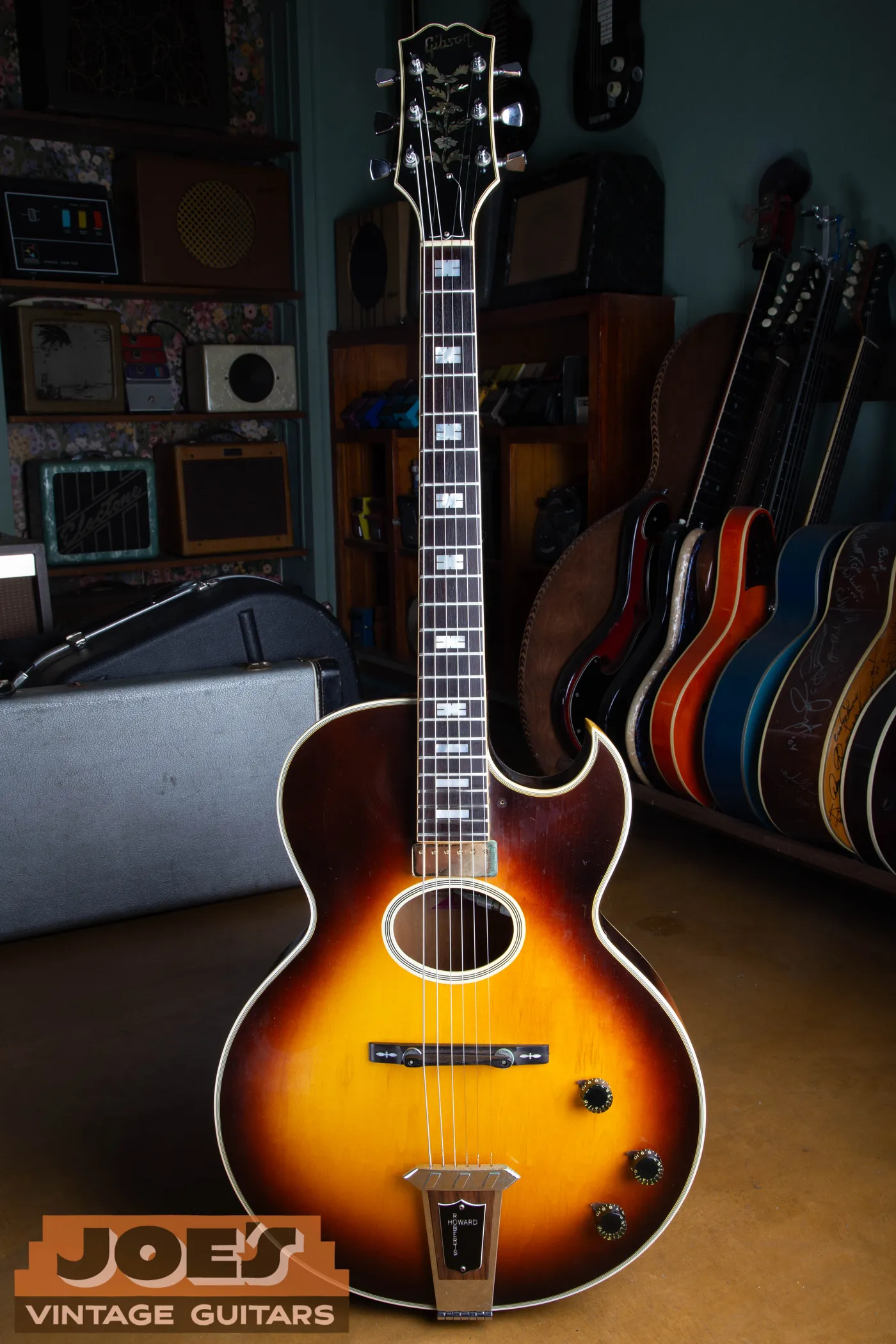
Gold Hardware And The Vine Inlay
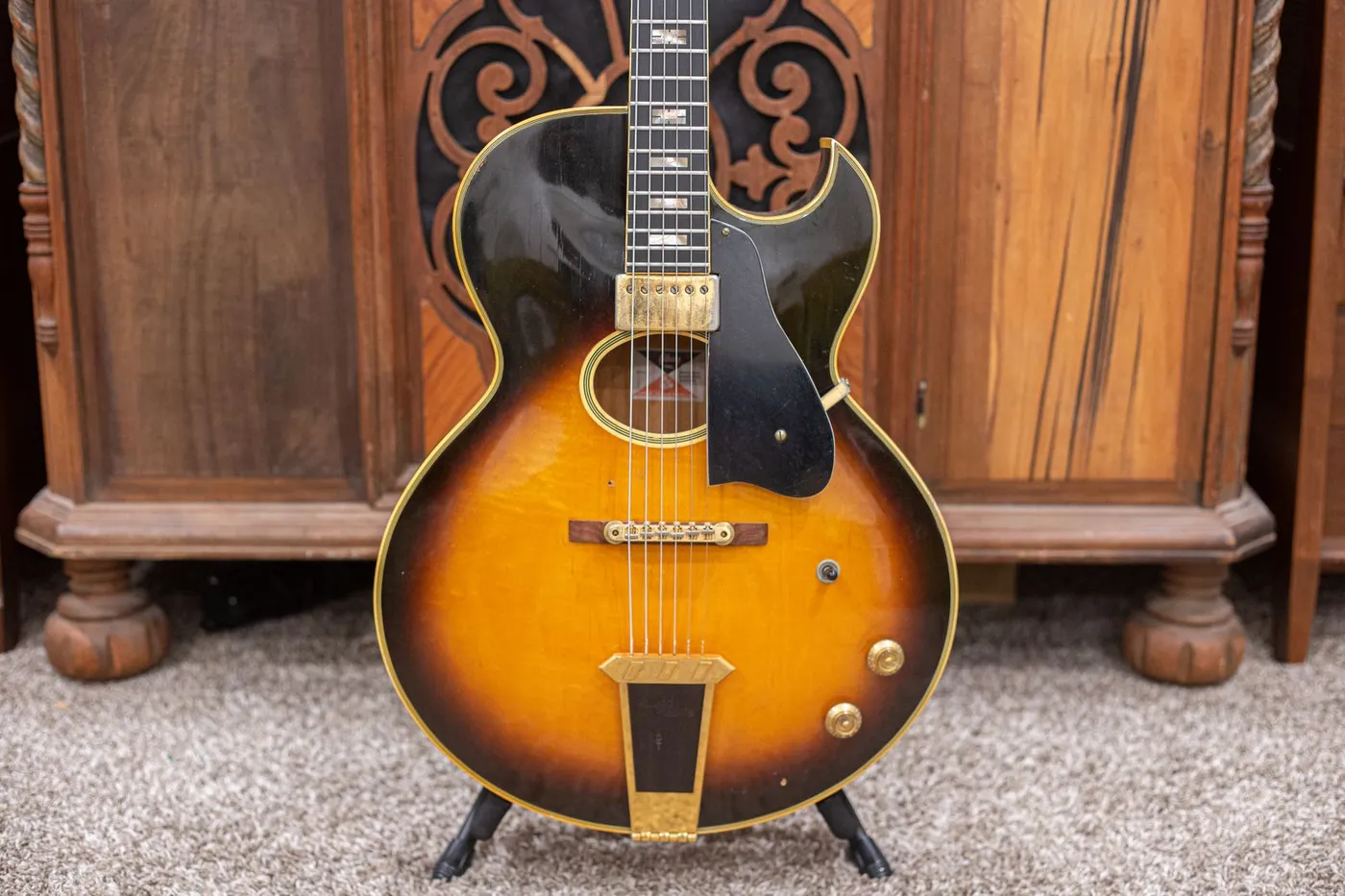
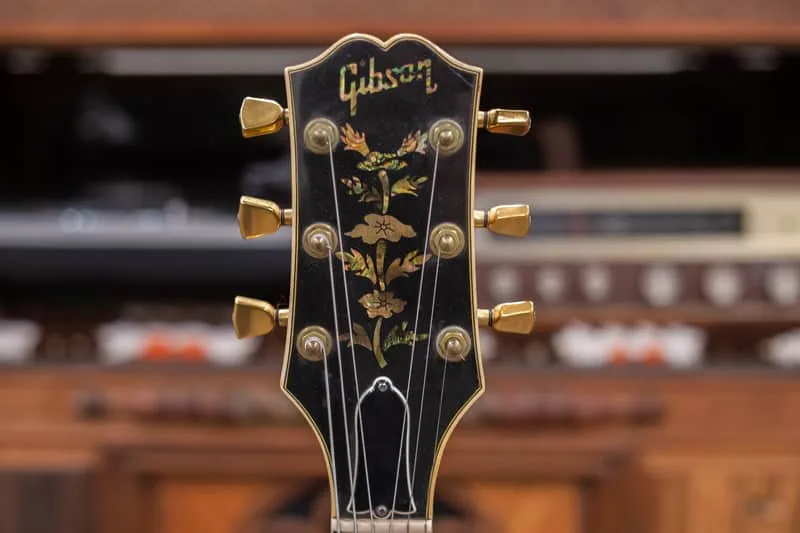
The gold plating on Joe’s 1977 corresponds to Artist trim. It also has a black guard, a single neck humbucker and a floral vine beneath the pearl Gibson lettering. A professional has reset the neck. Signs suggest a bridge pickup and switch were added previously, and the remaining switch no longer operates anything.
Serial Formats From The 1970s
Dating A Gibson Howard Roberts
Six-Digit Serials
Look below the six impressed digits for MADE IN U.S.A. Because the numeric ranges also occur in the 1960s, that accompanying stamp helps establish the period.
Eight-Digit Decals
Read the decal prefix as follows: 99 means 1975, 00 means 1976 and 06 means 1977. A documented Custom from 1976 carries the 00 version.
Eight-Digit Impressed Serials
Combine digits one and five to read the year in this eight-digit impressed system. A documented 1978 Artist shows this format.
After decoding the number with the Gibson dating guide, compare finish, label and tuners for agreement. Schaller-built machines indicate later production than Grover Rotomatics. Wine red places a guitar in 1975 or later.
Also record a small stamped 2 behind the headstock if you find one. It denotes a factory second, as seen on a documented 1976 Custom. Include that part of its history in the description.
What To Question On A Howard Roberts
Copies, Swapped Parts And Refinishes
Japanese Copies
During the mid-1970s, Ibanez offered the closely copied 2453, often fitted with a Super 70. Copies also came from Hoyer, Goya, Greco and other makers. A headstock outline or label belonging to another maker establishes the difference.
Replaced Pickups And Guards
Pickup changes occur often, as the Super 70 in Joe’s 1974 shows. You’ll also encounter replacement pickguards and additional guards.
Refinishes
Check that the color belongs to Gibson’s offered finishes, then compare its appearance across the neck, back, sides and top.
Mixed Trim
Read the label when trim seems inconsistent. Chrome paired with ebony, or gold paired with rosewood, suggests a hardware change.
For the effect of replacement parts and repairs on an assessment, consult the guide to condition and value.
Photos Joe Needs To Identify Yours
Build A Howard Roberts Identification Record
Label Through The Soundhole
A clear view of the interior label will usually establish both model and maker.
Headstock Front And Back
Photograph both headstock faces, capturing its serial, tuners, inlay and maker’s logo.
Fingerboard And Hardware
Include close-ups of the bridge, fingerboard markers and the tailpiece’s plated finish.
Pickup Mounting And Knobs
Record additional holes along with the controls and the way the pickup attaches.
Send The Evidence
Ask Joe To Identify Your Howard Roberts
Send the photos above. Joe can confirm the maker, the model, the likely year and which parts have been changed.
Where These Details Come From
Howard Roberts Identification Sources
- Premier Guitar: The Howard Roberts Signature Epiphone
Epiphone body, neck, pickup and tailpiece, and the Gibson relaunch.
- Howard Roberts Guitars Reference
Model history, production counts and reissues, with cited sources.
- Archtop.com: 1976 Gibson Howard Roberts Custom
Gibson Custom construction, controls and a factory second stamp.
- Archtop.com: 1978 Gibson Howard Roberts Artist
Artist hardware, fingerboard and serial.
- Gibson Serial Number Guide
1970s serial formats.
Questions AboutGibson Identification
Is My Howard Roberts An Epiphone Or A Gibson?
How Do I Tell A Howard Roberts Custom From An Artist?
Is The Howard Roberts Fusion The Same Guitar?
Are Ibanez Howard Roberts Guitars Gibsons?
The Last Word
Keep The Evidence Together
Establish the version from its label, top construction and appointments, then decode the serial format for dating. You can carry that identification to the Howard Roberts value reference.
Authenticity And Originality Are Assessed From The Information Provided. A Hands-On Inspection Can Change The Conclusion.