
ES Family Guide
Gibson ES-335 vs. ES-345 vs. ES-355: What’s The Difference?
A clear comparison of Gibson’s three center-block thinline models, using guitars I’ve handled and photographed.
The Short Answer
The Three Models At A Glance
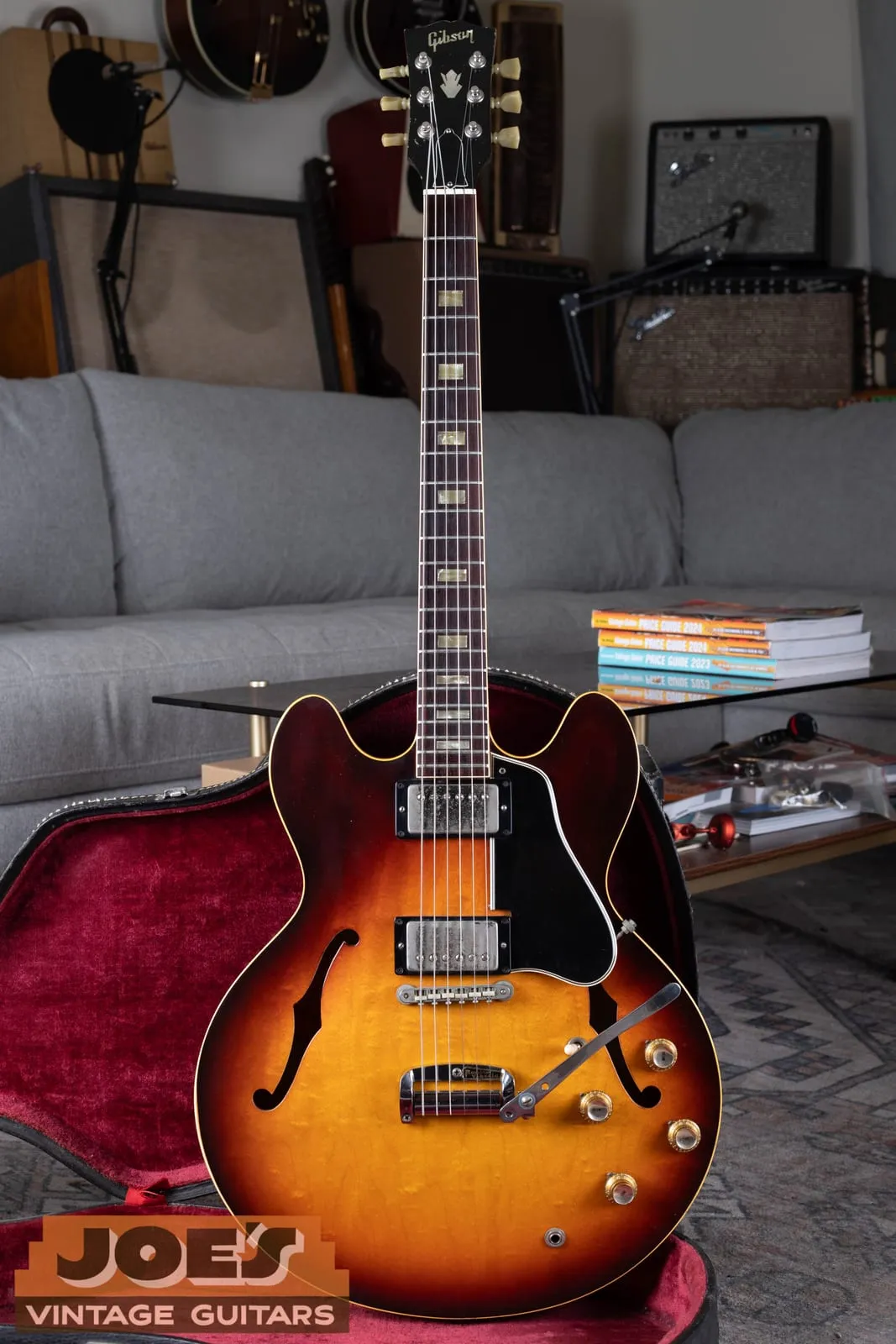
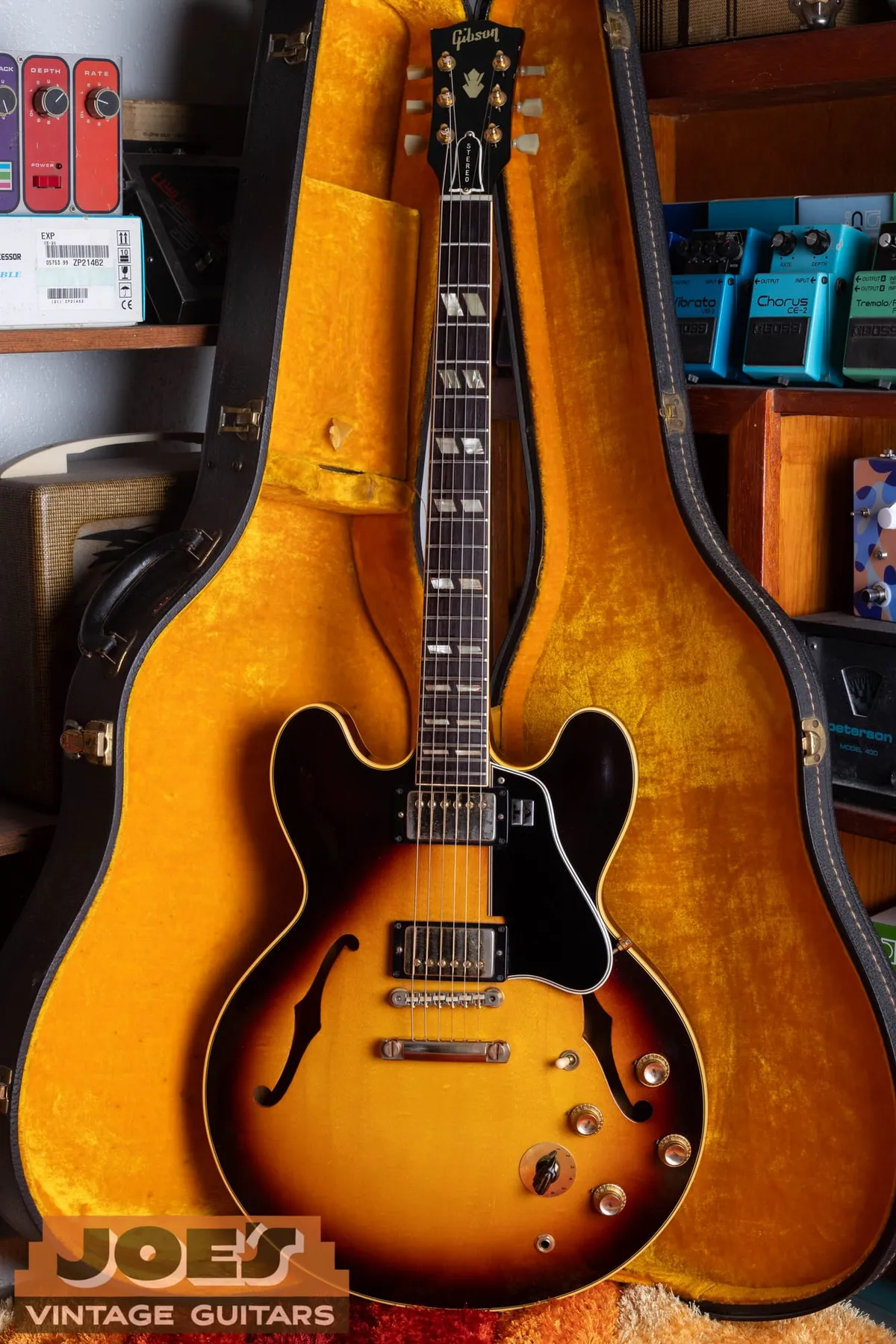
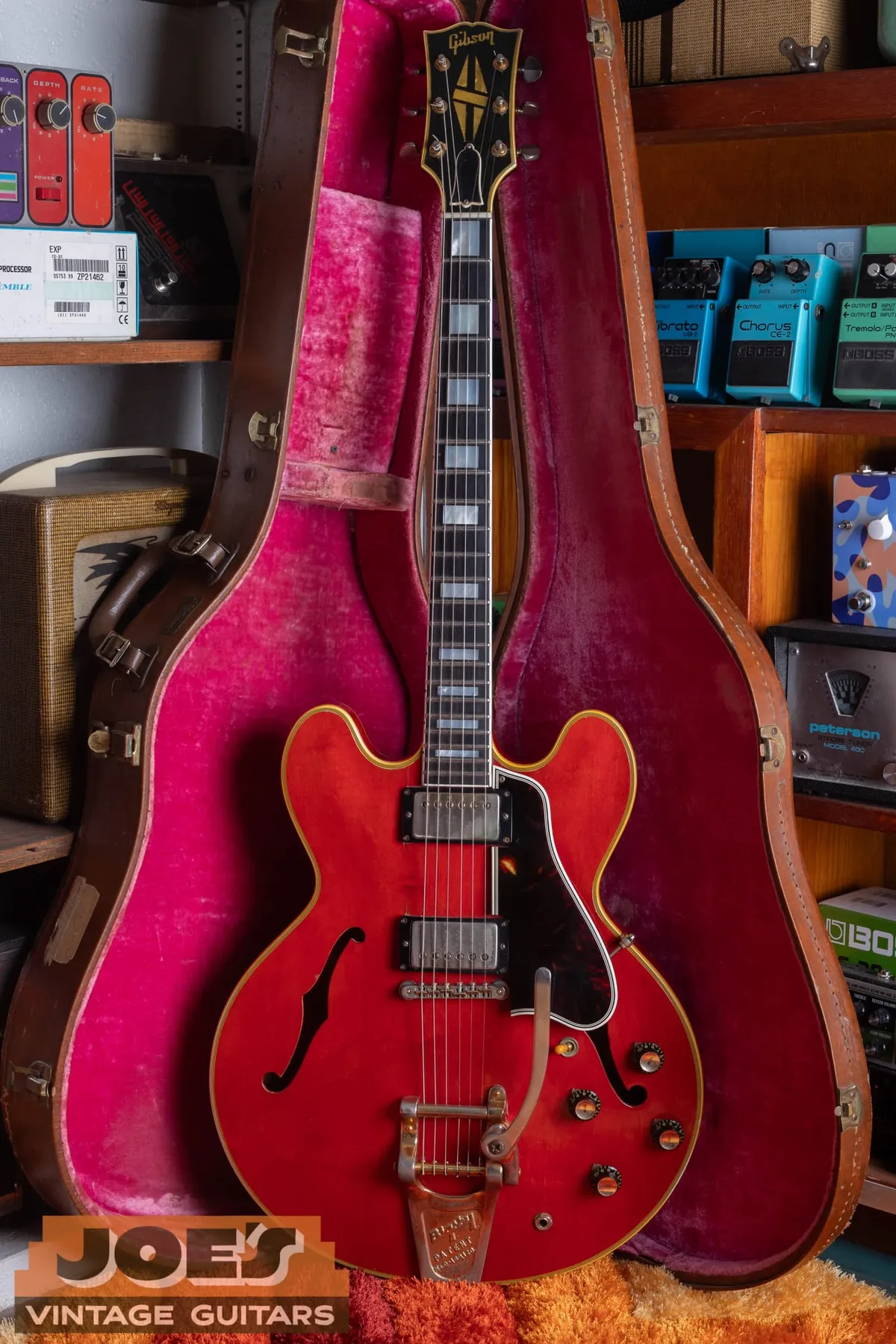
The ES-335 is the simpler model, the ES-345 adds gold hardware, split-parallelogram inlays, stereo wiring and a Varitone, and the ES-355 is the most highly appointed version. All three use Gibson’s semi-hollow construction with a solid center block.
Those are the broad differences. Production changes, repairs and converted wiring can blur the clues, so I identify the model from the complete guitar rather than one feature.
| Model | Introduced | Fingerboard And Inlays | Hardware | Original Electronics |
|---|---|---|---|---|
| ES-335 | 1958 | Rosewood; dots, then blocks | Nickel or chrome | Mono; no Varitone |
| ES-345 | 1959 | Rosewood; split-parallelogram inlays | Gold | Stereo with Varitone |
| ES-355 | 1958 | Ebony; large pearl blocks | Gold | Mono without Varitone, or stereo with Varitone |
Visual Identification
See The Differences Side By Side
These are guitars I’ve handled and photographed. The close views show why the inlays, controls, headstock and trim are more useful than body color when you’re trying to separate the three models.
Fingerboards And Inlays
The fingerboard is one of the quickest visual clues. An individual year can change the details, but each model has its own basic treatment.
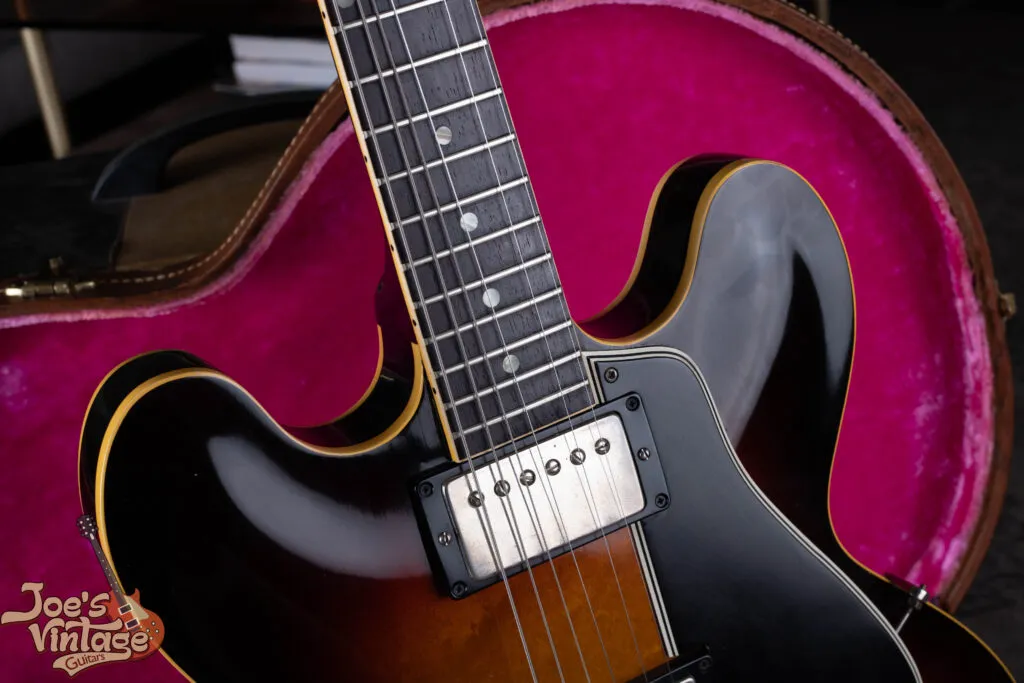 ES-335
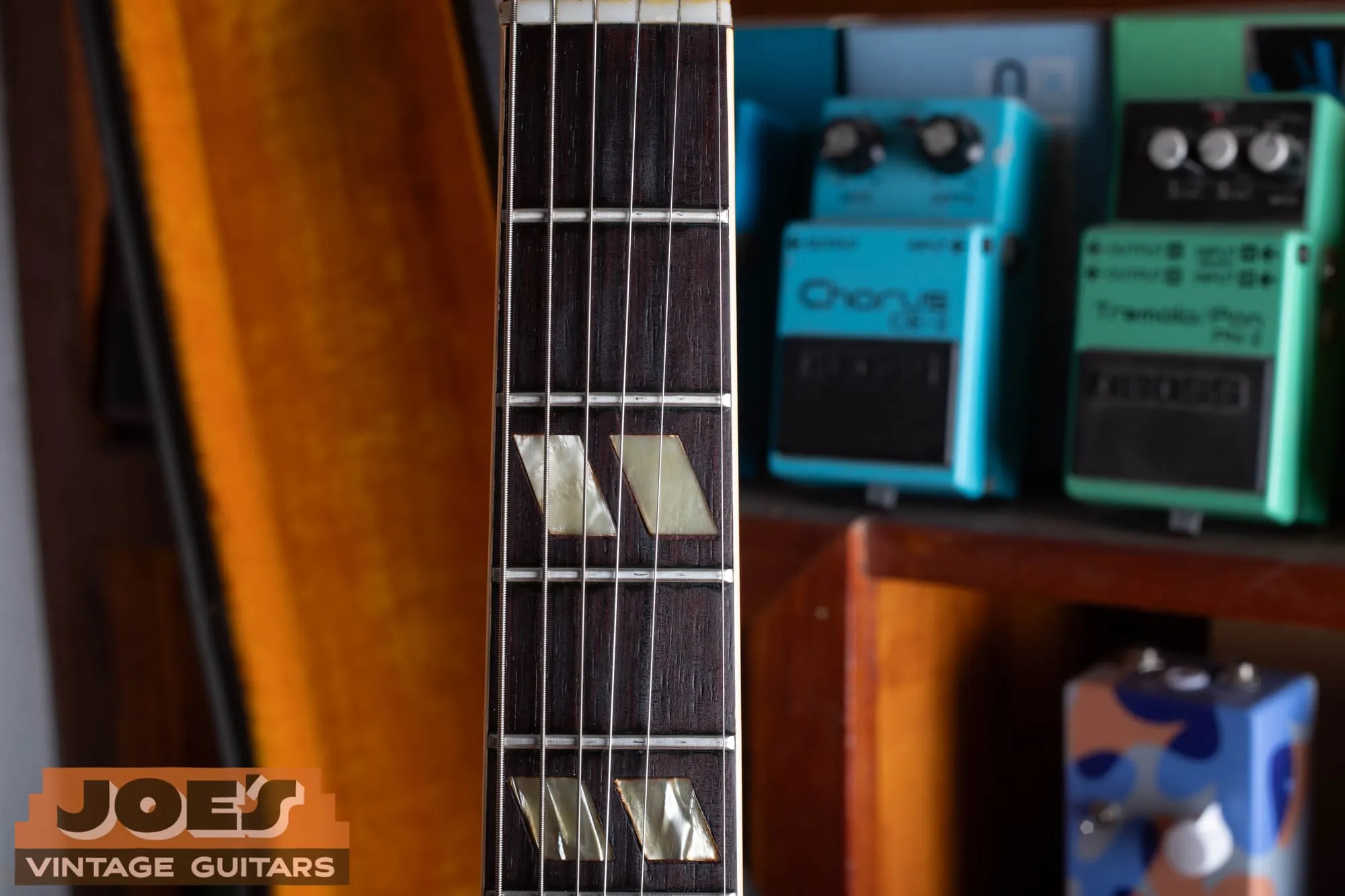 ES-345
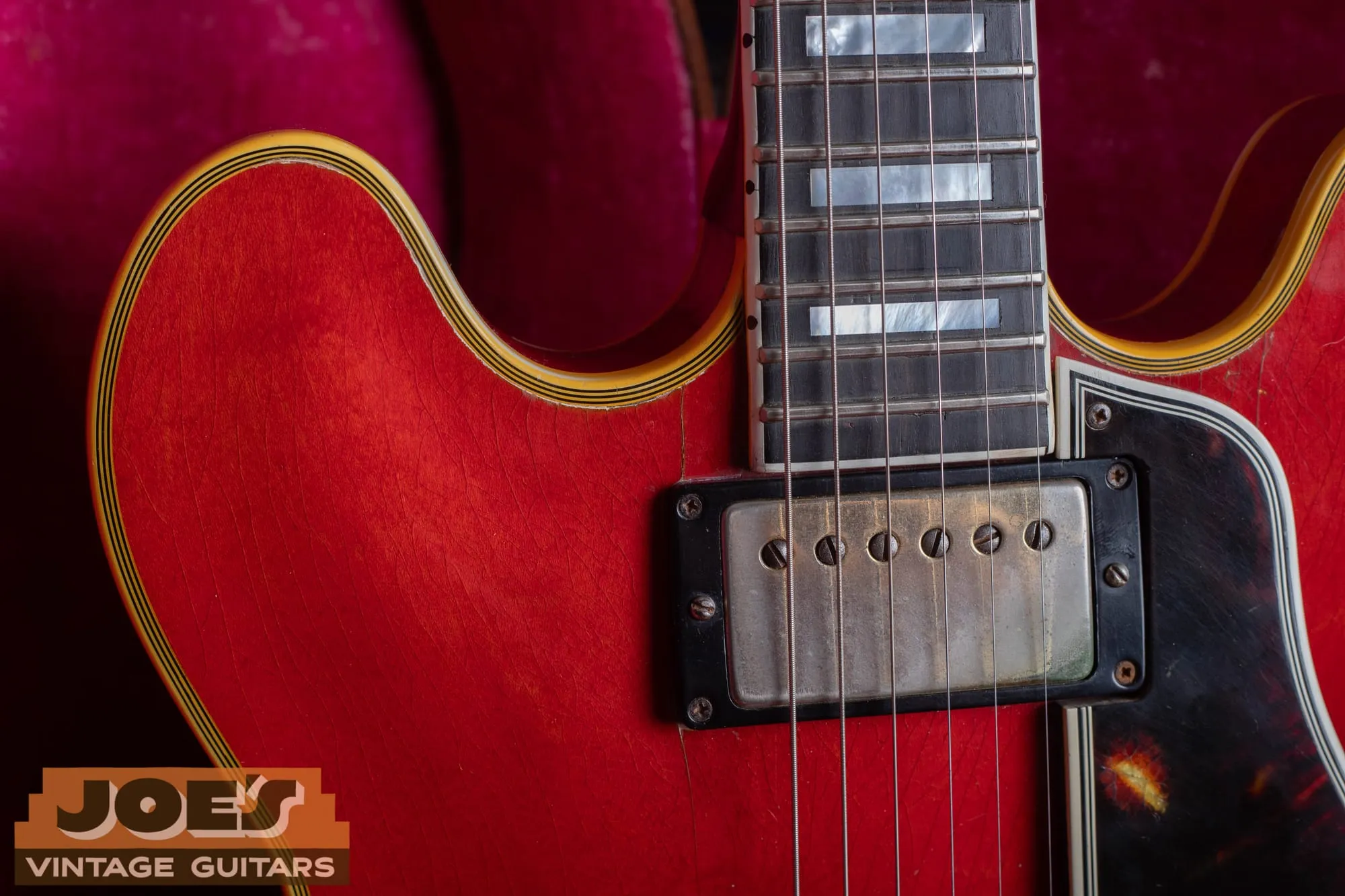 ES-355
Controls And Tailpieces
Tailpieces can vary by year and option, so the controls and surrounding evidence need to be read with them.
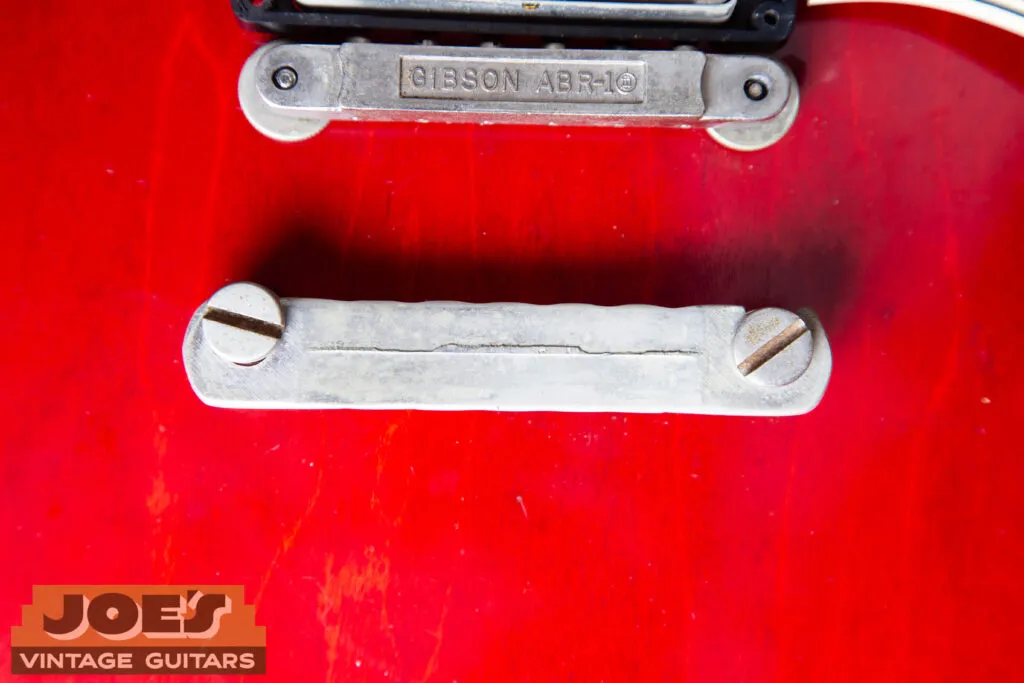 ES-335
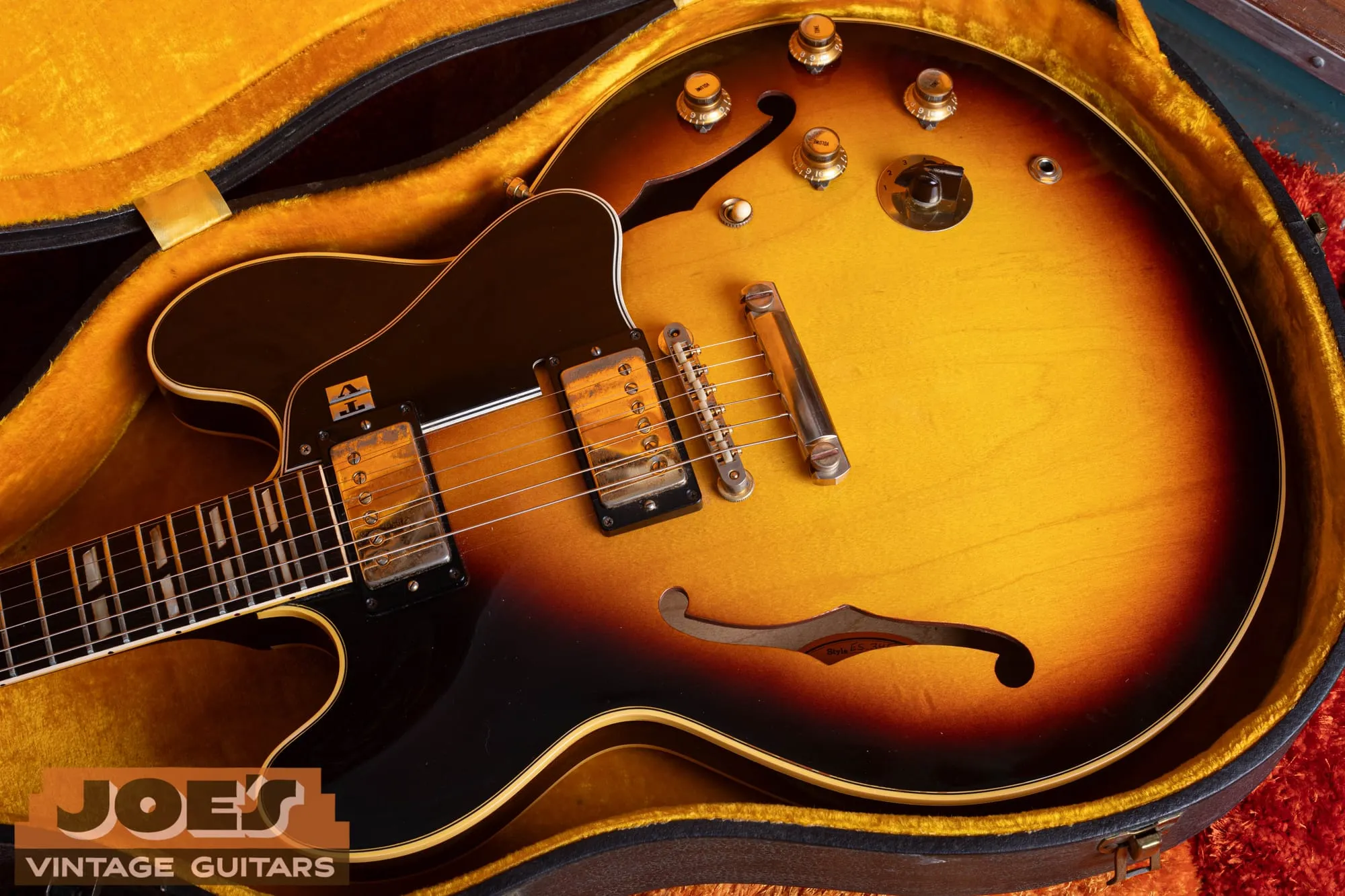 ES-345
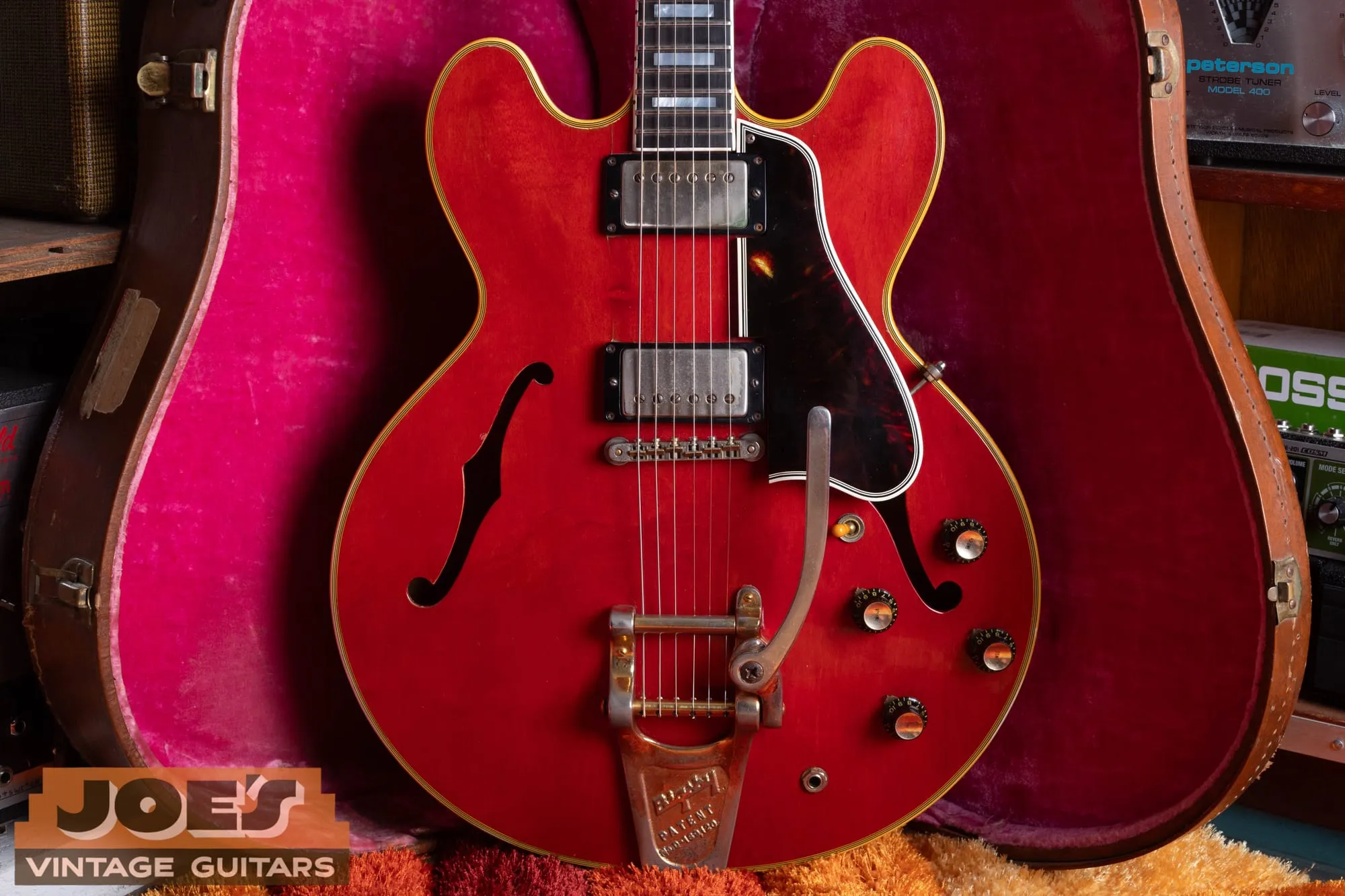 ES-355
Headstock And Trim
The level of ornament rises from the ES-335 through the ES-355. Changed hardware is common, but the original woodwork and binding usually remain visible.
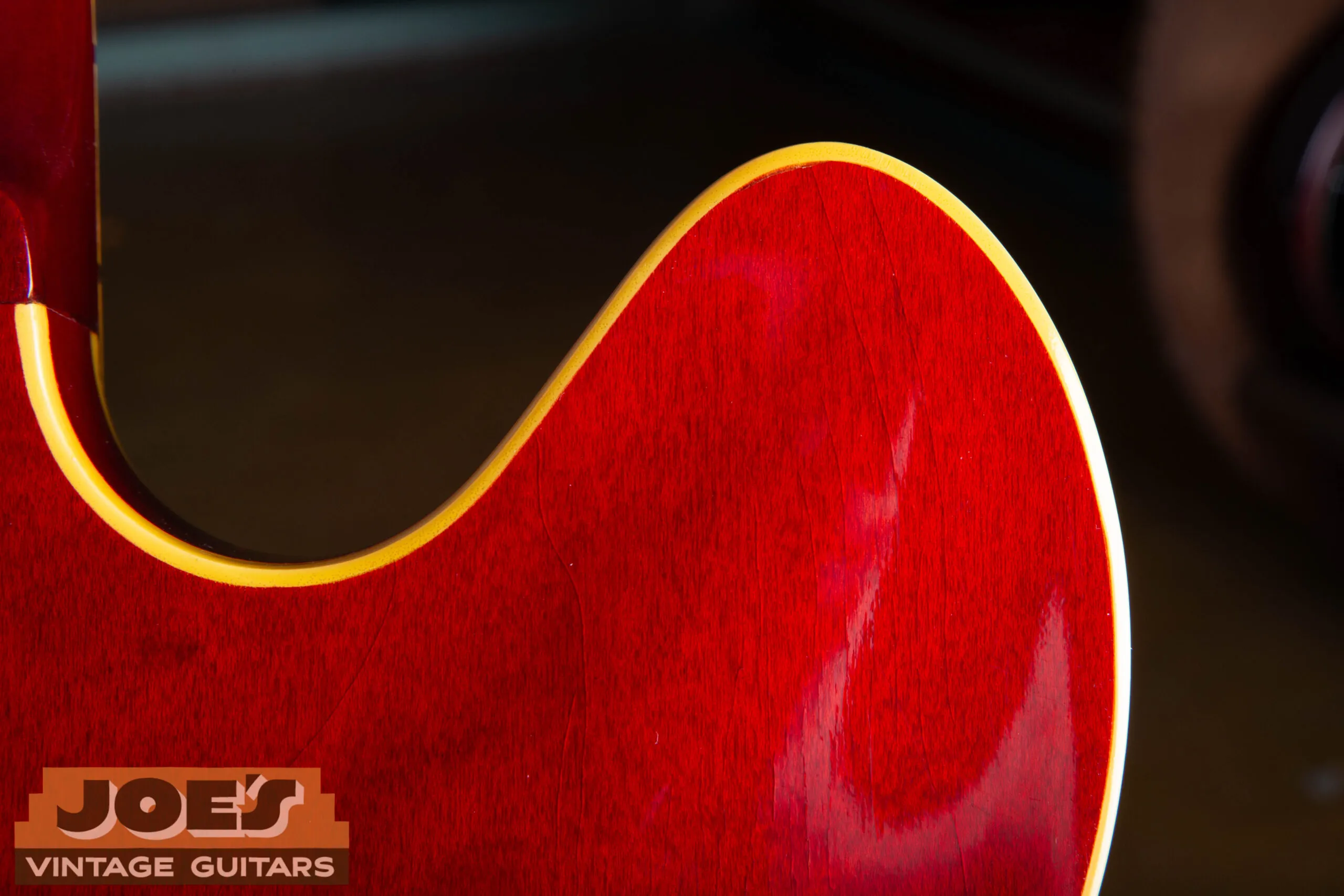 ES-335
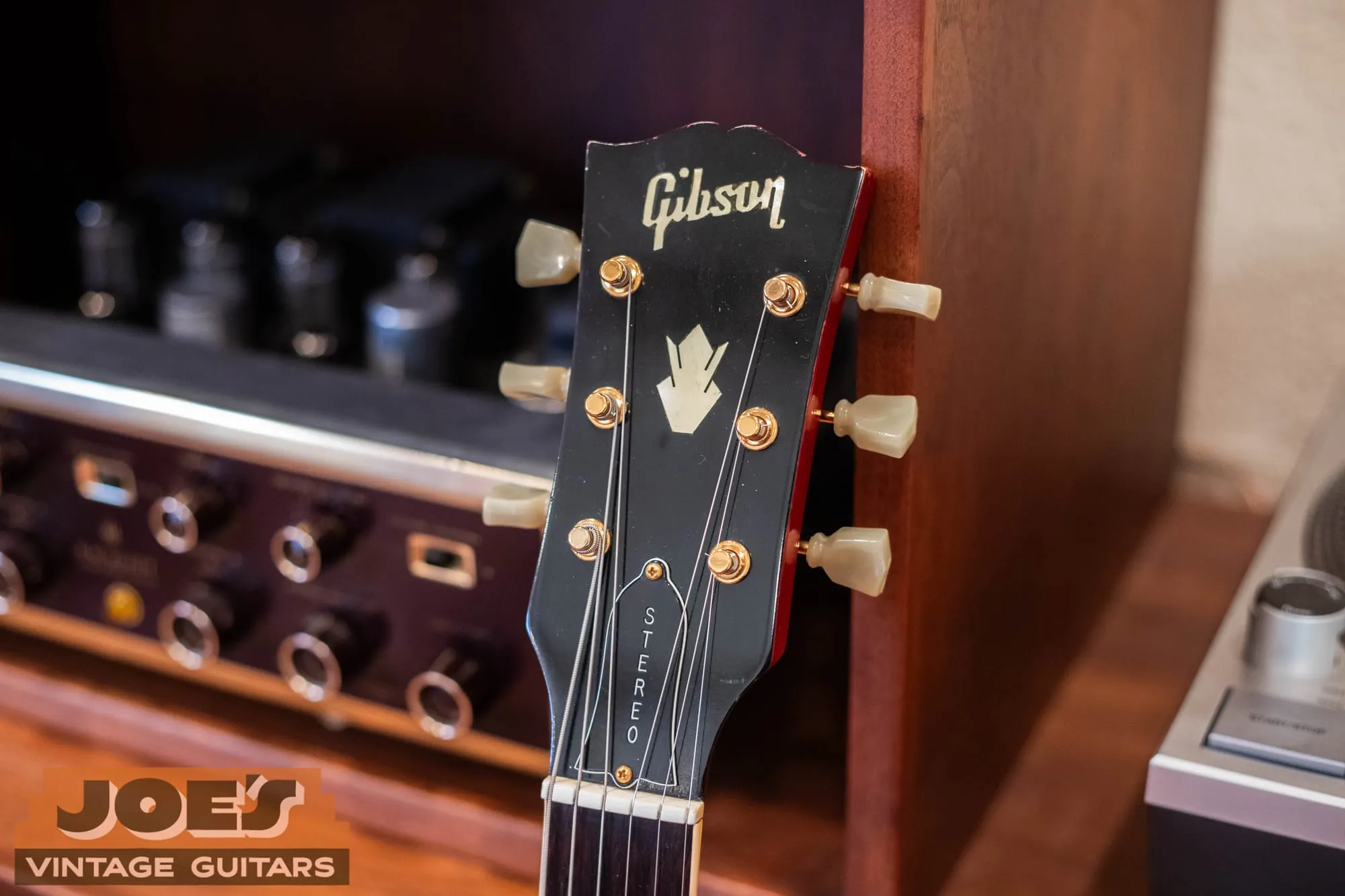 ES-345
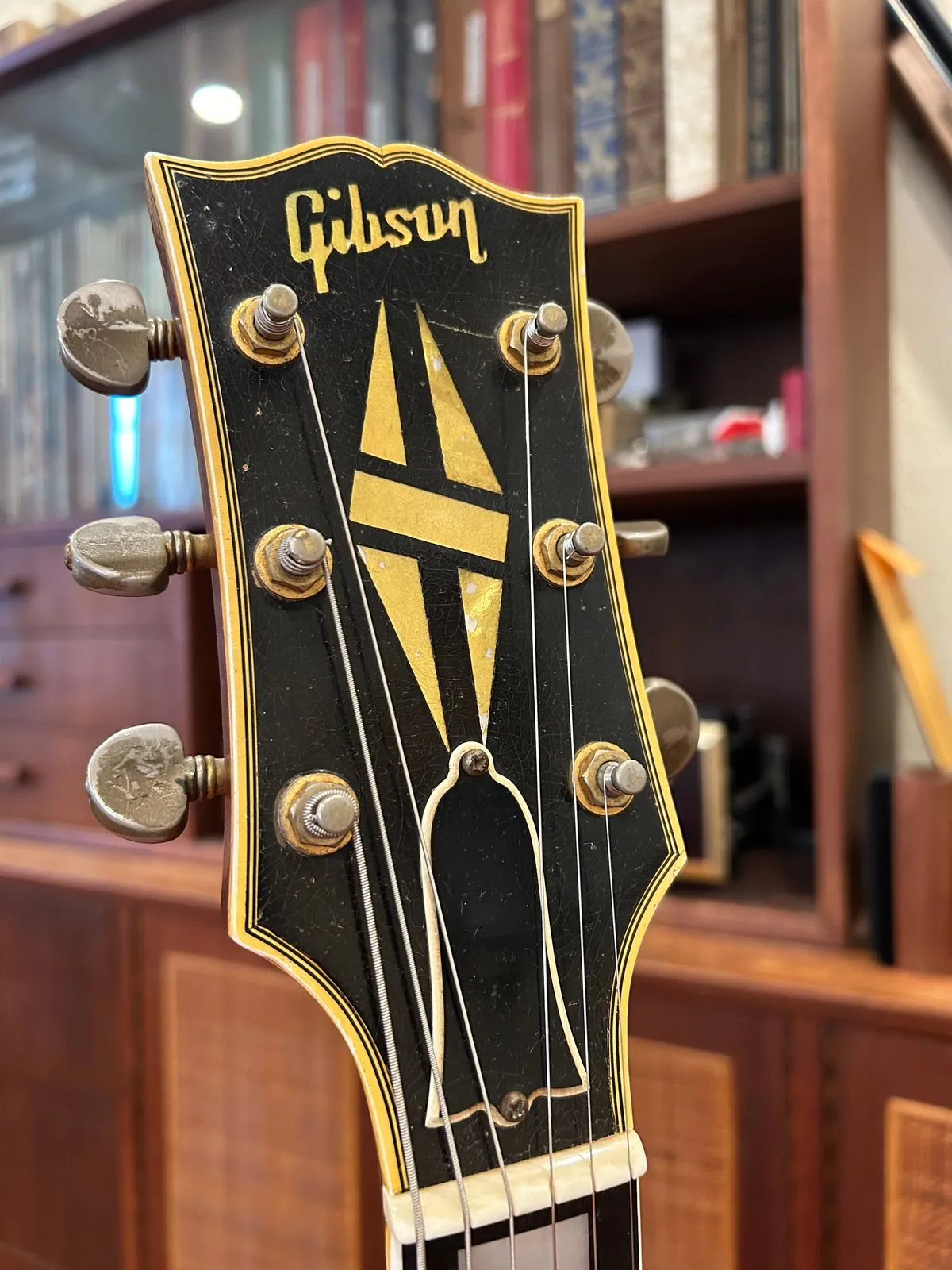 ES-355
Identify The Model Before The Year
I first establish which model the guitar was built as. Then I compare its neck, body shape, serial number, pickups and hardware with the changes Gibson made during that model’s production. Gibson production and shipping totals provide useful context, but they can’t identify an individual guitar.
Pickup details can narrow the period and reveal expensive changes. My Gibson PAF and Patent Number pickup guide explains the decals, covers, solder joints and other clues I check without taking a valuable pickup apart.
For the most highly appointed version, my 1959 Gibson ES-355 history and value guide examines the mono version, gold hardware, Bigsby and trim.
- Dot or block inlays usually point toward an ES-335.
- Split-parallelogram inlays, gold hardware and a Varitone are characteristic ES-345 features.
- An ebony fingerboard, large pearl blocks, a split-diamond headstock and more elaborate binding point toward an ES-355.
- A changed pickguard, tailpiece or wiring harness shouldn’t outweigh the construction and trim that remain.
Wiring Is Part Of The Identity
The ES-345 was built around a stereo Varitone circuit, which I cover in more detail in my in-depth Gibson ES-345 guide. ES-355s were offered in both mono and stereo Varitone versions, while the ES-335 was the straightforward mono model without a Varitone.
Many stereo guitars were later converted to mono for easier use. A good conversion can make sense for a player, but the original harness and removed parts still matter when the guitar is appraised. I wouldn’t change the wiring simply to prepare a guitar for sale.
From My Shop
More Real Examples
Year-to-year changes can be just as important as the model name. Each photograph opens the related year or model article.
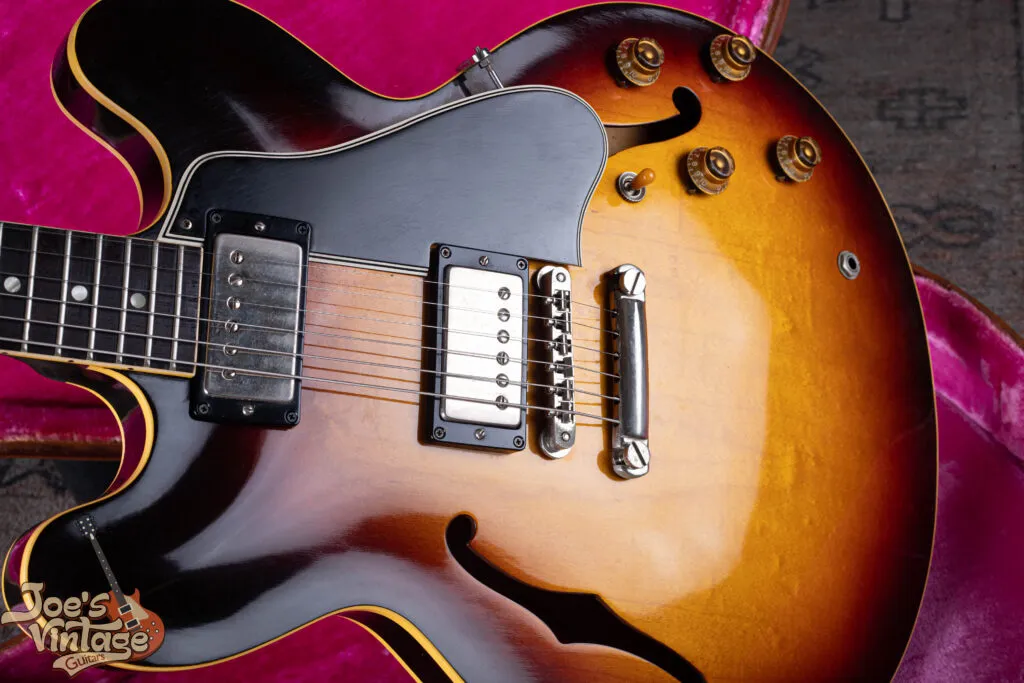 1959 ES-335 FinishOriginal sunburst lacquer on a 1959 dot-neck ES-335.Read The Related Article →
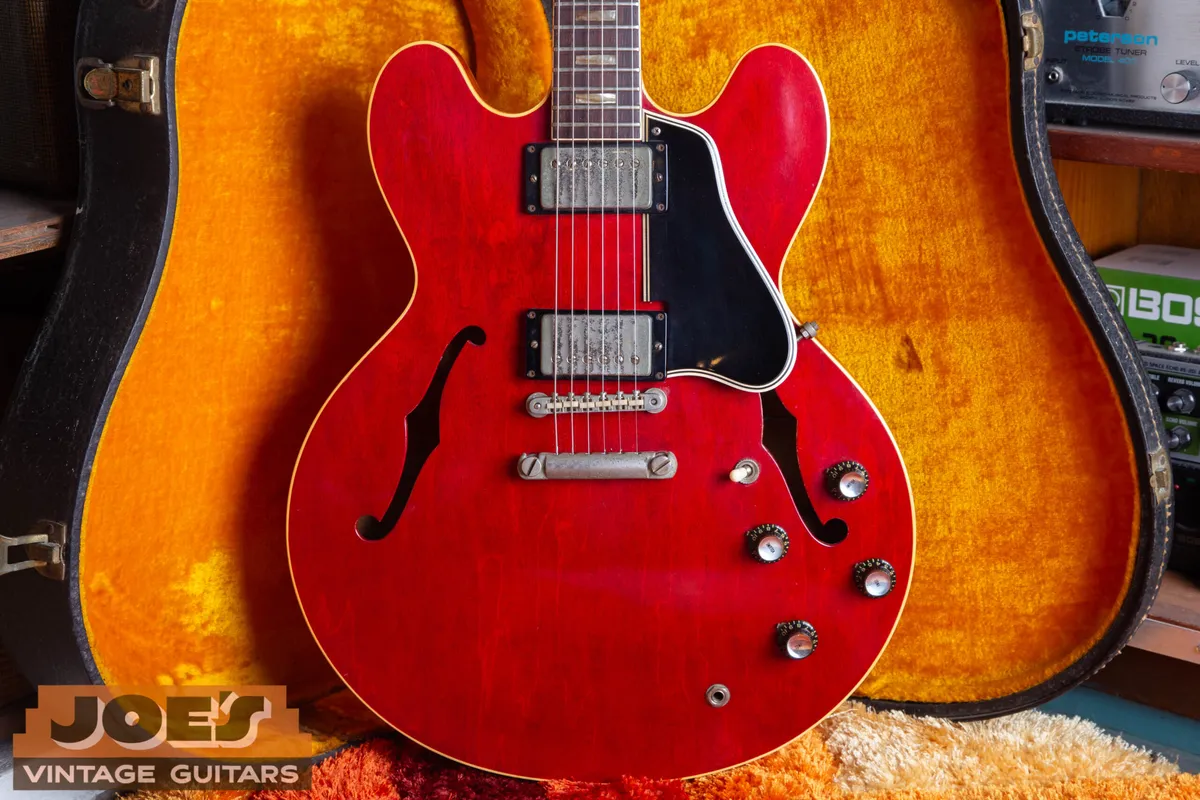 1962 ES-335A cherry 1962 ES-335 from the dot-to-block transition.Read The Related Article →1965 ES-335A 1965 ES-335 with an unusual factory short Maestro Vibrola.Read The Related Article →
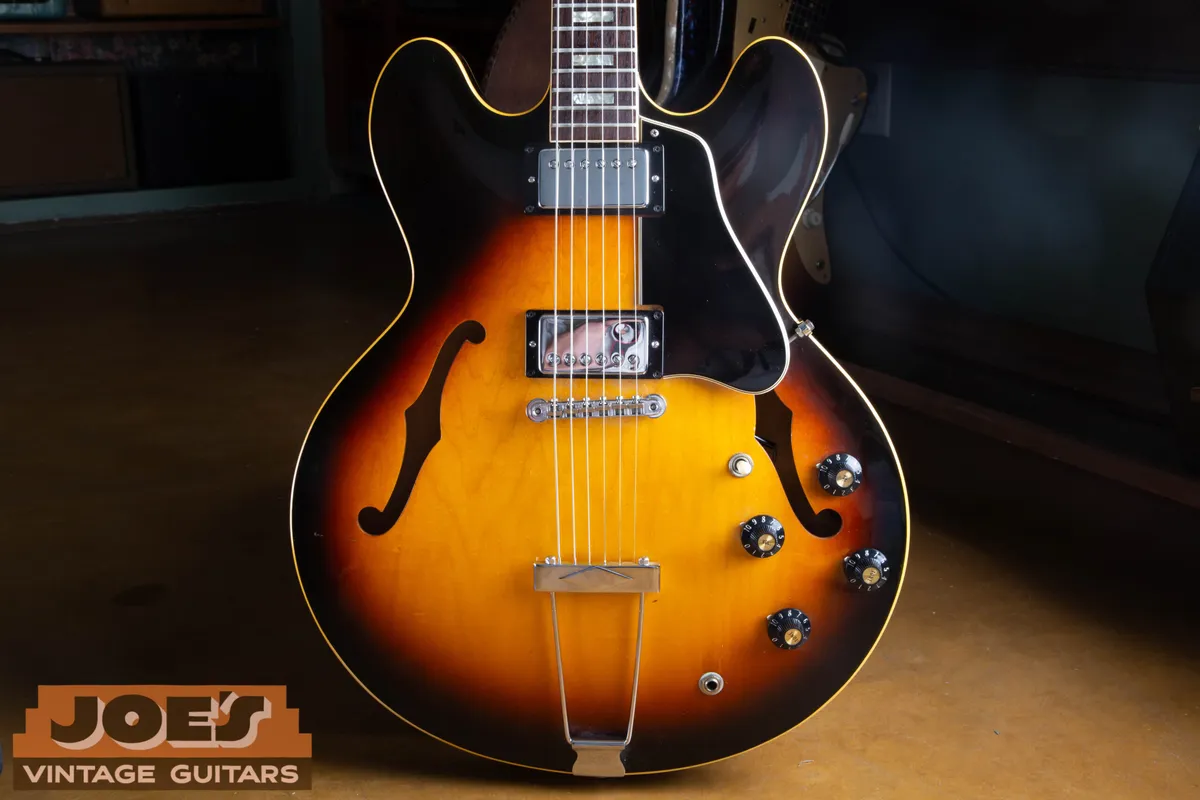 1968 ES-335A near-mint 1968 ES-335 showing the later 1960s appearance.Read The Related Article →
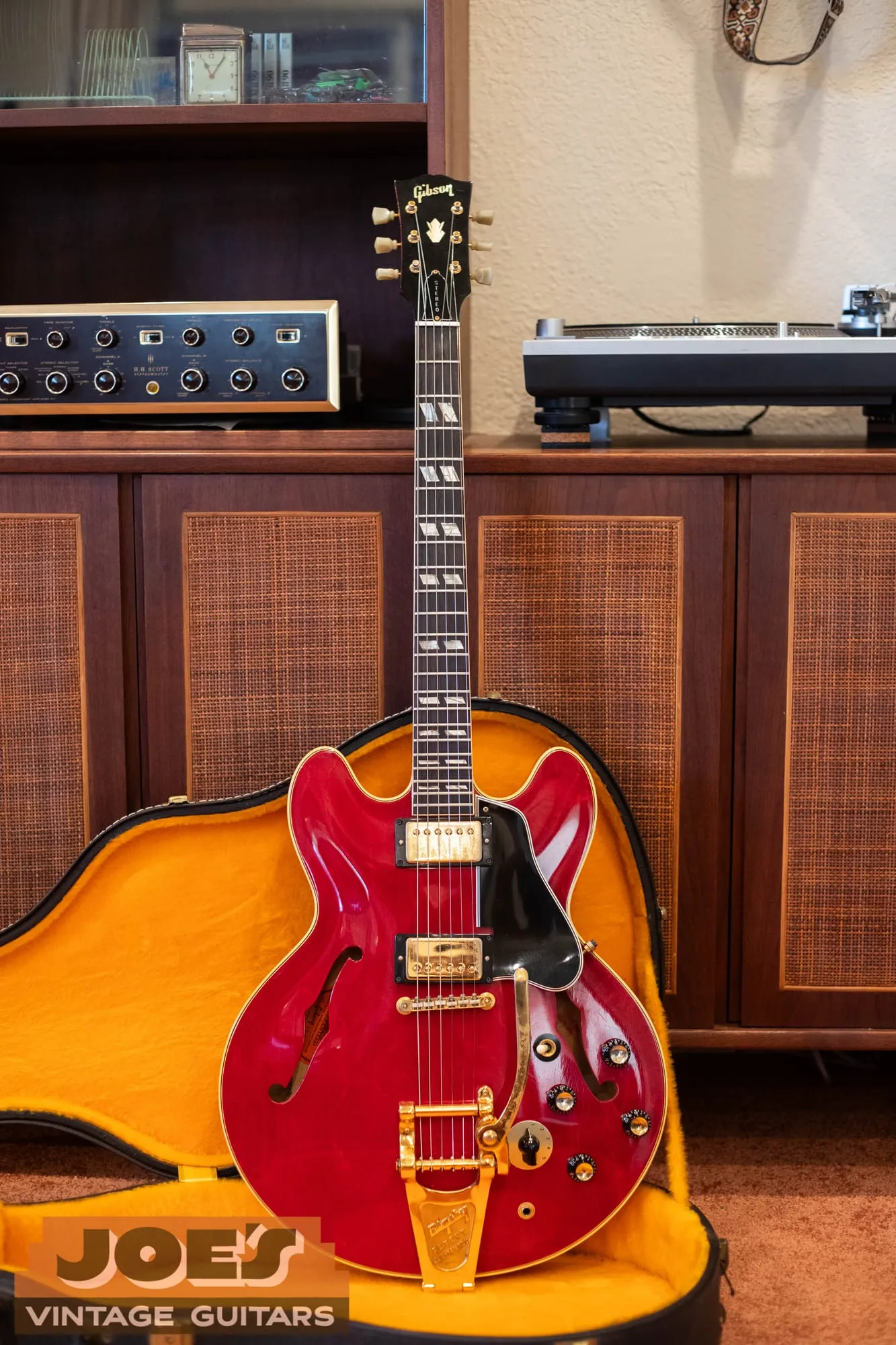 1966 ES-345A cherry 1966 ES-345 with its gold hardware and Varitone.Read The Related Article →
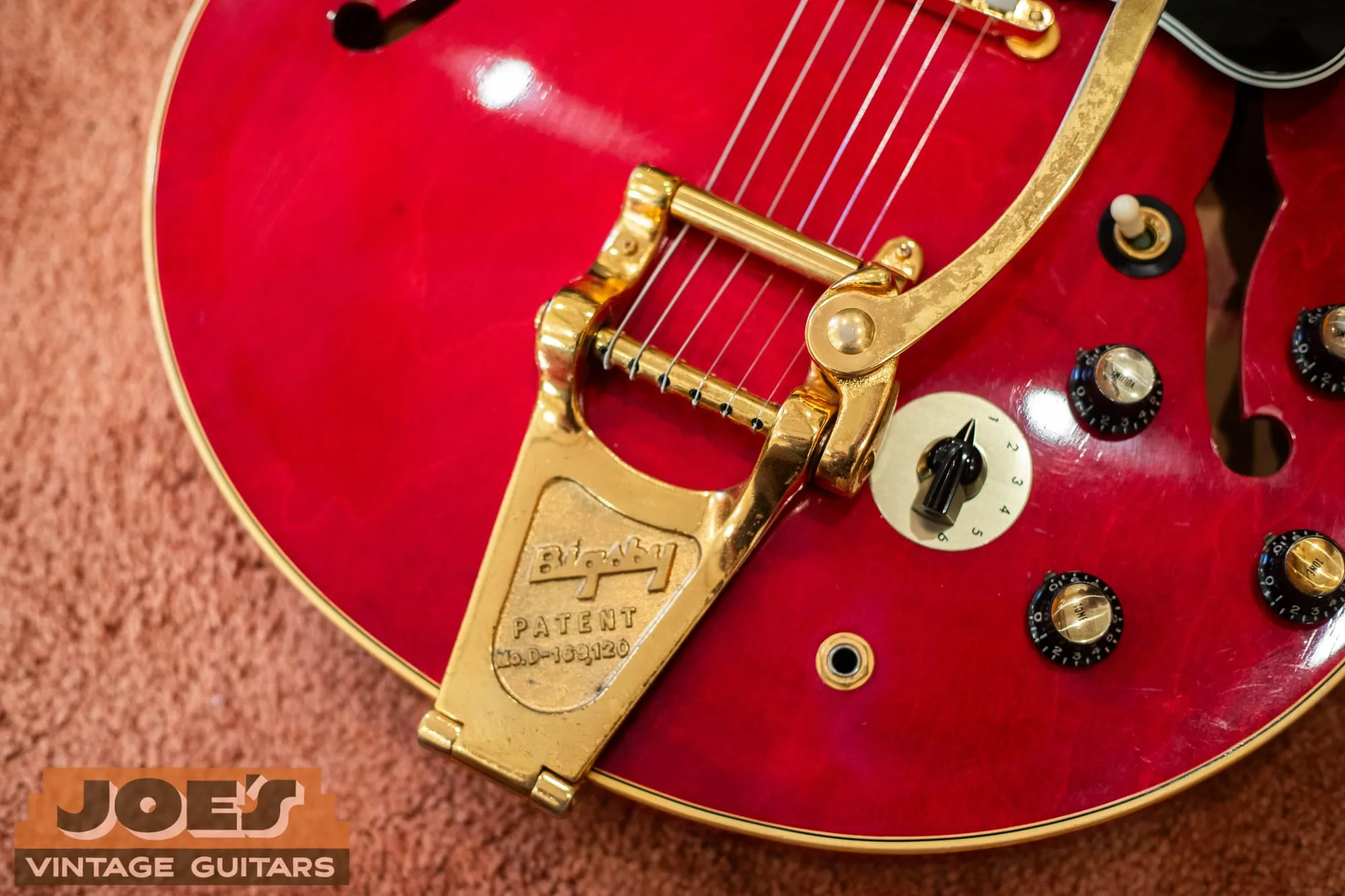 ES-345 Bigsby And VaritoneThe gold Bigsby and six-position Varitone on the 1966 ES-345.Read The Related Article →
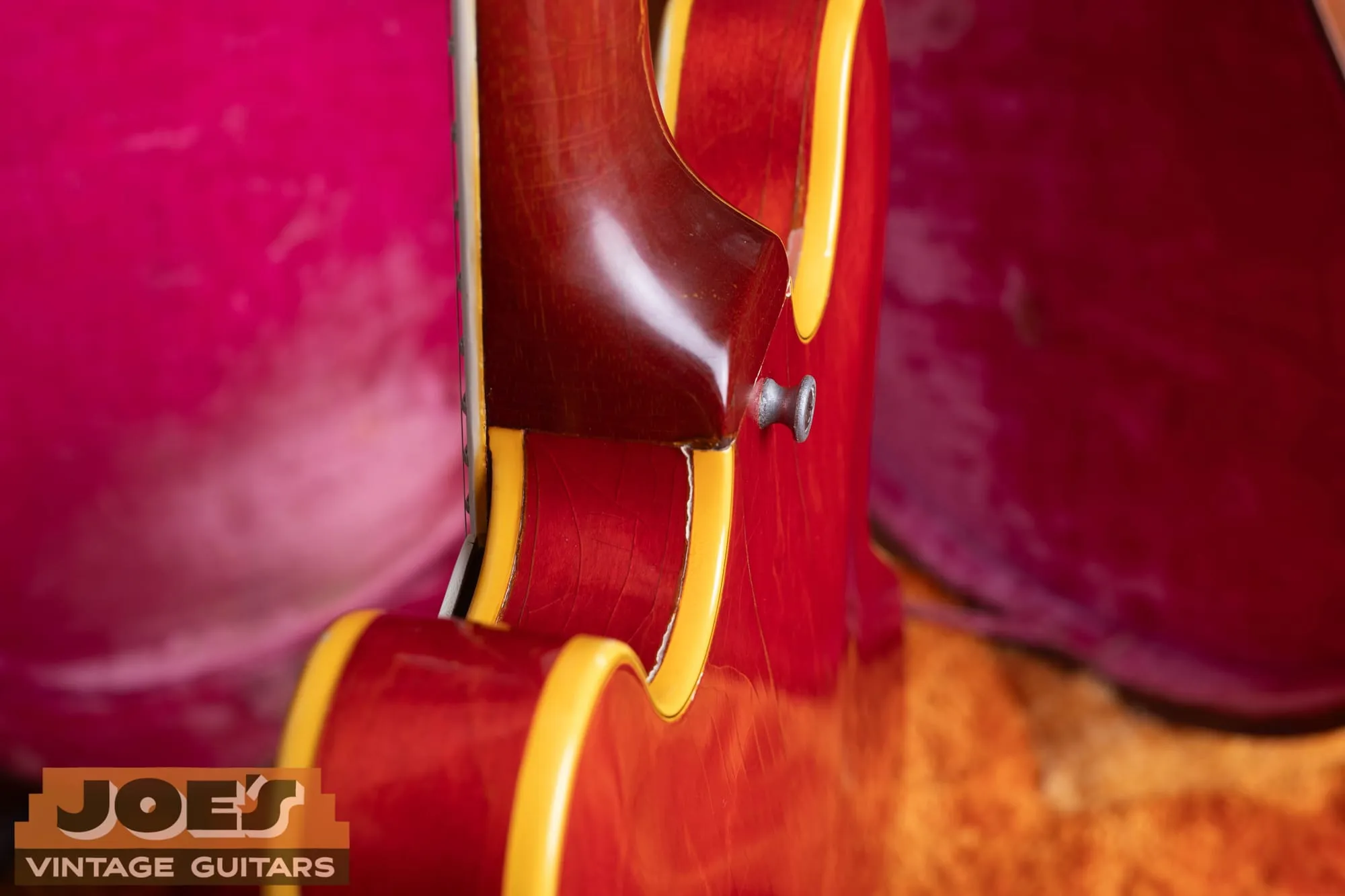 ES-355 BindingMulti-ply body binding and a bound f-hole on the 1959 ES-355.Read The Related Article →
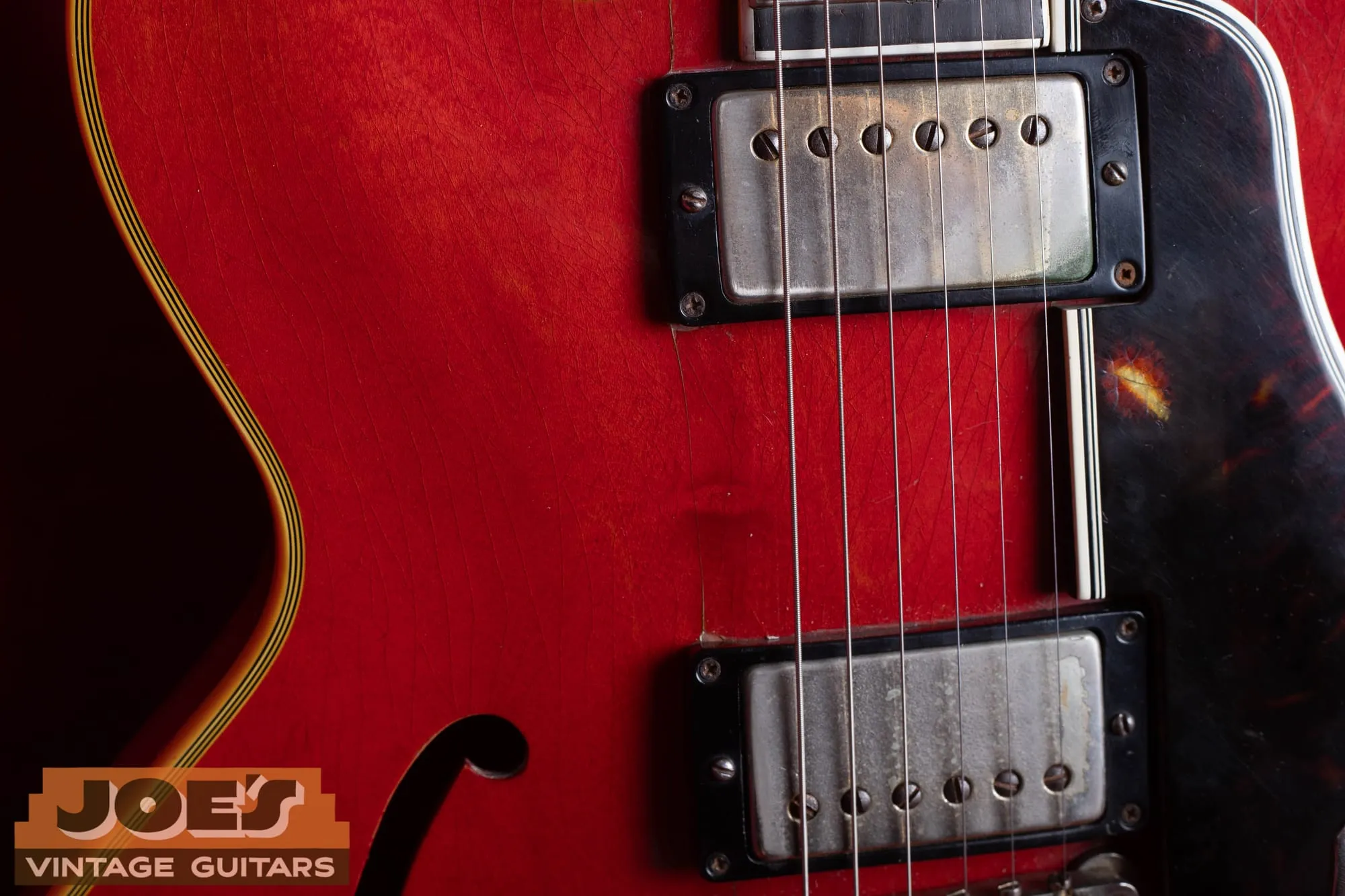 ES-355 PickupsGold-cover PAF humbuckers with natural plating wear.Read The Related Article →
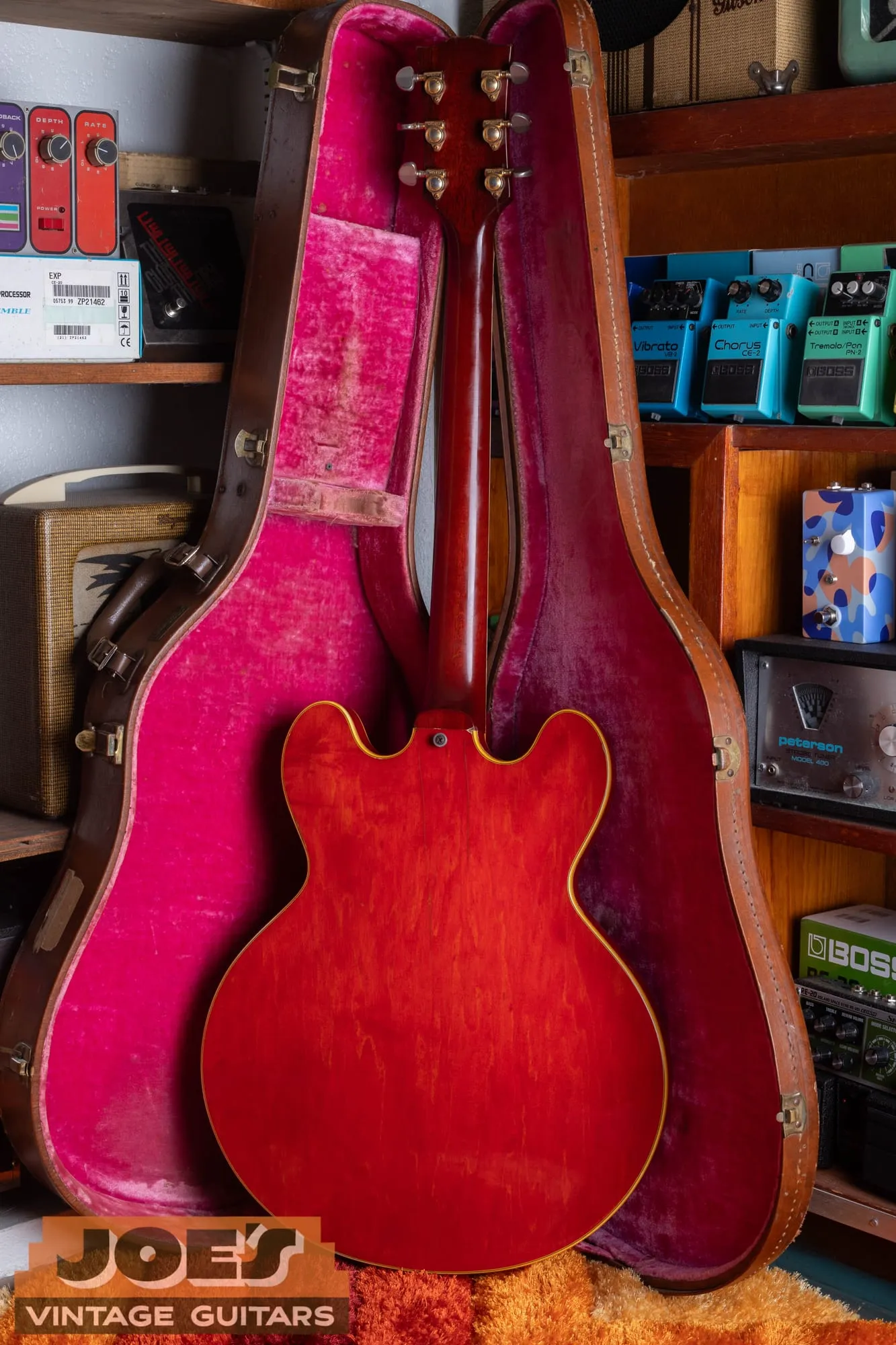 1959 ES-355 BackThe back of the 1959 ES-355, including the neck and headstock.Read The Related Article →
Keep Researching
Further Reading On Gibson ES Guitars
I don’t yet have a full model guide for every ES model. The ES-345 has a complete model guide, and the photographs above link to the ES-335 and ES-355 year-specific articles I’ve finished.
The People Behind The Guitars
Original-Owner ES Guitar Stories
Specifications tell me what a guitar is. Ownership stories explain where it has been. These ES guitars came to me with direct family history, period photographs or memories from the people who owned them.
Keep The ES-330 Separate
The ES-330 shares the double-cutaway thinline appearance, but it’s fully hollow and doesn’t have the center block used in the ES-335, ES-345 and ES-355. Its neck joint, pickups and construction make it a different family for identification and valuation.
What To Photograph Before Asking For A Value
You don’t need to take the guitar apart. Clear photographs of the visible features are enough to begin a free vintage Gibson guitar appraisal.
- Full front and back of the guitar
- Front and back of the headstock
- Serial number and the label inside the body
- Fingerboard inlays, controls and output jack
- Pickups, bridge, tailpiece and tuners
- Case, tags, receipts and every loose or replaced part
Have One To Sell?
Have An ES-335, ES-345 Or ES-355 To Sell?
If you’re ready to sell your vintage Gibson directly to me, you don’t need to identify every detail before contacting me. Send clear photographs and anything you know about the guitar. I’ll examine it myself, explain what I see and let you decide whether an offer makes sense.
Common Questions
Frequently Asked Questions
What’s The Difference Between A Gibson ES-335, ES-345 And ES-355?
The ES-335 is the simplest of the three. The ES-345 adds split-parallelogram inlays, gold hardware, stereo wiring and a Varitone. The ES-355 adds an ebony fingerboard, large pearl blocks, a split-diamond headstock and more elaborate binding.
Which Gibson ES Models Have A Varitone?
The ES-345 was built with a six-position Varitone and stereo wiring. ES-355s were made in both mono and stereo Varitone versions. A standard ES-335 doesn’t have a Varitone.
How Can I Tell An ES-355 From An ES-345?
Look first at the fingerboard and headstock. An ES-345 usually has split-parallelogram inlays and a crown headstock inlay. An ES-355 has an ebony fingerboard with large pearl blocks, a bound headstock with a split-diamond inlay and more elaborate body binding.
Is An ES-355 Better Than An ES-335?
The ES-355 was the more expensive and highly appointed model, but that doesn’t automatically make it the better guitar for every player. Originality, condition, year, wiring and personal preference all matter.
Which Is More Valuable: An ES-335, ES-345 Or ES-355?
The model name alone doesn’t determine value. The year, finish, originality, condition, factory hardware, wiring, repairs and ownership history all matter. A desirable, original ES-335 can be worth more than a later or heavily changed ES-355.
Are The ES-335, ES-345 And ES-355 The Same Size?
They belong to the same center-block thinline family and generally share the same body shape and dimensions. Their fingerboards, inlays, binding, hardware and electronics are different, and some construction details changed during production.
Can An ES-345 Or ES-355 Be Converted From Stereo To Mono?
Yes. Many stereo ES-345s and ES-355s were converted to mono so they’d be easier to use with a standard amplifier. A conversion can affect originality and collector value, so keep the original harness and every removed part with the guitar.