
A 1965 Gibson ES-335 With a Factory Short Maestro Vibrola
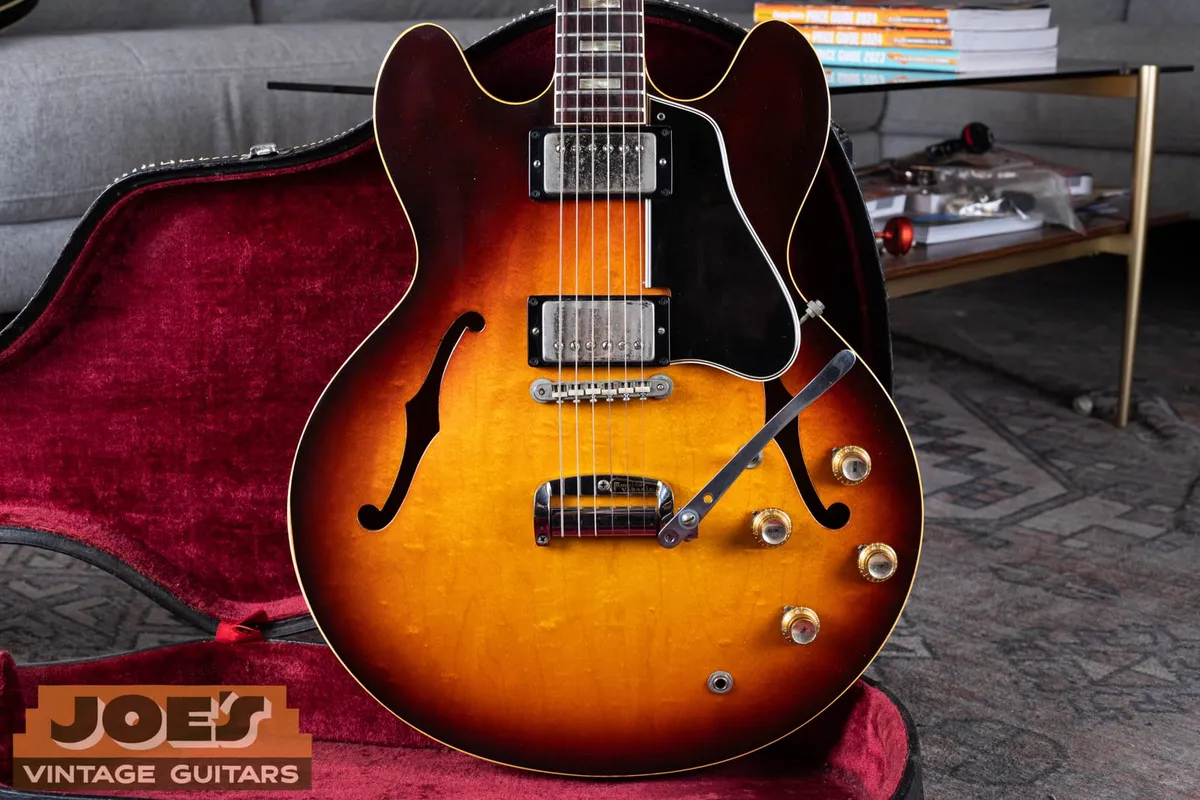
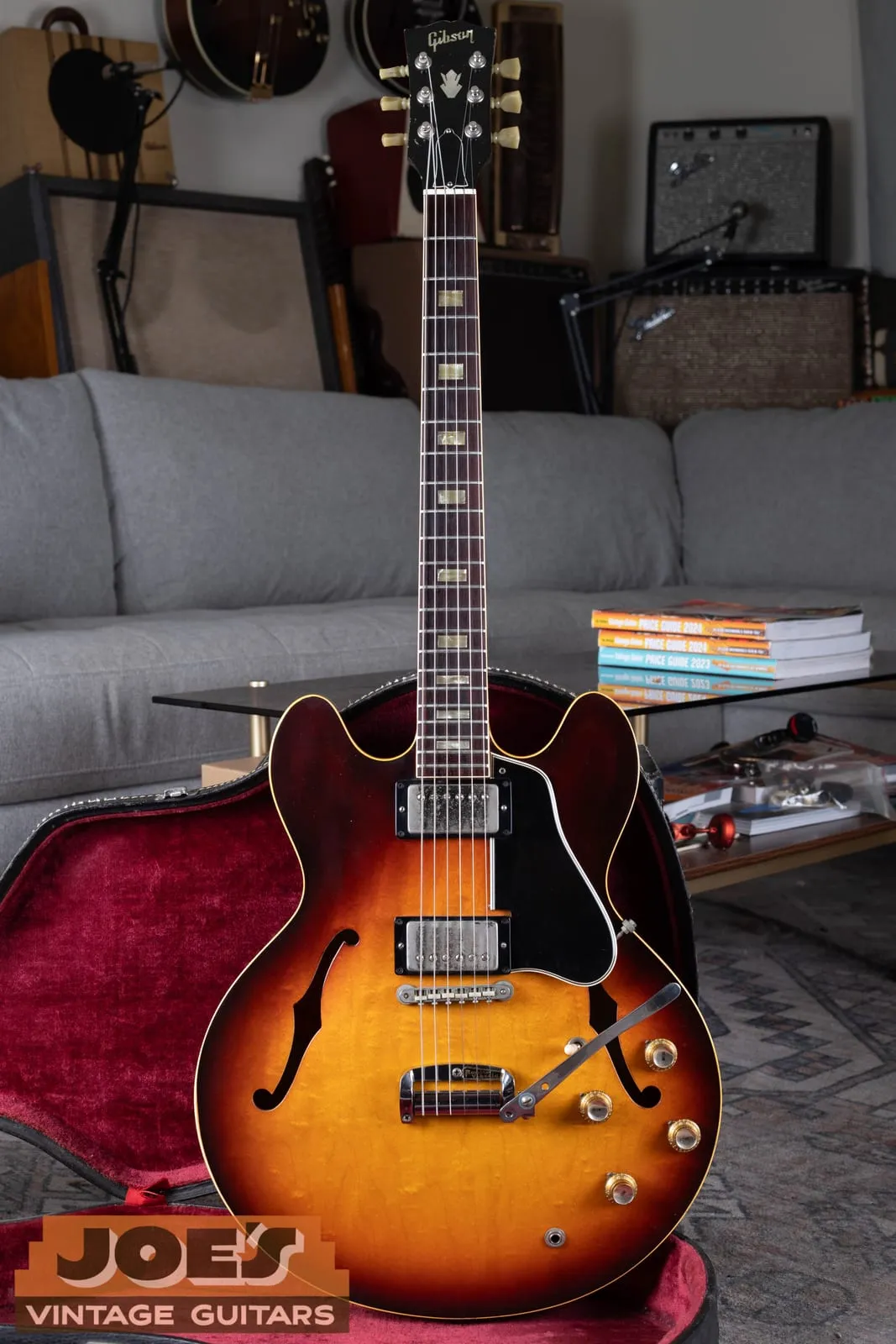
Every so often a guitar comes through that stops you for a second, not because it is in spectacular condition or carries a famous name, but because of one detail that does not add up at first glance. A 1965 Gibson ES-335 recently did exactly that. It wears a short Maestro Vibrola, and in all my years of handling these instruments, that is a pairing I had never seen on a 335 from this period. The more I looked at it, the clearer it became that this is how the guitar left Kalamazoo. I picked it up from Edgewater Guitars, a dealer out of Ohio that I trust.
Here is what makes it interesting, how I read it as a genuine factory configuration, and why a one-off like this matters when you are figuring out what a vintage Gibson is actually worth.
What a 1965 ES-335 Usually Looks Like
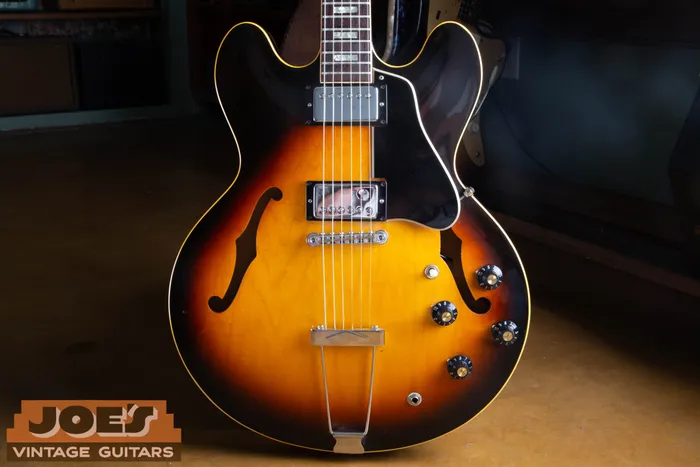
1965 is a transitional year for the ES-335, which is part of what makes this guitar worth writing about. By the mid 1960s Gibson was moving the model away from the stop bar tailpiece of the earlier years and toward a trapeze tailpiece. This is also the period when the nut width started narrowing, from the fuller 1 11/16 inch toward the slimmer 1 9/16 inch that shows up later in the decade. So a 1965 335 already sits in a spot where you expect to see change.
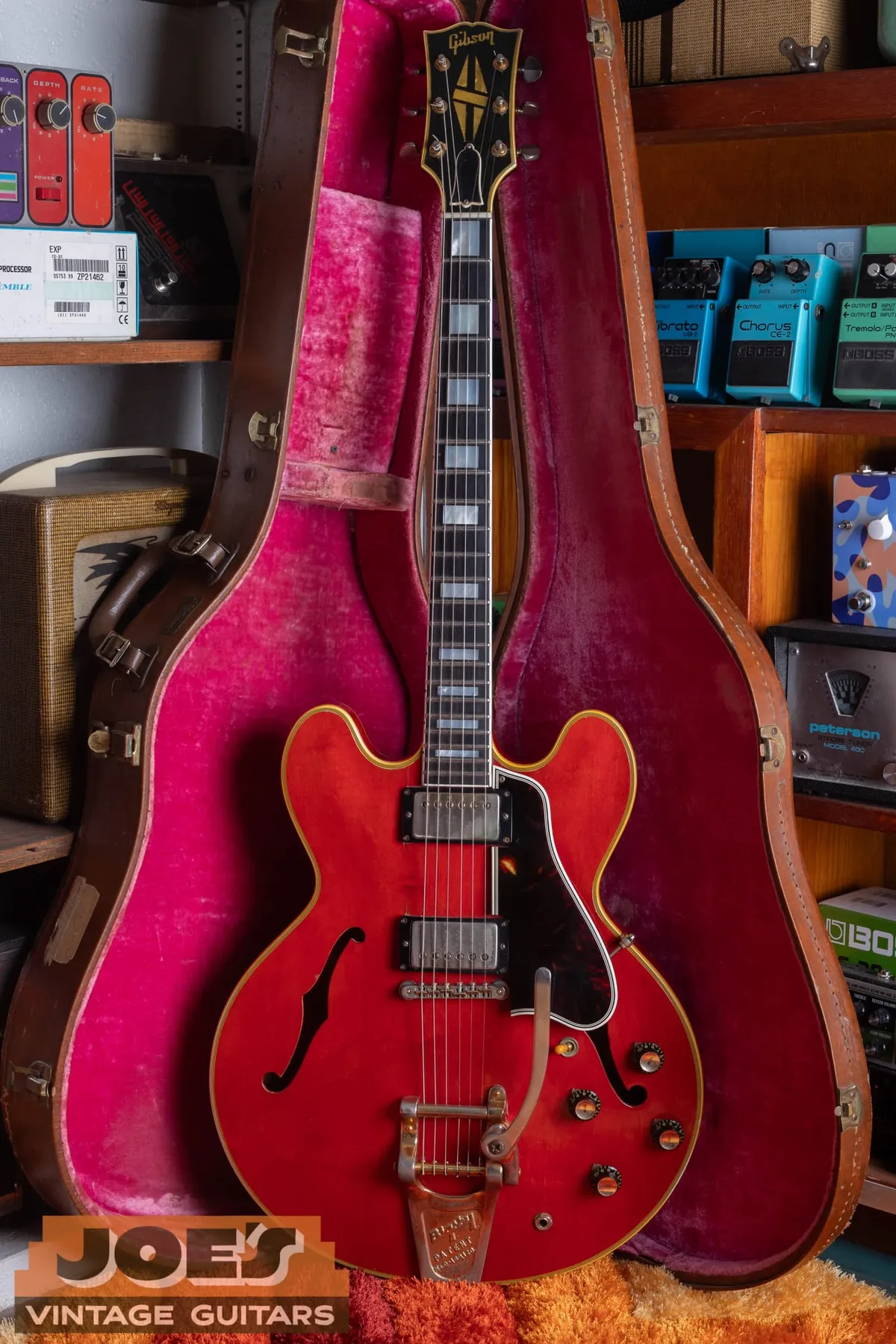
When a 335 from this era did come with a vibrato, it was usually one of two things: a Bigsby, or the longer Maestro unit with the engraved lyre and Gibson cover that you often see on SGs and other Gibson electrics of the time. What you do not typically expect is the short Maestro Vibrola, the more compact tremolo unit, sitting on an ES-335. That is the part that makes this one stand out.
A Quick Word on the Maestro Vibrola
Gibson used the Maestro name on more than one tremolo design in the 1960s, and they are easy to mix up. The long version has an extended, flat arm and a cover plate, often with the lyre and Gibson engraving. The short Maestro Vibrola is the more compact unit, with a shorter assembly and a simpler look. Both are period correct Gibson hardware. They just turned up on different models and in different combinations, which is exactly why the short unit on a 335 caught my eye.
Why I Read It as Factory Original
A combination you have never seen is the moment to slow down and check whether someone added the vibrato later. On this guitar, two things tell me it was born this way.
First, the ground wire. A factory vibrato installation grounds the system in a specific, tidy way. A later conversion almost always leaves a tell, an added or rerouted ground, solder that does not match the rest of the harness, or a wire that was clearly run after the fact. This one is correct and consistent with the rest of the original wiring.
Second, and just as important, there is no evidence that any other tailpiece was ever on this guitar. A stop bar tailpiece leaves two stud bushings set into the top. A trapeze leaves its own mounting and bracket marks. If a short Maestro had been retrofitted over an earlier setup, you would expect filled holes, touched up finish, or shadow marks where the original hardware used to sit. There is none of that here. The top shows only the mounting for the short Maestro, with finish and aging that are consistent across the whole area.
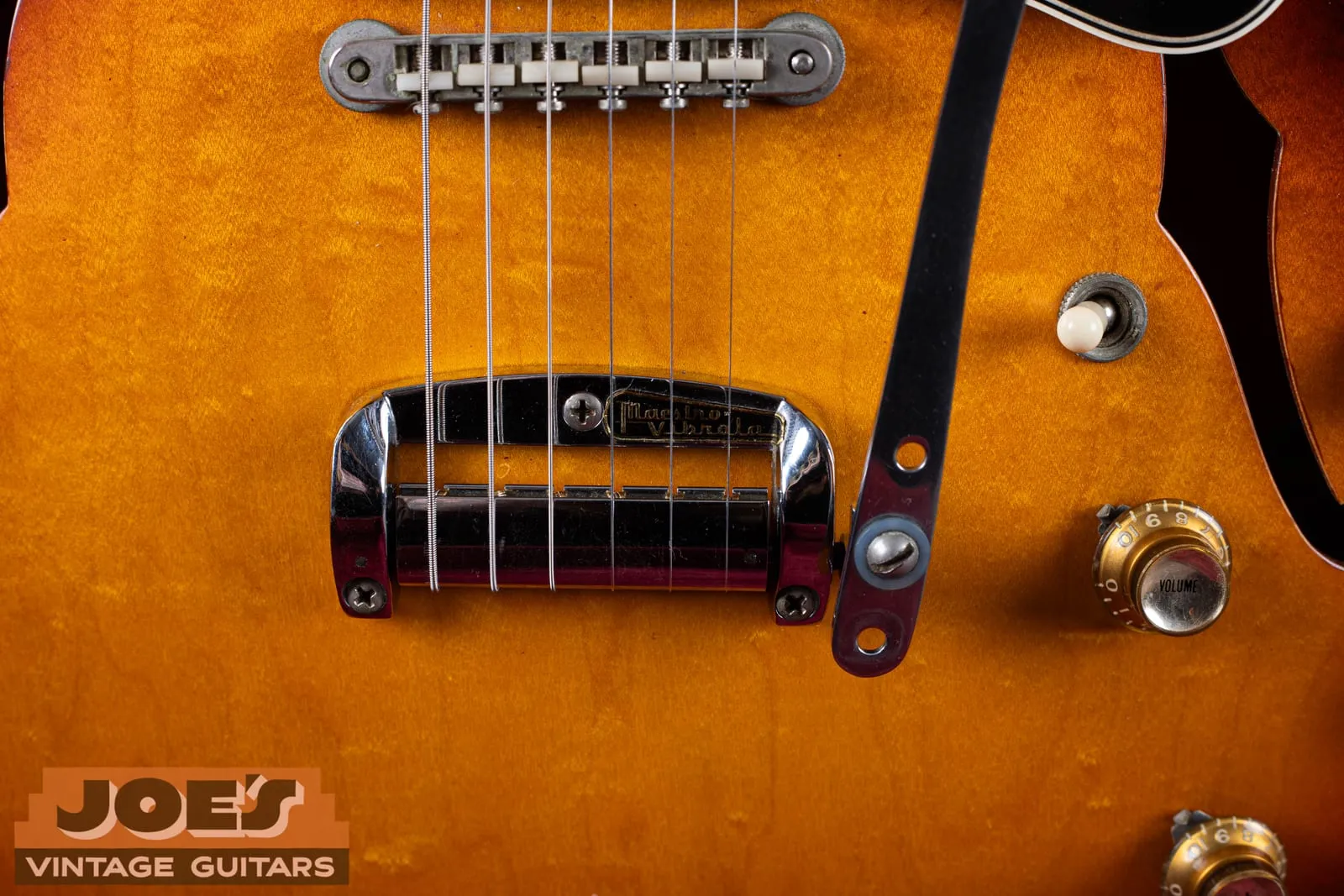
When the wiring is right and the top is clean, the simplest explanation is usually the correct one: this is how Gibson built it.
Dating the Guitar
The features all line up with 1965, but the starting point for dating any Gibson from this era is the serial number stamped into the back of the headstock. Gibson’s 1960s numbering has overlaps and quirks, so the number gets you to the neighborhood and the physical details confirm the year. If you want to work through it yourself, I put together a full walkthrough in my Gibson serial number guide, and there is more on how the production year itself moves the value in my piece on how the year of manufacture affects a vintage Gibson’s price.
For more on how the ES-335 changed across the 1960s, these year specific guides are a good place to compare details against your own guitar:
- 1962 Gibson ES-335 guide
- 1966 Gibson ES-335 authentication guide
- 1959 Gibson ES-335 authentication guide
Why a One-Off Like This Matters for Value
Unusual factory configurations are a real part of what makes vintage Gibsons interesting, and they can affect value in both directions. A genuine, documented factory oddity can draw extra attention from collectors who want something that is not the textbook example. At the same time, the same configuration can scare off a buyer who assumes a vibrato was added later and walks away. The difference comes down to being able to show that it is original, which is why the ground wire and the clean top matter as much as they do.
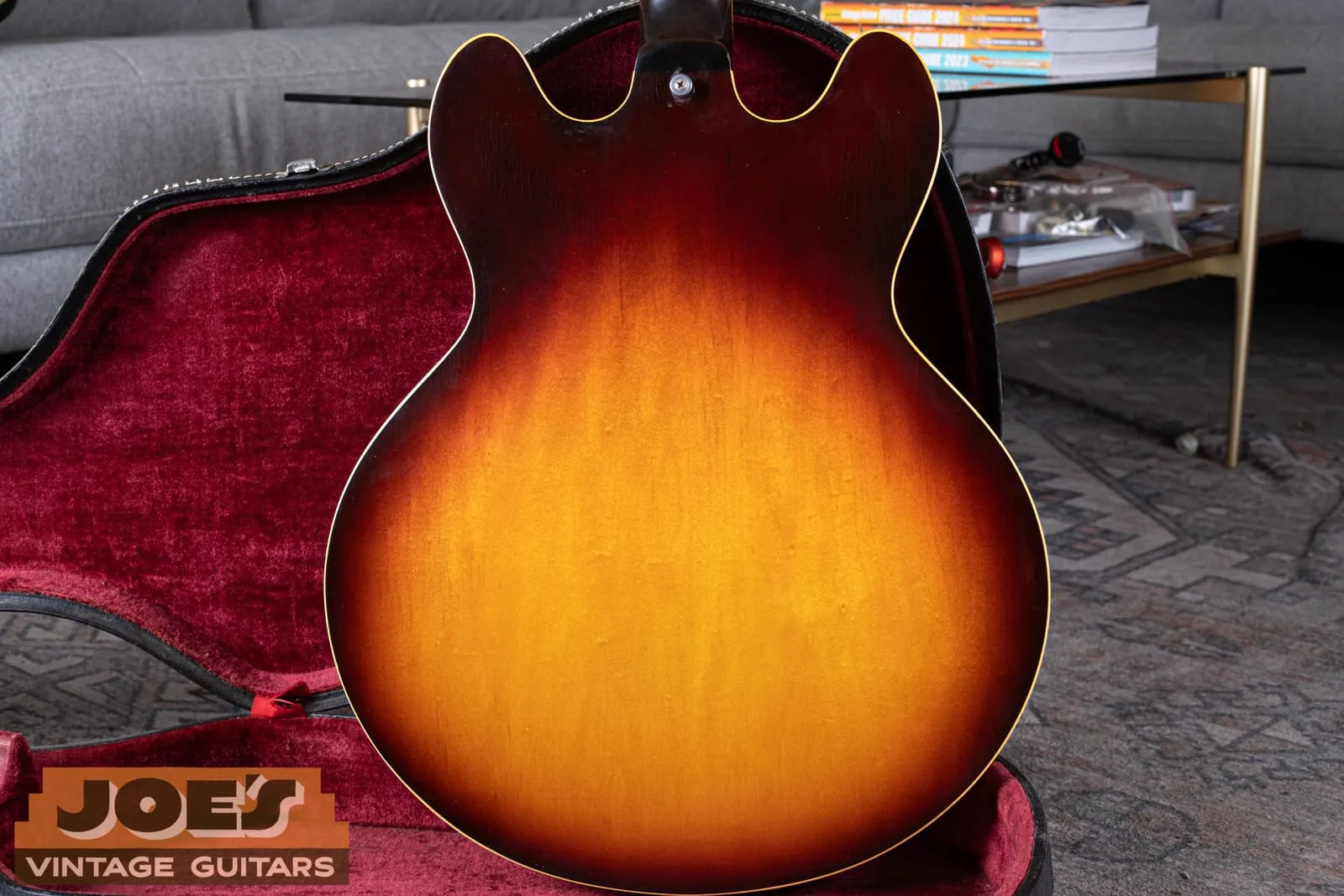
This is the kind of detail that is easy to get wrong if you are valuing a guitar from a spec sheet instead of the instrument in front of you. If you have a Gibson with a feature that does not seem to fit the year, that is worth a closer look, not an automatic mark against it.
A Word on Edgewater Guitars
This 335 came to me from Edgewater Guitars, and they are one of my favorite shops, worth a few words of their own. They are a dealer I trust, which is not something I say lightly about another buyer.
Edgewater is based in Ohio and deals in vintage, rare, and used guitars across the major brands, with real depth on Gibson, Fender, and Martin. They do free appraisals, make fair cash offers, and pay quickly, and for higher value instruments they will come to you. They also put out free guitar resources for people trying to learn about what they own, which tells you they care about the instruments and the people behind them, not just the deal.
What matters most to me is that they know what they are looking at. A guitar like this 1965 ES-335, with a factory feature most people have never seen, only gets described and handled correctly when it passes through knowledgeable hands, and Edgewater has those. You can learn more about them at Edgewater Guitars, and they have a page for selling your Gibson if you want to see the kind of instruments they take in.
Have a Gibson You Are Curious About?
If you own a vintage Gibson, common or unusual, and you want to know what it is and what it is worth, I am always glad to take a look. I buy and appraise Gibsons across the country. You can start on my sell your Gibson guitar page or send a few photos for a free appraisal, and you will hear back from me directly.
A short Maestro Vibrola on a 1965 ES-335 is the kind of thing you can go years without seeing. When one turns up and everything checks out, it is a good reminder that the factory did not always build to a single template, and that the guitar itself always has the final say.