

Vintage Fender Telecaster Prices · 1968 To 1981
Fender Telecaster Thinline, Custom And Deluxe Value Guide
Identify the Thinline, Custom or Deluxe first. Pickup configuration, factory finish and permanent body changes can move otherwise similar guitars into different price groups.
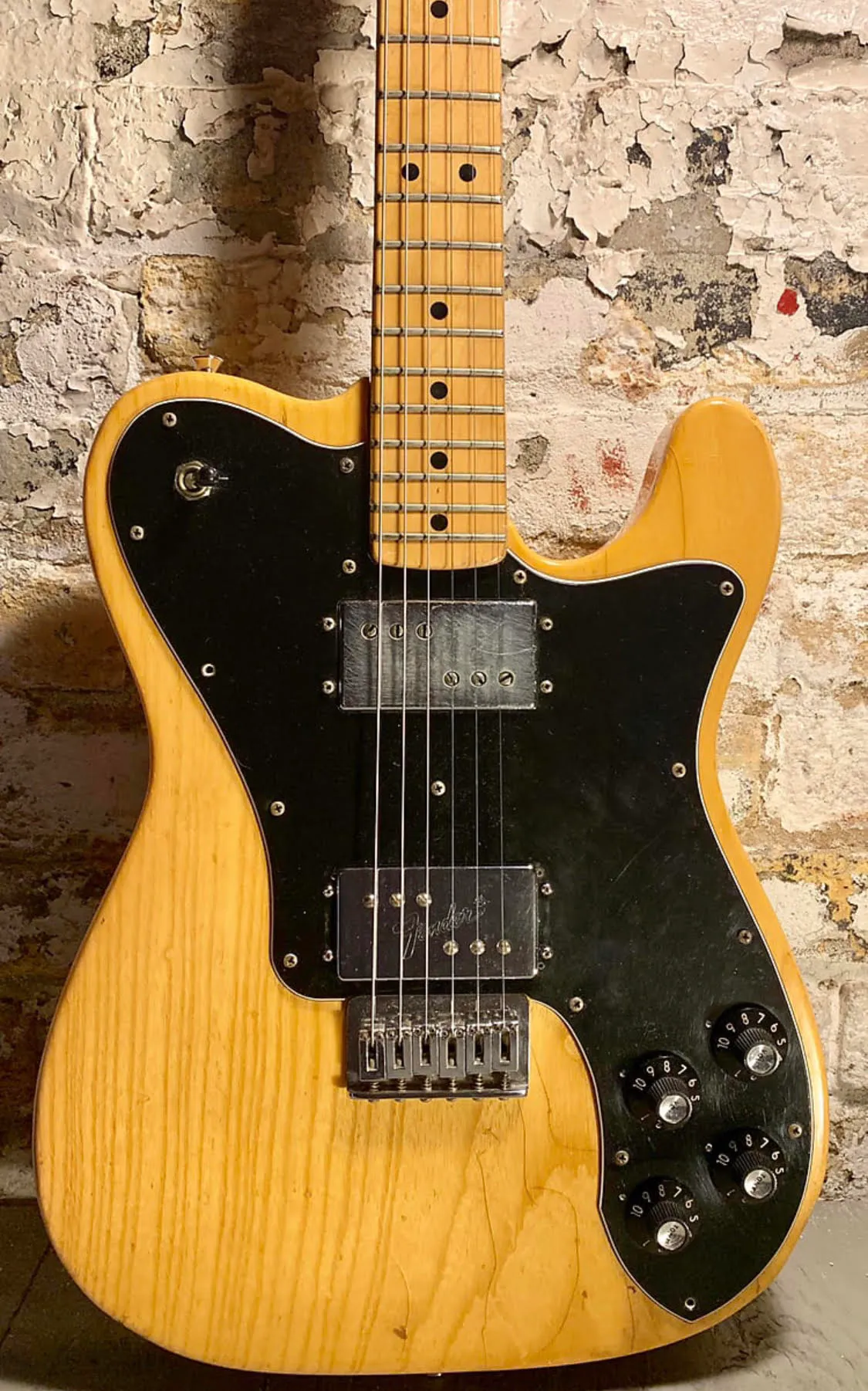
A 1972 Telecaster Custom is estimated at $3,150 to $4,800, while the 1976 to 1977 Deluxe common-color group is $2,450 to $3,500 in excellent, original condition with the original case. A Thinline’s pickup generation creates another important distinction. Use the Thinline, Custom and Deluxe authentication guide to establish the model and configuration before choosing a price row.
This Is An Estimate Of Market Value, Not An Offer To Buy And Not A Guarantee. Market Values Fluctuate; Have Your Specific Item Appraised.
Excellent Original Guitars With Their Original Cases
Telecaster Thinline, Custom And Deluxe Price Charts
| Year Group | Configuration | Estimated Value |
|---|---|---|
| 1972 | Wide Range neck pickup and single-coil bridge pickup | $3,150 to $4,800 |
| 1973 to 1974 | Wide Range neck pickup and single-coil bridge pickup | $2,800 to $3,700 |
| 1975 to 1977 | Wide Range neck pickup and single-coil bridge pickup | $2,700 to $3,550 |
| 1978 to 1979 | Wide Range neck pickup and single-coil bridge pickup | $2,300 to $3,000 |
| 1980 to 1981 | Wide Range neck pickup and single-coil bridge pickup | $2,300 to $3,000 |
November 2026 estimates in U.S. dollars for excellent, original instruments with their original cases. An individual appraisal accounts for finish, repairs, parts and playing condition. These retail estimates are not purchase offers.
| Year Group | Configuration | Estimated Value |
|---|---|---|
| 1973 to 1974 | Common color | $2,950 to $3,900 |
| 1973 to 1974 | Less common color | $3,750 to $4,900 |
| 1975 | Common color | $2,400 to $3,400 |
| 1975 | Less common color | $3,400 to $4,450 |
| 1976 to 1977 | Common color | $2,450 to $3,500 |
| 1978 to 1979 | Common color | $2,200 to $3,050 |
| 1980 to 1981 | Common color | $1,950 to $2,650 |
November 2026 estimates in U.S. dollars for excellent, original instruments with their original cases. An individual appraisal accounts for finish, repairs, parts and playing condition. These retail estimates are not purchase offers.
| Year Group | Configuration | Estimated Value |
|---|---|---|
| 1968 | Common color | $13,600 to $17,000 |
| 1968 | Natural ash | $9,450 to $12,900 |
| 1968 | Natural mahogany | $9,700 to $13,200 |
| 1968 | Rare color | $17,000 to $25,500 |
| 1969 | Common color | $12,900 to $17,200 |
| 1969 | Natural ash | $9,700 to $13,200 |
| 1969 | Natural mahogany | $9,350 to $12,750 |
| 1969 | Rare color | $17,600 to $22,000 |
| 1969 | Sunburst | $10,300 to $13,750 |
| 1970 | Common color | $13,200 to $17,600 |
| 1970 | Natural ash | $9,350 to $12,750 |
| 1970 | Natural mahogany | $9,350 to $12,750 |
| 1970 | Rare color | $17,400 to $21,750 |
| 1970 | Sunburst | $10,700 to $14,250 |
| 1971 | Color option; three-bolt neck, humbuckers | $7,900 to $10,550 |
| 1971 | Color option; four-bolt neck, single-coils | $12,300 to $15,850 |
| 1971 | Natural ash; three-bolt neck, humbuckers | $4,350 to $6,100 |
| 1971 | Natural ash; four-bolt neck, single-coils | $9,550 to $13,050 |
| 1971 | Natural mahogany; three-bolt neck, humbuckers | $4,250 to $5,950 |
| 1971 | Natural mahogany; four-bolt neck, single-coils | $9,450 to $12,900 |
| 1971 | Sunburst; three-bolt neck, humbuckers | $4,350 to $6,100 |
| 1971 | Sunburst; four-bolt neck, single-coils | $5,550 to $7,650 |
| 1972 | Color option | $7,100 to $9,800 |
| 1972 | Mahogany | $3,900 to $5,200 |
| 1972 | Natural ash | $3,850 to $5,100 |
| 1972 | Sunburst | $4,300 to $5,600 |
| 1973 | Color option | $5,200 to $7,400 |
| 1973 | Mahogany | $4,000 to $5,350 |
| 1973 | Natural ash | $3,900 to $5,200 |
| 1973 | Sunburst | $4,300 to $5,600 |
| 1974 | Color option | $4,000 to $5,350 |
| 1974 | Mahogany | $3,050 to $4,350 |
| 1974 | Natural ash | $3,050 to $4,350 |
| 1974 | Sunburst | $3,500 to $4,800 |
| 1975 | Color option | $3,850 to $5,100 |
| 1975 | Natural ash | $3,000 to $4,300 |
| 1975 | Sunburst | $3,500 to $4,800 |
| 1976 | Color option | $2,800 to $3,700 |
| 1976 | Natural ash | $2,750 to $3,600 |
| 1976 | Sunburst | $2,800 to $3,700 |
| 1977 | Color option | $2,850 to $3,750 |
| 1977 | Natural ash | $2,800 to $3,650 |
| 1977 | Sunburst | $2,800 to $3,700 |
| 1978 | Color option | $2,600 to $3,500 |
| 1978 | Natural ash | $2,600 to $3,500 |
| 1978 | Sunburst | $2,600 to $3,450 |
November 2026 estimates in U.S. dollars for excellent, original instruments with their original cases. An individual appraisal accounts for finish, repairs, parts and playing condition. These retail estimates are not purchase offers.
The charts separate the three model families and the early single-coil Thinline from the later humbucker version. Within the 1971 transition, match both the pickup arrangement and neck attachment. A calendar year alone can select the wrong comparison.
Common, less-common and rare color labels are pricing categories within the appropriate period. These categorical rows require Joe to confirm the applicable group after reviewing the year and factory finish; the chart does not provide a color-by-color assignment for every model. Use the explicitly named finish rows when they match, or request an individual appraisal. A finish that looks unusual today may have faded, darkened or been replaced. Send uncertain colors for an individual review.
The Thinline table ends with the available 1978 price groups. Later examples require an individual estimate; the last row should not be extended automatically. Deluxe estimates begin with 1973 to 1974 instruments, following the model’s commercial introduction in 1973. These ranges describe original American instruments.
Use the figures as a starting point for an excellent-condition retail comparison. A direct purchase offer will reflect the individual guitar, required service and resale costs. An instrument with body reshaping, overspray or changed pickups needs its condition considered before a table range is useful.
Single-Coils, Wide Range Pickups And Body Work
Thinline Values Depend On The Pickup Generation
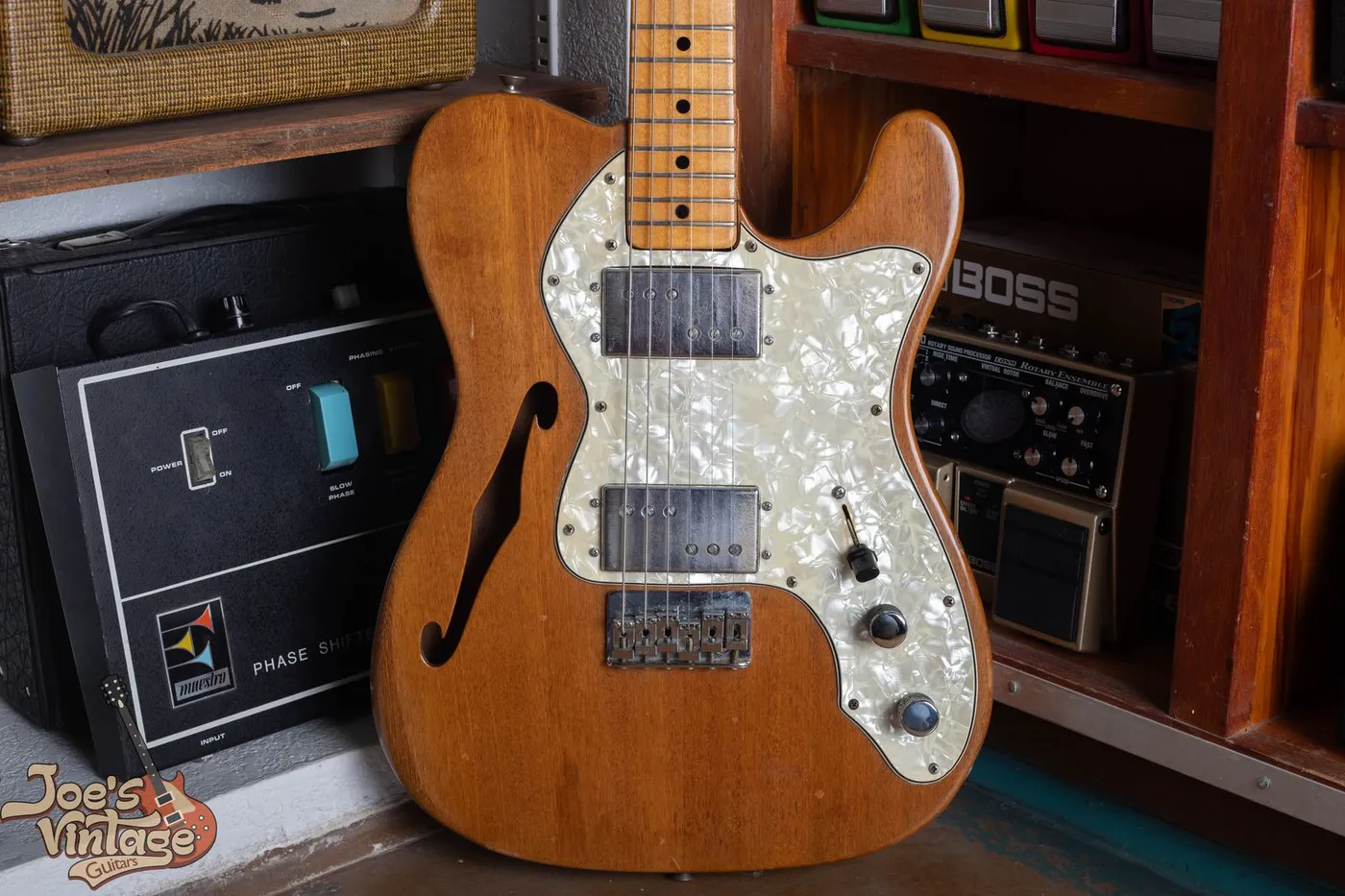
The first Thinline combines a partially hollow body and f-hole with traditional Telecaster single-coil pickups. The later design uses two large Wide Range humbuckers. Their price groups can be quite different, particularly around the transition. Photograph the whole front, neck joint and headstock before assigning the instrument to an early group.
Natural ash and natural mahogany are separate comparisons in the table. A visible grain pattern can help describe the instrument, but sanding, staining and replacement bodies complicate identification. A clear finish applied after stripping another color is a refinish and should be described with that history.
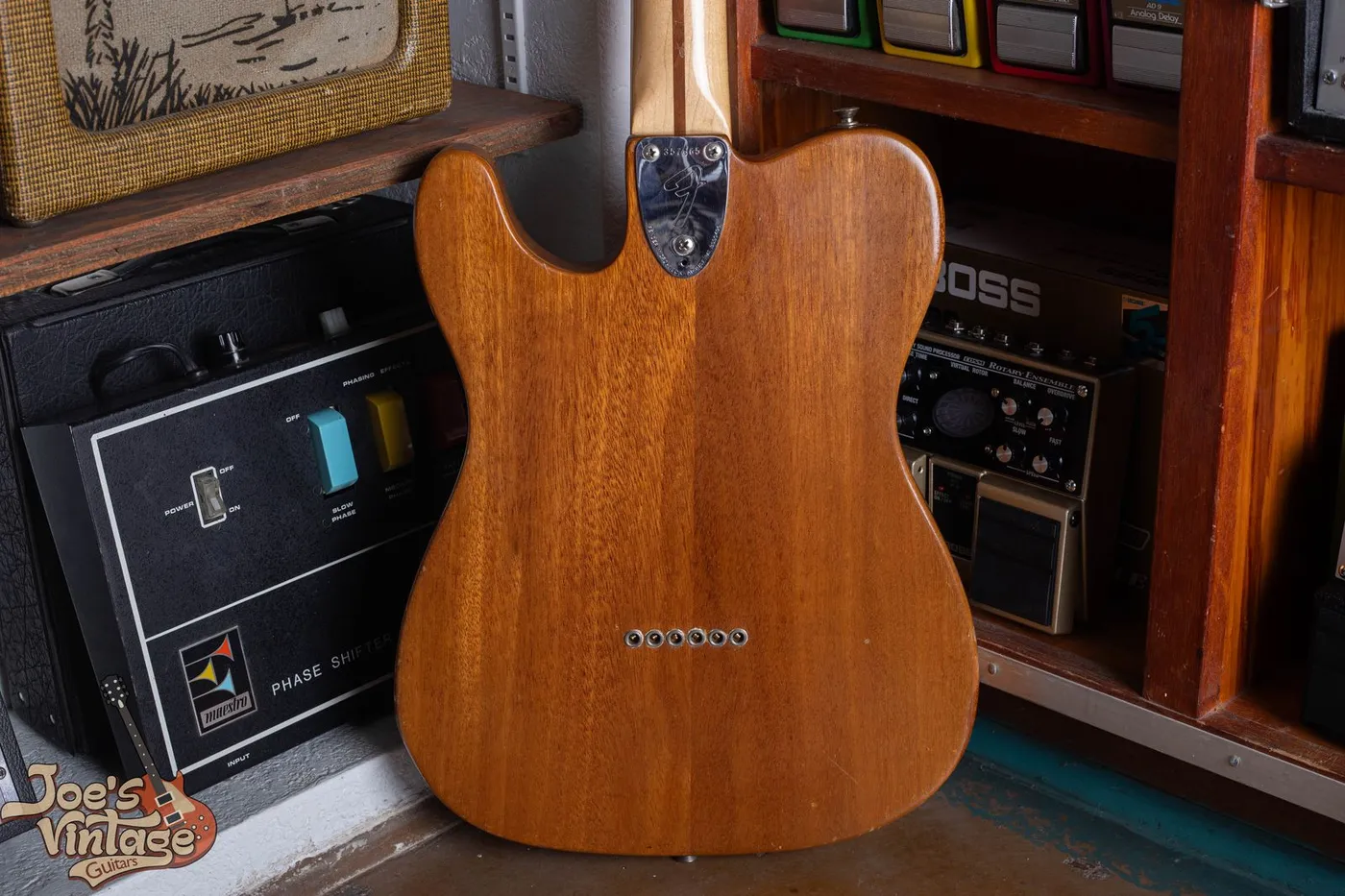
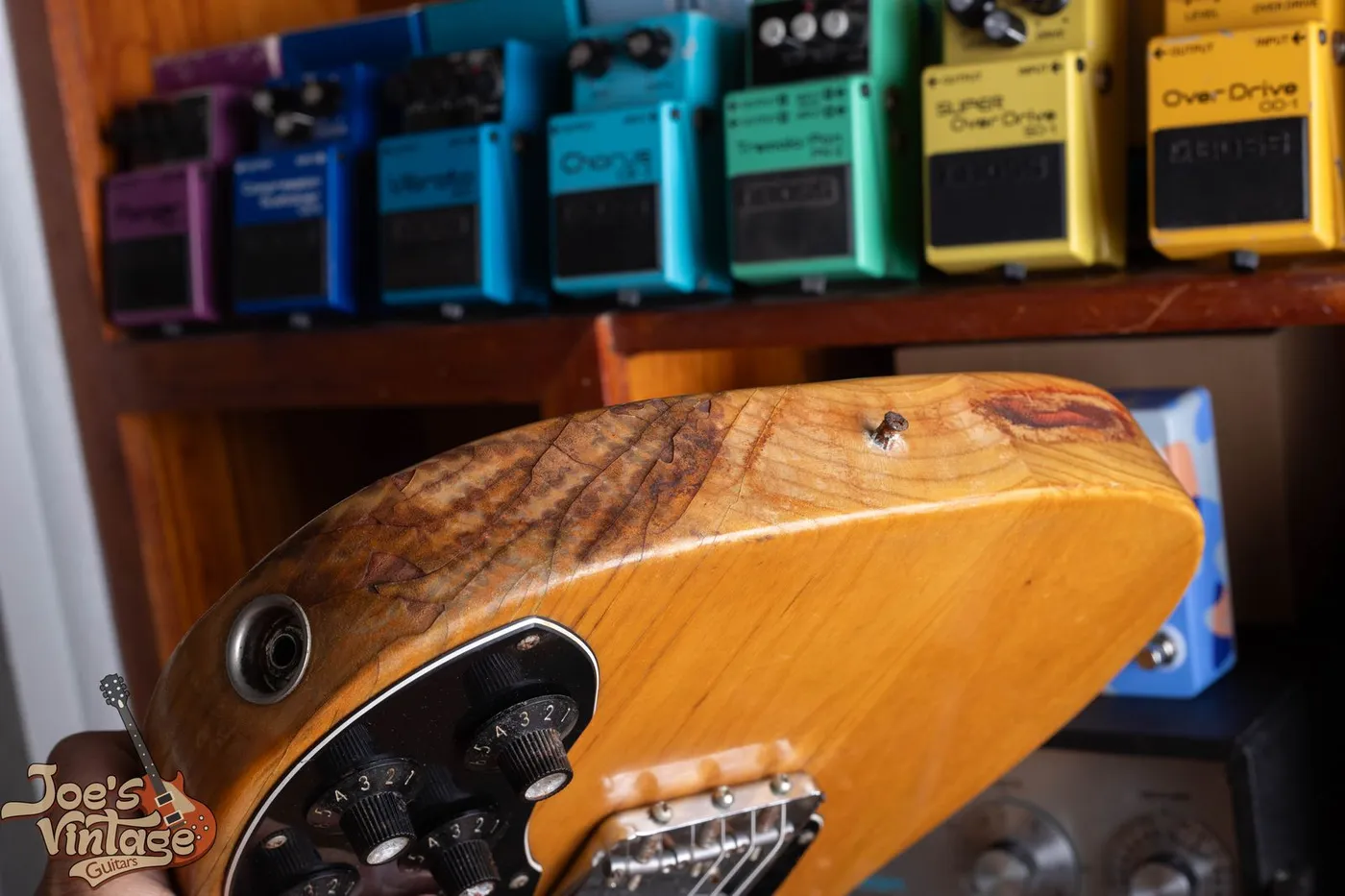
The 1972 mahogany example shown here has an added arm contour and body overspray. Those changes are part of its appraisal. The contour removes wood, while the overspray changes the finish history; returning the guitar to a flat-looking outline would not restore the original body.
This example is useful because it shows an appealing, playable vintage guitar with work that must be disclosed. Take a side view across the altered area as well as the full front. A buyer should be able to see the extent of the modification without guessing from a distant photograph.
One Wide Range Pickup And One Traditional Bridge Pickup
Telecaster Custom Values And Condition
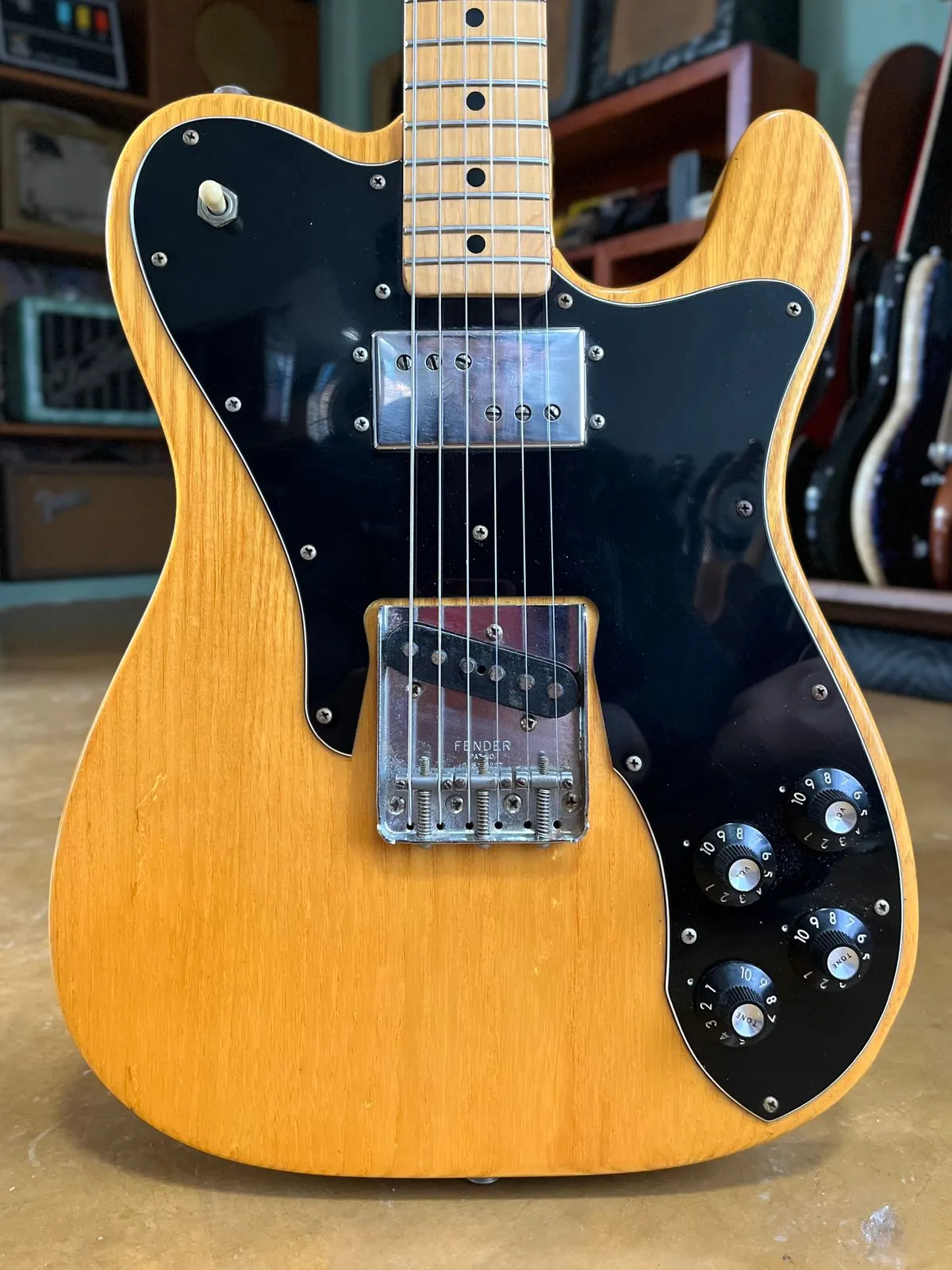
The 1972 to 1981 Custom combines a Wide Range neck humbucker with a traditional Telecaster bridge pickup. The 1973 to 1974 price group is $2,800 to $3,700. Verify that both installed pickups and their wiring match the description, since a chrome cover alone can’t establish an original pickup.
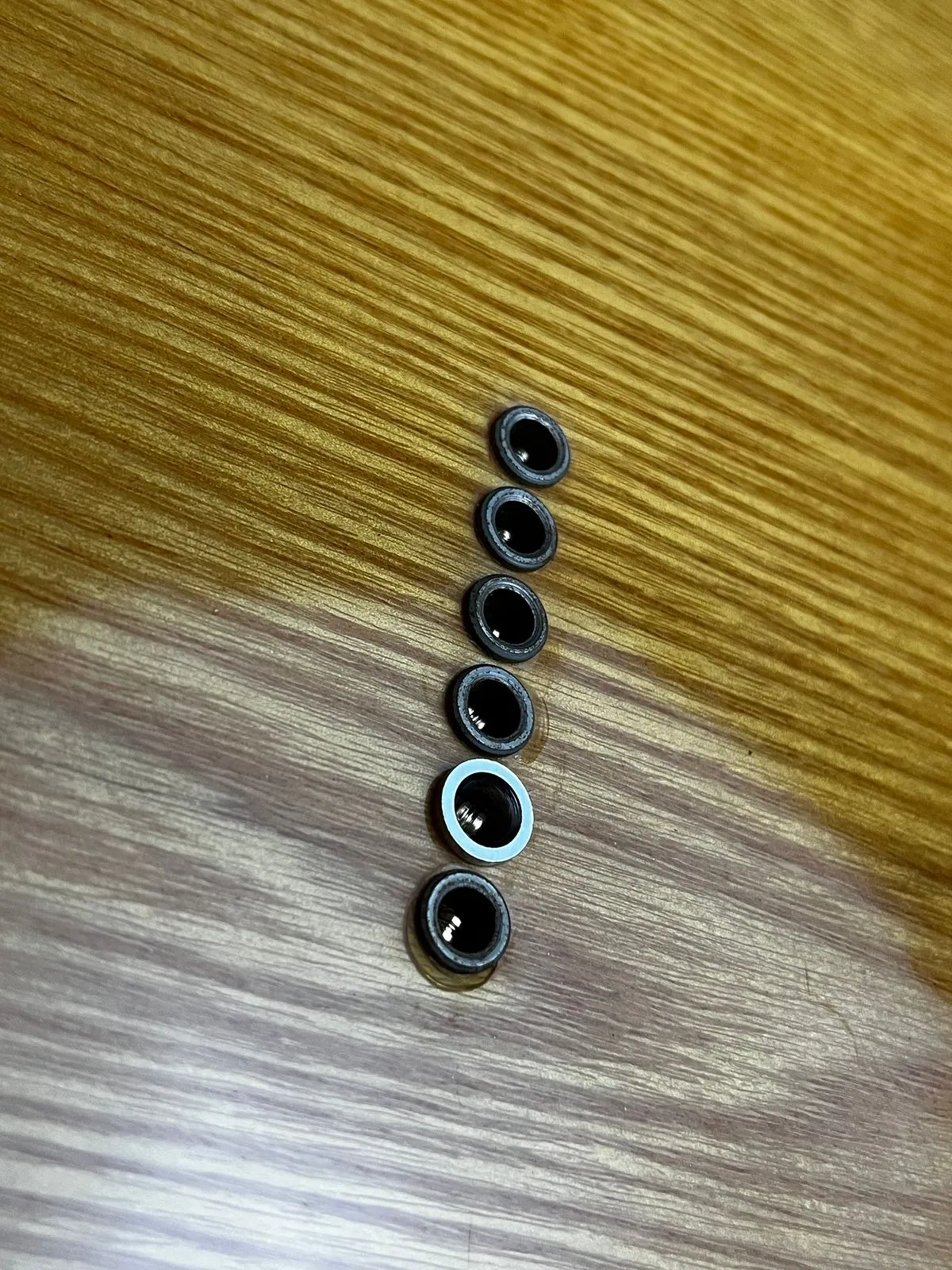
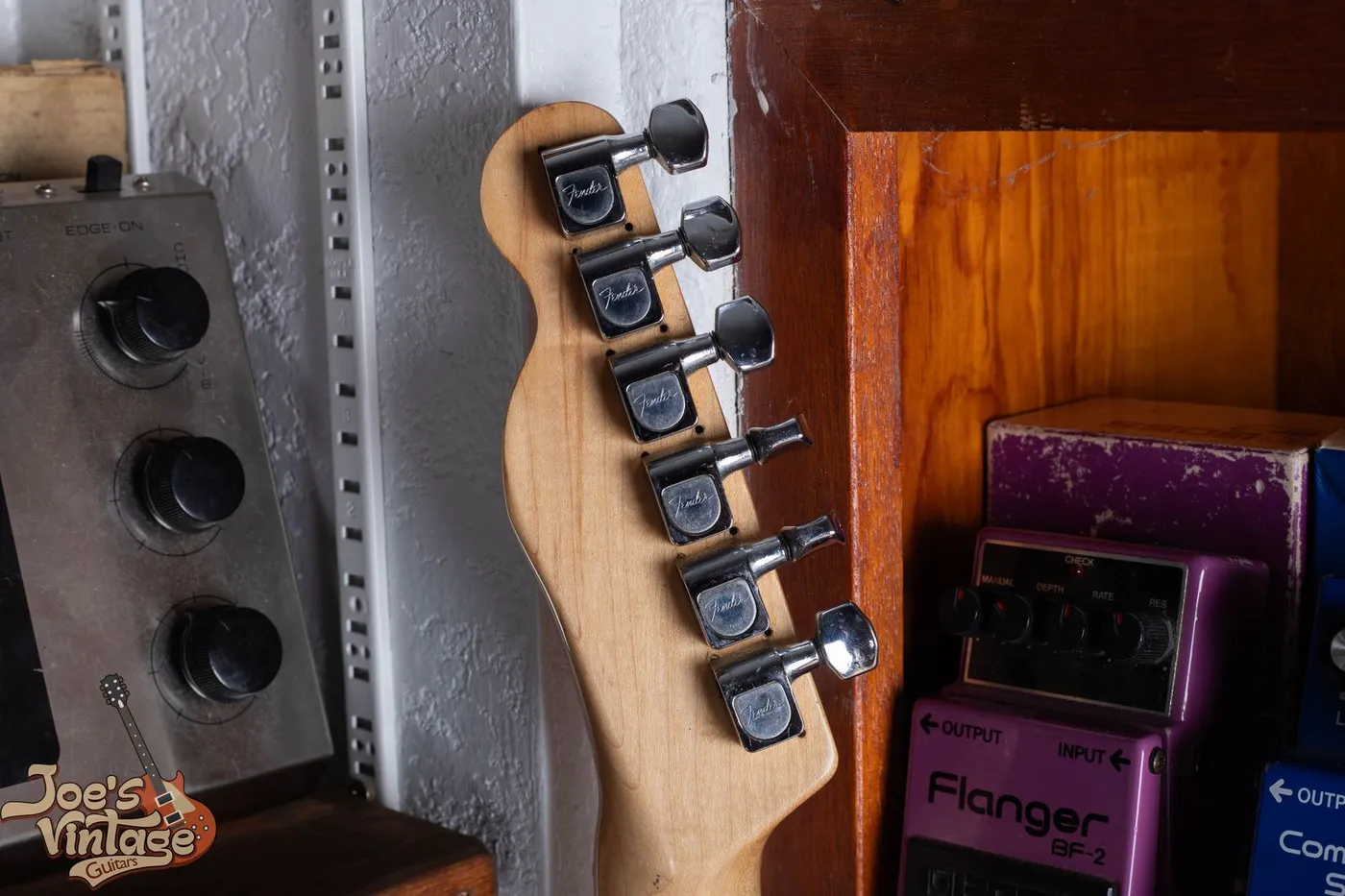
The cleaner 1974 natural example below has one replaced string ferrule. That is a specific equipment change to record. The second 1974 Custom has substantial finish damage and replacement tuners. Both are the same model and year, but their condition descriptions differ considerably.
A replaced ferrule can be a limited repair if the body hole remains intact. Enlarged tuner holes or a damaged finish may create more lasting changes. The appraisal should reflect what happened to the wood and finish, as well as which metal parts are currently installed.
Keep loose original tuners, screws and other equipment with the guitar. If the original parts are incomplete or damaged, say so. Their presence is useful information, but it doesn’t guarantee that restoring them is practical or that the instrument should be represented as untouched.
Large Headstock, Two Humbuckers And Four Controls
Telecaster Deluxe Values And Wide Range Pickups
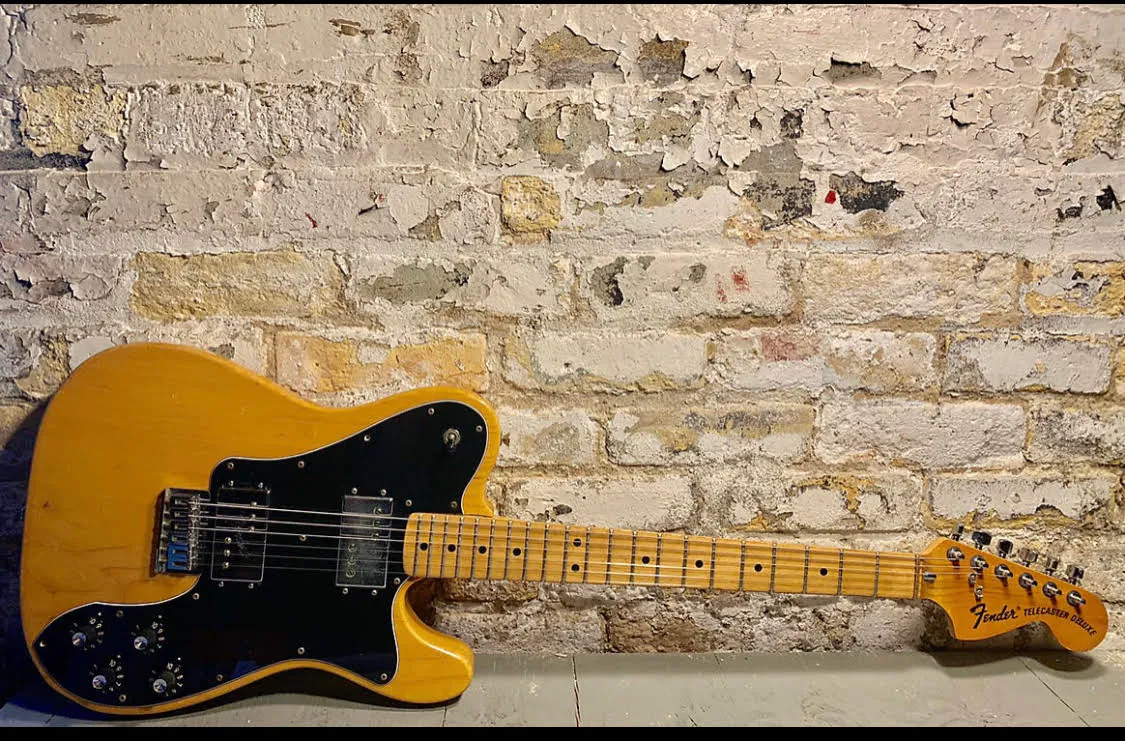
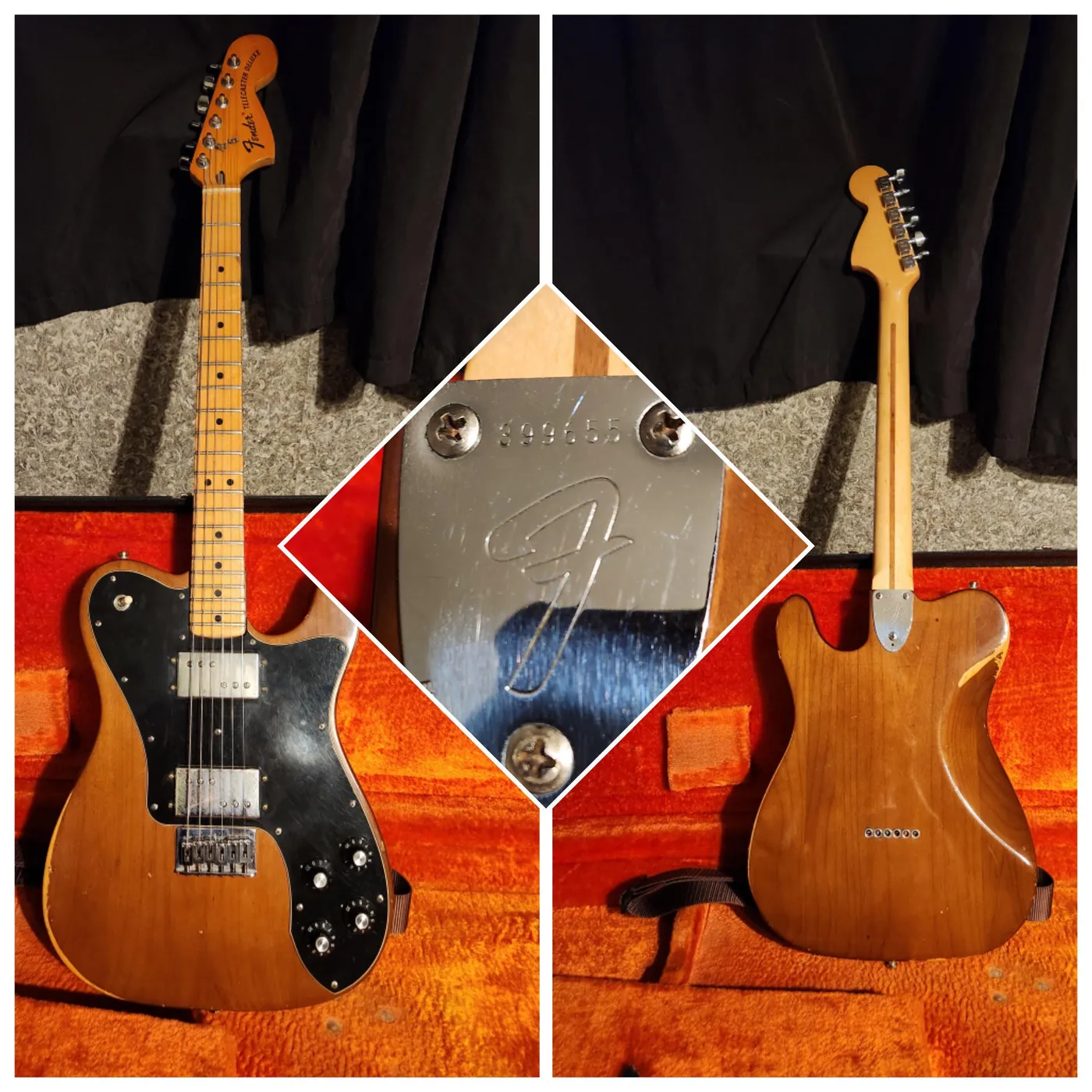
The Deluxe has two Wide Range pickups, a large Stratocaster-style headstock and a rear body contour. The 1978 to 1979 common-color group is estimated at $2,200 to $3,050. An earlier year, less-common factory finish or unusual original equipment requires its own comparison and supporting evidence.
Joe’s 1977 natural Deluxe photographs show the complete front and a closer view of the pickup and control layout. The second vintage Deluxe photograph includes the rear contour and three-bolt plate. Its exact year remains unspecified here because a removable plate number alone would not settle it.
The original Wide Range pickups deserve close inspection. A replacement under a familiar cover can change both the electrical character and collector appeal. Include any documented rewinds, changed magnets or pickup replacements. If the pickups were removed for service, photographs of their bases and leads are helpful.
A guitar described as a Deluxe because it has two humbuckers may be a modified Telecaster. Confirm the neck, body construction, guard and control arrangement before using this chart. The pickup replacement guide explains why a pickup swap and a routed conversion require different descriptions.
Describe The Work Precisely
Finish And Permanent Modifications
Natural finishes expose grain but can also conceal an earlier stripping job when viewed only from a distance. Photograph edges, worn areas and the neck joint along with the broad surfaces. Existing repair photographs or an invoice can establish finish work that would be difficult to identify confidently from current pictures.
A walnut-colored surface is a finish description; it doesn’t mean the body wood is walnut. Similarly, an attractive sunburst isn’t proof that the guitar left the factory with it. Preserve the distinction between wood identification, current color and original factory finish throughout the appraisal.
On a Custom or Deluxe, extra switches may involve new holes through the guard or body. A replacement guard can cover earlier work. Record the modification’s purpose if known and include photographs taken during service. A change that can be reversed by replacing a guard differs from wood removed beneath it.
A refret, replacement nut and electronic repair may keep a guitar in regular use. State the work and current playing condition rather than presenting every serviced instrument as a project. The condition and value guide helps describe the effect of repairs without assigning a universal deduction.
The Model, The Parts And The Case
What To Send Before Selling
Begin with the complete front and back, both headstock faces and the serial marking. Add close photographs of the pickups, bridge, controls and neck plate. For a Thinline, include the f-hole and side profile; for a Deluxe, include the rear contour. Show known damage with both a close-up and a wider view.
Provide any previous neck-date, pot-code or pickup-base photographs. Disassembly isn’t necessary to start a photo appraisal. If a repairer needs to open the guitar for service, ask for clear images before components are replaced so the original condition remains documented.
The case belongs in the review too. Show its interior fit, latches and handle, and include any tags or old receipts. A later case can protect the guitar well while still differing from the original-case assumption in the chart. Packing can be discussed once the instrument and case are understood.
A free appraisal can identify the remaining questions before you spend money on restoration. The Fender selling page covers a direct sale. Send the guitar’s location and your known repair history with the photographs so Joe can assess the complete situation.
Establish The Variant
Photograph the pickup combination, headstock, f-hole where present and rear body profile.
Record Parts And Alterations
Include the neck joint, hardware, repair areas and any previous internal photographs.
Describe The Complete Package
Add the case, loose equipment, location and your known ownership history.
Send The Evidence
Get A Vintage Telecaster Appraisal
Send the model’s full layout, original-parts history, finish condition and case. Include the three-bolt or four-bolt neck joint and any existing internal photographs.
Questions AboutFender Values
Is A Telecaster Custom The Same As A Deluxe?
Can A Modified Thinline Use The Excellent Original Price?
Does Natural Finish Mean The Guitar Is Original?
The Last Word
A Value For Your Guitar
Choose the model and pickup generation, then account for the individual condition. The Telecaster variant authentication guide provides the construction checks behind those price comparisons.
This Is An Estimate Of Market Value, Not An Offer To Buy And Not A Guarantee. Market Values Fluctuate; Have Your Specific Item Appraised.