

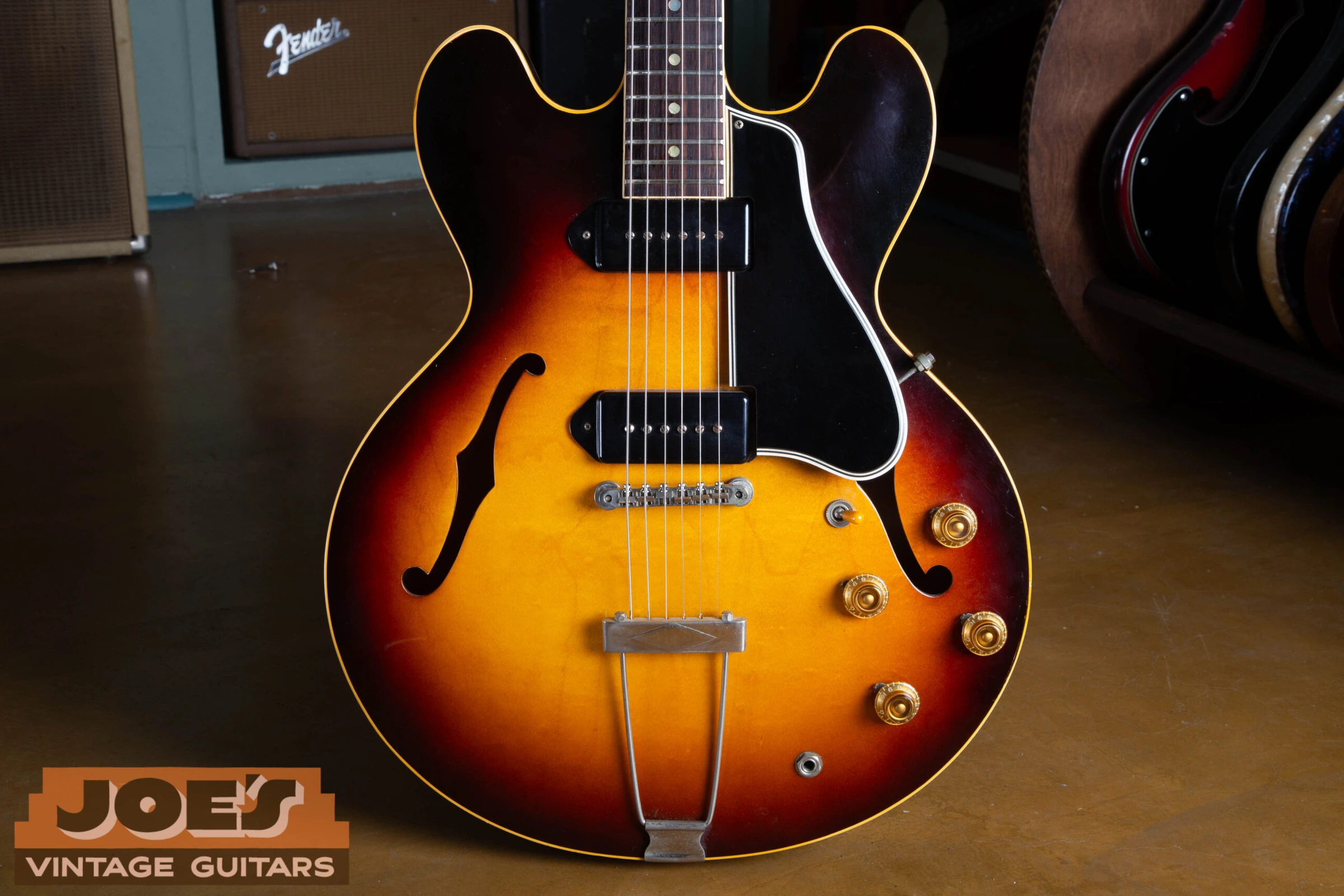
Early Style
Dot-Neck ES-330
Small round fingerboard inlays, black dogear P-90 covers and the original shorter neck-to-body layout. Later reissues can repeat this appearance.
See the Early ChangesGibson Model Dating Guides
Follow the ES-330’s changes from dot inlays and black P-90 covers to block inlays, metal covers and the later neck joint.
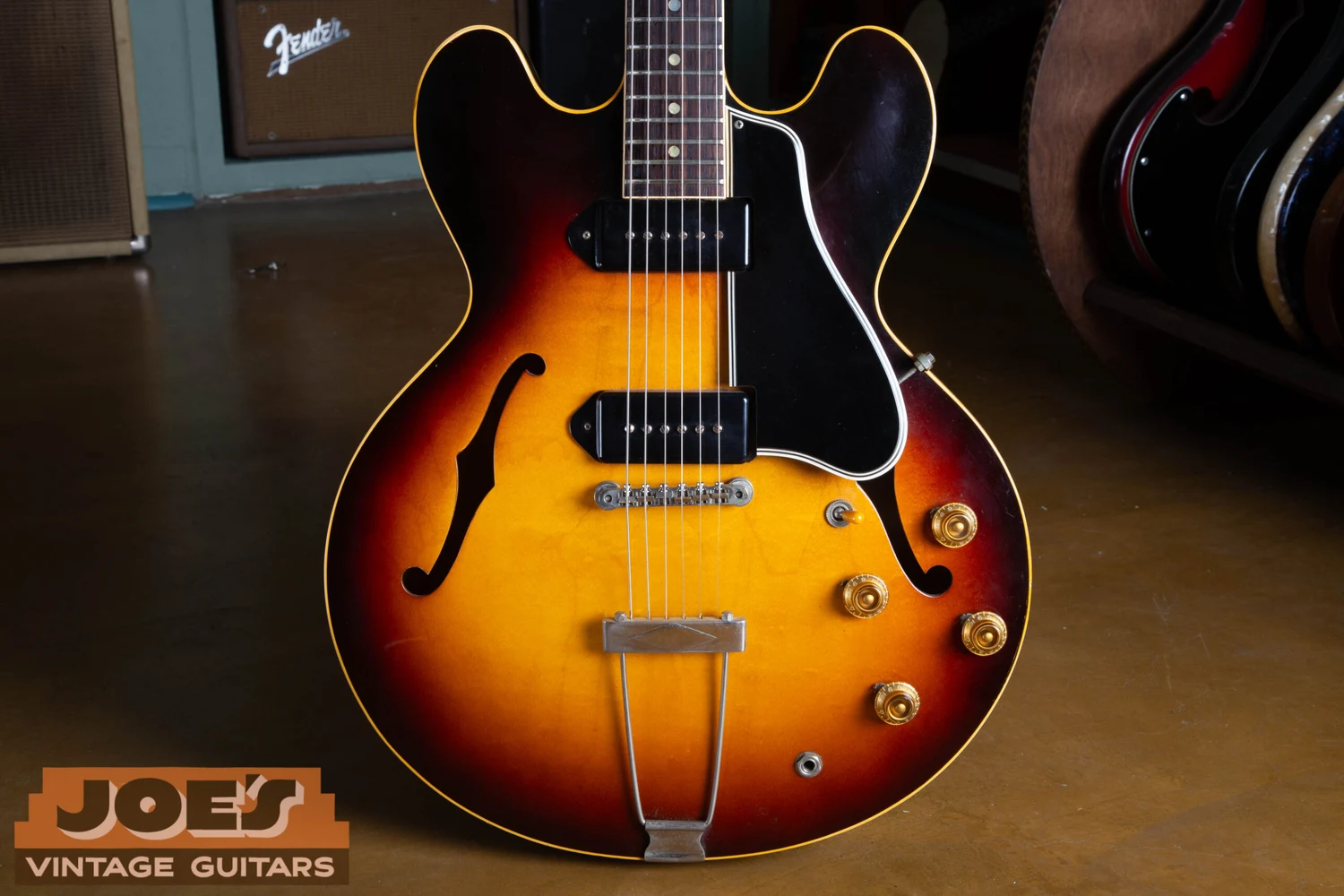
Fully Hollow, Not a 335
The ES-330 has a fully hollow body without the ES-335’s solid center block. Vintage originals use dogear P-90s, not humbuckers. Use the ES-330 timeline before applying a date from another Gibson model.
Recognize the Main Styles
Early Style
Small round fingerboard inlays, black dogear P-90 covers and the original shorter neck-to-body layout. Later reissues can repeat this appearance.
See the Early Changes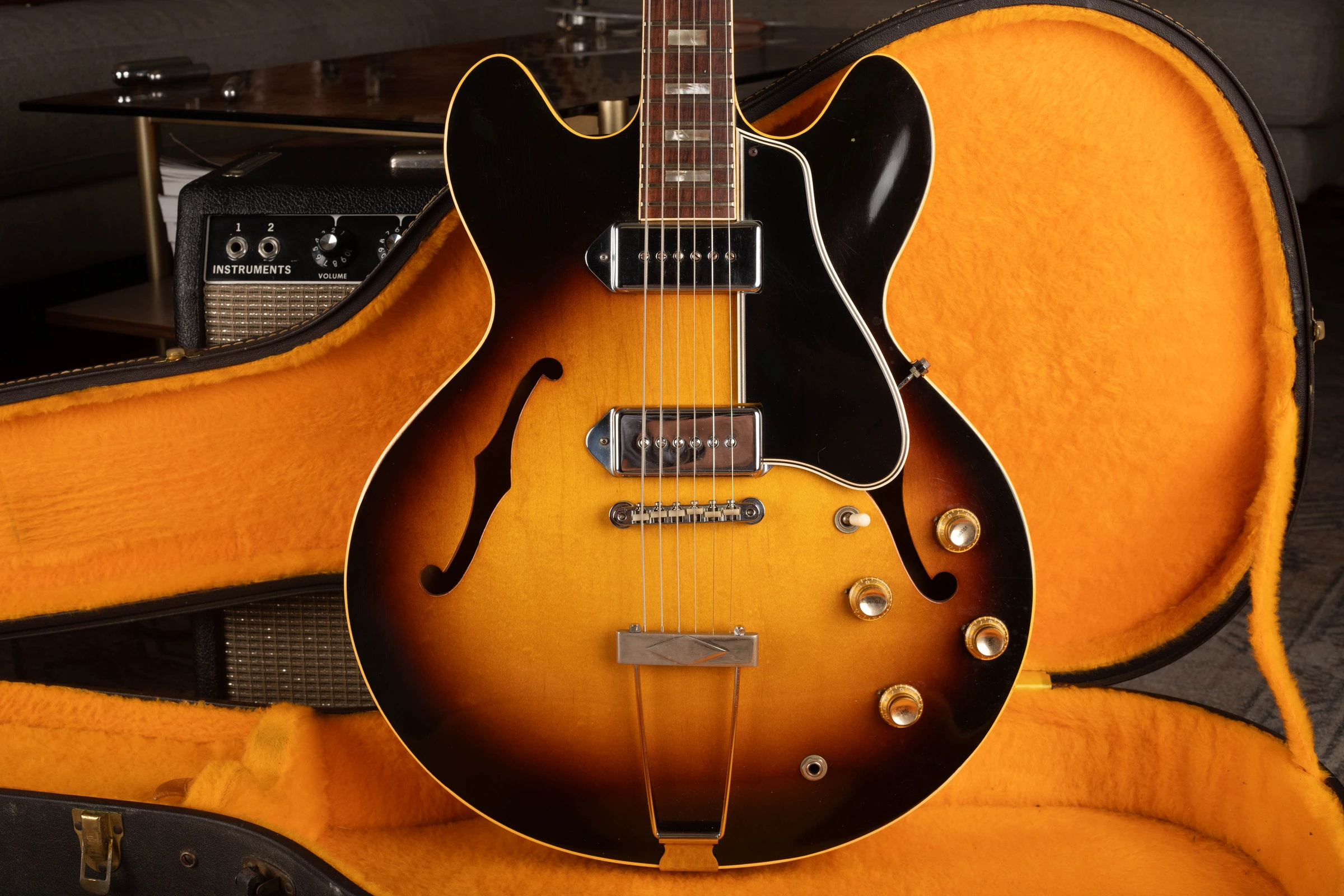
Later Style
Small rectangular inlays, usually paired with metal pickup covers. Transitional examples can retain black covers. Check the neck joint separately from the inlays.
See the Block-Neck ChangesThe original single-pickup version has one P-90 near the middle of the body, one volume and one tone. It is not simply a TD with the neck or bridge pickup removed. The original T belongs to the 1959 to 1963 period.
The double-pickup version has neck and bridge P-90s, two volume controls, two tone controls and a selector. T means thinline; D means double pickup. A final C commonly denotes Cherry, N Natural and W Walnut.
A finish suffix is not a year code. Check for added pickup holes or altered controls before using a model stamp to interpret a modified guitar.
For the semi-hollow models, use the ES-335, ES-345 and ES-355 dating guide.
Quick Reference
These are overlapping production windows, not exact changeover dates. Read the chart alongside the photos, then confirm the date with the guitar’s own numbers.
| Period | Typical Clues | How to Use Them |
|---|---|---|
| 1959 | Dot inlays, black P-90 covers, bonnet knobs, nickel hardware and the 16th-fret joint. | Look for an S-prefix FON. The trapeze is already part of the model. |
| 1960 to 1961 | Dots and black covers continue. Reflector knobs appear and neck profiles often become shallower. | R means a 1960 body batch; Q means 1961. Headstock serials begin in 1961. |
| 1962 to 1964 | Small blocks replace dots during 1962; metal covers follow around late 1962 into 1963. | Blocks with black covers can be transitional. Neither feature supplies an exact year alone. |
| 1965 to 1967 | Narrower nuts and chrome become common, with overlap. Double-line tuners and later knobs add clues. | Check nut width and plating individually. Do not borrow the ES-335’s 1965 trapeze cutoff. |
| Around 1968 to 1972 | The later 19th-fret joint appears. Late construction details can include a laminated neck, volute and Made in USA. | Long neck describes the joint, not a longer scale. Cross-check the serial and original pots. |
| Later Production and Reissues | Dots, blocks, black or metal covers and vintage-style neck joints recur. | A reissue’s model year is the design being copied, not its manufacturing date. |
Follow the Changes
Start with features built into the guitar, then use removable parts to support the date. An inlay change or neck-joint position usually tells you more than a knob that can be swapped in minutes.
1959
The ES-330 arrives as a fully hollow thinline with a laminated body, mahogany neck and bound rosewood fingerboard. Early examples have dot inlays, black plastic dogear P-90 covers, nickel hardware, gold bonnet knobs and the 16th-fret body joint. The two-pickup TD has four controls and a selector; the single-pickup T has two controls.
The gold bonnet knobs have rounded tops without metal reflector inserts. The trapeze belongs on an early ES-330; it is not evidence of a mid-1960s build.
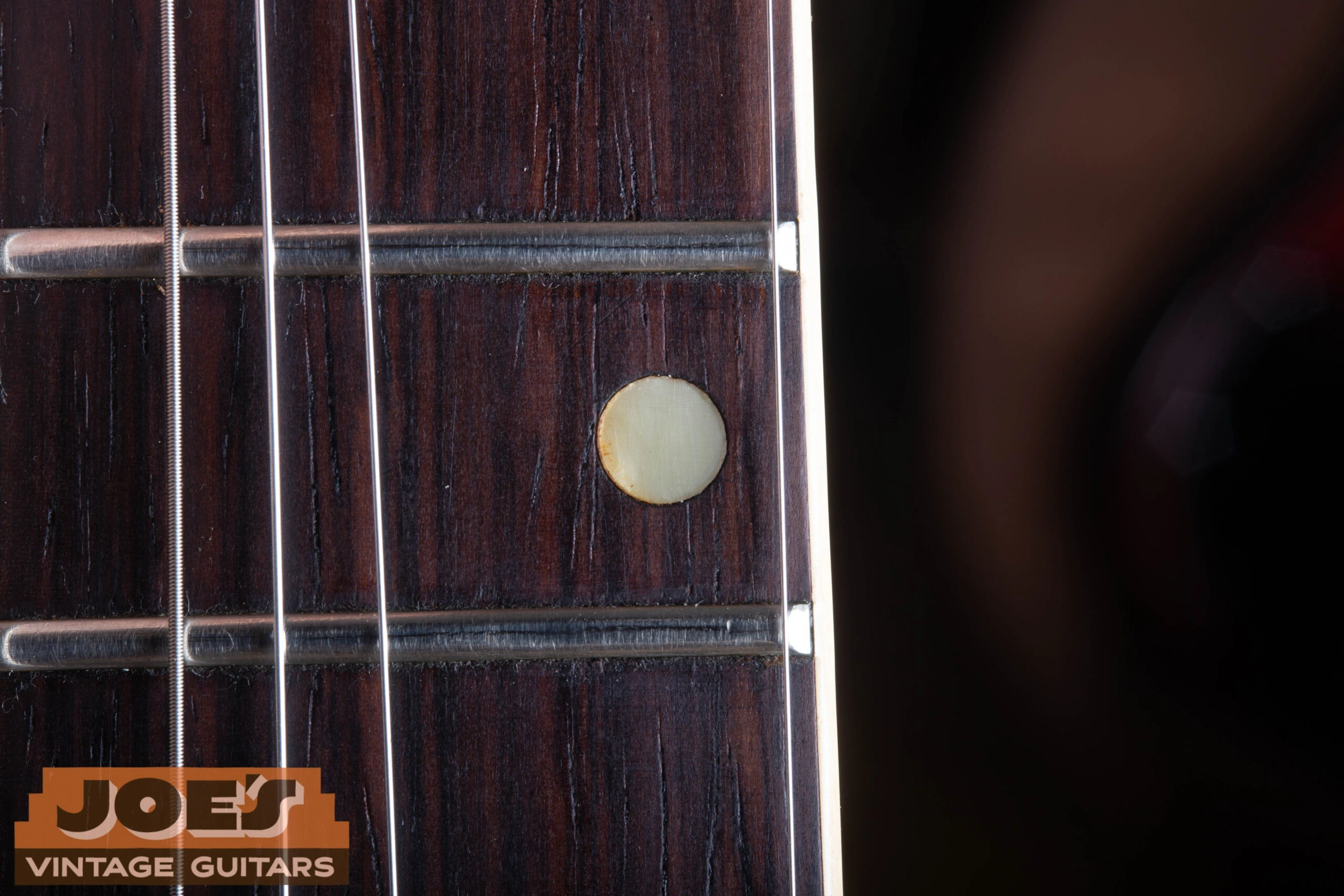
Round dots identify the early fingerboard style. Check the FON and construction to separate an original from a later dot-neck reissue.
What It Means for an ES-330: This combination points toward the early production style. A full-feeling neck alone cannot establish 1959; the FON is a more useful check on an early example.
1960 to 1961
Dot inlays and black pickup covers continue. Reflector knobs begin appearing around 1960, and many necks become shallower through the early 1960s. Neck depth varies between instruments, so there is no measurement that reliably separates every 1959, 1960 and 1961 guitar.

The flat metal insert distinguishes a reflector from a bonnet. This photo shows the style, not a claim that the guitar was made in the first year it appeared.

Early bridges have no saddle-retaining wire. A missing wire on a later bridge is not the same thing, so inspect the bridge construction as well.
What It Means for an ES-330: Reflectors plus dots still belong within the early period. Use R for a 1960 FON and Q for 1961; impressed headstock serials enter the picture in 1961.
1962 to 1964
Small block inlays replace dots during 1962. Black plastic P-90 covers give way to metal covers around late 1962 into 1963. These are separate changes: a 1962 block-neck ES-330 can still have black covers. Do not reject that combination just because later block-neck guitars usually have metal covers.
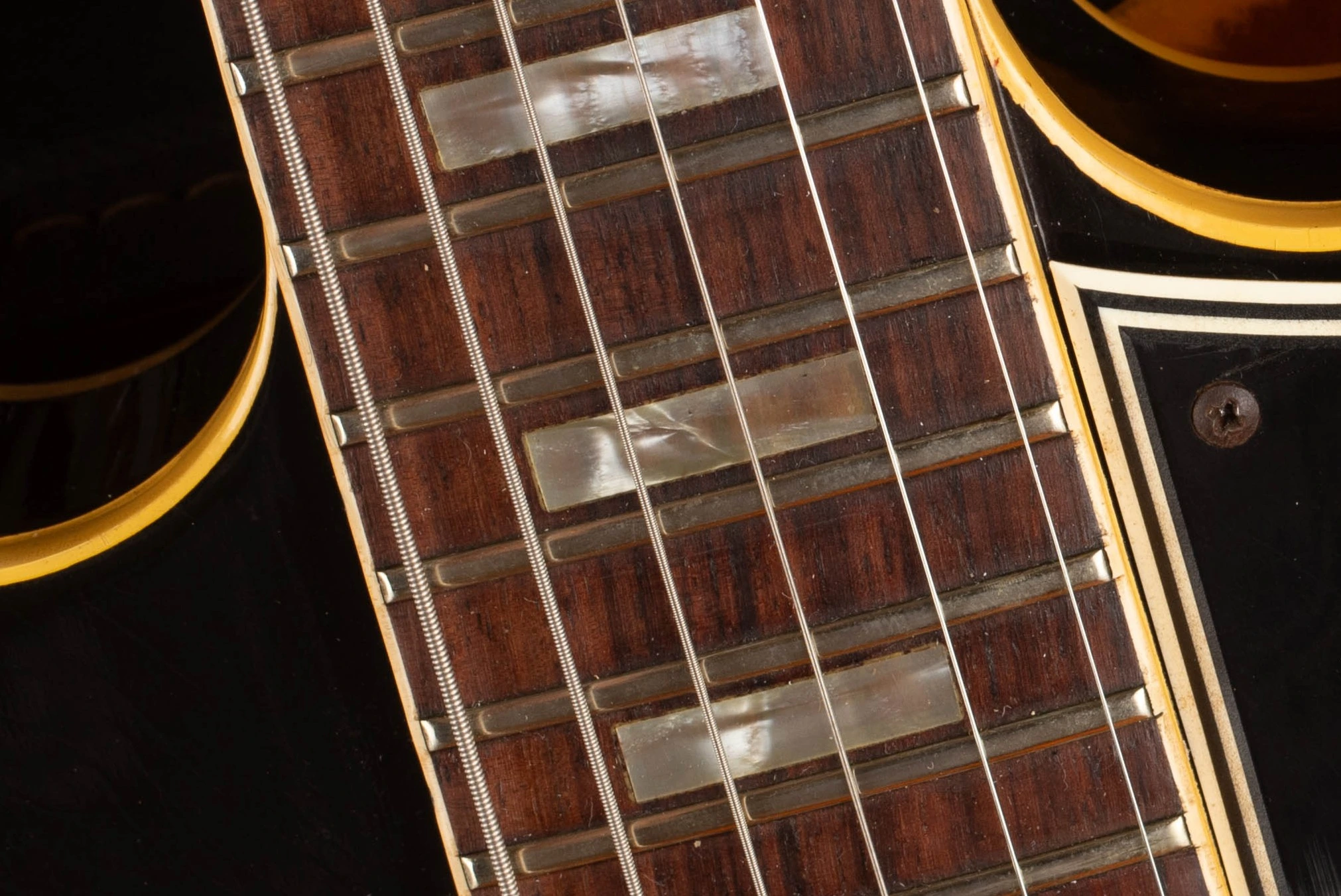
Blocks establish the later fingerboard style, beginning during 1962. They remain in use across several years and also appear on modern guitars.
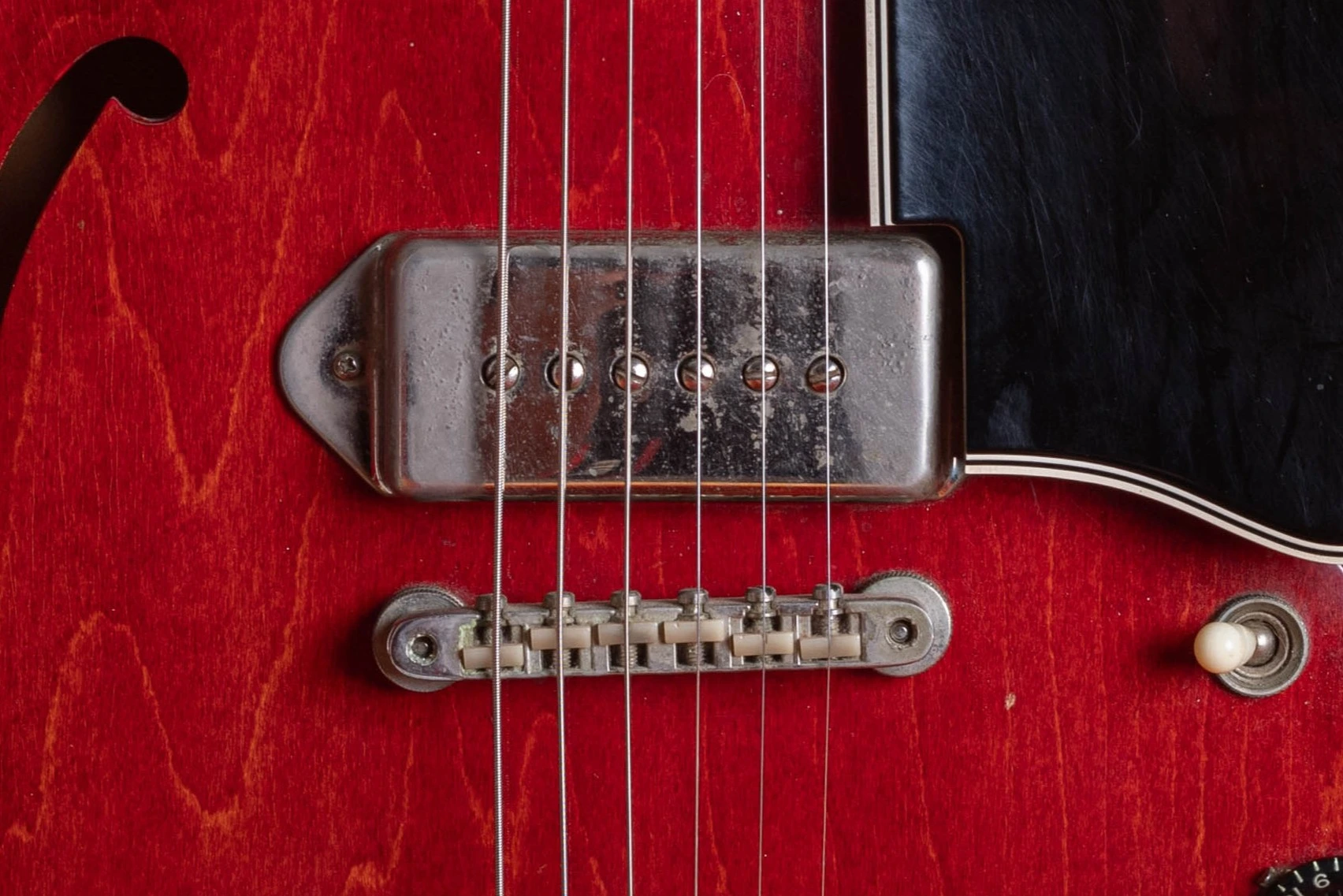
The plated cover changes the pickup’s appearance, not its single-coil design. This is still a P-90, not a PAF or Patent Number humbucker.
Nickel hardware belongs to the early part of this period. Reflector knobs remain a familiar feature, with color depending on the finish and specification. Nylon saddles appear on 1960s bridges, but saddle material and retaining-wire construction should not be used as a one-year cutoff.
What It Means for an ES-330: Blocks with black covers can be transitional. Blocks with metal covers cover a much wider period, so the serial, nut width and neck joint still need checking.
1965 to 1967
Around 1965, narrower nuts and chrome-plated hardware become common. The change overlaps: some guitars retain a wider nut or nickel parts. Earlier nut widths are often near 1 11/16 inches, while many later examples are near 1 9/16 inches. Intermediate widths also exist.
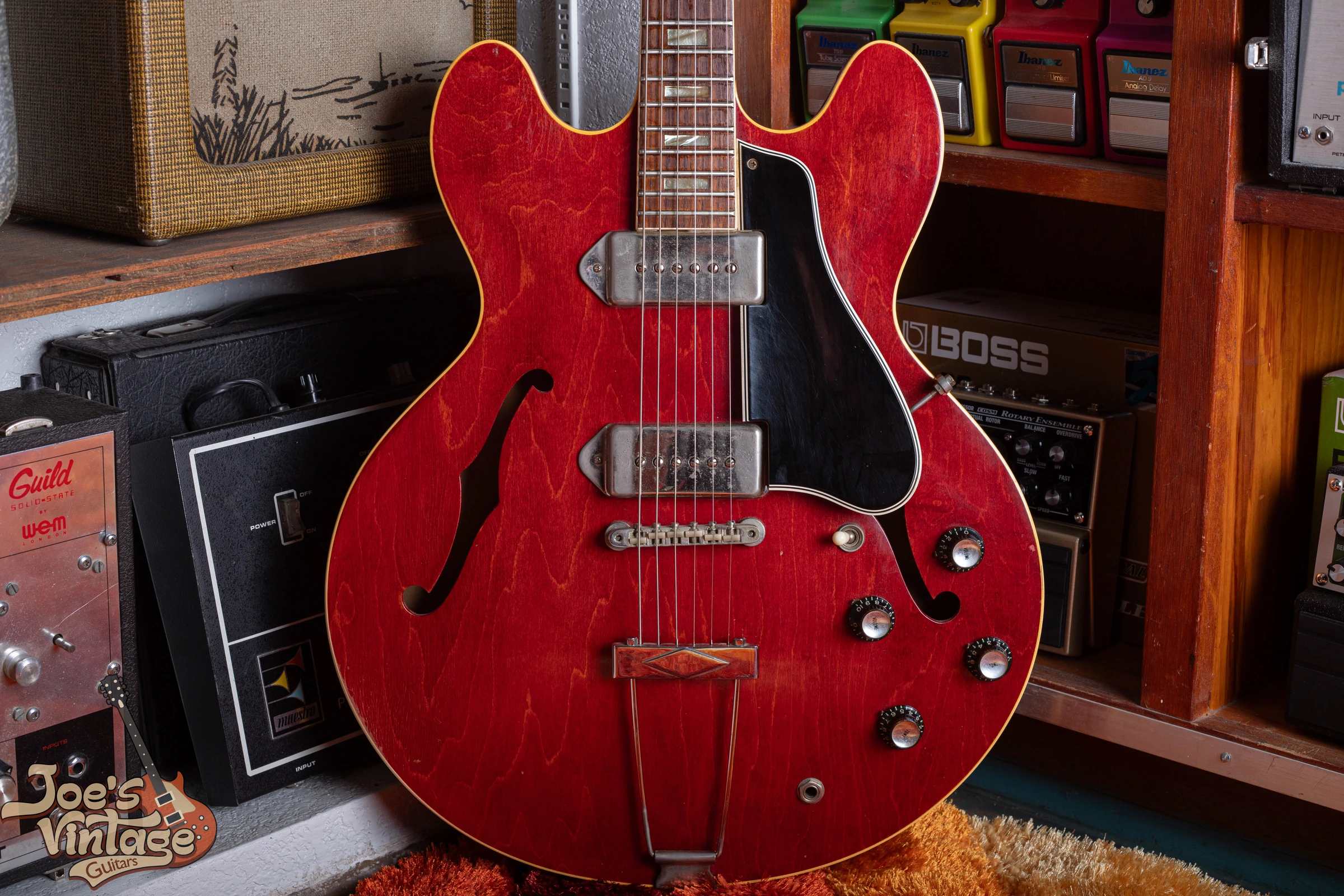
This cherry example brings the block inlays, metal P-90 covers, reflector knobs and trapeze together. Plating and nut width need closer inspection than a full-guitar photo can provide.
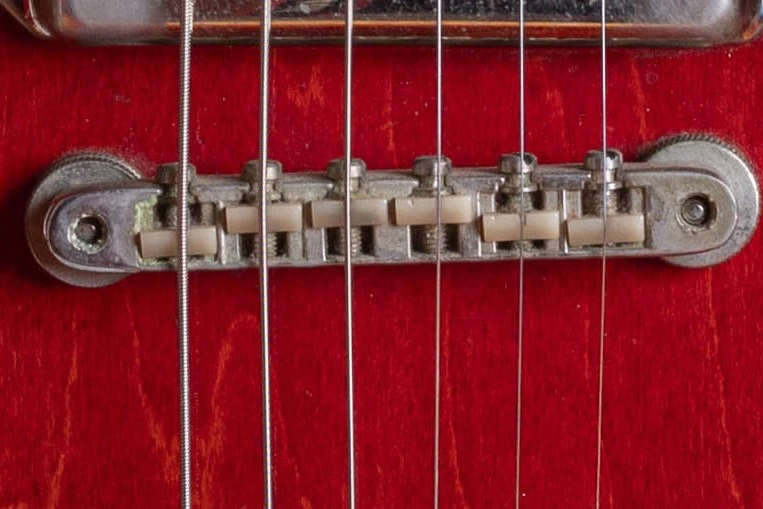
Pale nylon saddles occur on 1960s ES-330s. They are replaceable wear parts, so their presence does not supply an exact guitar year.
Double-line Kluson stamps belong to the mid-1960s onward, with overlap around 1964 and 1965. Witch-hat knobs appear later in the decade, around 1967. The trapeze continues; unlike the ES-335, the ES-330 did not begin using it in 1965.
What It Means for an ES-330: A narrow nut, chrome parts and later controls help resolve an overlapping serial range. Measure nut width separately from neck depth: a narrow neck can still feel thick front to back.
Around 1968 to 1972
The later “long-neck” arrangement appears around 1968, moving the body joint from the 16th fret to the 19th. It exposes more of the fingerboard beyond the body and changes where the bridge and pickups sit relative to the body. It does not turn the ES-330 into a center-block guitar.
The neck sits farther into the body. Dot-neck originals and many later block-neck examples use this layout, so blocks do not automatically mean a long neck.
More frets are clear of the body. This supports a late-original-production date, but both vintage-style layouts have been revisited on later guitars.
Long neck does not mean long scale. Both layouts use Gibson’s nominal 24 3/4-inch scale. Count to the neck-to-body junction from the front; do not count where the curved cutaway reaches farthest up the fingerboard.
Late examples can add laminated neck construction, a volute and, around 1970, a Made in USA stamp. Treat these as a group of supporting clues, not changes that occurred on every guitar together. The original ES-330TD run ends in 1972; a later serial needs to be checked as later production, a reissue or an unusual individual case.
What It Means for an ES-330: Check the actual joint on a guitar described as 1968. A seller’s “long neck” label is not enough to choose one year from an ambiguous serial.
Read the Woodwork

This block-neck example still has the earlier body join. Inlay shape and neck-joint position need to be read independently.
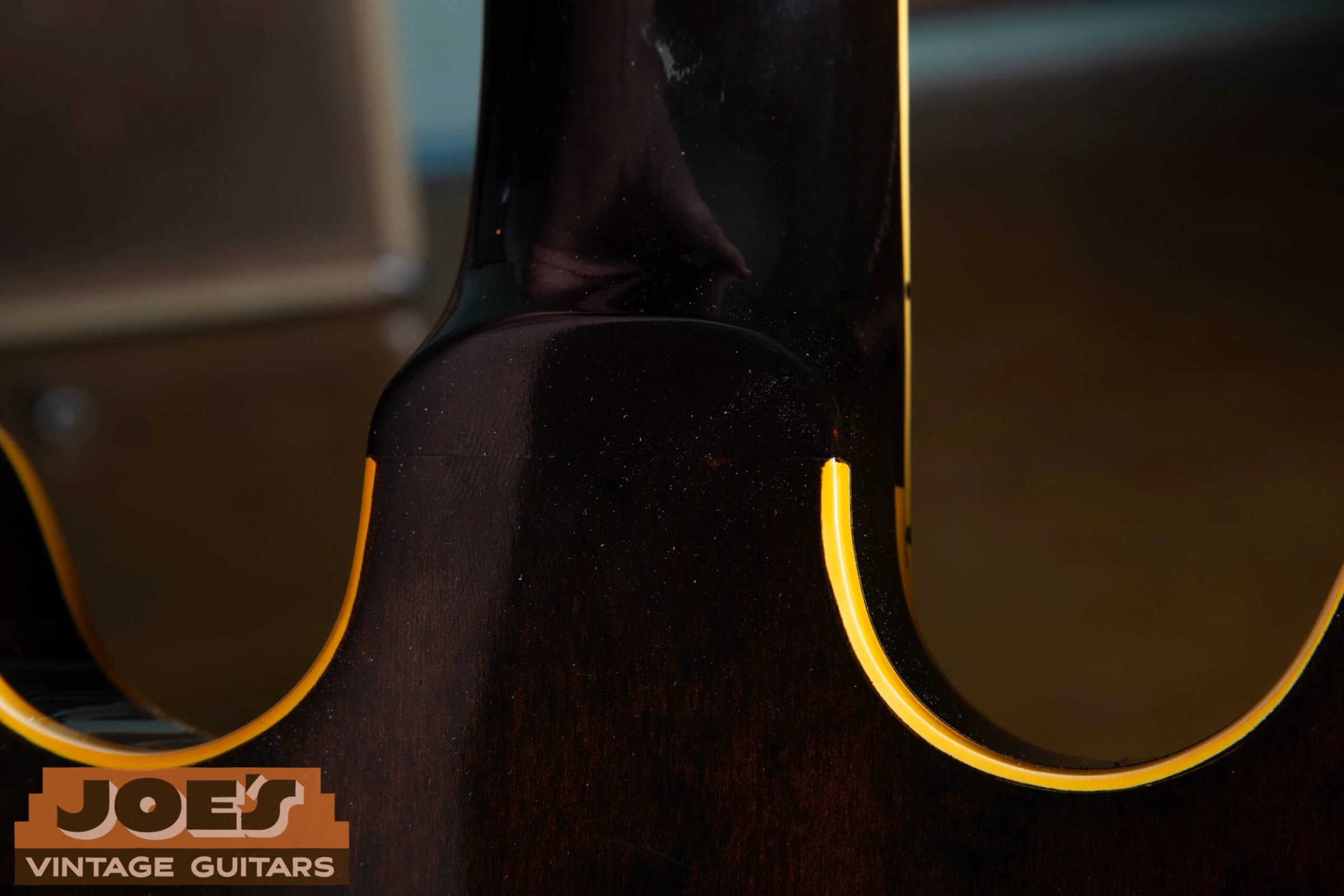
Look for finish breaks, glue lines or altered heel contours that may indicate repair work. The rear view helps assess condition; use the front to count the joint fret.
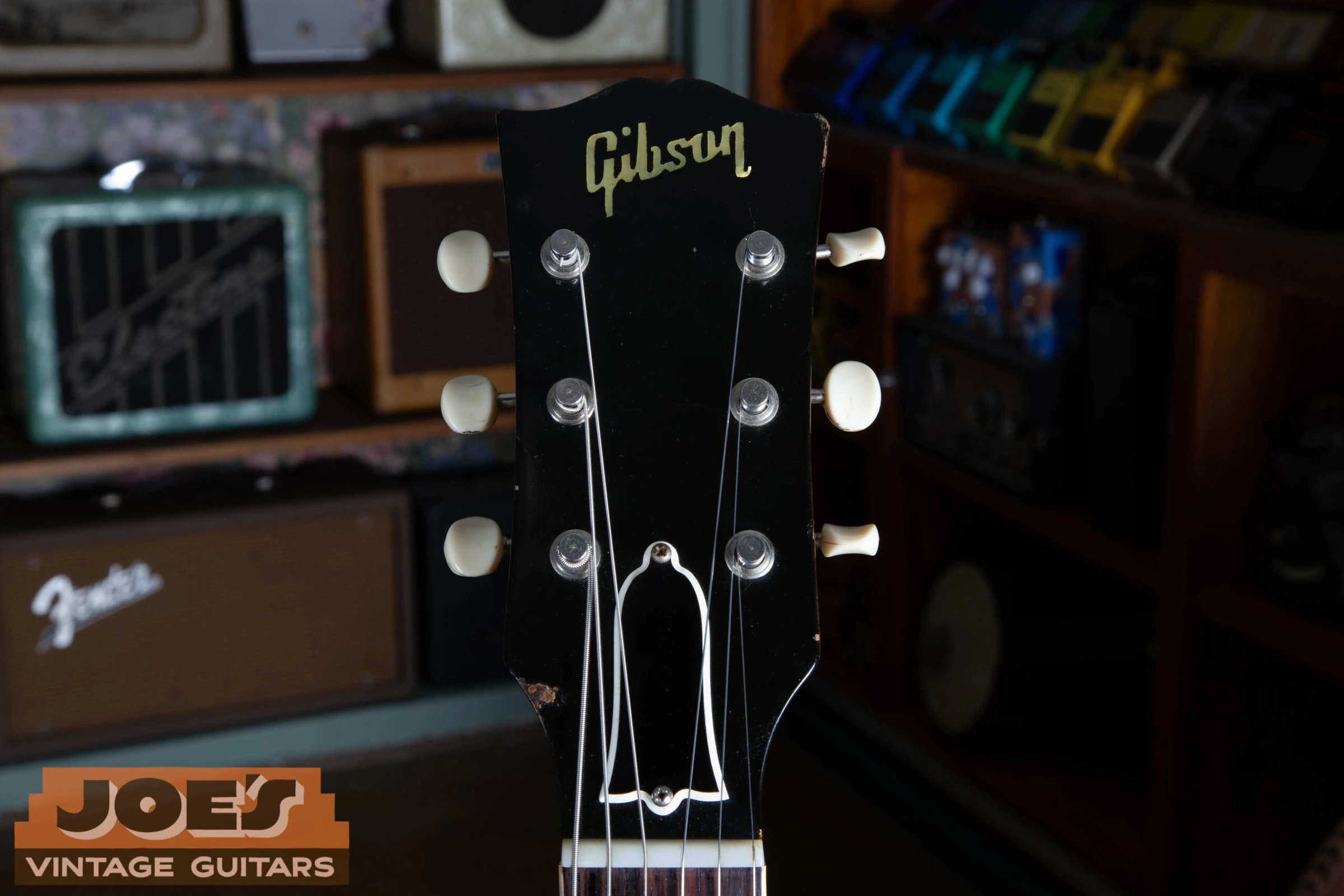
The familiar vintage ES-330 headstock is unbound and has no crown inlay. A plain headstock is normal for the model.
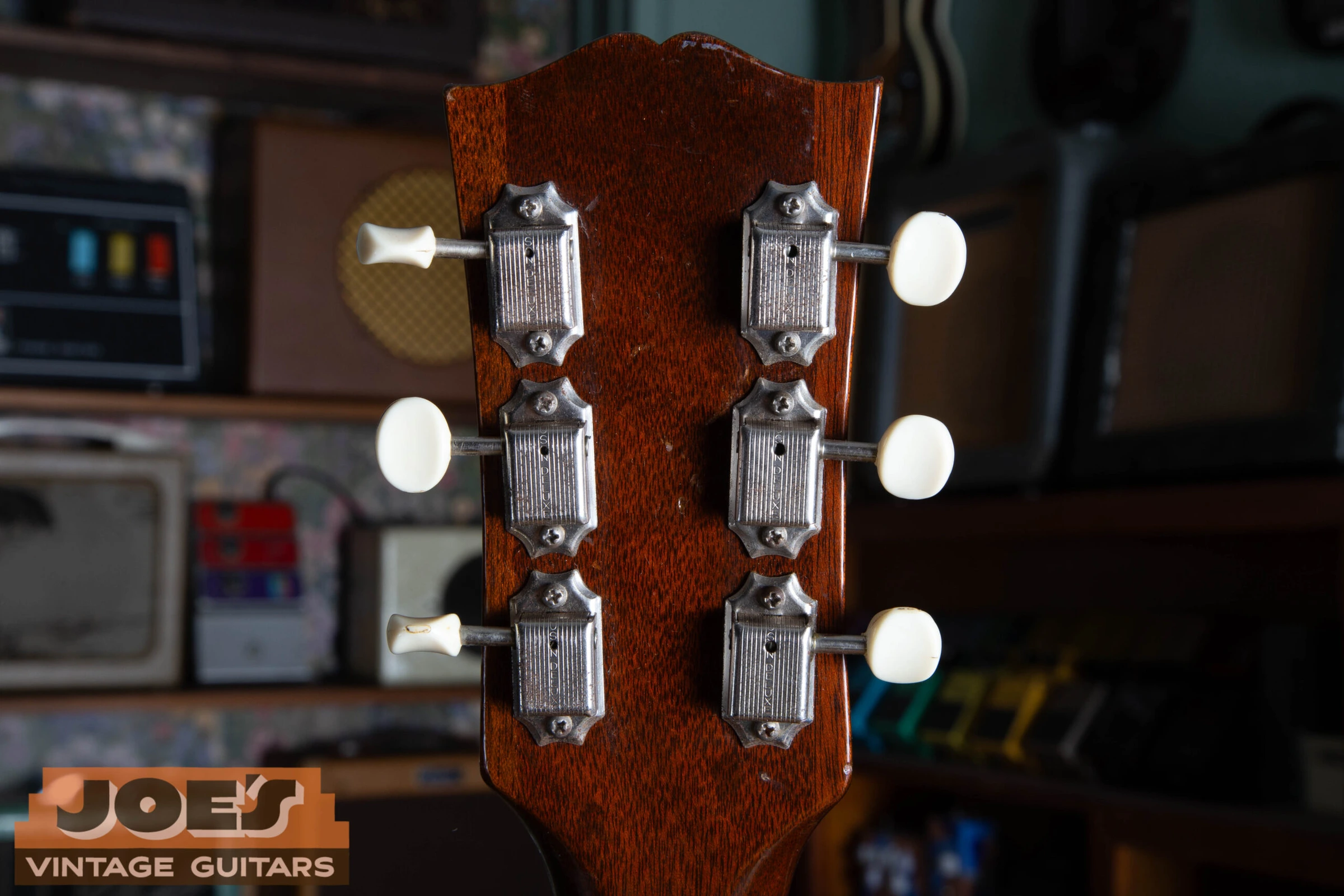
Read the casing stamp separately from the button shape. These small oval buttons are not the large tulip buttons used on some other Gibson models.
The hollow body has internal bracing, but not the ES-335’s full-length solid center block. Body binding is the cream-colored strip around the outer rim; the standard vintage ES-330’s f-hole edges are not separately bound. Rounded versus pointed cutaway horns can support an era, but body-shape variation is too broad to assign an exact year.
A repaired neck or changed fingerboard can interrupt the expected pattern. Compare the headstock logo chronology, tuner dating guide and physical features and hardware guide before deciding what is original.
Check the Parts in Context
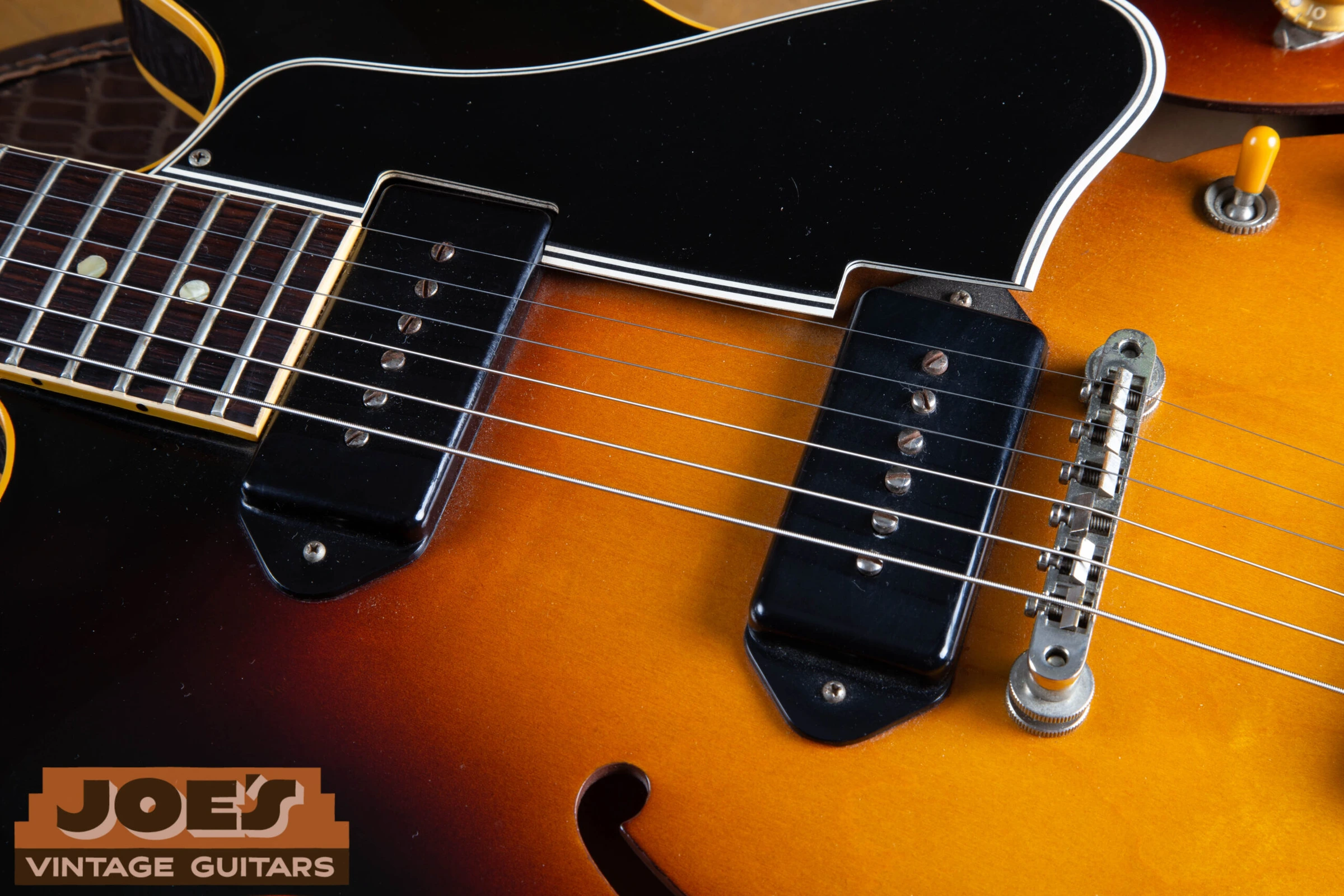
The mounting screws pass through the projecting ears at the ends. A soapbar P-90 instead has its two mounting screws through the middle of the cover, between the pole screws.
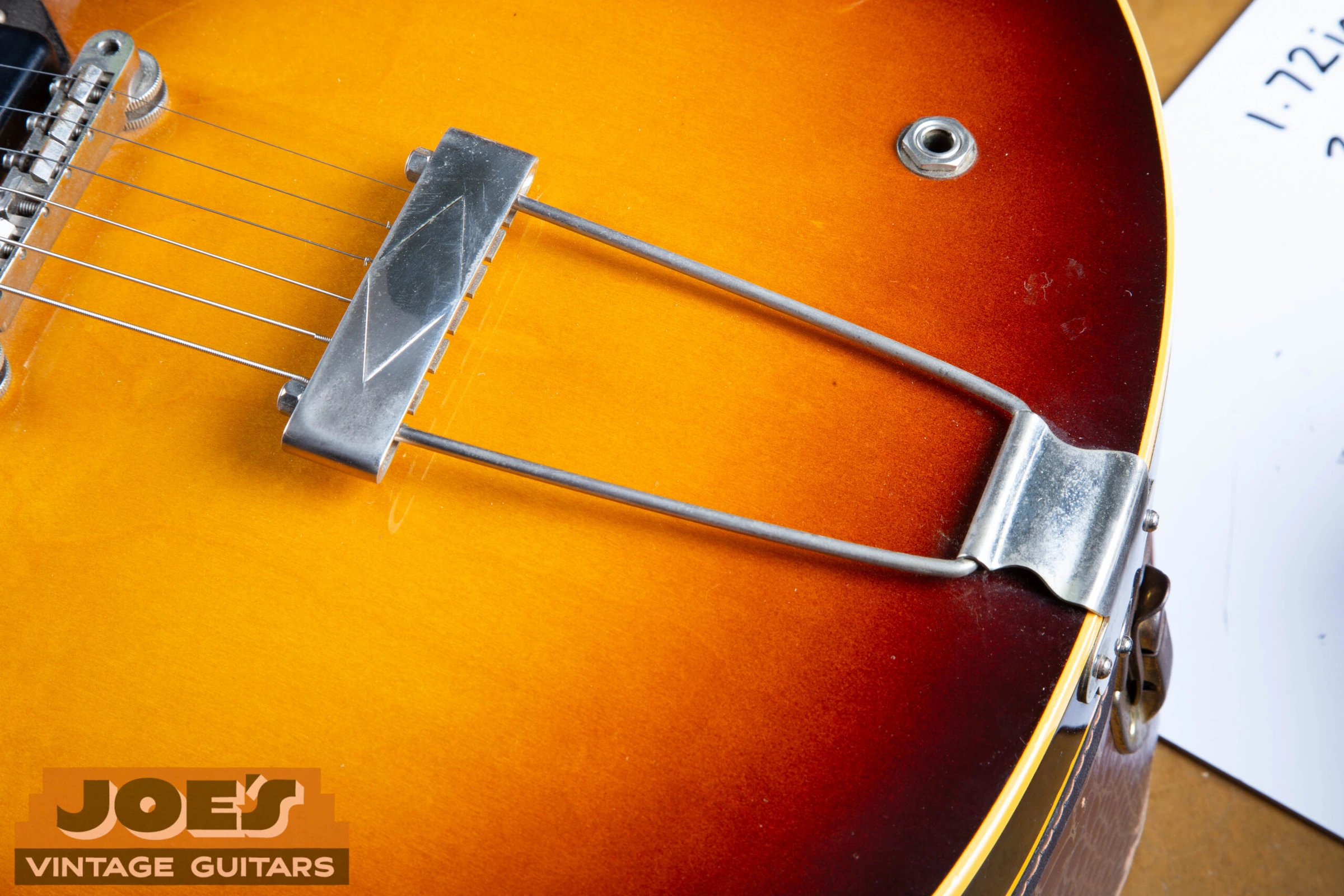
The strings anchor to a tailpiece attached at the body’s end. This design spans the ES-330’s original production run and cannot distinguish 1959 from 1965 by itself.
The ES-330’s metal-covered P-90 still has one coil. There is no universal ES-330 P-90 date stamp that replaces the guitar’s serial or FON. A replaced cover, rewind or replacement pickup can change what you see and hear without changing the guitar’s age.
PAF and Patent Number humbucker dates do not apply to original ES-330 P-90s. If a guitar has humbuckers, first establish whether it is a later factory version or a modified vintage guitar. The PAF and Patent Number pickup guide explains those different pickups; the Les Paul guide shows other P-90-equipped Gibson models.
A Bigsby can be a factory option or a later addition. Check mounting holes, finish shadows, paperwork and the exact vibrato type. Do not use an SG vibrato timeline as an ES-330 date chart.
A stopbar should not be assumed original on a standard vintage ES-330. Its hollow construction makes this different from converting a center-block ES-335. Have a qualified repairer assess the mounting and any internal reinforcement.

Check the outline, bevel, screw positions and pickup cutouts together. A replacement can reproduce the visible layers, so layer count alone is not a date.
Use the knob guide for bonnet, reflector and witch-hat comparisons. Knobs, guards, saddles and tuner buttons are supporting evidence only when they belong to the guitar.
Confirm the Physical Clues
On an early ES-330, look through the f-holes for an ink-stamped Factory Order Number on the bare wood. A separate ES-330T or ES-330TD stamp identifies the model. It is not the serial number, and the digits 330 do not encode a year.

S2789 29 reads as S for the 1959 batch year, 2789 for the batch and 29 for the instrument’s place within that batch. It does not give an exact completion day.
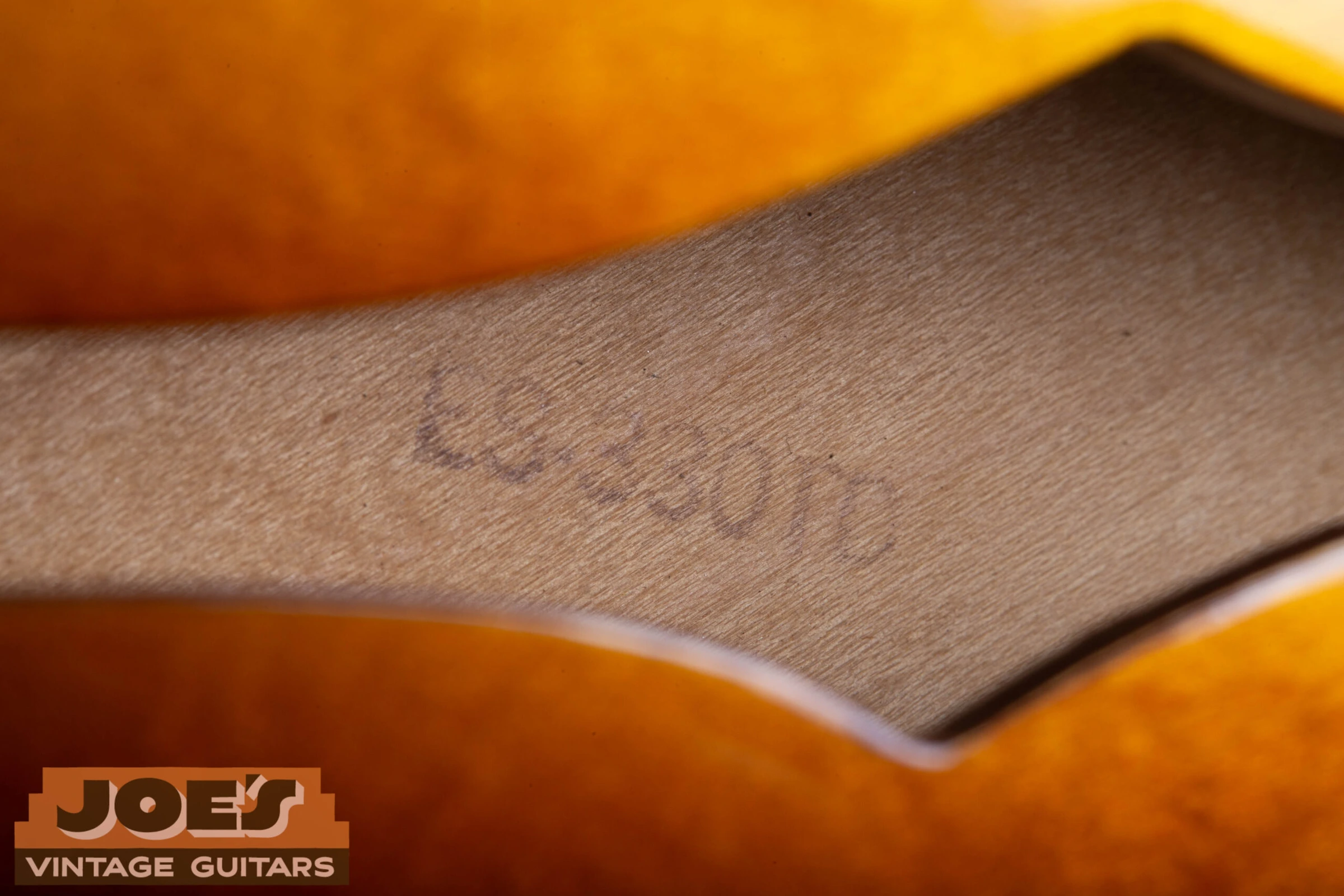
This faint stamp names the model. Record it separately from the letter-and-number FON or the headstock serial.
| Prefix | Body-Batch Year |
|---|---|
| S | 1959 |
| R | 1960 |
| Q | 1961 |
The FON dates the production batch, which can precede completion or shipment. Gibson discontinued the regular FON system after 1961. Do not continue the alphabet forward to invent a 1962 code.
Early examples can have no headstock serial and no paper label. From 1961, impressed headstock serials become the main system, with reused ranges that need a physical cross-check. On a later instrument, photograph any label as well as the headstock; modern versions may use different identification arrangements.
Use the Gibson serial number decoder and charts and The Difference Between Serial Number and FON. If a stamp is faint, try a light from another angle and photograph it. Do not scrape, sand or darken the wood to make it readable.
An original pot’s date comes before its installation, sometimes well before the guitar shipped. A replacement pot dates only that component. See the Gibson pot-code guide for examples and how to read the maker, year and week.
Old Style Does Not Mean Old Guitar
Gibson has returned to the ES-330 in several later production runs, including Memphis models, long-neck ES-330L versions and Historic reissues. The Gibson USA ES-330 returned in 2024, followed by Gibson Custom 1959 and 1962 reissues in 2026. A guitar with dots, black covers and an aged finish can therefore be recently made.
“1959 ES-330” in a reissue name describes the target design. Use the complete serial, exact model and certificate or original paperwork to establish when that particular guitar was built.
Gibson has used different serial systems for different ES runs. A format documented for a 1959 ES-335 reissue is not automatically correct for a 1959 ES-330 reissue. A single year digit may also repeat every decade.
A long-neck description can refer to a vintage guitar or a modern ES-330L. A long neck tenon is an internal joint feature, not another name for the 19th-fret body join.
The Epiphone Casino shares the hollowbody and P-90 concept but has its own model and production history. A Casino serial should not be entered as a Gibson ES-330 just because the guitars look similar.
If the exact ES-330 model is not supported by the decoder, keep the complete serial and seek individual confirmation. Do not force an uncertain number into another model’s format.
Start with the serial number or early Factory Order Number, then compare the inlays, pickup covers, neck joint, nut width and original hardware. Use safely visible original pot codes and paperwork to narrow overlapping years. No single removable part proves the date.
The ES-330 is fully hollow, with internal bracing but no ES-335-style solid center block. Vintage originals use dogear P-90s, although some later factory versions have humbuckers. Similar body outlines do not make the 330 and 335 the same construction.
The original ES-330T has one centrally placed P-90 and two controls. The ES-330TD has two P-90s, four controls and a pickup selector. T means thinline and D means double pickup; TD does not mean double cutaway.
The change happened during 1962. The move from black plastic to metal pickup covers was a separate transition around late 1962 into 1963. A block-neck guitar with black covers can be a correct transitional example.
The later 19th-fret neck joint appears around 1968, replacing the earlier 16th-fret arrangement on later examples. Long neck refers to the body joint and upper-fret access, not a longer scale. Both layouts use a nominal 24 3/4-inch scale.
Yes. Early examples can have an internal Factory Order Number without a headstock serial or an interior paper label. Gibson introduced impressed headstock serials across its lines in 1961. Photograph all visible stamps rather than assuming a number is missing.
No. The usual metal-covered ES-330 pickup is still a single-coil dogear P-90. PAF and Patent Number humbucker dating rules do not apply to it. Pickup covers can also be replaced.
I do not recommend pulling the pots yourself just to find a date. Wires, solder and metal dust-cover cans can hide the codes, and removing the harness through a hollow body risks damage. Ask a qualified repairer when the markings are not safely visible.