

The King of the Flat-Tops · 1937 to Today
Gibson J-200 Model Guide
The full SJ-200 and J-200 story: model names, construction eras, bridges, bracing, factory moves, related variations, serial numbers, labels, repairs, and the details that separate an original guitar from a convincing parts story.
A J-200 is easy to recognize from across a room and difficult to authenticate across eighty-nine years. The broad waist, huge lower bout, crown inlays, flowered guard, gold tuners, and moustache bridge form a powerful silhouette. Under that silhouette are several different guitars. A prewar rosewood Super Jumbo, a lightly braced late-1940s maple SJ-200, a double-X 1950s J-200, a Tune-o-matic 1962, a Norlin-era Artist, a Nashville-built 1986, and an early Bozeman example do not share one construction recipe.
The Features That Define the Family
Gibson J-200 Core Identity
The model began as Gibson's biggest and most expensive flat-top. Its price supplied the 200, and Super Jumbo supplied the SJ. Catalogs, labels, and shipping ledgers did not always change names together, which is why SJ-200 and J-200 can both be correct for the same period.
| Feature | Family Baseline | What Changes |
|---|---|---|
| Body | Super Jumbo outline, about 17 inches across the lower bout | Very early custom dimensions, body depth, and a few later reduced-size models |
| Scale | Usually 25 1/2 inches | Some earliest custom instruments were longer; measure from nut to twelfth fret and double it |
| Top | Spruce | Species, thickness, brace pattern, bridge plate, repairs, and finish |
| Back and sides | Rosewood before the postwar change, maple for the classic postwar standard | Custom orders, J-250R, Custom, Western Classic, Pre-War, and modern rosewood variants |
| Neck | Maple in several laminated forms | Two-, three-, and five-piece builds, center stringers, volutes, profiles, and occasional variant woods |
| Fingerboard | Ebony early, rosewood through much of the postwar standard | Reissues and special models can return to ebony or use other appointments |
| Bridge | Moustache form on the flagship standard | Individual saddles, straight saddle, open and closed forms, Tune-o-matic, two- and four-bar inlay, plus non-moustache variants |
| Finish | Sunburst, with natural available after the war | Ebony, cherry, limited colors, artist finishes, aging packages, and custom work |
On this model, SJ means Super Jumbo. Gibson also used SJ for the Southern Jumbo, a smaller slope-shouldered model from a different family. A label that says only SJ should not be read as SJ-200 without body and trim evidence. Use the vintage Gibson J-45, J-50, and Southern Jumbo identification guide when the body is the smaller slope-shouldered form.
The outline stayed famous while the structure kept moving.Read the era, then the guitar.
From Singing Cowboys to Stadium Stages
How the Super Jumbo Became the J-200
Ray Whitley and the First Custom Guitars
The starting point is 1937, when Ray Whitley discussed a larger, more theatrical flat-top with Gibson president Guy Hart. Gibson borrowed visual language from the L-5 archtop, including an ornate bound headstock, crown and crest inlays, and a decorated guard. Early customers included Gene Autry, Tex Ritter, Jimmy Wakely, and Ray “Crash” Corrigan. Personalized fingerboards and unusual 12-fret configurations belong to this custom period.
Those first instruments are dangerous places for rigid checklists. The catalog model was still being worked out, and surviving guitars can preserve features that never became standard. Provenance, ledger entries, factory photographs, and internal construction carry unusual weight on a claimed 1937 or early 1938 example.
A $200 Flagship
The 1938 catalog called it the Super Jumbo and priced it at $200 before the case. The number soon entered the name as Super Jumbo 200. Gibson also created the lower-priced Super Jumbo 100 with plainer trim and mahogany construction. The 200 remained a custom-order-level purchase for much of its early life, which helps explain the very small prewar shipping totals.
Postwar Maple and a Split Name
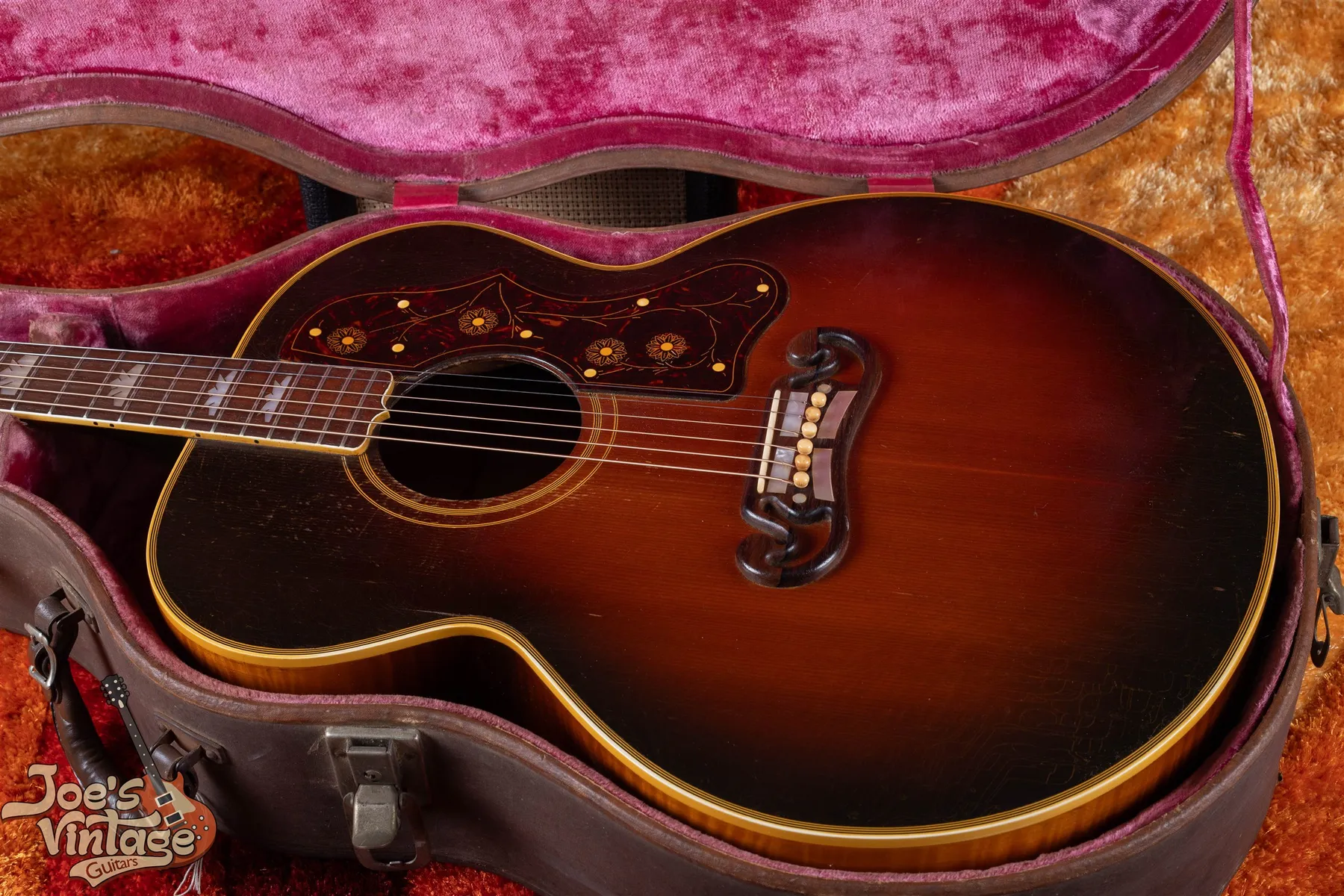
The postwar guitar changed more than its wood. Gibson advertising used J-200 while labels continued to show SJ-200 into the early 1950s. The normal body wood changed from rosewood to figured maple, the fingerboard and bridge were rosewood, and a natural finish became available. A 1948 such as the sunburst guitar in this archive is the beginning of the familiar postwar identity, but its single-X top is lighter than the double-X construction Gibson restored in 1952.
Why Artists Kept Choosing It
The guitar's physical scale made it an instant stage object. Its long scale, large air chamber, and maple body can deliver a dry, quick attack beneath a voice, while rosewood versions can add deeper overtones. Elvis Presley, the Everly Brothers, Bob Dylan, Pete Townshend, George Harrison, Tom Petty, Emmylou Harris, and many others used members of the wider Super Jumbo family. Some later received signature editions, but the artist association never replaces the model specification.
For one documented 1955 example, see the story of Bob Denton's natural Gibson J-200, label number A 20058, and its connection to Eddie Cochran's California rockabilly circle.
The Changes That Move Identification and Sound
Gibson J-200 Year-by-Year Timeline
The Custom Prototypes
Singing cowboy Ray Whitley asked Gibson for a flat-top with the size and visual authority of the company's premier archtops. The first custom instruments were still experimental. Early body dimensions, neck joints, scales, bridges, and personalized inlays do not all match the later catalog standard.
The Super Jumbo Enters the Catalog
Gibson advertised the new Super Jumbo at $200, the price of a Martin D-45. The production form used a spruce top, rosewood back and sides, a body about 17 inches wide, ornate binding, an ebony fingerboard, graduated crest inlays, a flowered guard, an open moustache bridge, and gold hardware.
The Super Jumbo 200 Takes Shape
The price became part of the name. Most examples settled into the familiar 17-inch outline and 25 1/2-inch scale. Prewar bridges can carry six individually adjustable threaded bone saddles, although straight-saddle examples and factory anomalies mean the bridge must be examined rather than dated from a checklist.
The Wartime Transition
The fingerboard changed from ebony to rosewood, tuner buttons changed, and the bridge moved toward a single conventional saddle. During 1941 and 1942 Gibson replaced the early double-X system with a lighter single-X pattern. The last documented wartime shipment left in 1943, followed by a production gap.
The Maple J-200
Postwar advertising called the model J-200, while factory labels could still read SJ-200. Maple replaced rosewood as the normal back and side wood, the headstock lost part of its earlier binding treatment and strap bracket, a natural finish joined sunburst, and body depth increased.
Double-X Bracing Returns
Gibson deepened the body again and restored a wide double-X pattern with ladder bars and a long bridge plate. This is one reason a 1949 and a 1954 can sound and respond like different models even when the front appointments look close.
The Label and Trim Change
The J-200 name finally became normal on interior labels. The molded pickguard lost the engraved border on most examples, and laminated maple construction appears in the standard specification. Some earlier and later features overlap, so 1955 should be treated as a transition year rather than a clean dividing line.
Grovers and Larger Frets
Gold Grover Rotomatic tuners replaced the familiar tulip-buttoned Klusons on many guitars, and larger fretwire arrived. The neck profile is also a useful period clue, but a reprofiled or refinished neck can erase it.
The Closed Bridge and Adjustable Saddle
The open moustache bridge gave way to a solid or closed version with four pearl bars. A metal Tune-o-matic saddle, a much larger bridge plate, bridge bolts, a larger neck block, and a suspended top brace appeared. Many of these braces and saddles were later removed in attempts to improve tone.
Five-Piece Necks and Hardware Changes
A five-piece maple neck and gold waffle-back or related enclosed tuners are common early in this period; Grovers returned by the late 1960s. Nut width, finish color, guard material, neck shape, and internal hardware can vary through the decade. Measure the guitar in hand.
The Norlin Years and J-200 Artist
Double-X bracing, larger bridge plates, volutes, and simplified production details define much of the period. The J-200 Artist used the Super Jumbo idea with a Dove-style bridge and its own trim. A rosewood J-250R and other high-spec relatives also appeared. Model names on labels matter here.
Nashville Acoustic Production
Kalamazoo closed in 1984. Limited acoustic production continued in Nashville before Montana production began. A period label can still carry a Kalamazoo address, so the serial ranking number and construction must be read with the paper label.
The Bozeman Restart
Gibson's first Bozeman guitars shipped in July 1989. The new shop rebuilt the acoustic line around more traditional construction. Early Montana labels, low daily ranking numbers, maple selection, neck laminates, and bridge details give these guitars their own identity.
Standards, Studios, Reissues, and Custom Builds
Gibson restored the SJ-200 name and has since used Standard, Studio, Original, Custom, Historic, Western Classic, Pre-War, signature, cutaway, and limited-edition forms. Those names can signal different woods, bracing, bridges, trim, electronics, and historical targets.
Transition dates are ranges. Gibson used parts already on hand, changed catalog copy after production changes, and accepted custom orders. Treat the timeline as an expected feature map, then document every part of the individual guitar.
The Most Useful External and Internal Clues
J-200 Bridge and Bracing Changes
The moustache bridge is the fastest visual clue and one of the least safe parts to date by itself. Bridges crack, lift, rotate, get shaved, and get replaced. Many owners also converted metal adjustable saddles to bone. The bridge footprint, holes, plate, braces, finish, and glue line have to tell one story.
Early Open Moustache
Prewar production begins with an ornate open bridge and six threaded individual bone saddles, then moves toward a conventional straight saddle around 1940 and 1941. Postwar open bridges use the recognizable cutout ends and pearl bars with a fixed saddle. Check the number and shape of pearl pieces, pin line, saddle angle, wood, and footprint.
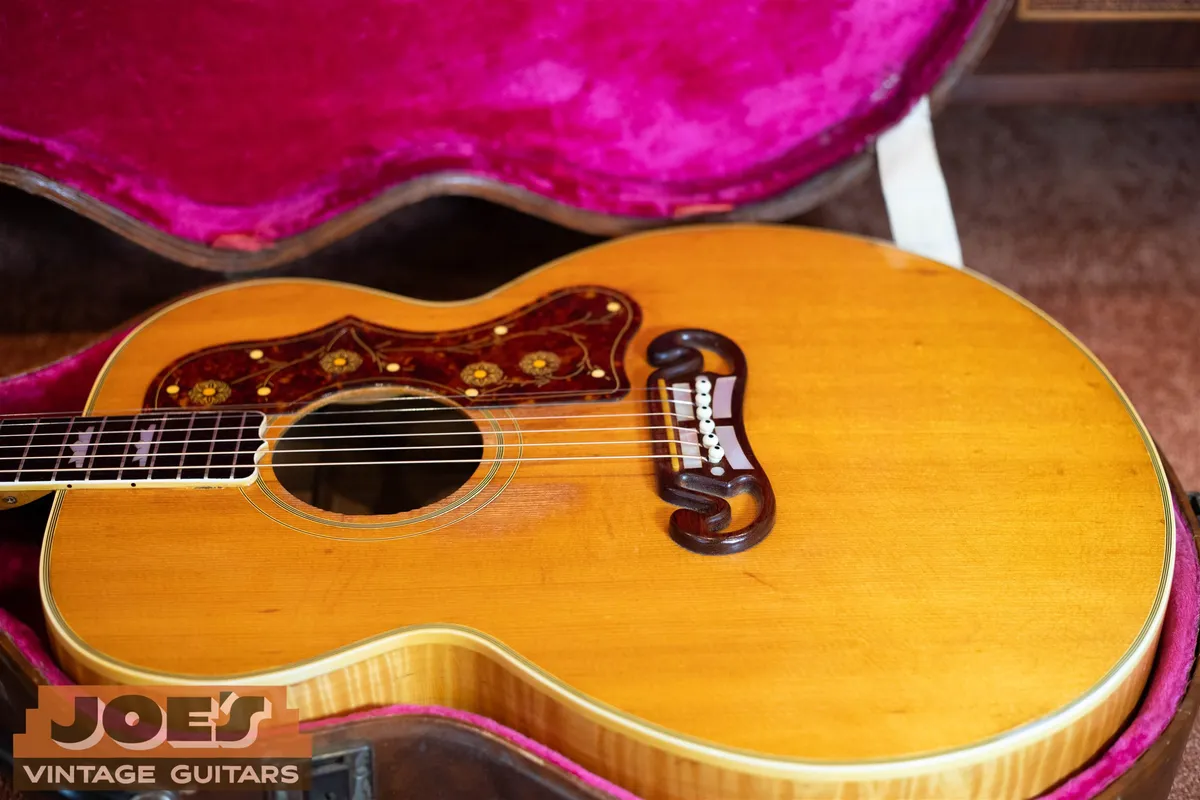
Postwar Fixed Saddle
A clean 1950s open bridge should agree with the finish shadow and bridge plate below it. Low saddle exposure can indicate a poor neck angle or a shaved bridge. A taller replacement bridge can hide a neck-angle problem. Measurements matter more than the graceful outline.
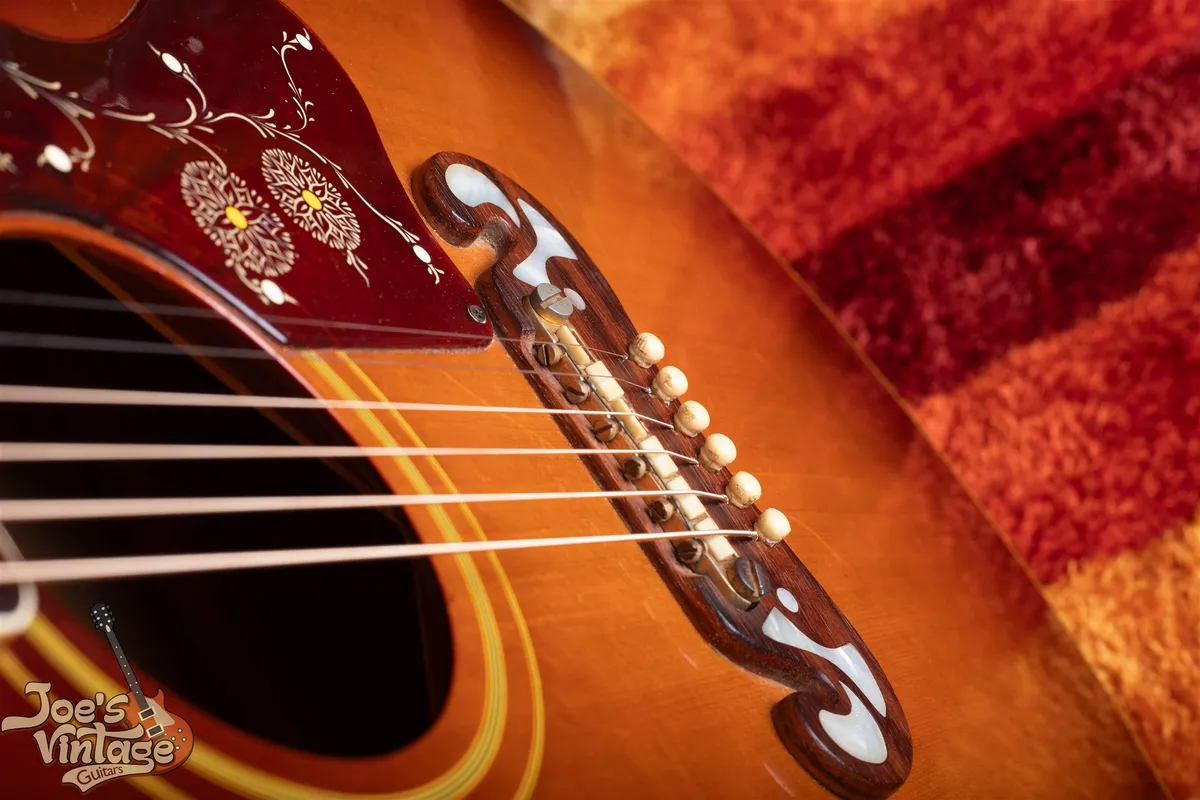
Closed Bridge and Tune-o-Matic
From 1961, the solid bridge gained four pearl bars and an adjustable metal saddle. Beneath it, Gibson used a large plate, bolts, and an added suspended brace with an adjustment screw. Removed braces, filled posts, converted saddles, and replaced plates are common. A conversion can improve a player's response, but it changes originality.
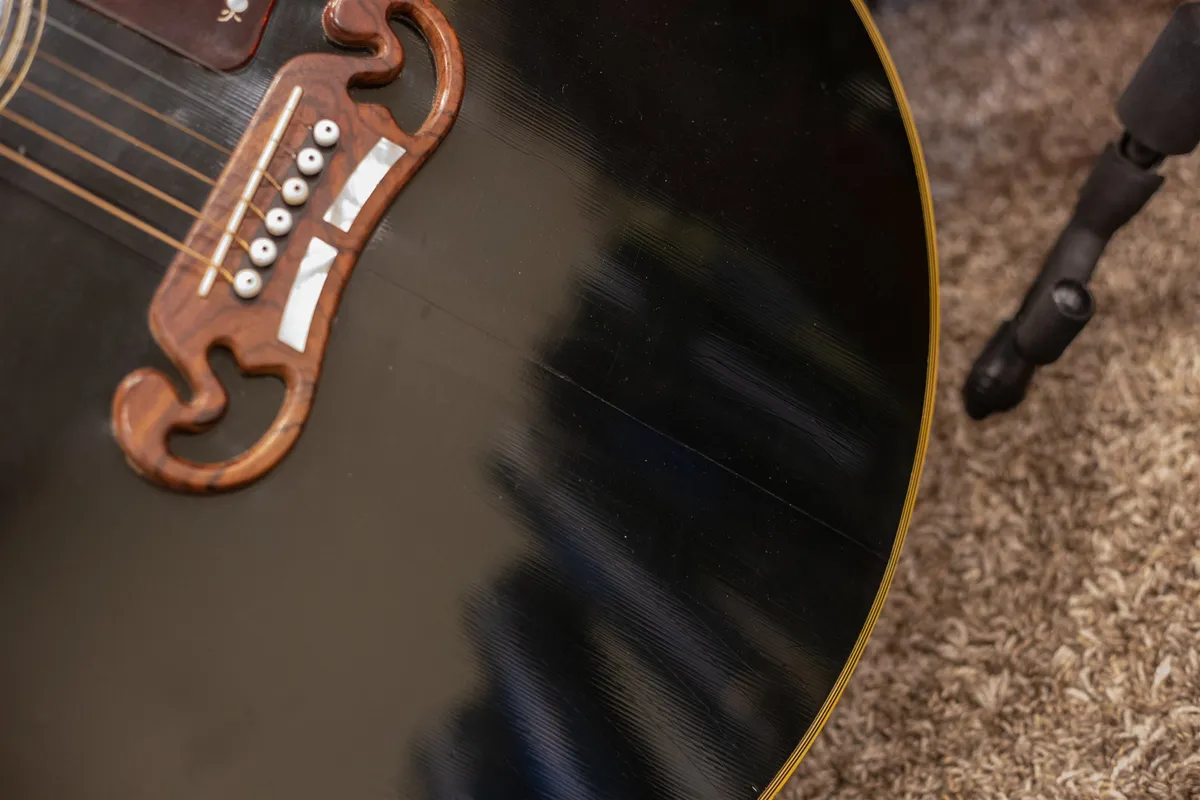
Later Fixed-Saddle Moustache
Later J-200 and SJ-200 production returned to fixed saddles and used several two-bar and four-bar moustache interpretations. Modern Standard, Historic, Custom, and artist models can intentionally copy different periods. The bridge style can identify the target specification, but the label and serial establish when Gibson built it.
Early Double-X
The first catalog guitars used two wide-angle X structures with ladder braces behind the lower system. This is a distinct prewar design, not the same pattern as the heavier double-X used later.
Light Single-X
Introduced during the 1941 and 1942 transition and retained on the first postwar guitars. These late prewar and 1947 to 1951 examples are often prized for a more responsive top.
1952 Double-X
Gibson restored double-X bracing with ladder bars and a long plate as body depth increased. The stiffer top separates a 1950s J-200 from its immediate postwar predecessor.
1960s Support Hardware
The large bridge plate, bridge bolts, and suspended brace around the Tune-o-matic system add another layer. Missing hardware can be an old tonal modification, not proof that the guitar left Kalamazoo without it.
Norlin Double-X
Seventies examples often carry a stout double-X system and large plate. Individual guitars can still sound good, but condition and setup should be judged without pretending the structure matches a late-1940s guitar.
Bozeman Revival
Montana production moved back toward traditional X-bracing, and later Historic models use period-targeted scalloping, hide glue, top aging, and other specifications. A historic recipe built recently remains a modern guitar.
Similar Names, Different Specifications
Gibson J-200 Models and Variations
Super Jumbo, SJ-200, and J-200
These names trace the flagship family. The name alone does not separate every era. A late-1940s label may say SJ-200 while the catalog says J-200, and recent Gibson production uses SJ-200 again.
J-200N
The N normally identifies natural finish in postwar records and price lists. It is not automatically a rarer structural model. Compare its year, woods, bracing, bridge, and originality with the sunburst version.
SJ-100, J-100, and J-100 Xtra
The 100 series uses the large-body idea with reduced ornament and period-specific wood choices. It is a real Gibson family, but adding a decorated guard, crown inlays, or a moustache bridge does not turn one into a J-200.
J-200 Artist
Seen from the early 1970s into the 1980s, the Artist can use a slightly narrower Super Jumbo body, Dove-style bridge, double-X bracing, volute, three-piece maple neck, crown inlays, and gold hardware. Read the label rather than assuming every flower-guard jumbo is the standard model.
J-250R
This higher-priced relative paired the Super Jumbo platform with rosewood and its own appointments. It belongs beside the J-200 history, but the full model stamp and construction keep it from being misrepresented as a prewar-style SJ-200.
J-200 Junior, J-180, and J-185
The J-200 Junior and the 16-inch J-180 or J-185 family can carry maple, crown inlays, and related visual language in a smaller body. Measure the lower bout. A smaller outline is a model fact, not a camera illusion.
J-200 Studio and EC Models
Studio and cutaway acoustic-electric versions can change depth, binding, bridge ornament, neck feel, and onboard electronics. Factory electronics should agree with the model code, routing, jack, controls, and production date.
SJ-200 Standard, Original, and Rosewood
Recent Bozeman families include maple standards, period-influenced Original specifications, and rosewood versions. Gibson changes active offerings over time, so a dated factory specification sheet is better evidence than today's product menu.
1957 Reissue and Pre-War SJ-200
The 1957 interpretation uses maple and a four-bar moustache bridge. Pre-War recreations return to rosewood, ebony, early trim, and period-directed bracing. Reissue serial formats, certificates, labels, and construction distinguish them from originals.
Custom, Western Classic, and Monarch
These can use rosewood, abalone, elaborate bridges, three-piece backs, vine work, precious materials, and one-off details. Exceptional ornament demands stronger factory documentation because skilled independent builders can reproduce the visible decoration.
Signature and Limited Editions
Elvis Presley, Bob Dylan, Pete Townshend, Tom Petty, the Everly Brothers, Jimmy Page, Johnny Cash, Brian May, and other editions target particular instruments or stage designs. Some use double guards, black finishes, pickups, cutaways, or twelve strings. The artist name is part of the model identity.
Epiphone EJ-200 and Inspired by Gibson
Epiphone has built several Super Jumbo versions, including recent Gibson Custom collaborations. They can be excellent instruments and can share the outline, but their headstock, label, country of manufacture, materials, serial system, and market are separate from a Gibson-built J-200.
Custom order does not mean undocumented. Gibson did depart from catalog specification. A credible special order should be supported by period construction, factory paperwork, ledger information, a matching model code, or a chain of provenance. “They must have custom made it” is not evidence.
Five Guitars From Joe's Drive Archive
Gibson J-200 Photo Timeline
Postwar Restart
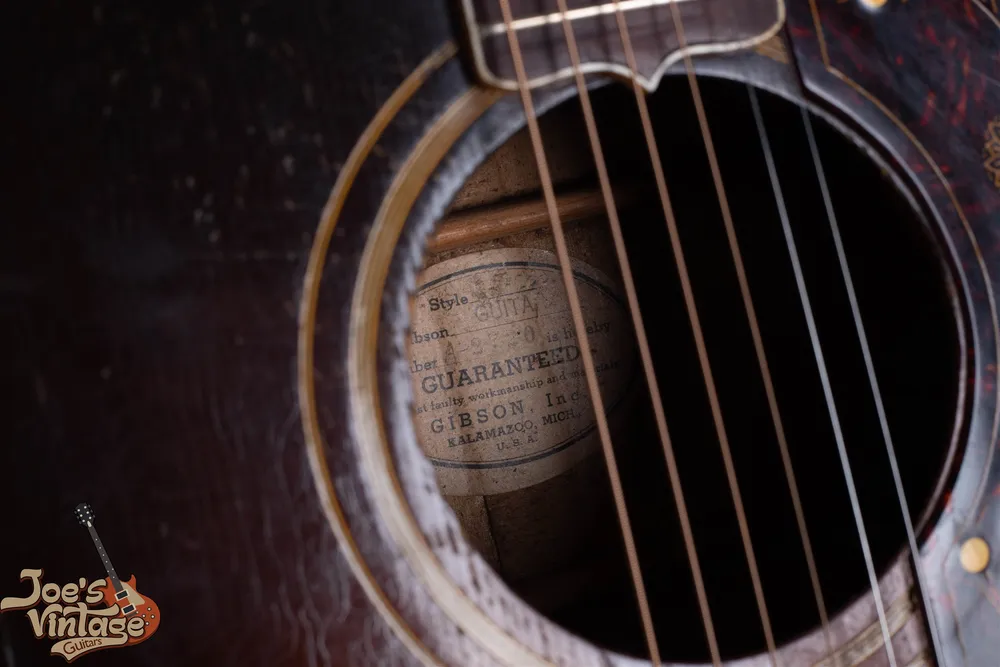
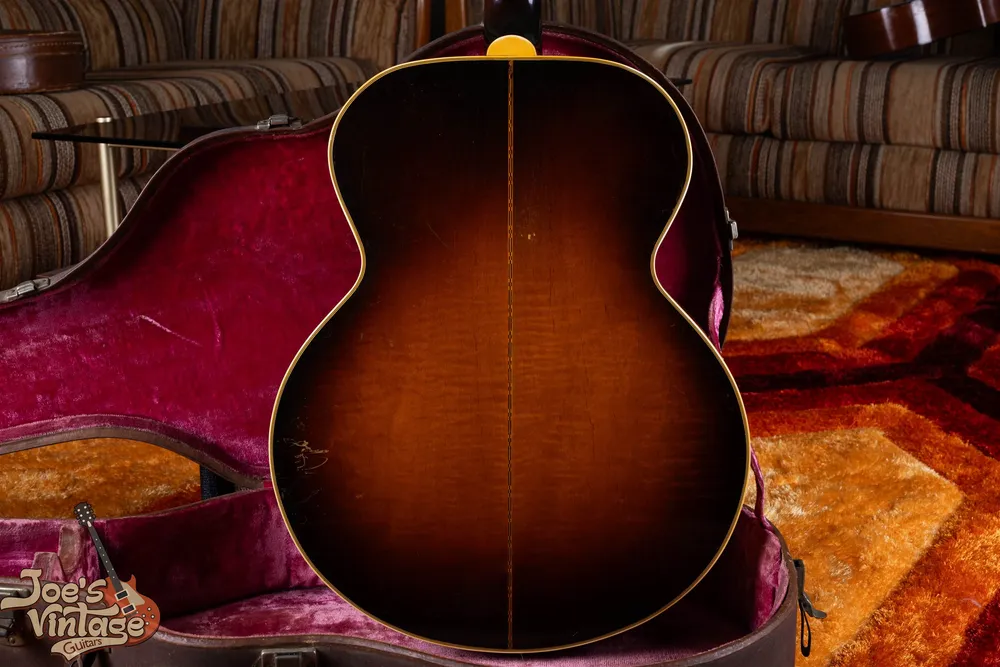
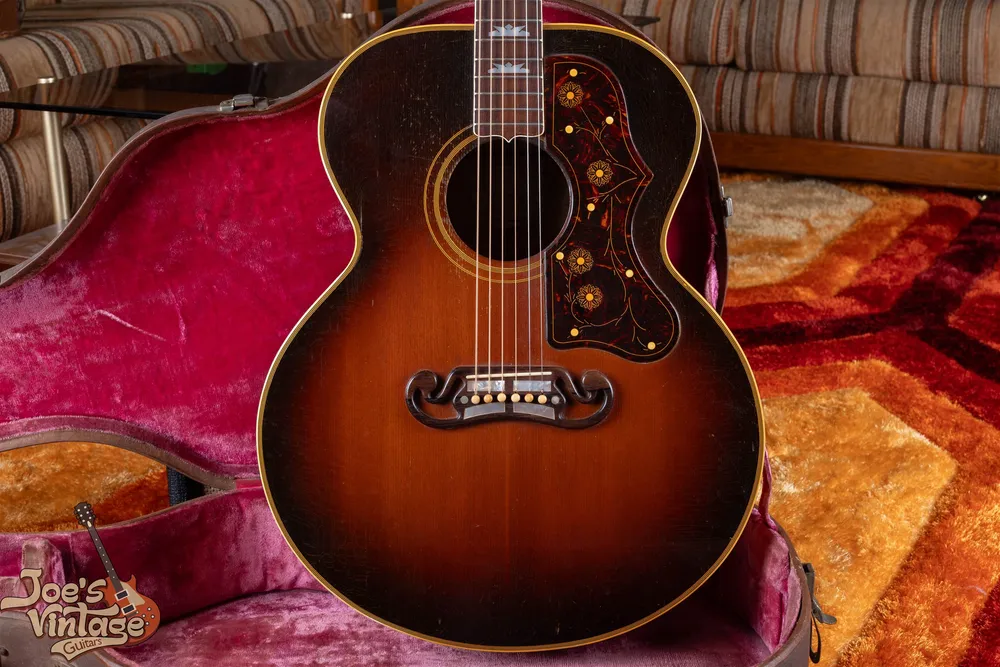
1948 Gibson SJ-200
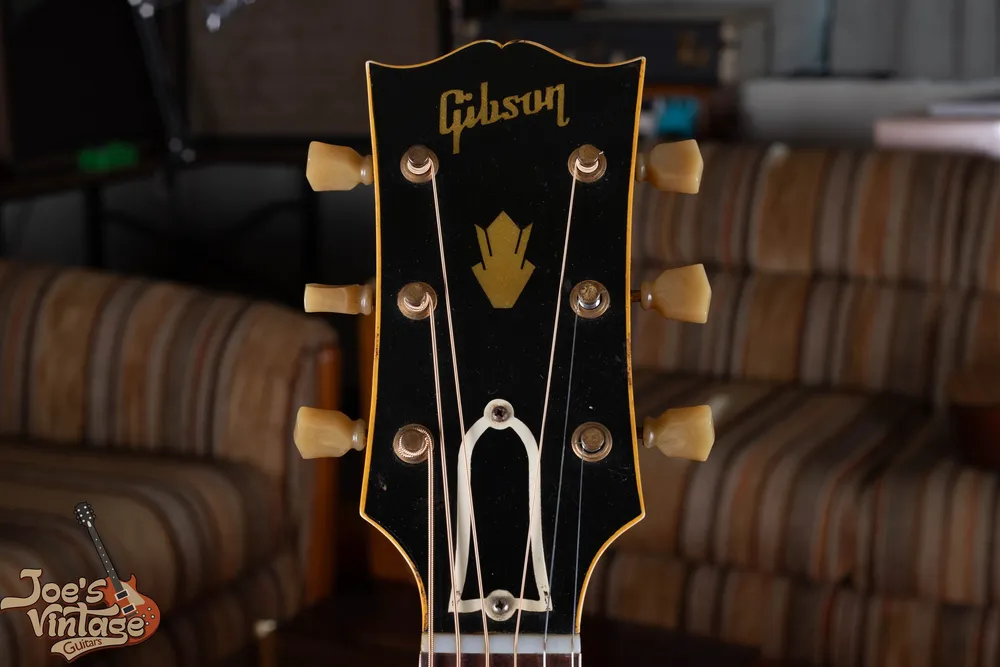
This sunburst example shows the postwar maple formula before the 1952 bracing revision. Its script logo, crown, white oval label, open bridge, deeply figured two-piece back, multi-ply trim, and flower guard should be read together. The bridge and guard are visible clues; the single-X interior is the era-defining construction.
Classic Fifties Trim
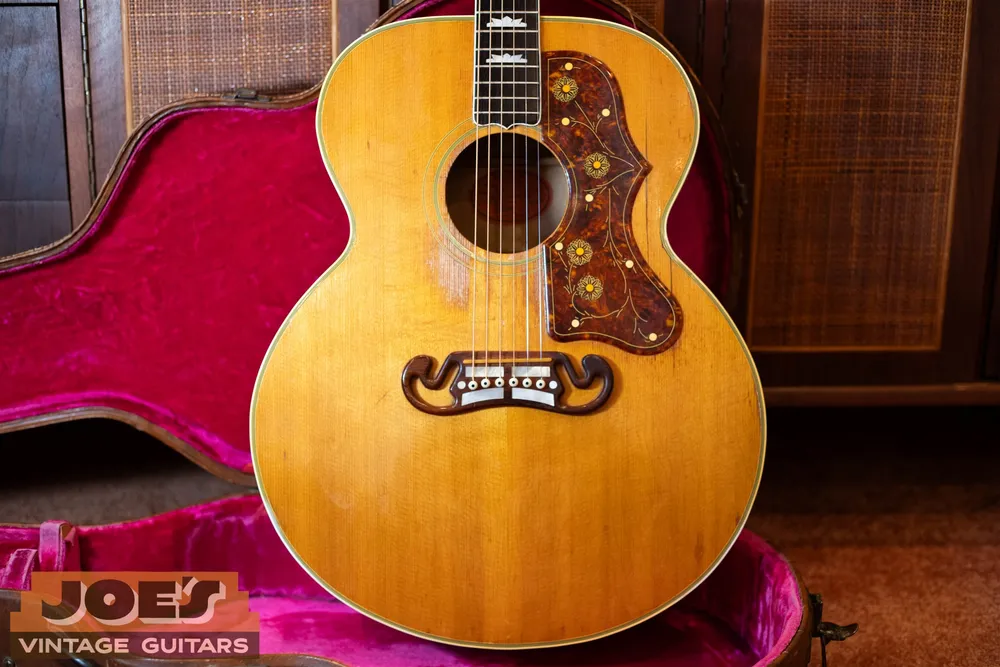
Natural 1950s Gibson J-200
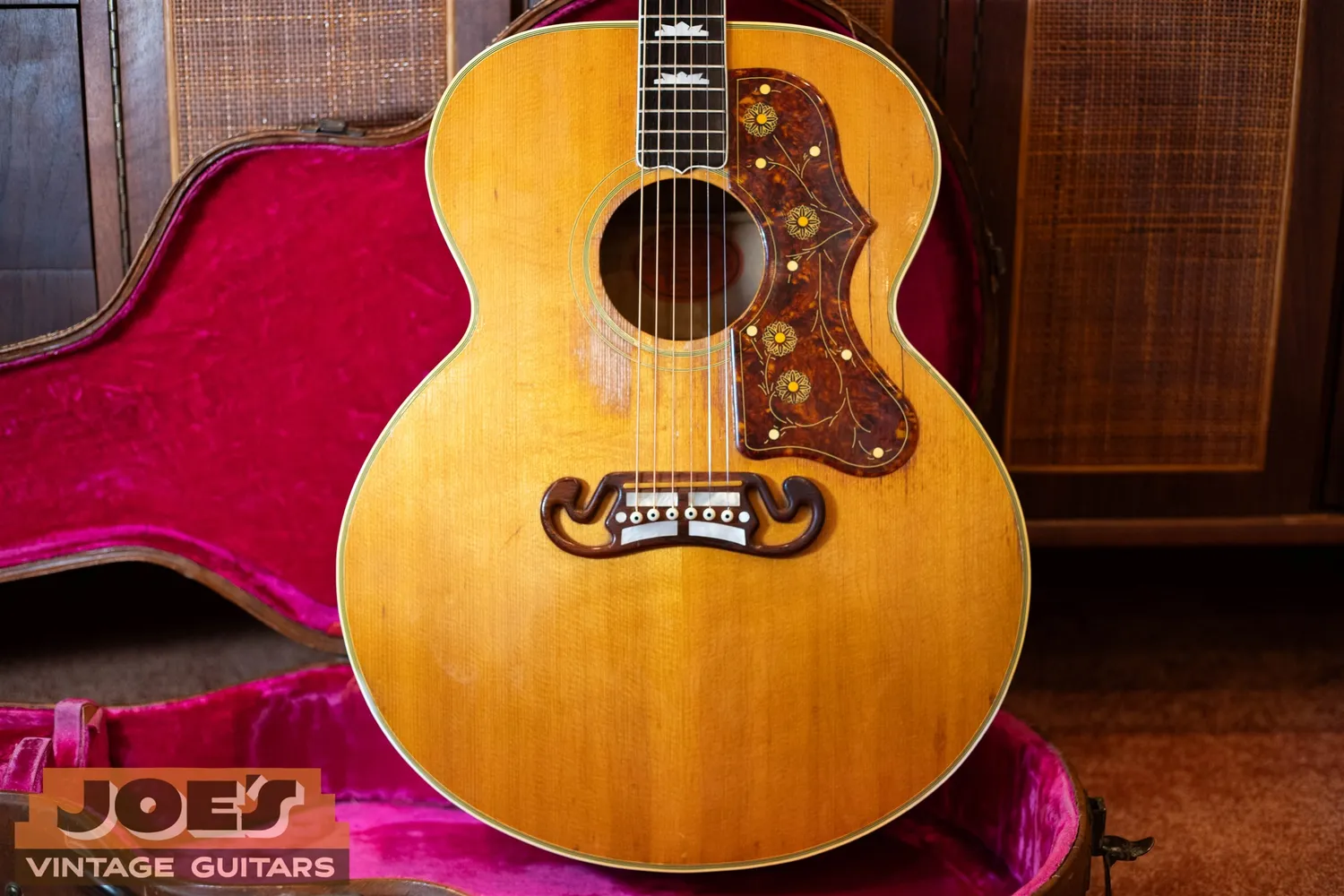
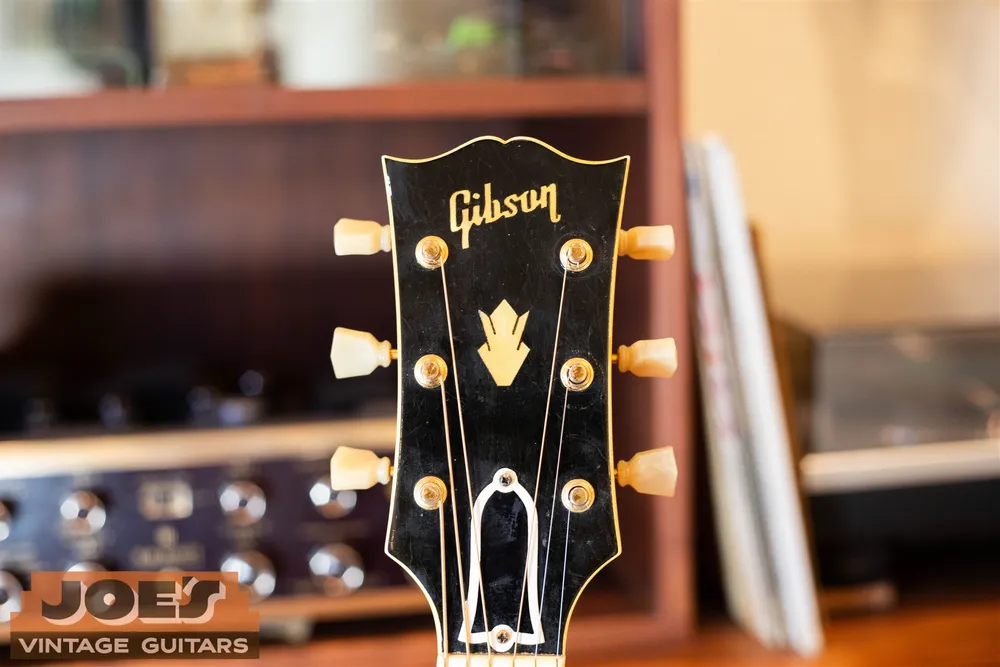
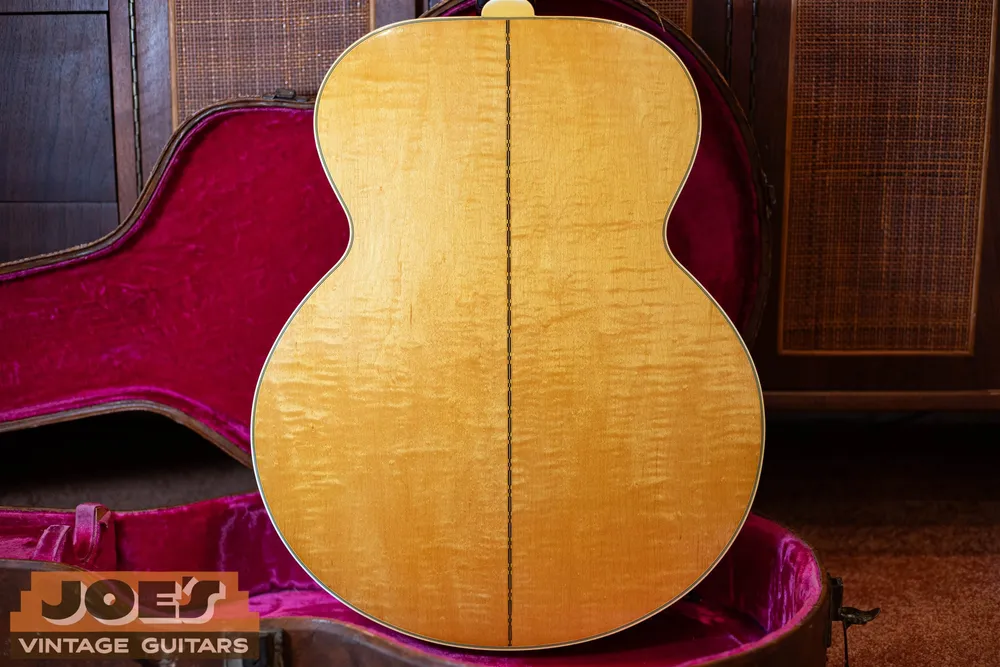
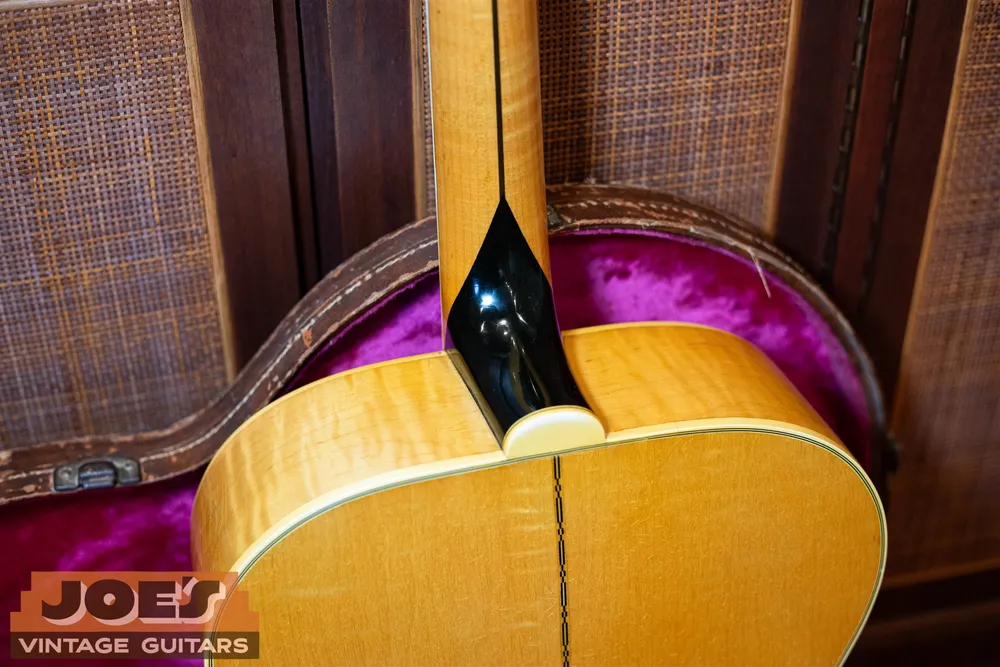
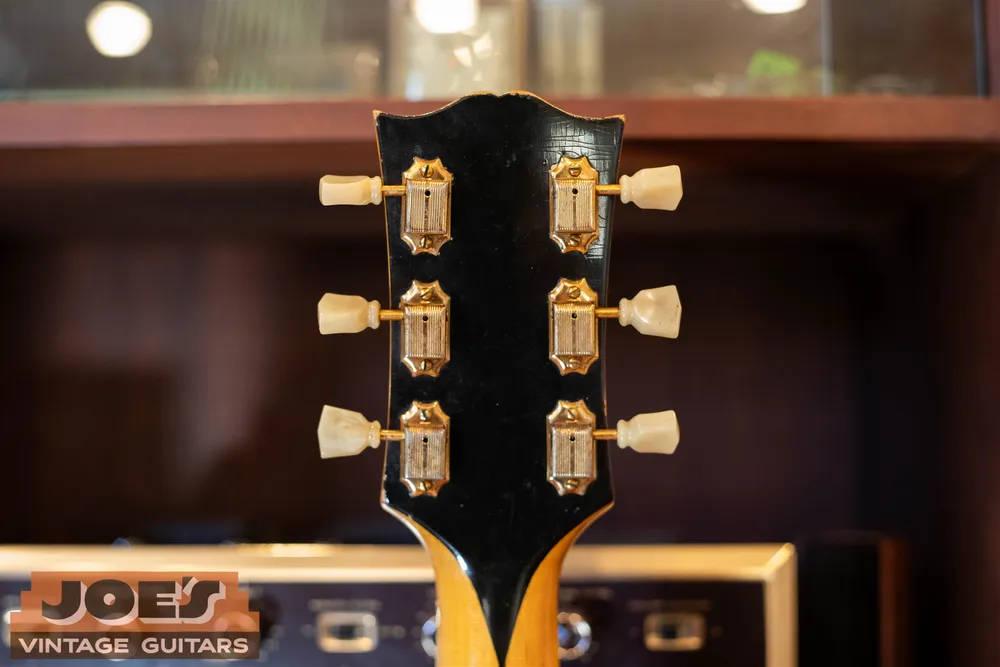
The blond top makes the bridge footprint, guard outline, and top condition easy to inspect. The gold tuners, laminated maple neck construction, figured back, crown inlays, and open fixed-saddle bridge are strong period clues. None should be used alone, because tuners, guards, bridges, and even necks are replaceable.
The 1961 Construction Package
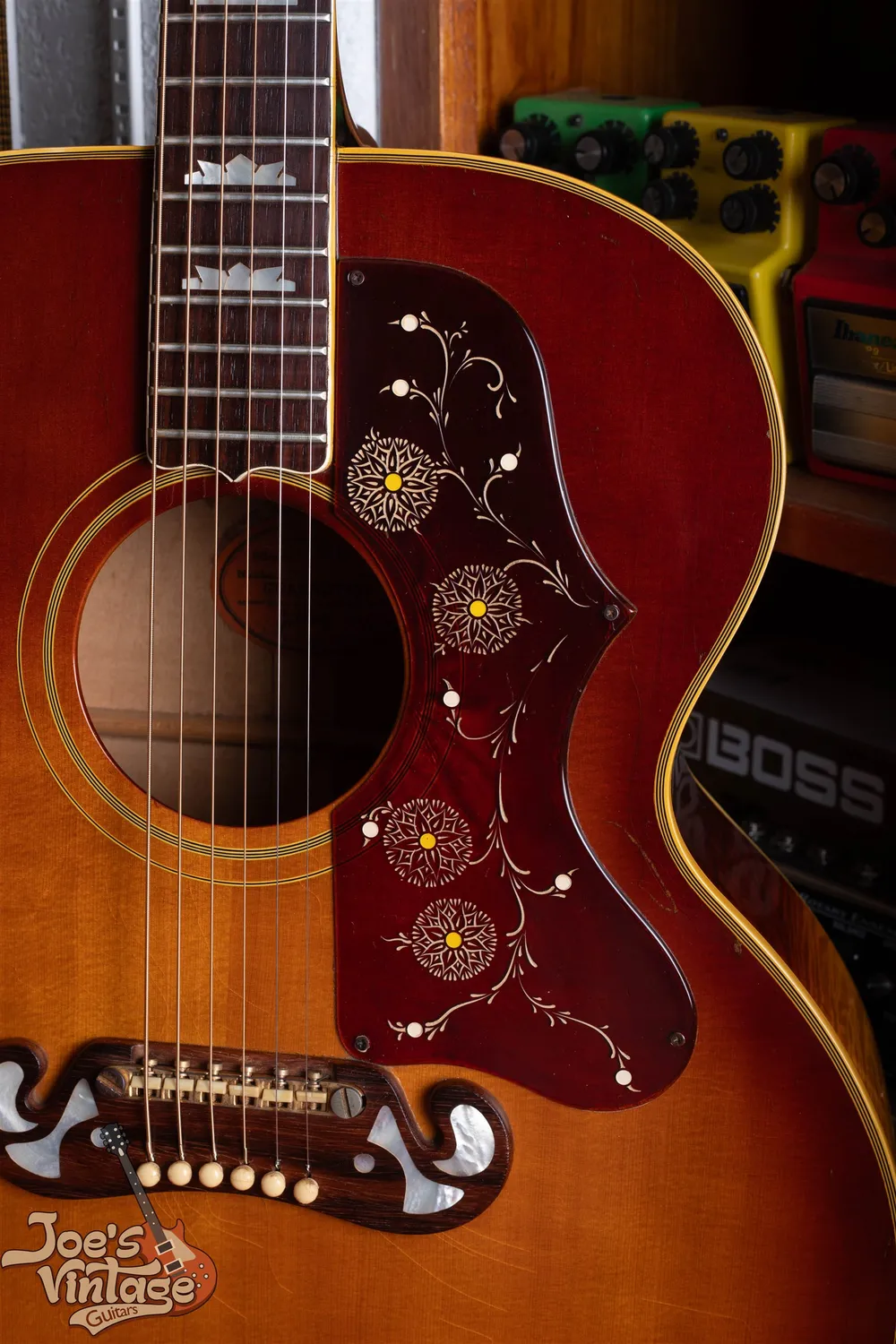
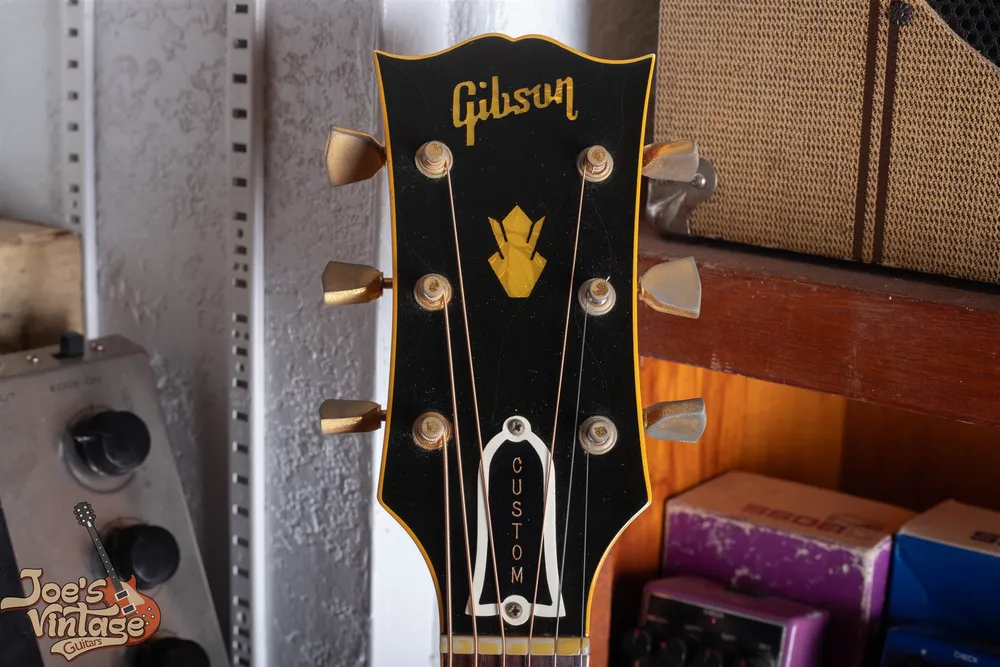
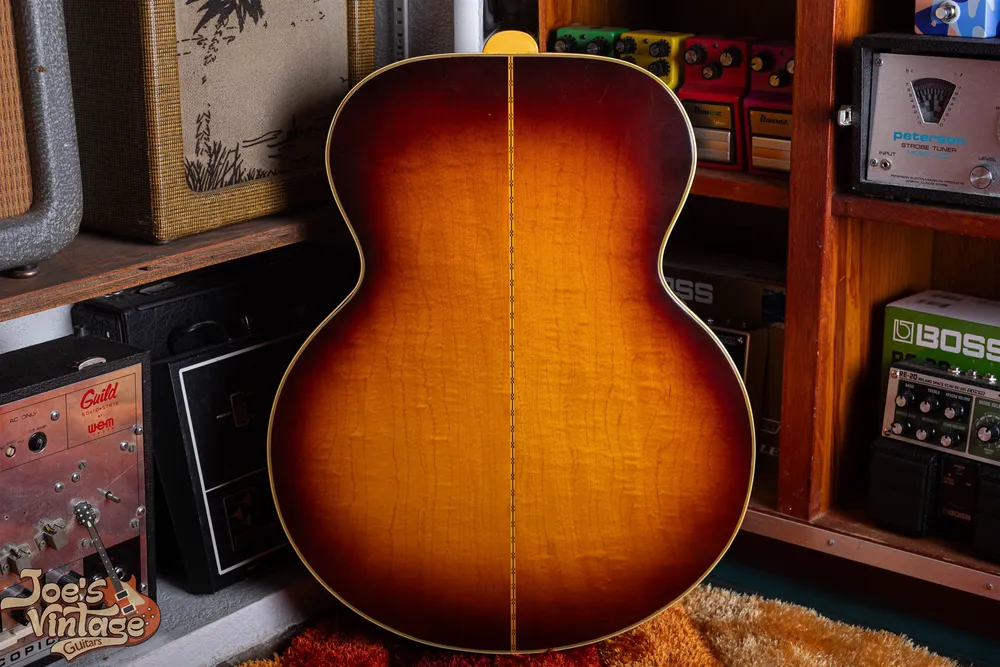
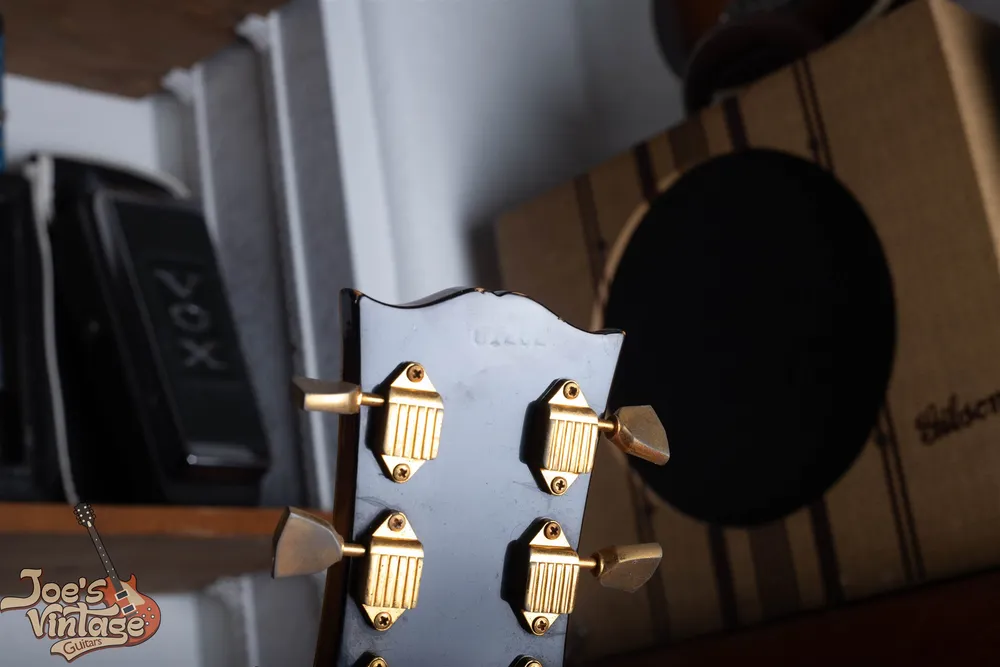
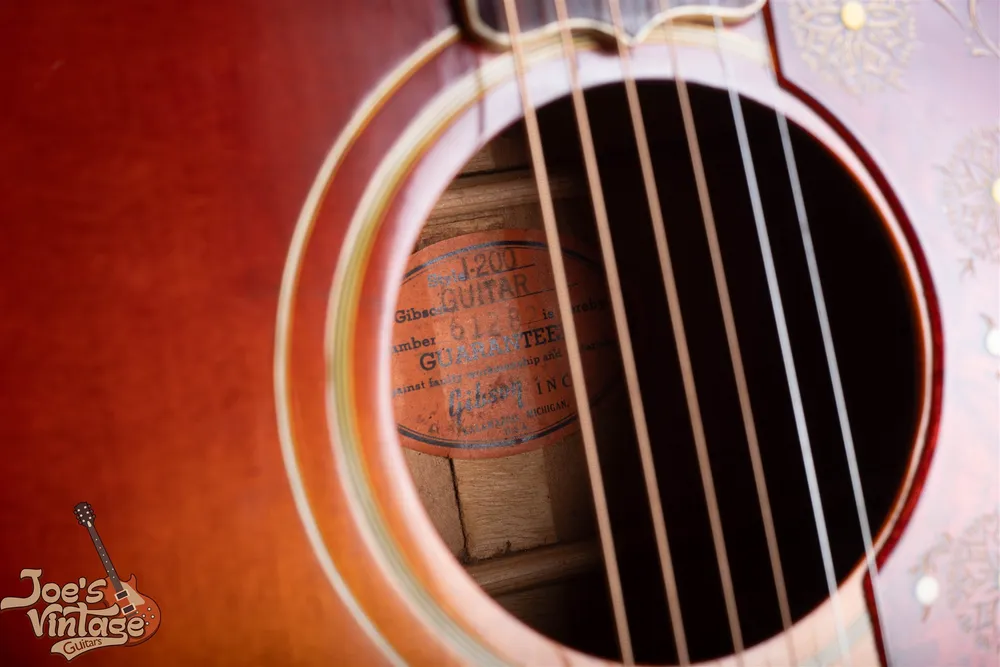
1962 Gibson J-200
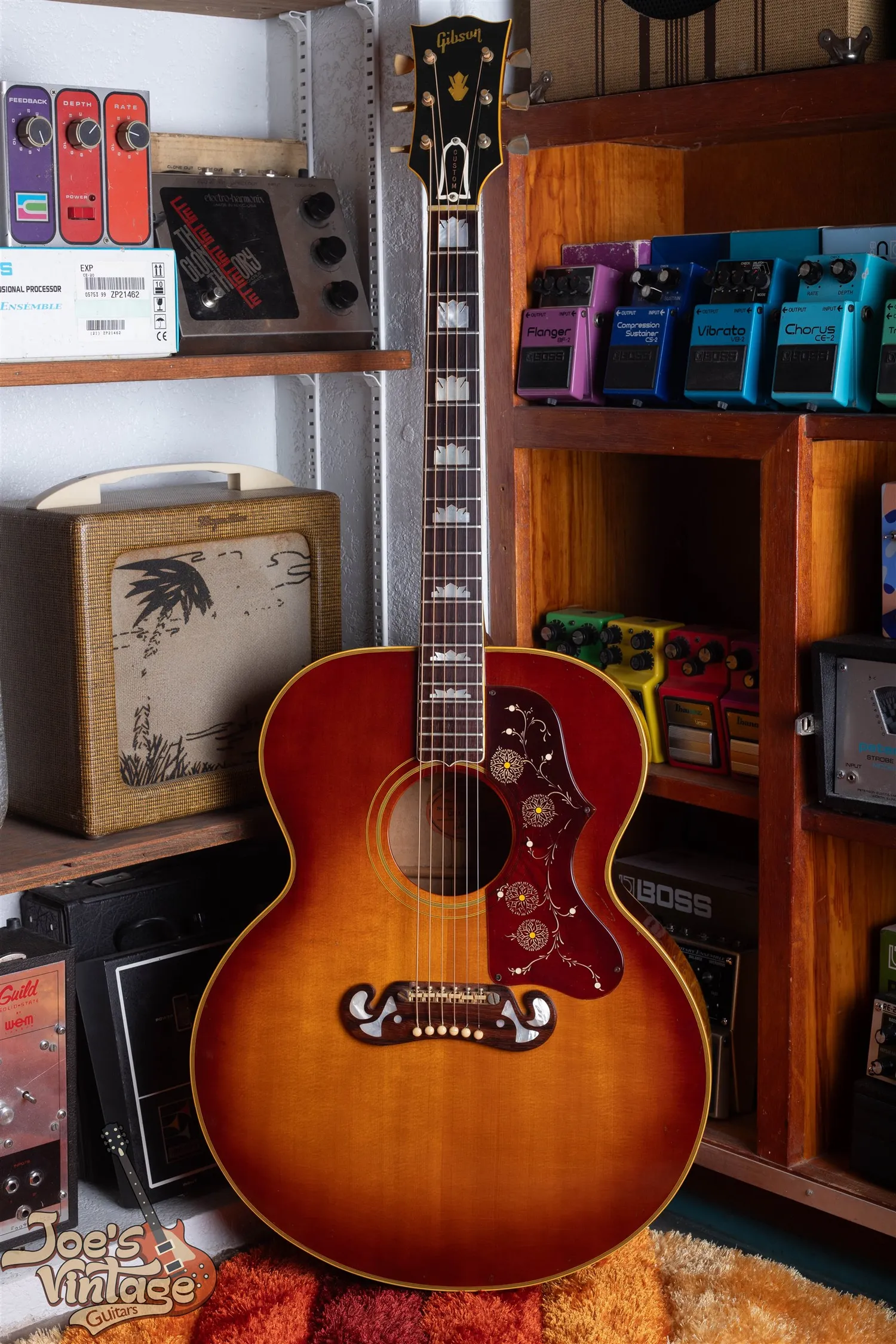
The closed four-bar bridge and Tune-o-matic saddle identify the new external system. The red-brown guard, crown inlays, faint impressed serial, orange oval label, gold tuners, and flame maple back complete the visible record. Inspection inside should look for the large plate, bolts, enlarged neck block, and suspended brace associated with this system, plus evidence of any later removal.
After Kalamazoo, Before Bozeman
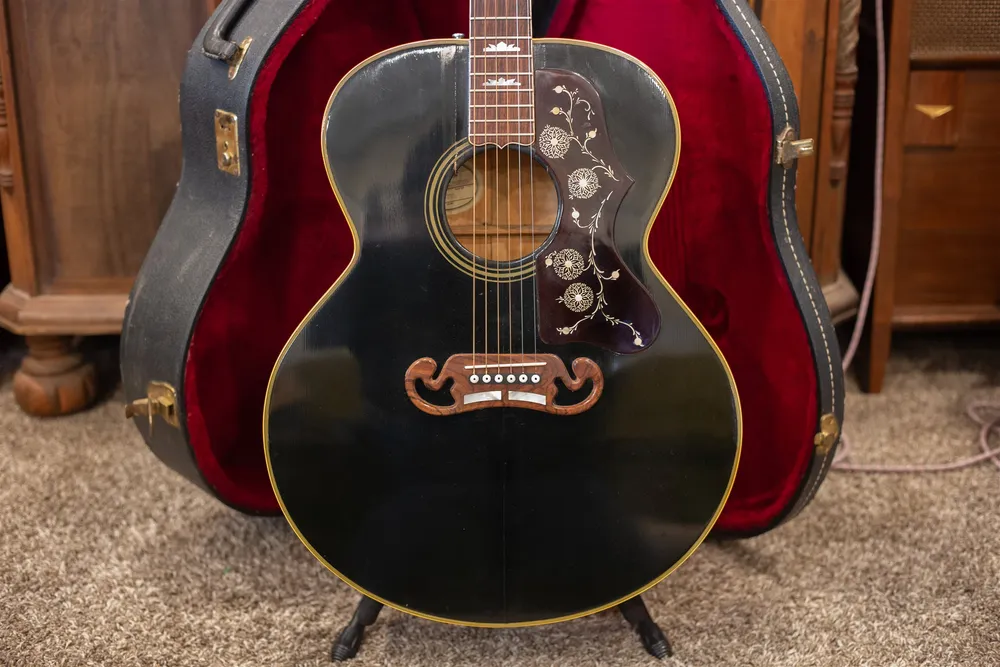
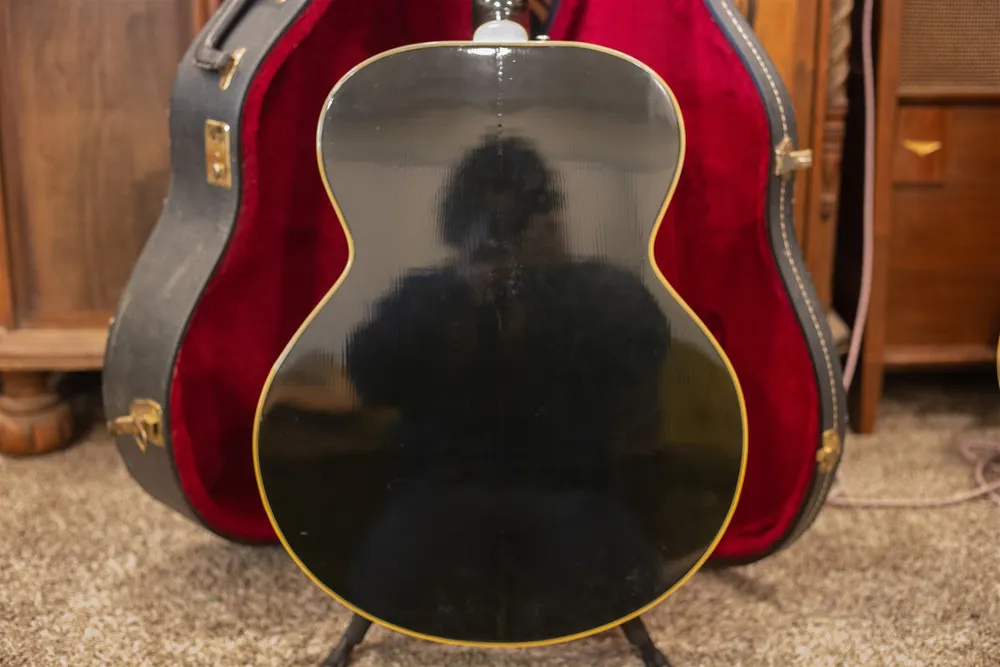
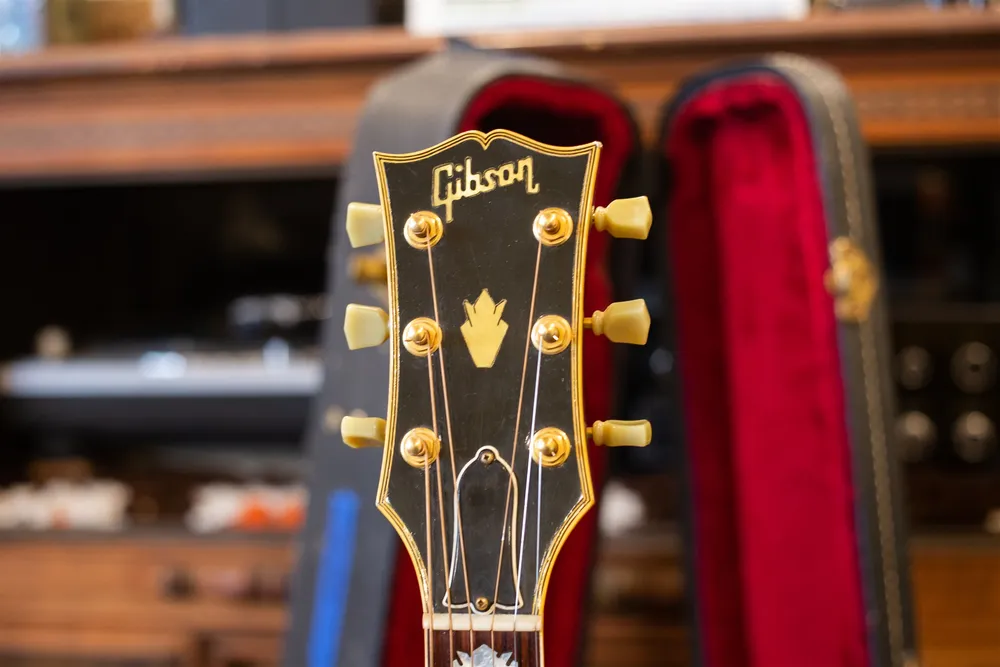
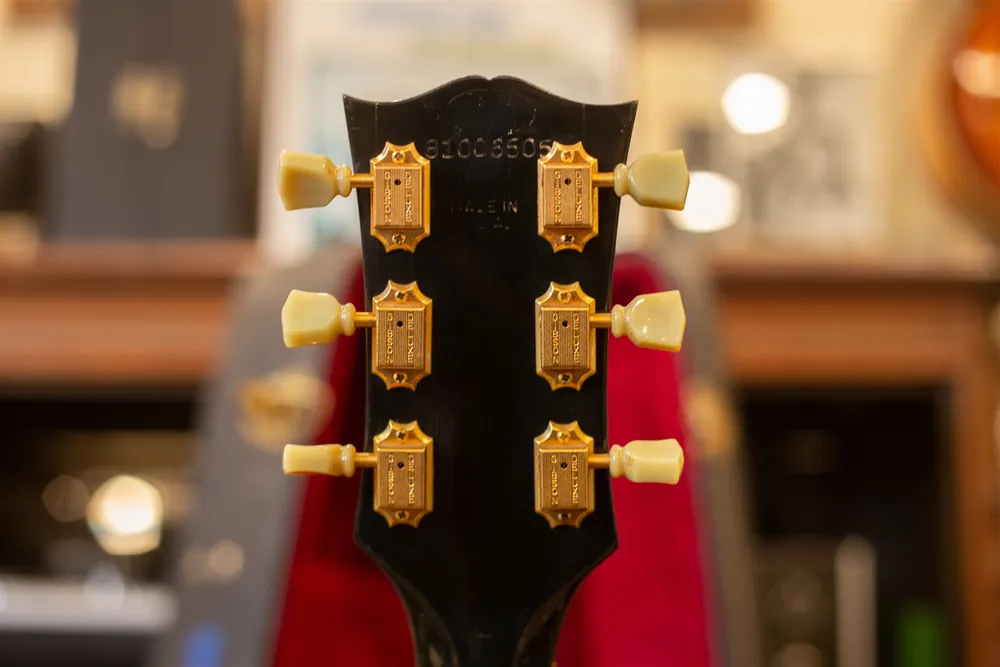
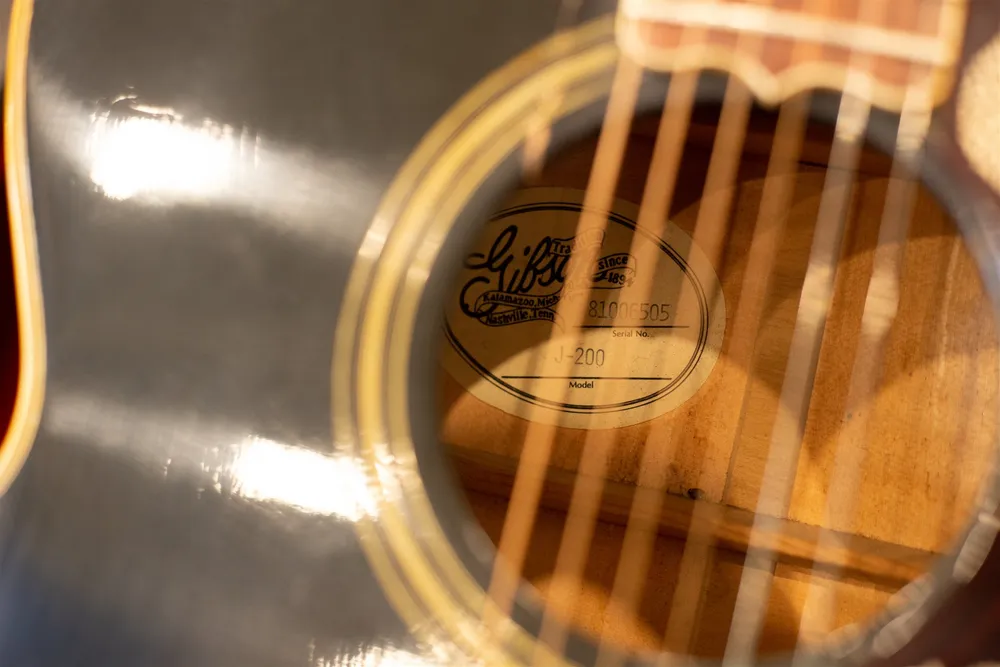
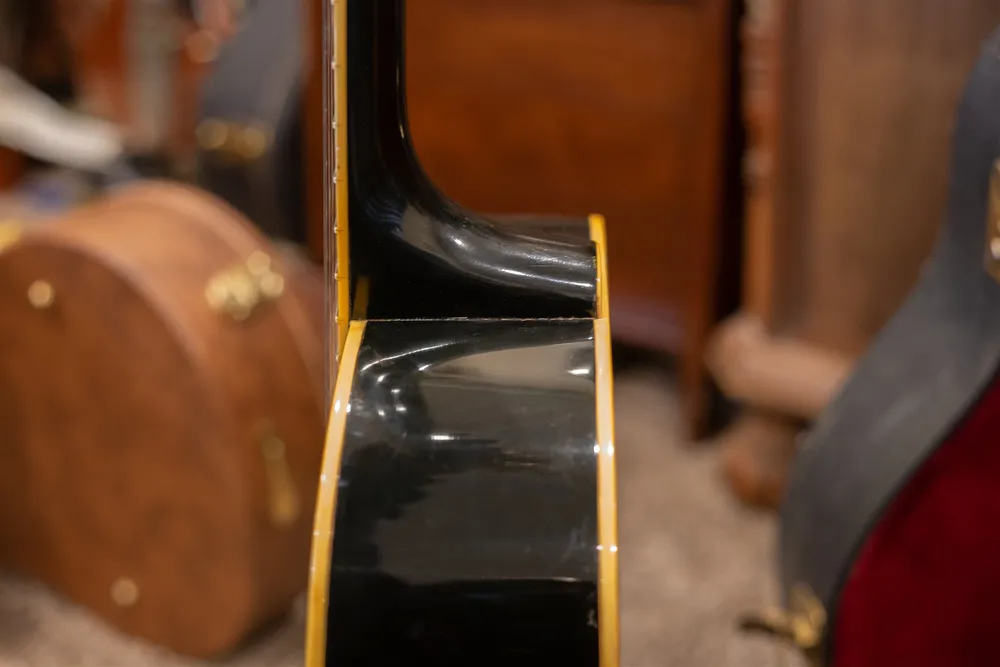
1986 Gibson J-200
Serial 81006505 decodes under Gibson's YDDDYRRR system as 1986, day 100, ranking 505. Gibson's official guide assigns 500 through 999 to Nashville production through 1989. The label still uses the old Kalamazoo address. That disagreement is useful factory-transition evidence, not a reason to discard the serial.
The Montana Restart
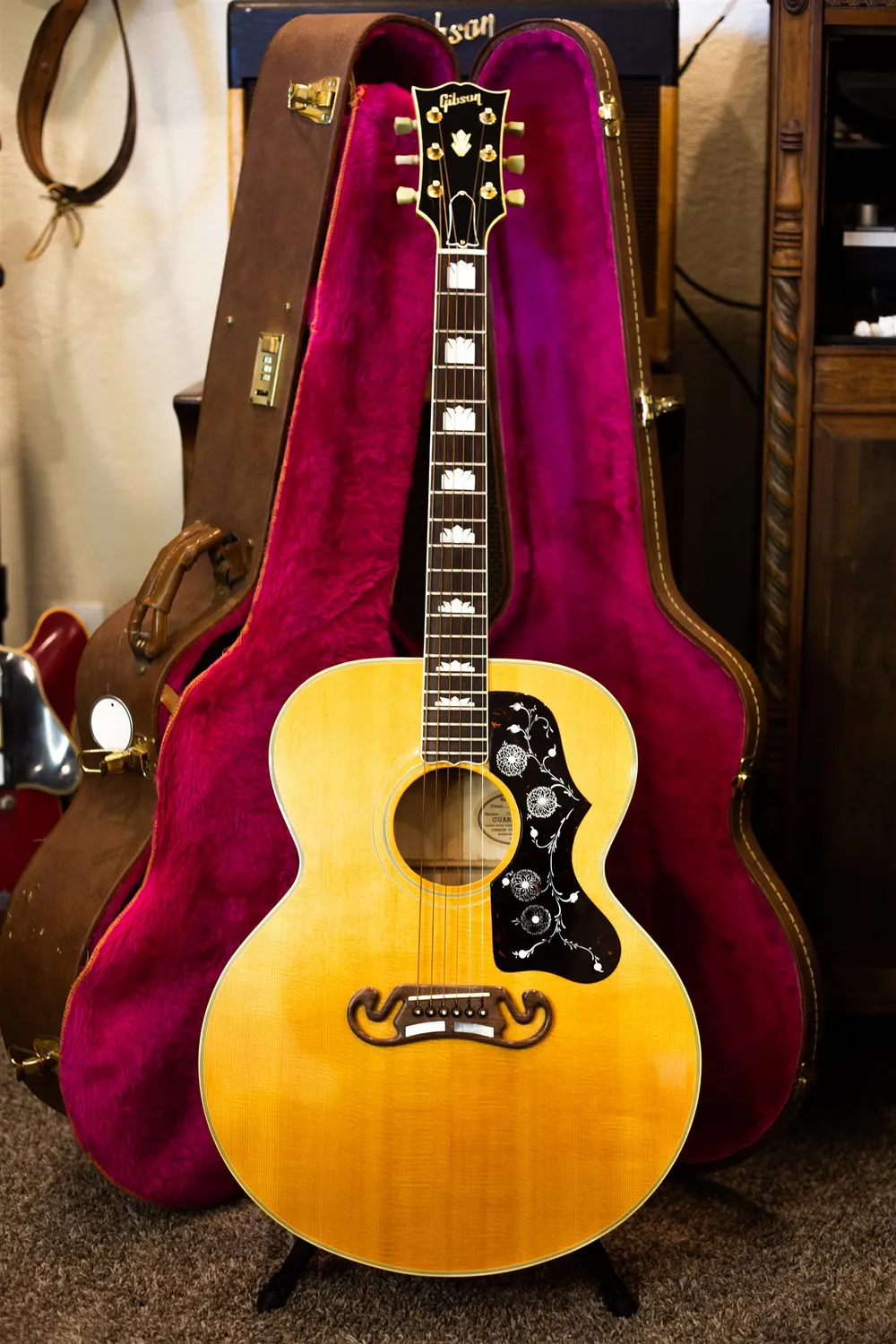
1990 Gibson J-200
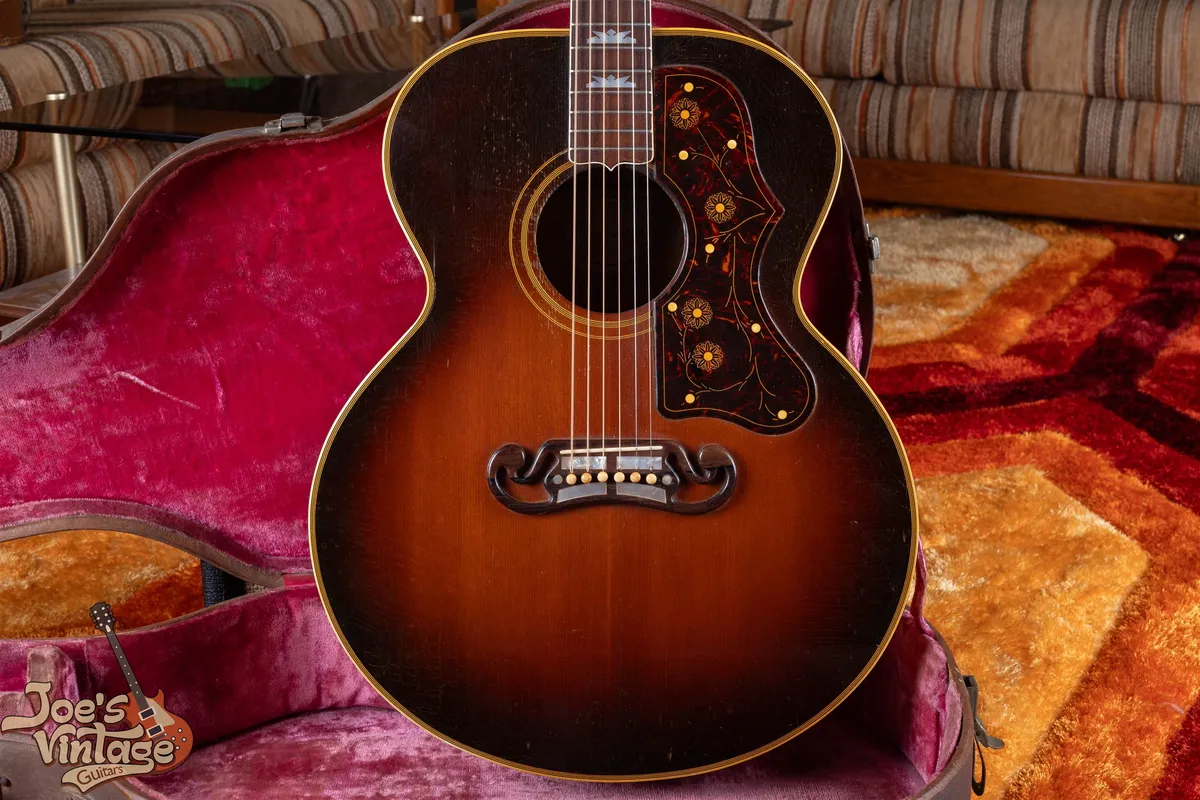
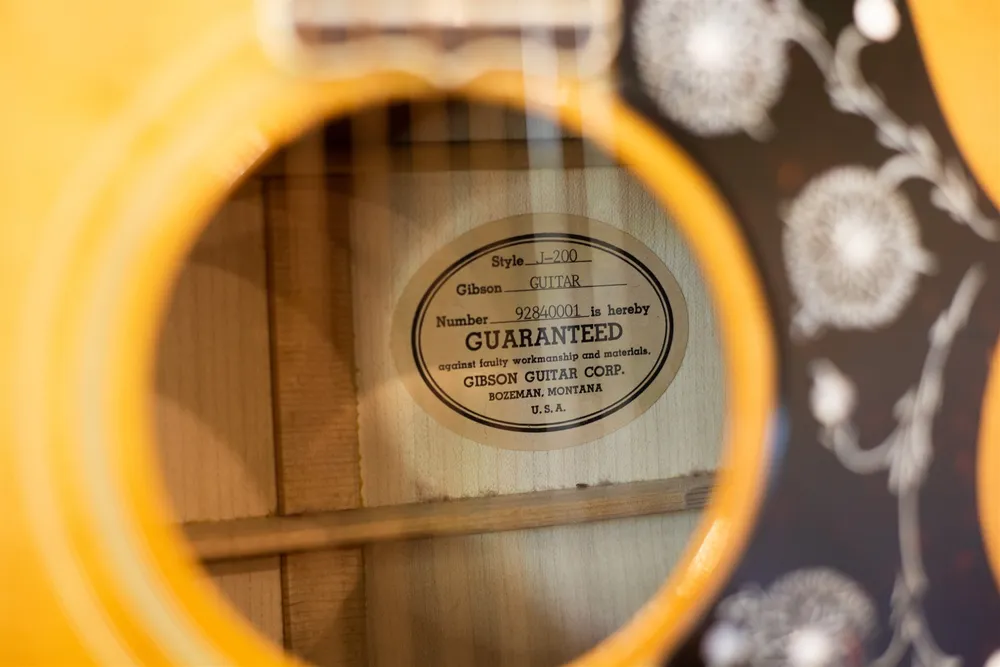
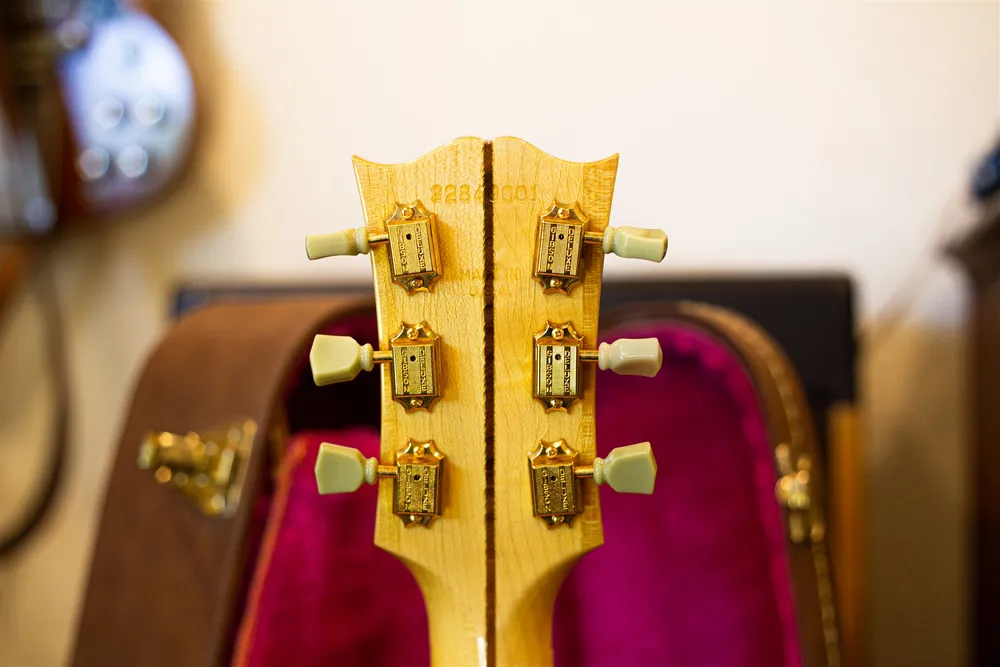
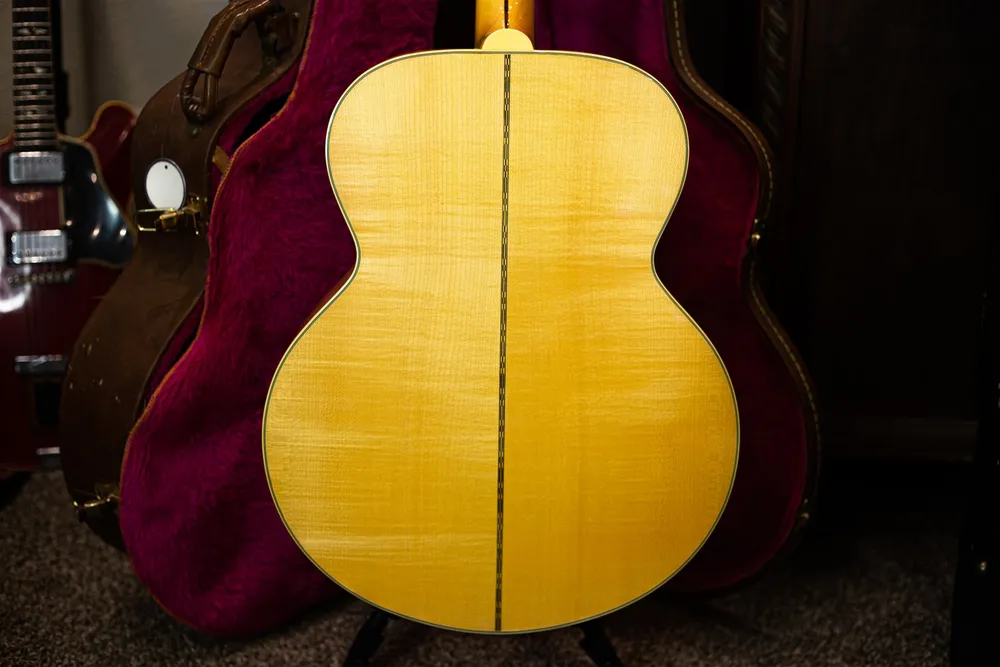
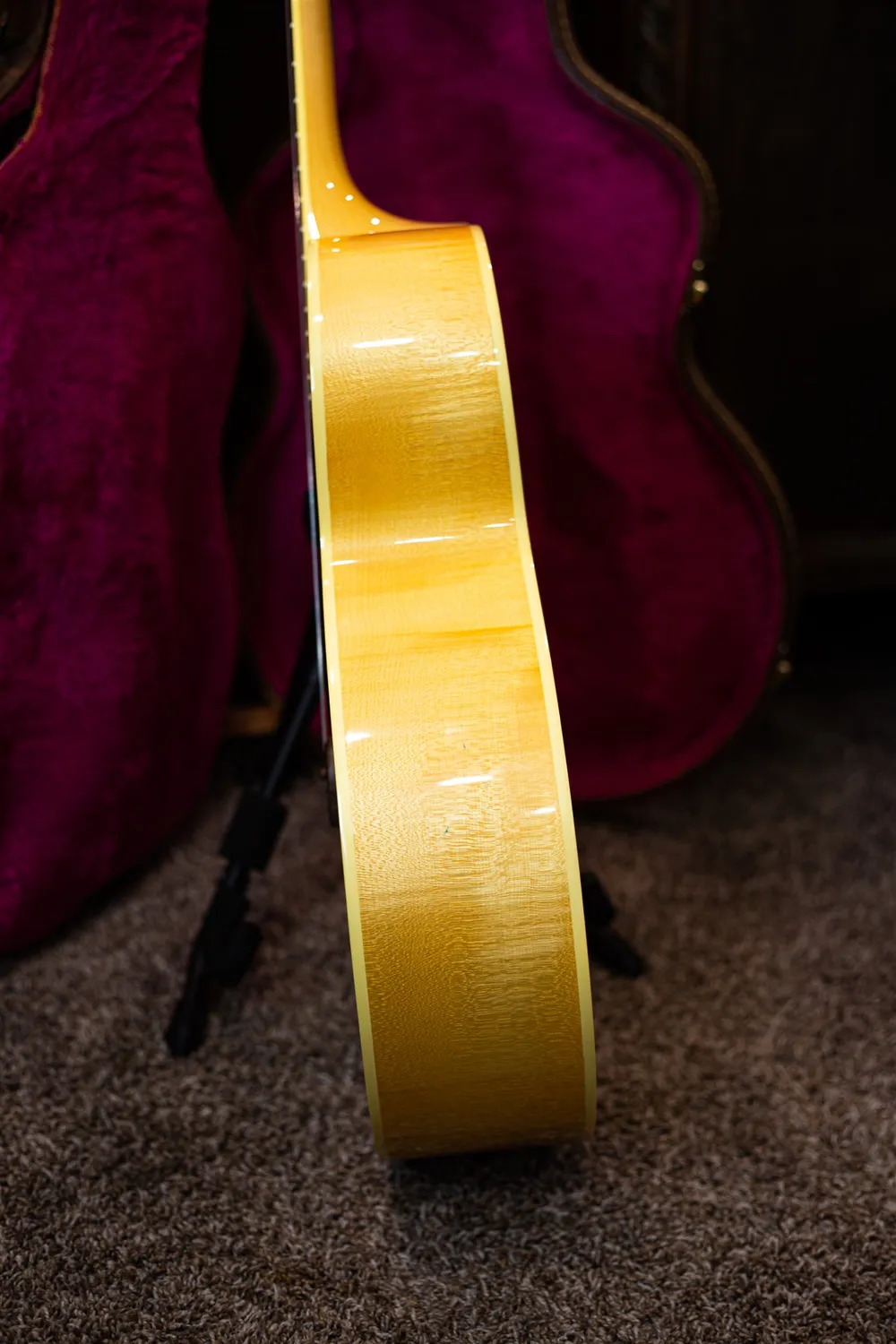
Serial 92840001 reads as 1990, day 284, ranking 001. Gibson's serial guide explains that Bozeman acoustic ranking numbers began at 001 each day after the 1989 move. The oval label names Bozeman, Montana, and the pale laminated maple neck, center stringer, figured body, fixed-saddle moustache bridge, and natural finish create a coherent early-Montana specification.
Numbers Need Physical Support
How to Date a Gibson J-200
Factory Order Numbers
Prewar and 1950s factory order numbers are commonly inked inside, often on the neck block. Their letter codes and sequence can narrow a batch even when the label is missing or when a serial range overlaps. The Gibson Factory Order Number guide and decoder supplies the full code tables. Photograph the full stamp in place. A detached number or a transcription loses information about ink, wood, location, and finish.
Postwar Label Numbers
White and orange oval labels can carry a serial and handwritten or typed style. Compare the label number with any headstock or factory order number. The site's Gibson A-prefix serial number chart covers the postwar sequence used on examples such as Bob Denton's A 20058 guitar. An authentic paper label can survive a refinish, and a false label can be aged, so the paper cannot carry the whole conclusion.
1961 Through the 1970s
Headstock serials from this period can overlap years, repeat ranges, or appear with inconsistent impressions. Add construction, hardware, pot or pickup evidence on acoustic-electric variants, and the presence or absence of a Made in USA stamp and volute. Start with the complete Gibson serial number dating guide, then use the J-200 construction timeline on this page to test its result.
1977 Through 1989
The common eight-digit format is YDDDYRRR: the first and fifth digits form the year, the middle three identify the day, and the last three are the ranking or plant code. Until Kalamazoo closed, rankings 001 through 499 normally point there. Rankings 500 through 999 point to Nashville through 1989.
Bozeman From 1989
Gibson states that Bozeman acoustic ranking numbers begin at 001 each day. Modern special editions and historic reissues can use other serial conventions, including formats designed to resemble a target vintage year. Read the model code and certificate with the serial.
Measure What the Number Cannot Tell You
Record the lower bout, body depth, scale, nut width, string spacing, bridge dimensions, neck depth, and weight. Those measurements can expose a smaller Junior, a changed neck, a shaved bridge, or a modern reissue that photographs like an older guitar.
The Kalamazoo-address label and Nashville ranking code document a factory transition.
The Bozeman label, low daily rank, and Montana-period construction agree.
A Purchase-Level Inspection Sequence
How to Authenticate a Gibson J-200
Begin with full photographs before loosening old parts. Put the guitar into a likely era, then try to disprove that date with independent clues. The strongest identification asks the fewest features to be exceptions. This follows the site's broader vintage guitar inspection process beyond the serial number.
Establish the Exact Model Name
Photograph the label, warranty card, packing list, and any factory certificate. J-200N can identify a natural finish, while Artist, Studio, Custom, Junior, Western Classic, and signature names can identify materially different guitars.
Read the Serial as One Clock
Record the number exactly, including leading zeros, spacing, depth, ink or impression, and every nearby factory mark. Gibson reused and overlapped several 1960s and 1970s ranges, so a plausible number does not authenticate the guitar by itself.
Find the Factory Order Number
On earlier guitars, inspect the neck block and interior surfaces with a mirror and low-angle light. A factory order number can provide a second date range, but faint ink, refinishing, and replaced neck blocks can hide or remove it.
Match the Label to the Period
Check shape, paper color, border, wording, company address, typeface, handwritten fields, aging, glue line, and whether finish or dirt continues naturally around the edge. A convincing label can still be transplanted.
Identify the Body Woods
Prewar standard examples used rosewood; postwar standard examples normally used maple. Figure alone does not prove solid construction. Inspect the edge, end grain, interior surface, center seam, back strip, and any exposed repair area.
Map the Bracing
Use a mirror, light, or inspection camera to record single-X or double-X architecture, tone bars, scalloping, bridge plate, added top supports, loose braces, shaved braces, and later cleats. Internal changes carry more weight than a replaced pickguard.
Audit the Bridge and Bridge Plate
Measure the bridge footprint, height, wood, open or closed ends, pearl bars, saddle type, pin layout, bolt pattern, glue line, and top distortion. Look inside for a matching plate and for plugged holes left by a conversion.
Read the Pickguard in Context
Compare shape, thickness, flower artwork, border treatment, bevel, material, shrinkage, finish relationship, and footprint. Guards are frequently replaced, and an accurate reproduction does not make the rest of the guitar correct.
Inspect the Headstock and Neck
Record logo style, crown position, binding, headstock outline, stinger, neck laminates, volute, nut width, scale, heel shape, truss rod cover, and finish continuity. A replaced neck can carry an original body into the wrong year.
Match Tuners to Their Footprints
Plate shape, screw spacing, post diameter, bushing, button shape, plating wear, unused holes, and finish shadows must agree. Period-correct replacement tuners still need to be disclosed.
Test the Finish Story
Inspect checking, color in protected areas, edge wear, pore fill, sanding, overspray lines, blacklight response, and finish inside serial impressions. Blacklight is useful evidence, but polish, contamination, repairs, and mixed lacquer layers can mislead.
Record Repairs Before Valuing
Check neck angle, saddle height, bridge rotation, top belly, pickguard cracks, center seams, binding, heel gaps, neck resets, refrets, bridge-plate work, cleats, overspray, pickup installation, and endpin enlargement. Quality and disclosure matter as much as the repair label.
Originality, Function, and Market Position
J-200 Repairs, Condition, and Value
A repair is not automatically a reason to reject a guitar. The issue is what was done, why it was needed, how much original material remains, whether the work is stable, and whether the description is accurate. Value starts with sold examples of the same era and variant, then moves for originality, structure, sound, finish, provenance, and timing.
Neck Reset and Refret
A clean neck reset and sympathetic refret can return a valuable guitar to proper geometry. Inspect heel fit, finish disturbance, fingerboard extension, fretboard thickness, nut work, and remaining saddle height. The acoustic guitar neck reset inspection guide explains the geometry checks in detail.
Top Cracks and Loose Braces
Pickguard cracks, center seams, and loose braces are common on old flat-tops. Well-fitted cleats and clean glue work are different from wide filled cracks, flattened arch, or heavily sanded interior surfaces.
Bridge and Plate Replacement
The bridge system sits at the center of J-200 tone and identification. An incorrect footprint, oversized plate, filled Tune-o-matic posts, shaved bridge, or moved pin line can affect structure, sound, and collector value at once.
Refinish and Overspray
A full refinish usually moves a guitar into a different market tier. Overspray may be more limited, but it still needs mapping. Check serial impressions, binding edges, protected color, decal or label relationship, sanding, and blacklight response.
Guard, Tuners, Nut, and Saddle
These replacements are common and can make a guitar far more usable. Original holes, footprints, removed parts, and clear disclosure help preserve the historical record. A reproduction part should not be described as factory original.
Case and Provenance
A correct case, receipt, owner photograph, repair invoice, factory letter, or artist documentation can add context and value. Provenance supports the guitar's physical evidence. It does not overrule contradictory construction.
Prewar Rosewood
Extremely small production, early custom history, rosewood construction, and surviving originality put verified prewar examples in their own category.
1947 to 1951
Maple construction and the lighter single-X top create a distinct early postwar group before the 1952 brace change.
1950s J-200
Open bridge, fixed saddle, flower guard, figured maple, and golden-era trim carry strong demand, with exact bracing and originality deciding the order.
1961 Through the 1960s
Closed bridges, adjustable saddles, added support hardware, and neck changes make condition and internal completeness especially important.
1970s and 1980s
Artist specifications, Norlin construction, late Kalamazoo work, and Nashville transition guitars have different markets. Strong examples deserve model-specific comparisons.
Early Bozeman and Historic Models
Early Montana guitars, rare signatures, Custom Shop work, and faithful reissues can be desirable, but they form modern categories rather than inheriting vintage dates.
Have a J-200 With a Complicated Story?
Send the Evidence Before You Price It.
Include full front and back views, both sides of the headstock, the label, serial, neck block, bridge, pickguard, heel, tuners, interior bracing, bridge plate, case, and every repair you know about.
Factory Shipping Records · 1938 to 1979
6,913Documented J-200 and SJ-200 Shipments
Shipping totals are not exact production counts. Guitars could be returned, reshipped, custom ordered, or recorded inconsistently. The records still show the scale of the model: 96 shipments from 1938 through 1941, 2,044 from 1948 through 1959, 2,376 in the 1960s, and 2,397 in the 1970s. Natural and sunburst totals are combined here.
See Gibson Production and Shipping TotalsGibson J-200Frequently Asked Questions
What is the difference between a Gibson SJ-200 and J-200?
When did Gibson change the SJ-200 from rosewood to maple?
How do you date a vintage Gibson J-200?
When did the J-200 get an adjustable Tune-o-matic bridge?
Is a J-200N a different model?
Is a J-200 Artist the same as a standard J-200?
How can you tell a real Gibson J-200 from a copy?
Which vintage Gibson J-200 years are most collectible?
The Last Word
Authenticate the Entire J-200.
A serial suggests a date. A label suggests a model and factory. The bridge and tuners suggest an era. The woods, body, neck, bracing, bridge plate, finish, tool marks, repairs, and provenance decide whether all of those suggestions can belong to the same guitar.