

Tweed Vibrolux To Silverface Vibrolux Reverb
Identify Your Vintage Fender Vibrolux Or Vibrolux Reverb
The family changes from a single speaker to a pair of tens. Check for reverb controls before deciding which model you have.
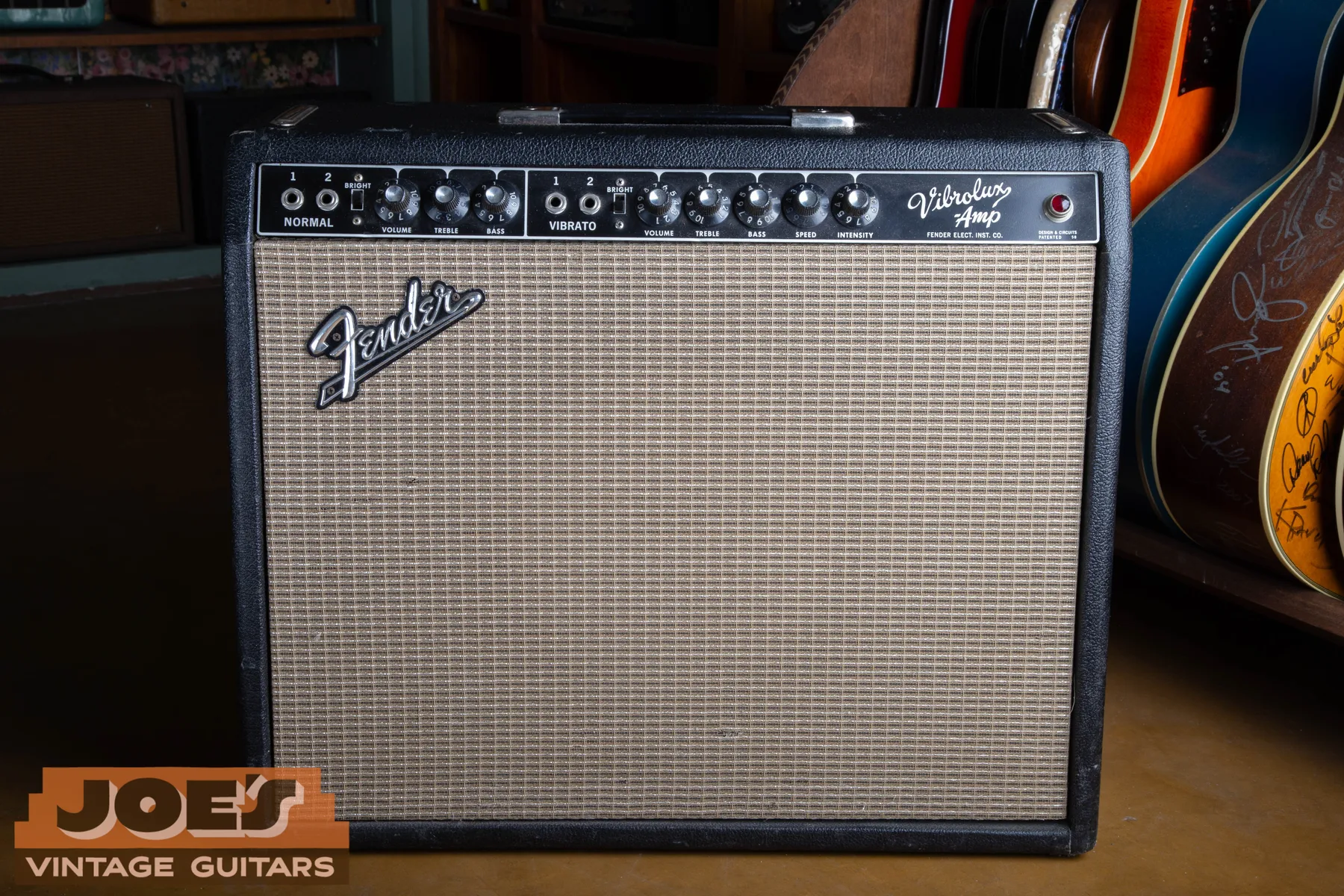
A vintage Fender Vibrolux without reverb is a complete model in its own right. The tweed version has one ten-inch speaker; brownface and early blackface versions use a single twelve. The Vibrolux Reverb moves to two tens. Confirm those distinctions before using the Vibrolux value guide. Joe’s 1959, 1961 and 1964 archive examples show three non-reverb versions, including a clear NC date stamp on the 1964 amp.
Authenticity And Originality Are Assessed From The Information Provided. A Hands-On Inspection Can Change The Conclusion.
Look Beyond The Silver Or Black Panel
Original Or Reissue?
’68 Custom Vibrolux Reverb
Fender’s ’68 Custom manual names the channels Custom and Vintage. It specifies two Celestion TEN 30 speakers and reverb and tremolo on both channels. Those labels differ from the original Normal/Vibrato arrangement. The manual’s rear diagram also shows a detachable IEC power connection. These are practical clues before any chassis inspection.
Custom Vibrolux Reverb
The 1995 Custom Vibrolux service manual documents printed circuit-board construction and cream control knobs. That is a later product with a familiar name. The original AA964 drawing uses an eyelet-board layout. A technician can compare the construction when the rear identification or cabinet has been changed.
Some modern components deliberately reproduce older appearances. Fender’s ’68 Custom documentation even names Schumacher transformers, so a familiar transformer maker alone cannot establish a 1960s date. Read the full markings and identify the model as a whole. A speaker brand is useful evidence only when its actual model and production period are considered.
A handwired replica can also follow an early Vibrolux circuit. Handwiring is a construction method, not an age test. Conversely, replacement speakers in an original amp don’t automatically make it a modern reissue. Separate the chassis identity from the age and condition of each replaceable component.
The period all-transistor Vibrolux Reverb is another possible source of confusion. Its factory manual shows an angled control arrangement and identifies solid-state construction. It shouldn’t be confused with a tube amp that merely has diode rectification. The tube specifications below apply only to the named tube circuits.
Four Eras, Several Distinct Models
How The Vibrolux Changed
The Small 5F11 Vibrolux
The Vibrolux begins within this era in 1956 and continues in tweed into the next broad era. Its 5F11 design uses two 6V6 output tubes, a single ten-inch speaker and tremolo. A top-mounted panel carries Volume, Tone, Speed and Depth.
Brown 6G11 And 6G11-A
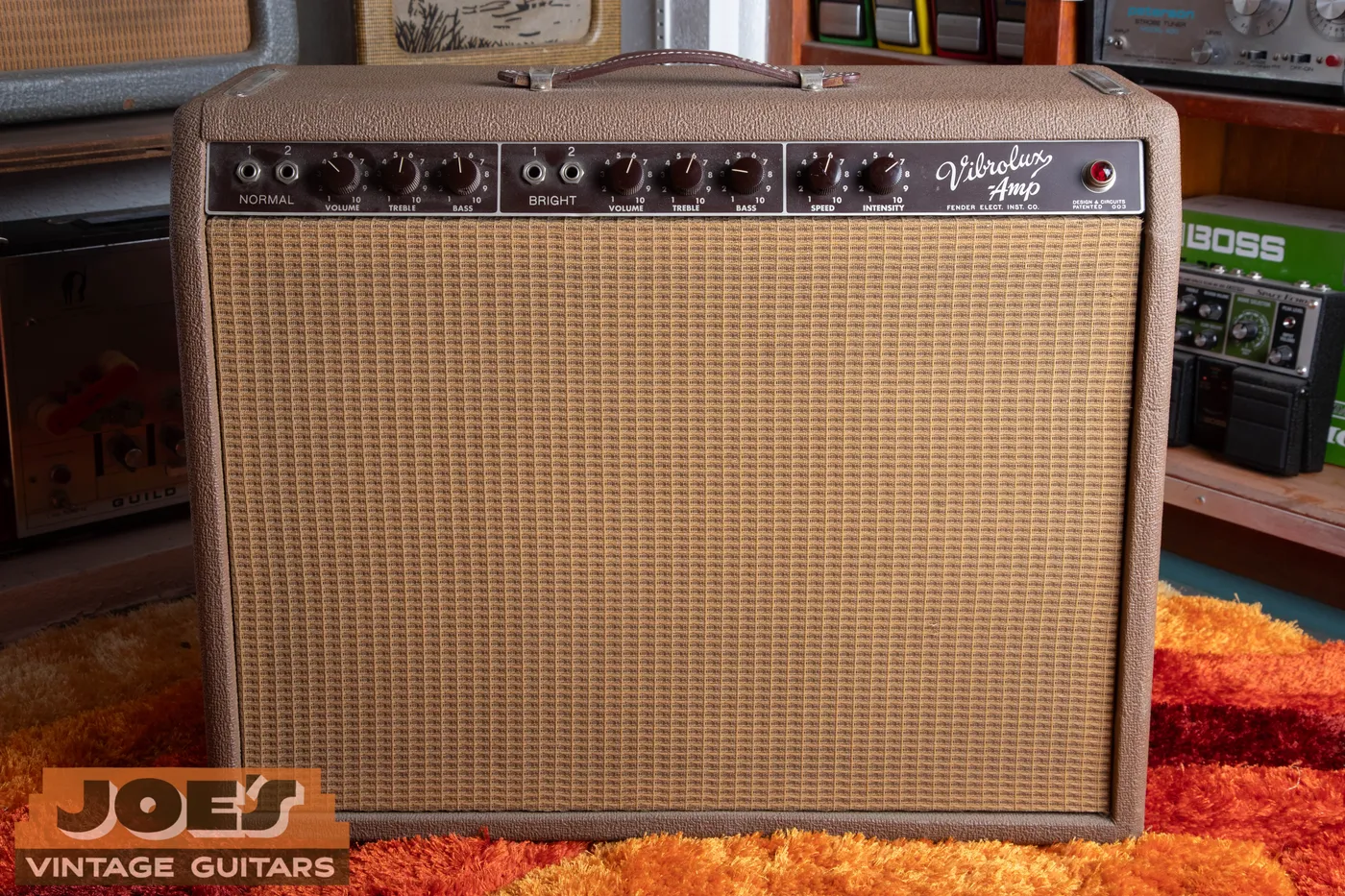
The brown Vibrolux grows to a single twelve-inch speaker and 6L6 output tubes. Normal and Bright channels have separate tone controls. The front panel and brown cosmetics differ substantially from the tweed model, although neither has built-in reverb.
Non-Reverb AA763, Then Reverb AA964
The early blackface Vibrolux still has one twelve-inch speaker. The Vibrolux Reverb adds a tank, reverb control and two ten-inch speakers. Joe’s 1964 AA763 example belongs to the non-reverb model.
Vibrolux Reverb With Later Details
Silver-panel versions retain the compact two-ten format. Early aluminum grille trim gives way to a plain surround, and later examples add a pull-boost function. The late black-panel return needs component dates to distinguish it from the original blackface period.
A Single Twelve And Two Tens Are Different Versions
Vibrolux Circuits And Specifications
| Version | Output / Speaker | Tubes And Rectifier | Controls / Cosmetics |
|---|---|---|---|
| Tweed 5F11 | About 10 W; 1x10 | 2x6V6GT, 2x12AX7 and 5Y3GT | Volume, Tone, Speed, Depth; three inputs; tweed, dark striped grille, top chrome panel, chicken-head knobs and leather handle |
| Brown 6G11-A | About 35 W; 1x12 Oxford | 2x6L6GC, 2x7025, 2x12AX7 and GZ34 | Normal/Bright Volume, Treble, Bass; Speed and Intensity; brown panel/covering, wheat grille, barrel knobs and brown handle |
| Blackface Vibrolux AA763 | About 35 W; 1x12 | 2x6L6GC, 2x7025, 1x12AX7, 1x12AT7 and GZ34 | Normal/Vibrato with Bright switches; Speed and Intensity; black panel and covering, silver grille, black skirted knobs and strap |
| Blackface Vibrolux Reverb AA964 | 35 W; 2x10 Jensen C10Q or Oxford 10L5 | 2x6L6GC, 3x7025, 1x12AX7, 2x12AT7 and GZ34 | Normal/Vibrato, Bright switches, Reverb, Speed, Intensity; no Middle control; blackface cosmetics |
| Silverface Vibrolux Reverb AA270 | 35 to 40 W family; 2x10 Oxford or CTS | 2x6L6GC, 3x7025, 1x12AX7, 2x12AT7 and 5U4GB | Normal/Vibrato, Bright switches and reverb/tremolo controls; silver panel, silver/blue grille, early aluminum trim; later pull boost |
These are circuit-specific sets, not instructions to replace tubes. The full 6G11-A schematic contains two 7025 and two 12AX7 tubes. Later service substitutions need a technician’s assessment.
Compare the AA763 non-reverb schematic with the AA964 reverb layout. The latter has six small tubes plus two output tubes and a rectifier. The earlier non-reverb blackface model has four small tubes. That difference survives beyond the cabinet’s similar black appearance.
The AA270 drawing retains tube rectification. Don’t assign the larger Super Reverb’s late high-power specifications to a Vibrolux simply because both amps have silver panels. The Super Reverb identification guide covers that separate development.
The Archive Example Has One Twelve
Recognizing The 1964 Non-Reverb Vibrolux
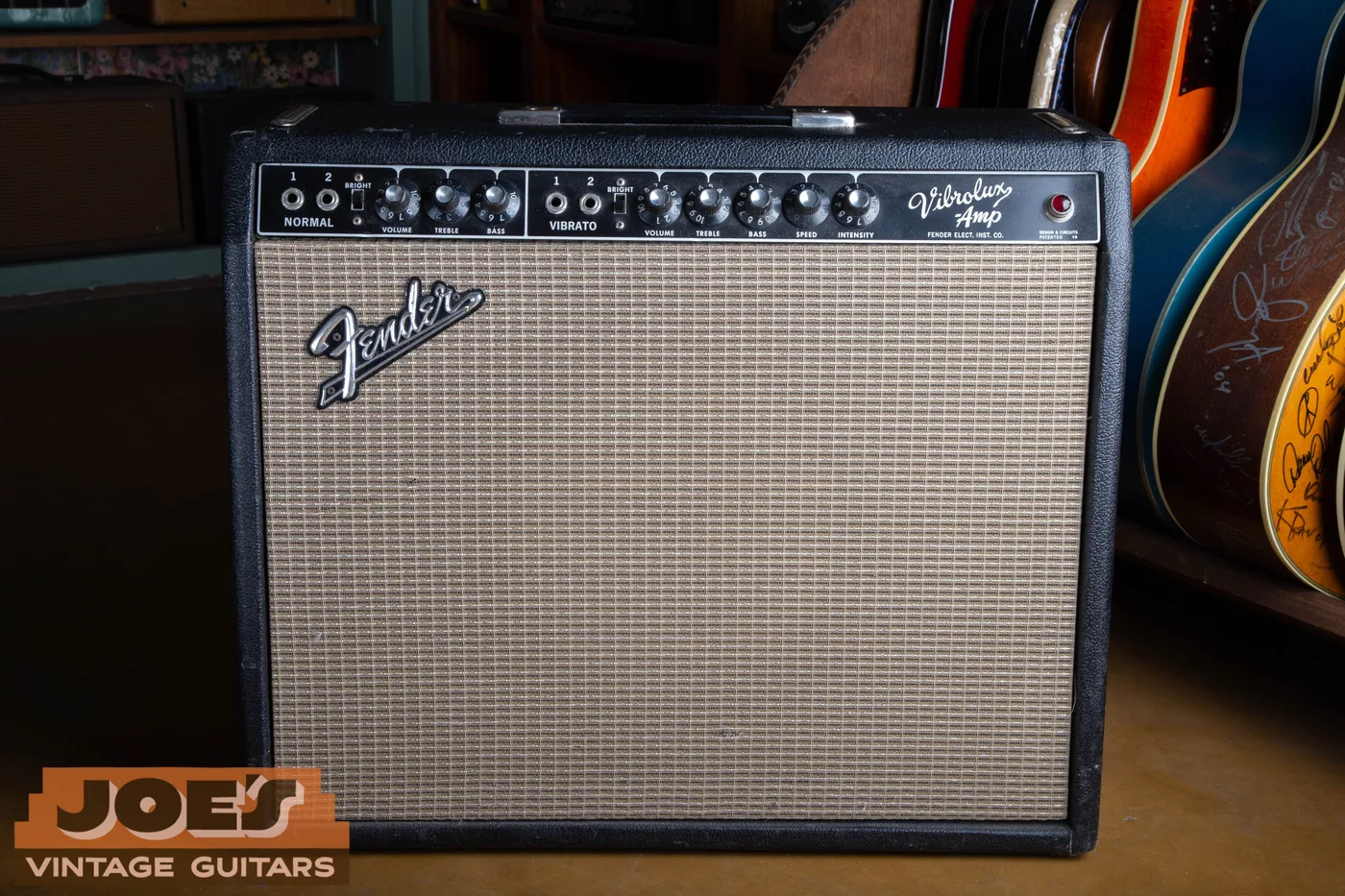
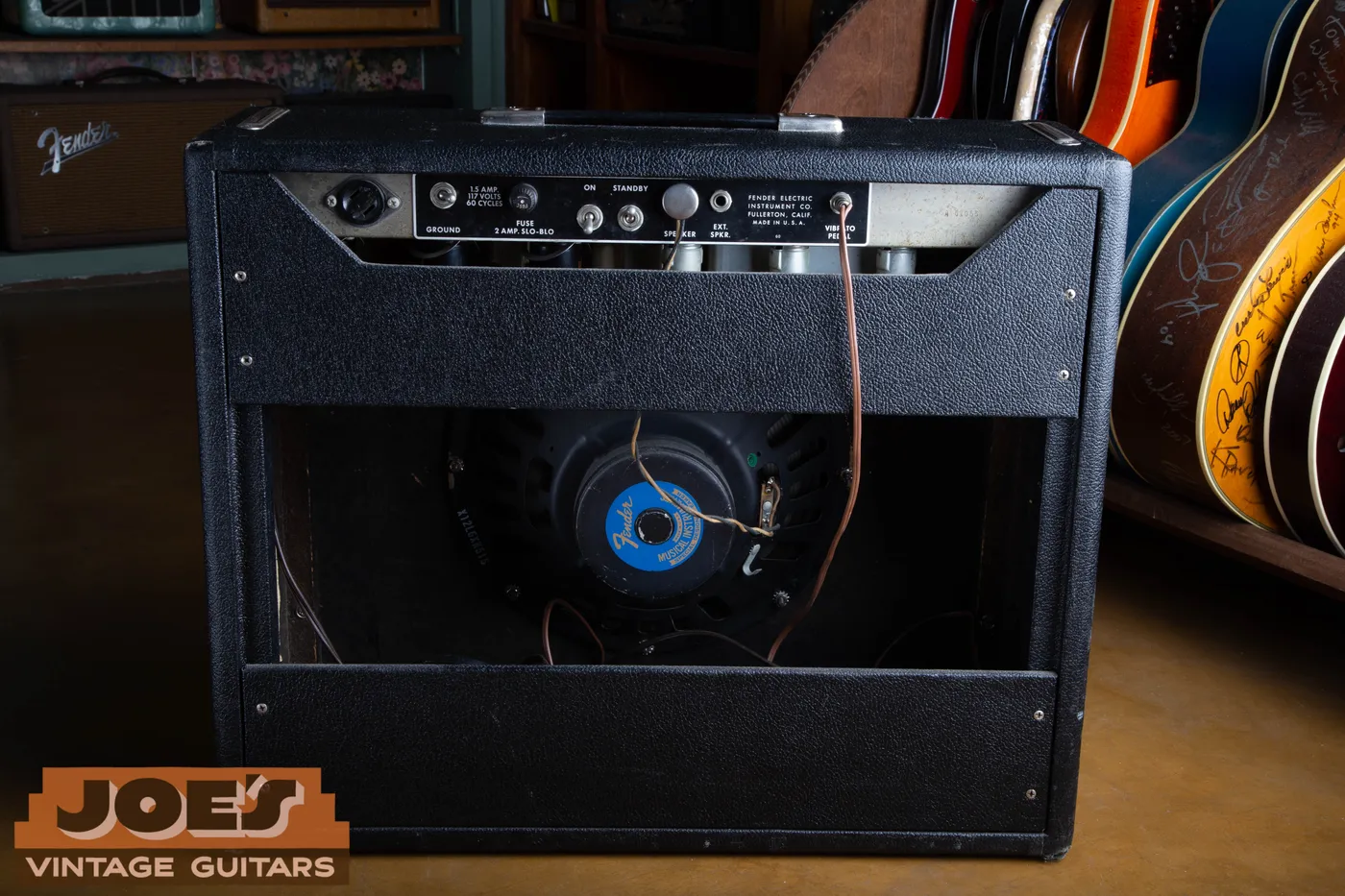
Joe’s 1964 Vibrolux is useful because its black panel can invite an incomplete description. The faceplate says Vibrolux-Amp and the controls lack a Reverb knob. Its rear view shows a single twelve-inch speaker. The paper chart prints AA763. These observations fit the non-reverb model rather than a Vibrolux Reverb missing a speaker and tank.
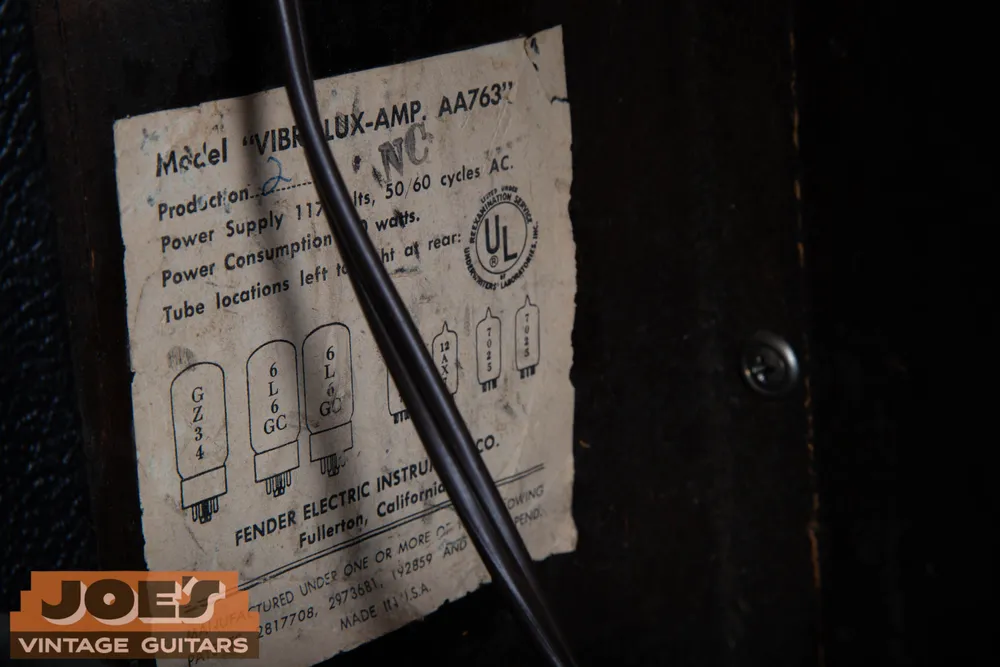
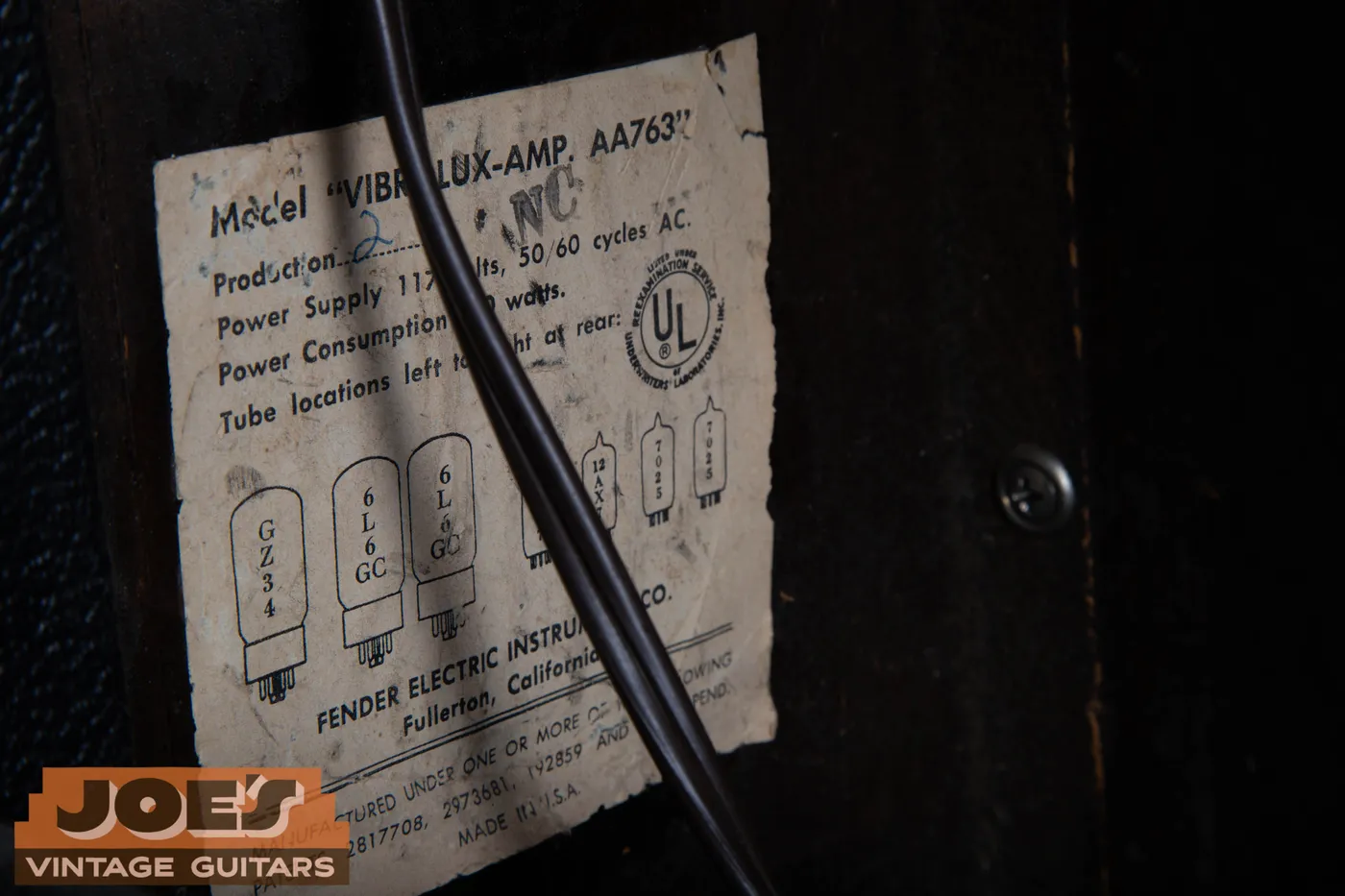
The NC stamp provides a second, independent kind of evidence: it identifies a month and year under the Fender tube-chart dating system. It doesn’t certify the speaker cone, capacitors or every other component. Keep the date finding separate from an originality claim. An amplifier can be correctly identified as a 1964 model while containing later service parts.
A cabinet changed from one twelve to two tens needs closer inspection. Extra mounting holes or a new baffle can explain the current speaker arrangement. The chassis controls and actual wiring remain essential. A conversion should be described by its starting model and modifications, without assigning a factory reverb identity from the speaker count.
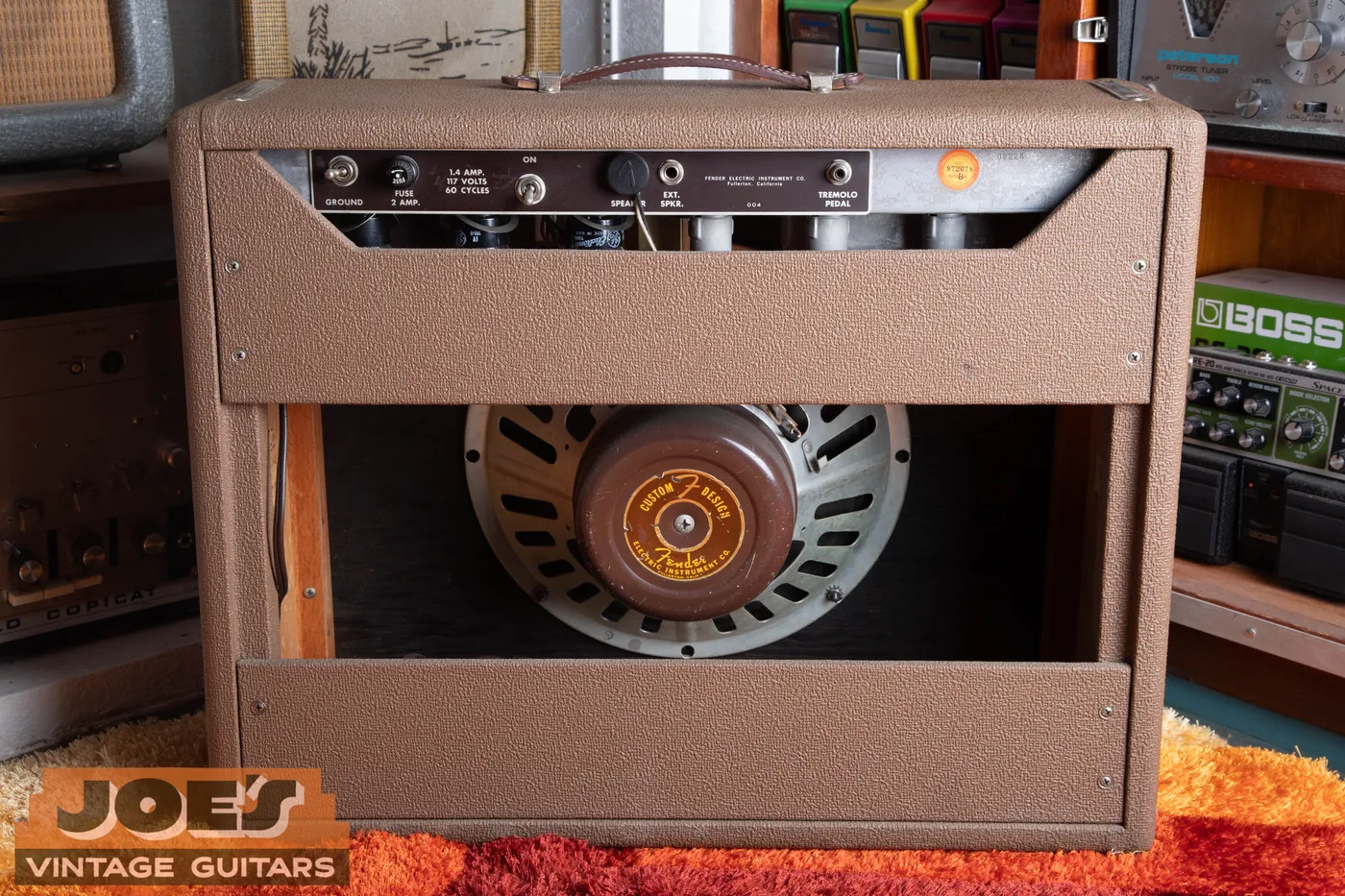
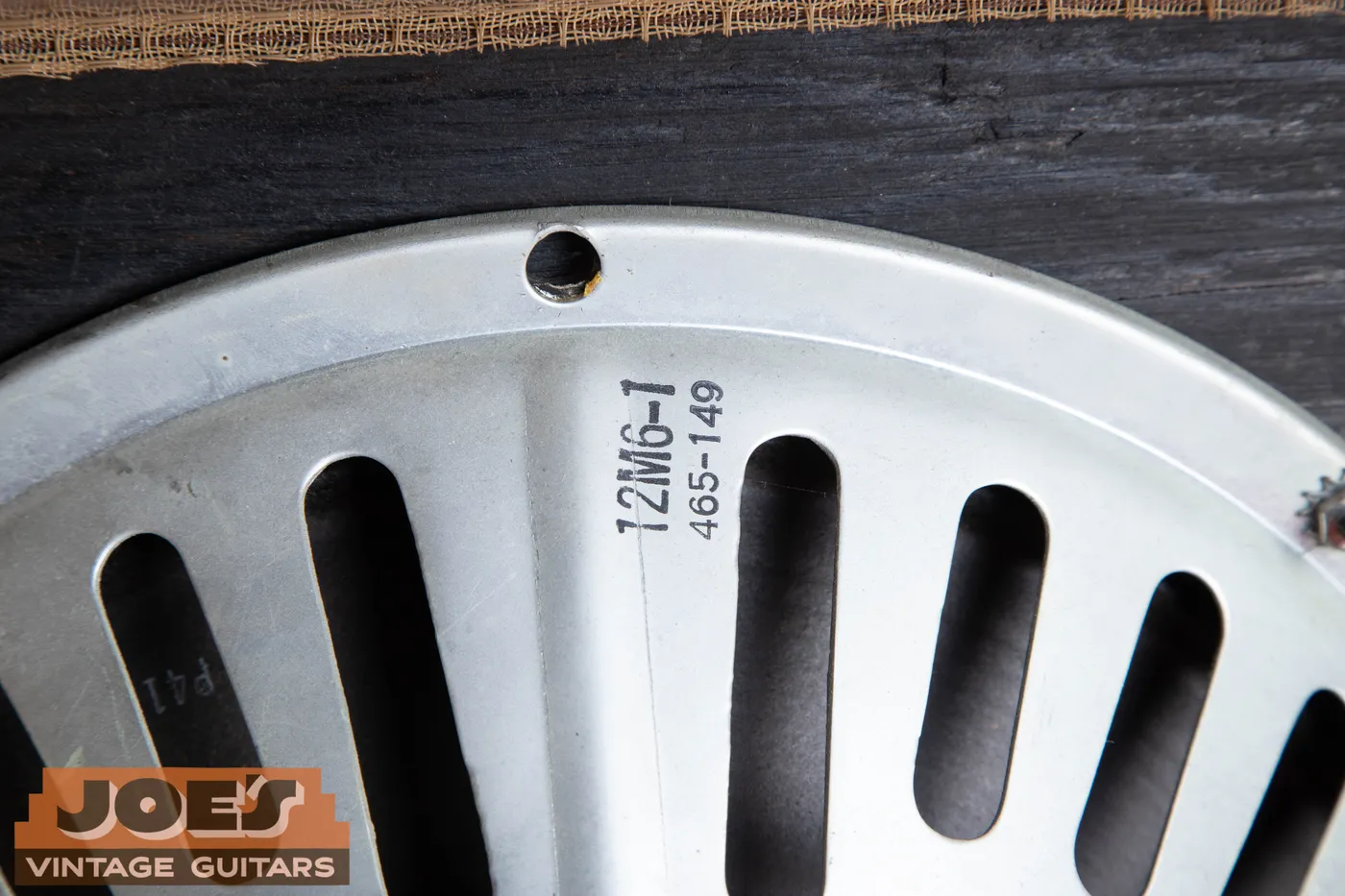
The brown 1961 example supplies another comparison. Its panel calls the second channel Bright, and its speaker photograph shows both an Oxford model marking and a source-date stamp. Those details help locate it in the earlier family. The dark brown cabinet alone would not distinguish all possible brown Fender models.
Read The Characters Before Decoding
Date Stamps On Joe’s Vibrolux Amps
The tube-chart date decoder reads a two-letter ink stamp, with A representing 1951 in the year position. Joe’s reference describes its use until about 1970. Fender serial numbers aren’t dependable year codes. Photograph a stamp sharply enough that each letter can be checked, and don’t replace uncertain characters with the year you expect.
For missing or damaged charts, use the speaker and transformer dating section. Record all transformers and both speakers on a reverb model. A newer replacement part establishes its own age, while the remaining original components may support the amplifier’s production window. The pot-code page covers readable control markings.
March 1964 On The AA763 Chart
The stamp is legible on Joe’s non-reverb Vibrolux: N corresponds to 1964 and C to March. AA763 is printed separately as the circuit designation. The handwritten production notation isn’t used to calculate the date.
An Oxford Speaker Stamp
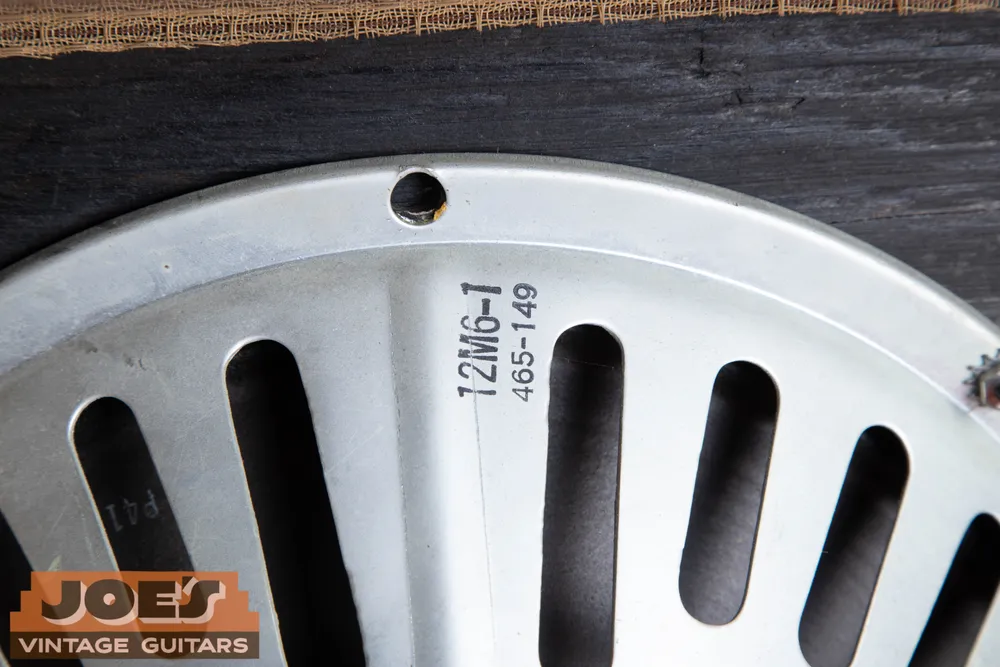
The 1961 brown Vibrolux speaker photograph shows 465-149 and the separate model marking 12M6-1. Preserve both in the record. Interpret the source-date line with Joe’s component-code guide and compare it with the other original parts.
Match Each Part To The Right Model
Eleven Vibrolux Originality Checks
Power, Output And Choke
The tweed 6V6 circuit and later 6L6 circuits require different transformer specifications. Have each installed part identified from its complete marking and mounting. A transformer that looks old may still be a later replacement or belong to a different amp.
Speaker Or Speaker Pair
First establish whether the version calls for one ten, one twelve or two tens. Then inspect the actual frame, label and cone history. On a Vibrolux Reverb, document both positions even if one speaker appears to be a matching replacement.
Electrical Components
Ask for a record of filter-capacitor service and other replaced components. The tremolo and reverb circuits deserve their own inspection. A new part may be ordinary maintenance; extensive rewiring or an added control requires a fuller explanation.
Tube Chart And Stamp
Compare the printed model with the chassis and photograph the ink stamp at full resolution. The NC card above illustrates a complete reading. A label copied from another amp could carry plausible lettering without belonging to the cabinet being inspected.
Woodwork And Covering
Look for altered speaker openings, replaced baffles and fresh covering around the edges. A re-covered brown amp and a newly built brown cabinet are different conditions. Preserve any photographs that show the work before new material concealed it.
Cloth And Fender Logo
Check the grille pattern, attachment and badge position. Drip-edge trim can be removed or added. A familiar silver-and-blue weave helps identify a style, but its material and installation still need to be assessed for originality.
Faceplate And Knob Set
Read the channel names and all control labels. Reverb lettering separates important models, while Custom/Vintage labels identify a modern family. Replaced knobs are common enough that their appearance must be checked alongside the panel and chassis.
Handle And Mounts
Photograph the strap, end brackets and cabinet surface around them. A replacement fitted through existing holes leaves a different record from a handle requiring new holes or reinforced wood. Retain the removed part if it accompanies the amplifier.
Tank And Footswitch
Inventory these on a Vibrolux Reverb. The non-reverb Vibrolux still has tremolo switching to consider, but no factory reverb tank. Show connectors and labels so a later compatible accessory can be distinguished from the original equipment.
Back Panels
Record missing panels, new screws and replacement wood. The rear opening should agree with the cabinet version. Take a broad view before close-ups so a technician can see how the chassis, speaker and panel edges relate.
Cover
A surviving cover should fit the specific cabinet. Photograph its front, seams and openings, plus any maker’s markings. An old cover stored with an amp is useful context, but its age and fit need their own evaluation.
Describe Repairs Without Erasing The Model
Service And Value Are Separate Questions
A Vibrolux can need new filter capacitors while retaining its cabinet, transformers and speakers. A changed power transformer or a replacement cabinet affects a different part of the originality record. Avoid using “serviced” as a description for every possible alteration. An itemized invoice lets an appraiser understand the actual work.
Tremolo and reverb faults require diagnosis rather than a guess about their cause. Have a qualified technician inspect an amplifier with uncertain electrical condition, and leave chassis removal to that person. Dangerous stored voltage can remain after the power cord is unplugged. Exterior photographs and visible labels are enough to begin an identification request.
Once the version is established, the Vibrolux value page provides separate groups for the single-speaker and reverb models. Keep any removed speakers or transformers identified by location and condition. A retained failed part is historical evidence, even though it no longer performs its original job.
Three Non-Reverb Versions
Vibrolux Photo Timeline
Tweed 5F11 Family
1959 Fender Vibrolux
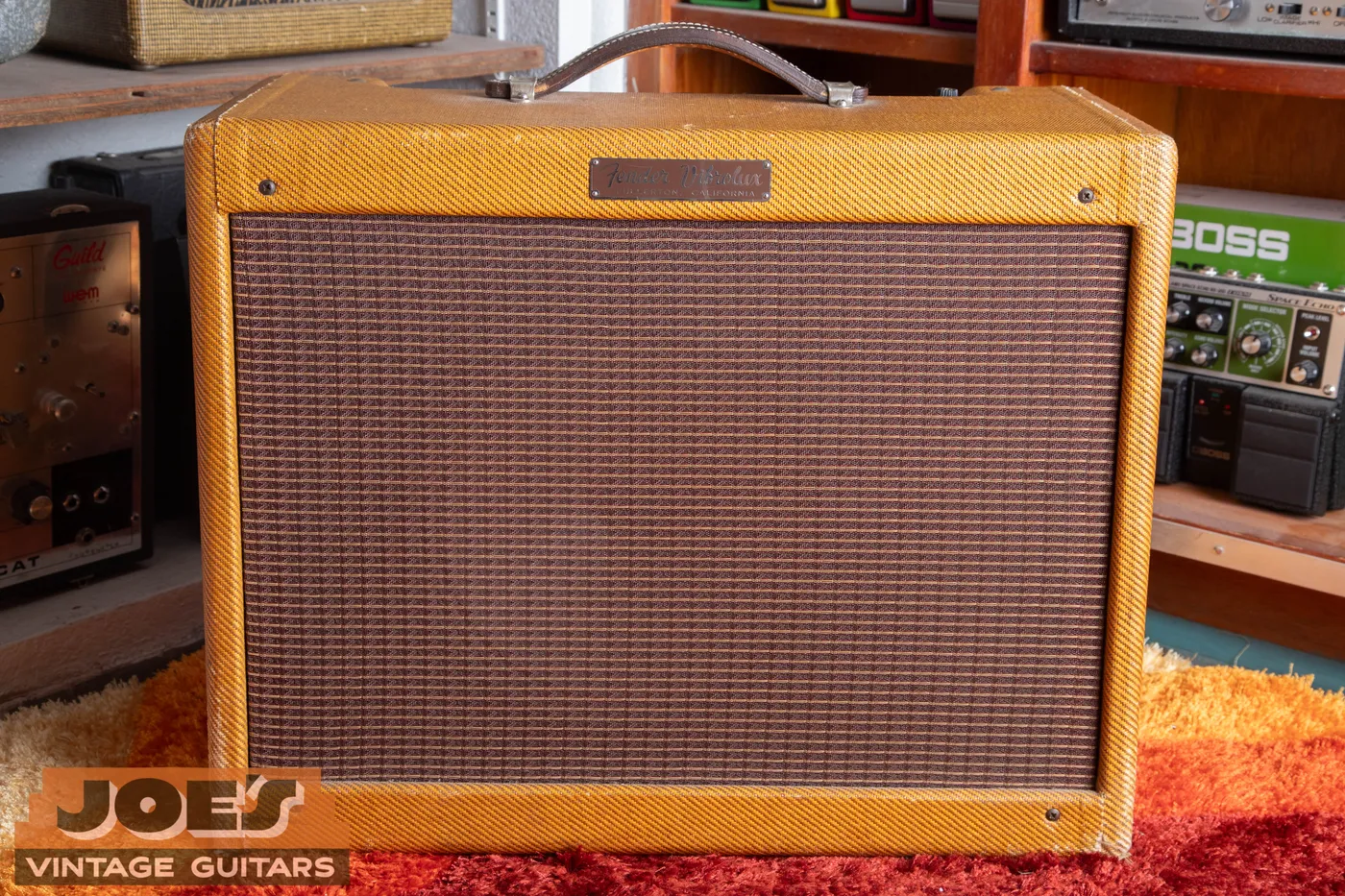
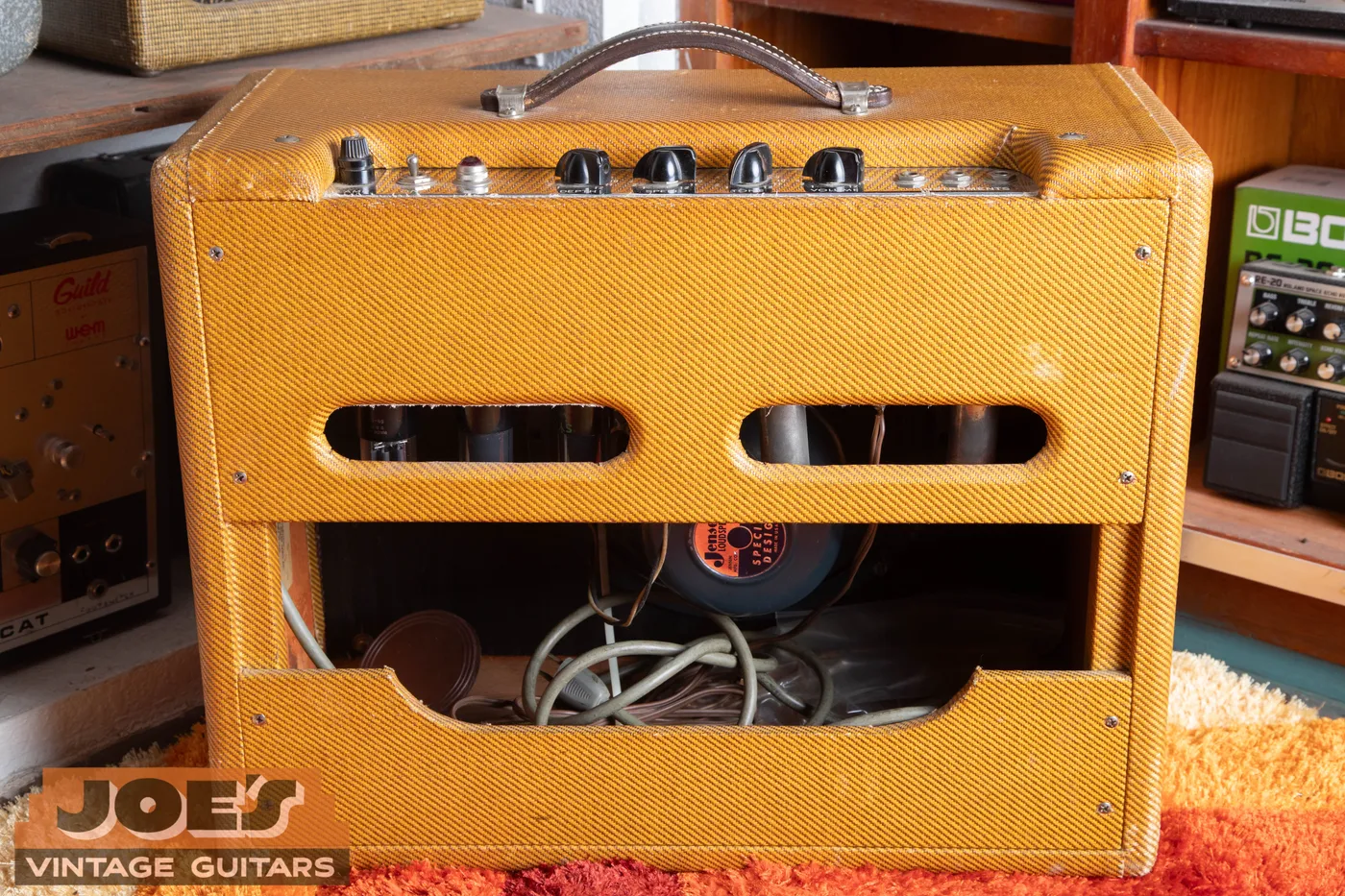
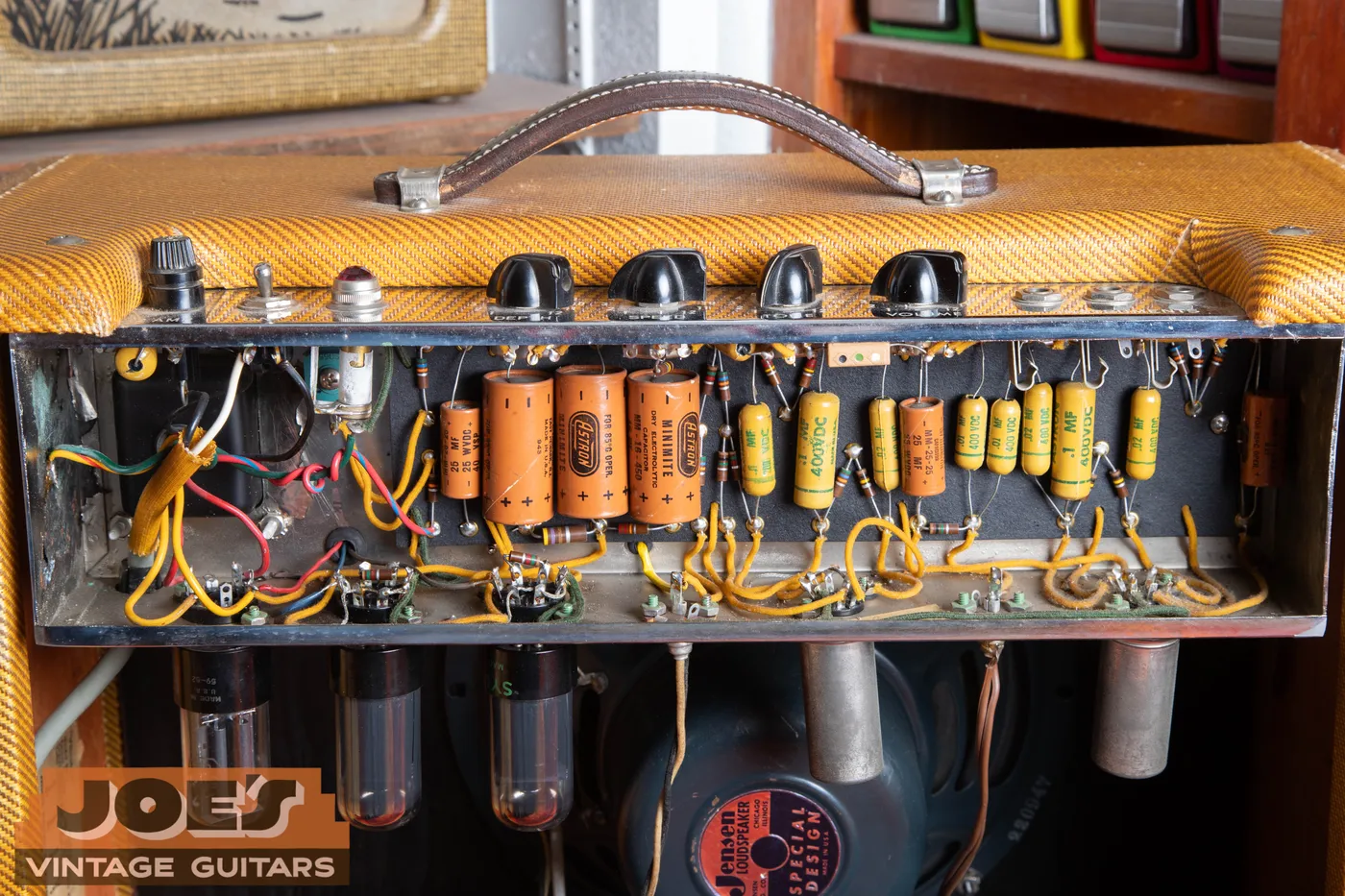
The top panel and compact cabinet precede the later front-panel designs. The rear and board views show the construction of this archived example. They’re included as inspection material, without claiming that every installed component is untouched.
Brown Single-Twelve Model
1961 Fender Vibrolux
The brown covering, front controls and single speaker distinguish this version from the tweed example. Its Oxford markings appear in the dating cards. This amp has no built-in reverb.
Blackface Without Reverb
1964 Fender Vibrolux
The AA763 chart and NC stamp support a specific non-reverb identification. Compare the one-twelve rear view with the two-ten specification of a Vibrolux Reverb before using either model’s value group.
Original Circuit Documents
Vibrolux Sources And Drawings
- Fender 5F11 Schematic
Tweed circuit, tremolo, controls and complete tube set.
- Fender 6G11-A Schematic
Brown circuit and the four small tubes.
- Brown Vibrolux Field Record
Rating, speaker and exterior details.
- Blackface Vibrolux Reverb Field Record
AA964 era, rating and original speaker choices.
- Silverface Vibrolux Reverb Field Record
Grille changes, rating range, pull boost and late panel change.
- Fender Solid-State Vibrolux Manual
A separate transistor model with angled control styling.
Send The Evidence
Let Joe Check Your Vibrolux Photos
Include the model lettering, speaker arrangement, tube chart and known repair history. Mention whether any removed parts or original accessories remain.
Questions AboutOriginal Fender Amplifier Identification
Did Fender Make A Blackface Vibrolux Without Reverb?
Is A Vibrolux Reverb The Same As A Vibro Champ?
Does Silverface Mean The Amp Is A Modern ’68 Custom?
Can An NC Stamp Prove Every Component Is From 1964?
The Last Word
Identify Your Amp With Joe
Use the full model name, controls and speaker arrangement to establish the version, then test the proposed date against the surviving evidence. The Vibrolux value chart is the next step once that identity is clear. For the smaller similarly named amp, see the Champ and Vibro Champ guide. Joe’s Fender eras article provides the wider visual comparison.
Authenticity And Originality Are Assessed From The Information Provided. A Hands-On Inspection Can Change The Conclusion.