

Tweed, Brownface And Reverb Versions
Vintage Fender Vibrolux And Vibrolux Reverb Values
Separate estimates for the single-speaker Vibrolux and the later two-ten Vibrolux Reverb.
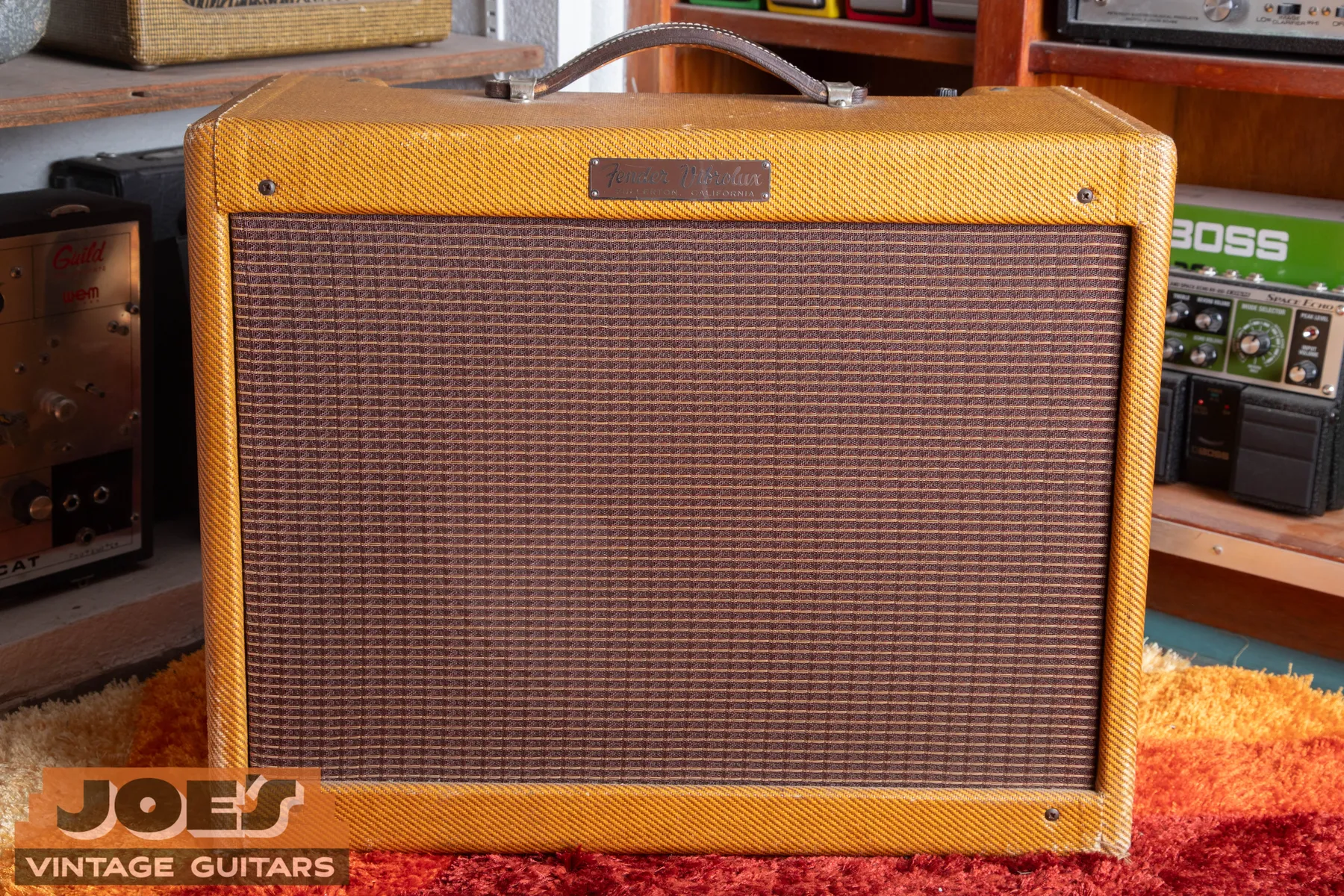
An original blackface Fender Vibrolux Reverb is estimated at $3,000 to $4,300 in excellent condition. The earlier tweed Vibrolux is a different amplifier, with an estimate of $5,100 to $6,400. Start with the Vibrolux identification guide if the exact version is uncertain. One ten-inch speaker, one twelve-inch speaker and two ten-inch speakers appear in different parts of this family; each configuration needs the correct chart entry.
This Is An Estimate Of Market Value, Not An Offer To Buy And Not A Guarantee. Market Values Fluctuate; Have Your Specific Item Appraised.
Excellent, Original Condition
Vibrolux Values By Version
| Model | Years | Configuration | Estimated Value |
|---|---|---|---|
| Vibrolux | 1956 to 1961 | Tweed, 1x10 | $5,100 to $6,400 |
| Vibrolux | 1961 to 1962 | Brown covering, 1x12 | $3,400 to $4,250 |
| Vibrolux | 1963 to 1964 | Black covering, 1x12 | $3,000 to $3,850 |
| Vibrolux Reverb | 1964 to 1967 | Blackface | $3,000 to $4,300 |
| Vibrolux Reverb | 1968 | Silverface | $1,950 to $2,600 |
| Vibrolux Reverb | 1969 to 1970 | Silverface | $1,550 to $2,250 |
| Vibrolux Reverb | 1971 to 1980 | Silverface | $1,300 to $1,750 |
U.S. dollars. Original cover where applicable. Condition, repairs and replacement parts affect an individual appraisal. Overlapping dates identify distinct entries. Modern reissues are excluded.
These ranges distinguish the tweed Vibrolux, brown one-twelve model, black non-reverb model and Vibrolux Reverb. The year groups describe the listed versions, including overlaps around model changes. If the chassis and cabinet point to different groups, have the identity reviewed before applying a price. A cabinet color alone doesn’t settle the matter.
An original transition example from 1967 or the black-panel return around 1980 may require a separate appraisal because there isn’t an isolated row for every transition. A period solid-state Vibrolux Reverb requires its own identification and individual appraisal. Modern Custom Vibrolux Reverb and ’68 Custom amps are outside these ranges.
Single-Speaker Versions
Why The Earlier Vibrolux Needs Its Own Estimate
The tweed Vibrolux combines its own cabinet, speaker and tremolo equipment. Its value shouldn’t be borrowed from a tweed Deluxe merely because both are small Fender combos with similar covering. Keep the actual model name in an appraisal request, and photograph all of the controls. A worn or missing faceplate can make that basic identification harder.
Original covering matters on a tweed example. Show the rear seams, corners and underside, where replaced material may be more apparent than it is on the front. A darkened finish over the tweed should be mentioned if you know it was added later. Avoid cleaning or refinishing a worn cabinet to make it appear more original before an assessment.
The brown Vibrolux has a single twelve-inch speaker. A correct appraisal includes that speaker’s condition, the baffle and any changes made to fit a replacement. If a larger speaker or a different cabinet has been installed, describe the modification directly. The model’s original format remains relevant even when an owner prefers the altered sound.
Joe’s 1961 brownface photos include the speaker frame and rear opening. Those views are useful examples of what to send. They allow an appraiser to connect a close-up stamp with the speaker installed in the amp, rather than receiving an isolated number with no context. A readable code is evidence to evaluate alongside the rest of the cabinet.
The black non-reverb Vibrolux is another separate case. Joe’s 1964 example has one twelve-inch speaker and an AA763 paper chart. The absence of a reverb tank on that model is expected. It shouldn’t be treated as an incomplete Vibrolux Reverb or assigned the later model’s price merely because the cabinet wears black covering.
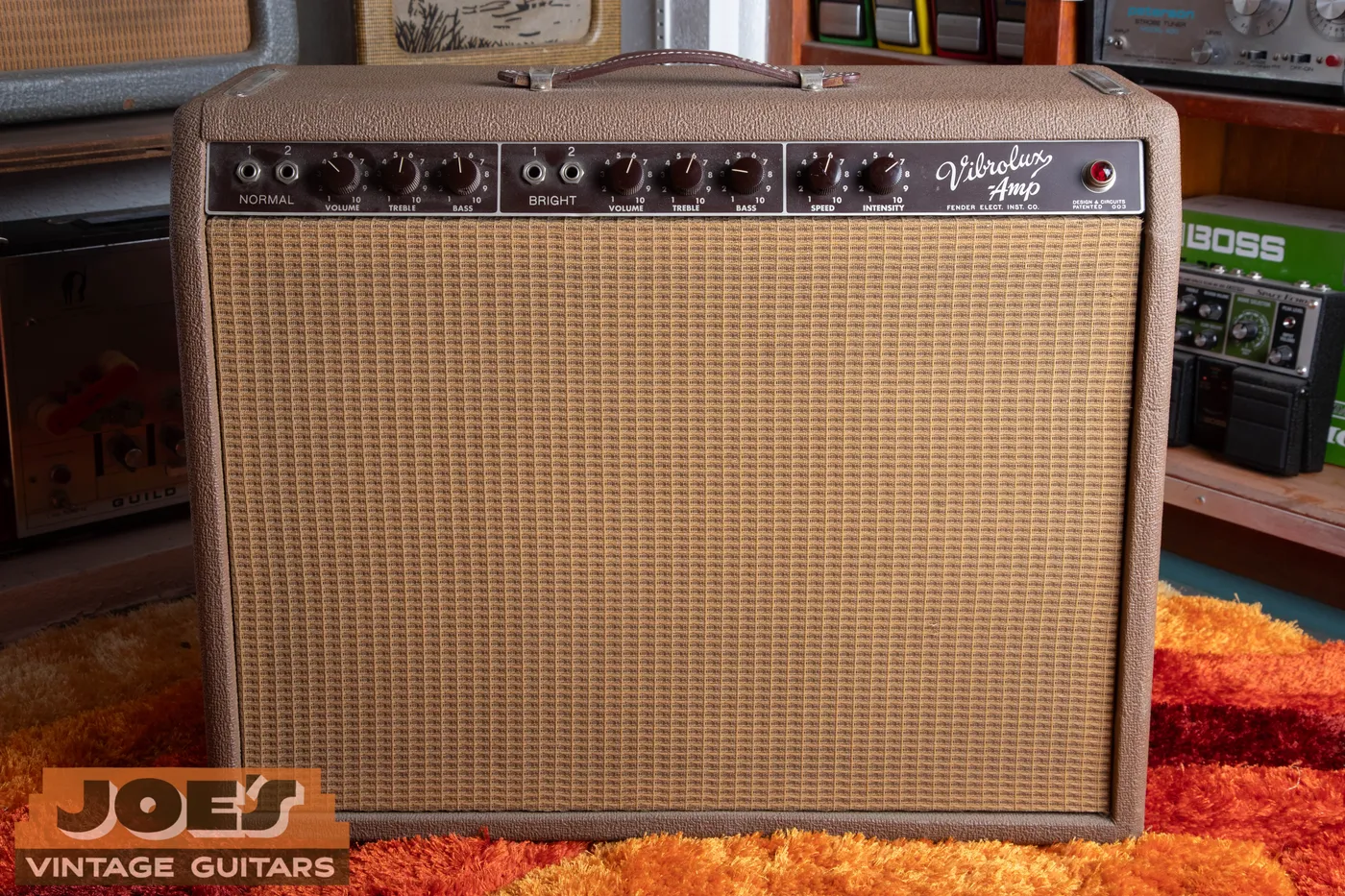
1961 And 1964 Fender Vibrolux Amplifiers
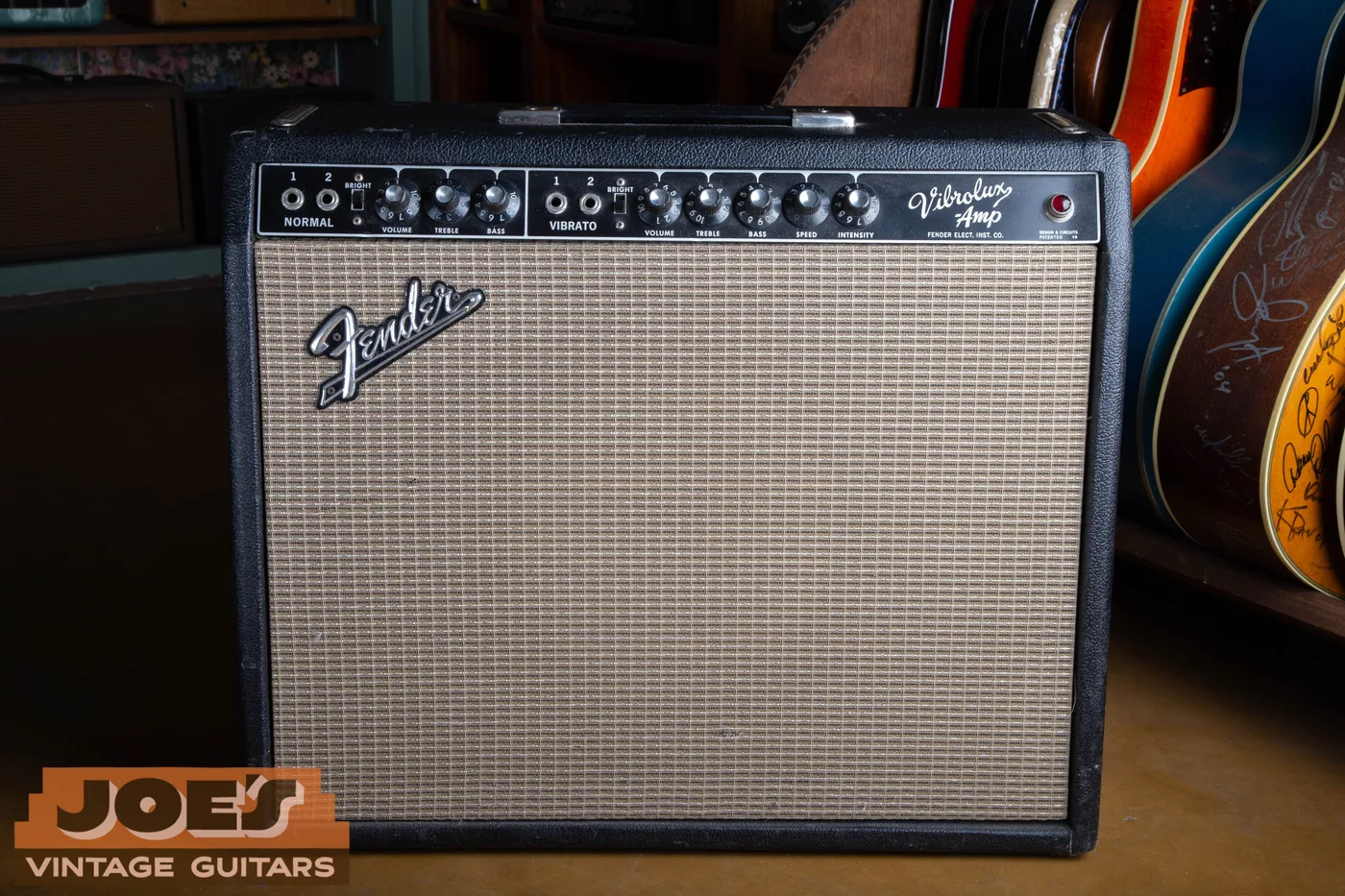
Two Tens, Two Condition Records
Assessing A Vibrolux Reverb Speaker Pair
For a Vibrolux Reverb, document both ten-inch speakers. A pair can look similar from across the room while containing different models, dates or cone repairs. Send each label and frame stamp, plus a full rear view that shows which side each occupies. If the speakers changed together, include the repair record or purchase information.
One replaced speaker doesn’t erase the amp’s identity, but the excellent-original estimate needs to reflect the change. A surviving factory speaker and a later companion are a different offering from a complete original pair. If you kept the removed speaker, tell Joe whether it was damaged, reconed or simply replaced to suit a preference.
A changed baffle can affect the assessment beyond the speakers themselves. Look for additional cutouts, non-factory mounting arrangements and repairs around the studs. Don’t remove speakers just to obtain an appraisal photo if you aren’t comfortable handling them. Existing service images or a technician’s inspection can provide the necessary detail.
The reverb tank and footswitch form another part of the inventory. Photograph the tank label and explain any replacement. A functioning reverb effect doesn’t establish that the tank, cables and switch are the original equipment. Conversely, a missing footswitch doesn’t by itself identify an electrical fault inside the amplifier.
Make The Condition Visible
Cabinet Wear And Changed Cosmetics
Grille, Logo And Panel
A replacement grille or logo can improve the appearance while changing the collector assessment. Show the entire grille, its edges and any surviving older material. On a silverface example, include the surrounding trim if fitted. A substituted black panel should be disclosed; it doesn’t turn the amplifier into a factory blackface version.
Handle And Back Panels
Handle wear, changed mounting hardware and missing rear panels should appear in the appraisal photographs. New panels may fit neatly while differing from the original construction. An old handle kept after replacement is worth documenting, but don’t use a damaged strap to carry the amplifier simply to preserve its appearance.
A recovered cabinet, replacement cabinet and repaired original cabinet are three different descriptions. Say which work was done and who performed it when that is known. If the history is uncertain, photograph the seams, interior surfaces and mounting points without making an originality claim. Uncertainty can be investigated; an inaccurate “all original” description creates avoidable confusion.
An original cover can be overlooked because it is torn or stored separately. Include it in the inventory, along with any footswitch, paperwork or removed parts. A recently purchased protective cover has a useful purpose, but should be identified as a modern accessory. Don’t assume every accessory in the same storage box originally belonged to this amp.
Separate Maintenance From Alteration
How Repairs Affect A Vibrolux Appraisal
The power transformer, output transformer and choke should be checked individually. If one was replaced, identify which one and provide the visible markings. The reason for replacement also helps. A failure repaired with a suitable part is different from a broader conversion intended to change the amp’s output or response.
Filter-capacitor, tube and power-cord work belongs in the service record. The bill should make clear whether the repair restored ordinary operation or changed the circuit. “Serviced” doesn’t establish either outcome without details. Preserve the technician’s photographs and any list of parts removed; they can answer questions that the current exterior cannot.
A Vibrolux stored for a long period may need inspection before use. Describe its last known operation and any noise, weak output or other symptoms. Avoid turning an unknown amp on to demonstrate it for a buyer. The appraisal can begin with photographs, and a qualified technician can address electrical condition.
Don’t apply a fixed deduction to every serviced Vibrolux. The significance of a replacement depends on the model, the rest of the amp and the buyer’s priorities. Likewise, the expense of a repair doesn’t necessarily add the same amount to the resale estimate. Joe needs the condition record before narrowing the range for your example.
Make The Model And Changes Clear
Vibrolux Appraisal Photo List
Front And Model Lettering
Show the cabinet and a straight-on view of the full control panel. Keep “Reverb” visible when it is part of the model name.
Rear Panel And Speaker Layout
Capture the complete back, including the one- or two-speaker arrangement. Show missing panels, extra holes and replaced hardware.
Paper Chart And Technician Photos
Photograph the label in place. If chassis access is needed, use a qualified technician; unplugging an amp doesn’t remove all stored electrical hazards.
Power And Output Transformers
Send legible markings with enough surrounding detail to identify each part. Add the choke where the circuit uses one.
Speaker Labels And Stamps
For a single-speaker Vibrolux, document that speaker fully. For a Reverb model, send separate views of both tens and describe any reconing.
Effects Equipment And Accessories
Include the tank label on a Vibrolux Reverb and the applicable footswitch. Add the cover, repair papers and any retained original components.
Date evidence can be checked with the tube-chart decoder, the transformer and speaker dating section and the pot-code guide. A Fender amp serial number isn’t a reliable year lookup.
Send The Evidence
Ask Joe About Your Vibrolux
Share clear photos and what you know about the amp’s history. List the accessories and spare parts that will accompany it.
Questions AboutOriginal Fender Amp Values
Is A Vibrolux Without Reverb Missing Equipment?
Are Vibrolux And Vibro Champ Values Interchangeable?
Can A Replaced Speaker Be Accounted For?
The Last Word
Get Your Amp Appraised
Start with the exact Vibrolux version, then document the cabinet, speakers and repair history. The Vibrolux authentication guide gives the identification checks. If the panel says Vibro Champ, use the Champ and Vibro Champ values instead. Send Joe a free appraisal request when you have the identifying views together.
This Is An Estimate Of Market Value, Not An Offer To Buy And Not A Guarantee. Market Values Fluctuate; Have Your Specific Item Appraised.