

Champion, Tweed Champ And Vibro Champ
Vintage Fender Champ And Vibro Champ Values
Small Fender amps have several distinct value groups. Identify the cabinet, speaker and controls before choosing a range.
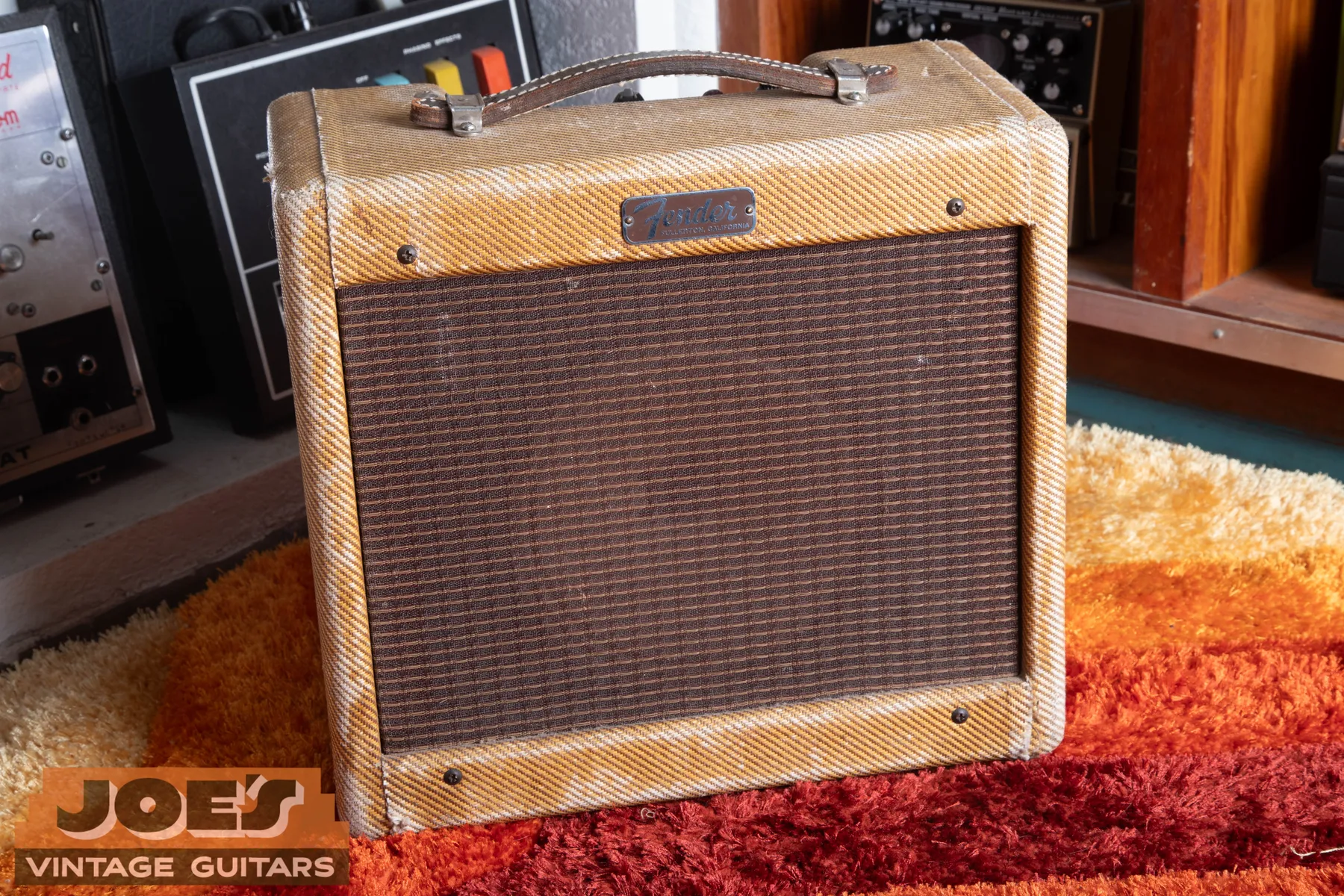
A vintage tweed 5F1 Fender Champ from the chart’s 1956 to 1964 group is estimated at $2,550 to $3,400. A blackface Vibro Champ has a different estimate of $1,050 to $1,500. The Champ and Vibro Champ identification guide helps sort the versions before you apply either range. Both figures assume excellent, original condition. A replaced speaker, altered cabinet or uncertain circuit can change the appraisal even when the amplifier still sounds good.
This Is An Estimate Of Market Value, Not An Offer To Buy And Not A Guarantee. Market Values Fluctuate; Have Your Specific Item Appraised.
Match The Full Model Description
Champ And Vibro Champ Value Chart
| Model | Years | Configuration | Estimated Value |
|---|---|---|---|
| Champ | 1953 to 1954 | Wide panel, 1x6, 5C1 | $1,950 to $2,600 |
| Champ | 1955 to 1956 | Narrow panel, 1x6, 5E1 | $2,000 to $2,650 |
| Champ | 1956 to 1964 | Narrow panel, 1x8, 5F1 | $2,550 to $3,400 |
| Champ | 1964 | New cabinet, black, AA764 | $1,550 to $2,000 |
| Champ | 1964 | Old cabinet, black, 1x8, 5F1 | $1,850 to $2,400 |
| Champ | 1965 to 1967 | New cabinet, black, AA764 | $1,100 to $1,500 |
| Champ | 1968 to 1972 | Silverface, 1x8 | $600 to $800 |
| Champ | 1973 to 1980 | Silverface, 1x8 | $550 to $750 |
| Champion 600 | 1949 to 1953 | Two-tone, TV front, 1x6 | $1,500 to $2,400 |
| Champion 800 | 1948 | TV front, tweed, 1x8 | $2,350 to $3,000 |
| Vibro-Champ | 1964 to 1967 | Blackface, AA764 | $1,050 to $1,500 |
| Vibro-Champ | 1968 to 1972 | Silverface | $750 to $1,000 |
U.S. dollars. Original cover where applicable. Condition, repairs and replacement parts affect an individual appraisal. Overlapping dates identify distinct entries. Modern reissues are excluded.
The chart distinguishes Champion 800 and Champion 600 models from the later Champ. It also separates the two black-covered 1964 configurations: an earlier-style 5F1 cabinet and the newer AA764 cabinet. A black exterior alone doesn’t settle which entry applies. Photographs of the controls and rear opening usually establish the next identification step.
The later silverface Vibro Champ group needs an individual appraisal here. Its reference entry extends beyond this guide’s 1980 cutoff, so no shortened value row has been created. The listed silverface Champ rows remain separate. Modern Champion 600 reissues, ’57 Customs, EC Vibro-Champs and newer reverb models aren’t included in these figures.
Cabinet, Circuit And Speaker
What Supports A Tweed Champ Estimate
The tweed Champ’s small size makes it easy to photograph thoroughly. Include all four sides, the top controls and the back. A close view of the tweed’s wear can show whether the material has been patched, painted or replaced. Don’t clean a fragile surface aggressively before sending pictures. Details that seem untidy can help an appraiser understand what survives.
A repaired original cabinet should be described by the repair. For example, a replaced bottom panel or repaired handle mount tells Joe more than “restored.” A complete reproduction cabinet is another condition entirely, even if the original chassis was installed inside it. Keep old pictures and receipts that show when cabinet work occurred.
The speaker opening matters on a Champ. An owner may have installed a larger speaker or cut the baffle to make room for one. That change can affect the cabinet and mounting arrangement as well as the speaker itself. Show the entire baffle from the rear wherever it is visible. Don’t rely on the diameter named in an old sales receipt.
The 5E1 and 5F1 entries need their own identification. A technician can compare the actual circuit with its drawing if the label is missing or the amp has been modified. “Tweed Champ” is a useful family description, but it isn’t detailed enough to justify every chart range. A printed circuit name on a replacement label also needs supporting evidence.
Joe’s 1956 and 1959 examples provide views of the controls, cabinet and internal parts. They show the sort of record an appraisal needs. They don’t certify another amp that resembles them. If your Champ has a changed handle or a new speaker, include that information with the images instead of trying to find an archive photo that looks identical.
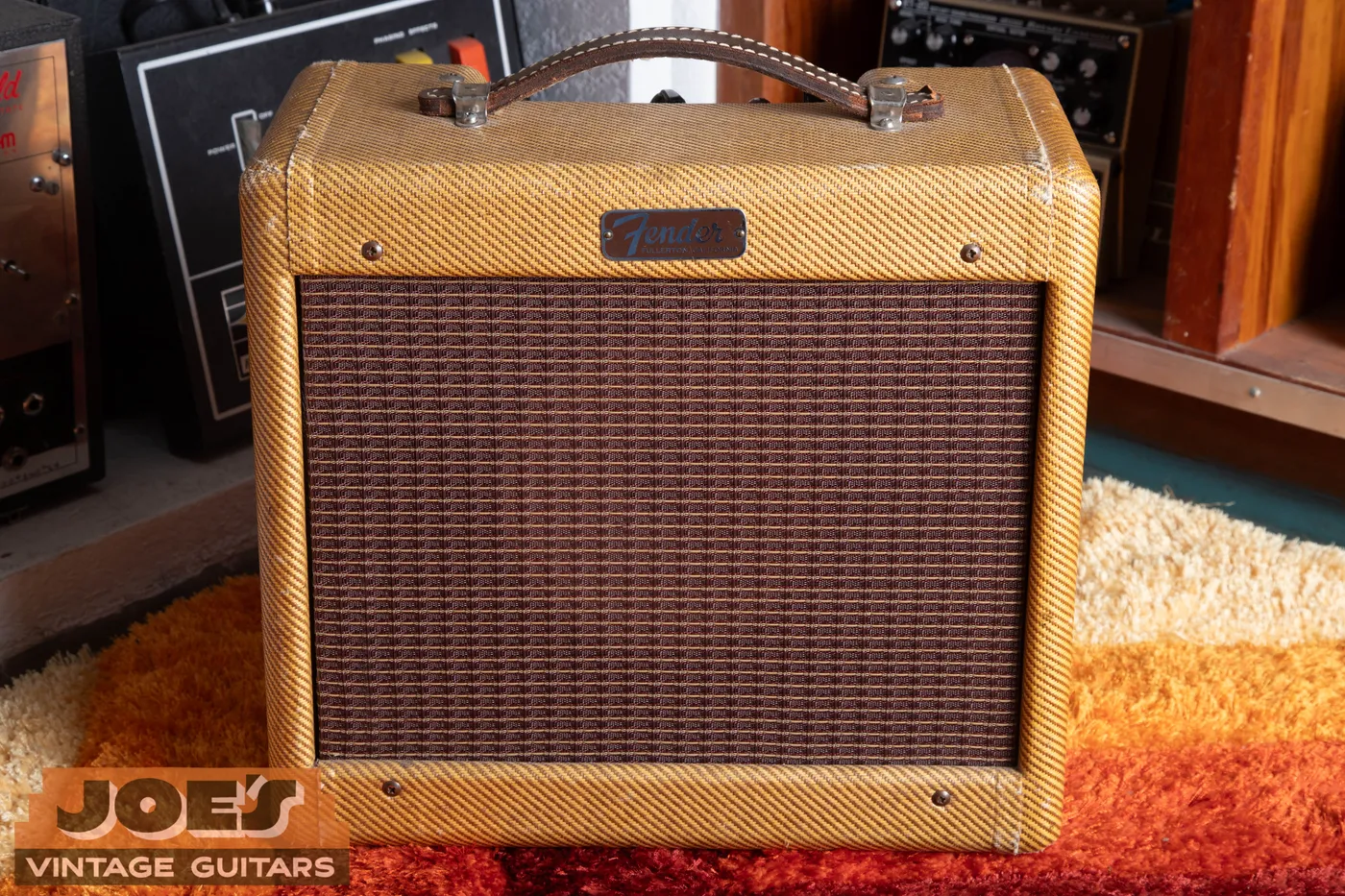
1956 And 1959 Fender Champ Amplifiers
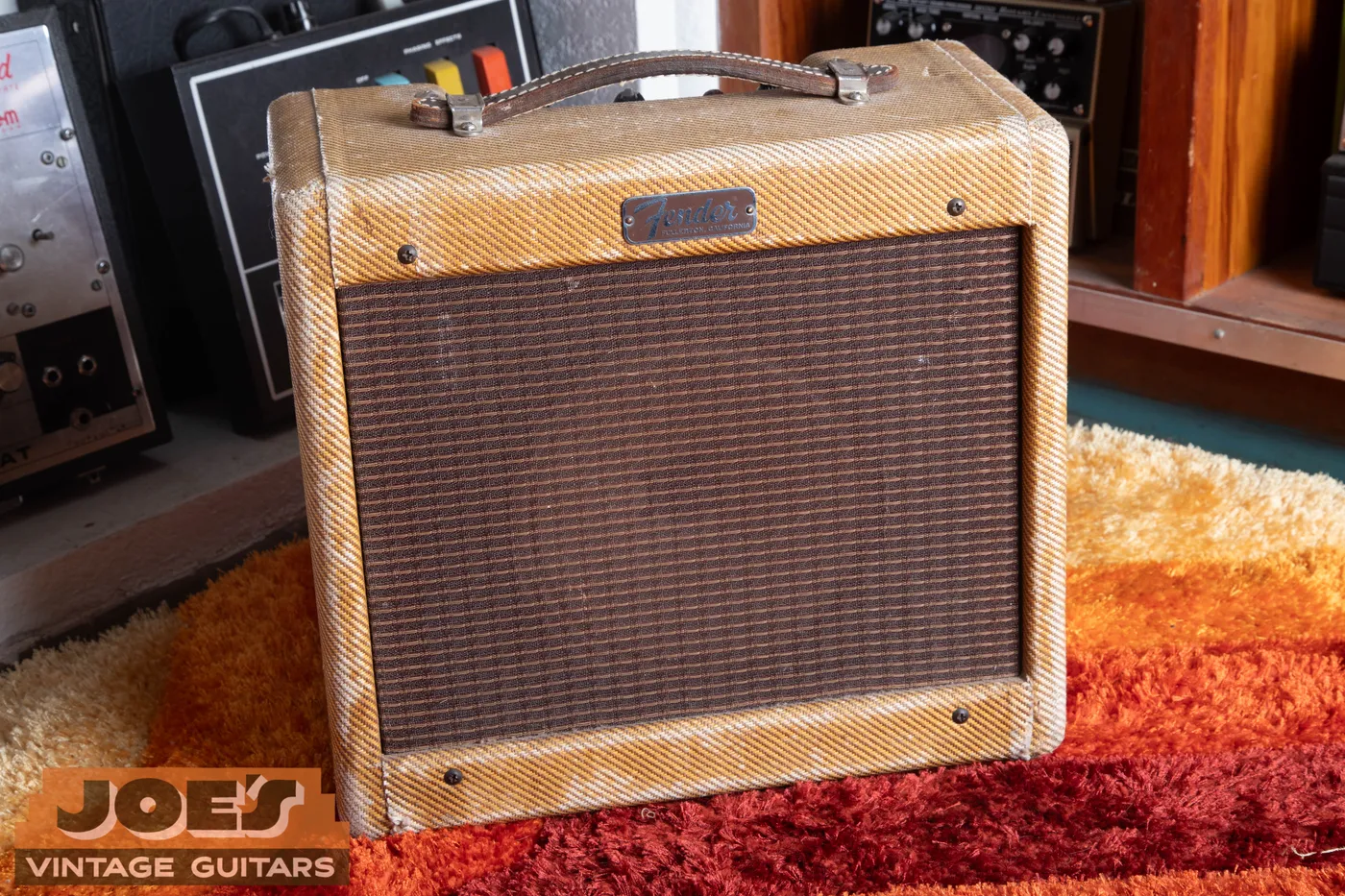
The Extra Controls Matter
Champ And Vibro Champ Appraisals
A blackface or silverface Vibro Champ has tremolo controls that the ordinary Champ lacks. A seller may shorten either model to “Champ,” so the photograph should show the complete front panel. A missing or replaced faceplate can leave the model name uncertain. In that case, chassis documentation and the control layout become more useful than the seller’s shorthand.
The Vibro Champ’s additional circuit also needs a condition description. If the tremolo doesn’t operate, state that plainly. The fault may need routine repair, but its cause shouldn’t be guessed from a photograph. A working tremolo demonstration likewise doesn’t establish that every associated component is factory original. Include service notes when available.
Neither original model has built-in reverb. A separate reverb pedal or an added tank should be listed as additional equipment or a modification. A modern amp with “Vibro Champ Reverb” on its panel belongs to a different appraisal. Similar silver trim doesn’t make the modern model fit an original silverface range.
For late examples, look beyond the panel color. A replaced black faceplate can make an amp appear earlier, and a factory transition can make visual shorthand confusing. Send the paper chart and readable component markings. Joe can consider those alongside the cabinet, speaker and control arrangement before deciding which production group is supported.
Keep A Record Of Replacements
A Single Speaker Can Change The Assessment
Speaker And Output Transformer
There is only one speaker to document, so a replacement affects the entire speaker inventory. Photograph the label, frame and any legible stamp. An older frame may have been reconed; include that history. The output transformer also deserves its own identification, especially when a repair accompanied a speaker change.
Power Transformer And Wiring
A replacement power transformer can be appropriate service work and still matter to a collector. Keep its invoice and any removed component. Changes made to accommodate a different transformer, added controls or a different power tube should be described by the technician who performed them.
The current tubes are consumable parts. A group of desirable old tubes doesn’t establish that the surrounding amplifier is original, and replacing a worn tube doesn’t make the cabinet a reproduction. An appraisal should distinguish those facts. Avoid treating every changed part as equally important simply because all of them are inside the same small box.
A cabinet recover, altered baffle and changed transformer together need more than a generic “serviced” description. Each affects a different aspect of the amp. Conversely, a documented filter-capacitor replacement doesn’t imply that its speaker and cabinet were changed too. Clear records keep a necessary repair from being confused with a much broader rebuild.
Describe What You Know
Before Selling Or Restoring A Champ
An inherited Champ may come with a cover, an old receipt, spare tubes or a speaker stored elsewhere. Photograph those items separately and explain their connection to the amp. A cover that has always been in the family provides useful history, but an appraiser still needs to see whether it fits this cabinet and how it is constructed.
Don’t add a restoration bill to the chart estimate as though every repair produces an equal increase in resale value. Some work makes an amp usable; other work changes its appeal to a particular buyer. If you are considering a cosmetic restoration, ask for an appraisal in its present state first. That gives you a clearer basis for deciding what work to commission.
If the amplifier’s electrical history is unknown, tell Joe when it was last used. There is no need to switch it on solely to make an appraisal video. A qualified technician can assess its condition and supply interior photographs when required. The initial review can begin with exterior pictures and an accurate account of storage and known problems.
Small Details Should Stay Readable
Six Views For A Champ Appraisal
Complete Front
Show the cabinet edges, grille, badge and all controls. Include the word Vibro if it appears, plus any added knob or switch.
Rear And Back Panel
Photograph the whole opening and both rear panels where fitted. Make damaged wood, extra holes and replaced screws visible.
Tube Chart And Chassis
Include the label in place and a closer readable view. Interior circuit photographs should come from a qualified technician, since unplugged amps can retain dangerous voltage.
Transformer Markings
Send the full markings and a wider image locating each transformer. Say whether an invoice records a rewind or replacement.
Speaker Label And Frame
Show the basket, label and code without disconnecting the speaker. Note reconing, replacement or a changed mounting arrangement.
Accessories And Repair History
Add the cover and retained parts. No factory reverb tank is expected on these original Champs; identify any separate or added reverb equipment.
For a surviving two-letter stamp, start with Joe’s tube-chart decoder. Missing labels call for the speaker and transformer evidence described on his dating page. The Fender pot-code article covers control markings. Serial numbers alone aren’t reliable year evidence.
Send The Evidence
Have Joe Review Your Champ
Send clear front and rear photographs, the available labels and a description of known work. Include the accessories that will stay with it.
Questions AboutOriginal Fender Amp Values
Does A Vibro Champ Always Have A Higher Value Than A Champ?
Are All Small Tweed Fender Amps Champs?
Should I Replace A Worn Handle Before An Appraisal?
Why Is My Later Vibro Champ Missing From The Chart?
The Last Word
Get Your Amp Appraised
A Champ estimate is most useful when the model and the repair history are clear. Check the Champ authentication guide for cabinet and circuit distinctions, or compare the earlier Princeton family if the model name is uncertain. The Fender amp eras article explains the broader appearance changes. Send your photographs for a free appraisal when you’re ready to discuss the amp.
This Is An Estimate Of Market Value, Not An Offer To Buy And Not A Guarantee. Market Values Fluctuate; Have Your Specific Item Appraised.