

Two-Speaker Super To Four-Speaker Super Reverb
Vintage Fender Super And Super Reverb Identification
The Super name spans several cabinet and circuit generations. Speaker count is a useful first check, followed by the controls and chassis.
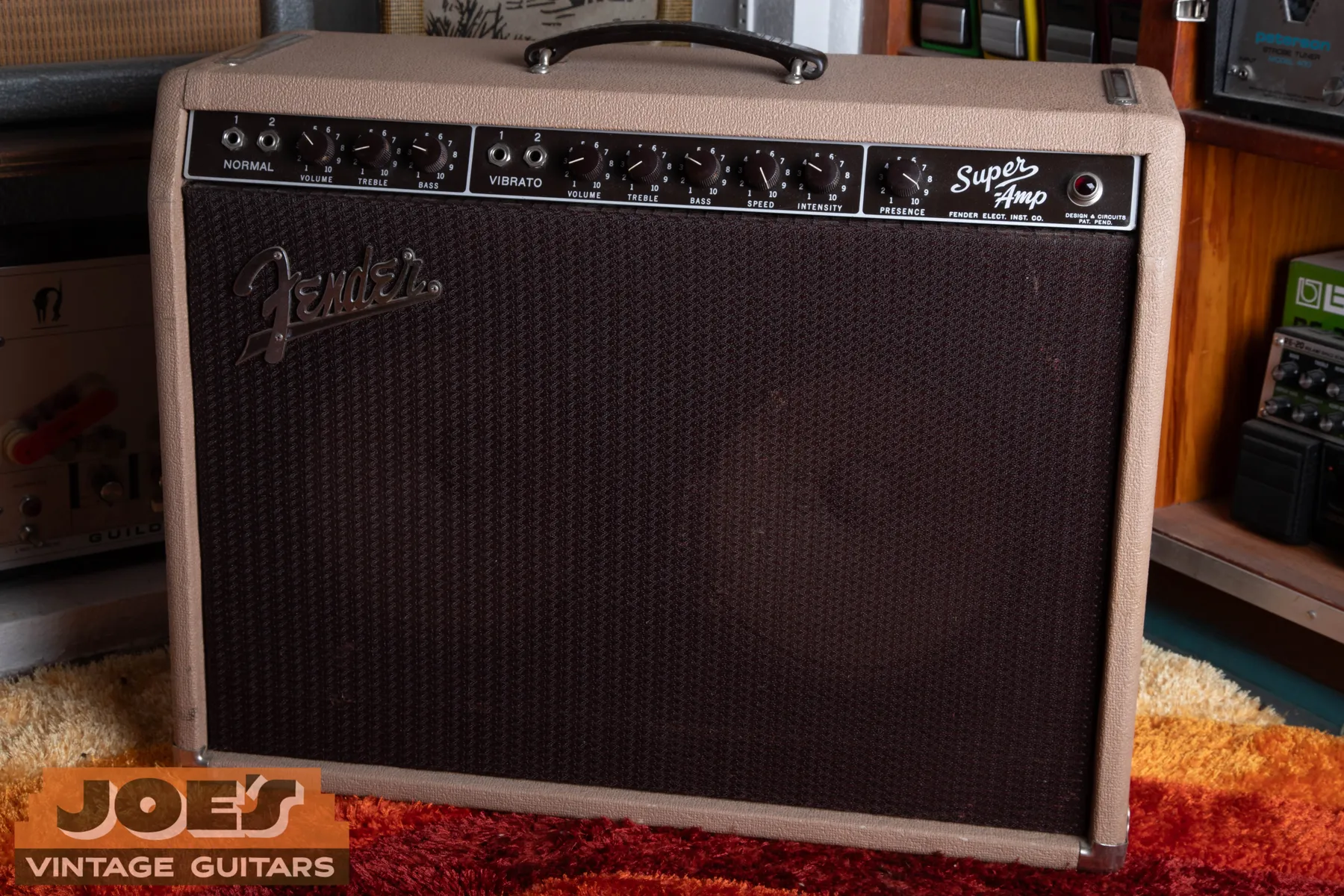
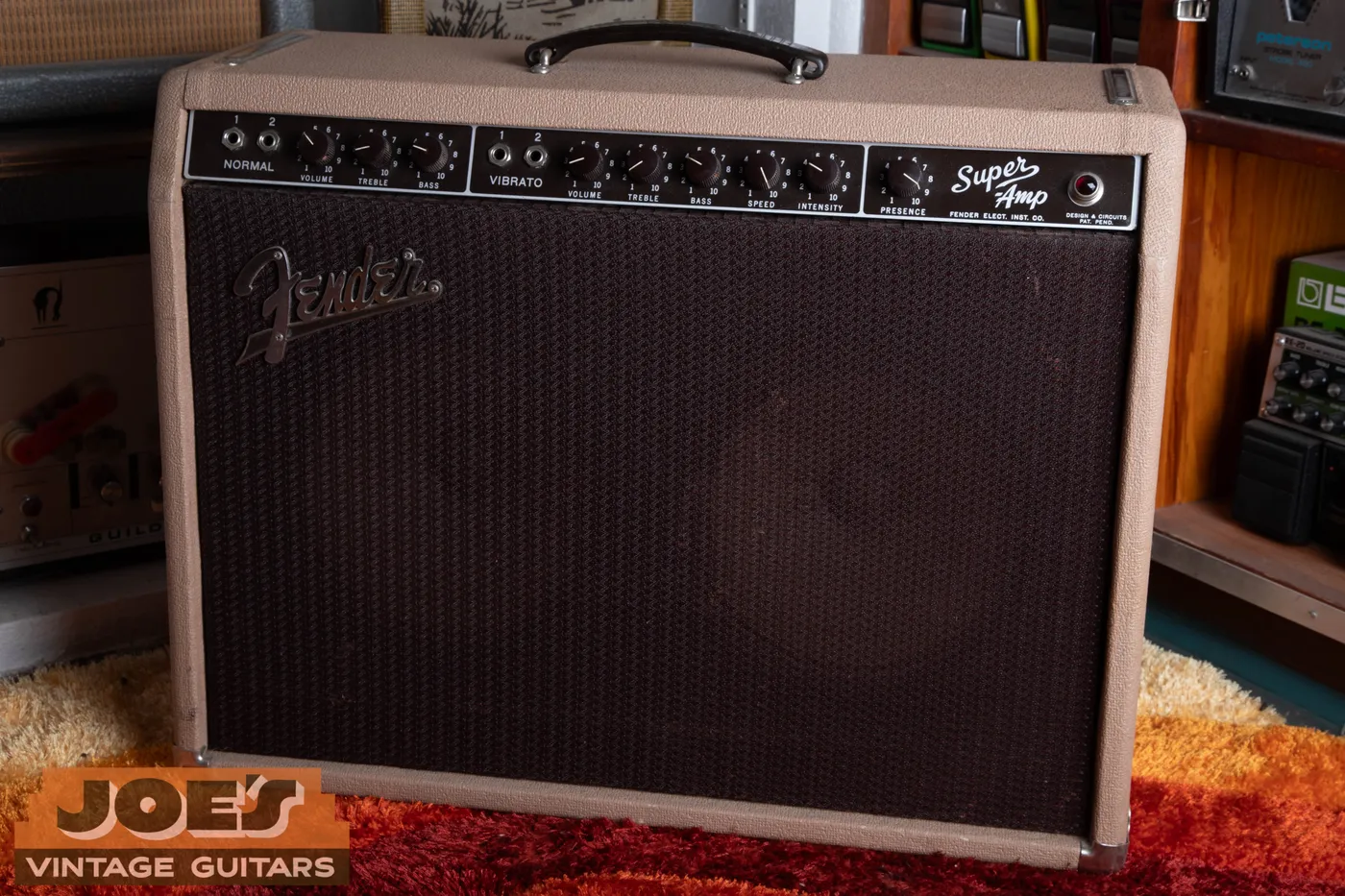
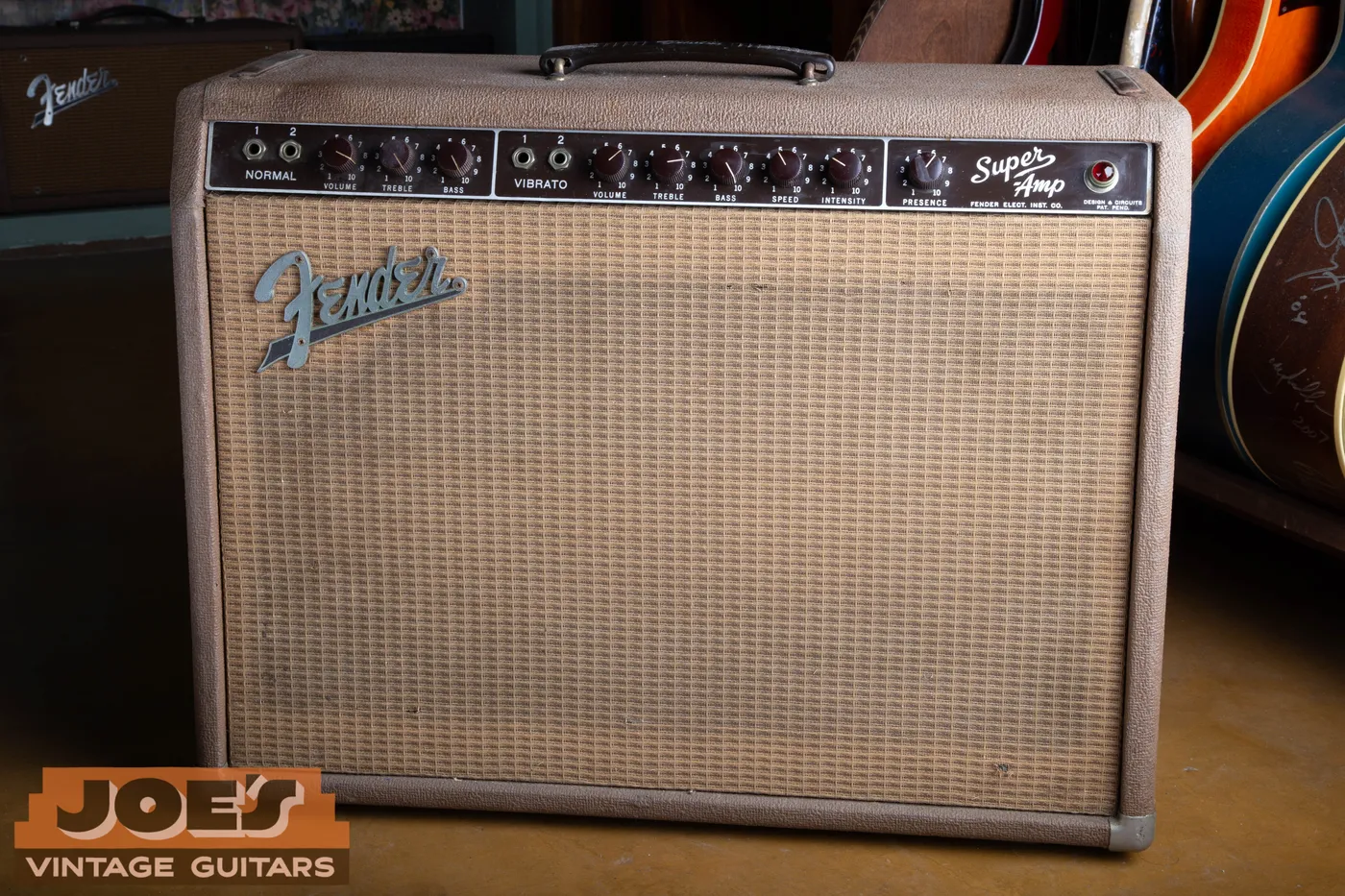
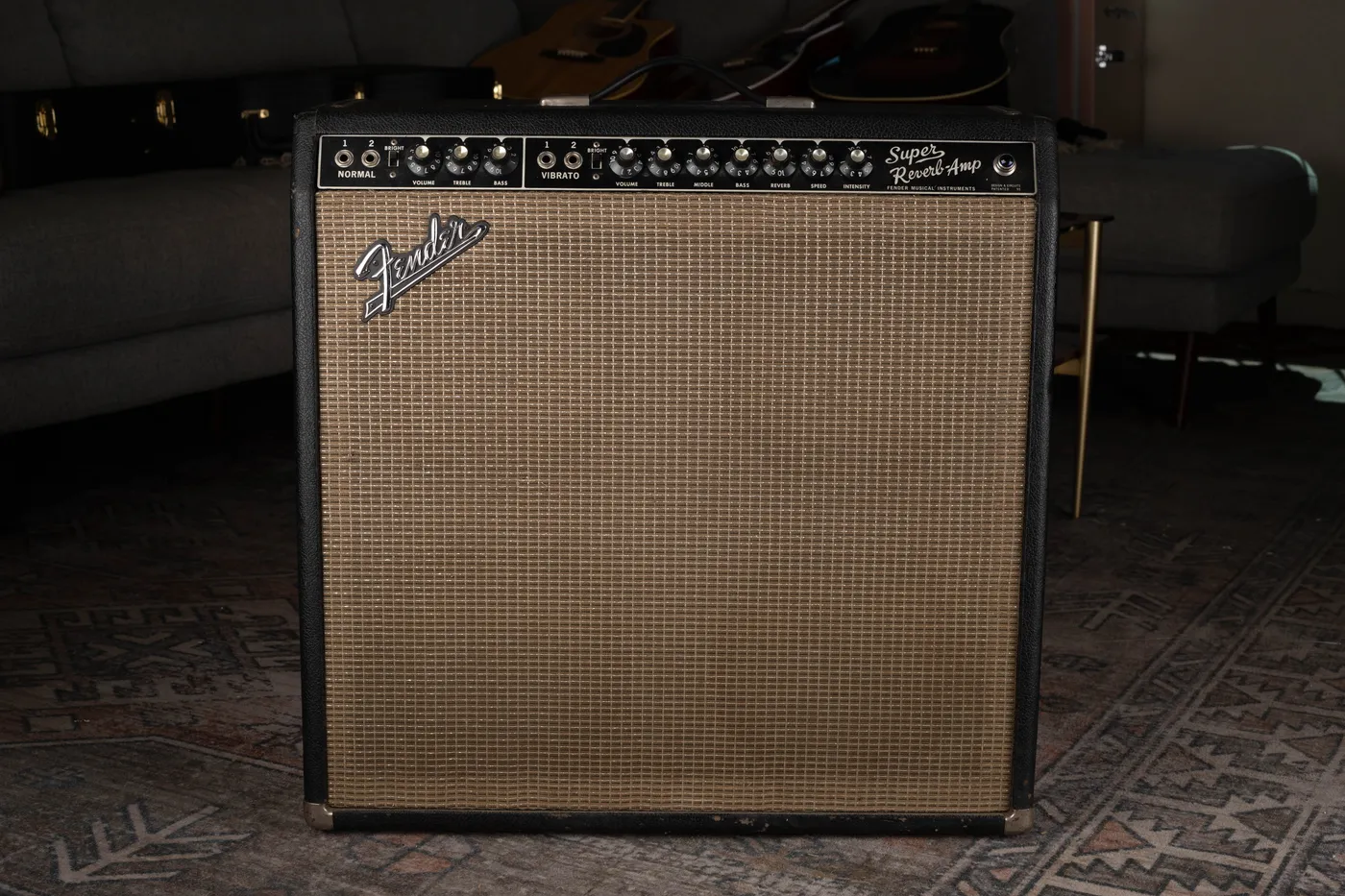
The original brownface Fender Super is a two-ten combo with harmonic tremolo and no built-in reverb. The blackface Super Reverb has four tens and a spring-reverb circuit. That difference comes before any price comparison in the Super family value guide. Joe’s archive includes a pinkish 1960 Super, a 1962 brown Super and a 1965 Super Reverb, allowing you to compare the cabinets and rear openings directly.
Authenticity And Originality Are Assessed From The Information Provided. A Hands-On Inspection Can Change The Conclusion.
Modern Super Models Have Specific Tells
Original Or Reissue?
’65 Super Reverb
The modern ’65 Super Reverb service diagram includes a combined printed circuit board carrying the controls and electronic components. The original AB763 uses an eyelet-board layout. Fender’s current specification also identifies four Jensen P10R speakers and a birch-plywood cabinet. New speakers can be fitted to an old amp, so confirm the chassis construction too.
Tone Master And ’62 Super
A Tone Master Super Reverb has digital amplification and modern rear controls, including output attenuation and an XLR line output. The newer ’62 Super recreates brown cosmetics but lists two Celestion Custom ten-inch speakers. Its model documentation and modern components distinguish it from an original brown Super.
Handwiring doesn’t establish a vintage production date. A newly built tweed Super-style amp can use a traditional board and an old schematic. Ask for the maker’s identity, the chassis markings and the age of the major components. A replacement cabinet can also reproduce the outline of a V-front or narrow-panel amp.
Use photographs of the front and rear together. A familiar grille may conceal a different chassis, while a modern replacement speaker can sit inside an otherwise old amplifier. The identification should explain both situations. Don’t open the chassis to investigate; a qualified technician can supply the board photographs needed for that comparison.
Cabinet And Circuit Changes
The Super Family Across Four Eras
V-Front, Wide Panel And Narrow Panel
The Super’s earliest V-front group begins in 1947, before the broad tweed period. Its angled front gives way to flatter wide-panel and narrow-panel cabinets. The narrow-panel family includes a 6V6 design as well as 6L6 versions; tweed production overlaps into 1960.
The Brown Super
The Super changes to a front control panel, two channels and harmonic tremolo. Early pinkish covering and dark grille material differ from the later brown-and-wheat combination. Joe’s 1960 and 1962 photographs show those appearances.
Super Reverb And Four Tens
The Super Reverb adds spring reverb and a four-speaker cabinet. AB763 documentation identifies the blackface circuit, with optical tremolo and a GZ34 rectifier. Check the exact panel wording and paper chart together.
Trim, Master Volume And Higher Power
Early silver-panel examples have aluminum grille trim. Later versions add a master volume and pull switch, and the late 70-watt design uses diode rectification and an ultralinear output transformer. A black-panel return near the end of the period requires date evidence.
The Tube Count Changes With The Design
Super Specifications By Circuit
| Circuit / Family | Rating And Speakers | Full Tube Complement / Rectifier | Controls And Cabinet Details |
|---|---|---|---|
| Early 5C4 Super | Early family about 15 W; 2x10 | 2x6L6G, 3x6SC7 and 5U4G; drawing notes later miniature-tube revision | Two volumes and Tone; V-front/early tweed context, brown grille, block badge, chicken-head knobs, leather handle |
| 5E4-A Narrow-Panel Super | 6V6 version; 2x10 | 2x6V6GT, 2x12AY7, 1x12AX7 and 5U4GA | Two volumes, Treble, Bass, Presence; tweed, dark striped grille, script badge |
| 5F4 Narrow-Panel Super | About 30 W; Jensen P10R/P10Q 2x10 | 2x6L6G, 1x12AY7, 2x12AX7 and 5U4G | Four inputs; two volumes and three tone/presence controls; top chrome panel |
| Brown 6G4-A Super | About 40 W; 2x10 | 2x5881, 4x7025, 2x12AX7 and GZ34 | Normal/Vibrato channels, Volume/Treble/Bass, Speed, Intensity, Presence; brown panel, barrel knobs, brown strap |
| Blackface AB763 Super Reverb | About 40 W; 4x10 | 2x6L6GC, 3x7025, 1x12AX7, 2x12AT7 and GZ34 | Normal/Vibrato, Bright switches, Reverb, Speed, Intensity; Vibrato Middle; black covering/panel, silver grille, skirted knobs, black strap |
| Silverface 45-Watt Master-Volume Design | 45 W; 4x10 | 2x6L6GC, 3x7025, 1x12AX7, 2x12AT7 and 5U4GB | Master Volume with pull switch as drawn; silver panel and silver/blue grille; later grille lacks aluminum surround |
| Late 70-Watt Super Reverb | 70 W; 4x10 | 2x6L6GC, 3x7025, 1x12AX7 and 2x12AT7; diode rectifier | Master Volume/pull switch; ultralinear transformer; rear line/recording output and hum-balance control |
The 6V6 drawing is titled 5E4-A. The 5C4 layout explicitly notes a later 12AY7/12AX7 revision. Match the actual drawing and chassis; the broad family name doesn’t supply a complete tube specification.
The 5E4-A factory schematic clearly labels two 6V6GT output tubes. The 5F4 drawing calls for 6L6G tubes. A tweed cabinet therefore can’t answer the power-tube question by itself. The AB763 Super Reverb drawing separately documents the reverb model.
Fender’s 45-watt master-volume drawing still has a 5U4GB rectifier. The 70-watt drawing shows diode rectification and output-transformer screen connections. A master-volume knob alone doesn’t distinguish these two designs. Look at the rear markings and have the circuit identified before assigning an output version.
A period solid-state Super Reverb also exists in the value chart. Its all-transistor circuitry belongs to a separate product. The tube complements above must not be applied to it. Likewise, the higher-powered Super Twin is outside this model pair even though its name begins with the same word.
Two Tens And Harmonic Tremolo
Brown Super Details In Joe’s Photographs
The 1960 Super’s pinkish covering can look brown in some lighting. The front and rear photographs are more useful than a color name alone: the cabinet has two ten-inch speaker positions, a front control panel and no reverb knob. The 1962 example has the later wheat-colored grille seen in this archive. Compare those features without assuming that a similar color guarantees original covering.
The 6G4-A circuit uses a more elaborate harmonic tremolo arrangement than the later blackface optical tremolo. Its full small-tube complement matters when identifying a chassis. A technician can check that arrangement against the drawing and determine whether a previous owner altered it. A tremolo that sounds unfamiliar may need diagnosis; sound alone won’t identify a circuit revision.
The original brown Super’s two-speaker format also separates it from a Super Reverb placed in a smaller custom cabinet. If a blackface chassis has been rehoused, the resulting amp can still be useful, but the cabinet conversion belongs in its description. Photograph the full panel rather than identifying the model from the number of visible speaker cones alone.
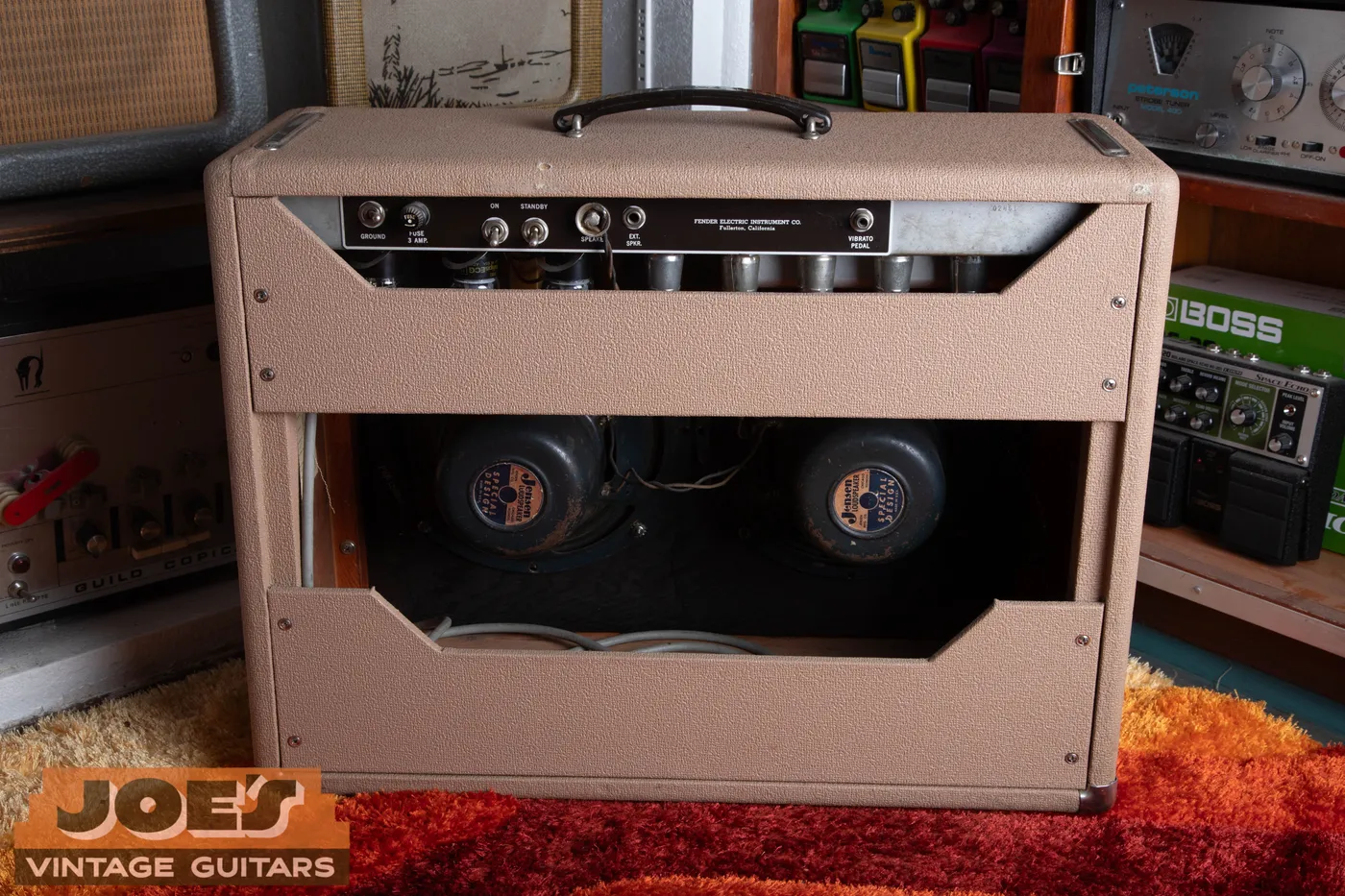
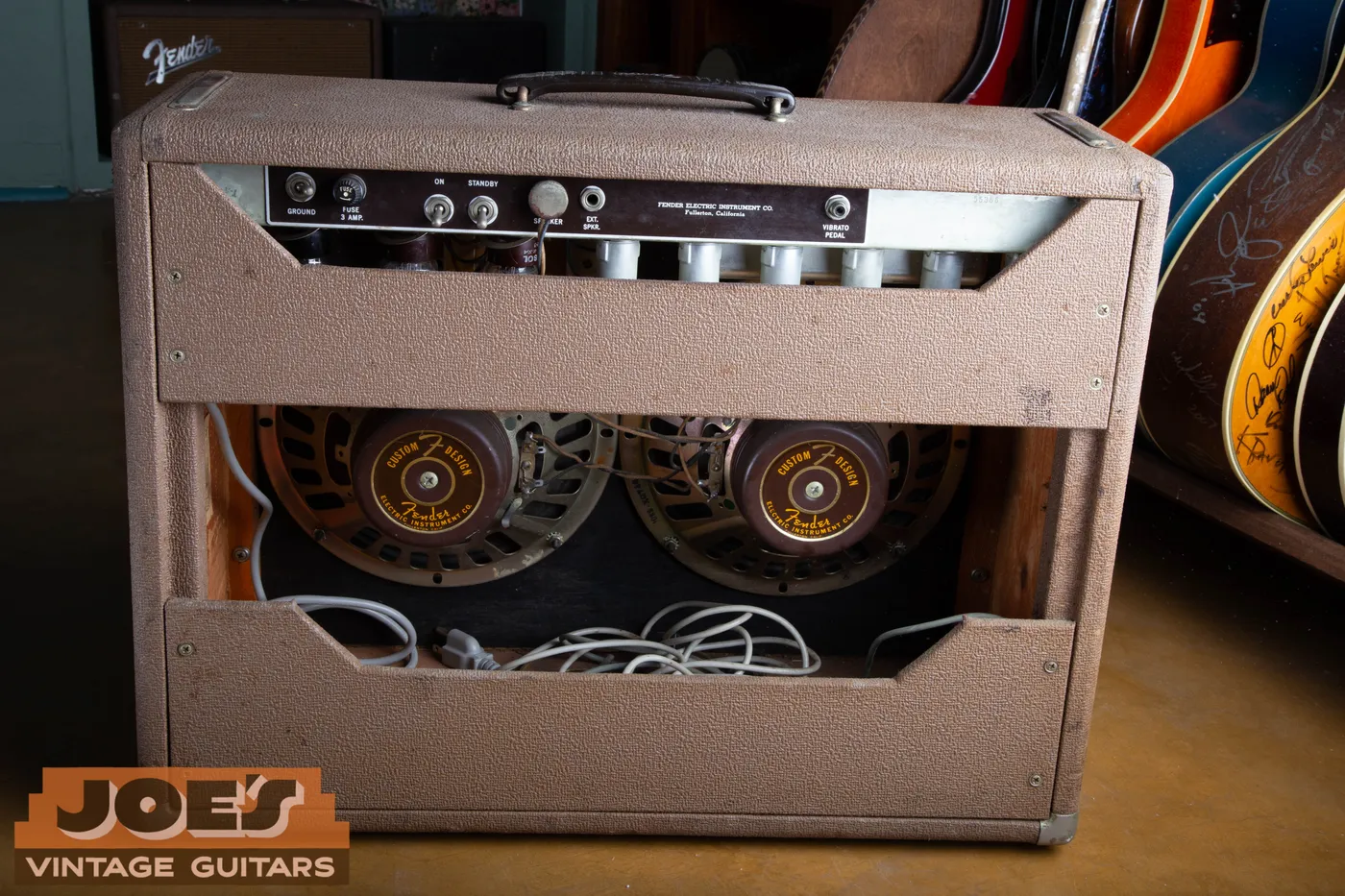
Two Examples From The Archive
Read The Super’s Codes In Context
Start with the two-letter chart stamp when it survives. Joe’s Fender amplifier decoder uses A for 1951 in the year position and covers stamps used until about 1970. A printed circuit code is a separate kind of information. Fender amp serials don’t reliably establish the production year.
Next collect the speaker and transformer markings, keeping all four speakers separate on a Super Reverb. A single changed speaker may have a much later date than the other components. The control-pot reference adds another check when those markings are safely documented by a technician.
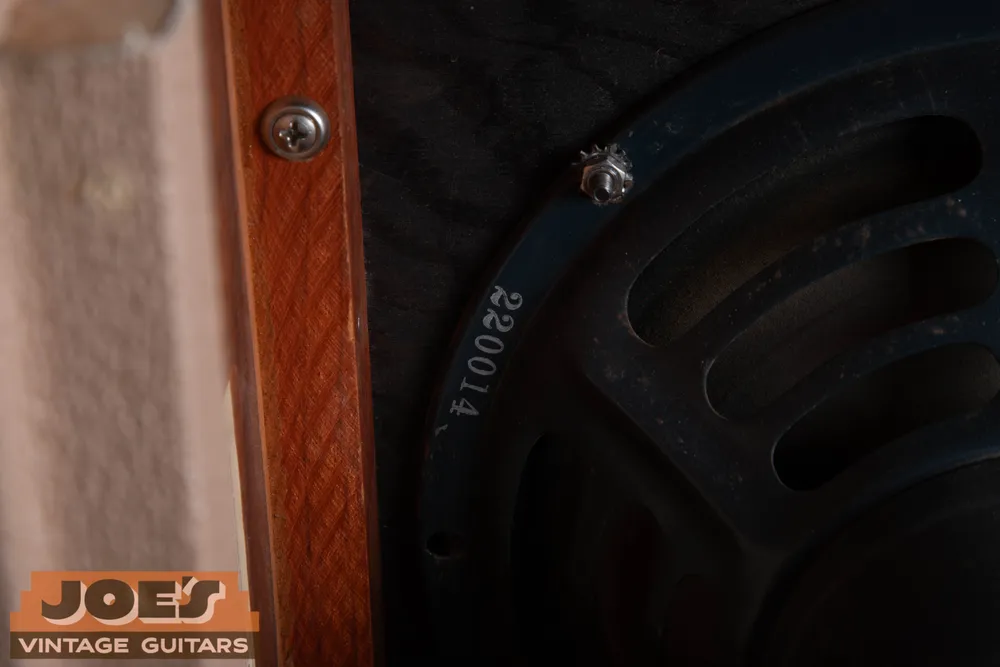
A Speaker Code On The 1960 Super
The six-digit frame stamp is readable in Joe’s photograph. Any trailing mark is excluded from the transcription. Compare the component code with the cabinet and other dated parts; it is evidence about this speaker, not a complete production certificate for the amplifier.
The Super Reverb’s Printed Circuit
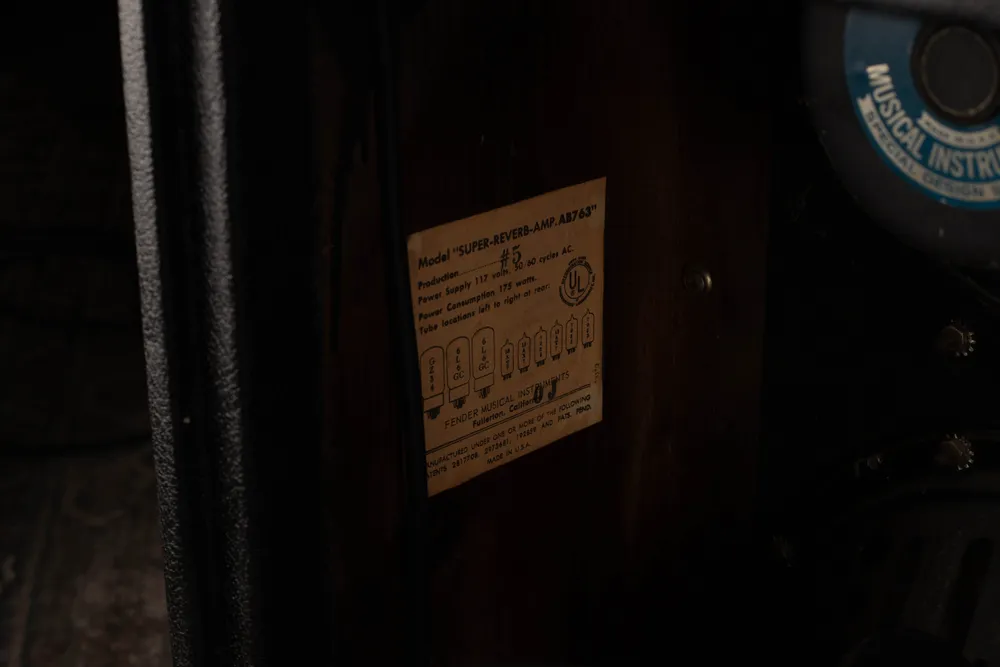
The chart clearly prints AB763 on this 1965 Super Reverb. Its faded date-stamp letters are too faint to read reliably.
Record The Cabinet And Circuit Together
Eleven Checks For An Original Super
Transformer Set
Identify the power and output transformers and the choke. A late ultralinear output transformer differs from the earlier design. Ask the technician to compare part numbers, mounting and wiring with the correct schematic, especially when a seller describes an amp as “blackfaced.”
Two Or Four Speakers
Record each speaker’s location and markings. An old label can survive a recone, and a mixed set can include several different production periods. Keep a wide rear image with the close-ups so the records stay tied to their positions.
Capacitors And Circuit Parts
Have the board inspected for maintenance and modifications. The reverb driver, tremolo and master-volume wiring deserve attention as well as the power supply. A service invoice should state which components were replaced and whether the circuit was changed.
Paper Tube Chart
Photograph the chart’s edges and the surrounding cabinet surface. Separate circuit printing from inked date letters. The AB763 example here demonstrates why a readable model designation can coexist with a date stamp that remains undeciphered.
Cabinet And Covering
Inspect the large Super Reverb baffle and the cabinet joints. A two-speaker conversion, new baffle or replacement shell changes the construction record. On an early Super, the V-front or panel style must also agree with the chassis generation.
Grille Cloth And Badge
Check the cloth across the whole baffle, including its attachment where visible. Aluminum drip-edge trim identifies an appearance, not the circuitry behind it. Added trim, replacement cloth or a substituted badge needs to be recorded independently.
Control Panel And Knobs
Photograph Normal and Vibrato controls, bright switches and any master-volume or pull marking. The original brown model has a different layout. A disabled pull switch remains evidence of the version and later work, even when the owner never uses it.
Handle And Carrying Hardware
Inspect the handle mounts and any tilt-back legs or casters fitted to the cabinet. Extra holes and reinforced wood may explain a repair. Cosmetic originality should be documented separately from whether the handle is safe to carry.
Reverb Tank And Footswitch
A Super Reverb should be assessed with its tank, bag, cables and switching equipment. The earlier non-reverb Super has no factory tank to lose. Photograph labels and connectors rather than treating any functioning replacement as original equipment.
Rear Panels
Look at the panel shape, material and mounting positions. Missing or newly fabricated pieces can hide a cabinet alteration. A broad rear photograph should include all speaker positions, the chassis edge and the lower cabinet.
Protective Cover
Show the cover next to the amp, then photograph its seams and wear. The fit should agree with the cabinet generation. A modern cover supplied with an older amp should be described as a later accessory.
Keep Removed Parts Identified
Servicing A Super Without Losing Its History
A filter-capacitor replacement can be necessary maintenance. Changing the output transformer or replacing the four-speaker cabinet affects different parts of the originality assessment. The Super and Super Reverb values page explains how those facts enter an appraisal. Don’t describe a circuit conversion as an earlier factory build.
If a technician removes components, ask for photographs and a written description of the work. Retained parts should be labeled by location and condition. A failed old transformer in a box remains historical evidence, but its presence doesn’t make the installed replacement original. Leave electrical testing and chassis access to the technician; stored voltage can remain after unplugging.
Brown And Blackface Examples
Super Photo Timeline
Early Brownface Appearance
1960 Fender Super
The pinkish cabinet, dark grille and two-speaker rear view show the earlier Super format. The speaker close-up supplies the readable code used above.
Later Brown Super
1962 Fender Super
The wheat grille contrasts with the 1960 example. The rear view shows its two ten-inch speakers.
Blackface Reverb Model
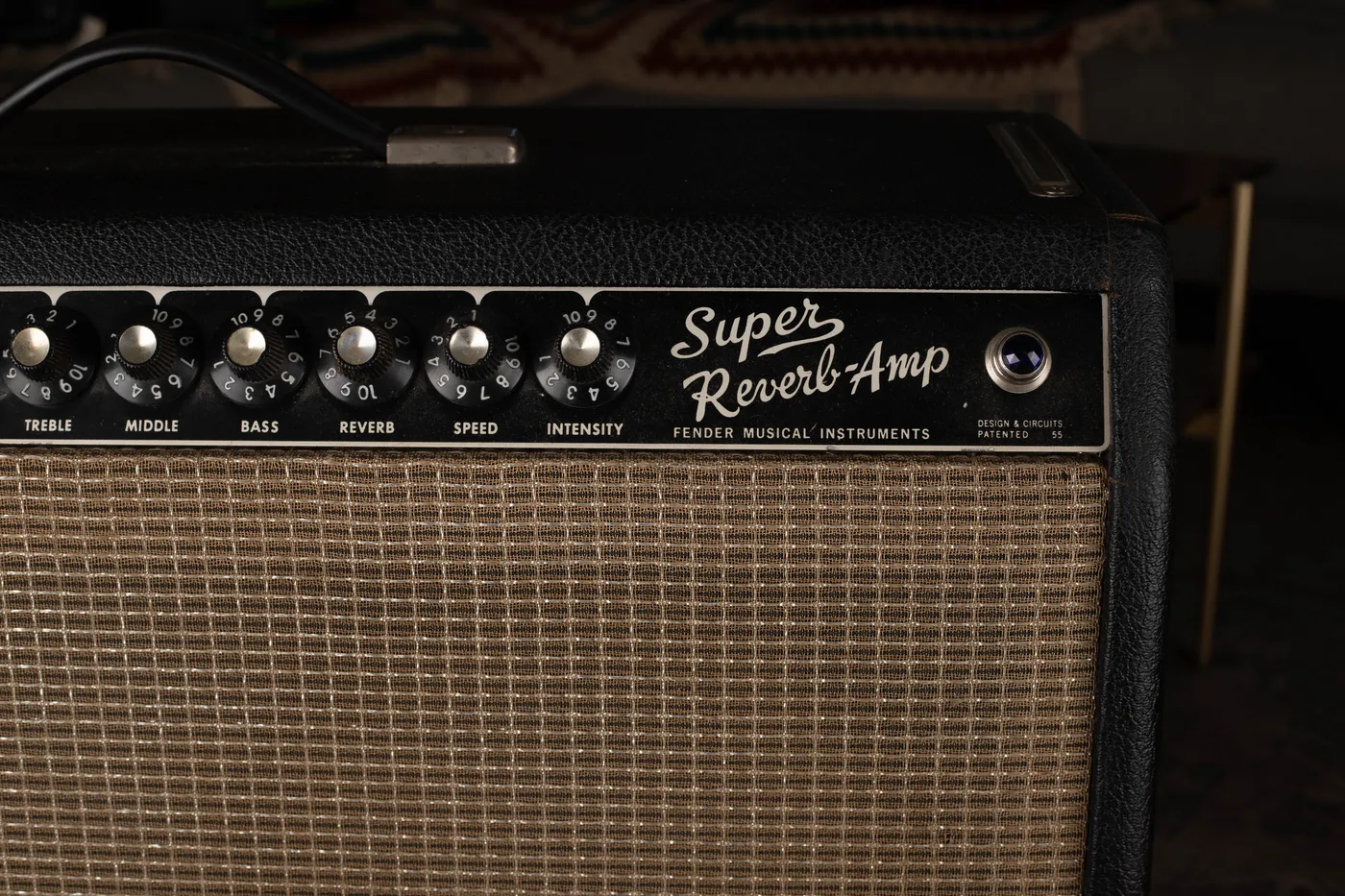
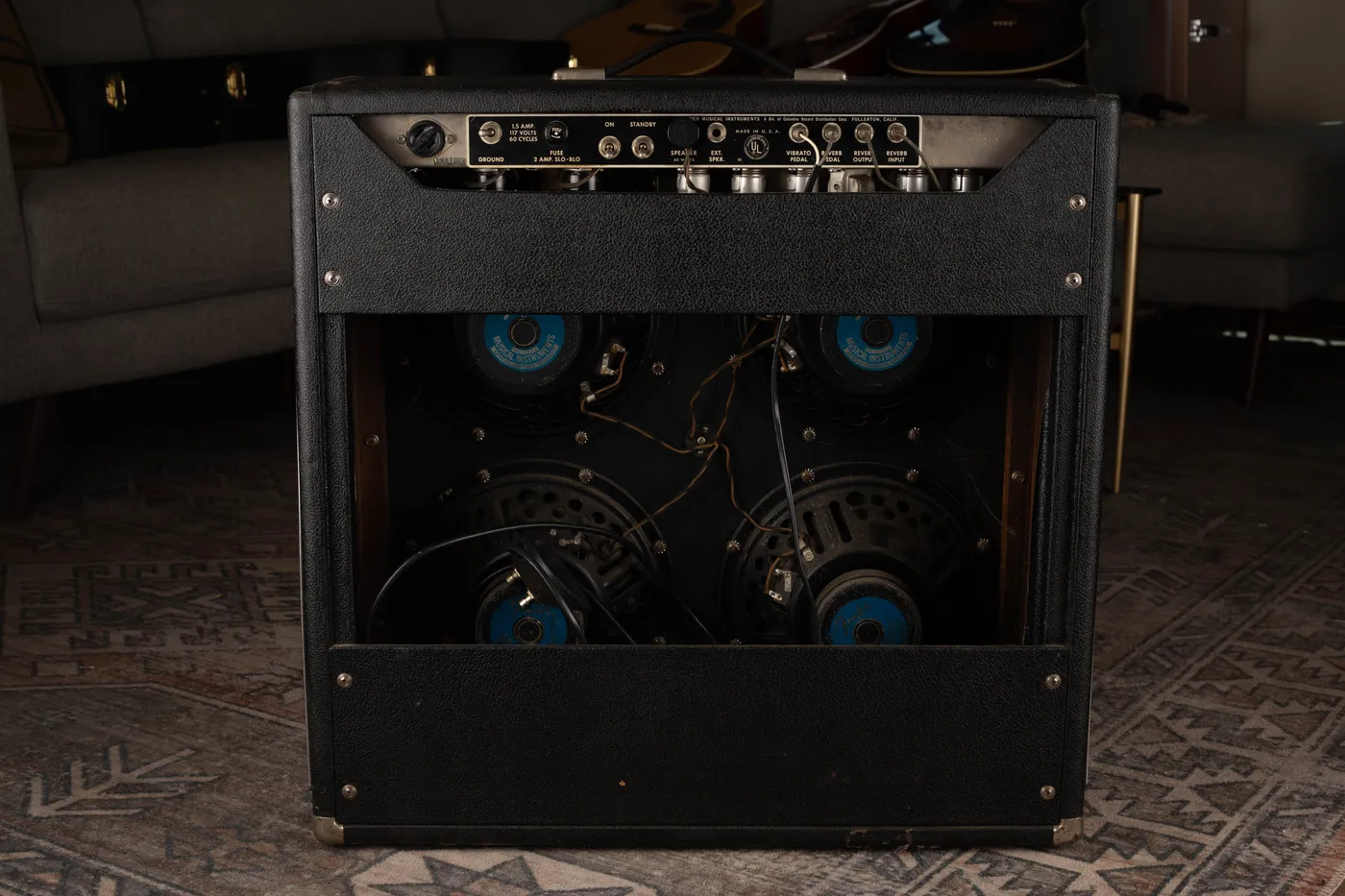
1965 Fender Super Reverb
The taller cabinet, reverb controls and four ten-inch speakers distinguish this 1965 Super Reverb from the earlier two-speaker Supers. Its AB763 tube chart is pictured in the dating section.
Factory Drawings And Field Records
Sources For Super Identification
- V-Front Super Field Record
Early cabinet form, speaker format and approximate rating.
- Fender 5C4 Layout
Socket layout and documented miniature-tube revision.
- Narrow-Panel Super Field Record
Cabinet, controls and 5F4 rating.
- Fender Brown Super 6G4-A
Harmonic tremolo and full valve arrangement.
- Fender Super Reverb Owner’s Manual
70-watt rating, master-volume pull switch and rear controls.
- Silverface Super Reverb Field Record
Grille trim, speakers and later cosmetic details.
Send The Evidence
Get Help Identifying Your Super
Send a full front and rear view, the tube chart and readable speaker codes. Include a technician’s circuit report if the amp has been altered.
Questions AboutOriginal Fender Amplifier Identification
Is A Brown Super A Super Reverb Without Its Tank?
Does A Master Volume Prove A 70-Watt Super Reverb?
Is Every Narrow-Panel Super A 6L6 Amp?
Can Drip-Edge Trim Date My Super Reverb Exactly?
The Last Word
Identify Your Amp With Joe
The strongest identification connects the model lettering, speaker format, circuit and dated components. Continue to the Super family price chart once those agree. The vintage Fender amp comparison places the Super Reverb beside smaller combos, while the Vibrolux identification guide covers the related two-ten reverb model. Send uncertain details to Joe with your photographs.
Authenticity And Originality Are Assessed From The Information Provided. A Hands-On Inspection Can Change The Conclusion.