

Early Super Amps To Silverface Reverb Models
Vintage Fender Super And Super Reverb Values
Original Super and Super Reverb estimates, with separate entries for cabinet generations and later controls.
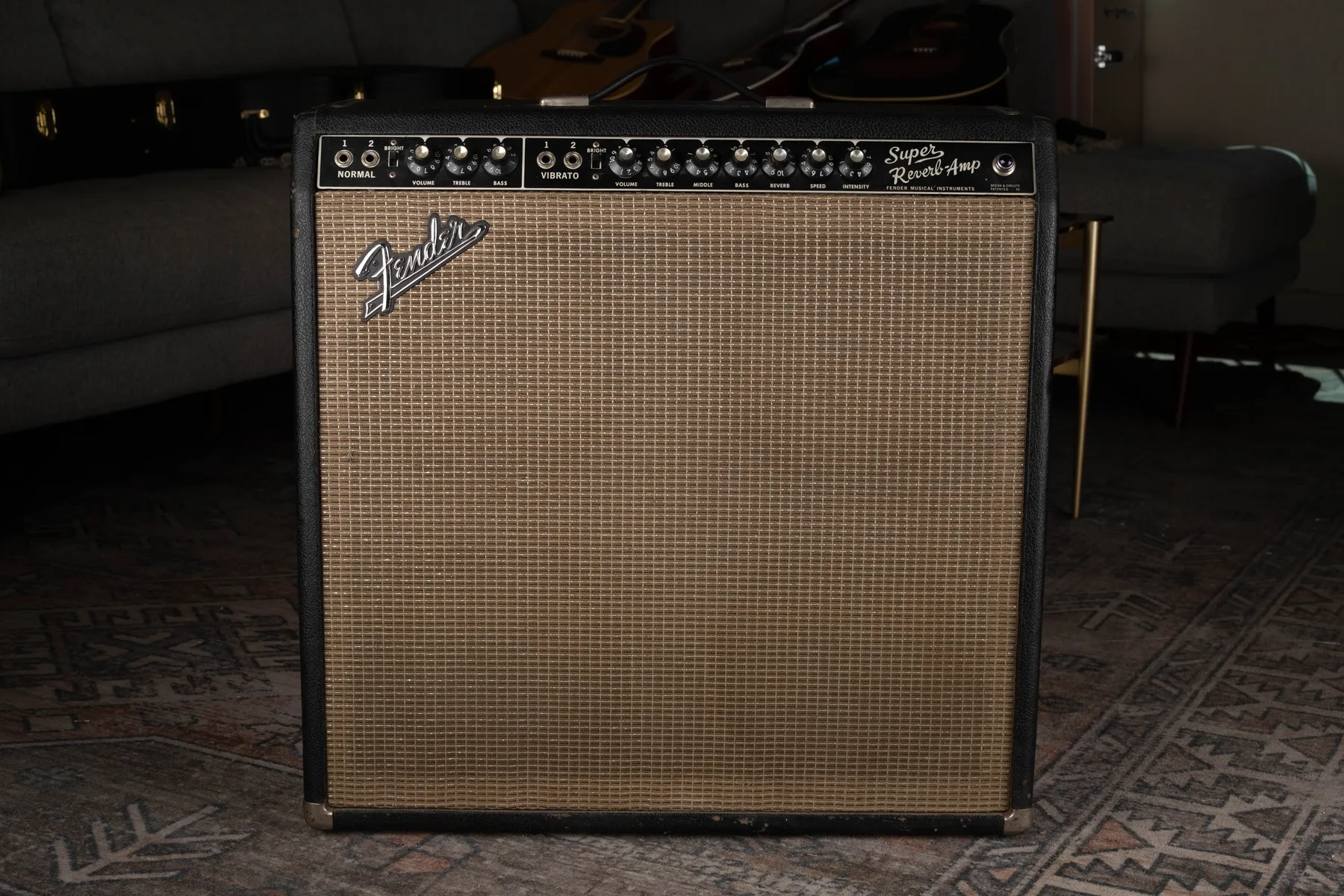
A 1963 to 1964 blackface Fender Super Reverb is estimated at $1,950 to $3,450, while the 1965 to 1967 group is $1,700 to $3,000. Both assume excellent, original condition. Earlier tweed and brownface Super amps have separate values. Use the Super and Super Reverb identification guide to establish the model before comparing prices. The two-speaker Super and four-speaker Super Reverb share a family name, but their equipment and value groups differ.
This Is An Estimate Of Market Value, Not An Offer To Buy And Not A Guarantee. Market Values Fluctuate; Have Your Specific Item Appraised.
Original Models By Configuration
Super And Super Reverb Price Chart
| Model | Years | Configuration | Estimated Value |
|---|---|---|---|
| Super | 1947 to 1952 | V-front | $5,700 to $7,500 |
| Super | 1953 to 1954 | Tweed, wide panel | $3,750 to $4,850 |
| Super | 1955 | Tweed, narrow panel, 6L6 | $5,600 to $7,300 |
| Super | 1956 to 1957 | Tweed, narrow panel, 5E4, 6V6 | $5,200 to $6,950 |
| Super | 1957 to 1960 | Tweed, narrow panel, 6L6 | $6,950 to $9,150 |
| Super | 1960 | Pink, tweed-era grille | $2,650 to $3,500 |
| Super | 1960 | Pink/brown, metal knobs | $2,550 to $3,400 |
| Super | 1960 | Pink/brown, reverse knobs | $2,650 to $3,500 |
| Super | 1960 to 1962 | Brown, oxblood grille, 6G4 | $2,250 to $3,100 |
| Super | 1962 to 1963 | Brown, tan/wheat grille, 6G4 | $2,150 to $3,000 |
| Super Reverb | 1963 to 1964 | Blackface, Fender Electric | $1,950 to $3,450 |
| Super Reverb | 1965 to 1967 | Blackface, Fender Musical Instruments | $1,700 to $3,000 |
| Super Reverb | 1968 | Silverface, AB763 | $1,100 to $1,500 |
| Super Reverb | 1969 to 1970 | Silverface | $900 to $1,350 |
| Super Reverb | 1970 to 1972 | Silverface, AA270 | $850 to $1,050 |
| Super Reverb | 1972 to 1975 | Initial master volume | $750 to $950 |
| Super Reverb | 1975 to 1980 | Master volume with pull | $750 to $950 |
| Super Reverb Solidstate | 1967 to 1970 | 50 watts, 4x10 | $500 to $650 |
U.S. dollars. Original cover where applicable. Condition, repairs and replacement parts affect an individual appraisal. Overlapping dates identify distinct entries. Modern reissues are excluded.
The earliest V-front entry begins in 1947, a model-specific exception preceding the site’s broad tweed-era boundary. Later rows distinguish wide-panel and narrow-panel Supers, brown-covering details and the Super Reverb’s control changes. Dates overlap where different listed configurations were sold within the same period. Match the description as well as the year.
The late return to a black panel around 1980 has no separate estimate here. A late silverface amp with changed controls also needs closer identification before a row is applied. The historical solid-state Super Reverb entry is separate from the tube model. Modern ’65 reissues, Tone Master amps and the recent ’62 Super are excluded from these vintage figures.
Cabinet Shape And Surviving Material
The Earlier Super Has Its Own Market
A V-front Super’s cabinet construction is part of its identity. An appraisal should show the whole front, the sides and the rear opening so repairs can be understood in context. A new cabinet built around an old chassis needs that qualification. A photograph of the logo alone provides little help with a structure that has been rebuilt.
Tweed Super values depend on matching the cabinet generation and electrical version. A narrow-panel cabinet doesn’t establish the power-tube configuration hidden inside it. Have a technician document the circuit if its identity is uncertain. The appraisal should account for the amp that survives today, including a converted circuit or a replaced transformer set.
Keep any original speaker frames with the amplifier, even if a repairer installed newer speakers for regular use. Their present condition and repair history still need to be described. Two empty frames aren’t the same inventory as two functioning original speakers, and an original label doesn’t establish that a cone is untouched.
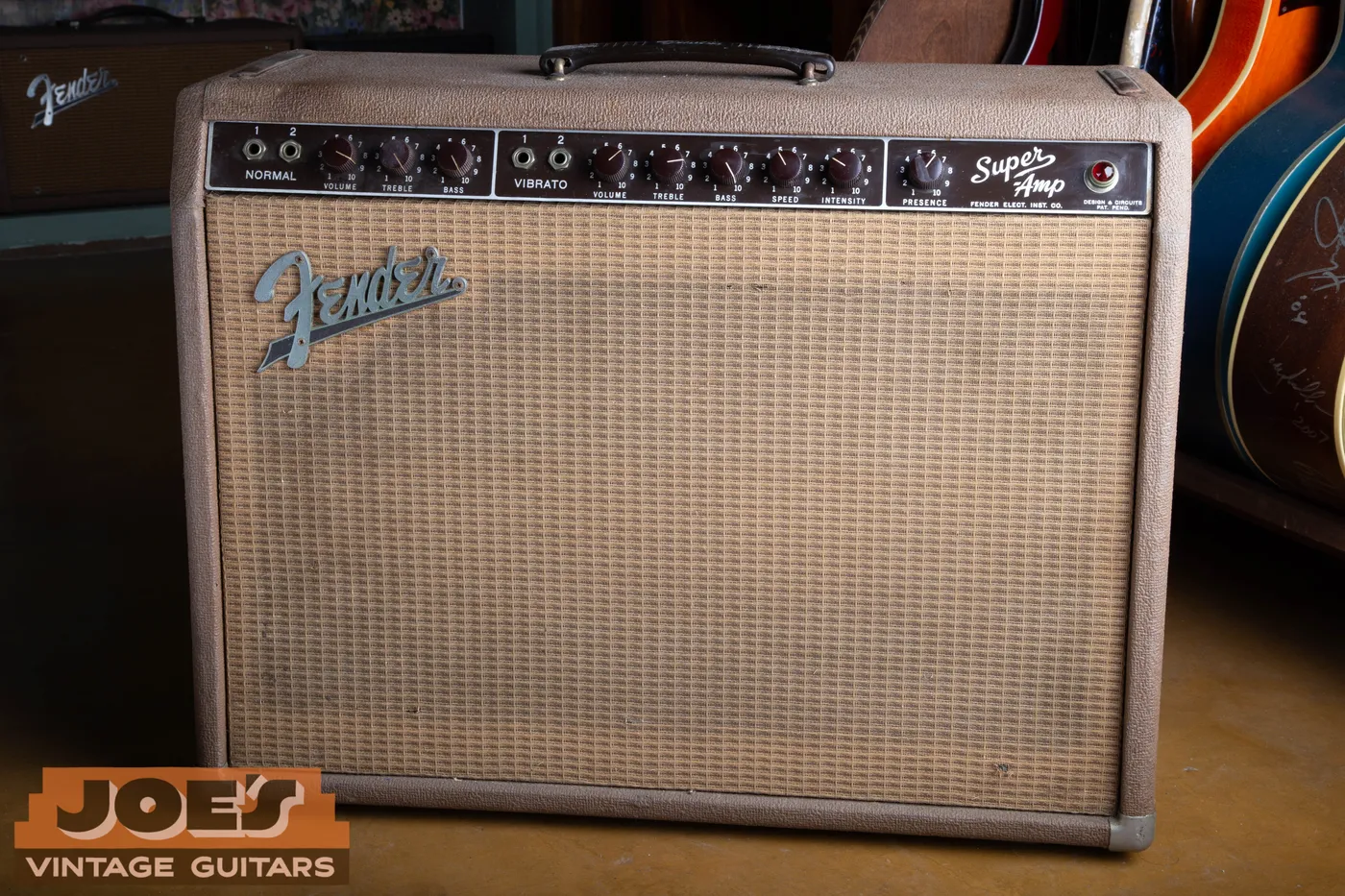
Brownface Super photographs reveal distinctions that a listing may overlook. Joe’s 1960 example has pinkish covering and a dark grille, while his 1962 example has a wheat-colored grille. Those are useful points of comparison for an appraisal. They don’t prove another amp’s originality, and a grille replacement should be disclosed even when the replacement pattern looks appropriate.
Check the handle mounts, rear panels and cabinet corners on an early Super. These are places where wear and repairs can disappear in an attractive front photograph. If the cabinet was refinished or recovered, provide the date of the work and any earlier images. That history helps separate surviving factory material from later restoration.
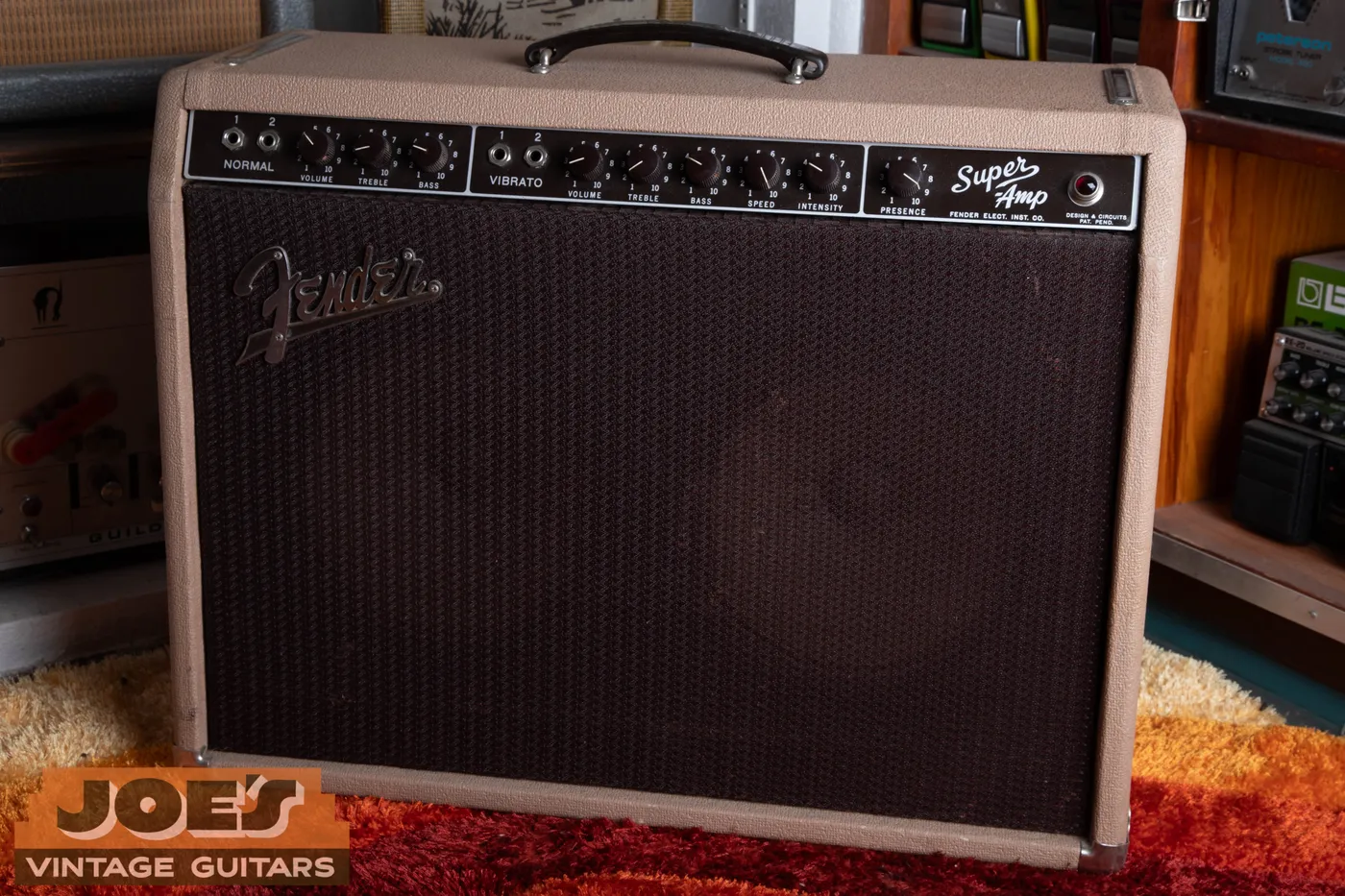
1960 And 1962 Fender Super Amplifiers
Super Reverb Condition
Four Speaker Positions To Account For
A Super Reverb appraisal needs four speaker records. Take a broad rear view first, then photograph each basket, label and readable frame stamp. Identify upper left, upper right, lower left and lower right in the message. That simple inventory prevents a single original speaker from being mistaken for an original set.
A mixed set may have been assembled deliberately for a preferred sound, or it may reflect repairs over many years. Describe what is known. If the owner before you supplied spare speakers, include photographs of those too. Don’t assume that a loose vintage speaker came out of this particular amp just because it was stored with it.
The large baffle and cabinet have to support all four speakers. Added mounting holes, a replacement baffle, cracks and moisture damage affect the assessment. Heavier replacement speakers may also have changed how the amp was handled and transported. Show the bottom and casters if present, including any holes left by earlier hardware.
A cabinet cut down to two speakers, a converted head and a complete factory combo are different appraisal cases. The work may have made an amplifier easier to carry, but it changes what a buyer is receiving. Explain the alteration before comparing it with the excellent-original range. Keep any original cabinet parts that accompanied the conversion.
Controls And Originality
Using The Correct Reverb Model Entry
Blackface Groups
The blackface chart separates the early Fender Electric group from the later Fender Musical Instruments group. Read the faceplate, then confirm the production evidence. A substituted panel can carry desirable wording without making the rest of the amplifier an earlier example. Include a clear photograph of the complete panel and the paper chart.
Silverface Revisions
Silverface entries distinguish early examples and later master-volume versions. Added controls, disconnected boost functions and circuit conversions need to be documented. A later amp changed toward blackface specifications still began as a later amp. The appraisal should preserve that distinction, even if the change sounds good to its present owner.
The Princeton, Deluxe and Twin comparison includes the Super Reverb’s speaker format and output beside other vintage choices. That helps with the playing decision. Value also depends on condition and completeness, so a specification match doesn’t establish that two Super Reverbs should sell for the same amount.
For an inherited amp, an uncertain date is easier to work with than an unsupported exact year. Send the evidence you have. If the two-letter chart stamp has faded, transformer and speaker markings may help establish a production window. A serial number alone won’t resolve that question, and cosmetic features can span more than one year.
Account For What Was Changed
Reverb Equipment And Repair History
A Super Reverb includes more equipment than the earlier non-reverb Super. Show the tank, its label, cables and footswitch where available. A replacement tank may work well while changing the originality report. A missing footswitch should be disclosed; a newly bought switch should be identified as a replacement accessory.
Transformer changes need their own explanation. Record the power transformer, output transformer and choke, plus any technician’s notes about a failure or replacement. Matching-looking metal covers don’t establish matching specifications. If the original part remains in a box, say whether it failed and whether any attempt was made to repair it.
Replacing aging filter capacitors is different from replacing the entire circuit board or rewiring the amp to another specification. Ask for an itemized service record. The phrase “fully restored” doesn’t tell an appraiser which components survived. A clear account of the work is useful whether the amp is being sold as a collector example or a working stage amplifier.
An unknown electrical history is a reason to describe the amp as untested and arrange a qualified inspection. Don’t switch it on solely to make an appraisal video. Keep the cover, old photographs, ownership documents and repair invoices together. Each may answer a question that exterior photographs leave open.
A Complete Condition Record
Send These Super Amp Views
Front And Faceplate
Include the model wording, all controls, grille and cabinet edges. Add a close view of master-volume or pull-switch markings when present.
Full Rear Opening
Show both or all four speakers, the back panels and the cable routing. Photograph missing panels and altered cabinet openings without cropping them away.
Chart And Circuit
Send a legible image of the attached paper chart. Ask a qualified technician for interior circuit images; an unplugged amplifier can still contain dangerous stored voltage.
Transformer Markings
Photograph the complete markings on each large transformer and the choke, preserving enough surrounding detail to identify the component.
Individual Speaker Views
Record every speaker label and frame code. Tell Joe which speakers were replaced or reconed, and include any retained original set.
Tank, Footswitch And Cover
On a Super Reverb, add the tank label and effects footswitch. On an earlier Super, show its applicable tremolo switch and accessories without treating the absence of factory reverb as a defect.
Joe’s chart-stamp decoder and component dating section explain the production clues. For readable control dates, use the pot-code reference.
Send The Evidence
Have Joe Review Your Super Amp
Send the model details, condition photographs and repair history. Mention any speakers or accessories that will be included.
Questions AboutOriginal Fender Amp Values
Does Every Super Amp Have Four Speakers?
Do Four Vintage Speakers Prove An Original Set?
Is A Blackface Conversion Priced As An Original Blackface Amp?
The Last Word
Get Your Amp Appraised
Separate the model question from the condition report, then account for every speaker and accessory. The Super authentication page covers the construction and date checks. For another two-ten Fender, see the Vibrolux value guide. Joe offers free amp appraisals and can discuss buying your vintage amplifier.
This Is An Estimate Of Market Value, Not An Offer To Buy And Not A Guarantee. Market Values Fluctuate; Have Your Specific Item Appraised.