

Fender Bass VI Prices · Original U.S. Production
Fender Bass VI Value Guide
Date the six-string bass, establish its original finish, then assess the pickups, bridge equipment and neck. Complete examples deserve close inspection.
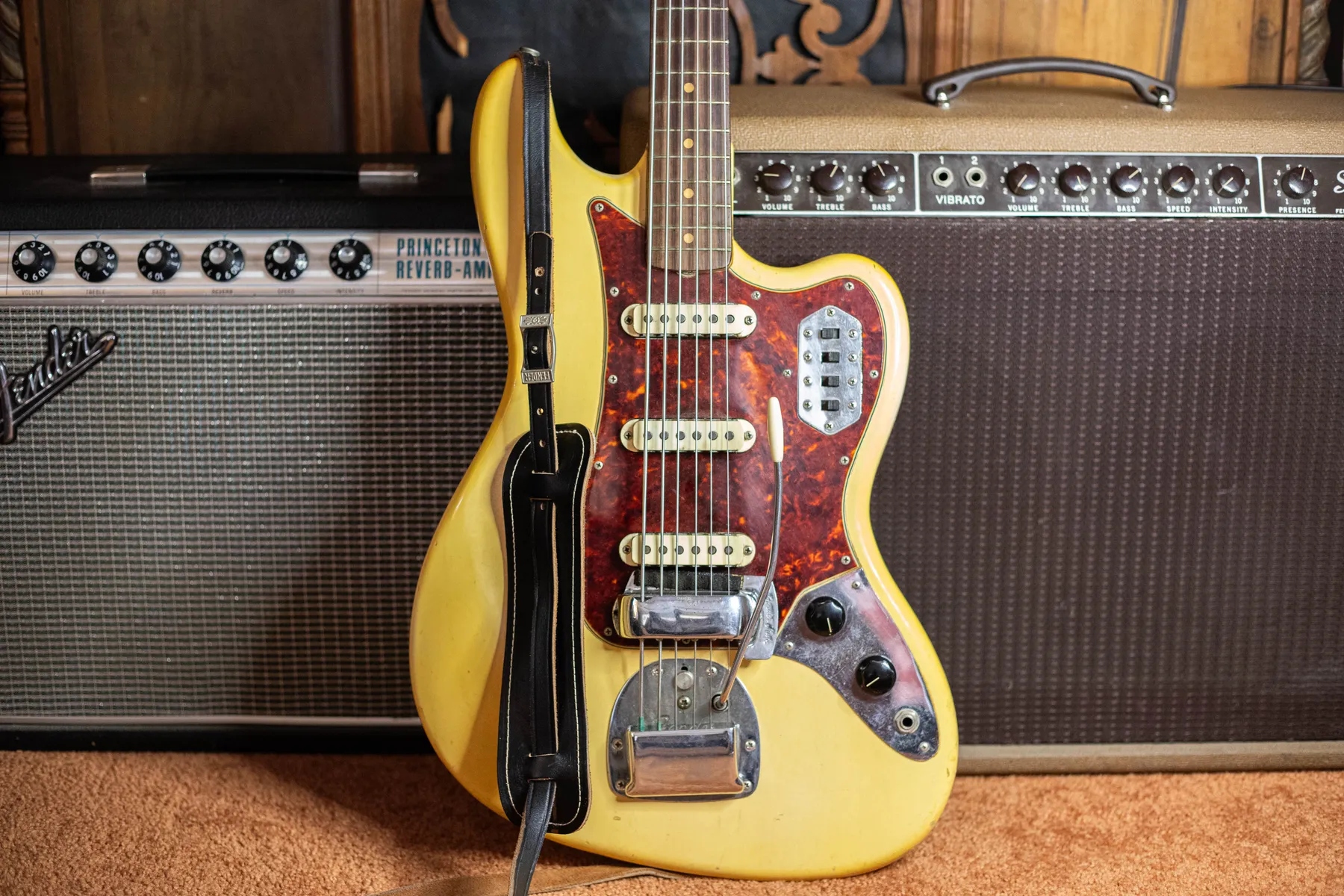
An original 1963 to 1964 sunburst Fender Bass VI is estimated at $6,950 to $10,000 in excellent condition with its original case. Factory custom finishes can bring substantially more, provided the finish is authenticated. The Bass VI authentication guide explains the neck, switching and construction checks that establish the correct comparison.
This Is An Estimate Of Market Value, Not An Offer To Buy And Not A Guarantee. Market Values Fluctuate; Have Your Specific Item Appraised.
Excellent Original Instruments With Original Cases
Fender Bass VI Values By Year And Finish
| Year Group | Configuration | Estimated Value |
|---|---|---|
| 1961 to 1962 | Common colors | $13,800 to $22,250 |
| 1961 to 1962 | Rare colors | $17,800 to $26,700 |
| 1961 to 1962 | Sunburst | $7,300 to $10,750 |
| 1963 to 1964 | Common colors | $12,350 to $21,250 |
| 1963 to 1964 | Rare colors | $17,000 to $25,500 |
| 1963 to 1964 | Sunburst | $6,950 to $10,000 |
| 1965 | Common colors | $11,200 to $17,200 |
| 1965 | Rare colors | $15,750 to $21,250 |
| 1965 | Sunburst | $6,250 to $8,450 |
| 1966 to 1969 | Common colors | $8,600 to $12,900 |
| 1966 to 1969 | Rare colors | $11,000 to $17,600 |
| 1966 to 1969 | Sunburst | $5,800 to $7,550 |
| 1970 to 1971 | Custom colors | $7,850 to $10,450 |
| 1970 to 1971 | Sunburst | $4,750 to $6,450 |
| 1972 to 1974 | Custom colors | $7,300 to $9,900 |
| 1972 to 1974 | Natural | $4,650 to $6,250 |
| 1972 to 1974 | Sunburst | $4,650 to $6,250 |
| 1972 to 1974 | Walnut | $4,450 to $5,950 |
| 1975 | Black, blond or white | $4,500 to $6,000 |
| 1975 | Natural | $4,150 to $5,650 |
| 1975 | Sunburst | $4,200 to $5,700 |
| 1975 | Walnut | $4,050 to $5,550 |
November 2026 estimates in U.S. dollars for excellent, original instruments with their original cases. An individual appraisal accounts for finish, repairs, parts and playing condition. These retail estimates are not purchase offers.
Choose the year group from several consistent date clues, then identify the finish. The table describes the original American production run. An instrument with a replaced neck, a full refinish or major routing needs an individual appraisal before a range is applied.
For the early color groups, common colors include Black, Blond, Candy Apple Red, Olympic White, Lake Placid Blue, Dakota Red, Daphne Blue and Fiesta Red. Rare colors include Shoreline Gold, Inca Silver, Burgundy Mist, Sherwood Green, Sonic Blue and Foam Green. These are pricing categories, and each finish still needs to be plausible for the specific instrument’s year. A rare-color range assumes an authenticated original factory finish. It can’t be assigned from the current appearance of yellowed clear coat, an owner’s color nickname or a single photograph. Where the precise finish remains unresolved, send the photographs and history without choosing the higher category.
These are retail market estimates for complete instruments in excellent condition. A direct purchase offer also accounts for the work needed, resale costs and the individual instrument. An old asking price or an exceptional sale with a documented celebrity connection can describe a different transaction.
1961 Through The Mid-1960s
Early Bass VI Values And Original Equipment
The earliest sunburst group is estimated at $7,300 to $10,750. For an early Bass VI, the pickup and switch arrangement helps establish the appropriate production period. A changed control plate or guard may make a later configuration appear on an earlier body, so a date on a removable part should be checked against the neck and the rest of the instrument.
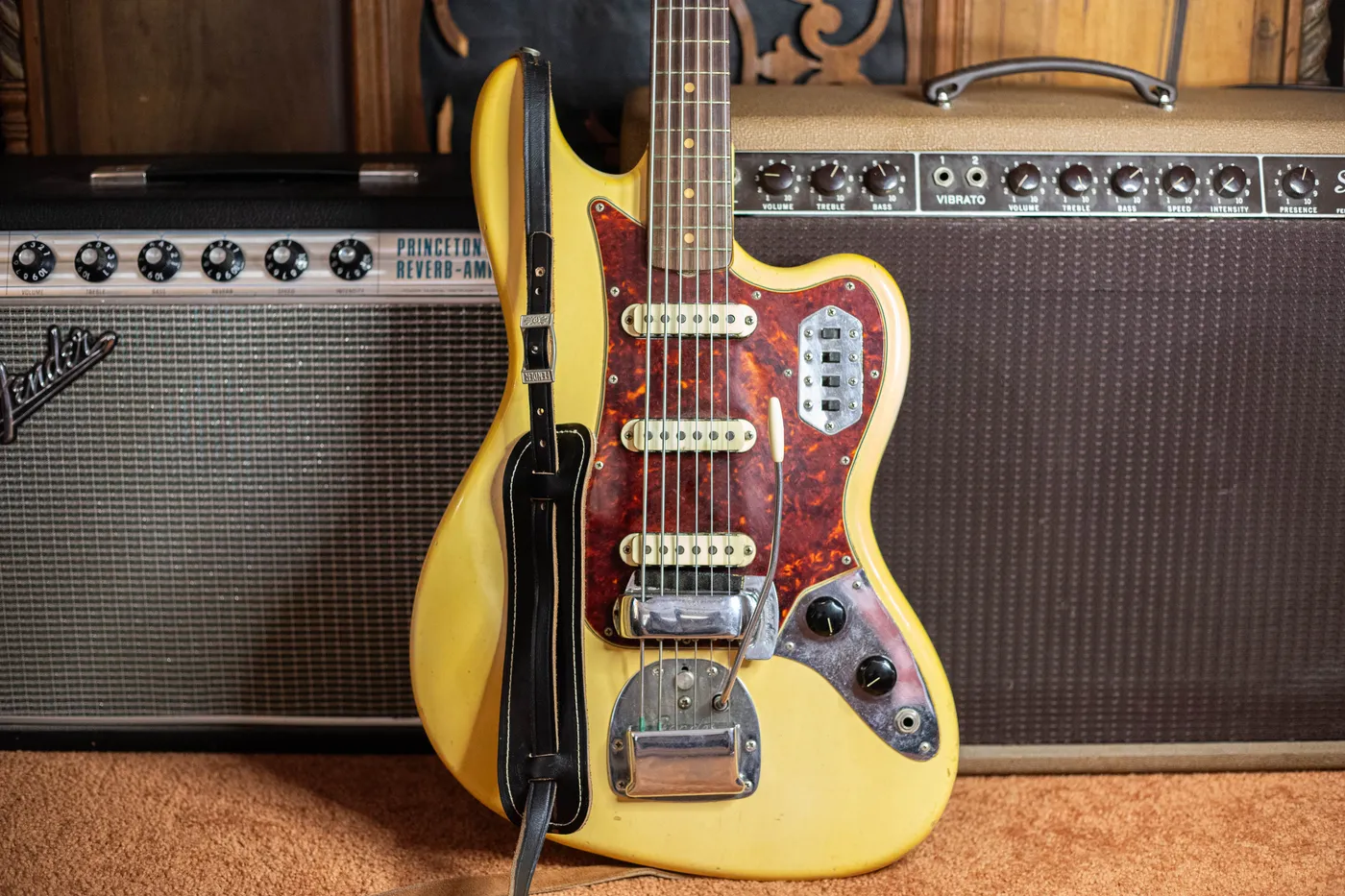
The 1963 example below shows three pickups, four switches, the bridge mute and separate vibrato assembly. It illustrates how much equipment belongs in the assessment. A missing cover, removed mute and replacement bridge are separate observations, each with a different practical consequence.
Original hardware can survive in the case after a player removes it. Include loose parts in the photographs before assuming the instrument is incomplete. The part still needs to fit the model and date; a chrome cover from another Fender doesn’t automatically complete a Bass VI.
Keep service records with the instrument. A rewound pickup may retain its visible cover and original base while having a different repair history from an untouched pickup. Describe that work directly, even when the bass still sounds good. An appraisal can account for useful repairs without treating the instrument as an untouched example.
Neck Features, Finish And Completeness
Later 1960s And 1970s Bass VI Values
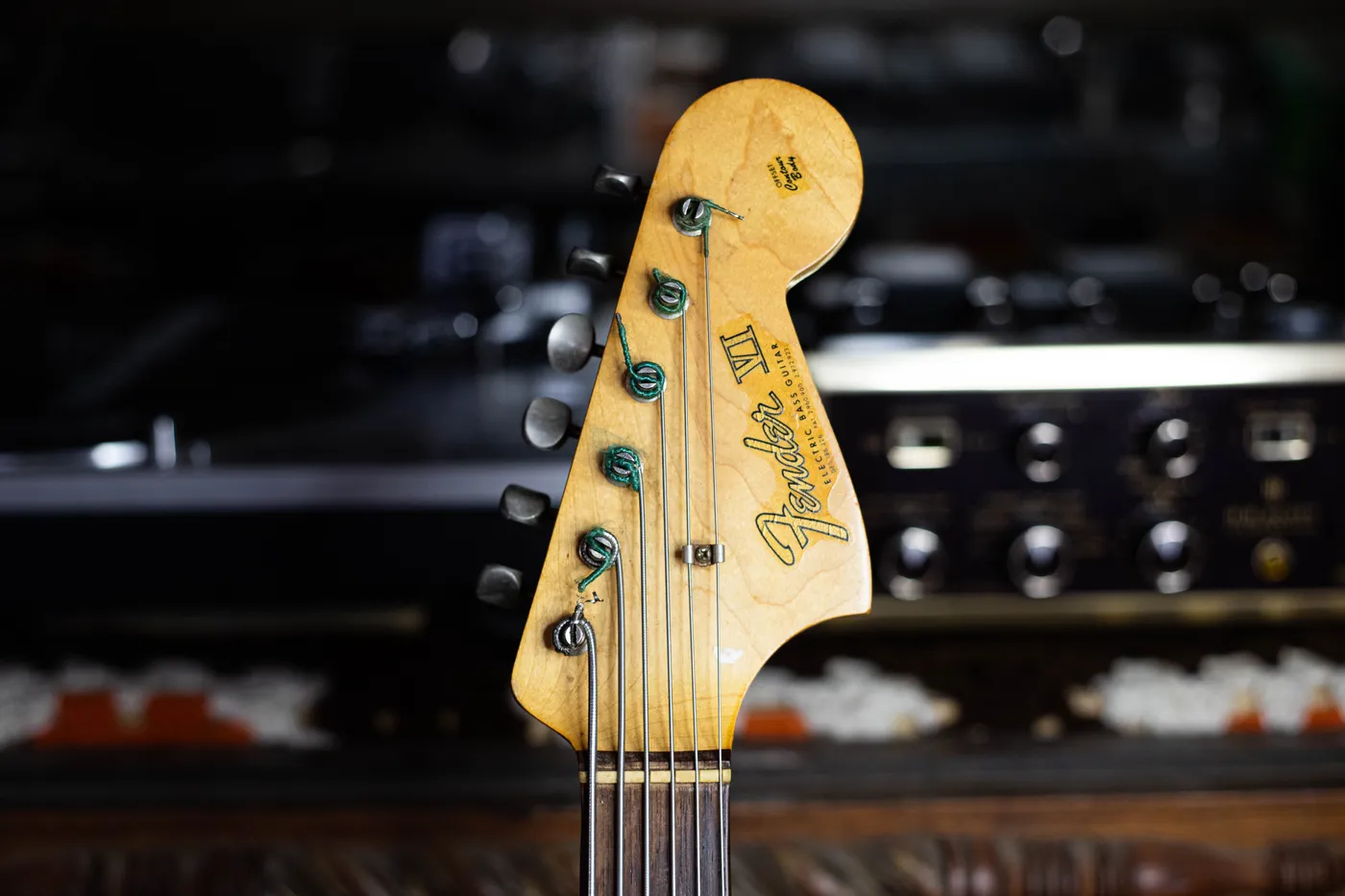
The 1966 to 1969 sunburst group is estimated at $5,800 to $7,550. Binding and block inlays help identify the later neck style, but an older-looking neck on its own can’t date every component. A neck replacement should be disclosed along with any changes to the body joint or finish.
During the 1970s, natural, walnut and solid finishes add further comparisons. The table keeps those groups separate where values differ. For example, a 1975 natural instrument falls in the $4,150 to $5,650 group. A stripped sunburst body with clear finish has a refinish history and needs its own estimate.
Later instruments should receive the same close inspection as earlier ones. Worn frets, a damaged nut, a broken vibrato arm or an incorrect bridge can matter to a buyer who wants to play the bass regularly. Originality and practical setup are related parts of the appraisal, but the repairs needed should be described specifically.
A heavier instrument or a neck profile that suits one player poorly isn’t automatically defective. Record an actual weight when available and describe the neck’s condition. Claims about an entire decade being uniformly better or worse provide little help in valuing the bass in front of you.
Establish What The Surface Can Support
Factory Color, Refinish And Touch-Up
Factory color is one of the largest reasons two otherwise similar Bass VIs can have different values. Start with photographs in even daylight, including the front, back, edges and headstock. Include earlier pictures if they show the bass before a repair or finish change. Those images can establish a useful history even when they don’t prove the original manufacturing year.
Yellowed clear coat can change the apparent color significantly. White can look cream, and faded or stained areas can differ from protected surfaces. A finish inspection considers layers, wear, transitions and the relationship between the finish and hardware. A photograph of checking by itself is insufficient to establish that the finish is original.
A full refinish, localized overspray and a small repaired chip need different descriptions. State which surfaces were worked on and whether any wood was sanded or reshaped. Use the refinish value guide to organize the known work before requesting an estimate.
Don’t polish aggressively or try to expose a lower paint layer for an appraisal. Preserve what is there. If a prior owner says the color is factory original, include that statement as history and identify any documentation supporting it. Joe can explain what additional inspection would resolve the question.
What Changes The Individual Estimate
Bass VI Repairs And Missing Parts
Pickups And Wiring
Record replaced pickups, rewinds, new switches and altered wiring. Matching covers can conceal different components. A silent pickup may have an electrical fault that needs diagnosis before anyone assigns a replacement cost.
Bridge And Vibrato
Show the bridge, saddles, mute assembly and vibrato arm. A modern bridge installed for playing convenience changes the equipment inventory. Keep the removed bridge and any small screws with the bass.
Neck And Frets
Describe fret wear, a refret, nut replacement and any structural repair. Photographs along the neck help document the condition, but an in-person setup assessment may be needed to explain high action or poor intonation.
Several changes may come from the same repair project. A replaced pickup, altered wiring and a new guard should be evaluated together instead of subtracting three arbitrary percentages from a table figure. The condition guide explains the wider relationship between originality, repairs and price.
A well-documented player instrument can still appeal strongly to someone who wants the Bass VI sound and feel. Accurate descriptions help that buyer understand the purchase. Include the repairer’s invoice if it identifies the work performed; avoid calling a repair professional solely because its appearance is tidy.
Photographs, Case And History
Prepare A Bass VI For An Appraisal
Send a full front and back, the headstock on both sides, the visible serial number and close-ups of the controls and bridge area. Include the case interior and exterior, any loose hardware and known repair areas. Existing service photographs are useful; initial photographs don’t require removing the neck or lifting the pickups.
A Bass VI needs a case that fits its length and supports the neck correctly. An original case also belongs in the value assessment. Show damaged latches, handle problems or loose lining so packing can be discussed before shipping. A case that closes isn’t necessarily supporting the instrument safely.
Tell Joe what works when the bass is plugged in, how long you have owned it and whether you know of any repairs. If it was inherited, include old receipts, dated family photographs and loose parts found with it. Keep uncertain dates clearly identified so they can be checked against the instrument.
A free appraisal starts with that photo set. If you want to sell, the Fender selling page explains how to discuss a direct purchase. Leave restoration decisions until the current condition has been assessed; replacing parts before that review can remove useful evidence and add unnecessary expense.
Show The Bass And Its Markings
Include the whole front and rear, both headstock faces and the visible serial.
Inventory The Equipment
Show the switches, pickups, bridge, mute, vibrato arm and loose parts.
Add Condition And Case Details
Include known finish work, repair records and photographs of the case and its fit.
Send The Evidence
Get A Fender Bass VI Appraisal
Send the full instrument, visible numbers, switch layout, bridge equipment and case. Include any finish or pickup work you know about.
Questions AboutFender Values
What Is A 1963 Sunburst Fender Bass VI Worth?
Does A Missing Mute Make A Bass VI Unsellable?
Can A Refinished Bass VI Use The Custom-Color Price?
The Last Word
A Value For Your Guitar
The useful comparison is the same production group, factory finish and condition. Establish those details with the Bass VI authentication guide, then send Joe the instrument photographs for an individual estimate.
This Is An Estimate Of Market Value, Not An Offer To Buy And Not A Guarantee. Market Values Fluctuate; Have Your Specific Item Appraised.